
ARTERIES
AND
ARTERIOLES
NAME: BETTY ANDY-NWEYE
CLASS: PRE MED FOUR
COURSE: PHYSIOLOGY
INTRODUCTION
 Arteries are blood vessels that carry blood away

from the heart. The blood is normally oxygenated
except the case of the pulmonary and umbilical
arteries.
 Arterioles are small diameter blood vessels in the

microcirculation that extends and branches out from
an artery and leads to capillaries.
 NOTE: pulmonary arteries carry deoxygenated

blood that has just returned from the body to the
heart and takes it to the lungs where carbon dioxide
is exchanged for oxygen.
Artery
 The main functions of arteries is to carry blood away

from the heart to other organs in the body
 The systemic arteries are subdivided into two types

according to their relative compositions of elastic
and muscle tissue as well as their size and makeup.
They are:
1. Elastic (large conducting) arteries
2. Muscular (medium size distributing) arteries
Elastic arteries


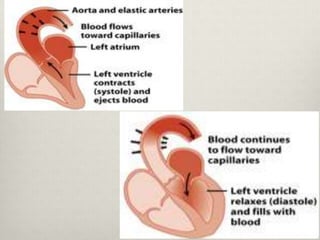
These arteries are important for helping to propel blood onward while the ventricles are relaxing



Their walls stretch to accommodate the surge of blood from the left ventricles during systole.



Examples of elastic arteries are;

1.

Aorta- root systemic artery

2.

Brachiocephalic artery- an artery of the mediastinum that supplies blood to the right arm, head and neck

3.

Right and left common carotid arteries

4.

Right and left subclavian arteries

5.

Right and left vertebral arteries

6.

Right and left common iliac arteries
Arteries continued…
 The elastic fibers of the above mentioned arteries

function as pressure reservoir.
 Pressure reservoir: stretched elastic arteries

momentarily store some of this energy and
therefore function as pressure reservoirs. During
systole, the elastic fibers recoil, converting their
stored energy into kinetic energy thereby pushing
blood forward in the vascular system in a more or
less continuous fashion.
Muscular arteries
 These are arteries that branch out into various

regions of the body
 These arteries branch from larger, more elastic

arteries and perform the function of distributing
blood to various parts and regions of the body
 They have more smooth muscle than elastin in

their tunica media and are therefore, capable of
vasoconstriction and vasodilation than are elastic
arteries.
Muscular arteries are:
 Brachial artery- arm
 Radial artery- forearm
Structure of an artery
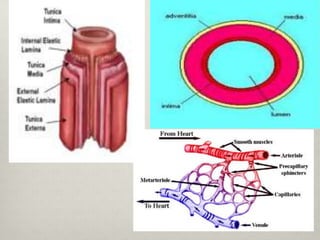
 Arteries consist of three layers or coats surrounding

a hollow center called the lumen.
 Three layers of an artery are:
1. Tunica interna/intima
2. Tunica media
3. Tunica adventitia
Tunica interna
 This is the proximal and innermost coat of all blood

vessels
 It is in direct contact with the flow of blood
 It consists of a simple squamous endothelium lying

on its basement membrane and a thin connective
tissue component called the internal elastic lamina
 This layer is made up of mainly endothelial cells
 The hollow internal cavity which the blood flows is

lumen
Tunica media
 This is the middle layer that is made up of smooth

muscle cells and elastic tissue
 Thick layer
 It consists of elastic fibers and smooth muscle

which are arranged circularly about the artery like a
ring
 Due to their elastic fibers, walls can stretch easily or

expand in response to increase in pressure
Tunica
adventitia/externa

 The outermost layer

 Consists of two components: elastin fibers and

collagen fibers which form a connective tissue wrap
for the vessel
Arterioles
 These are the smallest of the true arteries
 Branches from the medium size arteries and begin

to loose wall thickness
 Helps to regulate blood pressure by the variable

contraction of the smooth muscle of their walls
 They deliver blood to the capillaries
Arterioles and blood
pressure
 Arterioles have the greatest influence on both local

blood flow and on overall blood pressure. They are
the primary “adjustable nozzles” in the blood
system, across which the greatest pressure drop
occurs.
 The combination of heart output and systemic

vascular resistance, which refers to the collective
resistance of all of the body’s arterioles, are the
principal determinants of arterial blood pressure at
any given moment.

13.arteries and arterioles

  • 1.
  • 2.
    INTRODUCTION  Arteries areblood vessels that carry blood away from the heart. The blood is normally oxygenated except the case of the pulmonary and umbilical arteries.  Arterioles are small diameter blood vessels in the microcirculation that extends and branches out from an artery and leads to capillaries.  NOTE: pulmonary arteries carry deoxygenated blood that has just returned from the body to the heart and takes it to the lungs where carbon dioxide is exchanged for oxygen.
  • 3.
    Artery  The mainfunctions of arteries is to carry blood away from the heart to other organs in the body  The systemic arteries are subdivided into two types according to their relative compositions of elastic and muscle tissue as well as their size and makeup. They are: 1. Elastic (large conducting) arteries 2. Muscular (medium size distributing) arteries
  • 4.
    Elastic arteries  These arteriesare important for helping to propel blood onward while the ventricles are relaxing  Their walls stretch to accommodate the surge of blood from the left ventricles during systole.  Examples of elastic arteries are; 1. Aorta- root systemic artery 2. Brachiocephalic artery- an artery of the mediastinum that supplies blood to the right arm, head and neck 3. Right and left common carotid arteries 4. Right and left subclavian arteries 5. Right and left vertebral arteries 6. Right and left common iliac arteries
  • 5.
    Arteries continued…  Theelastic fibers of the above mentioned arteries function as pressure reservoir.  Pressure reservoir: stretched elastic arteries momentarily store some of this energy and therefore function as pressure reservoirs. During systole, the elastic fibers recoil, converting their stored energy into kinetic energy thereby pushing blood forward in the vascular system in a more or less continuous fashion.
  • 7.
    Muscular arteries  Theseare arteries that branch out into various regions of the body  These arteries branch from larger, more elastic arteries and perform the function of distributing blood to various parts and regions of the body  They have more smooth muscle than elastin in their tunica media and are therefore, capable of vasoconstriction and vasodilation than are elastic arteries.
  • 8.
    Muscular arteries are: Brachial artery- arm  Radial artery- forearm
  • 9.
    Structure of anartery  Arteries consist of three layers or coats surrounding a hollow center called the lumen.  Three layers of an artery are: 1. Tunica interna/intima 2. Tunica media 3. Tunica adventitia
  • 10.
    Tunica interna  Thisis the proximal and innermost coat of all blood vessels  It is in direct contact with the flow of blood  It consists of a simple squamous endothelium lying on its basement membrane and a thin connective tissue component called the internal elastic lamina  This layer is made up of mainly endothelial cells  The hollow internal cavity which the blood flows is lumen
  • 11.
    Tunica media  Thisis the middle layer that is made up of smooth muscle cells and elastic tissue  Thick layer  It consists of elastic fibers and smooth muscle which are arranged circularly about the artery like a ring  Due to their elastic fibers, walls can stretch easily or expand in response to increase in pressure
  • 12.
    Tunica adventitia/externa  The outermostlayer  Consists of two components: elastin fibers and collagen fibers which form a connective tissue wrap for the vessel
  • 14.
    Arterioles  These arethe smallest of the true arteries  Branches from the medium size arteries and begin to loose wall thickness  Helps to regulate blood pressure by the variable contraction of the smooth muscle of their walls  They deliver blood to the capillaries
  • 15.
    Arterioles and blood pressure Arterioles have the greatest influence on both local blood flow and on overall blood pressure. They are the primary “adjustable nozzles” in the blood system, across which the greatest pressure drop occurs.  The combination of heart output and systemic vascular resistance, which refers to the collective resistance of all of the body’s arterioles, are the principal determinants of arterial blood pressure at any given moment.