BY,
K.B.Snega,M.sc(CS),
Nadar Saraswathi College of Arts And
Science.
NETWORK SECURITY
Network
 A Network is a
series of points or
nodes
interconnected by
communication
paths.
 Interconnect
with other
networks and
contain sub
networks.
Security
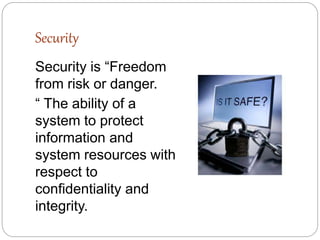
Security is “Freedom
from risk or danger.
“ The ability of a
system to protect
information and
system resources with
respect to
confidentiality and
integrity.
Network security:
 Any activities designed to protect your network .
Target- variety of threats and stops them from
entering or spreading on your network.
Handled by a network administrator.
Objective
• Access
• Confidentiality
• Authentication
• Integrity
• Non‐repudiation
Types
Five types of network security can aid in secure
networking. • Physical security
• Perimeter protection
• User training and education
• Wireless encryption protocol (WEP)
• MAC address filtering
Working and Components
Working:
We need multiple layers of security
Network security is accomplished through
hardware and software.
Network security components:
Anti-virus and anti-spyware
Firewall Intrusion
prevention systems
Virtual Private Networks
Security tools
• Antivirus software packages
• Secure network infrastructure
• DNS hardware and software
• Virtual private network
• Identity services
• Encryption
• Security management
CONCLUSION
 The network security field evolve more rapidly to
deal with the threats further in the future.
 “As threats tweaks, Security tremendously
Tweaks”

Network security

  • 1.
    BY, K.B.Snega,M.sc(CS), Nadar Saraswathi Collegeof Arts And Science. NETWORK SECURITY
  • 2.
    Network  A Networkis a series of points or nodes interconnected by communication paths.  Interconnect with other networks and contain sub networks.
  • 3.
    Security Security is “Freedom fromrisk or danger. “ The ability of a system to protect information and system resources with respect to confidentiality and integrity.
  • 4.
    Network security:  Anyactivities designed to protect your network . Target- variety of threats and stops them from entering or spreading on your network. Handled by a network administrator.
  • 5.
    Objective • Access • Confidentiality •Authentication • Integrity • Non‐repudiation
  • 6.
    Types Five types ofnetwork security can aid in secure networking. • Physical security • Perimeter protection • User training and education • Wireless encryption protocol (WEP) • MAC address filtering
  • 7.
    Working and Components Working: Weneed multiple layers of security Network security is accomplished through hardware and software. Network security components: Anti-virus and anti-spyware Firewall Intrusion prevention systems Virtual Private Networks
  • 8.
    Security tools • Antivirussoftware packages • Secure network infrastructure • DNS hardware and software • Virtual private network • Identity services • Encryption • Security management
  • 9.
    CONCLUSION  The networksecurity field evolve more rapidly to deal with the threats further in the future.  “As threats tweaks, Security tremendously Tweaks”