Part 2 Connectivity Rules 
Dr. IBRAHIM BATHIS K
https://www.linkedin.com/in/dribrahimbathisk/
Dr. IBRAHIM BATHIS K
https://www.linkedin.com/in/dribrahimbathisk/
Connectivity Rules
 In most networks, not all edges can connect to all other junctions.
Also, not all edges can connect to all other edges through a
specified junction.
 For example, a hydrant lateral in a water network can connect to
a hydrant but not to a service lateral. Similarly, a 10–inch
transmission main can only connect to an 8-inch transmission
main through a reducer.
 Connectivity rules constrain the type of network features that
may be connected to one another and the number of features of
any particular type that can be connected to features of another
type.
https://www.linkedin.com/in/dribrahimbathisk/
Connectivity Rules
 Connectivity rules let you easily maintain the integrity of the
network features in a geometric network.
 At any time, you can selectively validate features in the database
and generate reports as to which features in the network are
violating one of the connectivity or other rules.
 Edge-Junction rule
 Edge-Edge rule
 Edge-Junction cardinality rule
 Default junction type rule
https://www.linkedin.com/in/dribrahimbathisk/
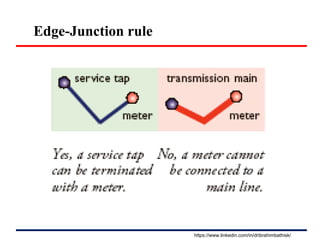
Edge-Junction rule
 A connectivity rule that establishes that an edge of type A may
connect to a junction of type B.
 When building a network, you can specify which types of
junctions are allowed to connect on an edge of a certain type.
 For example, electrical meters can only connect to low-voltage
lines, or transmission towers carry only high-voltage lines. The
edge–junction rule constrains which types of junctions can
connect to a type of edge.
https://www.linkedin.com/in/dribrahimbathisk/
Edge-Junction rule
https://www.linkedin.com/in/dribrahimbathisk/
Edge-Edge rule
 The edge–edge rule establishes which combinations of edge
types can connect through a given junction.
 To specify the valid type combinations for connecting two edges
at a junction.
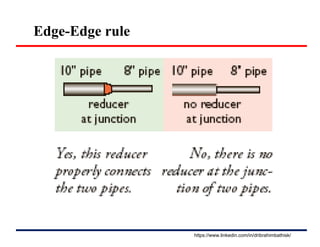
 For example, a 10–inch pipe can only be connected to an 8–
inch pipe through a proper reducer.
 This connectivity rule could be applied to two subtypes of a
water pipe feature class for pipe sizes and a subtype of a junction
feature class.
https://www.linkedin.com/in/dribrahimbathisk/
Edge-Edge rule
https://www.linkedin.com/in/dribrahimbathisk/
Edge-Junction cardinality rule
 A rule may exist that allows an edge of type A to connect to a
junction of type B.
 By default, any number of edges of type A can connect to a
single junction of type B. You may want to restrict this.
 You can specify that between 2 and 5 edges of type A can
connect to a junction of type B, but if there are less than 2 edges,
or more than 5 edges, the connectivity rule is being violated.
 Similarly, you can restrict the number of junctions of type C that
can connect to any junction of type D. This range of permissible
connections is edge-junction cardinality.
https://www.linkedin.com/in/dribrahimbathisk/
Edge-Junction cardinality rule
 The edge–junction cardinality rule lets you precisely define the
acceptable range of lines that can be connected at a junction.
 To restrict the cardinality (count) of edges that connect at a junction.
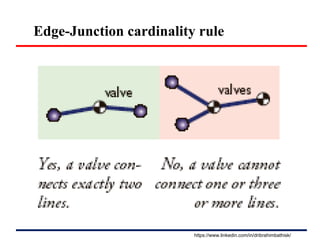
 For example, a valve cannot be placed at the junctions of many lines; a
valve restricts flow from one edge to another.
 You can limit the cardinality of edges to specified junction types.
https://www.linkedin.com/in/dribrahimbathisk/
Edge-Junction cardinality rule
https://www.linkedin.com/in/dribrahimbathisk/
Default junction type rule
 Two edge types may be connectable through more than one junction
type.
 You can establish which of those junction types is the default for
connecting the two edge types. This junction type is the default
junction type.
 When you connect one type of edge to another, you can specify a
default junction type to be inserted.
 When a 14.4 kV line is added to an end junction of a 28.8 kV line, a
step-down transformer with the correct electrical ratings is assigned to
the junction.
 The default junction type rule adds new junctions of that type at the
free end of new edges just added to the network.
https://www.linkedin.com/in/dribrahimbathisk/
Default junction type rule
https://www.linkedin.com/in/dribrahimbathisk/
http://edndoc.esri.com/arcobjects/9.1/ArcGISDevHelp/TechnicalDocuments/Network/ArcGISNetworkModel/ArcGISNetwork.htm
http://edndoc.esri.com/arcobjects/9.2/JAVA/4c44eb60‐59b5‐11dc‐8ce2‐038de00f43b1.htm
http://webhelp.esri.com/arcgisdesktop/9.2/index.cfm?TopicName=Geometric_network_connectivity_rules
Dr. IBRAHIM BATHIS K
https://www.linkedin.com/in/dribrahimbathisk/

Network analysis in gis , part 2 connectivity rules

  • 1.
    Part 2 Connectivity Rules  Dr. IBRAHIM BATHISK https://www.linkedin.com/in/dribrahimbathisk/ https://www.linkedin.com/in/dribrahimbathisk/
  • 2.
    Dr. IBRAHIM BATHISK https://www.linkedin.com/in/dribrahimbathisk/ https://www.linkedin.com/in/dribrahimbathisk/
  • 3.
    Connectivity Rules  Inmost networks, not all edges can connect to all other junctions. Also, not all edges can connect to all other edges through a specified junction.  For example, a hydrant lateral in a water network can connect to a hydrant but not to a service lateral. Similarly, a 10–inch transmission main can only connect to an 8-inch transmission main through a reducer.  Connectivity rules constrain the type of network features that may be connected to one another and the number of features of any particular type that can be connected to features of another type. https://www.linkedin.com/in/dribrahimbathisk/
  • 4.
    Connectivity Rules  Connectivityrules let you easily maintain the integrity of the network features in a geometric network.  At any time, you can selectively validate features in the database and generate reports as to which features in the network are violating one of the connectivity or other rules.  Edge-Junction rule  Edge-Edge rule  Edge-Junction cardinality rule  Default junction type rule https://www.linkedin.com/in/dribrahimbathisk/
  • 5.
    Edge-Junction rule  Aconnectivity rule that establishes that an edge of type A may connect to a junction of type B.  When building a network, you can specify which types of junctions are allowed to connect on an edge of a certain type.  For example, electrical meters can only connect to low-voltage lines, or transmission towers carry only high-voltage lines. The edge–junction rule constrains which types of junctions can connect to a type of edge. https://www.linkedin.com/in/dribrahimbathisk/
  • 6.
  • 7.
    Edge-Edge rule  Theedge–edge rule establishes which combinations of edge types can connect through a given junction.  To specify the valid type combinations for connecting two edges at a junction.  For example, a 10–inch pipe can only be connected to an 8– inch pipe through a proper reducer.  This connectivity rule could be applied to two subtypes of a water pipe feature class for pipe sizes and a subtype of a junction feature class. https://www.linkedin.com/in/dribrahimbathisk/
  • 8.
  • 9.
    Edge-Junction cardinality rule A rule may exist that allows an edge of type A to connect to a junction of type B.  By default, any number of edges of type A can connect to a single junction of type B. You may want to restrict this.  You can specify that between 2 and 5 edges of type A can connect to a junction of type B, but if there are less than 2 edges, or more than 5 edges, the connectivity rule is being violated.  Similarly, you can restrict the number of junctions of type C that can connect to any junction of type D. This range of permissible connections is edge-junction cardinality. https://www.linkedin.com/in/dribrahimbathisk/
  • 10.
    Edge-Junction cardinality rule The edge–junction cardinality rule lets you precisely define the acceptable range of lines that can be connected at a junction.  To restrict the cardinality (count) of edges that connect at a junction.  For example, a valve cannot be placed at the junctions of many lines; a valve restricts flow from one edge to another.  You can limit the cardinality of edges to specified junction types. https://www.linkedin.com/in/dribrahimbathisk/
  • 11.
  • 12.
    Default junction typerule  Two edge types may be connectable through more than one junction type.  You can establish which of those junction types is the default for connecting the two edge types. This junction type is the default junction type.  When you connect one type of edge to another, you can specify a default junction type to be inserted.  When a 14.4 kV line is added to an end junction of a 28.8 kV line, a step-down transformer with the correct electrical ratings is assigned to the junction.  The default junction type rule adds new junctions of that type at the free end of new edges just added to the network. https://www.linkedin.com/in/dribrahimbathisk/
  • 13.
    Default junction typerule https://www.linkedin.com/in/dribrahimbathisk/
  • 14.