NERVES AND SENSES 
BY:ANA GARCIA CALDERÓN
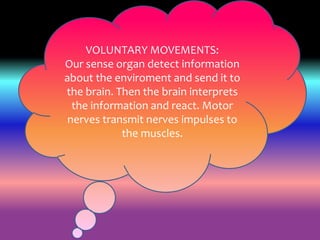
VOLUNTARY MOVEMENTS: 
Our sense organ detect information 
about the enviroment and send it to 
the brain. Then the brain interprets 
the information and react. Motor 
nerves transmit nerves impulses to 
the muscles.
INVOLUNTARY MOVEMENTS: 
Our sense organ detec information about the 
enviroment and send it to the spnal cord. It 
interpretes information and reacts quickly. Motor 
nerves transmit the nerve impulses from the spinal 
cord to muscles.
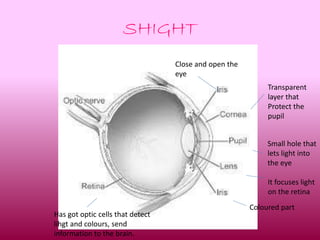
SHIGHT 
Close and open the 
eye 
Transparent 
layer that 
Protect the 
pupil 
Small hole that 
lets light into 
the eye 
It focuses light 
on the retina 
Coloured part 
Has got optic cells that detect 
lihgt and colours, send 
information to the brain.
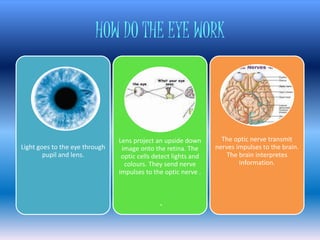
HOW DO THE EYE WORK 
Light goes to the eye through 
pupil and lens. 
Lens project an upside down 
image onto the retina. The 
optic cells detect lights and 
colours. They send nerve 
impulses to the optic nerve . 
The optic nerve transmit 
nerves impulses to the brain. 
The brain interpretes 
information.
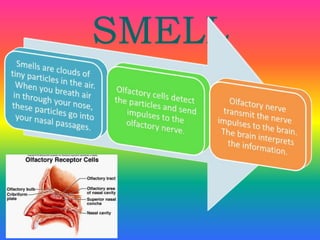
SMELL
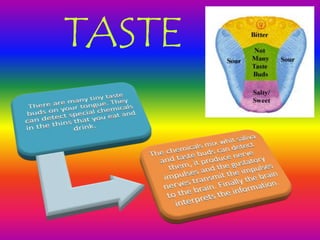
TASTE
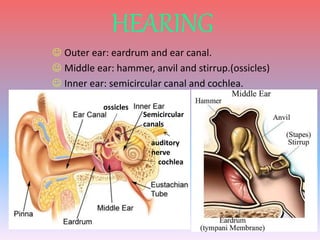
HEARING 
 Outer ear: eardrum and ear canal. 
 Middle ear: hammer, anvil and stirrup.(ossicles) 
 Inner ear: semicircular canal and cochlea. 
ossicles 
Semicircular 
canals 
auditory 
nerve 
cochlea
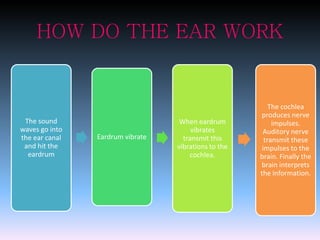
HOW DO THE EAR WORK 
The sound 
waves go into 
the ear canal 
and hit the 
eardrum 
Eardrum vibrate 
When eardrum 
vibrates 
transmit this 
vibrations to the 
cochlea. 
The cochlea 
produces nerve 
impulses. 
Auditory nerve 
transmit these 
impulses to the 
brain. Finally the 
brain interprets 
the information.
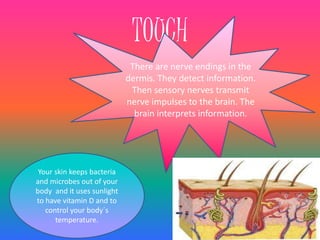
TOUCH 
There are nerve endings in the 
dermis. They detect information. 
Then sensory nerves transmit 
nerve impulses to the brain. The 
brain interprets information. 
Your skin keeps bacteria 
and microbes out of your 
body and it uses sunlight 
to have vitamin D and to 
control your body´s 
temperature.
Nerves  and senses ana

Nerves and senses ana

  • 1.
    NERVES AND SENSES BY:ANA GARCIA CALDERÓN
  • 3.
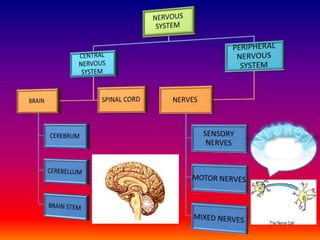
    VOLUNTARY MOVEMENTS: Oursense organ detect information about the enviroment and send it to the brain. Then the brain interprets the information and react. Motor nerves transmit nerves impulses to the muscles.
  • 4.
    INVOLUNTARY MOVEMENTS: Oursense organ detec information about the enviroment and send it to the spnal cord. It interpretes information and reacts quickly. Motor nerves transmit the nerve impulses from the spinal cord to muscles.
  • 5.
    SHIGHT Close andopen the eye Transparent layer that Protect the pupil Small hole that lets light into the eye It focuses light on the retina Coloured part Has got optic cells that detect lihgt and colours, send information to the brain.
  • 6.
    HOW DO THEEYE WORK Light goes to the eye through pupil and lens. Lens project an upside down image onto the retina. The optic cells detect lights and colours. They send nerve impulses to the optic nerve . The optic nerve transmit nerves impulses to the brain. The brain interpretes information.
  • 7.
  • 8.
  • 9.
    HEARING  Outerear: eardrum and ear canal.  Middle ear: hammer, anvil and stirrup.(ossicles)  Inner ear: semicircular canal and cochlea. ossicles Semicircular canals auditory nerve cochlea
  • 10.
    HOW DO THEEAR WORK The sound waves go into the ear canal and hit the eardrum Eardrum vibrate When eardrum vibrates transmit this vibrations to the cochlea. The cochlea produces nerve impulses. Auditory nerve transmit these impulses to the brain. Finally the brain interprets the information.
  • 11.
    TOUCH There arenerve endings in the dermis. They detect information. Then sensory nerves transmit nerve impulses to the brain. The brain interprets information. Your skin keeps bacteria and microbes out of your body and it uses sunlight to have vitamin D and to control your body´s temperature.