Nerve Supply of Bladder and
Physiology of Micturition
Dr.Roshan V Shetty
NERVE SUPPLY
SensoryMotor
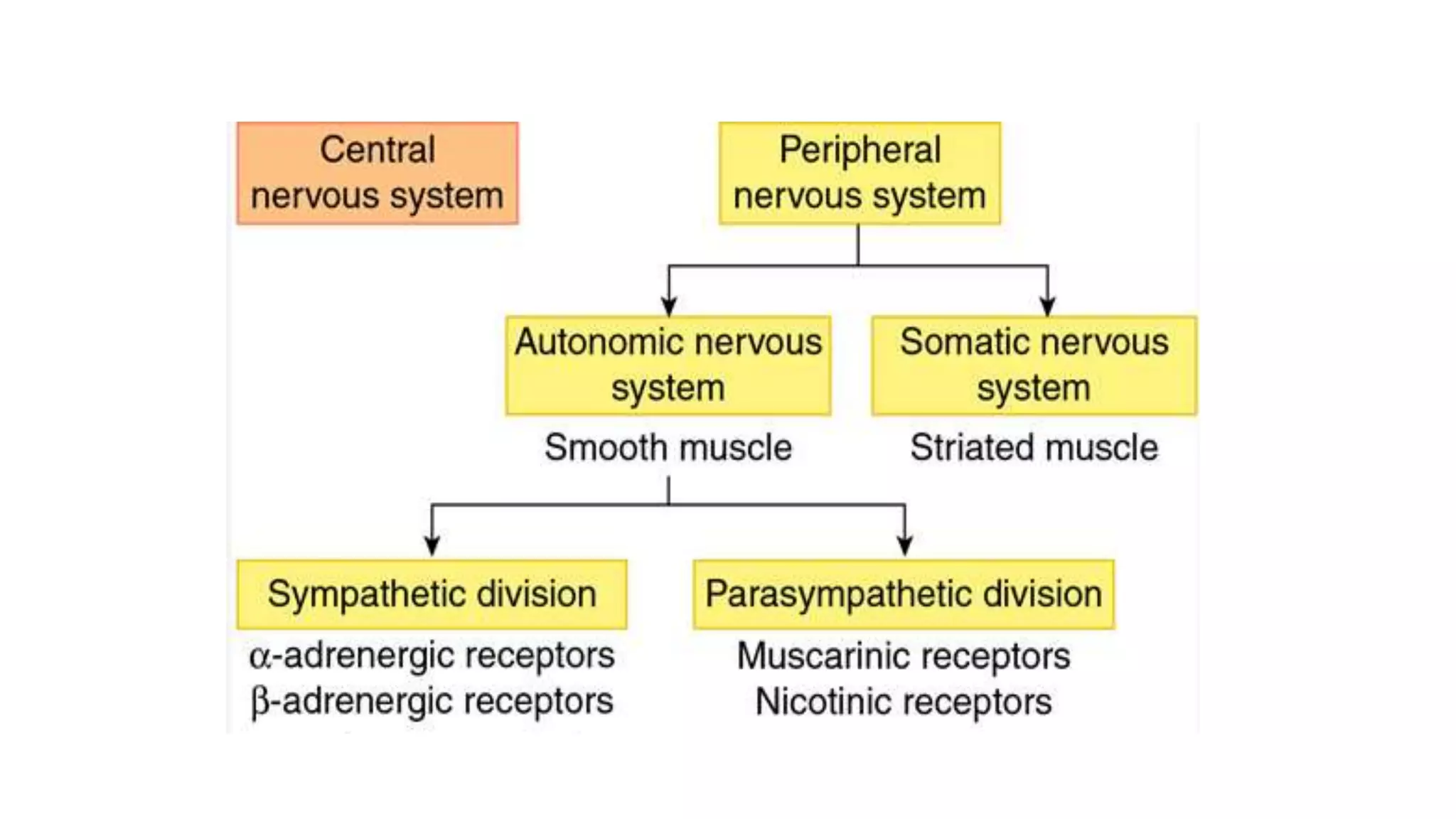
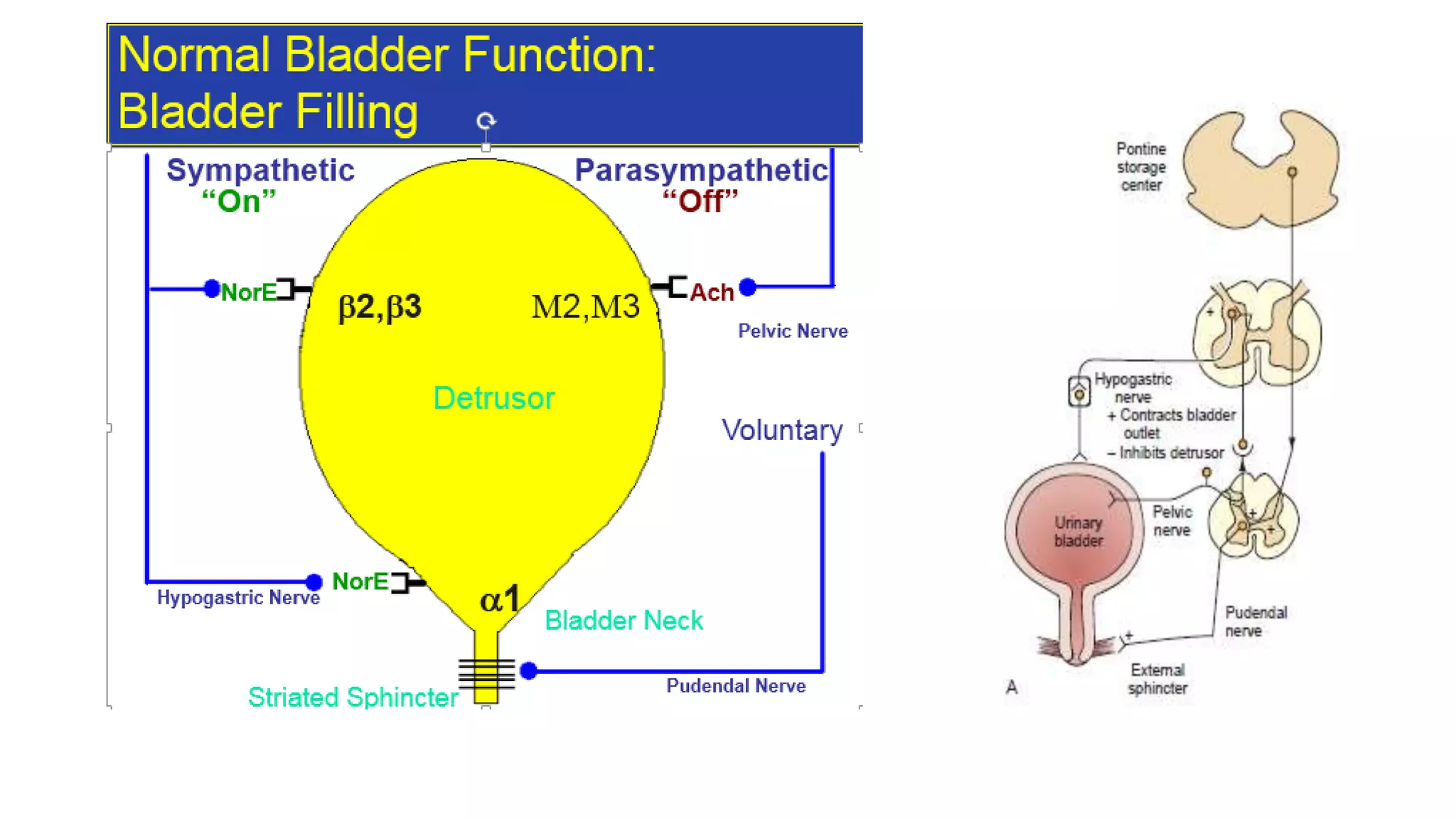
• Sympathetic Parasympathetic
T11, T12, L1, L2 Most
Filling of Bladder
• Parasympathetic Sympathetic
S2, S3, S4(nerve erigentes) Few
Emptying of Bladder
• Somatic
Pudendal nerve
Voluntary contraction of micturition
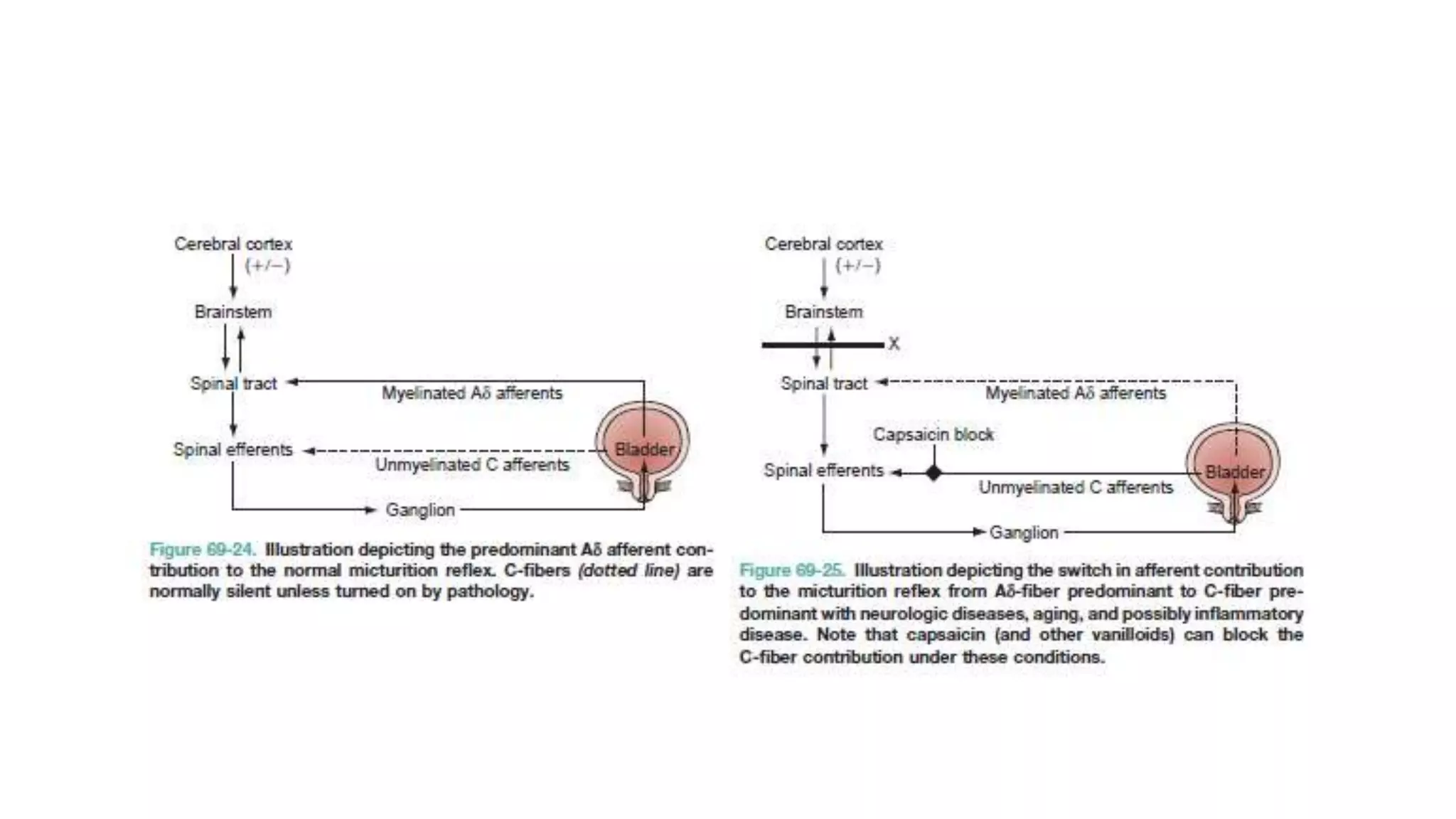
Sensory(Peripheral Afferent)
Pelvic nerve afferents consist of the following 2 fibers:
• Myelinated A-delta fibers:
* Mediating normal micturition sensitive to gradual distention of the urinary
bladder
• Unmyelinated C-fibers:
*Under normal conditions: do not respond to bladder distention.
*Various pathological conditions including
• SCI: Chemoreceptors and mechano-sensitive nociceptors from the bladder and urethra
become hyperactive and can cause hyper-reflexic bladder and urinary incontinence.
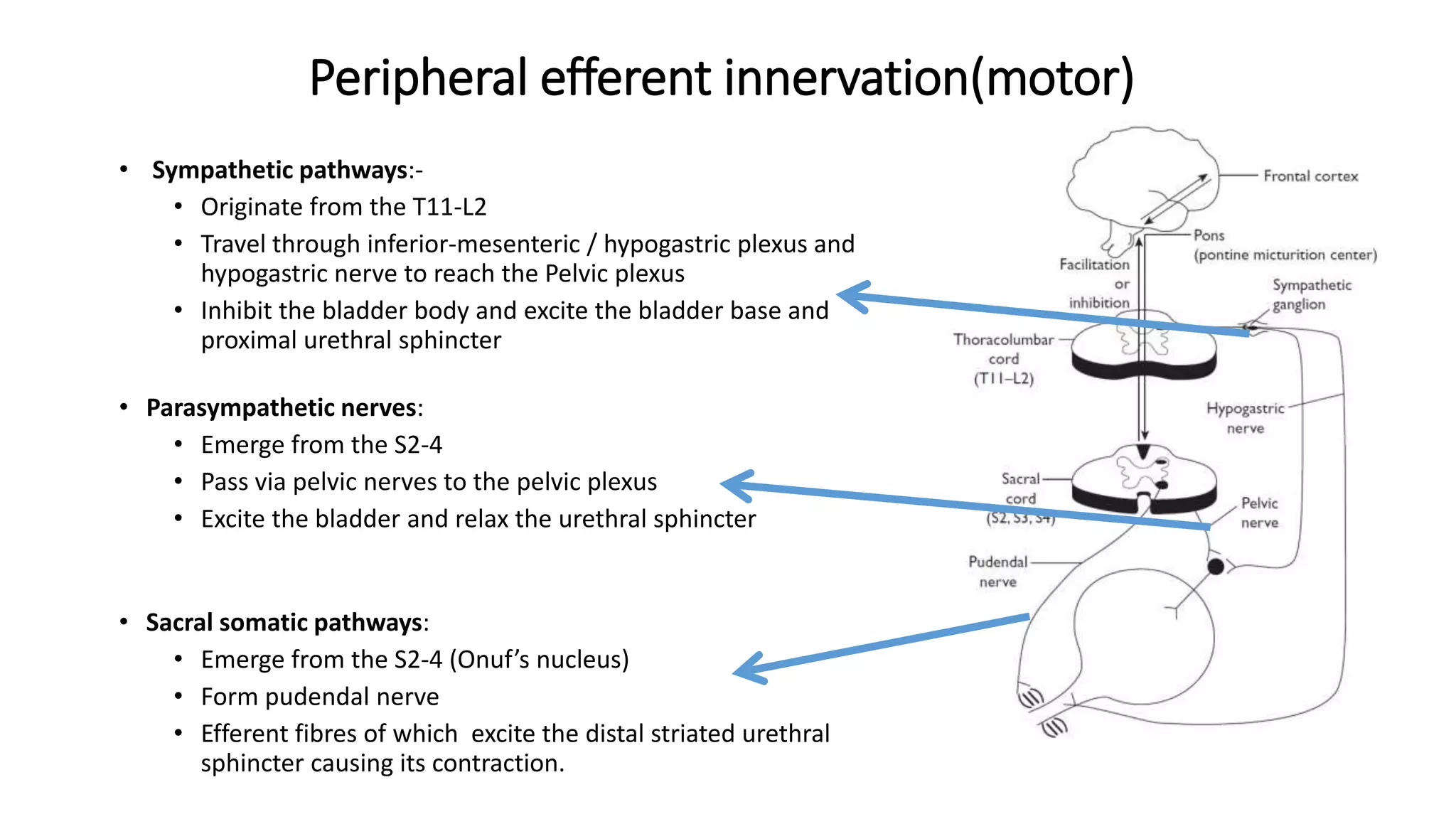
Peripheral efferent innervation(motor)
• Sympathetic pathways:-
• Originate from the T11-L2
• Travel through inferior-mesenteric / hypogastric plexus and
hypogastric nerve to reach the Pelvic plexus
• Inhibit the bladder body and excite the bladder base and
proximal urethral sphincter
• Parasympathetic nerves:
• Emerge from the S2-4
• Pass via pelvic nerves to the pelvic plexus
• Excite the bladder and relax the urethral sphincter
• Sacral somatic pathways:
• Emerge from the S2-4 (Onuf’s nucleus)
• Form pudendal nerve
• Efferent fibres of which excite the distal striated urethral
sphincter causing its contraction.
REFLEXES
STORAGE REFLEXES
SYMPATHETIC STORAGE REFLEX SOMATIC STORAGE REFLEX
(Bladder afferent loop reflex) (Guarding reflex)
• SYMPATHETIC STORAGE REFLEX (Bladder afferent loop reflex)
Urine storage mechanism.
Reflex activation triggered by afferent activity induced by distention of
the urinary bladder.
-stimulating α1 adrenergic receptors in the urethral
smooth muscle: -> promotes closure of the urethral
outlet
-stimulating β3 adrenergic receptors in the detrusor
smooth muscle: -> inhibits neurally mediated
contractions of the bladder
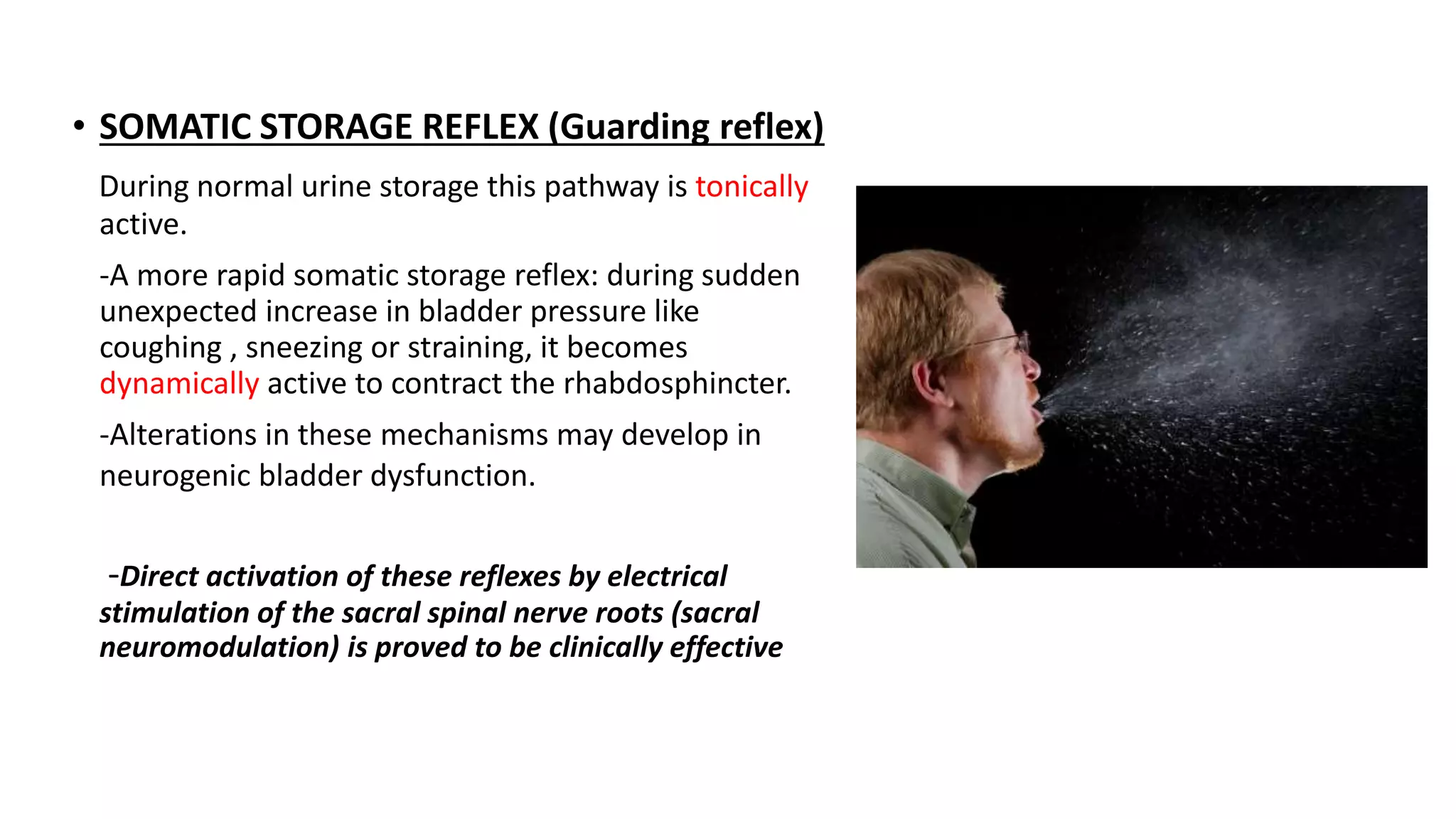
• SOMATIC STORAGE REFLEX (Guarding reflex)
During normal urine storage this pathway is tonically
active.
-A more rapid somatic storage reflex: during sudden
unexpected increase in bladder pressure like
coughing , sneezing or straining, it becomes
dynamically active to contract the rhabdosphincter.
-Alterations in these mechanisms may develop in
neurogenic bladder dysfunction.
-Direct activation of these reflexes by electrical
stimulation of the sacral spinal nerve roots (sacral
neuromodulation) is proved to be clinically effective
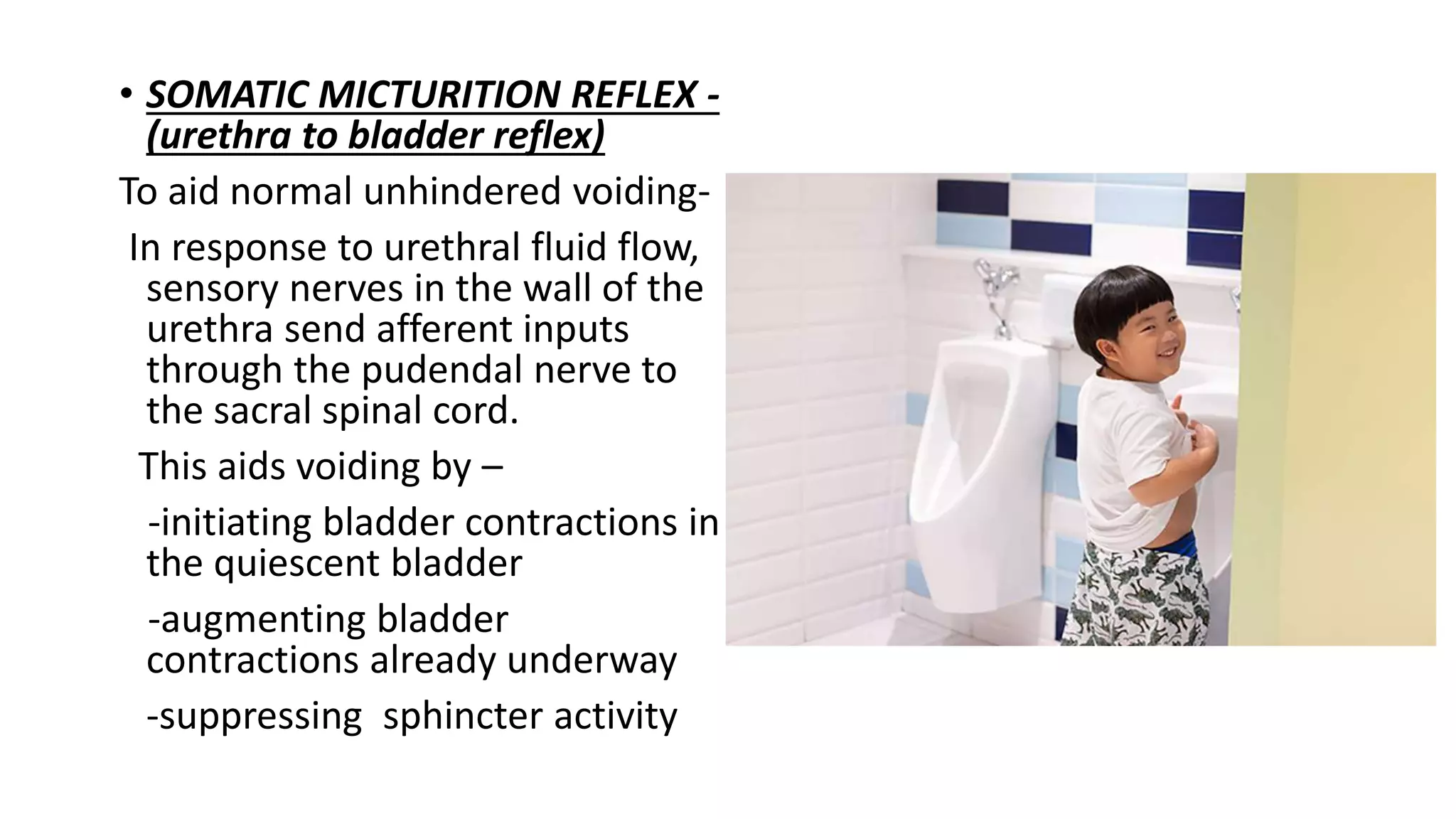
• SOMATIC MICTURITION REFLEX -
(urethra to bladder reflex)
To aid normal unhindered voiding-
In response to urethral fluid flow,
sensory nerves in the wall of the
urethra send afferent inputs
through the pudendal nerve to
the sacral spinal cord.
This aids voiding by –
-initiating bladder contractions in
the quiescent bladder
-augmenting bladder
contractions already underway
-suppressing sphincter activity
Thank You

Nerve suply of bladder and physiology 2

  • 1.
    Nerve Supply ofBladder and Physiology of Micturition Dr.Roshan V Shetty
  • 4.
    NERVE SUPPLY SensoryMotor • SympatheticParasympathetic T11, T12, L1, L2 Most Filling of Bladder • Parasympathetic Sympathetic S2, S3, S4(nerve erigentes) Few Emptying of Bladder • Somatic Pudendal nerve Voluntary contraction of micturition
  • 5.
    Sensory(Peripheral Afferent) Pelvic nerveafferents consist of the following 2 fibers: • Myelinated A-delta fibers: * Mediating normal micturition sensitive to gradual distention of the urinary bladder • Unmyelinated C-fibers: *Under normal conditions: do not respond to bladder distention. *Various pathological conditions including • SCI: Chemoreceptors and mechano-sensitive nociceptors from the bladder and urethra become hyperactive and can cause hyper-reflexic bladder and urinary incontinence.
  • 7.
    Peripheral efferent innervation(motor) •Sympathetic pathways:- • Originate from the T11-L2 • Travel through inferior-mesenteric / hypogastric plexus and hypogastric nerve to reach the Pelvic plexus • Inhibit the bladder body and excite the bladder base and proximal urethral sphincter • Parasympathetic nerves: • Emerge from the S2-4 • Pass via pelvic nerves to the pelvic plexus • Excite the bladder and relax the urethral sphincter • Sacral somatic pathways: • Emerge from the S2-4 (Onuf’s nucleus) • Form pudendal nerve • Efferent fibres of which excite the distal striated urethral sphincter causing its contraction.
  • 8.
    REFLEXES STORAGE REFLEXES SYMPATHETIC STORAGEREFLEX SOMATIC STORAGE REFLEX (Bladder afferent loop reflex) (Guarding reflex)
  • 9.
    • SYMPATHETIC STORAGEREFLEX (Bladder afferent loop reflex) Urine storage mechanism. Reflex activation triggered by afferent activity induced by distention of the urinary bladder. -stimulating α1 adrenergic receptors in the urethral smooth muscle: -> promotes closure of the urethral outlet -stimulating β3 adrenergic receptors in the detrusor smooth muscle: -> inhibits neurally mediated contractions of the bladder
  • 10.
    • SOMATIC STORAGEREFLEX (Guarding reflex) During normal urine storage this pathway is tonically active. -A more rapid somatic storage reflex: during sudden unexpected increase in bladder pressure like coughing , sneezing or straining, it becomes dynamically active to contract the rhabdosphincter. -Alterations in these mechanisms may develop in neurogenic bladder dysfunction. -Direct activation of these reflexes by electrical stimulation of the sacral spinal nerve roots (sacral neuromodulation) is proved to be clinically effective
  • 12.
    • SOMATIC MICTURITIONREFLEX - (urethra to bladder reflex) To aid normal unhindered voiding- In response to urethral fluid flow, sensory nerves in the wall of the urethra send afferent inputs through the pudendal nerve to the sacral spinal cord. This aids voiding by – -initiating bladder contractions in the quiescent bladder -augmenting bladder contractions already underway -suppressing sphincter activity
  • 17.