Neonatal Jaundice
Meru Yale
Neonatal Jaundice
 Jaundice – yellowish discoloration of skin,mucous membrane and
conjunctiva due to excess accumulation of bile pigments in the
blood.
 Nearly 60% of term newborn becomes visibly jaundiced in the first
week of life.
 High bilirubin levels may be toxic to the developing CNS.
 Newborn appears jaundiced when bilirubin is >7mg/dL
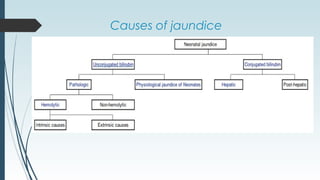
Causes of jaundice
Etiology based on time of appearance
First 24 hrs of life
 - Hemolytic disease (Rh, ABO)
 - G6PD deficiency
 - RBC membrane defect (Hereditary Spherocytosis, others)
 - Large amount of medications to mother – Vit.K, Salicylate
 - Intrauterine infections
 - Crigler - Najjar Syndrome
24hrs to 72hrs
 -Physiological jaundice
After 72 hrs of life
 - Septicemia
 - Neonatal hepatitis
 - Biliary atresia
 - Metabolic disease (Galactosemia, alpha-1- antitrypsin def.)
 - Intestinal obstruction
 - Hypothyroidism
 - Breast milk Jaundice
Jaundice beyond 14 days is persistant jaundice
Physiological Jaundice
 Infants develop visible jaundice due to of unconjugated bilirubin.
 Appears between 24-72hrs.
 Total serum bilirubin level peaks by 3 days of age then falls in term
neonates.
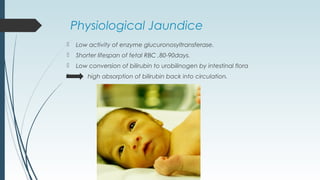
Physiological Jaundice
 Low activity of enzyme glucuronosyltransferase.
 Shorter lifespan of fetal RBC ,80-90days.
 Low conversion of bilirubin to urobilinogen by intestinal flora
 high absorption of bilirubin back into circulation.
Pathological Jaundice
 Elevation of TSB level to an extent where treatment of jaundice is likely to
result into benefit than harm.
 TSB level >5mg/dl on first day
 >10mg/dl on second day
 >15mg/dl thereafter in term newborns.
 Conjugated bilirubin > 2 mg / dl
 Jaundice persisting >1 wk in term or > 2 wks in preterm baby
Prolonged jaundice
 Persistence of significant jaundice(10 mg/dl) in a term baby beyond 3
weeks .
causes
 inadequate feeding
 breast milk jaundice
 cephalohaematoma
 hemolytic disease
 G6PD deficiency
 hypothyroidism
Approach
History
 Previous sibling with jaundice ,
anaemia splenectomy
 Maternal illness with fever and
rash
 Labour and delivery events
 Maternal drugs
 Liver disease in the family
 Rh/ABO Incompatibility, G6PD
deficiency, crigler – Najjar
Syndrome
 Intrauterine infection
 Asphyxia, trauma, oxytocin,
delayed cord clamping
 Sulfonamide, nitrofurantoin,
antimalarials lead to hemolysis.
 α - 1 antitrypsin deficiency, cystic
fibrosis, Galactosemia
Examination
 Small for date
 Microcephaly
 Pallor
 Bruises, cephalhematoma
 Petechiae
 Polycythemia
Intrauterine infection
 Intrauterine infection
 Hemolysis, bleeding
 bilirubin load
 I.U. infection,
 sepsis,
 Erythroblastosis
 Hepatosplenomegaly
 Omphalitis
 Chorioretinitis
 Urine staining
 clay stool
 Hemolytic anemia, I.U.
 infection, liver disease
 Sepsis
 I.U. infection
 Cholestasis
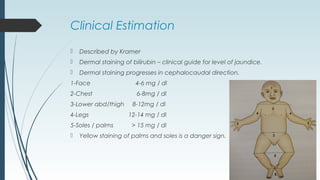
Clinical Estimation
 Described by Kramer
 Dermal staining of bilirubin – clinical guide for level of jaundice.
 Dermal staining progresses in cephalocaudal direction.
1-Face 4-6 mg / dl
2-Chest 6-8mg / dl
3-Lower abd/thigh 8-12mg / dl
4-Legs 12-14 mg / dl
5-Soles / palms > 15 mg / dl
 Yellow staining of palms and soles is a danger sign.
Kernicterus
Dyskinetic/Athetoid CP
Clinical features of Kernicterus
Stage I – Lethargy
irritability
vomiting
poor feeding
hypotonia
poor Moro’s reflex
muscular spasms/opisthotonus
 Stage II – convulsions
rigidity(opisthotonus)
loss of deep tendon reflexes
no spontaneous movements
poor feeding
bulging fontanel
high-pitched shrill cry
 Most of the infants die during this stage
 Stage III – stage of apparent recovery in infants who survive beyond stage II
spasticity and convulsions decrease.
a few involuntary movements may occur.
 Stage IV- Stage of established choreoathetoid CP
usually apparent after 3-4 years of age.
-involuntary movements with intermittent muscular spasms
convulsions
deafness
loss of upward conjugate movements of the eyes
Dysarthria
Mental retardation
dental dysplasia(yellowish-black teeth)
Thank you
Thank you

Neonatal jaundice

  • 1.
  • 2.
    Neonatal Jaundice  Jaundice– yellowish discoloration of skin,mucous membrane and conjunctiva due to excess accumulation of bile pigments in the blood.  Nearly 60% of term newborn becomes visibly jaundiced in the first week of life.  High bilirubin levels may be toxic to the developing CNS.  Newborn appears jaundiced when bilirubin is >7mg/dL
  • 3.
  • 4.
    Etiology based ontime of appearance First 24 hrs of life  - Hemolytic disease (Rh, ABO)  - G6PD deficiency  - RBC membrane defect (Hereditary Spherocytosis, others)  - Large amount of medications to mother – Vit.K, Salicylate  - Intrauterine infections  - Crigler - Najjar Syndrome 24hrs to 72hrs  -Physiological jaundice
  • 5.
    After 72 hrsof life  - Septicemia  - Neonatal hepatitis  - Biliary atresia  - Metabolic disease (Galactosemia, alpha-1- antitrypsin def.)  - Intestinal obstruction  - Hypothyroidism  - Breast milk Jaundice Jaundice beyond 14 days is persistant jaundice
  • 6.
    Physiological Jaundice  Infantsdevelop visible jaundice due to of unconjugated bilirubin.  Appears between 24-72hrs.  Total serum bilirubin level peaks by 3 days of age then falls in term neonates.
  • 7.
    Physiological Jaundice  Lowactivity of enzyme glucuronosyltransferase.  Shorter lifespan of fetal RBC ,80-90days.  Low conversion of bilirubin to urobilinogen by intestinal flora  high absorption of bilirubin back into circulation.
  • 8.
    Pathological Jaundice  Elevationof TSB level to an extent where treatment of jaundice is likely to result into benefit than harm.  TSB level >5mg/dl on first day  >10mg/dl on second day  >15mg/dl thereafter in term newborns.  Conjugated bilirubin > 2 mg / dl  Jaundice persisting >1 wk in term or > 2 wks in preterm baby
  • 9.
    Prolonged jaundice  Persistenceof significant jaundice(10 mg/dl) in a term baby beyond 3 weeks . causes  inadequate feeding  breast milk jaundice  cephalohaematoma  hemolytic disease  G6PD deficiency  hypothyroidism
  • 10.
    Approach History  Previous siblingwith jaundice , anaemia splenectomy  Maternal illness with fever and rash  Labour and delivery events  Maternal drugs  Liver disease in the family  Rh/ABO Incompatibility, G6PD deficiency, crigler – Najjar Syndrome  Intrauterine infection  Asphyxia, trauma, oxytocin, delayed cord clamping  Sulfonamide, nitrofurantoin, antimalarials lead to hemolysis.  α - 1 antitrypsin deficiency, cystic fibrosis, Galactosemia
  • 11.
    Examination  Small fordate  Microcephaly  Pallor  Bruises, cephalhematoma  Petechiae  Polycythemia Intrauterine infection  Intrauterine infection  Hemolysis, bleeding  bilirubin load  I.U. infection,  sepsis,  Erythroblastosis
  • 12.
     Hepatosplenomegaly  Omphalitis Chorioretinitis  Urine staining  clay stool  Hemolytic anemia, I.U.  infection, liver disease  Sepsis  I.U. infection  Cholestasis
  • 13.
    Clinical Estimation  Describedby Kramer  Dermal staining of bilirubin – clinical guide for level of jaundice.  Dermal staining progresses in cephalocaudal direction. 1-Face 4-6 mg / dl 2-Chest 6-8mg / dl 3-Lower abd/thigh 8-12mg / dl 4-Legs 12-14 mg / dl 5-Soles / palms > 15 mg / dl  Yellow staining of palms and soles is a danger sign.
  • 14.
  • 15.
    Clinical features ofKernicterus Stage I – Lethargy irritability vomiting poor feeding hypotonia poor Moro’s reflex muscular spasms/opisthotonus
  • 16.
     Stage II– convulsions rigidity(opisthotonus) loss of deep tendon reflexes no spontaneous movements poor feeding bulging fontanel high-pitched shrill cry  Most of the infants die during this stage
  • 17.
     Stage III– stage of apparent recovery in infants who survive beyond stage II spasticity and convulsions decrease. a few involuntary movements may occur.
  • 18.
     Stage IV-Stage of established choreoathetoid CP usually apparent after 3-4 years of age. -involuntary movements with intermittent muscular spasms convulsions deafness loss of upward conjugate movements of the eyes Dysarthria Mental retardation dental dysplasia(yellowish-black teeth)
  • 19.