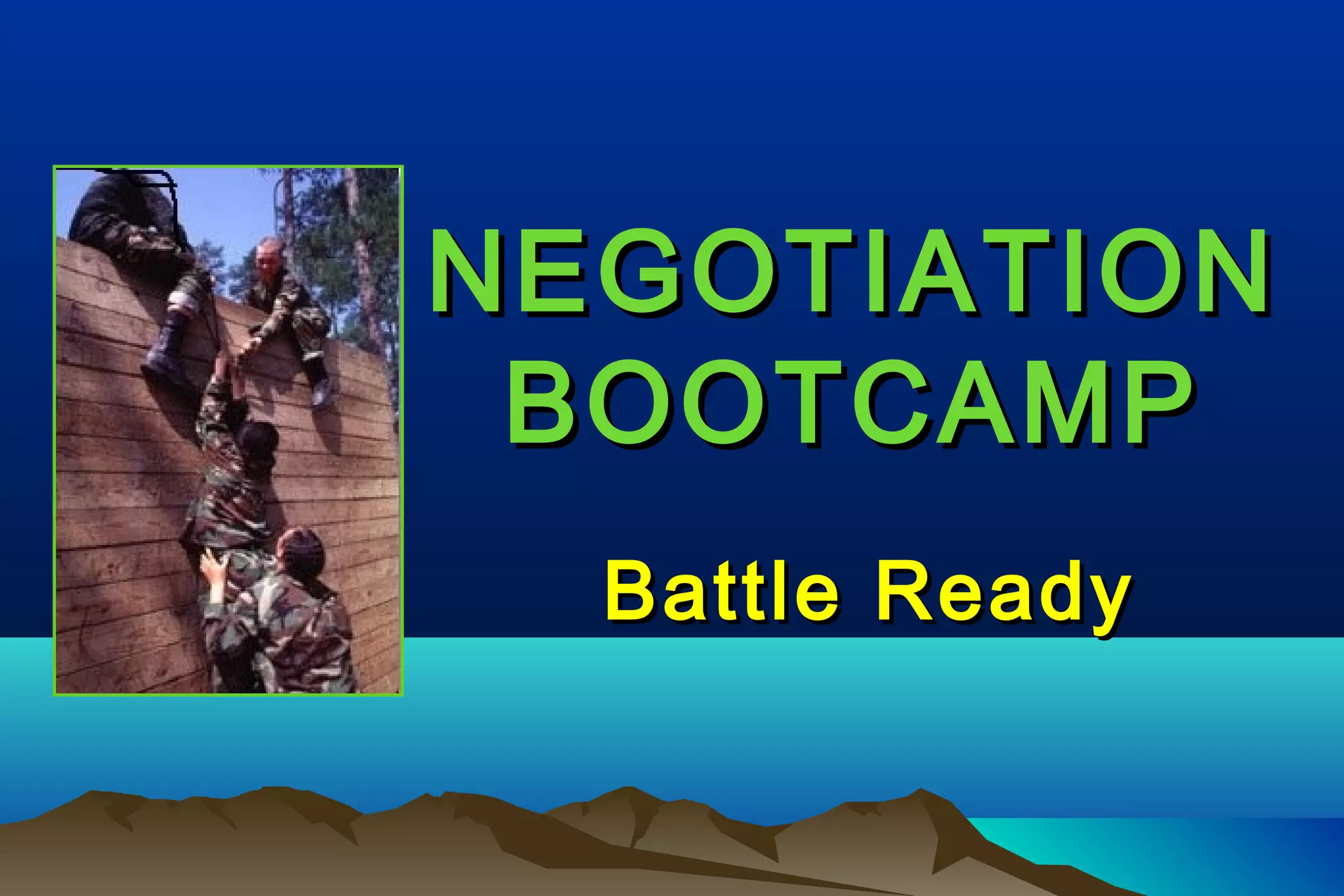
NEGOTIATIONNEGOTIATION
BOOTCAMPBOOTCAMP
Battle ReadyBattle Ready
POSITIONAL BARGAININGPOSITIONAL BARGAINING
Four Step MethodFour Step Method
 PREPAREPREPARE
IdentifyIdentify
 ARGUEARGUE
SignalSignal
 PROPOSEPROPOSE
PackagePackage
 BARGAINBARGAIN
CloseClose
PREPAREPREPARE
 OBJECTIVESOBJECTIVES
 INFORMATIONINFORMATION
 CONCESSIONSCONCESSIONS
 VARIABLESVARIABLES
 STRATEGYSTRATEGY
 TEAMWORKTEAMWORK
OBJECTIVESOBJECTIVES
 What are our priorities ?What are our priorities ?
 Can we really attain our objectives ?Can we really attain our objectives ?
 Can we determineCan we determine theirtheir objectives ?objectives ?
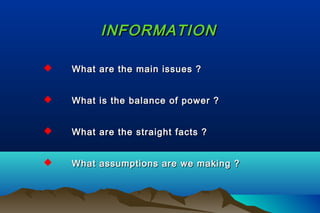
INFORMATIONINFORMATION
 What are the main issues ?What are the main issues ?
 What is the balance of power ?What is the balance of power ?
 What are the straight facts ?What are the straight facts ?
 What assumptions are we making ?What assumptions are we making ?
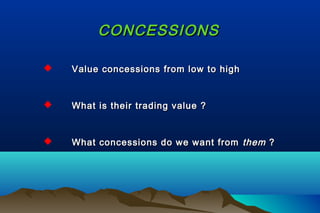
CONCESSIONSCONCESSIONS
 Value concessions from low to highValue concessions from low to high
 What is their trading value ?What is their trading value ?
 What concessions do we want fromWhat concessions do we want from themthem ??
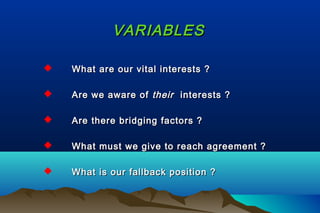
VARIABLESVARIABLES
 What are our vital interests ?What are our vital interests ?
 Are we aware ofAre we aware of theirtheir interests ?interests ?
 Are there bridging factors ?Are there bridging factors ?
 What must we give to reach agreement ?What must we give to reach agreement ?
 What is our fallback position ?What is our fallback position ?
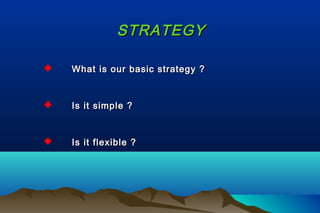
STRATEGYSTRATEGY
 What is our basic strategy ?What is our basic strategy ?
 Is it simple ?Is it simple ?
 Is it flexible ?Is it flexible ?
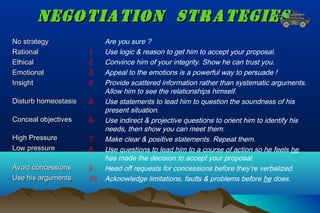
NEGOTIATION STRATEGIESNEGOTIATION STRATEGIES
No strategyNo strategy
RationalRational
EthicalEthical
EmotionalEmotional
InsightInsight
Disturb homeostasisDisturb homeostasis
Conceal objectivesConceal objectives
High PressureHigh Pressure
Low pressureLow pressure
Avoid concessionsAvoid concessions
Use his argumentsUse his arguments
Are you sure ?
1. Use logic & reason to get him to accept your proposal.
2. Convince him of your integrity. Show he can trust you.
3. Appeal to the emotions is a powerful way to persuade !
4. Provide scattered information rather than systematic arguments.
Allow him to see the relationships himself.
5. Use statements to lead him to question the soundness of his
present situation.
6. Use indirect & projective questions to orient him to identify his
needs, then show you can meet them.
7. Make clear & positive statements. Repeat them.
8. Use questions to lead him to a course of action so he feels he
has made the decision to accept your proposal.
9. Head off requests for concessions before they’re verbalized.
10. Acknowledge limitations, faults & problems before he does.
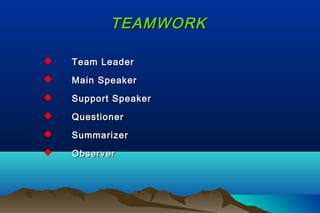
TEAMWORKTEAMWORK
 Team LeaderTeam Leader
 Main SpeakerMain Speaker
 Support SpeakerSupport Speaker
 QuestionerQuestioner
 SummarizerSummarizer
 ObserverObserver
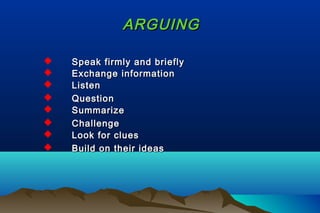
ARGUINGARGUING
 Speak firmly and brieflySpeak firmly and briefly
 Exchange informationExchange information
 ListenListen
 QuestionQuestion
 SummarizeSummarize
 ChallengeChallenge
 Look for cluesLook for clues
 Build on their ideasBuild on their ideas
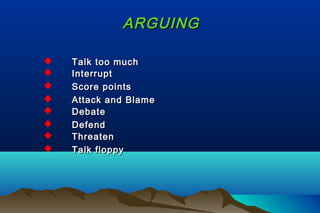
ARGUINGARGUING
 Talk too muchTalk too much
 InterruptInterrupt
 Score pointsScore points
 Attack and BlameAttack and Blame
 DebateDebate
 DefendDefend
 ThreatenThreaten
 Talk floppyTalk floppy
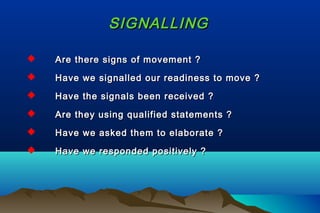
SIGNALLINGSIGNALLING
 Are there signs of movement ?Are there signs of movement ?
 Have we signalled our readiness to move ?Have we signalled our readiness to move ?
 Have the signals been received ?Have the signals been received ?
 Are they using qualified statements ?Are they using qualified statements ?
 Have we asked them to elaborate ?Have we asked them to elaborate ?
 Have we responded positively ?Have we responded positively ?
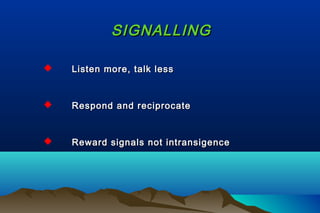
SIGNALLINGSIGNALLING
 Listen more, talk lessListen more, talk less
 Respond and reciprocateRespond and reciprocate
 Reward signals not intransigenceReward signals not intransigence
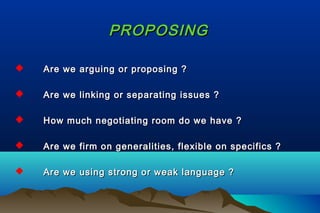
PROPOSINGPROPOSING
 Are we arguing or proposing ?Are we arguing or proposing ?
 Are we linking or separating issues ?Are we linking or separating issues ?
 How much negotiating room do we have ?How much negotiating room do we have ?
 Are we firm on generalities, flexible on specifics ?Are we firm on generalities, flexible on specifics ?
 Are we using strong or weak language ?Are we using strong or weak language ?
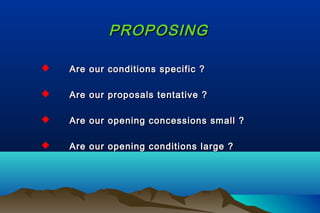
PROPOSINGPROPOSING
 Are our conditions specific ?Are our conditions specific ?
 Are our proposals tentative ?Are our proposals tentative ?
 Are our opening concessions small ?Are our opening concessions small ?
 Are our opening conditions large ?Are our opening conditions large ?
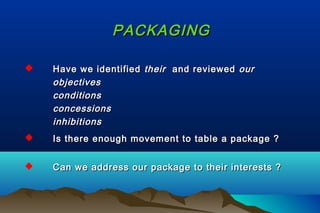
PACKAGINGPACKAGING
 Have we identifiedHave we identified theirtheir and reviewedand reviewed ourour
objectivesobjectives
conditionsconditions
concessionsconcessions
inhibitionsinhibitions
 Is there enough movement to table a package ?Is there enough movement to table a package ?
 Can we address our package to their interests ?Can we address our package to their interests ?
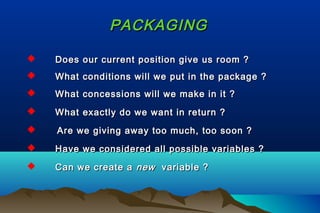
PACKAGINGPACKAGING
 Does our current position give us room ?Does our current position give us room ?
 What conditions will we put in the package ?What conditions will we put in the package ?
 What concessions will we make in it ?What concessions will we make in it ?
 What exactly do we want in return ?What exactly do we want in return ?
 Are we giving away too much, too soon ?Are we giving away too much, too soon ?
 Have we considered all possible variables ?Have we considered all possible variables ?
 Can we create aCan we create a newnew variable ?variable ?
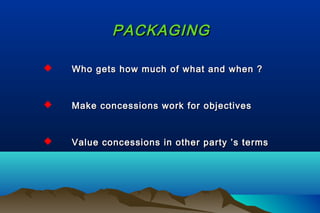
PACKAGINGPACKAGING
 Who gets how much of what and when ?Who gets how much of what and when ?
 Make concessions work for objectivesMake concessions work for objectives
 Value concessions in other party ’s termsValue concessions in other party ’s terms
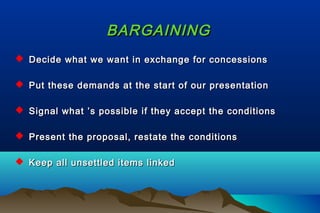
BARGAININGBARGAINING
 Decide what we want in exchange for concessionsDecide what we want in exchange for concessions
 Put these demands at the start of our presentationPut these demands at the start of our presentation
 Signal what ’s possible if they accept the conditionsSignal what ’s possible if they accept the conditions
 Present the proposal, restate the conditionsPresent the proposal, restate the conditions
 Keep all unsettled items linkedKeep all unsettled items linked
BARGAININGBARGAINING
 Never give something for nothingNever give something for nothing
 Lead with conditionsLead with conditions
 Keep everything linkedKeep everything linked
CLOSINGCLOSING
 When will we stop conceding ?When will we stop conceding ?
 What kind of close is appropriate ?What kind of close is appropriate ?
summarysummary
conditionalconditional
concessionconcession
 Do we need to adjourn before the final offer ?Do we need to adjourn before the final offer ?
 Have they said yes or no ?Have they said yes or no ?
 Are there any outstanding items ?Are there any outstanding items ?
CLOSINGCLOSING
 What has been agreed ?What has been agreed ?
 Do we need to write draft clauses ?Do we need to write draft clauses ?
 Have we specified points ofHave we specified points of
explanationexplanation
clarificationclarification
interpretationinterpretation
 If the agreement is verbal, confirm it in writing !If the agreement is verbal, confirm it in writing !

Negotiation Bootcamp 4 Step Method

  • 1.
  • 2.
    POSITIONAL BARGAININGPOSITIONAL BARGAINING FourStep MethodFour Step Method  PREPAREPREPARE IdentifyIdentify  ARGUEARGUE SignalSignal  PROPOSEPROPOSE PackagePackage  BARGAINBARGAIN CloseClose
  • 3.
    PREPAREPREPARE  OBJECTIVESOBJECTIVES  INFORMATIONINFORMATION CONCESSIONSCONCESSIONS  VARIABLESVARIABLES  STRATEGYSTRATEGY  TEAMWORKTEAMWORK
  • 4.
    OBJECTIVESOBJECTIVES  What areour priorities ?What are our priorities ?  Can we really attain our objectives ?Can we really attain our objectives ?  Can we determineCan we determine theirtheir objectives ?objectives ?
  • 5.
    INFORMATIONINFORMATION  What arethe main issues ?What are the main issues ?  What is the balance of power ?What is the balance of power ?  What are the straight facts ?What are the straight facts ?  What assumptions are we making ?What assumptions are we making ?
  • 6.
    CONCESSIONSCONCESSIONS  Value concessionsfrom low to highValue concessions from low to high  What is their trading value ?What is their trading value ?  What concessions do we want fromWhat concessions do we want from themthem ??
  • 7.
    VARIABLESVARIABLES  What areour vital interests ?What are our vital interests ?  Are we aware ofAre we aware of theirtheir interests ?interests ?  Are there bridging factors ?Are there bridging factors ?  What must we give to reach agreement ?What must we give to reach agreement ?  What is our fallback position ?What is our fallback position ?
  • 8.
    STRATEGYSTRATEGY  What isour basic strategy ?What is our basic strategy ?  Is it simple ?Is it simple ?  Is it flexible ?Is it flexible ?
  • 9.
    NEGOTIATION STRATEGIESNEGOTIATION STRATEGIES NostrategyNo strategy RationalRational EthicalEthical EmotionalEmotional InsightInsight Disturb homeostasisDisturb homeostasis Conceal objectivesConceal objectives High PressureHigh Pressure Low pressureLow pressure Avoid concessionsAvoid concessions Use his argumentsUse his arguments Are you sure ? 1. Use logic & reason to get him to accept your proposal. 2. Convince him of your integrity. Show he can trust you. 3. Appeal to the emotions is a powerful way to persuade ! 4. Provide scattered information rather than systematic arguments. Allow him to see the relationships himself. 5. Use statements to lead him to question the soundness of his present situation. 6. Use indirect & projective questions to orient him to identify his needs, then show you can meet them. 7. Make clear & positive statements. Repeat them. 8. Use questions to lead him to a course of action so he feels he has made the decision to accept your proposal. 9. Head off requests for concessions before they’re verbalized. 10. Acknowledge limitations, faults & problems before he does.
  • 10.
    TEAMWORKTEAMWORK  Team LeaderTeamLeader  Main SpeakerMain Speaker  Support SpeakerSupport Speaker  QuestionerQuestioner  SummarizerSummarizer  ObserverObserver
  • 11.
    ARGUINGARGUING  Speak firmlyand brieflySpeak firmly and briefly  Exchange informationExchange information  ListenListen  QuestionQuestion  SummarizeSummarize  ChallengeChallenge  Look for cluesLook for clues  Build on their ideasBuild on their ideas
  • 12.
    ARGUINGARGUING  Talk toomuchTalk too much  InterruptInterrupt  Score pointsScore points  Attack and BlameAttack and Blame  DebateDebate  DefendDefend  ThreatenThreaten  Talk floppyTalk floppy
  • 13.
    SIGNALLINGSIGNALLING  Are theresigns of movement ?Are there signs of movement ?  Have we signalled our readiness to move ?Have we signalled our readiness to move ?  Have the signals been received ?Have the signals been received ?  Are they using qualified statements ?Are they using qualified statements ?  Have we asked them to elaborate ?Have we asked them to elaborate ?  Have we responded positively ?Have we responded positively ?
  • 14.
    SIGNALLINGSIGNALLING  Listen more,talk lessListen more, talk less  Respond and reciprocateRespond and reciprocate  Reward signals not intransigenceReward signals not intransigence
  • 15.
    PROPOSINGPROPOSING  Are wearguing or proposing ?Are we arguing or proposing ?  Are we linking or separating issues ?Are we linking or separating issues ?  How much negotiating room do we have ?How much negotiating room do we have ?  Are we firm on generalities, flexible on specifics ?Are we firm on generalities, flexible on specifics ?  Are we using strong or weak language ?Are we using strong or weak language ?
  • 16.
    PROPOSINGPROPOSING  Are ourconditions specific ?Are our conditions specific ?  Are our proposals tentative ?Are our proposals tentative ?  Are our opening concessions small ?Are our opening concessions small ?  Are our opening conditions large ?Are our opening conditions large ?
  • 17.
    PACKAGINGPACKAGING  Have weidentifiedHave we identified theirtheir and reviewedand reviewed ourour objectivesobjectives conditionsconditions concessionsconcessions inhibitionsinhibitions  Is there enough movement to table a package ?Is there enough movement to table a package ?  Can we address our package to their interests ?Can we address our package to their interests ?
  • 18.
    PACKAGINGPACKAGING  Does ourcurrent position give us room ?Does our current position give us room ?  What conditions will we put in the package ?What conditions will we put in the package ?  What concessions will we make in it ?What concessions will we make in it ?  What exactly do we want in return ?What exactly do we want in return ?  Are we giving away too much, too soon ?Are we giving away too much, too soon ?  Have we considered all possible variables ?Have we considered all possible variables ?  Can we create aCan we create a newnew variable ?variable ?
  • 19.
    PACKAGINGPACKAGING  Who getshow much of what and when ?Who gets how much of what and when ?  Make concessions work for objectivesMake concessions work for objectives  Value concessions in other party ’s termsValue concessions in other party ’s terms
  • 20.
    BARGAININGBARGAINING  Decide whatwe want in exchange for concessionsDecide what we want in exchange for concessions  Put these demands at the start of our presentationPut these demands at the start of our presentation  Signal what ’s possible if they accept the conditionsSignal what ’s possible if they accept the conditions  Present the proposal, restate the conditionsPresent the proposal, restate the conditions  Keep all unsettled items linkedKeep all unsettled items linked
  • 21.
    BARGAININGBARGAINING  Never givesomething for nothingNever give something for nothing  Lead with conditionsLead with conditions  Keep everything linkedKeep everything linked
  • 22.
    CLOSINGCLOSING  When willwe stop conceding ?When will we stop conceding ?  What kind of close is appropriate ?What kind of close is appropriate ? summarysummary conditionalconditional concessionconcession  Do we need to adjourn before the final offer ?Do we need to adjourn before the final offer ?  Have they said yes or no ?Have they said yes or no ?  Are there any outstanding items ?Are there any outstanding items ?
  • 23.
    CLOSINGCLOSING  What hasbeen agreed ?What has been agreed ?  Do we need to write draft clauses ?Do we need to write draft clauses ?  Have we specified points ofHave we specified points of explanationexplanation clarificationclarification interpretationinterpretation  If the agreement is verbal, confirm it in writing !If the agreement is verbal, confirm it in writing !