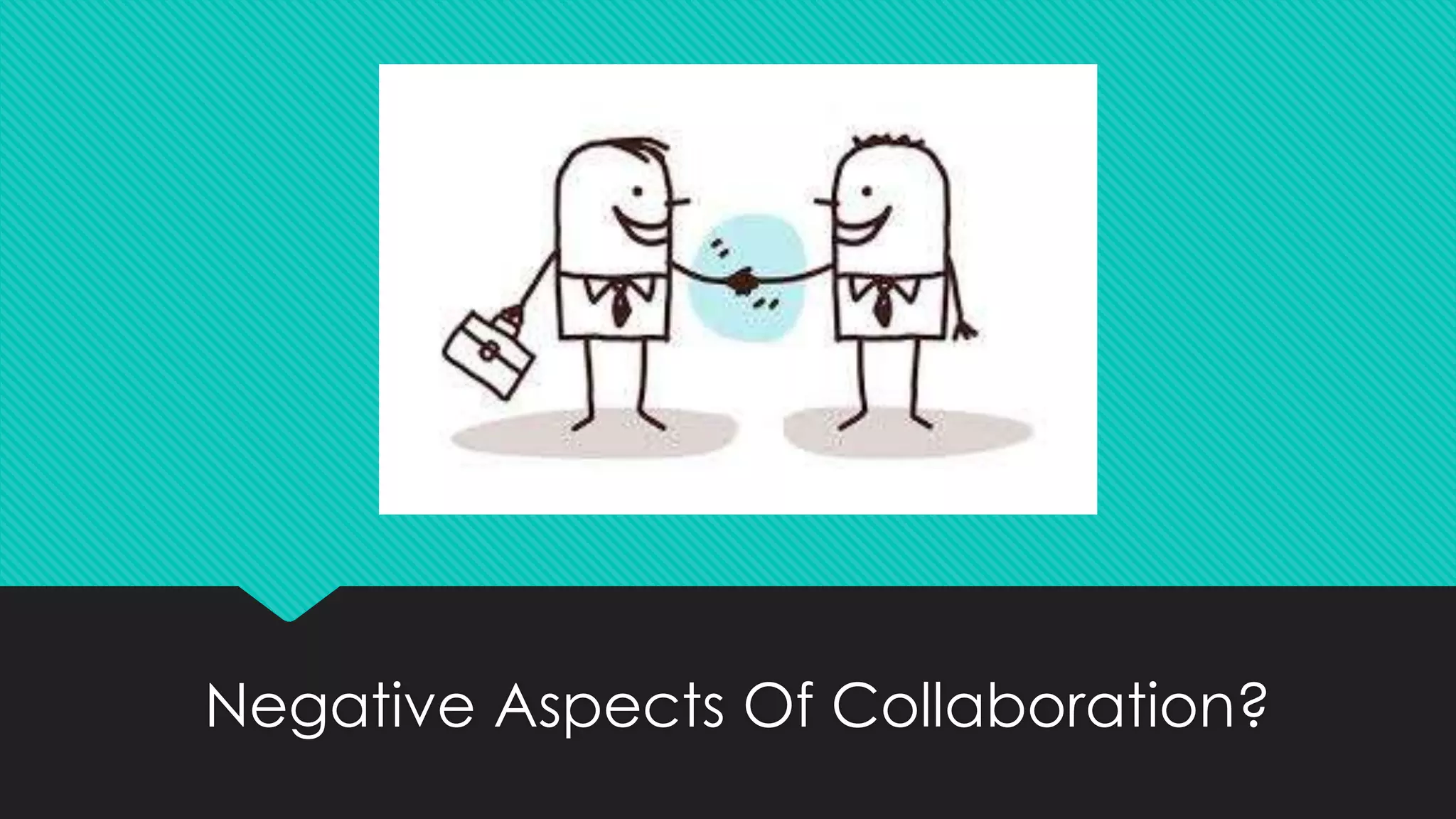
Negative Aspects Of Collaboration?
Collaboration
 It’s one of those nebulous things, like “reputation”
and “phenomenal output” that are important to a
scientific career.
In a bad sense, "traitorous cooperation with an
occupying enemy," it is recorded from 1940;
earliest references are to the Vichy Government of
France.
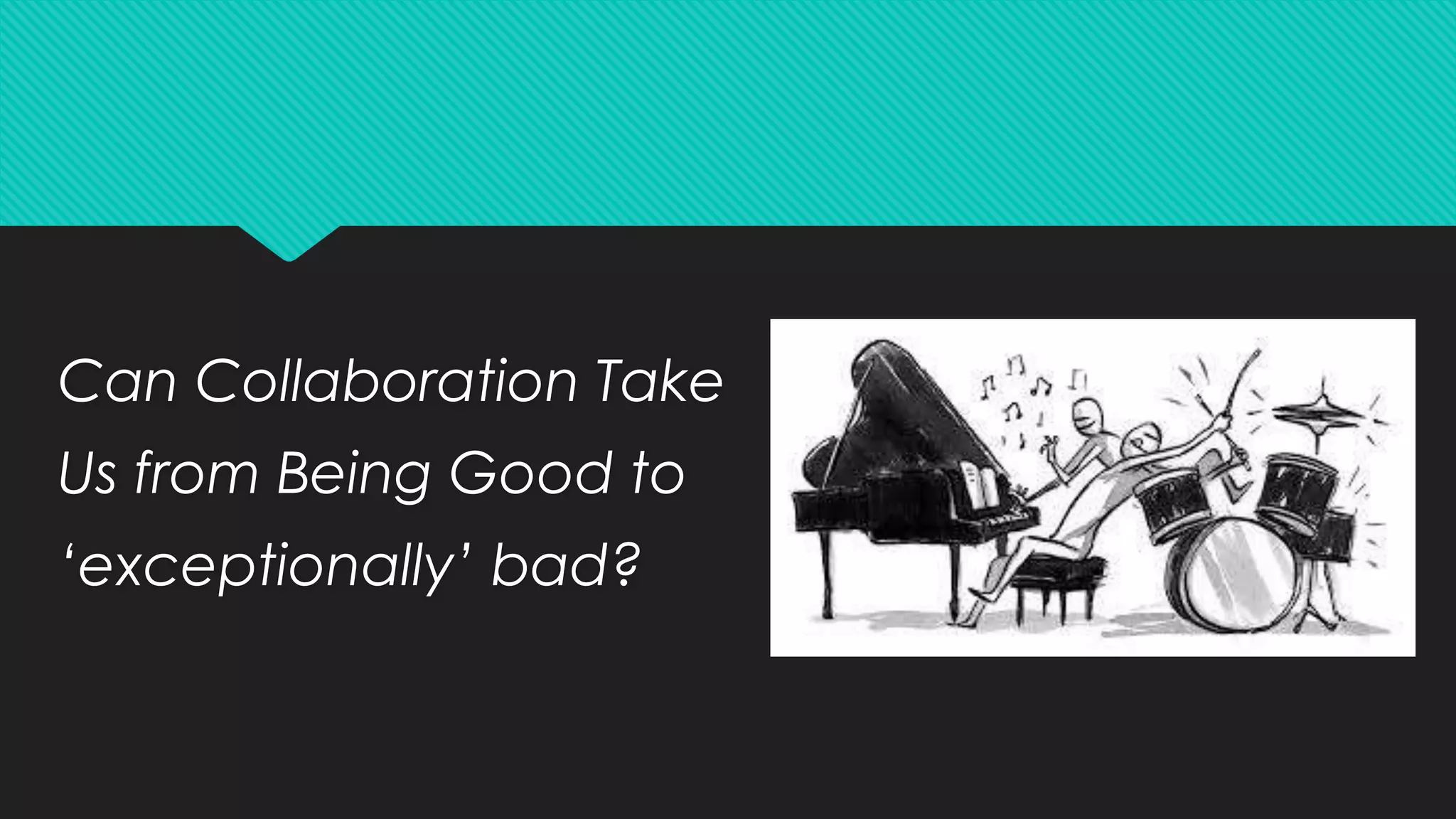
Can Collaboration Take
Us from Being Good to
‘exceptionally’ bad?
Why collaboration fails?
Stop, collaborate and conform. When your best people
reach a decision as a group, they can easily become
overconfident with the results based entirely on the
approbation of the group. This can have a quelling effect
on creativity, leading those with better ideas to pipe
down in service of keeping the group happy.
Social Loafing. Teamwork can make you lazy.
When people confuse collaboration with teamwork.
Are the negative aspects of
collaboration so severe that we
should avoid making decisions and
working in groups?
Groups and teams need more time to process multiple piece
of information and coordinate what they know.
Confused Delegation with Collaboration. The other people in
the group aren’t there to complete your work, they’re there to
work on their own projects, while helping the other members
of the group complete their projects. Each individual’s work
contributes to the whole, but it doesn’t mean you can pawn
your work off on others. Knowing the difference between
collaboration and delegation can help keep your project on
target.
How to fix a negative collaboration?
 Switch roles. To get your teams out of the box and spur innovation,
encourage employees to take on new roles they find challenging.
 Put together a balanced team. Don't fill a team with employees who all
perform the same role. Instead, put together a team with a variety of skills,
and ensure each team member has a dedicated and clear-cut role. This
way, the team will take ownership of their specific tasks, further reducing
social loafing.
 Alone time is necessary for creativity. If workers have already done part
of the work solo, they'll have better ideas of the challenges on the horizon,
and will have more specific questions and advice to seek from the group.
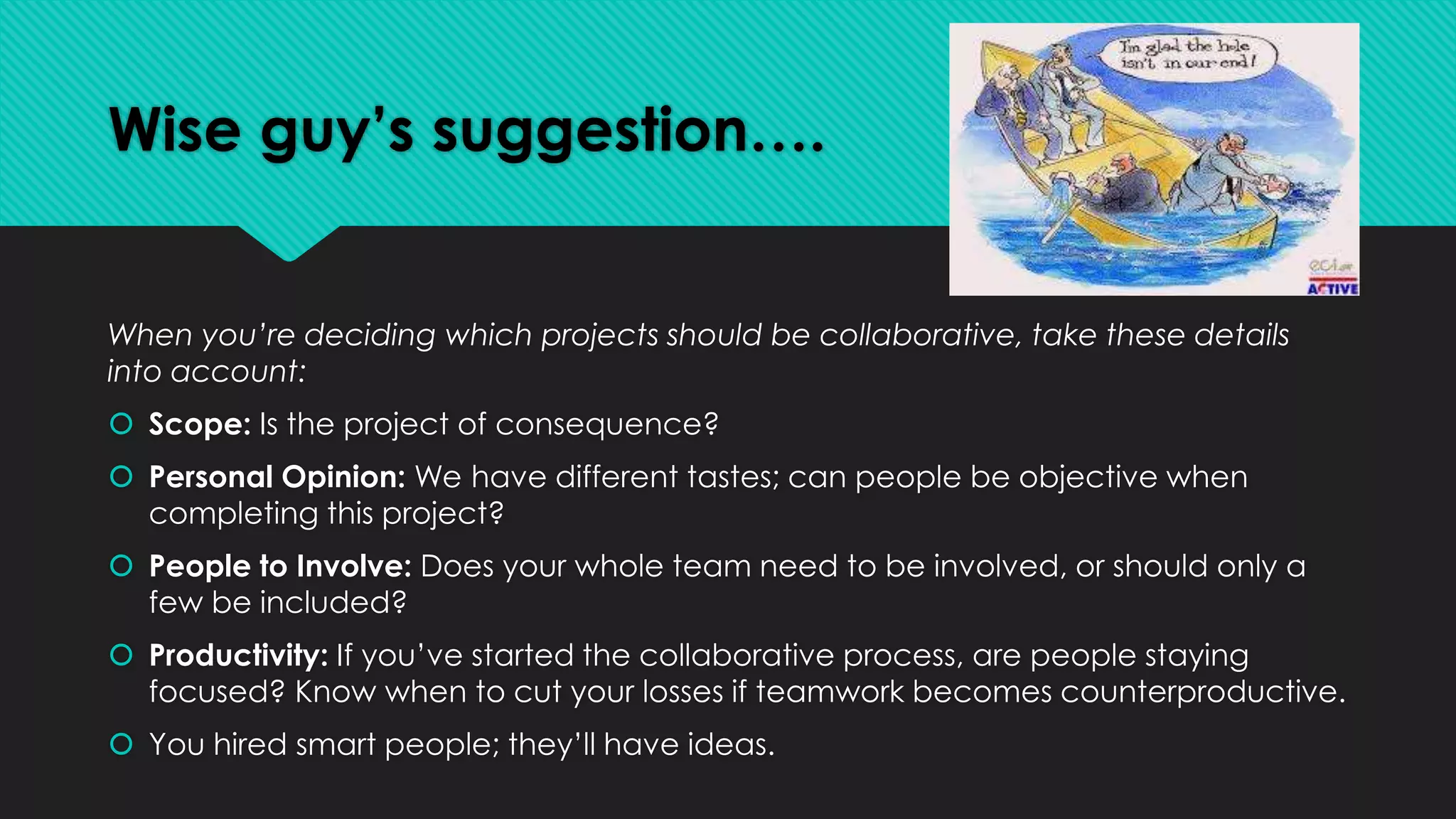
Wise guy’s suggestion….
When you’re deciding which projects should be collaborative, take these details
into account:
 Scope: Is the project of consequence?
 Personal Opinion: We have different tastes; can people be objective when
completing this project?
 People to Involve: Does your whole team need to be involved, or should only a
few be included?
 Productivity: If you’ve started the collaborative process, are people staying
focused? Know when to cut your losses if teamwork becomes counterproductive.
 You hired smart people; they’ll have ideas.
Negative aspects of collaboration..

Negative aspects of collaboration..

  • 1.
    Negative Aspects OfCollaboration?
  • 2.
    Collaboration  It’s oneof those nebulous things, like “reputation” and “phenomenal output” that are important to a scientific career. In a bad sense, "traitorous cooperation with an occupying enemy," it is recorded from 1940; earliest references are to the Vichy Government of France.
  • 3.
    Can Collaboration Take Usfrom Being Good to ‘exceptionally’ bad?
  • 4.
    Why collaboration fails? Stop,collaborate and conform. When your best people reach a decision as a group, they can easily become overconfident with the results based entirely on the approbation of the group. This can have a quelling effect on creativity, leading those with better ideas to pipe down in service of keeping the group happy. Social Loafing. Teamwork can make you lazy. When people confuse collaboration with teamwork.
  • 5.
    Are the negativeaspects of collaboration so severe that we should avoid making decisions and working in groups?
  • 6.
    Groups and teamsneed more time to process multiple piece of information and coordinate what they know. Confused Delegation with Collaboration. The other people in the group aren’t there to complete your work, they’re there to work on their own projects, while helping the other members of the group complete their projects. Each individual’s work contributes to the whole, but it doesn’t mean you can pawn your work off on others. Knowing the difference between collaboration and delegation can help keep your project on target.
  • 7.
    How to fixa negative collaboration?  Switch roles. To get your teams out of the box and spur innovation, encourage employees to take on new roles they find challenging.  Put together a balanced team. Don't fill a team with employees who all perform the same role. Instead, put together a team with a variety of skills, and ensure each team member has a dedicated and clear-cut role. This way, the team will take ownership of their specific tasks, further reducing social loafing.  Alone time is necessary for creativity. If workers have already done part of the work solo, they'll have better ideas of the challenges on the horizon, and will have more specific questions and advice to seek from the group.
  • 8.
    Wise guy’s suggestion…. Whenyou’re deciding which projects should be collaborative, take these details into account:  Scope: Is the project of consequence?  Personal Opinion: We have different tastes; can people be objective when completing this project?  People to Involve: Does your whole team need to be involved, or should only a few be included?  Productivity: If you’ve started the collaborative process, are people staying focused? Know when to cut your losses if teamwork becomes counterproductive.  You hired smart people; they’ll have ideas.