NCM 501201 ( Gynecology)‏ Rey B. Trimidal, RN, MN University of Cebu
Antepartal Period Hyperemesis Gravidarum A pernicious vomiting during pregnancy. Cause: Unknown   Increase HCG Level   Psychological Effect
Assessment Check for persistent nausea and Vomiting Assess for abdominal pain and Hiccups Decrease weight Dehydration
Metabolic Acidosis Increase BUN Hyponatremia/ Hypokalemia
Medical Management NPO Temporarily Rehydration: Ringer’s Lactate Anti-emetic Medication
General Nursing Intervention Carefully record I&O, and maintain IV Fluids Provide attractive, small meals and remove dishes as soon as the client finished eating
Offer small feedings;  dry food preferred. Offer liquids (herbal teas) between or after meals. Administer antiemetics as ordered. Provide rest, reduce stimuli and restrict visitors. Monitor fetal heart tones.
HemorrhagicComplication
2.1 Bleeding during the 1 st  Trimester of Pregnancy 2.1.1 Abortion Abortion is the medical term  for any interruption of a pregnancy before a fetus is viable.
Causes of Abortion 1. Teratogens 2. Chromosomal Aberration 3. Immune Response 4. Structural Malformation 5. Infections
Types of Abortion 1. Spontaneous- pregnancy ends because of natural causes. 2. Induced- therapeutic or elective reasons for terminating the pregnancy
Types of Spontaneous Abortion 1. Threatened - characterized by cramping and vaginal bleeding in early pregnancy with no cervical dilation. 2. Imminent or inevitable- characterized by bleeding, cramping and dilation. Termination cannot be prevented.
3. Incomplete- Characterized by expulsion of only parts of conception. Bleeding occurs with cervical dilation. 4. Complete- characterized by expulsion of all products of conception.
5. Missed- characterized by early fetus intrauterine death without expulsion of the product of conception. The cervix is closed and the client may report dark brown vaginal discharge. 6. Habitual- Spontaneous abortion of 3 or more pregnancy
Nursing Management 1. Take and Record V/S 2. Monitor Blood loss (Pad counts); Note character and amount of blood. 3. Save all tissue and clots passed  4. Be sure that examination are done under aseptic technique.
5. Stay with the client and explain that the pain from contraction will cease when embryo and membrane are passed. 6. Teach controlled breathing and relaxation technique. 7. Allow woman and family time and opportunities to grieve
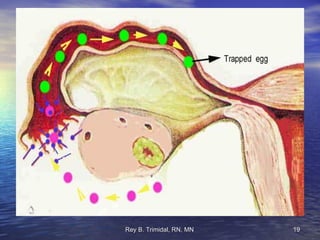
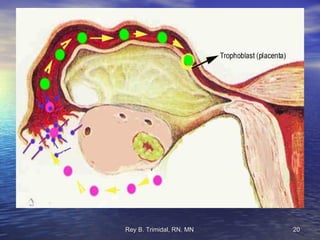
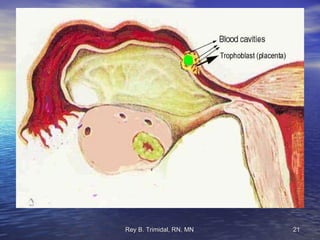
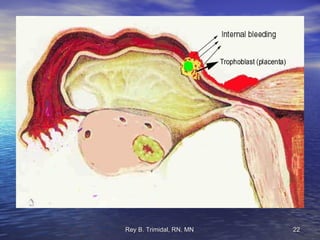
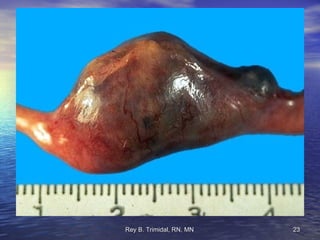
2.1.2 Ectopic Pregnancy The implantation of the product of conception outside the uterine cavity. Usual implantation occurs at the distal third of the fallopian tube.
A Graphic Presentation of Ectopic Pregnancies


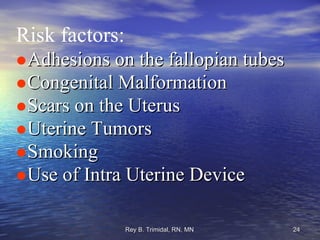
Risk factors: Adhesions on the fallopian tubes Congenital Malformation Scars on the Uterus Uterine Tumors Smoking Use of Intra Uterine Device
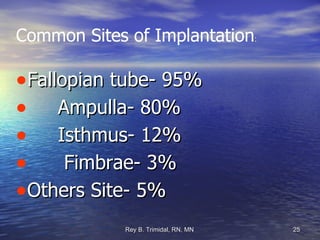
Common Sites of Implantation : Fallopian tube- 95% Ampulla- 80% Isthmus- 12% Fimbrae- 3% Others Site- 5%
Assessment: Sharp, stabbing pain at Lower abdominal quadrant Scant Vaginal Bleeding Hemorrhage with Acute bleeding Cullen's Sign
Management Non-Ruptured: Administration of Methotrexate, Leucovorin, Mifepristone Ruptured Surgery; Laparotomy and ligation of the other tube
Nursing Management 1. Protect the patient from undue fatigue and infection. 2. Provide Emotional Support to patient and family 3. Facilitate Laboratory studies and Blood crossmatching 4. Continuously monitor v/s of patient and observed for shock
2.1.3 Hyatidiform Mole A benign neoplasm of the chorion, in which chorionic villi degenerates, become filled with a clear viscous fluid and assume the appearance of grapelike clusters involving all or parts of the decidual lining of the uterus.
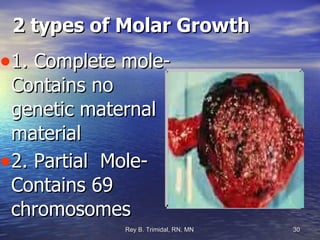
2 types of Molar Growth 1. Complete mole- Contains no genetic maternal material 2. Partial  Mole- Contains 69 chromosomes
Assessment: Rapid enlargement of the uterus No Fetal Heart Tone Positive Urine Human Chorionic Gonadotropine Nausea and Vomiting Intermittent brownish discharge after the 12th weeks
Management Suction Curettage Oral Contraceptives for 12 months Methotrexate Dactinomycin
Nursing Intervention Observe for uterine hemorrhage. Provide emotional Support Encourage client to have follow up treatment. Have Client avoid pregnancy for one year from Negative Test.
Bleeding  during the  2 nd  and 3 rd  Trimester of pregnancy
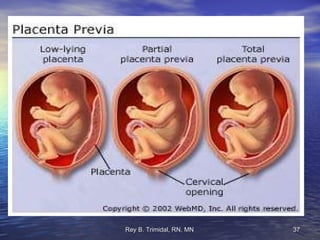
Placenta Previa A condition in which the ovum implants low in the uterus towards the cervix, and the placenta develops so that it partially of completely covers the internal os.
3 degrees of Placenta Previa 1. Low Lying/ Marginal 2. Partialis 3. Totalis/ Complete
 
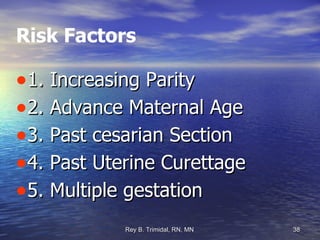
Risk Factors 1. Increasing Parity 2. Advance Maternal Age 3. Past cesarian Section 4. Past Uterine Curettage 5. Multiple gestation
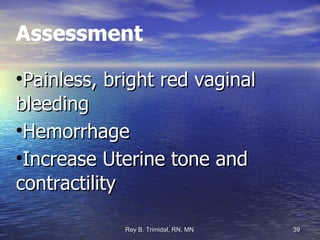
Assessment Painless, bright red vaginal bleeding Hemorrhage Increase Uterine tone and contractility
Nursing Intervention 1. Maintain client on bed rest. 2. Provide a quiet, restful atmosphere. 3. Place patient in side lying position. 4. Count perineal pads and measure blood amounts on beddings 5. Give emotional support
6.  DO NOT Perform Vaginal Examination. Maybe done but prepare a double set-up. 7. Carefully monitor fetal heart tone thru external Monitors 8. Fetus of less than 34 weeks AOG should receive Betamethasone.
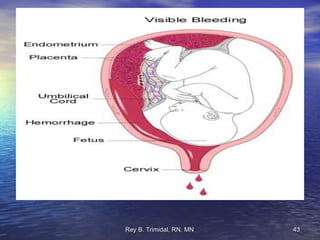
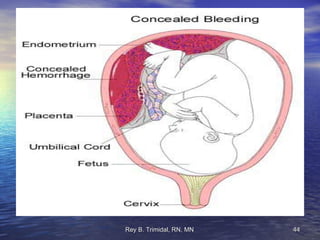
Abruptio Placenta Premature separation of the placenta A condition that occurs when the placenta separates from a normal implantation site in the upper segment of uterus before birth of baby
 
 
Etiology:  Unknown Predisposing Factors: High Parity Advance Maternal Age Short Umbilical Cord  Chronic Hypertensive Disease Direct Trauma Cocaine use and Smoking
3 types of Separation 1. Complete- Placenta becomes completely detached 2. Partial- Portion of placenta becomes detached from uterine wall 3. Central- Placenta separates centrally and blood is trapped between placenta and uterine wall
2 types of hemorrhage 1. External- Blood escape from vagina 2. Concealed- Blood is retained in uterine cavity
Assessment 1. Painful, dark red vaginal bleeding 2. Couvelaire Uterus 3. Lack of alternate contraction 4. Assess for fetal heart tone 5. Assess for signs of shock.
Nursing Intervention 1. Keep client on bed rest. 2. Observe for signs of shock. 3. Carefully monitor contraction. 4. If bleeding is severe, begin the administration of Intravenous Fluids.
5. Facilitate Laboratory work outs includes  6. Monitor Central Venous Pressure. 7. Record I&O, Observe for anuria and Oliguria
8. Observe for hemorrhage after delivery 9. Observe for Disseminated Intravascular Coagulation.
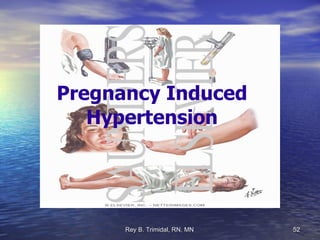
Pregnancy Induced Hypertension
PIH A condition in which vasospasm occurs during pregnancy in both small and large arteries.
Cause:  Unknown Predisposing/ Risk Factors: 1. Multiple Pregnancy 2. Primipara 3. Less than 20 & Over 40 years of age. 4. Hydramnios 5. With underlying disease condition
Triad Signs of PIH 1. Hypertension 2. Generalized Edema 3. Proteinuria
Classification of PIH 1. Gestational Hypertension-  BP: 140/90 mmHg,  No Proteinuria
2. Mild Pre-eclampsia- BP: >/  140/90 mmHg,  + 1, +2  Proteinuria,  + Edema,  > 2  lbs/ week weight gain in  2nd Trimester > 1 lbs/ week  weight gain in 3rd Trimester
3. Severe Pre-eclampsia-  BP:160/110 mmHg  +3, +4 Proteinuria, 5 g or more in 24 hrs.  Extensive Edema  Severe Epigastric pain,    Nausea and Vomiting   Blurred Vision,  severe headache Spots before Eye,      Marked Hypereflexia    Oliguria
4. Eclampsia-  + Signs and symptoms  Severe Pre-eclampsia + Seizures or Coma
Screening: Roll over test
Medical Management 1. Complete Bed rest. 2. Diet 3. Daily Weight 4. Magnesium Sulfate  5. Hydralazine
Nursing Intervention 1. Maintain client on bed rest  2. Monitor for MgSO4 Toxicity Assessment PRIOR TO Administration 1. Urine Output  2. Respiratory Rate 3. Positive Patellar Reflex
Toxicity Signs and Symptoms 1. Hypotonia 2. Respiratory failure 3. Oliguria
3. Monitor fetal Heart Tone and Observed for signs of Labor 4. Record I&O; 5. Check daily weight. 6. Check the Retina daily
7. Limit Visitors in Sever Cases. 8. Final Resolution of PIH is Delivery/ Early Termination of Pregnancy. 9. Maintain on Seizure Precaution
Implementation for Eclampsia 1. Provide quiet, darkened room. 2. Check Frequently for edema. 3. Maintained Seizure Precaution.
4. Keep client on NPO 5. Check V/S and Lab results. 6. Monitor FHT and Contraction
7. Observed 24 Hours postpartum for the Following: a. Anuria b. Convulsion c. Headache d. Blurred Vision
8. Observed for  HELLP Syndrome  ( Hemolysis Elevated Liver Enzymes and Low Platelet Count)
Medical Diseases Complicating High Risk Pregnancy
Cardiovascular Disease
Classification of Heart Disease Class I- Uncompromised Class II- Slightly compromised Class III- Markedly Compromised Class IV- Severely Compromised.
Assessment A. Observed for signs of cardiac Decompensation: 2nd Trimester 2. Evaluate for signs of Infection
Medical Management 1. Isolation 2. Rest 3. Activity Restriction 4. Low Salt Diet 5. Diuretics
Nursing Intervention 1. Educate the client about the classification and effects of pregnancy before conception. 2. Educate client about special needs and danger signal during pregnancy and postpartum.
3. Care for Client during Labor: 4. Counsel the client during postpartum
Diabetes Mellitus A chronic metabolic disease caused by the inability to metabolize glucose properly
Abnormalities disappear after pregnancy Symptoms of Hyperglycemia are mild but maybe risky for fetus Diet is cornerstone of intervention Maternal Glucose crosses the placenta but insulin does not.  Pregnant mothers should be Screened for glucose level.
Implication of Diabetes in Pregnancy 1. Diabetes is more difficult to control. 2. There is a tendency for client to develop Acidosis 3. Client is more prone to infection 4. PIH, Hemorrhage and Polyhydramnios are more likely to develop.
5. Gestational Diabetes may develop to full blown diabetes. 6. Insulin requirements needs to be increased. 7. Premature delivery is more frequent. 8. Infant maybe overweight but have functions related to gestational age rather that size.
9. Infant is subject to Hypoglycemia, hyperbilirubinemia, Respiratory distress syndrome and congenital anomalies. 10. Stillborn and neonatal mortality is high.
Assessment 1. Glucose Tolerance test 2. Positive signs of Hyperglycemia/Hypoglycemia 3. Assess for major signs and Symptoms of Diabetes
Nursing Intervention A. Educate the client on the effect  of diabetes on her and the fetus during pregnancy and the reasons for adhering to therapy protocol. B. Proper care if client is hospitalized. C. Care of Client in Labor d. Provide Postpartum care
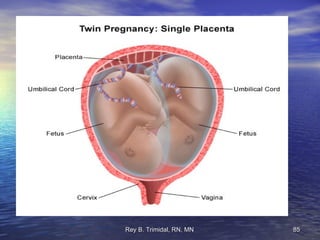
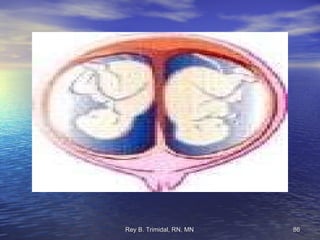
5. Multiple Pregnancy Types 1. Identical 2. Fraternal
 
 
Assessment: 1. Faster rate of Increase size of the uterus 2. Increase Alpha-Feto protein level 3. Report flurries of action at different portion of abdomen
4. Multiple sets of Fetal Heart Sound 5. Assess for: Digestion difficulties Constipation Hemorrhoids Dyspnea Backache
Nursing Interventions 1. Encourage the woman to keep appointment for more frequent check up 2. Counsel the woman to rest frequently during day in the 3rd trimester.
3. Teach the mother the reportable signs and Symptoms of premature labor: 4. Advocate increase protein, iron and calcium in diet. 5. Monitor for Hypertension 6. monitor the woman for postpartum hemorrhage
4. Advocate increase protein, iron and calcium in diet. 5. Monitor for Hypertension disorder 6. Following delivery, monitor the woman for postpartum hemorrhage
7. Counsel the woman to rest frequently  8. Encourage pelvic rocking and or legs elevated when sitting to help relieve backache. 9. Small frequent meal is encourage.
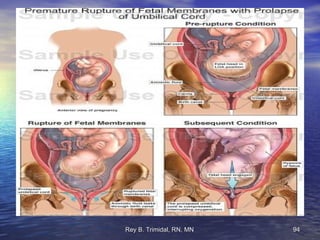
Premature Rupture of Membrane is rupture of fetal membrane with loss of Amniotic fluids during pregnancy before 37 weeks. Cause: Unknown
 
Complications: Maternal and Fetal Infections Increase pressure on the Umbilical Cord Cord Prolapse Potter Like Syndrome
Assessment Use of Nitrazine Paper Observed for signs of Infections Observed for signs of Labor Observed for Amniotic fluid for foul odor
Management Complete Bed rest Cortecosteroids administration Anti-biotic Prophylaxis
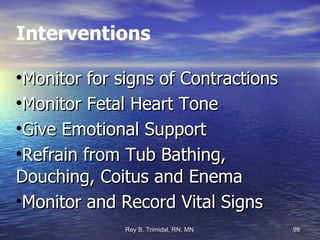
Interventions Monitor for signs of Contractions Monitor Fetal Heart Tone Give Emotional Support Refrain from Tub Bathing,  Douching, Coitus and Enema Monitor and Record Vital Signs
Dystocia (Dysfunctional Labor)‏ Occurs with prolonged and difficult labor and delivery. Labor is considered prolonged when it extends for 24 hours or more after the onset of regular contractions.
Types of Dystocia
Dysfunctional Uterine Contractions Uterine contraction is ineffecient; Hence cervical dilatation, effacement and descend fails to occur. Cause: False Labor Oversedation/ Excessive Anesthesia Unripe Cervix Malposition Cephalo-pelvic Disproportion
Abnormal Presentation and Malposition Occiput Posterior Position Breech Presentation, Face presentation Transverse Lie
 
Cephalo-Pelvic Disproportion-    Disproportion between the size of the fetus and the size of the  pelvis.
Cause Maternal Diabetes Mellitus Large Baby, Head is larger Fetal Abnormalities
Assessment 1. Observed rate of progress as well as overall length of labor: Latent Phase : Parous Women:    14 hours or longer Nulliparous  : 20 hours or  Longer
Active Phase:  Parous Women:  Dilatation;slower than 1.5 cm/hour  Descent  ;slower than 5 cm/hour Nulliparous  : Dilatation; Slower than 1.8 cm/hour Descent  ; Slower than 1cm/hour
2. Assess for Maternal Exhaustion 3. Assess for Fetal Distress
Nursing Interventions Monitor Vital Signs Monitor Fetal Heart Tone Encourage client to void at least every 2 hours and check for bladder Distention
Give client a back rub Give client reassurance and support Prepare for Cesarian Section as necessary
Preterm Labor Occurs after the 20 th  weeks but before the 37 th  weeks AOG. Criteria Occurs after 20 th  weeks but before 37 th  week AOG Persistent Uterine contractions (4 times every 20 minutes)‏ Has 80% effacement and Dilatation of 1 cm.

Cause:  Unknown Risk Factors:  Dehydration Urinary Tract Infections Chorioamnionitis
Symptoms Persistent, dull, low back ache Vaginal Spotting Pelvic pressure: Abdominal Tightening Menstrual Like cramping Increasing Vaginal Discharges Uterine Contraction
Management Complete Bed Rest Hydration Cortecosteroids administration
Drug Therapy:  Calcium Channel Blockers  ( Nifedefine, Indomethacine)‏ Tocolytic Therapy: Beta 2 receptors Antagonist Ritodrine Hydrochloride (Yutopar)‏ Isoxsuprine Hydrochloride (Vasodilan)‏ Terbutaline (Brethine)‏
Complication: Risk for Prolapsed Cord Nursing Intervention Maintain bed rest Continuously monitor contractions Administer medications as ordered Keep client informed and provide emotional support Carefully observed for signs of complication
Consideration in Terbutaline Therapy Contraindicated  for patient with Thyroid functions and Diabetes Mellitus Obtain Baseline Blood data: Mix terbutaline with Ringer's Lactate, and on piggy back infusion Assess for Side effects
Induction of Labor Artificial initiation of Labor Criteria for Induction Fetus is in danger Labor does not occur spontaneously Fetus is at term Presence of Maternal diseases
Condition before Induction Fetus is in Longitudinal lie Cervix is ripe or ready for birth Presenting part is engaged No CPD Fetus is mature
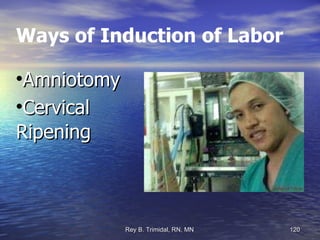
Ways of Induction of Labor Amniotomy Cervical Ripening
Management Patient should be on bedrest Monitor for Side effects  Oxytocin. Cautiously use for patient with Asthma, renal failure and glaucoma. Given intravenously, with Ringers Lactate
Management of Oxytocin Cautiously monitor FHR and Uterine   Contraction Monitor Blood pressure  Monitor for Headache and      Vomitting  Keep accurate I&O and test for    specific gravity. Monitor for Uterine Contraction
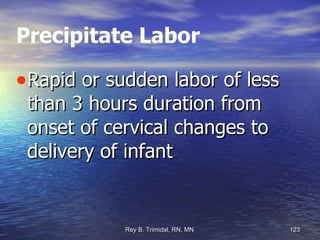
Precipitate Labor  Rapid or sudden labor of less than 3 hours duration from onset of cervical changes to delivery of infant
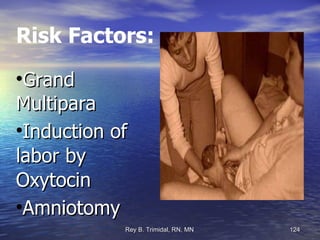
Risk Factors: Grand Multipara Induction of labor by Oxytocin Amniotomy
Assessment Obtain a quick history by asking focused question a. Do you want to push? b. Have your membrane ruptured? c. Are you bleeding? d. Have you had baby born quickly before?
Assess for signs of impending delivery Desire to push b. Frequency of strong contractions c. Heavy Bloody show d. Membrane ruptured e. bulging rectum f. presenting part visible g. severe anxiety
Complications Premature separation of the placenta Subdural hemorrhage for the fetus Lacerations
Nursing Interventions Assisting with the delivery a. Never leave the client unattended during this time Never hold baby back Ask another employee to notify the physician Bring emergency delivery pack to room
Have client pant rather than push b.  reassure that you will remain with her and provide care until the physician arrive c.  Put on sterile gloves  d.  Break membrane immediately
e. with a  clean or sterile towel (if available) support baby's head  with one hand, applying gentle pressure to the head  f.  if cord is draped around the neck, with free hand gently slip it over the head.
g.   if you have bulb syringe, gently suction baby's mouth and wipe blood and mucus from mouth and nose with a towel, if available. h. Shoulders are usually born spontaneously after external rotation. If shoulders do not deliver spontaneously, ask client to bear down to deliver them. i . Support the baby's body as it is delivered
j.  Hold infant level with placenta until cord clamp is done. k.  All manipulation should be gentle to avoid injury to mother and baby.
Care after Delivery A.  After the delivery, hold the baby securely over hand and arm with the head in a dependent position  B.  If baby does not cry spontaneously, gently rub baby's back or the sole of baby's feet.
c.  Place the baby on the mother's abdomen to provide warmth.  d . Palpate mothers abdomen to make sure uterus is contracting e. Watch for signs of placental separation f. Support placenta in your hands after it expelled.
g.  Clamp the cord after it stops pulsating if clamp or ties are available.  h. Wrap the baby in a blanket i. Put the baby to the mothers Breast.  j. Check the uterus after the delivery of the placenta.  k. keep an accurate record of the time of birth and other pertinent data. l. Comfort mother.
M. If baby is delivered unassisted, in bed, before the nurse arrives (precipitate delivery)  THE NURSE SHOULD IMMEDIATELY 1. Check the baby to make sure breathing is established. 2. Check the mother for excessive bleeding.
Hydramnios 1. Polyhydramnios An excessive amount of amniotic fluid Causes: Maternal Diseases  Multiple gestation  Fetal Abnormalities
Clinical Manifestation Excessive Uterine Enlargement Difficulty breathing Difficulty ambulating Difficulty finding a comfortable position during sleeping
Varicosities Pain in abdomen, back and thigh due to increasing pressure Nausea and Vomiting FHT maybe difficult to locate and Palpate
Management 1. Amniocentesis-   Nursing Responsibilities a. Assess for signs of Hemorrhage b. Assess for signs of infections c. Assess for premature labor d. Instruct the mother to void prior the procedures
e . Provide privacy f.  Place a folded towel under the client's right buttocks  g . Take baseline maternal and Fetal V/S h . Attached fetal monitor. i.  Instruct the patient to take deep breath during insertion
Olygohydramnios - Small amount of amniotic fluids associated with  fetal renal  agenesis  and post maturity.
Manifestation Small uterine size Labor maybe premature Uterine contraction maybe ineffective and labor maybe prolonged Fetal hypoxia because of cord compression
Management Monitor fetal status carefully during pregnancy and labor Monitor the woman for labor complications
INTRANATAL PERIOD
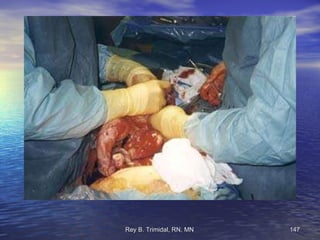
Uterine Rupture a spontaneous or traumatic rupture of uterus Contributing Factors: Prolonged Labor Abnormal Presentation Multiple Gestation Unwise use of Oxytocin
 
Obstructed labor  Traumatic maneuver of Forceps or Traction Excessive Fundal pushing Scar from previous Cesarian Section
Assessment Complete Rupture Sudden, sharp abdominal pain  during contractions Abdominal Tenderness Cessation of Contractions
Bleeding into abdominal Cavity and some into the vagina Fetus easily palpated; No FHT Signs of Shock
Incomplete Rupture Develop over a period of a few hours abdominal pain during contraction Contraction continue but no Cervical Dilatation
Vaginal Bleeding Increasing Pulse Rate and Skin pallor Loss of FHT
Management Administer IV Fluids and blood as ordered Administer Oxygen  Prepare the woman for surgery Monitor Maternal and Fetal Vital Signs
Uterus maybe repaired but if extensive, Hysterectomy is necessary Keep the woman informed about the procedure.
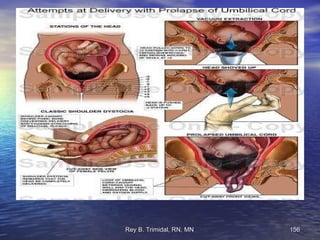
Prolapsed Umbilical Cord Prolapse in front of or along side the fetal presenting part  Cause Premature Rupture of Membrane Fetal Presentation Prematurity  Hydramnios Placenta Previa
 
Assessment Cord maybe seen protruding from vagina Cord maybe palpated in vaginal canal or cervix FHT maybe irregular with periodic fetal Bradycardia Reflex constriction on the umbilical cord
Nursing Interventions Place the woman in deep trendelenburg position Administer Oxygen by mask Place sterile gloved hand in vagina and push the infant head upward
Prepare immediate vaginal delivery if cervix is dilated or if not Cesarian Section For home situation, cover protruding cord with clean, wet dressing, elevate the woman hip and transport to hospital immediately Have woman hear FHT.
Amniotic Fluid Embolism The escape of amniotic fluid into the maternal circulation. It is usually fatal to the  mother. High maternal mortality rate of 85%. Predisposing Factors 1. Premature Rupture of Membrane 2. Tumultuos Labor
Assessment Observe for Acute Dyspnea Assess for sudden chest pain Check for Cyanosis Observe for Pulmonary edema Check for Vital signs that may  indicate Shock
Medical Implication Oxygen administration Digitalis for failing cardiac function  Fibrinogen to replaced depleted reserves Heparin to combat fibrinogenemia
Nursing Intervention Institute efficiency measure to maintain life. If clients survive, provide intensive care treatment Keep family informed and provide emotional support.
Post Natal Period
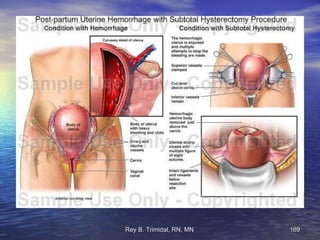
Uterine Atony Relaxation of the uterus and is the most common cause of Postpartal Hemorrhage
Factors that leads to Atony: 1. Conditions that distends the  uterus beyong average capacity 2. Conditions that could have  caused vaginal/Uterine laceration  3. Conditions with varied palcental  sites/Attachement
Nursing Interventions Monitor Vital signs- Maybe  an indicative of Shock  Facilitate Laboratory studies Keep Accurate counts of Pads Provide emotional Support Keep the Client and family informed about the procedures
Hemorrhage Involve a blood loss of 500 mL or more and occurs most frequently on the first hour following delivery.
 
Causes Uterine Atony Retained Placental Fragment Laceration of the vagina,  cervix of perineum Hypofibrinogenemia
Assessment a . Observed for Uterine Atony b . Check for lacerations c . Checked for retained placental  tissue d .Evaluate signs and symptoms of  shock f.  Evaluate laboratory results
Nursing Management Monitor V/S q 15 mins until stable Prepare to administer IV fluids, blood and plasma expander as ordered. Palpate the fundus every 15 mins. or PRN while bleeding continuous. Gently massage the fundus
Administer Oxytocin or other uterine stimulants. Have the physician Notified Weight pads and linen.  Measure I&O Explain and provide warmth for client Return client to DR or OR for removal of placental tissue or repair of laceration.
Hematomas Localized collection of blood in loose connective tissue beneath the skin that covers the external genetalia, beneath the vaginal mucosa or in the broad ligaments .
Causes Trauma during spontaneous delivery Trauma during forcep application or delivery Inadequate suturing of episiotomy
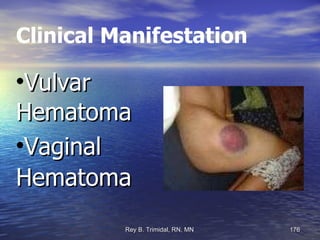
Clinical Manifestation Vulvar Hematoma Vaginal Hematoma
Nursing Interventions Ice and Hot compress I&D and ligation of bleeder. Keep the woman and family informed of changes in physiologic status and treatment plan.
Puerperial Infections Endometritis Parametritis Thrombophlebitis Bacteremia
Cause Bacteria that are introduced from external sources Normal bacterial organism in the generative tract.
Predisposing factors Prolonged Labor Postpartum hemorrhage Premature Rupture of Membrane Infection elsewhere in the body Intrauterine Manipulation Anemia Malnutrition
Clinical Manifestation Fever: 38.0 C or above after the 24 hours after delivery
Endometritis   Infections involving the endometrium Manifestation uterus usually larger than expected for post delivery day Lochia may be profuse, bloody and foul smelling Chills and fever
Parametritis Infections of the pelvic connective tissue Uterus maybe larger than expected  Uterus becomes fixed, the pelvic area warm Chills, fever, tachycardia, severe unilateral or bilateral pain i Incision and drainage is performed.
Thrombophlebitis Inflammation of a vessel wall with clot formation - Result from puerperial infections Types Pelvic Thrombophlebitis Femoral Thrombophlebitis
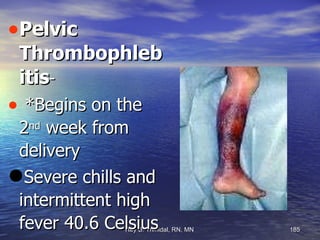
Pelvic Thrombophlebitis -  *Begins on the 2 nd  week from delivery Severe chills and intermittent high fever 40.6 Celsius
Femoral Thrombophlebitis * Pain and tenderness and turgidity of the calf *Redness, increase skin temperature, edema of the calf and thigh *Positive Homan's sign.
Bacteremia Severe Chills, fever, and rapid respiration Pale skin: Fingers and lips maybe cyanotic Lochial Discharges may increase and have foul odor.
Nursing Management a. Continue Monitoring V/S every 2-4 hours b. Isolate woman  c. Maintain Fluids and electrolytes d. Antibiotic Therapy is instituted  e. Monitor site for infections f.  Diet. g. Institute Comfort Measures.
Postpartum UTI Cause: Bladder Trauma during delivery Urinary retention due to anesthesia, excessive IVF caising distended bladder Frequent Catheterization
Clinical Manifestation Increasing Temperature >/ 37.8 Celsius Urinary Frequency Pain on Urination Flank pain Chills
Interventions Monitor V/S, degree and site of pain Increase Fluid intake Instruct the mother to empty the bladder completely each time she urinates. Administer Antibiotics and Analgesics. Encourage to rest.
Subinvolution of the Uterus Slowing or halting of normal postpartum return of the reproductive organ to their pre-pregnancy state. Causes: Pelvic Infections Retention of Placental Fragments Fibroid Tumor
Manifestation Uterus larger and softer than expected Uterus still palpable after 4-6 weeks Prolonged Lochial Discharges Irregular Bleeding Backache or sensation of weight in pelvis
Interventions Oral administration of Methergine Maleate  Prepare the woman for Uterine Curettage,  Administer prescribed antibiotics  Instruct the woman to report signs of infections, vaginal bleeding or any tissue passage vaginally.
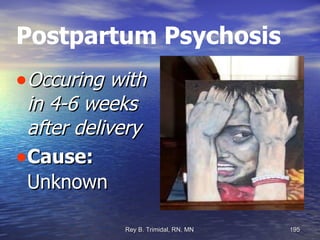
Postpartum Psychosis Occuring with in 4-6 weeks after delivery Cause:  Unknown
Manifestation: Clouding of consciousness and hallucinations Depression, withdrawal Hostility Fear and suspiciousness
Interventions Make referral to appropriate health team to increase resources Encourage family support and presence Administer psychotropic drugs  Encouraged the woman to touch and see the baby  Show and teach them some parenting skills Do not leave the patient alone.
PEDIATRICS
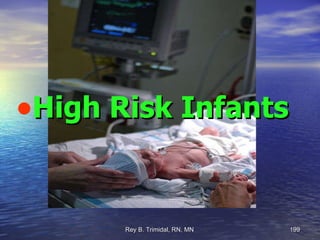
High Risk Infants
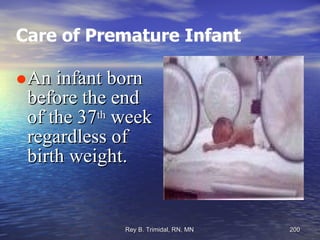
Care of Premature Infant An infant born before the end of the 37 th  week regardless of birth weight.
Assessment a. Assess digestive system b. Assess CNS and Muscle tone c. Assess for Respiratory System d. Assess Intergumentary System e. Assess immune system f. Assess Hepatic System: Liver Immature g. Assess for Circulatory system  h. Assess for Renal System
Implementation a. Provide Immediate care to infant b. Evaluate Respiratory Status c. Reposition every 2 hours d. initiate feedings as ordered e. provide for family's needs f. Maintain I&O, and weight daily
g. Organize care to conserve energy h. Measure head circumference and length i. Check Heart Rate by apical pulse  j. Gently stroke and talk to baby when giving care
k. Hang colorful mobiles or other non-harmful objects in crib l.  Hold baby during feeding as soon as condition permits. m. Encourage parents to hold, cuddle, feed and diaper as per baby
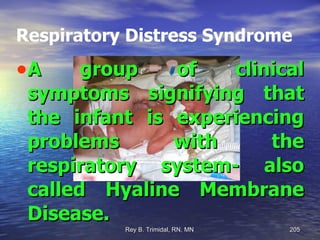
Respiratory Distress Syndrome A group of clinical symptoms signifying that the infant is experiencing problems with the respiratory system- also called Hyaline Membrane Disease.
Characteristics A. Symptoms are the result of a decrease in the amount of surfactant in the infant's lungs B. Respiratory Distress syndrome is the most common cause of death in infant
Assessment A. assess for increased respiration B. Assess for retractions sternal  and intercostal. C. Check for presence of cyanosis and expiratory grunting. D. Assess for increased apical pulse. E. Evaluate for nasal flaring and chin lag
F. Evaluate for lack of activity or movement. G. Assess for inability to take in sufficient oxygen  H. Assess for Hypercarbia  I. Check for respiratory acidosis
J. Evaluate for decreased body temperature. K. Check for metabolic acidosis due to increased production of Lactic Acid
Nursing Implementation A . Prevent Cold stress B . Provide Nutrition and Hydration C . Do careful monitoring of blood gases and electrolytes, color and activity. D . Administer Oxygen for Hypoxemia E . Surfactant replacement therapy
F.  Care of  Infant with Endotracheal Tube G.  Gently handle the infant with as little disturbance H . Keep parents informed of infant's progress I.  Allow parents to visit infant as much as possible J.  Gently stroke and talk with infant while giving care.
Small for Gestational Age Refers to infants who are significantly under size for gestational age. Also called as Intra-Uterine Growth Retardation.
Infant Appearance Little Subcutaneous tissue Loose, dry, scaling skin Appears thin and wasted; old for size Maybe meconeum staining of skin, nails Sparse hair on head Active, alert and seem hungry Cord dries more rapidly
Assessment A. Assess for Hypoglycemia or poor glucose control B. Assess for Hypothermia C. Assess for Asphyxia D. Assess for Polycythemi
Nursing Implementation A. provide care similar to Premature infants until stabilized. B. Protect from cold stress; Keep warm; Usually in isolette C. Perform test for glucose D. Weigh daily and maintain I&O
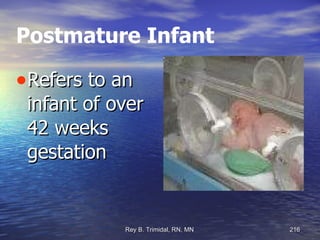
Postmature Infant Refers to an infant of over 42 weeks gestation
Assessment A. Assess that vernix and lanugo  B. Assess skin C. Check fingernails and toenails D. Assess size E. Observe for Hypoglycemia F. Observe for signs of birth injury
Nursing Implementation A. Similar to care given to preterm infants if premature characteristics are observed B. Symptoms depends on conditions at birth.  C. Monitor for possible complication (Asphyxia, Polycythemia)‏
Hyperbilirubinemia An abnormal elevation of bilirubin in the newborn (above 12.9 mg/100mL  for fomula feed  infants and above  15 mg/100 mL for breastfed infants and Prematures)‏
Assessment A. Observe for Jaundice, which progresses from head to extremities. B. Observe for Pallor C. Evaluate Activity Level D. Assess if urine is concentrated and stools are light in color. E. Assess progress of conditions F. Evaluate Blood Tests.
Nursing Implementation A.  Observe infant for signs of increase jaundice B.  Observe for and prevent acidosis  C.  Maintain adequate hydration and offer fluids between feeding as ordered. D.  Using skin temperature probe E.  Prevent Infections
F . Provide Photo therapy G . Meet infant's emotional needs H.  Reinforce Physician's teaching to parents and allow parents to express concerns and feelings I.  Monitor Exchange Transfusion;  J.  Administer care after Transfusion
Erythroblastosis Fetalis The destruction of Red Blood Cells that results from an Antigen-Antibody reaction and is characterized by Hemolytic Anemia and or Hyperbilirubenemia
Diagnosis Indirects Coombs' test Directs Coombs' test Spectrophotometric Analysis of Amniotic fluids
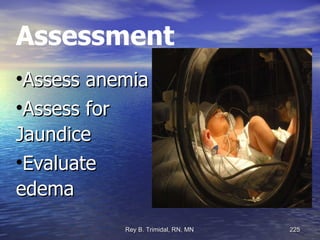
Assessment Assess anemia  Assess for Jaundice Evaluate edema
Nursing Interventions Administer immunization against hemolytic disease with RhoGAM as ordered  Monitor exchange transfusion after birth or Intrauterine transfusion. Follow interventions for Hyperbilirubenemia.
Infants of Diabetic Mother Infants with blood glucose level of less than 40 mg/dL. Most have been exposed to elevated maternal glucose level in utero.
Assessment A. Assess for excessive size and weight due to excess glycogen and fats in tissue. B. Assess Appearance of Infants C. Observed for signs and symptoms of Hypoglycemia
D. Observed for hypocalcemia  E. Observed for signs and symptoms of Respiratory Distress F. Hyperbilirubenemia
Nursing Intervention A. Administer care similar to preterm infant B. Caloric intake important C. Be aware that any infant of a diabetic mother will be started on Hypoglycemia protocol regardless of weight.
Drug-Dependent Newborn There is a direct relationship between the duration of addiction, dosage and the severity of symptoms.
A. Heroin Addicted Mothers: infants may appear normal at birth with low birth weight. Onset of withdrawal begins within 72 hours. Infants appears less ill than when mother is taking methadone Heroin causes early maturation of the liver.
B. Mother on Methadone Onset of withdrawal may be delayed; Most evident 48-72 hours and may last 6 days to 8 weeks. Infant may appear to be very ill. May develop jaundice due to prematurity
C. Mothers addicted to Cocaine A stimulant; Maternal to fetal transfer of cocaine is swift, with the metabolites even more potent than the drugs. Infant evidences decreased interactive behavior, feeding problem, irregular sleep patterns and diarrhea. Some may have major deformities-
Assessment A. Assess for irritability, tremors, hyperactivity, and hypertonicity B. Assess for respiratory distress and ventilatory capacity
C. Observed for the following signs: 1. High pitched, shrill cry 2. Sneezing 3. Fever 4. Disruption of Normal sleeping pattern
5. Gastrointestinal Effects a. Vomiting b. Diarrhea c. Poor feeding 6. Excessive sweating 7. Extreme sucking of fist
Nursing Interventions A. Monitor respiratory and cardiac rates every 30 minutes and PRN B. Take temperature every 4-8 hours and PRN C. Reduce External stimuli and handle infant infrequently. D. Pad sides of crib to protect the infant from injury
F. Suction if necessary G. Provide careful skin care H. Measure I&O I. Keep mother informed of infants progress J. Promote mother's Interest to infant K. Administer Medication as ordered, usually, paregoric (Narcotic Opiates), phenobarbital, valium and tincture opium.
Fetal Alcohol Syndrome
Assessment a. Monitor  for respiratory distress and apnea b. Observe for cyanosis c. Observe for seizures d. check for major brain dysfunction symptoms
Nursing Implementation A. Position on side to facilitate drainage of secretions B. Administer small, frequent feeding and burp well C. Avoid Heat Loss D. Reduce environmental stimuli.
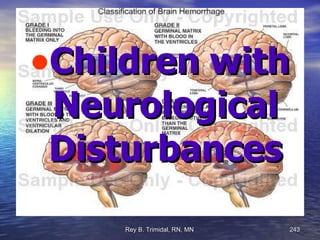
Children with Neurological Disturbances
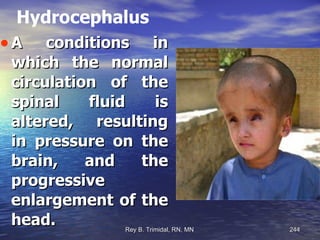
Hydrocephalus  A conditions in which the normal circulation of the spinal fluid is altered,  resulting in pressure on the brain, and the progressive enlargement of the head.
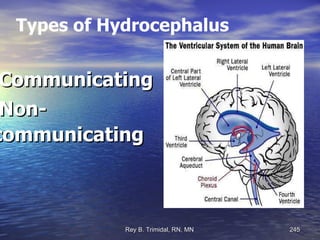
Types of Hydrocephalus Communicating Non-communicating
Assessment A. Assess for gradual enlargement of the head B. Check for separation of skull C. assess for sunset eyes  D. check for hyperactive reflexes
E. Evaluate presene of irritability, failure to thrive, and high pitched cry F. Assess for presence of projectile vomiting G. Prepare child and family for CT scan or MRI
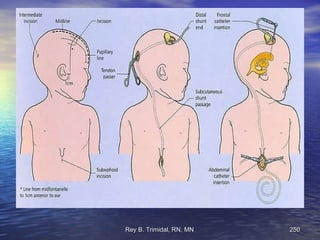
Nursing Interventions A. Actions depends on the cause of increased pressure. Removal of part of choroid plexus  Shunting of the fluid out of the brain to the heart or to the peritoneal cavity. Removal of obstruction
B.Provide Preoperative Care (VP Shunting)‏ C. Postoperative Care
 
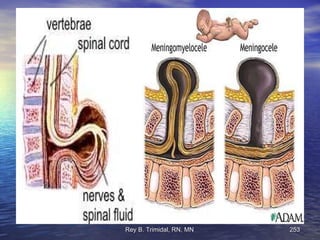
Spina Bifida The failure of the posterior portion of the lamina of the bony spine to form, causing an opening in the spinal column, which may contain meninges and spinal fluid or meninges, spinal fluids and nerves.
Types A. Spina Bifida Occulta Type B. Meningocele Type C. Meningomyelocele Type
 
Assessment A. Assess for presence of Hydrocephalus B. Assess neurological involvement C. Check for Urulogical Involvement D. Assess for Orthopedic Involvement E. Evaluate bowel function
Nursing Interventions A. Neurological Intervention Observe for Hydrocephalus as it is a frequent complications Measure Head Circumference at least every 24 hours Observe for signs of Increase Intracranial Pressure
B. Urulogical Interventions 1. use sterile technique 2. Keep careful record of Intake and Output 3. Teach parents crede method  4. Observe for signs of UTI a. increase temperature b. foul smelling urine c. cloudy urine with possible mucus
Cerebral Palsy A non-specific term used to describe a group of disorders characterized by motor and postural impairments due to abnormal muscle tone
Assessment Assess for Abnormal Movement 1. Spasticity 2. Athetoid (Dyskinetic)  3. Ataxia  Assess for seizures  heck for vision disturbance  Assess mental functioning
Nursing Implementation A. Each child requires an individualized program  B. Major focus of interventions is to: Develop motor control develop communication skills Provide adequate nutrition  Prevent orthopedic complications
 
Reye's Syndrome Acute encephalopathy with fatty degeneration resulting in marked cerebral edema and enlargement of the liver with marked fatty infiltration.
Characteristics A. Usually follows a viral infection, especially Varicella and influenza B B. Aspirin (because of links to develop of Reye's) is now contraindicated with influenza
Assessment A. Assess for Prodromal symptoms; Malaise, cough, rhinorrhea, sore throat B. Evaluate LOC C. Observe temperature changes
D. clinical Stage of the syndrome Stage 1: Vomiting, lethargy and  Drowsiness Stage 2: CNS changes Stage 3: Comatose, hyperventilation,  decorticate posturing Stage 4: Increasing comatose state Stage 5: Seizures. Loss of deep tendon  reflexes, flaccidity and respiratory arrest.
E. Evaluate Lab findings F. Assess for fluids and electrolyte balance; intake and output
Nursing Implementation monitor for signs of Increased Intracranial Pressure Prepare for Tracheal intubation and controlled ventilation Provide respiratory care Monitor V/S frequently and decrease temperature
Monitor closely for signs of seizure activity Provide Nursing Care appropriate for semi-conscious and unconscious patient Provide adequate fluid balance Provide emotional and supportive care for client and family.
Children with Hematologic disturbances and Pediatric Oncology
Hematologic Disturbances
1. Hemophilia
That's all folks!!! ana...!!! Sir Rey-

Ncm

  • 1.
    NCM 501201 (Gynecology)‏ Rey B. Trimidal, RN, MN University of Cebu
  • 2.
    Antepartal Period HyperemesisGravidarum A pernicious vomiting during pregnancy. Cause: Unknown Increase HCG Level Psychological Effect
  • 3.
    Assessment Check forpersistent nausea and Vomiting Assess for abdominal pain and Hiccups Decrease weight Dehydration
  • 4.
    Metabolic Acidosis IncreaseBUN Hyponatremia/ Hypokalemia
  • 5.
    Medical Management NPOTemporarily Rehydration: Ringer’s Lactate Anti-emetic Medication
  • 6.
    General Nursing InterventionCarefully record I&O, and maintain IV Fluids Provide attractive, small meals and remove dishes as soon as the client finished eating
  • 7.
    Offer small feedings; dry food preferred. Offer liquids (herbal teas) between or after meals. Administer antiemetics as ordered. Provide rest, reduce stimuli and restrict visitors. Monitor fetal heart tones.
  • 8.
  • 9.
    2.1 Bleeding duringthe 1 st Trimester of Pregnancy 2.1.1 Abortion Abortion is the medical term  for any interruption of a pregnancy before a fetus is viable.
  • 10.
    Causes of Abortion1. Teratogens 2. Chromosomal Aberration 3. Immune Response 4. Structural Malformation 5. Infections
  • 11.
    Types of Abortion1. Spontaneous- pregnancy ends because of natural causes. 2. Induced- therapeutic or elective reasons for terminating the pregnancy
  • 12.
    Types of SpontaneousAbortion 1. Threatened - characterized by cramping and vaginal bleeding in early pregnancy with no cervical dilation. 2. Imminent or inevitable- characterized by bleeding, cramping and dilation. Termination cannot be prevented.
  • 13.
    3. Incomplete- Characterizedby expulsion of only parts of conception. Bleeding occurs with cervical dilation. 4. Complete- characterized by expulsion of all products of conception.
  • 14.
    5. Missed- characterizedby early fetus intrauterine death without expulsion of the product of conception. The cervix is closed and the client may report dark brown vaginal discharge. 6. Habitual- Spontaneous abortion of 3 or more pregnancy
  • 15.
    Nursing Management 1.Take and Record V/S 2. Monitor Blood loss (Pad counts); Note character and amount of blood. 3. Save all tissue and clots passed 4. Be sure that examination are done under aseptic technique.
  • 16.
    5. Stay withthe client and explain that the pain from contraction will cease when embryo and membrane are passed. 6. Teach controlled breathing and relaxation technique. 7. Allow woman and family time and opportunities to grieve
  • 17.
    2.1.2 Ectopic PregnancyThe implantation of the product of conception outside the uterine cavity. Usual implantation occurs at the distal third of the fallopian tube.
  • 18.
    A Graphic Presentationof Ectopic Pregnancies
  • 19.
  • 20.
  • 21.
  • 22.
  • 23.
  • 24.
    Risk factors: Adhesionson the fallopian tubes Congenital Malformation Scars on the Uterus Uterine Tumors Smoking Use of Intra Uterine Device
  • 25.
    Common Sites ofImplantation : Fallopian tube- 95% Ampulla- 80% Isthmus- 12% Fimbrae- 3% Others Site- 5%
  • 26.
    Assessment: Sharp, stabbingpain at Lower abdominal quadrant Scant Vaginal Bleeding Hemorrhage with Acute bleeding Cullen's Sign
  • 27.
    Management Non-Ruptured: Administrationof Methotrexate, Leucovorin, Mifepristone Ruptured Surgery; Laparotomy and ligation of the other tube
  • 28.
    Nursing Management 1.Protect the patient from undue fatigue and infection. 2. Provide Emotional Support to patient and family 3. Facilitate Laboratory studies and Blood crossmatching 4. Continuously monitor v/s of patient and observed for shock
  • 29.
    2.1.3 Hyatidiform MoleA benign neoplasm of the chorion, in which chorionic villi degenerates, become filled with a clear viscous fluid and assume the appearance of grapelike clusters involving all or parts of the decidual lining of the uterus.
  • 30.
    2 types ofMolar Growth 1. Complete mole- Contains no genetic maternal material 2. Partial Mole- Contains 69 chromosomes
  • 31.
    Assessment: Rapid enlargementof the uterus No Fetal Heart Tone Positive Urine Human Chorionic Gonadotropine Nausea and Vomiting Intermittent brownish discharge after the 12th weeks
  • 32.
    Management Suction CurettageOral Contraceptives for 12 months Methotrexate Dactinomycin
  • 33.
    Nursing Intervention Observefor uterine hemorrhage. Provide emotional Support Encourage client to have follow up treatment. Have Client avoid pregnancy for one year from Negative Test.
  • 34.
    Bleeding duringthe 2 nd and 3 rd Trimester of pregnancy
  • 35.
    Placenta Previa Acondition in which the ovum implants low in the uterus towards the cervix, and the placenta develops so that it partially of completely covers the internal os.
  • 36.
    3 degrees ofPlacenta Previa 1. Low Lying/ Marginal 2. Partialis 3. Totalis/ Complete
  • 37.
  • 38.
    Risk Factors 1.Increasing Parity 2. Advance Maternal Age 3. Past cesarian Section 4. Past Uterine Curettage 5. Multiple gestation
  • 39.
    Assessment Painless, brightred vaginal bleeding Hemorrhage Increase Uterine tone and contractility
  • 40.
    Nursing Intervention 1.Maintain client on bed rest. 2. Provide a quiet, restful atmosphere. 3. Place patient in side lying position. 4. Count perineal pads and measure blood amounts on beddings 5. Give emotional support
  • 41.
    6. DONOT Perform Vaginal Examination. Maybe done but prepare a double set-up. 7. Carefully monitor fetal heart tone thru external Monitors 8. Fetus of less than 34 weeks AOG should receive Betamethasone.
  • 42.
    Abruptio Placenta Prematureseparation of the placenta A condition that occurs when the placenta separates from a normal implantation site in the upper segment of uterus before birth of baby
  • 43.
  • 44.
  • 45.
    Etiology: UnknownPredisposing Factors: High Parity Advance Maternal Age Short Umbilical Cord Chronic Hypertensive Disease Direct Trauma Cocaine use and Smoking
  • 46.
    3 types ofSeparation 1. Complete- Placenta becomes completely detached 2. Partial- Portion of placenta becomes detached from uterine wall 3. Central- Placenta separates centrally and blood is trapped between placenta and uterine wall
  • 47.
    2 types ofhemorrhage 1. External- Blood escape from vagina 2. Concealed- Blood is retained in uterine cavity
  • 48.
    Assessment 1. Painful,dark red vaginal bleeding 2. Couvelaire Uterus 3. Lack of alternate contraction 4. Assess for fetal heart tone 5. Assess for signs of shock.
  • 49.
    Nursing Intervention 1.Keep client on bed rest. 2. Observe for signs of shock. 3. Carefully monitor contraction. 4. If bleeding is severe, begin the administration of Intravenous Fluids.
  • 50.
    5. Facilitate Laboratorywork outs includes 6. Monitor Central Venous Pressure. 7. Record I&O, Observe for anuria and Oliguria
  • 51.
    8. Observe forhemorrhage after delivery 9. Observe for Disseminated Intravascular Coagulation.
  • 52.
  • 53.
    PIH A conditionin which vasospasm occurs during pregnancy in both small and large arteries.
  • 54.
    Cause: UnknownPredisposing/ Risk Factors: 1. Multiple Pregnancy 2. Primipara 3. Less than 20 & Over 40 years of age. 4. Hydramnios 5. With underlying disease condition
  • 55.
    Triad Signs ofPIH 1. Hypertension 2. Generalized Edema 3. Proteinuria
  • 56.
    Classification of PIH1. Gestational Hypertension- BP: 140/90 mmHg, No Proteinuria
  • 57.
    2. Mild Pre-eclampsia-BP: >/ 140/90 mmHg, + 1, +2 Proteinuria, + Edema, > 2 lbs/ week weight gain in 2nd Trimester > 1 lbs/ week weight gain in 3rd Trimester
  • 58.
    3. Severe Pre-eclampsia- BP:160/110 mmHg +3, +4 Proteinuria, 5 g or more in 24 hrs. Extensive Edema Severe Epigastric pain, Nausea and Vomiting Blurred Vision, severe headache Spots before Eye, Marked Hypereflexia Oliguria
  • 59.
    4. Eclampsia- + Signs and symptoms Severe Pre-eclampsia + Seizures or Coma
  • 60.
  • 61.
    Medical Management 1.Complete Bed rest. 2. Diet 3. Daily Weight 4. Magnesium Sulfate 5. Hydralazine
  • 62.
    Nursing Intervention 1.Maintain client on bed rest 2. Monitor for MgSO4 Toxicity Assessment PRIOR TO Administration 1. Urine Output 2. Respiratory Rate 3. Positive Patellar Reflex
  • 63.
    Toxicity Signs andSymptoms 1. Hypotonia 2. Respiratory failure 3. Oliguria
  • 64.
    3. Monitor fetalHeart Tone and Observed for signs of Labor 4. Record I&O; 5. Check daily weight. 6. Check the Retina daily
  • 65.
    7. Limit Visitorsin Sever Cases. 8. Final Resolution of PIH is Delivery/ Early Termination of Pregnancy. 9. Maintain on Seizure Precaution
  • 66.
    Implementation for Eclampsia1. Provide quiet, darkened room. 2. Check Frequently for edema. 3. Maintained Seizure Precaution.
  • 67.
    4. Keep clienton NPO 5. Check V/S and Lab results. 6. Monitor FHT and Contraction
  • 68.
    7. Observed 24Hours postpartum for the Following: a. Anuria b. Convulsion c. Headache d. Blurred Vision
  • 69.
    8. Observed for HELLP Syndrome ( Hemolysis Elevated Liver Enzymes and Low Platelet Count)
  • 70.
    Medical Diseases ComplicatingHigh Risk Pregnancy
  • 71.
  • 72.
    Classification of HeartDisease Class I- Uncompromised Class II- Slightly compromised Class III- Markedly Compromised Class IV- Severely Compromised.
  • 73.
    Assessment A. Observedfor signs of cardiac Decompensation: 2nd Trimester 2. Evaluate for signs of Infection
  • 74.
    Medical Management 1.Isolation 2. Rest 3. Activity Restriction 4. Low Salt Diet 5. Diuretics
  • 75.
    Nursing Intervention 1.Educate the client about the classification and effects of pregnancy before conception. 2. Educate client about special needs and danger signal during pregnancy and postpartum.
  • 76.
    3. Care forClient during Labor: 4. Counsel the client during postpartum
  • 77.
    Diabetes Mellitus Achronic metabolic disease caused by the inability to metabolize glucose properly
  • 78.
    Abnormalities disappear afterpregnancy Symptoms of Hyperglycemia are mild but maybe risky for fetus Diet is cornerstone of intervention Maternal Glucose crosses the placenta but insulin does not. Pregnant mothers should be Screened for glucose level.
  • 79.
    Implication of Diabetesin Pregnancy 1. Diabetes is more difficult to control. 2. There is a tendency for client to develop Acidosis 3. Client is more prone to infection 4. PIH, Hemorrhage and Polyhydramnios are more likely to develop.
  • 80.
    5. Gestational Diabetesmay develop to full blown diabetes. 6. Insulin requirements needs to be increased. 7. Premature delivery is more frequent. 8. Infant maybe overweight but have functions related to gestational age rather that size.
  • 81.
    9. Infant issubject to Hypoglycemia, hyperbilirubinemia, Respiratory distress syndrome and congenital anomalies. 10. Stillborn and neonatal mortality is high.
  • 82.
    Assessment 1. GlucoseTolerance test 2. Positive signs of Hyperglycemia/Hypoglycemia 3. Assess for major signs and Symptoms of Diabetes
  • 83.
    Nursing Intervention A.Educate the client on the effect of diabetes on her and the fetus during pregnancy and the reasons for adhering to therapy protocol. B. Proper care if client is hospitalized. C. Care of Client in Labor d. Provide Postpartum care
  • 84.
    5. Multiple PregnancyTypes 1. Identical 2. Fraternal
  • 85.
  • 86.
  • 87.
    Assessment: 1. Fasterrate of Increase size of the uterus 2. Increase Alpha-Feto protein level 3. Report flurries of action at different portion of abdomen
  • 88.
    4. Multiple setsof Fetal Heart Sound 5. Assess for: Digestion difficulties Constipation Hemorrhoids Dyspnea Backache
  • 89.
    Nursing Interventions 1.Encourage the woman to keep appointment for more frequent check up 2. Counsel the woman to rest frequently during day in the 3rd trimester.
  • 90.
    3. Teach themother the reportable signs and Symptoms of premature labor: 4. Advocate increase protein, iron and calcium in diet. 5. Monitor for Hypertension 6. monitor the woman for postpartum hemorrhage
  • 91.
    4. Advocate increaseprotein, iron and calcium in diet. 5. Monitor for Hypertension disorder 6. Following delivery, monitor the woman for postpartum hemorrhage
  • 92.
    7. Counsel thewoman to rest frequently 8. Encourage pelvic rocking and or legs elevated when sitting to help relieve backache. 9. Small frequent meal is encourage.
  • 93.
    Premature Rupture ofMembrane is rupture of fetal membrane with loss of Amniotic fluids during pregnancy before 37 weeks. Cause: Unknown
  • 94.
  • 95.
    Complications: Maternal andFetal Infections Increase pressure on the Umbilical Cord Cord Prolapse Potter Like Syndrome
  • 96.
    Assessment Use ofNitrazine Paper Observed for signs of Infections Observed for signs of Labor Observed for Amniotic fluid for foul odor
  • 97.
    Management Complete Bedrest Cortecosteroids administration Anti-biotic Prophylaxis
  • 98.
    Interventions Monitor forsigns of Contractions Monitor Fetal Heart Tone Give Emotional Support Refrain from Tub Bathing, Douching, Coitus and Enema Monitor and Record Vital Signs
  • 99.
    Dystocia (Dysfunctional Labor)‏Occurs with prolonged and difficult labor and delivery. Labor is considered prolonged when it extends for 24 hours or more after the onset of regular contractions.
  • 100.
  • 101.
    Dysfunctional Uterine ContractionsUterine contraction is ineffecient; Hence cervical dilatation, effacement and descend fails to occur. Cause: False Labor Oversedation/ Excessive Anesthesia Unripe Cervix Malposition Cephalo-pelvic Disproportion
  • 102.
    Abnormal Presentation andMalposition Occiput Posterior Position Breech Presentation, Face presentation Transverse Lie
  • 103.
  • 104.
    Cephalo-Pelvic Disproportion- Disproportion between the size of the fetus and the size of the pelvis.
  • 105.
    Cause Maternal DiabetesMellitus Large Baby, Head is larger Fetal Abnormalities
  • 106.
    Assessment 1. Observedrate of progress as well as overall length of labor: Latent Phase : Parous Women: 14 hours or longer Nulliparous : 20 hours or Longer
  • 107.
    Active Phase: Parous Women: Dilatation;slower than 1.5 cm/hour Descent ;slower than 5 cm/hour Nulliparous : Dilatation; Slower than 1.8 cm/hour Descent ; Slower than 1cm/hour
  • 108.
    2. Assess forMaternal Exhaustion 3. Assess for Fetal Distress
  • 109.
    Nursing Interventions MonitorVital Signs Monitor Fetal Heart Tone Encourage client to void at least every 2 hours and check for bladder Distention
  • 110.
    Give client aback rub Give client reassurance and support Prepare for Cesarian Section as necessary
  • 111.
    Preterm Labor Occursafter the 20 th weeks but before the 37 th weeks AOG. Criteria Occurs after 20 th weeks but before 37 th week AOG Persistent Uterine contractions (4 times every 20 minutes)‏ Has 80% effacement and Dilatation of 1 cm.
  • 112.
    Cause: UnknownRisk Factors: Dehydration Urinary Tract Infections Chorioamnionitis
  • 113.
    Symptoms Persistent, dull,low back ache Vaginal Spotting Pelvic pressure: Abdominal Tightening Menstrual Like cramping Increasing Vaginal Discharges Uterine Contraction
  • 114.
    Management Complete BedRest Hydration Cortecosteroids administration
  • 115.
    Drug Therapy: Calcium Channel Blockers ( Nifedefine, Indomethacine)‏ Tocolytic Therapy: Beta 2 receptors Antagonist Ritodrine Hydrochloride (Yutopar)‏ Isoxsuprine Hydrochloride (Vasodilan)‏ Terbutaline (Brethine)‏
  • 116.
    Complication: Risk forProlapsed Cord Nursing Intervention Maintain bed rest Continuously monitor contractions Administer medications as ordered Keep client informed and provide emotional support Carefully observed for signs of complication
  • 117.
    Consideration in TerbutalineTherapy Contraindicated for patient with Thyroid functions and Diabetes Mellitus Obtain Baseline Blood data: Mix terbutaline with Ringer's Lactate, and on piggy back infusion Assess for Side effects
  • 118.
    Induction of LaborArtificial initiation of Labor Criteria for Induction Fetus is in danger Labor does not occur spontaneously Fetus is at term Presence of Maternal diseases
  • 119.
    Condition before InductionFetus is in Longitudinal lie Cervix is ripe or ready for birth Presenting part is engaged No CPD Fetus is mature
  • 120.
    Ways of Inductionof Labor Amniotomy Cervical Ripening
  • 121.
    Management Patient shouldbe on bedrest Monitor for Side effects Oxytocin. Cautiously use for patient with Asthma, renal failure and glaucoma. Given intravenously, with Ringers Lactate
  • 122.
    Management of OxytocinCautiously monitor FHR and Uterine Contraction Monitor Blood pressure Monitor for Headache and Vomitting Keep accurate I&O and test for specific gravity. Monitor for Uterine Contraction
  • 123.
    Precipitate Labor Rapid or sudden labor of less than 3 hours duration from onset of cervical changes to delivery of infant
  • 124.
    Risk Factors: GrandMultipara Induction of labor by Oxytocin Amniotomy
  • 125.
    Assessment Obtain aquick history by asking focused question a. Do you want to push? b. Have your membrane ruptured? c. Are you bleeding? d. Have you had baby born quickly before?
  • 126.
    Assess for signsof impending delivery Desire to push b. Frequency of strong contractions c. Heavy Bloody show d. Membrane ruptured e. bulging rectum f. presenting part visible g. severe anxiety
  • 127.
    Complications Premature separationof the placenta Subdural hemorrhage for the fetus Lacerations
  • 128.
    Nursing Interventions Assistingwith the delivery a. Never leave the client unattended during this time Never hold baby back Ask another employee to notify the physician Bring emergency delivery pack to room
  • 129.
    Have client pantrather than push b. reassure that you will remain with her and provide care until the physician arrive c. Put on sterile gloves d. Break membrane immediately
  • 130.
    e. with a clean or sterile towel (if available) support baby's head with one hand, applying gentle pressure to the head f. if cord is draped around the neck, with free hand gently slip it over the head.
  • 131.
    g. if you have bulb syringe, gently suction baby's mouth and wipe blood and mucus from mouth and nose with a towel, if available. h. Shoulders are usually born spontaneously after external rotation. If shoulders do not deliver spontaneously, ask client to bear down to deliver them. i . Support the baby's body as it is delivered
  • 132.
    j. Holdinfant level with placenta until cord clamp is done. k. All manipulation should be gentle to avoid injury to mother and baby.
  • 133.
    Care after DeliveryA. After the delivery, hold the baby securely over hand and arm with the head in a dependent position B. If baby does not cry spontaneously, gently rub baby's back or the sole of baby's feet.
  • 134.
    c. Placethe baby on the mother's abdomen to provide warmth. d . Palpate mothers abdomen to make sure uterus is contracting e. Watch for signs of placental separation f. Support placenta in your hands after it expelled.
  • 135.
    g. Clampthe cord after it stops pulsating if clamp or ties are available. h. Wrap the baby in a blanket i. Put the baby to the mothers Breast. j. Check the uterus after the delivery of the placenta. k. keep an accurate record of the time of birth and other pertinent data. l. Comfort mother.
  • 136.
    M. If babyis delivered unassisted, in bed, before the nurse arrives (precipitate delivery) THE NURSE SHOULD IMMEDIATELY 1. Check the baby to make sure breathing is established. 2. Check the mother for excessive bleeding.
  • 137.
    Hydramnios 1. PolyhydramniosAn excessive amount of amniotic fluid Causes: Maternal Diseases Multiple gestation Fetal Abnormalities
  • 138.
    Clinical Manifestation ExcessiveUterine Enlargement Difficulty breathing Difficulty ambulating Difficulty finding a comfortable position during sleeping
  • 139.
    Varicosities Pain inabdomen, back and thigh due to increasing pressure Nausea and Vomiting FHT maybe difficult to locate and Palpate
  • 140.
    Management 1. Amniocentesis- Nursing Responsibilities a. Assess for signs of Hemorrhage b. Assess for signs of infections c. Assess for premature labor d. Instruct the mother to void prior the procedures
  • 141.
    e . Provideprivacy f. Place a folded towel under the client's right buttocks g . Take baseline maternal and Fetal V/S h . Attached fetal monitor. i. Instruct the patient to take deep breath during insertion
  • 142.
    Olygohydramnios - Smallamount of amniotic fluids associated with fetal renal agenesis and post maturity.
  • 143.
    Manifestation Small uterinesize Labor maybe premature Uterine contraction maybe ineffective and labor maybe prolonged Fetal hypoxia because of cord compression
  • 144.
    Management Monitor fetalstatus carefully during pregnancy and labor Monitor the woman for labor complications
  • 145.
  • 146.
    Uterine Rupture aspontaneous or traumatic rupture of uterus Contributing Factors: Prolonged Labor Abnormal Presentation Multiple Gestation Unwise use of Oxytocin
  • 147.
  • 148.
    Obstructed labor Traumatic maneuver of Forceps or Traction Excessive Fundal pushing Scar from previous Cesarian Section
  • 149.
    Assessment Complete RuptureSudden, sharp abdominal pain during contractions Abdominal Tenderness Cessation of Contractions
  • 150.
    Bleeding into abdominalCavity and some into the vagina Fetus easily palpated; No FHT Signs of Shock
  • 151.
    Incomplete Rupture Developover a period of a few hours abdominal pain during contraction Contraction continue but no Cervical Dilatation
  • 152.
    Vaginal Bleeding IncreasingPulse Rate and Skin pallor Loss of FHT
  • 153.
    Management Administer IVFluids and blood as ordered Administer Oxygen Prepare the woman for surgery Monitor Maternal and Fetal Vital Signs
  • 154.
    Uterus maybe repairedbut if extensive, Hysterectomy is necessary Keep the woman informed about the procedure.
  • 155.
    Prolapsed Umbilical CordProlapse in front of or along side the fetal presenting part Cause Premature Rupture of Membrane Fetal Presentation Prematurity Hydramnios Placenta Previa
  • 156.
  • 157.
    Assessment Cord maybeseen protruding from vagina Cord maybe palpated in vaginal canal or cervix FHT maybe irregular with periodic fetal Bradycardia Reflex constriction on the umbilical cord
  • 158.
    Nursing Interventions Placethe woman in deep trendelenburg position Administer Oxygen by mask Place sterile gloved hand in vagina and push the infant head upward
  • 159.
    Prepare immediate vaginaldelivery if cervix is dilated or if not Cesarian Section For home situation, cover protruding cord with clean, wet dressing, elevate the woman hip and transport to hospital immediately Have woman hear FHT.
  • 160.
    Amniotic Fluid EmbolismThe escape of amniotic fluid into the maternal circulation. It is usually fatal to the mother. High maternal mortality rate of 85%. Predisposing Factors 1. Premature Rupture of Membrane 2. Tumultuos Labor
  • 161.
    Assessment Observe forAcute Dyspnea Assess for sudden chest pain Check for Cyanosis Observe for Pulmonary edema Check for Vital signs that may indicate Shock
  • 162.
    Medical Implication Oxygenadministration Digitalis for failing cardiac function Fibrinogen to replaced depleted reserves Heparin to combat fibrinogenemia
  • 163.
    Nursing Intervention Instituteefficiency measure to maintain life. If clients survive, provide intensive care treatment Keep family informed and provide emotional support.
  • 164.
  • 165.
    Uterine Atony Relaxationof the uterus and is the most common cause of Postpartal Hemorrhage
  • 166.
    Factors that leadsto Atony: 1. Conditions that distends the uterus beyong average capacity 2. Conditions that could have caused vaginal/Uterine laceration 3. Conditions with varied palcental sites/Attachement
  • 167.
    Nursing Interventions MonitorVital signs- Maybe an indicative of Shock Facilitate Laboratory studies Keep Accurate counts of Pads Provide emotional Support Keep the Client and family informed about the procedures
  • 168.
    Hemorrhage Involve ablood loss of 500 mL or more and occurs most frequently on the first hour following delivery.
  • 169.
  • 170.
    Causes Uterine AtonyRetained Placental Fragment Laceration of the vagina, cervix of perineum Hypofibrinogenemia
  • 171.
    Assessment a .Observed for Uterine Atony b . Check for lacerations c . Checked for retained placental tissue d .Evaluate signs and symptoms of shock f. Evaluate laboratory results
  • 172.
    Nursing Management MonitorV/S q 15 mins until stable Prepare to administer IV fluids, blood and plasma expander as ordered. Palpate the fundus every 15 mins. or PRN while bleeding continuous. Gently massage the fundus
  • 173.
    Administer Oxytocin orother uterine stimulants. Have the physician Notified Weight pads and linen. Measure I&O Explain and provide warmth for client Return client to DR or OR for removal of placental tissue or repair of laceration.
  • 174.
    Hematomas Localized collectionof blood in loose connective tissue beneath the skin that covers the external genetalia, beneath the vaginal mucosa or in the broad ligaments .
  • 175.
    Causes Trauma duringspontaneous delivery Trauma during forcep application or delivery Inadequate suturing of episiotomy
  • 176.
    Clinical Manifestation VulvarHematoma Vaginal Hematoma
  • 177.
    Nursing Interventions Iceand Hot compress I&D and ligation of bleeder. Keep the woman and family informed of changes in physiologic status and treatment plan.
  • 178.
    Puerperial Infections EndometritisParametritis Thrombophlebitis Bacteremia
  • 179.
    Cause Bacteria thatare introduced from external sources Normal bacterial organism in the generative tract.
  • 180.
    Predisposing factors ProlongedLabor Postpartum hemorrhage Premature Rupture of Membrane Infection elsewhere in the body Intrauterine Manipulation Anemia Malnutrition
  • 181.
    Clinical Manifestation Fever:38.0 C or above after the 24 hours after delivery
  • 182.
    Endometritis Infections involving the endometrium Manifestation uterus usually larger than expected for post delivery day Lochia may be profuse, bloody and foul smelling Chills and fever
  • 183.
    Parametritis Infections ofthe pelvic connective tissue Uterus maybe larger than expected Uterus becomes fixed, the pelvic area warm Chills, fever, tachycardia, severe unilateral or bilateral pain i Incision and drainage is performed.
  • 184.
    Thrombophlebitis Inflammation ofa vessel wall with clot formation - Result from puerperial infections Types Pelvic Thrombophlebitis Femoral Thrombophlebitis
  • 185.
    Pelvic Thrombophlebitis - *Begins on the 2 nd week from delivery Severe chills and intermittent high fever 40.6 Celsius
  • 186.
    Femoral Thrombophlebitis *Pain and tenderness and turgidity of the calf *Redness, increase skin temperature, edema of the calf and thigh *Positive Homan's sign.
  • 187.
    Bacteremia Severe Chills,fever, and rapid respiration Pale skin: Fingers and lips maybe cyanotic Lochial Discharges may increase and have foul odor.
  • 188.
    Nursing Management a.Continue Monitoring V/S every 2-4 hours b. Isolate woman c. Maintain Fluids and electrolytes d. Antibiotic Therapy is instituted e. Monitor site for infections f. Diet. g. Institute Comfort Measures.
  • 189.
    Postpartum UTI Cause:Bladder Trauma during delivery Urinary retention due to anesthesia, excessive IVF caising distended bladder Frequent Catheterization
  • 190.
    Clinical Manifestation IncreasingTemperature >/ 37.8 Celsius Urinary Frequency Pain on Urination Flank pain Chills
  • 191.
    Interventions Monitor V/S,degree and site of pain Increase Fluid intake Instruct the mother to empty the bladder completely each time she urinates. Administer Antibiotics and Analgesics. Encourage to rest.
  • 192.
    Subinvolution of theUterus Slowing or halting of normal postpartum return of the reproductive organ to their pre-pregnancy state. Causes: Pelvic Infections Retention of Placental Fragments Fibroid Tumor
  • 193.
    Manifestation Uterus largerand softer than expected Uterus still palpable after 4-6 weeks Prolonged Lochial Discharges Irregular Bleeding Backache or sensation of weight in pelvis
  • 194.
    Interventions Oral administrationof Methergine Maleate Prepare the woman for Uterine Curettage, Administer prescribed antibiotics Instruct the woman to report signs of infections, vaginal bleeding or any tissue passage vaginally.
  • 195.
    Postpartum Psychosis Occuringwith in 4-6 weeks after delivery Cause: Unknown
  • 196.
    Manifestation: Clouding ofconsciousness and hallucinations Depression, withdrawal Hostility Fear and suspiciousness
  • 197.
    Interventions Make referralto appropriate health team to increase resources Encourage family support and presence Administer psychotropic drugs Encouraged the woman to touch and see the baby Show and teach them some parenting skills Do not leave the patient alone.
  • 198.
  • 199.
  • 200.
    Care of PrematureInfant An infant born before the end of the 37 th week regardless of birth weight.
  • 201.
    Assessment a. Assessdigestive system b. Assess CNS and Muscle tone c. Assess for Respiratory System d. Assess Intergumentary System e. Assess immune system f. Assess Hepatic System: Liver Immature g. Assess for Circulatory system h. Assess for Renal System
  • 202.
    Implementation a. ProvideImmediate care to infant b. Evaluate Respiratory Status c. Reposition every 2 hours d. initiate feedings as ordered e. provide for family's needs f. Maintain I&O, and weight daily
  • 203.
    g. Organize careto conserve energy h. Measure head circumference and length i. Check Heart Rate by apical pulse j. Gently stroke and talk to baby when giving care
  • 204.
    k. Hang colorfulmobiles or other non-harmful objects in crib l. Hold baby during feeding as soon as condition permits. m. Encourage parents to hold, cuddle, feed and diaper as per baby
  • 205.
    Respiratory Distress SyndromeA group of clinical symptoms signifying that the infant is experiencing problems with the respiratory system- also called Hyaline Membrane Disease.
  • 206.
    Characteristics A. Symptomsare the result of a decrease in the amount of surfactant in the infant's lungs B. Respiratory Distress syndrome is the most common cause of death in infant
  • 207.
    Assessment A. assessfor increased respiration B. Assess for retractions sternal and intercostal. C. Check for presence of cyanosis and expiratory grunting. D. Assess for increased apical pulse. E. Evaluate for nasal flaring and chin lag
  • 208.
    F. Evaluate forlack of activity or movement. G. Assess for inability to take in sufficient oxygen H. Assess for Hypercarbia I. Check for respiratory acidosis
  • 209.
    J. Evaluate fordecreased body temperature. K. Check for metabolic acidosis due to increased production of Lactic Acid
  • 210.
    Nursing Implementation A. Prevent Cold stress B . Provide Nutrition and Hydration C . Do careful monitoring of blood gases and electrolytes, color and activity. D . Administer Oxygen for Hypoxemia E . Surfactant replacement therapy
  • 211.
    F. Careof Infant with Endotracheal Tube G. Gently handle the infant with as little disturbance H . Keep parents informed of infant's progress I. Allow parents to visit infant as much as possible J. Gently stroke and talk with infant while giving care.
  • 212.
    Small for GestationalAge Refers to infants who are significantly under size for gestational age. Also called as Intra-Uterine Growth Retardation.
  • 213.
    Infant Appearance LittleSubcutaneous tissue Loose, dry, scaling skin Appears thin and wasted; old for size Maybe meconeum staining of skin, nails Sparse hair on head Active, alert and seem hungry Cord dries more rapidly
  • 214.
    Assessment A. Assessfor Hypoglycemia or poor glucose control B. Assess for Hypothermia C. Assess for Asphyxia D. Assess for Polycythemi
  • 215.
    Nursing Implementation A.provide care similar to Premature infants until stabilized. B. Protect from cold stress; Keep warm; Usually in isolette C. Perform test for glucose D. Weigh daily and maintain I&O
  • 216.
    Postmature Infant Refersto an infant of over 42 weeks gestation
  • 217.
    Assessment A. Assessthat vernix and lanugo B. Assess skin C. Check fingernails and toenails D. Assess size E. Observe for Hypoglycemia F. Observe for signs of birth injury
  • 218.
    Nursing Implementation A.Similar to care given to preterm infants if premature characteristics are observed B. Symptoms depends on conditions at birth. C. Monitor for possible complication (Asphyxia, Polycythemia)‏
  • 219.
    Hyperbilirubinemia An abnormalelevation of bilirubin in the newborn (above 12.9 mg/100mL for fomula feed infants and above 15 mg/100 mL for breastfed infants and Prematures)‏
  • 220.
    Assessment A. Observefor Jaundice, which progresses from head to extremities. B. Observe for Pallor C. Evaluate Activity Level D. Assess if urine is concentrated and stools are light in color. E. Assess progress of conditions F. Evaluate Blood Tests.
  • 221.
    Nursing Implementation A. Observe infant for signs of increase jaundice B. Observe for and prevent acidosis C. Maintain adequate hydration and offer fluids between feeding as ordered. D. Using skin temperature probe E. Prevent Infections
  • 222.
    F . ProvidePhoto therapy G . Meet infant's emotional needs H. Reinforce Physician's teaching to parents and allow parents to express concerns and feelings I. Monitor Exchange Transfusion; J. Administer care after Transfusion
  • 223.
    Erythroblastosis Fetalis Thedestruction of Red Blood Cells that results from an Antigen-Antibody reaction and is characterized by Hemolytic Anemia and or Hyperbilirubenemia
  • 224.
    Diagnosis Indirects Coombs'test Directs Coombs' test Spectrophotometric Analysis of Amniotic fluids
  • 225.
    Assessment Assess anemia Assess for Jaundice Evaluate edema
  • 226.
    Nursing Interventions Administerimmunization against hemolytic disease with RhoGAM as ordered Monitor exchange transfusion after birth or Intrauterine transfusion. Follow interventions for Hyperbilirubenemia.
  • 227.
    Infants of DiabeticMother Infants with blood glucose level of less than 40 mg/dL. Most have been exposed to elevated maternal glucose level in utero.
  • 228.
    Assessment A. Assessfor excessive size and weight due to excess glycogen and fats in tissue. B. Assess Appearance of Infants C. Observed for signs and symptoms of Hypoglycemia
  • 229.
    D. Observed forhypocalcemia E. Observed for signs and symptoms of Respiratory Distress F. Hyperbilirubenemia
  • 230.
    Nursing Intervention A.Administer care similar to preterm infant B. Caloric intake important C. Be aware that any infant of a diabetic mother will be started on Hypoglycemia protocol regardless of weight.
  • 231.
    Drug-Dependent Newborn Thereis a direct relationship between the duration of addiction, dosage and the severity of symptoms.
  • 232.
    A. Heroin AddictedMothers: infants may appear normal at birth with low birth weight. Onset of withdrawal begins within 72 hours. Infants appears less ill than when mother is taking methadone Heroin causes early maturation of the liver.
  • 233.
    B. Mother onMethadone Onset of withdrawal may be delayed; Most evident 48-72 hours and may last 6 days to 8 weeks. Infant may appear to be very ill. May develop jaundice due to prematurity
  • 234.
    C. Mothers addictedto Cocaine A stimulant; Maternal to fetal transfer of cocaine is swift, with the metabolites even more potent than the drugs. Infant evidences decreased interactive behavior, feeding problem, irregular sleep patterns and diarrhea. Some may have major deformities-
  • 235.
    Assessment A. Assessfor irritability, tremors, hyperactivity, and hypertonicity B. Assess for respiratory distress and ventilatory capacity
  • 236.
    C. Observed forthe following signs: 1. High pitched, shrill cry 2. Sneezing 3. Fever 4. Disruption of Normal sleeping pattern
  • 237.
    5. Gastrointestinal Effectsa. Vomiting b. Diarrhea c. Poor feeding 6. Excessive sweating 7. Extreme sucking of fist
  • 238.
    Nursing Interventions A.Monitor respiratory and cardiac rates every 30 minutes and PRN B. Take temperature every 4-8 hours and PRN C. Reduce External stimuli and handle infant infrequently. D. Pad sides of crib to protect the infant from injury
  • 239.
    F. Suction ifnecessary G. Provide careful skin care H. Measure I&O I. Keep mother informed of infants progress J. Promote mother's Interest to infant K. Administer Medication as ordered, usually, paregoric (Narcotic Opiates), phenobarbital, valium and tincture opium.
  • 240.
  • 241.
    Assessment a. Monitor for respiratory distress and apnea b. Observe for cyanosis c. Observe for seizures d. check for major brain dysfunction symptoms
  • 242.
    Nursing Implementation A.Position on side to facilitate drainage of secretions B. Administer small, frequent feeding and burp well C. Avoid Heat Loss D. Reduce environmental stimuli.
  • 243.
  • 244.
    Hydrocephalus Aconditions in which the normal circulation of the spinal fluid is altered, resulting in pressure on the brain, and the progressive enlargement of the head.
  • 245.
    Types of HydrocephalusCommunicating Non-communicating
  • 246.
    Assessment A. Assessfor gradual enlargement of the head B. Check for separation of skull C. assess for sunset eyes D. check for hyperactive reflexes
  • 247.
    E. Evaluate preseneof irritability, failure to thrive, and high pitched cry F. Assess for presence of projectile vomiting G. Prepare child and family for CT scan or MRI
  • 248.
    Nursing Interventions A.Actions depends on the cause of increased pressure. Removal of part of choroid plexus Shunting of the fluid out of the brain to the heart or to the peritoneal cavity. Removal of obstruction
  • 249.
    B.Provide Preoperative Care(VP Shunting)‏ C. Postoperative Care
  • 250.
  • 251.
    Spina Bifida Thefailure of the posterior portion of the lamina of the bony spine to form, causing an opening in the spinal column, which may contain meninges and spinal fluid or meninges, spinal fluids and nerves.
  • 252.
    Types A. SpinaBifida Occulta Type B. Meningocele Type C. Meningomyelocele Type
  • 253.
  • 254.
    Assessment A. Assessfor presence of Hydrocephalus B. Assess neurological involvement C. Check for Urulogical Involvement D. Assess for Orthopedic Involvement E. Evaluate bowel function
  • 255.
    Nursing Interventions A.Neurological Intervention Observe for Hydrocephalus as it is a frequent complications Measure Head Circumference at least every 24 hours Observe for signs of Increase Intracranial Pressure
  • 256.
    B. Urulogical Interventions1. use sterile technique 2. Keep careful record of Intake and Output 3. Teach parents crede method 4. Observe for signs of UTI a. increase temperature b. foul smelling urine c. cloudy urine with possible mucus
  • 257.
    Cerebral Palsy Anon-specific term used to describe a group of disorders characterized by motor and postural impairments due to abnormal muscle tone
  • 258.
    Assessment Assess forAbnormal Movement 1. Spasticity 2. Athetoid (Dyskinetic) 3. Ataxia Assess for seizures heck for vision disturbance Assess mental functioning
  • 259.
    Nursing Implementation A.Each child requires an individualized program B. Major focus of interventions is to: Develop motor control develop communication skills Provide adequate nutrition Prevent orthopedic complications
  • 260.
  • 261.
    Reye's Syndrome Acuteencephalopathy with fatty degeneration resulting in marked cerebral edema and enlargement of the liver with marked fatty infiltration.
  • 262.
    Characteristics A. Usuallyfollows a viral infection, especially Varicella and influenza B B. Aspirin (because of links to develop of Reye's) is now contraindicated with influenza
  • 263.
    Assessment A. Assessfor Prodromal symptoms; Malaise, cough, rhinorrhea, sore throat B. Evaluate LOC C. Observe temperature changes
  • 264.
    D. clinical Stageof the syndrome Stage 1: Vomiting, lethargy and Drowsiness Stage 2: CNS changes Stage 3: Comatose, hyperventilation, decorticate posturing Stage 4: Increasing comatose state Stage 5: Seizures. Loss of deep tendon reflexes, flaccidity and respiratory arrest.
  • 265.
    E. Evaluate Labfindings F. Assess for fluids and electrolyte balance; intake and output
  • 266.
    Nursing Implementation monitorfor signs of Increased Intracranial Pressure Prepare for Tracheal intubation and controlled ventilation Provide respiratory care Monitor V/S frequently and decrease temperature
  • 267.
    Monitor closely forsigns of seizure activity Provide Nursing Care appropriate for semi-conscious and unconscious patient Provide adequate fluid balance Provide emotional and supportive care for client and family.
  • 268.
    Children with Hematologicdisturbances and Pediatric Oncology
  • 269.
  • 270.
  • 271.
    That's all folks!!!ana...!!! Sir Rey-