NEETHULEKSHMY U
ASST PROFESSOR
PG & RESEARCH DEPARTMENT OF POLITICAL SCIENCE
S N COLLEGE KOLLAM, KERALA
 Modern approach to the study of Political Science.
 A Post Second World War development
 Protest movement against traditional approach in
Political Science
 Associated with the works of American Political
scientists
 The roots of behavioural approach can be traced back
to the works of Graham Wallas (Human Nature in
Politics) and Arthur Bentley ( The process of
Government)
 Graham wallas pointed out the use of human nature in
the study of Political Science
 Arthur Bentley gave emphasis to the group study
 The major exponents of Behaviouralism are Charles E
Merrium, the Founder of Chicago School, Harold D.
Lasswell, George Catlin, David Easton etc.
 They believed that the traditional approaches neglected
the political phenomena. Therefore they developed a
new approach to the careful study of political
phenomena, i.e. Behavioural approach.
 The central focus is on political behaviour of the
individuals.
 Political Science is concerned with the political behaviour
of human beings within the political contexts that is
within a state or other political community.
 Nature of political events are largely determined by the
nature and behavior of the people.
 It is an attempt to understand political phenomena in
terms of observed and observable data.
 Use of more scientific tools such as observation,
survey, measurements etc.
 Aims to a value-free subject.
 A protest movement against traditional approaches in
Political Science
 Main focus is on political behaviour of the individual
 Emphasis on methodology
 Objective in nature
 Value free
 Emphasis to inter disciplinary study
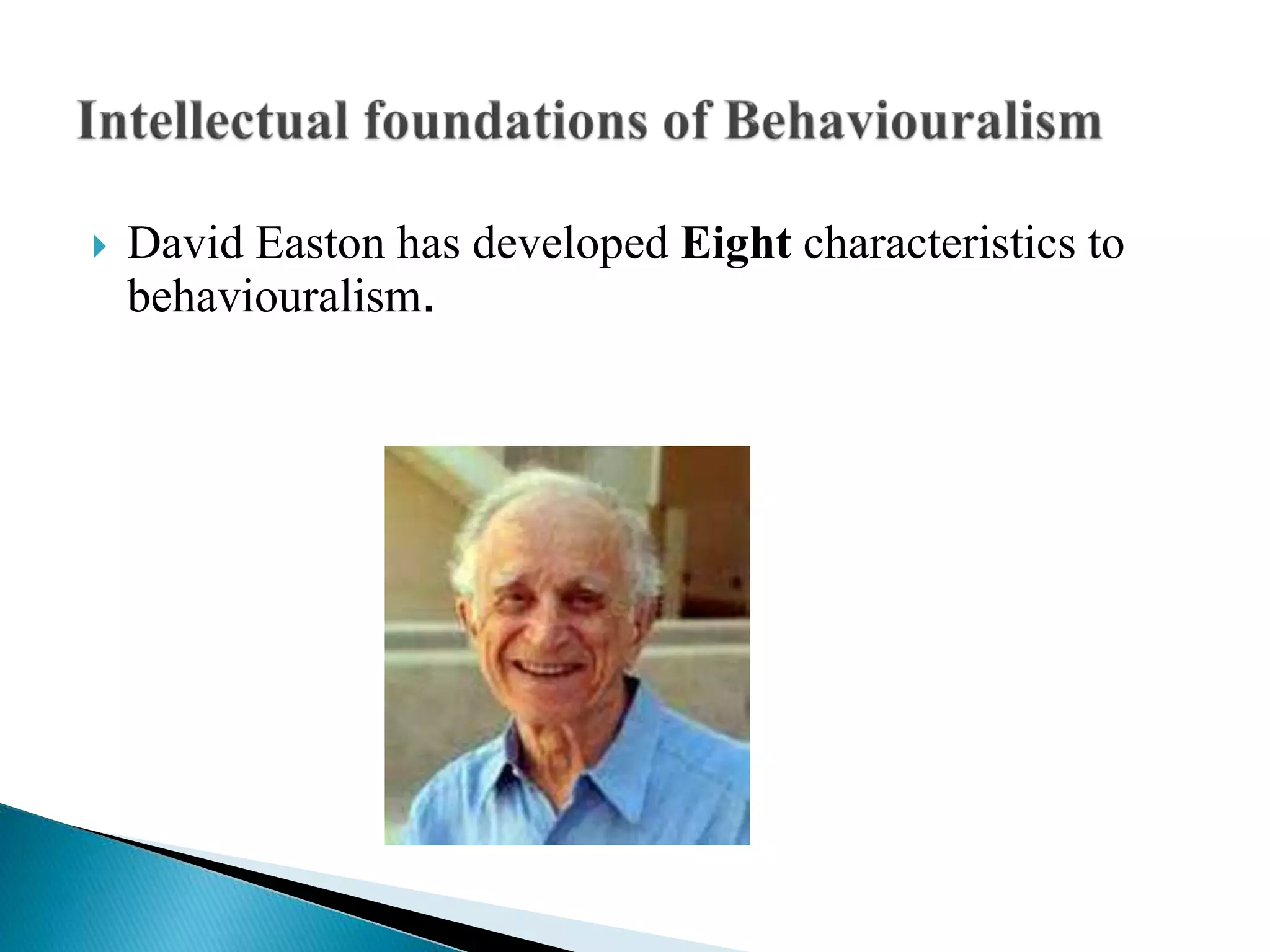
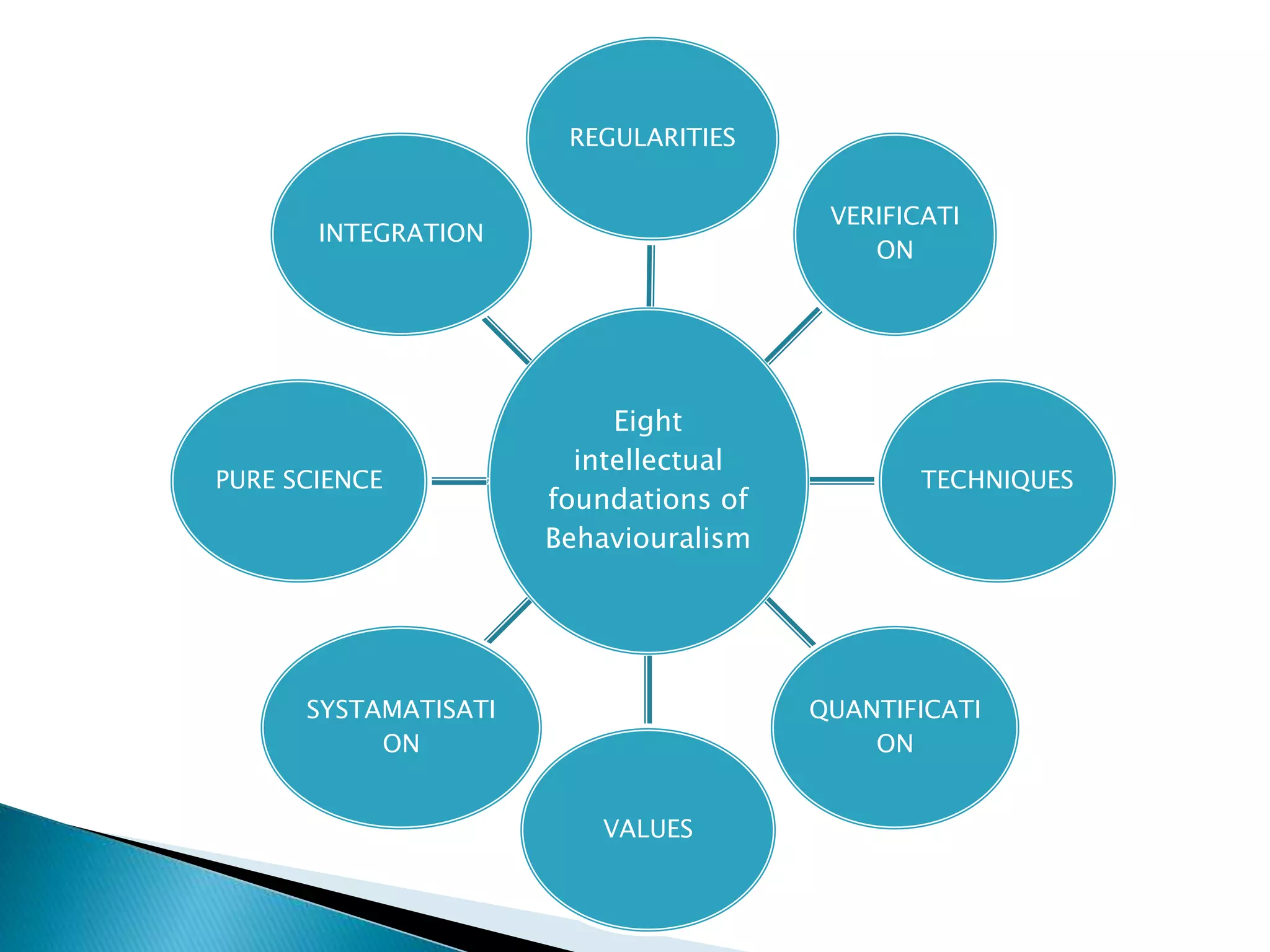
 David Easton has developed Eight characteristics to
behaviouralism.
Eight
intellectual
foundations of
Behaviouralism
REGULARITIES
VERIFICATI
ON
TECHNIQUES
QUANTIFICATI
ON
VALUES
SYSTAMATISATI
ON
PURE SCIENCE
INTEGRATION
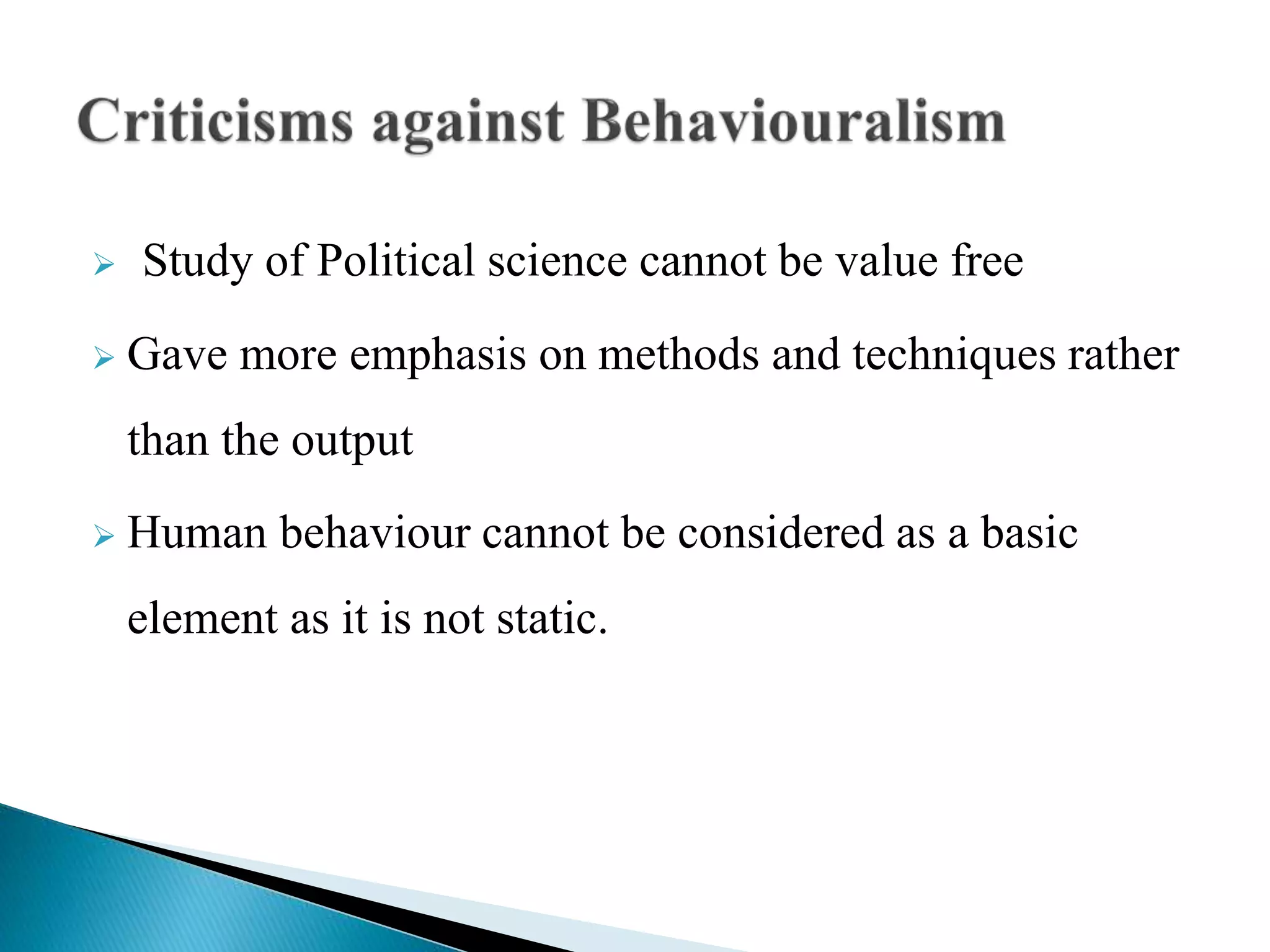
 Study of Political science cannot be value free
 Gave more emphasis on methods and techniques rather
than the output
 Human behaviour cannot be considered as a basic
element as it is not static.
Behaviouralism ppt slideshare

Behaviouralism ppt slideshare

  • 1.
    NEETHULEKSHMY U ASST PROFESSOR PG& RESEARCH DEPARTMENT OF POLITICAL SCIENCE S N COLLEGE KOLLAM, KERALA
  • 3.
     Modern approachto the study of Political Science.  A Post Second World War development  Protest movement against traditional approach in Political Science  Associated with the works of American Political scientists
  • 4.
     The rootsof behavioural approach can be traced back to the works of Graham Wallas (Human Nature in Politics) and Arthur Bentley ( The process of Government)  Graham wallas pointed out the use of human nature in the study of Political Science  Arthur Bentley gave emphasis to the group study
  • 5.
     The majorexponents of Behaviouralism are Charles E Merrium, the Founder of Chicago School, Harold D. Lasswell, George Catlin, David Easton etc.  They believed that the traditional approaches neglected the political phenomena. Therefore they developed a new approach to the careful study of political phenomena, i.e. Behavioural approach.
  • 6.
     The centralfocus is on political behaviour of the individuals.  Political Science is concerned with the political behaviour of human beings within the political contexts that is within a state or other political community.  Nature of political events are largely determined by the nature and behavior of the people.
  • 7.
     It isan attempt to understand political phenomena in terms of observed and observable data.  Use of more scientific tools such as observation, survey, measurements etc.  Aims to a value-free subject.
  • 8.
     A protestmovement against traditional approaches in Political Science  Main focus is on political behaviour of the individual  Emphasis on methodology  Objective in nature  Value free  Emphasis to inter disciplinary study
  • 9.
     David Eastonhas developed Eight characteristics to behaviouralism.
  • 10.
  • 11.
     Study ofPolitical science cannot be value free  Gave more emphasis on methods and techniques rather than the output  Human behaviour cannot be considered as a basic element as it is not static.