I. Earth’s Resources – resources
that the Earth provides for
us.
A. Natural Resources –
natural material that are
used by humans.
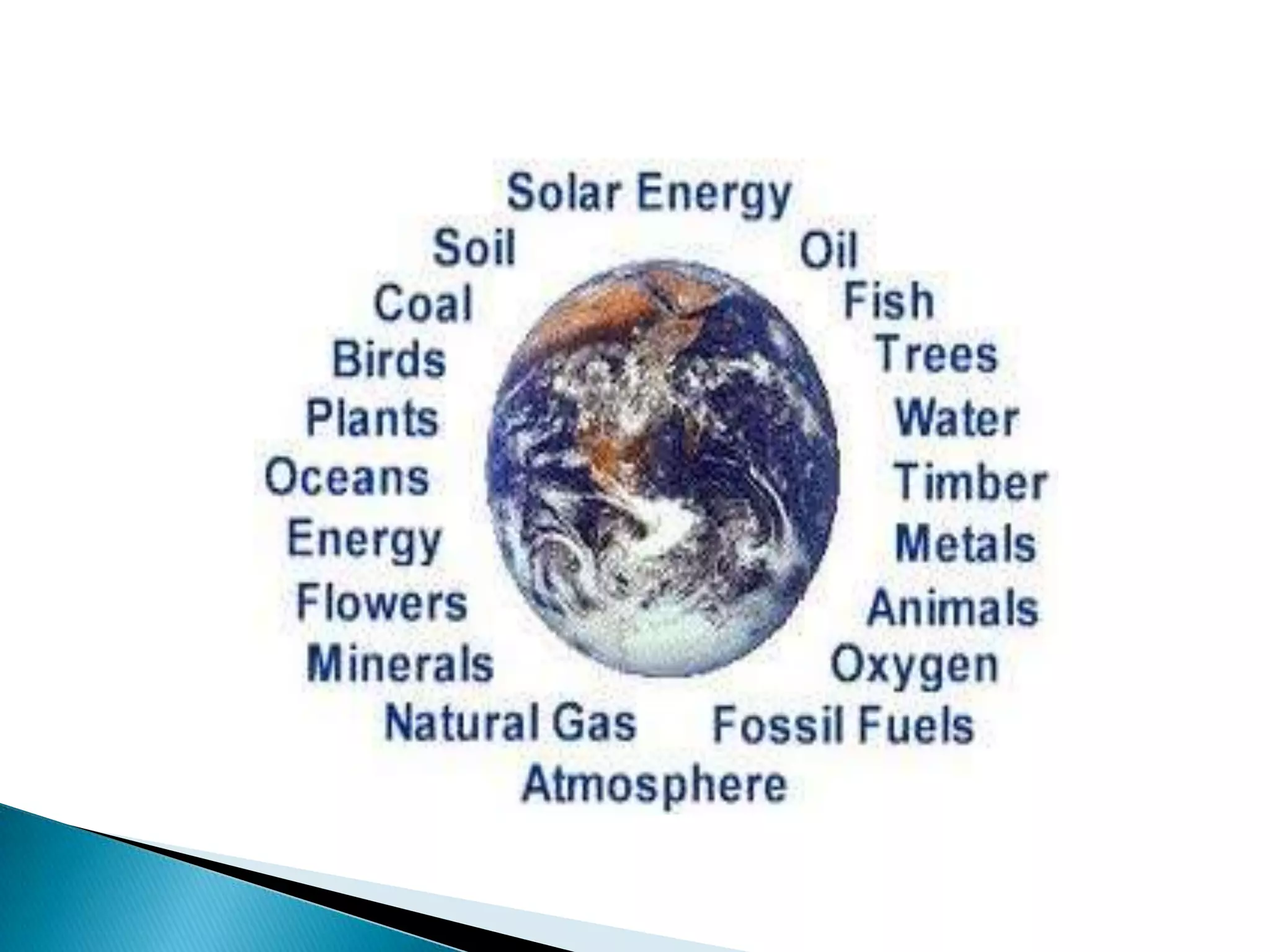
1. Examples – water, petroleum,
minerals, forest, and animals
2. Most resources are changed and
made into products that make
people’s lives more comfortable and
convenient
3. Energy we get from many of
these resources, such as gasoline and
wind, ultimately comes from the
sun’s energy!
The sun is the POWERHOUSE
 Would not have:
1. Trees
2. Wind
3. Fossil fuel
4. Plants
5. Animals
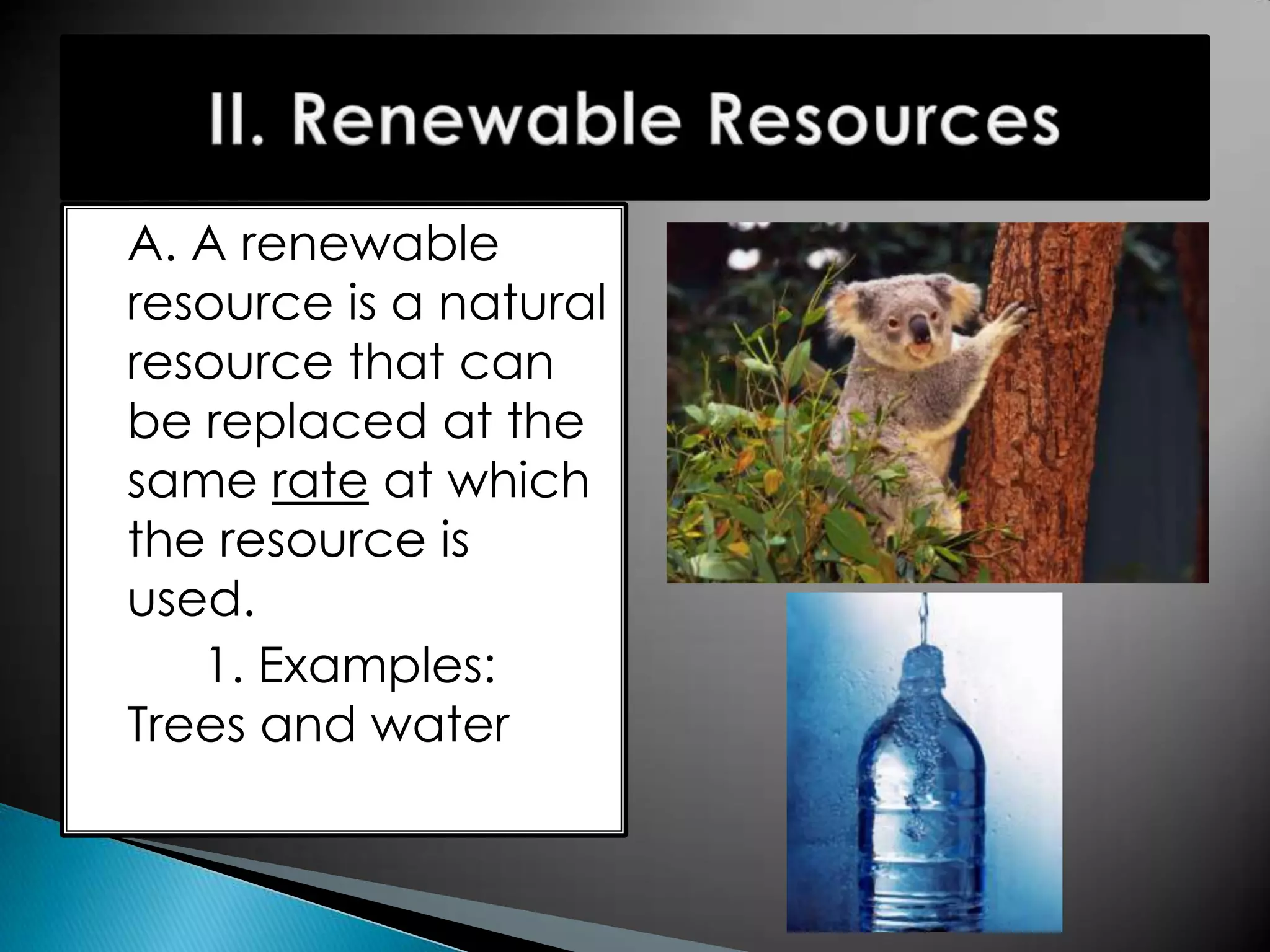
A. A renewable
resource is a natural
resource that can
be replaced at the
same rate at which
the resource is
used.
1. Examples:
Trees and water
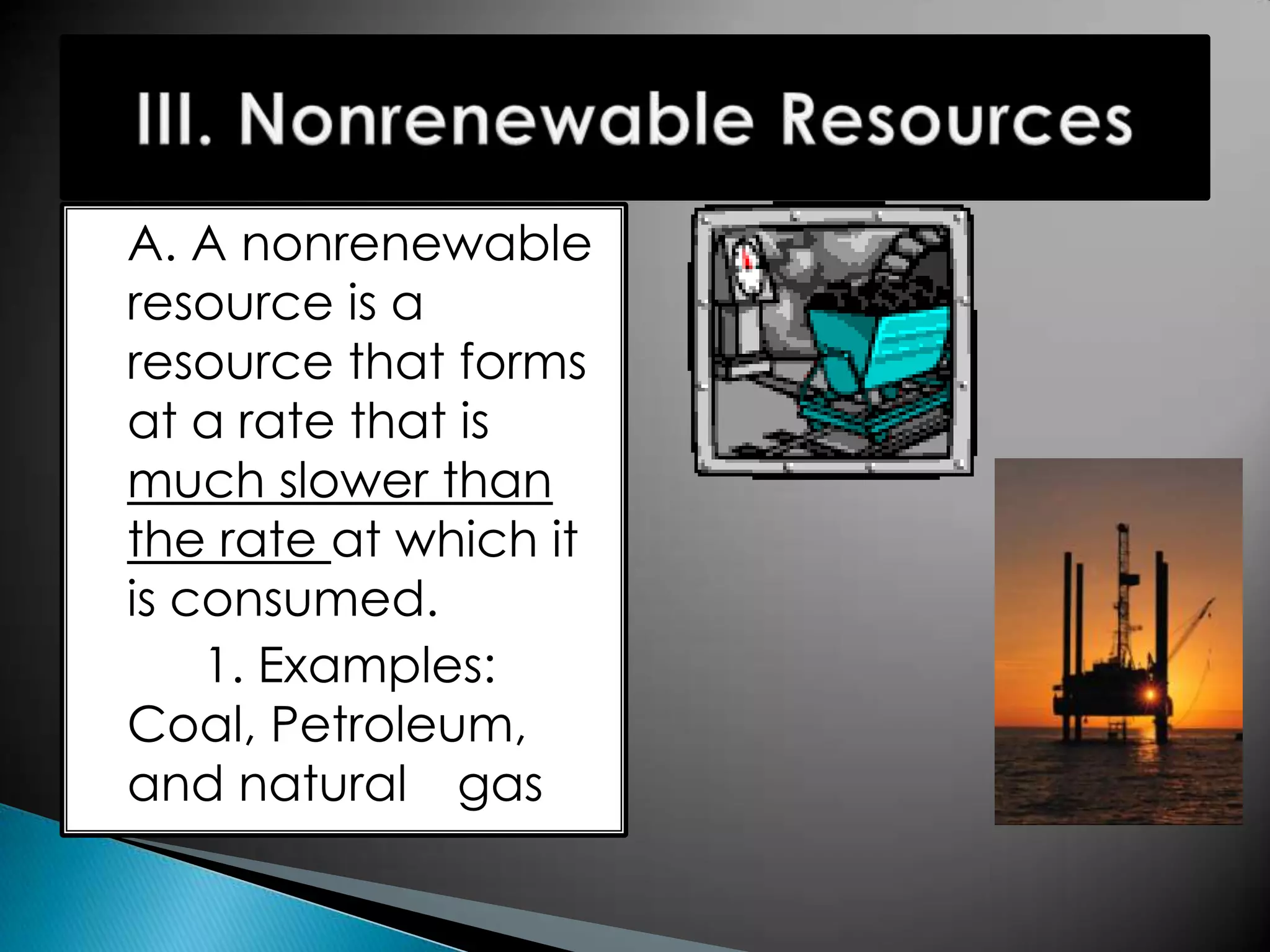
A. A nonrenewable
resource is a
resource that forms
at a rate that is
much slower than
the rate at which it
is consumed.
1. Examples:
Coal, Petroleum,
and natural gas
Non-renewable does NOT mean that it doesn’t
renew.
It means the rate at which it renews itself is
SLOWER then the CONSUMPTION
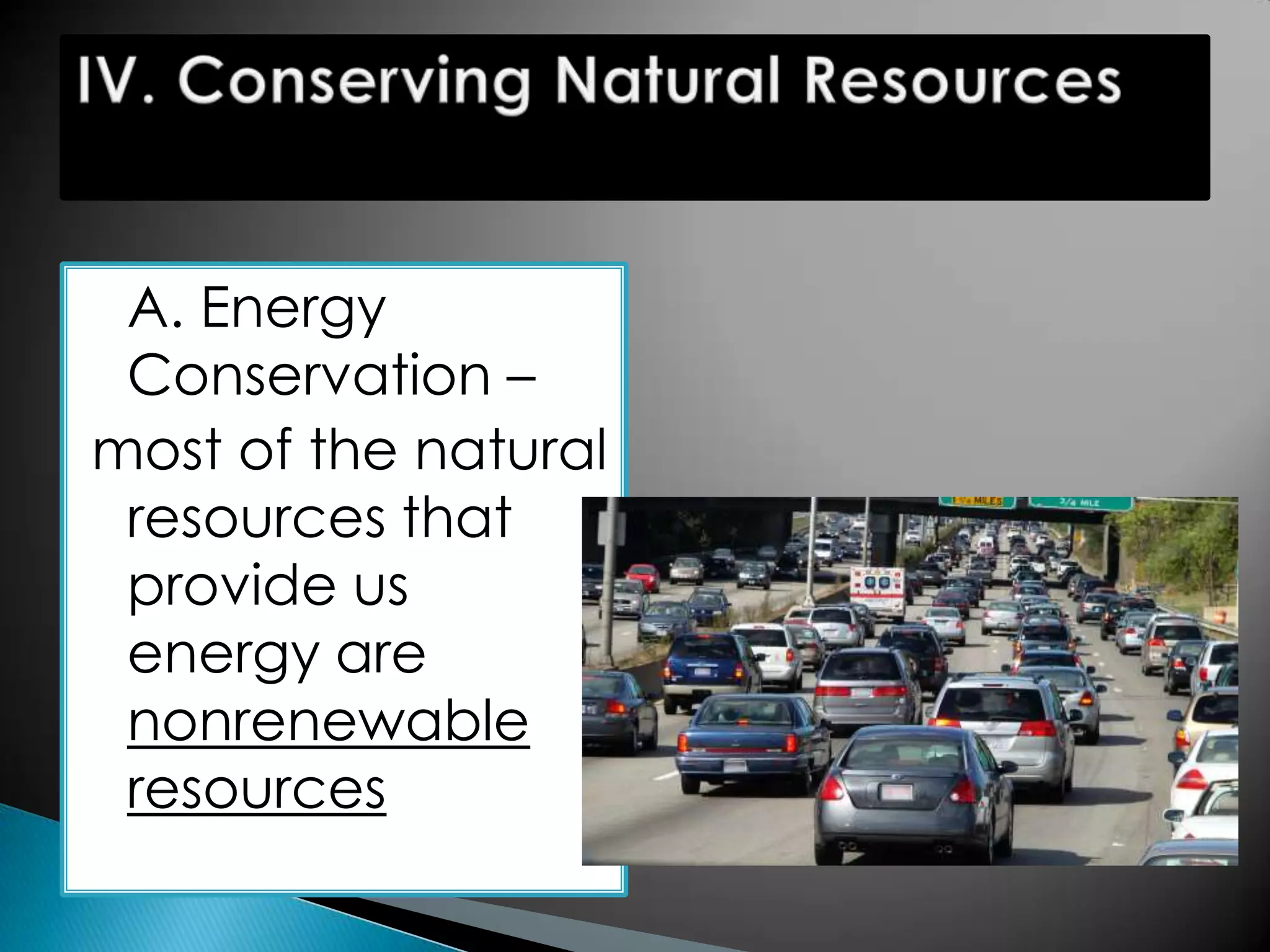
A. Energy
Conservation –
most of the natural
resources that
provide us
energy are
nonrenewable
resources
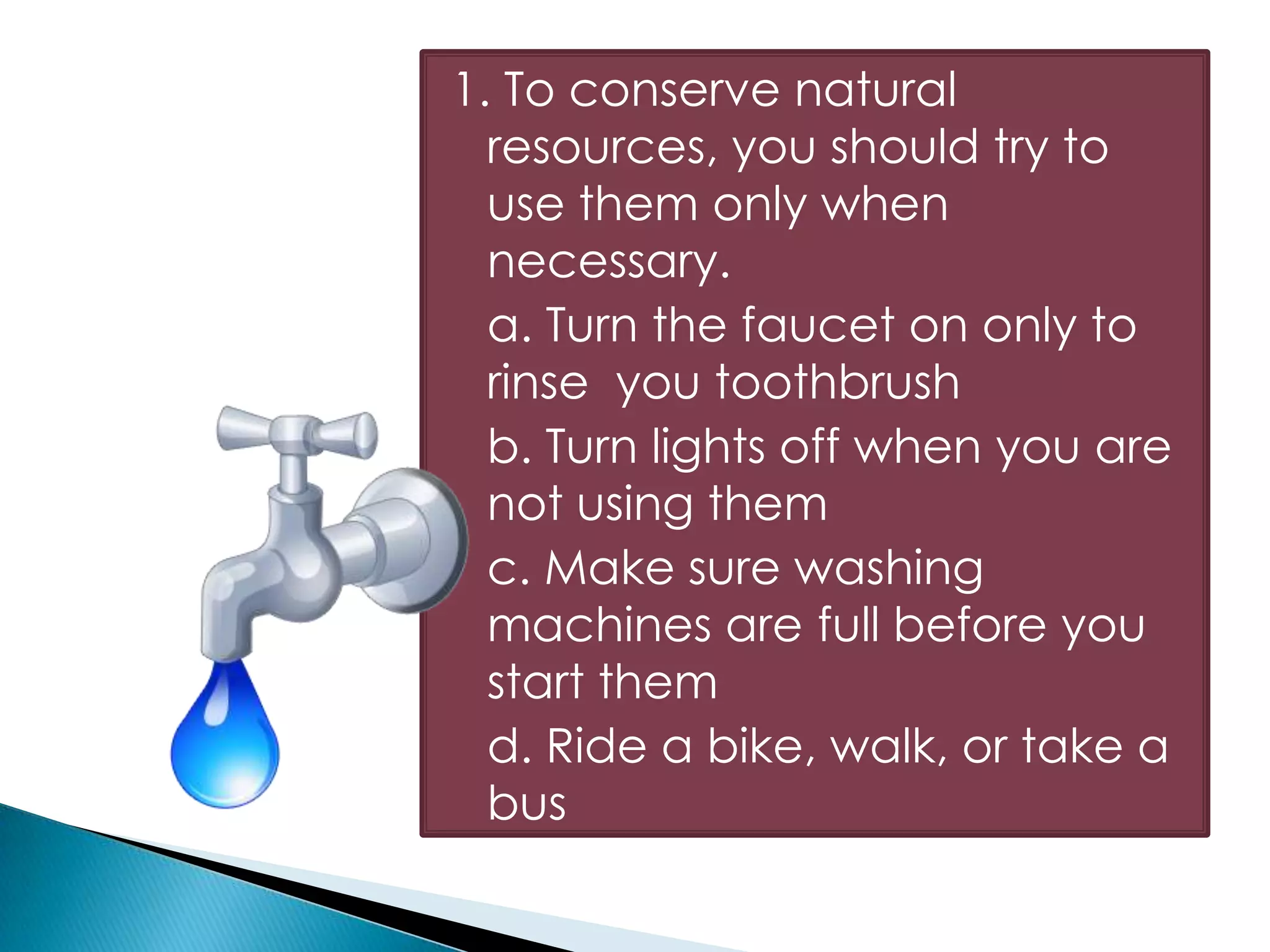
1. To conserve natural
resources, you should try to
use them only when
necessary.
a. Turn the faucet on only to
rinse you toothbrush
b. Turn lights off when you are
not using them
c. Make sure washing
machines are full before you
start them
d. Ride a bike, walk, or take a
bus
B. Reduce, Reuse, and
Recycle
1. Recycling – is the
process of reusing
materials from waste
or scrap. (Examples:
Newspaper,
Aluminum cans,
plastic, and
cardboard)
2. Though energy is
required to recycle
materials, it takes less
energy to recycle
than it does to make
new ones.
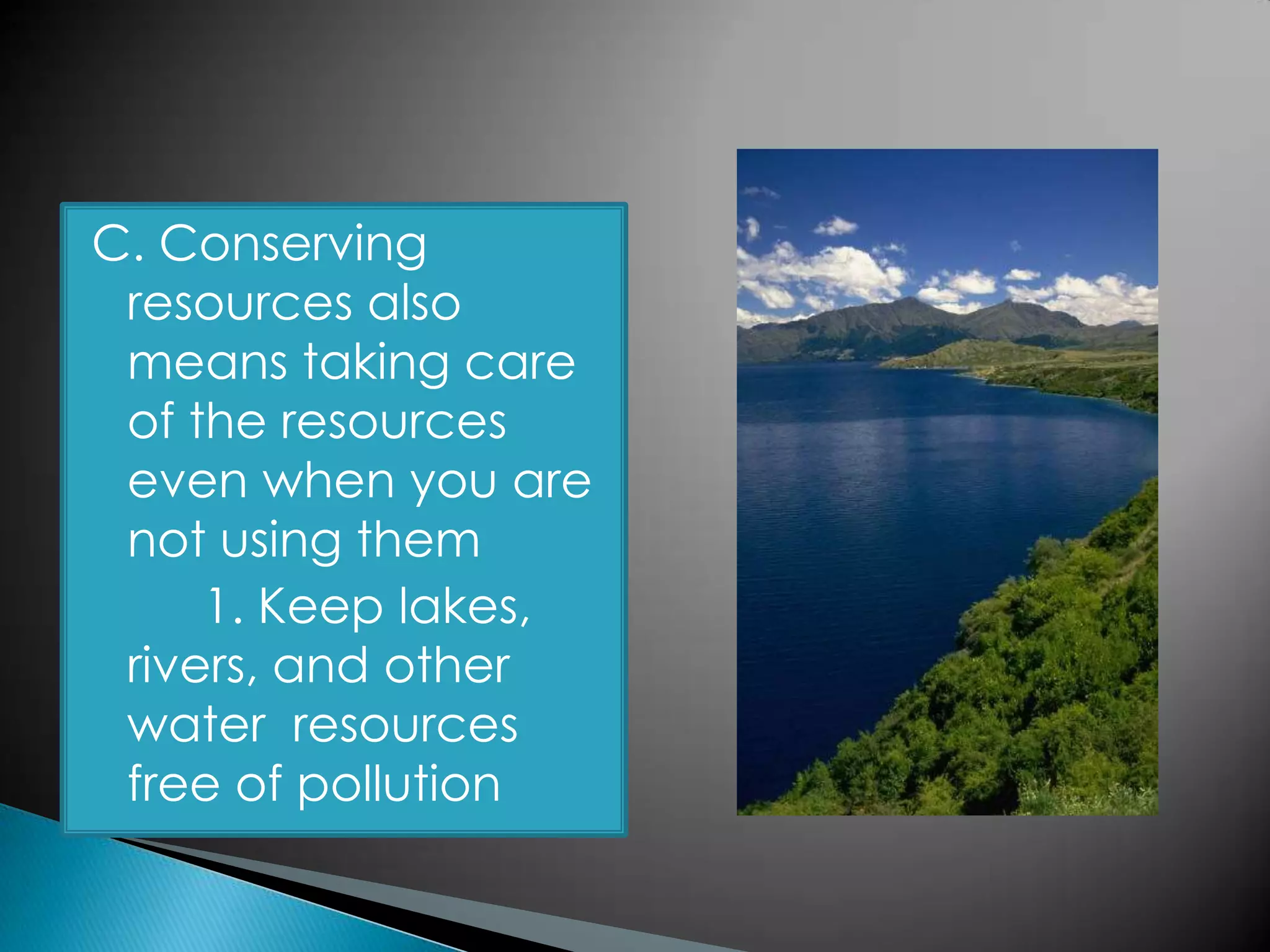
C. Conserving
resources also
means taking care
of the resources
even when you are
not using them
1. Keep lakes,
rivers, and other
water resources
free of pollution

Natural resources

  • 2.
    I. Earth’s Resources– resources that the Earth provides for us. A. Natural Resources – natural material that are used by humans.
  • 4.
    1. Examples –water, petroleum, minerals, forest, and animals 2. Most resources are changed and made into products that make people’s lives more comfortable and convenient 3. Energy we get from many of these resources, such as gasoline and wind, ultimately comes from the sun’s energy!
  • 5.
    The sun isthe POWERHOUSE  Would not have: 1. Trees 2. Wind 3. Fossil fuel 4. Plants 5. Animals
  • 6.
    A. A renewable resourceis a natural resource that can be replaced at the same rate at which the resource is used. 1. Examples: Trees and water
  • 7.
    A. A nonrenewable resourceis a resource that forms at a rate that is much slower than the rate at which it is consumed. 1. Examples: Coal, Petroleum, and natural gas
  • 8.
    Non-renewable does NOTmean that it doesn’t renew. It means the rate at which it renews itself is SLOWER then the CONSUMPTION
  • 9.
    A. Energy Conservation – mostof the natural resources that provide us energy are nonrenewable resources
  • 11.
    1. To conservenatural resources, you should try to use them only when necessary. a. Turn the faucet on only to rinse you toothbrush b. Turn lights off when you are not using them c. Make sure washing machines are full before you start them d. Ride a bike, walk, or take a bus
  • 12.
    B. Reduce, Reuse,and Recycle 1. Recycling – is the process of reusing materials from waste or scrap. (Examples: Newspaper, Aluminum cans, plastic, and cardboard) 2. Though energy is required to recycle materials, it takes less energy to recycle than it does to make new ones.
  • 13.
    C. Conserving resources also meanstaking care of the resources even when you are not using them 1. Keep lakes, rivers, and other water resources free of pollution