Earth’s
Natural
Resources
Natural Resources
Natural resources are
gathered from nature like
animals, plants, air, soil,
rocks, water, minerals,
crude oil, and other fossil
fuels. These are not made
by people.
Liquified Petroleum Gas (LPG) Gold
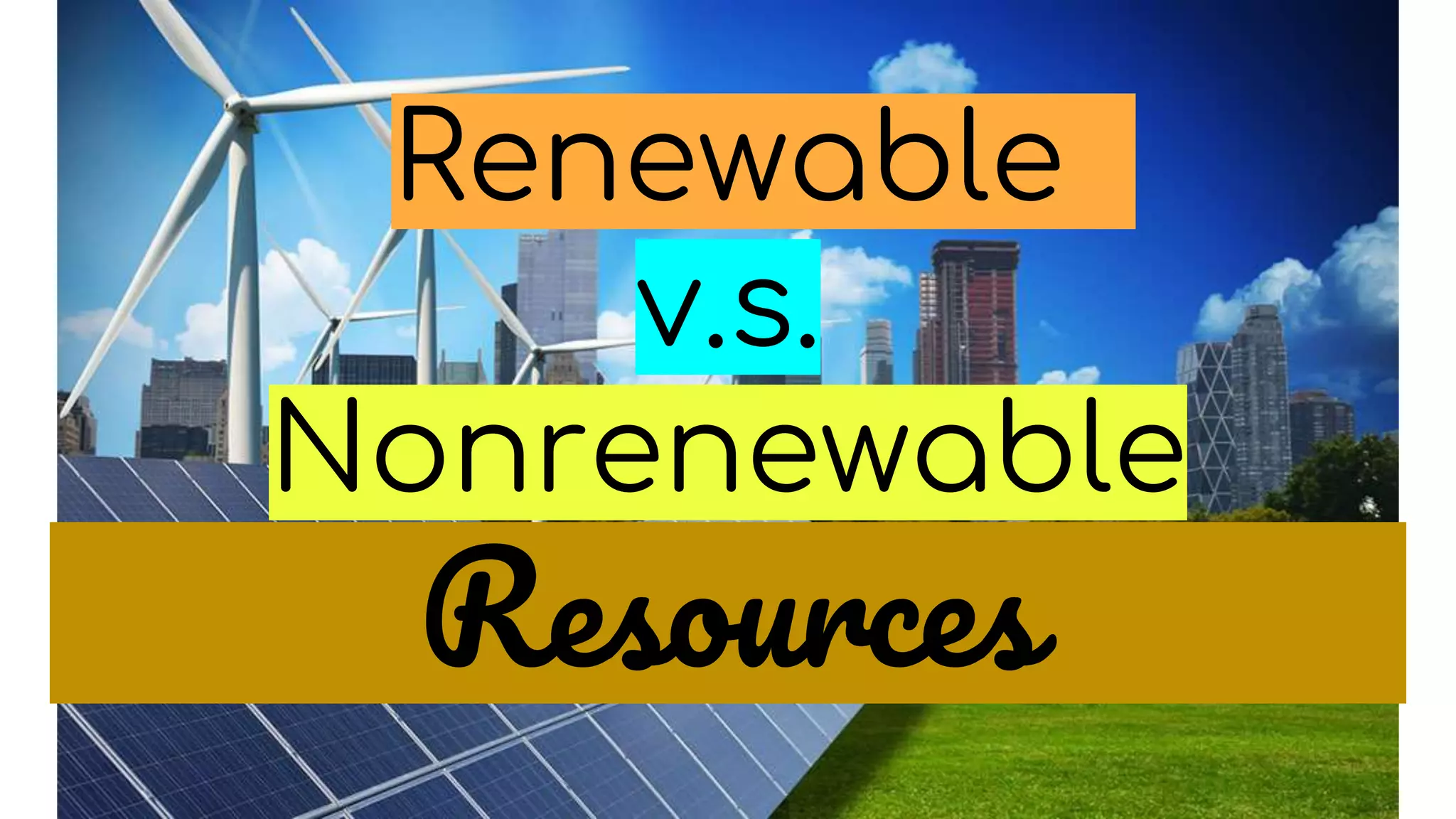
Renewable
v.s.
Nonrenewable
Resources
Renewable Resources
● These resources can be generated at the
same rate or even faster as they are being
used.
● They are replenished over short periods of
time by natural processes.
Hydroelectric Energy
is a form of energy that
harnesses the power of
water in motion (water
flowing over a waterfall
or dam) to generate
electricity.
Solar Energy
Energy from sunlight is
being harnessed through
photovoltaic cells and
converted to electrical
energy.
Calatagan Solar Power Plant
Wind Energy
Wind energy is a type
of solar energy. Its
kinetic energy is
converted to electrical
energy.
Bangui Windmills
Geothermal Energy
Thermal energy inside
the earth is converted
into electricity.
Nonrenewable Resources
● These cannot be replaced once they are used
up due to the long time it takes for them to be
replenished.
● Nonrenewable resources must be conserved
for future use.
Crude oil
Coal
Natural Gas
Different
Resources
Land and Soil Resources
● Land is the solid portion on the surface of
Earth’s crust.
● It is vital for the survival of organisms.
● It is also needed for industry.
Water Resources
● 71% of the Earth’s surface is covered with
water mostly oceans but also rivers, lakes,
and other fresh waters.
● Small percentage of vast water is available for
human consumption.
● We get freshwater from rivers, lakes, and
groundwater.
Mineral Resources
● Minerals are mined from Earth.
● These are pure inorganic substances that
occur naturally in Earth’s crust.
● Ex. Metals (iron, copper, and aluminum) Non-
metals (salt, gypsum, clay, sand, phosphates)
Activities that Affect
the Natural Resources
Use of plastic
Cause: Waste plastic is everywhere on earth, even
in the oceans.
Effect: Wildlife is most affected and some have
died after consuming great amounts of plastics.
Emission of Carbon Dioxide and other Greenhouse Gases
Cause: Hydrofluorocarbons (HFCs) and
methane are induced through combustion of
fossil fuels and usage of man-made products.
Effect: Increased global temperature, Sea-
level rise and extreme weather events
(heatwaves, flooding, tsunamis, droughts)
Overhunting and overfishing
Cause: Animals are hunted for their valuable skins,
plumage, horns, and meat. Human activities do not give
chance for organisms to grow. These activities inhibit
opportunity to reproduce and be replenished.
Effect: Reduction in the diversity of plant and animal
species on Earth. It threatened many marine species
and may lead to extinction.
Logging
Cause: Skidding, on-site processing, and loading of trees
or logs onto trucks or skeleton cars. Trees are cut down
for timber to make furniture and paper products.
Effect: Deforestation and increased flooding due to soil
erosion. Some organism lose their habitats.
Water Pollution
Cause: Nitrates from organic fertilizers, phosphates
from detergents organic wastes, and solid wastes
pollutes water. Also, oil spills from rigs.
Effect: Nitrates and phosphates results to
eutrophication. Oil can be harmful to plant and animal
lives in the bodies of water.
Mining and Quarrying
Cause: Mining involves taking useful material from the
ground like ores, coal, evaporites, and minerals.
Quarrying is the cutting or digging of stone from an
excavation site that usually leaves a large hole in the
ground.
Effect: Loss of natural landscape and biodiversity.
Ways to Conserve Earth’s
Natural Resources
1. Conserve Water
● Almost all people in the world are facing crisis in
different regions of the world. We can bring
change by changing your habits.
● Do not let water flow while brushing teeth or
washing utensils.
● Use buckets instead of showers.
● In watering your plants, use ample water and do
not over water your garden.
2. Save Energy
● Majority of our energy is produced by burning fossil
fuels. Saving energy means saving fossil fuels.
● We can save energy by walking more or riding a
bicycle instead of using vehicles.
● Turn off the lights and fan when not in use.
● Replace all your old appliances with efficient ones.
3. Reduce, Reuse, and Recycle
● Reduce, reuse and recycle old products or
materials.
● Switch to cloth bags and reuse them.
Conservation and Preservation
● Conservation is managing Earth’s resources
sustainably.
● Preservation is maintaining the present
state or conditions of areas which are
undisturbed by human activities.
End of the Lesson

Earth's Resources.pptx

  • 1.
  • 2.
    Natural Resources Natural resourcesare gathered from nature like animals, plants, air, soil, rocks, water, minerals, crude oil, and other fossil fuels. These are not made by people.
  • 3.
  • 4.
  • 5.
    Renewable Resources ● Theseresources can be generated at the same rate or even faster as they are being used. ● They are replenished over short periods of time by natural processes.
  • 7.
    Hydroelectric Energy is aform of energy that harnesses the power of water in motion (water flowing over a waterfall or dam) to generate electricity.
  • 8.
    Solar Energy Energy fromsunlight is being harnessed through photovoltaic cells and converted to electrical energy. Calatagan Solar Power Plant
  • 9.
    Wind Energy Wind energyis a type of solar energy. Its kinetic energy is converted to electrical energy. Bangui Windmills
  • 10.
    Geothermal Energy Thermal energyinside the earth is converted into electricity.
  • 11.
    Nonrenewable Resources ● Thesecannot be replaced once they are used up due to the long time it takes for them to be replenished. ● Nonrenewable resources must be conserved for future use.
  • 12.
  • 13.
  • 15.
  • 16.
  • 17.
    Land and SoilResources ● Land is the solid portion on the surface of Earth’s crust. ● It is vital for the survival of organisms. ● It is also needed for industry.
  • 18.
    Water Resources ● 71%of the Earth’s surface is covered with water mostly oceans but also rivers, lakes, and other fresh waters. ● Small percentage of vast water is available for human consumption. ● We get freshwater from rivers, lakes, and groundwater.
  • 19.
    Mineral Resources ● Mineralsare mined from Earth. ● These are pure inorganic substances that occur naturally in Earth’s crust. ● Ex. Metals (iron, copper, and aluminum) Non- metals (salt, gypsum, clay, sand, phosphates)
  • 20.
    Activities that Affect theNatural Resources
  • 21.
    Use of plastic Cause:Waste plastic is everywhere on earth, even in the oceans. Effect: Wildlife is most affected and some have died after consuming great amounts of plastics.
  • 23.
    Emission of CarbonDioxide and other Greenhouse Gases Cause: Hydrofluorocarbons (HFCs) and methane are induced through combustion of fossil fuels and usage of man-made products. Effect: Increased global temperature, Sea- level rise and extreme weather events (heatwaves, flooding, tsunamis, droughts)
  • 25.
    Overhunting and overfishing Cause:Animals are hunted for their valuable skins, plumage, horns, and meat. Human activities do not give chance for organisms to grow. These activities inhibit opportunity to reproduce and be replenished. Effect: Reduction in the diversity of plant and animal species on Earth. It threatened many marine species and may lead to extinction.
  • 27.
    Logging Cause: Skidding, on-siteprocessing, and loading of trees or logs onto trucks or skeleton cars. Trees are cut down for timber to make furniture and paper products. Effect: Deforestation and increased flooding due to soil erosion. Some organism lose their habitats.
  • 29.
    Water Pollution Cause: Nitratesfrom organic fertilizers, phosphates from detergents organic wastes, and solid wastes pollutes water. Also, oil spills from rigs. Effect: Nitrates and phosphates results to eutrophication. Oil can be harmful to plant and animal lives in the bodies of water.
  • 32.
    Mining and Quarrying Cause:Mining involves taking useful material from the ground like ores, coal, evaporites, and minerals. Quarrying is the cutting or digging of stone from an excavation site that usually leaves a large hole in the ground. Effect: Loss of natural landscape and biodiversity.
  • 34.
    Ways to ConserveEarth’s Natural Resources
  • 35.
    1. Conserve Water ●Almost all people in the world are facing crisis in different regions of the world. We can bring change by changing your habits. ● Do not let water flow while brushing teeth or washing utensils. ● Use buckets instead of showers. ● In watering your plants, use ample water and do not over water your garden.
  • 36.
    2. Save Energy ●Majority of our energy is produced by burning fossil fuels. Saving energy means saving fossil fuels. ● We can save energy by walking more or riding a bicycle instead of using vehicles. ● Turn off the lights and fan when not in use. ● Replace all your old appliances with efficient ones.
  • 37.
    3. Reduce, Reuse,and Recycle ● Reduce, reuse and recycle old products or materials. ● Switch to cloth bags and reuse them.
  • 38.
    Conservation and Preservation ●Conservation is managing Earth’s resources sustainably. ● Preservation is maintaining the present state or conditions of areas which are undisturbed by human activities.
  • 39.
    End of theLesson