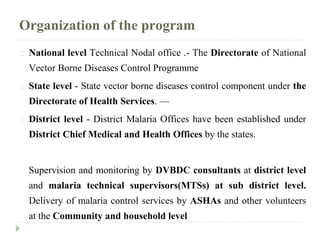
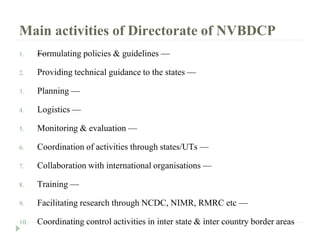
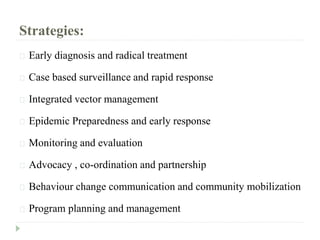
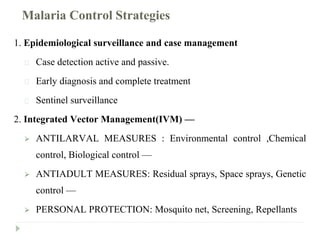
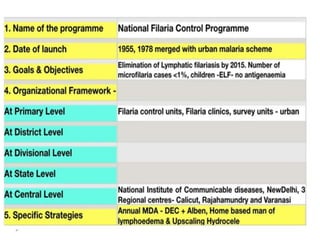
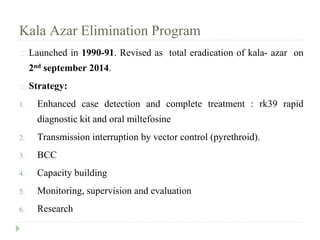
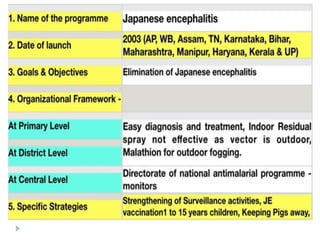
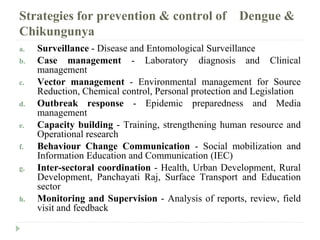
The National Vector Borne Disease Control Program (NVBDCP) was launched in 2003 to control six vector-borne diseases in India: malaria, filariasis, kala azar, Japanese encephalitis, dengue, and chikungunya. The program is organized at the national, state, and district levels. Its main activities include formulating policies and guidelines, providing technical guidance, planning, logistics, monitoring and evaluation, coordination, training, and research. The strategies employed by NVBDCP for each disease focus on disease management through detection and treatment, vector management, and supportive interventions like behavior change communication.