![• With a view to converge Dengue/Dengue
Haemorrhagic feverand Japanese Encephalitis
with the three on-going centrally sponsored
schemes [National Anti-Malaria Programme
(NAMP), National Filaria Control Programme
(NFCP) and Kala-azar Control Programme],
the integrated scheme was renamed as
National Vector Borne Disease Control
Programme (NVBDCP) from 2nd December,
2003.
Historical perspective](https://image.slidesharecdn.com/kailashnvbdcp-180903103021/85/National-Vector-Borne-Disease-Control-Programme-NVBDCP-7-320.jpg)
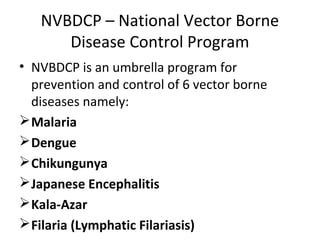




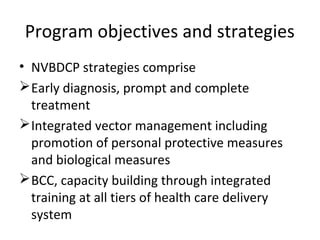
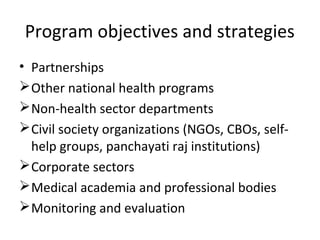

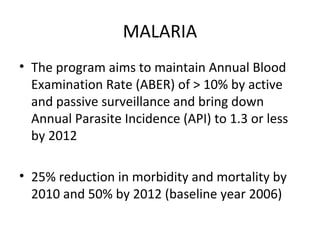




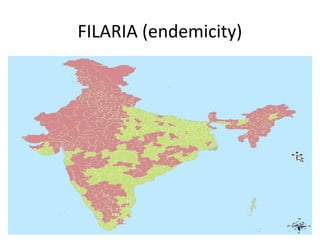
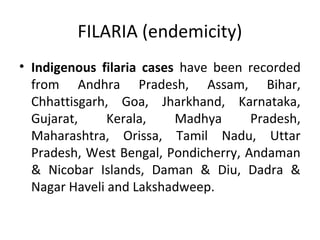
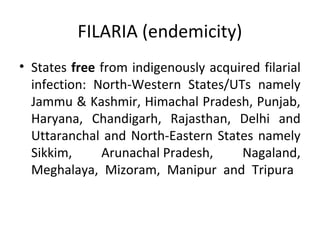
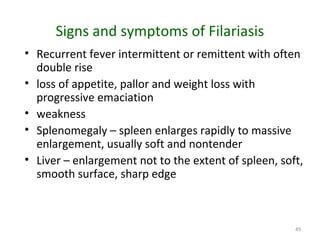
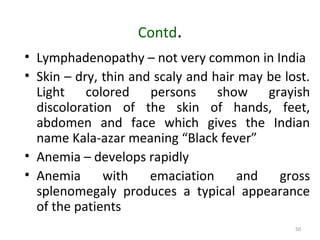

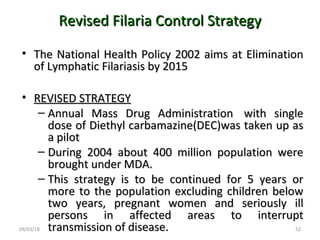
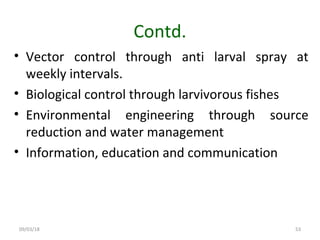

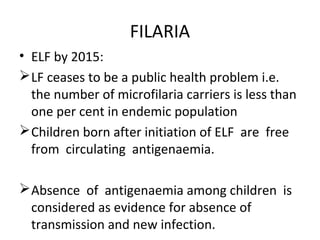
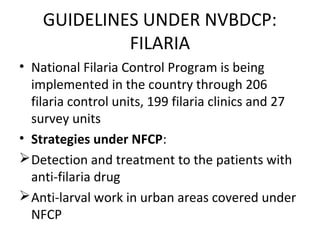

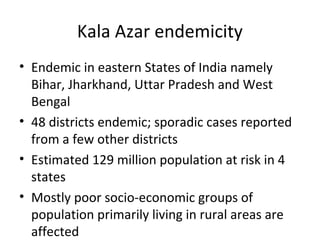
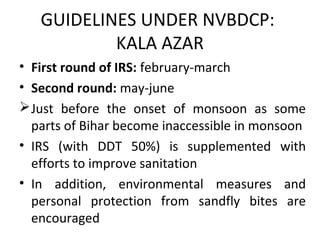
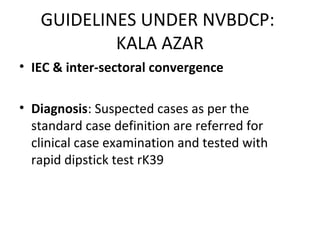
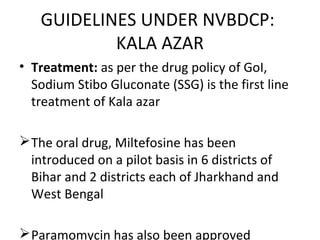
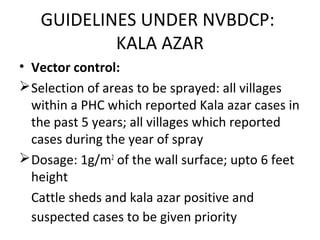
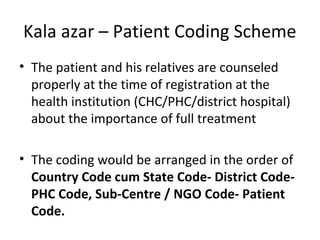
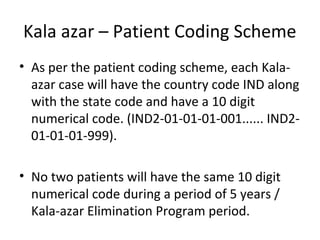
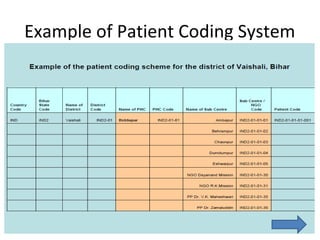
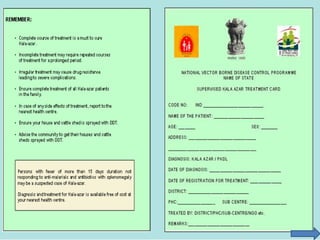
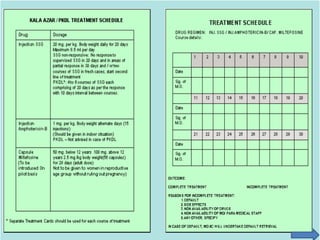
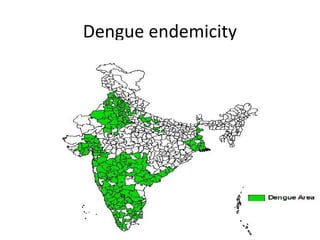
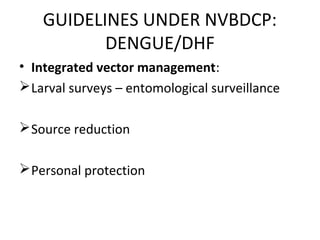
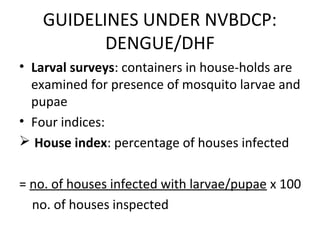
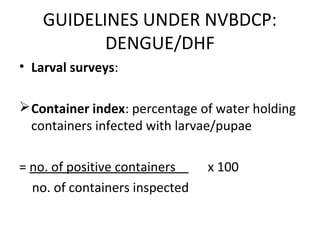
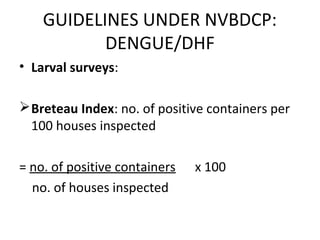





The National Vector Borne Disease Control Program (NVBDCP) was launched in 2003-04 by merging several existing programs to prevent and control major vector-borne diseases like malaria, dengue, Japanese encephalitis, kala-azar, and filariasis. The NVBDCP aims to reduce mortality from these diseases and eliminate kala-azar and lymphatic filariasis through strategies like early diagnosis and treatment, integrated vector management, behavior change communication, and capacity building. Malaria control specifically focuses on maintaining surveillance and treating cases, as well as integrated vector control through indoor residual spraying and larval source reduction.


![Hypothalamus short ppt by Dr. Neha [PT].pptx](https://cdn.slidesharecdn.com/ss_thumbnails/hypothalamusbydr-260124145759-b9f94a93-thumbnail.jpg?width=640&height=640&fit=bounds)

