National Nutrition
Programme
National Health Policy 2076 BS
• Health as a fundamental right of the people
established by Nepal’s constitution, it is the
responsibility of the nation to maintain the
achievement made in controlling communicable
diseases, to reduce infant and maternal mortality
rate to the desired level, to control the ever
increasing prevalence of non-communicable
diseases and timely management of unpredictable
health disasters, and to provide quality health
services to senior citizens, physically and mentally
impaired people, single women especially poor
and marginalized and vulnerable communities.
Department of Health Services
(DoHS), Ministry of Health and
Population
• The overall purpose of the Department of
Health Services (DoHS) is to deliver
preventive, promotive and curative health
services throughout nepal. The DoHS is one of
three departments under Ministry of Health &
Population(MoHP).
Family welfare Division (FWD) DOHS
• Family welfare Division (FWD) is responsible to
implement reproductive health and population related
activities. These activities aim to reduce maternal and
neonatal mortality and morbidity so as to improve
health status and quality of life of population with
special focus on poor, marginalized and vulnerable
population.
• Family welfare Division primarily responsible
for Expanded Programme on Immunization (EPI),
Nutrition and Integrated Management of Childhood
Illness programme (CBIMCI) and newborn care,
Reproductive health care (including safe motherhood
and neonatal health) and family planning.
Family Welfare Division
Nutrition
• Helping the Ministry of Health and Population to prepare
national policy related to nutrition, strategy, guidelines,
criteria, and protocols.
• Helping nutrition related survey / research work.
• Multi-regional coordinating for nutrition promotion.
• Analyzing nutritional status and technical assistance in
national and regional policy building.
• To facilitate the construction and implementation of
national level programs related to nutrition.
• Coordinate and work on technological issues with the state,
local level and stakeholders.
National Nutritional Programme
• The National Nutrition Programme is priority
programme of the government. It aims to
achieve the nutrition well-being of all people
so that they can maintain a healthy life and
contribute to the country’s socioeconomic
development. There is a high-level
commitment to improve the nutritional status
especially of Adolescence, Pregnant and
Lactating mother, and Children under five.
Background
 Nutrition section under Family Welfare Division
(FWD) is responsible for national nutrition program for
improving the nutritional status of children, pregnant
women and adolescents. Its goal is to achieve
nutritional well-being of all people to maintain a
healthy life to contribute in the socio-economic
development of the country, through improved nutrition
program implementation in collaboration with relevant
sectors.
 Nutrition interventions are cost effective investments
for attaining many of the Sustainable Development
Goals.
In alignment with international and national
declarations and national health policies, the
Government of Nepal is committed to ensuring
that its citizens have adequate food, health and
nutrition.
The Constitution (2015) ensures the right to food,
health and nutrition to all citizens. Hunger and
under-nutrition often result in the vicious cycle of
malnutrition and infections that leads to poor
cognitive and intellectual development, less
productivity and compromised socioeconomic
development.
Background…
Focus on nutrition
 Nutrition is a globally recognized
development agenda. Since the year 2000,
several global movements have advocated
nutrition for development
The Scaling-Up-Nutrition (SUN) initiative
calls for multi-sectoral action for improved
nutrition during the first 1,000 days of life.
Background…
Focus on nutrition
The Government of Nepal as an early member
of SUN adopted the Multi-sector Nutrition
Plan (MSNP) in 2012 to reduce chronic
malnutrition.
Recently, the UN General Assembly declared
the 2016–2025 period as the Decade of Action
on Nutrition.
Background…
Policy initiatives
The National Nutrition Policy and Strategy
was officially endorsed in 2004 to address all
forms of malnutrition including under-nutrition
and over-nutrition.
Background…
Policy initiatives
 This policy provides the strategic and
programmatic directions in the health sector
while the MSNP provides a broader policy
framework within and beyond the health sector
under a Food and Nutrition Security
Secretariat of the National Planning
Commission that coordinates its
implementation.
Background…
Policy initiatives
The National Health Policy, 2071 highlights
improved nutrition via the use and promotion
of quality and nutritious foods generated
locally to fight malnutrition.
The Nutrition Technical Committee was
established in CHD now FWD in 2011 to
support multisectoral coordination for
developing nutrition programmes.
Background…
Aligning with the MSNP and current global
initiatives, FWD – nutrition section has developed
strategies and plans for improving maternal infant
and young child nutrition assisted by experts from
the Nutrition Technical Committee.
Moreover, as recommended by the Nepal Nutrition
Assessment and Gap Analysis(NAGA) and guided
by MSNP, in 2012–2013 MoHP conducted an
Organization and Management Survey towards
establishing a National Nutrition Centre for
implementing MSNP in the health sector.
Malnutrition in Nepal
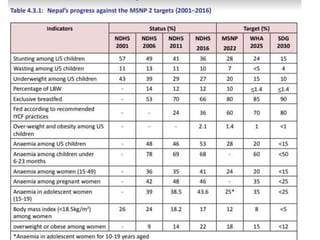
• Despite a steady decline in recent years, child
under-nutrition is still unacceptable in Nepal.
Maternal malnutrition is also a problem with 17
per-cent of mothers suffering from chronic
energy deficiency alongside the increasing trend
of overweight mothers (22 %, NDHS, 2016).
• Although Nepal’s effort in micronutrient
supplementation such as the National Vitamin A
Programme have been globally recognized as a
successful programme, nutritional anaemia
remains a public health issue among women,
adolescents and children.
Malnutrition…
• Forty-one percent of women of reproductive
age and 46 percent of pregnant women are
anaemic.
• About 68 percent (NDHS 2016) of children
aged 6-23 months are anaemic while the
prevalence of that among adolescent women
(15-19) has been increased from 38.5 percent
in 2011 to 43.6 percent in 2016 (NDHS).
Efforts to address under nutrition
• MoHP has implemented several programmes to
counter malnutrition. This began with growth
monitoring and breastfeeding promotion
followed by community-based micronutrient
supplementation.
• Most recent national nutrition programmes have
taken a food-based approach to promote
improved dietary behaviour among vulnerable
groups. FWD’s Nutrition Section has
implemented the following programmes.
Nutrition programmes implemented by
FWD(1993-2018)
Nationwide programmes
Growth monitoring and counselling
Prevention and control of iron deficiency
anaemia (IDA)
 Prevention, control and treatment of vitamin A
deficiency (VAD)
Nutrition programmes
Nationwide programmes
Prevention of iodine deficiency disorders
(IDD)
Control of parasitic infestation by deworming
Mandatory flour fortification in large roller
mills.
Nutrition programmes
Scale-up programme
Maternal, Infant, and Young Children Nutrition
(MIYCN) programme
Integrated Management of Acute Malnutrition
(IMAM)
Micronutrient Powder (MNP) distribution
linked with infant and young child
feeding(IYCF)
Nutrition programmes
Scale-up programme
School Health and Nutrition Programme
Vitamin A supplementation to address the low
coverage in 6–11 month olds
Multi-sector Nutrition Plan (MSNP)
National Nutrition Programme
• The overall objective of the national nutrition
programme undertaken by nutrition section is
to enhance nutritional well-being,
reduce child and maternal mortality
and contribute to equitable human
development.
Specific Objectives:
To reduce protein-energy malnutrition in
children under 5 years of age and women of
reproductive age
To improve maternal nutrition
To reduce the prevalence of anaemia among
adolescent girls, women and children
Specific Objectives…
To eliminate iodine deficiency disorders and
vitamin A deficiency and sustain elimination
To reduce the infestation of intestinal worms
among children and pregnant women
To reduce the prevalence of low birth weight
Specific Objectives…
 To improve household food security to ensure
that all people can have adequate access,
availability and use of food needed for a
healthy life.
To promote the practice of good dietary habits
to improve the nutritional status of all people
Specific Objectives…
 To prevent and control infectious diseases to
improve nutritional status and reduce child
mortality
To control lifestyle related diseases including
coronary disease, hypertension, tobacco related
diseases, cancer and diabetes
Specific Objectives…
To improve the health and nutritional status of
schoolchildren
To reduce the critical risk of malnutrition and
life during very difficult circumstances
To strengthen the system for analyzing,
monitoring and evaluating the nutrition
situation
Specific Objectives…
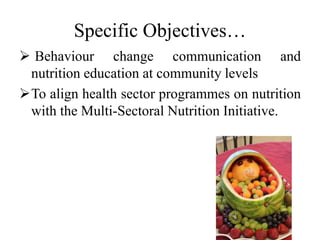
 Behaviour change communication and
nutrition education at community levels
To align health sector programmes on nutrition
with the Multi-Sectoral Nutrition Initiative.
Targets
 Significant progress has been made in
improving MDG related nutrition target
although the high prevalence of stunting
wasting and anaemia remain as major
challenges.
The Sustainable Development Goal and Global
Nutrition Target are the current over-riding
targets.
Current global nutrition target
• SDG
• Global nutrition target by 2025
Sustainable Development Goal
• Goal 2 — End hunger, achieve food security and
improved nutrition and promote sustainable
agriculture
– By 2030, end hunger and ensure access by all people, in
particular the poor and people in vulnerable situations,
including infants, to safe, nutritious and sufficient food all
year round;
– By 2030, end all forms of malnutrition, including achieving,
by 2025, the internationally agreed targets on stunting and
wasting in children under 5 years of age, and address the
nutritional needs of adolescent girls, pregnant and
lactating women and older persons;
• By 2030, double the agricultural productivity and
incomes of small-scale food producers, in particular
women, indigenous peoples, family farmers,
pastoralists and fishers, including through secure and
equal access to land, other productive resources and
inputs, knowledge, financial services, markets and
opportunities for value addition and non-farm
employment;
2. Global Nutrition Target by 2025‐ WHO
• Reduction of the global number of children
under five who are stunted by 40 percent
• Reduction of anaemia in women of
reproductive age by 50 percent
• Reduction of low birth weight by 30 percent
• No increase in childhood overweight
• Increase the rate of exclusive breastfeeding in
the first six months up to at least 50 percent
• Reduce and maintain childhood wasting to less
than 5 percent
Programme strategies
The main overall strategies for improving
nutrition are:
1) the promotion of a food based-approach,
2) food fortification,
3) the supplementation of foods and
4) the promotion of public health measures.
Specific strategies to improve nutrition
in Nepal
1. Control of protein energy malnutrition
(PEM)
Promote breastfeeding within one hour of birth
and avoid pre-lacteal feeding.
Promote exclusive breastfeeding for first six
months and the timely introduction of
complementary food.
Control of protein energy malnutrition (PEM)
Ensure continuation of breastfeeding for at
least 2 years and the introduction of
appropriate complementary feeding after 6
months.
 Strengthen the capacity of health workers and
medical professionals for nutrition and
breastfeeding management and counselling.
Control of protein energy malnutrition (PEM)…
 Improve skills and knowledge of health
workers on growth monitoring and nutrition
counseling
Strengthen the system of growth monitoring
and its supervision and monitoring.
Promote the use of appropriate locally
available complementary foods such as jaulo
and Sarbottam Pitho.
Control of protein energy malnutrition (PEM)…
 Increase awareness on the importance of
appropriate and adequate nutrition for children
and pregnant and lactating mothers.
Strengthen the knowledge of health personnel
on the dietary and clinical management of
severely malnourished children.
Control of protein energy malnutrition (PEM)…
Distribute fortified foods to pregnant and
lactating women and children aged 6 to 23
months in food deficient areas.
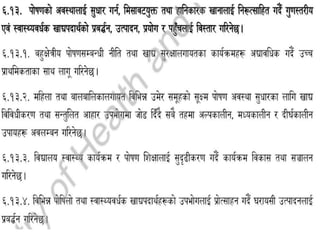
Improve maternal and adolescent nutrition and
low birth weight through improved maternal
nutrition.
Control of protein energy malnutrition (PEM)…
Create awareness of the importance of
additional dietary intake during pregnancy and
lactation.
Strengthen nutrition education and nutrition
counseling.
2. Control of iron deficiency anaemia (IDA)
Advocate to policy makers to promote dietary
diversity.
Iron folic acid supplementation for pregnant
and post-partum mothers.
Iron fortification of wheat flour at roller mills.
Intermittent iron folic acid supplementation for
adolescent girls.
Multiple micronutrient supplementation for
children aged 6-23 months.
Create awareness of importance of iron in
nutrition, promote consumption of iron rich foods
and promote diverse daily diets.
Control parasitic infestation among nutritionally
vulnerable groups through deworming pregnant
women and children aged 12-23 months.
Control of iodine deficiency
disorders
The universal iodization of salt.
Strengthen implementation of the Iodized Salt
Act, 2055 to ensure that all edible salt is
iodized.
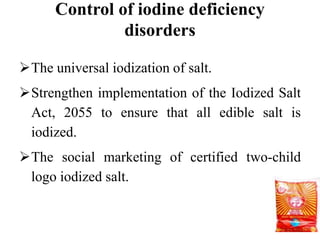
The social marketing of certified two-child
logo iodized salt.
Ensure the systematic monitoring of iodized salt.
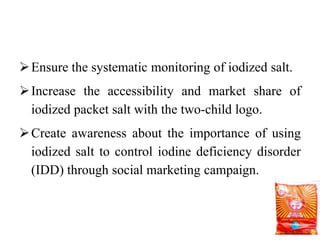
Increase the accessibility and market share of
iodized packet salt with the two-child logo.
Create awareness about the importance of using
iodized salt to control iodine deficiency disorder
(IDD) through social marketing campaign.
Household food security
 Promote kitchen garden and agricultural skills.
 Promote the raising of poultry, fish and livestock for
household consumption.
 Inform community people how to store and preserve
food.
 Improve technical knowledge of food processing and
preservation.
 Promote women’s group income generation activities.
Improved dietary practices
 Conduct a study to clarify the problems of culturally-related
dietary habits
 Promote nutrition education and advocate for good diets and
dietary habits
 Develop and strengthen programmes for behaviour change
to improve dietary habits.
 Strengthen nutritional education and advocacy activities to
eliminate food taboos that affect nutritional status.
 Promote the household food security programme.
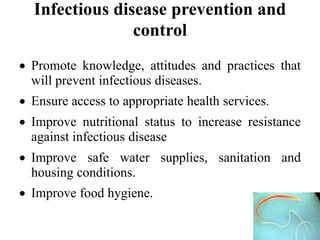
Infectious disease prevention and
control
 Promote knowledge, attitudes and practices that
will prevent infectious diseases.
 Ensure access to appropriate health services.
 Improve nutritional status to increase resistance
against infectious disease
 Improve safe water supplies, sanitation and
housing conditions.
 Improve food hygiene.
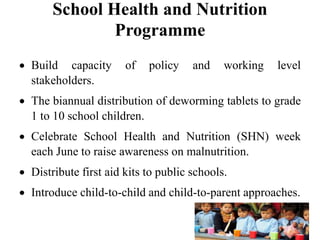
School Health and Nutrition
Programme
 Build capacity of policy and working level
stakeholders.
 The biannual distribution of deworming tablets to grade
1 to 10 school children.
 Celebrate School Health and Nutrition (SHN) week
each June to raise awareness on malnutrition.
 Distribute first aid kits to public schools.
 Introduce child-to-child and child-to-parent approaches.
Integrated management of acute
malnutrition
Build capacity of health workers on managing
acute malnutrition and of other community
workers on screening and the referral of cases.
Establish and implement the key parts of the
IMAM programme: community mobilization,
inpatient therapeutic care, outpatient therapeutic
care and management of MAM.
Integrate the management of acute malnutrition
across sectors
 Support and promote IYCF, water, sanitation and
hygiene (WASH), early childhood development, social
protection and child health and care along with the
management of acute malnutrition.
 Promote the IMAM programme as the bridge between
emergency and development programmes.
 The supportive supervision and monitoring of IMAM
programme activities.
 Harmonize the community and facility-based
management of acute malnutrition.
 Strengthen the coordination and capacity of nutrition
rehabilitation homes.
Control of vitamin A deficiency
 The biannual supplementation of high dose vitamin A
capsules to 6-59 month olds.
 Post-partum vitamin A supplementation for mothers
within 42 days of delivery.
 Strengthen implementation of vitamin A treatment
protocol for severe malnutrition, persistent diarrhoea,
measles and xerophthalmia.
 Nutrition education to promote dietary diversification
and consumption of vitamin A rich foods.
 Ensuring the availability of vitamin A capsules at health
facilities.
 Increase awareness of importance of vitamin A
supplementation.
 The biannual distribution of vitamin A capsules to 6
and 59 month olds through FCHVs.
 Advocate for increased home production, consumption
and preservation of vitamin A rich foods.
 Strengthen the use of the vitamin A Treatment protocol.
 Promote the consumption of vitamin A rich foods and a
balanced diet through nutrition education.
 Provide vitamin A capsules (200,000 IU) to postpartum
mothers through healthcare facilities and community
volunteers.
Low birth weight
 Reduce maternal malnutrition by preventing PEM,
VAD, IDD and IDA.
 Reduce the workloads of pregnant women.
 Increase awareness of the risks of smoking and alcohol
to pregnant women.
 Increase awareness of risks of early pregnancy to infant
and maternal health.
 Promote activities for nutrition monitoring and
counselling at antenatal clinics.
Nutrition in emergencies
Develop adequate capacity and predictable
leadership in the nutrition sector for managing
humanitarian responses.
Formulate an emergency nutrition in emergency
preparedness and response contingency plans.
Establish and strengthen stronger partnerships and
coordination mechanisms between government,
UN and non-UN agencies.
Lifestyle related diseases
 Create awareness among adults about the
importance of maintaining good dietary habits.
 Develop the capacity for nutritional counselling at
health facilities.
 Create awareness among adolescents and adults
about the importance of controlling smoking and
body weight.
• Create awareness to increase physical activity and
improve stress management.
Thank you

National nutrition program

  • 1.
  • 2.
    National Health Policy2076 BS • Health as a fundamental right of the people established by Nepal’s constitution, it is the responsibility of the nation to maintain the achievement made in controlling communicable diseases, to reduce infant and maternal mortality rate to the desired level, to control the ever increasing prevalence of non-communicable diseases and timely management of unpredictable health disasters, and to provide quality health services to senior citizens, physically and mentally impaired people, single women especially poor and marginalized and vulnerable communities.
  • 4.
    Department of HealthServices (DoHS), Ministry of Health and Population • The overall purpose of the Department of Health Services (DoHS) is to deliver preventive, promotive and curative health services throughout nepal. The DoHS is one of three departments under Ministry of Health & Population(MoHP).
  • 5.
    Family welfare Division(FWD) DOHS • Family welfare Division (FWD) is responsible to implement reproductive health and population related activities. These activities aim to reduce maternal and neonatal mortality and morbidity so as to improve health status and quality of life of population with special focus on poor, marginalized and vulnerable population. • Family welfare Division primarily responsible for Expanded Programme on Immunization (EPI), Nutrition and Integrated Management of Childhood Illness programme (CBIMCI) and newborn care, Reproductive health care (including safe motherhood and neonatal health) and family planning.
  • 6.
    Family Welfare Division Nutrition •Helping the Ministry of Health and Population to prepare national policy related to nutrition, strategy, guidelines, criteria, and protocols. • Helping nutrition related survey / research work. • Multi-regional coordinating for nutrition promotion. • Analyzing nutritional status and technical assistance in national and regional policy building. • To facilitate the construction and implementation of national level programs related to nutrition. • Coordinate and work on technological issues with the state, local level and stakeholders.
  • 7.
    National Nutritional Programme •The National Nutrition Programme is priority programme of the government. It aims to achieve the nutrition well-being of all people so that they can maintain a healthy life and contribute to the country’s socioeconomic development. There is a high-level commitment to improve the nutritional status especially of Adolescence, Pregnant and Lactating mother, and Children under five.
  • 8.
    Background  Nutrition sectionunder Family Welfare Division (FWD) is responsible for national nutrition program for improving the nutritional status of children, pregnant women and adolescents. Its goal is to achieve nutritional well-being of all people to maintain a healthy life to contribute in the socio-economic development of the country, through improved nutrition program implementation in collaboration with relevant sectors.  Nutrition interventions are cost effective investments for attaining many of the Sustainable Development Goals.
  • 9.
    In alignment withinternational and national declarations and national health policies, the Government of Nepal is committed to ensuring that its citizens have adequate food, health and nutrition. The Constitution (2015) ensures the right to food, health and nutrition to all citizens. Hunger and under-nutrition often result in the vicious cycle of malnutrition and infections that leads to poor cognitive and intellectual development, less productivity and compromised socioeconomic development.
  • 10.
    Background… Focus on nutrition Nutrition is a globally recognized development agenda. Since the year 2000, several global movements have advocated nutrition for development The Scaling-Up-Nutrition (SUN) initiative calls for multi-sectoral action for improved nutrition during the first 1,000 days of life.
  • 11.
    Background… Focus on nutrition TheGovernment of Nepal as an early member of SUN adopted the Multi-sector Nutrition Plan (MSNP) in 2012 to reduce chronic malnutrition. Recently, the UN General Assembly declared the 2016–2025 period as the Decade of Action on Nutrition.
  • 12.
    Background… Policy initiatives The NationalNutrition Policy and Strategy was officially endorsed in 2004 to address all forms of malnutrition including under-nutrition and over-nutrition.
  • 13.
    Background… Policy initiatives  Thispolicy provides the strategic and programmatic directions in the health sector while the MSNP provides a broader policy framework within and beyond the health sector under a Food and Nutrition Security Secretariat of the National Planning Commission that coordinates its implementation.
  • 14.
    Background… Policy initiatives The NationalHealth Policy, 2071 highlights improved nutrition via the use and promotion of quality and nutritious foods generated locally to fight malnutrition. The Nutrition Technical Committee was established in CHD now FWD in 2011 to support multisectoral coordination for developing nutrition programmes.
  • 15.
    Background… Aligning with theMSNP and current global initiatives, FWD – nutrition section has developed strategies and plans for improving maternal infant and young child nutrition assisted by experts from the Nutrition Technical Committee. Moreover, as recommended by the Nepal Nutrition Assessment and Gap Analysis(NAGA) and guided by MSNP, in 2012–2013 MoHP conducted an Organization and Management Survey towards establishing a National Nutrition Centre for implementing MSNP in the health sector.
  • 16.
    Malnutrition in Nepal •Despite a steady decline in recent years, child under-nutrition is still unacceptable in Nepal. Maternal malnutrition is also a problem with 17 per-cent of mothers suffering from chronic energy deficiency alongside the increasing trend of overweight mothers (22 %, NDHS, 2016). • Although Nepal’s effort in micronutrient supplementation such as the National Vitamin A Programme have been globally recognized as a successful programme, nutritional anaemia remains a public health issue among women, adolescents and children.
  • 17.
    Malnutrition… • Forty-one percentof women of reproductive age and 46 percent of pregnant women are anaemic. • About 68 percent (NDHS 2016) of children aged 6-23 months are anaemic while the prevalence of that among adolescent women (15-19) has been increased from 38.5 percent in 2011 to 43.6 percent in 2016 (NDHS).
  • 18.
    Efforts to addressunder nutrition • MoHP has implemented several programmes to counter malnutrition. This began with growth monitoring and breastfeeding promotion followed by community-based micronutrient supplementation. • Most recent national nutrition programmes have taken a food-based approach to promote improved dietary behaviour among vulnerable groups. FWD’s Nutrition Section has implemented the following programmes.
  • 19.
    Nutrition programmes implementedby FWD(1993-2018) Nationwide programmes Growth monitoring and counselling Prevention and control of iron deficiency anaemia (IDA)  Prevention, control and treatment of vitamin A deficiency (VAD)
  • 20.
    Nutrition programmes Nationwide programmes Preventionof iodine deficiency disorders (IDD) Control of parasitic infestation by deworming Mandatory flour fortification in large roller mills.
  • 21.
    Nutrition programmes Scale-up programme Maternal,Infant, and Young Children Nutrition (MIYCN) programme Integrated Management of Acute Malnutrition (IMAM) Micronutrient Powder (MNP) distribution linked with infant and young child feeding(IYCF)
  • 22.
    Nutrition programmes Scale-up programme SchoolHealth and Nutrition Programme Vitamin A supplementation to address the low coverage in 6–11 month olds Multi-sector Nutrition Plan (MSNP)
  • 23.
    National Nutrition Programme •The overall objective of the national nutrition programme undertaken by nutrition section is to enhance nutritional well-being, reduce child and maternal mortality and contribute to equitable human development.
  • 24.
    Specific Objectives: To reduceprotein-energy malnutrition in children under 5 years of age and women of reproductive age To improve maternal nutrition To reduce the prevalence of anaemia among adolescent girls, women and children
  • 25.
    Specific Objectives… To eliminateiodine deficiency disorders and vitamin A deficiency and sustain elimination To reduce the infestation of intestinal worms among children and pregnant women To reduce the prevalence of low birth weight
  • 26.
    Specific Objectives…  Toimprove household food security to ensure that all people can have adequate access, availability and use of food needed for a healthy life. To promote the practice of good dietary habits to improve the nutritional status of all people
  • 27.
    Specific Objectives…  Toprevent and control infectious diseases to improve nutritional status and reduce child mortality To control lifestyle related diseases including coronary disease, hypertension, tobacco related diseases, cancer and diabetes
  • 28.
    Specific Objectives… To improvethe health and nutritional status of schoolchildren To reduce the critical risk of malnutrition and life during very difficult circumstances To strengthen the system for analyzing, monitoring and evaluating the nutrition situation
  • 29.
    Specific Objectives…  Behaviourchange communication and nutrition education at community levels To align health sector programmes on nutrition with the Multi-Sectoral Nutrition Initiative.
  • 30.
    Targets  Significant progresshas been made in improving MDG related nutrition target although the high prevalence of stunting wasting and anaemia remain as major challenges. The Sustainable Development Goal and Global Nutrition Target are the current over-riding targets.
  • 31.
    Current global nutritiontarget • SDG • Global nutrition target by 2025
  • 32.
    Sustainable Development Goal •Goal 2 — End hunger, achieve food security and improved nutrition and promote sustainable agriculture – By 2030, end hunger and ensure access by all people, in particular the poor and people in vulnerable situations, including infants, to safe, nutritious and sufficient food all year round; – By 2030, end all forms of malnutrition, including achieving, by 2025, the internationally agreed targets on stunting and wasting in children under 5 years of age, and address the nutritional needs of adolescent girls, pregnant and lactating women and older persons;
  • 33.
    • By 2030,double the agricultural productivity and incomes of small-scale food producers, in particular women, indigenous peoples, family farmers, pastoralists and fishers, including through secure and equal access to land, other productive resources and inputs, knowledge, financial services, markets and opportunities for value addition and non-farm employment;
  • 34.
    2. Global NutritionTarget by 2025‐ WHO • Reduction of the global number of children under five who are stunted by 40 percent • Reduction of anaemia in women of reproductive age by 50 percent • Reduction of low birth weight by 30 percent • No increase in childhood overweight • Increase the rate of exclusive breastfeeding in the first six months up to at least 50 percent • Reduce and maintain childhood wasting to less than 5 percent
  • 36.
    Programme strategies The mainoverall strategies for improving nutrition are: 1) the promotion of a food based-approach, 2) food fortification, 3) the supplementation of foods and 4) the promotion of public health measures.
  • 37.
    Specific strategies toimprove nutrition in Nepal 1. Control of protein energy malnutrition (PEM) Promote breastfeeding within one hour of birth and avoid pre-lacteal feeding. Promote exclusive breastfeeding for first six months and the timely introduction of complementary food.
  • 38.
    Control of proteinenergy malnutrition (PEM) Ensure continuation of breastfeeding for at least 2 years and the introduction of appropriate complementary feeding after 6 months.  Strengthen the capacity of health workers and medical professionals for nutrition and breastfeeding management and counselling.
  • 39.
    Control of proteinenergy malnutrition (PEM)…  Improve skills and knowledge of health workers on growth monitoring and nutrition counseling Strengthen the system of growth monitoring and its supervision and monitoring. Promote the use of appropriate locally available complementary foods such as jaulo and Sarbottam Pitho.
  • 40.
    Control of proteinenergy malnutrition (PEM)…  Increase awareness on the importance of appropriate and adequate nutrition for children and pregnant and lactating mothers. Strengthen the knowledge of health personnel on the dietary and clinical management of severely malnourished children.
  • 41.
    Control of proteinenergy malnutrition (PEM)… Distribute fortified foods to pregnant and lactating women and children aged 6 to 23 months in food deficient areas. Improve maternal and adolescent nutrition and low birth weight through improved maternal nutrition.
  • 42.
    Control of proteinenergy malnutrition (PEM)… Create awareness of the importance of additional dietary intake during pregnancy and lactation. Strengthen nutrition education and nutrition counseling.
  • 43.
    2. Control ofiron deficiency anaemia (IDA) Advocate to policy makers to promote dietary diversity. Iron folic acid supplementation for pregnant and post-partum mothers. Iron fortification of wheat flour at roller mills. Intermittent iron folic acid supplementation for adolescent girls.
  • 44.
    Multiple micronutrient supplementationfor children aged 6-23 months. Create awareness of importance of iron in nutrition, promote consumption of iron rich foods and promote diverse daily diets. Control parasitic infestation among nutritionally vulnerable groups through deworming pregnant women and children aged 12-23 months.
  • 45.
    Control of iodinedeficiency disorders The universal iodization of salt. Strengthen implementation of the Iodized Salt Act, 2055 to ensure that all edible salt is iodized. The social marketing of certified two-child logo iodized salt.
  • 46.
    Ensure the systematicmonitoring of iodized salt. Increase the accessibility and market share of iodized packet salt with the two-child logo. Create awareness about the importance of using iodized salt to control iodine deficiency disorder (IDD) through social marketing campaign.
  • 47.
    Household food security Promote kitchen garden and agricultural skills.  Promote the raising of poultry, fish and livestock for household consumption.  Inform community people how to store and preserve food.  Improve technical knowledge of food processing and preservation.  Promote women’s group income generation activities.
  • 48.
    Improved dietary practices Conduct a study to clarify the problems of culturally-related dietary habits  Promote nutrition education and advocate for good diets and dietary habits  Develop and strengthen programmes for behaviour change to improve dietary habits.  Strengthen nutritional education and advocacy activities to eliminate food taboos that affect nutritional status.  Promote the household food security programme.
  • 49.
    Infectious disease preventionand control  Promote knowledge, attitudes and practices that will prevent infectious diseases.  Ensure access to appropriate health services.  Improve nutritional status to increase resistance against infectious disease  Improve safe water supplies, sanitation and housing conditions.  Improve food hygiene.
  • 50.
    School Health andNutrition Programme  Build capacity of policy and working level stakeholders.  The biannual distribution of deworming tablets to grade 1 to 10 school children.  Celebrate School Health and Nutrition (SHN) week each June to raise awareness on malnutrition.  Distribute first aid kits to public schools.  Introduce child-to-child and child-to-parent approaches.
  • 51.
    Integrated management ofacute malnutrition Build capacity of health workers on managing acute malnutrition and of other community workers on screening and the referral of cases. Establish and implement the key parts of the IMAM programme: community mobilization, inpatient therapeutic care, outpatient therapeutic care and management of MAM. Integrate the management of acute malnutrition across sectors
  • 52.
     Support andpromote IYCF, water, sanitation and hygiene (WASH), early childhood development, social protection and child health and care along with the management of acute malnutrition.  Promote the IMAM programme as the bridge between emergency and development programmes.  The supportive supervision and monitoring of IMAM programme activities.  Harmonize the community and facility-based management of acute malnutrition.  Strengthen the coordination and capacity of nutrition rehabilitation homes.
  • 53.
    Control of vitaminA deficiency  The biannual supplementation of high dose vitamin A capsules to 6-59 month olds.  Post-partum vitamin A supplementation for mothers within 42 days of delivery.  Strengthen implementation of vitamin A treatment protocol for severe malnutrition, persistent diarrhoea, measles and xerophthalmia.  Nutrition education to promote dietary diversification and consumption of vitamin A rich foods.
  • 54.
     Ensuring theavailability of vitamin A capsules at health facilities.  Increase awareness of importance of vitamin A supplementation.  The biannual distribution of vitamin A capsules to 6 and 59 month olds through FCHVs.  Advocate for increased home production, consumption and preservation of vitamin A rich foods.  Strengthen the use of the vitamin A Treatment protocol.  Promote the consumption of vitamin A rich foods and a balanced diet through nutrition education.  Provide vitamin A capsules (200,000 IU) to postpartum mothers through healthcare facilities and community volunteers.
  • 55.
    Low birth weight Reduce maternal malnutrition by preventing PEM, VAD, IDD and IDA.  Reduce the workloads of pregnant women.  Increase awareness of the risks of smoking and alcohol to pregnant women.  Increase awareness of risks of early pregnancy to infant and maternal health.  Promote activities for nutrition monitoring and counselling at antenatal clinics.
  • 56.
    Nutrition in emergencies Developadequate capacity and predictable leadership in the nutrition sector for managing humanitarian responses. Formulate an emergency nutrition in emergency preparedness and response contingency plans. Establish and strengthen stronger partnerships and coordination mechanisms between government, UN and non-UN agencies.
  • 57.
    Lifestyle related diseases Create awareness among adults about the importance of maintaining good dietary habits.  Develop the capacity for nutritional counselling at health facilities.  Create awareness among adolescents and adults about the importance of controlling smoking and body weight. • Create awareness to increase physical activity and improve stress management.
  • 59.

Editor's Notes

  • #36 World Health Assembly (WHA)