Tumors of nasal cavity
By – Priyanka ( MBBS Student )

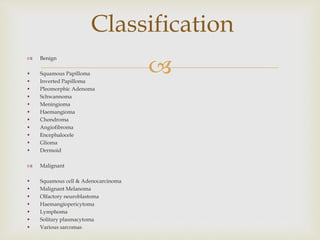
 Benign
 Squamous Papilloma
 Inverted Papilloma
 Pleomorphic Adenoma
 Schwannoma
 Meningioma
 Haemangioma
 Chondroma
 Angiofibroma
 Encephalocele
 Glioma
 Dermoid
 Malignant
 Squamous cell & Adenocarcinoma
 Malignant Melanoma
 Olfactory neuroblastoma
 Haemangiopericytoma
 Lymphoma
 Solitary plasmacytoma
 Various sarcomas
Classification
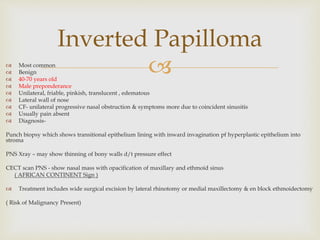
 Most common
 Benign
 40-70 years old
 Male preponderance
 Unilateral, friable, pinkish, translucent , edematous
 Lateral wall of nose
 CF- unilateral progressive nasal obstruction & symptoms more due to coincident sinusitis
 Usually pain absent
 Diagnosis-
Punch biopsy which shows transitional epithelium lining with inward invagination pf hyperplastic epithelium into
stroma
PNS Xray – may show thinning of bony walls d/t pressure effect
CECT scan PNS - show nasal mass with opacification of maxillary and ethmoid sinus
( AFRICAN CONTINENT Sign )
 Treatment includes wide surgical excision by lateral rhinotomy or medial maxillectomy & en block ethmoidectomy
( Risk of Malignancy Present)
Inverted Papilloma
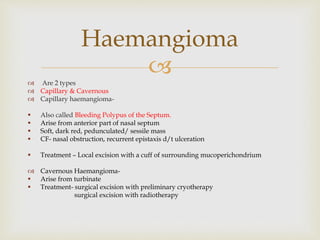
 Are 2 types
 Capillary & Cavernous
 Capillary haemangioma-
 Also called Bleeding Polypus of the Septum.
 Arise from anterior part of nasal septum
 Soft, dark red, pedunculated/ sessile mass
 CF- nasal obstruction, recurrent epistaxis d/t ulceration
 Treatment – Local excision with a cuff of surrounding mucoperichondrium
 Cavernous Haemangioma-
 Arise from turbinate
 Treatment- surgical excision with preliminary cryotherapy
surgical excision with radiotherapy
Haemangioma
 May arise from
 Lateral Wall-
 Most common site, present as polypoid mass.
 Extends into ethmoid & maxillary sinus
 T/t- surgery + radiation therapy
 Vestibule
 Arise from lateral wall of nasal vestibule & extend to columella, nasal floor &
upper lip.
 Metastasis to parotid nodes
 Septum ( anterior part)
 Arise from mucocutaneous junction
 Nose picker’s cancer- with burning & soreness in nose
Squamous Cell Carcinoma

 Arise from glands of Mucus Membrane or minor
salivary glands
 Involving upper part of lateral wall.
Adenocarcinoma
&
Adenoid Cystic Carcinoma

Nasal cavity tumor quick revision

  • 1.
    Tumors of nasalcavity By – Priyanka ( MBBS Student )
  • 2.
      Benign  SquamousPapilloma  Inverted Papilloma  Pleomorphic Adenoma  Schwannoma  Meningioma  Haemangioma  Chondroma  Angiofibroma  Encephalocele  Glioma  Dermoid  Malignant  Squamous cell & Adenocarcinoma  Malignant Melanoma  Olfactory neuroblastoma  Haemangiopericytoma  Lymphoma  Solitary plasmacytoma  Various sarcomas Classification
  • 3.
     Most common Benign  40-70 years old  Male preponderance  Unilateral, friable, pinkish, translucent , edematous  Lateral wall of nose  CF- unilateral progressive nasal obstruction & symptoms more due to coincident sinusitis  Usually pain absent  Diagnosis- Punch biopsy which shows transitional epithelium lining with inward invagination pf hyperplastic epithelium into stroma PNS Xray – may show thinning of bony walls d/t pressure effect CECT scan PNS - show nasal mass with opacification of maxillary and ethmoid sinus ( AFRICAN CONTINENT Sign )  Treatment includes wide surgical excision by lateral rhinotomy or medial maxillectomy & en block ethmoidectomy ( Risk of Malignancy Present) Inverted Papilloma
  • 4.
     Are 2types  Capillary & Cavernous  Capillary haemangioma-  Also called Bleeding Polypus of the Septum.  Arise from anterior part of nasal septum  Soft, dark red, pedunculated/ sessile mass  CF- nasal obstruction, recurrent epistaxis d/t ulceration  Treatment – Local excision with a cuff of surrounding mucoperichondrium  Cavernous Haemangioma-  Arise from turbinate  Treatment- surgical excision with preliminary cryotherapy surgical excision with radiotherapy Haemangioma
  • 5.
     May arisefrom  Lateral Wall-  Most common site, present as polypoid mass.  Extends into ethmoid & maxillary sinus  T/t- surgery + radiation therapy  Vestibule  Arise from lateral wall of nasal vestibule & extend to columella, nasal floor & upper lip.  Metastasis to parotid nodes  Septum ( anterior part)  Arise from mucocutaneous junction  Nose picker’s cancer- with burning & soreness in nose Squamous Cell Carcinoma
  • 6.
      Arise fromglands of Mucus Membrane or minor salivary glands  Involving upper part of lateral wall. Adenocarcinoma & Adenoid Cystic Carcinoma