Creating Brand Equity
NAJIH SURAYA (15/391824/PEK/21270)
NINA RATNA (15/391827/PEK/21273)
Questions
1. What is a brand, and how does the
branding work?
2. What is brand equity?
3. How is brand equity build?
4. How is brand equity measured?
5. How is brand equity msnsged?
6. What is brand architechture?
7. What is customer equity?
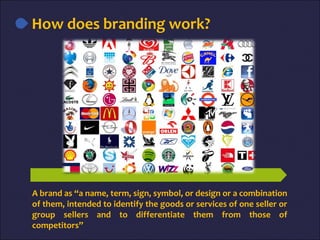
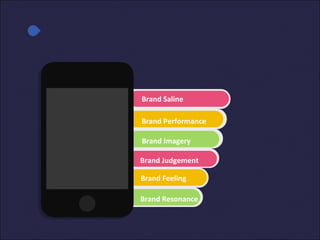
A brand as “a name, term, sign, symbol, or design or a combination
of them, intended to identify the goods or services of one seller or
group sellers and to differentiate them from those of
competitors”
How does branding work?
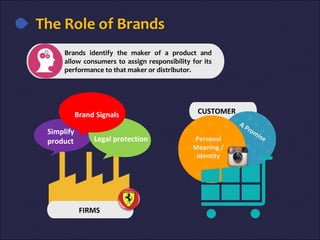
Brands identify the maker of a product and
allow consumers to assign responsibility for its
performance to that maker or distributor.
The Role of Brands
A PromisePersonal
Meaning /
Identity
Legal protection
Simplify
product
Brand Signals CUSTOMER
FIRMS
The Scope of Brands
Branding is the process of endowing products and
services with the power of a brand. It’s all about
creating differences between products.
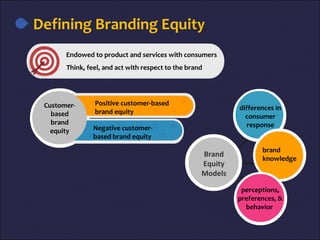
Endowed to product and services with consumers
Defining Branding Equity
Think, feel, and act with respect to the brand
Negative customer-
based brand equity
Positive customer-based
brand equity
Customer-
based
brand
equity
differences in
consumer
response
brand
knowledge
perceptions,
preferences, &
behavior
Brand
Equity
Models
Company appears to have come up with
another brand winner
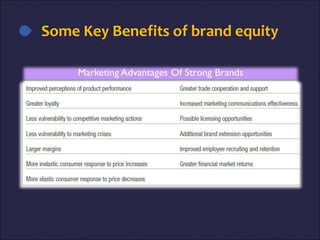
Some Key Benefits of brand equity
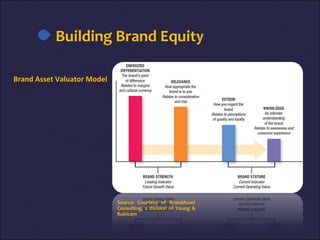
Building Brand Equity
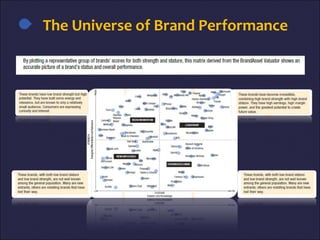
Brand Asset Valuator Model
Source: Courtesy of BrandAsset
Consulting, a division of Young &
Rubicam
The Universe of Brand Performance
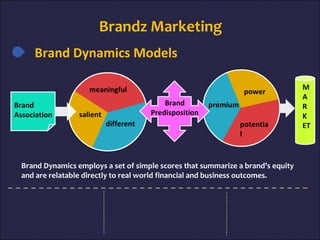
Brand Dynamics employs a set of simple scores that summarize a brand’s equity
and are relatable directly to real world financial and business outcomes.
Brandz Marketing
power
potentia
l
premium
meaningful
salient
different
Brand
Association
Brand
Predisposition
M
A
R
K
ET
Brand Dynamics Models
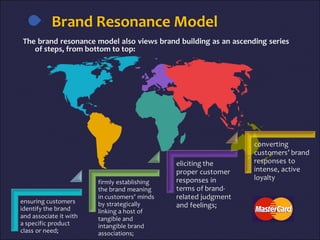
Brand Resonance Model
The brand resonance model also views brand building as an ascending series
of steps, from bottom to top:
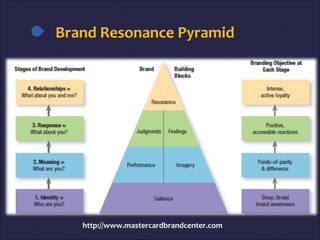
Brand Resonance Pyramid
http://www.mastercardbrandcenter.com
Brand Saline
Brand Performance
Brand Imagery
Brand Judgement
Brand Resonance
Brand Feeling
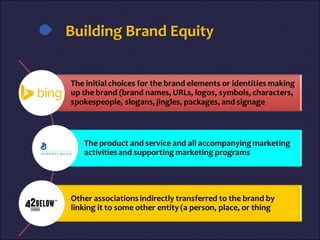
Building Brand Equity
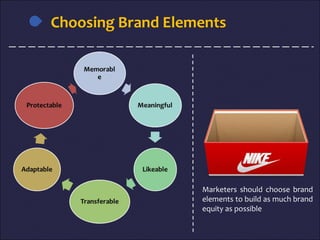
Choosing Brand Elements
Marketers should choose brand
elements to build as much brand
equity as possible
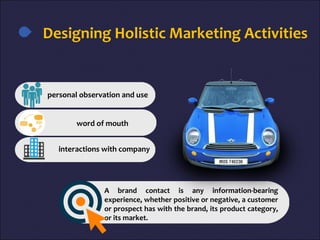
Designing Holistic Marketing Activities
personal observation and use
word of mouth
interactions with company
A brand contact is any information-bearing
experience, whether positive or negative, a customer
or prospect has with the brand, its product category,
or its market.
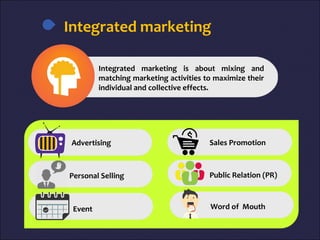
Integrated marketing
Integrated marketing is about mixing and
matching marketing activities to maximize their
individual and collective effects.
Advertising Sales Promotion
Personal Selling Public Relation (PR)
Word of MouthEvent
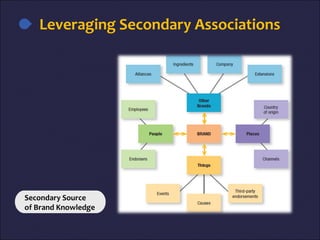
Leveraging Secondary Associations
Secondary Source
of Brand Knowledge
Internal Branding
» Internal branding consists of activities and processes that help inform and
inspire employees about brands. Holistic marketers must go even further and
train and encourage distributors and dealers to serve their customers well.
Poorly trained dealers or other intermediaries can ruin the best efforts to build
a strong brand image.
Brand bonding occurs when customers experience the company as delivering
on its brand promise. All the customers’ contacts with company employees and
communications must be positive.
The brand promise will not be delivered
unless everyone in the company lives the
brand.
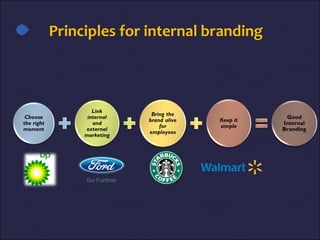
Principles for internal branding
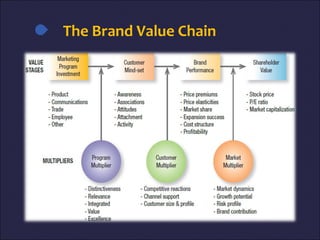
The Brand Value Chain
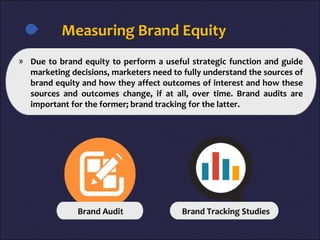
Measuring Brand Equity
» Due to brand equity to perform a useful strategic function and guide
marketing decisions, marketers need to fully understand the sources of
brand equity and how they affect outcomes of interest and how these
sources and outcomes change, if at all, over time. Brand audits are
important for the former; brand tracking for the latter.
Brand Audit Brand Tracking Studies
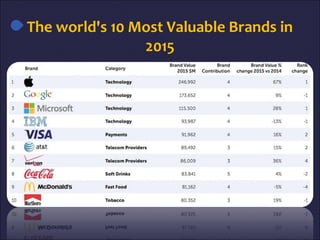
The world's 10 Most Valuable Brands in
2015
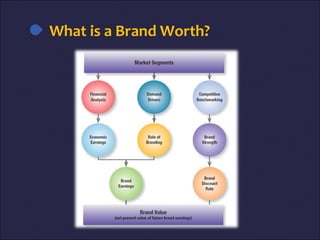
What is a Brand Worth?
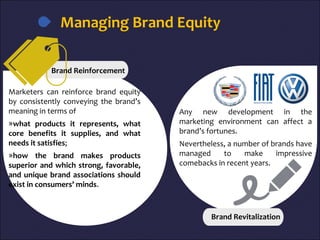
Managing Brand Equity
Marketers can reinforce brand equity
by consistently conveying the brand’s
meaning in terms of
»what products it represents, what
core benefits it supplies, and what
needs it satisfies;
»how the brand makes products
superior and which strong, favorable,
and unique brand associations should
exist in consumers’ minds.
Any new development in the
marketing environment can affect a
brand’s fortunes.
Nevertheless, a number of brands have
managed to make impressive
comebacks in recent years.
Brand Revitalization
Brand Reinforcement
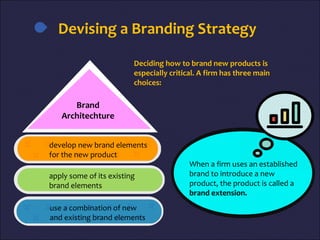
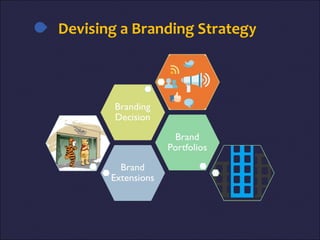
Devising a Branding Strategy
When a firm uses an established
brand to introduce a new
product, the product is called a
brand extension.
develop new brand elements
for the new product
apply some of its existing
brand elements
use a combination of new
and existing brand elements
Deciding how to brand new products is
especially critical. A firm has three main
choices:
Brand
Architechture
Devising a Branding Strategy
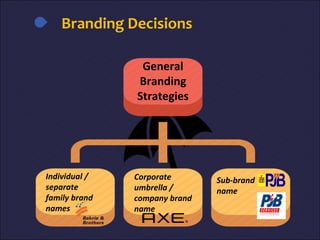
Branding Decisions
Individual /
separate
family brand
names
Corporate
umbrella /
company brand
name
Sub-brand
name
General
Branding
Strategies
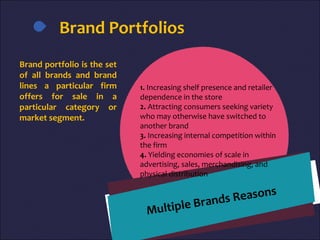
Brand Portfolios
Multiple Brands Reasons
1. Increasing shelf presence and retailer
dependence in the store
2. Attracting consumers seeking variety
who may otherwise have switched to
another brand
3. Increasing internal competition within
the firm
4. Yielding economies of scale in
advertising, sales, merchandising, and
physical distribution
Brand portfolio is the set
of all brands and brand
lines a particular firm
offers for sale in a
particular category or
market segment.
Brand Portfolio Example
Starwood Hotels
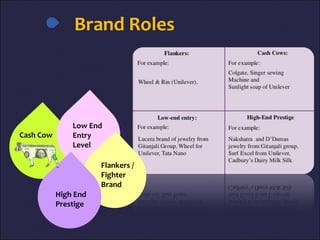
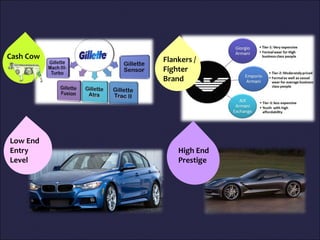
Brand Roles
Flankers /
Fighter
Brand
Low End
Entry
Level
Cash Cow
High End
Prestige
Flankers /
Fighter
Brand
Low End
Entry
Level
High End
Prestige
Cash Cow
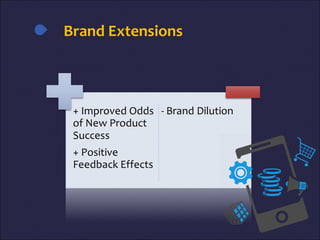
Brand Extensions
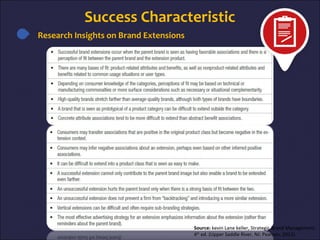
Success Characteristic
Research Insights on Brand Extensions
Source: kevin Lane keller, Strategic Brand Management,
4th
ed. (Upper Saddle River, NJ: Pearson, 2013).
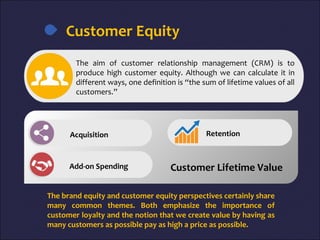
Customer Equity
The brand equity and customer equity perspectives certainly share
many common themes. Both emphasize the importance of
customer loyalty and the notion that we create value by having as
many customers as possible pay as high a price as possible.
The aim of customer relationship management (CRM) is to
produce high customer equity. Although we can calculate it in
different ways, one definition is “the sum of lifetime values of all
customers.”
Acquisition Retention
Customer Lifetime ValueAdd-on Spending
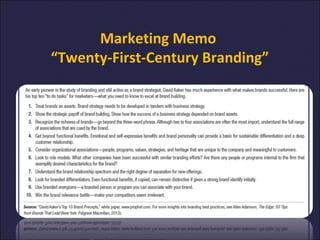
Marketing Memo
“Twenty-First-Century Branding”
THANK YOU!
FOR YOUR ATTENTION
Email :
najih.suraya@gmail.com
Phone : 085643811541Magister Manajemen
UGM

Najih suraya creating brand equity

  • 1.
    Creating Brand Equity NAJIHSURAYA (15/391824/PEK/21270) NINA RATNA (15/391827/PEK/21273)
  • 2.
    Questions 1. What isa brand, and how does the branding work? 2. What is brand equity? 3. How is brand equity build? 4. How is brand equity measured? 5. How is brand equity msnsged? 6. What is brand architechture? 7. What is customer equity?
  • 3.
    A brand as“a name, term, sign, symbol, or design or a combination of them, intended to identify the goods or services of one seller or group sellers and to differentiate them from those of competitors” How does branding work?
  • 4.
    Brands identify themaker of a product and allow consumers to assign responsibility for its performance to that maker or distributor. The Role of Brands A PromisePersonal Meaning / Identity Legal protection Simplify product Brand Signals CUSTOMER FIRMS
  • 5.
    The Scope ofBrands Branding is the process of endowing products and services with the power of a brand. It’s all about creating differences between products.
  • 6.
    Endowed to productand services with consumers Defining Branding Equity Think, feel, and act with respect to the brand Negative customer- based brand equity Positive customer-based brand equity Customer- based brand equity differences in consumer response brand knowledge perceptions, preferences, & behavior Brand Equity Models
  • 7.
    Company appears tohave come up with another brand winner
  • 8.
    Some Key Benefitsof brand equity
  • 9.
    Building Brand Equity BrandAsset Valuator Model Source: Courtesy of BrandAsset Consulting, a division of Young & Rubicam
  • 10.
    The Universe ofBrand Performance
  • 11.
    Brand Dynamics employsa set of simple scores that summarize a brand’s equity and are relatable directly to real world financial and business outcomes. Brandz Marketing power potentia l premium meaningful salient different Brand Association Brand Predisposition M A R K ET Brand Dynamics Models
  • 12.
    Brand Resonance Model Thebrand resonance model also views brand building as an ascending series of steps, from bottom to top:
  • 13.
  • 14.
    Brand Saline Brand Performance BrandImagery Brand Judgement Brand Resonance Brand Feeling
  • 15.
  • 16.
    Choosing Brand Elements Marketersshould choose brand elements to build as much brand equity as possible
  • 17.
    Designing Holistic MarketingActivities personal observation and use word of mouth interactions with company A brand contact is any information-bearing experience, whether positive or negative, a customer or prospect has with the brand, its product category, or its market.
  • 18.
    Integrated marketing Integrated marketingis about mixing and matching marketing activities to maximize their individual and collective effects. Advertising Sales Promotion Personal Selling Public Relation (PR) Word of MouthEvent
  • 20.
  • 21.
    Internal Branding » Internalbranding consists of activities and processes that help inform and inspire employees about brands. Holistic marketers must go even further and train and encourage distributors and dealers to serve their customers well. Poorly trained dealers or other intermediaries can ruin the best efforts to build a strong brand image. Brand bonding occurs when customers experience the company as delivering on its brand promise. All the customers’ contacts with company employees and communications must be positive. The brand promise will not be delivered unless everyone in the company lives the brand.
  • 22.
  • 23.
  • 24.
    Measuring Brand Equity »Due to brand equity to perform a useful strategic function and guide marketing decisions, marketers need to fully understand the sources of brand equity and how they affect outcomes of interest and how these sources and outcomes change, if at all, over time. Brand audits are important for the former; brand tracking for the latter. Brand Audit Brand Tracking Studies
  • 25.
    The world's 10Most Valuable Brands in 2015
  • 26.
    What is aBrand Worth?
  • 27.
    Managing Brand Equity Marketerscan reinforce brand equity by consistently conveying the brand’s meaning in terms of »what products it represents, what core benefits it supplies, and what needs it satisfies; »how the brand makes products superior and which strong, favorable, and unique brand associations should exist in consumers’ minds. Any new development in the marketing environment can affect a brand’s fortunes. Nevertheless, a number of brands have managed to make impressive comebacks in recent years. Brand Revitalization Brand Reinforcement
  • 28.
    Devising a BrandingStrategy When a firm uses an established brand to introduce a new product, the product is called a brand extension. develop new brand elements for the new product apply some of its existing brand elements use a combination of new and existing brand elements Deciding how to brand new products is especially critical. A firm has three main choices: Brand Architechture
  • 29.
  • 30.
    Branding Decisions Individual / separate familybrand names Corporate umbrella / company brand name Sub-brand name General Branding Strategies
  • 31.
    Brand Portfolios Multiple BrandsReasons 1. Increasing shelf presence and retailer dependence in the store 2. Attracting consumers seeking variety who may otherwise have switched to another brand 3. Increasing internal competition within the firm 4. Yielding economies of scale in advertising, sales, merchandising, and physical distribution Brand portfolio is the set of all brands and brand lines a particular firm offers for sale in a particular category or market segment.
  • 32.
  • 33.
    Brand Roles Flankers / Fighter Brand LowEnd Entry Level Cash Cow High End Prestige
  • 34.
  • 35.
  • 36.
    Success Characteristic Research Insightson Brand Extensions Source: kevin Lane keller, Strategic Brand Management, 4th ed. (Upper Saddle River, NJ: Pearson, 2013).
  • 37.
    Customer Equity The brandequity and customer equity perspectives certainly share many common themes. Both emphasize the importance of customer loyalty and the notion that we create value by having as many customers as possible pay as high a price as possible. The aim of customer relationship management (CRM) is to produce high customer equity. Although we can calculate it in different ways, one definition is “the sum of lifetime values of all customers.” Acquisition Retention Customer Lifetime ValueAdd-on Spending
  • 38.
  • 39.
    THANK YOU! FOR YOURATTENTION Email : najih.suraya@gmail.com Phone : 085643811541Magister Manajemen UGM