Brand Management
Module 4-6: Product PLC, Introduction to Brand Management and
Strategic Brand Management Process
Topics covered: PLC, Introduction to Brand Management: What is a
Brand? Brand Elements, Strategic Brand Management Process
What is a PLC?
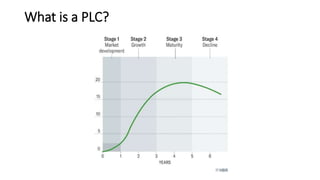
• Product life cycle management is the act of overseeing a product's performance over the
course of its life. Throughout the different stages of product life cycle, a company enacts
strategies and changes based on how the market is receiving a good
• Stage 1. Market development: This is when a new product is first brought to market, before there is a
proved demand for it, and often before it has been fully proved out technically in all respects. Sales
are low and creep along slowly
• Stage 2. Market growth: Demand begins to accelerate, and the size of the total market expands
rapidly. It might also be called the “Takeoff Stage.”
• Stage 3. Market maturity: In the maturity stage, sales slowdown, indicating that the market has begun
to reach saturation.
Demand levels off and grows, for the most part, only at the replacement and new family-formation rate
• Stage 4. Market decline: The product begins to lose consumer appeal and sales drift downward, such
as when buggy whips lost out with the advent of automobiles and when silk lost out to nylon
What is a PLC?
What is a Brand & What are Brand Elements?
• According to the American Marketing Association (AMA), a brand is a “name, term, sign,
symbol, or design, or a combination of them, intended to identify the goods and services
of one seller or group of sellers and to differentiate them from those of competition.”
Technically speaking, then, whenever a marketer creates a new name, logo, or symbol for
a new product, he or she has created a brand
• Thus, the key to creating a brand, according to the AMA definition, is to be able to
choose a name, logo, symbol, package design, or other characteristic that identifies a
product and distinguishes it from others. These different components of a brand that
identify and differentiate it are brand elements.
Strategic Brand Management Process
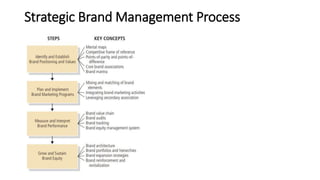
• Strategic brand management involves the design and implementation of marketing
programs and activities to build, measure, and manage brand equity.
• In this text, we define the strategic brand management process as having four main
steps
• Identifying and developing brand plans
• Designing and implementing brand marketing programs
• Measuring and interpreting brand performance
• Growing and sustaining brand equity
Strategic Brand Management Process
• The strategic brand management process starts with a clear understanding of what the
brand is to represent and how it should be positioned with respect to competitors
• Brand planning uses the following three interlocking models:
• The brand positioning model describes how to guide integrated marketing to
maximize competitive advantages
• The brand resonance model describes how to create intense, activity loyalty
relationships with customers
• The brand value chain is a means to trace the value creation process for brands, to
better understand the financial impact of brand marketing expenditures and
investments
Identifying and developing brand plans
• Building brand equity requires properly positioning the brand in the minds
of customers and achieving as much brand resonance as possible
• In general, this knowledge-building process will depend on three factors:
• The initial choices of the brand elements making up the brand and how they are
mixed and matched
• The marketing activities and supporting marketing programs and the way the brand
is integrated into them
• Other associations indirectly transferred to or leveraged by the brand as a result of
linking it to some other entity (such as the company, country of origin, channel of
distribution, or another brand)
Designing and implementing brand marketing
programs
• Choosing Brand Elements: The most common brand elements are brand names, URLs,
logos, symbols, characters, packaging, and slogans. The best test of the brand-building
contribution of a brand element is what consumers would think about the product or
service if they knew only its brand name or its associated logo or other element. Because
different elements have different advantages, marketing managers often use a subset of all
the possible brand elements or even all of them
• Integrating the Brand into Marketing Activities and the Supporting Marketing Program:
Although the judicious choice of brand elements can make some contribution to building
brand equity, the biggest contribution comes from marketing activities related to the
brand. This text highlights only some particularly important marketing program
considerations for building brand equity
• Leveraging Secondary Associations: The third and final way to build brand equity is to
leverage secondary associations. Brand associations may themselves be linked to other
entities that have their own associations, creating these secondary associations. For
example, the brand may be linked to certain source factors, such as the company (through
branding strategies), countries or other geographical regions (through identification of
Important considerations for each of the above 3-
factors:
product origin), and channels of distribution (through channel strategy), as well as to other
brands (through ingredients or co-branding), characters (through licensing), spokespeople
(through endorsements), sporting or cultural events (through sponsorship), or some other
third-party sources (through awards or reviews). Because the brand becomes identified with
another entity, even though this entity may not directly relate to the product or service
performance, consumers may infer that the brand shares associations with that entity, thus
producing indirect or secondary associations for the brand
• In essence, the marketer is borrowing or leveraging some other associations for the brand
to create some associations of the brand’s own and thus help build its brand equity.
Important considerations for each of the above 3-
factors:
• To manage their brands profitably, managers must successfully design and implement a
brand equity measurement system. A brand equity measurement system is a set of
research procedures designed to provide timely, accurate, and actionable information for
marketers so that they can make the best possible tactical decisions in the short run and
the best strategic decisions in the long run. Implementing such a system involves three key
steps— conducting brand audits, designing brand tracking studies, and establishing a brand
equity management system
• The task of determining or evaluating a brand’s positioning often benefits from a brand
audit. A brand audit is a comprehensive examination of a brand to assess its health,
uncover its sources of equity, and suggest ways to improve and leverage that equity. A
brand audit requires understanding sources of brand equity from the perspective of both
the firm and the consumer
• Once marketers have determined the brand positioning strategy, they are ready to put into
place the actual marketing program to create, strengthen, or maintain brand associations.
Brand tracking studies collect information from consumers on a routine basis over time,
typically through quantitative measures of brand performance on a number of key
Measuring and Interpreting Brand Performance
dimensions marketers can identify in the brand audit or other means
• A brand equity management system is a set of organizational processes designed to
improve the understanding and use of the brand equity concept within a firm
• Three major steps help implement a brand equity management system:
• creating brand equity charters
• assembling brand equity reports
• defining brand equity responsibilities
Measuring and Interpreting Brand Performance
• Defining Brand Architecture: The firm’s brand architecture provides general guidelines
about its branding strategy and which brand elements to apply across all the different
products sold by the firm. Two key concepts in defining brand architecture are brand
portfolios and the brand hierarchy. The brand portfolio is the set of different brands that a
particular firm offers for sale to buyers in a particular category. The brand hierarchy
displays the number and nature of common and distinctive brand components across the
firm’s set of brands
• Managing Brand Equity over Time: Effective brand management also requires taking a long-
term view of marketing decisions. A long-term perspective of brand management
recognizes that any changes in the supporting marketing program for a brand may, by
changing consumer knowledge, affect the success of future marketing programs. A long-
term view also produces proactive strategies designed to maintain and enhance customer-
based brand equity over time and reactive strategies to revitalize a brand that encounters
some difficulties or problems
Growing and Sustaining Brand Equity
Thank you

Brand Management Notes by NMIMs faculty.

  • 1.
    Brand Management Module 4-6:Product PLC, Introduction to Brand Management and Strategic Brand Management Process Topics covered: PLC, Introduction to Brand Management: What is a Brand? Brand Elements, Strategic Brand Management Process
  • 2.
    What is aPLC? • Product life cycle management is the act of overseeing a product's performance over the course of its life. Throughout the different stages of product life cycle, a company enacts strategies and changes based on how the market is receiving a good • Stage 1. Market development: This is when a new product is first brought to market, before there is a proved demand for it, and often before it has been fully proved out technically in all respects. Sales are low and creep along slowly • Stage 2. Market growth: Demand begins to accelerate, and the size of the total market expands rapidly. It might also be called the “Takeoff Stage.” • Stage 3. Market maturity: In the maturity stage, sales slowdown, indicating that the market has begun to reach saturation. Demand levels off and grows, for the most part, only at the replacement and new family-formation rate • Stage 4. Market decline: The product begins to lose consumer appeal and sales drift downward, such as when buggy whips lost out with the advent of automobiles and when silk lost out to nylon
  • 3.
  • 4.
    What is aBrand & What are Brand Elements? • According to the American Marketing Association (AMA), a brand is a “name, term, sign, symbol, or design, or a combination of them, intended to identify the goods and services of one seller or group of sellers and to differentiate them from those of competition.” Technically speaking, then, whenever a marketer creates a new name, logo, or symbol for a new product, he or she has created a brand • Thus, the key to creating a brand, according to the AMA definition, is to be able to choose a name, logo, symbol, package design, or other characteristic that identifies a product and distinguishes it from others. These different components of a brand that identify and differentiate it are brand elements.
  • 5.
    Strategic Brand ManagementProcess • Strategic brand management involves the design and implementation of marketing programs and activities to build, measure, and manage brand equity. • In this text, we define the strategic brand management process as having four main steps • Identifying and developing brand plans • Designing and implementing brand marketing programs • Measuring and interpreting brand performance • Growing and sustaining brand equity
  • 6.
  • 7.
    • The strategicbrand management process starts with a clear understanding of what the brand is to represent and how it should be positioned with respect to competitors • Brand planning uses the following three interlocking models: • The brand positioning model describes how to guide integrated marketing to maximize competitive advantages • The brand resonance model describes how to create intense, activity loyalty relationships with customers • The brand value chain is a means to trace the value creation process for brands, to better understand the financial impact of brand marketing expenditures and investments Identifying and developing brand plans
  • 8.
    • Building brandequity requires properly positioning the brand in the minds of customers and achieving as much brand resonance as possible • In general, this knowledge-building process will depend on three factors: • The initial choices of the brand elements making up the brand and how they are mixed and matched • The marketing activities and supporting marketing programs and the way the brand is integrated into them • Other associations indirectly transferred to or leveraged by the brand as a result of linking it to some other entity (such as the company, country of origin, channel of distribution, or another brand) Designing and implementing brand marketing programs
  • 9.
    • Choosing BrandElements: The most common brand elements are brand names, URLs, logos, symbols, characters, packaging, and slogans. The best test of the brand-building contribution of a brand element is what consumers would think about the product or service if they knew only its brand name or its associated logo or other element. Because different elements have different advantages, marketing managers often use a subset of all the possible brand elements or even all of them • Integrating the Brand into Marketing Activities and the Supporting Marketing Program: Although the judicious choice of brand elements can make some contribution to building brand equity, the biggest contribution comes from marketing activities related to the brand. This text highlights only some particularly important marketing program considerations for building brand equity • Leveraging Secondary Associations: The third and final way to build brand equity is to leverage secondary associations. Brand associations may themselves be linked to other entities that have their own associations, creating these secondary associations. For example, the brand may be linked to certain source factors, such as the company (through branding strategies), countries or other geographical regions (through identification of Important considerations for each of the above 3- factors:
  • 10.
    product origin), andchannels of distribution (through channel strategy), as well as to other brands (through ingredients or co-branding), characters (through licensing), spokespeople (through endorsements), sporting or cultural events (through sponsorship), or some other third-party sources (through awards or reviews). Because the brand becomes identified with another entity, even though this entity may not directly relate to the product or service performance, consumers may infer that the brand shares associations with that entity, thus producing indirect or secondary associations for the brand • In essence, the marketer is borrowing or leveraging some other associations for the brand to create some associations of the brand’s own and thus help build its brand equity. Important considerations for each of the above 3- factors:
  • 11.
    • To managetheir brands profitably, managers must successfully design and implement a brand equity measurement system. A brand equity measurement system is a set of research procedures designed to provide timely, accurate, and actionable information for marketers so that they can make the best possible tactical decisions in the short run and the best strategic decisions in the long run. Implementing such a system involves three key steps— conducting brand audits, designing brand tracking studies, and establishing a brand equity management system • The task of determining or evaluating a brand’s positioning often benefits from a brand audit. A brand audit is a comprehensive examination of a brand to assess its health, uncover its sources of equity, and suggest ways to improve and leverage that equity. A brand audit requires understanding sources of brand equity from the perspective of both the firm and the consumer • Once marketers have determined the brand positioning strategy, they are ready to put into place the actual marketing program to create, strengthen, or maintain brand associations. Brand tracking studies collect information from consumers on a routine basis over time, typically through quantitative measures of brand performance on a number of key Measuring and Interpreting Brand Performance
  • 12.
    dimensions marketers canidentify in the brand audit or other means • A brand equity management system is a set of organizational processes designed to improve the understanding and use of the brand equity concept within a firm • Three major steps help implement a brand equity management system: • creating brand equity charters • assembling brand equity reports • defining brand equity responsibilities Measuring and Interpreting Brand Performance
  • 13.
    • Defining BrandArchitecture: The firm’s brand architecture provides general guidelines about its branding strategy and which brand elements to apply across all the different products sold by the firm. Two key concepts in defining brand architecture are brand portfolios and the brand hierarchy. The brand portfolio is the set of different brands that a particular firm offers for sale to buyers in a particular category. The brand hierarchy displays the number and nature of common and distinctive brand components across the firm’s set of brands • Managing Brand Equity over Time: Effective brand management also requires taking a long- term view of marketing decisions. A long-term perspective of brand management recognizes that any changes in the supporting marketing program for a brand may, by changing consumer knowledge, affect the success of future marketing programs. A long- term view also produces proactive strategies designed to maintain and enhance customer- based brand equity over time and reactive strategies to revitalize a brand that encounters some difficulties or problems Growing and Sustaining Brand Equity
  • 14.