Learning Objectives
1. Whatis a brand, and how does branding work?
2. What is brand equity?
3. How is brand equity measured?
4. What is brand architecture?
4.
Brand: Various facets
•Resides in our minds.
• Loyalty is expressed for.
• Brand offers identity.
5.
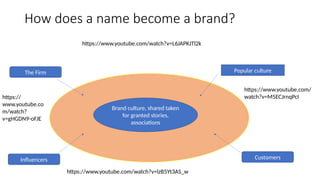
How does aname become a brand?
Brand culture, shared taken
for granted stories,
associations
Popular culture
Customers
The Firm
Influencers
https://www.youtube.com/
watch?v=M5ECJrnqPcI
https://
www.youtube.co
m/watch?
v=gHGDN9-oFJE
https://www.youtube.com/watch?v=lzB5Yt3AS_w
https://www.youtube.com/watch?v=L6JAPKJTl2k
6.
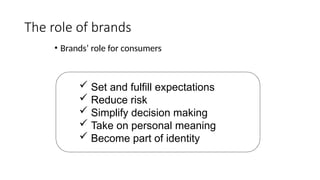
The role ofbrands
• Brands’ role for consumers
Set and fulfill expectations
Reduce risk
Simplify decision making
Take on personal meaning
Become part of identity
7.
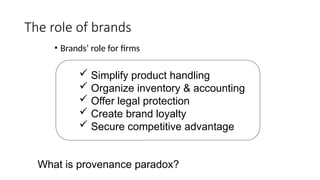
The role ofbrands
• Brands’ role for firms
Simplify product handling
Organize inventory & accounting
Offer legal protection
Create brand loyalty
Secure competitive advantage
What is provenance paradox?
8.
The Scope ofBranding
• Branding
• The process of
endowing products
and services with the
power of a brand.
9.
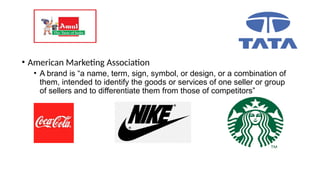
• American MarketingAssociation
• A brand is “a name, term, sign, symbol, or design, or a combination of
them, intended to identify the goods or services of one seller or group
of sellers and to differentiate them from those of competitors”
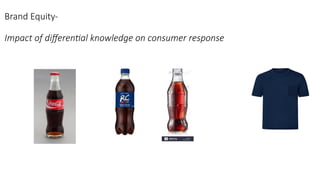
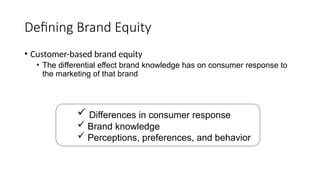
Defining Brand Equity
•Customer-based brand equity
• The differential effect brand knowledge has on consumer response to
the marketing of that brand
Differences in consumer response
Brand knowledge
Perceptions, preferences, and behavior
Internal Branding
• Activitiesand processes that help inform/inspire
employees about brands
Choose the right moment
Bring the brand alive for
employees
Link internal & external
marketing
Keep it simple
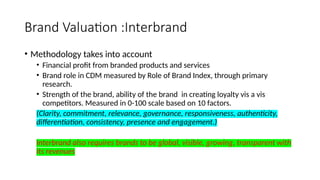
Brand Valuation :Interbrand
•Methodology takes into account
• Financial profit from branded products and services
• Brand role in CDM measured by Role of Brand Index, through primary
research.
• Strength of the brand, ability of the brand in creating loyalty vis a vis
competitors. Measured in 0-100 scale based on 10 factors.
(Clarity, commitment, relevance, governance, responsiveness, authenticity,
differentiation, consistency, presence and engagement.)
Interbrand also requires brands to be global, visible, growing, transparent with
its revenues
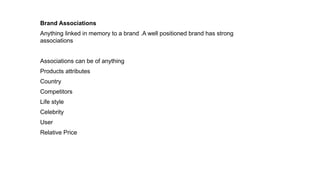
Brand Associations
Anything linkedin memory to a brand .A well positioned brand has strong
associations
Associations can be of anything
Products attributes
Country
Competitors
Life style
Celebrity
User
Relative Price
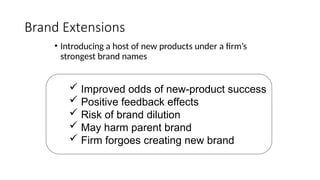
Brand Extensions
• Introducinga host of new products under a firm’s
strongest brand names
Improved odds of new-product success
Positive feedback effects
Risk of brand dilution
May harm parent brand
Firm forgoes creating new brand
Branding Decisions
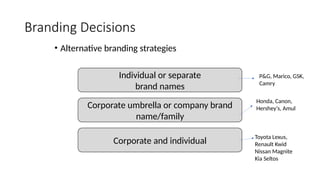
• Alternativebranding strategies
Individual or separate
brand names
Corporate umbrella or company brand
name/family
Corporate and individual
Honda, Canon,
Hershey's, Amul
P&G, Marico, GSK,
Camry
Toyota Lexus,
Renault Kwid
Nissan Magnite
Kia Seltos
28.
Brand Portfolios
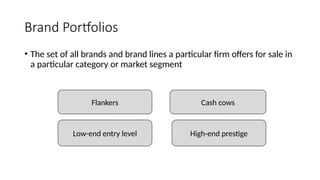
• Theset of all brands and brand lines a particular firm offers for sale in
a particular category or market segment
Flankers
Low-end entry level
Cash cows
High-end prestige
Editor's Notes
#6 A brand is a promise between the firm and the consumer.
#7 To firms, brands represent enormously valuable pieces of legal property that can influence consumer behavior, be bought and sold, and provide their owner the security of sustained future revenues. Companies have paid dearly for brands in mergers or acquisitions, often justifying the price premium on the basis of the extra profits expected and the difficulty and expense of creating similar brands from scratch. Wall Street believes strong brands result in better earnings and profit performance for firms, which, in turn, create greater value for shareholders.
#8 It’s all about creating differences between products. Marketers need to teach consumers “who” the product is—by giving it a name and other brand elements to identify it—as well as what the product does and why consumers should care. Branding creates mental structures that help consumers organize their knowledge about products and services in a way that clarifies their decision making and, in the process, provides value to the firm.
#9 A brand is thus a product or service whose dimensions differentiate it in some way from other products or services designed to satisfy the same need. These differences may be functional, rational, or tangible—related to product performance of the brand. They may also be more symbolic, emotional, or intangible— related to what the brand represents or means in a more abstract sense.
#13 A brand has positive customer-based brand equity when consumers react more favorably to a product and the way it is marketed when the brand is identified than when it is not identified. A brand has negative customer-based brand equity if consumers react less favorably to marketing activity for the brand under the same circumstances.
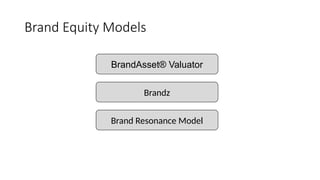
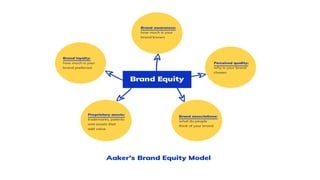
#14 Although marketers agree about basic branding principles, a number of models of brand equity offer some differing perspectives. Here we highlight three more established ones.
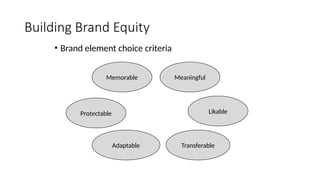
#15 There are six criteria for choosing brand elements. The first three—memorable, meaningful, and likable—are brand building. The latter three—transferable, adaptable, and protectable—are defensive and help leverage and preserve brand equity against challenges.
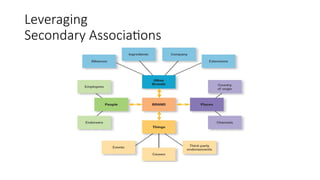
#16 The third and final way to build brand equity is, in effect, to “borrow” it. That is, create brand equity by linking the brand to other information in memory that conveys meaning to consumers (see Figure 11.5). These “secondary” brand associations can link the brand to sources such as the company itself (through branding strategies), to countries or other geographical regions (through identification of product origin), and to channels of distribution (through channel strategy), as well as to other brands (through ingredient or co-branding), characters (through licensing), spokespeople (through endorsements), sporting or cultural events (through sponsorship), or some other third-party sources (through awards or reviews).
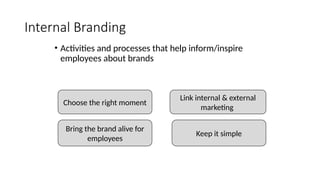
#17 Marketers must now “walk the walk” to deliver the brand promise. They must adopt an internal perspective to be sure employees and marketing partners appreciate and understand basic branding notions and how they can help—or hurt—brand equity.
When employees care about and believe in the brand, they’re motivated to work harder and feel greater loyalty to the firm. Some important principles for internal branding are:
Choose the right moment. Turning points are ideal opportunities to capture employees’ attention and imagination.
Link internal and external marketing. Internal and external messages must match.
Bring the brand alive for employees. Internal communications should be informative and energizing.
Keep it simple. Don’t overwhelm employees with too many details. Focus on the key brand pillars, ideally in the form of a brand mantra.
#18 A brand audit is a focused series of procedures to assess the health of the brand, uncover its sources of brand equity, and suggest ways to improve and leverage its equity.
Brand-tracking studies use the brand audit as input to collect quantitative data from consumers over time, providing consistent, baseline information about how brands and marketing programs are performing. Tracking studies help us understand where, how much, and in what ways brand value is being created to facilitate day-to-day decision making.
Marketers should distinguish brand equity from brand valuation, which is the job of estimating the total financial value of the brand.
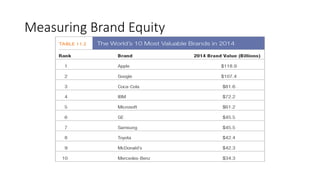
#19 Table 11.2 displays the world’s most valuable brands in 2012 according to the Interbrand rankings, as described below in “Marketing Insight: What Is a Brand Worth?”61 In these well-known companies, brand value is typically more than half the total company market capitalization.
#24 When a firm uses an established brand to introduce a new product, the product is called a brand extension. When marketers combine a new brand with an existing brand, the brand extension can also be called a subbrand, such as Hershey Kisses candy, Adobe Acrobat software, Toyota Camry automobiles, and American Express Blue cards. The existing brand that gives birth to a brand extension or sub-brand is the parent brand. If the parent brand is already associated with multiple products through brand extensions, it can also be called a master brand or family brand.
Brand extensions fall into two general categories. In a line extension, the parent brand covers a new product within a product category it currently serves, such as with new flavors, forms, colors, ingredients, and package sizes. In a category extension, marketers use the parent brand to enter a different product category, such as Swiss Army watches.
A brand line consists of all products—original as well as line and category extensions—sold under a particular brand. A brand mix (or brand assortment) is the set of all brand lines that a particular seller makes. Many companies are introducing branded variants, which are specific brand lines supplied to specific retailers or distribution channels.
A licensed product is one whose brand name has been licensed to other manufacturers that actually make the product.
#25 Most new products are in fact brand extensions—typically 80 percent to 90 percent in any one year. Moreover, many of the most successful new products, as rated by various sources, are brand extensions. Two main advantages of brand extensions are that they can facilitate new-product acceptance and provide positive feedback to the parent brand and company.
On the downside, line extensions may cause the brand name to be less strongly identified with any one product. Brand dilution occurs when consumers no longer associate a brand with a specific or highly similar set of products and start thinking less of the brand. The worst possible scenario is for an extension not only to fail, but to harm the parent brand in the process. One easily overlooked disadvantage of brand extensions is that the firm forgoes the chance to create a new brand with its own unique image and equity.
#26 The use of individual or separate family brand names has been referred to as a “house of brands” strategy, whereas the use of an umbrella corporate or company brand name is a “branded house” strategy. These two strategies represent two ends of a continuum. A sub-brand strategy falls somewhere between, depending on which component of the sub-brand receives more emphasis.
With a branded house strategy, it is often useful to have a well-defined flagship product. A flagship product is one that best represents or embodies the brand as a whole to consumers. It often is the first product by which the brand gained fame, a widely accepted best-seller, or a highly admired or award-winning product.
#27 Assuming a firm decides to brand its products or services, it must choose which brand names to use. Three general strategies are popular:
Individual or separate family brand names. Consumer packaged-goods companies have a long tradition of branding different products by different names.
Corporate umbrella or company brand name. Many firms, such as Heinz and GE, use their corporate brand as an umbrella brand across their entire range of products.
Sub-brand name. Sub-brands combine two or more of the corporate brand, family brand, or individual product brand names.
#28 A brand can be stretched only so far, and all the segments the firm would like to target may not view the same brand equally favorably. Marketers often need multiple brands in order to pursue these multiple segments. The hallmark of an optimal brand portfolio is the ability of each brand in it to maximize equity in combination with all the other brands in it. Brands can also play a number of specific roles as part of a portfolio.
Flanker or fighter brands are positioned with respect to competitors’ brands so that more important (and more profitable) flagship brands can retain their desired positioning.
Some brands may be kept around despite dwindling sales because they manage to maintain their profitability with virtually no marketing support. Companies can effectively milk these “cash cow” brands by capitalizing on their reservoir of brand equity.
The role of a relatively low-priced brand in the portfolio often may be to attract customers to the brand franchise. Retailers like to feature these “traffic builders” because they are able to trade up customers to a higher-priced brand.
The role of a relatively high-priced brand often is to add prestige and credibility to the entire portfolio.