A report made by:
Kristine Joy G. Clapero (Clappers)
 determine the process of mutation breeding
 know what is mutation as well as the breeding
 know who contributed the mutation breeding
 Understand how mutation breeding and radiation
breeding done
 Know the chemicals that can be used for mutation
 Site some successful mutation around the world
 Differentiate the mutants, mutagens and
mutagenesis
After the discussion the students will
be able to:
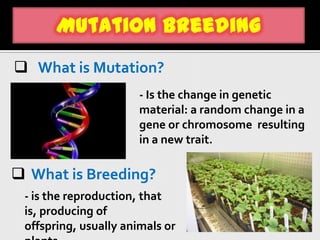
- Is the change in genetic
material: a random change in a
gene or chromosome resulting
in a new trait.
 What is Breeding?
- is the reproduction, that
is, producing of
offspring, usually animals or
 What is Mutation?
Process
-There are different kind of
mutagenic breeding such as using
chemical mutagens like EMS and
DMS, and radiation are used to
generate mutants.
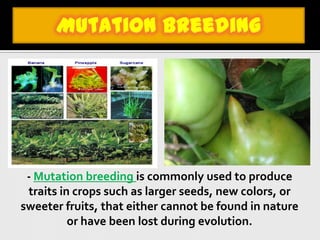
- Mutation breeding is commonly used to produce
traits in crops such as larger seeds, new colors, or
sweeter fruits, that either cannot be found in nature
or have been lost during evolution.
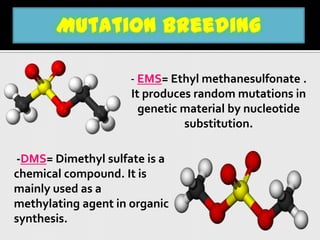
- EMS= Ethyl methanesulfonate .
It produces random mutations in
genetic material by nucleotide
substitution.
-DMS= Dimethyl sulfate is a
chemical compound. It is
mainly used as a
methylating agent in organic
synthesis.
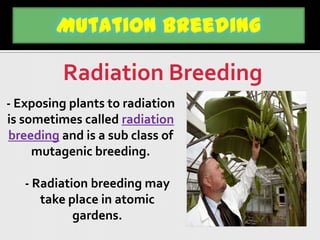
Radiation Breeding
- Exposing plants to radiation
is sometimes called radiation
breeding and is a sub class of
mutagenic breeding.
- Radiation breeding may
take place in atomic
gardens.
- It was discovered in the 1920s when Lewis J. Stadler of the
University of Missouri (Colombia) used X-rays on
- barley seeds.
Lewis John Stadler (July
6, 1896 - May 12, 1954) was an
American geneticist. His
research focused on the
mutagenic effects of different
forms of radiation on
economically important plants
like maize and barley.
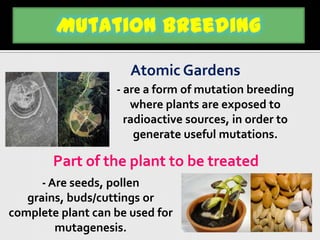
Atomic Gardens
- are a form of mutation breeding
where plants are exposed to
radioactive sources, in order to
generate useful mutations.
Part of the plant to be treated
- Are seeds, pollen
grains, buds/cuttings or
complete plant can be used for
mutagenesis.
- It depends on whether the crop is sexually or
asexually propagated.
- Sexually propagated crops: seeds that are
commonly used because can tolerate extreme
environmental conditions.
Mutagen, Mutagenesis and Mutant
Mutagens
- Is a physical or chemical agent that
causes such changes the genetic material.
Mutagenesis
- Is the process of change in the
DNA
Mutant
- Is an
individual, organism, or
new genetic
character, arising or
resulting from an instance
of mutation.
- Can either completely destroy the function of a
gene or it can change the sequence of letters of the
genetic code in a gene
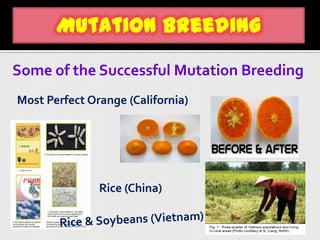
Some of the Successful Mutation Breeding
Most Perfect Orange (California)
Rice (China)
Thanks For Your Time…

Mutation Breeding

  • 1.
    A report madeby: Kristine Joy G. Clapero (Clappers)
  • 2.
     determine theprocess of mutation breeding  know what is mutation as well as the breeding  know who contributed the mutation breeding  Understand how mutation breeding and radiation breeding done  Know the chemicals that can be used for mutation  Site some successful mutation around the world  Differentiate the mutants, mutagens and mutagenesis After the discussion the students will be able to:
  • 3.
    - Is thechange in genetic material: a random change in a gene or chromosome resulting in a new trait.  What is Breeding? - is the reproduction, that is, producing of offspring, usually animals or  What is Mutation?
  • 4.
    Process -There are differentkind of mutagenic breeding such as using chemical mutagens like EMS and DMS, and radiation are used to generate mutants.
  • 5.
    - Mutation breedingis commonly used to produce traits in crops such as larger seeds, new colors, or sweeter fruits, that either cannot be found in nature or have been lost during evolution.
  • 6.
    - EMS= Ethylmethanesulfonate . It produces random mutations in genetic material by nucleotide substitution. -DMS= Dimethyl sulfate is a chemical compound. It is mainly used as a methylating agent in organic synthesis.
  • 7.
    Radiation Breeding - Exposingplants to radiation is sometimes called radiation breeding and is a sub class of mutagenic breeding. - Radiation breeding may take place in atomic gardens.
  • 8.
    - It wasdiscovered in the 1920s when Lewis J. Stadler of the University of Missouri (Colombia) used X-rays on - barley seeds. Lewis John Stadler (July 6, 1896 - May 12, 1954) was an American geneticist. His research focused on the mutagenic effects of different forms of radiation on economically important plants like maize and barley.
  • 9.
    Atomic Gardens - area form of mutation breeding where plants are exposed to radioactive sources, in order to generate useful mutations. Part of the plant to be treated - Are seeds, pollen grains, buds/cuttings or complete plant can be used for mutagenesis.
  • 10.
    - It dependson whether the crop is sexually or asexually propagated. - Sexually propagated crops: seeds that are commonly used because can tolerate extreme environmental conditions.
  • 11.
    Mutagen, Mutagenesis andMutant Mutagens - Is a physical or chemical agent that causes such changes the genetic material. Mutagenesis - Is the process of change in the DNA
  • 12.
    Mutant - Is an individual,organism, or new genetic character, arising or resulting from an instance of mutation. - Can either completely destroy the function of a gene or it can change the sequence of letters of the genetic code in a gene
  • 13.
    Some of theSuccessful Mutation Breeding Most Perfect Orange (California) Rice (China)
  • 14.