WEL-COME
Course title:-Principles of cytogenetics
Topic :-Intervarietal chromosomal
substitution
Submitted by
Name :- Kartik S. Madankar
Reg.No :- 2017A76M
Submitted to
Dr. Mukesh Saini
Definition
 Replacement of one or more chromosomes
( totally or partially homologues) from one
variety to another variety of a plant species
called intervarietal chromosomal
substitution
Methods of inter-varietal
chromosomal substitutions
1. Development of alien addition and substitution
lines.
2. Development of alien translocation lines.
3. Pyramiding of desirable genes from different
sources.
4. Improvement of agronomic traits by backcross
breeding.
Successful techniques
involved:
1. Transfer of whole genome.
- Raphanobrassica, Triticale's
2. Transfer of individual whole chromosome.
- alien addition and substitution lines
3. Transfer of a chromosomal segment.
- production of terminal and intercalary
translocations
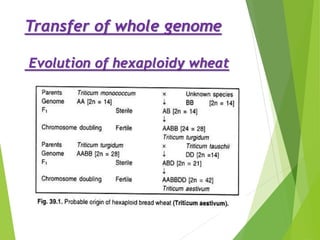
Transfer of whole genome
Evolution of hexaploidy wheat
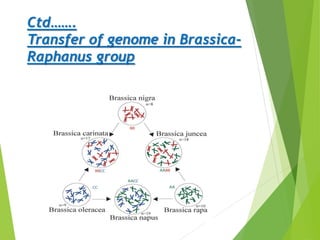
Ctd…….
Transfer of genome in Brassica-
Raphanus group
Transfer of individual whole
chromosomes
1. With the exception of triticale, the addition
of whole genome was not much successful in
giving desirable synthetic new crop,
therefore alien addition and substitution of
whole chromosome is used.
2. Method at present used in wheat, rice, sugar
beet, cotton etc.
Alien addition line
 Addition of the chromosome(s) of another species to
the genome of desirable species without seriously
disturbing genic balance called alien addition line.
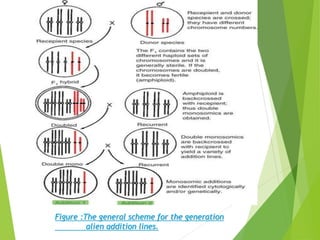
 The procedure of addition involves crossing the
higher chromosome number species as Female parent
with the lower chromosome number male donor
parent. The F1 is generally sterile but by doubling
their number with colchicine may result in a fertile
amphiploid.
Ctd…..
 Recurrent back crossing of the amphiploid with
the recipient parent, monosomy results for the
donor’s chromosomes. After repeated
backcrossing in large populations, one may obtain
plants with single monosomes for all
chromosomes of the donor. These are called
single monosomic addition lines.
 Disomic additions are obtained by selfing such
monosomics. These carry an extra pair of
chromosomes
Figure :The general scheme for the generation
alien addition lines.
Alien addition line in rice
 A complete series of monosomic alien addition
line (MAALs) each with a complete set of
chromosome complement from O. sativa and a
single chromosome from O. officinalis were also
produce. For this purpose triploid were obtained
from first BC of O. sativa x O.officinalis hybrid
with O. sativa.(Jena and Khush, 1986)
Alien addition line in sugerbeet
 for improvement of sugerbeet, resistance to cyst
nematode has been a serius problem. Two or three
chromosome, each carrying these resistance were
separately added from Beta Procumbens, so that
monosomic alien addition line were available
(Savitsky,1973).
Alien addition line in cotton
 Individual alien chromosome addition in
monosomic condition have also been obtain in
tetraploid cotton, Gossypium hirsutum
(2n=4x=52=AADD), using the alien species
Gossypium sturtianum (2n=2x=CC). These alien
species has several desirable character missing in
cultivated cotton. These trait includes 1)glandless
seed 2)cold tolerance 3)disease resistance
( Altman et al 1987)
Alien substitution line
 When chromosome(s) of another species replace
the own chromosome(s) of a species called alien
substitution line.
 Alien substitutions line obtained from monosomic
line. Monosomic lines can be maintained without
too many difficulties in polyploids, because the
genomes are better balanced. Monosomic plants
produce some eggs that are nullisomic. These
recipients are then crossed with a donor species.
Ctd…….
 In the F1 the chromosome absent in the parent
nullisomic will appear as a monosome of the donor.
These monosomic individuals are repeatedly
backcrossed (6–8 times) with the recipient, until in
some individuals all the chromosomes of the donor
are eliminated, except that particular monosome.
 Selfing this monosomic substitution line results in
a disomic substitution line.
Alien substitution in
tobacco
 The first alien substitution lines were produce,
while attempting transfer of necrotic type of
mosaic resistance from Nicotiana glutinosa (
n=12) to Nicotiana tobaccum (n=24).The
amphiploid (2n =72) was BC to N. tobaccum and
subsequence selection for resistance in the
successive BC, led to the development of a
resistance variety “samsoum”.(Gerstel 1948).
Alien substitution in oats
 In oats, alien substitution were successfully
made, using individual chromosome from A.
strigosa and A. barbata. these alien chromosome
were the same, which were use for production of
addition lines and were latter used for transfer of
a small segment of the chromosome for
improvement of oats. A chromosome from A.
barbata carrying gene for resistance against PM,
was substituted for each of four different
chromosome of A. sativa.
How to identify alien
addition and substitution
line
 The identification of addition and substitution
lines for different alien chromosomes is achieved
by any one of the following techniques:
 - morphology
 - karyotype
 - intercrossing
21

Intervarietal chromosomal substitution

  • 1.
  • 2.
    Course title:-Principles ofcytogenetics Topic :-Intervarietal chromosomal substitution Submitted by Name :- Kartik S. Madankar Reg.No :- 2017A76M Submitted to Dr. Mukesh Saini
  • 3.
    Definition  Replacement ofone or more chromosomes ( totally or partially homologues) from one variety to another variety of a plant species called intervarietal chromosomal substitution
  • 4.
    Methods of inter-varietal chromosomalsubstitutions 1. Development of alien addition and substitution lines. 2. Development of alien translocation lines. 3. Pyramiding of desirable genes from different sources. 4. Improvement of agronomic traits by backcross breeding.
  • 5.
    Successful techniques involved: 1. Transferof whole genome. - Raphanobrassica, Triticale's 2. Transfer of individual whole chromosome. - alien addition and substitution lines 3. Transfer of a chromosomal segment. - production of terminal and intercalary translocations
  • 6.
    Transfer of wholegenome Evolution of hexaploidy wheat
  • 7.
    Ctd……. Transfer of genomein Brassica- Raphanus group
  • 8.
    Transfer of individualwhole chromosomes 1. With the exception of triticale, the addition of whole genome was not much successful in giving desirable synthetic new crop, therefore alien addition and substitution of whole chromosome is used. 2. Method at present used in wheat, rice, sugar beet, cotton etc.
  • 9.
    Alien addition line Addition of the chromosome(s) of another species to the genome of desirable species without seriously disturbing genic balance called alien addition line.  The procedure of addition involves crossing the higher chromosome number species as Female parent with the lower chromosome number male donor parent. The F1 is generally sterile but by doubling their number with colchicine may result in a fertile amphiploid.
  • 10.
    Ctd…..  Recurrent backcrossing of the amphiploid with the recipient parent, monosomy results for the donor’s chromosomes. After repeated backcrossing in large populations, one may obtain plants with single monosomes for all chromosomes of the donor. These are called single monosomic addition lines.  Disomic additions are obtained by selfing such monosomics. These carry an extra pair of chromosomes
  • 11.
    Figure :The generalscheme for the generation alien addition lines.
  • 12.
    Alien addition linein rice  A complete series of monosomic alien addition line (MAALs) each with a complete set of chromosome complement from O. sativa and a single chromosome from O. officinalis were also produce. For this purpose triploid were obtained from first BC of O. sativa x O.officinalis hybrid with O. sativa.(Jena and Khush, 1986)
  • 13.
    Alien addition linein sugerbeet  for improvement of sugerbeet, resistance to cyst nematode has been a serius problem. Two or three chromosome, each carrying these resistance were separately added from Beta Procumbens, so that monosomic alien addition line were available (Savitsky,1973).
  • 14.
    Alien addition linein cotton  Individual alien chromosome addition in monosomic condition have also been obtain in tetraploid cotton, Gossypium hirsutum (2n=4x=52=AADD), using the alien species Gossypium sturtianum (2n=2x=CC). These alien species has several desirable character missing in cultivated cotton. These trait includes 1)glandless seed 2)cold tolerance 3)disease resistance ( Altman et al 1987)
  • 15.
    Alien substitution line When chromosome(s) of another species replace the own chromosome(s) of a species called alien substitution line.  Alien substitutions line obtained from monosomic line. Monosomic lines can be maintained without too many difficulties in polyploids, because the genomes are better balanced. Monosomic plants produce some eggs that are nullisomic. These recipients are then crossed with a donor species.
  • 16.
    Ctd…….  In theF1 the chromosome absent in the parent nullisomic will appear as a monosome of the donor. These monosomic individuals are repeatedly backcrossed (6–8 times) with the recipient, until in some individuals all the chromosomes of the donor are eliminated, except that particular monosome.  Selfing this monosomic substitution line results in a disomic substitution line.
  • 17.
    Alien substitution in tobacco The first alien substitution lines were produce, while attempting transfer of necrotic type of mosaic resistance from Nicotiana glutinosa ( n=12) to Nicotiana tobaccum (n=24).The amphiploid (2n =72) was BC to N. tobaccum and subsequence selection for resistance in the successive BC, led to the development of a resistance variety “samsoum”.(Gerstel 1948).
  • 18.
    Alien substitution inoats  In oats, alien substitution were successfully made, using individual chromosome from A. strigosa and A. barbata. these alien chromosome were the same, which were use for production of addition lines and were latter used for transfer of a small segment of the chromosome for improvement of oats. A chromosome from A. barbata carrying gene for resistance against PM, was substituted for each of four different chromosome of A. sativa.
  • 19.
    How to identifyalien addition and substitution line  The identification of addition and substitution lines for different alien chromosomes is achieved by any one of the following techniques:  - morphology  - karyotype  - intercrossing
  • 21.