
Dr. Robert G. Silverman
DC, DACBN, MS, CNS, CCN, CSCS, CIISN, CKTP, CES, DCBCN, HKC,
SFMA
www.DrRobertSilverman.com
info@drrobertsilverman.com
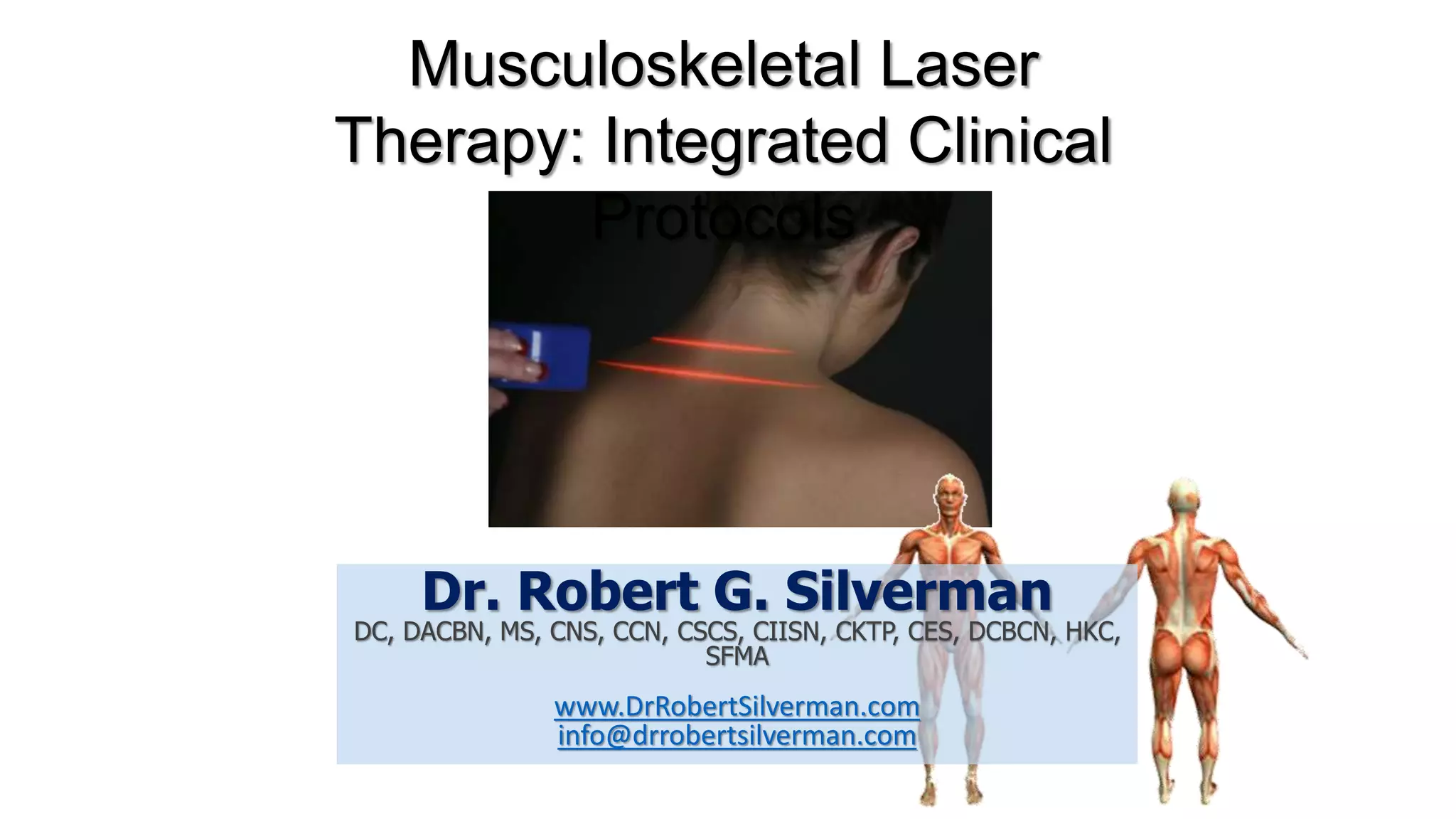
Musculoskeletal Laser
Therapy: Integrated Clinical
Protocols
Quote
“Let there be
light”.
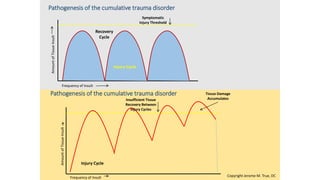
Pathogenesis of the cumulative trauma disorder
Recovery
Cycle
Injury Cycle
Frequency of Insult
AmountofTissueInsult
Symptomatic
Injury Threshold
Pathogenesis of the cumulative trauma disorder
Injury Cycle
Frequency of Insult
AmountofTissueInsult
Insufficient Tissue
Recovery Between
Injury Cycles
Tissue Damage
Accumulates
Copyright Jerome M. True, DC
Integrating Laser into Practice
“The most versatile
healthcare tool of the 21st
century”.
Dr. Rob, January 2013
“No-pill pain buster”.
Dr. Oz, January 2013
Blue Print
• Find the cause
• Explain the source
• Determine effective treatment
• Shorten treatment time
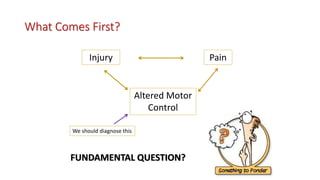
What Comes First?
Injury Pain
Altered Motor
Control
We should diagnose this
FUNDAMENTAL QUESTION?
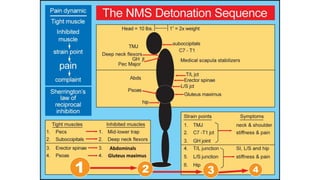
Abdominals
Gluteus maximus
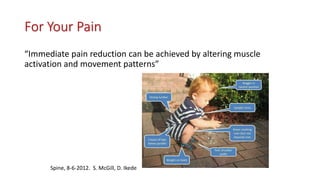
For Your Pain
“Immediate pain reduction can be achieved by altering muscle
activation and movement patterns”
Spine, 8-6-2012. S. McGill, D. Ikede
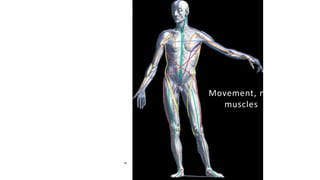
Kinetic Chain =
Functional
Anatomy
Muscles act in
synergy not in
isolation
Muscular strain is
applied along
traceable
“Myofascial Lines”
Movement, not
muscles
The Search Is On
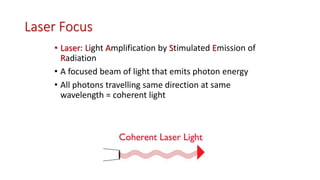
Laser Focus
• Laser: Light Amplification by Stimulated Emission of
Radiation
• A focused beam of light that emits photon energy
• All photons travelling same direction at same
wavelength = coherent light
Laser Focus
“The cell is a machine driven by energy…in every medical tradition
before ours, healing was accomplished by moving energy”.
Albert von Szent-Gyorgi, 1967
Well, the answer is best explained using the
basic principles of photochemistry
How Does it work?
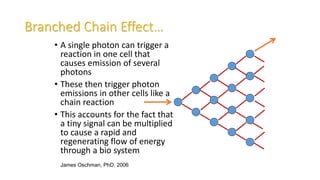
Branched Chain Effect…
• A single photon can trigger a
reaction in one cell that
causes emission of several
photons
• These then trigger photon
emissions in other cells like a
chain reaction
• This accounts for the fact that
a tiny signal can be multiplied
to cause a rapid and
regenerating flow of energy
through a bio system
James Oschman, PhD. 2006
How It Works
• LLLT stimulates cell activation processes which, in turn, intensifies
physiologic activity
• Healing is essentially a cellular process
• Light energy initiates a cascade of reactions
• From cell membrane – cytoplasm – nucleus – DNA
• Cellular amplification
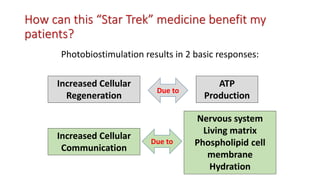
How can this “Star Trek” medicine benefit my
patients?
Photobiostimulation results in 2 basic responses:
Increased Cellular
Regeneration
Increased Cellular
Communication
ATP
Production
Nervous system
Living matrix
Phospholipid cell
membrane
Hydration
Due to
Due to
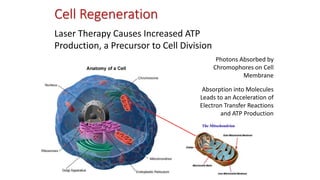
Cell Regeneration
Laser Therapy Causes Increased ATP
Production, a Precursor to Cell Division
Photons Absorbed by
Chromophores on Cell
Membrane
Absorption into Molecules
Leads to an Acceleration of
Electron Transfer Reactions
and ATP Production
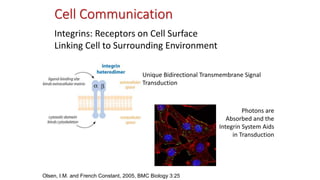
Cell Communication
Integrins: Receptors on Cell Surface
Linking Cell to Surrounding Environment
Unique Bidirectional Transmembrane Signal
Transduction
Photons are
Absorbed and the
Integrin System Aids
in Transduction
Olsen, I.M. and French Constant, 2005, BMC Biology 3:25
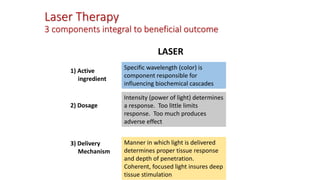
Laser Therapy
3 components integral to beneficial outcome
LASER
1) Active
ingredient
2) Dosage
3) Delivery
Mechanism
Specific wavelength (color) is
component responsible for
influencing biochemical cascades
Intensity (power of light) determines
a response. Too little limits
response. Too much produces
adverse effect
Manner in which light is delivered
determines proper tissue response
and depth of penetration.
Coherent, focused light insures deep
tissue stimulation
Wavelengths
• Expressed in terms of color. Each wavelength has different
properties:
• 635 NM is the frequency of a healthy cell
• 635 NM is the absorbable dose
• 635 NM is visible light
• 635 NM is where DNA replication occurs (photobiostimulation)
• 20 times more effective than longer wavelengths
Power and Wavelength
• LLLT accelerates tension healing, increasing fibroblast proliferation and
collagen synthesis
• LLLT effective at reducing post-injury inflammation and accelerated soft-
tissue healing
• LLLT increases ATP…stimulating DNA synthesis and cell proliferation
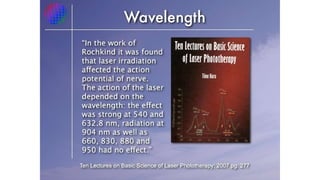
• 632.5-nm laser “produced a higher deposition of collagen, increasing the
tensile strength of completely severed and surgically repaired rat tendons
Comparative Study Using 685-nm & 830-nm Lasers in the Tissue Repair of Tenotomized Tendons in the
Mouse, Photomedicine and Laser Surgery, Dec. 2006, vol.24(6), p.754-758
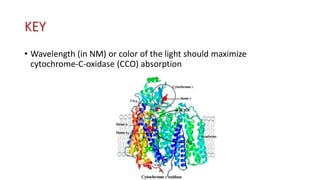
KEY
• Wavelength (in NM) or color of the light should maximize
cytochrome-C-oxidase (CCO) absorption
KEY
• CCO – terminal enzyme of the mitochondrial respiratory chain,
catalyzing the transfer of electrons from reduced cytochrome c to
molecular oxygen
• CCO may be considered to be a mitochondrial photo-acceptor
• LLT at 635nm has ability to influence mitochondrial enzyme activity, in
particular CCO, leading to mitochondrial activity and ATP synthesis
Frequency
• Frequency is the blinking quality of the red line
• Frequency (in Hz) – the number of light flashes per second. Allows for
modulation of the light which can overcome clinical plateaus in
patients
• Frequency of 30 or less is visible to the naked eye
• Over 30 – the pulse/blink is too fast to see and it appears as a
continuous line
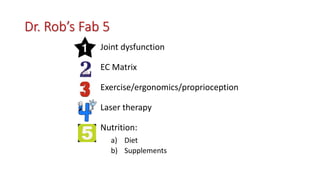
Dr. Rob’s Fab 5
Joint dysfunction
EC Matrix
Exercise/ergonomics/proprioception
Laser therapy
Nutrition:
a) Diet
b) Supplements
Laser/Pain Management
Dr. Rob’s take:
• By applying laser energy to affected areas, the frequency sensory
nerve firing is increased, which subsequently increases the frequency
of stimuli to the spinal cord, brainstem, and brain, in turn inhibiting
pain at the spinal cord and brain stem levels
Don’t you need a lot of power for the light to
penetrate?
Too much power – not low-level laser
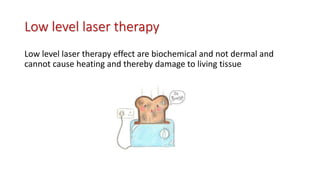
Low level laser therapy effect are biochemical and not dermal and
cannot cause heating and thereby damage to living tissue
Low level laser therapy
Arndt-Schulz Law
• “Weak stimuli excite physiological activity, moderately strong ones
favor it, strong ones retard it, and very strong ones arrest it.”
• Biomodulation
Restoring the cell back to its natural frequency
IT’S ALL
CONNECTED
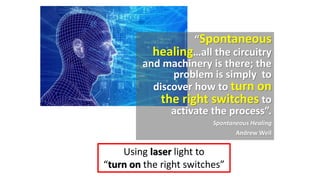
“Spontaneous
healing…all the circuitry
and machinery is there; the
problem is simply to
discover how to turn on
the right switches to
activate the process”.
Spontaneous Healing
Andrew Weil
Using laser light to
“turn on the right switches”
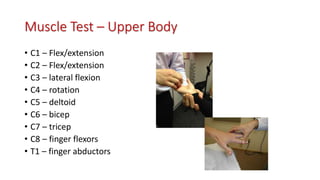
Muscle Test – Upper Body
• C1 – Flex/extension
• C2 – Flex/extension
• C3 – lateral flexion
• C4 – rotation
• C5 – deltoid
• C6 – bicep
• C7 – tricep
• C8 – finger flexors
• T1 – finger abductors
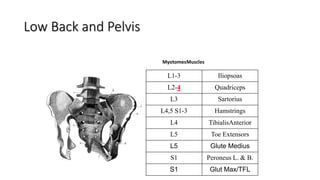
Low Back and Pelvis
MyotomesMuscles
L1-3 Iliopsoas
L2-4 Quadriceps
L3 Sartorius
L4,5 S1-3 Hamstrings
L4 TibialisAnterior
L5 Toe Extensors
L5 Glute Medius
S1 Peroneus L. & B.
S1 Glut Max/TFL
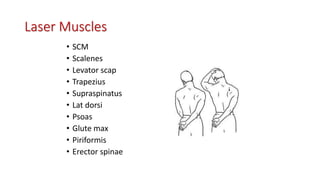
Laser Muscles
• SCM
• Scalenes
• Levator scap
• Trapezius
• Supraspinatus
• Lat dorsi
• Psoas
• Glute max
• Piriformis
• Erector spinae
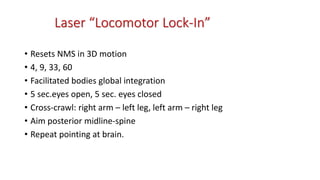
Laser “Locomotor Lock-In”
• Resets NMS in 3D motion
• 4, 9, 33, 60
• Facilitated bodies global integration
• 5 sec.eyes open, 5 sec. eyes closed
• Cross-crawl: right arm – left leg, left arm – right leg
• Aim posterior midline-spine
• Repeat pointing at brain.
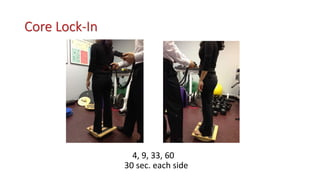
Core Lock-In
4, 9, 33, 60
30 sec. each side
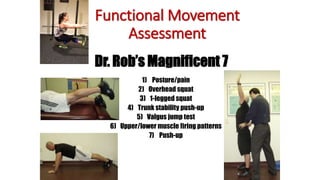
Dr. Rob’s Magnificent 7
1) Posture/pain
2) Overhead squat
3) 1-legged squat
4) Trunk stability push-up
5) Valgus jump test
6) Upper/lower muscle firing patterns
7) Push-up
Functional Movement
Assessment
Functional Movement Assessment
(FMA)
• FMA will make the invisible visible very quickly
• Movement never lies
• It tells the unique story of each individual’s history,
compensations and adaptations
• Dysfunctional movement patterns lead to:
• Poor performance
• Increased injury
• Decreased durability and pain
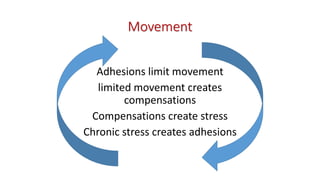
Movement
Adhesions limit movement
limited movement creates
compensations
Compensations create stress
Chronic stress creates adhesions
Key Laser therapy
Protocols for
Musculoskeletal Injuries
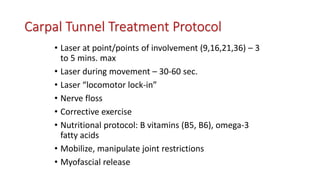
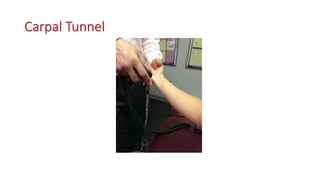
Carpal Tunnel Treatment Protocol
• Laser at point/points of involvement (9,16,21,36) – 3
to 5 mins. max
• Laser during movement – 30-60 sec.
• Laser “locomotor lock-in”
• Nerve floss
• Corrective exercise
• Nutritional protocol: B vitamins (B5, B6), omega-3
fatty acids
• Mobilize, manipulate joint restrictions
• Myofascial release
Carpal Tunnel
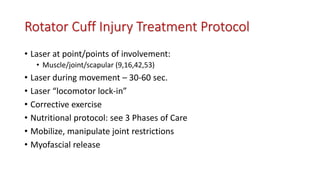
Rotator Cuff Injury Treatment Protocol
• Laser at point/points of involvement:
• Muscle/joint/scapular (9,16,42,53)
• Laser during movement – 30-60 sec.
• Laser “locomotor lock-in”
• Corrective exercise
• Nutritional protocol: see 3 Phases of Care
• Mobilize, manipulate joint restrictions
• Myofascial release
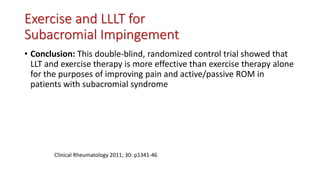
Exercise and LLLT for
Subacromial Impingement
• Conclusion: This double-blind, randomized control trial showed that
LLT and exercise therapy is more effective than exercise therapy alone
for the purposes of improving pain and active/passive ROM in
patients with subacromial syndrome
Clinical Rheumatology 2011; 30: p1341-46
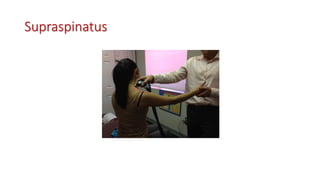
Supraspinatus
Intervertebral Disc Tx Protocol (cont’d)
• Core “lock-in”
• Nutritional protocol:
• Glucosamine chondroitin MSM complex
• Omega-3 fatty acids
• Turmeric, ginger, boswelia
• Mg/calcium
• Outer annulus – ca, mg, vit. D, boron, horsetail aerial parts, silica
• Myofascial release
• Mobilize, manipulate, flx/distraction, joint restrictions
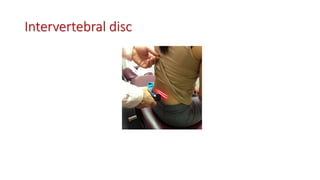
Intervertebral disc
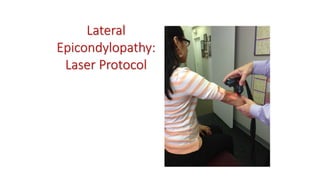
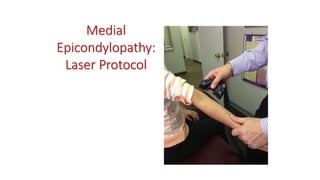
Lat/Medial Epicondylopathy Tx Protocol
• Laser at point/points of involvement: (9,16,42,53)
• Laser during movement: 30-60 sec.
• Laser “locomotor lock-in”
• Corrective exercise
• Core “lock-in”
• Nutrition protocol
• Myofascial release
• Mobilize, manipulation, joint restrictions
Lateral
Epicondylopathy:
Laser Protocol
Medial
Epicondylopathy:
Laser Protocol
Non Surgical Interventions for Rheumatoid
Arthritis
Christie et al
PT Journal December 2007
• LLLT reduces Pain and improves function!!
• Higher Quality of evidence than US, TNS, Heat,
Exercise, ES, Acupuncture.
The low-level laser therapy application improves the
healing process of the Achilles tendon of rats
Conclusion: the laser treatment is effective during the
healing process in tendons since there is more
presence of gags and collagen types I and III in tendons
submitted to low-level laser than in tendons without
treatment. With respect to the active isoform of MMP-
2, the low-level laser with a pulsed emission is more
effective than low-level laser continuous
2012 Fascial congress abstract. FR Guerra, CP, Vieira AA Aro, EP Pimentel
Effects of LLLT in the development of exercise-
induced skeletal muscle fatigue and changes
in biochemical markers related to post-
exercise recovery
Conclusion: pre-exercise irradiation of the biceps with
an LLLT dose of 6 J per application location, applied in 2
locations, increased endurance for repeated elbow
flexion against resistance and decreased post-exercise
levels of blood lactate, creatine kinase, and C-reactive
protein
J Orthop Sports Phys Ther, 2010 Aug;40(8):524-32
Low-Level Laser Therapy for Sports Injuries
Conclusion: LLLT is an effective treatment for sports injuries,
particularly jumper’s knee, tennis elbow, and Achilles tendinitis
Y. Morimoto, A. Saito, Y. Tokuhashi, Low level laser therapy for sports injuries. Laser Ther. 2013;
22(1):17-20
Getting Athletes Back in The Game: Low-Level Laser
Therapy For Sports Injuries
“Most athletes with chronic ankle sprains have a proprioceptive deficit
in that injured ankle. Proper proprioceptive exercises coupled with
laser therapy have enabled many of my athletes to avoid the
recurrence so commonly seen with the injury.”
Dr. Robert Silverman
Dynamic Chiropractic, Aug. 1, 2014
Low level laser therapy (LLLT) in the
management of neck pain
Conclusion: LLLT reduces pain immediately after
treatment in acute neck pain and up to 22 weeks after
completion of treatment in patients with chronic neck
pain
Lancet, Nov. 13, 2009
LLLT Effectiveness
• The International Association for the study of pain found “strong
evidence” for LLLT on myofascial pain syndrome
A meta-analysis of the efficacy of laser
phototherapy on pain relief
Conclusion: These findings warrant the conclusion that
laser phototherapy effectively relieves pain of various
etiologies; making it a valuable addition to
contemporary pain management
Fulop AM, Dhimmer S., et al. Clin J Pain. 2010 Oct; 26(8):729-36
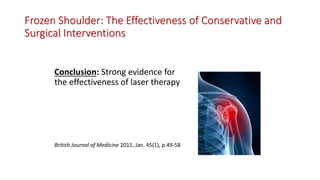
Frozen Shoulder: The Effectiveness of Conservative and
Surgical Interventions
Conclusion: Strong evidence for
the effectiveness of laser therapy
British Journal of Medicine 2011, Jan. 45(1), p.49-58
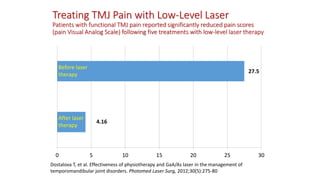
Treating TMJ Pain with Low-Level Laser
Patients with functional TMJ pain reported significantly reduced pain scores
(pain Visual Analog Scale) following five treatments with low-level laser therapy
0 5 10 15 20 25 30
Before laser
therapy
After laser
therapy
27.5
4.16
Dostalova T, et al. Effectiveness of physiotherapy and GaA/As laser in the management of
temporomandibular joint disorders. Photomed Laser Surg, 2012;30(5):275-80
Low-level light stirs in vivo stem cells to
regenerate tissue
• Researches have demonstrated for the first time that non-invasive,
low-power light therapy can prompt stem cells inside the body to
reconstruct tissue
• Research promises a broad range of clinical applications in wound
healing and bone growth
• Led by Dr. David Mooney of Harvard University – the team used a
low-power laser to trigger human dental stem cell to form dentin
(hard tissue that is similar to bone and makes up bulk of teeth)
P.R. Arany, Sci. Trans Med 6, 238 (2014)
Low-level light stirs in vivo stem cells to
regenerate tissue (cont’d)
• They outlined the precise molecular mechanism involved and
demonstrated its abilities using multiple laboratory and animal
models
P.R. Arany, Sci. Trans Med 6, 238 (2014)
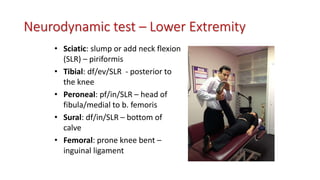
Neurodynamic test – Lower Extremity
• Sciatic: slump or add neck flexion
(SLR) – piriformis
• Tibial: df/ev/SLR - posterior to
the knee
• Peroneal: pf/in/SLR – head of
fibula/medial to b. femoris
• Sural: df/in/SLR – bottom of
calve
• Femoral: prone knee bent –
inguinal ligament
Laser Nerves
• Brachial plexus – scalenes
• Median – pronator teres, flexor retinaculum
• Ulnar – olecranon and medial epicondyle
• Radial – triangular space between T minor, LH triceps and humerus
• Sciatic – piriformis muscle
• Femoral – psoas
• Tibial – posterior to knee
• Peroneal – medial biceps femoris/head of fibula
• Sural – calve region
• Tarsal tunnel –at tunnel
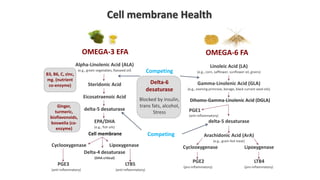
Cell membrane Health
Alpha-Linolenic Acid (ALA)
(e.g., green vegetables, flaxseed oil)
Steridonic Acid
Eicosatraenoic Acid
delta-5 desaturase
EPA/DHA
(e.g., fish oils)
Cyclooxygenase Lipoxygenase
Delta-4 desaturase
(DHA critical)
PGE3 LTB5
(anti-inflammatory) (anti-inflammatory)
Linoleic Acid (LA)
(e.g., corn, safflower, sunflower oil, grains)
Gamma-Linolenic Acid (GLA)
(e.g., evening primrose, borage, black currant seed oils)
Dihomo-Gamma-Linolenic Acid (DGLA)
delta-5 desaturase
Arachidonic Acid (ArA)
(e.g., grain-fed meat)
Cyclooxygenase Lipoxygenase
PGE2 LTB4
(pro-inflammatory) (pro-inflammatory)
Competing
Delta-6
desaturase
Blocked by insulin,
trans fats, alcohol,
Stress
OMEGA-3 EFA
PGE1
(anti-inflammatory)
OMEGA-6 FA
Competing
B3, B6, C, zinc,
mg. (nutrient
co-enzyme)
Ginger,
turmeric,
bioflavonoids,
boswelia (co-
enzyme)
Cell membrane
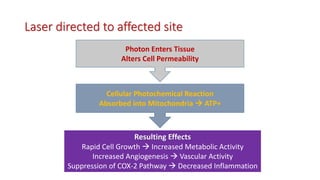
Laser directed to affected site
Photon Enters Tissue
Alters Cell Permeability
Cellular Photochemical Reaction
Absorbed into Mitochondria  ATP+
Resulting Effects
Rapid Cell Growth  Increased Metabolic Activity
Increased Angiogenesis  Vascular Activity
Suppression of COX-2 Pathway  Decreased Inflammation
Simple strategies first!
Choosing Your Next Laser
• Regulating considerations – FDA-cleared
• Therapeutic factor – laser light parameters:
• Dose and frequency
• Wavelength
• Power
• Modulation (pulsing) of light
• Non-therapeutic factors:
• Portability
• Size and weight
• Corded or cordless operation
What does the low-level laser do
• Laser therapy – stimulates both the nervous system
and site of tissue injury
• Clinically proven to:
• suppress inflammation
• Increase oxygen and blood flow
• Promote muscle calcium update
• Increase neurotransmitter release
• Key – by addressing the injury with a diverse tool it is
possible to resolve the condition more effectively by
suppressing not one but all contributors
Dr. Rob’s Sexy Six
1) Laser delivers light energy
2) Lasers can stimulate cell activity
3) Laser is classified based on its power supply
4) Wavelength (color) is the length of the wave of the light energy
5) The kind of tissues treated depends on wavelength and power
supply
6) Laser companies do not always agree
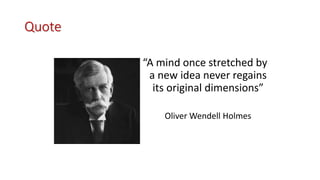
Quote
“A mind once stretched by
a new idea never regains
its original dimensions”
Oliver Wendell Holmes
Q & A

Musculoskeletal Laser Therapy: Integrated Clinical Protocols

  • 1.
    Dr. Robert G.Silverman DC, DACBN, MS, CNS, CCN, CSCS, CIISN, CKTP, CES, DCBCN, HKC, SFMA www.DrRobertSilverman.com info@drrobertsilverman.com Musculoskeletal Laser Therapy: Integrated Clinical Protocols
  • 2.
  • 3.
    Pathogenesis of thecumulative trauma disorder Recovery Cycle Injury Cycle Frequency of Insult AmountofTissueInsult Symptomatic Injury Threshold Pathogenesis of the cumulative trauma disorder Injury Cycle Frequency of Insult AmountofTissueInsult Insufficient Tissue Recovery Between Injury Cycles Tissue Damage Accumulates Copyright Jerome M. True, DC
  • 4.
    Integrating Laser intoPractice “The most versatile healthcare tool of the 21st century”. Dr. Rob, January 2013 “No-pill pain buster”. Dr. Oz, January 2013
  • 5.
    Blue Print • Findthe cause • Explain the source • Determine effective treatment • Shorten treatment time
  • 6.
    What Comes First? InjuryPain Altered Motor Control We should diagnose this FUNDAMENTAL QUESTION?
  • 7.
  • 8.
    For Your Pain “Immediatepain reduction can be achieved by altering muscle activation and movement patterns” Spine, 8-6-2012. S. McGill, D. Ikede
  • 9.
    Kinetic Chain = Functional Anatomy Musclesact in synergy not in isolation Muscular strain is applied along traceable “Myofascial Lines” Movement, not muscles
  • 10.
  • 11.
    Laser Focus • Laser:Light Amplification by Stimulated Emission of Radiation • A focused beam of light that emits photon energy • All photons travelling same direction at same wavelength = coherent light
  • 12.
    Laser Focus “The cellis a machine driven by energy…in every medical tradition before ours, healing was accomplished by moving energy”. Albert von Szent-Gyorgi, 1967
  • 13.
    Well, the answeris best explained using the basic principles of photochemistry How Does it work?
  • 14.
    Branched Chain Effect… •A single photon can trigger a reaction in one cell that causes emission of several photons • These then trigger photon emissions in other cells like a chain reaction • This accounts for the fact that a tiny signal can be multiplied to cause a rapid and regenerating flow of energy through a bio system James Oschman, PhD. 2006
  • 15.
    How It Works •LLLT stimulates cell activation processes which, in turn, intensifies physiologic activity • Healing is essentially a cellular process • Light energy initiates a cascade of reactions • From cell membrane – cytoplasm – nucleus – DNA • Cellular amplification
  • 16.
    How can this“Star Trek” medicine benefit my patients? Photobiostimulation results in 2 basic responses: Increased Cellular Regeneration Increased Cellular Communication ATP Production Nervous system Living matrix Phospholipid cell membrane Hydration Due to Due to
  • 17.
    Cell Regeneration Laser TherapyCauses Increased ATP Production, a Precursor to Cell Division Photons Absorbed by Chromophores on Cell Membrane Absorption into Molecules Leads to an Acceleration of Electron Transfer Reactions and ATP Production
  • 18.
    Cell Communication Integrins: Receptorson Cell Surface Linking Cell to Surrounding Environment Unique Bidirectional Transmembrane Signal Transduction Photons are Absorbed and the Integrin System Aids in Transduction Olsen, I.M. and French Constant, 2005, BMC Biology 3:25
  • 19.
    Laser Therapy 3 componentsintegral to beneficial outcome LASER 1) Active ingredient 2) Dosage 3) Delivery Mechanism Specific wavelength (color) is component responsible for influencing biochemical cascades Intensity (power of light) determines a response. Too little limits response. Too much produces adverse effect Manner in which light is delivered determines proper tissue response and depth of penetration. Coherent, focused light insures deep tissue stimulation
  • 20.
    Wavelengths • Expressed interms of color. Each wavelength has different properties: • 635 NM is the frequency of a healthy cell • 635 NM is the absorbable dose • 635 NM is visible light • 635 NM is where DNA replication occurs (photobiostimulation) • 20 times more effective than longer wavelengths
  • 21.
    Power and Wavelength •LLLT accelerates tension healing, increasing fibroblast proliferation and collagen synthesis • LLLT effective at reducing post-injury inflammation and accelerated soft- tissue healing • LLLT increases ATP…stimulating DNA synthesis and cell proliferation • 632.5-nm laser “produced a higher deposition of collagen, increasing the tensile strength of completely severed and surgically repaired rat tendons Comparative Study Using 685-nm & 830-nm Lasers in the Tissue Repair of Tenotomized Tendons in the Mouse, Photomedicine and Laser Surgery, Dec. 2006, vol.24(6), p.754-758
  • 22.
    KEY • Wavelength (inNM) or color of the light should maximize cytochrome-C-oxidase (CCO) absorption
  • 23.
    KEY • CCO –terminal enzyme of the mitochondrial respiratory chain, catalyzing the transfer of electrons from reduced cytochrome c to molecular oxygen • CCO may be considered to be a mitochondrial photo-acceptor • LLT at 635nm has ability to influence mitochondrial enzyme activity, in particular CCO, leading to mitochondrial activity and ATP synthesis
  • 24.
    Frequency • Frequency isthe blinking quality of the red line • Frequency (in Hz) – the number of light flashes per second. Allows for modulation of the light which can overcome clinical plateaus in patients • Frequency of 30 or less is visible to the naked eye • Over 30 – the pulse/blink is too fast to see and it appears as a continuous line
  • 25.
    Dr. Rob’s Fab5 Joint dysfunction EC Matrix Exercise/ergonomics/proprioception Laser therapy Nutrition: a) Diet b) Supplements
  • 26.
    Laser/Pain Management Dr. Rob’stake: • By applying laser energy to affected areas, the frequency sensory nerve firing is increased, which subsequently increases the frequency of stimuli to the spinal cord, brainstem, and brain, in turn inhibiting pain at the spinal cord and brain stem levels
  • 27.
    Don’t you needa lot of power for the light to penetrate? Too much power – not low-level laser
  • 28.
    Low level lasertherapy effect are biochemical and not dermal and cannot cause heating and thereby damage to living tissue Low level laser therapy
  • 29.
    Arndt-Schulz Law • “Weakstimuli excite physiological activity, moderately strong ones favor it, strong ones retard it, and very strong ones arrest it.” • Biomodulation Restoring the cell back to its natural frequency
  • 30.
  • 31.
    “Spontaneous healing…all the circuitry andmachinery is there; the problem is simply to discover how to turn on the right switches to activate the process”. Spontaneous Healing Andrew Weil Using laser light to “turn on the right switches”
  • 32.
    Muscle Test –Upper Body • C1 – Flex/extension • C2 – Flex/extension • C3 – lateral flexion • C4 – rotation • C5 – deltoid • C6 – bicep • C7 – tricep • C8 – finger flexors • T1 – finger abductors
  • 33.
    Low Back andPelvis MyotomesMuscles L1-3 Iliopsoas L2-4 Quadriceps L3 Sartorius L4,5 S1-3 Hamstrings L4 TibialisAnterior L5 Toe Extensors L5 Glute Medius S1 Peroneus L. & B. S1 Glut Max/TFL
  • 34.
    Laser Muscles • SCM •Scalenes • Levator scap • Trapezius • Supraspinatus • Lat dorsi • Psoas • Glute max • Piriformis • Erector spinae
  • 35.
    Laser “Locomotor Lock-In” •Resets NMS in 3D motion • 4, 9, 33, 60 • Facilitated bodies global integration • 5 sec.eyes open, 5 sec. eyes closed • Cross-crawl: right arm – left leg, left arm – right leg • Aim posterior midline-spine • Repeat pointing at brain.
  • 36.
    Core Lock-In 4, 9,33, 60 30 sec. each side
  • 37.
    Dr. Rob’s Magnificent7 1) Posture/pain 2) Overhead squat 3) 1-legged squat 4) Trunk stability push-up 5) Valgus jump test 6) Upper/lower muscle firing patterns 7) Push-up Functional Movement Assessment
  • 38.
    Functional Movement Assessment (FMA) •FMA will make the invisible visible very quickly • Movement never lies • It tells the unique story of each individual’s history, compensations and adaptations • Dysfunctional movement patterns lead to: • Poor performance • Increased injury • Decreased durability and pain
  • 39.
    Movement Adhesions limit movement limitedmovement creates compensations Compensations create stress Chronic stress creates adhesions
  • 40.
    Key Laser therapy Protocolsfor Musculoskeletal Injuries
  • 41.
    Carpal Tunnel TreatmentProtocol • Laser at point/points of involvement (9,16,21,36) – 3 to 5 mins. max • Laser during movement – 30-60 sec. • Laser “locomotor lock-in” • Nerve floss • Corrective exercise • Nutritional protocol: B vitamins (B5, B6), omega-3 fatty acids • Mobilize, manipulate joint restrictions • Myofascial release
  • 42.
  • 43.
    Rotator Cuff InjuryTreatment Protocol • Laser at point/points of involvement: • Muscle/joint/scapular (9,16,42,53) • Laser during movement – 30-60 sec. • Laser “locomotor lock-in” • Corrective exercise • Nutritional protocol: see 3 Phases of Care • Mobilize, manipulate joint restrictions • Myofascial release
  • 44.
    Exercise and LLLTfor Subacromial Impingement • Conclusion: This double-blind, randomized control trial showed that LLT and exercise therapy is more effective than exercise therapy alone for the purposes of improving pain and active/passive ROM in patients with subacromial syndrome Clinical Rheumatology 2011; 30: p1341-46
  • 45.
  • 46.
    Intervertebral Disc TxProtocol (cont’d) • Core “lock-in” • Nutritional protocol: • Glucosamine chondroitin MSM complex • Omega-3 fatty acids • Turmeric, ginger, boswelia • Mg/calcium • Outer annulus – ca, mg, vit. D, boron, horsetail aerial parts, silica • Myofascial release • Mobilize, manipulate, flx/distraction, joint restrictions
  • 47.
  • 48.
    Lat/Medial Epicondylopathy TxProtocol • Laser at point/points of involvement: (9,16,42,53) • Laser during movement: 30-60 sec. • Laser “locomotor lock-in” • Corrective exercise • Core “lock-in” • Nutrition protocol • Myofascial release • Mobilize, manipulation, joint restrictions
  • 49.
  • 50.
  • 51.
    Non Surgical Interventionsfor Rheumatoid Arthritis Christie et al PT Journal December 2007 • LLLT reduces Pain and improves function!! • Higher Quality of evidence than US, TNS, Heat, Exercise, ES, Acupuncture.
  • 52.
    The low-level lasertherapy application improves the healing process of the Achilles tendon of rats Conclusion: the laser treatment is effective during the healing process in tendons since there is more presence of gags and collagen types I and III in tendons submitted to low-level laser than in tendons without treatment. With respect to the active isoform of MMP- 2, the low-level laser with a pulsed emission is more effective than low-level laser continuous 2012 Fascial congress abstract. FR Guerra, CP, Vieira AA Aro, EP Pimentel
  • 53.
    Effects of LLLTin the development of exercise- induced skeletal muscle fatigue and changes in biochemical markers related to post- exercise recovery Conclusion: pre-exercise irradiation of the biceps with an LLLT dose of 6 J per application location, applied in 2 locations, increased endurance for repeated elbow flexion against resistance and decreased post-exercise levels of blood lactate, creatine kinase, and C-reactive protein J Orthop Sports Phys Ther, 2010 Aug;40(8):524-32
  • 54.
    Low-Level Laser Therapyfor Sports Injuries Conclusion: LLLT is an effective treatment for sports injuries, particularly jumper’s knee, tennis elbow, and Achilles tendinitis Y. Morimoto, A. Saito, Y. Tokuhashi, Low level laser therapy for sports injuries. Laser Ther. 2013; 22(1):17-20
  • 55.
    Getting Athletes Backin The Game: Low-Level Laser Therapy For Sports Injuries “Most athletes with chronic ankle sprains have a proprioceptive deficit in that injured ankle. Proper proprioceptive exercises coupled with laser therapy have enabled many of my athletes to avoid the recurrence so commonly seen with the injury.” Dr. Robert Silverman Dynamic Chiropractic, Aug. 1, 2014
  • 56.
    Low level lasertherapy (LLLT) in the management of neck pain Conclusion: LLLT reduces pain immediately after treatment in acute neck pain and up to 22 weeks after completion of treatment in patients with chronic neck pain Lancet, Nov. 13, 2009
  • 57.
    LLLT Effectiveness • TheInternational Association for the study of pain found “strong evidence” for LLLT on myofascial pain syndrome
  • 58.
    A meta-analysis ofthe efficacy of laser phototherapy on pain relief Conclusion: These findings warrant the conclusion that laser phototherapy effectively relieves pain of various etiologies; making it a valuable addition to contemporary pain management Fulop AM, Dhimmer S., et al. Clin J Pain. 2010 Oct; 26(8):729-36
  • 59.
    Frozen Shoulder: TheEffectiveness of Conservative and Surgical Interventions Conclusion: Strong evidence for the effectiveness of laser therapy British Journal of Medicine 2011, Jan. 45(1), p.49-58
  • 60.
    Treating TMJ Painwith Low-Level Laser Patients with functional TMJ pain reported significantly reduced pain scores (pain Visual Analog Scale) following five treatments with low-level laser therapy 0 5 10 15 20 25 30 Before laser therapy After laser therapy 27.5 4.16 Dostalova T, et al. Effectiveness of physiotherapy and GaA/As laser in the management of temporomandibular joint disorders. Photomed Laser Surg, 2012;30(5):275-80
  • 61.
    Low-level light stirsin vivo stem cells to regenerate tissue • Researches have demonstrated for the first time that non-invasive, low-power light therapy can prompt stem cells inside the body to reconstruct tissue • Research promises a broad range of clinical applications in wound healing and bone growth • Led by Dr. David Mooney of Harvard University – the team used a low-power laser to trigger human dental stem cell to form dentin (hard tissue that is similar to bone and makes up bulk of teeth) P.R. Arany, Sci. Trans Med 6, 238 (2014)
  • 62.
    Low-level light stirsin vivo stem cells to regenerate tissue (cont’d) • They outlined the precise molecular mechanism involved and demonstrated its abilities using multiple laboratory and animal models P.R. Arany, Sci. Trans Med 6, 238 (2014)
  • 63.
    Neurodynamic test –Lower Extremity • Sciatic: slump or add neck flexion (SLR) – piriformis • Tibial: df/ev/SLR - posterior to the knee • Peroneal: pf/in/SLR – head of fibula/medial to b. femoris • Sural: df/in/SLR – bottom of calve • Femoral: prone knee bent – inguinal ligament
  • 64.
    Laser Nerves • Brachialplexus – scalenes • Median – pronator teres, flexor retinaculum • Ulnar – olecranon and medial epicondyle • Radial – triangular space between T minor, LH triceps and humerus • Sciatic – piriformis muscle • Femoral – psoas • Tibial – posterior to knee • Peroneal – medial biceps femoris/head of fibula • Sural – calve region • Tarsal tunnel –at tunnel
  • 66.
    Cell membrane Health Alpha-LinolenicAcid (ALA) (e.g., green vegetables, flaxseed oil) Steridonic Acid Eicosatraenoic Acid delta-5 desaturase EPA/DHA (e.g., fish oils) Cyclooxygenase Lipoxygenase Delta-4 desaturase (DHA critical) PGE3 LTB5 (anti-inflammatory) (anti-inflammatory) Linoleic Acid (LA) (e.g., corn, safflower, sunflower oil, grains) Gamma-Linolenic Acid (GLA) (e.g., evening primrose, borage, black currant seed oils) Dihomo-Gamma-Linolenic Acid (DGLA) delta-5 desaturase Arachidonic Acid (ArA) (e.g., grain-fed meat) Cyclooxygenase Lipoxygenase PGE2 LTB4 (pro-inflammatory) (pro-inflammatory) Competing Delta-6 desaturase Blocked by insulin, trans fats, alcohol, Stress OMEGA-3 EFA PGE1 (anti-inflammatory) OMEGA-6 FA Competing B3, B6, C, zinc, mg. (nutrient co-enzyme) Ginger, turmeric, bioflavonoids, boswelia (co- enzyme) Cell membrane
  • 67.
    Laser directed toaffected site Photon Enters Tissue Alters Cell Permeability Cellular Photochemical Reaction Absorbed into Mitochondria  ATP+ Resulting Effects Rapid Cell Growth  Increased Metabolic Activity Increased Angiogenesis  Vascular Activity Suppression of COX-2 Pathway  Decreased Inflammation
  • 68.
  • 69.
    Choosing Your NextLaser • Regulating considerations – FDA-cleared • Therapeutic factor – laser light parameters: • Dose and frequency • Wavelength • Power • Modulation (pulsing) of light • Non-therapeutic factors: • Portability • Size and weight • Corded or cordless operation
  • 70.
    What does thelow-level laser do • Laser therapy – stimulates both the nervous system and site of tissue injury • Clinically proven to: • suppress inflammation • Increase oxygen and blood flow • Promote muscle calcium update • Increase neurotransmitter release • Key – by addressing the injury with a diverse tool it is possible to resolve the condition more effectively by suppressing not one but all contributors
  • 71.
    Dr. Rob’s SexySix 1) Laser delivers light energy 2) Lasers can stimulate cell activity 3) Laser is classified based on its power supply 4) Wavelength (color) is the length of the wave of the light energy 5) The kind of tissues treated depends on wavelength and power supply 6) Laser companies do not always agree
  • 72.
    Quote “A mind oncestretched by a new idea never regains its original dimensions” Oliver Wendell Holmes
  • 73.