APPROACH TO PLASMA CELL DISORDERS WITH
SPECIAL REFERENCE TO MANAGEMENT
 Moderator-Dr J Umbon
 Associate professor of medicine,JMCH
 Dr N J Bez
 Assistant professor of medicine,JMCH
 Presenter- Dr Mamadul Islam
 2nd
Year PGT,Medicine,JMCH
HISTORY
 The most commonly recognized case is that of Thomas Alexander
McBean, a highly respectable tradesman from London in 1850.
 Mr. McBean excreted a large amount of protein in urine that was
described by Henry Bence Jones in the middle of the 19th century.
INTRODUCTION
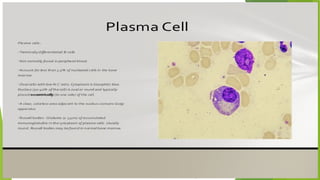
 The plasma cell disorders are monoclonal neoplasms related to each
other by virtue of their development from common progenitors in the B
lymphocyte lineage.
 Multiple Myeloma
 Waldenstrom’s Macroglobulinemia
 Primary Amyloidosis
 Heavy chain disease, comprises this group.
Designated by a variety of synonyms such as monoclonal gammopathies,
paraproteinemias, plasma cell dyscrasias, and dysproteinemias
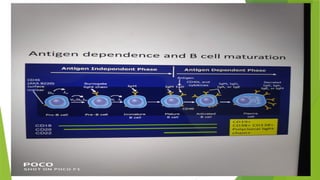
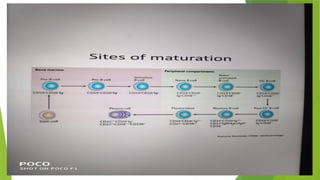
 Mature B lymphocytes destined to produce IgG bear surface immunoglobulin
molecules of both M and G heavy chain isotypes.
 Under normal circumstances, maturation to antibody-secreting plasma cells
is stimulated by exposure to the antigen for which the surface
immunoglobulin is specific; however, in the plasma cell disorders the control
over this process is lost.
 The clinical manifestations of all the plasma cell disorders relate to the
expansion of the neoplastic cells,to the secretion of cell
products(immunoglobulin,lymphokines) and some extent to the host’s
response to the tumour.
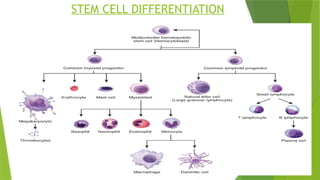
STEM CELL DIFFERENTIATION
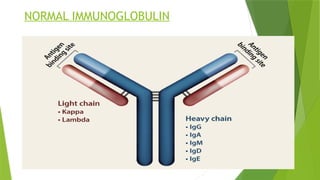
NORMAL IMMUNOGLOBULIN
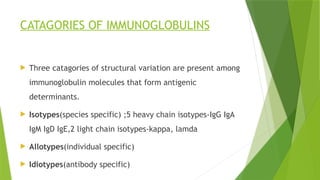
CATAGORIES OF IMMUNOGLOBULINS
 Three catagories of structural variation are present among
immunoglobulin molecules that form antigenic
determinants.
 Isotypes(species specific) ;5 heavy chain isotypes-IgG IgA
IgM IgD IgE,2 light chain isotypes-kappa, lamda
 Allotypes(individual specific)
 Idiotypes(antibody specific)
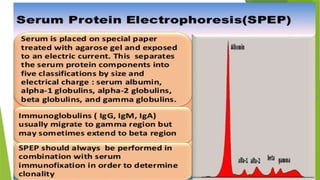
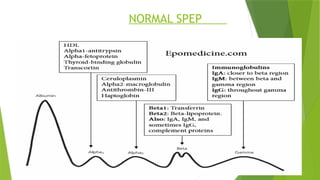
NORMAL SPEP
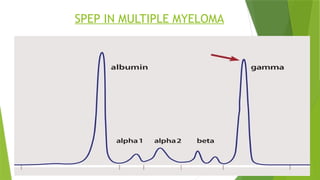
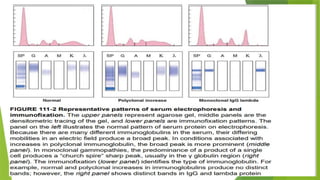
SPEP IN MULTIPLE MYELOMA
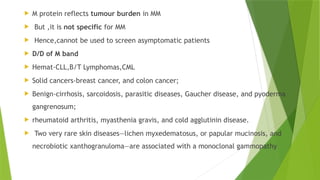
 M protein reflects tumour burden in MM
 But ,it is not specific for MM
 Hence,cannot be used to screen asymptomatic patients
 D/D of M band
 Hemat-CLL,B/T Lymphomas,CML
 Solid cancers-breast cancer, and colon cancer;
 Benign-cirrhosis, sarcoidosis, parasitic diseases, Gaucher disease, and pyoderma
gangrenosum;
 rheumatoid arthritis, myasthenia gravis, and cold agglutinin disease.
 Two very rare skin diseases—lichen myxedematosus, or papular mucinosis, and
necrobiotic xanthogranuloma—are associated with a monoclonal gammopathy
MULTIPLE MYELOMA
 Multiple myeloma represents a malignant proliferation of
plasma cells derived from a single clone.
 The tumor, its products, and the host response to it result in
a number of organ dysfunctions and symptoms of bone
pain or fracture, renal failure, susceptibility to infection,
anemia, hypercalcemia, and occasionally clotting
abnormalities, neurologic symptoms, and manifestations of
hyperviscosity.
Epidemiology
 Accounts for 1% of all cancers
 Median age of presentation 70 years
 Males>females
 Blacks>white
Risk factors
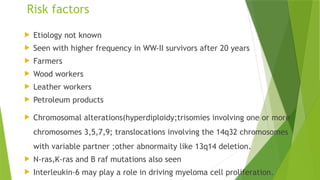
 Etiology not known
 Seen with higher frequency in WW-II survivors after 20 years
 Farmers
 Wood workers
 Leather workers
 Petroleum products
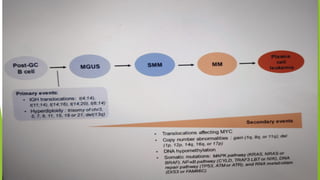
 Chromosomal alterations(hyperdiploidy;trisomies involving one or more
chromosomes 3,5,7,9; translocations involving the 14q32 chromosomes
with variable partner ;other abnormaity like 13q14 deletion.
 N-ras,K-ras and B raf mutations also seen
 Interleukin-6 may play a role in driving myeloma cell proliferation.
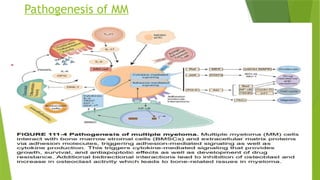
Pathogenesis of MM
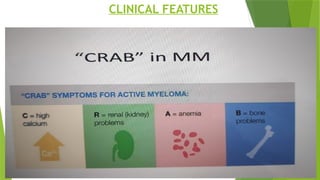
CLINICAL FEATURES
 Hypercalcemia due to increased osteoclastic activity and decreased
osteoblastic activity
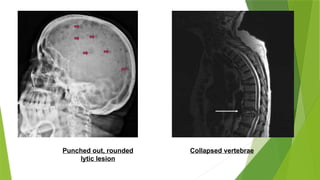
 Lytic lesions(0.5cm bone destruction)
 Bone pain is the most common symptom,mainly involves the axial
skeleton and induced by movement
 No osteoblastic new bone formation,hence bone scan is less useful
than plain x ray.
Punched out, rounded
lytic lesion
Collapsed vertebrae
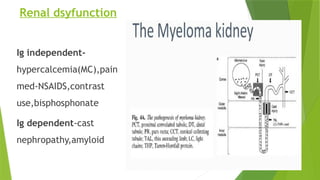
Renal dsyfunction
Ig independent-
hypercalcemia(MC),pain
med-NSAIDS,contrast
use,bisphosphonate
Ig dependent-cast
nephropathy,amyloid
Haematological and MM
 Anaemia is normocytic normochromic
 Replacement of normal hematopoiesis by Myeloma cells
 Relative EPO deficiency
 Dilution(in case of large M protein)
MM and infections
 Susceptible to bacterial infections
 Sites- lung(strep pneumoniae,stap aureus),UTI( E.coli)
 Due to-Hypogammaglobulinemia,complement dysfunction and
treatment by Dexa and Bortezomib.
 Others manifestations of MM-
Bleeding,Cryoglobulinemia,Hyperviscosity
symptoms(headache,somnolence,blurring of vision,vertigo,tinnitus)
Diagnosis
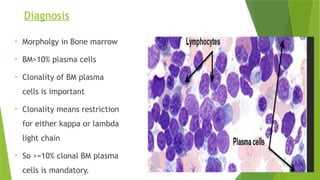
• Morpholgy in Bone marrow
• BM>10% plasma cells
• Clonality of BM plasma
cells is important
• Clonality means restriction
for either kappa or lambda
light chain
• So >=10% clonal BM plasma
cells is mandatory.
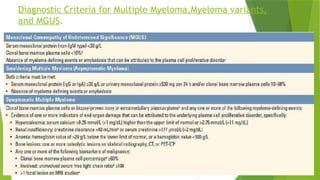
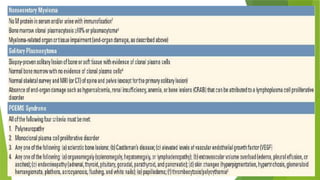
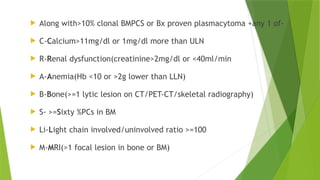
Diagnostic Criteria for Multiple Myeloma,Myeloma variants,
and MGUS.
 Along with>10% clonal BMPCS or Bx proven plasmacytoma +any 1 of-
 C-Calcium>11mg/dl or 1mg/dl more than ULN
 R-Renal dysfunction(creatinine>2mg/dl or <40ml/min
 A-Anemia(Hb <10 or >2g lower than LLN)
 B-Bone(>=1 lytic lesion on CT/PET-CT/skeletal radiography)
 S- >=Sixty %PCs in BM
 Li-Light chain involved/uninvolved ratio >=100
 M-MRI(>1 focal lesion in bone or BM)
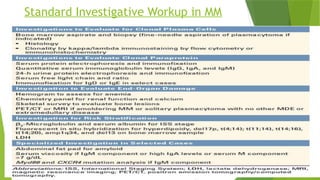
Standard Investigative Workup in MM
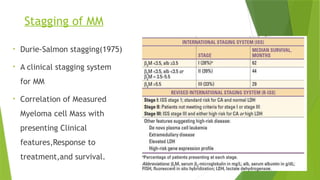
Stagging of MM
• Durie-Salmon stagging(1975)
• A clinical stagging system
for MM
• Correlation of Measured
Myeloma cell Mass with
presenting Clinical
features,Response to
treatment,and survival.
TREATMENT
 No specific intervention is indicated for patients with MGUS
 Follow-up once a year except in higher- risk MGUS,where serum protein
electrophoresis,CBC,creatinine and calcium should be repeated every 6 monthly.
 A patients with MGUS and severe polyneuropathy is considered for therapeutic
intervention if a causal relationship can be assumed,in the absence of other causes
for polyneuropathy.
 Plasmapheresis and occasionally rituximab in patients with IgM MGUS or Myeloma-
like therapy in those with IgG or IgA disease.
 For patients with SMM,no specific treatment required,although early
intervention with lenalidomide and dexamethasone may prevent
progression from high-risk SMM to active MM.
 At present,patients with SMM only require antitumor therapy when
myeloma-defining events are identified.
 Solitary bone plasmacytomas and extramedullary plasmacytomas require
local radiation therapy at a dose of ~40 Gy.
 If occult marrow involvement,this should be treated by systemic therapy
and they respond well.
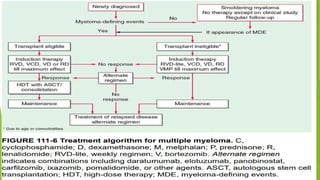
SYMPTOMATIC MM
 Principle of treatment:
 Systemic therapy-to control myeloma
 Supportive care- to control symptoms of the
disease,its complications,and adverse effects of
therapy.
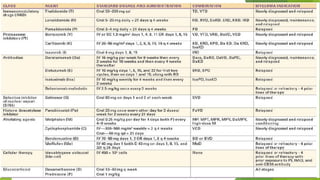
 Induction( 3 drug regimen)
 Consolidation(Transplant-ASCT)
 Maintenance(single drug-Either bortezomib or lenalidomide)
 For induction therapy-Three agents approved ,an
immunomodulatory agents,proteasome inhibitors,and targeted
antibodies.When combined with dexamethasone achieved better
response.
 The combination of Lenalidomide with a proteasome
inhibitor(bortezomib or carfilzomib) and dexamethasone achieves
close to a 100% response rate and a >30% complete response
rate,making this combination one of the preffered induction
regimens in transplant-eligible patients.
 Addition of a fourth agent,daratumumab,an anti-CD38 antibody,is providing even
deeper responses.
 Usually between four and six cycles of these combination regimens are utilized to
achieve initial deep cytoreduction before consideration of high-dose therapy with
autologous stem cell transplantation.
 In transplant ineligible patients due to physiologic age>70 years,significant
cardiopulmonary problems,or other comorbid illness,Modified lenalidomide-
bortezomib-dexamethasone(RVD lite) combination achieves high overall response
rate.
 Intermittent pulses of melphalan,an alkylating agent,with prednisone(MP) are
combined with novel agents to achieve superior response and survival outcomes.
HIGH-DOSE THERAPY WITH AUTOLOGOUS STEM CELL
TRANSPLANTATION
 High-dose therapy(HDT) and consolidation/maintenance are standard practice in
the majority of eligible patients.
 In patients who are transplant candidates,alkylating agents such as melphalan should
be avoided because they damage the stem cell and compromise the ability to
collect stem cells.
 Similarly,in patients receiving lenalidomide,stem cell should be collected within 6
months because the continued use of lenalidomide may compromise the ability to
collect adequate numbers of stem cells.
 Although two successive HDTs(tandem transplantations) are more effective than
single HTD,benefit is observed in patients who do not achieve a complete or very
good partial response to the first transplantation.
RELAPSED DISEASE
 Relapsed myeloma can be treated with a number of agents including
lenalidomide and/or bortezomib,if previously not used.
 The second-generation proteasome inhibitor carfilzomib and
immunomodulatory agent pomalidomide have shown efficacy in relapsed
and refractory MM,even MM refractory to lenalidomide and bortezomib.
 An oral proteasome inhibitor,ixazomib,has also been approved in
combination with lenalidomide and dexamethasone as an all-oral
regimen for relapsed MM.
THERAPY ENDPOINT
 Improvement in the serum M component may lag behind the symptomatic
improvement due to longer serum half-life(~3weeks) of immunoglobulin.
 Serum and urine light chains with a functional half-life of ~6 h may fall within
the first week of treatment.
 Achieving CR, defined as disappearance of serum and urine monoclonal
protein with normal bone marrow by light microscopy,has been a standard
goal of therapy.
 The median overall survival of patients with myeloma is 8+ years,with subsets
of younger patients surviving >10 years.
SUPPORTIVE THERAPY
 Aciclovir prophylaxis- on Bortezomib
 DVT prophylaxis(Aspirin)-on Lenalidomide
 PCP prophylaxis- on Dexamethasone
 Bortezomib s c and weekly use decrease the risk of neuropathy.
 Patients receiving anti-BCMA CAR-T cell therapy may need supplementation
with intravenous gama globulin due to induction of prolonged
hypogammaglobulinemia.
 Hypercalcemia responds well to bisphosphonate,glucocorticoid
therapy,hydration,and natriuresis and rarely require calcitonin.
 Bisphosphonates(eg Zoledronate 4mg initially once a month for 12-24
months and later every 2-3 monthly) reduce osteoclastic bone
resorption.
 Treatments aimed at strengthening the the skeleton such as
fluorides,calcium and vitamin D.
 Kyphoplasty or vertebroplasty should be considered in patients with
painful collapsed vertebra.
 Iatrogenic worsening of renal function may be prevented by maintaining
a high fluid intake to prevent dehydration and enhance excretion of
light chains and calcium.
 In acute renal failure,plasmapheresis is ~10 times more
effective at clearing light chains than peritoneal dialysis.
 Plasmapheresis is the treatment of choice for hyperviscosity
syndrome.
 Vaccinate-pneumococcal,influenza
 Cord compression-high dose dose dexa,RT,surgical
decompression.
 Anemia-erythropoietin along with
hematinics(iron,folate,cobalamin).
Waldenstrom’s Macroglobulinemia
 A malignancy of lymphoplasmacytoid cells that secreted IgM.
 In contrast to MM,the disease associated with lymphadenopathy and
hepatosplenomegaly,but major clinical manifestation is hyperviscosity
syndrome.
 The disease resembles the related diseases CLL,Myeloma and
Lymphocytic lymphoma.
 It originates from a post-germinal center B cell that has undergone
somatic mutations and antigenic selection in the lymphoid follicle and
has the characteristics of an IgM-bearing memory B cell.
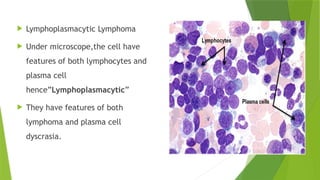
 Lymphoplasmacytic Lymphoma
 Under microscope,the cell have
features of both lymphocytes and
plasma cell
hence”Lymphoplasmacytic”
 They have features of both
lymphoma and plasma cell
dyscrasia.
 When the LPL involves Bone marrow and secrete IgM it is called Waldestrom
macroglobulinemia(WM accounts for (95% LPL cases)
 Familial occurrence is common in WM,a distinct MYD88 L265P somatic mutation is
present in >90% of patients with WM.
 The IgM in some patients with macroglobulinemia have specificity for myelin-
associated glycoprotein(MAG),a protein associated with demyelinating disease of the
peripheral nervous system.
 Like MM,the disease involves the bone marrow,but unlike myeloma,it doesnot cause
bone lesions or hypercalcemia.
 Bone marrow shows >10% infiltration with lymphoplasmacytic cells with an increase
in number of mast cells.
 Like myeloma,an M component is present in the serum in excess of
3g/dl,but unlike myeloma,the size of the IgM paraprotein results in
little renal excretion and only 20% of patients excrete light chains.
 Therefore renal disease is not common.The light chain isotype is kappa
in 80% of cases.
 Patients present with weakness,fatigue and recurrent infections similar
to myeloma patients,but epistaxis,visual disturbance and neurologic
symptoms such as peripheral neuropathy,dizziness,headache and
transient paresis are much more common in macroglobulinemia.
Investigations
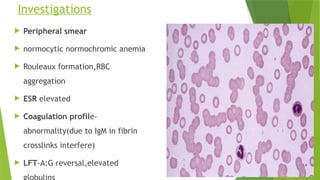
 Peripheral smear
 normocytic normochromic anemia
 Rouleaux formation,RBC
aggregation
 ESR elevated
 Coagulation profile-
abnormality(due to IgM in fibrin
crosslinks interfere)
 LFT-A:G reversal,elevated
SPEP and IFE
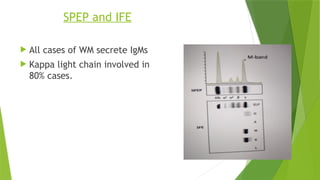
 All cases of WM secrete IgMs
 Kappa light chain involved in
80% cases.
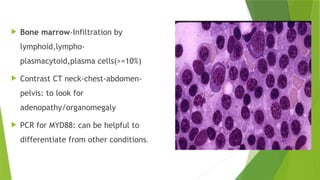
 Bone marrow-Infiltration by
lymphoid,lympho-
plasmacytoid,plasma cells(>=10%)
 Contrast CT neck-chest-abdomen-
pelvis: to look for
adenopathy/organomegaly
 PCR for MYD88: can be helpful to
differentiate from other conditions.
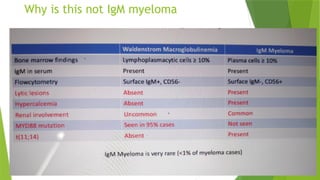
Why is this not IgM myeloma
TREATMENT
 Treatment is usually not initiated unless the disease is symptomatic or
increasing anemia,hyperviscosity,lymphadenopathy or
hepatosplenomegaly is present.
 Bruton’s tyrosine kinase(BTK) inhibitor Ibrutinib targets the
constitutively activated BTK.
 Best response to ibrutinib are observed in patients with mutated MYD88
and CXCR4.
 Rituximab can produce an IgM flare,so either plasmapheresis should be
used before rituximab or its use should be initially withheld in patients
with high IgM levels.
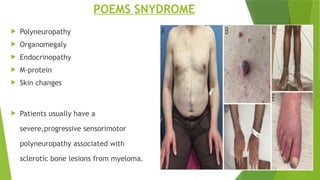
POEMS SNYDROME
 Polyneuropathy
 Organomegaly
 Endocrinopathy
 M-protein
 Skin changes
 Patients usually have a
severe,progressive sensorimotor
polyneuropathy associated with
sclerotic bone lesions from myeloma.
 Unlike typical myeloma,hepatomegaly and lymphadenopathy seen
in some patients.
 Endocriopathy like- amenorrhea in women and impotence and
gynecomastia in men.Hyperprolactinemia due to loss of normal
inhibitory control by hypothalamus and may be associated with
CNS manifestations such as papilledema.
 Skin changes- hyperpigmentation,hypertrichosis,digital clubbing.
Pathogenesis
 Exact cause not known
 Over production of VEGF possibly secreted from plasma cells is
the likely source of symptoms such as
edema,effusions,microangiopathy.
 Along with increased cytokines such as IL-1,IL-6 and decreased
in TGF beta.
When to suspect?
 Unexplained neuropathy
 Unexplained effusions,ascites
 Unexplained organomegaly
 Uncommon endocrinopathies
 Monoclonal protein
 Thrombocytosis.
Treatment
 Patients often treated similarly to those with myeloma.
 Local radiotherapy-for isolated sclerotic bone lesions
 Disseminated disease: High dose melphalan +AutoHSCT
 Since tumour burden is not high,induction therapy is not
needed.
 Plasmapheresis and anti VEGF are not beneficial.
Heavy chain diseases
 Rare lymphoplasmacytic malignancies
 Patients have absence of light chain and secrete a defective heavy
chain that usually has an intact Fc fragment and a deletion in the Fd
region.
 GAMMA HEAVY CHAIN DISEASE(Franklin’s disease)
 ALPHA HEAVY CHAIN DISEASE(Seligmann’s disease)
 MU HEAVY CHAIN DISEASE
FRANKLIN’S DISEASE
 It is characterised by lymphadenopathy,fever,anemia,malaise ,weakness and
lymphadenopathy.
 Associated with other autoimmune disease-especially rheumatoid arthritis
 Diagnosis depends on anomalous serum M component(<2g/dl) that reacts with anti-
IgG but not anti-light chain reagents.
 The patients may have thrombocytopenia,eosinophilia and nondiagnostic bone
marrow that may show increased numbers of lymphocytes or plasma cells that do not
stain for light chain.
 Therapy indicated when symptomatic and involves chemotherapeutic combination
used in low-grade lymphoma.Rituximab also used.
SELIGMANN’S DISEASE
 Most common heavy chain disease,characterised by an
infiltration of the lamina propia of the small intestine with
lymphoplasmacytoid cells that secrete alpha chains.
 Patients present with chronic diarrhea,weight loss,and
malabsorption and have extensive mesenteric and
paraaortic adenopathy.
 Rare patients responded to antibiotic therapy.
 Chemotherapy plus antibiotic may be more effective than
chemotherapy alone.
AL AMYLOIDOSIS
 Amyloidosis is a group of protein misfolding disorders characterized by
the extracellular deposition of insoluble polymeric protein fibrils in
tissues and organ.
 AL amyloidosis composed of immunoglobulin light chains(LCs),formely
termed as primary systemic amyloidosis,arises from a clonal B-cell or
plasma cell disorder and can be associated with myeloma or lymphoma.
Pathology and Clinical features
 Amyloid deposits are usually widespread in AL amyloidosis and can be
present in the interstitium of any organ outside the central nervous system.
 Kidney most frequently involved and manifests as proteinuria,often in
nephrotic ranges and associated with hypoalbuminemia,secondary
hypercholesterolemia and hypertriglyceridemia,and edema or anasarca.
 Heart is the second most commonly affected organ and cardiac involvement
is the leading cause of death from AL amyloidosis.
 ECG may show low voltage with a pseudo-infarct pattern.
 ECHO shows concentrically thickened ventricles and diastolic dysfunction.
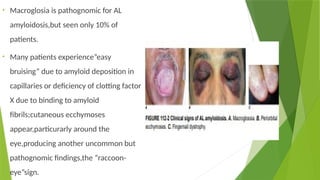
• Macroglosia is pathognomic for AL
amyloidosis,but seen only 10% of
patients.
• Many patients experience”easy
bruising” due to amyloid deposition in
capillaries or deficiency of clotting factor
X due to binding to amyloid
fibrils;cutaneous ecchymoses
appear,particurarly around the
eye,producing another uncommon but
pathognomic findings,the “raccoon-
eye”sign.
Diagnosis
 Identification of an underlying clonal plasma cell or B lymphoproliferative process
and a clonal LC are key to the diagnosis of AL amyloidosis.
 AL amyloidosis have serum or urine monoclonal LC or whole immunoglobulin
detectable by immunofixation electrophoresis of serum(SIFE)or urine(UIFE).
 Biopsy of the involved organ,but most easily accessible tissue-positive in more
than 80% of systemic amyloidosis-is abdominal fat.
 “Apple green” birefringence by polarized light microscopy when stained with
Congo red dye.
Treatment
 Current therapies target the clonal bone marrow plasma cells,using
approaches employed for MM.
 Oral melphalan with prednisone can decrease the plasma cell
burden.Substitution of dexamethasone for prednisone produces a higher
response rate.
 High-dose intravenous(IV) melphalan followed by autologous stem cell
transplantation(HDM/ASCT) produces complete hematologic response.
 Six to 12 months after achieving a haematologic response,improvements
in organ function and quality of life may occur.
 For transplant ineligible patients bortezomib plus Mdex is the standard
care in most patients with AL amyloidosis.
RECENT ADVANCES
 NEW GENERATION THERAPIES FOR MM
 Selinexor-is an orally bioavailable, potent and selective inhibitor of nuclear
export, slowly reversible that blocks specifically exportin 1. This protein
participates in the nucleus–cytoplasm protein traffic and its blockade
induce apoptosis by means of high nuclear concentrations of apoptotic
proteins
RECENT ADVANCES
 IMMUNOTHERAPY FOR MM
 Belantamab mefadotin
This novel conjugate drug combines a humanized, afucosylated
monoclonal antibody directed to the B-cell maturation antigen
(BCMA) with the microtubule-disrupting agent, monomethyl
auristatin F (MMAF)
Take home messages
 >=10% clonal PCs+ CRAB-SLiM in myeloma( M band is not
present in diagnostic criteria)
 Risk stratification-B2m,albumin
 Triplet induction + ASCT + Maintenance is std of care for
young fit myeloma
 For transplant ineligible:- 9-12 cycles of triplet f/b
maintenance
 Do not forget supportive care
PLASMACELL DISORDER - Copy.pptx important

PLASMACELL DISORDER - Copy.pptx important

  • 1.
    APPROACH TO PLASMACELL DISORDERS WITH SPECIAL REFERENCE TO MANAGEMENT  Moderator-Dr J Umbon  Associate professor of medicine,JMCH  Dr N J Bez  Assistant professor of medicine,JMCH  Presenter- Dr Mamadul Islam  2nd Year PGT,Medicine,JMCH
  • 3.
    HISTORY  The mostcommonly recognized case is that of Thomas Alexander McBean, a highly respectable tradesman from London in 1850.  Mr. McBean excreted a large amount of protein in urine that was described by Henry Bence Jones in the middle of the 19th century.
  • 4.
    INTRODUCTION  The plasmacell disorders are monoclonal neoplasms related to each other by virtue of their development from common progenitors in the B lymphocyte lineage.  Multiple Myeloma  Waldenstrom’s Macroglobulinemia  Primary Amyloidosis  Heavy chain disease, comprises this group. Designated by a variety of synonyms such as monoclonal gammopathies, paraproteinemias, plasma cell dyscrasias, and dysproteinemias
  • 5.
     Mature Blymphocytes destined to produce IgG bear surface immunoglobulin molecules of both M and G heavy chain isotypes.  Under normal circumstances, maturation to antibody-secreting plasma cells is stimulated by exposure to the antigen for which the surface immunoglobulin is specific; however, in the plasma cell disorders the control over this process is lost.  The clinical manifestations of all the plasma cell disorders relate to the expansion of the neoplastic cells,to the secretion of cell products(immunoglobulin,lymphokines) and some extent to the host’s response to the tumour.
  • 6.
  • 10.
  • 11.
    CATAGORIES OF IMMUNOGLOBULINS Three catagories of structural variation are present among immunoglobulin molecules that form antigenic determinants.  Isotypes(species specific) ;5 heavy chain isotypes-IgG IgA IgM IgD IgE,2 light chain isotypes-kappa, lamda  Allotypes(individual specific)  Idiotypes(antibody specific)
  • 13.
  • 14.
  • 16.
     M proteinreflects tumour burden in MM  But ,it is not specific for MM  Hence,cannot be used to screen asymptomatic patients  D/D of M band  Hemat-CLL,B/T Lymphomas,CML  Solid cancers-breast cancer, and colon cancer;  Benign-cirrhosis, sarcoidosis, parasitic diseases, Gaucher disease, and pyoderma gangrenosum;  rheumatoid arthritis, myasthenia gravis, and cold agglutinin disease.  Two very rare skin diseases—lichen myxedematosus, or papular mucinosis, and necrobiotic xanthogranuloma—are associated with a monoclonal gammopathy
  • 17.
    MULTIPLE MYELOMA  Multiplemyeloma represents a malignant proliferation of plasma cells derived from a single clone.  The tumor, its products, and the host response to it result in a number of organ dysfunctions and symptoms of bone pain or fracture, renal failure, susceptibility to infection, anemia, hypercalcemia, and occasionally clotting abnormalities, neurologic symptoms, and manifestations of hyperviscosity.
  • 18.
    Epidemiology  Accounts for1% of all cancers  Median age of presentation 70 years  Males>females  Blacks>white
  • 19.
    Risk factors  Etiologynot known  Seen with higher frequency in WW-II survivors after 20 years  Farmers  Wood workers  Leather workers  Petroleum products  Chromosomal alterations(hyperdiploidy;trisomies involving one or more chromosomes 3,5,7,9; translocations involving the 14q32 chromosomes with variable partner ;other abnormaity like 13q14 deletion.  N-ras,K-ras and B raf mutations also seen  Interleukin-6 may play a role in driving myeloma cell proliferation.
  • 21.
  • 22.
  • 23.
     Hypercalcemia dueto increased osteoclastic activity and decreased osteoblastic activity  Lytic lesions(0.5cm bone destruction)  Bone pain is the most common symptom,mainly involves the axial skeleton and induced by movement  No osteoblastic new bone formation,hence bone scan is less useful than plain x ray.
  • 24.
    Punched out, rounded lyticlesion Collapsed vertebrae
  • 25.
  • 26.
    Haematological and MM Anaemia is normocytic normochromic  Replacement of normal hematopoiesis by Myeloma cells  Relative EPO deficiency  Dilution(in case of large M protein)
  • 27.
    MM and infections Susceptible to bacterial infections  Sites- lung(strep pneumoniae,stap aureus),UTI( E.coli)  Due to-Hypogammaglobulinemia,complement dysfunction and treatment by Dexa and Bortezomib.  Others manifestations of MM- Bleeding,Cryoglobulinemia,Hyperviscosity symptoms(headache,somnolence,blurring of vision,vertigo,tinnitus)
  • 28.
    Diagnosis • Morpholgy inBone marrow • BM>10% plasma cells • Clonality of BM plasma cells is important • Clonality means restriction for either kappa or lambda light chain • So >=10% clonal BM plasma cells is mandatory.
  • 29.
    Diagnostic Criteria forMultiple Myeloma,Myeloma variants, and MGUS.
  • 31.
     Along with>10%clonal BMPCS or Bx proven plasmacytoma +any 1 of-  C-Calcium>11mg/dl or 1mg/dl more than ULN  R-Renal dysfunction(creatinine>2mg/dl or <40ml/min  A-Anemia(Hb <10 or >2g lower than LLN)  B-Bone(>=1 lytic lesion on CT/PET-CT/skeletal radiography)  S- >=Sixty %PCs in BM  Li-Light chain involved/uninvolved ratio >=100  M-MRI(>1 focal lesion in bone or BM)
  • 32.
  • 33.
    Stagging of MM •Durie-Salmon stagging(1975) • A clinical stagging system for MM • Correlation of Measured Myeloma cell Mass with presenting Clinical features,Response to treatment,and survival.
  • 34.
    TREATMENT  No specificintervention is indicated for patients with MGUS  Follow-up once a year except in higher- risk MGUS,where serum protein electrophoresis,CBC,creatinine and calcium should be repeated every 6 monthly.  A patients with MGUS and severe polyneuropathy is considered for therapeutic intervention if a causal relationship can be assumed,in the absence of other causes for polyneuropathy.  Plasmapheresis and occasionally rituximab in patients with IgM MGUS or Myeloma- like therapy in those with IgG or IgA disease.
  • 35.
     For patientswith SMM,no specific treatment required,although early intervention with lenalidomide and dexamethasone may prevent progression from high-risk SMM to active MM.  At present,patients with SMM only require antitumor therapy when myeloma-defining events are identified.  Solitary bone plasmacytomas and extramedullary plasmacytomas require local radiation therapy at a dose of ~40 Gy.  If occult marrow involvement,this should be treated by systemic therapy and they respond well.
  • 36.
    SYMPTOMATIC MM  Principleof treatment:  Systemic therapy-to control myeloma  Supportive care- to control symptoms of the disease,its complications,and adverse effects of therapy.
  • 37.
     Induction( 3drug regimen)  Consolidation(Transplant-ASCT)  Maintenance(single drug-Either bortezomib or lenalidomide)
  • 40.
     For inductiontherapy-Three agents approved ,an immunomodulatory agents,proteasome inhibitors,and targeted antibodies.When combined with dexamethasone achieved better response.  The combination of Lenalidomide with a proteasome inhibitor(bortezomib or carfilzomib) and dexamethasone achieves close to a 100% response rate and a >30% complete response rate,making this combination one of the preffered induction regimens in transplant-eligible patients.
  • 41.
     Addition ofa fourth agent,daratumumab,an anti-CD38 antibody,is providing even deeper responses.  Usually between four and six cycles of these combination regimens are utilized to achieve initial deep cytoreduction before consideration of high-dose therapy with autologous stem cell transplantation.  In transplant ineligible patients due to physiologic age>70 years,significant cardiopulmonary problems,or other comorbid illness,Modified lenalidomide- bortezomib-dexamethasone(RVD lite) combination achieves high overall response rate.  Intermittent pulses of melphalan,an alkylating agent,with prednisone(MP) are combined with novel agents to achieve superior response and survival outcomes.
  • 42.
    HIGH-DOSE THERAPY WITHAUTOLOGOUS STEM CELL TRANSPLANTATION  High-dose therapy(HDT) and consolidation/maintenance are standard practice in the majority of eligible patients.  In patients who are transplant candidates,alkylating agents such as melphalan should be avoided because they damage the stem cell and compromise the ability to collect stem cells.  Similarly,in patients receiving lenalidomide,stem cell should be collected within 6 months because the continued use of lenalidomide may compromise the ability to collect adequate numbers of stem cells.  Although two successive HDTs(tandem transplantations) are more effective than single HTD,benefit is observed in patients who do not achieve a complete or very good partial response to the first transplantation.
  • 43.
    RELAPSED DISEASE  Relapsedmyeloma can be treated with a number of agents including lenalidomide and/or bortezomib,if previously not used.  The second-generation proteasome inhibitor carfilzomib and immunomodulatory agent pomalidomide have shown efficacy in relapsed and refractory MM,even MM refractory to lenalidomide and bortezomib.  An oral proteasome inhibitor,ixazomib,has also been approved in combination with lenalidomide and dexamethasone as an all-oral regimen for relapsed MM.
  • 44.
    THERAPY ENDPOINT  Improvementin the serum M component may lag behind the symptomatic improvement due to longer serum half-life(~3weeks) of immunoglobulin.  Serum and urine light chains with a functional half-life of ~6 h may fall within the first week of treatment.  Achieving CR, defined as disappearance of serum and urine monoclonal protein with normal bone marrow by light microscopy,has been a standard goal of therapy.  The median overall survival of patients with myeloma is 8+ years,with subsets of younger patients surviving >10 years.
  • 45.
    SUPPORTIVE THERAPY  Aciclovirprophylaxis- on Bortezomib  DVT prophylaxis(Aspirin)-on Lenalidomide  PCP prophylaxis- on Dexamethasone  Bortezomib s c and weekly use decrease the risk of neuropathy.  Patients receiving anti-BCMA CAR-T cell therapy may need supplementation with intravenous gama globulin due to induction of prolonged hypogammaglobulinemia.  Hypercalcemia responds well to bisphosphonate,glucocorticoid therapy,hydration,and natriuresis and rarely require calcitonin.
  • 46.
     Bisphosphonates(eg Zoledronate4mg initially once a month for 12-24 months and later every 2-3 monthly) reduce osteoclastic bone resorption.  Treatments aimed at strengthening the the skeleton such as fluorides,calcium and vitamin D.  Kyphoplasty or vertebroplasty should be considered in patients with painful collapsed vertebra.  Iatrogenic worsening of renal function may be prevented by maintaining a high fluid intake to prevent dehydration and enhance excretion of light chains and calcium.
  • 47.
     In acuterenal failure,plasmapheresis is ~10 times more effective at clearing light chains than peritoneal dialysis.  Plasmapheresis is the treatment of choice for hyperviscosity syndrome.  Vaccinate-pneumococcal,influenza  Cord compression-high dose dose dexa,RT,surgical decompression.  Anemia-erythropoietin along with hematinics(iron,folate,cobalamin).
  • 48.
    Waldenstrom’s Macroglobulinemia  Amalignancy of lymphoplasmacytoid cells that secreted IgM.  In contrast to MM,the disease associated with lymphadenopathy and hepatosplenomegaly,but major clinical manifestation is hyperviscosity syndrome.  The disease resembles the related diseases CLL,Myeloma and Lymphocytic lymphoma.  It originates from a post-germinal center B cell that has undergone somatic mutations and antigenic selection in the lymphoid follicle and has the characteristics of an IgM-bearing memory B cell.
  • 49.
     Lymphoplasmacytic Lymphoma Under microscope,the cell have features of both lymphocytes and plasma cell hence”Lymphoplasmacytic”  They have features of both lymphoma and plasma cell dyscrasia.
  • 50.
     When theLPL involves Bone marrow and secrete IgM it is called Waldestrom macroglobulinemia(WM accounts for (95% LPL cases)  Familial occurrence is common in WM,a distinct MYD88 L265P somatic mutation is present in >90% of patients with WM.  The IgM in some patients with macroglobulinemia have specificity for myelin- associated glycoprotein(MAG),a protein associated with demyelinating disease of the peripheral nervous system.  Like MM,the disease involves the bone marrow,but unlike myeloma,it doesnot cause bone lesions or hypercalcemia.  Bone marrow shows >10% infiltration with lymphoplasmacytic cells with an increase in number of mast cells.
  • 51.
     Like myeloma,anM component is present in the serum in excess of 3g/dl,but unlike myeloma,the size of the IgM paraprotein results in little renal excretion and only 20% of patients excrete light chains.  Therefore renal disease is not common.The light chain isotype is kappa in 80% of cases.  Patients present with weakness,fatigue and recurrent infections similar to myeloma patients,but epistaxis,visual disturbance and neurologic symptoms such as peripheral neuropathy,dizziness,headache and transient paresis are much more common in macroglobulinemia.
  • 52.
    Investigations  Peripheral smear normocytic normochromic anemia  Rouleaux formation,RBC aggregation  ESR elevated  Coagulation profile- abnormality(due to IgM in fibrin crosslinks interfere)  LFT-A:G reversal,elevated
  • 53.
    SPEP and IFE All cases of WM secrete IgMs  Kappa light chain involved in 80% cases.
  • 54.
     Bone marrow-Infiltrationby lymphoid,lympho- plasmacytoid,plasma cells(>=10%)  Contrast CT neck-chest-abdomen- pelvis: to look for adenopathy/organomegaly  PCR for MYD88: can be helpful to differentiate from other conditions.
  • 55.
    Why is thisnot IgM myeloma
  • 56.
    TREATMENT  Treatment isusually not initiated unless the disease is symptomatic or increasing anemia,hyperviscosity,lymphadenopathy or hepatosplenomegaly is present.  Bruton’s tyrosine kinase(BTK) inhibitor Ibrutinib targets the constitutively activated BTK.  Best response to ibrutinib are observed in patients with mutated MYD88 and CXCR4.  Rituximab can produce an IgM flare,so either plasmapheresis should be used before rituximab or its use should be initially withheld in patients with high IgM levels.
  • 57.
    POEMS SNYDROME  Polyneuropathy Organomegaly  Endocrinopathy  M-protein  Skin changes  Patients usually have a severe,progressive sensorimotor polyneuropathy associated with sclerotic bone lesions from myeloma.
  • 58.
     Unlike typicalmyeloma,hepatomegaly and lymphadenopathy seen in some patients.  Endocriopathy like- amenorrhea in women and impotence and gynecomastia in men.Hyperprolactinemia due to loss of normal inhibitory control by hypothalamus and may be associated with CNS manifestations such as papilledema.  Skin changes- hyperpigmentation,hypertrichosis,digital clubbing.
  • 59.
    Pathogenesis  Exact causenot known  Over production of VEGF possibly secreted from plasma cells is the likely source of symptoms such as edema,effusions,microangiopathy.  Along with increased cytokines such as IL-1,IL-6 and decreased in TGF beta.
  • 60.
    When to suspect? Unexplained neuropathy  Unexplained effusions,ascites  Unexplained organomegaly  Uncommon endocrinopathies  Monoclonal protein  Thrombocytosis.
  • 61.
    Treatment  Patients oftentreated similarly to those with myeloma.  Local radiotherapy-for isolated sclerotic bone lesions  Disseminated disease: High dose melphalan +AutoHSCT  Since tumour burden is not high,induction therapy is not needed.  Plasmapheresis and anti VEGF are not beneficial.
  • 62.
    Heavy chain diseases Rare lymphoplasmacytic malignancies  Patients have absence of light chain and secrete a defective heavy chain that usually has an intact Fc fragment and a deletion in the Fd region.  GAMMA HEAVY CHAIN DISEASE(Franklin’s disease)  ALPHA HEAVY CHAIN DISEASE(Seligmann’s disease)  MU HEAVY CHAIN DISEASE
  • 63.
    FRANKLIN’S DISEASE  Itis characterised by lymphadenopathy,fever,anemia,malaise ,weakness and lymphadenopathy.  Associated with other autoimmune disease-especially rheumatoid arthritis  Diagnosis depends on anomalous serum M component(<2g/dl) that reacts with anti- IgG but not anti-light chain reagents.  The patients may have thrombocytopenia,eosinophilia and nondiagnostic bone marrow that may show increased numbers of lymphocytes or plasma cells that do not stain for light chain.  Therapy indicated when symptomatic and involves chemotherapeutic combination used in low-grade lymphoma.Rituximab also used.
  • 64.
    SELIGMANN’S DISEASE  Mostcommon heavy chain disease,characterised by an infiltration of the lamina propia of the small intestine with lymphoplasmacytoid cells that secrete alpha chains.  Patients present with chronic diarrhea,weight loss,and malabsorption and have extensive mesenteric and paraaortic adenopathy.  Rare patients responded to antibiotic therapy.  Chemotherapy plus antibiotic may be more effective than chemotherapy alone.
  • 65.
    AL AMYLOIDOSIS  Amyloidosisis a group of protein misfolding disorders characterized by the extracellular deposition of insoluble polymeric protein fibrils in tissues and organ.  AL amyloidosis composed of immunoglobulin light chains(LCs),formely termed as primary systemic amyloidosis,arises from a clonal B-cell or plasma cell disorder and can be associated with myeloma or lymphoma.
  • 66.
    Pathology and Clinicalfeatures  Amyloid deposits are usually widespread in AL amyloidosis and can be present in the interstitium of any organ outside the central nervous system.  Kidney most frequently involved and manifests as proteinuria,often in nephrotic ranges and associated with hypoalbuminemia,secondary hypercholesterolemia and hypertriglyceridemia,and edema or anasarca.  Heart is the second most commonly affected organ and cardiac involvement is the leading cause of death from AL amyloidosis.  ECG may show low voltage with a pseudo-infarct pattern.  ECHO shows concentrically thickened ventricles and diastolic dysfunction.
  • 67.
    • Macroglosia ispathognomic for AL amyloidosis,but seen only 10% of patients. • Many patients experience”easy bruising” due to amyloid deposition in capillaries or deficiency of clotting factor X due to binding to amyloid fibrils;cutaneous ecchymoses appear,particurarly around the eye,producing another uncommon but pathognomic findings,the “raccoon- eye”sign.
  • 68.
    Diagnosis  Identification ofan underlying clonal plasma cell or B lymphoproliferative process and a clonal LC are key to the diagnosis of AL amyloidosis.  AL amyloidosis have serum or urine monoclonal LC or whole immunoglobulin detectable by immunofixation electrophoresis of serum(SIFE)or urine(UIFE).  Biopsy of the involved organ,but most easily accessible tissue-positive in more than 80% of systemic amyloidosis-is abdominal fat.  “Apple green” birefringence by polarized light microscopy when stained with Congo red dye.
  • 69.
    Treatment  Current therapiestarget the clonal bone marrow plasma cells,using approaches employed for MM.  Oral melphalan with prednisone can decrease the plasma cell burden.Substitution of dexamethasone for prednisone produces a higher response rate.  High-dose intravenous(IV) melphalan followed by autologous stem cell transplantation(HDM/ASCT) produces complete hematologic response.  Six to 12 months after achieving a haematologic response,improvements in organ function and quality of life may occur.  For transplant ineligible patients bortezomib plus Mdex is the standard care in most patients with AL amyloidosis.
  • 70.
    RECENT ADVANCES  NEWGENERATION THERAPIES FOR MM  Selinexor-is an orally bioavailable, potent and selective inhibitor of nuclear export, slowly reversible that blocks specifically exportin 1. This protein participates in the nucleus–cytoplasm protein traffic and its blockade induce apoptosis by means of high nuclear concentrations of apoptotic proteins
  • 71.
    RECENT ADVANCES  IMMUNOTHERAPYFOR MM  Belantamab mefadotin This novel conjugate drug combines a humanized, afucosylated monoclonal antibody directed to the B-cell maturation antigen (BCMA) with the microtubule-disrupting agent, monomethyl auristatin F (MMAF)
  • 72.
    Take home messages >=10% clonal PCs+ CRAB-SLiM in myeloma( M band is not present in diagnostic criteria)  Risk stratification-B2m,albumin  Triplet induction + ASCT + Maintenance is std of care for young fit myeloma  For transplant ineligible:- 9-12 cycles of triplet f/b maintenance  Do not forget supportive care