slidesharCase Study: Mount Pinatubo - 1991
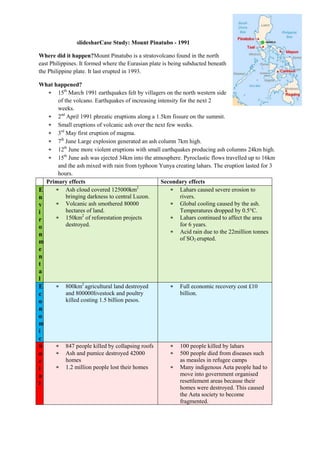
Where did it happen?Mount Pinatubo is a stratovolcano found in the north
east Philippines. It formed where the Eurasian plate is being subducted beneath
the Philippine plate. It last erupted in 1993.
What happened?
15th
March 1991 earthquakes felt by villagers on the north western side
of the volcano. Earthquakes of increasing intensity for the next 2
weeks.
2nd
April 1991 phreatic eruptions along a 1.5km fissure on the summit.
Small eruptions of volcanic ash over the next few weeks.
3rd
May first eruption of magma.
7th
June Large explosion generated an ash column 7km high.
12th
June more violent eruptions with small earthquakes producing ash columns 24km high.
15th
June ash was ejected 34km into the atmosphere. Pyroclastic flows travelled up to 16km
and the ash mixed with rain from typhoon Yunya creating lahars. The eruption lasted for 3
hours.
Primary effects Secondary effects
E
n
v
i
r
o
n
m
e
n
t
a
l
Ash cloud covered 125000km2
bringing darkness to central Luzon.
Volcanic ash smothered 80000
hectares of land.
150km2
of reforestation projects
destroyed.
Lahars caused severe erosion to
rivers.
Global cooling caused by the ash.
Temperatures dropped by 0.5°C.
Lahars continued to affect the area
for 6 years.
Acid rain due to the 22million tonnes
of SO2 erupted.
E
c
o
n
o
m
i
c
800km2
agricultural land destroyed
and 800000livestock and poultry
killed costing 1.5 billion pesos.
Full economic recovery cost £10
billion.
S
o
c
i
a
l
847 people killed by collapsing roofs
Ash and pumice destroyed 42000
homes
1.2 million people lost their homes
100 people killed by lahars
500 people died from diseases such
as measles in refugee camps
Many indigenous Aeta people had to
move into government organised
resettlement areas because their
homes were destroyed. This caused
the Aeta society to become
fragmented.
Immediate responses Long term responses
Manila airport closed
200000 people relocated
Red Cross, Action Aid and Oxfam
provided food and blankets in evacuation
camps
23 USGS personnel helped advise the
community and government officials for
8 weeks
President Ramos created the Mount
Pinatubo Commission to raise 10 billion
Filipino pesos in aid.
New houses have been built on stilts so
future lahars will not bury them.
Norway and UK government sent
millions in aid
Overseas Filipino Workers provided
clothing for victims
5 billion pesos spent on used to build
dykes for lahars (later washed away by
the lahars)
How was the hazard managed? The hazard was managed. There were lahar detecters in place and
hazard maps. The volcano was being monitored by scientists and evidence suggested that there was
going to be an eruption soon.

Mount pinatubo case study

  • 1.
    slidesharCase Study: MountPinatubo - 1991 Where did it happen?Mount Pinatubo is a stratovolcano found in the north east Philippines. It formed where the Eurasian plate is being subducted beneath the Philippine plate. It last erupted in 1993. What happened? 15th March 1991 earthquakes felt by villagers on the north western side of the volcano. Earthquakes of increasing intensity for the next 2 weeks. 2nd April 1991 phreatic eruptions along a 1.5km fissure on the summit. Small eruptions of volcanic ash over the next few weeks. 3rd May first eruption of magma. 7th June Large explosion generated an ash column 7km high. 12th June more violent eruptions with small earthquakes producing ash columns 24km high. 15th June ash was ejected 34km into the atmosphere. Pyroclastic flows travelled up to 16km and the ash mixed with rain from typhoon Yunya creating lahars. The eruption lasted for 3 hours. Primary effects Secondary effects E n v i r o n m e n t a l Ash cloud covered 125000km2 bringing darkness to central Luzon. Volcanic ash smothered 80000 hectares of land. 150km2 of reforestation projects destroyed. Lahars caused severe erosion to rivers. Global cooling caused by the ash. Temperatures dropped by 0.5°C. Lahars continued to affect the area for 6 years. Acid rain due to the 22million tonnes of SO2 erupted. E c o n o m i c 800km2 agricultural land destroyed and 800000livestock and poultry killed costing 1.5 billion pesos. Full economic recovery cost £10 billion. S o c i a l 847 people killed by collapsing roofs Ash and pumice destroyed 42000 homes 1.2 million people lost their homes 100 people killed by lahars 500 people died from diseases such as measles in refugee camps Many indigenous Aeta people had to move into government organised resettlement areas because their homes were destroyed. This caused the Aeta society to become fragmented.
  • 2.
    Immediate responses Longterm responses Manila airport closed 200000 people relocated Red Cross, Action Aid and Oxfam provided food and blankets in evacuation camps 23 USGS personnel helped advise the community and government officials for 8 weeks President Ramos created the Mount Pinatubo Commission to raise 10 billion Filipino pesos in aid. New houses have been built on stilts so future lahars will not bury them. Norway and UK government sent millions in aid Overseas Filipino Workers provided clothing for victims 5 billion pesos spent on used to build dykes for lahars (later washed away by the lahars) How was the hazard managed? The hazard was managed. There were lahar detecters in place and hazard maps. The volcano was being monitored by scientists and evidence suggested that there was going to be an eruption soon.