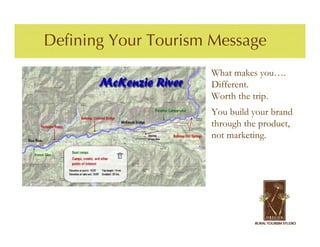
Defining Your Tourism Message
                     What makes you….
                     Different.
                     Worth the trip.
                     You build your brand
                     through the product,
                     not marketing.
What experience are you selling?
 The Destination
The LURE: the experience that motivates the visitor to actually
come to your destination.

DIVERSIONS: things visitors can do closer to home but will
do in your destination because they are already there.

AMENITIES: Things that make the visit a comfortable one

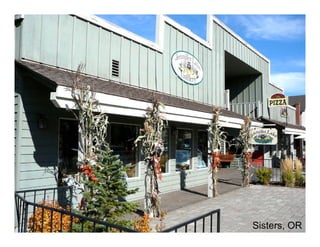
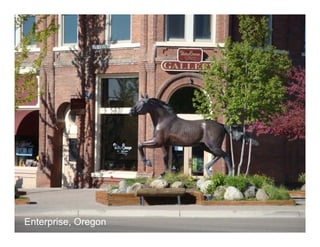
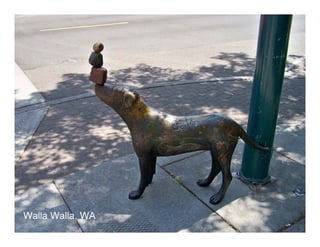
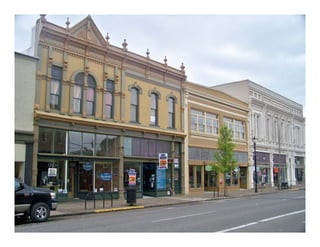
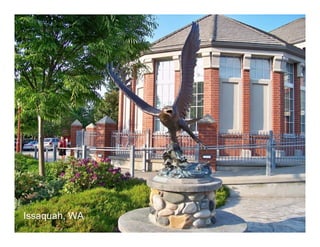
AMBIENCE: historic buildings, public art, street entertainers,
etc.

(SEE YOUR GLOSSARY)
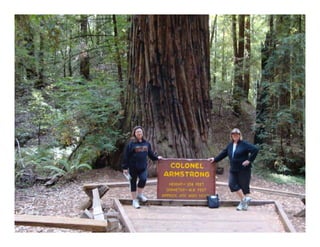
Lures
4
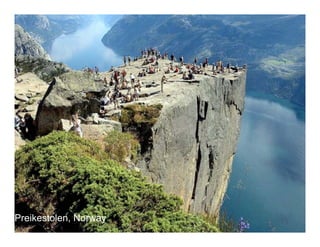
Preikestolen, Norway
    5
6
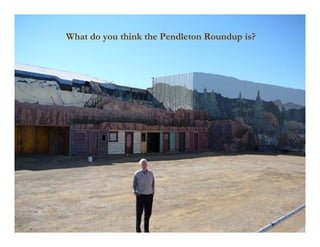
What do you think the Pendleton Roundup is?
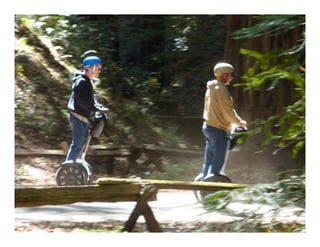
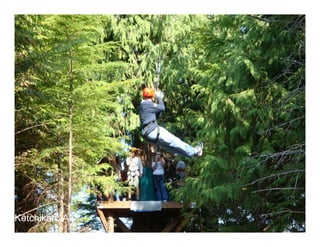
Experiences
10
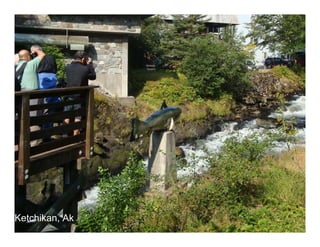
Ketchikan, Ak
    11
Tongass Nat’l Forest
   12
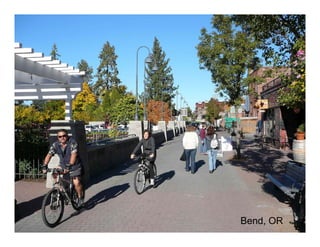
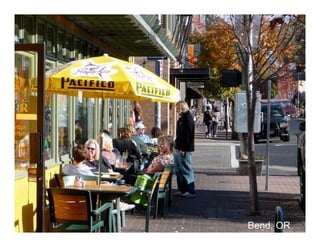
                       Bend, OR
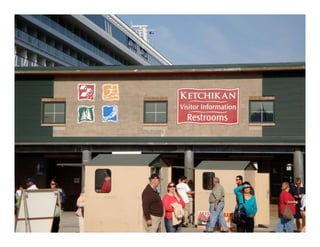
Ketchikan, Ak
    13
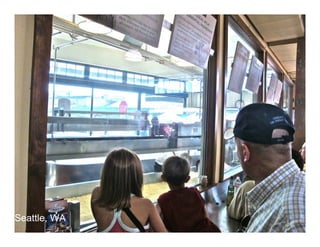
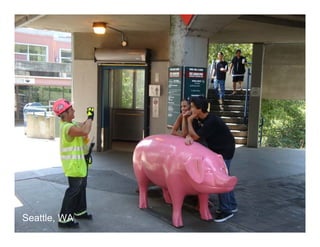
Seattle, WA
   14
Diversions
16
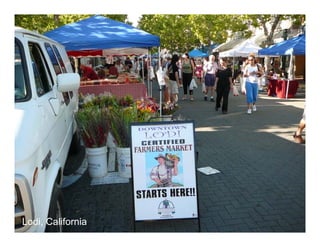
Lodi, California
17   Park City, Utah
           Bend, OR
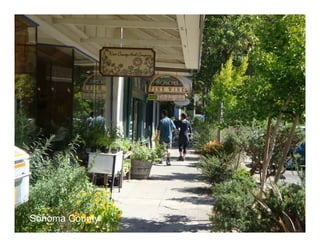
Sonoma County
  18
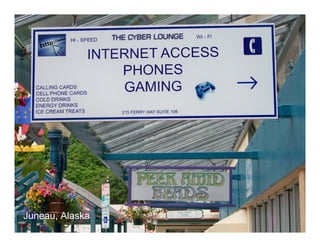
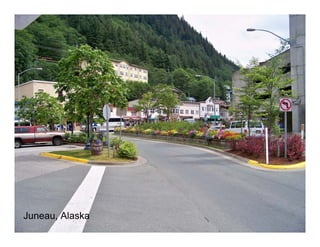
Juneau, Alaska
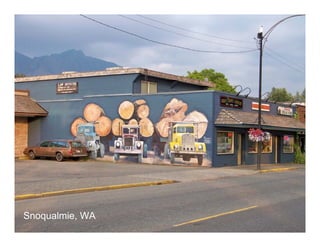
Amenities
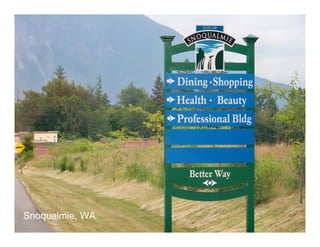
Snoqualmie, WA
 20
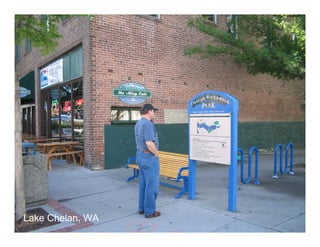
Lake Chelan, WA
  21
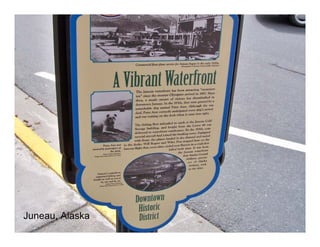
Juneau, Alaska
  22
Juneau, Alaska
  23
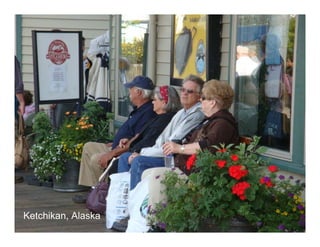
Ketchikan, Alaska
 24
Juneau, Alaska
  25
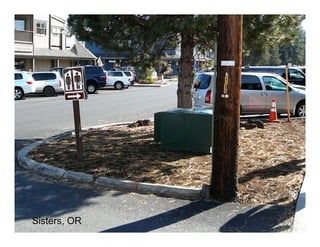
Sisters, OR
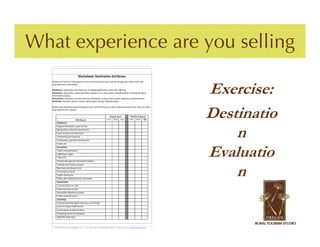
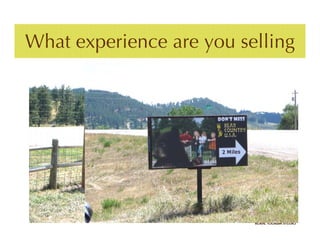
What experience are you selling

                    Exercise:
                    Destinatio
                        n
                    Evaluatio
                        n
What experience are you selling
        “First Impressions Are
         Lasting Impressions”
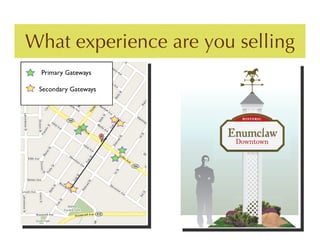
   Approaches to the town
       • Don’t announce the destination until they are there.
       • That’s what gateways are for
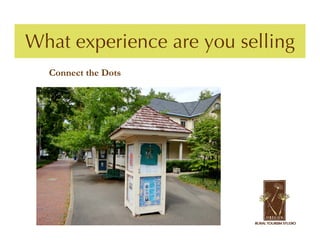
       • Connect the dots. Use kiosks and outdoor maps to
       direct visitors to other nearby attractions and places to
       spend money.
What experience are you selling
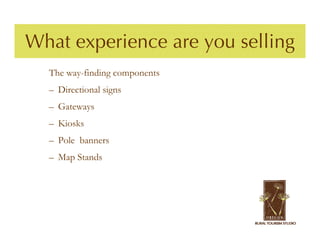
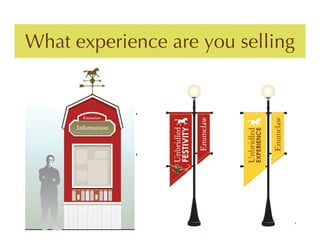
  The way-finding components
  – Directional signs
  – Gateways
  – Kiosks
  – Pole banners
  – Map Stands
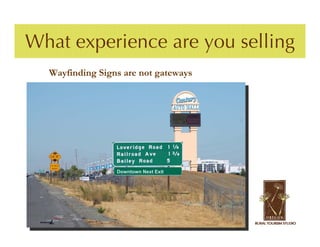
What experience are you selling
  Wayfinding Signs are not gateways


                 Downtown Next Exit
What experience are you selling


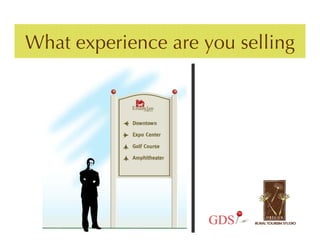
                     GDS
What experience are you selling
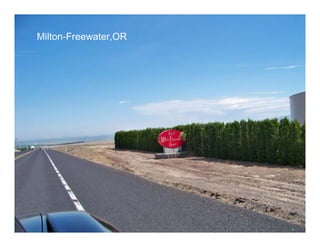
Milton-Freewater,OR
What experience are you selling
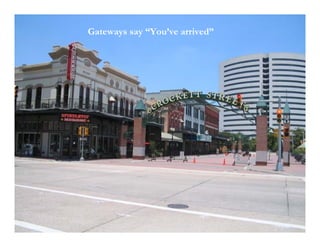
Gateways say “You’ve arrived”
What experience are you selling
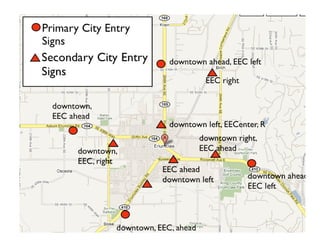
  Connect the Dots
Ambience
39
     Sisters, OR
Juneau, Alaska
  40
41
Enterprise, Oregon
Walla Walla, WA
 42
43
Issaquah, WA
  44
Snoqualmie, WA
 45
What experience are you selling
 Businesses
 Product or Service Appeal
 • Lead with the benefit (remember the visitor
   point of view)
 • Name the company second
 • What are you? Lure, diversion, amenity or
   ambiance.
 • Are you part of a larger niche or destination
   brand?
 • Who does your product or service appeal to?
   Do you understand your customer profile?
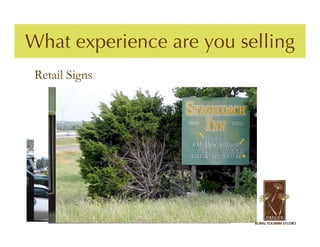
What experience are you selling
 Retail Signs
What experience are you selling
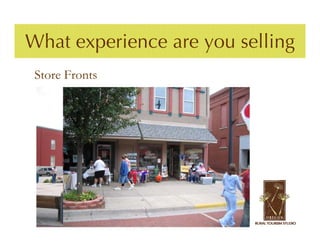
 Store Fronts
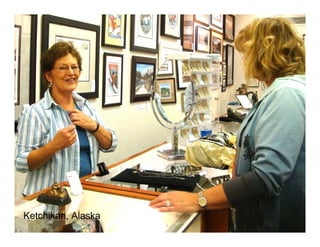
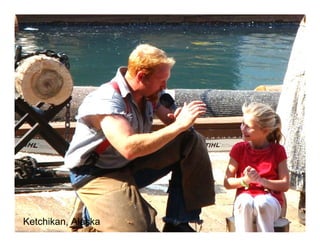
Local Interaction
Ketchikan, Alaska
 51
52
Ketchikan, Alaska
Seattle, WA
  53
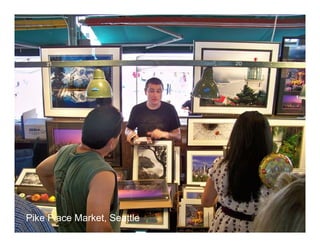
Pike Place Market, Seattle
 54
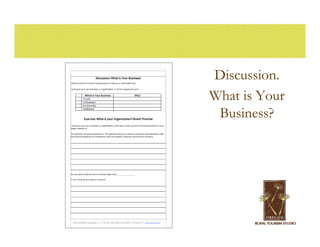
Discussion.
What is Your
 Business?
Positioning
& Branding
Positioning & Branding
What branding IS NOT!
•   A logo
• A slogan
• A marketing campaign
• Geography
Positioning & Branding
A Brand is a promise of what you are going to deliver.
Positioning is how you describe what you are selling.
Destination Branding is directed toward the outside
  visitor or investor. Its focus is on luring new cash into
  the local economy.
Community Branding is directed at reflecting the
  internal community’s perception of themselves. Its
  focus is on creating a self identity of the residents.

(A good reference book is “Destination Branding for Small Cities”
   by Bill Baker.)
Positioning & Branding
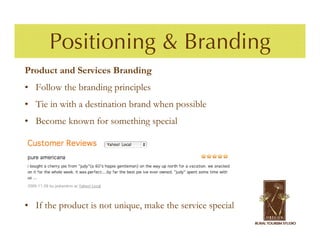
Product and Services Branding
• Follow the branding principles
• Tie in with a destination brand when possible
• Become known for something special


• If the product is not unique, make the service special
Positioning & Branding
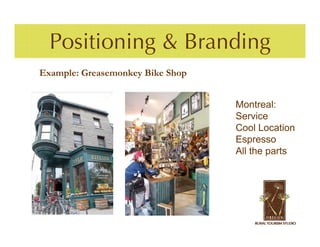
Example: Greasemonkey Bike Shop


                                  Montreal:
                                  Service
                                  Cool Location
                                  Espresso
                                  All the parts
Positioning & Branding
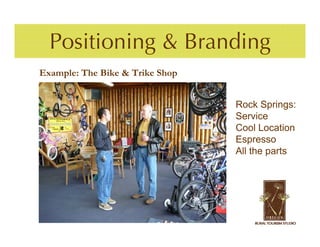
Example: The Bike & Trike Shop


                                 Rock Springs:
                                 Service
                                 Cool Location
                                 Espresso
                                 All the parts
Positioning & Branding
Successful Brands follow these rules:
1. Brands are what people thing of you – NOT what
   you think of yourself or what you say in the
   market place.
Brands are determined by your customers, so deliver
  what you promised, or more.
Positioning & Branding
2. Branding is the art of differentiation. Setting
   yourself apart from everyone else.
Be unique, or be the best.
This matters only within your intended market area.
Positioning & Branding
3. Brands are specific.
The narrower the niche the better.
Stay focused.
Offering everything or many things, dilutes your brand.
Become known for ONE THING. Then add to it.
Positioning & Branding
4. Brands are built on products or services, not
   marketing. Marketing is use for positioning.
Many businesses and destinations fashion a new
  marketing campaign, logo or slogan and wonder why it
  did not work. Because brands are a promise, they only
  become valuable if the product or service delivers.
Focus on a superior product and your marketing
  becomes easier.
Positioning & Branding
5. Brands are earned through performance. You
   don’t roll out a brand like it’s a campaign.
Creating a successful brand takes a long time. The value
  of the brand grows with positive experiences of the
  visitors.
Positioning & Branding
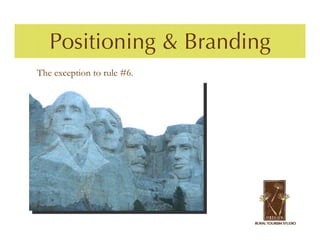
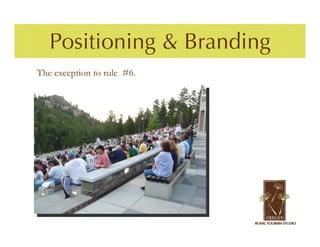
6. Tourism brands must be experiential. That means
   activities, not things to look at.
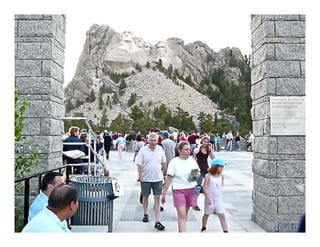
Location-based branding is dead, unless you are Mt.
  Rushmore or the Grand Canyon. Visitors choose what
  they want to do, THEN where to do it.
History is not a good basis for a brand because it is
  difficult to make experiential.
Positioning & Branding
The exception to rule #6.
Positioning & Branding
The exception to rule #6.
Positioning & Branding
7. Position your brand through public relations.
   Word of mouth and third party testimony is
   essential. Use advertising to maintain your
   position.
Remember, your brand is not what you say it is, so
  advertising does not build brands.
More than ever, because of the internet, travelers can get
  third party opinions about your product or
  destination.
Positioning & Branding
8. Build your destination brand on feasibility, not
   sentiment or public consensus.
  Successful destination brands must lure visitors and
  investors. Publicly developed brands usually fail when
  they focus on things that are not important to the
  visitor, but rather to the resident. They often are not
  specific enough, different from other towns, or
  experiential.
Positioning & Branding
9. Build your destination brand from the grassroots.
  Destination branding efforts that are forced from the
  top down by municipal governments or DMO’s don’t
  succeed as often as those developed by a handful of
  local “champions” and “doers” who work tirelessly to
  engage all the many participants necessary to make a
  brand pervasive throughout a community.
Positioning & Branding
10. Even if you do nothing, you still have a brand. It
   just may not be the one you want.
Because consumers decide what your brand is, your
  product, service or destination has a brand.
Do you really know what your brand is?
Are you managing your brand?
Positioning & Branding
The brand feasibility test
1. Are you specific enough to be noticed?
2. Is it something your market will not find closer to
    home?
3. Will you have wide enough appeal to attract the
   number of customers you need to be successful?
4. Do you offer an experience (even if you are selling a
   product)?
5. Can you afford it?
Positioning & Branding
The brand feasibility test - continued
6. Will it work year round?
7. Does it have legs? (is it possible to extend the core
   brand once it is developed?
8. Will the community buy into it? (for destinations)
9. Can it be shown through the whole community? (for
   destinations)
Positioning & Branding
A word about Logos & slogans
Logos & slogans have value when they:
  - reinforce what someone already knows about your
  brand.
  - communicate what your product or service is.
Positioning & Branding
Logos & slogans
Positioning & Branding
Logos & slogans
Positioning & Branding


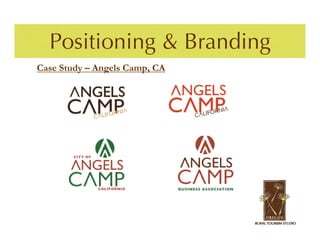
 Case Study – Angels Camp, CA
Positioning & Branding
Case Study – Angels Camp, CA

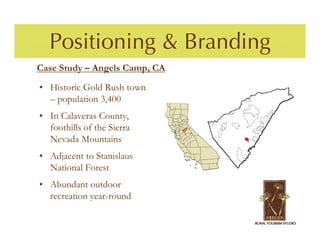
• Historic Gold Rush town
  – population 3,400
• In Calaveras County,
  foothills of the Sierra
  Nevada Mountains
• Adjacent to Stanislaus
  National Forest
• Abundant outdoor
  recreation year-round
Positioning & Branding
Case Study – Angels Camp, CA

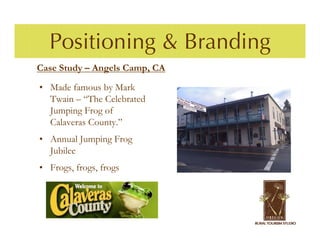
• Made famous by Mark
  Twain – “The Celebrated
  Jumping Frog of
  Calaveras County.”
• Annual Jumping Frog
  Jubilee
• Frogs, frogs, frogs
Positioning & Branding
Case Study – Angels Camp, CA


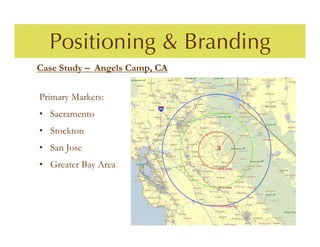
Primary Markets:
• Sacramento
• Stockton
• San Jose
• Greater Bay Area
Positioning & Branding
Case Study – Angels Camp, CA
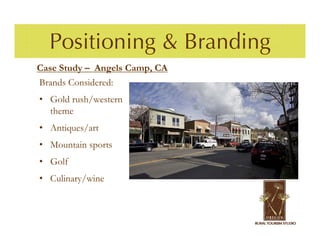
Brands Considered:
• Gold rush/western
  theme
• Antiques/art
• Mountain sports
• Golf
• Culinary/wine
Positioning & Branding
Case Study – Angels Camp, CA
Brand Statement:
Angels Camp is the capital of and place to be based for
  mountain sports in the Sierra Nevada.
LURE: The one place where visitors can find a
  concentration of support services for their mountain
  sports experience, from outfitters, specialized retailers,
  lodging, dining and after hours entertainment.
DIVERSIONS: Experiences in the downtown that the
  visitor might find closer to home.
Positioning & Branding
Case Study – Angels Camp, CA
Keys to Success:
• Local commitment and enthusiasm
• Already has the accommodations – motels, b&bs, etc.
• Needs to recruit outfitters, specialized retail, restaurants,
  pubs to downtown core.
• Create amenities and ambiance.
• Branded product development and marketing.
• MOST IMPORTANT: Deliver on the promise.
Positioning & Branding
Case Study – Angels Camp, CA


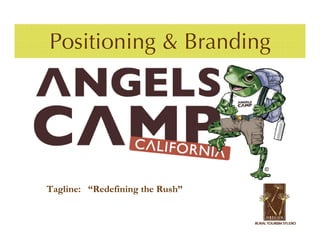
  Tagline: “Redefining the Rush”
Positioning & Branding
Case Study – Angels Camp, CA
Positioning & Branding
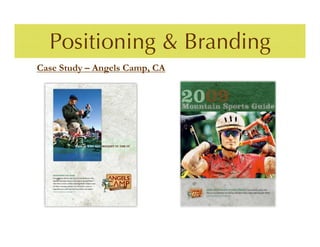
Case Study – Angels Camp, CA

MRV Positioning Branding

  • 1.
    Defining Your TourismMessage What makes you…. Different. Worth the trip. You build your brand through the product, not marketing.
  • 2.
    What experience areyou selling? The Destination The LURE: the experience that motivates the visitor to actually come to your destination. DIVERSIONS: things visitors can do closer to home but will do in your destination because they are already there. AMENITIES: Things that make the visit a comfortable one AMBIENCE: historic buildings, public art, street entertainers, etc. (SEE YOUR GLOSSARY)
  • 3.
  • 4.
  • 5.
  • 6.
  • 8.
    What do youthink the Pendleton Roundup is?
  • 9.
  • 10.
  • 11.
  • 12.
  • 13.
  • 14.
  • 15.
  • 16.
  • 17.
    17 Park City, Utah Bend, OR
  • 18.
    Sonoma County 18 Juneau, Alaska
  • 19.
  • 20.
  • 21.
  • 22.
  • 23.
  • 24.
  • 25.
  • 26.
  • 27.
    What experience areyou selling Exercise: Destinatio n Evaluatio n
  • 28.
    What experience areyou selling “First Impressions Are Lasting Impressions” Approaches to the town • Don’t announce the destination until they are there. • That’s what gateways are for • Connect the dots. Use kiosks and outdoor maps to direct visitors to other nearby attractions and places to spend money.
  • 29.
    What experience areyou selling The way-finding components – Directional signs – Gateways – Kiosks – Pole banners – Map Stands
  • 30.
    What experience areyou selling Wayfinding Signs are not gateways Downtown Next Exit
  • 32.
    What experience areyou selling GDS
  • 33.
  • 34.
  • 35.
  • 36.
  • 37.
    What experience areyou selling Connect the Dots
  • 38.
  • 39.
    39 Sisters, OR
  • 40.
  • 41.
  • 42.
  • 43.
  • 44.
  • 45.
  • 46.
    What experience areyou selling Businesses Product or Service Appeal • Lead with the benefit (remember the visitor point of view) • Name the company second • What are you? Lure, diversion, amenity or ambiance. • Are you part of a larger niche or destination brand? • Who does your product or service appeal to? Do you understand your customer profile?
  • 47.
  • 48.
    What experience areyou selling Retail Signs
  • 49.
    What experience areyou selling Store Fronts
  • 50.
  • 51.
  • 52.
  • 53.
  • 54.
  • 55.
  • 56.
  • 57.
    Positioning & Branding Whatbranding IS NOT! • A logo • A slogan • A marketing campaign • Geography
  • 58.
    Positioning & Branding ABrand is a promise of what you are going to deliver. Positioning is how you describe what you are selling. Destination Branding is directed toward the outside visitor or investor. Its focus is on luring new cash into the local economy. Community Branding is directed at reflecting the internal community’s perception of themselves. Its focus is on creating a self identity of the residents. (A good reference book is “Destination Branding for Small Cities” by Bill Baker.)
  • 59.
    Positioning & Branding Productand Services Branding • Follow the branding principles • Tie in with a destination brand when possible • Become known for something special • If the product is not unique, make the service special
  • 60.
    Positioning & Branding Example:Greasemonkey Bike Shop Montreal: Service Cool Location Espresso All the parts
  • 61.
    Positioning & Branding Example:The Bike & Trike Shop Rock Springs: Service Cool Location Espresso All the parts
  • 62.
    Positioning & Branding SuccessfulBrands follow these rules: 1. Brands are what people thing of you – NOT what you think of yourself or what you say in the market place. Brands are determined by your customers, so deliver what you promised, or more.
  • 63.
    Positioning & Branding 2.Branding is the art of differentiation. Setting yourself apart from everyone else. Be unique, or be the best. This matters only within your intended market area.
  • 64.
    Positioning & Branding 3.Brands are specific. The narrower the niche the better. Stay focused. Offering everything or many things, dilutes your brand. Become known for ONE THING. Then add to it.
  • 65.
    Positioning & Branding 4.Brands are built on products or services, not marketing. Marketing is use for positioning. Many businesses and destinations fashion a new marketing campaign, logo or slogan and wonder why it did not work. Because brands are a promise, they only become valuable if the product or service delivers. Focus on a superior product and your marketing becomes easier.
  • 66.
    Positioning & Branding 5.Brands are earned through performance. You don’t roll out a brand like it’s a campaign. Creating a successful brand takes a long time. The value of the brand grows with positive experiences of the visitors.
  • 67.
    Positioning & Branding 6.Tourism brands must be experiential. That means activities, not things to look at. Location-based branding is dead, unless you are Mt. Rushmore or the Grand Canyon. Visitors choose what they want to do, THEN where to do it. History is not a good basis for a brand because it is difficult to make experiential.
  • 68.
    Positioning & Branding Theexception to rule #6.
  • 69.
    Positioning & Branding Theexception to rule #6.
  • 70.
    Positioning & Branding 7.Position your brand through public relations. Word of mouth and third party testimony is essential. Use advertising to maintain your position. Remember, your brand is not what you say it is, so advertising does not build brands. More than ever, because of the internet, travelers can get third party opinions about your product or destination.
  • 71.
    Positioning & Branding 8.Build your destination brand on feasibility, not sentiment or public consensus. Successful destination brands must lure visitors and investors. Publicly developed brands usually fail when they focus on things that are not important to the visitor, but rather to the resident. They often are not specific enough, different from other towns, or experiential.
  • 72.
    Positioning & Branding 9.Build your destination brand from the grassroots. Destination branding efforts that are forced from the top down by municipal governments or DMO’s don’t succeed as often as those developed by a handful of local “champions” and “doers” who work tirelessly to engage all the many participants necessary to make a brand pervasive throughout a community.
  • 73.
    Positioning & Branding 10.Even if you do nothing, you still have a brand. It just may not be the one you want. Because consumers decide what your brand is, your product, service or destination has a brand. Do you really know what your brand is? Are you managing your brand?
  • 74.
    Positioning & Branding Thebrand feasibility test 1. Are you specific enough to be noticed? 2. Is it something your market will not find closer to home? 3. Will you have wide enough appeal to attract the number of customers you need to be successful? 4. Do you offer an experience (even if you are selling a product)? 5. Can you afford it?
  • 75.
    Positioning & Branding Thebrand feasibility test - continued 6. Will it work year round? 7. Does it have legs? (is it possible to extend the core brand once it is developed? 8. Will the community buy into it? (for destinations) 9. Can it be shown through the whole community? (for destinations)
  • 76.
    Positioning & Branding Aword about Logos & slogans Logos & slogans have value when they: - reinforce what someone already knows about your brand. - communicate what your product or service is.
  • 77.
  • 78.
  • 79.
    Positioning & Branding Case Study – Angels Camp, CA
  • 80.
    Positioning & Branding CaseStudy – Angels Camp, CA • Historic Gold Rush town – population 3,400 • In Calaveras County, foothills of the Sierra Nevada Mountains • Adjacent to Stanislaus National Forest • Abundant outdoor recreation year-round
  • 81.
    Positioning & Branding CaseStudy – Angels Camp, CA • Made famous by Mark Twain – “The Celebrated Jumping Frog of Calaveras County.” • Annual Jumping Frog Jubilee • Frogs, frogs, frogs
  • 82.
    Positioning & Branding CaseStudy – Angels Camp, CA Primary Markets: • Sacramento • Stockton • San Jose • Greater Bay Area
  • 83.
    Positioning & Branding CaseStudy – Angels Camp, CA Brands Considered: • Gold rush/western theme • Antiques/art • Mountain sports • Golf • Culinary/wine
  • 84.
    Positioning & Branding CaseStudy – Angels Camp, CA Brand Statement: Angels Camp is the capital of and place to be based for mountain sports in the Sierra Nevada. LURE: The one place where visitors can find a concentration of support services for their mountain sports experience, from outfitters, specialized retailers, lodging, dining and after hours entertainment. DIVERSIONS: Experiences in the downtown that the visitor might find closer to home.
  • 85.
    Positioning & Branding CaseStudy – Angels Camp, CA Keys to Success: • Local commitment and enthusiasm • Already has the accommodations – motels, b&bs, etc. • Needs to recruit outfitters, specialized retail, restaurants, pubs to downtown core. • Create amenities and ambiance. • Branded product development and marketing. • MOST IMPORTANT: Deliver on the promise.
  • 86.
    Positioning & Branding CaseStudy – Angels Camp, CA Tagline: “Redefining the Rush”
  • 87.
    Positioning & Branding CaseStudy – Angels Camp, CA
  • 88.
    Positioning & Branding CaseStudy – Angels Camp, CA