
Prepared By : Mehta Shashwat J.
(08/IT/091)
   Material requirements planning (MRP) is a
    production planning and inventory control
    system used to manage manufacturing
    processes. Most MRP systems are software-
    based, while it is possible to conduct MRP by
    hand as well.
   It is an operations management tool that uses a
    computer to help manage materials and
    inventories.
   MRP is a concept of creating material plans and
    production schedules based on the lead times of
    a supply chain. However, even if you create an
    MRP-based plan based on an ideal factory model,
    problems may still actually occur.
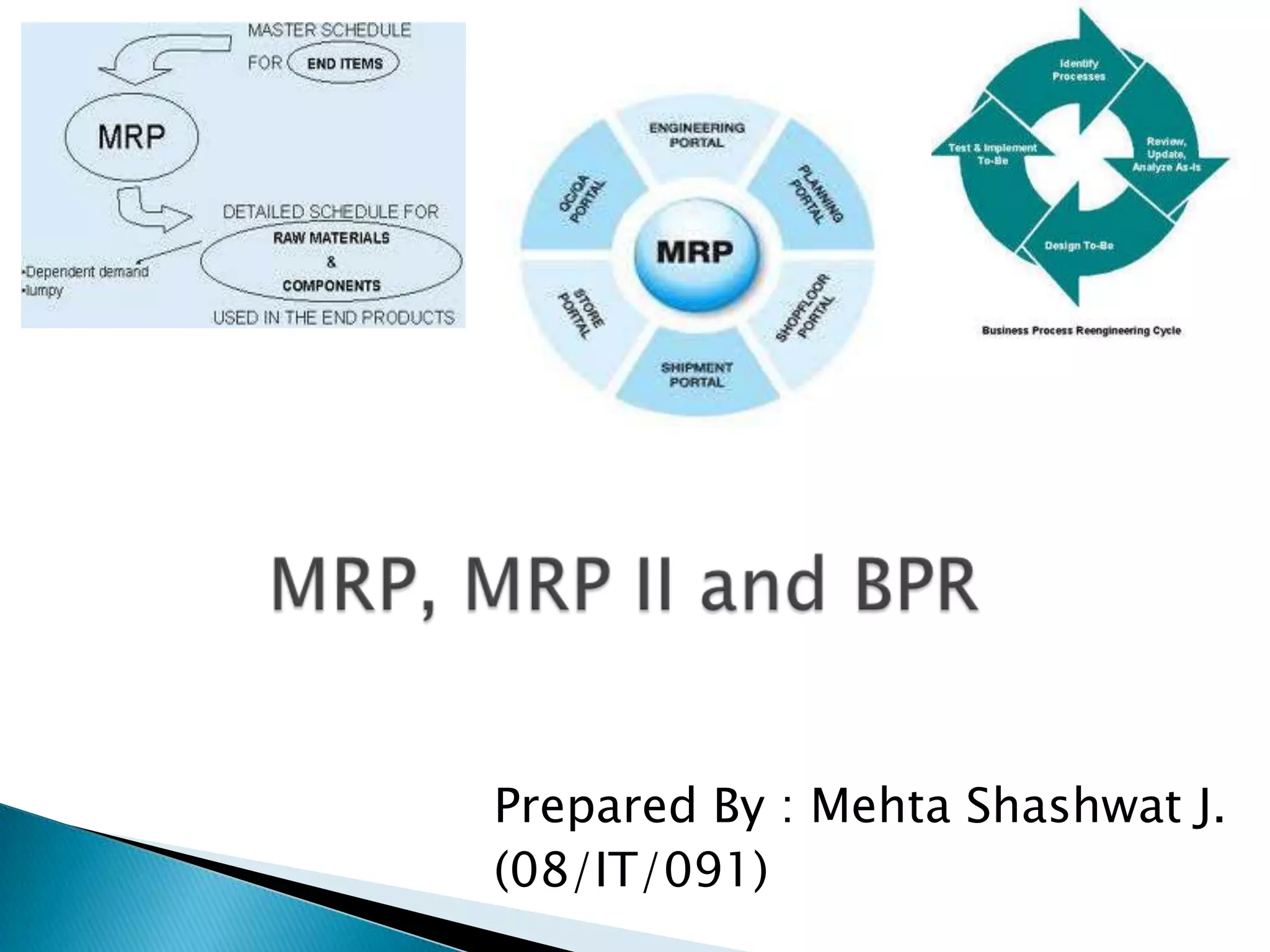
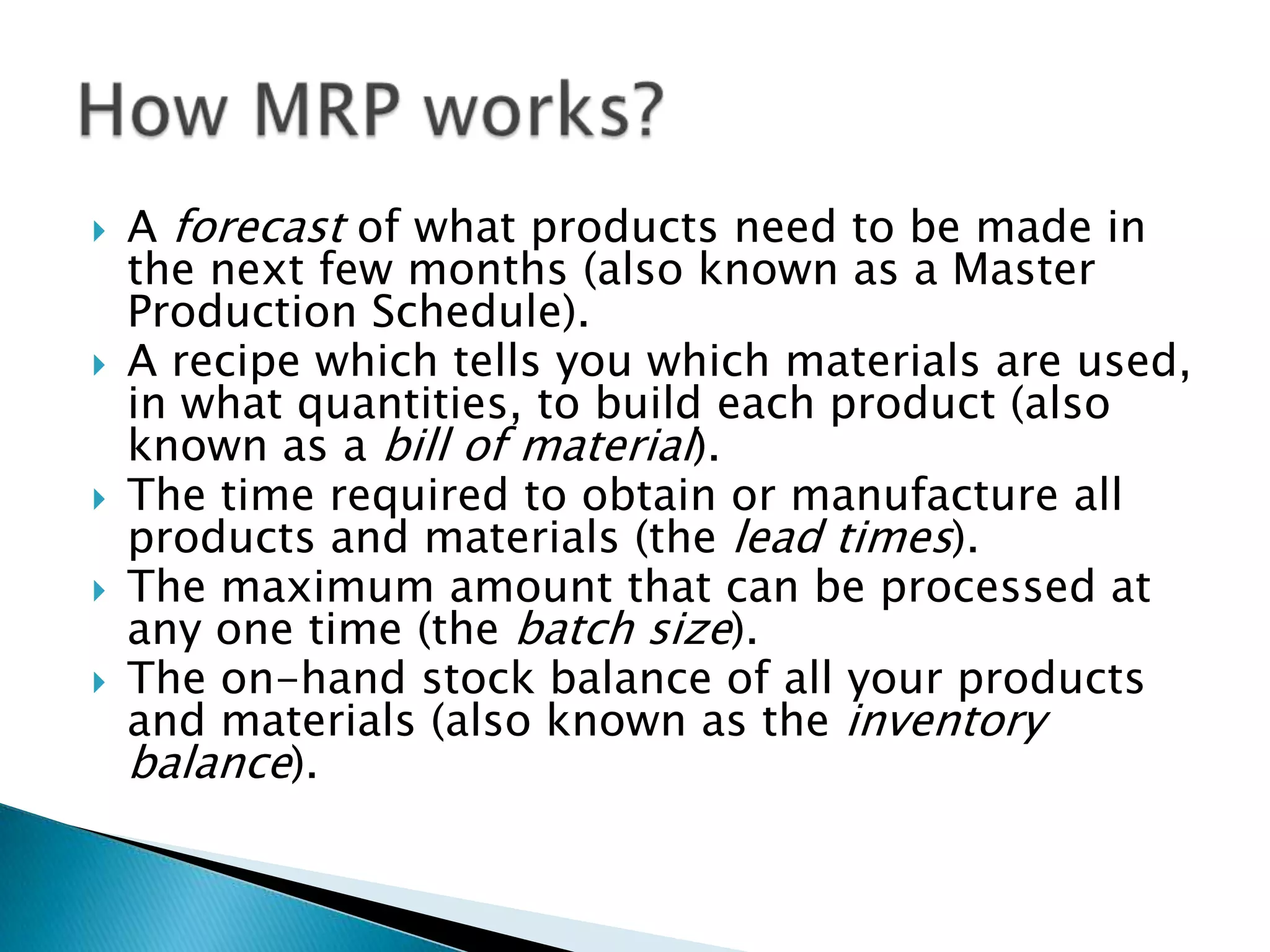
   MRP is a tool deal with these problem
    ◦ What items are required?
    ◦ How many are required?
    ◦ When are they required?
   A forecast of what products need to be made in
    the next few months (also known as a Master
    Production Schedule).
   A recipe which tells you which materials are used,
    in what quantities, to build each product (also
    known as a bill of material).
   The time required to obtain or manufacture all
    products and materials (the lead times).
   The maximum amount that can be processed at
    any one time (the batch size).
   The on-hand stock balance of all your products
    and materials (also known as the inventory
    balance).
   If a small business has not maintained good inventory
    records or has not updated its bills of materials with all
    relevant changes, it may encounter serious problems with
    the outputs of its MRP system.
   The problems could range from missing parts and
    excessive order quantities to schedule delays and missed
    delivery dates.
   At a minimum, an MRP system must have an accurate
    master production schedule, good lead time estimates,
    and current inventory records in order to function
    effectively and produce useful information.
   Another potential drawback associated with MRP is that
    the systems can be difficult, time consuming, and costly to
    implement. Many businesses encounter resistance from
    employees when they try to implement MRP.
   Manufacturing resource planning (MRP II) is
    defined as a method for the effective planning of
    all resources of a manufacturing company.
   Ideally, it addresses operational planning in
    units, financial planning in dollars, and has a
    simulation capability to answer "what-if"
    questions and extension of closed-loop MRP.
   It is integrated planning of a company's material,
    equipment and people to meet the Business Plan.
    The integration requires that the same
    information (Sales Forecast, Bill of Material, stock
    records, actual works, purchase and customer
    orders etc.) is used throughout the Company.
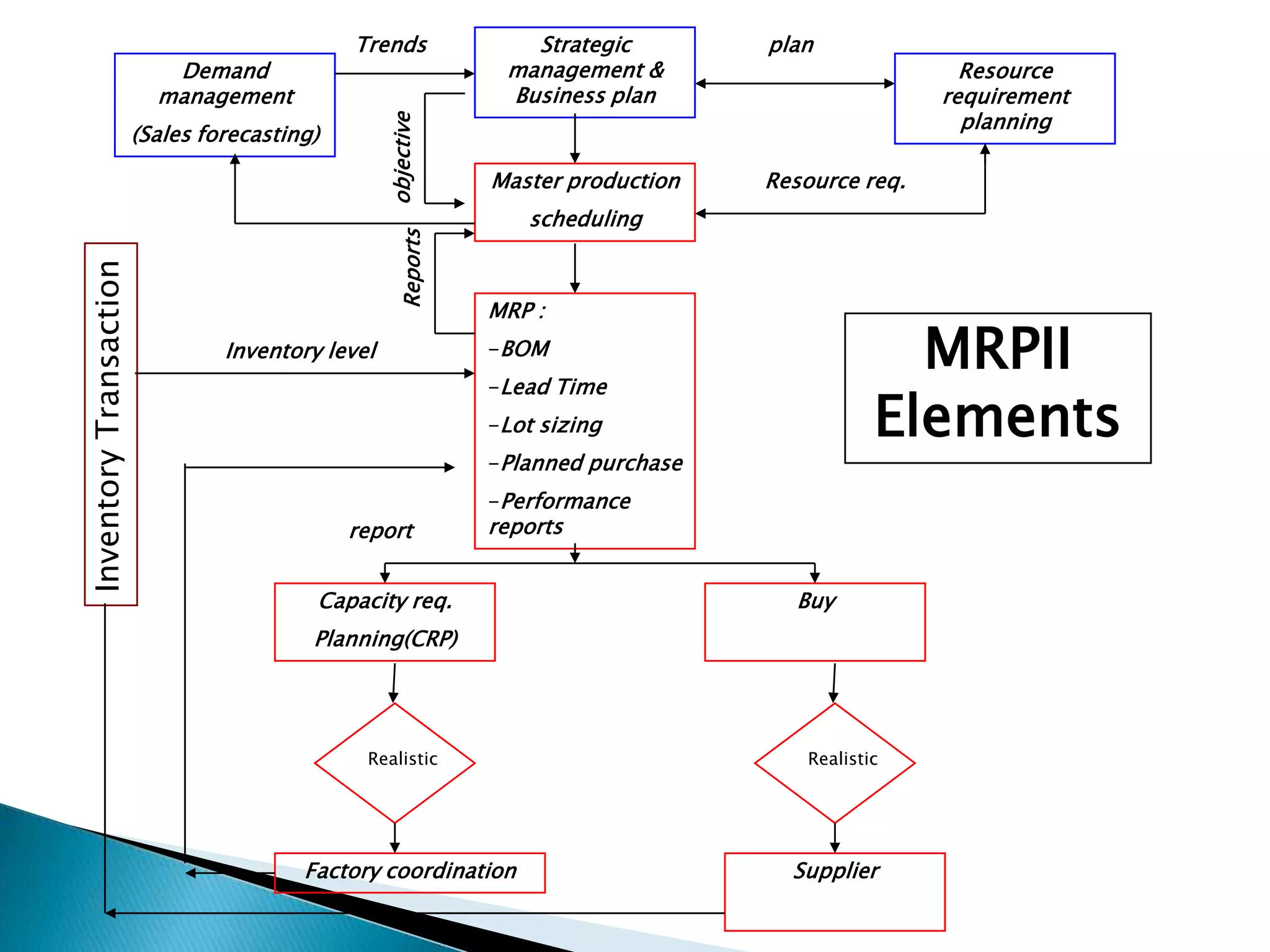
Trends               Strategic        plan
                           Demand                                management &                         Resource
                          management                             Business plan                      requirement
                                                                                                      planning


                                                   objective
                        (Sales forecasting)

                                                                Master production   Resource req.
                                                                   scheduling


                                                      Reports
Inventory Transaction


                                                                MRP :
                                 Inventory level                -BOM
                                                                -Lead Time
                                                                                                 MRPII
                                                                -Lot sizing                    Elements
                                                                -Planned purchase
                                                                -Performance
                                              report            reports


                                          Capacity req.                               Buy
                                          Planning(CRP)


                                               Realistic                               Realistic


                                         Factory coordination                         Supplier
   MRP II systems can provide:
    ◦ Better control of inventories
    ◦ Improved scheduling
    ◦ Productive relationships with suppliers
   For design / engineering:
    ◦ Improved design control
    ◦ Better quality and quality control
   For financial and costing:
    ◦ Reduced working capital for inventory
    ◦ Improved cash flow through quicker deliveries
    ◦ Accurate inventory records
   a complete inventory management system
   production functionality
   costing functionality
   master scheduling and materials
    requirements planning
   capacity planning
   work order management
   purchase order management
   sales analysis functionality and accounting
    functionality
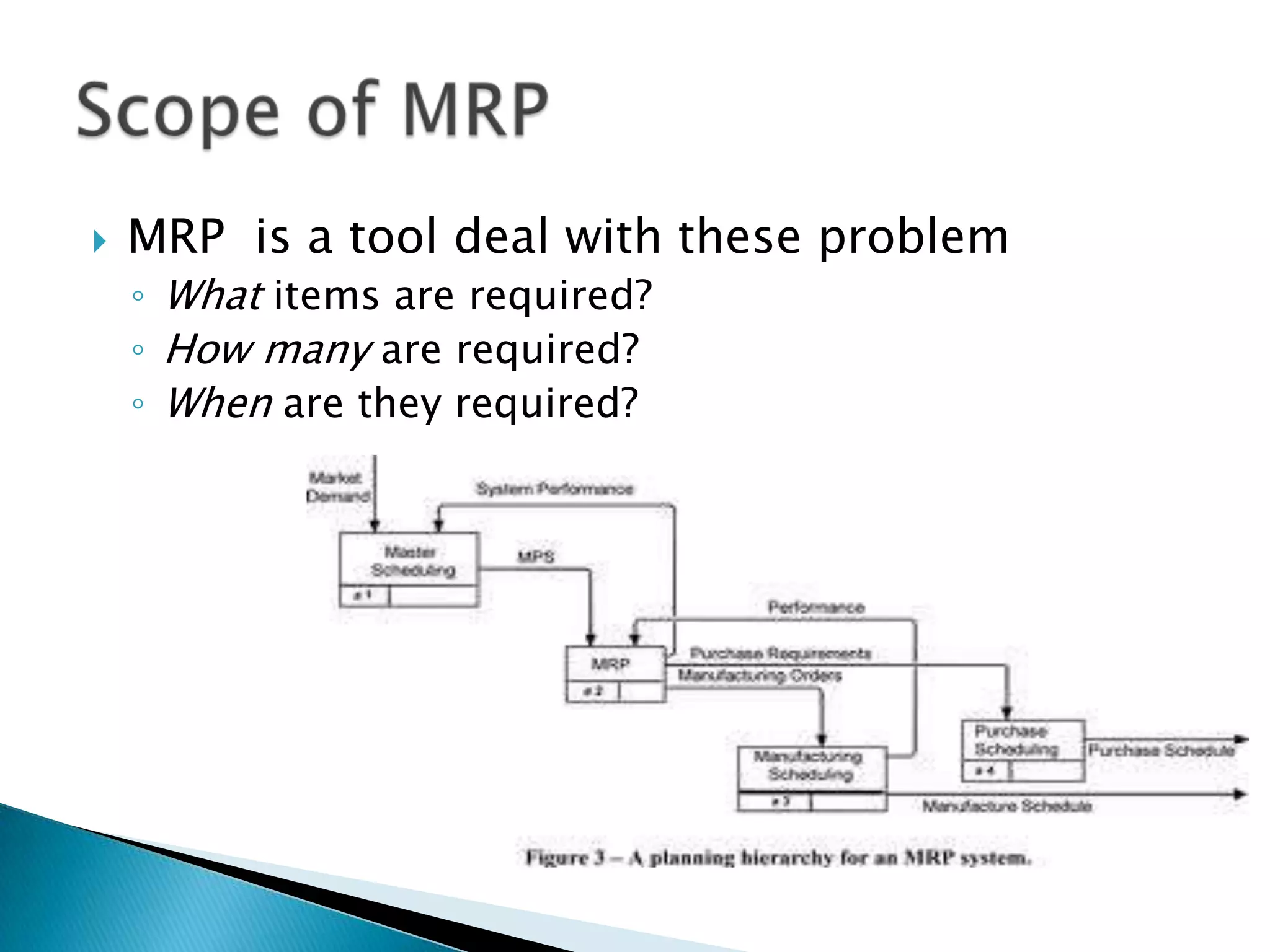
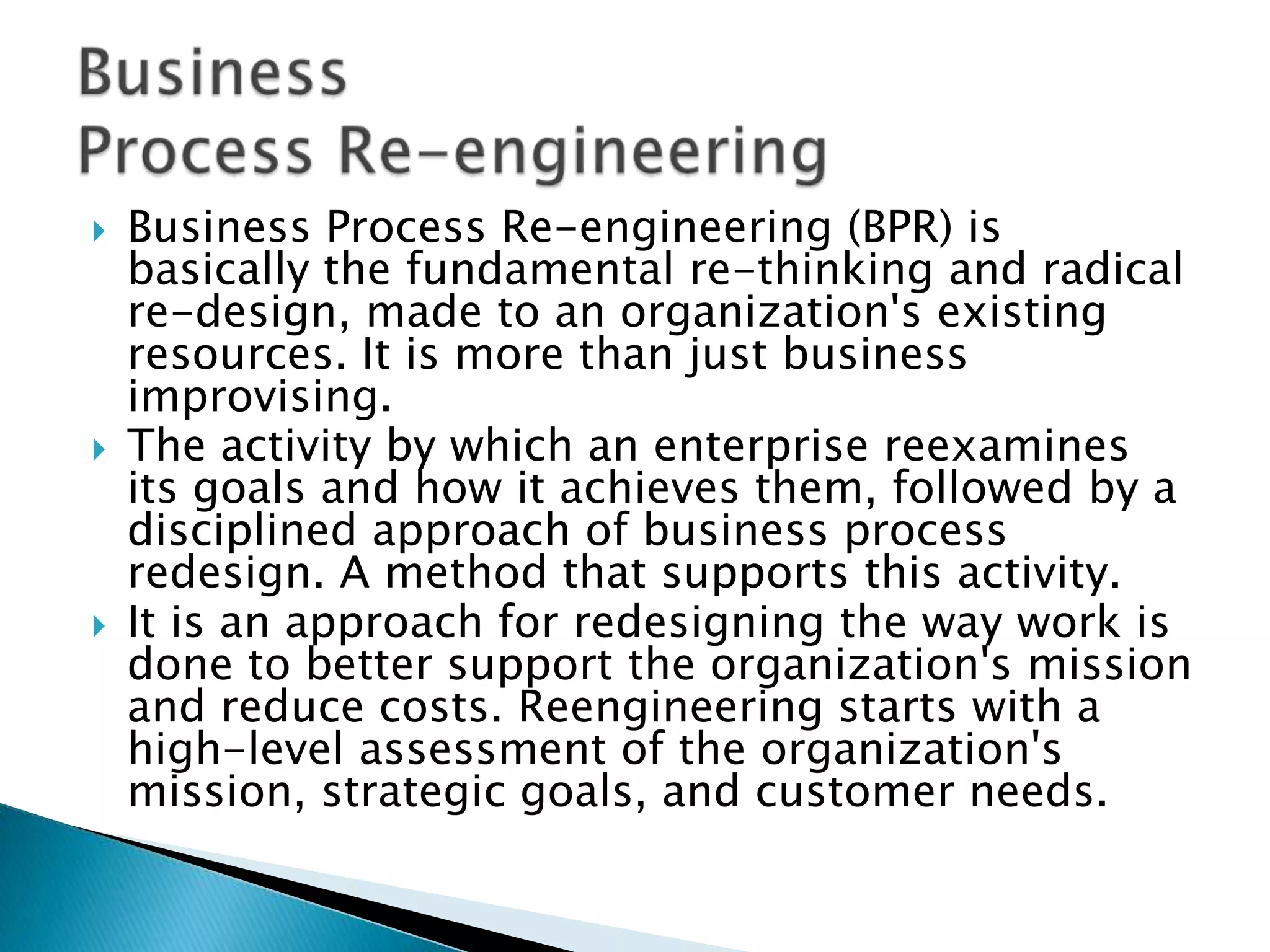
   Business Process Re-engineering (BPR) is
    basically the fundamental re-thinking and radical
    re-design, made to an organization's existing
    resources. It is more than just business
    improvising.
   The activity by which an enterprise reexamines
    its goals and how it achieves them, followed by a
    disciplined approach of business process
    redesign. A method that supports this activity.
   It is an approach for redesigning the way work is
    done to better support the organization's mission
    and reduce costs. Reengineering starts with a
    high-level assessment of the organization's
    mission, strategic goals, and customer needs.
Mrp, mrp 2 n bpr
Mrp, mrp 2 n bpr

Mrp, mrp 2 n bpr

  • 1.
    Prepared By :Mehta Shashwat J. (08/IT/091)
  • 2.
    Material requirements planning (MRP) is a production planning and inventory control system used to manage manufacturing processes. Most MRP systems are software- based, while it is possible to conduct MRP by hand as well.  It is an operations management tool that uses a computer to help manage materials and inventories.  MRP is a concept of creating material plans and production schedules based on the lead times of a supply chain. However, even if you create an MRP-based plan based on an ideal factory model, problems may still actually occur.
  • 3.
    MRP is a tool deal with these problem ◦ What items are required? ◦ How many are required? ◦ When are they required?
  • 4.
    A forecast of what products need to be made in the next few months (also known as a Master Production Schedule).  A recipe which tells you which materials are used, in what quantities, to build each product (also known as a bill of material).  The time required to obtain or manufacture all products and materials (the lead times).  The maximum amount that can be processed at any one time (the batch size).  The on-hand stock balance of all your products and materials (also known as the inventory balance).
  • 5.
    If a small business has not maintained good inventory records or has not updated its bills of materials with all relevant changes, it may encounter serious problems with the outputs of its MRP system.  The problems could range from missing parts and excessive order quantities to schedule delays and missed delivery dates.  At a minimum, an MRP system must have an accurate master production schedule, good lead time estimates, and current inventory records in order to function effectively and produce useful information.  Another potential drawback associated with MRP is that the systems can be difficult, time consuming, and costly to implement. Many businesses encounter resistance from employees when they try to implement MRP.
  • 6.
    Manufacturing resource planning (MRP II) is defined as a method for the effective planning of all resources of a manufacturing company.  Ideally, it addresses operational planning in units, financial planning in dollars, and has a simulation capability to answer "what-if" questions and extension of closed-loop MRP.  It is integrated planning of a company's material, equipment and people to meet the Business Plan. The integration requires that the same information (Sales Forecast, Bill of Material, stock records, actual works, purchase and customer orders etc.) is used throughout the Company.
  • 7.
    Trends Strategic plan Demand management & Resource management Business plan requirement planning objective (Sales forecasting) Master production Resource req. scheduling Reports Inventory Transaction MRP : Inventory level -BOM -Lead Time MRPII -Lot sizing Elements -Planned purchase -Performance report reports Capacity req. Buy Planning(CRP) Realistic Realistic Factory coordination Supplier
  • 8.
    MRP II systems can provide: ◦ Better control of inventories ◦ Improved scheduling ◦ Productive relationships with suppliers  For design / engineering: ◦ Improved design control ◦ Better quality and quality control  For financial and costing: ◦ Reduced working capital for inventory ◦ Improved cash flow through quicker deliveries ◦ Accurate inventory records
  • 9.
    a complete inventory management system  production functionality  costing functionality  master scheduling and materials requirements planning  capacity planning  work order management  purchase order management  sales analysis functionality and accounting functionality
  • 11.
    Business Process Re-engineering (BPR) is basically the fundamental re-thinking and radical re-design, made to an organization's existing resources. It is more than just business improvising.  The activity by which an enterprise reexamines its goals and how it achieves them, followed by a disciplined approach of business process redesign. A method that supports this activity.  It is an approach for redesigning the way work is done to better support the organization's mission and reduce costs. Reengineering starts with a high-level assessment of the organization's mission, strategic goals, and customer needs.