Montserrat: Volcanic Eruption in an LEDC
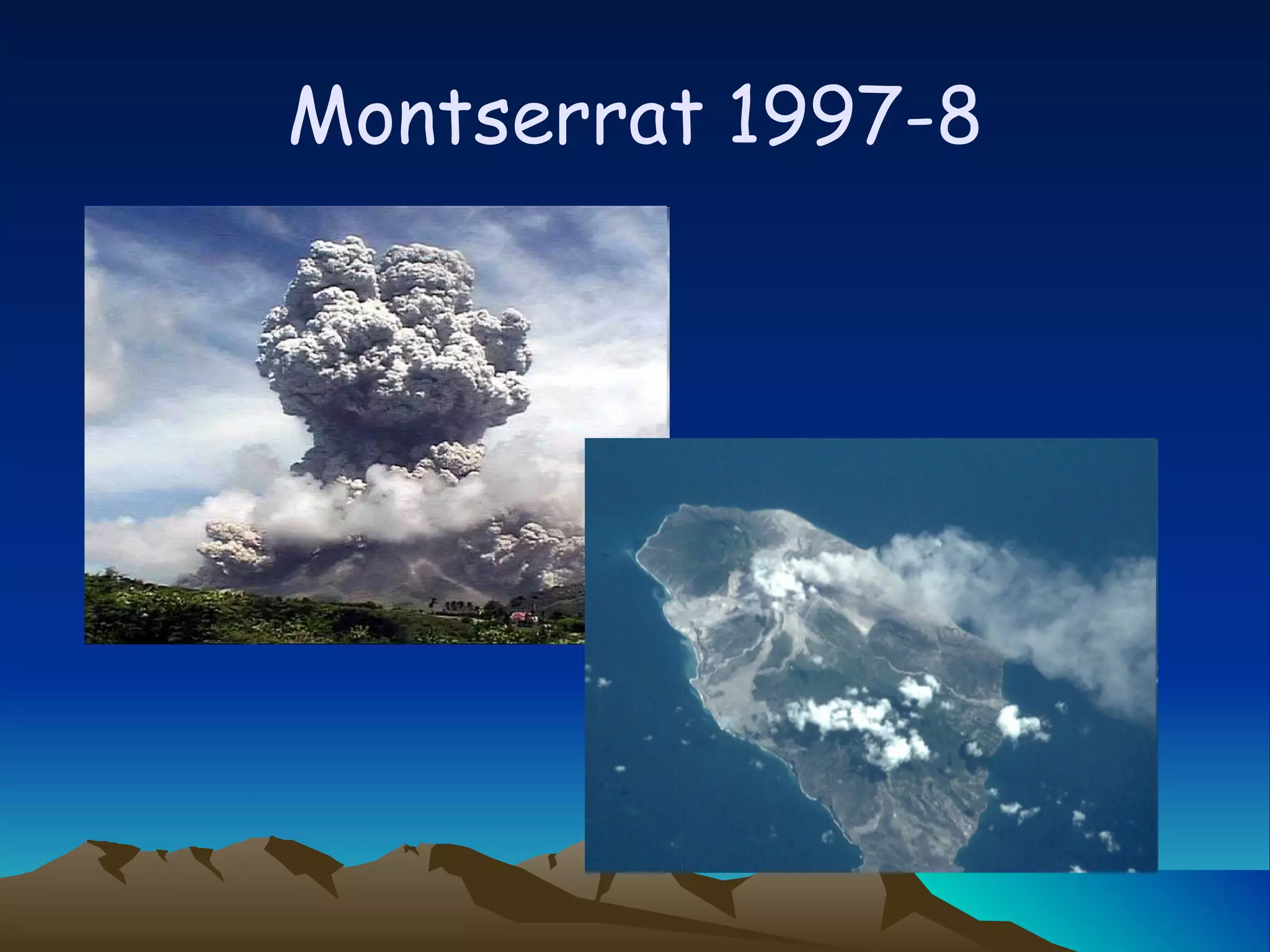
Montserrat   1997-8
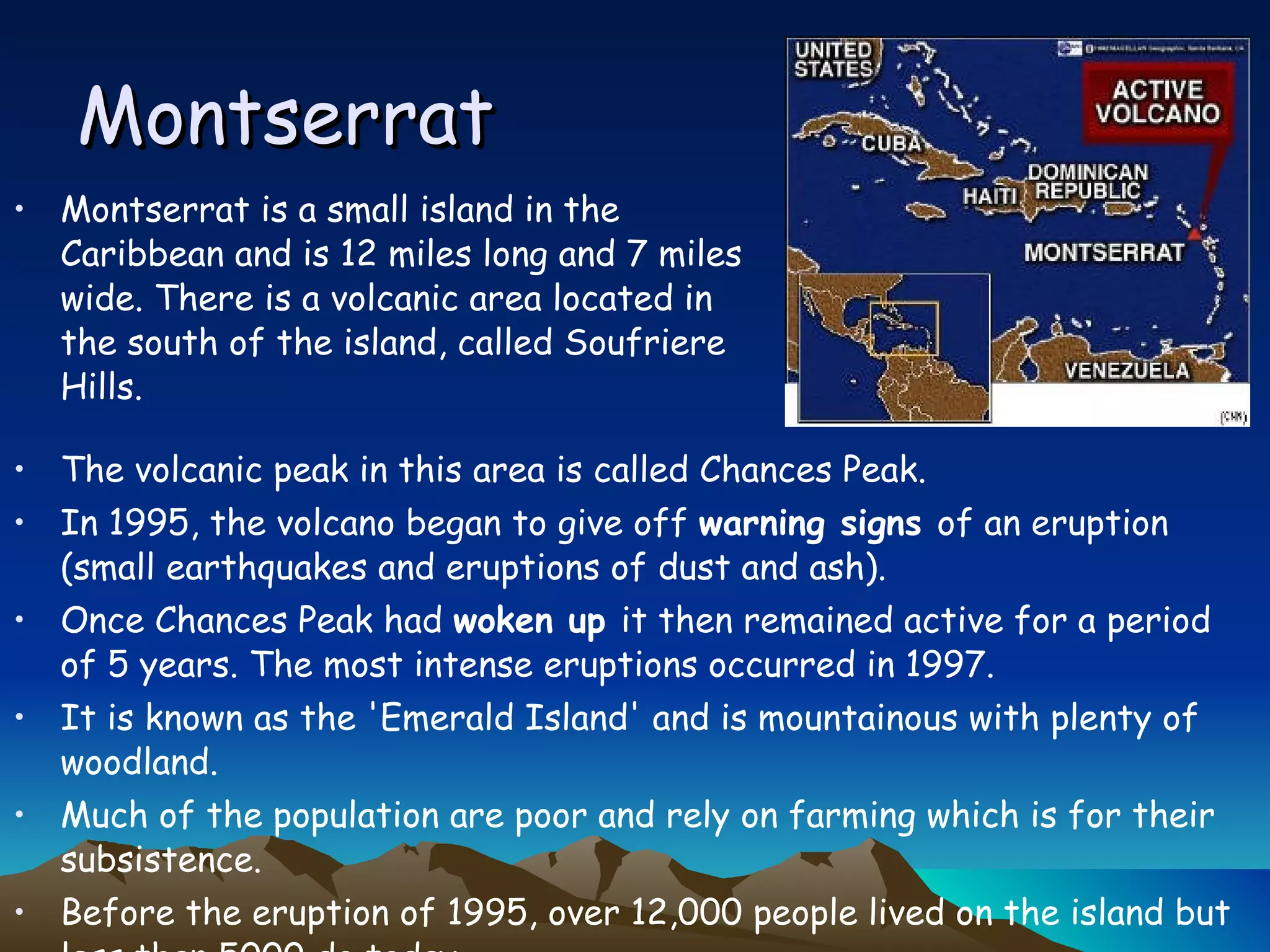
Montserrat Montserrat is a small island in the Caribbean and is 12 miles long and 7 miles wide. There is a volcanic area located in the south of the island, called Soufriere Hills. The volcanic peak in this area is called Chances Peak. In 1995, the volcano began to give off  warning signs  of an eruption (small earthquakes and eruptions of dust and ash).  Once Chances Peak had  woken up  it then remained active for a period of 5 years. The most intense eruptions occurred in 1997. It is known as the 'Emerald Island' and is mountainous with plenty of woodland.  Much of the population are poor and rely on farming which is for their subsistence.  Before the eruption of 1995, over 12,000 people lived on the island but less than 5000 do today
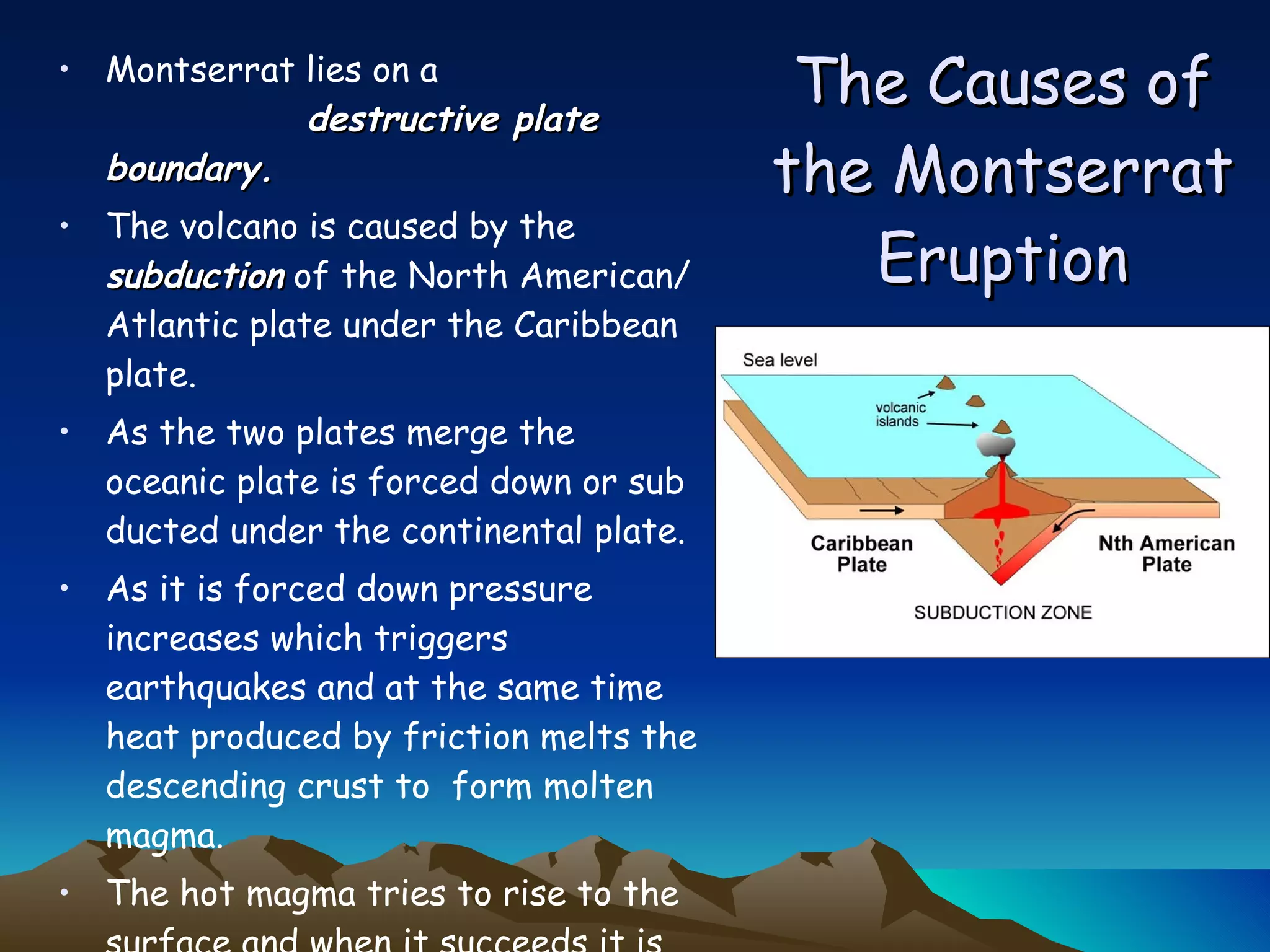
The Causes of the Montserrat Eruption Montserrat lies on a  destructive plate boundary.   The volcano is caused by the  subduction  of the North American/Atlantic plate under the Caribbean plate.  As the two plates merge the oceanic plate is forced down or sub ducted under the continental plate.  As it is forced down pressure increases which triggers earthquakes and at the same time heat produced by friction melts the descending crust to  form molten magma.  The hot magma tries to rise to the surface and when it succeeds it is released through a volcanic vent. Over time this forms a volcano.
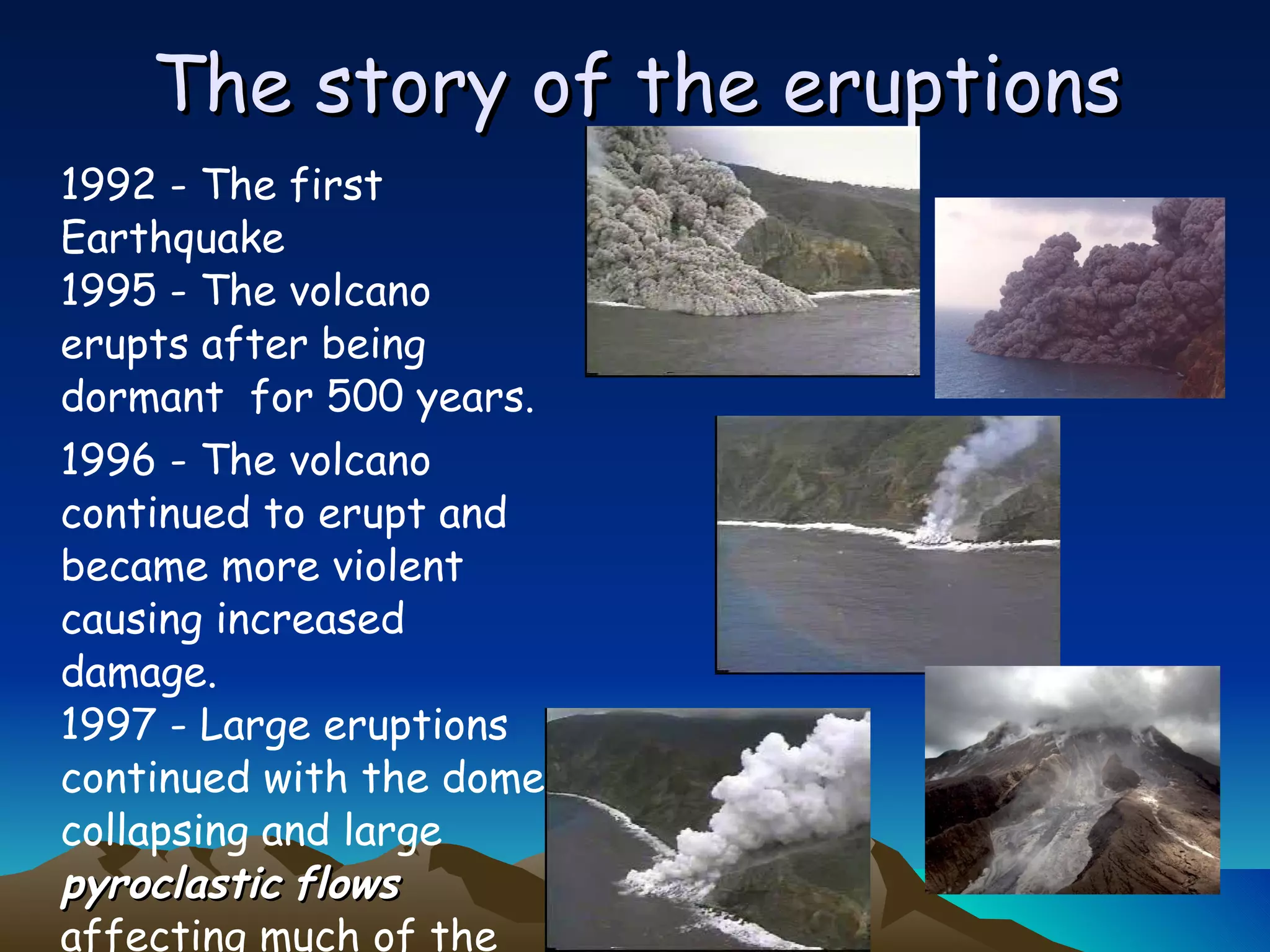
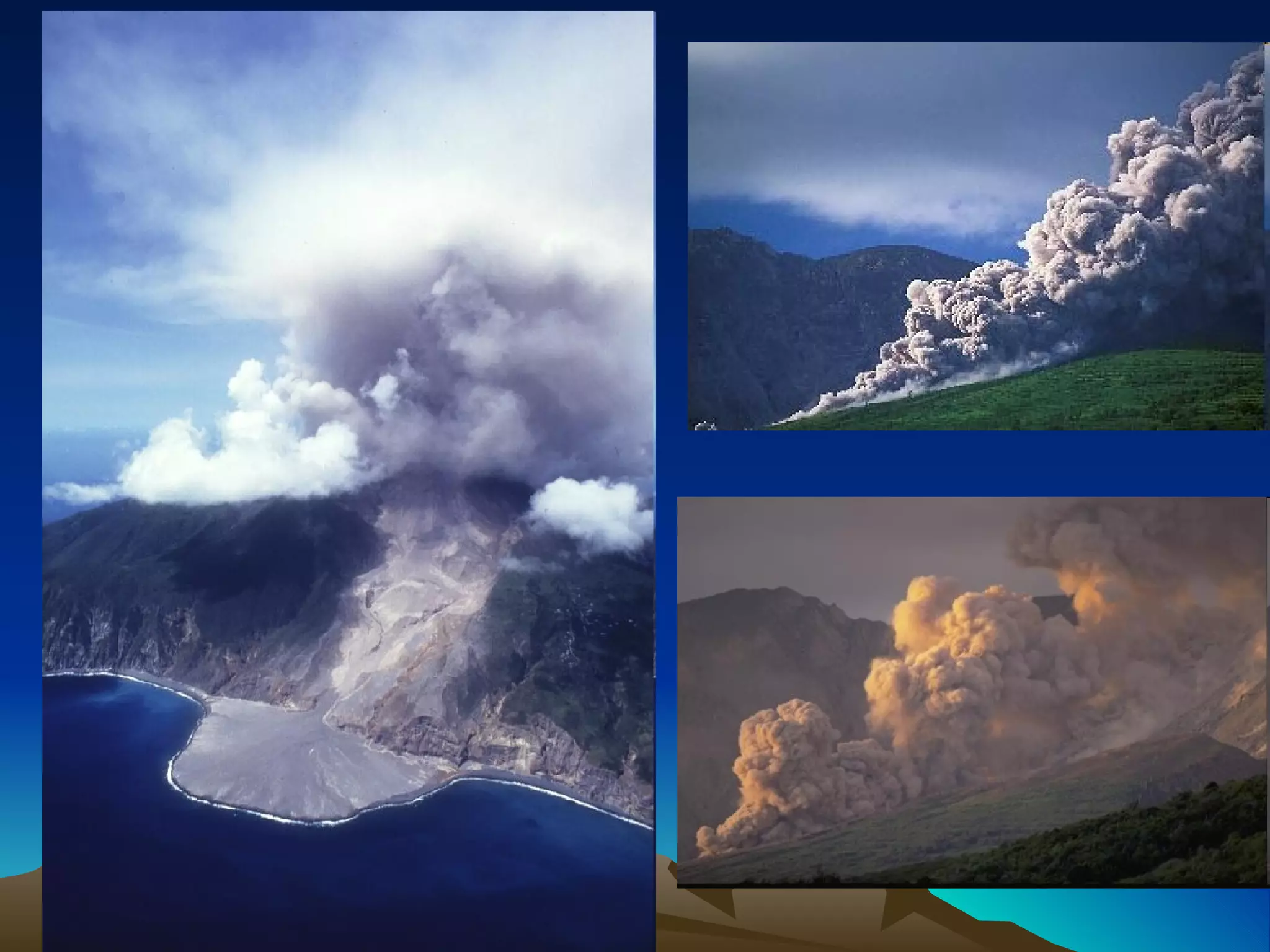
The story of the eruptions 1992 - The first Earthquake 1995 - The volcano erupts after being dormant  for 500 years. 1996 - The volcano continued to erupt and became more violent causing increased damage. 1997 - Large eruptions continued with the dome collapsing and large  pyroclastic   flows  affecting much of the island
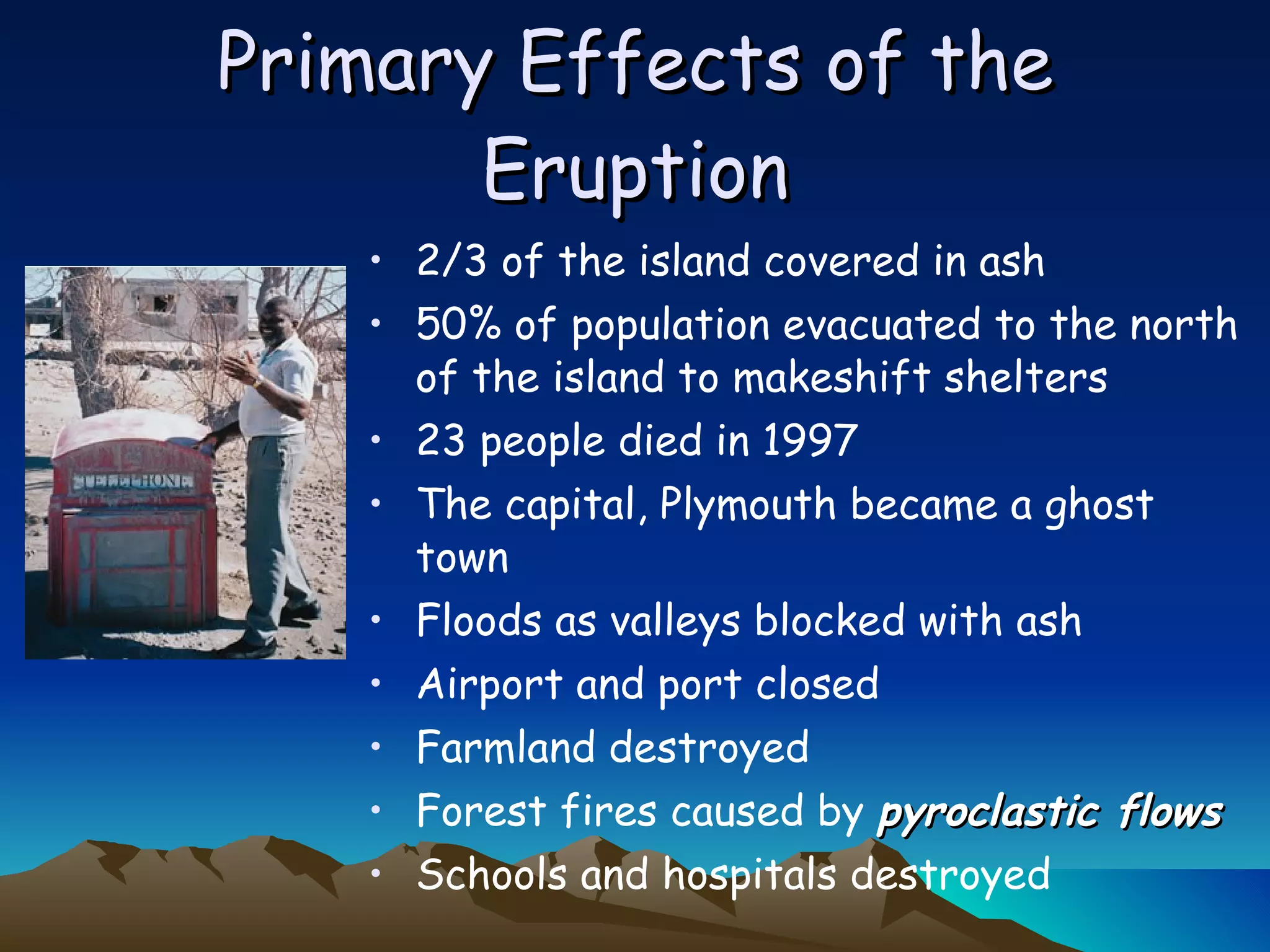
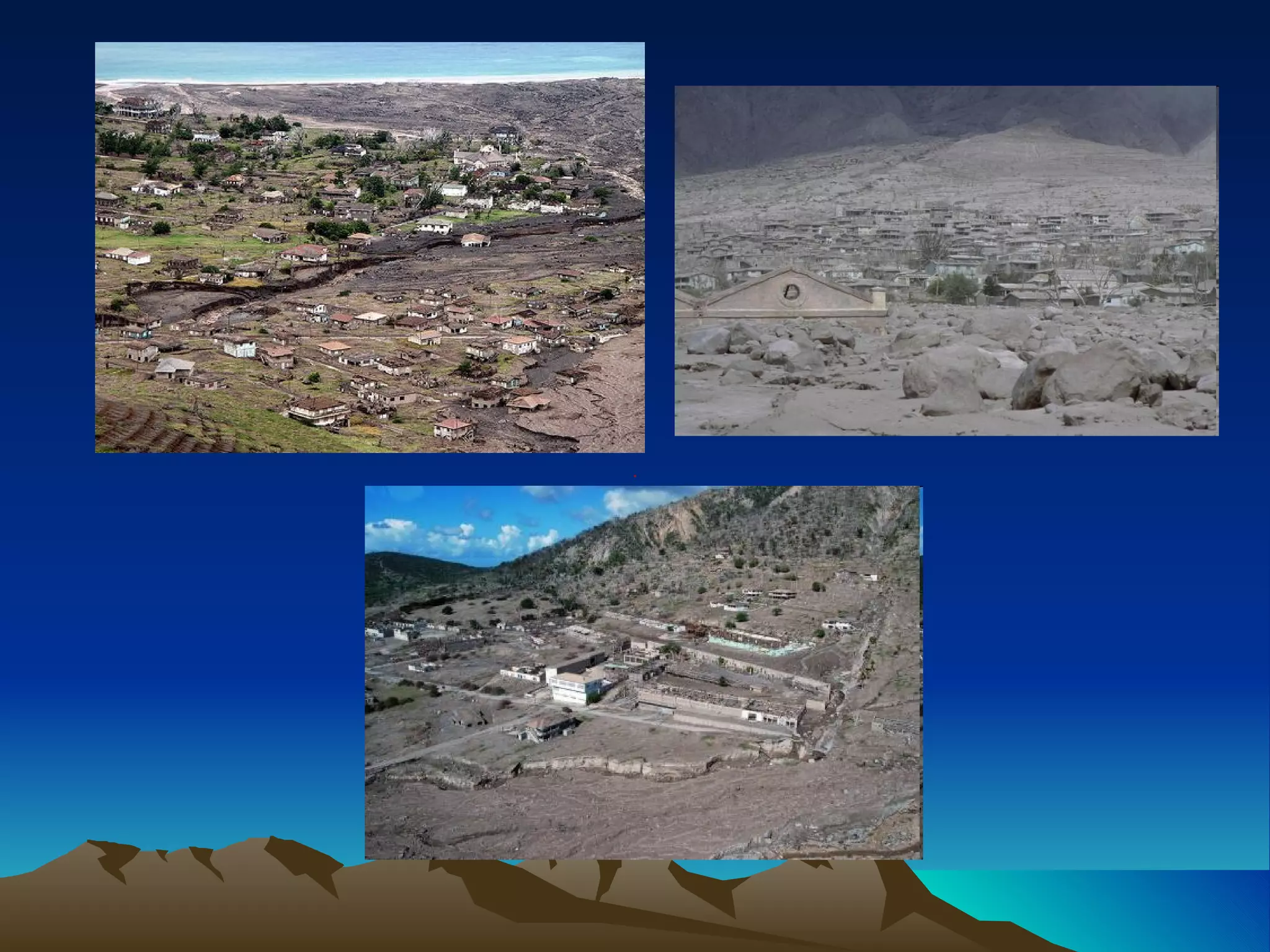
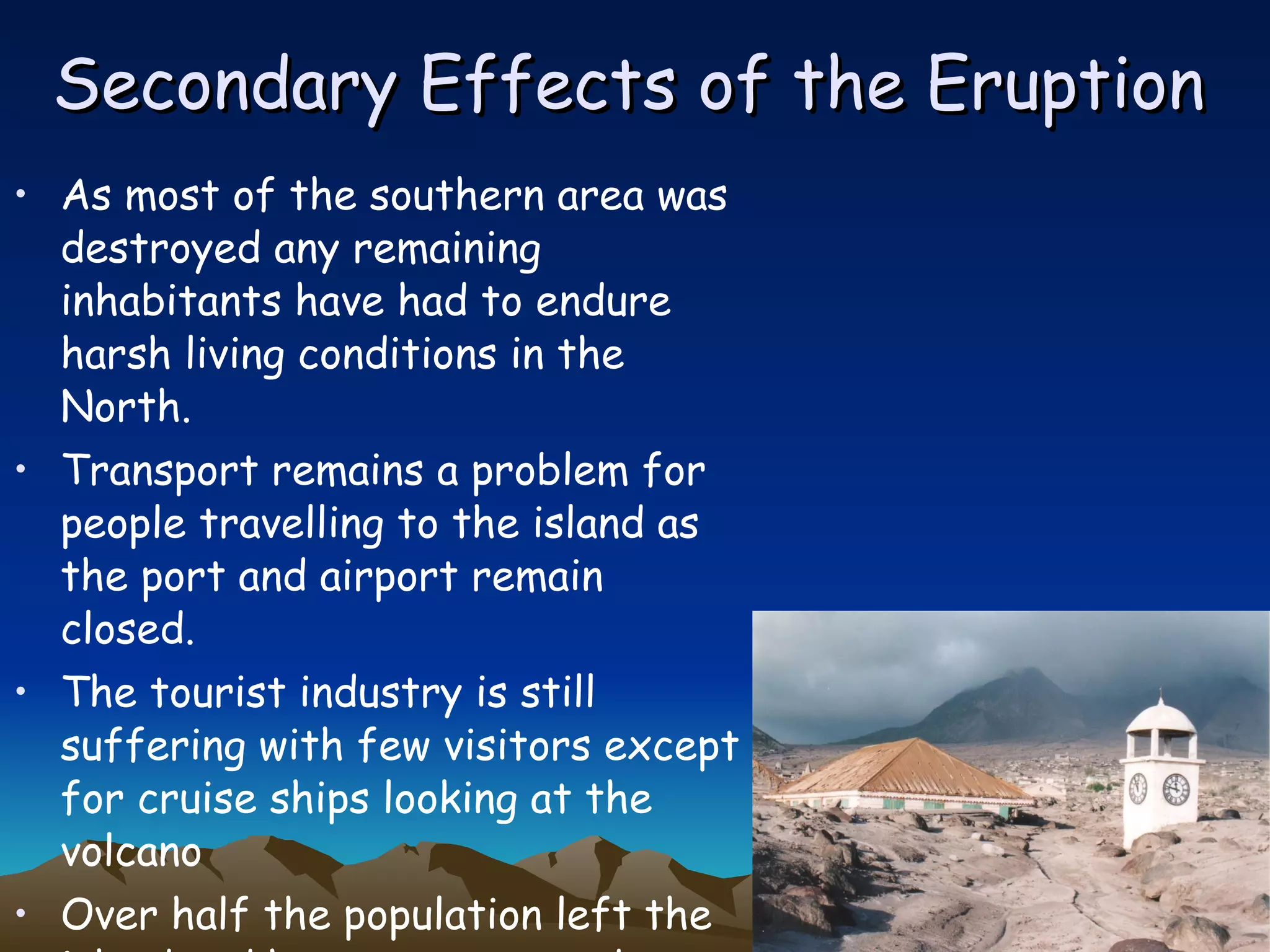
Primary Effects of the Eruption 2/3 of the island covered in ash 50% of population evacuated to the north of the island to makeshift shelters 23 people died in 1997 The capital, Plymouth became a ghost town Floods as valleys blocked with ash Airport and port closed Farmland destroyed Forest fires caused by  pyroclastic flows Schools and hospitals destroyed
 
 
Secondary Effects of the Eruption As most of the southern area was destroyed any remaining inhabitants have had to endure harsh living conditions in the North. Transport remains a problem for people travelling to the island as the port and airport remain closed. The tourist industry is still suffering with few visitors except for cruise ships looking at the volcano  Over half the population left the island and have not returned
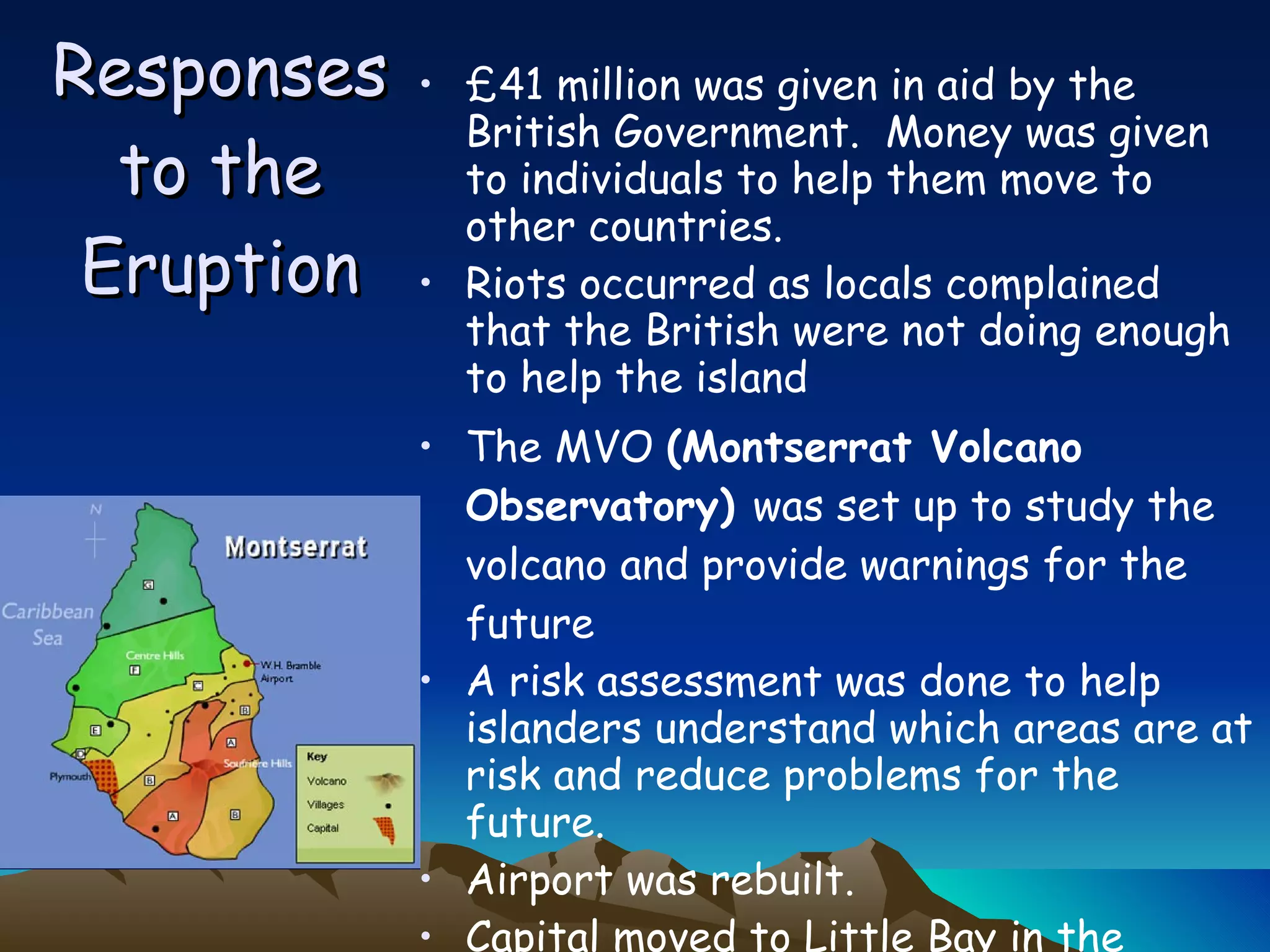
Responses to the Eruption £41 million was given in aid by the British Government.  Money was given to individuals to help them move to other countries.  Riots occurred as locals complained that the British were not doing enough to help the island  The MVO  (Montserrat Volcano Observatory)  was set up to study the volcano and provide warnings for the future  A risk assessment was done to help islanders understand which areas are at risk and reduce problems for the future.  Airport was rebuilt. Capital moved to Little Bay in the North of the island.

Montserrat1 090326024238 Phpapp01

  • 1.
  • 2.
  • 3.
    Montserrat Montserrat isa small island in the Caribbean and is 12 miles long and 7 miles wide. There is a volcanic area located in the south of the island, called Soufriere Hills. The volcanic peak in this area is called Chances Peak. In 1995, the volcano began to give off warning signs of an eruption (small earthquakes and eruptions of dust and ash). Once Chances Peak had woken up it then remained active for a period of 5 years. The most intense eruptions occurred in 1997. It is known as the 'Emerald Island' and is mountainous with plenty of woodland. Much of the population are poor and rely on farming which is for their subsistence. Before the eruption of 1995, over 12,000 people lived on the island but less than 5000 do today
  • 4.
    The Causes ofthe Montserrat Eruption Montserrat lies on a destructive plate boundary. The volcano is caused by the subduction of the North American/Atlantic plate under the Caribbean plate. As the two plates merge the oceanic plate is forced down or sub ducted under the continental plate. As it is forced down pressure increases which triggers earthquakes and at the same time heat produced by friction melts the descending crust to  form molten magma. The hot magma tries to rise to the surface and when it succeeds it is released through a volcanic vent. Over time this forms a volcano.
  • 5.
    The story ofthe eruptions 1992 - The first Earthquake 1995 - The volcano erupts after being dormant for 500 years. 1996 - The volcano continued to erupt and became more violent causing increased damage. 1997 - Large eruptions continued with the dome collapsing and large pyroclastic flows affecting much of the island
  • 6.
    Primary Effects ofthe Eruption 2/3 of the island covered in ash 50% of population evacuated to the north of the island to makeshift shelters 23 people died in 1997 The capital, Plymouth became a ghost town Floods as valleys blocked with ash Airport and port closed Farmland destroyed Forest fires caused by pyroclastic flows Schools and hospitals destroyed
  • 7.
  • 8.
  • 9.
    Secondary Effects ofthe Eruption As most of the southern area was destroyed any remaining inhabitants have had to endure harsh living conditions in the North. Transport remains a problem for people travelling to the island as the port and airport remain closed. The tourist industry is still suffering with few visitors except for cruise ships looking at the volcano Over half the population left the island and have not returned
  • 10.
    Responses to theEruption £41 million was given in aid by the British Government. Money was given to individuals to help them move to other countries. Riots occurred as locals complained that the British were not doing enough to help the island The MVO (Montserrat Volcano Observatory) was set up to study the volcano and provide warnings for the future A risk assessment was done to help islanders understand which areas are at risk and reduce problems for the future. Airport was rebuilt. Capital moved to Little Bay in the North of the island.