MOLECULAR DESIGN OF LIFE Dr. Hidayat Basic Biology of Cell Modul 1 - Structure and Function of Cell
Molecular design of Life What is Life ? Overwhelming  diversity  of the living world Life has been viewed as an intangible property that defies simple explanation Described in operational term:  Movement ,  Reproduction ,  Adaptation ,  Responsiveness  to external stimuli Despite the rich diversity of living organisms, from the blue whale to the smallest of microorganisms,  all obey the same chemical and physical laws that rule the universe.
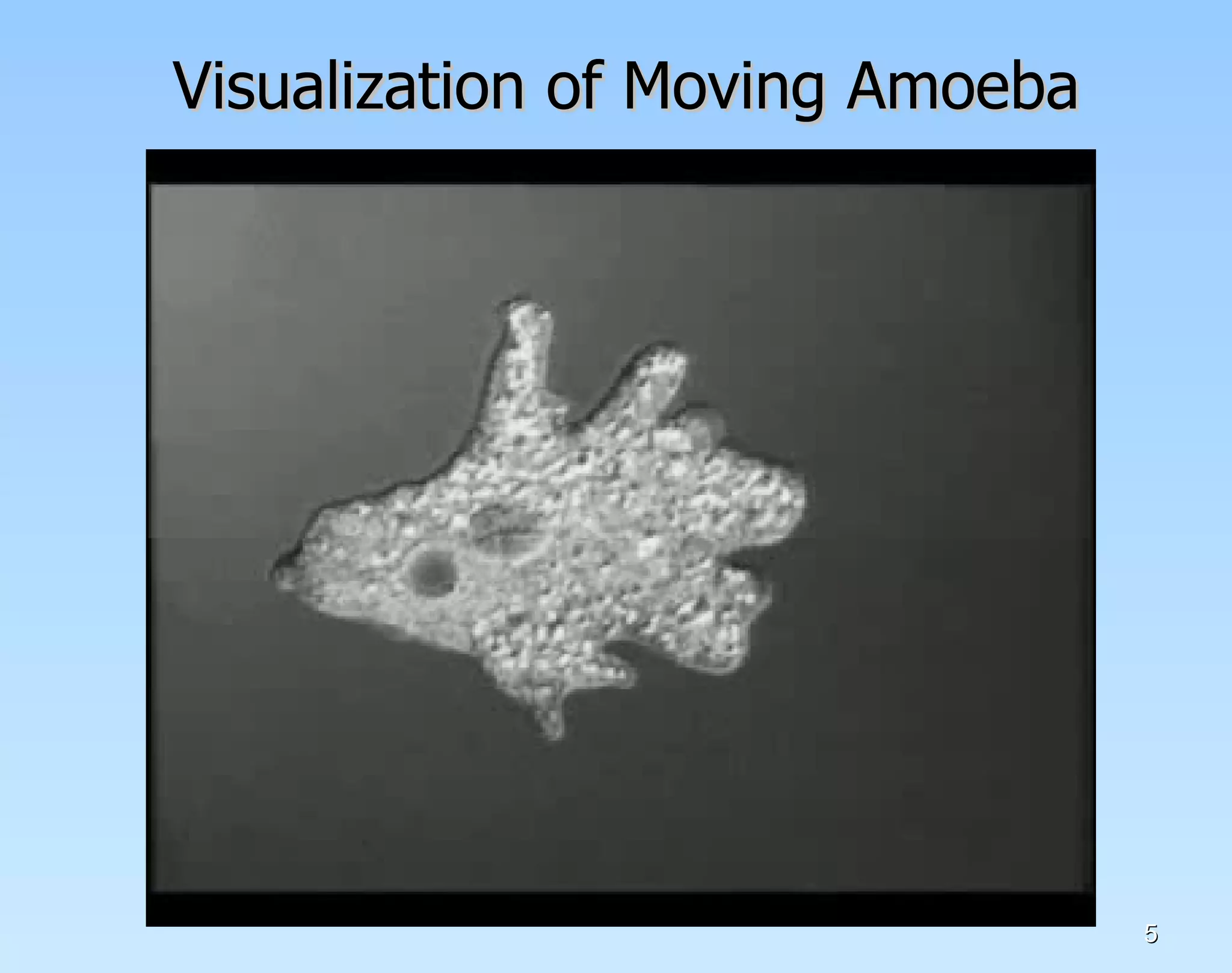
Visualization of Moving Amoeba
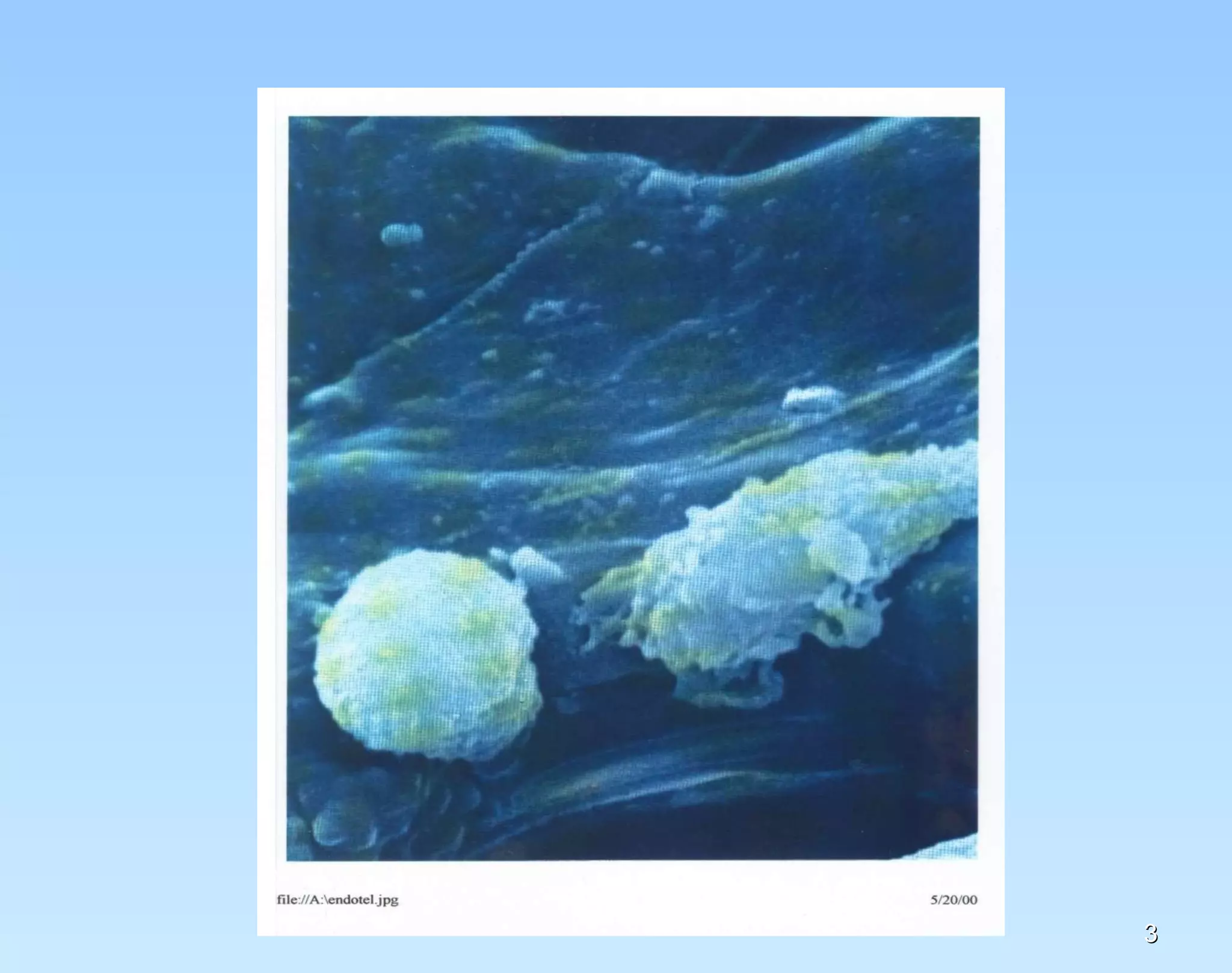
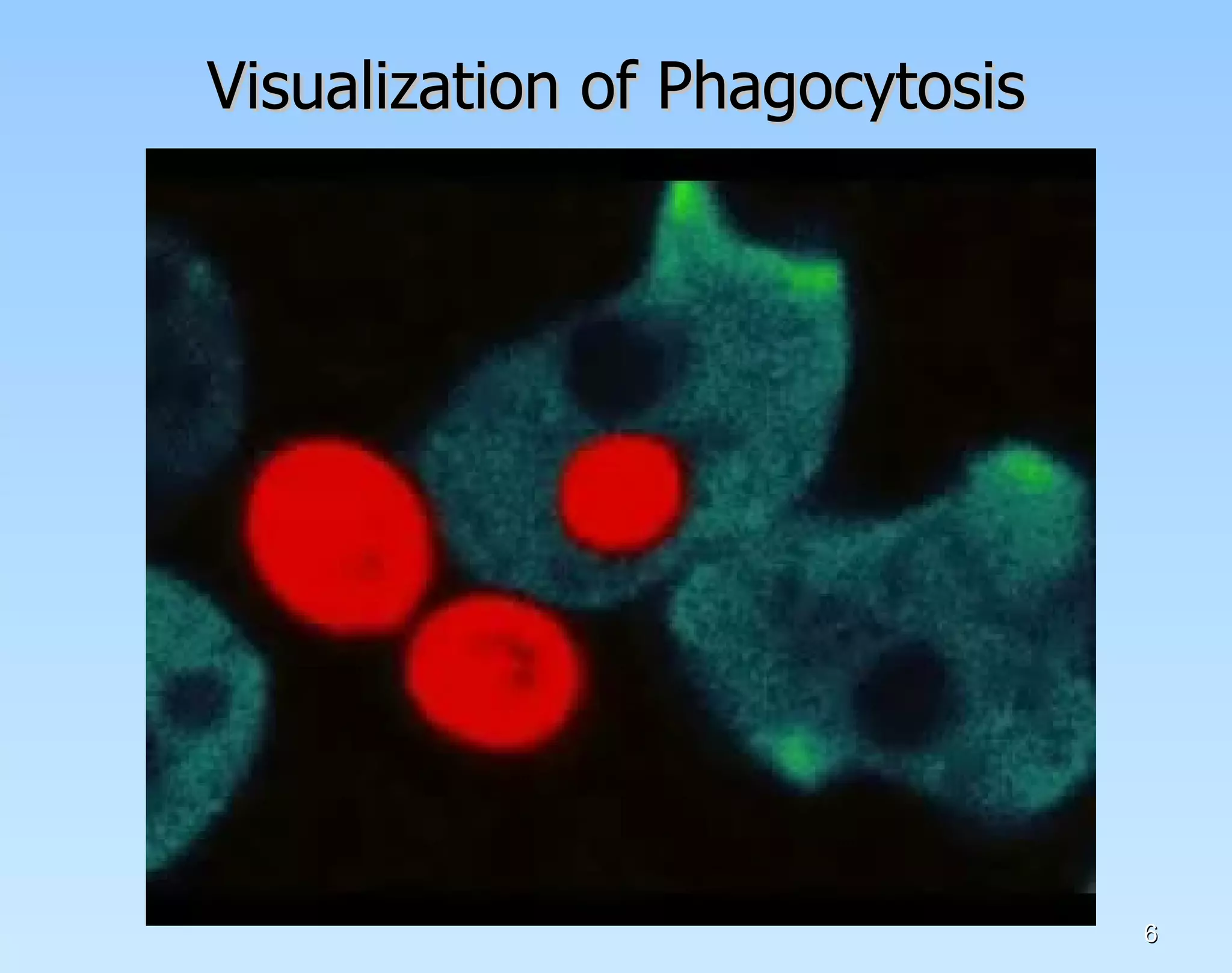
Visualization of Phagocytosis
What is Life ? Life is complex and dynamic All organisms are primarily composed of  organic  ( carbon-based ) molecules that have  three dimensional shapes Their methods for sustaining biological processes are similar Living processes (growth and development) involve  thousands of chemical reactions .
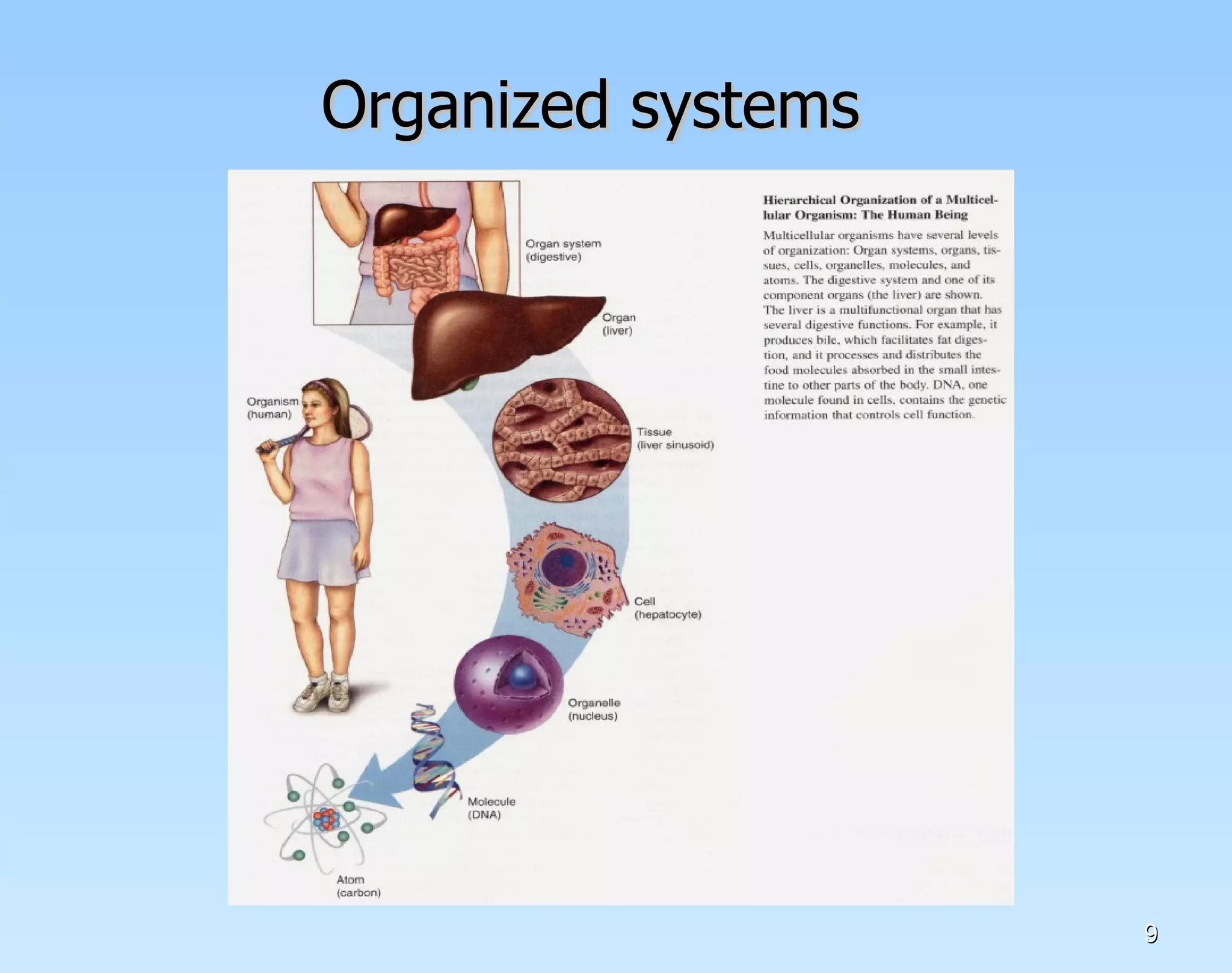
What is Life ? Life is organized and self sustaining Living organisms are  hierarchically organized systems  (each level is based on the one below) The molecules that make up living organisms, referred to as “ Biomolecules ” In multicellular organisms levels of organization: tissues, organs and organ systems At each level of organization  the whole is greater than the sum of the parts
Organized systems
What is Life ? Life is organized and self sustaining Emergent properties  (Hemoglobin) Continuous  acquisition of both energy and matter  and  removal waste molecules . These tasks are accomplished by hundreds of  biochemical reactions  that are catalyzed by  enzymes The sum total of all reactions in a living organism is referred to as  Metabolism
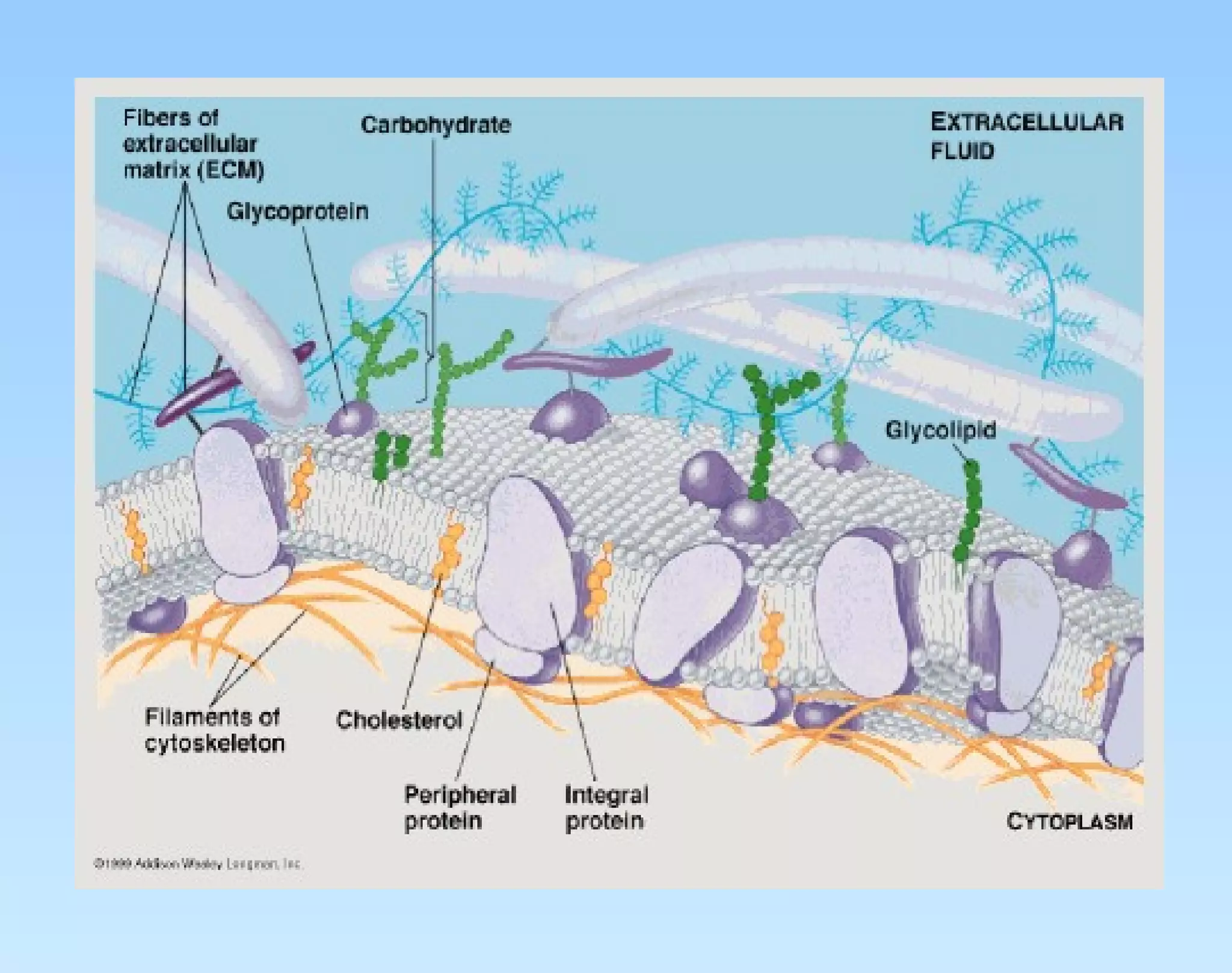
What is Life ? Life is cellular Cells differ widely in structure and function Each is surrounded by a  membrane  that controls the  transport of some chemical   substances  into and out of the cell. The membrane  mediates the response  of the cell to components of the extracellular environtment. Cells arise only from the division of existing cells.
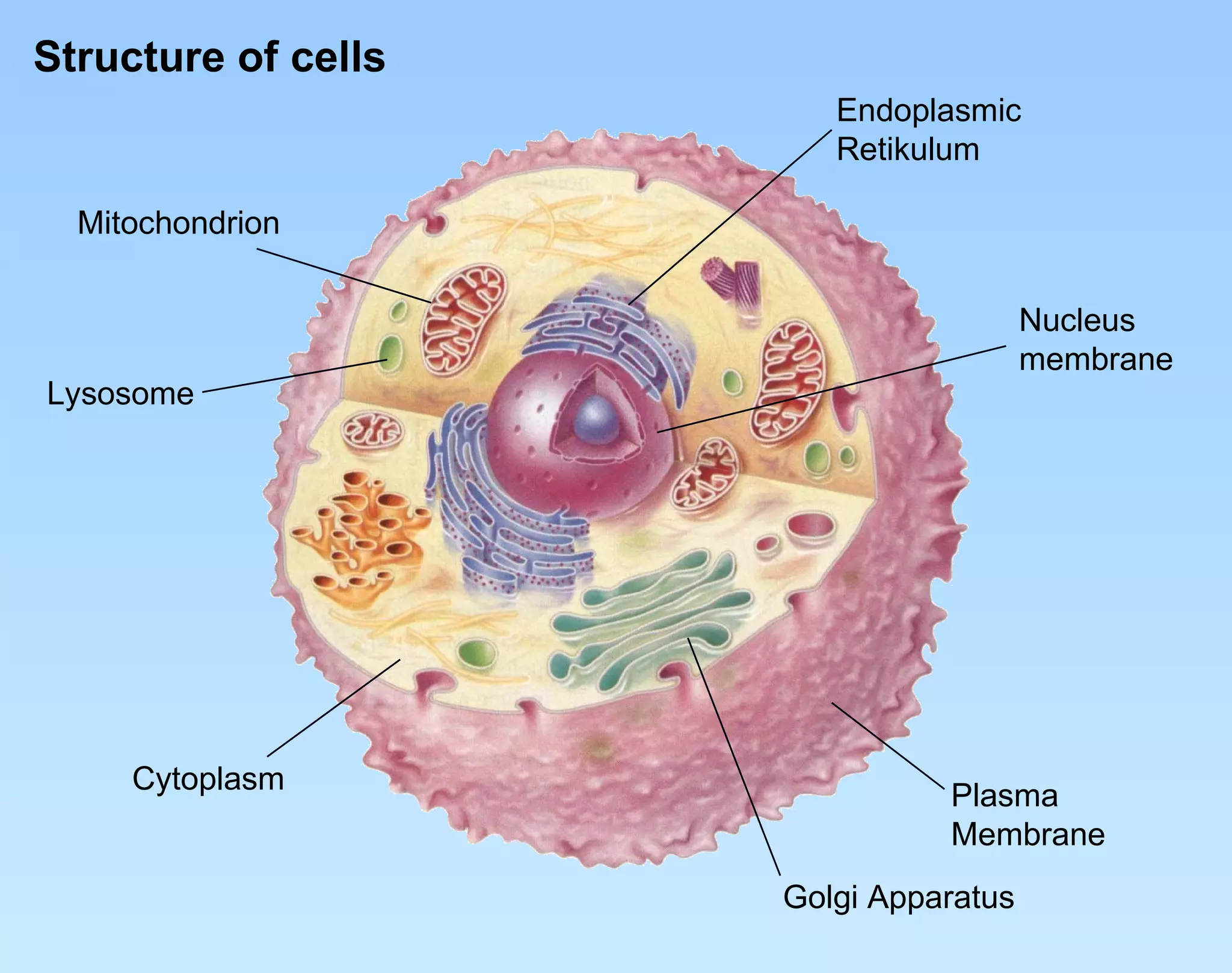
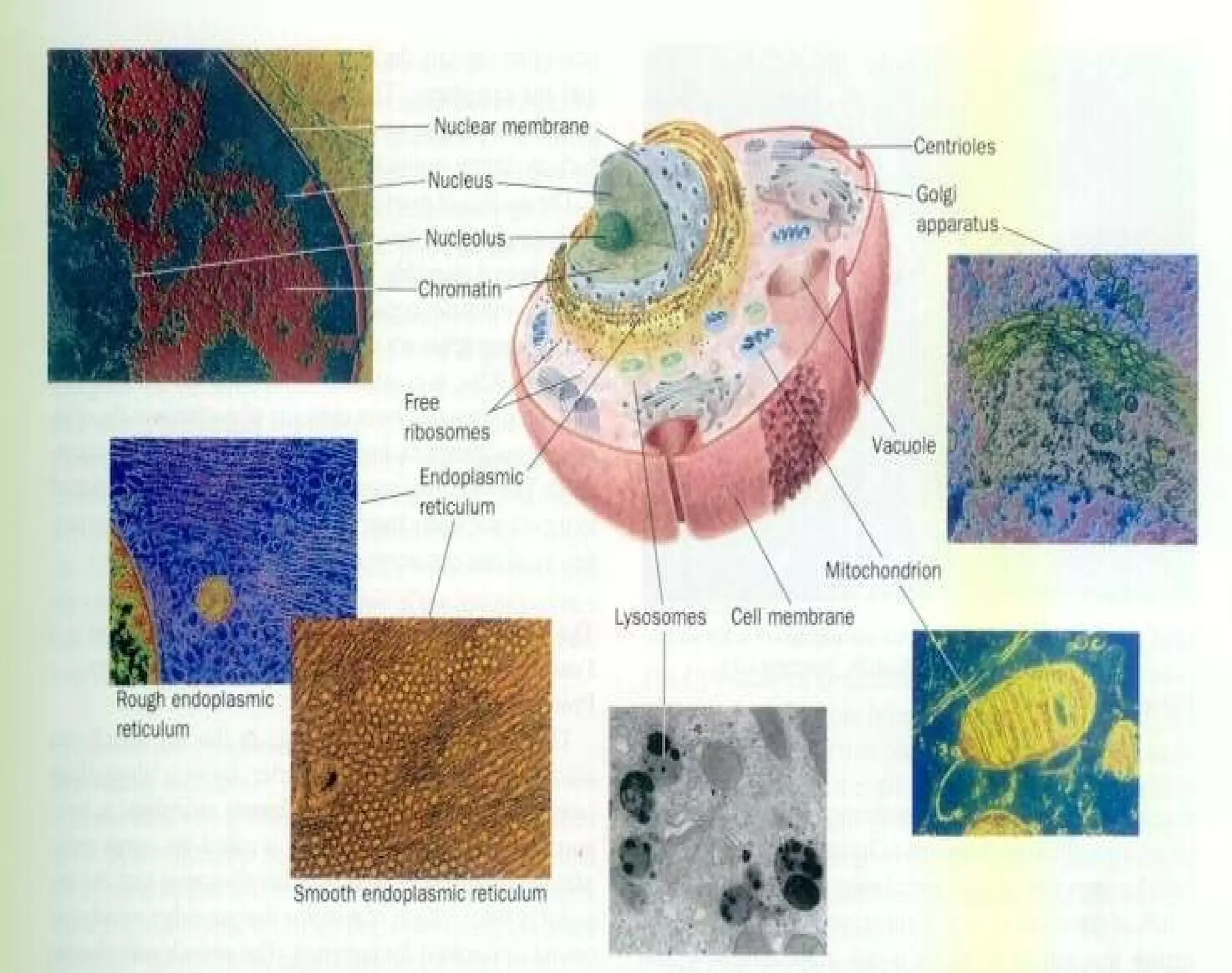
Structure of cells Plasma Membrane Endoplasmic Retikulum Golgi Apparatus Lysosome Mitochondrion Cytoplasm Nucleus membrane
 
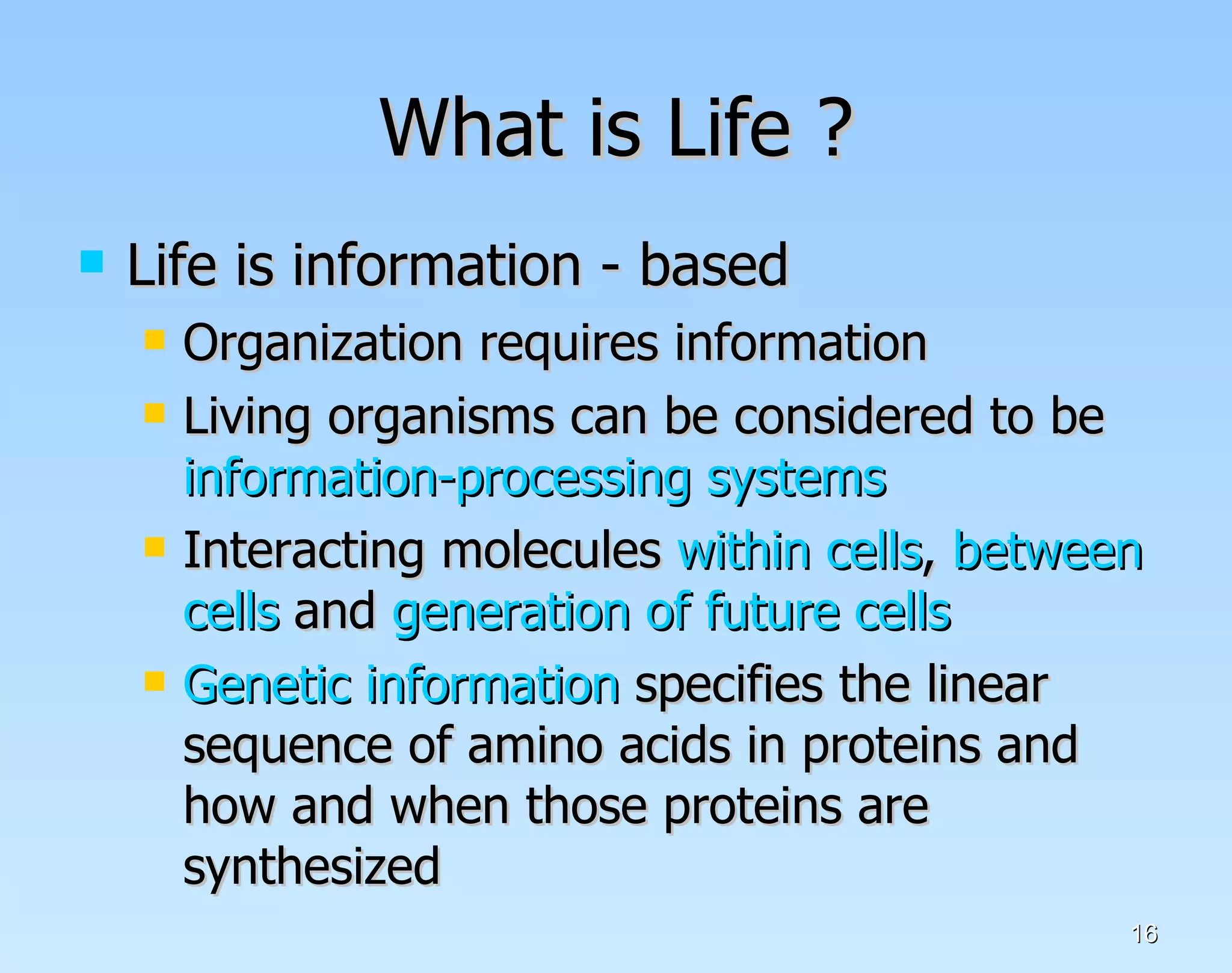
What is Life ? Life is information - based Organization requires information Living organisms can be considered to be  information-processing systems Interacting molecules  within cells ,  between cells  and  generation of future cells   Genetic information  specifies the linear sequence of amino acids in proteins and how and when those proteins are synthesized
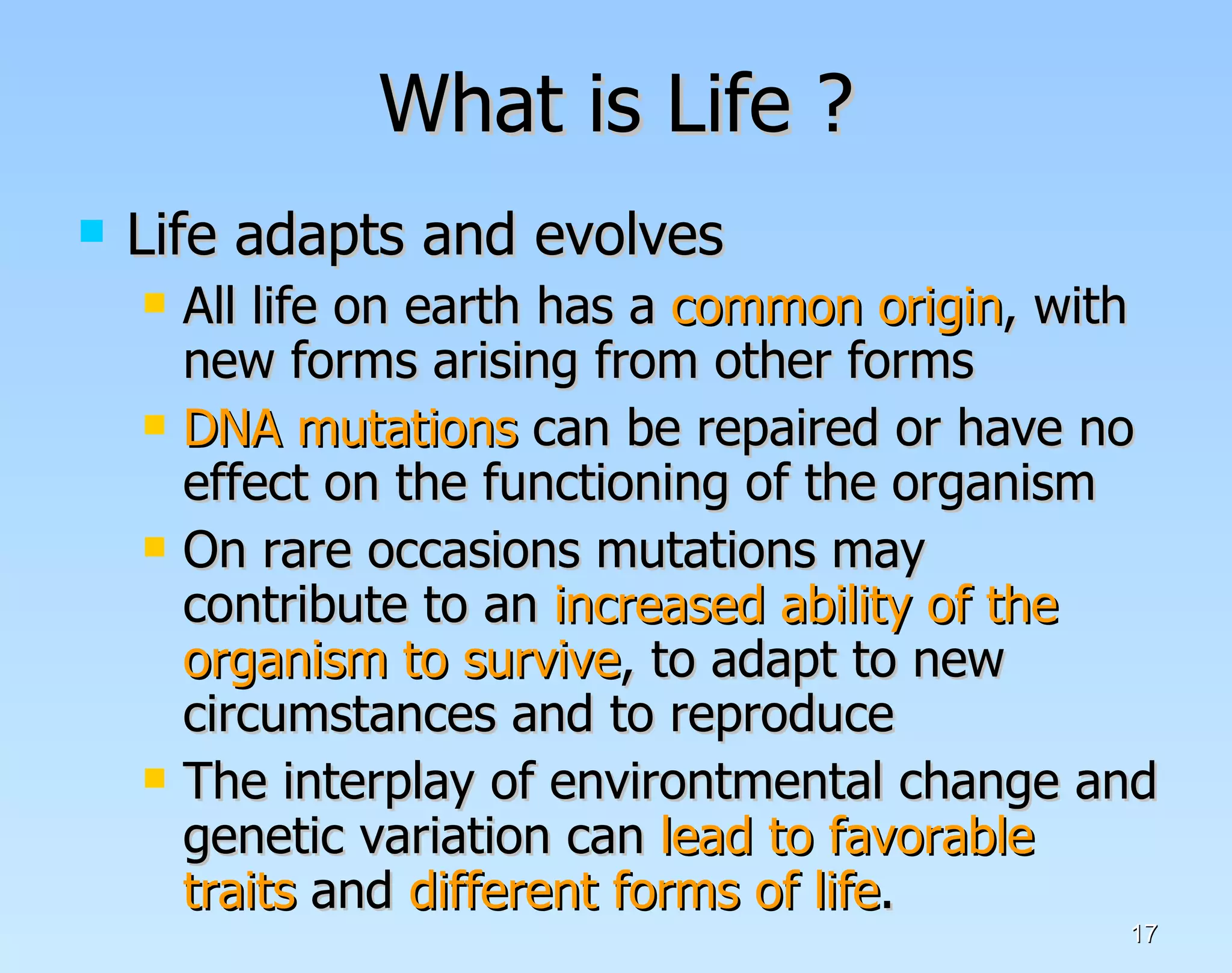
What is Life ? Life adapts and evolves All life on earth has a  common origin , with new forms arising from other forms DNA mutations  can be repaired or have no effect on the functioning of the organism On rare occasions mutations may contribute to an  increased ability of the organism to survive , to adapt to new circumstances and to reproduce The interplay of environtmental change and genetic variation can  lead to favorable traits  and  different forms of life .
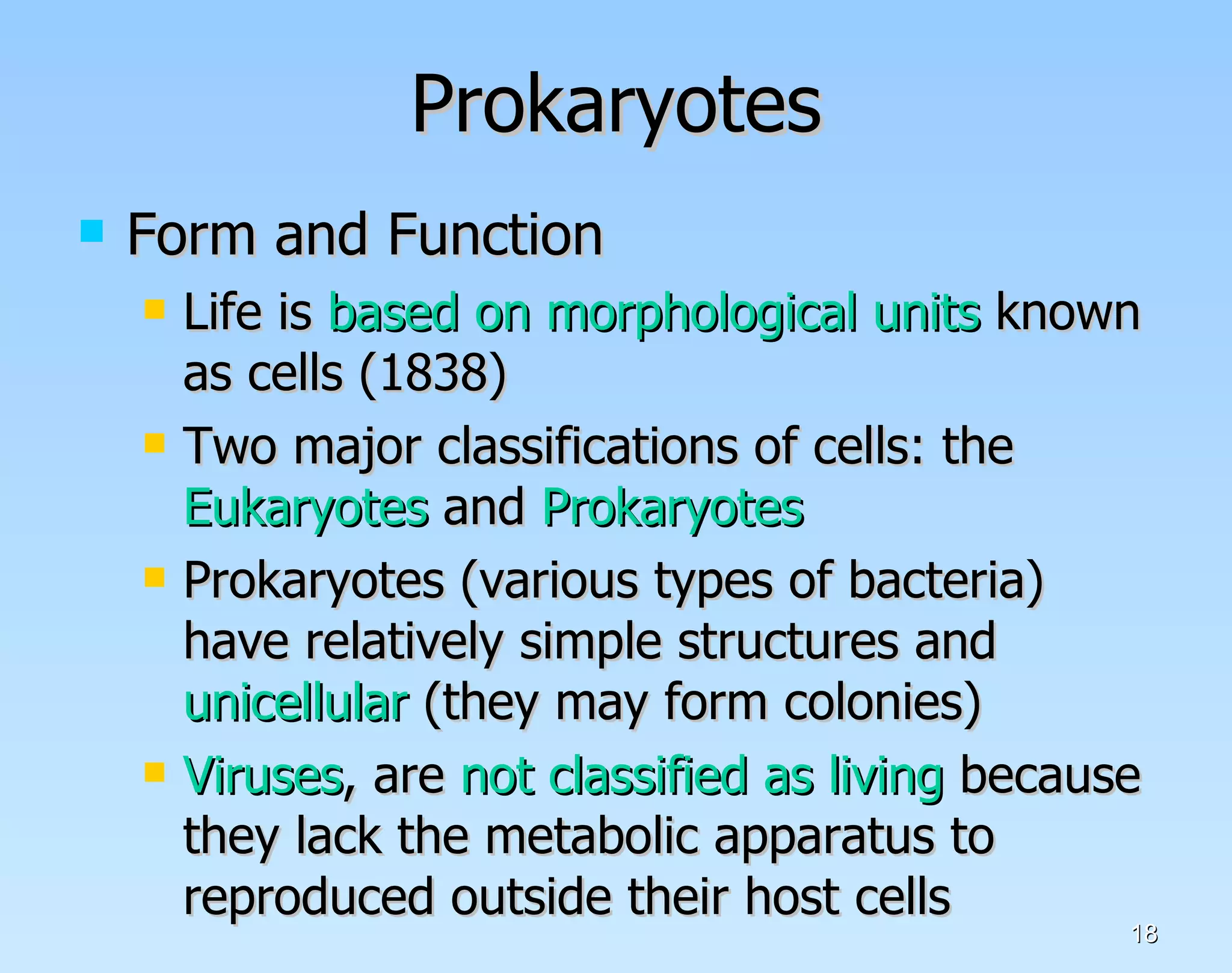
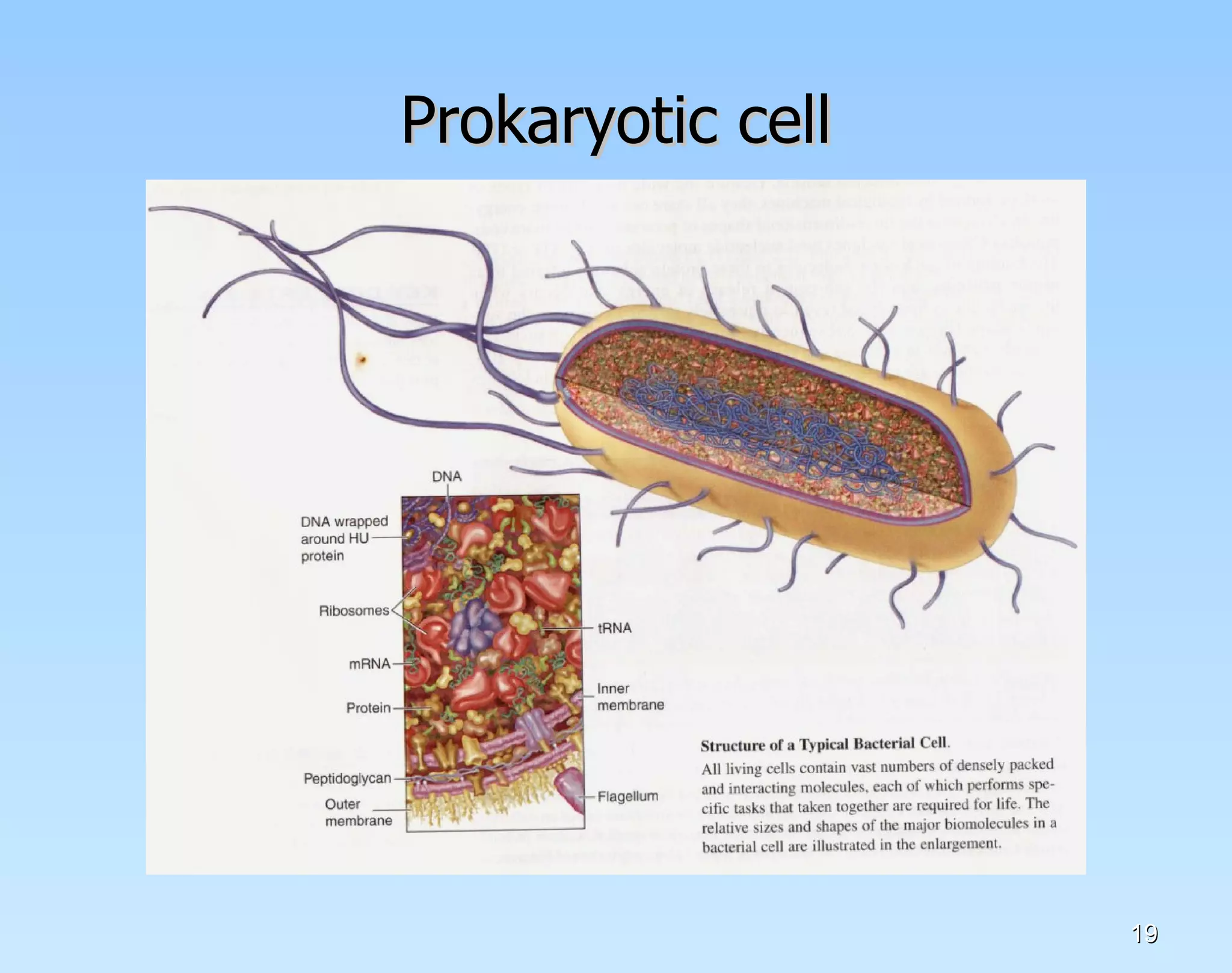
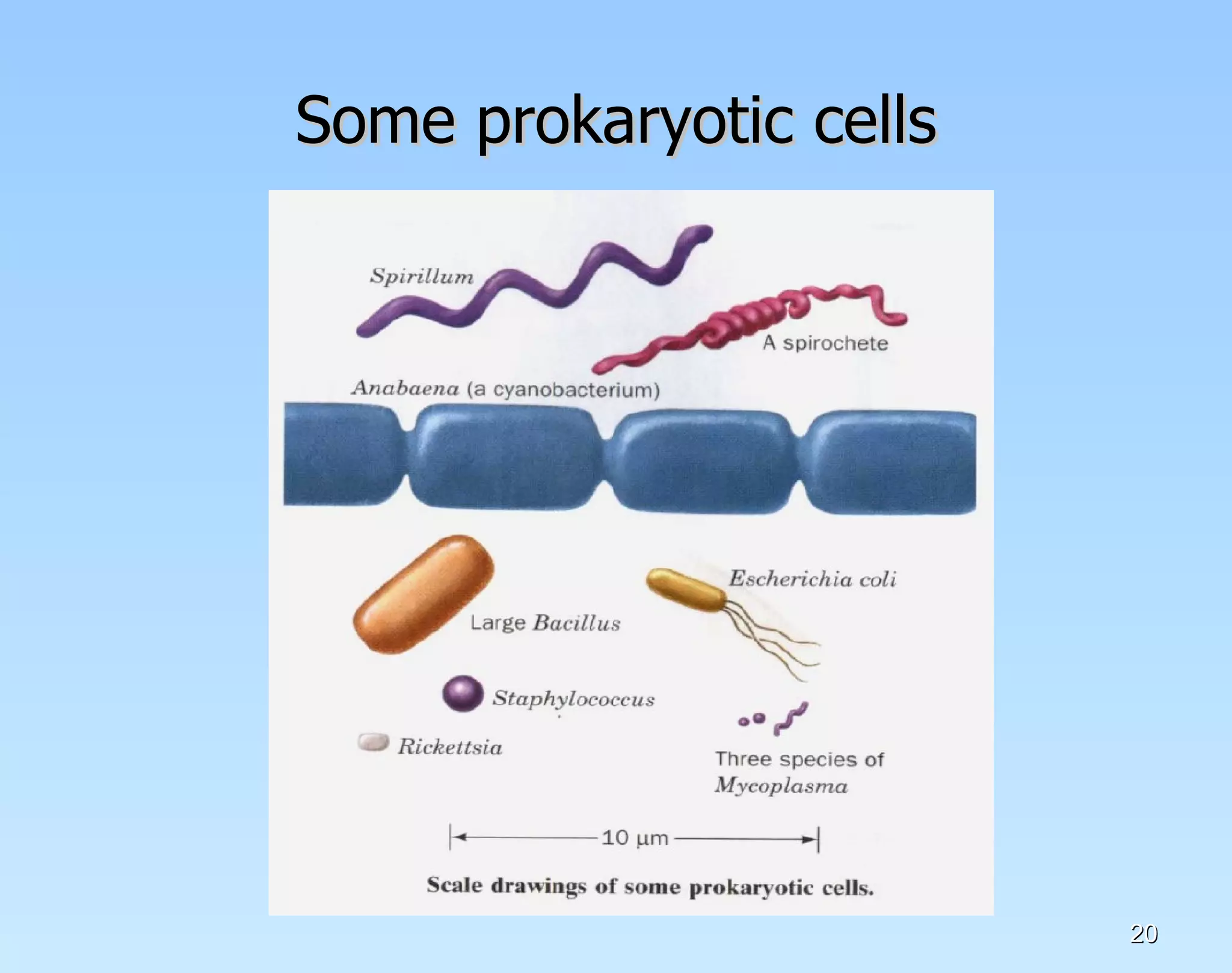
Prokaryotes Form and Function Life is  based on morphological units  known as cells (1838) Two major classifications of cells: the  Eukaryotes  and  Prokaryotes Prokaryotes (various types of bacteria) have relatively simple structures and  unicellular  (they may form colonies) Viruses , are  not classified as living  because they lack the metabolic apparatus to reproduced outside their host cells
Prokaryotic cell
Some prokaryotic cells
Eukaryotes Eukaryotes cellular architecture Structural complexity allows sophisticated regulation of living processes They have internal membrane-enclosed organelles
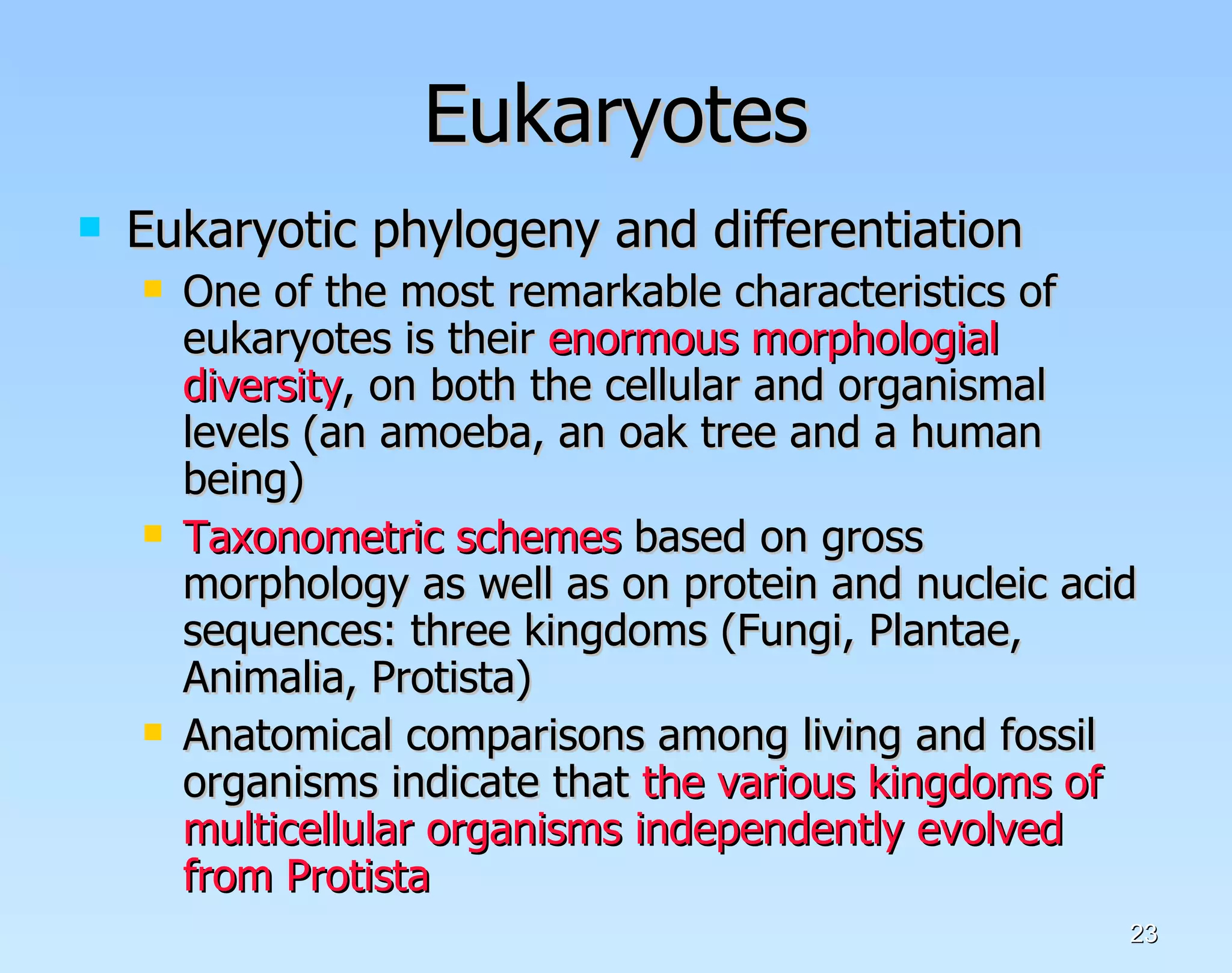
Eukaryotes Eukaryotic phylogeny and differentiation One of the most remarkable characteristics of eukaryotes is their  enormous morphologial diversity , on both the cellular and organismal levels (an amoeba, an oak tree and a human being) Taxonometric schemes  based on gross morphology as well as on protein and nucleic acid sequences: three kingdoms (Fungi, Plantae, Animalia, Protista)  Anatomical comparisons among living and fossil organisms indicate that  the various kingdoms of multicellular organisms independently evolved from Protista
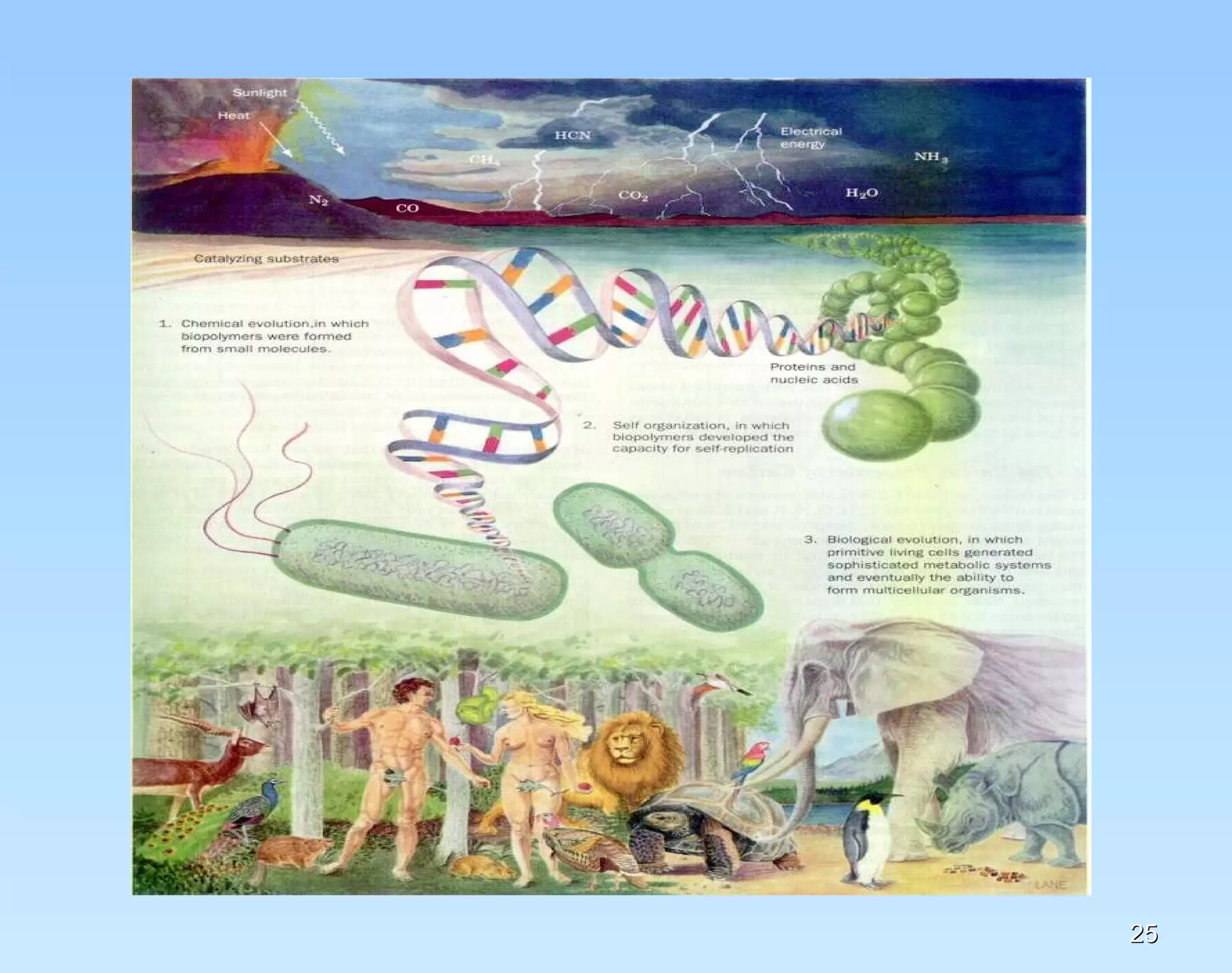
The origin of life “ We cannot hope to determine exactly how life arose ” The development of life occupied three stages: Chemical evolution The self organization Biological evolution
The origin of life The unique properties of Carbon Elements (C, H, O, N, P and S) form covalent bonds,  comprise ~92% of the dry weight of living things . Carbon has the  unique ability  to form a virtually  infinite number of compounds  as a result of its capacity to make as many as  four highly stable covalent bonds  combined with its ability to form  covalently linked C-C chains  of unlimited extent  Over 17 million  chemical compounds, nearly 90% are organic (carbon containing) substances.
The origin of life Chemical evolution ” We are far from certain as to how life arose” .  Earth’s atmosphere  contain significant quantities of O 2 , H 2 O, N 2 , CO 2  and smaller amounts of CO, CH 4 , NH 3 , SO 2  and possibly H 2 . UV radiation  from the sun or  lightning discharges  caused the molecules to react to form  simple organic compounds  such as amino acids, nucleic acids bases and sugars.
The origin of life The rise of living systems  Living systems have the  ability to replicate themselves The inherent complexity of such a process is such that  no manmade device has even approached having this capacity. There is an  infinitesimal probability  that a collection of molecules can simply gather at random to form a living entity.
Thank You

Molecular design of life

  • 1.
    MOLECULAR DESIGN OFLIFE Dr. Hidayat Basic Biology of Cell Modul 1 - Structure and Function of Cell
  • 4.
    Molecular design ofLife What is Life ? Overwhelming diversity of the living world Life has been viewed as an intangible property that defies simple explanation Described in operational term: Movement , Reproduction , Adaptation , Responsiveness to external stimuli Despite the rich diversity of living organisms, from the blue whale to the smallest of microorganisms, all obey the same chemical and physical laws that rule the universe.
  • 5.
  • 6.
  • 7.
    What is Life? Life is complex and dynamic All organisms are primarily composed of organic ( carbon-based ) molecules that have three dimensional shapes Their methods for sustaining biological processes are similar Living processes (growth and development) involve thousands of chemical reactions .
  • 8.
    What is Life? Life is organized and self sustaining Living organisms are hierarchically organized systems (each level is based on the one below) The molecules that make up living organisms, referred to as “ Biomolecules ” In multicellular organisms levels of organization: tissues, organs and organ systems At each level of organization the whole is greater than the sum of the parts
  • 9.
  • 10.
    What is Life? Life is organized and self sustaining Emergent properties (Hemoglobin) Continuous acquisition of both energy and matter and removal waste molecules . These tasks are accomplished by hundreds of biochemical reactions that are catalyzed by enzymes The sum total of all reactions in a living organism is referred to as Metabolism
  • 11.
    What is Life? Life is cellular Cells differ widely in structure and function Each is surrounded by a membrane that controls the transport of some chemical substances into and out of the cell. The membrane mediates the response of the cell to components of the extracellular environtment. Cells arise only from the division of existing cells.
  • 12.
    Structure of cellsPlasma Membrane Endoplasmic Retikulum Golgi Apparatus Lysosome Mitochondrion Cytoplasm Nucleus membrane
  • 13.
  • 16.
    What is Life? Life is information - based Organization requires information Living organisms can be considered to be information-processing systems Interacting molecules within cells , between cells and generation of future cells Genetic information specifies the linear sequence of amino acids in proteins and how and when those proteins are synthesized
  • 17.
    What is Life? Life adapts and evolves All life on earth has a common origin , with new forms arising from other forms DNA mutations can be repaired or have no effect on the functioning of the organism On rare occasions mutations may contribute to an increased ability of the organism to survive , to adapt to new circumstances and to reproduce The interplay of environtmental change and genetic variation can lead to favorable traits and different forms of life .
  • 18.
    Prokaryotes Form andFunction Life is based on morphological units known as cells (1838) Two major classifications of cells: the Eukaryotes and Prokaryotes Prokaryotes (various types of bacteria) have relatively simple structures and unicellular (they may form colonies) Viruses , are not classified as living because they lack the metabolic apparatus to reproduced outside their host cells
  • 19.
  • 20.
  • 21.
    Eukaryotes Eukaryotes cellulararchitecture Structural complexity allows sophisticated regulation of living processes They have internal membrane-enclosed organelles
  • 23.
    Eukaryotes Eukaryotic phylogenyand differentiation One of the most remarkable characteristics of eukaryotes is their enormous morphologial diversity , on both the cellular and organismal levels (an amoeba, an oak tree and a human being) Taxonometric schemes based on gross morphology as well as on protein and nucleic acid sequences: three kingdoms (Fungi, Plantae, Animalia, Protista) Anatomical comparisons among living and fossil organisms indicate that the various kingdoms of multicellular organisms independently evolved from Protista
  • 24.
    The origin oflife “ We cannot hope to determine exactly how life arose ” The development of life occupied three stages: Chemical evolution The self organization Biological evolution
  • 26.
    The origin oflife The unique properties of Carbon Elements (C, H, O, N, P and S) form covalent bonds, comprise ~92% of the dry weight of living things . Carbon has the unique ability to form a virtually infinite number of compounds as a result of its capacity to make as many as four highly stable covalent bonds combined with its ability to form covalently linked C-C chains of unlimited extent Over 17 million chemical compounds, nearly 90% are organic (carbon containing) substances.
  • 27.
    The origin oflife Chemical evolution ” We are far from certain as to how life arose” . Earth’s atmosphere contain significant quantities of O 2 , H 2 O, N 2 , CO 2 and smaller amounts of CO, CH 4 , NH 3 , SO 2 and possibly H 2 . UV radiation from the sun or lightning discharges caused the molecules to react to form simple organic compounds such as amino acids, nucleic acids bases and sugars.
  • 28.
    The origin oflife The rise of living systems Living systems have the ability to replicate themselves The inherent complexity of such a process is such that no manmade device has even approached having this capacity. There is an infinitesimal probability that a collection of molecules can simply gather at random to form a living entity.
  • 29.