The glycaemia, also known as blood sugar level,
blood sugar concentration, or blood glucose level is
the measure of glucose concentrated in the blood of
humans or other animals.
Blood sugar, or glucose, is the main sugar found in
your blood. It comes from the food you eat, and is
your body's main source of energy. Your blood
carries glucose to all of your body's cells to use for
energy.
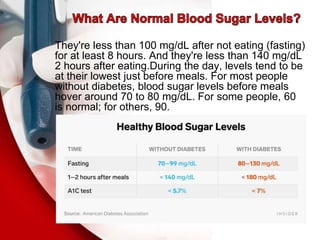
They're less than 100 mg/dL after not eating (fasting)
for at least 8 hours. And they're less than 140 mg/dL
2 hours after eating.During the day, levels tend to be
at their lowest just before meals. For most people
without diabetes, blood sugar levels before meals
hover around 70 to 80 mg/dL. For some people, 60
is normal; for others, 90.
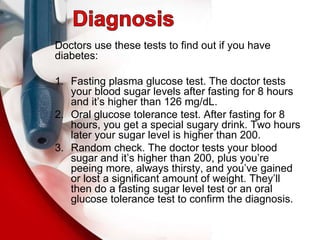
Doctors use these tests to find out if you have
diabetes:
1. Fasting plasma glucose test. The doctor tests
your blood sugar levels after fasting for 8 hours
and it’s higher than 126 mg/dL.
2. Oral glucose tolerance test. After fasting for 8
hours, you get a special sugary drink. Two hours
later your sugar level is higher than 200.
3. Random check. The doctor tests your blood
sugar and it’s higher than 200, plus you’re
peeing more, always thirsty, and you’ve gained
or lost a significant amount of weight. They’ll
then do a fasting sugar level test or an oral
glucose tolerance test to confirm the diagnosis.
Why are high blood sugar levels bad for you?
Glucose is precious fuel for all the cells in your body
when it's present at normal levels. But it can behave
like a slow-acting poison.
1. High sugar levels slowly erode the ability of cells
in your pancreas to make insulin. The organ
overcompensates and insulin levels stay too high.
Over time, the pancreas is permanently
damaged.
2. High levels of blood sugar can cause changes
that lead to a hardening of the blood vessels,
what doctors call atherosclerosis. level test or an
oral glucose tolerance test to confirm the
diagnosis.
Blood sugar testing provides useful information for
diabetes management. It can help you:
1. Monitor the effect of diabetes medications on
blood sugar levels
2. Identify blood sugar levels that are high or low
3. Track your progress in reaching your overall
treatment goals
4. Learn how diet and exercise affect blood sugar
levels
5. Understand how other factors, such as illness or
stress, affect blood sugar levels
People with diabetes, particularly those with type 1
diabetes, may also choose to use CGMs. These
devices measure your blood sugar every few
minutes using a sensor inserted under the skin.
These sensors are typically worn for a week or two
before they need to be changed.
Many things can cause high blood sugar
(hyperglycemia), including being sick, being
stressed, eating more than planned, and not giving
yourself enough insulin. Over time, high blood sugar
can lead to long-term, serious health problems.
Symptoms of high blood sugar include:
Feeling very tired.
Feeing thirsty.
Having blurry vision.
Needing to urinate (pee) more often.
Be more active. Regular exercise can help keep
your blood sugar levels on track.
Take medicine as instructed. If your blood sugar is
often high, your doctor may change how much
medicine you take or when you take it.
Follow your diabetes meal plan. Ask your doctor or
dietitian for help if you’re having trouble sticking to it.
Check your blood sugar as directed by your doctor.
Talk to your doctor about adjusting how much
insulin you take and what types of insulin (such as
short-acting) to use.
Carbs in food make your blood sugar levels go
higher after you eat them than when you eat
proteins or fats. You can still eat carbs if you have
diabetes.
Why are good blood sugar levels important?
It is important that you control your blood glucose
levels as well as you can as too high sugar levels for
long periods of time increases the risk of diabetes
complications developing.
Diabetes complications are health problems which
include:
1. Kidney disease
2. Nerve damage
3. Retinal disease
4. Heart disease
5. Stroke
1. https://www.diabetes.co.uk/
2. Henry JB (2001). Clinical diagnosis and
Management by Laboratory Methods (20th ed.).
Philadelphia: Saunders. ISBN 978-0721688640.
3. Levine R (1986). "Monosaccharides in health
and disease". Annual Review of Nutrition. 6:
211–24.
doi:10.1146/annurev.nu.06.070186.001235.
PMID 3524617.

Blood sugar.pptx

  • 2.
    The glycaemia, alsoknown as blood sugar level, blood sugar concentration, or blood glucose level is the measure of glucose concentrated in the blood of humans or other animals.
  • 3.
    Blood sugar, orglucose, is the main sugar found in your blood. It comes from the food you eat, and is your body's main source of energy. Your blood carries glucose to all of your body's cells to use for energy.
  • 4.
    They're less than100 mg/dL after not eating (fasting) for at least 8 hours. And they're less than 140 mg/dL 2 hours after eating.During the day, levels tend to be at their lowest just before meals. For most people without diabetes, blood sugar levels before meals hover around 70 to 80 mg/dL. For some people, 60 is normal; for others, 90.
  • 5.
    Doctors use thesetests to find out if you have diabetes: 1. Fasting plasma glucose test. The doctor tests your blood sugar levels after fasting for 8 hours and it’s higher than 126 mg/dL. 2. Oral glucose tolerance test. After fasting for 8 hours, you get a special sugary drink. Two hours later your sugar level is higher than 200. 3. Random check. The doctor tests your blood sugar and it’s higher than 200, plus you’re peeing more, always thirsty, and you’ve gained or lost a significant amount of weight. They’ll then do a fasting sugar level test or an oral glucose tolerance test to confirm the diagnosis.
  • 6.
    Why are highblood sugar levels bad for you? Glucose is precious fuel for all the cells in your body when it's present at normal levels. But it can behave like a slow-acting poison. 1. High sugar levels slowly erode the ability of cells in your pancreas to make insulin. The organ overcompensates and insulin levels stay too high. Over time, the pancreas is permanently damaged. 2. High levels of blood sugar can cause changes that lead to a hardening of the blood vessels, what doctors call atherosclerosis. level test or an oral glucose tolerance test to confirm the diagnosis.
  • 7.
    Blood sugar testingprovides useful information for diabetes management. It can help you: 1. Monitor the effect of diabetes medications on blood sugar levels 2. Identify blood sugar levels that are high or low 3. Track your progress in reaching your overall treatment goals 4. Learn how diet and exercise affect blood sugar levels 5. Understand how other factors, such as illness or stress, affect blood sugar levels
  • 8.
    People with diabetes,particularly those with type 1 diabetes, may also choose to use CGMs. These devices measure your blood sugar every few minutes using a sensor inserted under the skin. These sensors are typically worn for a week or two before they need to be changed.
  • 9.
    Many things cancause high blood sugar (hyperglycemia), including being sick, being stressed, eating more than planned, and not giving yourself enough insulin. Over time, high blood sugar can lead to long-term, serious health problems. Symptoms of high blood sugar include: Feeling very tired. Feeing thirsty. Having blurry vision. Needing to urinate (pee) more often.
  • 10.
    Be more active.Regular exercise can help keep your blood sugar levels on track. Take medicine as instructed. If your blood sugar is often high, your doctor may change how much medicine you take or when you take it. Follow your diabetes meal plan. Ask your doctor or dietitian for help if you’re having trouble sticking to it. Check your blood sugar as directed by your doctor. Talk to your doctor about adjusting how much insulin you take and what types of insulin (such as short-acting) to use.
  • 11.
    Carbs in foodmake your blood sugar levels go higher after you eat them than when you eat proteins or fats. You can still eat carbs if you have diabetes.
  • 12.
    Why are goodblood sugar levels important? It is important that you control your blood glucose levels as well as you can as too high sugar levels for long periods of time increases the risk of diabetes complications developing. Diabetes complications are health problems which include: 1. Kidney disease 2. Nerve damage 3. Retinal disease 4. Heart disease 5. Stroke
  • 13.
    1. https://www.diabetes.co.uk/ 2. HenryJB (2001). Clinical diagnosis and Management by Laboratory Methods (20th ed.). Philadelphia: Saunders. ISBN 978-0721688640. 3. Levine R (1986). "Monosaccharides in health and disease". Annual Review of Nutrition. 6: 211–24. doi:10.1146/annurev.nu.06.070186.001235. PMID 3524617.