Sensors and Their Specifications


Moderate Resolution Imaging Spectroradiometer (MODIS)
MODIS (or Moderate Resolution Imaging Spectroradiometer) is a key instrument
aboard the Terra (EOS AM) and Aqua (EOS PM) satellites. Terra's orbit around the
Earth is timed so that it passes from north to south across the equator in the
morning, while Aqua passes south to north over the equator in the afternoon.
Terra MODIS and Aqua MODIS are viewing the entire Earth's surface every 1 to 2
days, acquiring data in 36 spectral bands, or groups of wavelengths (see MODIS
Technical Specifications). These data will improve our understanding of global
dynamics and processes occurring on the land, in the oceans, and in the lower
atmosphere. MODIS is playing a vital role in the development of validated, global,
interactive Earth system models able to predict global change accurately enough
to assist policy makers in making sound decisions concerning the protection of
our environment.

Specifications

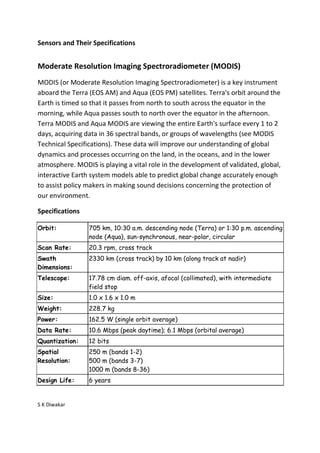
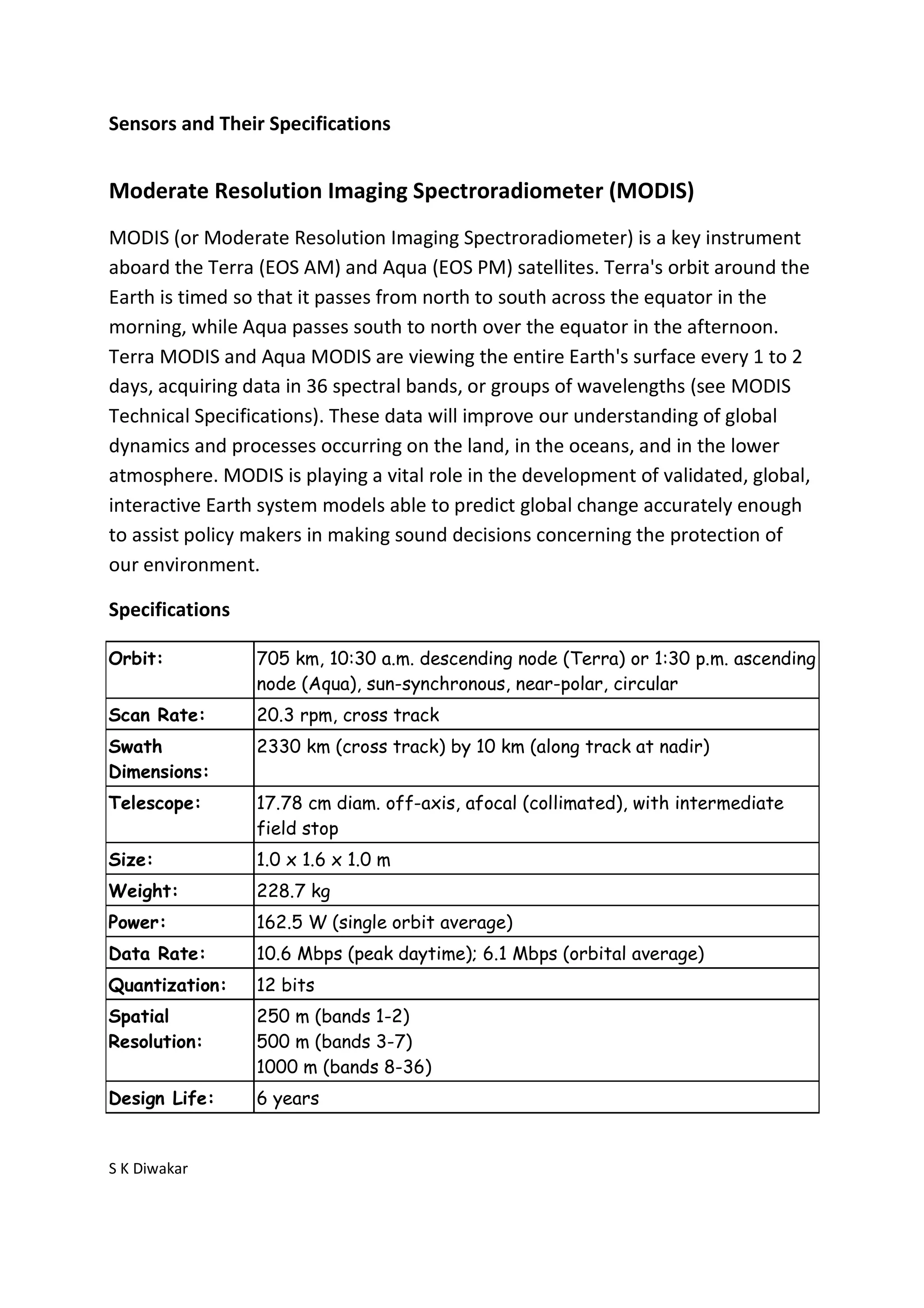
Orbit:           705 km, 10:30 a.m. descending node (Terra) or 1:30 p.m. ascending
                 node (Aqua), sun-synchronous, near-polar, circular
Scan Rate:       20.3 rpm, cross track
Swath            2330 km (cross track) by 10 km (along track at nadir)
Dimensions:
Telescope:       17.78 cm diam. off-axis, afocal (collimated), with intermediate
                 field stop
Size:            1.0 x 1.6 x 1.0 m
Weight:          228.7 kg
Power:           162.5 W (single orbit average)
Data Rate:       10.6 Mbps (peak daytime); 6.1 Mbps (orbital average)
Quantization:    12 bits
Spatial          250 m (bands 1-2)
Resolution:      500 m (bands 3-7)
                 1000 m (bands 8-36)
Design Life:     6 years


S K Diwakar
Sensors and Their Specifications


Primary Use             Band Bandwidth1       Spectral     Required
                                              Radiance2    SNR3
Land/Cloud/Aerosols     1     620 - 670       21.8         128
Boundaries              2     841 - 876       24.7         201
Land/Cloud/Aerosols     3     459 - 479       35.3         243
Properties              4     545 - 565       29.0         228
                        5     1230 - 1250     5.4          74
                        6     1628 - 1652     7.3          275
                        7     2105 - 2155     1.0          110
Ocean Color/            8     405 - 420       44.9         880
Phytoplankton/          9     438 - 448       41.9         838
Biogeochemistry
                        10    483 - 493       32.1         802
                        11    526 - 536       27.9         754
                        12    546 - 556       21.0         750
                        13    662 - 672       9.5          910
                        14    673 - 683       8.7          1087
                        15    743 - 753       10.2         586
                        16    862 - 877       6.2          516
Atmospheric             17    890 - 920       10.0         167
Water Vapor             18    931 - 941       3.6          57
                        19    915 - 965       15.0         250

Primary Use             Band Bandwidth1       Spectral     Required
                                              Radiance2    NE[delta]T(K)4
Surface/Cloud           20    3.660 - 3.840   0.45(300K)   0.05
Temperature             21    3.929 - 3.989   2.38(335K)   2.00
                        22    3.929 - 3.989   0.67(300K)   0.07
                        23    4.020 - 4.080   0.79(300K)   0.07
Atmospheric             24    4.433 - 4.498   0.17(250K)   0.25
Temperature             25    4.482 - 4.549   0.59(275K)   0.25


S K Diwakar
Sensors and Their Specifications


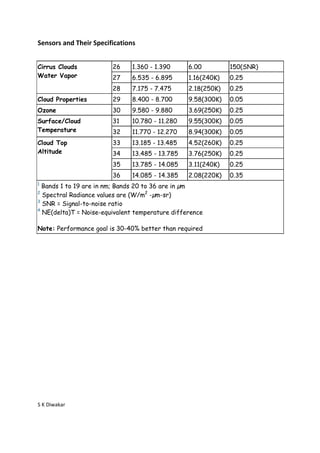
Cirrus Clouds           26    1.360 - 1.390      6.00         150(SNR)
Water Vapor             27    6.535 - 6.895      1.16(240K)   0.25
                        28    7.175 - 7.475      2.18(250K)   0.25
Cloud Properties        29    8.400 - 8.700      9.58(300K)   0.05
Ozone                   30    9.580 - 9.880      3.69(250K)   0.25
Surface/Cloud           31    10.780 - 11.280    9.55(300K)   0.05
Temperature             32    11.770 - 12.270    8.94(300K)   0.05
Cloud Top               33    13.185 - 13.485    4.52(260K)   0.25
Altitude                34    13.485 - 13.785    3.76(250K)   0.25
                        35    13.785 - 14.085    3.11(240K)   0.25
                        36    14.085 - 14.385    2.08(220K)   0.35
1
  Bands 1 to 19 are in nm; Bands 20 to 36 are in µm
2
  Spectral Radiance values are (W/m2 -µm-sr)
3
  SNR = Signal-to-noise ratio
4
  NE(delta)T = Noise-equivalent temperature difference

Note: Performance goal is 30-40% better than required


S K Diwakar

MODIS

  • 1.
    Sensors and TheirSpecifications Moderate Resolution Imaging Spectroradiometer (MODIS) MODIS (or Moderate Resolution Imaging Spectroradiometer) is a key instrument aboard the Terra (EOS AM) and Aqua (EOS PM) satellites. Terra's orbit around the Earth is timed so that it passes from north to south across the equator in the morning, while Aqua passes south to north over the equator in the afternoon. Terra MODIS and Aqua MODIS are viewing the entire Earth's surface every 1 to 2 days, acquiring data in 36 spectral bands, or groups of wavelengths (see MODIS Technical Specifications). These data will improve our understanding of global dynamics and processes occurring on the land, in the oceans, and in the lower atmosphere. MODIS is playing a vital role in the development of validated, global, interactive Earth system models able to predict global change accurately enough to assist policy makers in making sound decisions concerning the protection of our environment. Specifications Orbit: 705 km, 10:30 a.m. descending node (Terra) or 1:30 p.m. ascending node (Aqua), sun-synchronous, near-polar, circular Scan Rate: 20.3 rpm, cross track Swath 2330 km (cross track) by 10 km (along track at nadir) Dimensions: Telescope: 17.78 cm diam. off-axis, afocal (collimated), with intermediate field stop Size: 1.0 x 1.6 x 1.0 m Weight: 228.7 kg Power: 162.5 W (single orbit average) Data Rate: 10.6 Mbps (peak daytime); 6.1 Mbps (orbital average) Quantization: 12 bits Spatial 250 m (bands 1-2) Resolution: 500 m (bands 3-7) 1000 m (bands 8-36) Design Life: 6 years S K Diwakar
  • 2.
    Sensors and TheirSpecifications Primary Use Band Bandwidth1 Spectral Required Radiance2 SNR3 Land/Cloud/Aerosols 1 620 - 670 21.8 128 Boundaries 2 841 - 876 24.7 201 Land/Cloud/Aerosols 3 459 - 479 35.3 243 Properties 4 545 - 565 29.0 228 5 1230 - 1250 5.4 74 6 1628 - 1652 7.3 275 7 2105 - 2155 1.0 110 Ocean Color/ 8 405 - 420 44.9 880 Phytoplankton/ 9 438 - 448 41.9 838 Biogeochemistry 10 483 - 493 32.1 802 11 526 - 536 27.9 754 12 546 - 556 21.0 750 13 662 - 672 9.5 910 14 673 - 683 8.7 1087 15 743 - 753 10.2 586 16 862 - 877 6.2 516 Atmospheric 17 890 - 920 10.0 167 Water Vapor 18 931 - 941 3.6 57 19 915 - 965 15.0 250 Primary Use Band Bandwidth1 Spectral Required Radiance2 NE[delta]T(K)4 Surface/Cloud 20 3.660 - 3.840 0.45(300K) 0.05 Temperature 21 3.929 - 3.989 2.38(335K) 2.00 22 3.929 - 3.989 0.67(300K) 0.07 23 4.020 - 4.080 0.79(300K) 0.07 Atmospheric 24 4.433 - 4.498 0.17(250K) 0.25 Temperature 25 4.482 - 4.549 0.59(275K) 0.25 S K Diwakar
  • 3.
    Sensors and TheirSpecifications Cirrus Clouds 26 1.360 - 1.390 6.00 150(SNR) Water Vapor 27 6.535 - 6.895 1.16(240K) 0.25 28 7.175 - 7.475 2.18(250K) 0.25 Cloud Properties 29 8.400 - 8.700 9.58(300K) 0.05 Ozone 30 9.580 - 9.880 3.69(250K) 0.25 Surface/Cloud 31 10.780 - 11.280 9.55(300K) 0.05 Temperature 32 11.770 - 12.270 8.94(300K) 0.05 Cloud Top 33 13.185 - 13.485 4.52(260K) 0.25 Altitude 34 13.485 - 13.785 3.76(250K) 0.25 35 13.785 - 14.085 3.11(240K) 0.25 36 14.085 - 14.385 2.08(220K) 0.35 1 Bands 1 to 19 are in nm; Bands 20 to 36 are in µm 2 Spectral Radiance values are (W/m2 -µm-sr) 3 SNR = Signal-to-noise ratio 4 NE(delta)T = Noise-equivalent temperature difference Note: Performance goal is 30-40% better than required S K Diwakar