MODELS
DEFINITION
 ‘A Model is a recognizable
representation of real thing in 3D’.
 ‘It is a recognizable 3D
representation of real thing or an
abstract system’.
PURPOSE
 It can be used to reduce very large objects
and enlarge very small objects to a size
that can be observed and handled.
 It can be used to demonstrate the interior
structure of objects or system with a
clarity that is often not possible with 2D
representation.
 It can be used to demonstrate movements.
 It can be used to represent highly complex
situation or process in a simplified way.
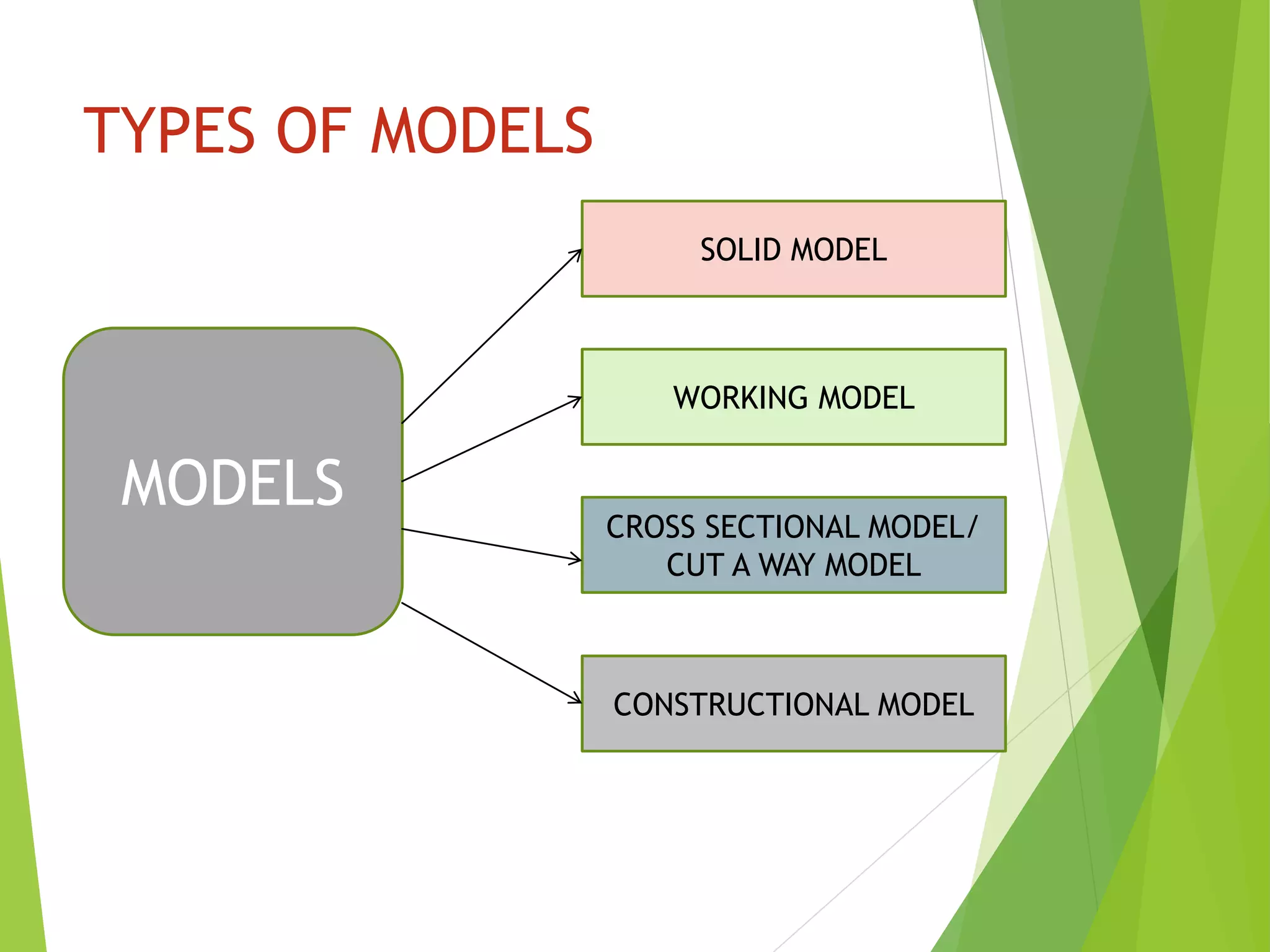
TYPES OF MODELS
MODELS
SOLID MODEL
WORKING MODEL
CROSS SECTIONAL MODEL/
CUT A WAY MODEL
CONSTRUCTIONAL MODEL
1. SOLID MODEL
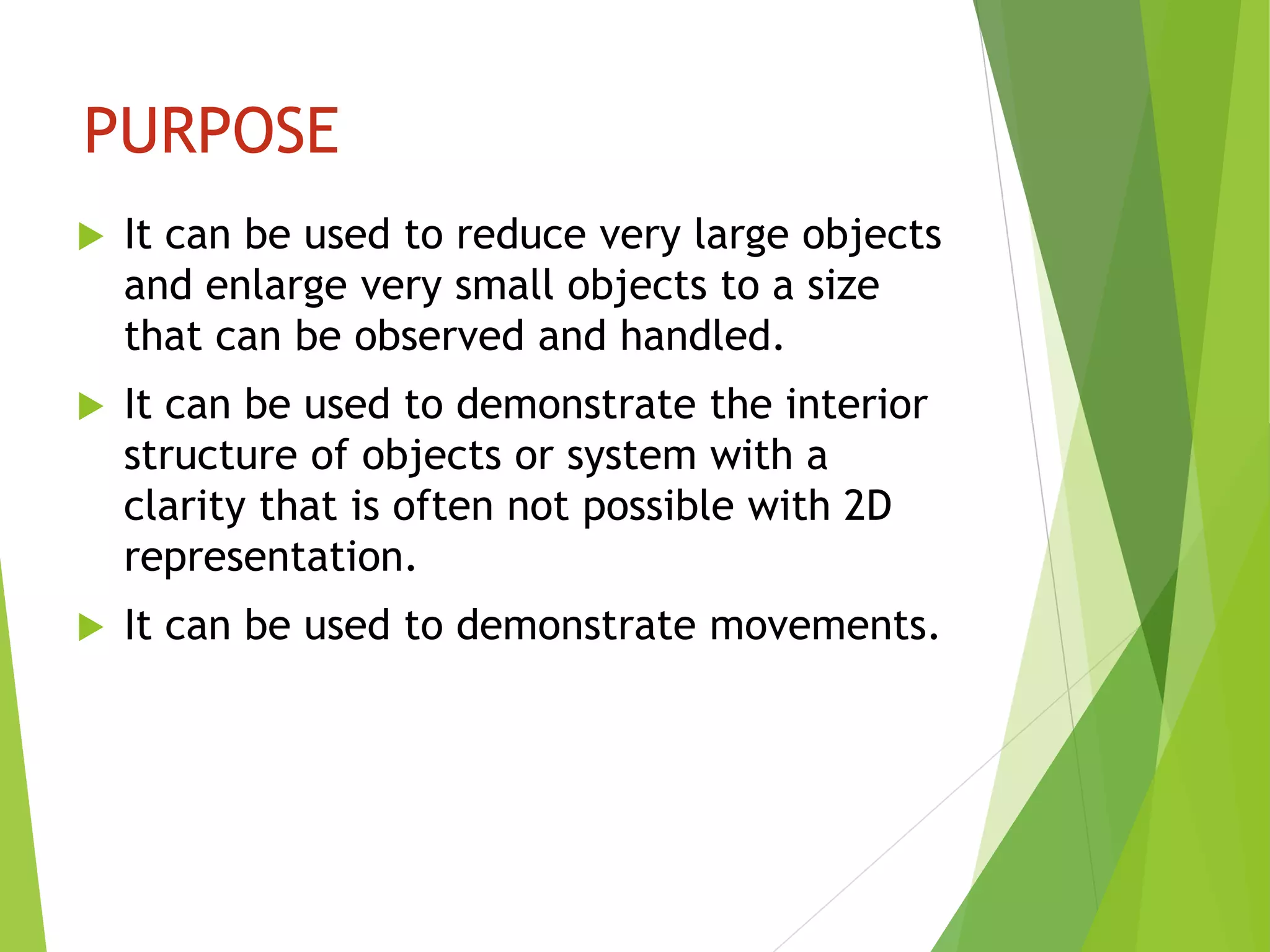
 It is a replica of an original thing, made
with the same suitable material like clay,
plaster of Paris, wood, iron….ect
 It is used mainly for recognizing external
feature.
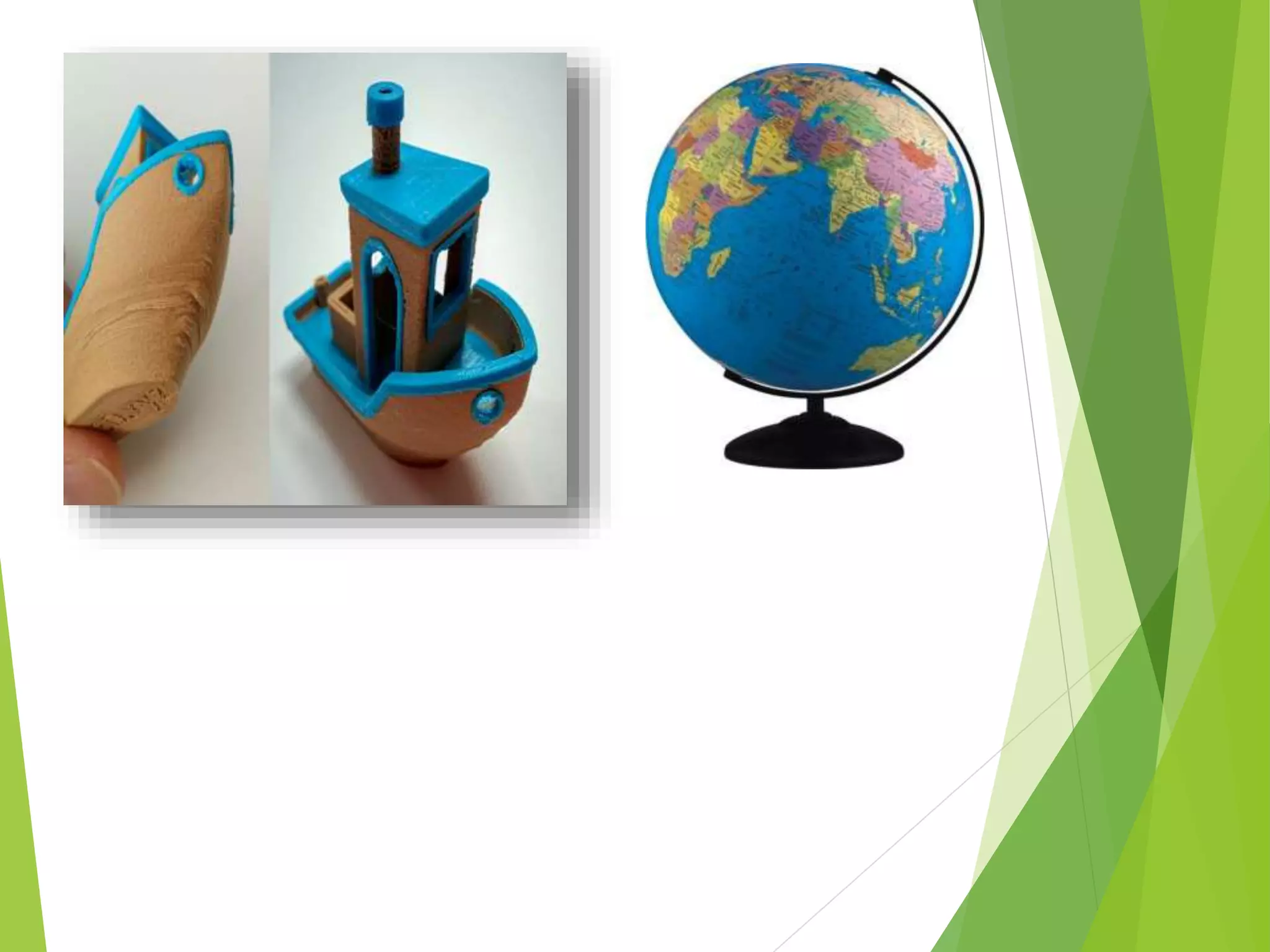
 Eg: globe
clay model of animal
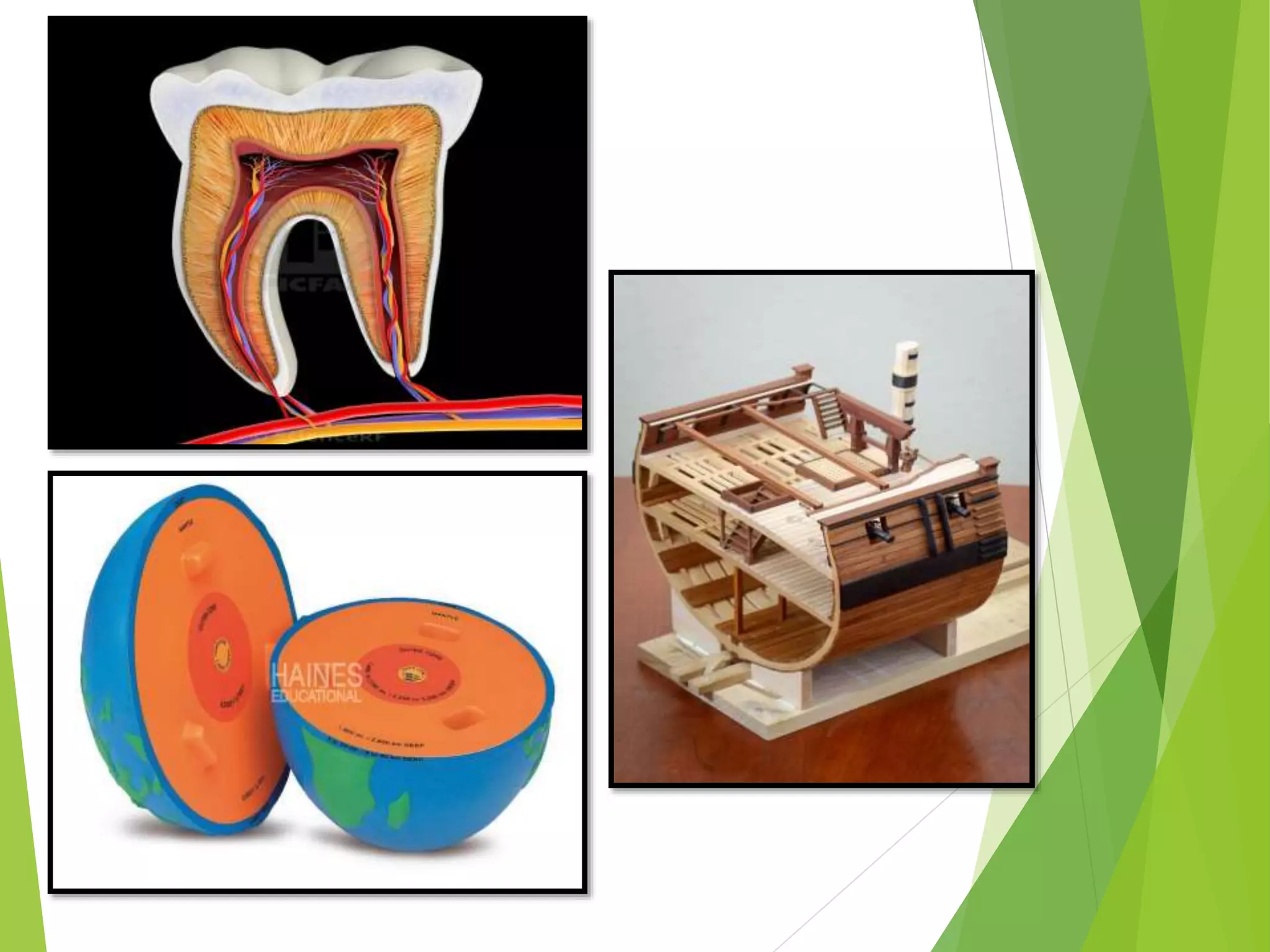
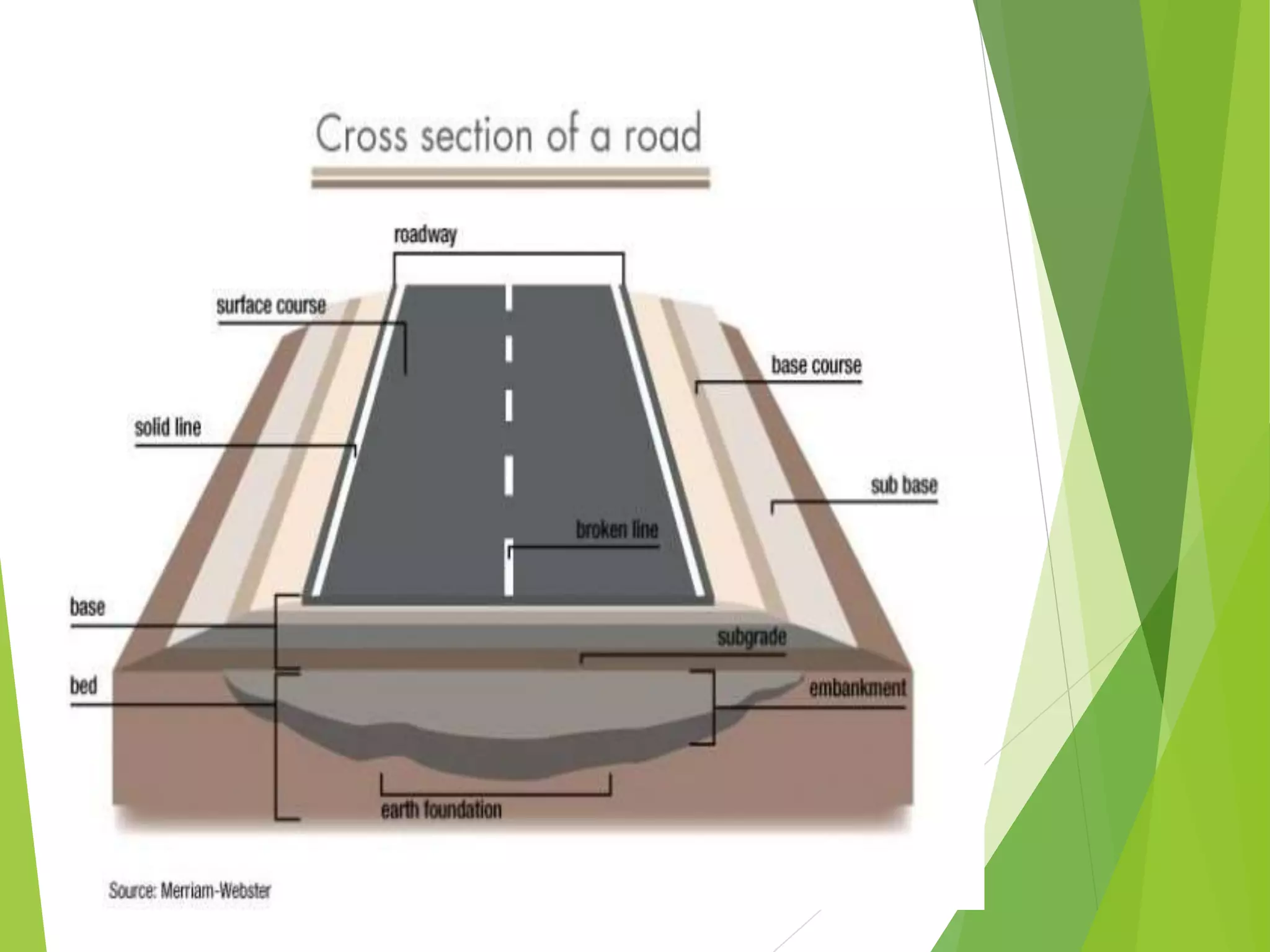
2.CROSS SECTIONAL MODEL
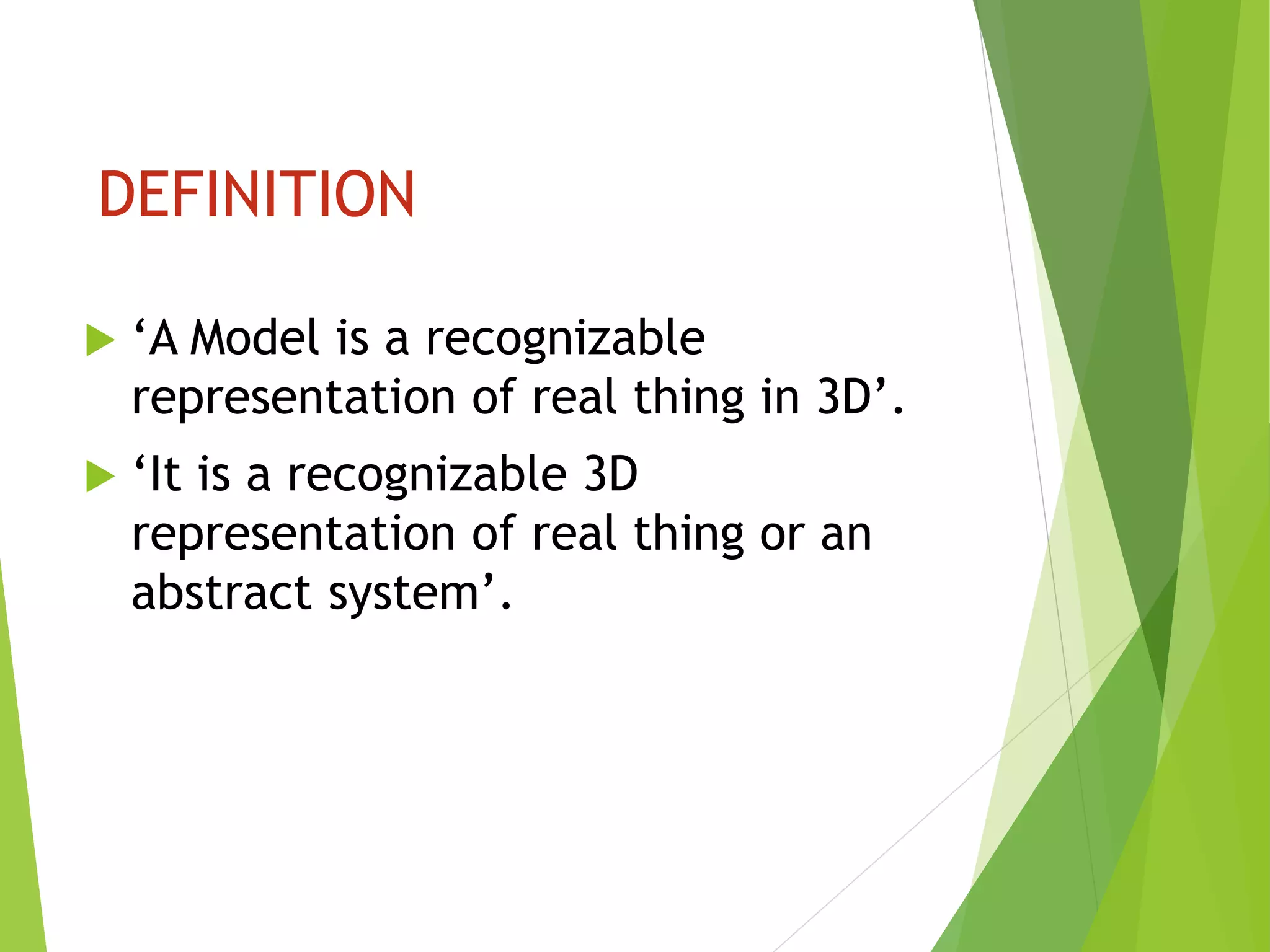
 It is the replica of the original thing to
show internal parts.
 These are cutaway models which are used
to enable the viewer to look into the inner
design and structure of system.
 It is difficult to make in the educational
institution. Because it need expertise
work.
 Eg: cross section of human body parts
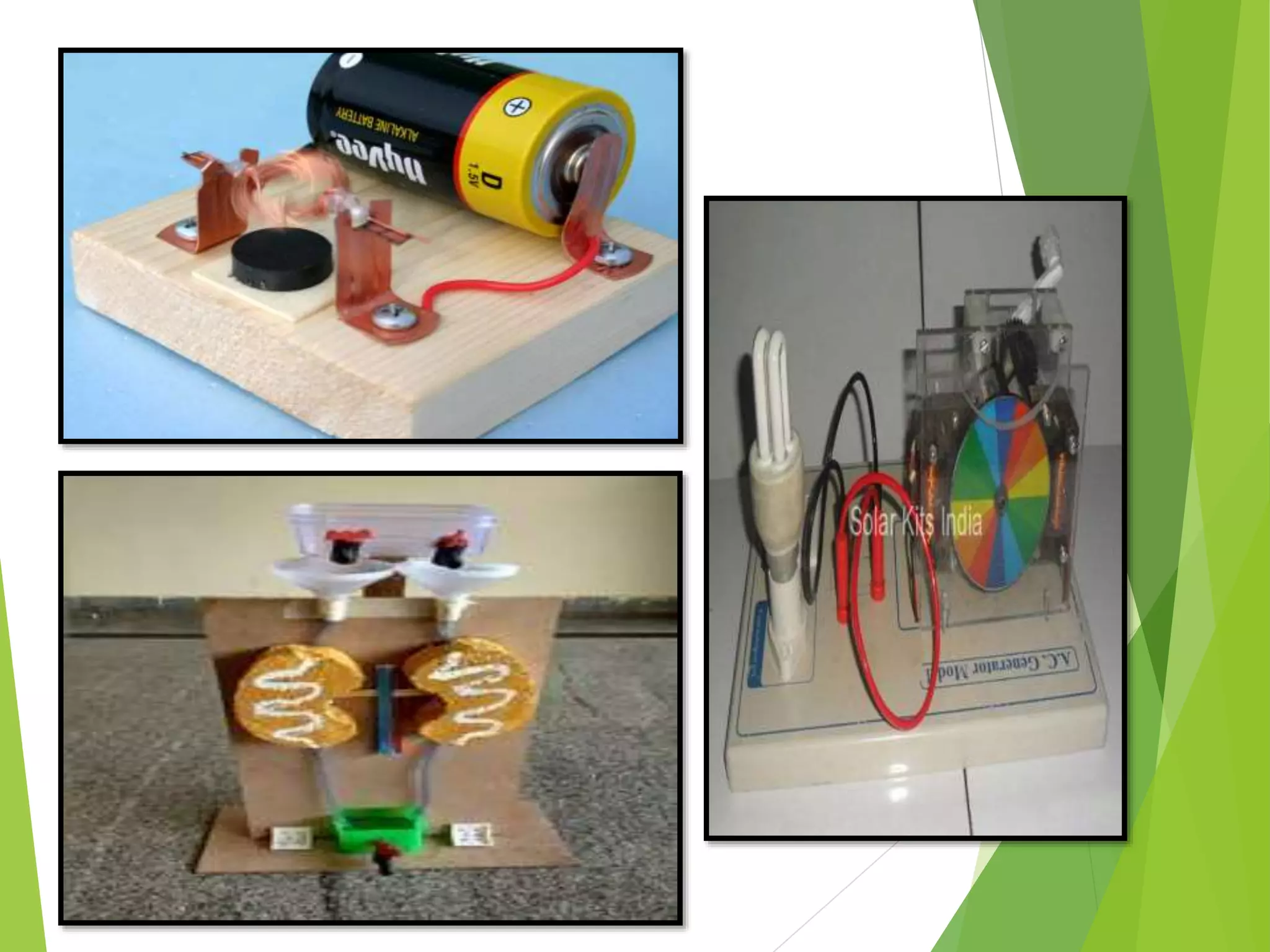
3.WORKING MODEL
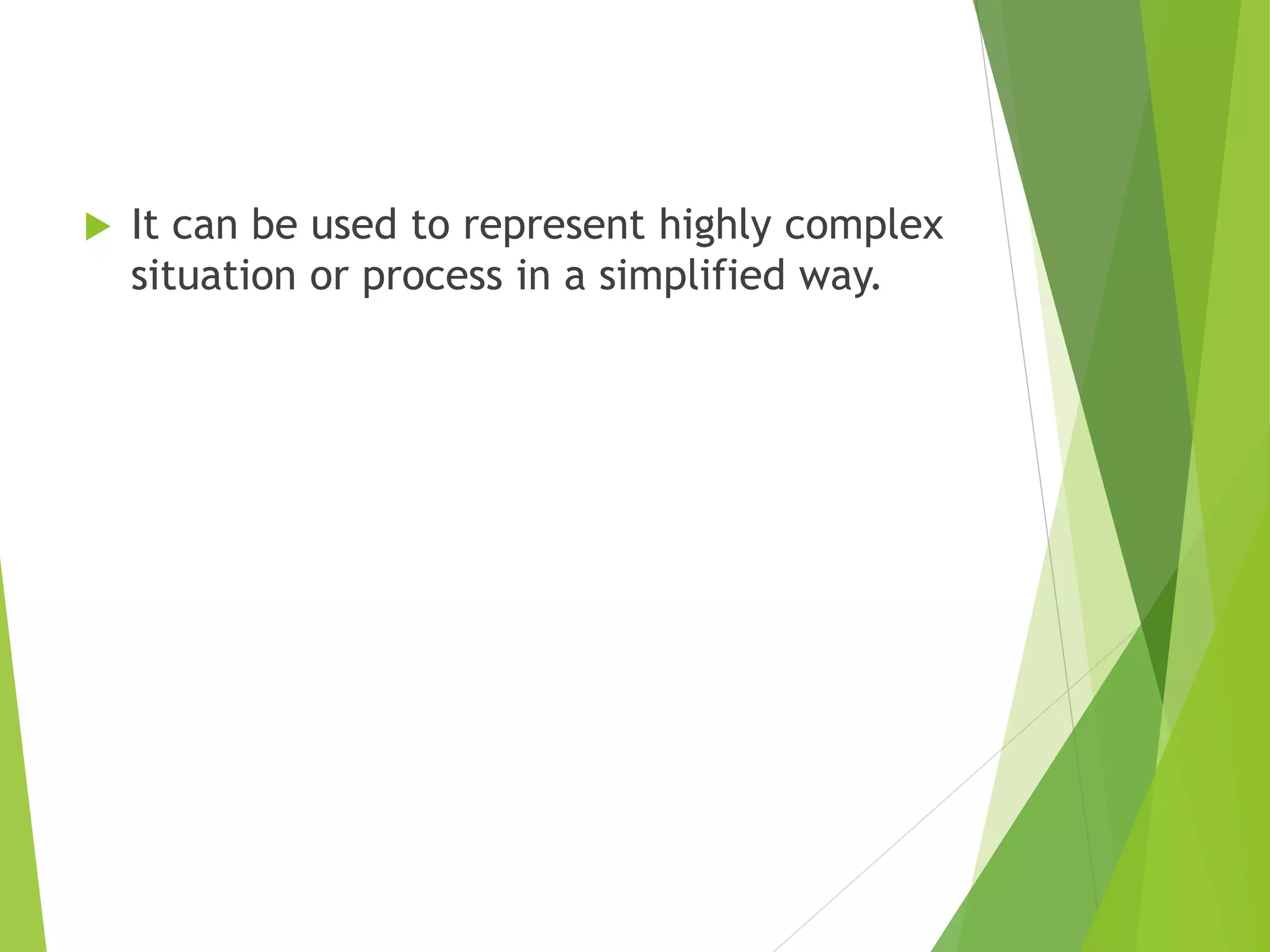
 It is designed to show actual working of
organ or miniature of specific process.
 Various colours are also used to show
different parts and how various parts are
fitted to work or move together
 It is used to illustrate an operation or a
working of big projects.
 Eg: motor cycle pump
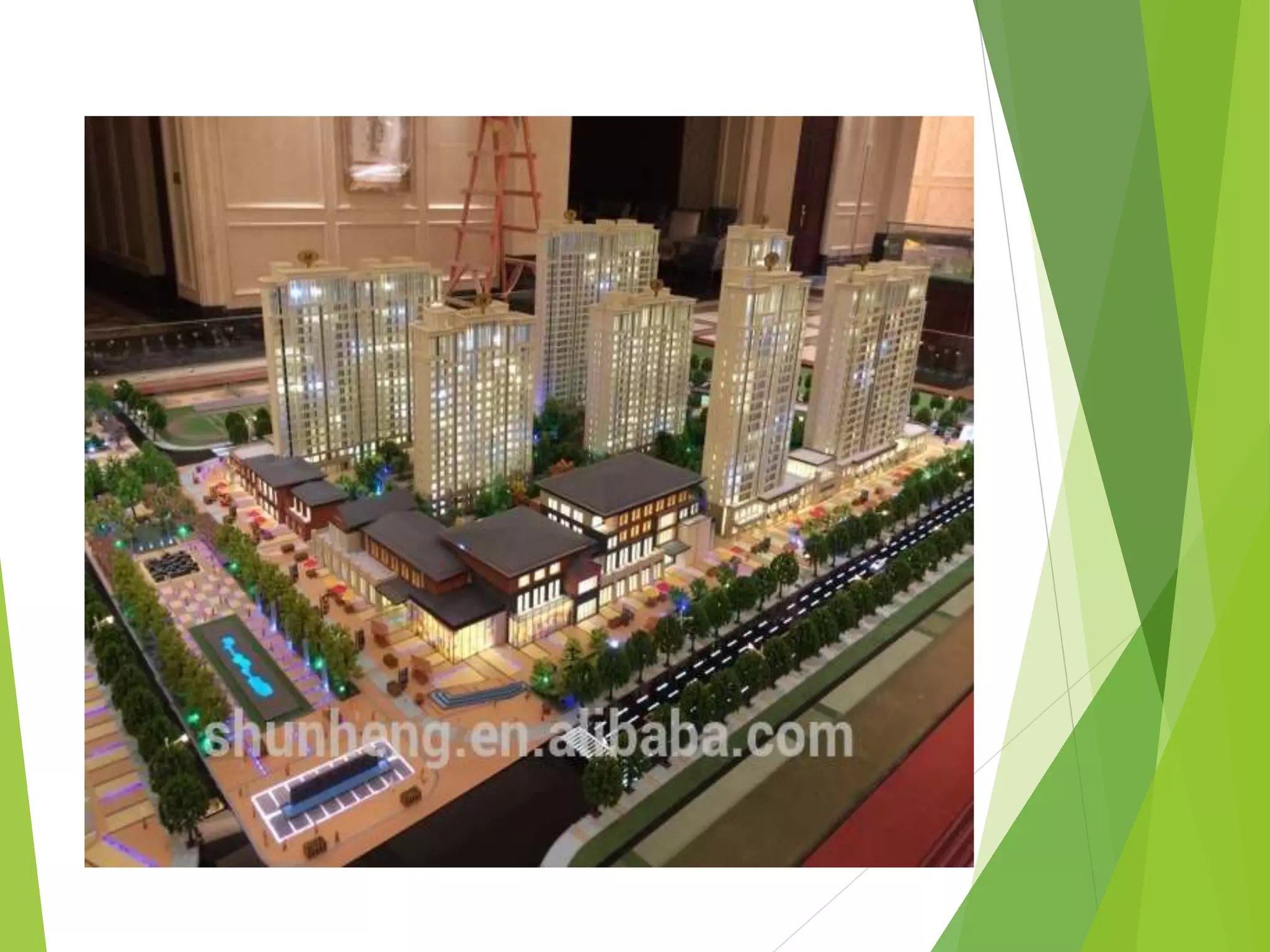
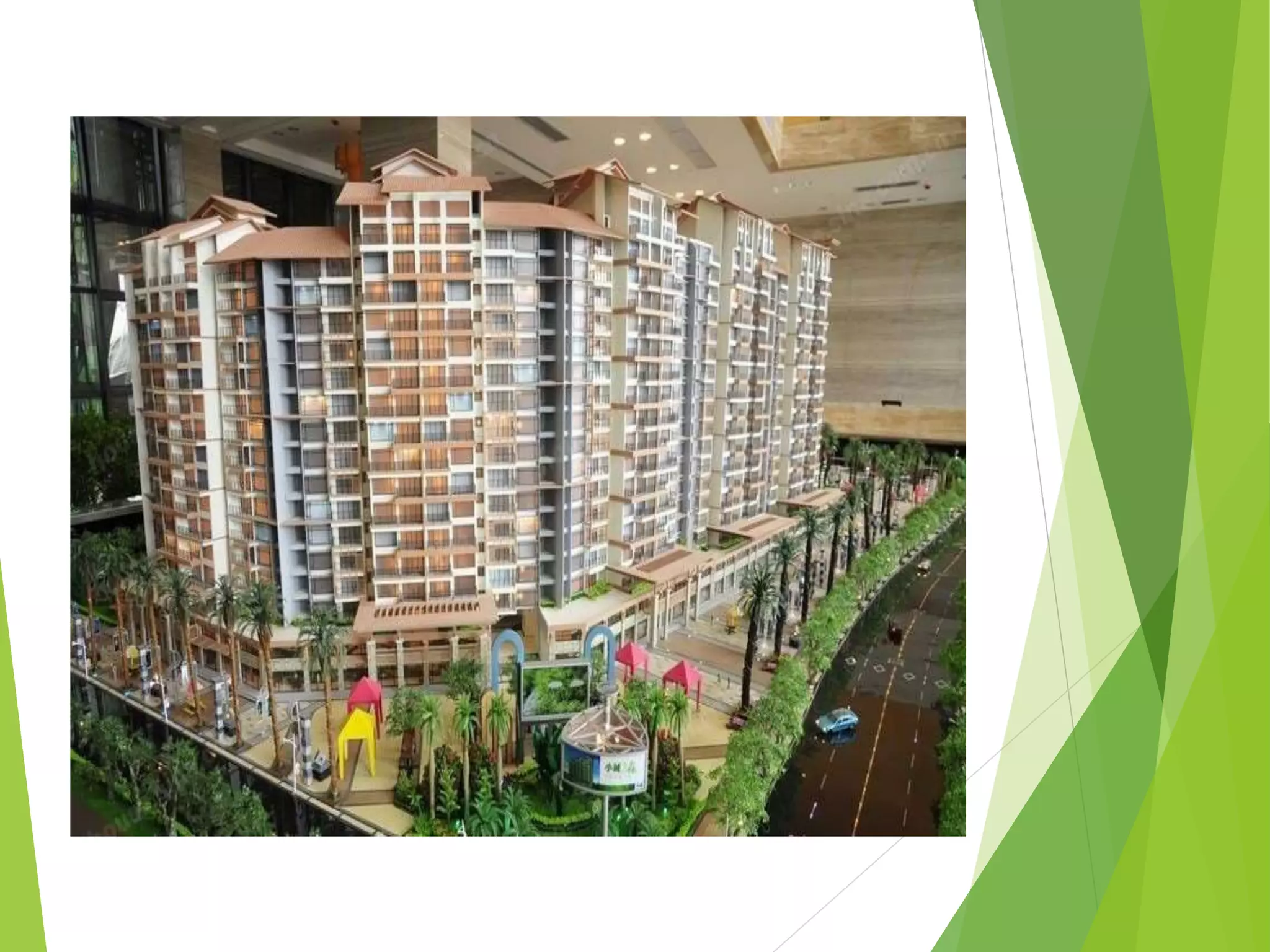
4.CONSTRUCTIONAL MODELS
 These are the models which are
assembled and dissembled to show
relationship of parts to whole.
 Eg: construction model of a home
IMPORTANCE OF MODELS IN
TEACHING
 It enhance attention and interest of the
students.
 There is a use of maximum senses. so it
improve the level of understanding.
 It save time and effort.
 It helps to recall and fixing knowledge of
the students.
 It develop a scientific attitude to the
students.
 It will helps to provide a direct experience
to the students.
 It helps the teacher to improve the
activities of the students.
ADVANTAGES
 Models heighten the reality of things and
make learning direct and meaningful.
 Models illustrate the application side of
certain principles and laws.
 It explains the complex operations in a
simplified way and thus make
comprehension easier.
 Models are lasting and ultimately work out
to be cheaper teaching aid.
 It can be make with the help of discarded
materials like empty boxes, pins, clips,
clay……ect
 It is easy to handle.
 It involve the use of all senses and thus
make learning easier.
DISADVANTAGES
 It can’t be made in educational
institution.
 It needs experts to construct.
 It can give a wrong impression and
concept about the size of the real
thing.
 Some models can be expensive.
 It can’t be applicable for a large
population.
 It is usually too technical and time
consuming for the constructor to build.
THANK YOU

Models

  • 1.
  • 2.
    DEFINITION  ‘A Modelis a recognizable representation of real thing in 3D’.  ‘It is a recognizable 3D representation of real thing or an abstract system’.
  • 3.
    PURPOSE  It canbe used to reduce very large objects and enlarge very small objects to a size that can be observed and handled.  It can be used to demonstrate the interior structure of objects or system with a clarity that is often not possible with 2D representation.  It can be used to demonstrate movements.
  • 4.
     It canbe used to represent highly complex situation or process in a simplified way.
  • 5.
    TYPES OF MODELS MODELS SOLIDMODEL WORKING MODEL CROSS SECTIONAL MODEL/ CUT A WAY MODEL CONSTRUCTIONAL MODEL
  • 6.
    1. SOLID MODEL It is a replica of an original thing, made with the same suitable material like clay, plaster of Paris, wood, iron….ect  It is used mainly for recognizing external feature.  Eg: globe clay model of animal
  • 8.
    2.CROSS SECTIONAL MODEL It is the replica of the original thing to show internal parts.  These are cutaway models which are used to enable the viewer to look into the inner design and structure of system.  It is difficult to make in the educational institution. Because it need expertise work.  Eg: cross section of human body parts
  • 11.
    3.WORKING MODEL  Itis designed to show actual working of organ or miniature of specific process.  Various colours are also used to show different parts and how various parts are fitted to work or move together  It is used to illustrate an operation or a working of big projects.  Eg: motor cycle pump
  • 13.
    4.CONSTRUCTIONAL MODELS  Theseare the models which are assembled and dissembled to show relationship of parts to whole.  Eg: construction model of a home
  • 16.
    IMPORTANCE OF MODELSIN TEACHING  It enhance attention and interest of the students.  There is a use of maximum senses. so it improve the level of understanding.  It save time and effort.  It helps to recall and fixing knowledge of the students.
  • 17.
     It developa scientific attitude to the students.  It will helps to provide a direct experience to the students.  It helps the teacher to improve the activities of the students.
  • 18.
    ADVANTAGES  Models heightenthe reality of things and make learning direct and meaningful.  Models illustrate the application side of certain principles and laws.  It explains the complex operations in a simplified way and thus make comprehension easier.  Models are lasting and ultimately work out to be cheaper teaching aid.  It can be make with the help of discarded materials like empty boxes, pins, clips, clay……ect
  • 19.
     It iseasy to handle.  It involve the use of all senses and thus make learning easier.
  • 20.
    DISADVANTAGES  It can’tbe made in educational institution.  It needs experts to construct.  It can give a wrong impression and concept about the size of the real thing.  Some models can be expensive.  It can’t be applicable for a large population.  It is usually too technical and time consuming for the constructor to build.
  • 21.