(Modals that express necessity or
obligation)
Read the following statements:
1. I need to pay the bills.
2. I must accomplish the reports.
3. The king ought to know more
about his enemies.
Modal Verbs of Obligation
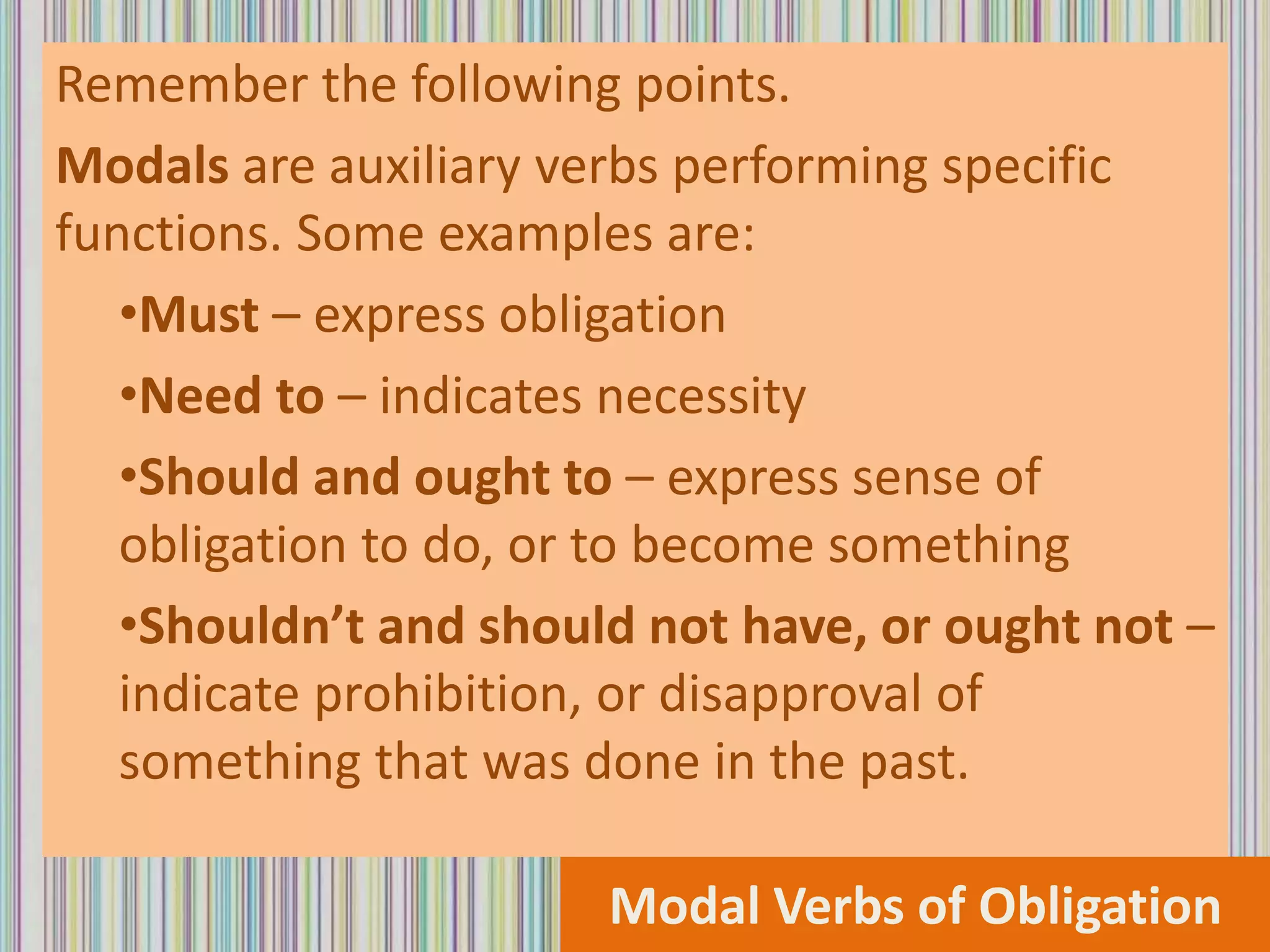
Remember the following points.
Modals are auxiliary verbs performing specific
functions. Some examples are:
•Must – express obligation
•Need to – indicates necessity
•Should and ought to – express sense of
obligation to do, or to become something
•Shouldn’t and should not have, or ought not –
indicate prohibition, or disapproval of
something that was done in the past.
Modal Verbs of Obligation
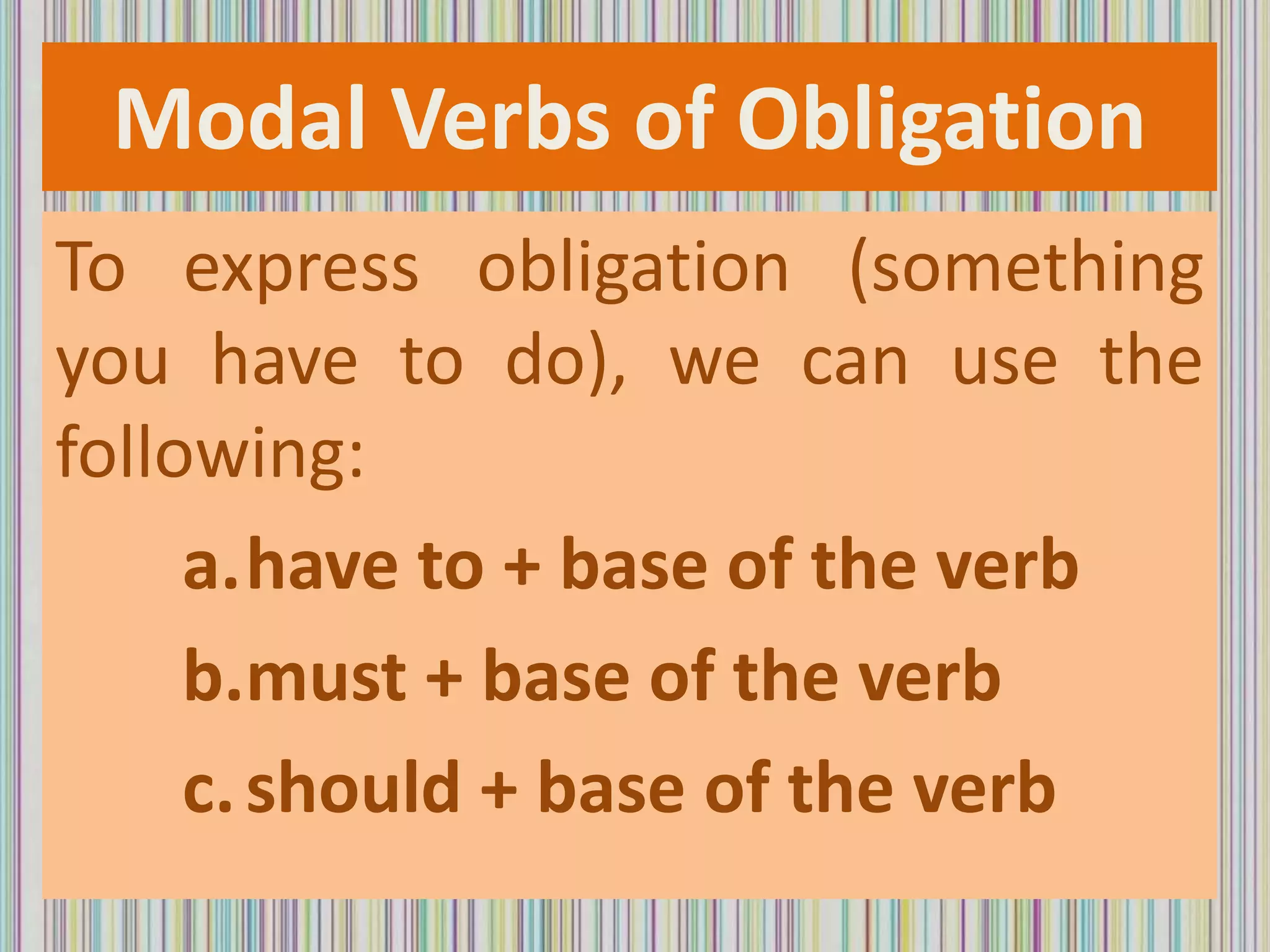
To express obligation (something
you have to do), we can use the
following:
a.have to + base of the verb
b.must + base of the verb
c.should + base of the verb
Modal Verbs of Obligation
Present Positive Negative
have to /
don't have
to
strong
obligation
(possibly from
outside)
Children have to
go to school.
(sometimes
'have got to')
no obligation
I don't have to
work on
Sundays.
You don't have
to eat anything
you don't like.
Modal Verbs of Obligation
Present Positive Negative
must /
mustn't
strong
obligation
(possibly
based on the
speaker's
opinion)
I must study
today.
negative
obligation
You mustn't
smoke here.
Modal Verbs of Obligation
Present Positive Negative
should /
shouldn't
mild obligation
or advice
You should
save some
money.
mild negative
obligation or
advice
You shouldn't
smoke so
much.
Modal Verbs of Obligation
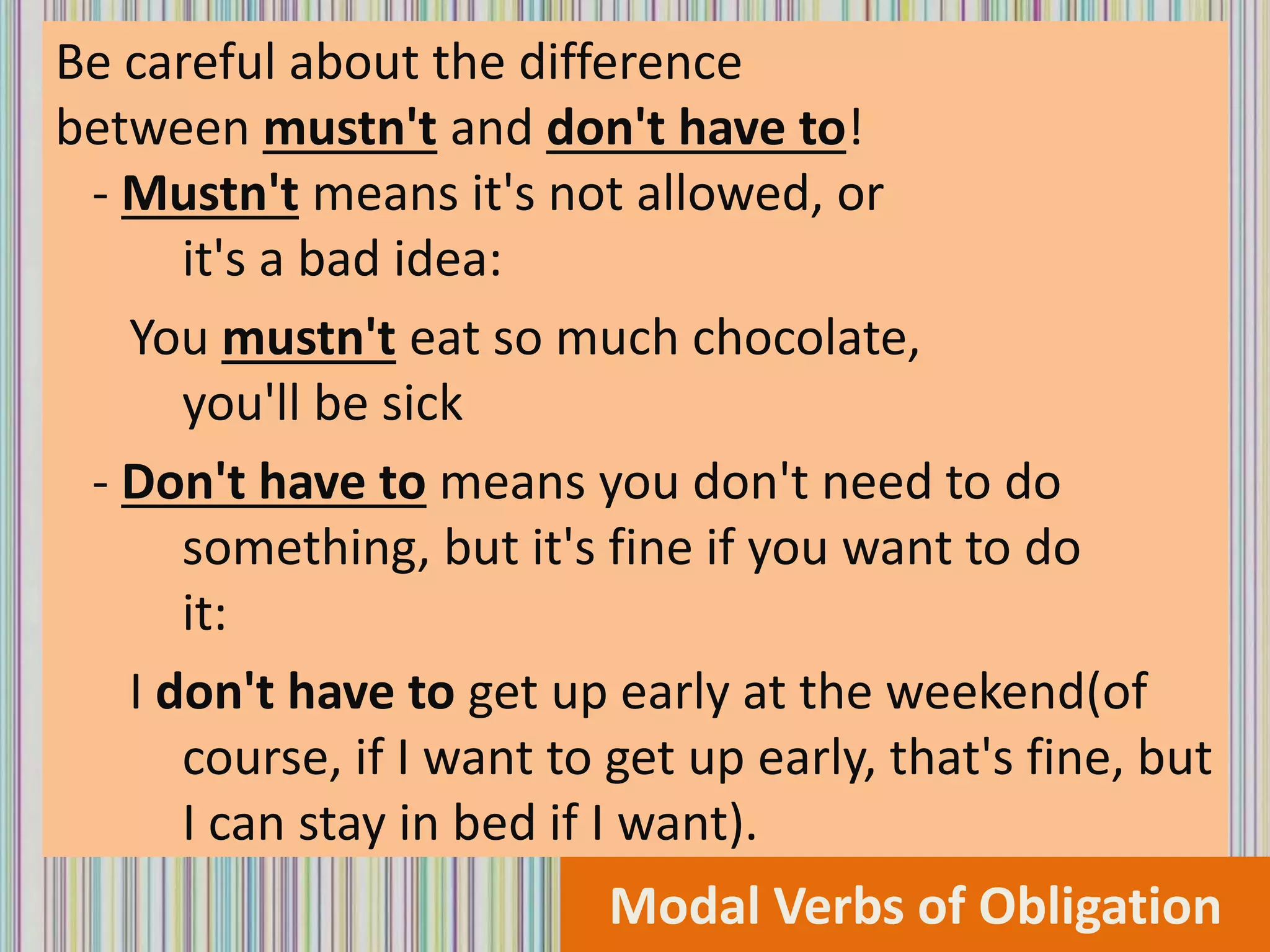
Be careful about the difference
between mustn't and don't have to!
- Mustn't means it's not allowed, or
it's a bad idea:
You mustn't eat so much chocolate,
you'll be sick
- Don't have to means you don't need to do
something, but it's fine if you want to do
it:
I don't have to get up early at the weekend(of
course, if I want to get up early, that's fine, but
I can stay in bed if I want).
Modal Verbs of Obligation
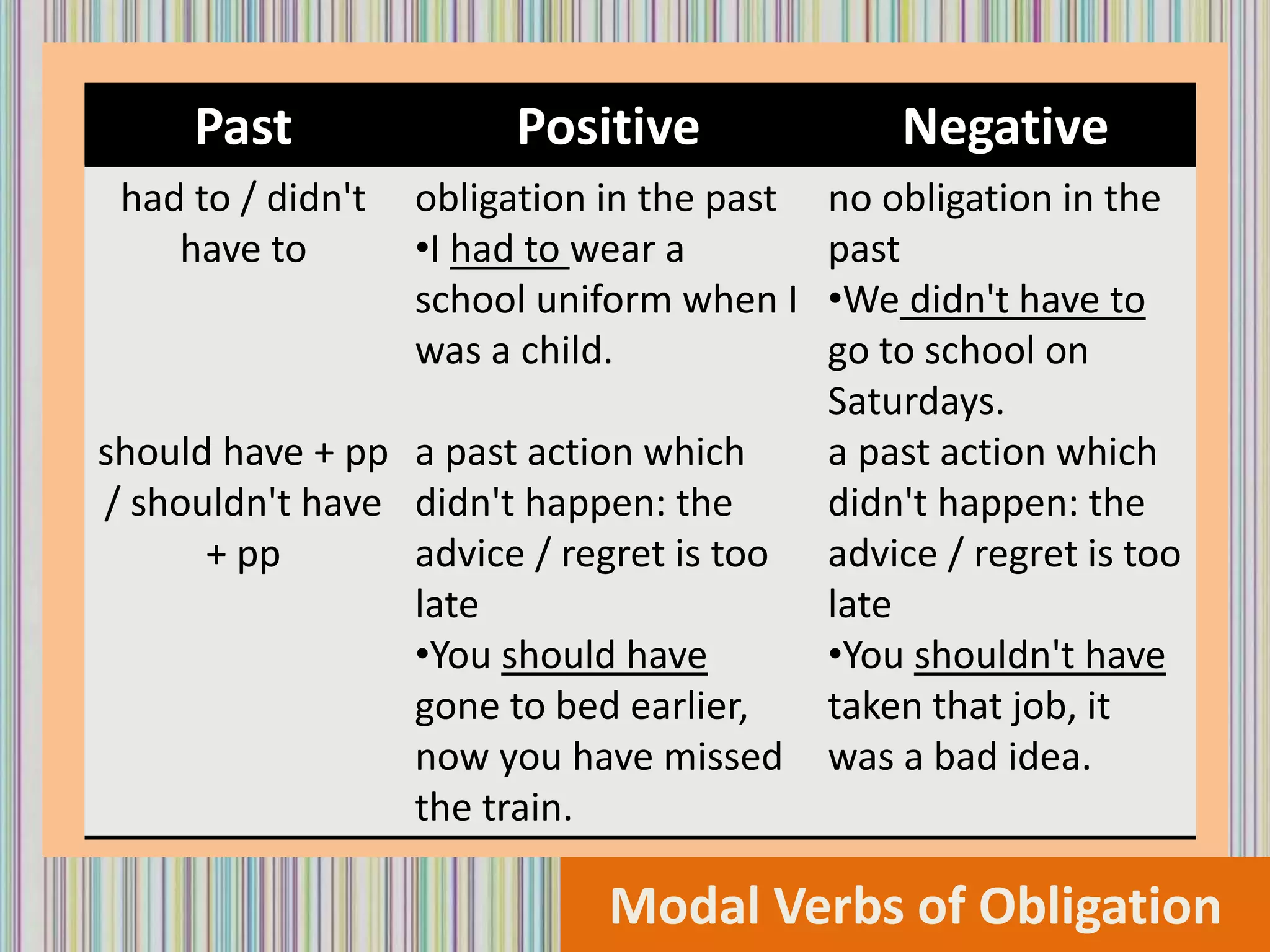
Past Positive Negative
had to / didn't
have to
should have + pp
/ shouldn't have
+ pp
obligation in the past
•I had to wear a
school uniform when I
was a child.
a past action which
didn't happen: the
advice / regret is too
late
•You should have
gone to bed earlier,
now you have missed
the train.
no obligation in the
past
•We didn't have to
go to school on
Saturdays.
a past action which
didn't happen: the
advice / regret is too
late
•You shouldn't have
taken that job, it
was a bad idea.
Modal Verbs of Obligation
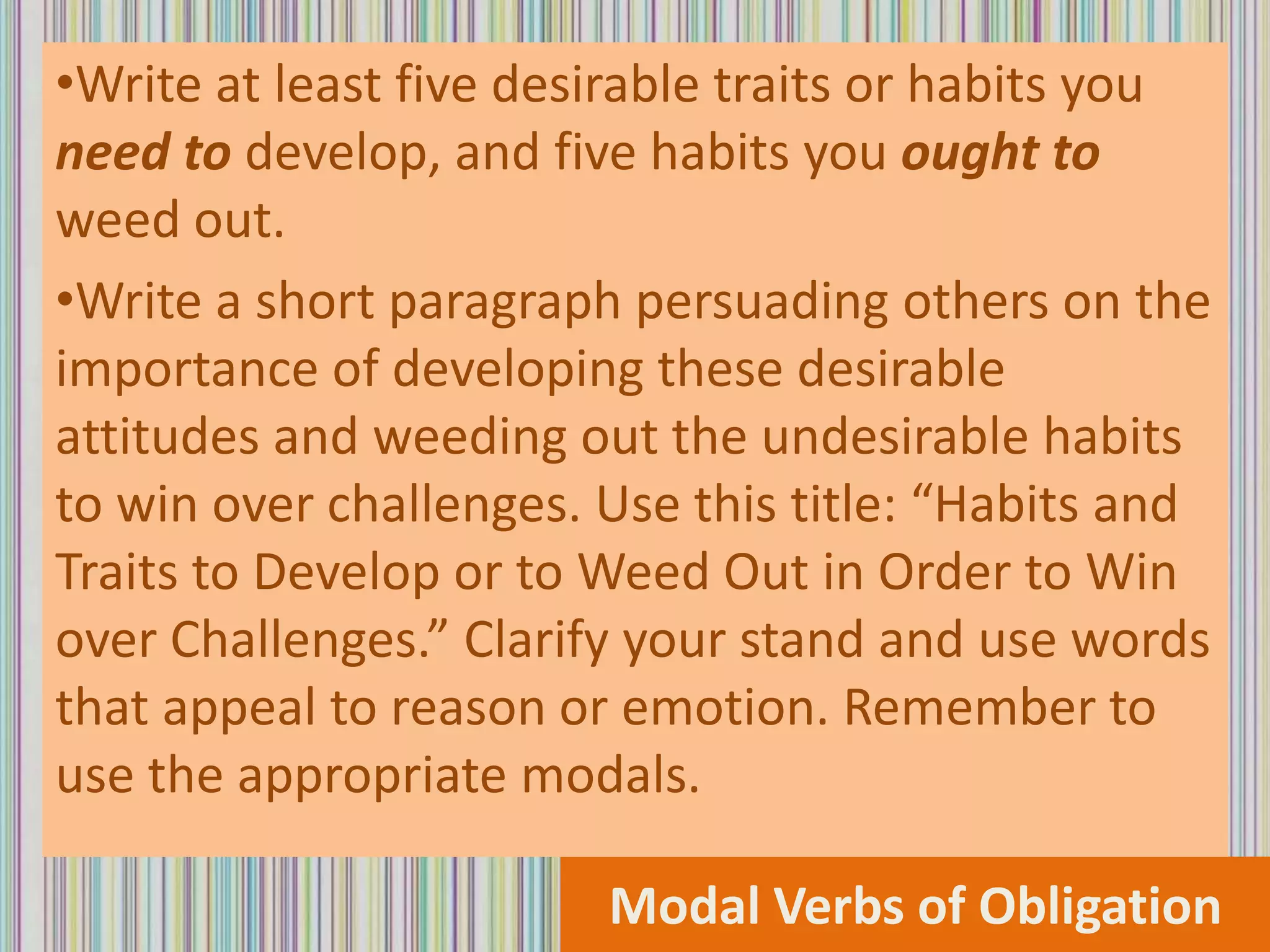
•Write at least five desirable traits or habits you
need to develop, and five habits you ought to
weed out.
•Write a short paragraph persuading others on the
importance of developing these desirable
attitudes and weeding out the undesirable habits
to win over challenges. Use this title: “Habits and
Traits to Develop or to Weed Out in Order to Win
over Challenges.” Clarify your stand and use words
that appeal to reason or emotion. Remember to
use the appropriate modals.

Modals of Obligation

  • 1.
    (Modals that expressnecessity or obligation)
  • 2.
    Read the followingstatements: 1. I need to pay the bills. 2. I must accomplish the reports. 3. The king ought to know more about his enemies.
  • 3.
    Modal Verbs ofObligation Remember the following points. Modals are auxiliary verbs performing specific functions. Some examples are: •Must – express obligation •Need to – indicates necessity •Should and ought to – express sense of obligation to do, or to become something •Shouldn’t and should not have, or ought not – indicate prohibition, or disapproval of something that was done in the past.
  • 4.
    Modal Verbs ofObligation To express obligation (something you have to do), we can use the following: a.have to + base of the verb b.must + base of the verb c.should + base of the verb
  • 5.
    Modal Verbs ofObligation Present Positive Negative have to / don't have to strong obligation (possibly from outside) Children have to go to school. (sometimes 'have got to') no obligation I don't have to work on Sundays. You don't have to eat anything you don't like.
  • 6.
    Modal Verbs ofObligation Present Positive Negative must / mustn't strong obligation (possibly based on the speaker's opinion) I must study today. negative obligation You mustn't smoke here.
  • 7.
    Modal Verbs ofObligation Present Positive Negative should / shouldn't mild obligation or advice You should save some money. mild negative obligation or advice You shouldn't smoke so much.
  • 8.
    Modal Verbs ofObligation Be careful about the difference between mustn't and don't have to! - Mustn't means it's not allowed, or it's a bad idea: You mustn't eat so much chocolate, you'll be sick - Don't have to means you don't need to do something, but it's fine if you want to do it: I don't have to get up early at the weekend(of course, if I want to get up early, that's fine, but I can stay in bed if I want).
  • 9.
    Modal Verbs ofObligation Past Positive Negative had to / didn't have to should have + pp / shouldn't have + pp obligation in the past •I had to wear a school uniform when I was a child. a past action which didn't happen: the advice / regret is too late •You should have gone to bed earlier, now you have missed the train. no obligation in the past •We didn't have to go to school on Saturdays. a past action which didn't happen: the advice / regret is too late •You shouldn't have taken that job, it was a bad idea.
  • 10.
    Modal Verbs ofObligation •Write at least five desirable traits or habits you need to develop, and five habits you ought to weed out. •Write a short paragraph persuading others on the importance of developing these desirable attitudes and weeding out the undesirable habits to win over challenges. Use this title: “Habits and Traits to Develop or to Weed Out in Order to Win over Challenges.” Clarify your stand and use words that appeal to reason or emotion. Remember to use the appropriate modals.