MODAL VERBS
STRUCTURE
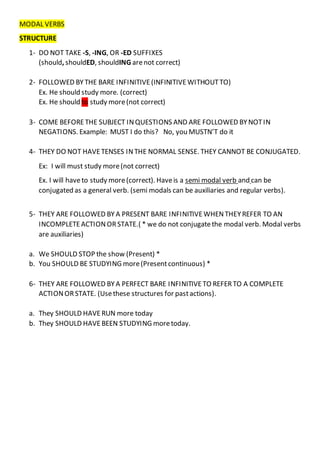
1- DO NOT TAKE -S, -ING, OR -ED SUFFIXES
(should, shouldED, shouldING arenot correct)
2- FOLLOWED BYTHE BARE INFINITIVE(INFINITIVEWITHOUTTO)
Ex. He should study more. (correct)
Ex. He should to study more(not correct)
3- COME BEFORETHE SUBJECT INQUESTIONS AND ARE FOLLOWED BYNOTIN
NEGATIONS. Example: MUST I do this? No, you MUSTN’T do it
4- THEY DO NOT HAVETENSES INTHE NORMAL SENSE. THEY CANNOT BE CONJUGATED.
Ex: I will must study more(not correct)
Ex. I will haveto study more(correct). Haveis a semi modal verb and can be
conjugated as a general verb. (semi modals can be auxiliaries and regular verbs).
5- THEY ARE FOLLOWED BYA PRESENT BARE INFINITIVEWHENTHEYREFER TO AN
INCOMPLETEACTIONORSTATE.( * we do not conjugatethe modal verb. Modal verbs
are auxiliaries)
a. We SHOULD STOP the show (Present) *
b. You SHOULD BE STUDYING more(Presentcontinuous) *
6- THEY ARE FOLLOWED BYA PERFECT BARE INFINITIVETO REFERTO A COMPLETE
ACTIONORSTATE. (Usethese structures for pastactions).
a. They SHOULD HAVERUN more today
b. They SHOULD HAVEBEEN STUDYING moretoday.
USES ( MODALITY)
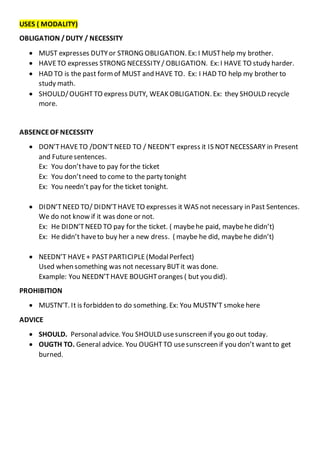
OBLIGATION /DUTY / NECESSITY
 MUST expresses DUTYor STRONG OBLIGATION. Ex: I MUSThelp my brother.
 HAVETO expresses STRONG NECESSITY/ OBLIGATION. Ex: I HAVE TO study harder.
 HAD TO is the past formof MUST and HAVE TO. Ex: I HAD TO help my brother to
study math.
 SHOULD/OUGHTTO express DUTY, WEAK OBLIGATION. Ex: they SHOULD recycle
more.
ABSENCEOF NECESSITY
 DON’THAVETO /DON’TNEED TO / NEEDN’T express it IS NOTNECESSARY in Present
and Futuresentences.
Ex: You don’thave to pay for the ticket
Ex: You don’tneed to come to the party tonight
Ex: You needn’t pay for the ticket tonight.
 DIDN’TNEED TO/ DIDN’THAVETO expresses it WAS not necessary in Past Sentences.
We do not know if it was done or not.
Ex: He DIDN’TNEED TO pay for the ticket. ( maybehe paid, maybehe didn’t)
Ex: He didn’t haveto buy her a new dress. ( maybe he did, maybehe didn’t)
 NEEDN’T HAVE+ PASTPARTICIPLE (ModalPerfect)
Used when something was not necessary BUTit was done.
Example: You NEEDN’THAVE BOUGHToranges ( but you did).
PROHIBITION
 MUSTN’T. It is forbidden to do something. Ex: You MUSTN’T smoke here
ADVICE
 SHOULD. Personaladvice. You SHOULD usesunscreen if you go out today.
 OUGTH TO. General advice. You OUGHTTO usesunscreen if you don’t wantto get
burned.

Modal verbs revised

  • 1.
    MODAL VERBS STRUCTURE 1- DONOT TAKE -S, -ING, OR -ED SUFFIXES (should, shouldED, shouldING arenot correct) 2- FOLLOWED BYTHE BARE INFINITIVE(INFINITIVEWITHOUTTO) Ex. He should study more. (correct) Ex. He should to study more(not correct) 3- COME BEFORETHE SUBJECT INQUESTIONS AND ARE FOLLOWED BYNOTIN NEGATIONS. Example: MUST I do this? No, you MUSTN’T do it 4- THEY DO NOT HAVETENSES INTHE NORMAL SENSE. THEY CANNOT BE CONJUGATED. Ex: I will must study more(not correct) Ex. I will haveto study more(correct). Haveis a semi modal verb and can be conjugated as a general verb. (semi modals can be auxiliaries and regular verbs). 5- THEY ARE FOLLOWED BYA PRESENT BARE INFINITIVEWHENTHEYREFER TO AN INCOMPLETEACTIONORSTATE.( * we do not conjugatethe modal verb. Modal verbs are auxiliaries) a. We SHOULD STOP the show (Present) * b. You SHOULD BE STUDYING more(Presentcontinuous) * 6- THEY ARE FOLLOWED BYA PERFECT BARE INFINITIVETO REFERTO A COMPLETE ACTIONORSTATE. (Usethese structures for pastactions). a. They SHOULD HAVERUN more today b. They SHOULD HAVEBEEN STUDYING moretoday.
  • 2.
    USES ( MODALITY) OBLIGATION/DUTY / NECESSITY  MUST expresses DUTYor STRONG OBLIGATION. Ex: I MUSThelp my brother.  HAVETO expresses STRONG NECESSITY/ OBLIGATION. Ex: I HAVE TO study harder.  HAD TO is the past formof MUST and HAVE TO. Ex: I HAD TO help my brother to study math.  SHOULD/OUGHTTO express DUTY, WEAK OBLIGATION. Ex: they SHOULD recycle more. ABSENCEOF NECESSITY  DON’THAVETO /DON’TNEED TO / NEEDN’T express it IS NOTNECESSARY in Present and Futuresentences. Ex: You don’thave to pay for the ticket Ex: You don’tneed to come to the party tonight Ex: You needn’t pay for the ticket tonight.  DIDN’TNEED TO/ DIDN’THAVETO expresses it WAS not necessary in Past Sentences. We do not know if it was done or not. Ex: He DIDN’TNEED TO pay for the ticket. ( maybehe paid, maybehe didn’t) Ex: He didn’t haveto buy her a new dress. ( maybe he did, maybehe didn’t)  NEEDN’T HAVE+ PASTPARTICIPLE (ModalPerfect) Used when something was not necessary BUTit was done. Example: You NEEDN’THAVE BOUGHToranges ( but you did). PROHIBITION  MUSTN’T. It is forbidden to do something. Ex: You MUSTN’T smoke here ADVICE  SHOULD. Personaladvice. You SHOULD usesunscreen if you go out today.  OUGTH TO. General advice. You OUGHTTO usesunscreen if you don’t wantto get burned.