
Colégio Municipal Rui Barbosa 
Prof. Nivaldo Marques 
Assunto: Modal Verbs
Inglês Modal Verbs
Inglês Modal Verbs 
Modals show the speaker’s attitude 
or feelings about a situation. For 
example how probable or necessary 
something is, or that the speaker is 
offering or requesting something. The 
same modal verb can be used in 
different ways with different 
meanings – you only know from the 
situation.
Inglês Modal Verbs 
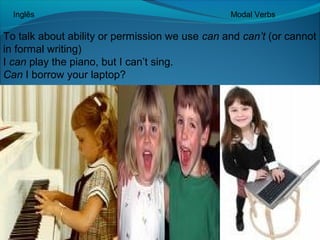
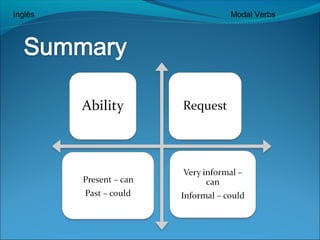
To talk about ability or permission we use can and can’t (or cannot 
in formal writing) 
I can play the piano, but I can’t sing. 
Can I borrow your laptop?
Inglês Modal Verbs 
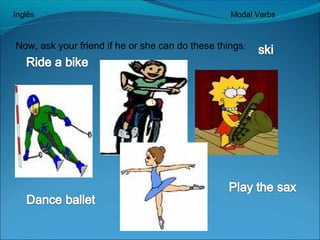
Now, ask your friend if he or she can do these things:
Inglês Modal Verbs 
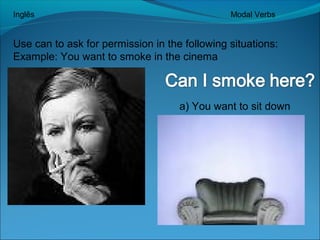
Use can to ask for permission in the following situations: 
Example: You want to smoke in the cinema 
a) You want to sit down
Inglês Modal Verbs 
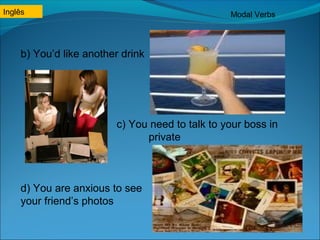
b) You’d like another drink 
c) You need to talk to your boss in 
private 
d) You are anxious to see 
your friend’s photos
Inglês Modal Verbs 
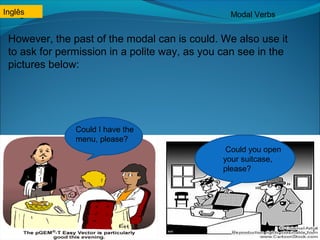
However, the past of the modal can is could. We also use it 
to ask for permission in a polite way, as you can see in the 
pictures below: 
Could I have the 
menu, please? 
Could you open 
your suitcase, 
please? 
Inglês
Inglês Modal Verbs
Inglês Modal Verbs 
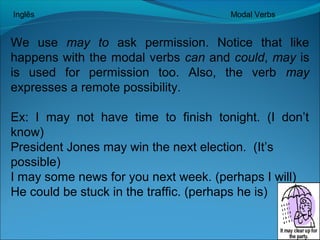
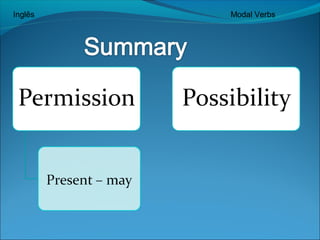
We use may to ask permission. Notice that like 
happens with the modal verbs can and could, may is 
is used for permission too. Also, the verb may 
expresses a remote possibility. 
Ex: I may not have time to finish tonight. (I don’t 
know) 
President Jones may win the next election. (It’s 
possible) 
I may some news for you next week. (perhaps I will) 
He could be stuck in the traffic. (perhaps he is)
Inglês 
Inglês Modal Verbs 
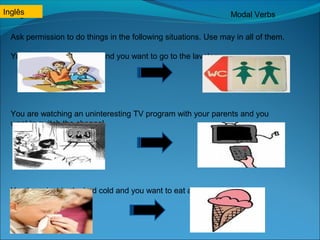
Ask permission to do things in the following situations. Use may in all of them. 
You are in the classroom and you want to go to the lavatory. 
You are watching an uninteresting TV program with your parents and you 
want to switch the channel. 
You have just had a bad cold and you want to eat an ice cream.
Inglês Modal Verbs 
Use may to express possibility in all of these situations: 
Ex: Perhaps your uncle and aunt will stay with you for a few days next week. 
My uncle and my aunt may stay with me for a few days next week. 
a)Perhaps Betty won’ t come to your birthday party next weekend. 
b) Perhaps Mr. stone will give you a raise in your salary. 
c) Perhaps they will never 
find the cure for Aids. 
d) Perhaps they will cancel the 
show if it rains.
Inglês Modal Verbs
Inglês Modal Verbs 
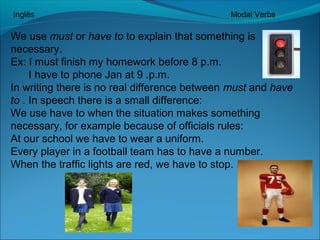
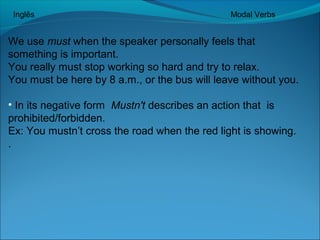
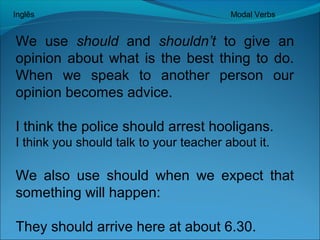
We use must or have to to explain that something is 
necessary. 
Ex: I must finish my homework before 8 p.m. 
I have to phone Jan at 9 .p.m. 
In writing there is no real difference between must and have 
to . In speech there is a small difference: 
We use have to when the situation makes something 
necessary, for example because of officials rules: 
At our school we have to wear a uniform. 
Every player in a football team has to have a number. 
When the traffic lights are red, we have to stop.
Inglês Modal Verbs 
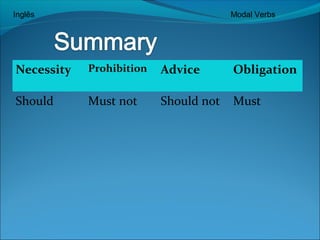
We use must when the speaker personally feels that 
something is important. 
You really must stop working so hard and try to relax. 
You must be here by 8 a.m., or the bus will leave without you. 
• In its negative form Mustn't describes an action that is 
prohibited/forbidden. 
Ex: You mustn’t cross the road when the red light is showing. 
.
Inglês Modal Verbs 
We use should and shouldn’t to give an 
opinion about what is the best thing to do. 
When we speak to another person our 
opinion becomes advice. 
I think the police should arrest hooligans. 
I think you should talk to your teacher about it. 
We also use should when we expect that 
something will happen: 
They should arrive here at about 6.30.
Inglês Modal Verbs 
Necessity Prohibition Advice Obligation 
Should Must not Should not Must
Inglês Modal Verbs 
For more information on modal verbs and further practice, check the related 
links: 
1)http://www.englishpage.com/modals/modalintro.html 
2)http://www.learnenglish.de/grammar/verbmodal.htm

Modal verbs

  • 1.
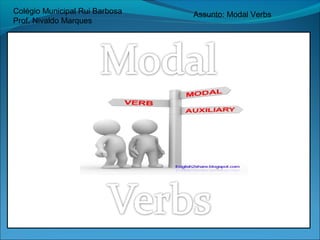
    Colégio Municipal RuiBarbosa Prof. Nivaldo Marques Assunto: Modal Verbs
  • 2.
  • 3.
    Inglês Modal Verbs Modals show the speaker’s attitude or feelings about a situation. For example how probable or necessary something is, or that the speaker is offering or requesting something. The same modal verb can be used in different ways with different meanings – you only know from the situation.
  • 4.
    Inglês Modal Verbs To talk about ability or permission we use can and can’t (or cannot in formal writing) I can play the piano, but I can’t sing. Can I borrow your laptop?
  • 5.
    Inglês Modal Verbs Now, ask your friend if he or she can do these things:
  • 6.
    Inglês Modal Verbs Use can to ask for permission in the following situations: Example: You want to smoke in the cinema a) You want to sit down
  • 7.
    Inglês Modal Verbs b) You’d like another drink c) You need to talk to your boss in private d) You are anxious to see your friend’s photos
  • 8.
    Inglês Modal Verbs However, the past of the modal can is could. We also use it to ask for permission in a polite way, as you can see in the pictures below: Could I have the menu, please? Could you open your suitcase, please? Inglês
  • 9.
  • 10.
    Inglês Modal Verbs We use may to ask permission. Notice that like happens with the modal verbs can and could, may is is used for permission too. Also, the verb may expresses a remote possibility. Ex: I may not have time to finish tonight. (I don’t know) President Jones may win the next election. (It’s possible) I may some news for you next week. (perhaps I will) He could be stuck in the traffic. (perhaps he is)
  • 11.
    Inglês Inglês ModalVerbs Ask permission to do things in the following situations. Use may in all of them. You are in the classroom and you want to go to the lavatory. You are watching an uninteresting TV program with your parents and you want to switch the channel. You have just had a bad cold and you want to eat an ice cream.
  • 12.
    Inglês Modal Verbs Use may to express possibility in all of these situations: Ex: Perhaps your uncle and aunt will stay with you for a few days next week. My uncle and my aunt may stay with me for a few days next week. a)Perhaps Betty won’ t come to your birthday party next weekend. b) Perhaps Mr. stone will give you a raise in your salary. c) Perhaps they will never find the cure for Aids. d) Perhaps they will cancel the show if it rains.
  • 13.
  • 14.
    Inglês Modal Verbs We use must or have to to explain that something is necessary. Ex: I must finish my homework before 8 p.m. I have to phone Jan at 9 .p.m. In writing there is no real difference between must and have to . In speech there is a small difference: We use have to when the situation makes something necessary, for example because of officials rules: At our school we have to wear a uniform. Every player in a football team has to have a number. When the traffic lights are red, we have to stop.
  • 15.
    Inglês Modal Verbs We use must when the speaker personally feels that something is important. You really must stop working so hard and try to relax. You must be here by 8 a.m., or the bus will leave without you. • In its negative form Mustn't describes an action that is prohibited/forbidden. Ex: You mustn’t cross the road when the red light is showing. .
  • 16.
    Inglês Modal Verbs We use should and shouldn’t to give an opinion about what is the best thing to do. When we speak to another person our opinion becomes advice. I think the police should arrest hooligans. I think you should talk to your teacher about it. We also use should when we expect that something will happen: They should arrive here at about 6.30.
  • 17.
    Inglês Modal Verbs Necessity Prohibition Advice Obligation Should Must not Should not Must
  • 18.
    Inglês Modal Verbs For more information on modal verbs and further practice, check the related links: 1)http://www.englishpage.com/modals/modalintro.html 2)http://www.learnenglish.de/grammar/verbmodal.htm

Editor's Notes

  • #9 Remind them that the modal cuold also works as a modal verb separately and with another meaning.
  • #16 Tell the students that must is used in the present, its past tense is had to, its future form will have to and the negative forms of had to and will have to are don’t/doesn’t have to and will not have to or won’t have to, respectively. Also, let them know that need not expresses abscence of prohibition or no obligation.