


Mobile learning: An introduction
    to theory and practice


                   Neil Davie
   Applied Practice in Blended and Online Teaching,
             Edinburgh Napier University.
Webinar Tips
Close Skype and any other applications that use audio
and video bandwidth.

Please use the chat window on the left to post
comments and questions anytime during the webinar.

If you have any technical problems please also ask for
help in the chat window.

We will have time for questions and a discussion
at the end of the webinar.
Neil Davie


Fachhochschule Südwestfalen,
    Meschede, Germany
Mobile learning: An introduction
    to theory and practice

 i. Definition and theories
 ii. Student attitudes
 iii. Practical applications
Question

Have you ever used mobile learning?
Answer

       Yes, if you have ever –
searched google using a mobile device
        listened to a podcast
            read an ebook
i. Definition and theories

  mobile + learning =
   mobile learning?
i. Definition and theories

„e-learning that uses mobile devices“
               Quinn (2000), Pinkwart et al. (2003).
i. Definition and theories

“Any sort of learning that happens
when the learner is not at a fixed,
  predetermined location, or…”
i. Definition and theories

“…learning that happens when the
  learner takes advantage of the
 learning opportunities offered by
       mobile technologies.”
           O‘Malley et al. (2003)
i. Definition and theories
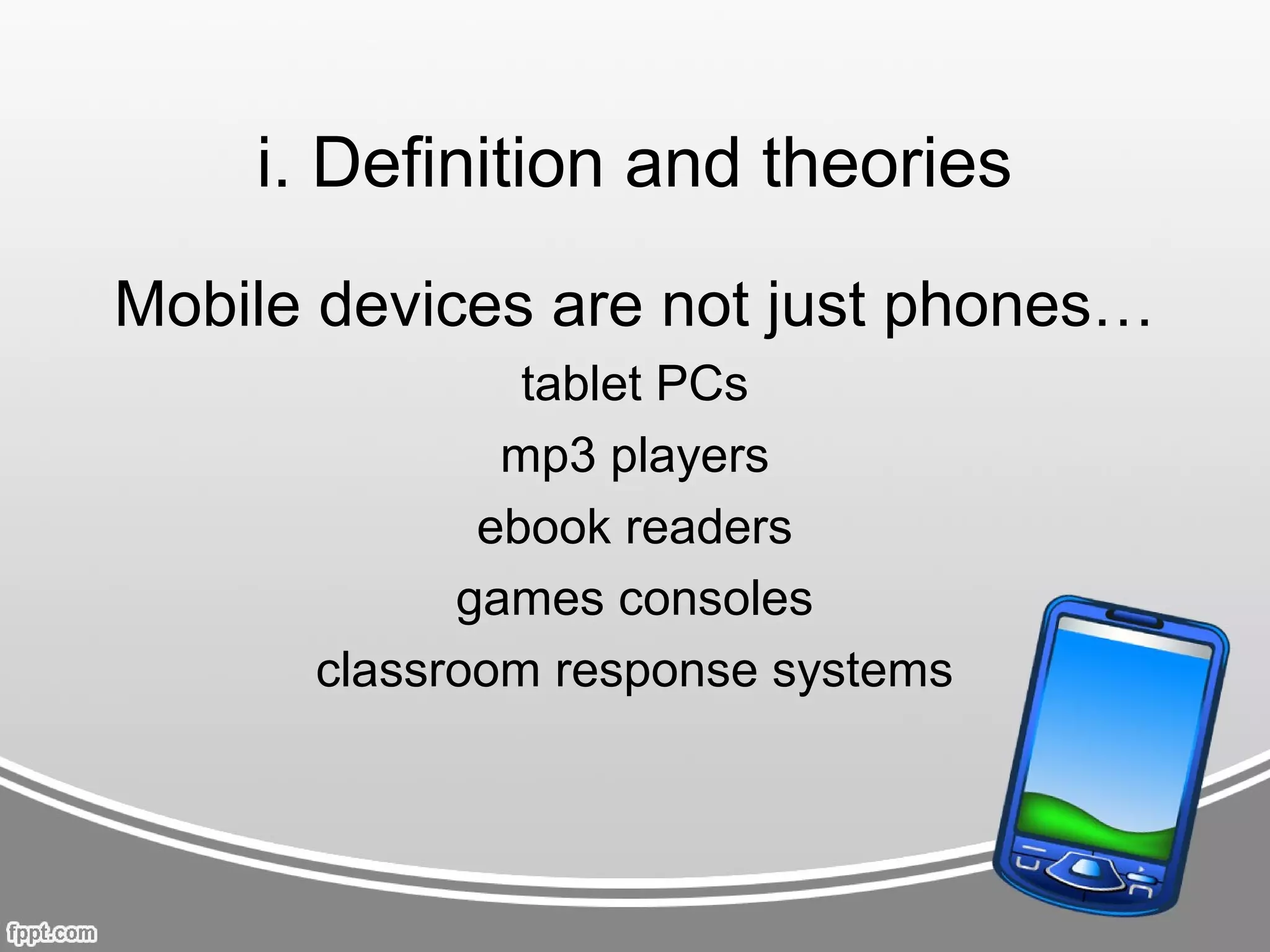
Mobile devices are not just phones…
               tablet PCs
              mp3 players
             ebook readers
            games consoles
      classroom response systems
Question

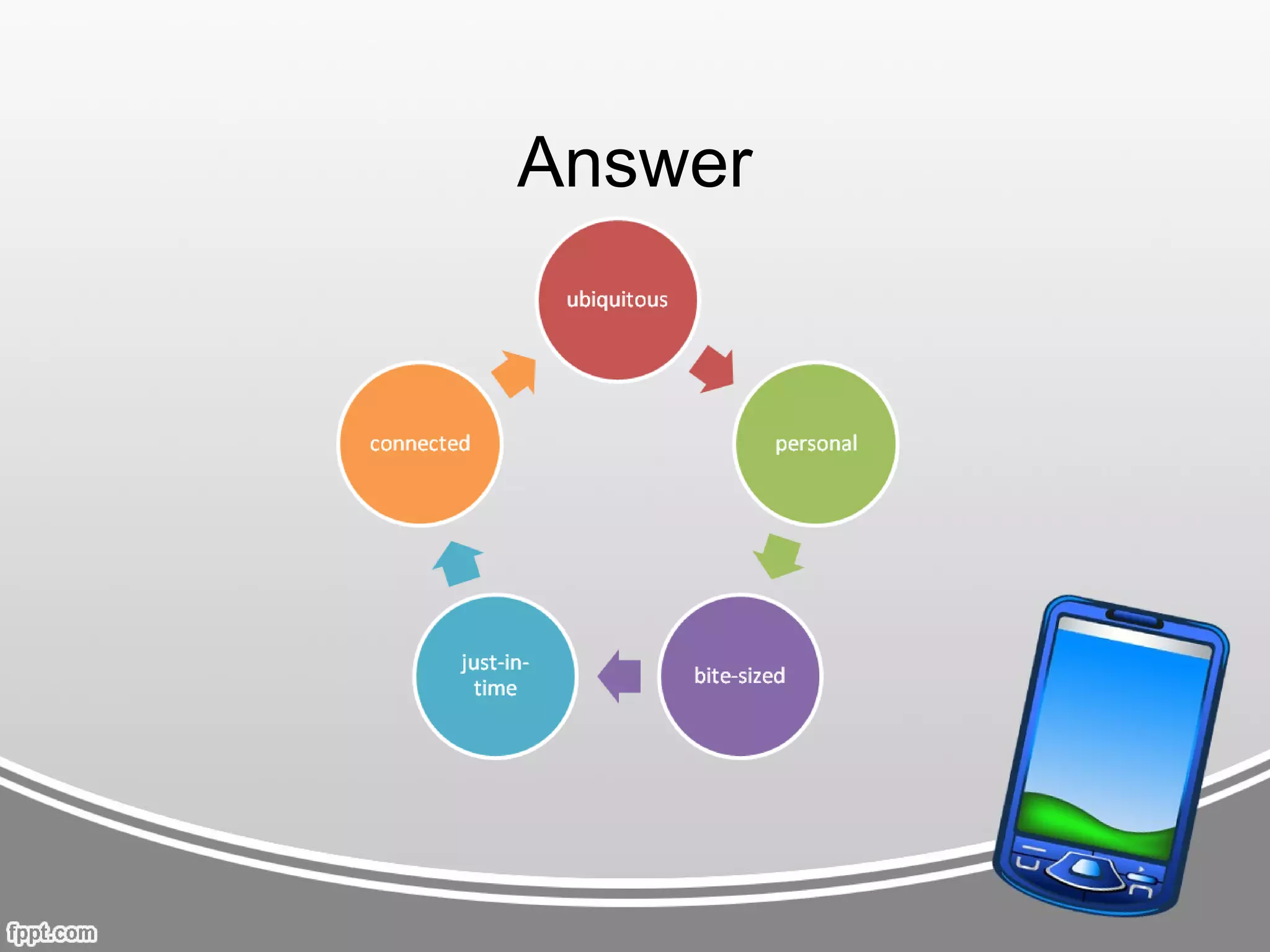
What makes mobile learning different
        from e-learning?
Answer
i. Definitions and theories


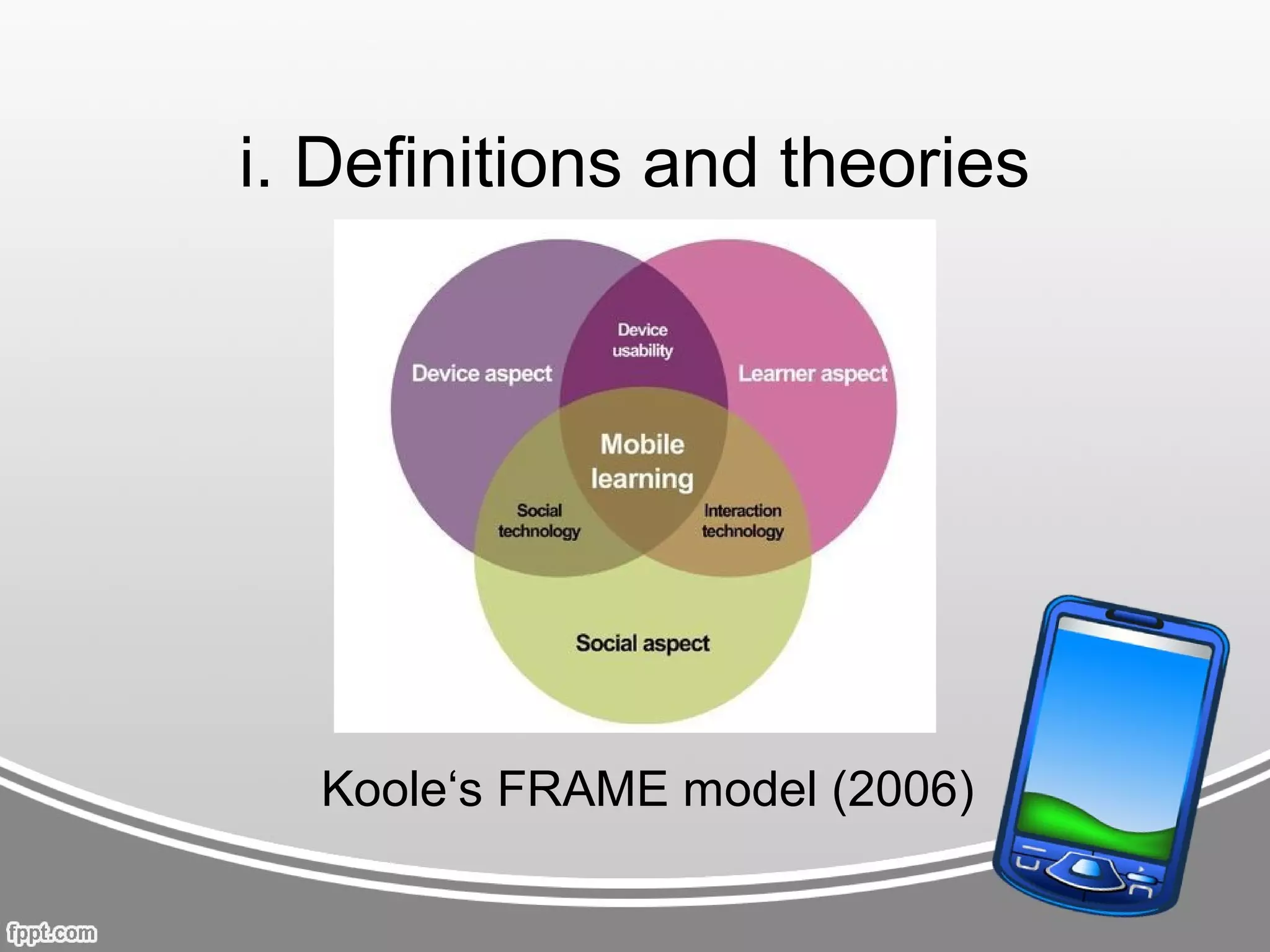
  Koole‘s FRAME model (2006)
i. Definitions and theories


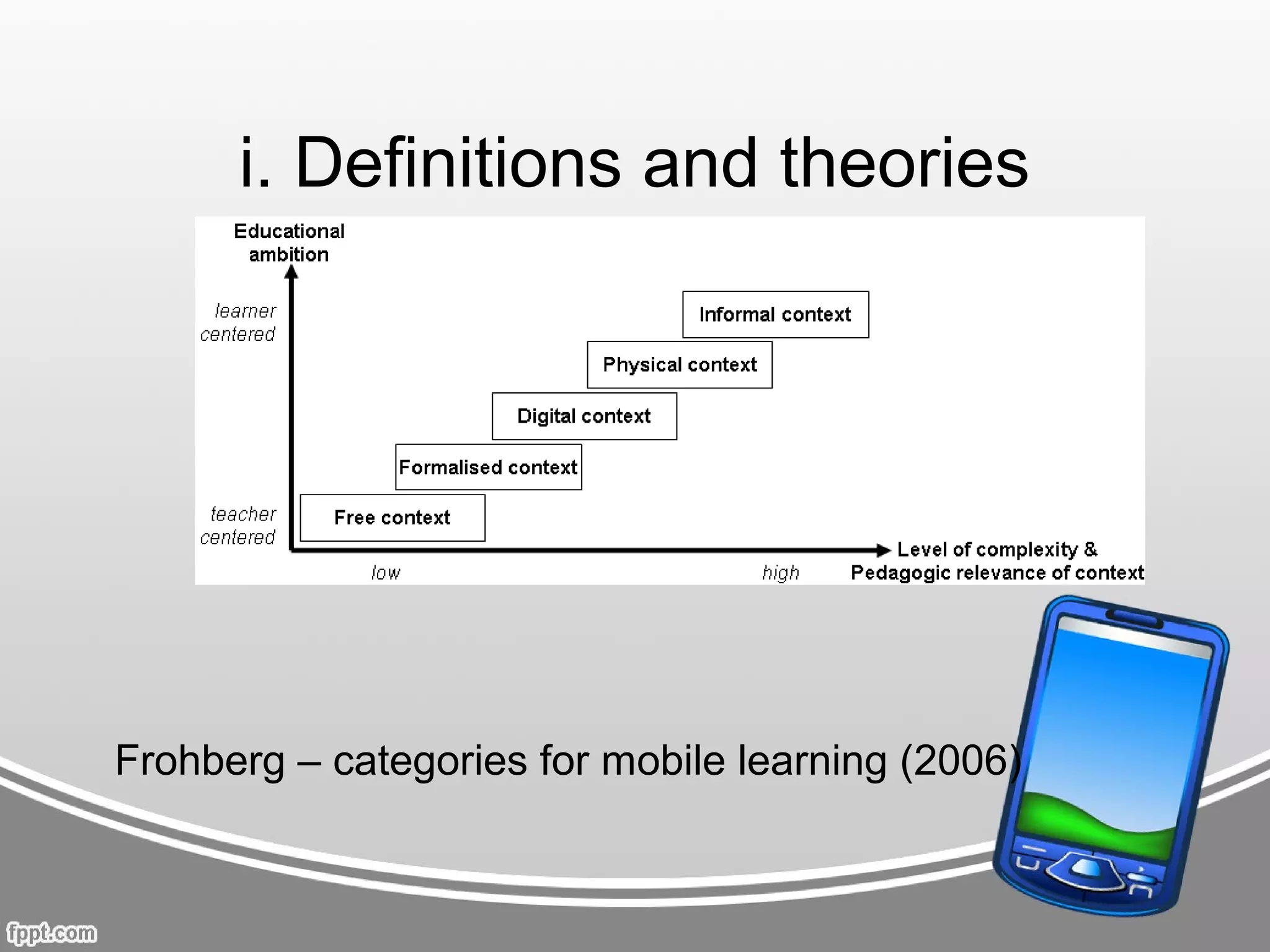
Frohberg – categories for mobile learning (2006)
i. Definitions and theories
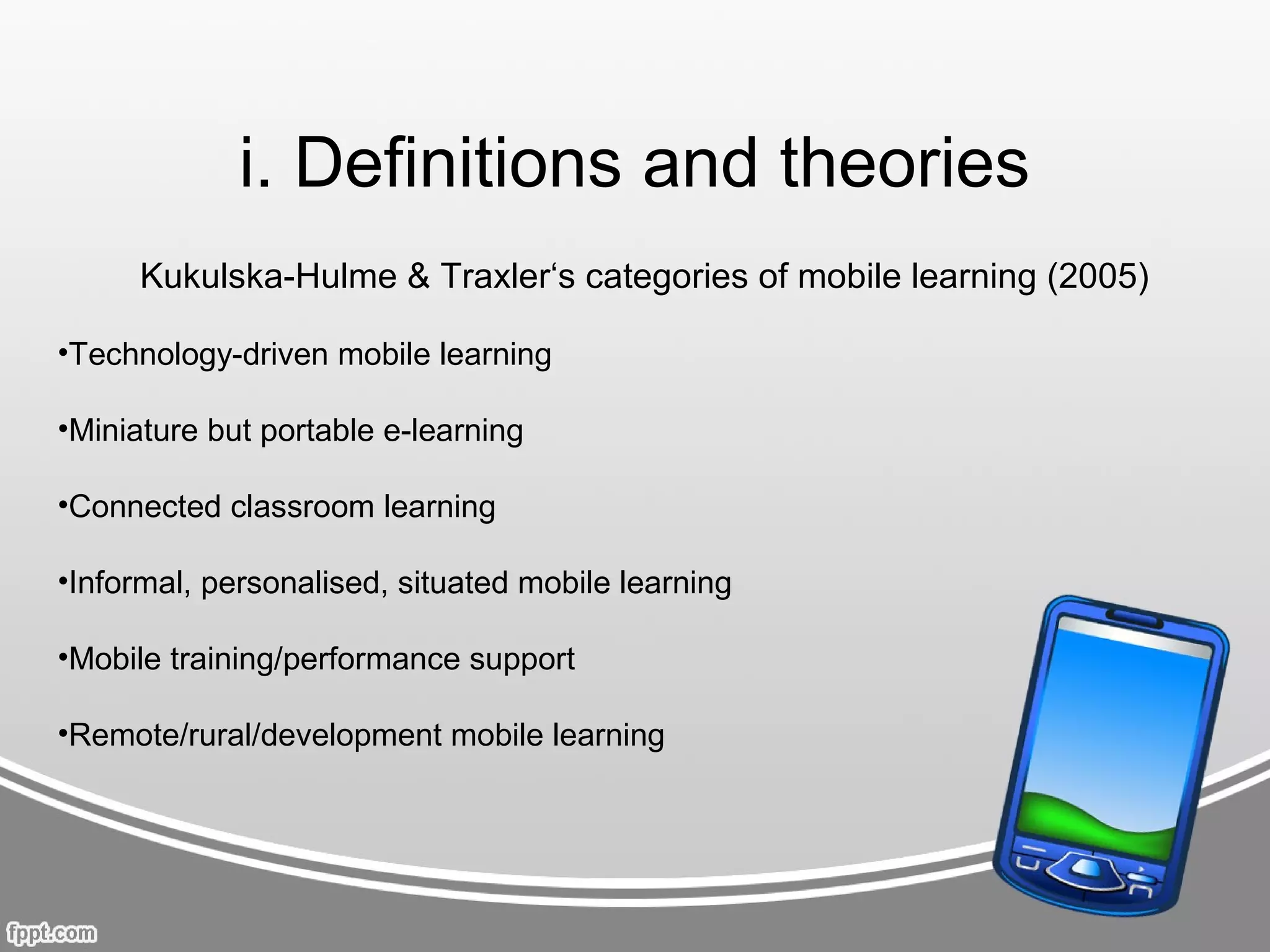
      Kukulska-Hulme & Traxler‘s categories of mobile learning (2005)

•Technology-driven mobile learning

•Miniature but portable e-learning

•Connected classroom learning

•Informal, personalised, situated mobile learning

•Mobile training/performance support

•Remote/rural/development mobile learning
i. Definitions and theories
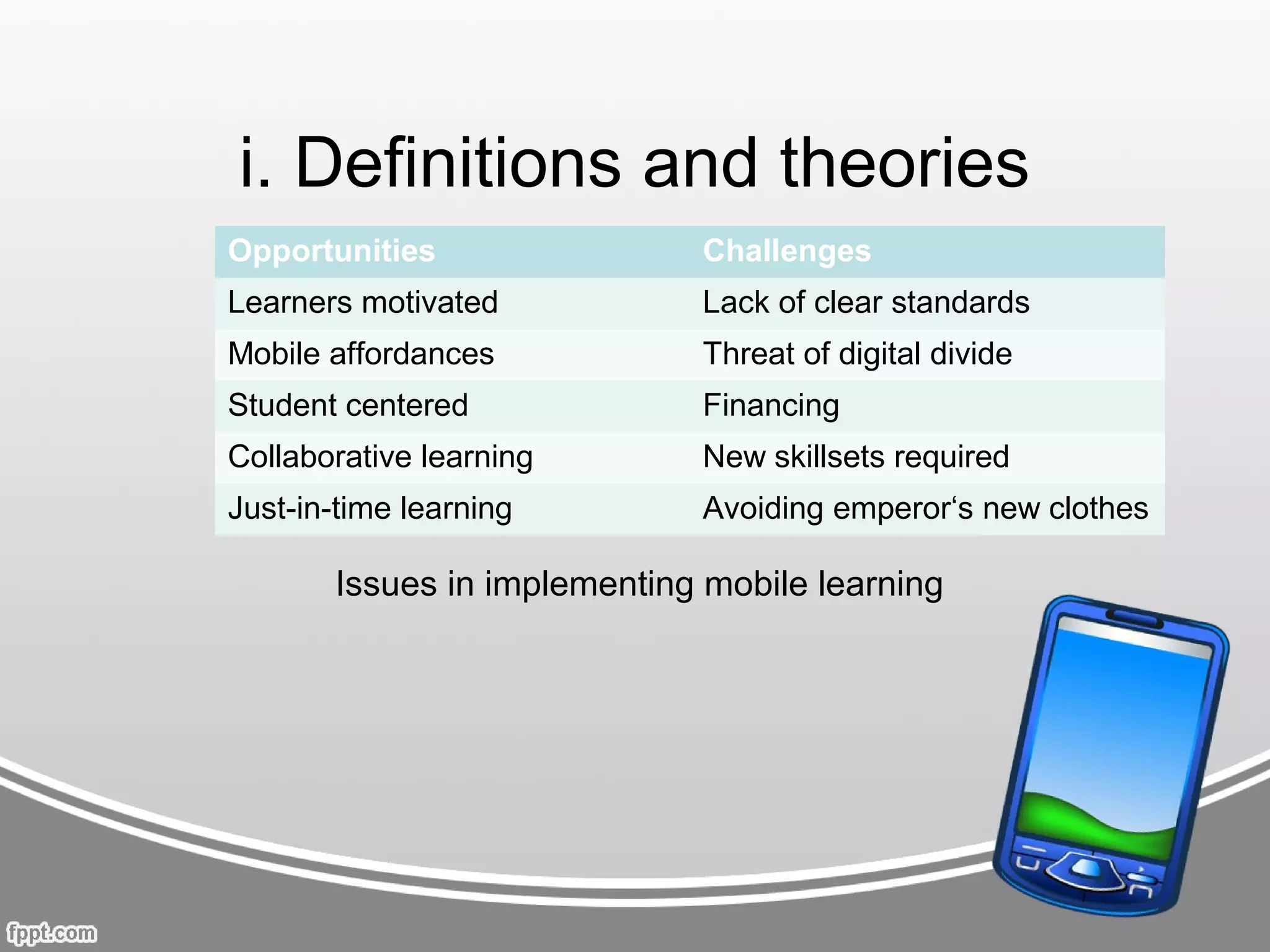
Opportunities                Challenges
Learners motivated           Lack of clear standards
Mobile affordances           Threat of digital divide
Student centered             Financing
Collaborative learning       New skillsets required
Just-in-time learning        Avoiding emperor‘s new clothes

       Issues in implementing mobile learning
ii. Student attitudes


Survey on learning and technology in
  July 2011 (64 responses) and
    March 2012 (82 responses).
ii. Student attitudes


The majority of students are
       „millenials“.
ii. Student attitudes


100% surveyed in 2012 have at least
        one mobile phone.
ii. Student attitudes


62% go online with their phone
    several times a day.
Question
   Are your students already using
          mobile learning?
A.Yes
B.No
C.Don‘t know
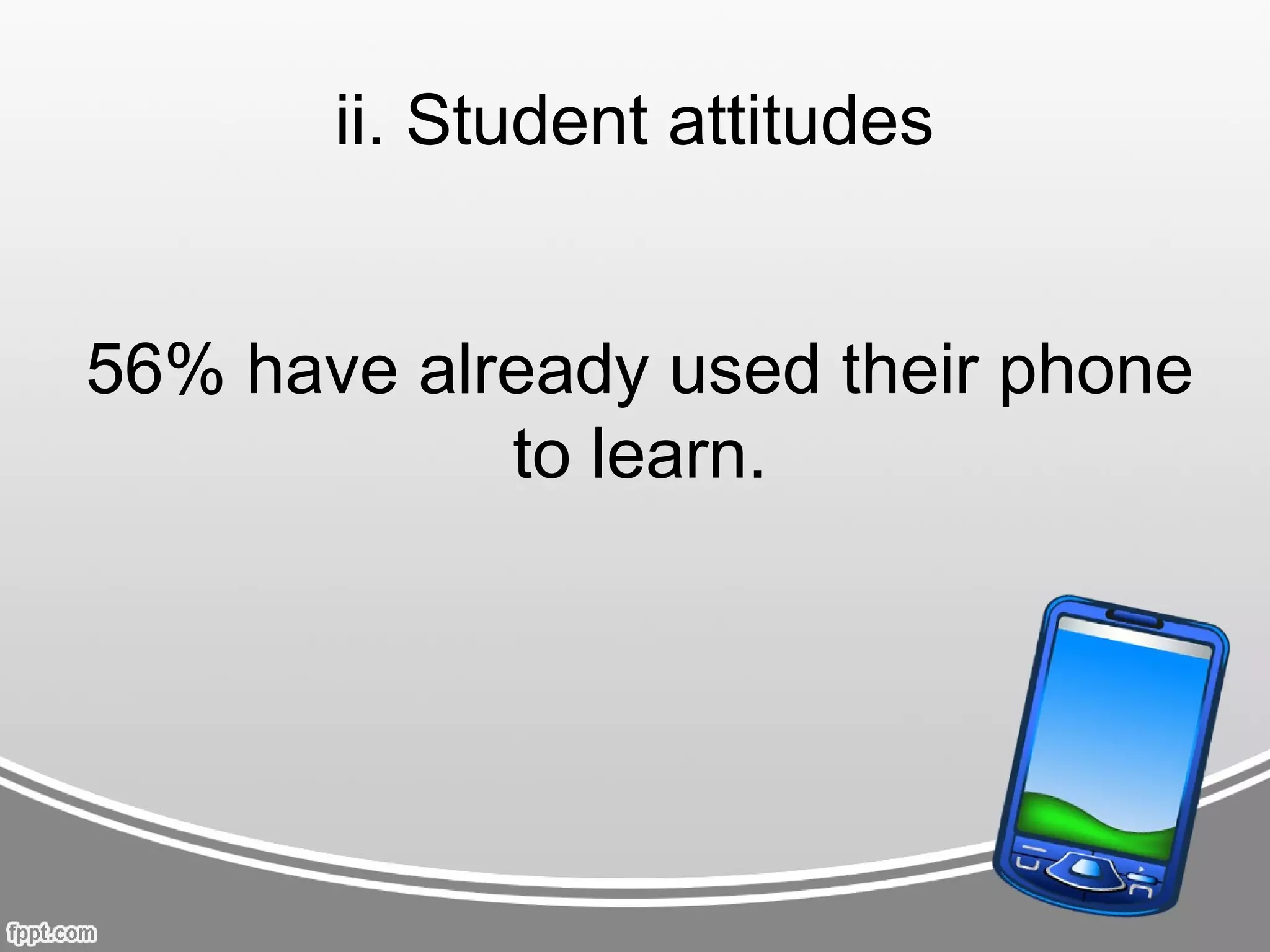
ii. Student attitudes


56% have already used their phone
            to learn.
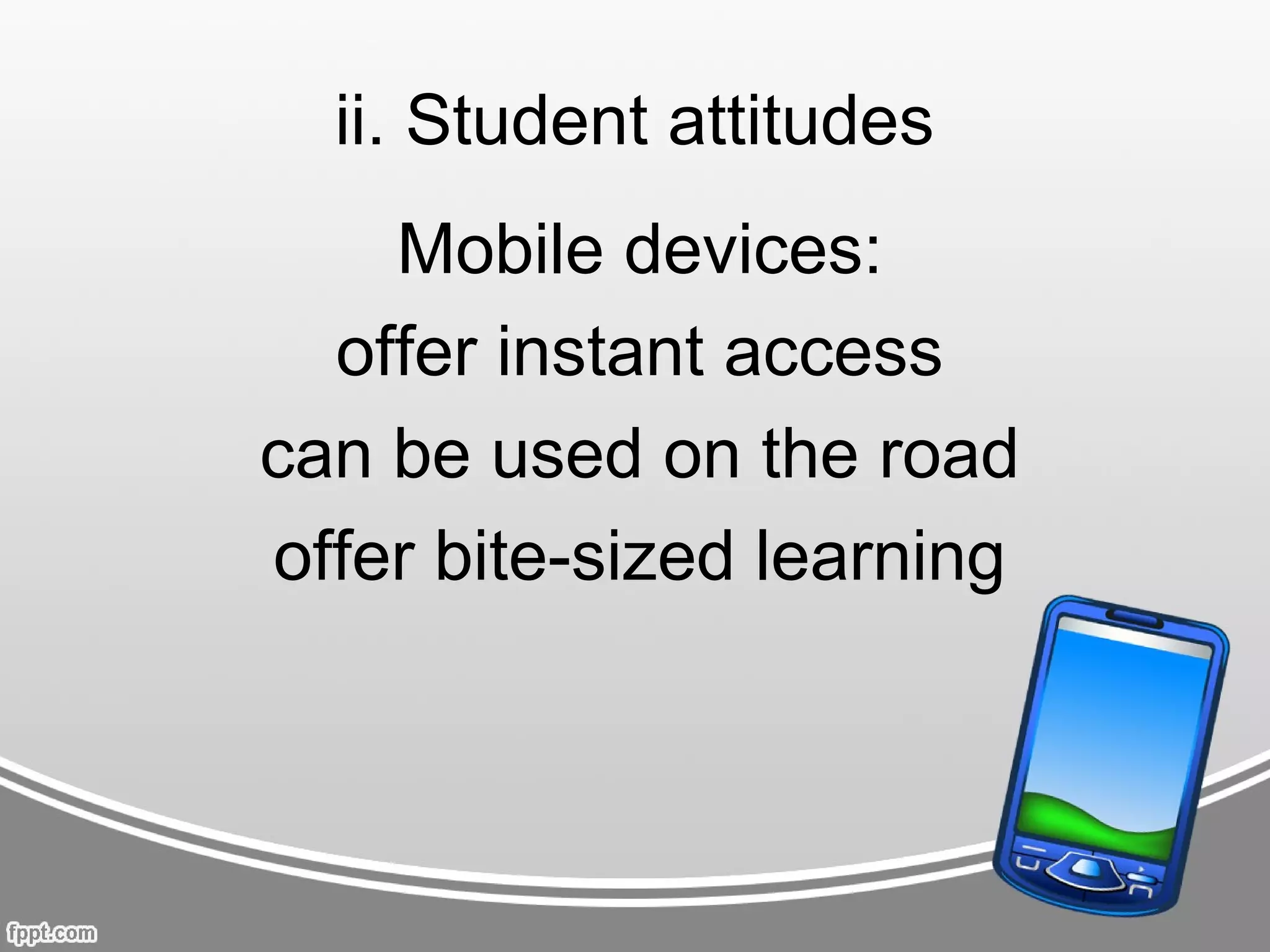
ii. Student attitudes
    Mobile devices:
  offer instant access
can be used on the road
offer bite-sized learning
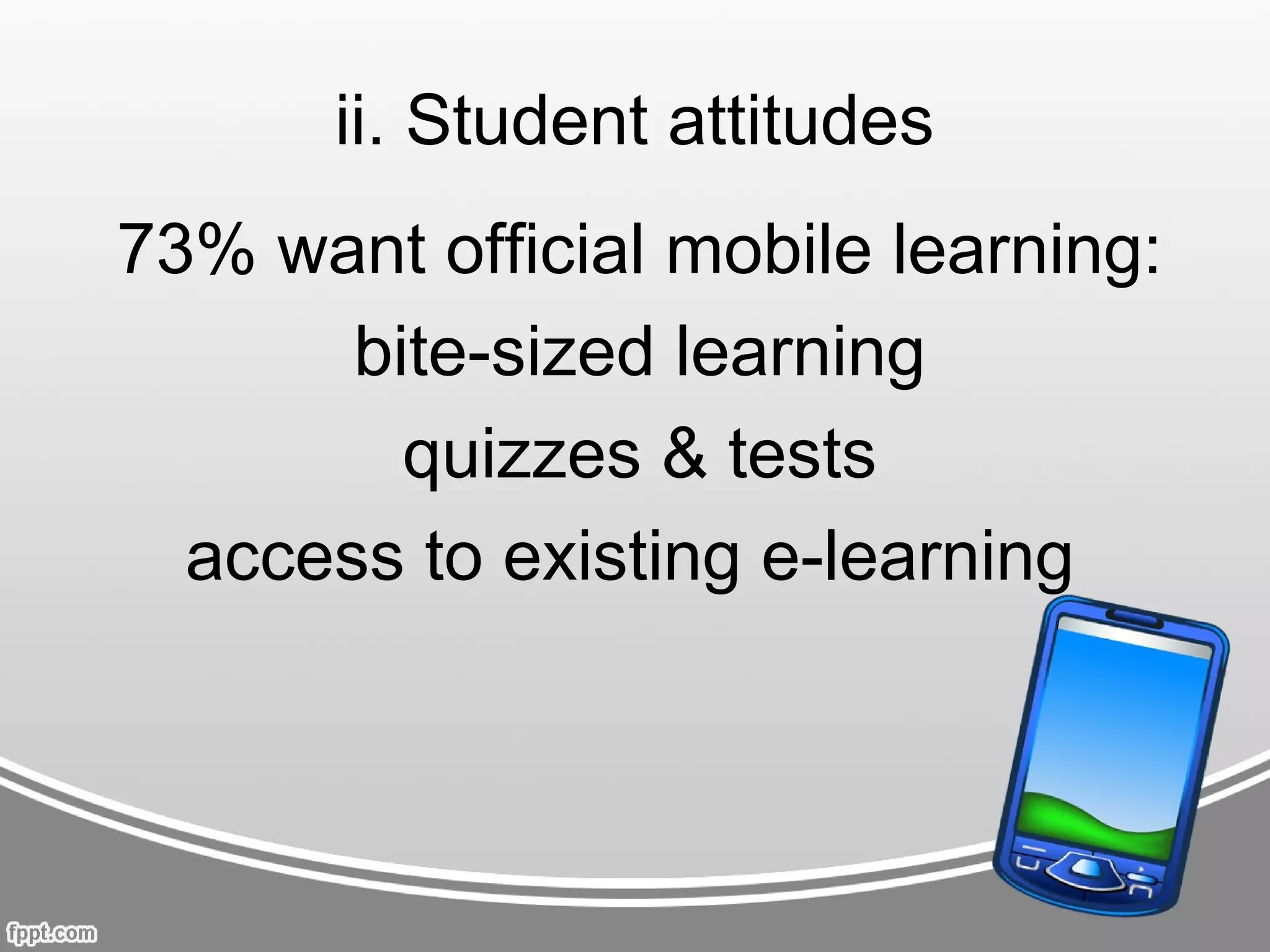
ii. Student attitudes
73% want official mobile learning:
       bite-sized learning
         quizzes & tests
  access to existing e-learning
iii. Practical applications


 How can you make mobile learning
available without breaking the bank?
iii. Practical applications


Mobilize existing content
iii. Practical applications
 Web 2.0 technologies:
      podcasts
      rss feeds
       youtube
        twitter
         blogs
iii. Practical applications


Mobile access to your VLE?
iii. Practical applications
Current situation:
•Students are interested
•No funding is available
•Blogs, podcasts and flashcards
iii. Practical applications
Future plans:
•Raise staff awareness - seminar
•Widen use of existing tools
•Upgrade to moodle 2.x
•Teach m-learning module
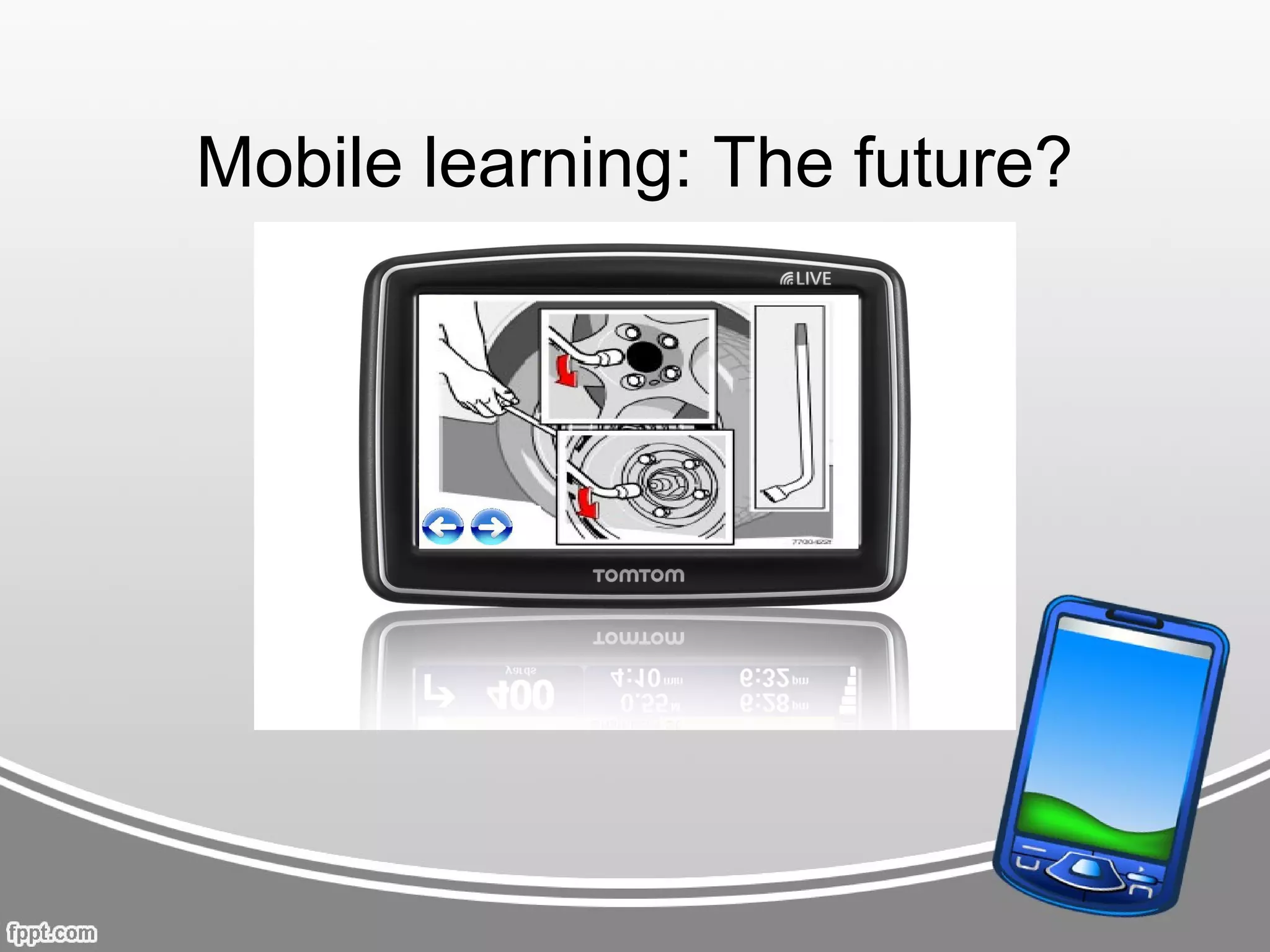
Mobile learning: The future?
• Location-based learning

• Augmented reality

• Learning snacks

• Social learning
Journals & organizations
International journal of mobile & blended learning:
http://www.mobilelearningportal.org/node/1283

International journal of mobile learning & organization:
http://www.inderscience.com/browse/index.php?
journalcode=ijmlo

Mlearnopedia: http://mlearnopedia.com/

Handheldlearning: http://handheldlearning.co.uk/

Learning in hand: http://learninginhand.com/
Leading Researchers
John Cook - London Metropolitan University

Agnes Kukulska-Hulme - The Open University

Mike Sharples – University of Birmingham

John Traxler – University of Wolverhampton

Jon Trinder – University of Glasgow
Many thanks for taking part!
• Read more and post your thoughts in my
  blog – http://tablet-teaching.blogspot.de/

• Please complete my webinar feedback
  form – http://bit.ly/A1hsrU

• Any questions?

Mobile learning introduction

  • 1.
    Mobile learning: Anintroduction to theory and practice Neil Davie Applied Practice in Blended and Online Teaching, Edinburgh Napier University.
  • 2.
    Webinar Tips Close Skypeand any other applications that use audio and video bandwidth. Please use the chat window on the left to post comments and questions anytime during the webinar. If you have any technical problems please also ask for help in the chat window. We will have time for questions and a discussion at the end of the webinar.
  • 3.
  • 4.
    Mobile learning: Anintroduction to theory and practice i. Definition and theories ii. Student attitudes iii. Practical applications
  • 5.
    Question Have you everused mobile learning?
  • 6.
    Answer Yes, if you have ever – searched google using a mobile device listened to a podcast read an ebook
  • 7.
    i. Definition andtheories mobile + learning = mobile learning?
  • 8.
    i. Definition andtheories „e-learning that uses mobile devices“ Quinn (2000), Pinkwart et al. (2003).
  • 9.
    i. Definition andtheories “Any sort of learning that happens when the learner is not at a fixed, predetermined location, or…”
  • 10.
    i. Definition andtheories “…learning that happens when the learner takes advantage of the learning opportunities offered by mobile technologies.” O‘Malley et al. (2003)
  • 11.
    i. Definition andtheories Mobile devices are not just phones… tablet PCs mp3 players ebook readers games consoles classroom response systems
  • 12.
    Question What makes mobilelearning different from e-learning?
  • 13.
  • 14.
    i. Definitions andtheories Koole‘s FRAME model (2006)
  • 15.
    i. Definitions andtheories Frohberg – categories for mobile learning (2006)
  • 16.
    i. Definitions andtheories Kukulska-Hulme & Traxler‘s categories of mobile learning (2005) •Technology-driven mobile learning •Miniature but portable e-learning •Connected classroom learning •Informal, personalised, situated mobile learning •Mobile training/performance support •Remote/rural/development mobile learning
  • 17.
    i. Definitions andtheories Opportunities Challenges Learners motivated Lack of clear standards Mobile affordances Threat of digital divide Student centered Financing Collaborative learning New skillsets required Just-in-time learning Avoiding emperor‘s new clothes Issues in implementing mobile learning
  • 18.
    ii. Student attitudes Surveyon learning and technology in July 2011 (64 responses) and March 2012 (82 responses).
  • 19.
    ii. Student attitudes Themajority of students are „millenials“.
  • 20.
    ii. Student attitudes 100%surveyed in 2012 have at least one mobile phone.
  • 21.
    ii. Student attitudes 62%go online with their phone several times a day.
  • 22.
    Question Are your students already using mobile learning? A.Yes B.No C.Don‘t know
  • 23.
    ii. Student attitudes 56%have already used their phone to learn.
  • 24.
    ii. Student attitudes Mobile devices: offer instant access can be used on the road offer bite-sized learning
  • 25.
    ii. Student attitudes 73%want official mobile learning: bite-sized learning quizzes & tests access to existing e-learning
  • 26.
    iii. Practical applications How can you make mobile learning available without breaking the bank?
  • 27.
  • 28.
    iii. Practical applications Web 2.0 technologies: podcasts rss feeds youtube twitter blogs
  • 29.
  • 30.
    iii. Practical applications Currentsituation: •Students are interested •No funding is available •Blogs, podcasts and flashcards
  • 31.
    iii. Practical applications Futureplans: •Raise staff awareness - seminar •Widen use of existing tools •Upgrade to moodle 2.x •Teach m-learning module
  • 32.
  • 33.
    Mobile learning: Thefuture? • Location-based learning • Augmented reality • Learning snacks • Social learning
  • 34.
    Journals & organizations Internationaljournal of mobile & blended learning: http://www.mobilelearningportal.org/node/1283 International journal of mobile learning & organization: http://www.inderscience.com/browse/index.php? journalcode=ijmlo Mlearnopedia: http://mlearnopedia.com/ Handheldlearning: http://handheldlearning.co.uk/ Learning in hand: http://learninginhand.com/
  • 35.
    Leading Researchers John Cook- London Metropolitan University Agnes Kukulska-Hulme - The Open University Mike Sharples – University of Birmingham John Traxler – University of Wolverhampton Jon Trinder – University of Glasgow
  • 36.
    Many thanks fortaking part! • Read more and post your thoughts in my blog – http://tablet-teaching.blogspot.de/ • Please complete my webinar feedback form – http://bit.ly/A1hsrU • Any questions?