Mixed Venous
Oxygen Saturation
By
Dr Hania Afzal
Resident Medicine
What is it?
• SvO2 is the percentage of oxygen bound to
hemoglobin in blood returning to the right side of
the heart.
• The amount of oxygen "left over" after the
tissues remove what they need.
• Used to recognize when a patient's body is
extracting more oxygen than normally.
• An increase in extraction is the body’s way to
meet tissue oxygen needs when the amount of
oxygen reaching the tissues is less than needed.
How to get blood
• Pulmonary artery catheter
• Central venous oxygen saturation(ScvO2)
from IJ/ subclavian vein (though not
appropriate)
What does it tell us?
• whether the CO and O2 delivery is high
enough to meet a patient's needs.
• useful if measured before and after
changes are made to cardiac medications
or mechanical ventilation,
What are the normal values?
• Normal SvO2 60-80%.
• Normal ScvO2 (from an internal jugular or
subclavian vein) is > 70%.
How do I use this information
clinically?
• ATP (energy) is needed for cell function and
survival.
• Tissues require oxygen to make ATP (energy).
• If oxygen being received by the tissues falls
below the oxygen required (because of an
increased need, or decreased supply), the body
attempts to compensate as follows:
Body’s compensation to dec oxygen
supply
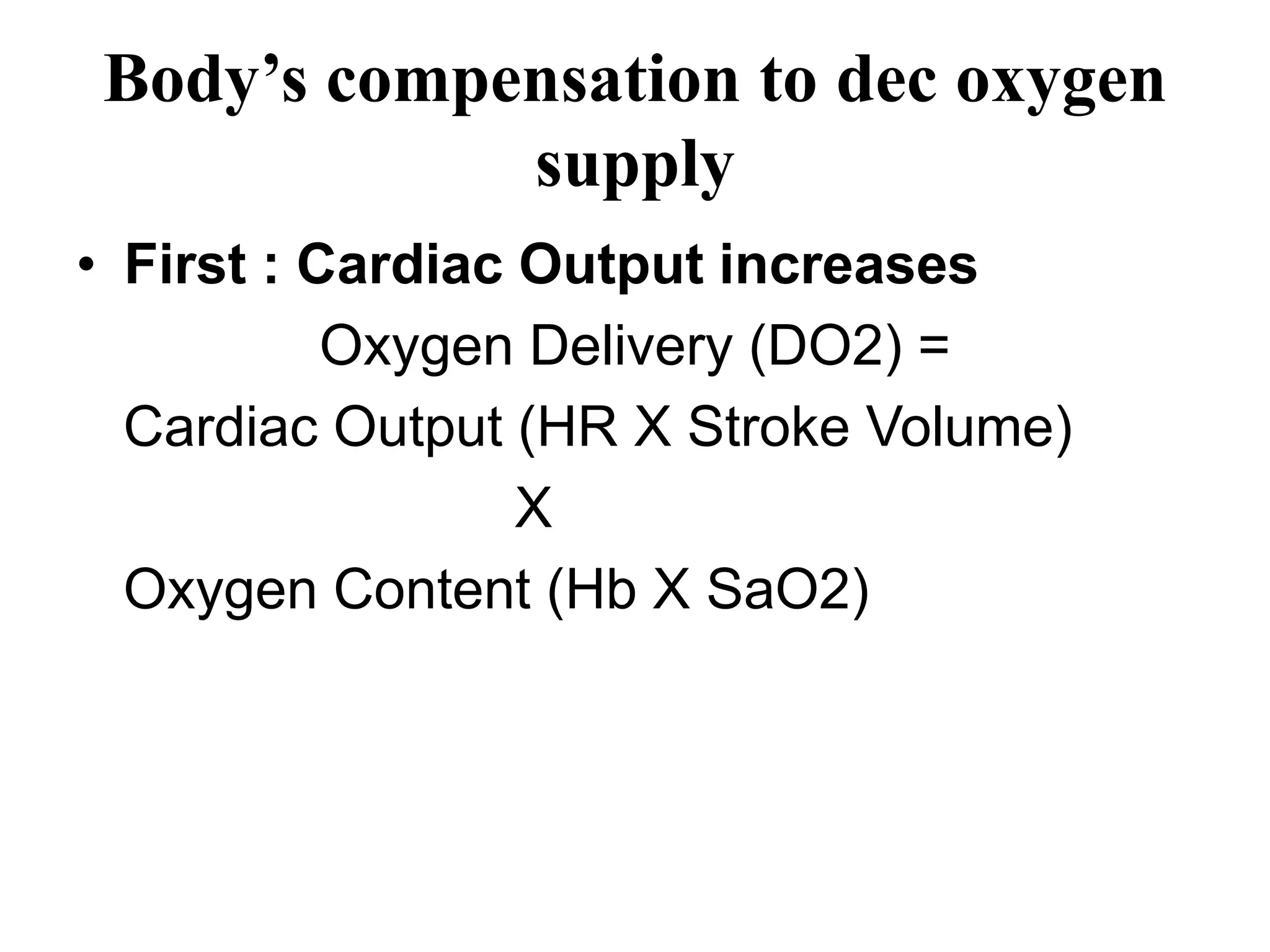
• First : Cardiac Output increases
Oxygen Delivery (DO2) =
Cardiac Output (HR X Stroke Volume)
X
Oxygen Content (Hb X SaO2)
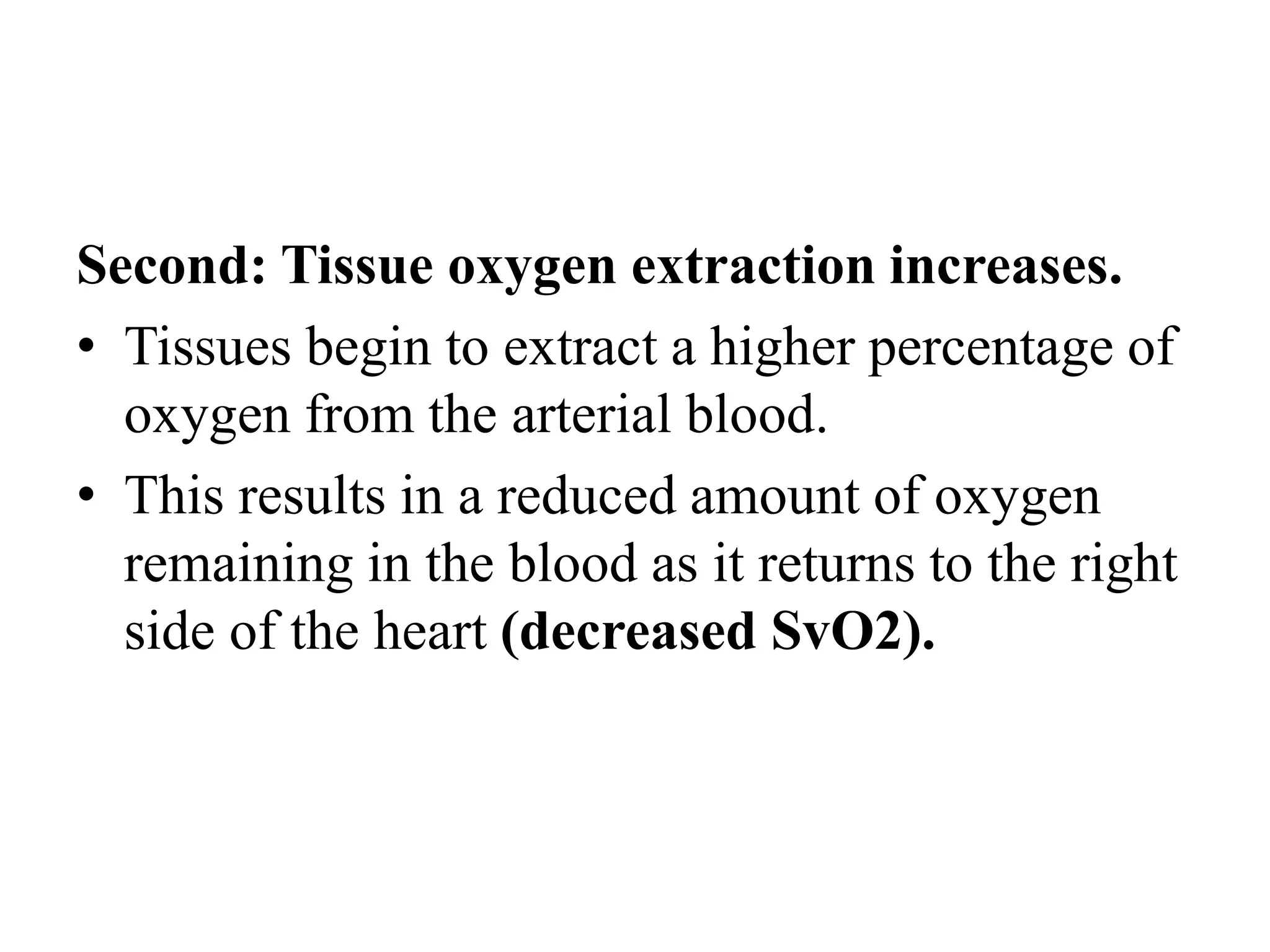
Second: Tissue oxygen extraction increases.
• Tissues begin to extract a higher percentage of
oxygen from the arterial blood.
• This results in a reduced amount of oxygen
remaining in the blood as it returns to the right
side of the heart (decreased SvO2).
• Third: Anaerobic Metabolism increases
Inadequate O2 supply leads to anaerobic
metabolism for ATP producing lactic acid and
causing lactic acidosis/metabolic acidosis
Why measure it?
Decreased SvO2 indicates
• CO is not high enough to meet tissue O2
needs
Improving/Normal SvO2 indicates
• Patient improvement
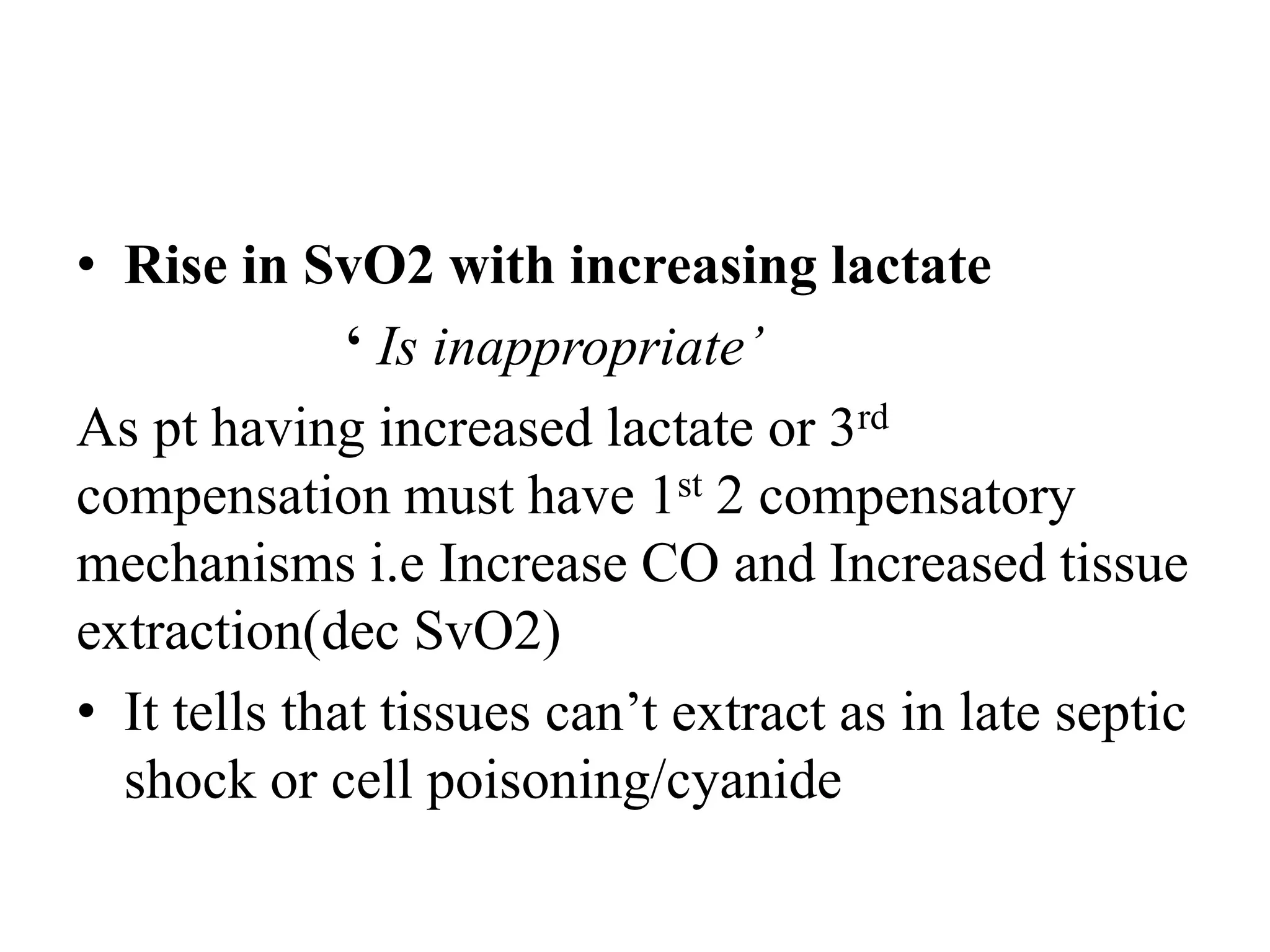
• Rise in SvO2 with increasing lactate
‘ Is inappropriate’
As pt having increased lactate or 3rd
compensation must have 1st 2 compensatory
mechanisms i.e Increase CO and Increased tissue
extraction(dec SvO2)
• It tells that tissues can’t extract as in late septic
shock or cell poisoning/cyanide
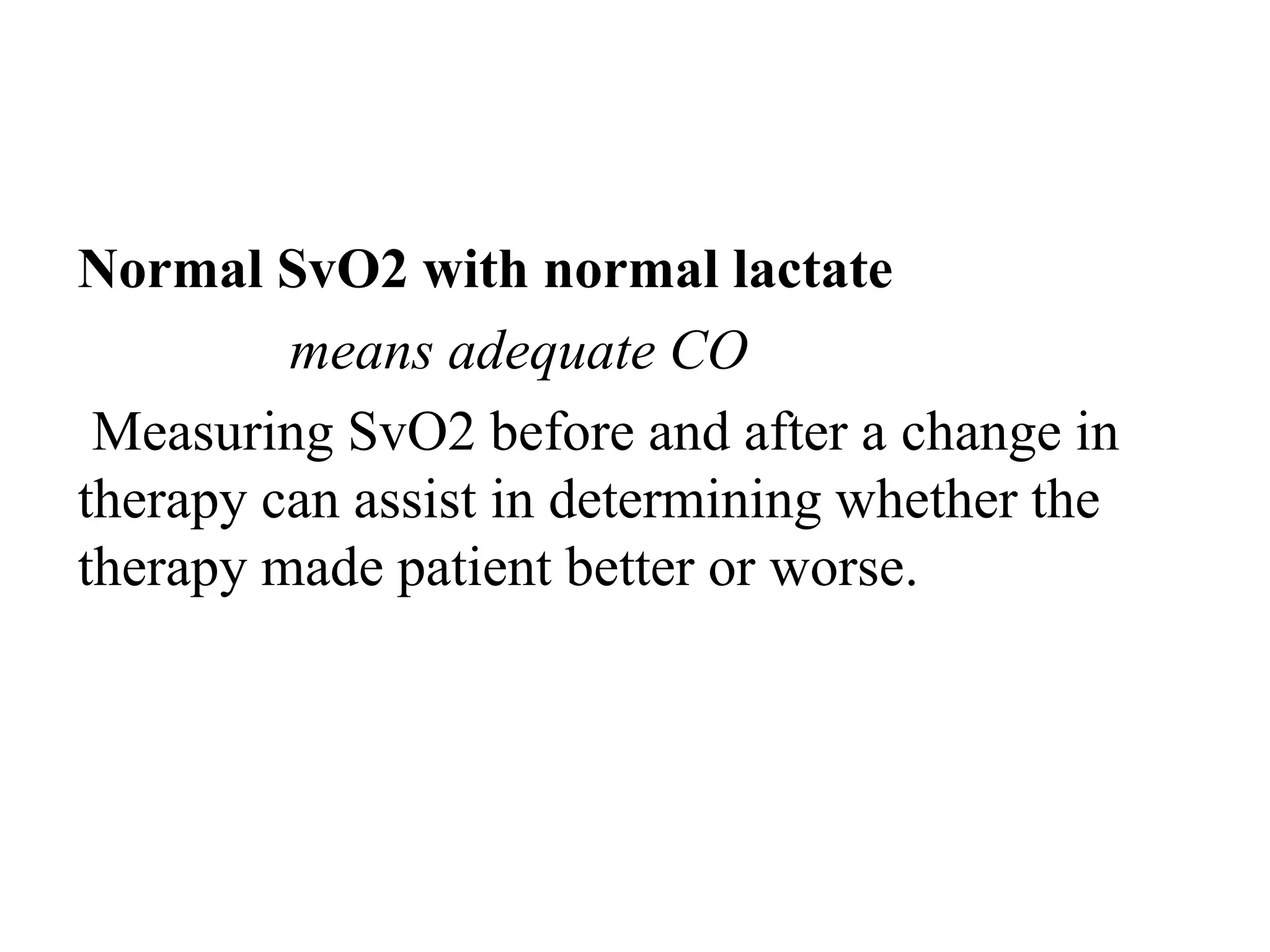
Normal SvO2 with normal lactate
means adequate CO
Measuring SvO2 before and after a change in
therapy can assist in determining whether the
therapy made patient better or worse.
SvO2 can also be useful when evaluating
changes to ventilator therapy, especially in
unstable patients.
• Changes are made in ventilator to increase
blood oxygen content
• Increase PEEP to increase oxygen
• But increase PEEP decreases CO
• The "best" PEEP is the level that improves
the SaO2 without causing the SvO2 to fall.
• Tissue oxygen need is met when the amount of
oxygen being delivered to the tissues is
sufficient to meet the amount of oxygen being
consumed (VO2).
• When the oxygen delivery falls below oxygen
consumption needs, lactic acidosis develops.
VO2 (Oxygen Consumption) = Cardiac
Output X Hb X (SaO2 - SvO2)
Causes of drop in SvO2
• cardiac output is not high enough to
meet tissue oxygen needs
• Hb is too low
• SaO2 is too low
• Oxygen consumption has increased
without an increase in oxgyen
delivery
mixed venous oxygen sat.pptx

mixed venous oxygen sat.pptx

  • 2.
    Mixed Venous Oxygen Saturation By DrHania Afzal Resident Medicine
  • 3.
    What is it? •SvO2 is the percentage of oxygen bound to hemoglobin in blood returning to the right side of the heart. • The amount of oxygen "left over" after the tissues remove what they need. • Used to recognize when a patient's body is extracting more oxygen than normally. • An increase in extraction is the body’s way to meet tissue oxygen needs when the amount of oxygen reaching the tissues is less than needed.
  • 4.
    How to getblood • Pulmonary artery catheter • Central venous oxygen saturation(ScvO2) from IJ/ subclavian vein (though not appropriate)
  • 5.
    What does ittell us? • whether the CO and O2 delivery is high enough to meet a patient's needs. • useful if measured before and after changes are made to cardiac medications or mechanical ventilation,
  • 6.
    What are thenormal values? • Normal SvO2 60-80%. • Normal ScvO2 (from an internal jugular or subclavian vein) is > 70%.
  • 7.
    How do Iuse this information clinically? • ATP (energy) is needed for cell function and survival. • Tissues require oxygen to make ATP (energy). • If oxygen being received by the tissues falls below the oxygen required (because of an increased need, or decreased supply), the body attempts to compensate as follows:
  • 8.
    Body’s compensation todec oxygen supply • First : Cardiac Output increases Oxygen Delivery (DO2) = Cardiac Output (HR X Stroke Volume) X Oxygen Content (Hb X SaO2)
  • 9.
    Second: Tissue oxygenextraction increases. • Tissues begin to extract a higher percentage of oxygen from the arterial blood. • This results in a reduced amount of oxygen remaining in the blood as it returns to the right side of the heart (decreased SvO2).
  • 10.
    • Third: AnaerobicMetabolism increases Inadequate O2 supply leads to anaerobic metabolism for ATP producing lactic acid and causing lactic acidosis/metabolic acidosis
  • 11.
    Why measure it? DecreasedSvO2 indicates • CO is not high enough to meet tissue O2 needs Improving/Normal SvO2 indicates • Patient improvement
  • 12.
    • Rise inSvO2 with increasing lactate ‘ Is inappropriate’ As pt having increased lactate or 3rd compensation must have 1st 2 compensatory mechanisms i.e Increase CO and Increased tissue extraction(dec SvO2) • It tells that tissues can’t extract as in late septic shock or cell poisoning/cyanide
  • 13.
    Normal SvO2 withnormal lactate means adequate CO Measuring SvO2 before and after a change in therapy can assist in determining whether the therapy made patient better or worse.
  • 14.
    SvO2 can alsobe useful when evaluating changes to ventilator therapy, especially in unstable patients. • Changes are made in ventilator to increase blood oxygen content • Increase PEEP to increase oxygen • But increase PEEP decreases CO • The "best" PEEP is the level that improves the SaO2 without causing the SvO2 to fall.
  • 15.
    • Tissue oxygenneed is met when the amount of oxygen being delivered to the tissues is sufficient to meet the amount of oxygen being consumed (VO2). • When the oxygen delivery falls below oxygen consumption needs, lactic acidosis develops. VO2 (Oxygen Consumption) = Cardiac Output X Hb X (SaO2 - SvO2)
  • 16.
    Causes of dropin SvO2 • cardiac output is not high enough to meet tissue oxygen needs • Hb is too low • SaO2 is too low • Oxygen consumption has increased without an increase in oxgyen delivery