Mixed Method
Research Design
Presented By:
Nida Ayub (PhD Scholar)
Mishal Fatima (PhD Scholar)
Outline
• Introduction
• Rational/ reasons of using mixed method design
• Aspects of mixed method study
• Notations
• Types of mixed method design
• Strengths and limitations
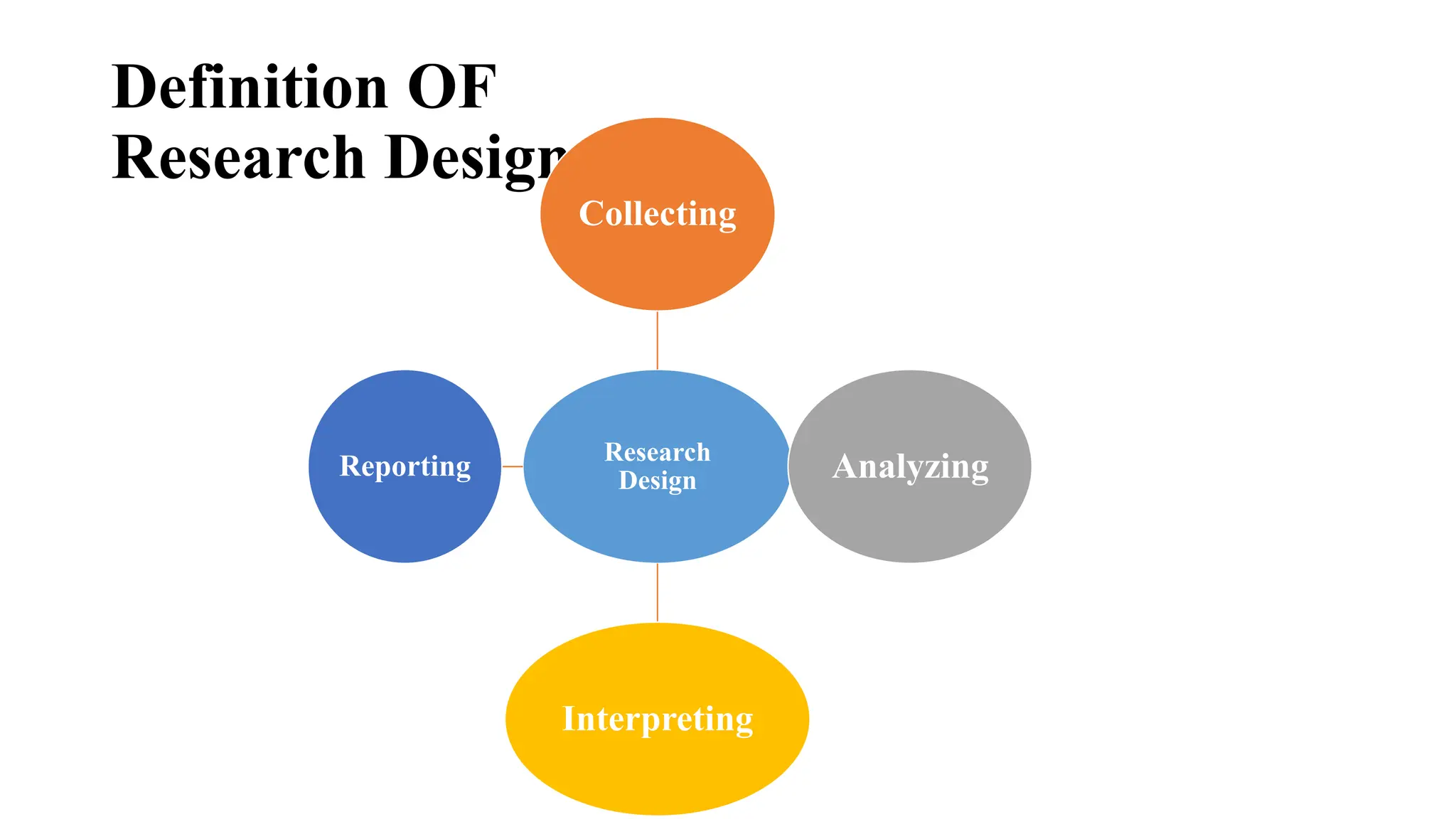
Definition OF
Research Design
Research
Design
Collecting
Analyzing
Interpreting
Reporting
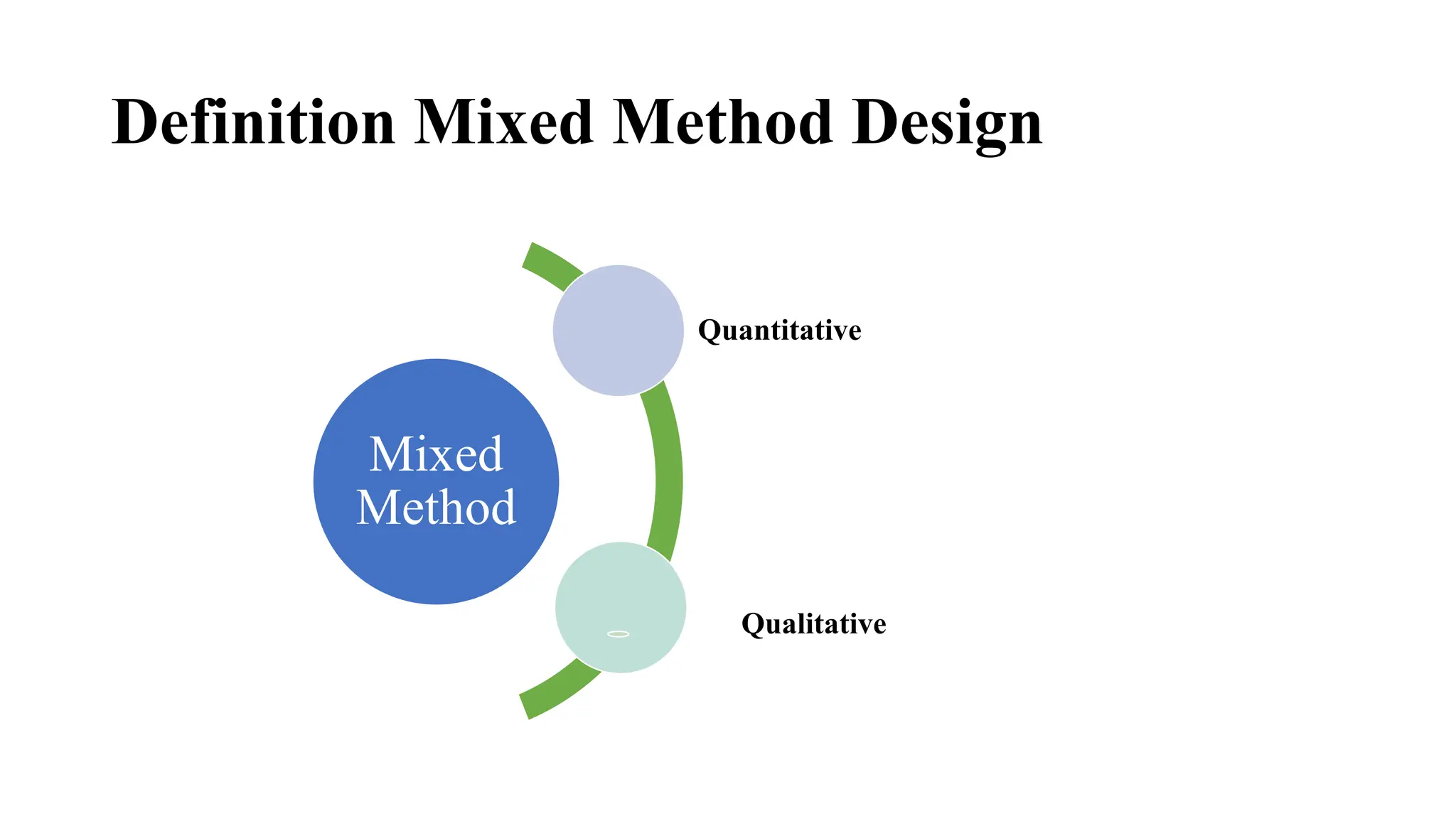
Definition Mixed Method Design
Mixed
Method
Quantitative
Qualitative
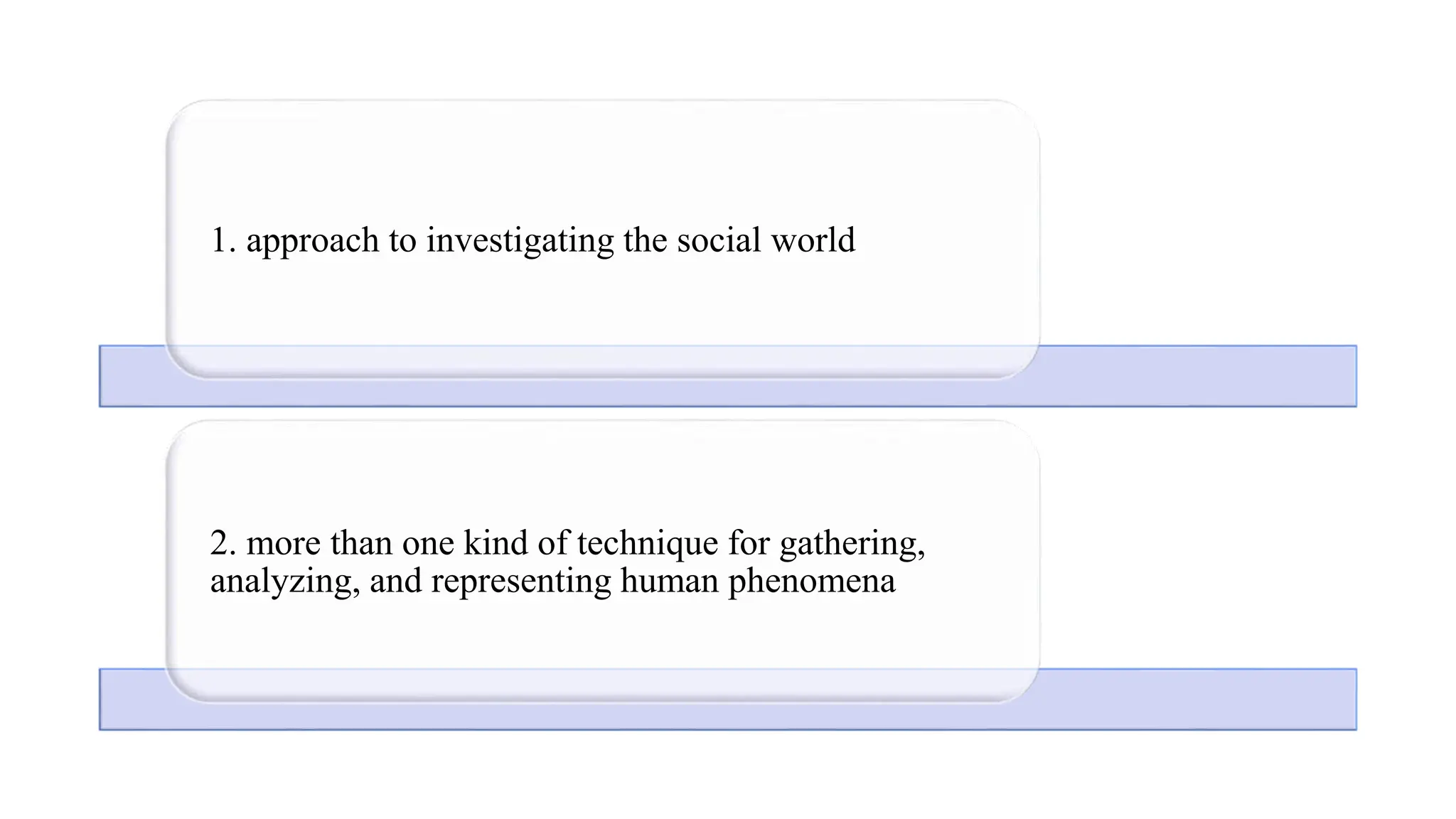
1. approach to investigating the social world
2. more than one kind of technique for gathering,
analyzing, and representing human phenomena
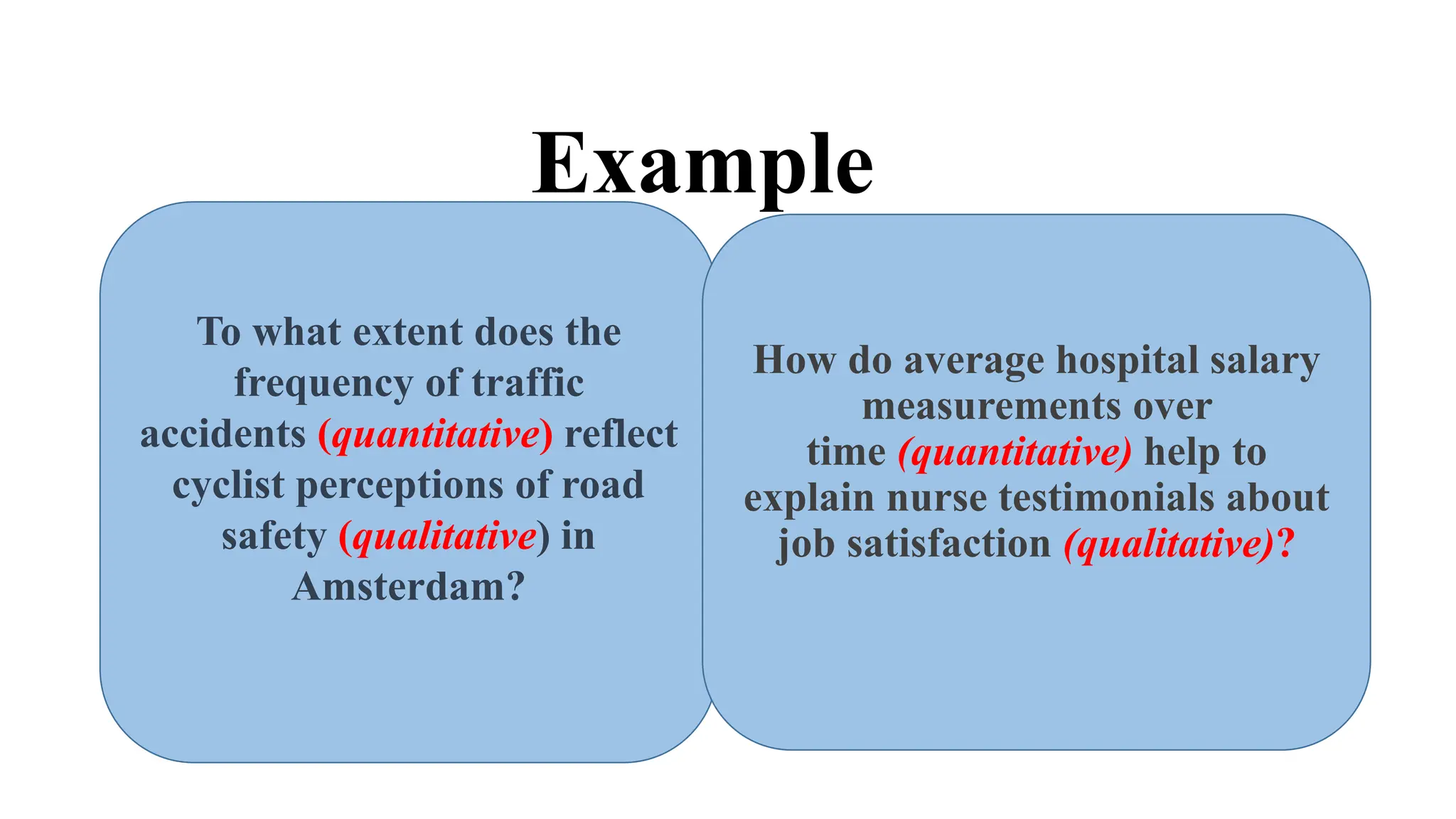
Example
To what extent does the
frequency of traffic
accidents (quantitative) reflect
cyclist perceptions of road
safety (qualitative) in
Amsterdam?
How do average hospital salary
measurements over
time (quantitative) help to
explain nurse testimonials about
job satisfaction (qualitative)?
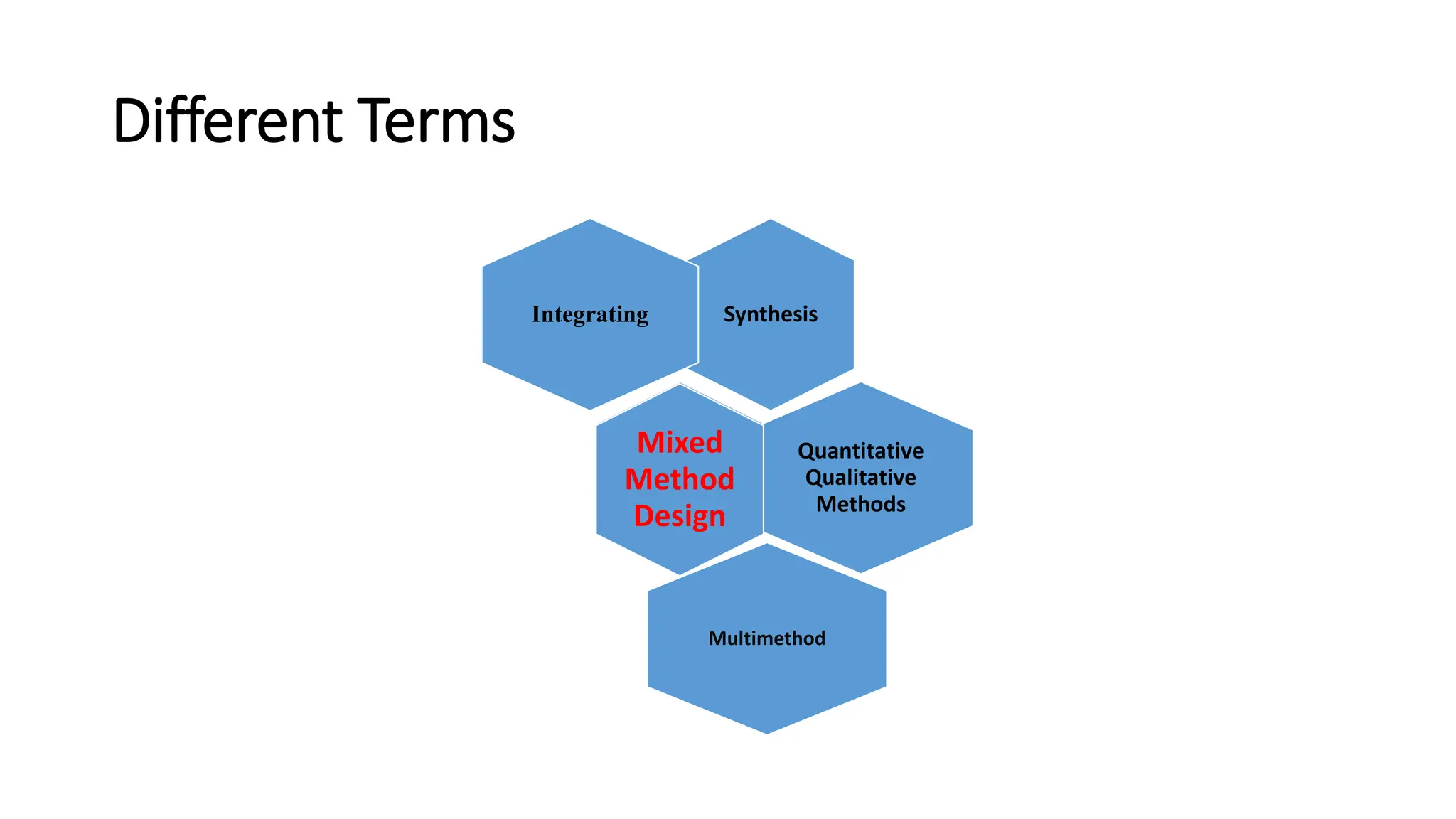
Different Terms
Synthesis
Integrating
Quantitative
Qualitative
Methods
Multimethod
Mixed
Method
Design
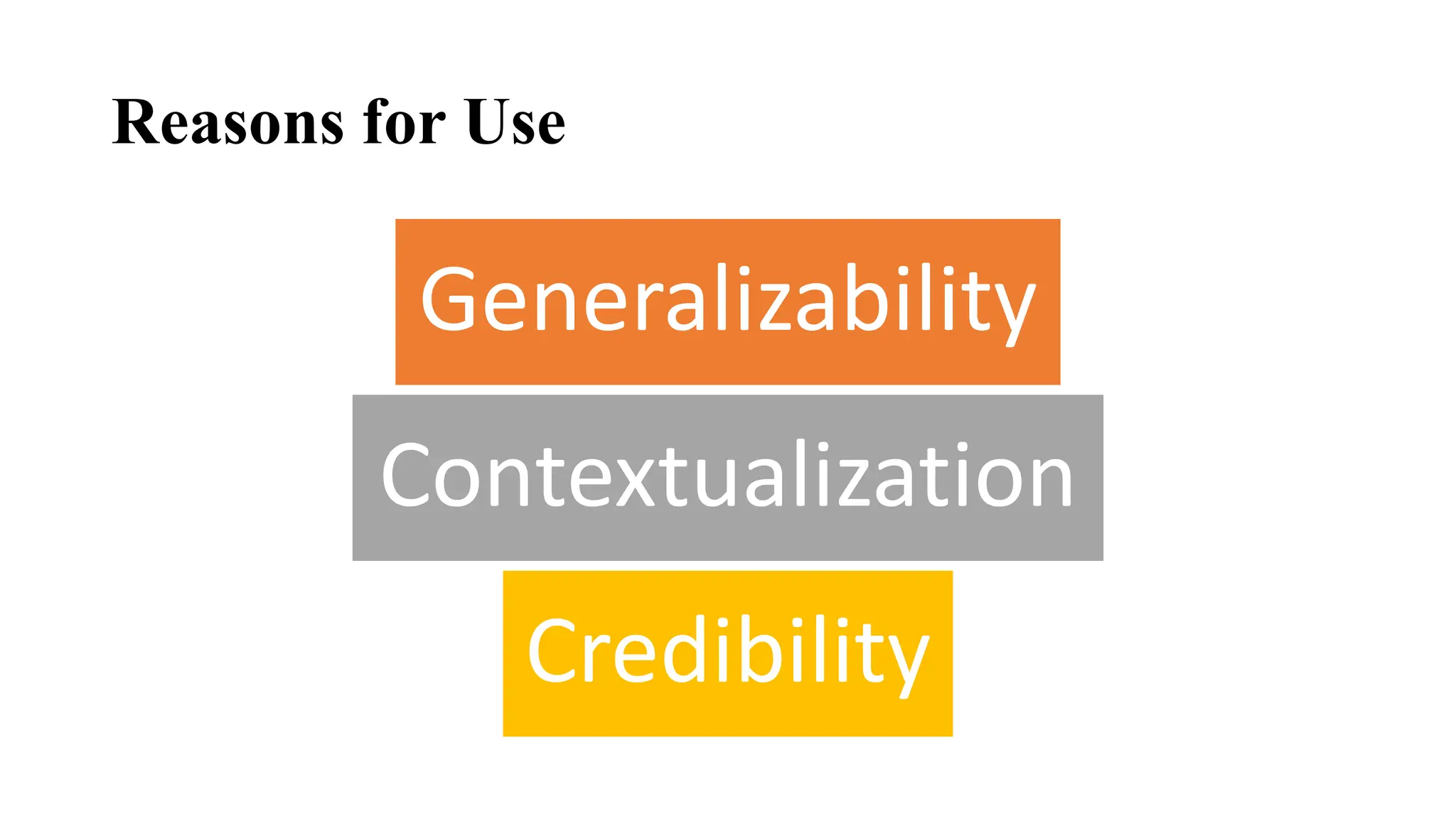
Reasons for Use
Generalizability
Contextualization
Credibility
Key Factors to use
• What is research problem?
• Researcher must evaluate their own expertise
• Keep into consideration of available resources
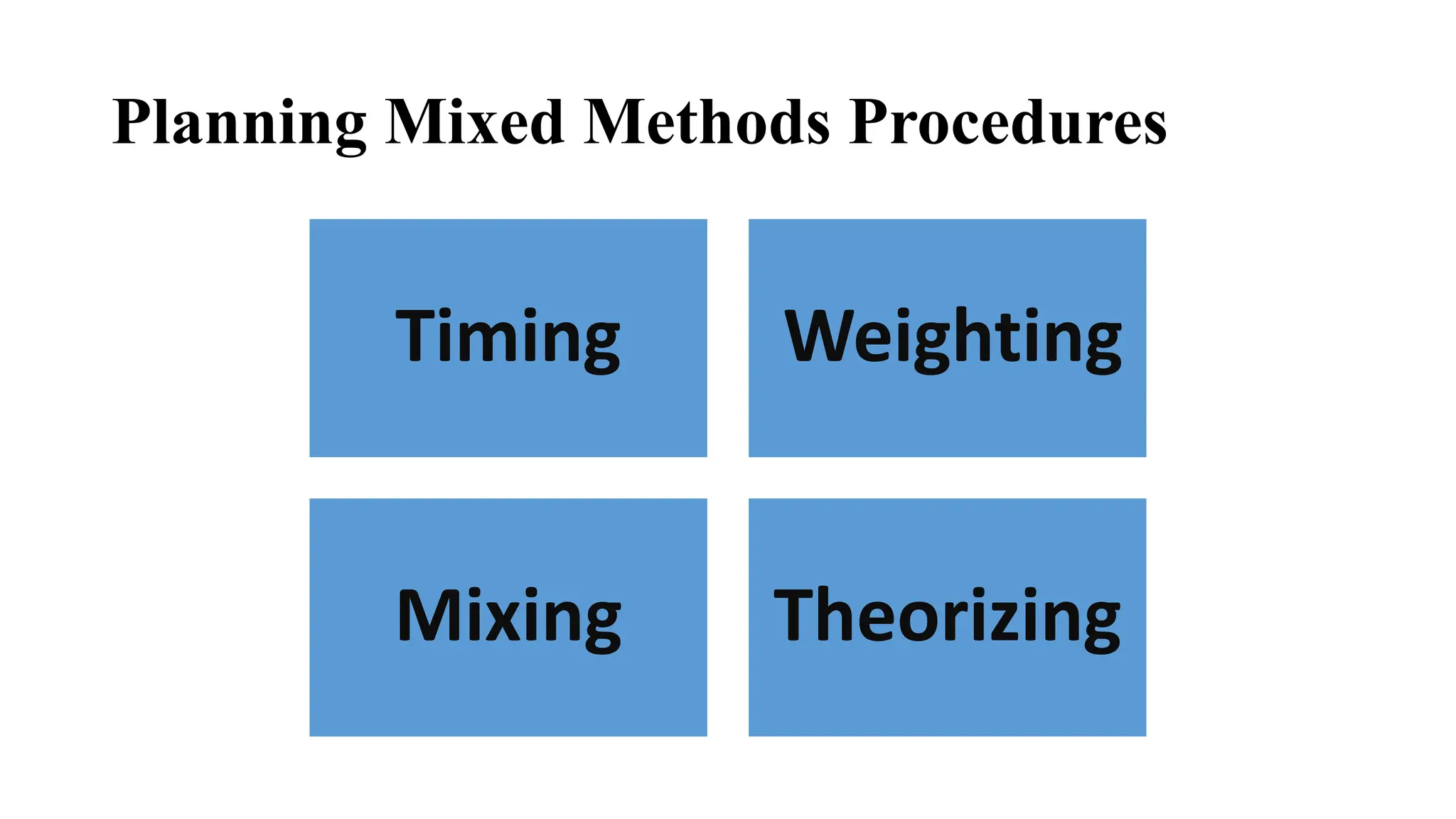
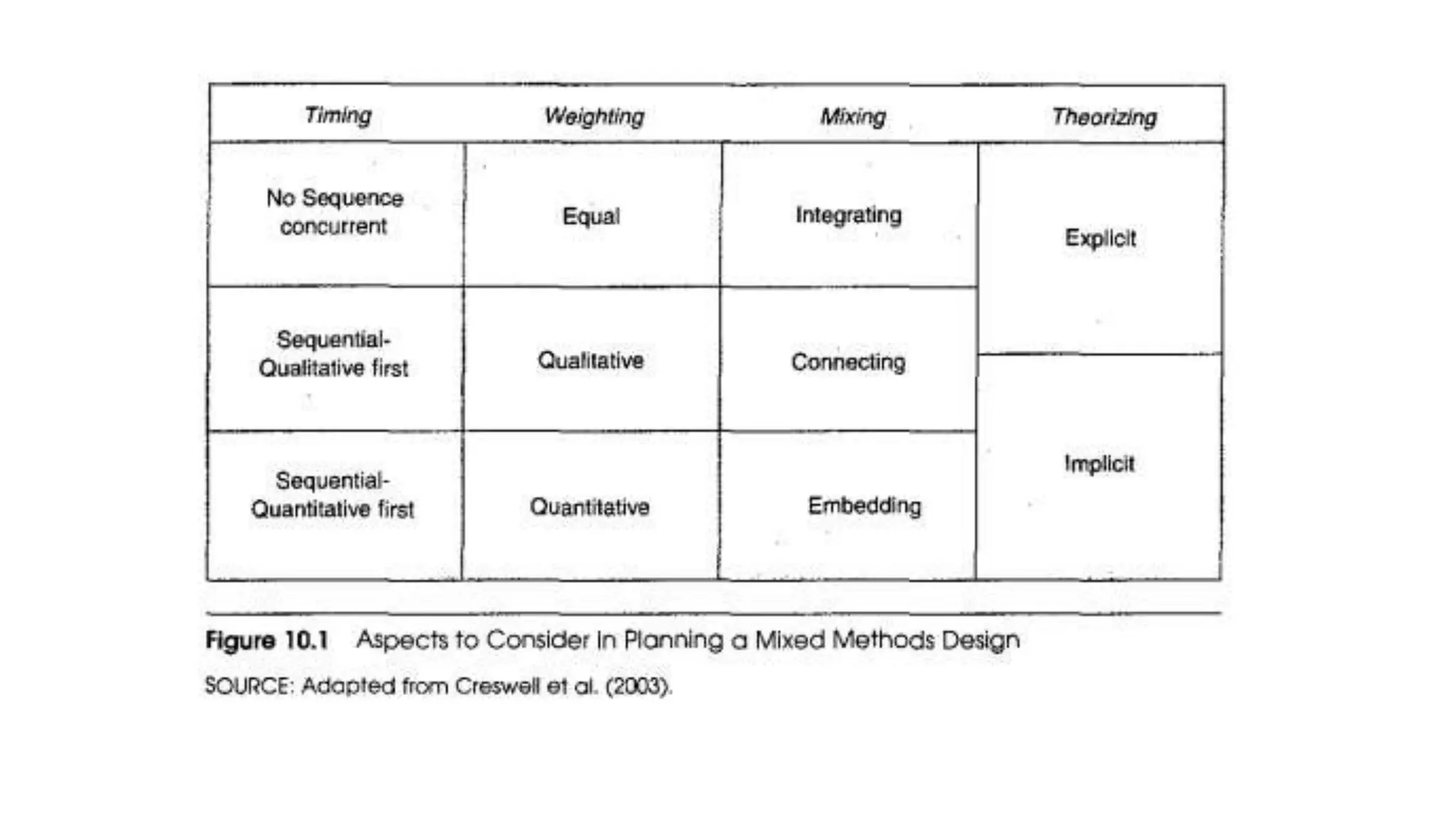
Planning Mixed Methods Procedures
Timing Weighting
Mixing Theorizing
Timing
• consider the timing of their qualitative and quantitative data
collection.
• Data collection can occur in phases (sequentially) or
concurrently (at the same time).
• depending on the researcher's initial intent.
• If qualitative data is collected first, it is for the purpose of
exploring the topic with participants at sites.
• The researcher expands their understanding through a second
phase, collecting data from a large number of people
(typically a sample representative of a population).
Weighting
• weight or priority vary in a particular study.
• weight allocation equal in some studies or may emphasize
one over the other.
• The priority assigned to a particular type of research depends
on factors like the researcher's interests, the study's audience
(e.g., faculty committee, professional association), and the
emphasis the investigator wants to place on a specific aspect
of the study.
Mixing
• Two ways to follow for this:
1. One approach (Connected)
• involves keeping the two data sets separate but connected, such as using
quantitative data to identify participants for qualitative data collection in
a two-phase project.
2. Another method (Embedded)
• collect both types of data concurrently and integrate or merge them by
transforming qualitative themes into counts and comparing them with
descriptive quantitative data.
Theorizing
• the theories are found typically in the beginning sections as an
orienting lens that shapes the types of questions asked, who
participates in the study, how data are collected, and the implications
made from the study
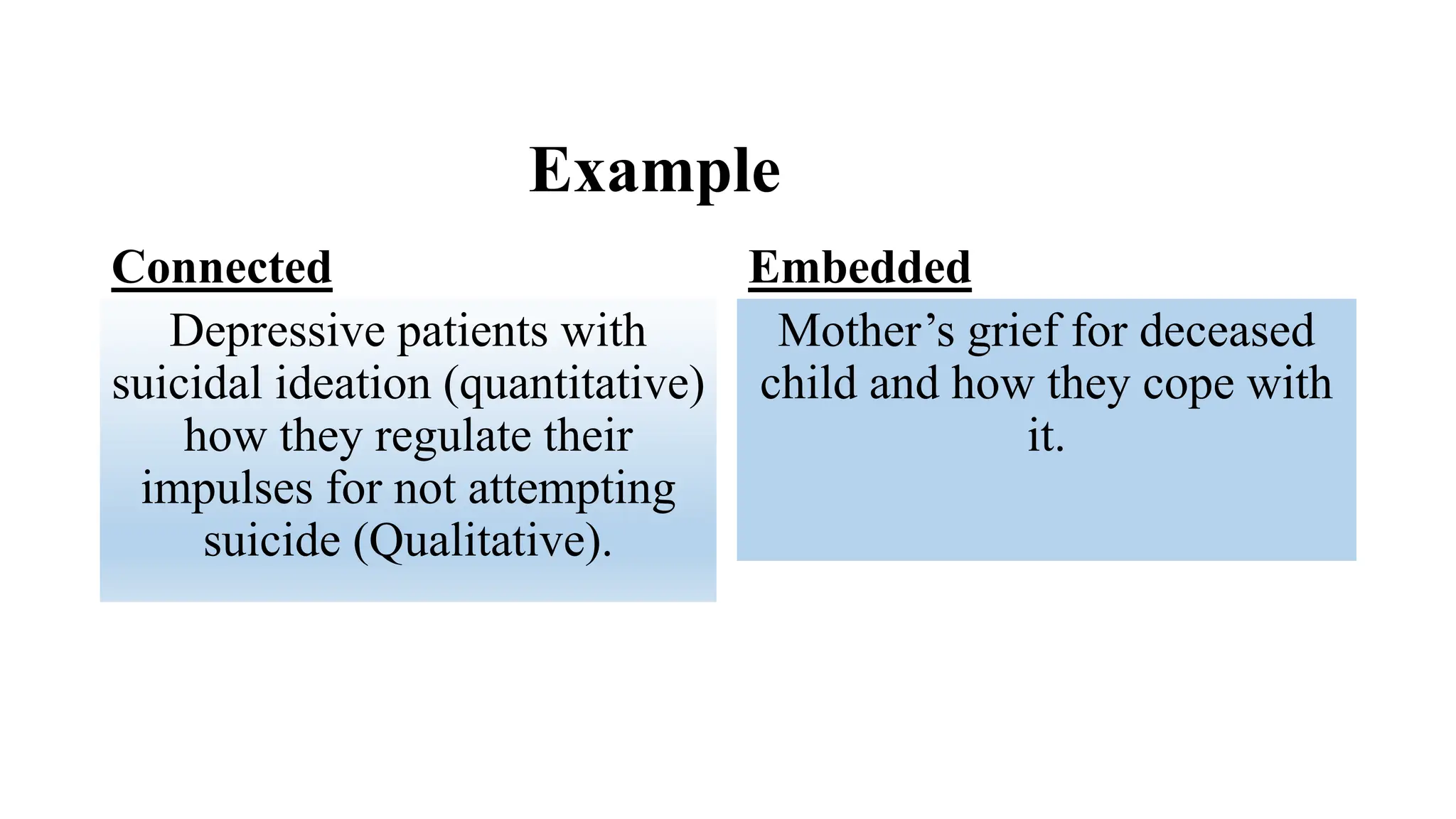
Example
Connected
Depressive patients with
suicidal ideation (quantitative)
how they regulate their
impulses for not attempting
suicide (Qualitative).
Embedded
Mother’s grief for deceased
child and how they cope with
it.
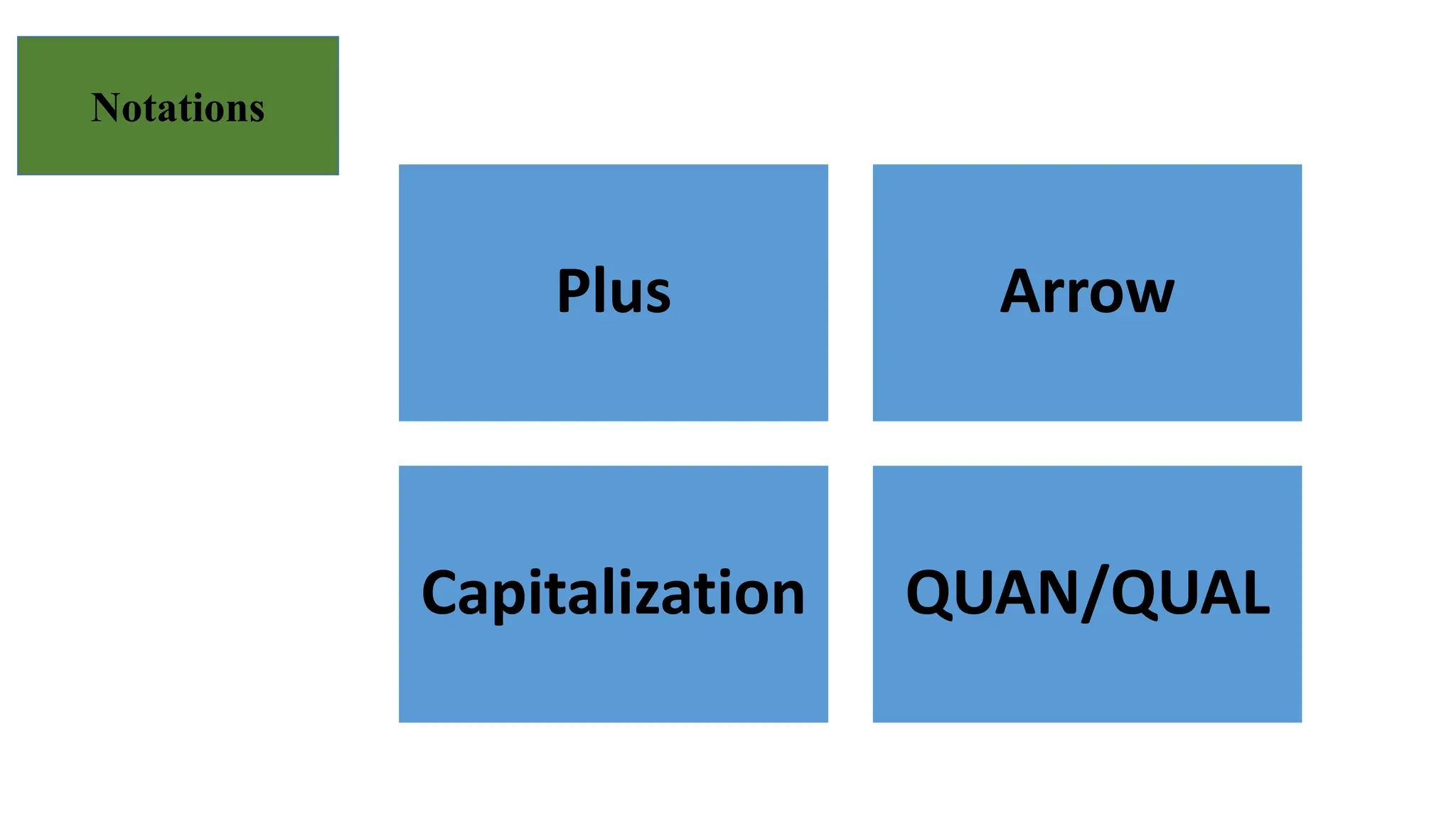
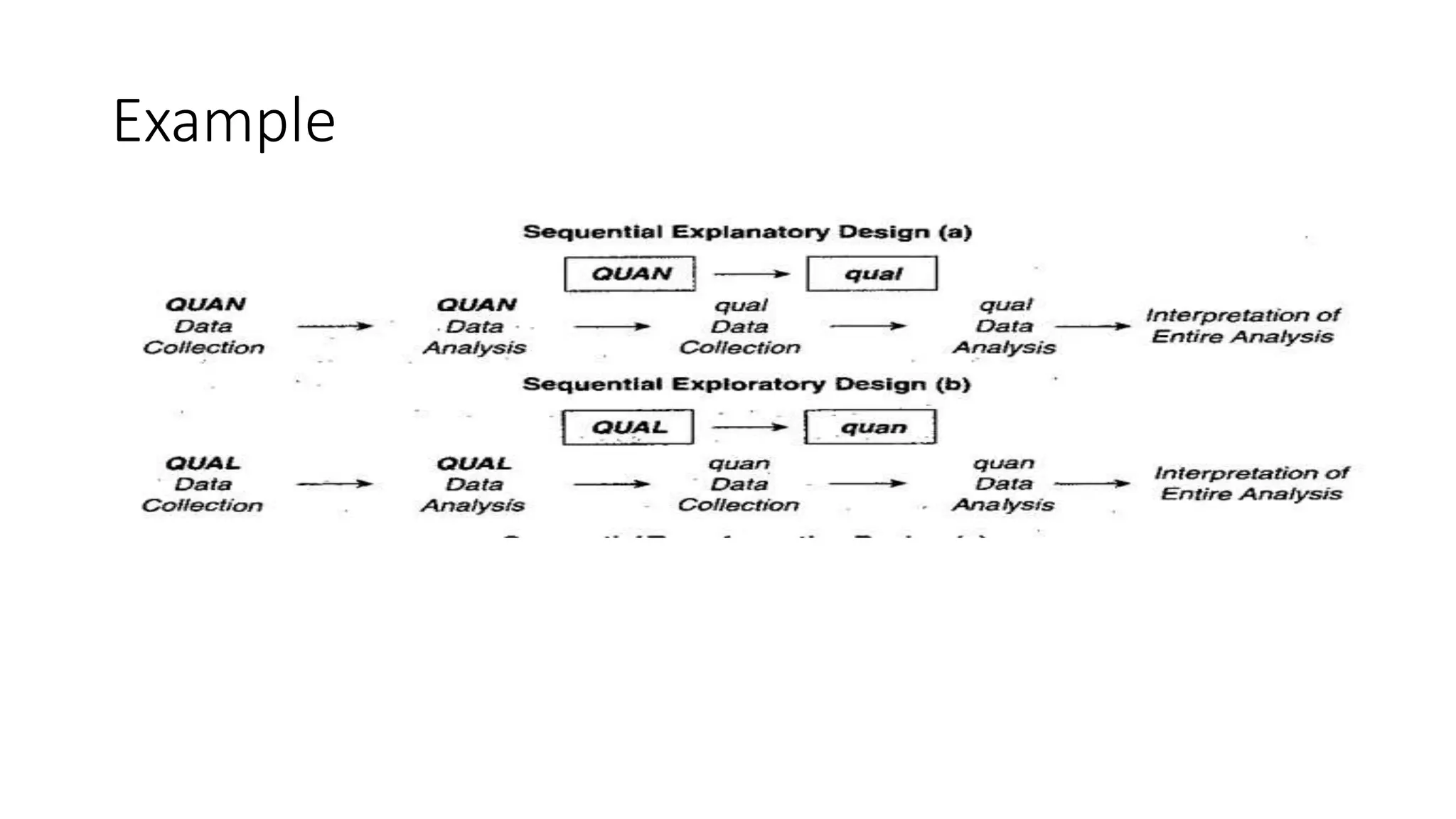
Notations
CAPITALIZATION
Plus Arrow
Capitalization QUAN/QUAL
Example
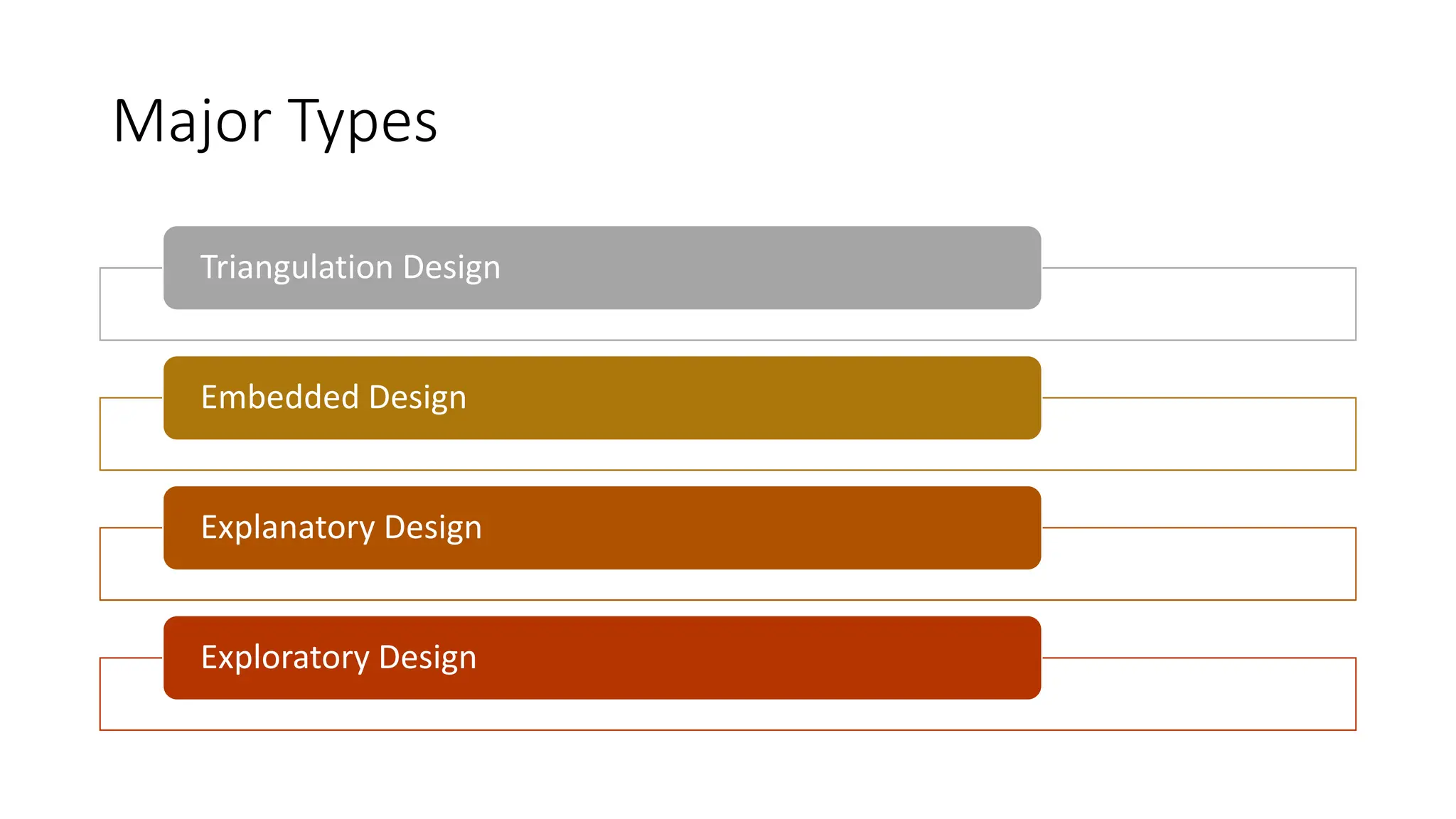
Major Types
Triangulation Design
Embedded Design
Explanatory Design
Exploratory Design
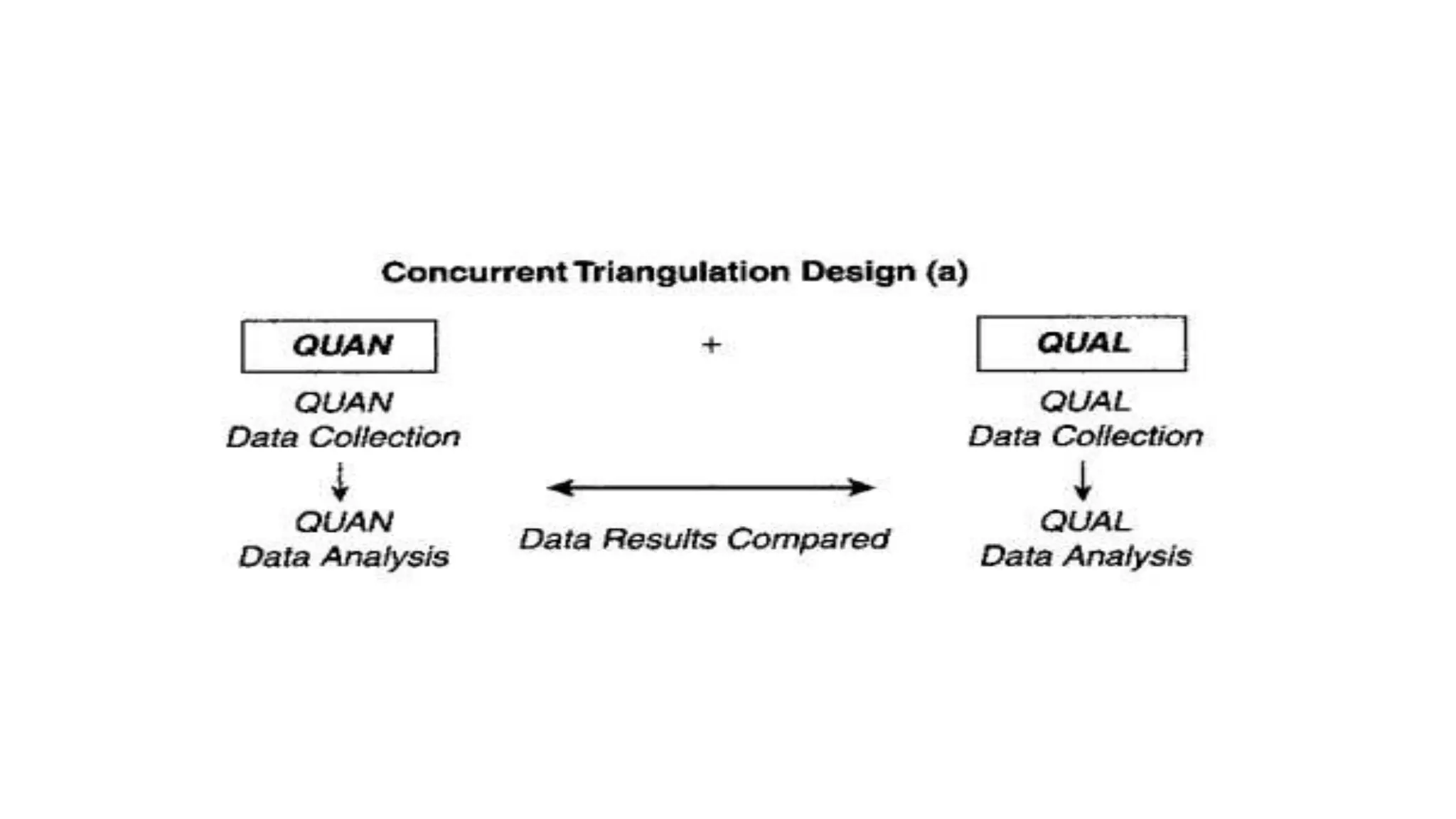
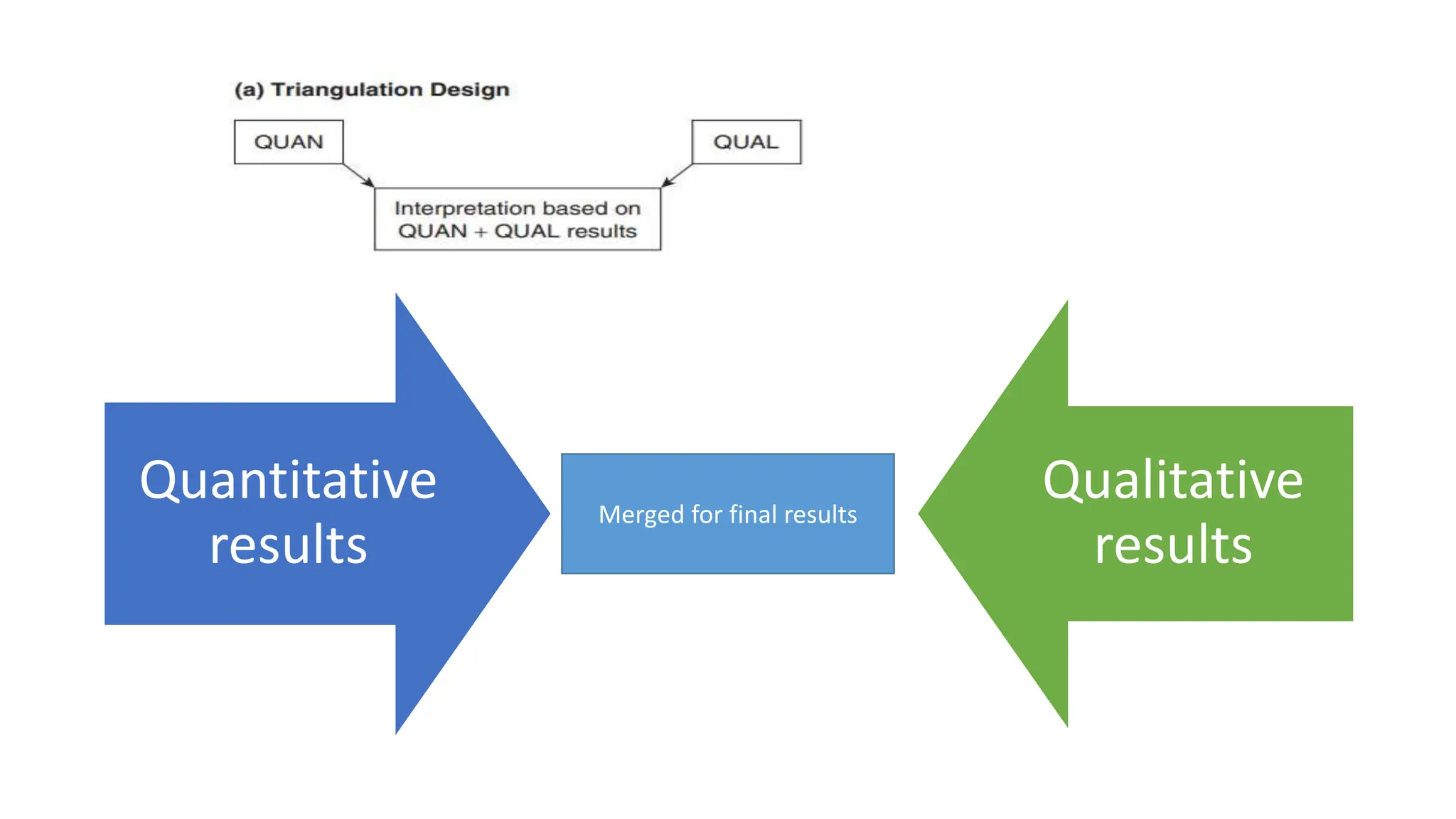
Triangulation Research Design
purpose of this design is “to obtain different but complementary data on the same topic” (Morse, 1991,
p. 122) to best understand the research problem.
bring together the differing strengths and no overlapping weaknesses of quantitative methods
(large sample size, trends, generalization) with those of qualitative methods (small N, details,
in depth)
is used when a researcher wants to directly compare and contrast quantitative statistical
results with qualitative findings or to validate or expand quantitative results with
qualitative data
Quantitative
results
Qualitative
results
Merged for final results
Example
• Effects of screen time on children. (Qualitatively explore
the effects then quantify for further assessment of these
effects)
• A rural adolescent perceptions of alcohol and other drug
resistance.
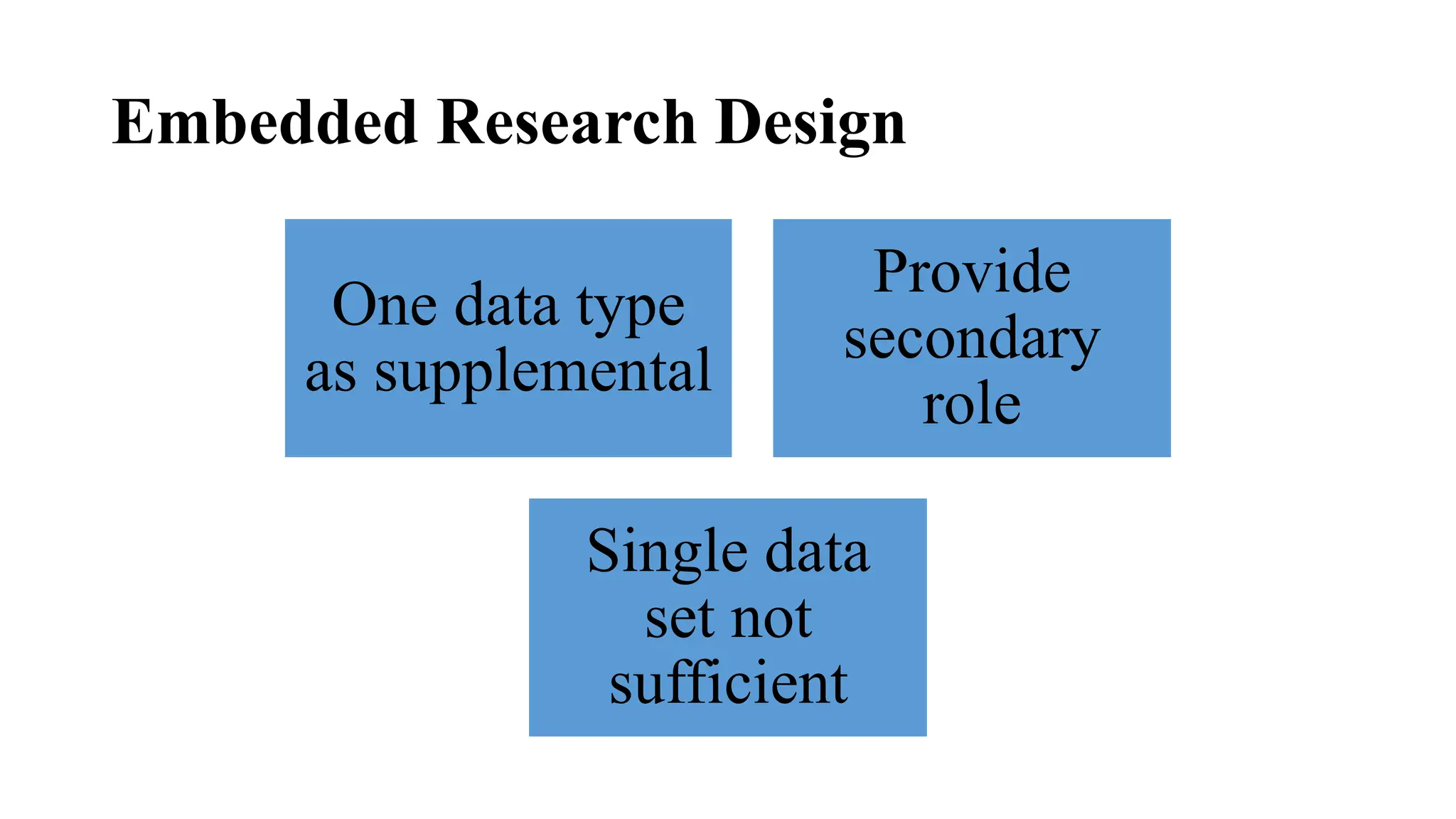
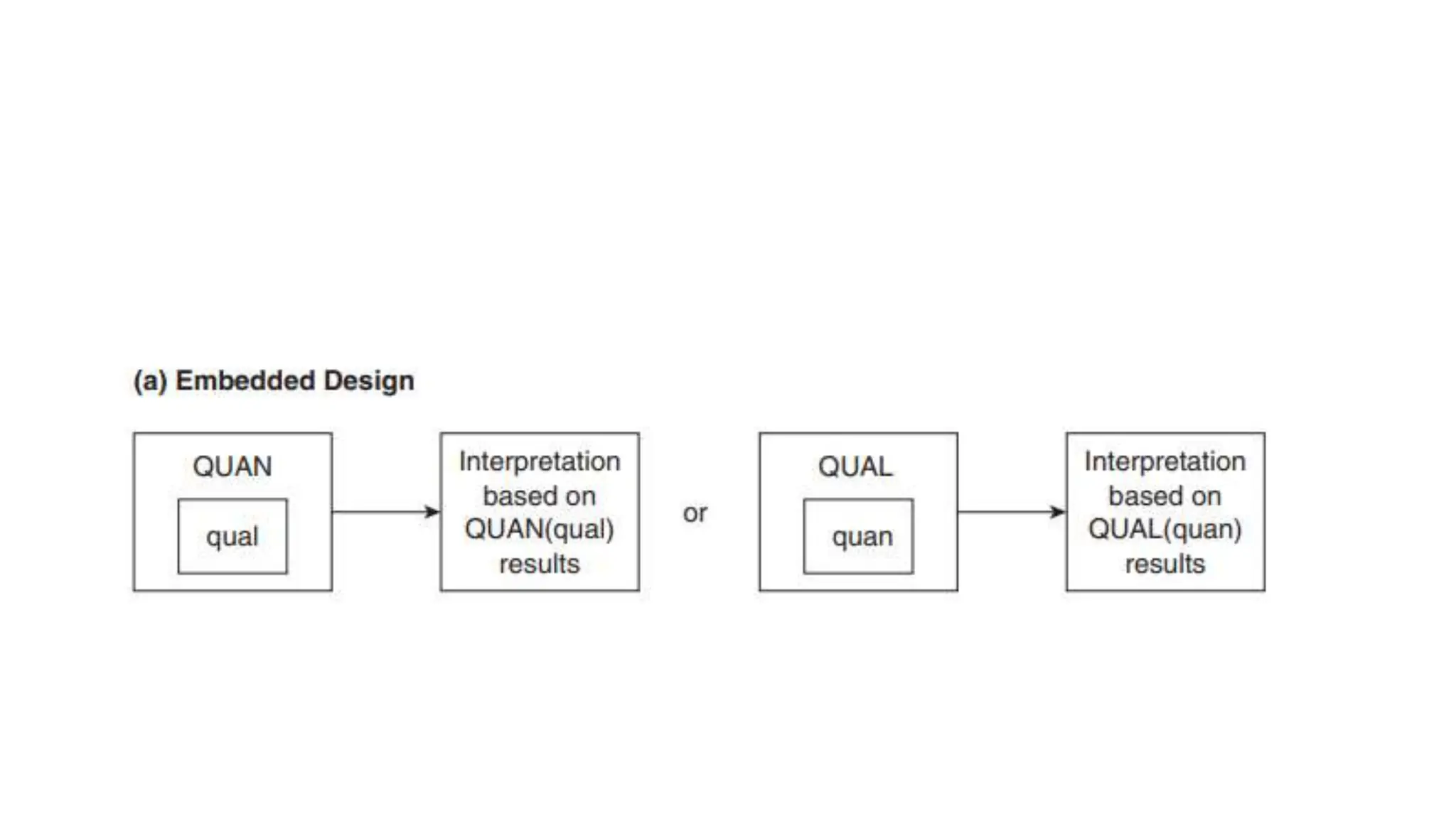
Embedded Research Design
One data type
as supplemental
Provide
secondary
role
Single data
set not
sufficient
Example
• A study of the factors relating depression and diabetes as
moderated by race. A embedding qualitative interviews about
beliefs and experiences with depression for African American
patients with diabetes to help explain the predictive
relationships.
• Psychotherapeutic treatment of anger with help of Islamic
therapy.
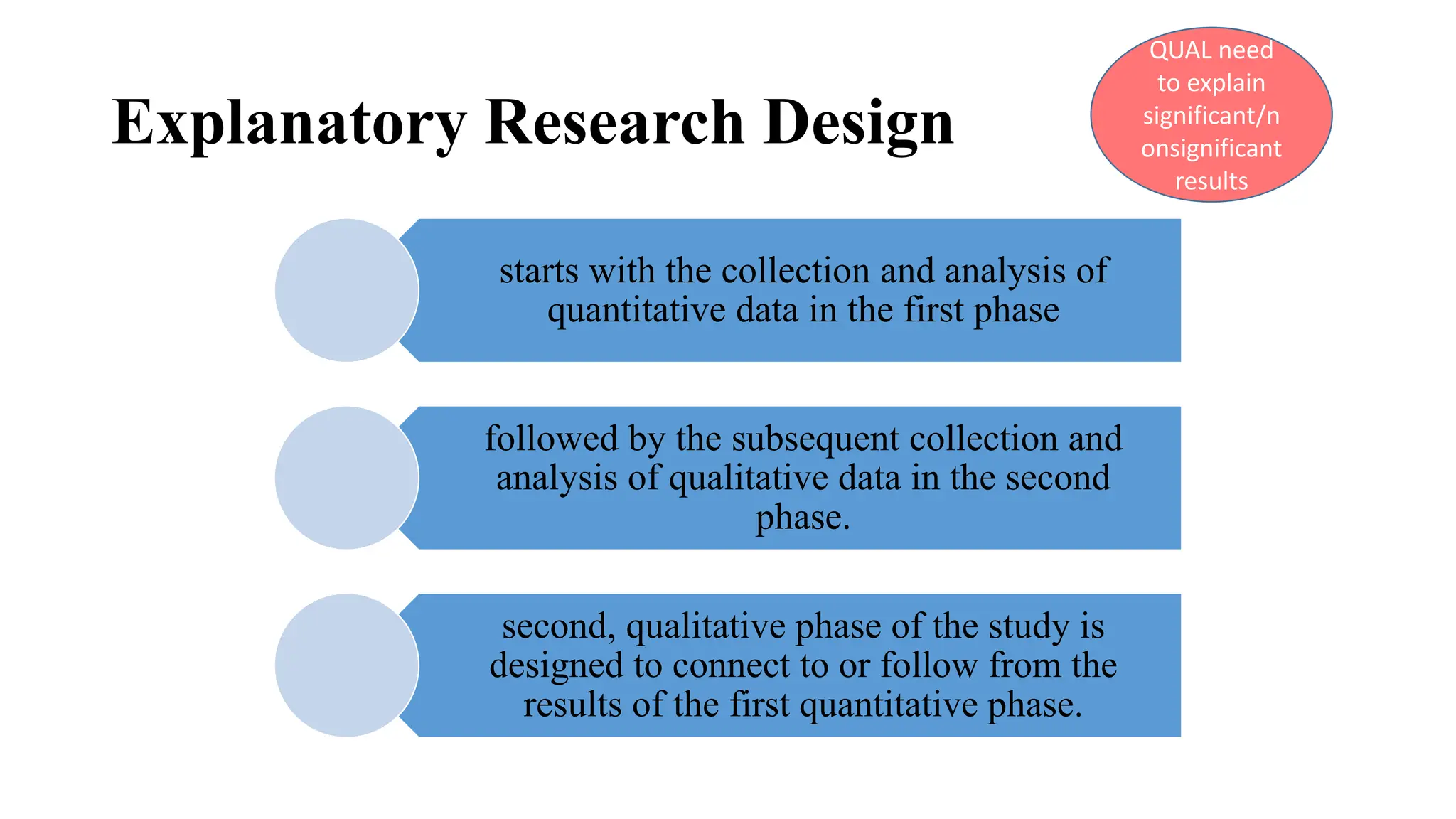
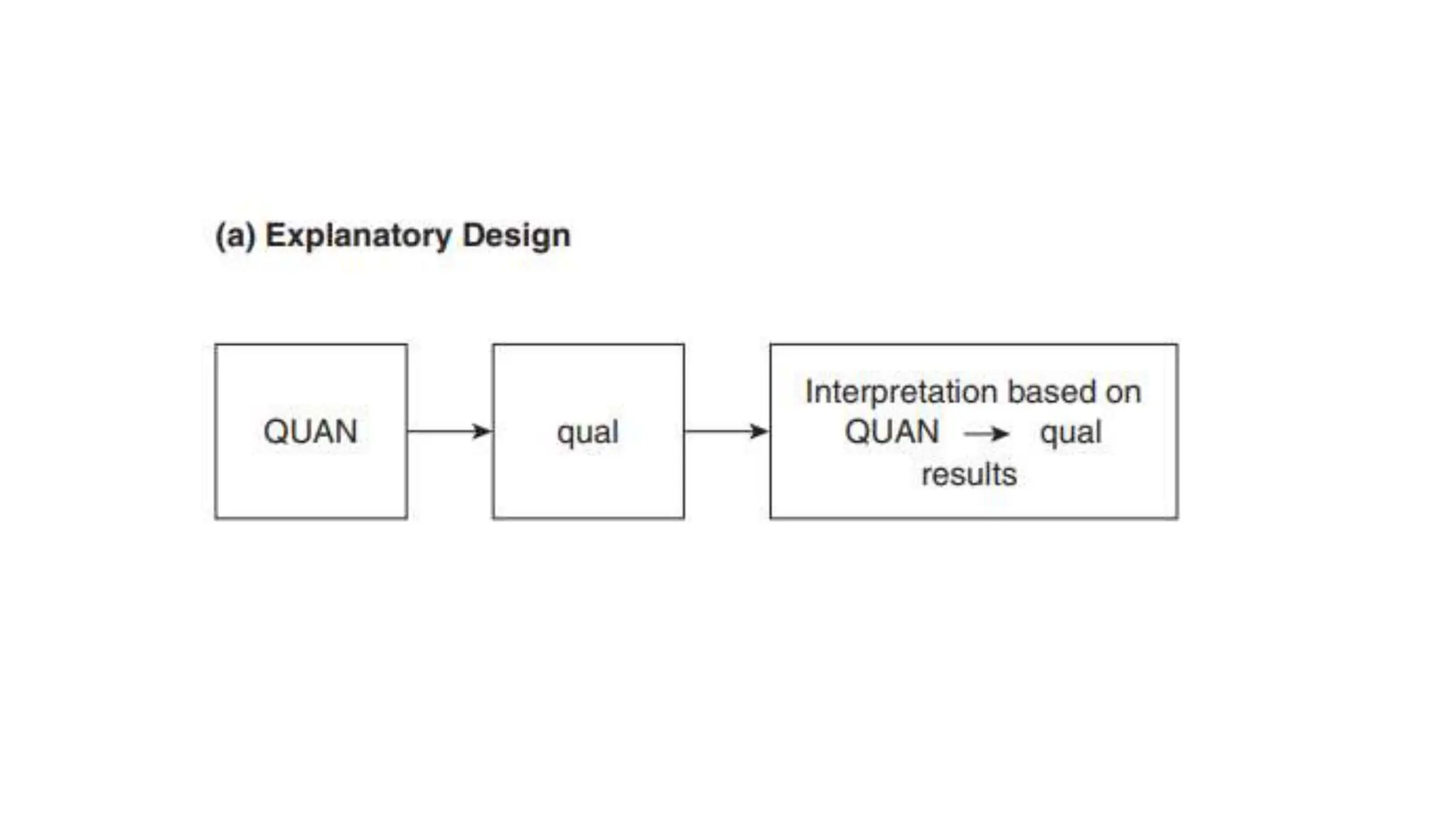
Explanatory Research Design
starts with the collection and analysis of
quantitative data in the first phase
followed by the subsequent collection and
analysis of qualitative data in the second
phase.
second, qualitative phase of the study is
designed to connect to or follow from the
results of the first quantitative phase.
QUAL need
to explain
significant/n
onsignificant
results
Example
• doctoral students’ persistence in an online learning
environment.
• Initial quantitative phase, to identify factors predictive of
students’ persistence.
• In the second phase, qualitative multiple case study approach
to help explain why certain factors identified in the first phase
were significant predictors of student persistence in the
program.
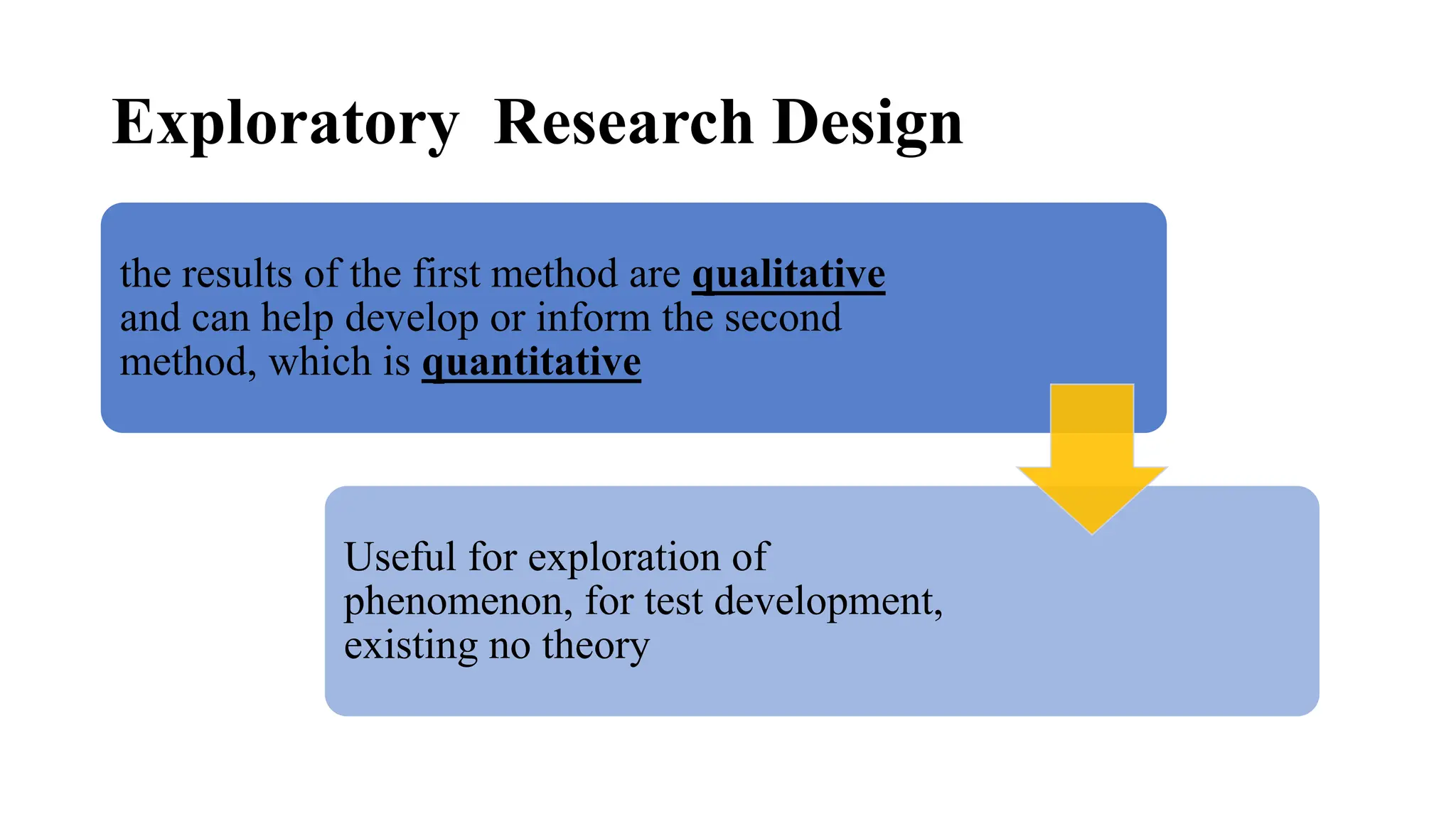
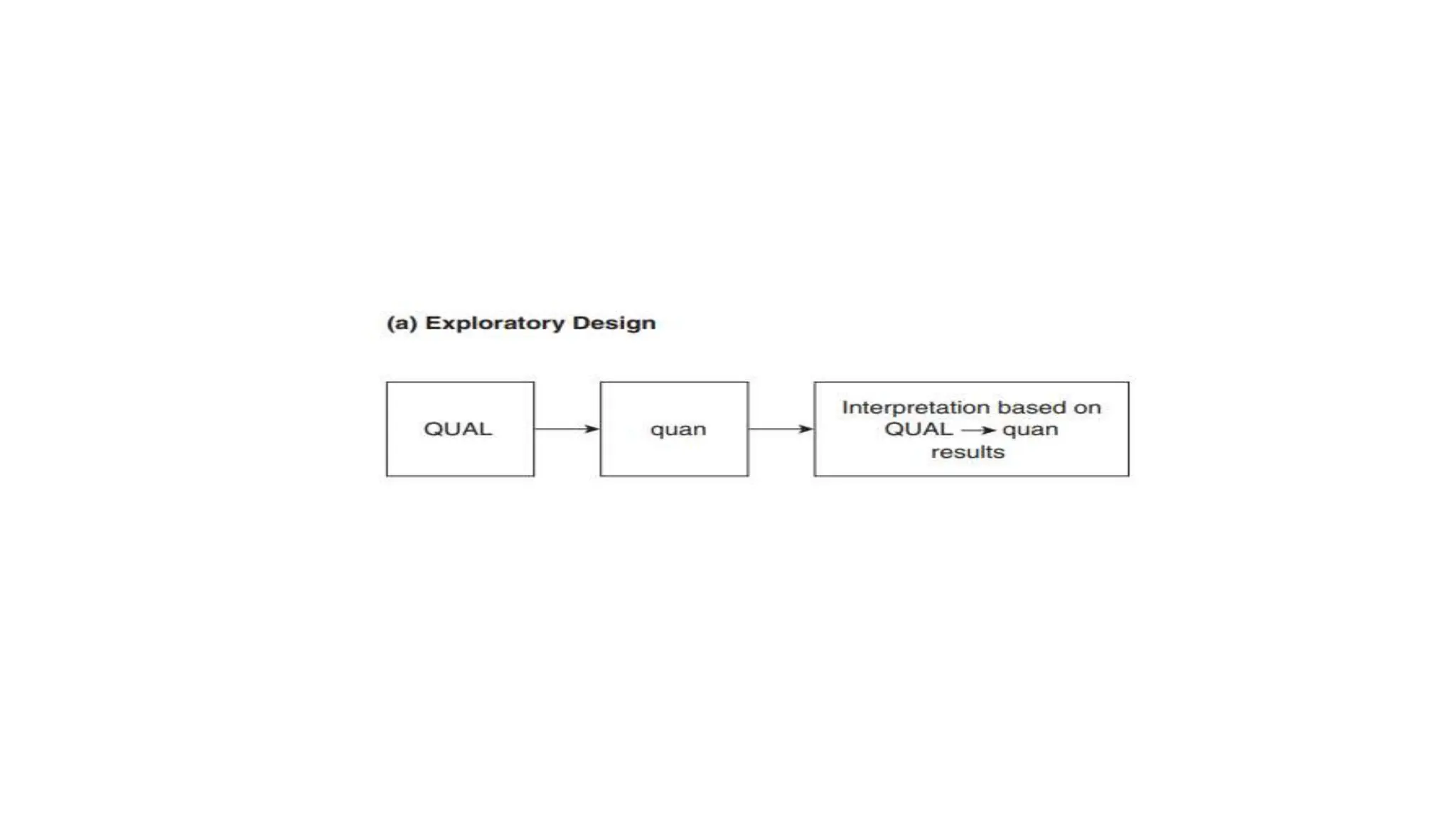
Exploratory Research Design
the results of the first method are qualitative
and can help develop or inform the second
method, which is quantitative
Useful for exploration of
phenomenon, for test development,
existing no theory
Example
Young adults’ perceptions about the significance of the
self to others in romantic relationships.
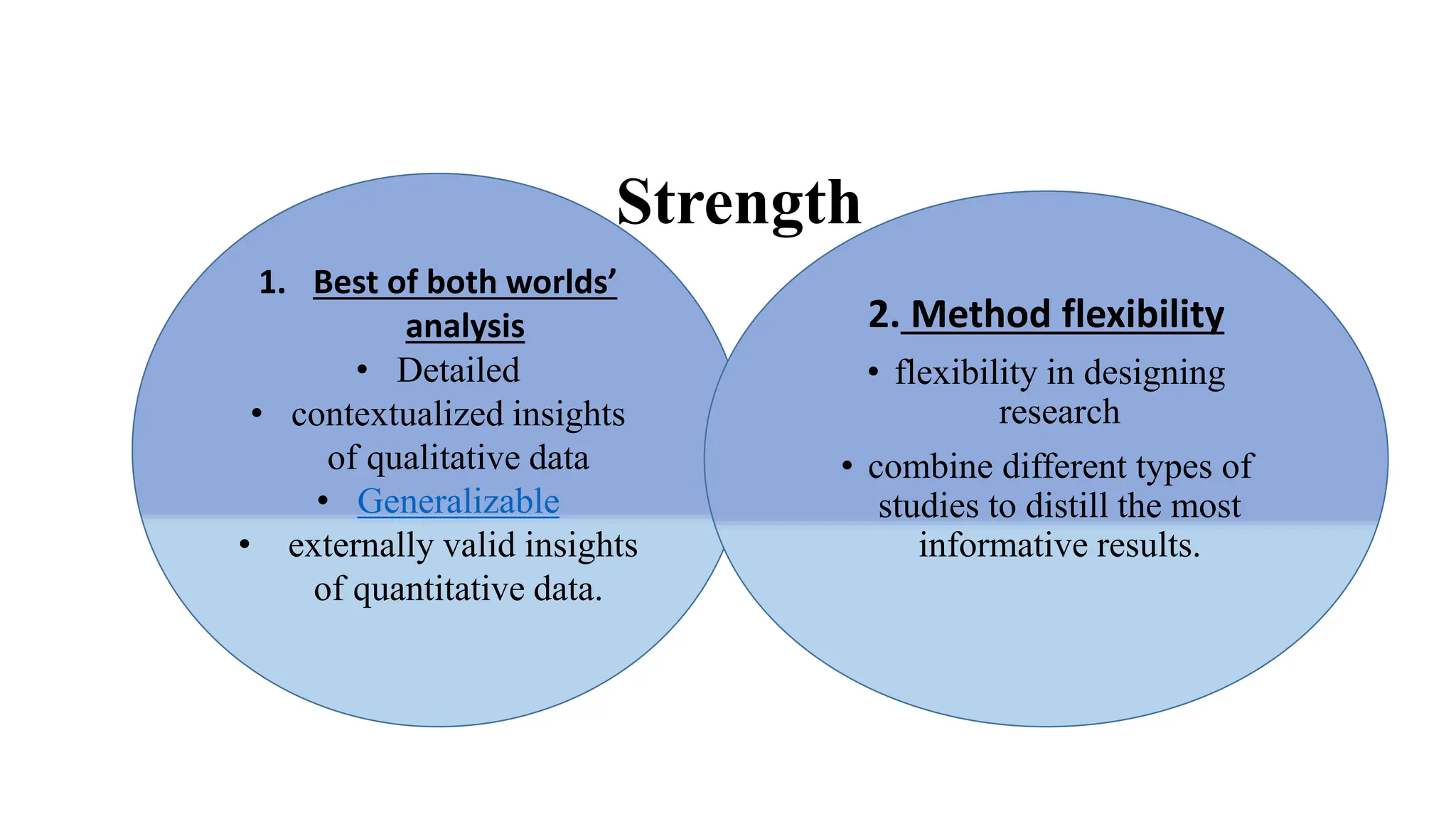
Strength
1. Best of both worlds’
analysis
• Detailed
• contextualized insights
of qualitative data
• Generalizable
• externally valid insights
of quantitative data.
2. Method flexibility
• flexibility in designing
research
• combine different types of
studies to distill the most
informative results.
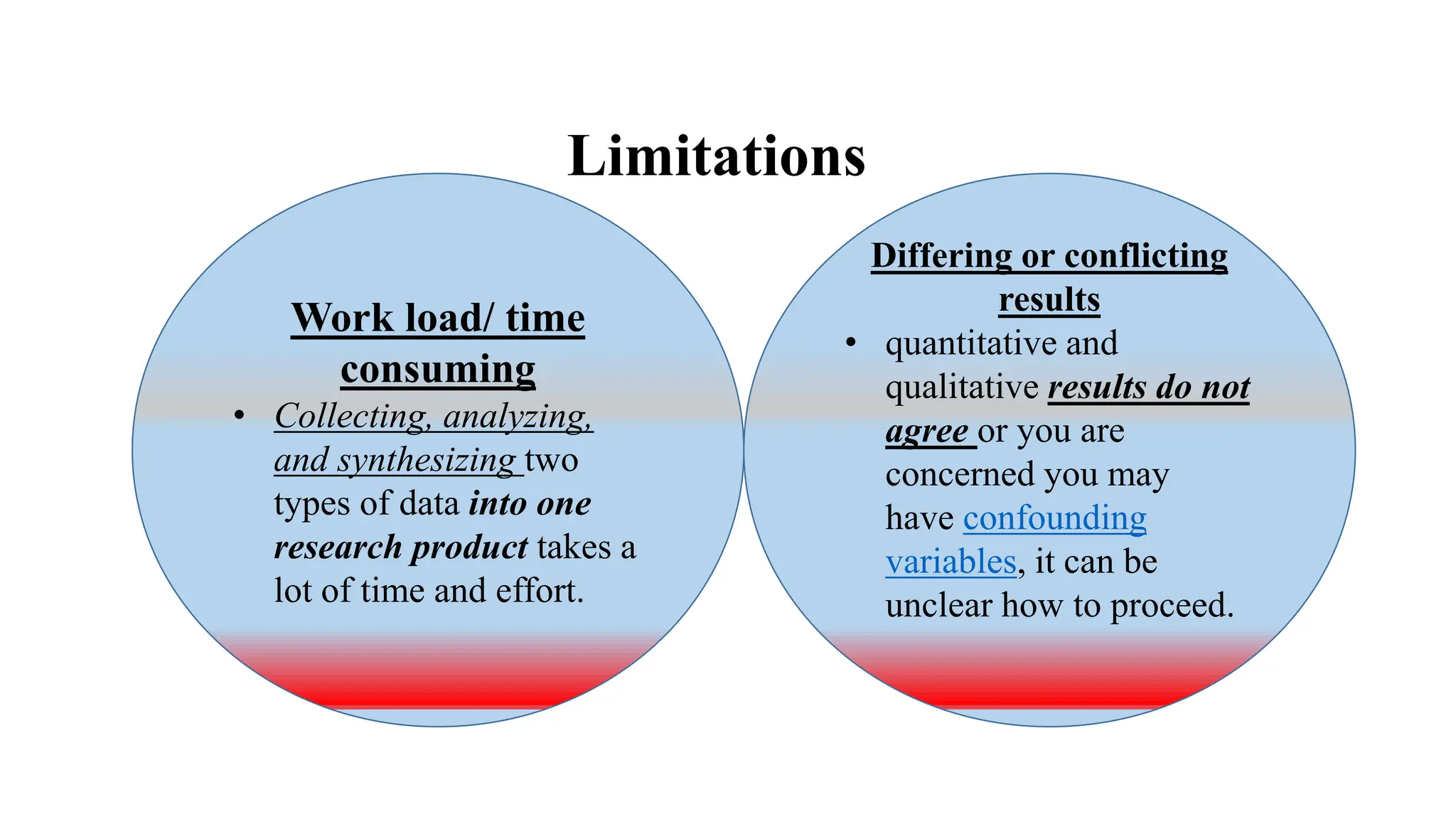
Limitations
Work load/ time
consuming
• Collecting, analyzing,
and synthesizing two
types of data into one
research product takes a
lot of time and effort.
Differing or conflicting
results
• quantitative and
qualitative results do not
agree or you are
concerned you may
have confounding
variables, it can be
unclear how to proceed.
References
• Creswell, J. W., Plano Clark, V. L., Gutmann, M., & Hanson, W. (2003). Advanced mixed
methods research designs. In A. Tashakkori & C. Teddlie (Eds.), Handbook of mixed
methods in social and behavioral research (pp. 209–240). Thousand Oaks, CA: Sage.
• Greene, J. C., Caracelli, V. J., & Graham, W. F. (1989). Toward a conceptual framework
for mixed-method evaluation designs. Educational Evaluation and Policy Analysis, 11(3),
255–274.
• Creswell, J. W. (2003). Data analysis strategies for mixed-method evaluation designs.
Educational Evaluation and Policy Analysis, 15(2), 195–207.
• Morgan, D. L. (1998). Practical strategies for combining qualitative and quantitative
methods: Applications to health research. Qualitative Health Research, 8(3), 362–376.
• Morse, J. M. (2006). Approaches to qualitative-quantitative methodological triangulation.
Nursing Research, 40, 120–123.
• 2007

Mixed Method Research Design.pptx

  • 1.
    Mixed Method Research Design PresentedBy: Nida Ayub (PhD Scholar) Mishal Fatima (PhD Scholar)
  • 2.
    Outline • Introduction • Rational/reasons of using mixed method design • Aspects of mixed method study • Notations • Types of mixed method design • Strengths and limitations
  • 3.
  • 4.
    Definition Mixed MethodDesign Mixed Method Quantitative Qualitative
  • 5.
    1. approach toinvestigating the social world 2. more than one kind of technique for gathering, analyzing, and representing human phenomena
  • 6.
    Example To what extentdoes the frequency of traffic accidents (quantitative) reflect cyclist perceptions of road safety (qualitative) in Amsterdam? How do average hospital salary measurements over time (quantitative) help to explain nurse testimonials about job satisfaction (qualitative)?
  • 7.
  • 8.
  • 9.
    Key Factors touse • What is research problem? • Researcher must evaluate their own expertise • Keep into consideration of available resources
  • 10.
    Planning Mixed MethodsProcedures Timing Weighting Mixing Theorizing
  • 11.
    Timing • consider thetiming of their qualitative and quantitative data collection. • Data collection can occur in phases (sequentially) or concurrently (at the same time). • depending on the researcher's initial intent. • If qualitative data is collected first, it is for the purpose of exploring the topic with participants at sites. • The researcher expands their understanding through a second phase, collecting data from a large number of people (typically a sample representative of a population).
  • 12.
    Weighting • weight orpriority vary in a particular study. • weight allocation equal in some studies or may emphasize one over the other. • The priority assigned to a particular type of research depends on factors like the researcher's interests, the study's audience (e.g., faculty committee, professional association), and the emphasis the investigator wants to place on a specific aspect of the study.
  • 13.
    Mixing • Two waysto follow for this: 1. One approach (Connected) • involves keeping the two data sets separate but connected, such as using quantitative data to identify participants for qualitative data collection in a two-phase project. 2. Another method (Embedded) • collect both types of data concurrently and integrate or merge them by transforming qualitative themes into counts and comparing them with descriptive quantitative data.
  • 14.
    Theorizing • the theoriesare found typically in the beginning sections as an orienting lens that shapes the types of questions asked, who participates in the study, how data are collected, and the implications made from the study
  • 15.
    Example Connected Depressive patients with suicidalideation (quantitative) how they regulate their impulses for not attempting suicide (Qualitative). Embedded Mother’s grief for deceased child and how they cope with it.
  • 17.
  • 18.
  • 20.
    Major Types Triangulation Design EmbeddedDesign Explanatory Design Exploratory Design
  • 21.
    Triangulation Research Design purposeof this design is “to obtain different but complementary data on the same topic” (Morse, 1991, p. 122) to best understand the research problem. bring together the differing strengths and no overlapping weaknesses of quantitative methods (large sample size, trends, generalization) with those of qualitative methods (small N, details, in depth) is used when a researcher wants to directly compare and contrast quantitative statistical results with qualitative findings or to validate or expand quantitative results with qualitative data
  • 22.
  • 23.
    Example • Effects ofscreen time on children. (Qualitatively explore the effects then quantify for further assessment of these effects) • A rural adolescent perceptions of alcohol and other drug resistance.
  • 24.
    Embedded Research Design Onedata type as supplemental Provide secondary role Single data set not sufficient
  • 26.
    Example • A studyof the factors relating depression and diabetes as moderated by race. A embedding qualitative interviews about beliefs and experiences with depression for African American patients with diabetes to help explain the predictive relationships. • Psychotherapeutic treatment of anger with help of Islamic therapy.
  • 27.
    Explanatory Research Design startswith the collection and analysis of quantitative data in the first phase followed by the subsequent collection and analysis of qualitative data in the second phase. second, qualitative phase of the study is designed to connect to or follow from the results of the first quantitative phase. QUAL need to explain significant/n onsignificant results
  • 29.
    Example • doctoral students’persistence in an online learning environment. • Initial quantitative phase, to identify factors predictive of students’ persistence. • In the second phase, qualitative multiple case study approach to help explain why certain factors identified in the first phase were significant predictors of student persistence in the program.
  • 30.
    Exploratory Research Design theresults of the first method are qualitative and can help develop or inform the second method, which is quantitative Useful for exploration of phenomenon, for test development, existing no theory
  • 32.
    Example Young adults’ perceptionsabout the significance of the self to others in romantic relationships.
  • 33.
    Strength 1. Best ofboth worlds’ analysis • Detailed • contextualized insights of qualitative data • Generalizable • externally valid insights of quantitative data. 2. Method flexibility • flexibility in designing research • combine different types of studies to distill the most informative results.
  • 34.
    Limitations Work load/ time consuming •Collecting, analyzing, and synthesizing two types of data into one research product takes a lot of time and effort. Differing or conflicting results • quantitative and qualitative results do not agree or you are concerned you may have confounding variables, it can be unclear how to proceed.
  • 35.
    References • Creswell, J.W., Plano Clark, V. L., Gutmann, M., & Hanson, W. (2003). Advanced mixed methods research designs. In A. Tashakkori & C. Teddlie (Eds.), Handbook of mixed methods in social and behavioral research (pp. 209–240). Thousand Oaks, CA: Sage. • Greene, J. C., Caracelli, V. J., & Graham, W. F. (1989). Toward a conceptual framework for mixed-method evaluation designs. Educational Evaluation and Policy Analysis, 11(3), 255–274. • Creswell, J. W. (2003). Data analysis strategies for mixed-method evaluation designs. Educational Evaluation and Policy Analysis, 15(2), 195–207. • Morgan, D. L. (1998). Practical strategies for combining qualitative and quantitative methods: Applications to health research. Qualitative Health Research, 8(3), 362–376. • Morse, J. M. (2006). Approaches to qualitative-quantitative methodological triangulation. Nursing Research, 40, 120–123. • 2007