PRESENTERS 
ZEESHAN AHMED LODHI 
AND 
RIZWAN ANWER
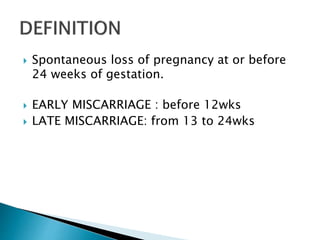
 Spontaneous loss of pregnancy at or before 
24 weeks of gestation. 
 EARLY MISCARRIAGE : before 12wks 
 LATE MISCARRIAGE: from 13 to 24wks
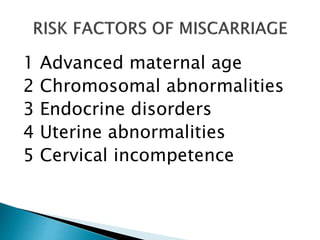
1 Advanced maternal age 
2 Chromosomal abnormalities 
3 Endocrine disorders 
4 Uterine abnormalities 
5 Cervical incompetence
6 Infections 
7 Drugs and Chemicals 
8 Psychological disorders 
9 Trauma 
10 Multiple pregnancies
 Following are the types of miscarriage based 
on clinical presentation and investigation 
finding: 
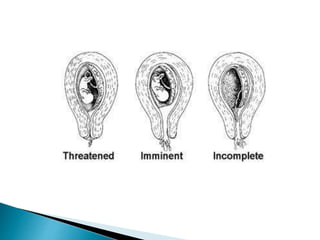
 Threatened miscarriage 
 Inevitable miscarriage 
 Incomplete miscarriage 
 Complete miscarriage 
 Missed miscarriage
 Pregnancy 
complicated by 
bleeding before 
24wks and 
symptoms indicate 
a miscarriage 
could be possible 
 Slight bleeding 
 Abdominal cramps 
 Cervical os closure 
 Viable fetus on 
U/S
 Cervix has dilated 
but Products of 
conception (POC) 
have not been 
expelled and 
symptoms indicate 
that a miscarriage 
could not be 
stopped. 
 Heavy bleeding 
with clots 
 Considerable 
lower abdominal 
pain 
 Cervical os open 
 Intrauterine 
pregnancy on U/S
 Some, but not all 
POC have been 
passed. Retained 
product may be 
the the part of 
fetus, placenta or 
membrane. 
 Heavy bleeding 
that may lead to 
shock 
 Severe abdominal 
pain 
 Cervical os open 
 Retained POC on 
U/S
 All POC have been 
passed out 
without surgical or 
medical 
intervention. 
 Minimal or 
resolved bleeding 
 No pain 
 Cervical os closed 
 Empty uterus on 
U/S
 Uterus retains POC 
for two months or 
more after the 
death of fetus. 
 It can lead to 
coagulopathies. 
 With or without 
bleeding 
 Pain or no pain 
 Cervical os closed 
 Gestational sac 
present. 
 Fetal pole present 
but no fetal heart 
beat.
 HISTORY 
 EXAMINATION 
* General 
* Abdominal 
* Pelvic with speculum and digital
CBC , BHCG , Hb typing , U/S 
In cases of recurrent miscarriages: 
* karyotyping 
* hormonal (progesterone, TSH) 
* infections (TORCH) 
* immunological (anticardiolipin Ab, 
lupus 
anticoagulant etc)
Depending on clinical presentation and 
patients choice: 
◦ EXPECTANT (Do nothing) 
◦ MEDICAL (Do something) 
◦ SURGICAL (Do everything)
 Watchful waiting 
 Most of the cases pass POC within 2 to 6 
weeks 
 Avoids side effects and complications of 
surgery 
 I/c risk of unplanned surgery 
 Follow up
 INDICATIONS: 
 Fetal parts are greater than 14wks in size 
 >10wks pregnancy patients elects D&C and 
her cervix is closed 
 Some conditions like DIC in which surgery or 
anasthesia is contraindicated
 PROSTAGLANDINS: 
Misoprostol (in oral n vaginal forms) 
Gemeprost (vaginal form) 
 PROGESTERON ANTAGONIST: 
Mifepristone (used in combination with 
prostaglandin to I/c 
success rate)
 Non invasive 
 Drugs are administered orally or injected 
 No anasthesia
 Bleeding lasts longer 
 Require multiple visits to doctor 
 Women may see the contents of their womb 
as they are passed 
 Chances of incomplete evacuation. 
 May require Surgery.
INDICATIONS: 
 Patient’s preference 
 Infected retained tissue 
 Excessive bleeding 
 Cervix is closed &sac is >5cm 
 Patients has miscarried twice before 
 Patient is incapable of followups
 VACUUM ASPIRATION: 
Also called D&E. Uses aspiration to remove 
uterine content through the cervix. 
 DILATATION & CURETTAGE: 
Uses sharp curette to scrape off POC from 
uterine lining. 
SURGERY HAS ITS ADVATAGE OF SUCCESS RATE 
OF ABOUT 95 – 100 %
 CERVICAL TRAUMA 
 SUBSEQUENT CERVICAL INCOMPETENCE 
 UTERINE PERFORATION 
 INTRAUTERINE ADHESIONS 
 POST OPERATIVE PELVIC INFECTION 
 OCCASIONAL SUBFERTILITY
 Cervical trauma 
 Cervical incompetence 
 Uterine perforation 
 Intrauterine adhesions 
 Post op pelvic infection 
 subfertility
 Sympathy, 
explanation and 
reassurance are 
mandatory 
 Follow up by a 
senior member of 
staff , this will 
lead to discussion 
about a future 
pregnancy or 
contraception
Miscarriage1

Miscarriage1

  • 1.
    PRESENTERS ZEESHAN AHMEDLODHI AND RIZWAN ANWER
  • 2.
     Spontaneous lossof pregnancy at or before 24 weeks of gestation.  EARLY MISCARRIAGE : before 12wks  LATE MISCARRIAGE: from 13 to 24wks
  • 3.
    1 Advanced maternalage 2 Chromosomal abnormalities 3 Endocrine disorders 4 Uterine abnormalities 5 Cervical incompetence
  • 4.
    6 Infections 7Drugs and Chemicals 8 Psychological disorders 9 Trauma 10 Multiple pregnancies
  • 5.
     Following arethe types of miscarriage based on clinical presentation and investigation finding:  Threatened miscarriage  Inevitable miscarriage  Incomplete miscarriage  Complete miscarriage  Missed miscarriage
  • 6.
     Pregnancy complicatedby bleeding before 24wks and symptoms indicate a miscarriage could be possible  Slight bleeding  Abdominal cramps  Cervical os closure  Viable fetus on U/S
  • 7.
     Cervix hasdilated but Products of conception (POC) have not been expelled and symptoms indicate that a miscarriage could not be stopped.  Heavy bleeding with clots  Considerable lower abdominal pain  Cervical os open  Intrauterine pregnancy on U/S
  • 8.
     Some, butnot all POC have been passed. Retained product may be the the part of fetus, placenta or membrane.  Heavy bleeding that may lead to shock  Severe abdominal pain  Cervical os open  Retained POC on U/S
  • 9.
     All POChave been passed out without surgical or medical intervention.  Minimal or resolved bleeding  No pain  Cervical os closed  Empty uterus on U/S
  • 10.
     Uterus retainsPOC for two months or more after the death of fetus.  It can lead to coagulopathies.  With or without bleeding  Pain or no pain  Cervical os closed  Gestational sac present.  Fetal pole present but no fetal heart beat.
  • 12.
     HISTORY EXAMINATION * General * Abdominal * Pelvic with speculum and digital
  • 13.
    CBC , BHCG, Hb typing , U/S In cases of recurrent miscarriages: * karyotyping * hormonal (progesterone, TSH) * infections (TORCH) * immunological (anticardiolipin Ab, lupus anticoagulant etc)
  • 15.
    Depending on clinicalpresentation and patients choice: ◦ EXPECTANT (Do nothing) ◦ MEDICAL (Do something) ◦ SURGICAL (Do everything)
  • 16.
     Watchful waiting  Most of the cases pass POC within 2 to 6 weeks  Avoids side effects and complications of surgery  I/c risk of unplanned surgery  Follow up
  • 17.
     INDICATIONS: Fetal parts are greater than 14wks in size  >10wks pregnancy patients elects D&C and her cervix is closed  Some conditions like DIC in which surgery or anasthesia is contraindicated
  • 18.
     PROSTAGLANDINS: Misoprostol(in oral n vaginal forms) Gemeprost (vaginal form)  PROGESTERON ANTAGONIST: Mifepristone (used in combination with prostaglandin to I/c success rate)
  • 19.
     Non invasive  Drugs are administered orally or injected  No anasthesia
  • 20.
     Bleeding lastslonger  Require multiple visits to doctor  Women may see the contents of their womb as they are passed  Chances of incomplete evacuation.  May require Surgery.
  • 21.
    INDICATIONS:  Patient’spreference  Infected retained tissue  Excessive bleeding  Cervix is closed &sac is >5cm  Patients has miscarried twice before  Patient is incapable of followups
  • 22.
     VACUUM ASPIRATION: Also called D&E. Uses aspiration to remove uterine content through the cervix.  DILATATION & CURETTAGE: Uses sharp curette to scrape off POC from uterine lining. SURGERY HAS ITS ADVATAGE OF SUCCESS RATE OF ABOUT 95 – 100 %
  • 23.
     CERVICAL TRAUMA  SUBSEQUENT CERVICAL INCOMPETENCE  UTERINE PERFORATION  INTRAUTERINE ADHESIONS  POST OPERATIVE PELVIC INFECTION  OCCASIONAL SUBFERTILITY
  • 24.
     Cervical trauma  Cervical incompetence  Uterine perforation  Intrauterine adhesions  Post op pelvic infection  subfertility
  • 25.
     Sympathy, explanationand reassurance are mandatory  Follow up by a senior member of staff , this will lead to discussion about a future pregnancy or contraception