Case presentation
Habiba Al Harthi
R3 FAMCO residents
• Miral 2.5 year old term toddler previously healthy with 1 month
history of intermittent fever after onset of sore throat
• ho tachypnea , increased work of breathing over the month
• Decreased level of activity
• Weight loss of 1.2 kg
• She has been to a number of private clinics where she received more
than one course of antimicrobials .
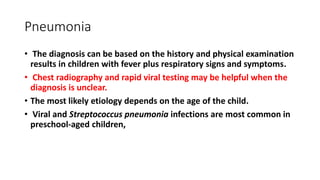
Pneumonia
• The diagnosis can be based on the history and physical examination
results in children with fever plus respiratory signs and symptoms.
• Chest radiography and rapid viral testing may be helpful when the
diagnosis is unclear.
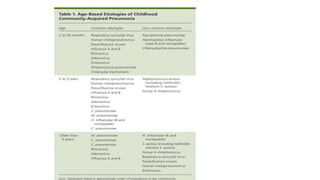
• The most likely etiology depends on the age of the child.
• Viral and Streptococcus pneumonia infections are most common in
preschool-aged children,
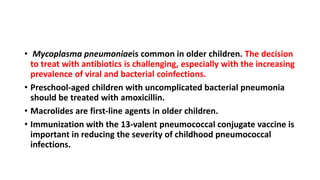
• Mycoplasma pneumoniaeis common in older children. The decision
to treat with antibiotics is challenging, especially with the increasing
prevalence of viral and bacterial coinfections.
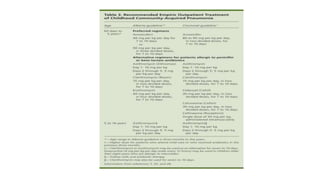
• Preschool-aged children with uncomplicated bacterial pneumonia
should be treated with amoxicillin.
• Macrolides are first-line agents in older children.
• Immunization with the 13-valent pneumococcal conjugate vaccine is
important in reducing the severity of childhood pneumococcal
infections.
• First impressions are important in the clinical diagnosis of CAP in
children.
• Common physical findings include fever, tachypnea, increasingly
labored breathing, rhonchi, crackles, and wheezing.
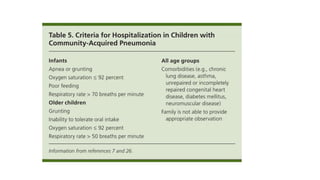
• Hydration status, activity level, and oxygen saturation are important
and may indicate the need for hospitalization.
• Tachypnea seems to be the most significant clinical sign.
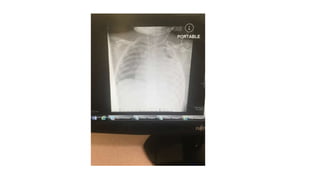
• Chest imaging is most useful when the diagnosis is uncertain or when
the findings from the history and physical examination are
inconsistent.
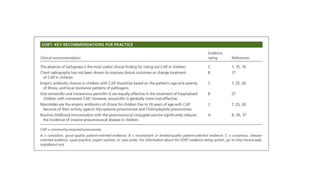
• No randomized controlled trials have established the optimal duration
of therapy for children with uncomplicated CAP.
• In most cases, seven to 10 days of empiric outpatient therapy is
sufficient.
• Azithromycin (Zithromax) should be continued for five days. Patients
should be reevaluated 24 to 48 hours after the initiation of empiric
therapy
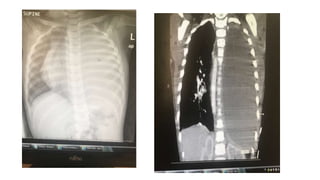
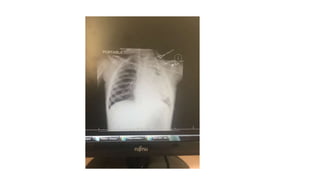
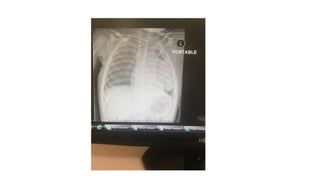
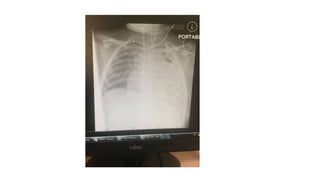
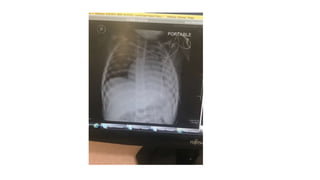
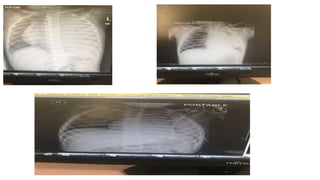
Chest US ,CT both suggest a pleural effusion (proteinacious) with
minimal septae
• Was taken for VAST , drained 1000ml of pus
Management
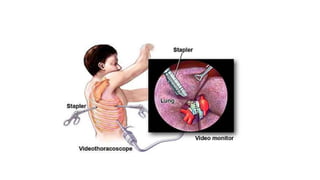
• VATS (video-assisted thoracic surgery )
• vancomycin
• Albumin
• Dexamethasone
• Intubation
Indications of VATS
• Septal lung biopsy
• Lobectomy or pneumonectomy
• Rescetion of peripheral pulmonary nodule
• Evaluation of mediastinal tumors of adenopathy
• Pleural biopsy
• Reference , www.AAFP.org

Miral case

  • 1.
    Case presentation Habiba AlHarthi R3 FAMCO residents
  • 2.
    • Miral 2.5year old term toddler previously healthy with 1 month history of intermittent fever after onset of sore throat • ho tachypnea , increased work of breathing over the month • Decreased level of activity • Weight loss of 1.2 kg • She has been to a number of private clinics where she received more than one course of antimicrobials .
  • 6.
    Pneumonia • The diagnosiscan be based on the history and physical examination results in children with fever plus respiratory signs and symptoms. • Chest radiography and rapid viral testing may be helpful when the diagnosis is unclear. • The most likely etiology depends on the age of the child. • Viral and Streptococcus pneumonia infections are most common in preschool-aged children,
  • 7.
    • Mycoplasma pneumoniaeiscommon in older children. The decision to treat with antibiotics is challenging, especially with the increasing prevalence of viral and bacterial coinfections. • Preschool-aged children with uncomplicated bacterial pneumonia should be treated with amoxicillin. • Macrolides are first-line agents in older children. • Immunization with the 13-valent pneumococcal conjugate vaccine is important in reducing the severity of childhood pneumococcal infections.
  • 11.
    • First impressionsare important in the clinical diagnosis of CAP in children. • Common physical findings include fever, tachypnea, increasingly labored breathing, rhonchi, crackles, and wheezing. • Hydration status, activity level, and oxygen saturation are important and may indicate the need for hospitalization. • Tachypnea seems to be the most significant clinical sign.
  • 12.
    • Chest imagingis most useful when the diagnosis is uncertain or when the findings from the history and physical examination are inconsistent.
  • 16.
    • No randomizedcontrolled trials have established the optimal duration of therapy for children with uncomplicated CAP. • In most cases, seven to 10 days of empiric outpatient therapy is sufficient. • Azithromycin (Zithromax) should be continued for five days. Patients should be reevaluated 24 to 48 hours after the initiation of empiric therapy
  • 20.
    Chest US ,CTboth suggest a pleural effusion (proteinacious) with minimal septae
  • 21.
    • Was takenfor VAST , drained 1000ml of pus
  • 22.
    Management • VATS (video-assistedthoracic surgery ) • vancomycin • Albumin • Dexamethasone • Intubation
  • 24.
    Indications of VATS •Septal lung biopsy • Lobectomy or pneumonectomy • Rescetion of peripheral pulmonary nodule • Evaluation of mediastinal tumors of adenopathy • Pleural biopsy
  • 27.
    • Reference ,www.AAFP.org