Waste Reduction Strategies 
Case Studies in Waste Reduction 
Presented by 
Conestoga-Rovers & Associates 
Mindy Tasich-Koyani 
2014 Missouri Hazardous Waste Seminar 
November 4, 2014
CRA Waste Reduction Case Studies 
Some examples of how CRA’s Waste 
Services group supports our clients with 
waste minimization strategies: 
 Haz Waste Minimization Practice in Field 
 Petroleum Contact Water Reclamation 
 Tank Sludge Oil Recovery and Treatment 
 Path to Zero Landfill
Haz Waste Minimization Practices 
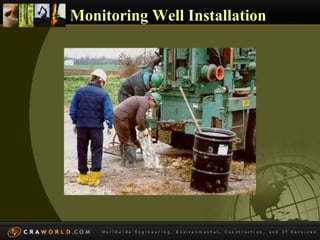
 Monitoring well installation – field and 
contractor guidance 
 Well drilling utilizing grout - potential for 
high pH sludge and water residuals 
 Many monitoring wells are installed at 
CESQG and SQG locations 
 Prior to drilling project, CRA provides the 
project manager and client with hazardous 
waste minimization guidance
Haz Waste Minimization Practices 
 Grout using a Tremie pipe instead of grouting through the 
augers (as approved by the specific county) 
 Mix limited amount of grout to avoid any excess 
 Separate any solids in the decontamination water from 
liquid 
 Record pH of decontamination water once it is drummed 
 Record pH of decontamination water prior to pick-up at 
site 
 Limit the quantity of decontamination water as applicable 
to project to maintain CESQG or SQG status
Monitoring Well Installation
Petroleum Contact Water Reclaim 
 Generation of water containing crude oil, 
gasoline, jet fuel, or diesel products 
ļ‚§ Characteristic concerns – flammability, 
benzene 
 Contact water is shipped as commercial 
chemical product for reclamation 
 Exempt from solid waste regulations per 40 
CFR 261.2(c)(3) 
 Same exemption applies to fuel product 
impacted debris & absorbents
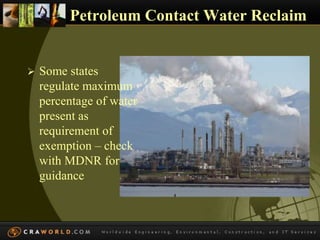
Petroleum Contact Water Reclaim 
 Some states 
regulate maximum 
percentage of water 
present as 
requirement of 
exemption – check 
with MDNR for 
guidance
Tank Cleaning Project – Oil Sludge 
 Tank cleaning project at crude oil pump 
station 
ļ‚§ Original project estimated 30 roll off containers 
ļ‚§ 113 roll off containers of oily sludge generated 
ļ‚§ RCRA hazardous for benzene 
ļ‚§ Estimated T&D = $2.2M 
 Alternative proposal to treat sludge on site, 
recover oil and reduce waste generated
Tank Sludge On Site Oil Recovery 
 First, completed bench testing to ensure 
treatment process would be successful 
 On Site Treatment Requirements (CA): 
ļ‚§ Temporary Treatment Unit (TTU) Permit 
ļ‚§ 30-day extension for hazardous waste storage 
 Contractor mobilized equipment and set up 
processing in one week of permit approval 
 Processed sludge and process water tested 
non-hazardous (CA state regulated waste)
Tank Sludge Oil Recovery Impacts 
 2,070 barrels of oil reclaimed from sludge 
 Estimated value of $207,000 
 Sludge volume reduced from 113 to 30 roll 
off bins (75%) 
 100% RCRA hazardous waste reduction 
 Total T&D cost savings = $433,000 
 Total cost savings (including oil) = 
$640,000
Tank Sludge Project – Next Time 
 Treatment directly from tank during 
cleaning process 
ļ‚§ Eliminates hazardous waste generation 
ļ‚§ No TTU permit requirement ($12K savings) 
ļ‚§ No storage issue 
ļ‚§ Eliminates need for open top bin rental and 
cleaning costs ($300K savings)
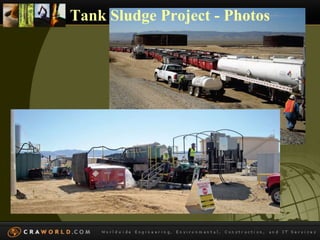
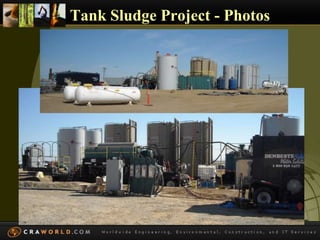
Tank Sludge Project - Photos
Path to Zero Landfill 
 Audit current recycling and trash generation 
ļ‚§ Verify effective container placement and 
labeling 
ļ‚§ Are materials handled from production to 
proper disposition locations within facility? 
ļ‚§ Complete landfill waste audit – dumpster dive! 
 Create baseline in order to measure and 
monitor improvements
Path to Zero Landfill, cont. 
 Adjust recycling/reuse programs: 
ļ‚§ Ensure containers are easily accessed by 
employees 
ļ‚§ Ensure containers are labeled – clear, color 
coded, consistent throughout facility 
ļ‚§ Transparent bags in multiple colors can help 
with location and material type differentiation 
ļ‚§ Ensure material handlers are trained and have 
reference document 
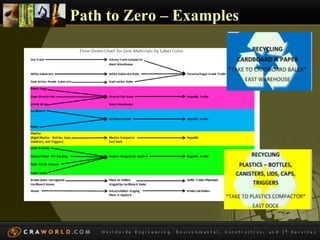
• Material type flow diagram
Path to Zero Landfill, cont. 
 Waste Audit 
ļ‚§ Conduct trash audit on site, or coordinate audit at 
landfill or transfer station 
ļ‚§ Measure trash constituents by volume/weight 
ļ‚§ Develop base metrics and improvement goals 
 Employee Engagement 
ļ‚§ Ask for suggestions, implementation assistance, 
establish incentives, and celebrate achievements 
ļ‚§ Provide regular updates & make readily available
Path to Zero – Examples
Path to Zero Landfill, cont. 
 US Zero Waste Business Council 
ļ‚§ www.uszwbc.org 
ļ‚§ Certification for Zero Waste Requirements 
• 90% diversion from landfill/incineration for non-hazardous 
wastes 
• Zero Waste Policy in place 
• Data documented for base year and on-going 
monitoring 
• Submit data to USZWBC annually 
• Recertification every three years
Questions? 
For additional information on CRA’s waste 
minimization and zero landfill programs, 
please contact: 
Mindy Tasich-Koyani 
317-291-7013 
mtasichkoyani@craworld.com

Tasich-Koyani, Mindy, Conestoga-Rovers Associates, Waste Reduction Strategies, at 2014 Missouri Hazardous Waste Seminar, November, 4, 2014, Columbia, MO

  • 1.
    Waste Reduction Strategies Case Studies in Waste Reduction Presented by Conestoga-Rovers & Associates Mindy Tasich-Koyani 2014 Missouri Hazardous Waste Seminar November 4, 2014
  • 2.
    CRA Waste ReductionCase Studies Some examples of how CRA’s Waste Services group supports our clients with waste minimization strategies:  Haz Waste Minimization Practice in Field  Petroleum Contact Water Reclamation  Tank Sludge Oil Recovery and Treatment  Path to Zero Landfill
  • 3.
    Haz Waste MinimizationPractices  Monitoring well installation – field and contractor guidance  Well drilling utilizing grout - potential for high pH sludge and water residuals  Many monitoring wells are installed at CESQG and SQG locations  Prior to drilling project, CRA provides the project manager and client with hazardous waste minimization guidance
  • 4.
    Haz Waste MinimizationPractices  Grout using a Tremie pipe instead of grouting through the augers (as approved by the specific county)  Mix limited amount of grout to avoid any excess  Separate any solids in the decontamination water from liquid  Record pH of decontamination water once it is drummed  Record pH of decontamination water prior to pick-up at site  Limit the quantity of decontamination water as applicable to project to maintain CESQG or SQG status
  • 5.
  • 6.
    Petroleum Contact WaterReclaim  Generation of water containing crude oil, gasoline, jet fuel, or diesel products ļ‚§ Characteristic concerns – flammability, benzene  Contact water is shipped as commercial chemical product for reclamation  Exempt from solid waste regulations per 40 CFR 261.2(c)(3)  Same exemption applies to fuel product impacted debris & absorbents
  • 7.
    Petroleum Contact WaterReclaim  Some states regulate maximum percentage of water present as requirement of exemption – check with MDNR for guidance
  • 8.
    Tank Cleaning Project– Oil Sludge  Tank cleaning project at crude oil pump station ļ‚§ Original project estimated 30 roll off containers ļ‚§ 113 roll off containers of oily sludge generated ļ‚§ RCRA hazardous for benzene ļ‚§ Estimated T&D = $2.2M  Alternative proposal to treat sludge on site, recover oil and reduce waste generated
  • 9.
    Tank Sludge OnSite Oil Recovery  First, completed bench testing to ensure treatment process would be successful  On Site Treatment Requirements (CA): ļ‚§ Temporary Treatment Unit (TTU) Permit ļ‚§ 30-day extension for hazardous waste storage  Contractor mobilized equipment and set up processing in one week of permit approval  Processed sludge and process water tested non-hazardous (CA state regulated waste)
  • 10.
    Tank Sludge OilRecovery Impacts  2,070 barrels of oil reclaimed from sludge  Estimated value of $207,000  Sludge volume reduced from 113 to 30 roll off bins (75%)  100% RCRA hazardous waste reduction  Total T&D cost savings = $433,000  Total cost savings (including oil) = $640,000
  • 11.
    Tank Sludge Project– Next Time  Treatment directly from tank during cleaning process ļ‚§ Eliminates hazardous waste generation ļ‚§ No TTU permit requirement ($12K savings) ļ‚§ No storage issue ļ‚§ Eliminates need for open top bin rental and cleaning costs ($300K savings)
  • 12.
  • 13.
  • 14.
    Path to ZeroLandfill  Audit current recycling and trash generation ļ‚§ Verify effective container placement and labeling ļ‚§ Are materials handled from production to proper disposition locations within facility? ļ‚§ Complete landfill waste audit – dumpster dive!  Create baseline in order to measure and monitor improvements
  • 15.
    Path to ZeroLandfill, cont.  Adjust recycling/reuse programs: ļ‚§ Ensure containers are easily accessed by employees ļ‚§ Ensure containers are labeled – clear, color coded, consistent throughout facility ļ‚§ Transparent bags in multiple colors can help with location and material type differentiation ļ‚§ Ensure material handlers are trained and have reference document • Material type flow diagram
  • 16.
    Path to ZeroLandfill, cont.  Waste Audit ļ‚§ Conduct trash audit on site, or coordinate audit at landfill or transfer station ļ‚§ Measure trash constituents by volume/weight ļ‚§ Develop base metrics and improvement goals  Employee Engagement ļ‚§ Ask for suggestions, implementation assistance, establish incentives, and celebrate achievements ļ‚§ Provide regular updates & make readily available
  • 17.
    Path to Zero– Examples
  • 18.
    Path to ZeroLandfill, cont.  US Zero Waste Business Council ļ‚§ www.uszwbc.org ļ‚§ Certification for Zero Waste Requirements • 90% diversion from landfill/incineration for non-hazardous wastes • Zero Waste Policy in place • Data documented for base year and on-going monitoring • Submit data to USZWBC annually • Recertification every three years
  • 19.
    Questions? For additionalinformation on CRA’s waste minimization and zero landfill programs, please contact: Mindy Tasich-Koyani 317-291-7013 mtasichkoyani@craworld.com