Downloaded 1,019 times
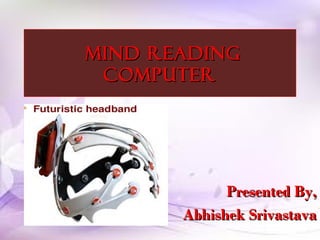
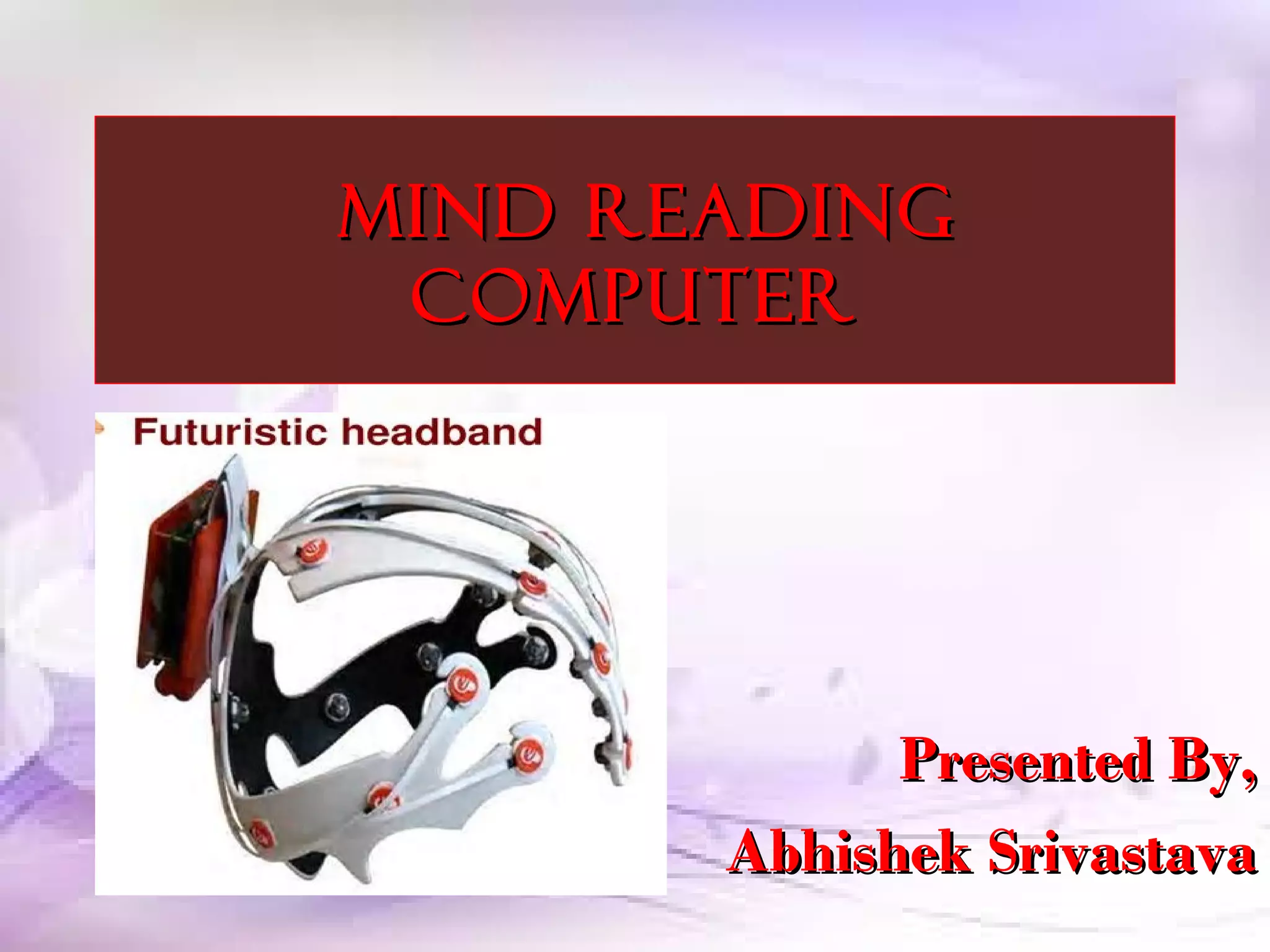


This document discusses mind reading computers. It begins by explaining that people express mental states through facial expressions and gestures, which computers currently do not understand. It then defines mind reading as attributing mental states to others based on their behavior. The document outlines several ways mind reading computers could work, such as using cameras and software to analyze facial expressions and infer mental states. It discusses potential advantages like helping disabled people control wheelchairs through thought and monitoring human interactions. However, it also notes disadvantages like privacy and prediction concerns if brain activity could be used to determine future behaviors. In conclusion, researchers are working to allow computers to respond to brain activity by having users wear headbands that can read parts of the brain during tasks.


