Mind maps Urbanist 
Prepared by Roberto Rocco and Egbert Stolk 
Deparment of Urbanism, TU Delft 
Challenge(the(future
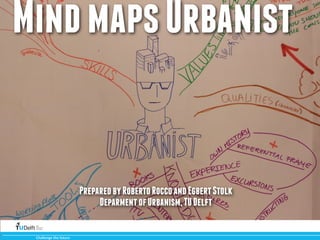
mind mapping urbanist 
at the very beginning of the course ar2u090 
methodology for urbanism, we discuss different 
conceptions of what ‘urbanism’ might be. 
our students come from all over the world, and 
have been educated in different traditions of 
planning and design of the built environment. 
we must find commonalities and clarify 
differences.
mind mapping urbanist 
we do not offer a ‘definite’ definition of 
urbanism. After all, the discipline is in 
constant evolution, what with new 
knowledge being permanently incorporated 
to it, new challenges arising in a globalized 
and increasingly urban world and new 
arising technologies that help us find new 
questions to ask.
mind mapping urbanist 
rather, we propose a model where 
‘urbanism’ is composed by different 
logics of enquiry that concur to 
form a wide field of knowledge on 
the built environment and its 
interrelationships with society.
AR2U090 Methodology for Urbanism 
*Logics of Enquiry 
In this exercise, you will need to ‘locate’ yourself inthe hypothetical triangle that composes URBANISM 
at TU Delft. According to your previous education and aspirations for the future, where would you be? 
Mark a cross inside the triangle and write your name and country of origin near that cross. Would you 
add another element to this geometrical form? Is it a polygon? A square? What other categories would 
you add, if any? Urbanism? 
Design 
Human 
Sciences 
Physical 
Sciences
urbanism 
this variety of perspectives can be 
seen in the organogram of the 
department of urbanism of the TUDelf. 
Each chair represents a research team 
which upholds a different combination 
of the areas of knowledge represented 
in the triangle.
urbanism 
this variety of perspectives can be 
seen in the organogram of the 
department of urbanism of the TU Delf. 
Each chair represents a research team 
which upholds a different combination 
of the areas of knowledge represented 
in the triangle.
OTB 
Chair: 
Urban an Regional 
Development 
Prof. Wil Zonneveld 
OTB 
Chair: 
Neighbourhood Change 
and Housing 
Prof. Maarten van Ham 
Chair: 
Cultural History & Design 
Prof. Eric Luiten 
Chair: 
Environmental Technology 
Prof. Arjan van Timmeren 
Section: Spatial Planning & Strategy 
Chair: 
Spatial Planning & Strategy 
Prof. Vincent Nadin Chair: 
URBANISM @ TU DELFT 
Chair: 
Landscape Architecture 
Prof. Dirk Sijmons 
Chair: 
Urban Design 
Prof. Henco Bekkering 
Chair: 
Theory & Methods 
Prof. Han Meyer 
Chair: 
The Why Factory 
Prof. Winy Maas 
Design & Politics 
Prof. Wouter Vanstiphout 
Section: Urban Design 
Section: Urban Landscape 
Organisational Tree of the Department of Urbanism, TU Delft, jan 2013 by Roberto Rocco
urbanism 
in order to discuss essential 
aspects of urbanism and the 
urbanist, we draw mind maps.
What’s a mind map? 
A mind map is a graphic representation of a 
brain storm. Around a central concept, 
participants must draw connected ideas 
organically, unfolding them as much as 
possible. 
It is a tool for structured yet creative 
communication and discussion among 
participants.
relationships graphically 
represented 
However, different from a brain storm, 
mind mapping offers the possibility to 
structure thought graphically and 
unfold concepts and ideas as much as 
possible. Because ideas are graphically 
represented, they can be discussed 
more thoroughly.
The ‘secret’ of mind 
mapping 
the ‘secret’ of mind mapping consists of the 
relationships constructed between concepts 
and ideas being unfolded and ‘spelled out’ 
explicitly. 
Drawing these relationships like the 
branches of a tree helps us visualize the 
organic relationship they have with each 
other.
Networks of 
concepts 
but ideas and concepts are not 
like the branches of a tree. they 
are arranged in networks of 
relationships. mind maps could 
look like more like spiderwebs.
relationship image 
and text 
drawing icons and avatars helps 
construct a better relationship 
between visual perception and 
intellectual understanding. 
images reinforce and complement 
text and vice-versa.
an exercise of 
vocabulary building 
one of the functions of mind 
mapping is to help students build 
up vocabulary to talk about ideas 
and concepts in english (the 
language of education at master 
level at tudelft).
in this particular mind 
mapping exercise, we discuss: 
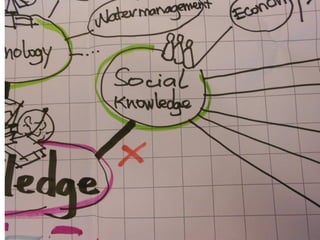
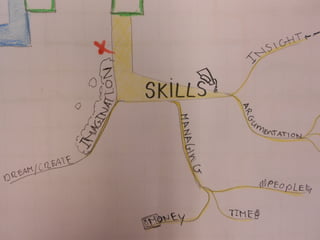
• Skills 
• Values 
• Qualities 
• Tools and 
• Knowledge 
necessary to be a good “urbanist”
Values
Justice 
Social Justice is 
central to 
Urbanism
Courage?
Courage
Love!
A free, unbiased mind
Knowledge
Knowledge
Critical thinking 
is an essential 
part of higher 
education
Knowledge 
is useless 
without 
critical 
REFLECTION
Qualities
Skills
we think 
that 
drawing is a 
very 
important 
tool for 
communicati 
on in our 
domain
Tools
Thanks for watching. 
For more information please write 
to r.c.rocco@tudelft.nl

Mind Maps Urbanists 2012

  • 1.
    Mind maps Urbanist Prepared by Roberto Rocco and Egbert Stolk Deparment of Urbanism, TU Delft Challenge(the(future
  • 2.
    mind mapping urbanist at the very beginning of the course ar2u090 methodology for urbanism, we discuss different conceptions of what ‘urbanism’ might be. our students come from all over the world, and have been educated in different traditions of planning and design of the built environment. we must find commonalities and clarify differences.
  • 3.
    mind mapping urbanist we do not offer a ‘definite’ definition of urbanism. After all, the discipline is in constant evolution, what with new knowledge being permanently incorporated to it, new challenges arising in a globalized and increasingly urban world and new arising technologies that help us find new questions to ask.
  • 4.
    mind mapping urbanist rather, we propose a model where ‘urbanism’ is composed by different logics of enquiry that concur to form a wide field of knowledge on the built environment and its interrelationships with society.
  • 5.
    AR2U090 Methodology forUrbanism *Logics of Enquiry In this exercise, you will need to ‘locate’ yourself inthe hypothetical triangle that composes URBANISM at TU Delft. According to your previous education and aspirations for the future, where would you be? Mark a cross inside the triangle and write your name and country of origin near that cross. Would you add another element to this geometrical form? Is it a polygon? A square? What other categories would you add, if any? Urbanism? Design Human Sciences Physical Sciences
  • 6.
    urbanism this varietyof perspectives can be seen in the organogram of the department of urbanism of the TUDelf. Each chair represents a research team which upholds a different combination of the areas of knowledge represented in the triangle.
  • 7.
    urbanism this varietyof perspectives can be seen in the organogram of the department of urbanism of the TU Delf. Each chair represents a research team which upholds a different combination of the areas of knowledge represented in the triangle.
  • 8.
    OTB Chair: Urbanan Regional Development Prof. Wil Zonneveld OTB Chair: Neighbourhood Change and Housing Prof. Maarten van Ham Chair: Cultural History & Design Prof. Eric Luiten Chair: Environmental Technology Prof. Arjan van Timmeren Section: Spatial Planning & Strategy Chair: Spatial Planning & Strategy Prof. Vincent Nadin Chair: URBANISM @ TU DELFT Chair: Landscape Architecture Prof. Dirk Sijmons Chair: Urban Design Prof. Henco Bekkering Chair: Theory & Methods Prof. Han Meyer Chair: The Why Factory Prof. Winy Maas Design & Politics Prof. Wouter Vanstiphout Section: Urban Design Section: Urban Landscape Organisational Tree of the Department of Urbanism, TU Delft, jan 2013 by Roberto Rocco
  • 9.
    urbanism in orderto discuss essential aspects of urbanism and the urbanist, we draw mind maps.
  • 10.
    What’s a mindmap? A mind map is a graphic representation of a brain storm. Around a central concept, participants must draw connected ideas organically, unfolding them as much as possible. It is a tool for structured yet creative communication and discussion among participants.
  • 11.
    relationships graphically represented However, different from a brain storm, mind mapping offers the possibility to structure thought graphically and unfold concepts and ideas as much as possible. Because ideas are graphically represented, they can be discussed more thoroughly.
  • 12.
    The ‘secret’ ofmind mapping the ‘secret’ of mind mapping consists of the relationships constructed between concepts and ideas being unfolded and ‘spelled out’ explicitly. Drawing these relationships like the branches of a tree helps us visualize the organic relationship they have with each other.
  • 13.
    Networks of concepts but ideas and concepts are not like the branches of a tree. they are arranged in networks of relationships. mind maps could look like more like spiderwebs.
  • 14.
    relationship image andtext drawing icons and avatars helps construct a better relationship between visual perception and intellectual understanding. images reinforce and complement text and vice-versa.
  • 15.
    an exercise of vocabulary building one of the functions of mind mapping is to help students build up vocabulary to talk about ideas and concepts in english (the language of education at master level at tudelft).
  • 16.
    in this particularmind mapping exercise, we discuss: • Skills • Values • Qualities • Tools and • Knowledge necessary to be a good “urbanist”
  • 18.
  • 20.
    Justice Social Justiceis central to Urbanism
  • 21.
  • 22.
  • 23.
  • 25.
  • 28.
  • 29.
  • 31.
    Critical thinking isan essential part of higher education
  • 34.
    Knowledge is useless without critical REFLECTION
  • 40.
  • 46.
  • 48.
    we think that drawing is a very important tool for communicati on in our domain
  • 52.
  • 56.
    Thanks for watching. For more information please write to r.c.rocco@tudelft.nl