SPATIAL JUSTICE &
THE RIGHT TO THE CITY
U
URBANISM
SPS
SpatialPlanning&StrategyTUDelft
THE DOWNSIDE OF PARTICIPATION
CRITICS OF PARTICIPATION SAY IT’S…
‣ EXPENSIVE
‣ TIME CONSUMING
‣ INEFFECTIVE
‣ LIP-SERVICE
‣ FOR OLD RETIRED MEN
‣ DIFFICULT TO IMPLEMENT
‣ “NOBODY CARES ABOUT PARTICIPATION: WHAT EVERYBODY WANTS IS EFFICIENCY”
‣ IT IS A TOOL FOR MANIPULATION: IT IS A PUBLIC RELATIONS TOOL FOR THE POWER
HOLDERS (ARNSTEIN, 1969)
‣ IT IS A DEVICE FROM THE RIGHT TO JUSTIFY THE END OF THE WELFARE STATE
‣ IT IS A DEVICE FROM THE LEFT TO JUSTIFY THE PROPAGATION OF ITS IDEOLOGY
THE UPSIDE
A-CRITICS OF PARTICIPATION SAY, IT’S
‣ THE SOLUTION FOR ALL OUR PROBLEMS
‣ ANYTHING TOP DOWN IS NECESSARILY BAD, SO
EVERYTHING BOTTOM UP IS NECESSARILY GOOD
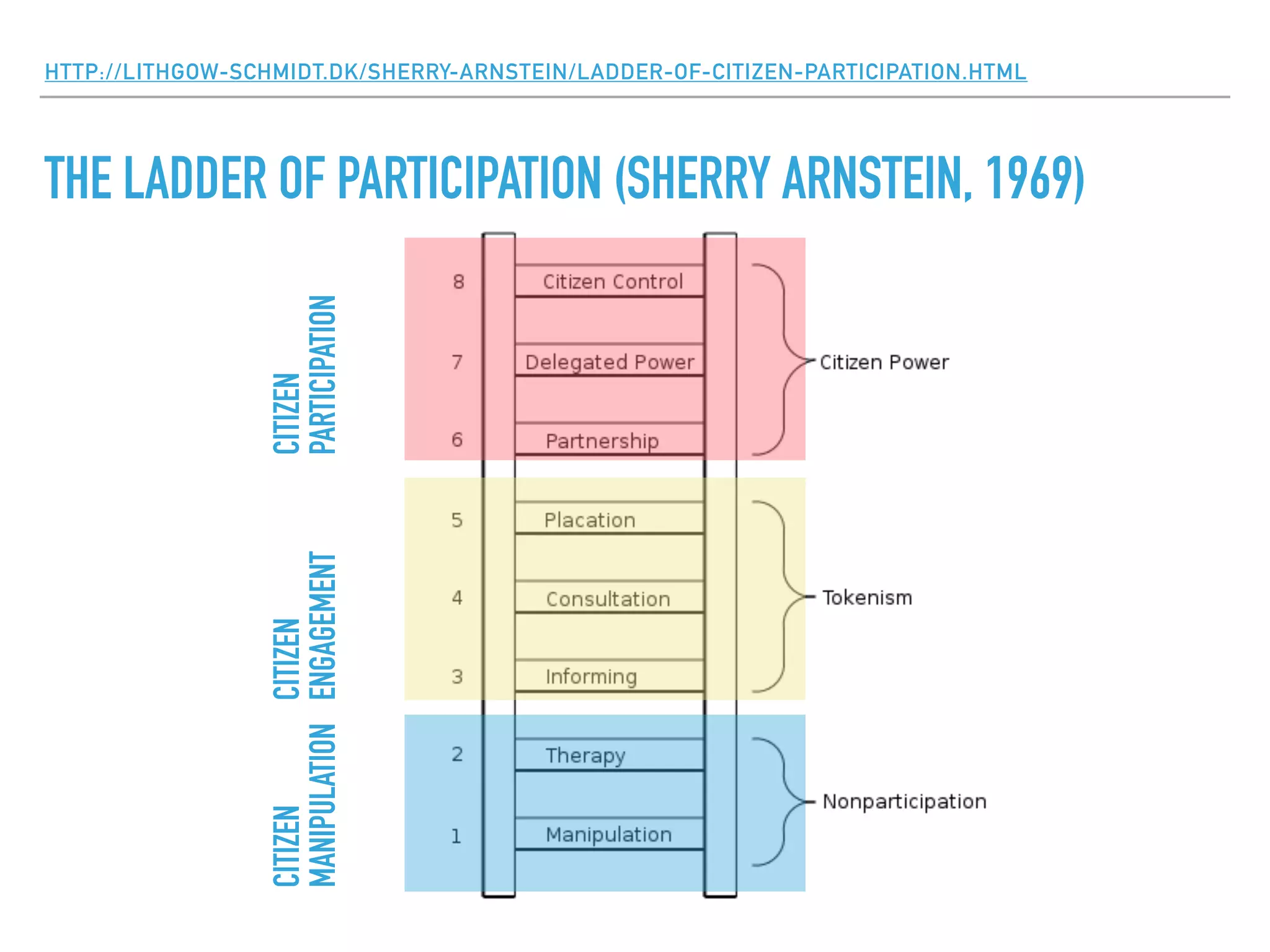
HTTP://LITHGOW-SCHMIDT.DK/SHERRY-ARNSTEIN/LADDER-OF-CITIZEN-PARTICIPATION.HTML
THE LADDER OF PARTICIPATION (SHERRY ARNSTEIN, 1969)
CITIZEN
ENGAGEMENT
CITIZEN
PARTICIPATION
CITIZEN
MANIPULATION
WHO HAS POWER WHEN
IMPORTANT DECISIONS
ARE BEING MADE?
Arnstein, S. (1969). "A Ladder of Citizen Participation." JAIP 35(4): 216-224.
THE ILLUSION OF
CONTROL
Arnstein, S. (1969). "A Ladder of Citizen Participation." JAIP 35(4): 216-224.
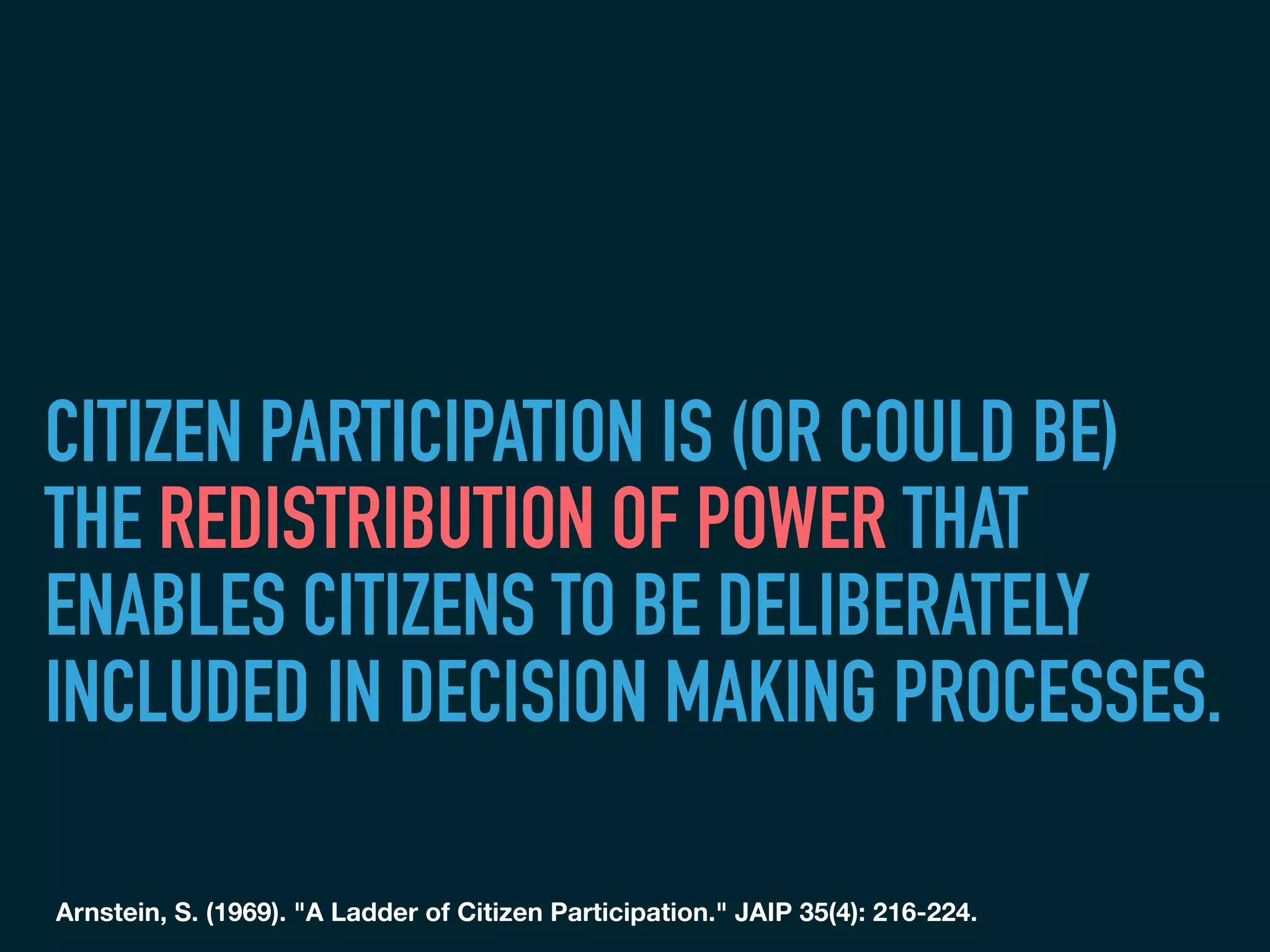
CITIZEN PARTICIPATION IS (OR COULD BE)
THE REDISTRIBUTION OF POWER THAT
ENABLES CITIZENS TO BE DELIBERATELY
INCLUDED IN DECISION MAKING PROCESSES.
Arnstein, S. (1969). "A Ladder of Citizen Participation." JAIP 35(4): 216-224.
PARTICIPATION IS A KEY
ELEMENT TO ACHIEVE
THE RIGHT TO THE CITY
RIGHT TO THE CITY IS A
CONDITION TO ACHIEVE
SPATIAL JUSTICE
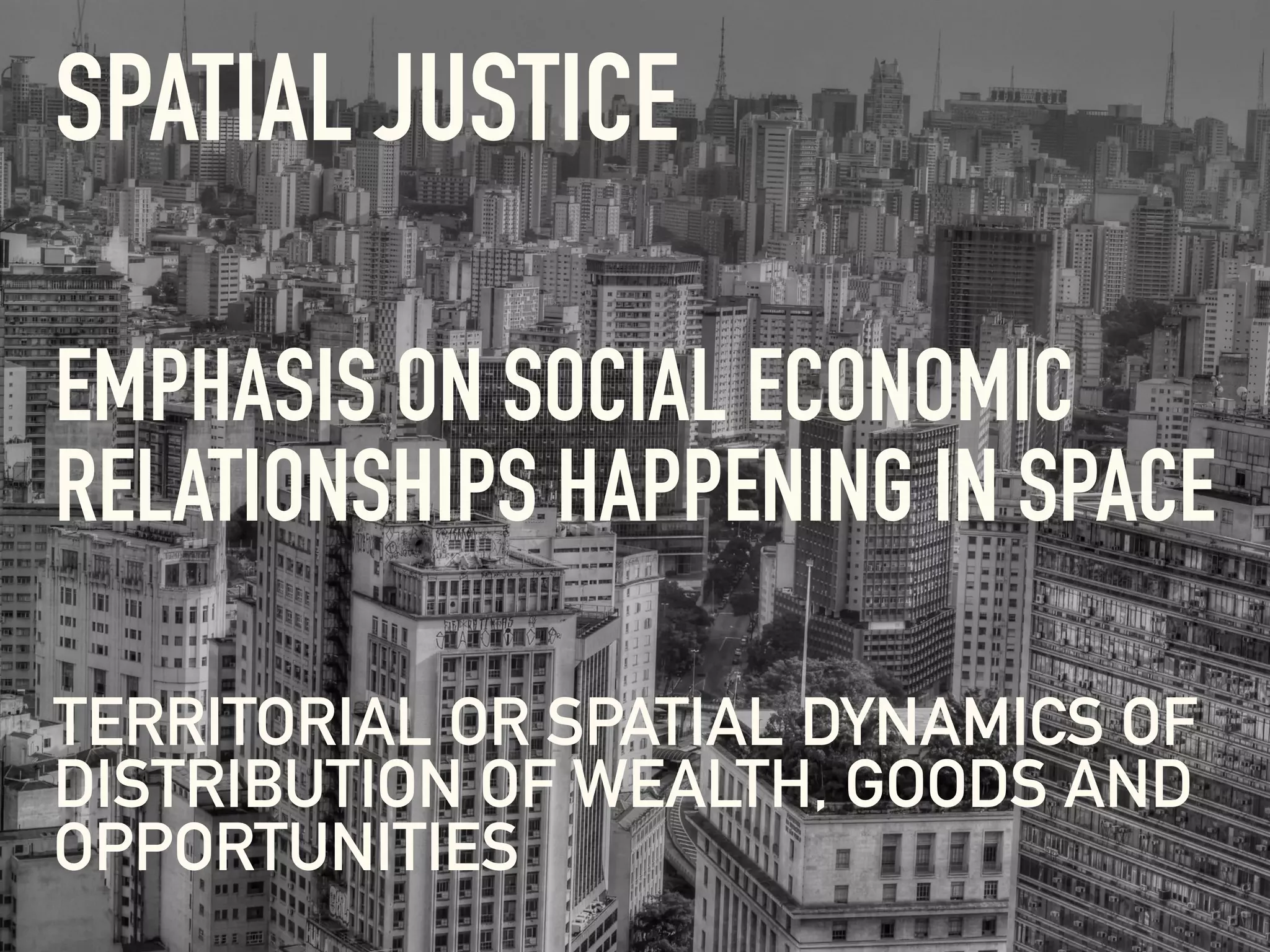
SPATIAL JUSTICE
TERRITORIAL OR SPATIAL DYNAMICS OF
DISTRIBUTION OF WEALTH, GOODS AND
OPPORTUNITIES
EMPHASIS ON SOCIAL ECONOMIC
RELATIONSHIPS HAPPENING IN SPACE
TWO MAIN
‘TYPES’ OF
JUSTICE
DISTRIBUTIVE
JUSTICE
PROCEDURAL
JUSTICE
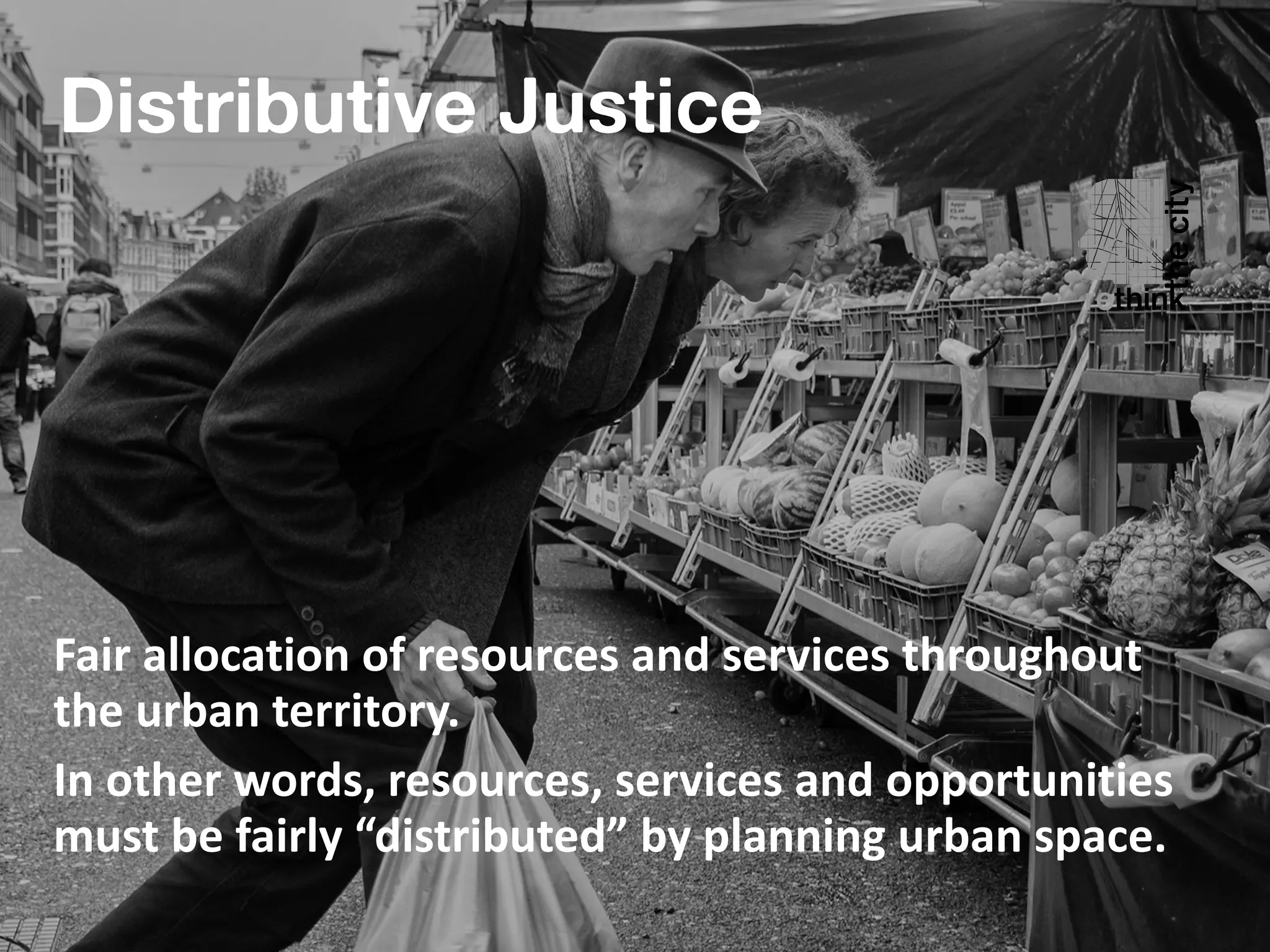
Distributive Justice
Fair	allocation	of	resources	and	services	throughout	
the	urban	territory.		
In	other	words,	resources,	services	and	opportunities	
must	be	fairly	“distributed”	by	planning	urban	space.
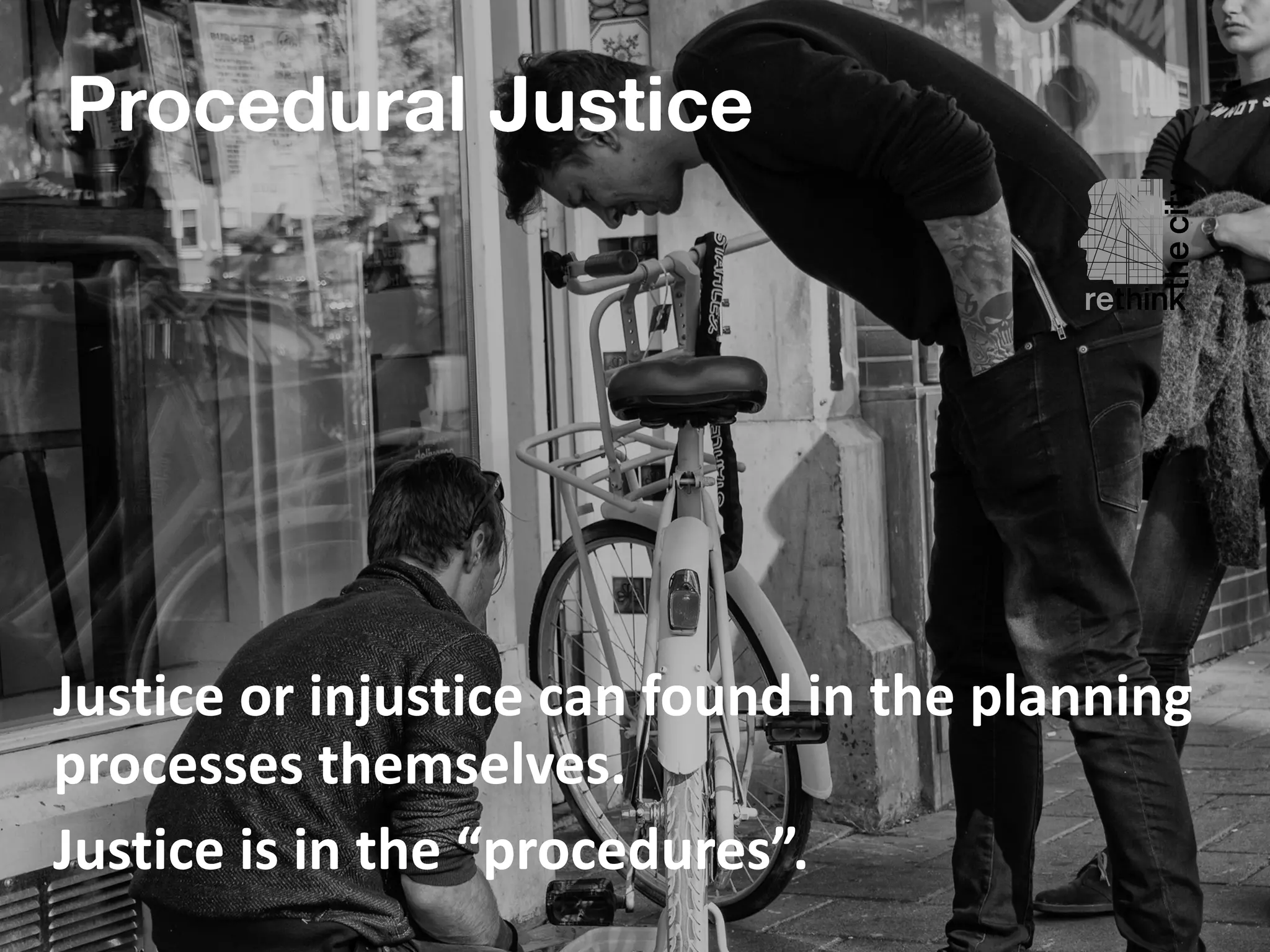
Justice	or	injustice	can	found	in	the	planning	
processes	themselves.		
Justice	is	in	the	“procedures”.	
Procedural Justice
SPATIAL JUSTICE AND
THE RIGHT TO THE CITY
ARE INTIMATELY RELATED.
PARTICIPATION IN THE
CONDUCTION OF URBAN
AFFAIRS (THE RIGHT TO
THE CITY) IS LIKELY TO
DELIVER SPATIAL JUSTICE.
RIGHT TO
THE CITY
RIGHT TO THE CITY IS
PART OF A VERY LONG
TRADITION IN
PHILOSOPHY THAT SEES
THE CITY AS THE SPACE
OF POLITICS, WHERE
RIGHTS AND
OBLIGATIONS EMERGE
MORE STRONGLY.
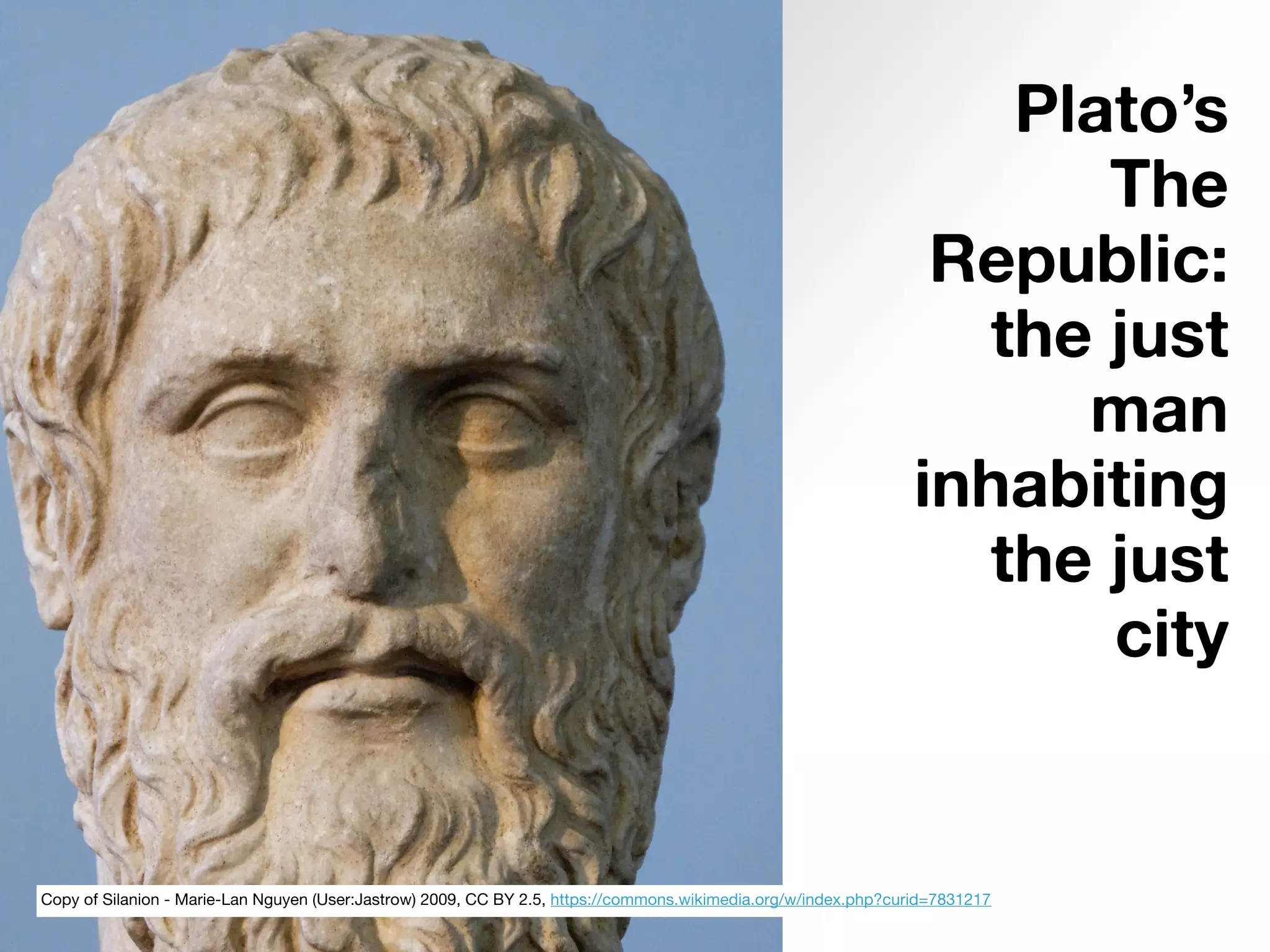
Plato’s
The
Republic:

the just
man
inhabiting
the just
city
Copy of Silanion - Marie-Lan Nguyen (User:Jastrow) 2009, CC BY 2.5, https://commons.wikimedia.org/w/index.php?curid=7831217
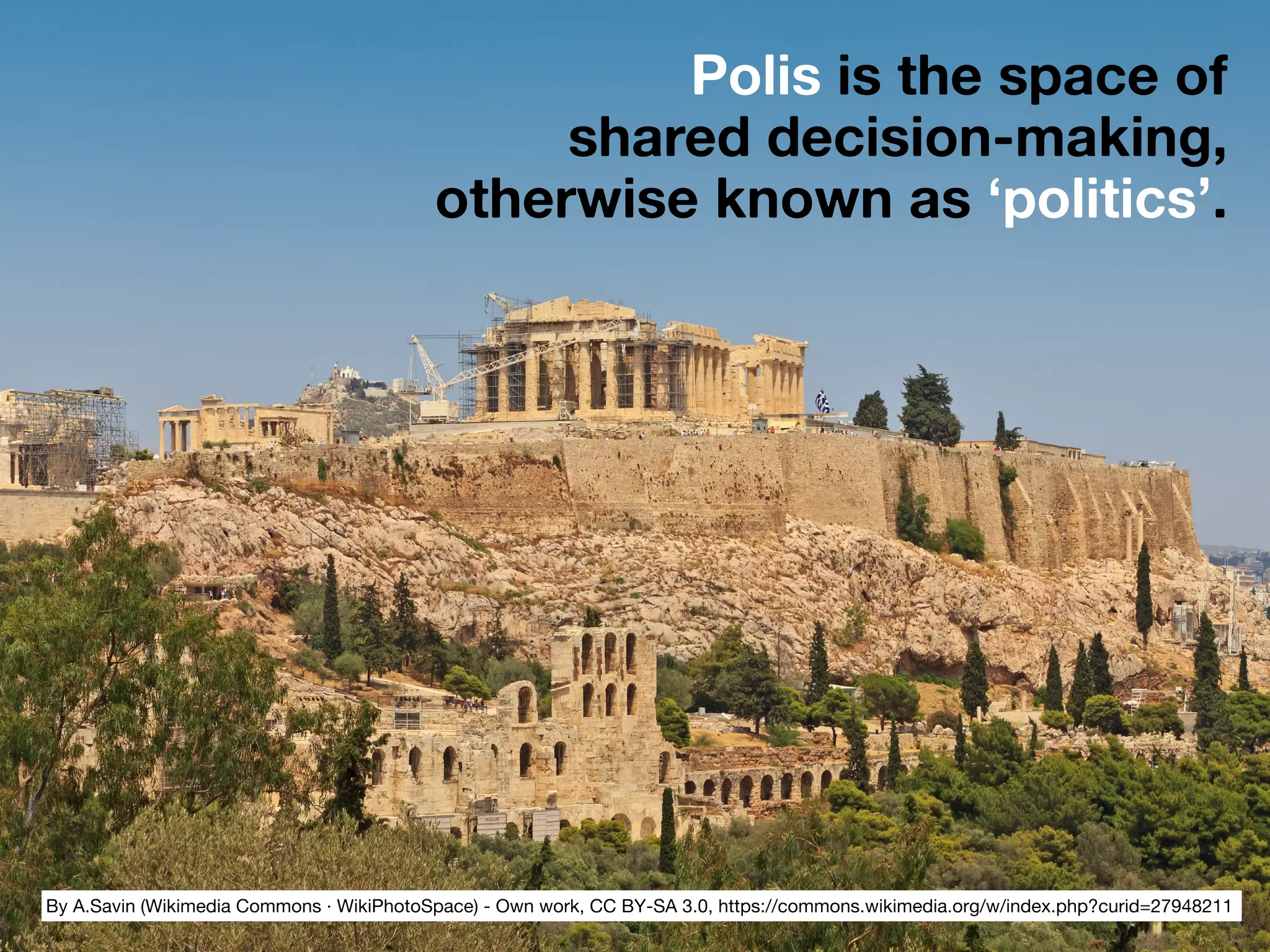
By A.Savin (Wikimedia Commons · WikiPhotoSpace) - Own work, CC BY-SA 3.0, https://commons.wikimedia.org/w/index.php?curid=27948211
Polis is the space of 

shared decision-making, 

otherwise known as ‘politics’.
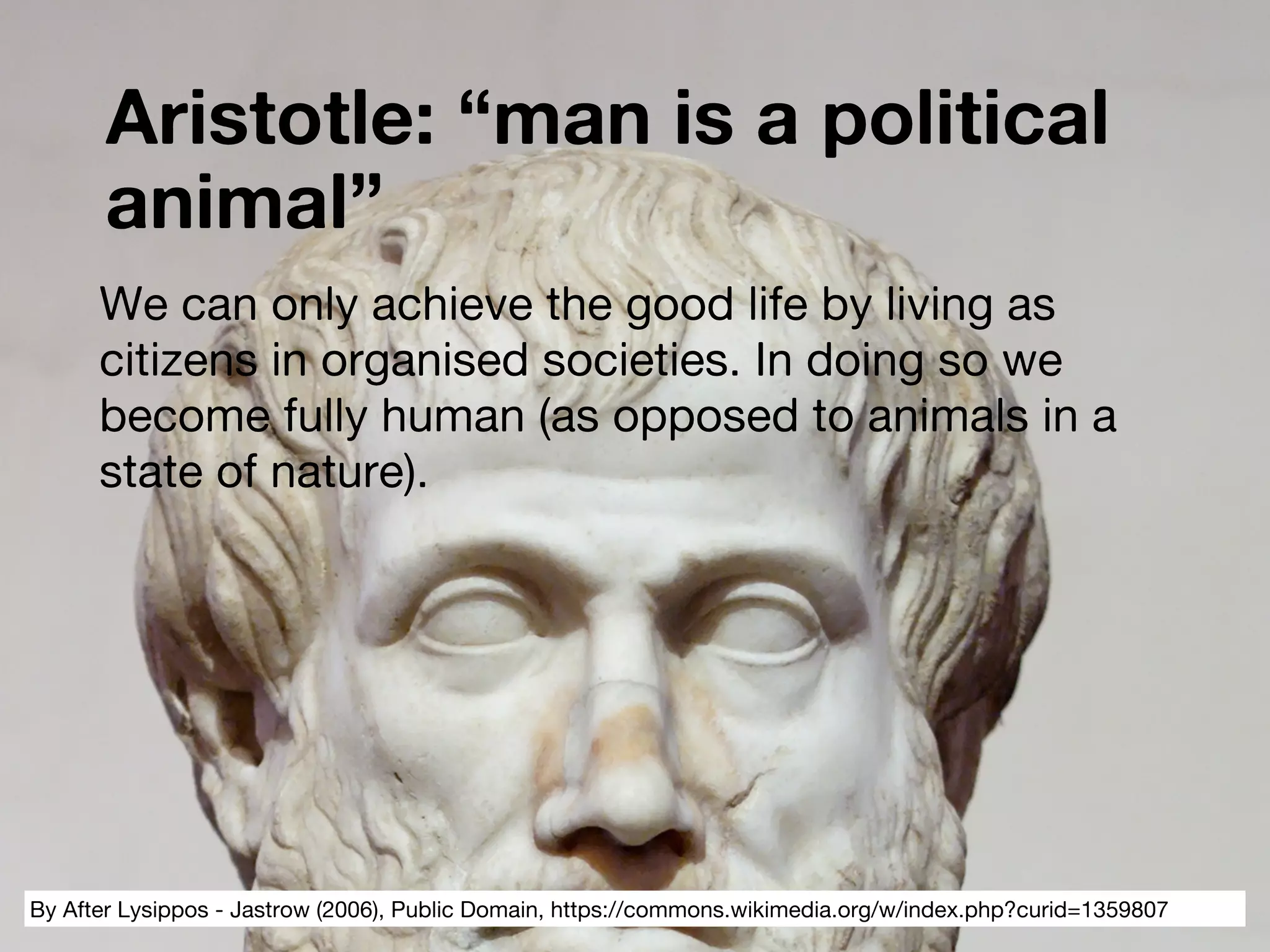
By After Lysippos - Jastrow (2006), Public Domain, https://commons.wikimedia.org/w/index.php?curid=1359807
Aristotle: “man is a political
animal”


We can only achieve the good life by living as
citizens in organised societies. In doing so we
become fully human (as opposed to animals in a
state of nature).
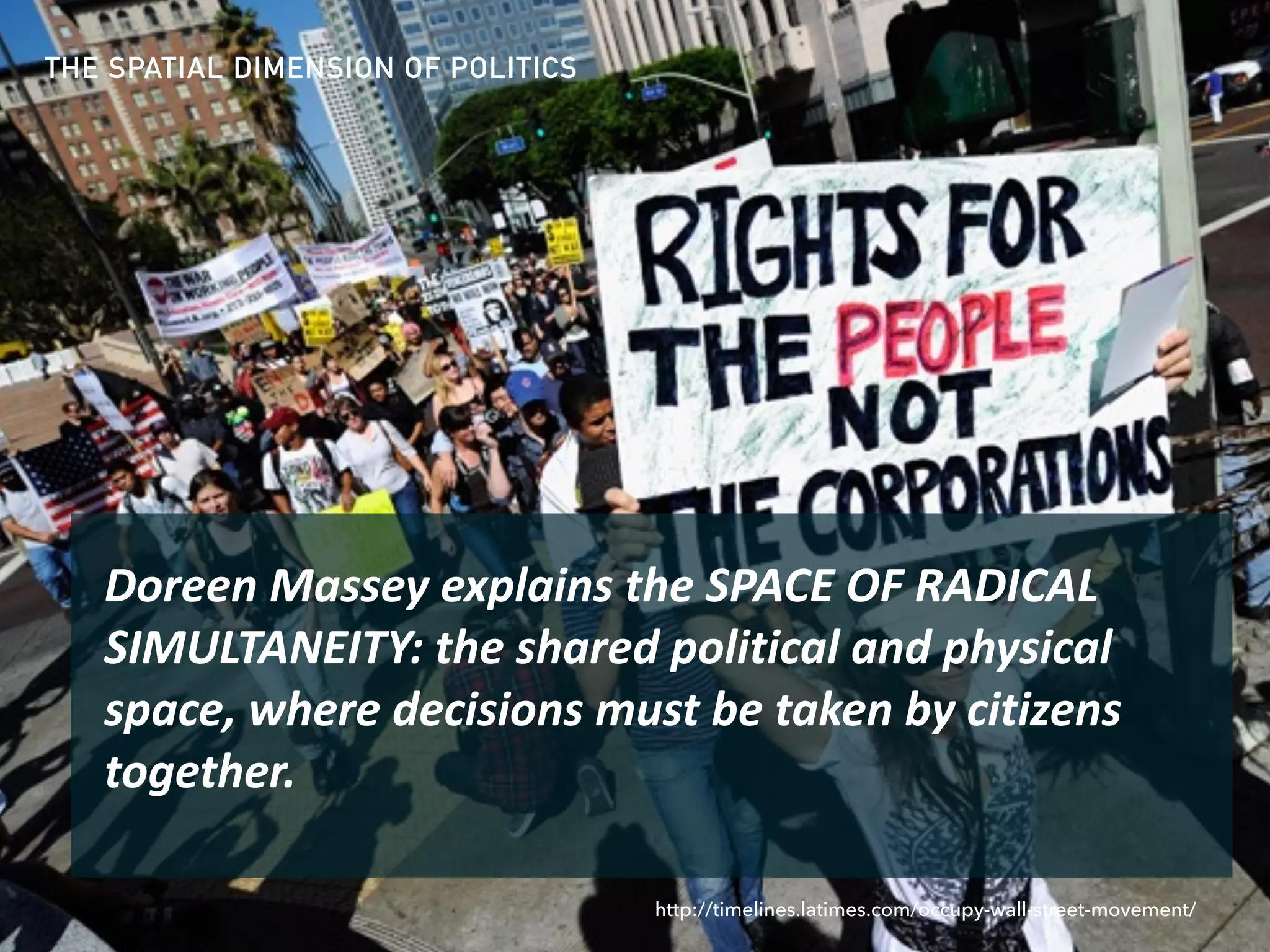
THE SPATIAL DIMENSION OF POLITICS
Doreen	Massey	explains	the	SPACE	OF	RADICAL	
SIMULTANEITY:	the	shared	political	and	physical	
space,	where	decisions	must	be	taken	by	citizens	
together.	
http://timelines.latimes.com/occupy-wall-street-movement/
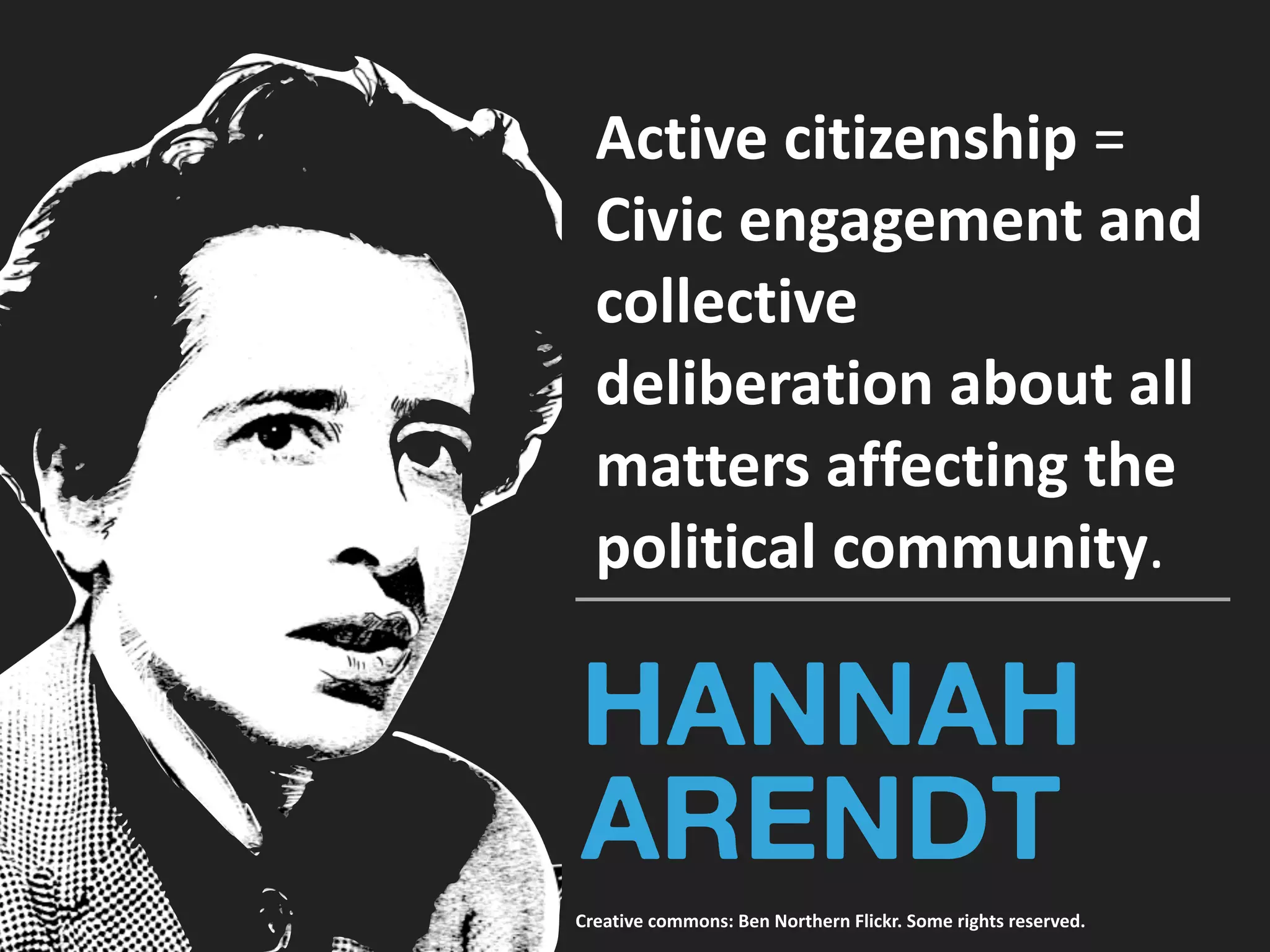
HANNAH
ARENDT
Active	citizenship	=		
Civic	engagement	and	
collective	
deliberation	about	all	
matters	affecting	the	
political	community.	
Creative	commons:	Ben	Northern	Flickr.	Some	rights	reserved.
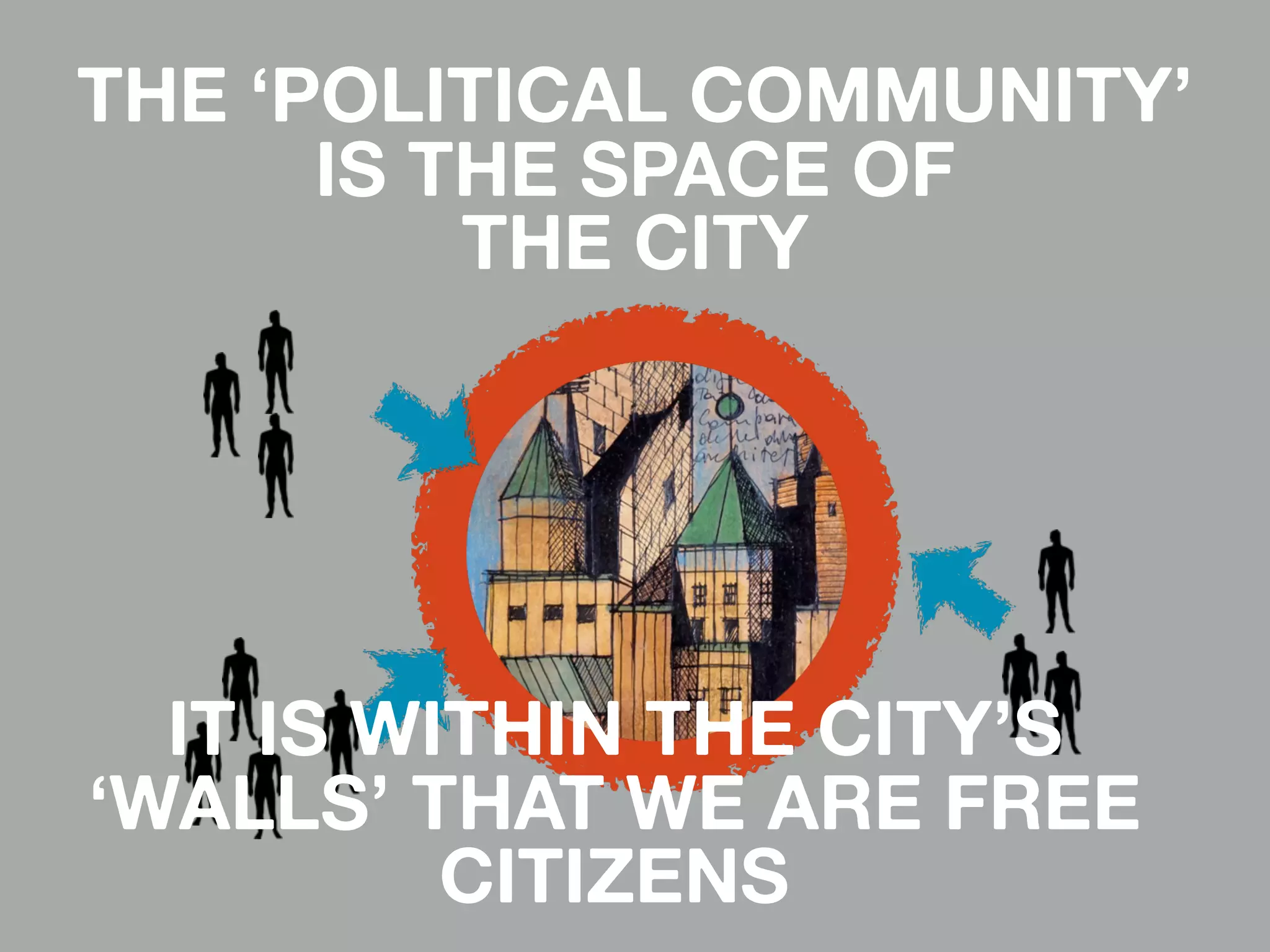
THE ‘POLITICAL COMMUNITY’
IS THE SPACE OF
THE CITY
IT IS WITHIN THE CITY’S
‘WALLS’ THAT WE ARE FREE
CITIZENS
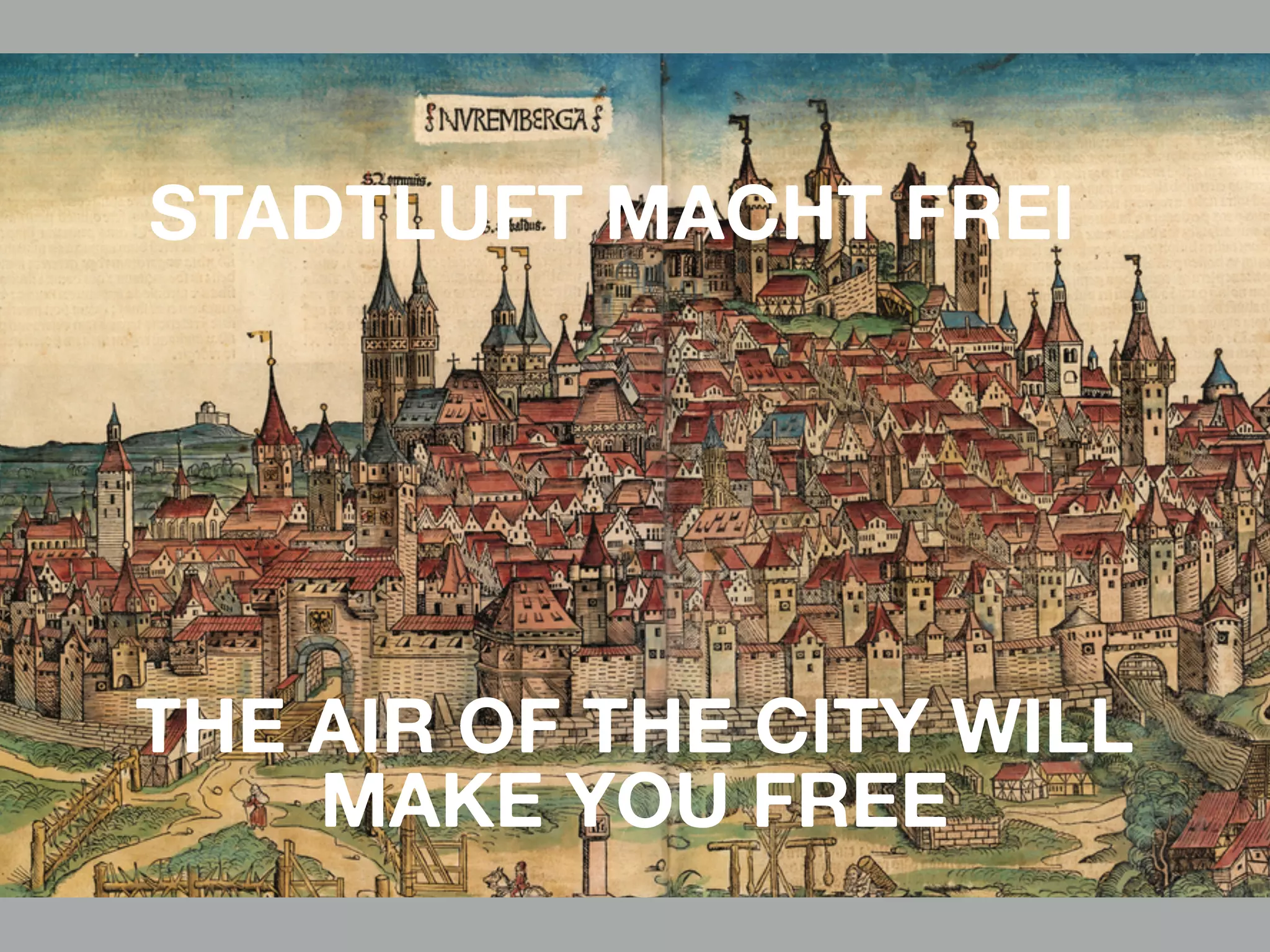
STADTLUFT MACHT FREI
THE AIR OF THE CITY WILL
MAKE YOU FREE
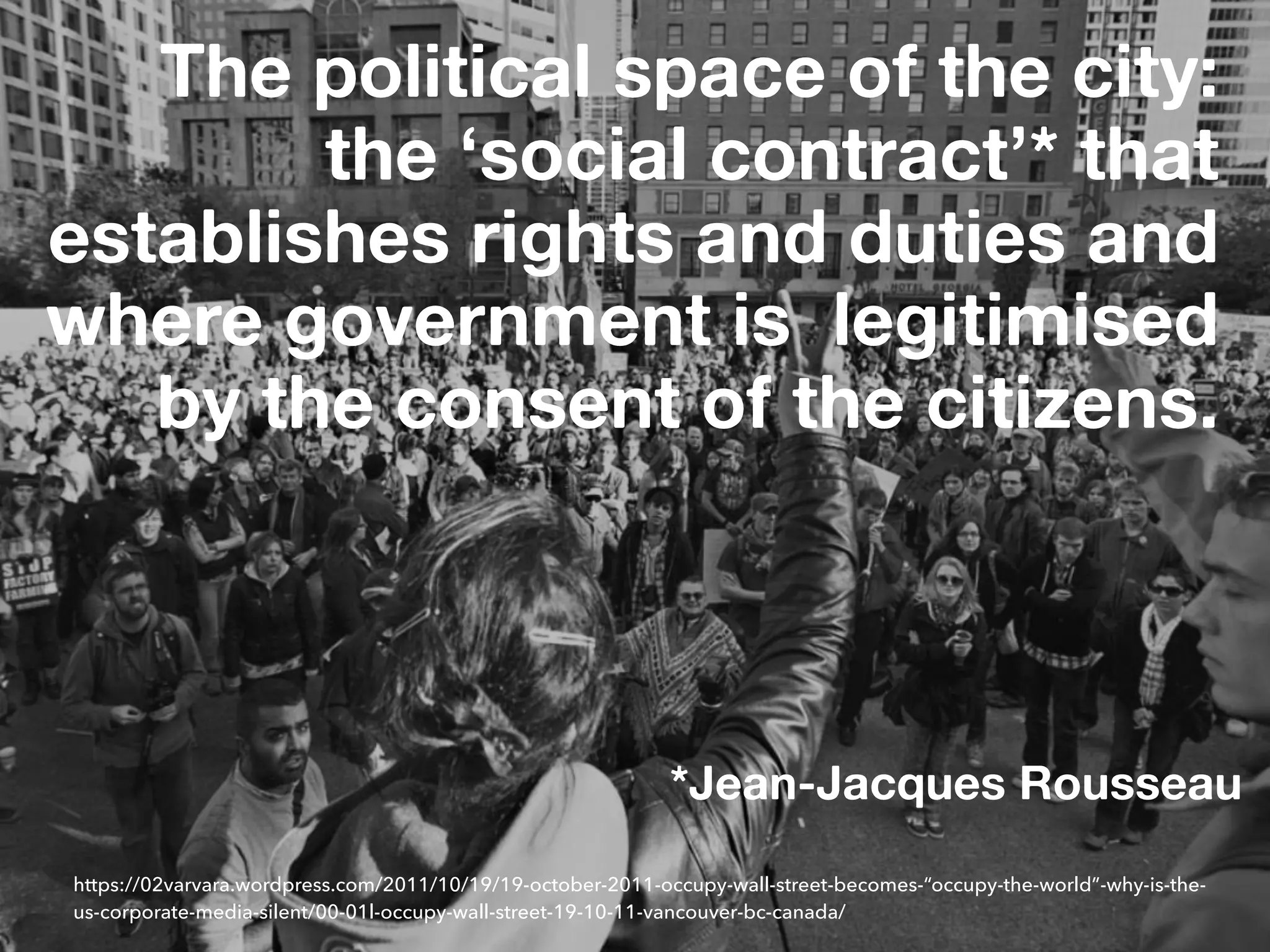
The political space of the city:

the ‘social contract’* that
establishes rights and duties and
where government is legitimised
by the consent of the citizens.
https://02varvara.wordpress.com/2011/10/19/19-october-2011-occupy-wall-street-becomes-“occupy-the-world”-why-is-the-
us-corporate-media-silent/00-01l-occupy-wall-street-19-10-11-vancouver-bc-canada/
*Jean-Jacques Rousseau
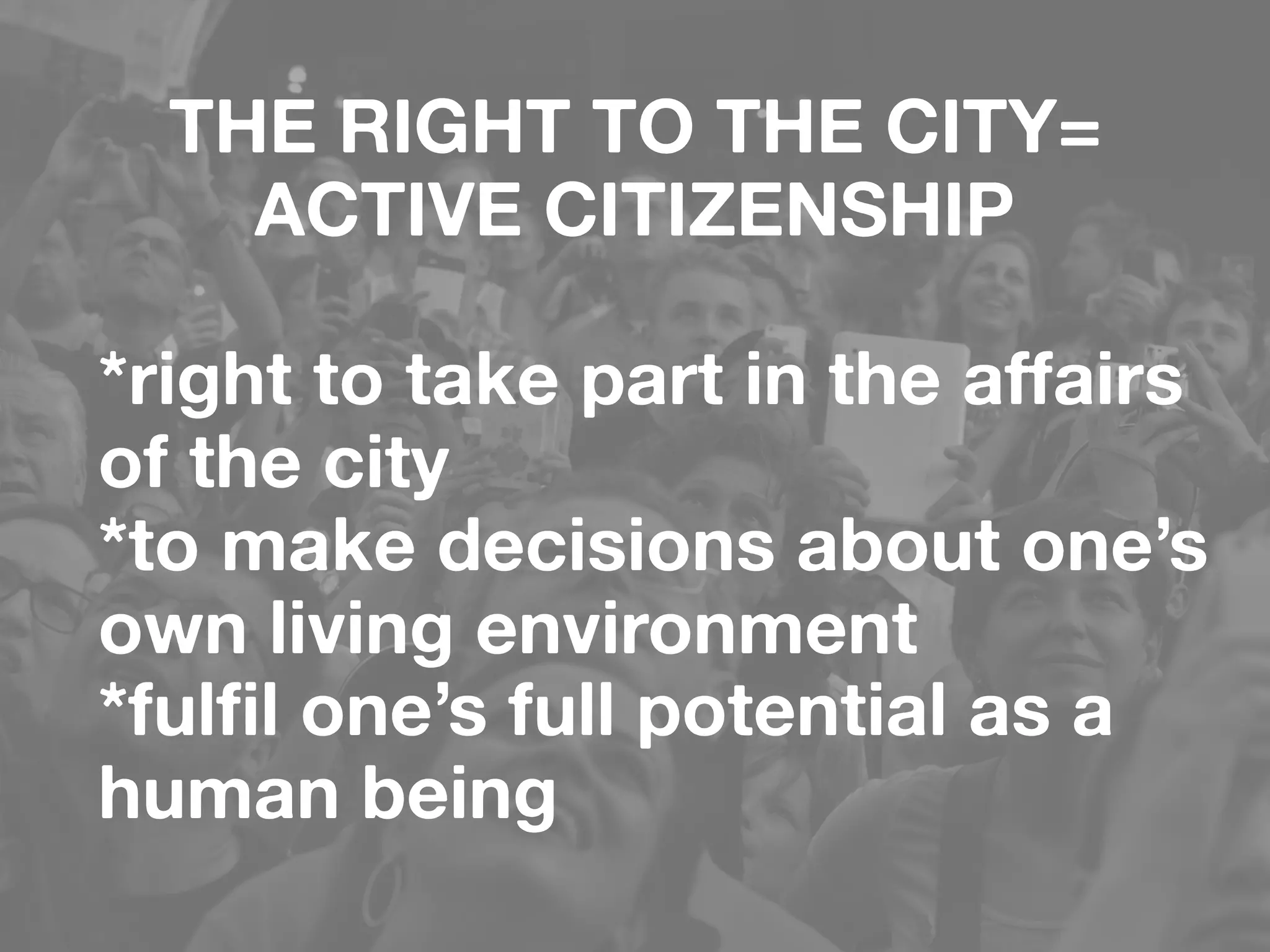
THE RIGHT TO THE CITY=

ACTIVE CITIZENSHIP
*right to take part in the affairs
of the city
*to make decisions about one’s
own living environment
*fulfil one’s full potential as a
human being
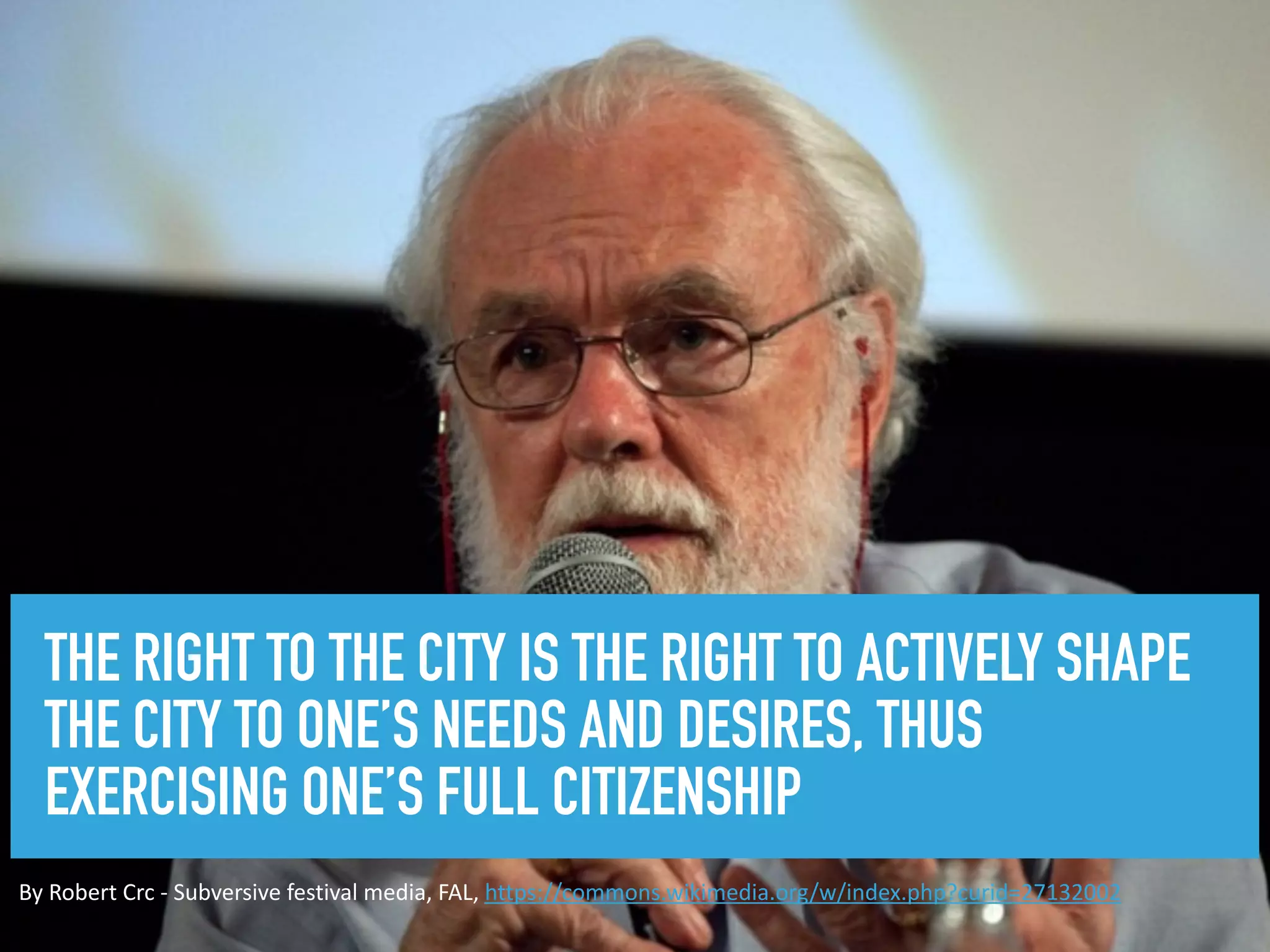
THE RIGHT TO THE CITY IS THE RIGHT TO ACTIVELY SHAPE
THE CITY TO ONE’S NEEDS AND DESIRES, THUS
EXERCISING ONE’S FULL CITIZENSHIP
By	Robert	Crc	-	Subversive	festival	media,	FAL,	https://commons.wikimedia.org/w/index.php?curid=27132002
THE RIGHT TO THE CITY


…is	far	more	than	the	individual	liberty	to	access	
urban	resources:	it	is	a	right	to	change	ourselves	by	
changing	the	city.	It	is,	moreover,	a	common	rather	
than	an	individual	right	since	this	transformation	
inevitably	depends	upon	the	exercise	of	a	collective	
power	to	reshape	the	processes	of	urbanisation.	The	
freedom	to	make	and	remake	our	cities	and	ourselves	
is,	I	want	to	argue,	one	of	the	most	precious	yet	most	
neglected	of	our	human	rights	(Harvey,	2008)

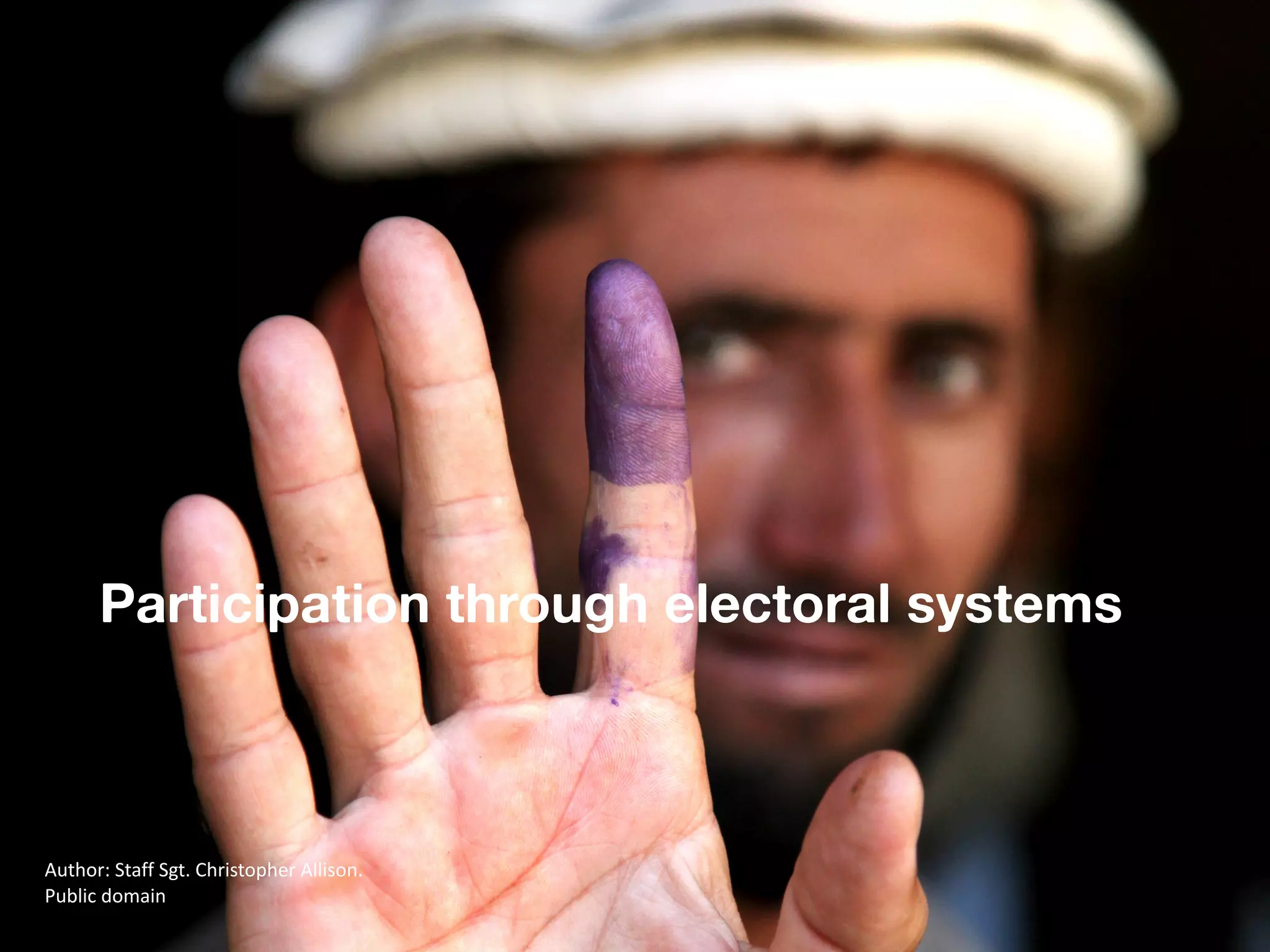
Participation through electoral systems
Author:	Staff	Sgt.	Christopher	Allison.		
Public	domain
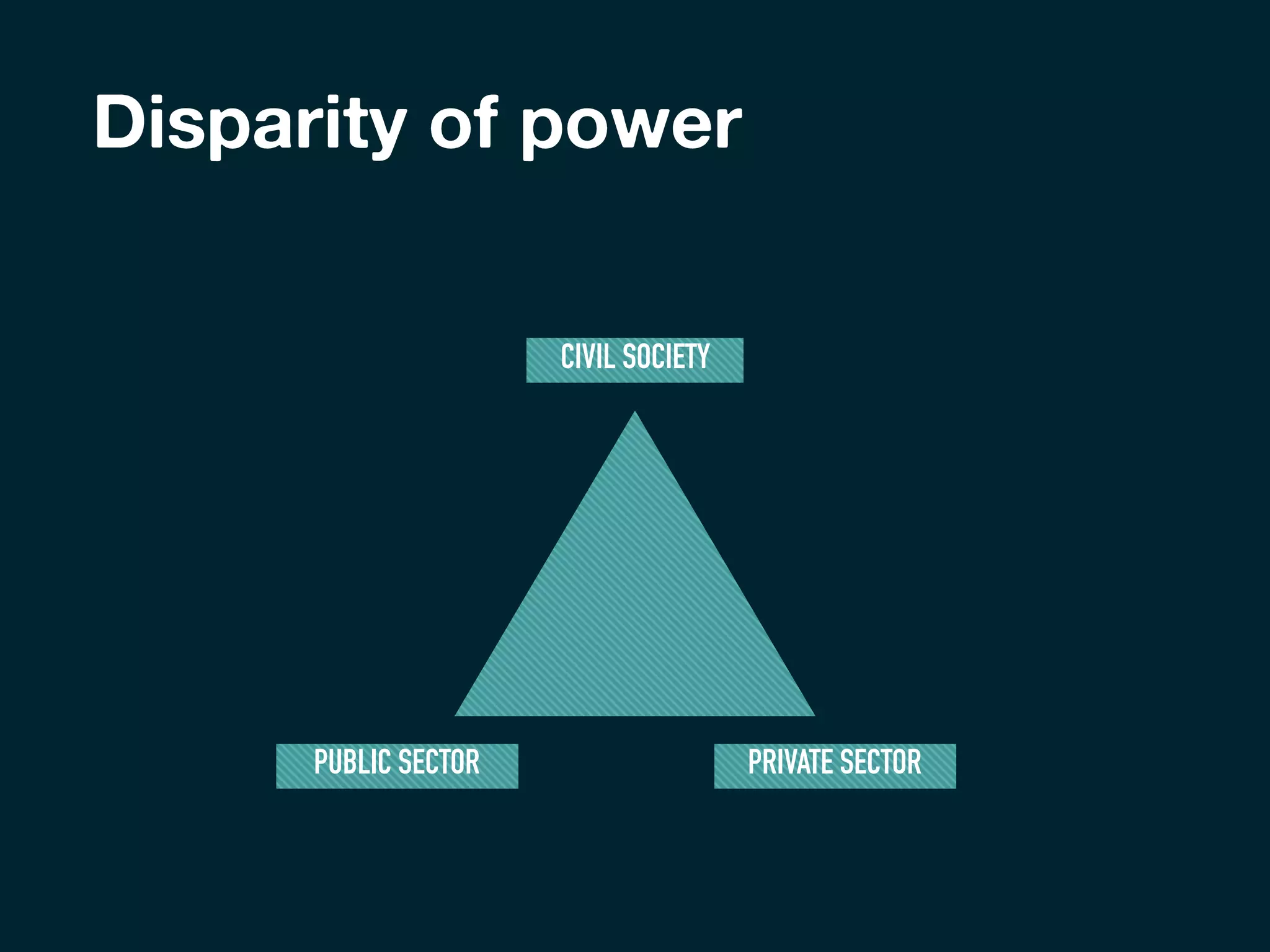
Disparity of power
CIVIL SOCIETY
PUBLIC SECTOR PRIVATE SECTOR


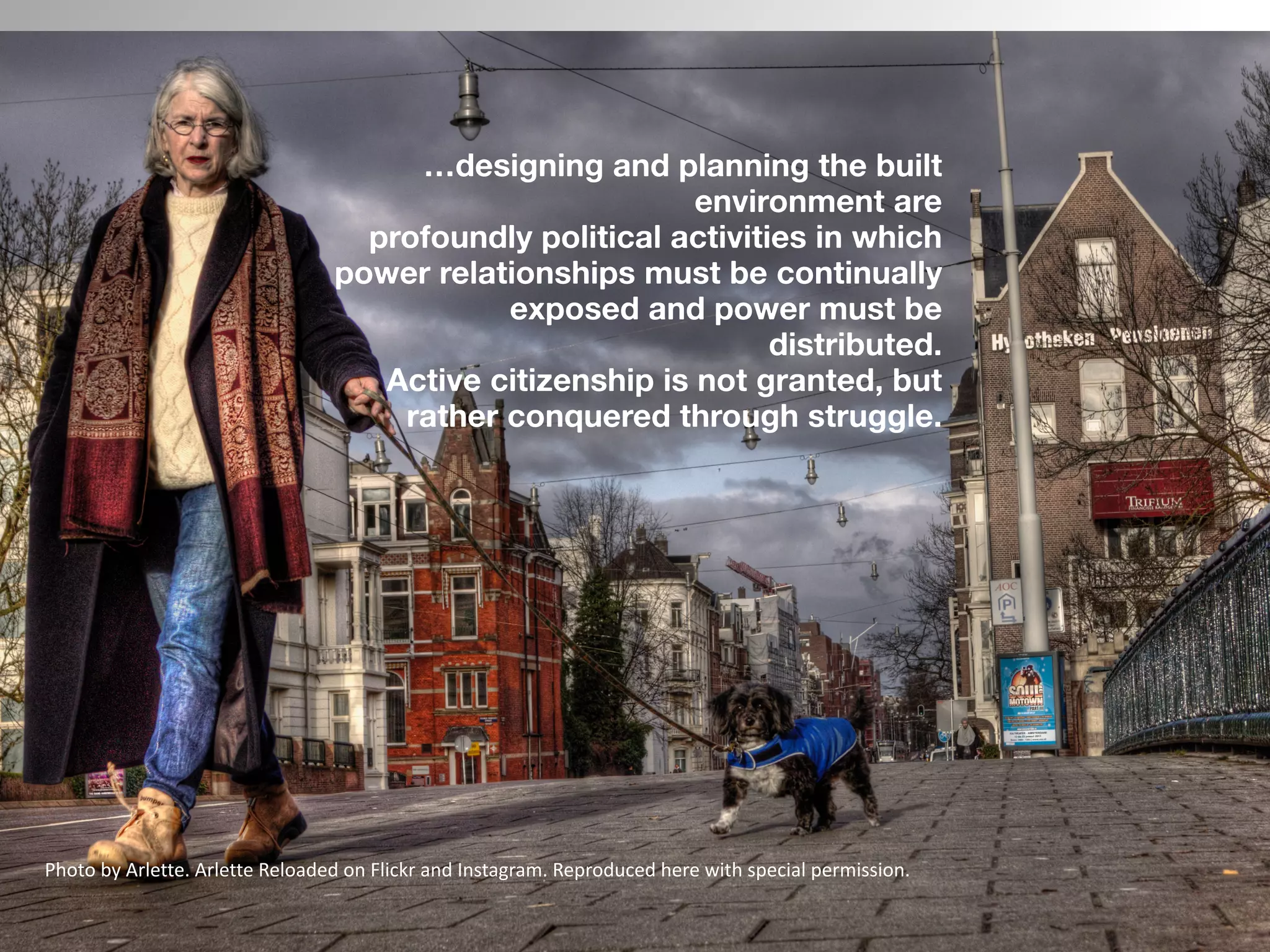
…designing and planning the built
environment are 

profoundly political activities in which
power relationships must be continually
exposed and power must be
distributed.
Active citizenship is not granted, but
rather conquered through struggle. 


Photo	by	Arlette.	Arlette	Reloaded	on	Flickr	and	Instagram.	Reproduced	here	with	special	permission.
SO, WHAT IS THE
CONNECTION?
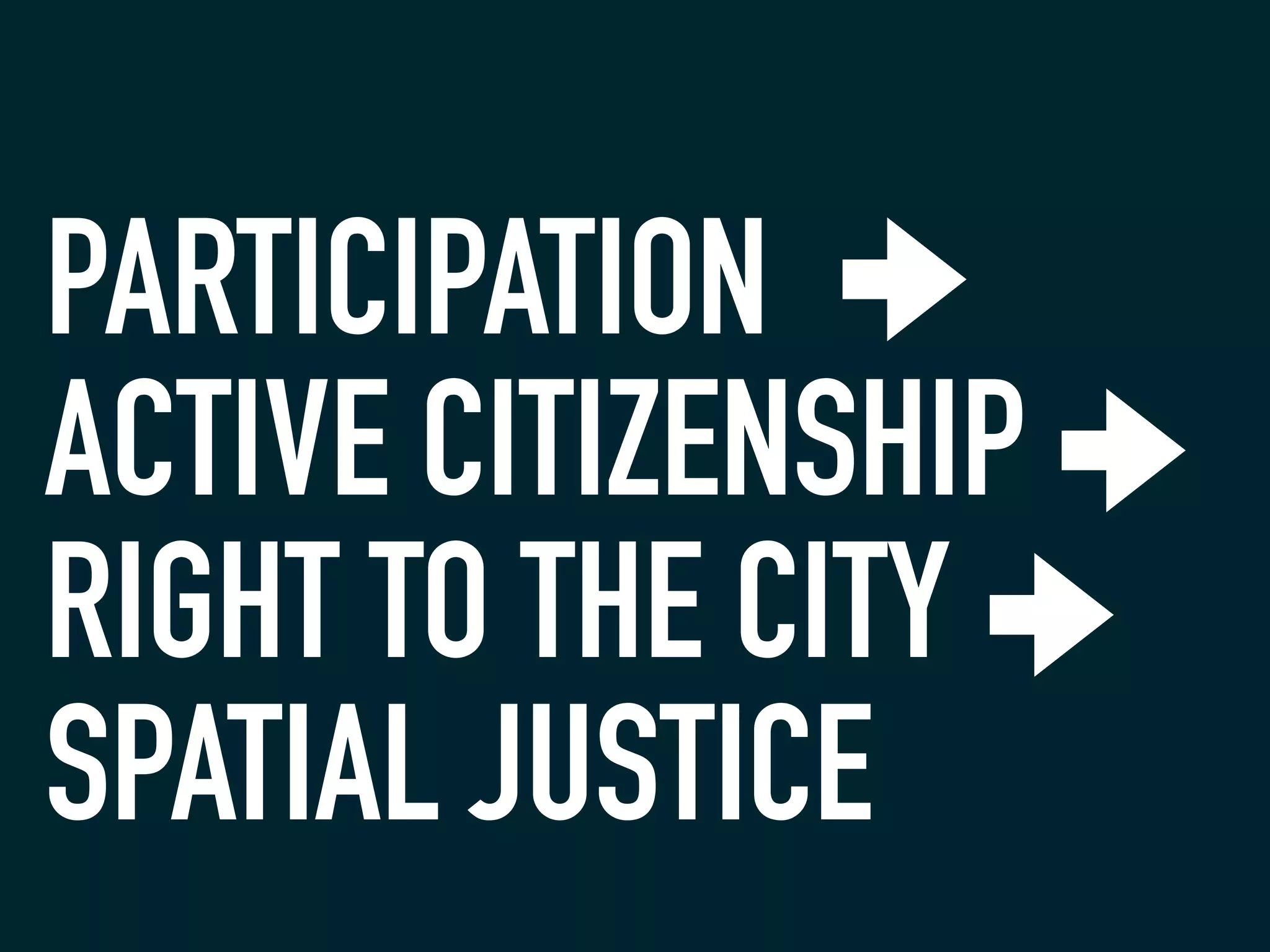
PARTICIPATION
ACTIVE CITIZENSHIP
RIGHT TO THE CITY
SPATIAL JUSTICE
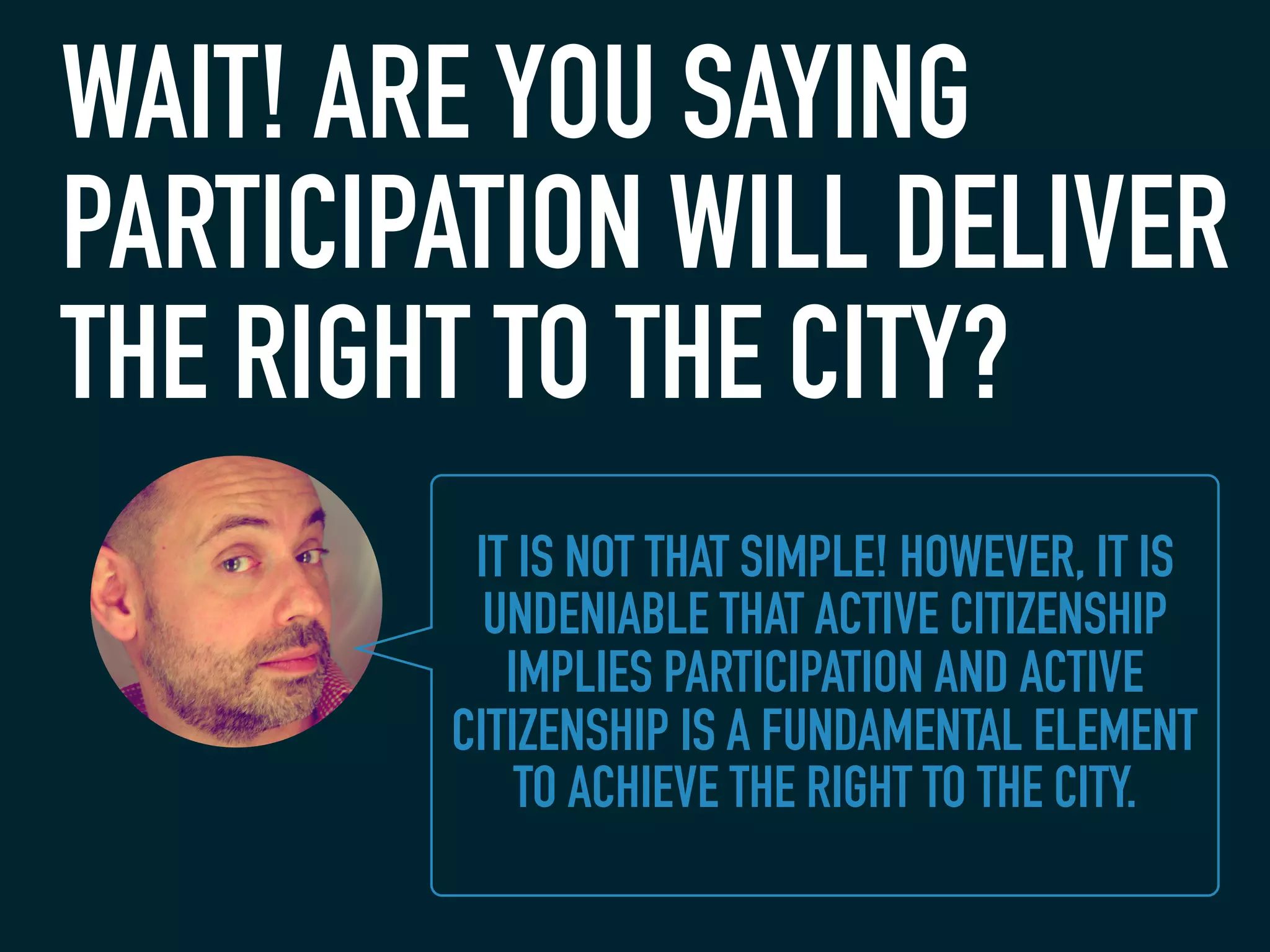
WAIT! ARE YOU SAYING
PARTICIPATION WILL DELIVER
THE RIGHT TO THE CITY?
IT IS NOT THAT SIMPLE! HOWEVER, IT IS
UNDENIABLE THAT ACTIVE CITIZENSHIP
IMPLIES PARTICIPATION AND ACTIVE
CITIZENSHIP IS A FUNDAMENTAL ELEMENT
TO ACHIEVE THE RIGHT TO THE CITY.
SO, IN DEFENCE OF
CITIZEN PARTICIPATION…
IT WILL ALLOW PLANNERS AND
DESIGNERS TO GATHER INFORMATION
& KNOWLEDGE THAT IS NOT
OTHERWISE AVAILABLE
*AND GIVE A VOICE TO THOSE WHO
ARE NOT RECOGNISED AS HOLDERS
OF KNOWLEDGE
WILL INCORPORATE
COMPLEXITY IN DECISION
MAKING
WILL ATTENUATE THE
MANY COGNITIVE BIASES
WE SUFFER FROM
IS MORE LIKELY TO DELIVER
‘JUST’ OUTCOMES
(BECAUSE OF THE DISTRIBUTION OF POWER)
WILL DELIVER STRONGER
COMMUNITIES AND
DEMOCRACY-AWARE CITIZENS
WILL STRENGTHEN
DEMOCRACY IN THE LONG RUN
HAS THE POTENTIAL TO
DELIVER THE
RIGHT TO THE CITY
BUT WHY IS THIS
IMPORTANT?
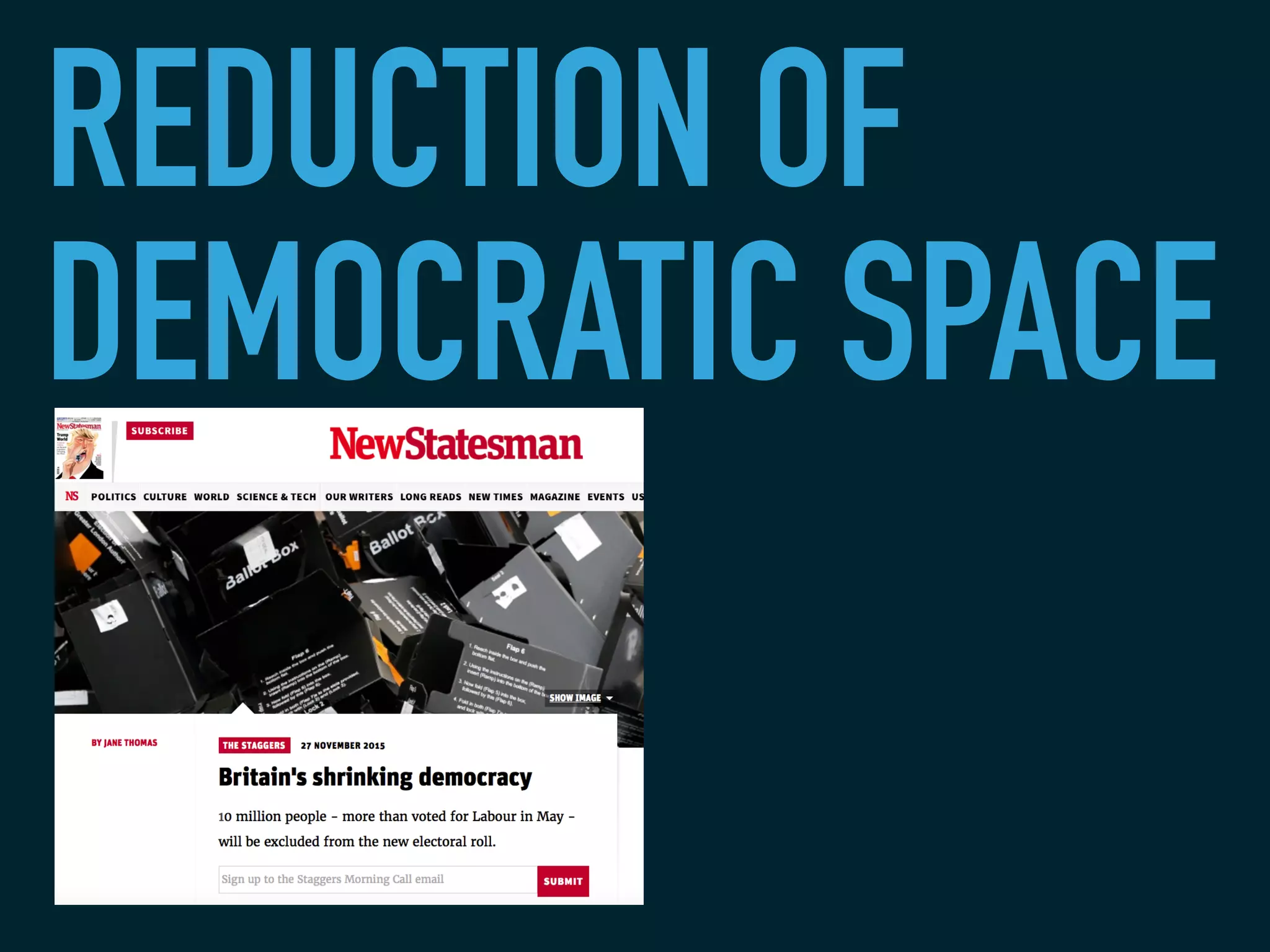
REDUCTION OF
DEMOCRATIC SPACE
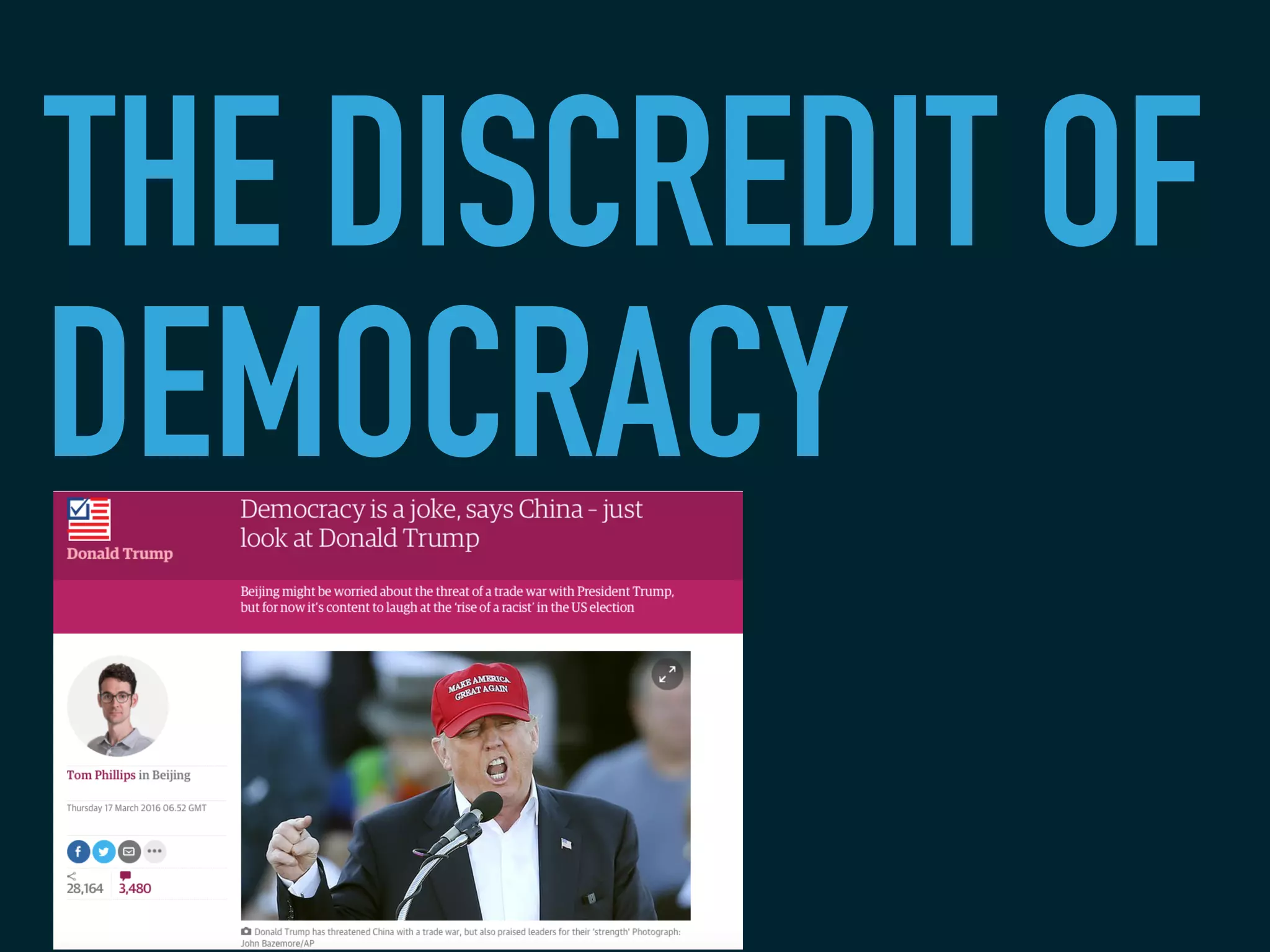
THE DISCREDIT OF
DEMOCRACY
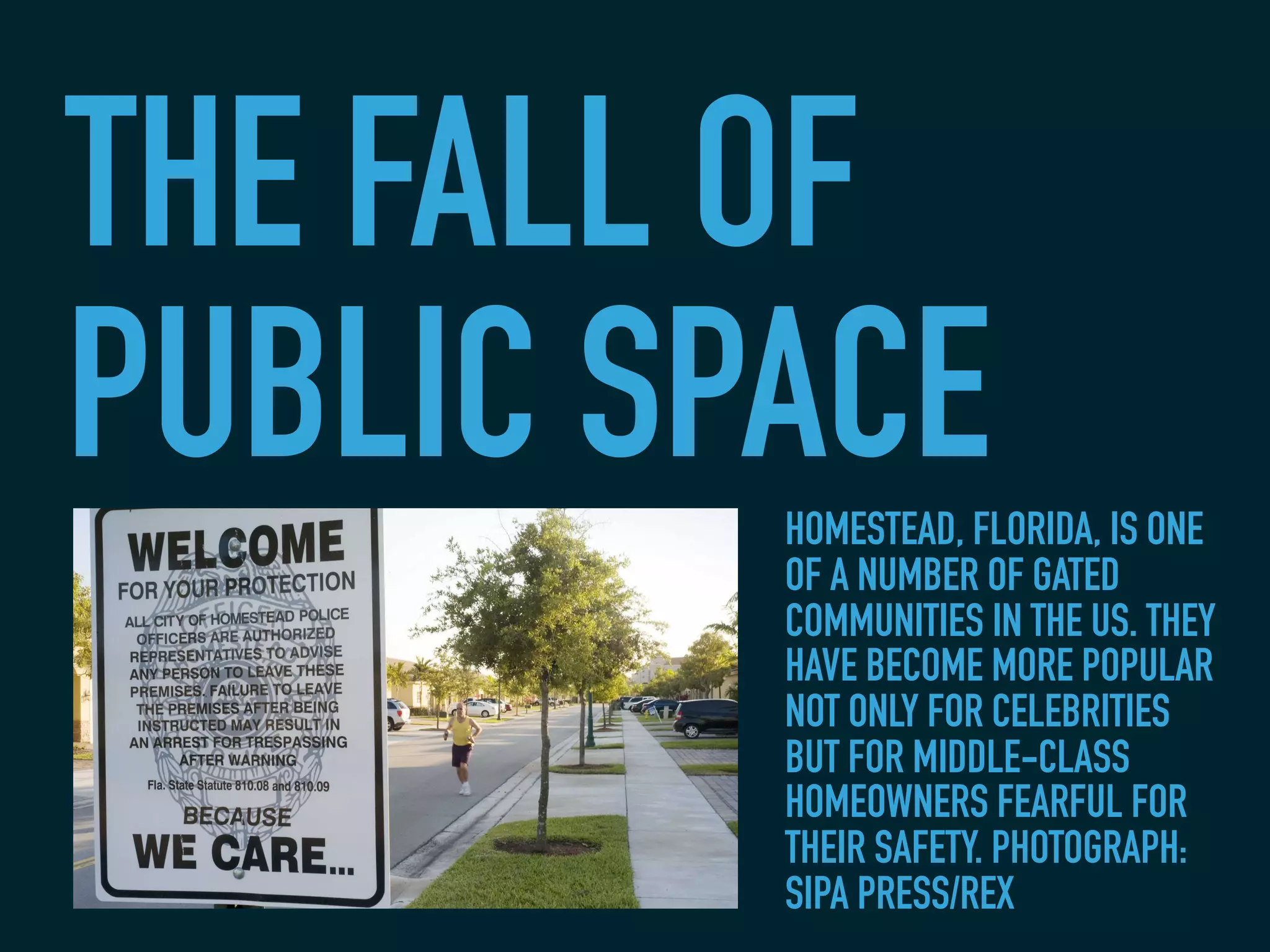
THE FALL OF
PUBLIC SPACEHOMESTEAD, FLORIDA, IS ONE
OF A NUMBER OF GATED
COMMUNITIES IN THE US. THEY
HAVE BECOME MORE POPULAR
NOT ONLY FOR CELEBRITIES
BUT FOR MIDDLE-CLASS
HOMEOWNERS FEARFUL FOR
THEIR SAFETY. PHOTOGRAPH:
SIPA PRESS/REX
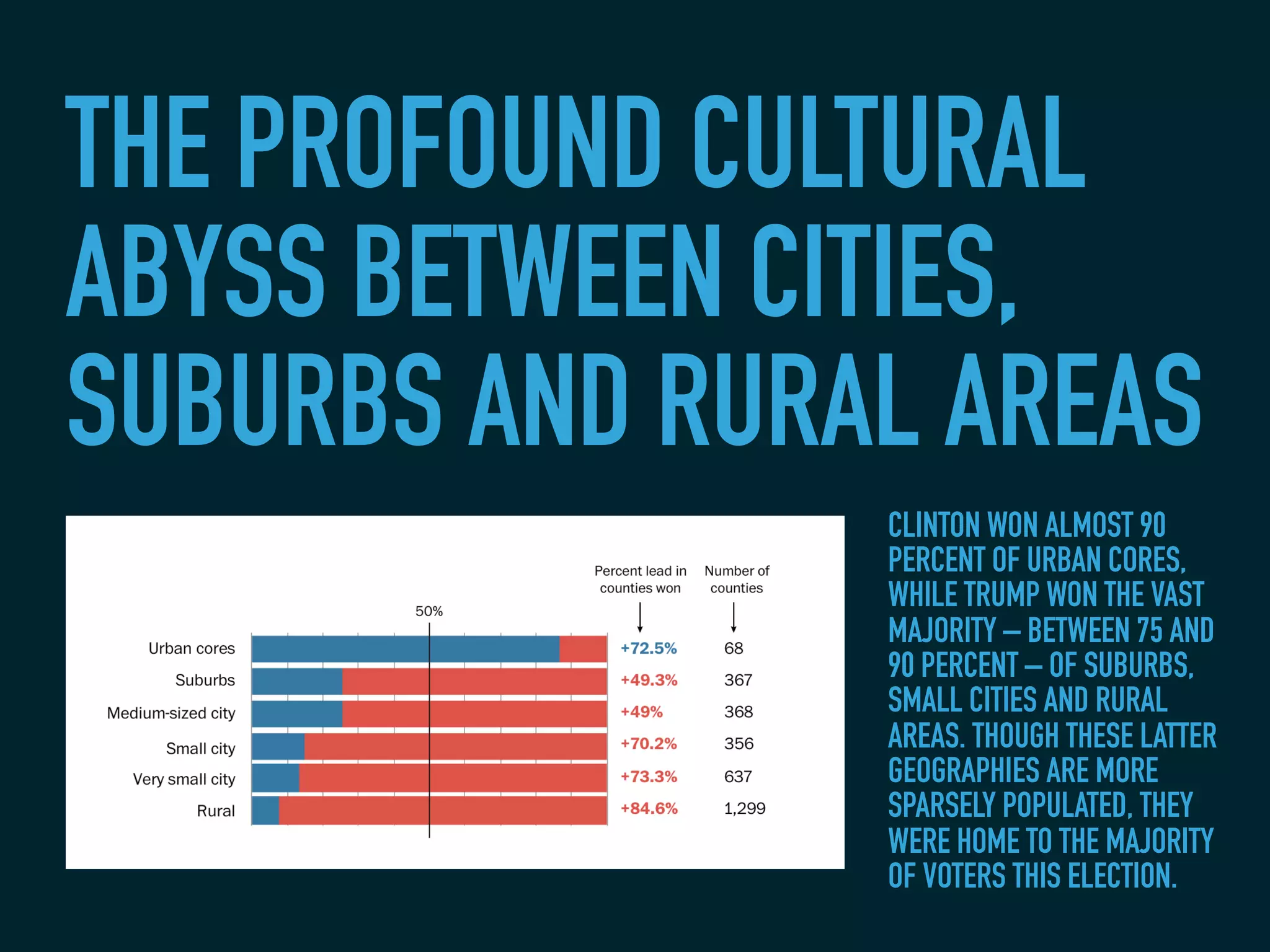
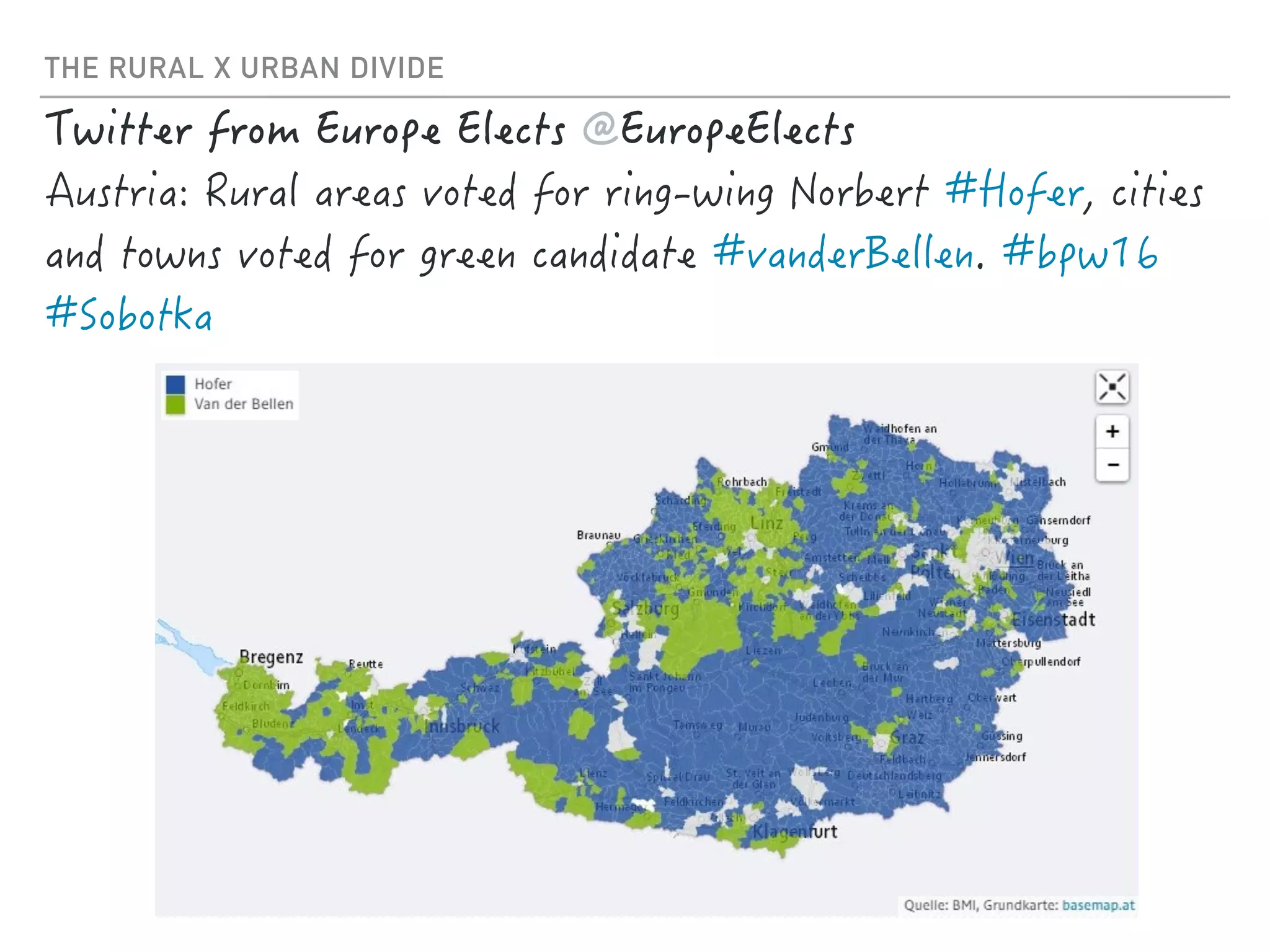
THE PROFOUND CULTURAL
ABYSS BETWEEN CITIES,
SUBURBS AND RURAL AREAS
CLINTON WON ALMOST 90
PERCENT OF URBAN CORES,
WHILE TRUMP WON THE VAST
MAJORITY – BETWEEN 75 AND
90 PERCENT – OF SUBURBS,
SMALL CITIES AND RURAL
AREAS. THOUGH THESE LATTER
GEOGRAPHIES ARE MORE
SPARSELY POPULATED, THEY
WERE HOME TO THE MAJORITY
OF VOTERS THIS ELECTION.
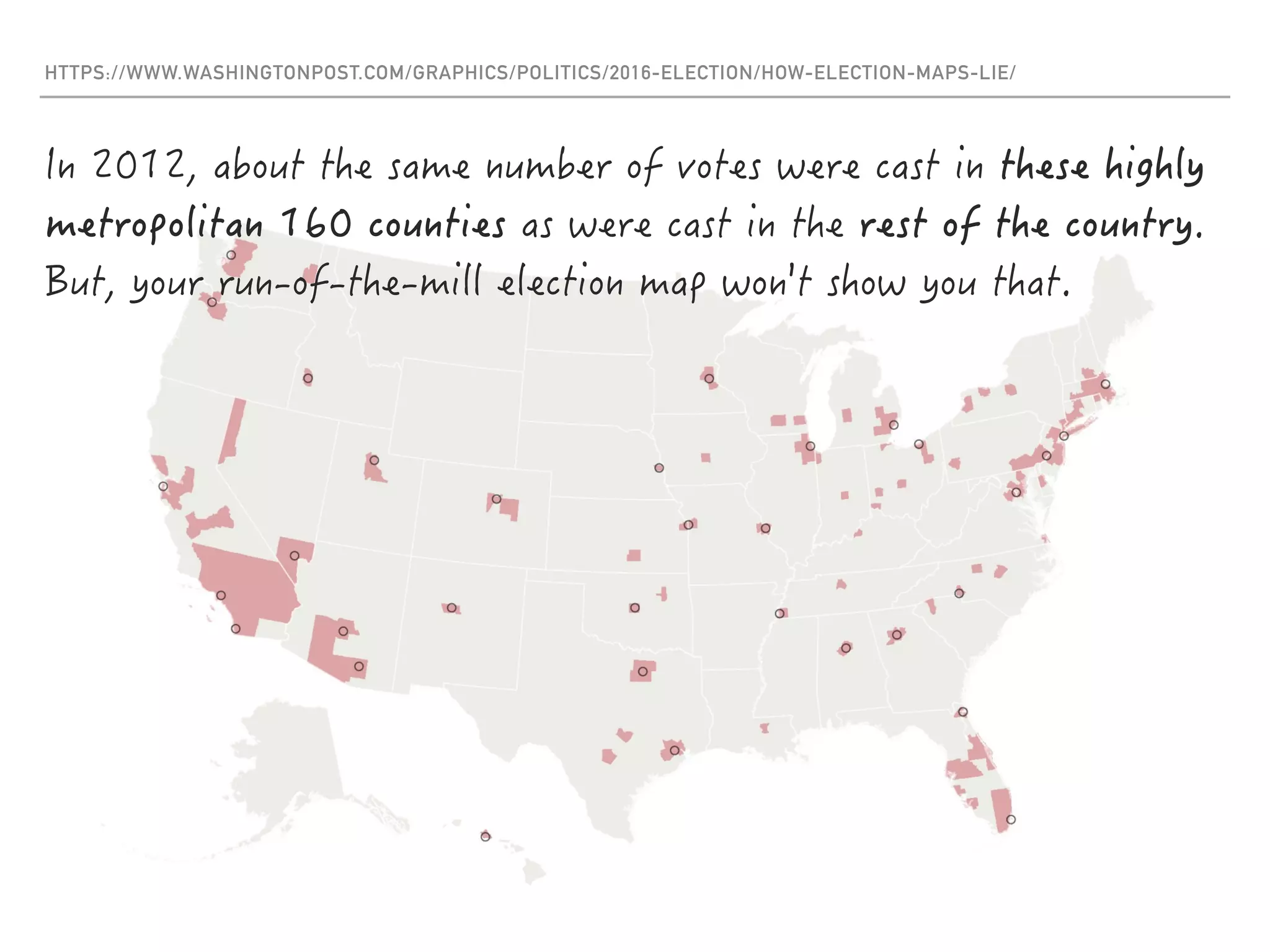
HTTPS://WWW.WASHINGTONPOST.COM/GRAPHICS/POLITICS/2016-ELECTION/HOW-ELECTION-MAPS-LIE/
THE RURAL X URBAN DIVIDE
THANKS FOR WATCHING
THIS PRESENTATION.
SHOULD YOU HAVE ANY
QUESTIONS, PLEASE
WRITE TO:
R.C.ROCCO@TUDELFT.NL
ALL THESE ISSUES
MAKE IT CRUCIAL FOR
US TO IMPROVE THE
QUALITY OF
DEMOCRATIC DECISION
MAKING IN THE CITY
TEXT
EXPANDED BIBLIOGRAPHY
ARENDT, H. 1998. The human condition. Chicago, Ill., University of Chicago Press.
AENDT, H. 2004. The origins of totalitarianism. New York, Schocken Books.
ARISTOTLE, et al. 2001. Politics. Blacksburg, VA, Virginia Tech,: 14 p.
AVRITZER, L. 2010. Living under democracy: Participation in its impact on the living conditions of the poor. The Journal of the Latin American Studies Association, 45,
166-185.
BERG, A. G. & OSTRY, J. D. 2011. Inequality and Unsustainable growth: Two Sides of the Same Coin? IMF Discussion Note. In: IMF (ed.) IMF Discussion Note. Washington:
IMF.
CRICK, B. 2002. Democracy: A Very Short Introduction, Oxford, Oxford University Press.
DAHLGREN, P. 2009. Media and Political Engagement: Citizens, Communication, and Democracy. In: BENNETT, W. L. & ENTMAN, R. M. (eds.) Communication, Society and
Politics. Cambridge: Cambridge University Press.
European Council of Spatial Planners 2015. European Charter on Participatory Democracy in Spatial Planning Processes. Brussels, European Council of Spatial Planners.
FOUCAULT, M., et al. 1972. The archaeology of knowledge. World of man. New York, Pantheon Books,: 245 p.
FOUCAULT, M. and C. Gordon 1980. Power/knowledge : selected interviews and other writings, 1972-1977. New York, Pantheon Books.
FOUCAULT, M. 2002. The order of things: An archaeology of the human sciences. London ; New York, Routledge.
HARVEY, D. 2008. The Right to the City. New Left Review, Sept/ Oct, 23-40.
HARVEY, D. 2012. Rebel cities : from the right to the city to the urban revolution, New York, Verso.
HOLSTON, J. 2009. Insurgent citizenship : disjunctions of democracy and modernity in Brazil, Princeton, N.J. ; Woodstock, Princeton University Press.
LARSEN, G. L. 2012. An Inquiry into the Theoretical Basis of Sustainability. In: DILLARD, J., DUJON, V. & KING, M. C. (eds.) Understanding the Social Dimension of
Sustainability. London: Routledge.
LEFEBVRE, H. 1968. Le Droit à la ville, Paris, Anthropos.
LEFEBVRE, H. and K. Goonewardena 2008. Space, difference, everyday life : reading Henri Lefebvre. New York, Routledge.
OSTRY, J. D., et al. 2016. "Neoliberalism: Oversold?" Finance & Development 53(2): 38-41.
PLATO, et al. 2013. Republic. Cambridge, MA, Harvard University Press.
ROCCO, R. 2013. Emerging New Roles for Designers and Planners: Articulating Soft and Hard Infrastructures. Atlantis. Delft: Polis Platform for Urbanism/ TU Delft.
ROUSSEAU, J.-J. 1968. The social contract. Harmondsworth, Penguin.
SEHESTED, K. 2009. Urban Planners as Network Managers and Metagovernors. Planning Theory and Practice, 10, 245-263.
UN-HABITAT 2013. Urban Equity in Development: Cities for Life, Draft Concept paper. In: UN-HABITAT (ed.). Nairobi: UN-Habitat.
UN-HUMAN RIGHTS. 2014. Good Governance and Human Rights [Online]. Available: http://www.ohchr.org/en/Issues/Development/GoodGovernance/Pages/
GoodGovernanceIndex.aspx [Accessed 10/04 2014].
WIGMANS, G. 2001. Contingent governance and the enabling city. City, 5, 203-223.

Spatial Justice and the Right to the City

  • 1.
    SPATIAL JUSTICE & THERIGHT TO THE CITY U URBANISM SPS SpatialPlanning&StrategyTUDelft
  • 2.
    THE DOWNSIDE OFPARTICIPATION CRITICS OF PARTICIPATION SAY IT’S… ‣ EXPENSIVE ‣ TIME CONSUMING ‣ INEFFECTIVE ‣ LIP-SERVICE ‣ FOR OLD RETIRED MEN ‣ DIFFICULT TO IMPLEMENT ‣ “NOBODY CARES ABOUT PARTICIPATION: WHAT EVERYBODY WANTS IS EFFICIENCY” ‣ IT IS A TOOL FOR MANIPULATION: IT IS A PUBLIC RELATIONS TOOL FOR THE POWER HOLDERS (ARNSTEIN, 1969) ‣ IT IS A DEVICE FROM THE RIGHT TO JUSTIFY THE END OF THE WELFARE STATE ‣ IT IS A DEVICE FROM THE LEFT TO JUSTIFY THE PROPAGATION OF ITS IDEOLOGY
  • 3.
    THE UPSIDE A-CRITICS OFPARTICIPATION SAY, IT’S ‣ THE SOLUTION FOR ALL OUR PROBLEMS ‣ ANYTHING TOP DOWN IS NECESSARILY BAD, SO EVERYTHING BOTTOM UP IS NECESSARILY GOOD
  • 4.
    HTTP://LITHGOW-SCHMIDT.DK/SHERRY-ARNSTEIN/LADDER-OF-CITIZEN-PARTICIPATION.HTML THE LADDER OFPARTICIPATION (SHERRY ARNSTEIN, 1969) CITIZEN ENGAGEMENT CITIZEN PARTICIPATION CITIZEN MANIPULATION
  • 5.
    WHO HAS POWERWHEN IMPORTANT DECISIONS ARE BEING MADE? Arnstein, S. (1969). "A Ladder of Citizen Participation." JAIP 35(4): 216-224.
  • 6.
    THE ILLUSION OF CONTROL Arnstein,S. (1969). "A Ladder of Citizen Participation." JAIP 35(4): 216-224.
  • 7.
    CITIZEN PARTICIPATION IS(OR COULD BE) THE REDISTRIBUTION OF POWER THAT ENABLES CITIZENS TO BE DELIBERATELY INCLUDED IN DECISION MAKING PROCESSES. Arnstein, S. (1969). "A Ladder of Citizen Participation." JAIP 35(4): 216-224.
  • 8.
    PARTICIPATION IS AKEY ELEMENT TO ACHIEVE THE RIGHT TO THE CITY
  • 9.
    RIGHT TO THECITY IS A CONDITION TO ACHIEVE SPATIAL JUSTICE
  • 10.
    SPATIAL JUSTICE TERRITORIAL ORSPATIAL DYNAMICS OF DISTRIBUTION OF WEALTH, GOODS AND OPPORTUNITIES EMPHASIS ON SOCIAL ECONOMIC RELATIONSHIPS HAPPENING IN SPACE
  • 11.
  • 12.
  • 13.
  • 14.
  • 15.
    SPATIAL JUSTICE AND THERIGHT TO THE CITY ARE INTIMATELY RELATED. PARTICIPATION IN THE CONDUCTION OF URBAN AFFAIRS (THE RIGHT TO THE CITY) IS LIKELY TO DELIVER SPATIAL JUSTICE.
  • 16.
  • 17.
    RIGHT TO THECITY IS PART OF A VERY LONG TRADITION IN PHILOSOPHY THAT SEES THE CITY AS THE SPACE OF POLITICS, WHERE RIGHTS AND OBLIGATIONS EMERGE MORE STRONGLY.
  • 18.
    Plato’s The Republic:
 the just man inhabiting the just city Copyof Silanion - Marie-Lan Nguyen (User:Jastrow) 2009, CC BY 2.5, https://commons.wikimedia.org/w/index.php?curid=7831217
  • 19.
    By A.Savin (Wikimedia Commons · WikiPhotoSpace)- Own work, CC BY-SA 3.0, https://commons.wikimedia.org/w/index.php?curid=27948211 Polis is the space of 
 shared decision-making, 
 otherwise known as ‘politics’.
  • 20.
    By After Lysippos- Jastrow (2006), Public Domain, https://commons.wikimedia.org/w/index.php?curid=1359807 Aristotle: “man is a political animal”
 
We can only achieve the good life by living as citizens in organised societies. In doing so we become fully human (as opposed to animals in a state of nature).
  • 21.
    THE SPATIAL DIMENSIONOF POLITICS Doreen Massey explains the SPACE OF RADICAL SIMULTANEITY: the shared political and physical space, where decisions must be taken by citizens together. http://timelines.latimes.com/occupy-wall-street-movement/
  • 22.
  • 23.
    THE ‘POLITICAL COMMUNITY’ ISTHE SPACE OF THE CITY IT IS WITHIN THE CITY’S ‘WALLS’ THAT WE ARE FREE CITIZENS
  • 24.
    STADTLUFT MACHT FREI THEAIR OF THE CITY WILL MAKE YOU FREE
  • 25.
    The political spaceof the city:
 the ‘social contract’* that establishes rights and duties and where government is legitimised by the consent of the citizens. https://02varvara.wordpress.com/2011/10/19/19-october-2011-occupy-wall-street-becomes-“occupy-the-world”-why-is-the- us-corporate-media-silent/00-01l-occupy-wall-street-19-10-11-vancouver-bc-canada/ *Jean-Jacques Rousseau
  • 26.
    THE RIGHT TOTHE CITY=
 ACTIVE CITIZENSHIP *right to take part in the affairs of the city *to make decisions about one’s own living environment *fulfil one’s full potential as a human being
  • 27.
    THE RIGHT TOTHE CITY IS THE RIGHT TO ACTIVELY SHAPE THE CITY TO ONE’S NEEDS AND DESIRES, THUS EXERCISING ONE’S FULL CITIZENSHIP By Robert Crc - Subversive festival media, FAL, https://commons.wikimedia.org/w/index.php?curid=27132002
  • 28.
    THE RIGHT TOTHE CITY
 
 …is far more than the individual liberty to access urban resources: it is a right to change ourselves by changing the city. It is, moreover, a common rather than an individual right since this transformation inevitably depends upon the exercise of a collective power to reshape the processes of urbanisation. The freedom to make and remake our cities and ourselves is, I want to argue, one of the most precious yet most neglected of our human rights (Harvey, 2008)

  • 29.
    Participation through electoralsystems Author: Staff Sgt. Christopher Allison. Public domain
  • 30.
    Disparity of power CIVILSOCIETY PUBLIC SECTOR PRIVATE SECTOR
  • 31.
    
 
 …designing and planningthe built environment are 
 profoundly political activities in which power relationships must be continually exposed and power must be distributed. Active citizenship is not granted, but rather conquered through struggle. 
 
 Photo by Arlette. Arlette Reloaded on Flickr and Instagram. Reproduced here with special permission.
  • 32.
    SO, WHAT ISTHE CONNECTION?
  • 33.
  • 34.
    WAIT! ARE YOUSAYING PARTICIPATION WILL DELIVER THE RIGHT TO THE CITY? IT IS NOT THAT SIMPLE! HOWEVER, IT IS UNDENIABLE THAT ACTIVE CITIZENSHIP IMPLIES PARTICIPATION AND ACTIVE CITIZENSHIP IS A FUNDAMENTAL ELEMENT TO ACHIEVE THE RIGHT TO THE CITY.
  • 35.
    SO, IN DEFENCEOF CITIZEN PARTICIPATION…
  • 36.
    IT WILL ALLOWPLANNERS AND DESIGNERS TO GATHER INFORMATION & KNOWLEDGE THAT IS NOT OTHERWISE AVAILABLE *AND GIVE A VOICE TO THOSE WHO ARE NOT RECOGNISED AS HOLDERS OF KNOWLEDGE
  • 37.
  • 38.
    WILL ATTENUATE THE MANYCOGNITIVE BIASES WE SUFFER FROM
  • 39.
    IS MORE LIKELYTO DELIVER ‘JUST’ OUTCOMES (BECAUSE OF THE DISTRIBUTION OF POWER)
  • 40.
    WILL DELIVER STRONGER COMMUNITIESAND DEMOCRACY-AWARE CITIZENS WILL STRENGTHEN DEMOCRACY IN THE LONG RUN
  • 41.
    HAS THE POTENTIALTO DELIVER THE RIGHT TO THE CITY
  • 42.
    BUT WHY ISTHIS IMPORTANT?
  • 43.
  • 44.
  • 45.
    THE FALL OF PUBLICSPACEHOMESTEAD, FLORIDA, IS ONE OF A NUMBER OF GATED COMMUNITIES IN THE US. THEY HAVE BECOME MORE POPULAR NOT ONLY FOR CELEBRITIES BUT FOR MIDDLE-CLASS HOMEOWNERS FEARFUL FOR THEIR SAFETY. PHOTOGRAPH: SIPA PRESS/REX
  • 46.
    THE PROFOUND CULTURAL ABYSSBETWEEN CITIES, SUBURBS AND RURAL AREAS CLINTON WON ALMOST 90 PERCENT OF URBAN CORES, WHILE TRUMP WON THE VAST MAJORITY – BETWEEN 75 AND 90 PERCENT – OF SUBURBS, SMALL CITIES AND RURAL AREAS. THOUGH THESE LATTER GEOGRAPHIES ARE MORE SPARSELY POPULATED, THEY WERE HOME TO THE MAJORITY OF VOTERS THIS ELECTION.
  • 47.
  • 48.
    THE RURAL XURBAN DIVIDE
  • 49.
    THANKS FOR WATCHING THISPRESENTATION. SHOULD YOU HAVE ANY QUESTIONS, PLEASE WRITE TO: R.C.ROCCO@TUDELFT.NL
  • 50.
    ALL THESE ISSUES MAKEIT CRUCIAL FOR US TO IMPROVE THE QUALITY OF DEMOCRATIC DECISION MAKING IN THE CITY
  • 51.
    TEXT EXPANDED BIBLIOGRAPHY ARENDT, H.1998. The human condition. Chicago, Ill., University of Chicago Press. AENDT, H. 2004. The origins of totalitarianism. New York, Schocken Books. ARISTOTLE, et al. 2001. Politics. Blacksburg, VA, Virginia Tech,: 14 p. AVRITZER, L. 2010. Living under democracy: Participation in its impact on the living conditions of the poor. The Journal of the Latin American Studies Association, 45, 166-185. BERG, A. G. & OSTRY, J. D. 2011. Inequality and Unsustainable growth: Two Sides of the Same Coin? IMF Discussion Note. In: IMF (ed.) IMF Discussion Note. Washington: IMF. CRICK, B. 2002. Democracy: A Very Short Introduction, Oxford, Oxford University Press. DAHLGREN, P. 2009. Media and Political Engagement: Citizens, Communication, and Democracy. In: BENNETT, W. L. & ENTMAN, R. M. (eds.) Communication, Society and Politics. Cambridge: Cambridge University Press. European Council of Spatial Planners 2015. European Charter on Participatory Democracy in Spatial Planning Processes. Brussels, European Council of Spatial Planners. FOUCAULT, M., et al. 1972. The archaeology of knowledge. World of man. New York, Pantheon Books,: 245 p. FOUCAULT, M. and C. Gordon 1980. Power/knowledge : selected interviews and other writings, 1972-1977. New York, Pantheon Books. FOUCAULT, M. 2002. The order of things: An archaeology of the human sciences. London ; New York, Routledge. HARVEY, D. 2008. The Right to the City. New Left Review, Sept/ Oct, 23-40. HARVEY, D. 2012. Rebel cities : from the right to the city to the urban revolution, New York, Verso. HOLSTON, J. 2009. Insurgent citizenship : disjunctions of democracy and modernity in Brazil, Princeton, N.J. ; Woodstock, Princeton University Press. LARSEN, G. L. 2012. An Inquiry into the Theoretical Basis of Sustainability. In: DILLARD, J., DUJON, V. & KING, M. C. (eds.) Understanding the Social Dimension of Sustainability. London: Routledge. LEFEBVRE, H. 1968. Le Droit à la ville, Paris, Anthropos. LEFEBVRE, H. and K. Goonewardena 2008. Space, difference, everyday life : reading Henri Lefebvre. New York, Routledge. OSTRY, J. D., et al. 2016. "Neoliberalism: Oversold?" Finance & Development 53(2): 38-41. PLATO, et al. 2013. Republic. Cambridge, MA, Harvard University Press. ROCCO, R. 2013. Emerging New Roles for Designers and Planners: Articulating Soft and Hard Infrastructures. Atlantis. Delft: Polis Platform for Urbanism/ TU Delft. ROUSSEAU, J.-J. 1968. The social contract. Harmondsworth, Penguin. SEHESTED, K. 2009. Urban Planners as Network Managers and Metagovernors. Planning Theory and Practice, 10, 245-263. UN-HABITAT 2013. Urban Equity in Development: Cities for Life, Draft Concept paper. In: UN-HABITAT (ed.). Nairobi: UN-Habitat. UN-HUMAN RIGHTS. 2014. Good Governance and Human Rights [Online]. Available: http://www.ohchr.org/en/Issues/Development/GoodGovernance/Pages/ GoodGovernanceIndex.aspx [Accessed 10/04 2014]. WIGMANS, G. 2001. Contingent governance and the enabling city. City, 5, 203-223.