

Milwaukee Disaster-
PREPARED BY;
Sanjaya Regmi
MPH
Introduction
 The 1993 Milwaukee
Cryptosporidiosis
outbreak was a significant
distribution of
the Cryptosporidium protozoan
in Milwauke
Wisconsin, and the largest
waterborne disease outbreak
in documented United States
history.
Other major Cryptosporidiosis
outbreaks
 Cryptosporidiosis outbreaks
 Milwaukee,WI - 1993
 Carrolton,GA -1987
 Jackson County, OR - 1992 (small system)
 Cook County, MN - 1993 (small system)
severity
 Over the span of approximately two weeks,
403,000 of an estimated 1.61 million residents
in the Milwaukee area became ill.
 At least 104 deaths have been attributed to
this outbreak, mostly among the elderly
and immune compromised people, such
as AIDS patients.
Causes of Outbreak
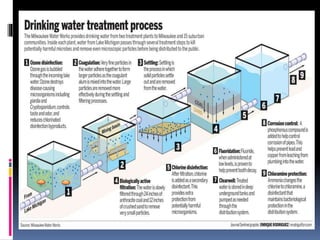
 The Howard AvenueWater Purification Plant
was contaminated, and treated water
showed turbidity levels well above normal.
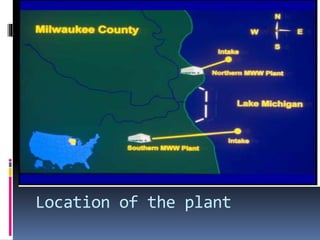
 It was one of two water treatment plants for
Milwaukee.
 The root cause of epidemic was never
officially identified; initially it was suspected
to be caused by the cattle genotype due to
runoff from pastures.
Location of the plant
Causes..
 It was also thought that melting ice and
snowmelt carrying Cryptosporidium may have
entered the water treatment plants through
Lake Michigan.
 Mackenzie et al. and the CDC showed that this
outbreak was caused
by Cryptosporidium oocysts that passed through
the filtration system of one of the city's water-
treatment plants, arising from a sewage
treatment plant's outlet 2 miles upstream in
Lake Michigan
Overall theories on why this
massive outbreak occurred ???
 a perfect storm
 South Plant intake grid location
 Unusual weather conditions
 Cross connection between sanitary and
storm sewer
 Change in water treatment coagulant
 Human amplification
 Limited testing prior to outbreak recognition
Symptoms
 Major Symptoms observed were;
 stomach cramps
 fever
 diarrhea and
 dehydration .
BURDEN Of the outbreak
The massive waterborne outbreak of cryptosporidiosis in 1993 in
Milwaukee caused illness in approximately 403,000 persons and
generated substantial healthcare costs and productivity losses.
It is estimated that on average, ill persons incurred
approximately $79 in medical costs and $160 in productivity
losses, resulting in $31.7 million in total medical costs and
$64.6 million in total lost productivity.
Applying these epidemiologic burden of illness estimates to
the average cost per case by severity, total medical costs and
productivity losses for the Milwaukee outbreak ranged from $75
to $118 million.
Cryptosporidium
 Cryptosporidium oocysts are common and
widespread in ambient water and can persist
for months in this environment.
cryptosporiridium
 The public health concern is worsened by the
resistance of Cryptosporidium to commonly
used water disinfection practices such as
chlorination. However, a well-operated water
filtration system is capable of removing at
least 99 of 100 Cryptosporidium oocysts in the
water.
Taxonomy of Cryptosporidium
 Cryptosporidium is one of several
protozoan genera in the phylum
Apicomplexa, which develop
within the gastrointestinal tract
of vertebrates throughout their
entire life cycles .
Apicomplexans are obligate
intracellular parasites.They are
characterized by the presence of
special organelles located at the
tips (apexes) of cells that
contain materials used to
penetratethe host cells and
establish successful infections
Oocyst of cryptosporiridium
Mature Cryptosporidium
lifecycle
Cryptosporidium has a complex life cycle, which
is completed in one to eight days and takes
place within the body of the host (either
humans or any of a wide variety of animal
species).
Cryptosporidium is excreted in the feces of an
infected host in the form of an oocyst.
lifecycle
 Cryptosporidium has a
complex life cycle, which
is completed in one to
eight days and takes
 place within the body of
the host (either humans
or any of a wide variety
of animal species).
 Cryptosporidium is
excreted in the feces of an
infected host in the form
of an oocyst.
Lifeycle..
pathogenesis
 Osmoticcharacterized by
enterocyte malfunction, eg:
 ↓ Na+ absorption
 ↑ Cl- secretion
 Inflammatory generally
associated with invasion of the
mucosa
 inflammation of the lamina
propria
 leukocytes in the stools
 Secretory generally
associated with bacterial
enterotoxins characterized by
watery diarrhea
Transmission
 Cryptosporidium can be transmitted from person
to person, or from farm livestock (e.g.,
cattle,sheep, or pigs) to humans, through the
fecal-oral route (Casemore, 1990).
 Ingestion of drinking water contaminated with
oocysts is the major mode of transmission.
 Other routes of transmission include fecal
contamination of fomites (i.e., inanimate objects
such as clothes, pens,doorknobs) and
contamination of recreational waters (e.g.,
swimming pools).
Present scenario
 Tests have not detected a
single Cryptosporidium cyst in filtered water
from the Howard Ave. plant since March 1999
 The parasite is still out there, lurking in
ponds, rivers and Lake Michigan.
 From 1994 through 1998, theWaterWorks
invested $89 million to upgrade the two
filtration plants and bolster barriers to
contamination of drinking water
Present scenario
 Today, the turbidity, or cloudiness, of filtered
water is measured constantly inside the
plants.
 Turbidity is an indicator of the concentration
of particles of all kinds suspended in water
 A filter would be shut down if any monitors
detect that turbidity or total particle counts
are rising to levels set as a precaution, though
well below regulatory standards.
Prevention
 Wash your hands
 Avoid swallowing recreational water
 Use caution when traveling
 Avoid drinking untreated water
 Adoption of improved disinfection
 Be careful when dealing with animals
Water can be made freed of crypto
by;
 Boiling water
 Using a filter that has been tested and rated
by National Safety Foundation
 Do not rely on chemical disinfection of Crypto
because it is highly resistant
Discussion...

Milwaukee disaster- An overview

  • 1.
  • 2.
    Introduction  The 1993Milwaukee Cryptosporidiosis outbreak was a significant distribution of the Cryptosporidium protozoan in Milwauke Wisconsin, and the largest waterborne disease outbreak in documented United States history.
  • 3.
    Other major Cryptosporidiosis outbreaks Cryptosporidiosis outbreaks  Milwaukee,WI - 1993  Carrolton,GA -1987  Jackson County, OR - 1992 (small system)  Cook County, MN - 1993 (small system)
  • 4.
    severity  Over thespan of approximately two weeks, 403,000 of an estimated 1.61 million residents in the Milwaukee area became ill.  At least 104 deaths have been attributed to this outbreak, mostly among the elderly and immune compromised people, such as AIDS patients.
  • 5.
    Causes of Outbreak The Howard AvenueWater Purification Plant was contaminated, and treated water showed turbidity levels well above normal.  It was one of two water treatment plants for Milwaukee.  The root cause of epidemic was never officially identified; initially it was suspected to be caused by the cattle genotype due to runoff from pastures.
  • 6.
  • 7.
    Causes..  It wasalso thought that melting ice and snowmelt carrying Cryptosporidium may have entered the water treatment plants through Lake Michigan.  Mackenzie et al. and the CDC showed that this outbreak was caused by Cryptosporidium oocysts that passed through the filtration system of one of the city's water- treatment plants, arising from a sewage treatment plant's outlet 2 miles upstream in Lake Michigan
  • 8.
    Overall theories onwhy this massive outbreak occurred ???  a perfect storm  South Plant intake grid location  Unusual weather conditions  Cross connection between sanitary and storm sewer  Change in water treatment coagulant  Human amplification  Limited testing prior to outbreak recognition
  • 9.
    Symptoms  Major Symptomsobserved were;  stomach cramps  fever  diarrhea and  dehydration .
  • 10.
    BURDEN Of theoutbreak The massive waterborne outbreak of cryptosporidiosis in 1993 in Milwaukee caused illness in approximately 403,000 persons and generated substantial healthcare costs and productivity losses. It is estimated that on average, ill persons incurred approximately $79 in medical costs and $160 in productivity losses, resulting in $31.7 million in total medical costs and $64.6 million in total lost productivity. Applying these epidemiologic burden of illness estimates to the average cost per case by severity, total medical costs and productivity losses for the Milwaukee outbreak ranged from $75 to $118 million.
  • 11.
    Cryptosporidium  Cryptosporidium oocystsare common and widespread in ambient water and can persist for months in this environment.
  • 12.
    cryptosporiridium  The publichealth concern is worsened by the resistance of Cryptosporidium to commonly used water disinfection practices such as chlorination. However, a well-operated water filtration system is capable of removing at least 99 of 100 Cryptosporidium oocysts in the water.
  • 13.
    Taxonomy of Cryptosporidium Cryptosporidium is one of several protozoan genera in the phylum Apicomplexa, which develop within the gastrointestinal tract of vertebrates throughout their entire life cycles . Apicomplexans are obligate intracellular parasites.They are characterized by the presence of special organelles located at the tips (apexes) of cells that contain materials used to penetratethe host cells and establish successful infections
  • 14.
  • 15.
  • 16.
    lifecycle Cryptosporidium has acomplex life cycle, which is completed in one to eight days and takes place within the body of the host (either humans or any of a wide variety of animal species). Cryptosporidium is excreted in the feces of an infected host in the form of an oocyst.
  • 17.
    lifecycle  Cryptosporidium hasa complex life cycle, which is completed in one to eight days and takes  place within the body of the host (either humans or any of a wide variety of animal species).  Cryptosporidium is excreted in the feces of an infected host in the form of an oocyst.
  • 19.
  • 20.
    pathogenesis  Osmoticcharacterized by enterocytemalfunction, eg:  ↓ Na+ absorption  ↑ Cl- secretion  Inflammatory generally associated with invasion of the mucosa  inflammation of the lamina propria  leukocytes in the stools  Secretory generally associated with bacterial enterotoxins characterized by watery diarrhea
  • 21.
    Transmission  Cryptosporidium canbe transmitted from person to person, or from farm livestock (e.g., cattle,sheep, or pigs) to humans, through the fecal-oral route (Casemore, 1990).  Ingestion of drinking water contaminated with oocysts is the major mode of transmission.  Other routes of transmission include fecal contamination of fomites (i.e., inanimate objects such as clothes, pens,doorknobs) and contamination of recreational waters (e.g., swimming pools).
  • 22.
    Present scenario  Testshave not detected a single Cryptosporidium cyst in filtered water from the Howard Ave. plant since March 1999  The parasite is still out there, lurking in ponds, rivers and Lake Michigan.  From 1994 through 1998, theWaterWorks invested $89 million to upgrade the two filtration plants and bolster barriers to contamination of drinking water
  • 23.
    Present scenario  Today,the turbidity, or cloudiness, of filtered water is measured constantly inside the plants.  Turbidity is an indicator of the concentration of particles of all kinds suspended in water  A filter would be shut down if any monitors detect that turbidity or total particle counts are rising to levels set as a precaution, though well below regulatory standards.
  • 26.
    Prevention  Wash yourhands  Avoid swallowing recreational water  Use caution when traveling  Avoid drinking untreated water  Adoption of improved disinfection  Be careful when dealing with animals
  • 27.
    Water can bemade freed of crypto by;  Boiling water  Using a filter that has been tested and rated by National Safety Foundation  Do not rely on chemical disinfection of Crypto because it is highly resistant
  • 29.

Editor's Notes

  • #19 Oocyst-sporozite—trophozoite-1st generation schizont-1st generation merozoite-2nd gen-microgaemocyte-microgaemocyte-macrogamete-microgamete-zygote