RED TIDE AGLAE
What is Red Tide
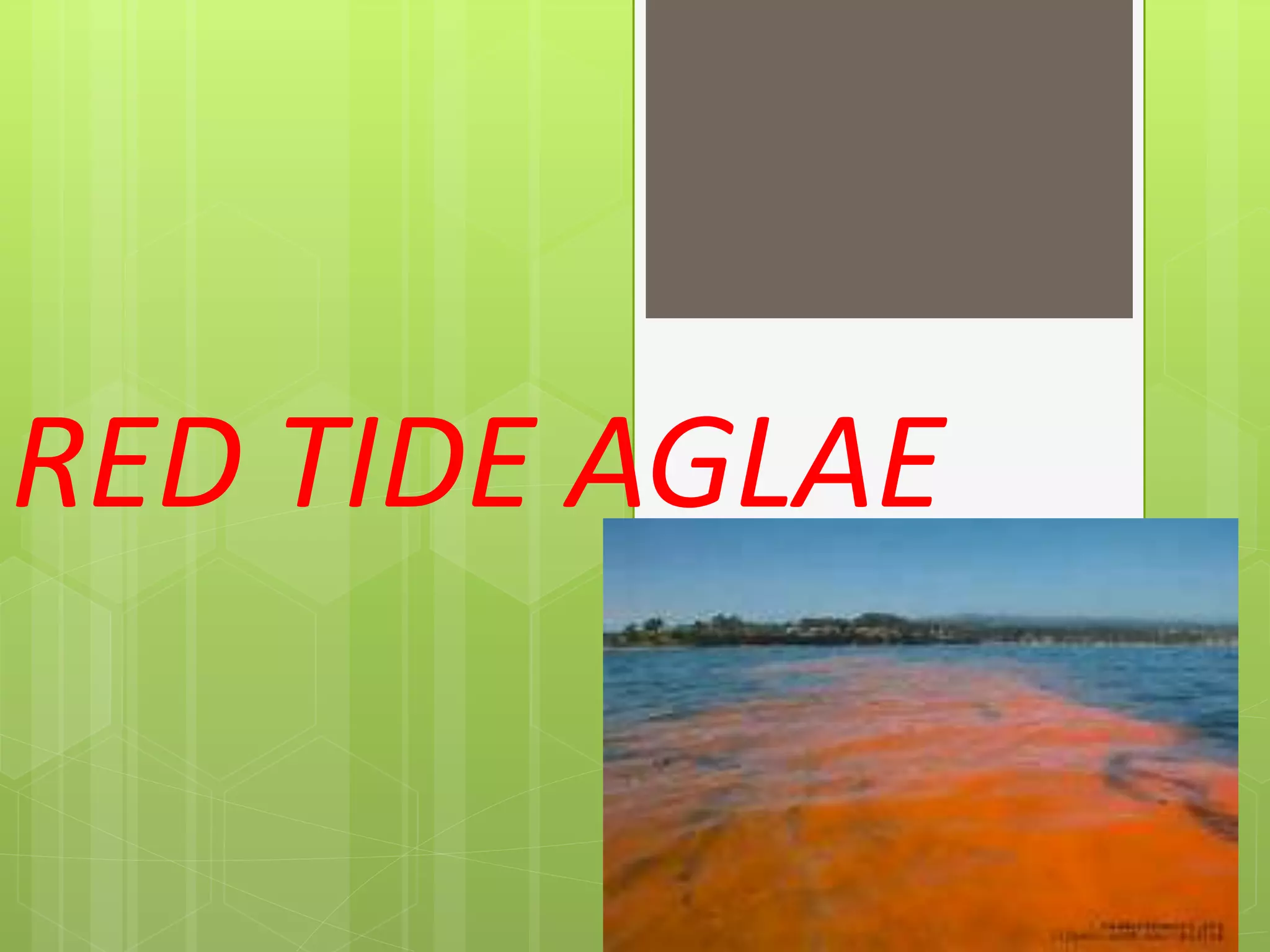
o Red tides are a marine phenomenon in which
water is stained a red, brown, or yellowish color
because of the temporary abundance of a
particular species of
pigmented dinoflagellates Also called
phytoplankton, or planktonic algae, these single-
celled organisms of the class Dinophyceae move
using a tail-like structure called a flagellum. They
also photosynthesize, and it is their photosynthetic
pigments that can tint the water during blooms
It is sometimes used to refer more broadly to other
types of algal blooms as well. K. brevis produces a
potent neurotoxin, known as the brevetoxin which
can cause illness and mortalities in fish, seabirds,
and marine mammals. Humans are susceptible to
the effects of exposure to brevetoxins as well, as
public health surveillance has documented human
intoxication from eating seafood that is
contaminated or respiratory complaints from
inhaling contaminated aerosols
Red tides are events in which estuarine, marine, or
fresh water algae accumulate rapidly in the water
column, resulting in coloration of the surface water
BACTERIAS AND ORGANISM IN RED
TIDE
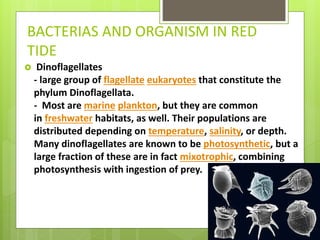
 Dinoflagellates
- large group of flagellate eukaryotes that constitute the
phylum Dinoflagellata.
- Most are marine plankton, but they are common
in freshwater habitats, as well. Their populations are
distributed depending on temperature, salinity, or depth.
Many dinoflagellates are known to be photosynthetic, but a
large fraction of these are in fact mixotrophic, combining
photosynthesis with ingestion of prey.
How It contaminate
 The growth of marine phytoplankton is generally limited
by the availability of nitrates and phosphates, which can be
abundant in agricultural run-off as well as coastal
upwelling zones.
 occurrence of red tides in some locations appears to be
entirely natural .
 while in others they appear to be a result of increased
nutrient loading from human activities.
 There is no one single cause of red tides and other harmful
algae blooms, but abundant nutrients need to be present
in sea water to support the explosive growth of
dinoflagellates.
 common source of nutrients include water pollution:
scientists generally believe that coastal pollution from
human sewage, agricultural runoff and other sources
contribute to red tides, along with rising ocean
temperatures.
 currents, called upwellings, come from nutrient-rich
bottom layers of the ocean, and bring to the surface
massive amounts of deep-water minerals and other
nutrients
 Some algal blooms on the Pacific coast have also been
linked to occurrences of large-scale climatic oscillations
such as El Niño events
Toxin in Red Tide
 Revis blooms produce powerful natural
neurotoxins known as brevetoxins.
 The brevetoxins bind to voltage-gated sodium
channels, an important structure of cell
membranes. Binding results in persistent
activation of nerve cells, which interferes with
neural transmission leading to health problems
Human health effects
 Neurotoxic shellfish poisoning is caused by the
consumption of shellfish contaminated by brevetoxins
which are produced by the dinoflagellate, Karenia
brevis. There are often both gastrointestinal and
neurological symptoms of NSP including diarrhea,
nausea/vomiting, numbness or tingling in lips face or
extremities, disorientation, and partial paralysis.
 common human health problems associated with red
tides and other harmful algae blooms are various types
of gastrointestinal, respiratory, and neurological
disorders.
EFFECTS ON ANIMAL POPULATIONS
 Most shellfish filter seawater to collect their food,
As they eat, they may consume toxic
phytoplankton and the toxins accumulate in their
flesh, eventually becoming dangerous, even
deadly, to fish, birds, animals and humans.
 The dead fish continue to be health hazards,
because of the risk they will be eaten by birds and
marine mammals.
Prevention
 There is no way to prevent Red Tide. It is a naturally occurring
bacteria that lives in the ocean. The more storms or waves that
mix the bottom sediments up into the water column allows
the bacteria to breed and produce the toxic Red Tide
 Do not consume clams or mussels found floating in ocean
waters. They are likely to have filtered much more algae-
containing water than those from flats or beds, and therefore
usually will have much higher concentrations of the toxin that
causes paralytic poisoning.

Red tide aglae

  • 1.
  • 2.
    What is RedTide o Red tides are a marine phenomenon in which water is stained a red, brown, or yellowish color because of the temporary abundance of a particular species of pigmented dinoflagellates Also called phytoplankton, or planktonic algae, these single- celled organisms of the class Dinophyceae move using a tail-like structure called a flagellum. They also photosynthesize, and it is their photosynthetic pigments that can tint the water during blooms
  • 3.
    It is sometimesused to refer more broadly to other types of algal blooms as well. K. brevis produces a potent neurotoxin, known as the brevetoxin which can cause illness and mortalities in fish, seabirds, and marine mammals. Humans are susceptible to the effects of exposure to brevetoxins as well, as public health surveillance has documented human intoxication from eating seafood that is contaminated or respiratory complaints from inhaling contaminated aerosols Red tides are events in which estuarine, marine, or fresh water algae accumulate rapidly in the water column, resulting in coloration of the surface water
  • 4.
    BACTERIAS AND ORGANISMIN RED TIDE  Dinoflagellates - large group of flagellate eukaryotes that constitute the phylum Dinoflagellata. - Most are marine plankton, but they are common in freshwater habitats, as well. Their populations are distributed depending on temperature, salinity, or depth. Many dinoflagellates are known to be photosynthetic, but a large fraction of these are in fact mixotrophic, combining photosynthesis with ingestion of prey.
  • 5.
    How It contaminate The growth of marine phytoplankton is generally limited by the availability of nitrates and phosphates, which can be abundant in agricultural run-off as well as coastal upwelling zones.  occurrence of red tides in some locations appears to be entirely natural .  while in others they appear to be a result of increased nutrient loading from human activities.  There is no one single cause of red tides and other harmful algae blooms, but abundant nutrients need to be present in sea water to support the explosive growth of dinoflagellates.
  • 6.
     common sourceof nutrients include water pollution: scientists generally believe that coastal pollution from human sewage, agricultural runoff and other sources contribute to red tides, along with rising ocean temperatures.  currents, called upwellings, come from nutrient-rich bottom layers of the ocean, and bring to the surface massive amounts of deep-water minerals and other nutrients  Some algal blooms on the Pacific coast have also been linked to occurrences of large-scale climatic oscillations such as El Niño events
  • 7.
    Toxin in RedTide  Revis blooms produce powerful natural neurotoxins known as brevetoxins.  The brevetoxins bind to voltage-gated sodium channels, an important structure of cell membranes. Binding results in persistent activation of nerve cells, which interferes with neural transmission leading to health problems
  • 8.
    Human health effects Neurotoxic shellfish poisoning is caused by the consumption of shellfish contaminated by brevetoxins which are produced by the dinoflagellate, Karenia brevis. There are often both gastrointestinal and neurological symptoms of NSP including diarrhea, nausea/vomiting, numbness or tingling in lips face or extremities, disorientation, and partial paralysis.  common human health problems associated with red tides and other harmful algae blooms are various types of gastrointestinal, respiratory, and neurological disorders.
  • 9.
    EFFECTS ON ANIMALPOPULATIONS  Most shellfish filter seawater to collect their food, As they eat, they may consume toxic phytoplankton and the toxins accumulate in their flesh, eventually becoming dangerous, even deadly, to fish, birds, animals and humans.  The dead fish continue to be health hazards, because of the risk they will be eaten by birds and marine mammals.
  • 10.
    Prevention  There isno way to prevent Red Tide. It is a naturally occurring bacteria that lives in the ocean. The more storms or waves that mix the bottom sediments up into the water column allows the bacteria to breed and produce the toxic Red Tide  Do not consume clams or mussels found floating in ocean waters. They are likely to have filtered much more algae- containing water than those from flats or beds, and therefore usually will have much higher concentrations of the toxin that causes paralytic poisoning.