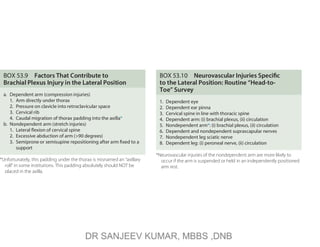
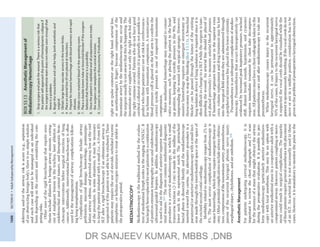
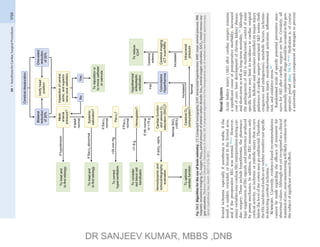
TABLE
31.20
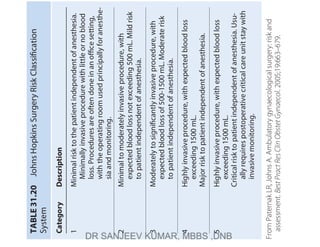
Johns
Hopkins
Surgery
Risk
Classification
System
Category
Description
1
Minimal
risk
to
the
patient
independent
of
anesthesia.
Minimally
invasive
procedure
with
little
or
no
blood
loss.
Procedures
are
often
done
in
an
office
setting,
with
the
operating
room
used
principally
for
anesthe-
sia
and
monitoring.
2
Minimal
to
moderately
invasive
procedure,
with
expected
blood
loss
not
exceeding
500
mL.
Mild
risk
to
patient
independent
of
anesthesia.
3
Moderately
to
significantly
invasive
procedure,
with
expected
blood
loss
of
500-1500
mL.
Moderate
risk
to
patient
independent
of
anesthesia.
4
Highly
invasive
procedure,
with
expected
blood
loss
exceeding
1500
mL.
Major
risk
to
patient
independent
of
anesthesia.
5
Highly
invasive
procedure,
with
expected
blood
loss
exceeding
1500
mL.
Critical
risk
to
patient
independent
of
anesthesia.
Usu-
ally
requires
postoperative
critical
care
unit
stay
with
invasive
monitoring.
From
Paternak
LR,
Johns
A.
Ambulatory
gynaecological
surgery:
risk
and
assessment.
Best
Pract
Res
Clin
Obstet
Gynaecol.
2005;19:663–679.
31
•
Preoperative
Evaluation
989
(see
section
on
“Patients
Scheduled
for
Lung
Resection”
and
Chapter
53).
219
PFTs
also
play
an
important
diagnostic
role.
For
example,
they
help
differentiate
between
pulmonary
and
cardiac
causes
of
dyspnea
of
unknown
origin.
Aside
from
these
specific
circumstances,
the
prognostic
value
of
preoperative
PFTs
is
limited.
Practice
guidelines
from
the
American
Col-
lege
of
Physicians
recommend
against
routine
preoperative
spirometry
for
estimating
risks
for
pulmonary
complications
after
noncardiothoracic
surgery.
10
Research
has
not
found
a
consistent
link
between
poor
PFT
results
and
increased
risks
for
perioperative
pulmonary
complications,
with
older
studies
being
generally
limited
by
important
methodologic
flaws.
218
Furthermore,
there
does
not
seem
to
be
a
critical
PFT
thresh-
old
below
which
patients
should
not
be
offered
surgery.
For
example,
in
a
previous
cohort
study,
individuals
with
severe
obstructive
findings
(i.e.,
FEV
1
<
50%
of
predicted
and
FEV
1
/
FVC
ratio
<
0.7)
had
reasonably
acceptable
risks
of
postopera-
tive
death
(5.6%)
and
respiratory
failure
(5.6%).
452
Preoperative
Medication
Management
The
patient’s
comorbidities
and
planned
procedure
must
inform
medication
management
during
the
perioperative
period.
Some
medications
have
beneficial
effects
during
surgi-
cal
procedures,
whereas
others
may
be
detrimental.
In
some
cases,
abrupt
withdrawal
of
medications
can
have
a
negative
effect.
Management
of
specific
preoperative
medications
has
been
discussed
in
the
previous
sections
of
this
chapter.
These
recommendations
are
outlined
again
in
Box
31.15.
Although
issues
pertaining
to
many
drugs
are
covered
in
other
sections
of
this
chapter,
several
issues
merit
special
mention.
NSAIDs
have
reversible
antiplatelet
effects;
hence,
once
the
drugs
have
been
eliminated,
platelet
function
returns
to
normal.
Concomitant
NSAID
use
does
not
appear
to
increase
the
risk
of
spinal
hematoma
with
neuraxial
anes-
thesia.
196
Preoperative
discontinuation
of
NSAIDs
may
be
of
value
in
patients
at
risk
for
perioperative
AKI.
Typi-
cally,
NSAIDs
are
discontinued
24
to
72
hours
preopera-
tively.
Earlier
discontinuation
does
not
increase
safety,
and
it
may
be
burdensome
to
many
patients
with
significant
arthritis
or
chronic
pain.
COX-2
inhibitors
(e.g.,
celecoxib)
have
minimal
effect
on
platelet
function
and
can
usually
be
continued
in
the
perioperative
period.
However,
the
long-
term
COX-2
inhibitor
use
in
the
nonoperative
setting
does
increase
the
risk
of
cardiac
events,
in
comparison
with
pla-
cebo
or
naproxen.
453
Conversely,
COX-2
inhibitors
have
a
cardiac
risk
profile
similar
to
that
of
ibuprofen
or
diclof-
enac.
453
In
general,
no
clear
evidence
indicates
increased
Instruct
patients
to
take
these
medications
with
a
small
sip
of
water,
even
if
fasting.
1.
Antihypertensive
medications
Continue
on
the
day
of
surgery,
except
for
ACEIs
and
ARBs
2.
Cardiac
medications
(e.g.,
β-blockers,
digoxin)
Continue
on
the
day
of
surgery.
3.
Antidepressants,
anxiolytics,
and
other
psychiatric
medications
Continue
on
the
day
of
surgery.
4.
Thyroid
medications
Continue
on
the
day
of
surgery.
5.
Oral
contraceptive
pills
Continue
on
the
day
of
surgery.
6.
Eye
drops
Continue
on
the
day
of
surgery.
7.
Heartburn
or
reflux
medications
Continue
on
the
day
of
surgery.
8.
Opioid
medications
Continue
on
the
day
of
surgery.
9.
Anticonvulsant
medications
Continue
on
the
day
of
surgery.
10.
Asthma
medications
Continue
on
the
day
of
surgery.
11.
Corticosteroids
(oral
and
inhaled)
Continue
on
the
day
of
surgery.
12.
Statins
Continue
on
the
day
of
surgery.
13.
Aspirin
Continue
aspirin
in
patients
with
prior
percutaneous
coronary
intervention,
high-grade
IHD,
and
significant
CVD.
Otherwise,
discontinue
aspirin
3
days
before
surgery.
14.
P2Y
12
inhibitors
(e.g.,
clopidogrel,
ticagrelor,
prasugrel,
ticlopidine)
Patients
having
cataract
surgery
with
topical
or
general
anes-
thesia
do
not
need
to
stop
taking
thienopyridines.
If
reversal
of
platelet
inhibition
is
necessary,
the
time
interval
for
discontinu-
ing
these
medications
before
surgery
is
5–7
days
for
clopi-
dogrel,
5–7
days
for
ticagrelor,
7–10
days
for
prasugrel,
and
10
days
for
ticlopidine.
Do
not
discontinue
P2Y
12
inhibitors
in
pa-
tients
who
have
drug-eluting
stents
until
they
have
completed
6
mo
of
dual
antiplatelet
therapy,
unless
patients,
surgeons,
and
cardiologists
have
discussed
the
risks
of
discontinuation.
The
same
applies
to
patients
with
bare
metal
stents
until
they
have
completed
1
month
of
dual
antiplatelet
therapy.
15.
Insulin
For
all
patients,
discontinue
all
short-acting
(e.g.,
regular)
insulin
on
the
day
of
surgery
(unless
insulin
is
administered
by
continuous
pump).
Patients
with
type
2
diabetes
should
take
none,
or
up
to
one
half
of
their
dose
of
long-acting
or
combination
(e.g.,
70/30
preparations)
insulin,
on
the
day
of
surgery.
Patients
with
type
1
diabetes
should
take
a
small
amount
(usually
one
third)
of
their
usual
morning
long-acting
insulin
dose
on
the
day
of
surgery.
Pa-
tients
with
an
insulin
pump
should
continue
their
basal
rate
only.
16.
Topical
medications
(e.g.,
creams
and
ointments)
Discontinue
on
the
day
of
surgery.
17.
Non-insulin
antidiabetic
medications
Discontinue
on
the
day
of
surgery
(exception:
SGLT2
inhibitors
should
be
discontinued
24
hours
before
elective
surgery)
18.
Diuretics
Discontinue
on
the
day
of
surgery
(exception:
thiazide
diuretics
taken
for
hypertension,
which
should
be
continued
on
the
day
of
surgery).
19.
Sildenafil
(Viagra)
or
similar
drugs
Discontinue
24
h
before
surgery.
20.
COX-2
inhibitors
Continue
on
the
day
of
surgery
unless
the
surgeon
is
concerned
about
bone
healing.
21.
Nonsteroidal
antiinflammatory
drugs
Discontinue
48
hours
before
the
day
of
surgery.
22.
Warfarin
(Coumadin)
Discontinue
5
days
before
surgery,
except
for
patients
having
cataract
surgery
without
a
bulbar
block.
23.
Monoamine
oxidase
inhibitors
Continue
these
medications
and
adjust
the
anesthesia
plan
accordingly.
BOX
31.15
Preoperative
Management
of
Medications
ACEI,
Angiotensin
converting
enzyme
inhibitors;
ARB,
angiotensin
receptor
blocker;
COX-2,
cyclooxygenase-2;
CVD,
cerebrovascular
disease;
IHD,
ischemic
heart
disease;
P2Y12,
adenosine
diphosphate
receptor;
SGLT2,
sodium-glucose
cotransporter
2
inhibitors.
Class
I
□
β-Blockers
should
be
continued
in
patients
undergoing
surgery
who
have
been
on
β-blockers
chronically.
111-117
(Level
of
Evi-
dence:
B)
Class
IIa
□
It
is
reasonable
for
the
management
of
β-blockers
after
surgery
to
be
guided
by
clinical
circumstances,
independent
of
when
the
agent
was
started.
110,117,118
(Level
of
Evidence:
B)
Class
IIb
□
In
patients
with
intermediate-
or
high-risk
myocardial
ischemia
noted
in
preoperative
risk
stratification
tests,
it
may
be
reason-
able
to
begin
perioperative
β-blockers.
119
(Level
of
Evidence:
C)
□
In
patients
with
three
or
more
RCRI
risk
factors
(e.g.,
diabetes
mellitus,
heart
failure,
coronary
artery
disease,
renal
insuffi-
ciency,
cerebrovascular
accident),
it
may
be
reasonable
to
begin
β-blockers
before
surgery.
117
(Level
of
Evidence:
B)
□
In
patients
with
a
compelling
long-term
indication
for
β-blocker
therapy
but
no
other
RCRI
risk
factors,
initiating
β-blockers
in
the
perioperative
setting
as
an
approach
to
reduce
periopera-
tive
risk
is
of
uncertain
benefit.
111,117,120
(Level
of
Evidence:
B)
□
In
patients
in
whom
β-blocker
therapy
is
initiated,
it
may
be
reasonable
to
begin
perioperative
β-blockers
long
enough
in
advance
to
assess
safety
and
tolerability,
preferably
more
than
1
day
before
surgery.
110,121-123
(Level
of
Evidence:
B)
Class
III:
Harm
□
β-Blocker
therapy
should
not
be
started
on
the
day
of
sur-
gery.
110
(Level
of
Evidence:
B)
BOX
32.3
2014
ACC/AHA
Recommendations
for
Perioperative
β-Blockade
RCRI,
Revised
cardiac
risk
index.
From
Fleisher
LA,
Fleischmann
KE,
Auerbach
AD,
et
al.
2014
ACC/AHA
guideline
on
perioperative
cardiovascular
evaluation
and
manage-
ment
of
patients
undergoing
noncardiac
surgery:
a
report
of
the
American
College
of
Cardiology/American
Heart
Association
Task
Force
on
practice
guidelines.
J
Am
Coll
Cardiol.
2014;64(22):e77–e137.
Remove the cap and hold the inhaler upright.
Shake the inhaler.
Tilt the head back slightly and exhale steadily to functional
residual capacity.
Position the inhaler by using a spacer between the actuator and
the mouth.
Press down on the inhaler while taking a slow, deep breath (3-5 s).
Hold the full inspiration for at least 5 and up to 10 s, if possible, to
allow the medication to reach deeply into the lungs.
Repeat inhalations as directed. Waiting 1 min after inhalation of
the bronchodilator may permit subsequent inhalations to pen-
etrate more deeply into the lungs and is necessary to ensure
proper delivery of the dose. Rinse your mouth and expectorate
after using the inhaler.
BOX 32.4 Procedures for Correct Use of a
Metered-Dose Inhaler
Preoperative Assessment
□ Review a patient’s preoperative history and perform a physical
examination to identify: body habitus, preexisting neurologic
symptoms, diabetes mellitus, peripheral vascular disease, alcohol
dependency, arthritis, and sex.
□ When judged appropriate, ascertain whether patients can com-
fortably tolerate the anticipated position.
Upper Extremity Positioning
□ Positioning Strategies to Reduce Perioperative Brachial Plexus
Neuropathy
□ When possible, limit arm abduction in a supine patient to 90
degrees. The prone position may allow patients to comfortably
tolerate abduction of their arms to greater than 90 degrees.
□ Positioning Strategies to Reduce Perioperative Ulnar Neuropathy
□ Supine Patient with Arm on an Armboard: Position the upper
extremity to decrease pressure on the postcondylar groove of
the humerus (ulnar groove). Either supination or the neutral
forearm positions may be used to facilitate this action.
□ Supine Patient with Arm tucked at Side: Place the forearm in a
neutral position.
□ Flexion of the Elbow: When possible, avoid flexion of the elbow
to decrease the risk of ulnar neuropathy.
□ Positioning Strategies to Reduce Perioperative Radial Neuropathy
□ Avoid prolonged pressure on the radial nerve in the spiral
groove of the humerus.
□ Positioning Strategies to Reduce Perioperative Median Neuropa-
thy
□ Avoid extension of the elbow beyond the range that is
comfortable during the preoperative assessment to prevent
stretching of the median nerve.
□ Periodic assessment of upper extremity position during
procedures
□ Periodic perioperative assessments may be performed to
ensure maintenance of the desired position.
Lower Extremity Positioning
□ Positioning Strategies to Reduce Perioperative Sciatic Neuropathy
□ Stretching of the Hamstring Muscle Group: Positions that
stretch the hamstring muscle group beyond the range that
is comfortable during the preoperative assessment may be
avoided to prevent stretching of the sciatic nerve.
□ Limiting Hip Flexion: Since the sciatic nerve or its branches
cross both the hip and the knee joints, assess extension and
flexion of these joints when determining the degree of hip
flexion.
□ Positioning Strategies to Reduce Perioperative Femoral Neuropa-
thy
□ When possible, avoid extension or flexion of the hip to de-
crease the risk of femoral neuropathy.
□ Positioning Strategies to Reduce Perioperative Peroneal Neu-
ropathy
□ Avoid prolonged pressure on the peroneal nerve at the fibular
head.
Protective Padding
□ Padded armboards may be used to decrease the risk of upper
extremity neuropathy.
□ Chest rolls in the laterally positioned patient may be used to
decrease the risk of upper extremity neuropathy.
□ Specific padding to prevent pressure of a hard surface against the
peroneal nerve at the fibular head may be used to decrease the
risk of peroneal neuropathy.
□ Avoid the inappropriate use of padding (padding too tight) to
decrease the risk of perioperative neuropathy.
Equipment
□ When possible, avoid the improper use of automated blood
pressure cuffs on the arm to reduce the risk of upper extremity
neuropathy.
□ When possible, avoid the use of shoulder braces in a steep head-
down position to decrease the risk of perioperative neuropathies.
Postoperative Assessment
□ Perform a simple postoperative assessment of extremity nerve
function for early recognition of peripheral neuropathies.
Documentation
□ Document specific perioperative positioning actions that may be
useful for continuous improvement processes.
BOX 34.1 Summary of the 2018 American Society of Anesthesiologists Practice Advisory for the
Prevention of Perioperative Peripheral Neuropathies
From the Practice Advisory for the prevention of perioperative peripheral neuropathies: an updated report by the American Society of Anesthesiolo-
gists Task Force on prevention of perioperative peripheral neuropathies. Anesthesiology. 2018;128:11–26.
I. Preoperative Considerations
□ At this time, there were no identifiable preoperative patient
characteristics that predispose patients to perioperative posterior
ischemic optic neuropathy (ION).
□ There is no evidence that an ophthalmic or neuro-ophthalmic
evaluation would be useful in identifying patients at risk for
perioperative visual loss.
□ The risk of perioperative ION may be increased in patients who
undergo prolonged procedures, have substantial blood loss, or
both.
□ Prolonged procedures, substantial blood loss, or both are associ-
ated with a small, unpredictable risk of perioperative visual loss.
□ Because the frequency of visual loss after spine surgery of short
duration is infrequent, the decision to inform patients who are
not anticipated to be “high risk” for visual loss should be deter-
mined on a case-by-case basis.
Intraoperative Management
Blood Pressure Management
□ Arterial blood pressure should be monitored continually in high-
risk patients.
□ The use of deliberate hypotensive techniques during spine
surgery can be associated with the development of perioperative
visual loss. Therefore the use of deliberate hypotension for these
patients should be determined on a case-by-case basis.
□ Central venous pressure monitoring should be considered in
high-risk patients. Colloids should be used along with crystalloids
to maintain intravascular volume in patients who have substan-
tial blood loss.
Management of Anemia
□ Hemoglobin or hematocrit values should be monitored periodi-
cally during surgery in high-risk patients who experience sub-
stantial blood loss. A transfusion threshold that would eliminate
the risk of perioperative visual loss related to anemia cannot be
established at this time.
Use of Vasopressors
□ There is insufficient evidence to provide guidance for the use of
α-adrenergic agonists in high-risk patients during spine surgery.
Patient Positioning
□ The Task Force believes that there is no pathophysiologic mecha-
nism by which facial edema can cause perioperative ION. There is
no evidence that ocular compression causes isolated periopera-
tive anterior ION or posterior ION. However, direct pressure on
the eye should be avoided to prevent central retinal artery occlu-
sion (CRAO).
□ The high-risk patient should be positioned so that the head is
level with or higher than the heart when possible.
Staging of Surgical Procedures
□ Although the use of staged spine surgery procedures in high-
risk patients may entail additional costs and patient risks (e.g.,
infection, thromboembolism, or neurologic injury), it also may
decrease these risks and the risk of perioperative visual loss in
some patients.
Postoperative Management
□ The consensus of the Task Force is that a high-risk patient’s vision
should be assessed when the patient becomes alert.
□ If there is concern regarding potential visual loss, an urgent
ophthalmologic consultation should be obtained to determine its
cause.
□ There is no role for antiplatelet drugs, steroids, or intraocular
pressure-decreasing drugs in the treatment of perioperative ION.
BOX 34.2 American Society of Anesthesiologists 2012 Task Force Summary of Advisory Statements
From Practice advisory for perioperative visual loss associated with spine surgery: an updated report by the American Society of Anesthesiologists Task
Force on Perioperative Visual Loss. Anesthesiology. 2012; 116: 274–285.
35
•
Neuromuscular
Disorders
Including
Malignant
Hyperthermia
and
Other
Genetic
Disorders
1123
Diagnosis
in
the
Operating
Room
and
Postanesthesia
Care
Unit
As
stated
earlier,
fulminant
MH
is
rare,
and
early
signs
of
clini-
cal
MH
may
be
subtle
(Box
35.1).
These
signs
must
be
distin-
guished
from
other
disorders
with
similar
signs
(Box
35.2).
When
the
diagnosis
is
obvious
(i.e.,
fulminant
MH
or
suc-
cinylcholine-induced
rigidity
with
rapid
metabolic
changes),
marked
hypermetabolism
and
heat
production
occur,
and
there
may
be
little
time
left
for
specific
therapy
to
prevent
death
or
irreversible
morbidity.
If
the
syndrome
begins
with
slowly
increasing
end-tidal
CO
2
(defined
earlier),
specific
ther-
apy
can
await
a
complete
clinical
workup
before
treatment.
In
general,
MH
is
not
expected
to
occur
when
no
triggers
are
administered
(see
“Anesthesia
for
Susceptible
Patients”).
However,
several
confirmed
fulminant
nonanesthetic
cases
of
MH
that
resulted
in
death
have
been
reported
(see
“Non-
anesthetic
Malignant
Hyperthermia”).
148
When
volatile
anesthetics
or
succinylcholine
are
used,
MH
should
be
suspected
whenever
there
is
an
unexpected
increase
in
end-tidal
CO
2
(ETCO
2
),
undue
tachycardia,
tachypnea,
arrhythmias,
mottling
of
the
skin,
cyanosis,
muscle
rigidity,
sweating,
increased
body
temperature,
or
unstable
blood
pressure.
If
any
of
these
occur,
signs
of
increased
metabolism,
acidosis,
or
hyperkalemia
must
be
sought.
The
most
common
cause
for
sudden
ETCO
2
dur-
ing
general
anesthesia
and
sedation
is
hypoventilation.
Increased
minute
ventilation
should
be
able
to
correct
such
a
problem.
The
diagnosis
of
MH
can
be
supported
by
the
analysis
of
arterial
or
venous
blood
gases
which
demonstrates
a
mixed
respiratory
and
metabolic
acidosis;
184
however,
the
respi-
ratory
component
of
acidosis
may
be
predominate
in
the
very
early
stage
of
the
onset
of
fulminant
MH.
O
2
and
CO
2
change
more
markedly
in
the
central
venous
compartment
than
in
arterial
blood;
therefore
end-expired
or
venous
CO
2
levels
more
accurately
reflect
whole-body
stores.
Venous
CO
2
,
unless
the
blood
drains
an
area
of
increased
metabolic
activity,
should
have
PCO
2
levels
of
only
about
5
mm
Hg
greater
than
that
of
expected
or
measured
PaCO
2
.
In
small
children,
particularly
those
without
oral
food
or
fluid
for
a
prolonged
period,
the
base
deficit
may
be
5
mEq/L
because
of
their
smaller
energy
stores.
Any
patient
suspected
of
having
an
MH
episode
should
be
reported
to
the
North
American
MH
Registry
via
the
adverse
metabolic/muscular
reaction
to
anesthesia
(AMRA)
report
available
from
the
website
at
http://anest.ufl.edu/namhr/
namhr-report-forms/.
TREATMENT
Acute
management
for
MH
can
be
summarized
as
follows:
1.
Discontinue
all
triggering
anesthetics,
maintain
intrave-
nous
agents,
such
as
sedatives,
opioids,
and
nondepolar-
izing
muscular
blockers
as
needed,
and
hyperventilate
with
100%
oxygen
with
a
fresh
flow
to
at
least
10
L/min.
With
increased
aerobic
metabolism,
normal
ventilation
must
increase.
However,
CO
2
production
is
also
increased
because
of
neutralization
of
fixed
acid
by
bicarbonate;
hyperventilation
removes
this
additional
CO
2
.
2.
Administer
dantrolene
rapidly
(2.5
mg/kg
intrave-
nously
[IV]
to
a
total
dose
of
10
mg/kg
IV)
every
5
to
10
minutes
until
the
initial
symptoms
subside.
Early
Signs
Elevated
end-tidal
CO
2
Tachypnea
and/or
tachycardia
Masseter
spasm
if
succinylcholine
has
been
used
Generalized
muscle
rigidity
Mixed
metabolic
and
respiratory
acidosis
Profuse
sweating
Mottling
of
skin
Cardiac
arrhythmias
Unstable
blood
pressure
Late
Signs
Hyperkalemia
Rapid
increase
of
core
body
temperature
Elevated
creatine
phosphokinase
levels
Gross
myoglobinemia
and
myoglobinuria
Cardiac
arrest
Disseminated
intravascular
coagulation
BOX
35.1
Clinical
Signs
of
Malignant
Hyperthermia
Anaphylactic
reaction
Alcohol
therapy
for
limb
arteriovenous
malformation
Contrast
dye
injection
Cystinosis
Diabetic
coma
Drug
toxicity
or
abuse
Elevated
end-tidal
CO
2
due
to
laparoscopic
operation
Environmental
heat
gain
more
than
loss
Equipment
malfunction
with
increased
carbon
dioxide
Exercise
hyperthermia
Freeman-Sheldon
syndrome
Generalized
muscle
rigidity
Heat
stroke
Hyperthyroidism
Hyperkalemia
Hypokalemic
periodic
paralysis
Hypoventilation
or
low
fresh
gas
flow
Increased
ETCO
2
from
laparoscopic
surgery
Insufficient
anesthesia
and/or
analgesia
Malignant
neuroleptic
syndrome
Muscular
dystrophies
(Duchenne
and
Becker)
Myoglobinuria
Myotonias
Osteogenesis
imperfecta
Pheochromocytoma
Prader-Willi
syndrome
Recreational
drugs
Rhabdomyolysis
Sepsis
Serotonin
syndrome
Stroke
Thyroid
crisis
Ventilation
problems
Wolf-Hirschhorn
syndrome
BOX
35.2
Conditions
and
Disorders
that
May
Mimic
Malignant
Hyperthermia
SECTION
III
•
Anesthesia
Management
1124
3.
Administer
bicarbonate
(1-4
mEq/kg
IV)
to
correct
the
metabolic
acidosis
with
frequent
monitoring
of
blood
gases
and
pH.
4.
Control
fever
by
administering
iced
fluids,
cooling
the
body
surface,
cooling
body
cavities
with
sterile
iced
fluids,
and
if
necessary,
using
a
heat
exchanger
with
a
pump
oxygenator.
Cooling
should
be
halted
at
38°C
to
prevent
inadvertent
hypothermia.
5.
Monitor
and
treat
arrhythmia.
Advanced
cardiac
life
support
protocol
may
be
applied.
6.
Monitor
and
maintain
urinary
output
to
greater
than
1
to
2
mL/kg/h
and
establish
diuresis
if
urine
output
is
inad-
equate.
Administer
bicarbonate
to
alkalinize
urine
to
pro-
tect
the
kidney
from
myoglobinuria-induced
renal
failure.
7.
Further
therapy
is
guided
by
blood
gases,
electrolytes,
CK,
temperature,
muscle
tone,
and
urinary
output.
Hyperkalemia
should
be
treated
with
bicarbonate,
glu-
cose,
and
insulin,
typically
10
units
of
regular
insulin
and
50
mL
of
50%
dextrose
for
adult
patients.
The
most
effective
way
to
lower
serum
potassium
is
reversal
of
MH
by
effective
doses
(ED)
of
dantrolene.
In
severe
cases,
cal-
cium
chloride
or
calcium
gluconate
may
be
used.
8.
Recent
data
demonstrated
that
magnesium
level
could
be
a
prerequisite
for
dantrolene
efficacy
in
managing
MH
crisis.
9.
Analyze
coagulation
studies
(e.g.,
international
nor-
malized
ratio
[INR],
platelet
count,
prothrombin
time,
fibrinogen,
fibrin
split,
or
degradation
products).
10.
Once
the
initial
reaction
is
controlled,
continued
moni-
toring
in
the
intensive
care
unit
for
24
to
48
hours
is
usually
recommended.
Adequate
personnel
support
is
critical
to
the
successful
management
of
such
a
crisis.
Discontinuation
of
the
trig-
ger
may
be
adequate
therapy
for
acute
MH
if
the
onset
is
slow
or
if
exposure
was
brief.
Changing
the
breathing
cir-
cuit
and
CO
2
absorbent
can
be
time-consuming.
However,
application
of
activated
charcoal
filters
may
rapidly
reduce
the
volatile
anesthetic
concentration
to
an
acceptable
level
in
less
than2
minutes,
if
they
are
readily
available.
185
Dantrolene
used
to
be
packaged
in
20-mg
bottles
with
sodium
hydroxide
for
a
pH
of
9.5
(otherwise
it
will
not
dis-
solve)
and
with
3
g
of
mannitol
(converts
the
hypotonic
solution
to
isotonic).
The
initial
dose
should
be
2.5
mg/
kg
dantrolene
reconstituted
in
sterile
water
and
adminis-
tered
intravenously.
Dantrolene
must
be
reconstituted
in
sterile
water
rather
than
salt
solutions
or
it
will
precipi-
tate.
It
has
been
shown
that
prewarming
of
sterile
water
may
expedite
the
solubilization
of
dantrolene
compared
to
water
in
ambient
temperature.
186
In
2009,
a
newer,
rapid
soluble
lyophilized
powder
form
of
dantrolene
became
available
for
intravenous
use.
It
reconstitutes
in
less
than
a
minute
which
is
much
faster
than
the
older
version.
187
The
higher
dosing
capacity,
250
mg
per
vial,
of
the
newer
version
of
dantrolene
also
reduces
the
stor-
age
space
with
a
similar
recommended
shelf
life
as
the
older
versions.
In
awake,
healthy
volunteers,
the
maximum
twitch
depression
occurs
at
a
dantrolene
dose
of
2.4
mg/kg.
188
Therefore
it
is
not
surprising
that
at
therapeutic
concen-
trations,
dantrolene
may
prolong
the
need
for
intubation
and
assisted
ventilation.
Brandom
and
associates
reviewed
the
complications
associated
with
the
administration
of
dantrolene
from
1987
to
2006
using
the
dataset
in
the
NAMHR
via
the
AMRA
reports
and
found
that
the
most
frequent
complications
of
dantrolene
were
muscle
weak-
ness
(21.7%),
phlebitis
(9%),
gastrointestinal
upset
(4.1%),
respiratory
failure
(3.8%),
hyperkalemia
(3.3%),
and
exces-
sive
secretions
(8.2%).
189
Given
its
high
pH,
it
is
advisable
to
administer
dantrolene
through
a
large
bore
IV
line.
It
has
been
demonstrated
that
dantrolene
interferes
with
EC
coupling
of
murine
intestinal
smooth
muscle
cells,
190
rat
gastric
fundus,
and
colon,
191
which
in
part
explains
its
gastrointestinal
side
effect.
Caution
should
be
used
when
ondansetron
is
to
be
used
in
this
setting.
As
a
serotonin
antagonist,
ondansetron
may
increase
serotonin
at
the
5-HT
2A
receptor
in
the
presynaptic
space.
In
MHS
individu-
als,
agonism
of
5-HT
2A
receptor
may
produce
a
deranged
response,
precipitating
MH.
192
The
clinical
course
will
determine
further
therapy
and
studies.
Dantrolene
should
probably
be
repeated
at
least
every
10
to
15
hours,
since
it
has
a
half-life
of
at
least
10
hours
in
children
and
adults.
188,193
The
total
dose
of
dan-
trolene
that
can
be
used
is
up
to
30
mg/kg
in
some
cases.
Recrudescence
of
MH
can
approach
50%,
usually
within
6.5
hours.
194,195
When
indicated,
calcium
and
cardiac
glycosides
may
be
used
safely.
They
can
be
lifesaving
dur-
ing
persistent
hyperkalemia.
Slow
voltage-gated
calcium
channel
blockers
do
not
increase
porcine
survival.
196,197
Instead,
a
recent
study
by
Migita
demonstrated
that
cal-
cium
channel
blockers,
including
dihydropyridine
(i.e.,
nifedipine),
phenylalkylamine
(i.e.,
verapamil),
and
ben-
zothiazepine
(i.e.,
diltiazem),
led
to
increased
[Ca
2+
]
i
in
human
skeletal
muscle
cells.
Interestingly,
the
potency
of
such
calcium
release
is
correlated
with
the
number
of
binding
sites
on
DHPR
(i.e.,
nifedipine
>
verapamil
>
dil-
tiazem).
198
Clinical
doses
of
dantrolene
were
only
able
to
attenuate
20%
of
the
nifedipine-induced
[Ca
2+
]
i
surge.
198
Current
recommendations
of
MHAUS
discourage
the
use
of
calcium
channel
blockers
in
the
presence
of
dantrolene
because
they
can
worsen
the
hyperkalemia
resulting
in
cardiac
arrest.
Although
administration
of
magnesium
sulfate
could
not
prevent
the
development
of
MH
and
did
not
influence
the
clinical
course
in
succinylcholine-
induced
MH,
199
recent
data
suggested
that
dantrolene
might
require
magnesium
to
arrest
the
course
of
MH
trig-
gered
by
halothane.
200
Permanent
neurologic
sequelae,
such
as
coma
or
paralysis,
may
occur
in
advanced
cases,
probably
because
of
inadequate
cerebral
oxygenation
and
perfusion
for
the
increased
metabolism
and
because
of
the
fever,
acidosis,
hypo-osmolality
with
fluid
shifts,
and
potassium
release.
For
MH
cases
diagnosed
in
the
ambulatory
surgical
cen-
ters,
guidelines
have
been
recently
proposed
for
the
trans-
ferring
of
care
to
receiving
hospital
facilities.
201
Although
it
is
preferable
that
immediate
treatment
and
stabilization
of
the
patient
be
achieved
onsite,
several
factors
need
to
be
considered
before
implementation
of
a
transfer
plan,
which
include
capabilities
of
the
available
professionals
at
the
initial
treatment
and
receiving
facilities,
clinical
best
interests
of
patients,
and
capabilities
of
the
transfer
team.
202
The
validity
of
stocking
dantrolene
in
ambula-
tory
surgery
centers
was
confirmed
with
a
cost-effective-
ness
analysis.
203
1. Thoroughly inform the patient and family of the natural course
of MS, and the risk for perioperative worsening of symptoms
2. Continue preoperative immunosuppressive therapy
3. Type of general anesthetics is unlikely to affect the course of
disease
4. Minimize perioperative changes in fluid homeostasis and
hemodynamics
5. Monitor body temperature closely, avoid hyperthermia
6. It is reasonable to avoid depolarizing neuromuscular blocking
agents (NMBAs)
7. Nondepolarizing NMBAs can be used, but should be dosed
cautiously with monitoring of the neuromuscular transmission
8. Epidural anesthesia has been used successfully, but spinal
anesthesia is usually not recommended
9. Consider extended postoperative care in a monitored setting
if patient has severe preoperative weakness or respiratory com-
promise
BOX 35.3 Perioperative Considerations for
Patients with Multiple Sclerosis
SECTION
III
•
Anesthesia
Management
1128
for
fear
of
exacerbating
disease
symptoms.
Both
general
and
epidural
anesthesia
have,
however,
been
successfully
administered
to
these
patients
without
reported
complica-
tions
(Box
35.4).
Guillain-Barré
Syndrome
Guillain-Barré
syndrome
or
acute
inflammatory
demy-
elinating
polyradiculopathy
is
an
acute
inflammatory
poly-
neuritis
that
is
triggered
by
humoral
and
cell-mediated
autoimmune
response
to
a
sensitizing
event.
Although
the
etiology
is
unknown,
in
many
cases
a
timely
association
with
a
viral
(influenza-like)
or
bacterial
infection
or
even
lymphomatous
disease
can
be
demonstrated.
247
It
typically
presents
as
an
ascending
paralysis
characterized
by
symmet-
ric
weakness
that
can
vary
from
mild
difficulty
with
walking
to
nearly
complete
paralysis
of
all
extremities,
facial,
respi-
ratory,
and
bulbar
muscles.
Mild
variants
can
present
with
ataxia,
ophthalmoplegia,
or
hyporeflexia
without
significant
appendicular
weakness.
Fulminant
cases
can
present
with
severe
ascending
weakness
leading
to
complete
tetraplegia,
and
paralysis
of
cranial
nerves
and
phrenic
and
intercostal
nerves
with
facial
and
respiratory
muscle
weakness
neces-
sitating
tracheostomy
and
ventilatory
support.
248
Impor-
tantly,
patients
may
also
have
autonomic
involvement
that
could
lead
to
hemodynamic
instability
and
arrhythmias
with
risk
for
sudden
circulatory
collapse
and
fatal
cardiac.
The
diagnosis
is
made
after
careful
neurologic
exami-
nation
such
as
areflexia
and
progressive
motor
weakness,
clinical
and
electrophysiological
studies,
249
and
CSF
analy-
sis.
CSF
analysis
may
show
a
typical
increase
in
CSF
protein
in
combination
with
a
normal
cell
count,
which
is
a
classic
sign
of
the
disease.
Electromyogram
(EMG)
and
nerve
con-
duction
studies
may
be
normal
in
the
early
acute
period,
but
characteristic
segmental
demyelination
and
reduction
of
conduction
velocity
and
dispersion
or
absence
of
F-waves
are
usually
seen
within
1
to
2
weeks.
Management
is
primarily
supportive
and
includes
nutri-
tional
support,
respiratory
support,
and
measures
to
pre-
vent
aspiration.
Early
plasma
exchange,
typically
five
exchanges
with
5%
albumin
repletion,
may
mitigate
the
course
but
is
contraindicated
in
setting
of
hemodynamic
instability,
marked
dysautonomia,
and
active
bleeding.
250
Intravenous
immunoglobulin
(IVIG)
is
typically
adminis-
tered
in
the
setting
of
dysautonomia,
or
if
plasmapheresis
and
exchange
transfusion
are
contraindicated.
ANESTHETIC
CONSIDERATIONS
Cranial
nerve
paralysis
and
autonomic
dysfunction
predis-
pose
these
patients
to
an
increased
risk
for
aspiration.
Aspi-
ration
precautions,
including
decompression
of
the
stomach,
should
therefore
be
considered
before
the
induction
of
anes-
thesia.
Absence
of
compensatory
cardiovascular
responses
may
be
associated
with
exaggerated
hypotension
at
anes-
thesia
induction
or
in
response
to
hypovolemia.
Conversely,
laryngoscopy
or
noxious
stimuli
can
be
associated
with
an
exaggerated
increase
in
blood
pressure.
The
hemodynamic
instability
is
typically
short-lived
and
self-limited,
but
small
doses
of
short-acting
and
titratable
vasoactive
medications
may
be
required.
251
Careful
hemodynamic
monitoring
is
essential
and
continuous
monitoring
of
the
blood
pressure
with
an
arterial
catheter
is
often
considered.
These
patients
may
also
exhibit
abnormal
responses
to
NMBA;
succinylcho-
line
should
not
be
used
because
of
the
risk
of
hyperkalemia.
Nondepolarizing
muscle
relaxants
are
not
contraindicated
but
should
be
avoided
as
a
result
of
the
increased
sensitivity
and
risk
for
prolonged
muscle
weakness
in
the
postopera-
tive
period.
The
risk
for
autonomic
dysfunction,
respiratory
failure,
and
aspiration
may
require
assisted
or
mechanical
ventilation,
even
in
the
postoperative
period.
If
these
agents
are
used,
the
neuromuscular
transmission
should
be
closely
monitored
with
a
nerve
stimulator
as
both
resistance
and
sensitivity
to
these
agents
have
been
reported.
Great
care
should
be
taken
to
maintain
circulatory
stability,
including
adequate
cardiac
preload
and
afterload.
Careful
hemody-
namic
monitoring
is
therefore
essential
in
these
patients.
Regional
anesthesia
is
employed
by
some
practitioners
252
but
its
use
remains
controversial
as
it
has
been
reported
to
cause
worsening
of
neurological
symptoms.
253
General
anesthesia
can
be
used;
however,
the
combination
of
general
anesthesia
and
epidural
anesthesia
is
more
controversial
(Box
35.5).
254
CRITICAL
ILLNESS
POLYNEUROPATHY
AND
CRITICAL
ILLNESS
MYOPATHY
Despite
earlier
reports
of
a
rapid
development
of
weakness,
muscle
atrophy,
and
polyneuropathy
in
critically
ill
patients,
it
was
not
until
the
1987
report
by
Bolton
and
associates
that
the
characteristic
widespread
axonal
degeneration
of
motor
and
sensory
fibers
and
the
extensive
denervation
atrophy
of
limb
and
respiratory
muscle
associated
with
this
polyneuropathy
were
clearly
identified.
255
Although
the
1.
Exaggerated
respiratory
depression
and
sensitivity
to
sedatives
and
hypnotics
2.
Higher
risk
for
aspiration
and
pulmonary
complications
3.
Autonomic
dysfunction
with
risk
for
hemodynamic
instability
4.
Avoid
depolarizing
neuromuscular
blocking
agents
(NMBAs)
(risk
for
hyperkalemia);
nondepolarizing
NMBAs
may
cause
prolonged
and
profound
neuromuscular
blockade
5.
General
and
epidural
anesthesia
have
been
successfully
admin-
istered;
spinal
anesthesia
is
often
avoided
BOX
35.4
Perioperative
Considerations
for
Patients
with
Amyotrophic
Lateral
Sclerosis
1.
Autonomic
dysfunction
may
be
associated
with
hemodynamic
instability
and
an
exaggerated
response
to
anesthesia
induction
agents,
or
to
stimulating
interventions
such
as
laryngoscopy
2.
Depolarizing
neuromuscular
blocking
agents
(NMBAs)
should
be
avoided
due
to
an
upregulation
of
the
acetylcholine
recep-
tors
and
risk
for
hyperkalemic
response
3.
Nondepolarizing
NMBAs
can
be
used
but
are
commonly
also
avoided
because
of
the
risk
for
prolonged
weakness
4.
The
use
of
regional
anesthesia
is
controversial
and
may
be
as-
sociated
with
worsening
symptoms
BOX
35.5
Perioperative
Considerations
for
Patients
with
Acute
Inflammatory
Demyelinating
Polyradiculopathy
1.
Carefully
assess
and
document
the
extent
of
organ
system
involvement
preoperatively
(including
cardiac
abnormalities
in
the
KSS
patients).
2.
Minimize
fasting
period,
avoid
hypovolemia
and
glucose
store
depletion.
3.
Minimize
perioperative
stress
that
may
provoke
increased
energy
requirement.
4.
Pay
particular
attention
to
perioperative
temperature
control
given
that
the
mitochondrial
respiratory
chain
is
responsible
for
thermogenesis.
5.
It
is
reasonable
to
administer
glucose-containing
solutions
perio-
peratively,
and
to
avoid
lactate-containing
fluids
(e.g.,
lactated
Ringer
solution),
particularly
in
children
who
are
prone
to
lactic
acidosis.
6.
Every
class
of
anesthetic
agents
is
associated
with
theoretical
risk
of
complications,
but
both
volatile
anesthetics
and
propo-
fol
have
been
successfully
used
in
these
patients.
7.
Although
there
is
no
clear
evidence
of
an
association
between
malignant
hyperthermia
and
mitochondrial
disease,
it
is
impor-
tant
to
avoid
succinylcholine.
8.
Neuraxial
anesthesia
can
be
considered,
but
requires
careful
attention
to
preoperative
neurologic
dysfunction.
BOX
35.7
Perioperative
Considerations
for
Patients
with
Mitochondrial
Disease
Vital capacity <2-2.9 L
Duration of MG >6 years
Pyridostigmine dosage >750 mg/day
History of chronic pulmonary disease
Preoperative bulbar symptoms
History of myasthenic crisis
Intraoperative blood loss >1000 mL
Serum antiacetylcholine receptor antibody >100 nmol/mL
Pronounced decremental response on low frequency repetitive
nerve stimulation
BOX 35.8 Risk Factors of Postoperative
Ventilation for Patients with Myasthenia
Gravis396
Modified from Anesthesia for the patient with myasthenia gravis.
https://www.uptodate.com/contents/anesthesia-for-the-patient-with-
myasthenia-gravis; 2018. Accessed April 8, 2019.
MG, Myasthenia gravis.
Pain
Petechiae and ecchymoses
Limb edema
Venous stasis and thrombophlebitis
Peripheral neuropathy
Compartment syndrome
BOX 36.2 Complications of Noninvasive
Blood Pressure (NIBP) Measurement
Continuous, real-time blood pressure monitoring
Anticipated pharmacologic or mechanical cardiovascular manipu-
lation
Repeated blood sampling
Failure of indirect arterial blood pressure measurement
Supplementary diagnostic information from the arterial waveform
BOX 36.3 Indications for Arterial
Cannulation
Distal ischemia, pseudoaneurysm, arteriovenous fistula
Hemorrhage
Arterial embolization
Infection
Peripheral neuropathy
Misinterpretation of data
Misuse of equipment
BOX 36.4 Complications of Direct Arterial
Pressure Monitoring
□ Central venous pressure monitoring
□ Pulmonary artery catheterization and monitoring
□ Transvenous cardiac pacing
□ Temporary hemodialysis
□ Drug administration
□ Concentrated vasoactive drugs
□ Hyperalimentation
□ Chemotherapy
□ Agents irritating to peripheral veins
□ Prolonged antibiotic therapy (e.g., endocarditis)
□ Rapid infusion of fluids (via large cannulas)
□ Trauma
□ Major surgery
□ Aspiration of air emboli
□ Inadequate peripheral intravenous access
□ Sampling site for repeated blood testing
BOX 36.5 Indications for Central Venous
Cannulation
Mechanical
Vascular
injury
Arterial
Venous
Cardiac
tamponade
Respiratory
compromise
Airway
compression
from
hematoma
Pneumothorax
Nerve
injury
Arrhythmias
Thromboembolic
Venous
thrombosis
Pulmonary
embolism
Arterial
thrombosis
and
embolism
Catheter
or
guidewire
embolism
Infectious
Insertion
site
infection
Catheter
infection
Bloodstream
infection
Endocarditis
Misinterpretation
of
data
Misuse
of
equipment
BOX
36.6
Complications
of
Central
Venous
Pressure
Monitoring
Catheterization
Arrhythmias, ventricular fibrillation
Right bundle branch block, complete heart block (if preexisting
left bundle branch block)
Catheter residence
Mechanical: catheter knots, entangling with or dislodgement of
pacing wires
Thromboembolism
Pulmonary infarction
Infection, endocarditis
Endocardial damage, cardiac valve injury
Pulmonary artery rupture
Pulmonary artery pseudoaneurysm
Misinterpretation of data
Misuse of equipment
BOX 36.7 Complications of Pulmonary
Artery Catheter Monitoring
TABLE
37.3
List
of
Contraindications
to
Transesophageal
Echocardiography
Absolute
Contraindications
Relative
Contraindications
Esophageal
pathology
□
Diverticulum
□
Laceration
□
Stricture
□
Tumor
History
of:
□
Dysphagia
□
Radiation
to
neck
and
chest
□
Upper
gastrointestinal
surgery
Active
upper
gastrointestinal
bleeding
Recent
upper
gastrointestinal
bleeding
History
of
esophagectomy
Active
peptic
ulcer
disease,
esophagitis
Perforated
viscus
Esophageal
varices
Barrett’s
esophagus
Symptomatic
hiatal
hernia
Restricted
cervical
spine
mobility
□
Atlantoaxial
instability
□
Severe
cervical
arthritis
Coagulopathy
or
thrombocyto-
penia
Adapted
from
Hahn
RT,
Abraham
T,
Adams
MS,
et
al.
Guidelines
for
perform-
ing
a
comprehensive
transesophageal
echocardiographic
examination:
recommendations
from
the
American
Society
of
Echocardiography
and
the
Society
of
Cardiovascular
Anesthesiologists.
J
Am
Soc
Echocardiogr.
2013;26(9):921–964.
□ Goal-directed
□ Problem-oriented
□ Limited in scope
□ Simplified
□ Time sensitive and repeatable
□ Qualitative or semiquantitative
□ Performed at the point of care
□ Usually performed by clinicians
BOX 37.2 Features of Focused Cardiac
Ultrasound
Adapted from Via G, Hussain A, Wells M, et al. International evidence-
based recommendations for focused cardiac ultrasound. J Am Soc
Echocardiogr. 2014;27(7):683 e681–683 e633.
FoCUS, Focused Cardiac Ultrasound.
1. Intravenous drugs have significantly less effect than “equipo-
tent” doses of inhaled anesthetics
2. Combinations of drugs generally produce “additive” effects
3. Subcortical (spinal or brainstem) sensory-evoked responses
are very resistant to the effects of anesthetic drugs. If subcorti-
cal responses provide sufficient information for the surgical
procedure, anesthetic technique is not important, and effects
on cortically recorded responses may be ignored
BOX 39.1 Guidelines for Choosing
Anesthetic Techniques During Procedures
in Which Sensory-Evoked Responses Are
Monitored
BOX 40.1 Phases of Emergence From General Anesthesia and States of Coma Recovery
General Anesthesia Brain-Stem Death
Stable administration of anesthetic drugs
Arousal not possible, unresponsive; eyes closed, with
reactive pupils
Analgesia, akinesia
Drug-controlled blood pressure and heart rate
Mechanically controlled ventilation
EEG patterns ranging from delta and alpha activity to
burst suppression
No respiratory response to apneic oxygenation test
Total loss of brain-stem reflexes
Isoelectric EEG pattern
Coma
Structural brain damage to both cerebral hemispheres, with or without injuries
to tegmental midbrain, rostral pons, or both
Isolated bilateral injuries to midline tegmental midbrain, rostral pons, or both
Arousal not possible, unresponsive
Functionally intact brain stem, normal arterial blood gases
EEG pattern of low-amplitude delta activity and intermittent bursts of theta and
alpha activity or possibly burst suppression
Emergence, Phase 1 Vegetative State
Cessation of anesthetic drugs
Reversal of peripheral-muscle relaxation (akinesis)
Transition from apnea to irregular breathing to regular
breathing
Increased alpha and beta activity on EEG
Spontaneous cycling of eye opening and closing
Grimacing and nonpurposeful movements
EEG pattern of high-amplitude delta and theta activity
Absence of EEG features of sleep
Usually able to ventilate without mechanical support
Emergence, Phase 2
Increased heart rate and blood pressure
Return of autonomic responsiveness
Responsiveness to painful stimulation
Salivation (CN VII and IX nuclei)
Tearing (CN VII nuclei)
Grimacing (CN V and VII nuclei)
Swallowing, gagging, coughing (CN IX and X nuclei)
Return of muscle tone (spinal cord, reticulospinal tract,
basal ganglia, and primary motor tracts)
Defensive posturing
Further increase in alpha and beta activity on EEG
Extubation possible
Emergence, Phase 3 Minimally Conscious State
Eye opening
Responses to some oral commands
Awake patterns on EEG
Extubation possible
Purposeful guarding movements, eye tracking
Inconsistent communication, verbalizations
Following oral commands
Return of sleep–wake cycles
Recovery of some EEG features of normal sleep–wake architecture
General anesthesia is a drug-induced, reversible coma. The physiological signs observed in the phases of emergence from general anesthesia can be
related to changes in activity in specific brainstem nuclei. Emergence from general anesthesia has similarities and differences with recovery from
coma due to a brain injury.
CN, Cranial nerve; EEG, electroencephalogram.
From Brown EN, Lydic R, Schiff ND. General anesthesia, sleep, and coma. N Engl J Med. 2010;363:2638–2650.
BOX 41.1 American Society of Anesthesiologists Standards for Basic Anesthetic Monitoring Related
to Respiratory Monitoring
Standard I
Qualified anesthesia personnel shall be present in the room
throughout the conduct of all general anesthetics, regional anes-
thetics, and monitored anesthesia care.
Standard II
During all anesthetics, the patient’s oxygenation, ventilation, circu-
lation, and temperature shall be continually† evaluated.
Oxygenation
Objective: To ensure adequate oxygen concentration in the inspired
gas and the blood during all anesthetics.
Methods
Inspired gas: During every administration of general anesthesia
using an anesthesia machine, the concentration of oxygen in the
patient breathing system shall be measured by an oxygen analyzer
with a low oxygen concentration limit alarm in use.*
Blood oxygenation: During all anesthetics, a quantitative method
of assessing oxygenation such as pulse oximetry will be employed.*
When the pulse oximeter is utilized, the variable pitch pulse tone
and the low threshold alarm will be audible to the anesthesiologist
or the anesthesia care team personnel.* Adequate illumination and
exposure of the patient are necessary to assess color.*
Ventilation
Objective: To ensure adequate ventilation of the patient during all
anesthetics.
Methods
Every patient receiving general anesthesia will have the adequacy
of ventilation continually evaluated. Qualitative clinical signs such
as chest excursion, observation of the reservoir breathing bag and
auscultation of breath sounds are useful. Continual monitoring for
the presence of expired carbon dioxide will be performed unless
invalidated by the nature of the patient, procedure, or equipment.
Quantitative monitoring of the volume of expired gas is strongly
encouraged.*
When an endotracheal tube or laryngeal mask is inserted, its
correct positioning must be verified by clinical assessment and by
identification of carbon dioxide in the expired gas. Continual end-
tidal carbon dioxide analysis, in use from the time of endotracheal
tube/laryngeal mask placement, until extubation/removal or initiat-
ing transfer to a postoperative care location, will be performed
using a quantitative method such as capnography, capnometry, or
mass spectroscopy.* When capnography or capnometry is utilized,
the end tidal CO2 alarm will be audible to the anesthesiologist or
the anesthesia care team personnel.†
When ventilation is controlled by a mechanical ventilator,
there will be in continuous use a device that is capable of detect-
ing disconnection of components of the breathing system. The
device must give an audible signal when its alarm threshold is
exceeded.
During regional anesthesia (with no sedation) or local anesthe-
sia (with no sedation), the adequacy of ventilation will be evalu-
ated by continual observation of qualitative clinical signs. During
moderate or deep sedation the adequacy of ventilation will be
evaluated by continual observation of qualitative clinical signs
and monitoring for the presence of exhaled carbon dioxide unless
precluded or invalidated by the nature of the patient, procedure,
or equipment.
*Under extenuating circumstances, the responsible anesthesiologist may waive the requirements marked with an asterisk (*); it is recommended that
when this is done, it should be so stated (including the reasons) in a note in the patient’s medical record.
† Note that “continual” is defined as “repeated regularly and frequently in steady rapid succession” whereas “continuous” means “prolonged without
any interruption at any time.”
0
10
20
30
40
120
110
100
90
80
70
60
50
150
0
25
50
75
P
a
O
2
(mm
Hg)
100
Acidosis
Hypercarbia
Hyperthermia
Increased
2,3-DPG
125
Saturation
(%)
Alkalosis
Hypocarbia
Hypothermia
Decreased
COHb
Fetal
Hb
Fig.
41.2
Oxyhemoglobin
Dissociation
Curve.
The
relationship
bet-
ween
oxyhemoglobin
saturation
and
arterial
partial
pressure
of
oxygen
is
nonlinear
and
affected
by
a
number
of
different
factors
such
as
pH,
PCO
2
,
and
temperature.
Given
the
nonlinear
nature
of
the
curve,
it
is
dif-
ficult
to
determine
the
partial
pressure
of
oxygen
at
the
higher
range
of
oxygen
saturations.
2,3-DPG,
2,3-diphospoglycerate;
COHb,
carboxyhe-
moglobin.
(Redrawn
from
Longnecker
DE,
Brown
DL,
Newman
MF,
Zapol
WM,
eds.
Anesthesiology.
2nd
ed.
New
York,
NY:
McGraw-Hill;
2012.)
TABLE
41.2
Causes
of
Changes
in
Partial
Pressure
of
End-Tidal
Carbon
Dioxide
↑P
ET
CO
2
↓P
ET
CO
2
↑CO
2
Production
and
Delivery
to
the
Lungs
Increased
metabolic
rate
Fever
Sepsis
Seizures
Malignant
hyperthermia
Thyrotoxicosis
Increased
cardiac
output
(e.g.,
during
CPR)
Bicarbonate
administration
↓CO
2
Production
and
Delivery
to
the
Lungs
Hypothermia
Pulmonary
hypoperfusion
Cardiac
arrest
Pulmonary
embolism
Hemorrhage
Hypotension
↓Alveolar
Ventilation
Hypoventilation
Respiratory
center
depression
Partial
muscular
paralysis
Neuromuscular
disease
High
spinal
anesthesia
COPD
↑Alveolar
Ventilation
Hyperventilation
Equipment
Malfunction
Rebreathing
Exhausted
CO
2
absorber
Leak
in
ventilator
circuit
Faulty
inspiratory/expiratory
valve
Equipment
Malfunction
Ventilator
disconnect
Esophageal
intubation
Complete
airway
obstruction
Poor
sampling
Leak
around
endotracheal
tube
cuff
CO
2
,
Carbon
dioxide;
COPD,
chronic
obstructive
pulmonary
disease;
CPR,
cardiopulmonary
resuscitation;
P
ET
CO
2
,
partial
pressure
of
end-tidal
carbon
dioxide.
Modified
from
Hess
D.
Capnometry
and
capnography:
technical
aspects,
physiologic
aspects,
and
clinical
applications.
Respir
Care.
1990;35:557–576.
th
w
a
ze
th
sp
n
m
Increased ventilation-perfusion heterogeneity, particularly with
high V/Q regions
Pulmonary hypoperfusion
Pulmonary embolism
Cardiac arrest
Positive pressure ventilation (especially with PEEP)
High-rate low-tidal-volume ventilation
BOX 41.2 Causes of Increased Arterial-
to-End-Tidal Carbon Dioxide Pressure
Difference P(a-ET)CO2
PEEP, Positive end-expiratory pressure. Modified from Hess D. Capnom-
etry and capnography: technical aspects, physiologic aspects, and
clinical applications. Respir Care. 1990;35:557–576.
Lung sliding
Any
A/B or C profile
Pneumonia
Pneumonia COPD or asthma
Venous analysis
Abolished
Pneumonia
A lines
Plus lung point
Pneumothorax
Without lung point
Need for
other diagnosis
modalities
Present
A profile
B profile
Pulmonary
edema
Pulmonary
embolism
Free veins
Stage 3
Thrombosed vein
No PLAPS
PLAPS
The BLUE protocol
This decision tree does not aim
at providing the diagnosis; it
indicates a way for reaching a
90.5% accuracy when using
lung ultrasound.
Fig. 41.28 The BLUE protocol algorithm based on the particular ultrasound profile of the different kinds of respiratory failure. It uses three lung ultra-
sound signs with binary answers: anterior lung sliding, multiple B-lines visible between two ribs in the anterior lung, and posterior and/or lateral alveo-
lar and/or pleural syndrome. These are combined with venous analysis to yield 90.5% accuracy in the diagnosis of respiratory failure. COPD, Chronic
obstructive pulmonary disease; PLAPS, posterolateral alveolar and/or pleural syndrome. (Redrawn from Lichtenstein DA, Mezière GA. Relevance of lung
ultrasound in the diagnosis of acute respiratory failure: the BLUE protocol. Chest. 2008;134:117–125; Milner QJ, Mathews GR. An assessment of the accuracy
of pulse oximeters. Anaesthesia. 2012;67:396–401; and Pologe JA. Pulse oximetry: technical aspects of machine design. Int Anesthesiol Clin. 1987;25:137–153.)
SECTION
III
Anesthesia
Management
1302
Co-oximetry
is
considered
the
gold
standard
for
S
a
O
2
mea-
surements
and
is
relied
on
in
circumstances
when
pulse
oximetry
readings
are
inaccurate
or
unobtainable.
Pulse
Oximetry
Standard
pulse
oximetry
aims
to
provide
a
noninvasive,
in vivo,
and
continuous
assessment
of
functional
S
a
O
2
.
Esti-
mates
of
S
a
O
2
based
on
pulse
oximetry
are
denoted
as
S
p
O
2
.
The
history
of
the
development
of
the
pulse
oximetry
has
been
reviewed
in
detail
elsewhere.
14
Pulse
oximetry
takes
advantage
of
the
pulsatility
of
arte-
rial
blood
flow
to
provide
an
estimate
of
S
a
O
2
by
differentiat-
ing
light
absorption
by
arterial
blood
from
light
absorption
by
other
components.
When
compared
with
in vitro
oximetry
of
an
arterial
blood
sample,
the
challenge
of
obtaining
arterial
O
2
saturation
in vivo
is
to
ensure
that
the
light
is
sampling
arterial
blood
and
to
account
for
its
absorption
by
other
tis-
sues.
As
illustrated
in
Fig.
41.4,
light
absorption
by
tissue
can
be
divided
into
a
time-varying
(pulsatile)
component,
histori-
cally
referred
to
as
“AC”
(from
“alternating
current”),
and
a
steady
(nonpulsatile)
component,
referred
to
as
“DC”
(“direct
current”).
In
conventional
pulse
oximetry,
the
ratio
(R)
of
AC
and
DC
light
absorption
at
two
different
wavelengths
is
calcu-
lated.
The
wavelengths
of
light
are
selected
to
maximize
the
difference
between
the
ratios
of
the
absorbances
of
O
2
Hb
and
deO
2
Hb
(see
Fig.
41.3B).
The
most
commonly
used
wave-
lengths
of
light
are
660
nm
and
940
nm.
At
660
nm,
there
is
greater
light
absorption
by
deO
2
Hb
than
by
O
2
Hb.
At
940
nm,
there
is
greater
light
absorption
by
O
2
Hb
than
by
deO
2
Hb,
(41.5)
where
AC
660
,
AC
940
,
DC
660
,
and
DC
940
denote
the
corre-
sponding
AC
and
DC
components
of
the
640-nm
and
940-
nm
wavelengths.
The
ratio
R
is
then
empirically
related
to
O
2
saturation
based
on
a
calibration
curve
internal
to
each
pulse
oximeter
(Fig.
41.5).
13
Each
manufacturer
develops
its
own
calibration
curve
by
having
volunteers
breathe
hypoxic
gas
mixtures
to
create
a
range
of
S
a
O
2
values
between
70%
and
100%.
The
FDA
0
5
10
15
20
25
650
600
550
500
700
nm
Methemoglobin
Oxyhemoglobin
Reduced
hemoglobin
Carboxyhemoglobin
Sulfhemoglobin
0.01
10
1
0.1
920
960
600
640
680
720
Wavelength
(nm)
760
800
840
880
Extinction
coefficient
Red
Infrared
Methemoglobin
Oxyhemoglobin
Reduced
hemoglobin
Carboxyhemoglobin
A
B
Wavelength
(nm)
Millimolar
absorptivity
Fig.
41.3
(A)
Absorption
spectra
of
five
species
of
hemoglobin
for
wavelengths
of
light
across
the
visible
spectrum.
(B)
Extinction
coefficients
of
the
most
frequently
measured
hemoglobin
species
extending
to
infrared
wavelengths
used
for
pulse
oximetry.
The
vertical
lines
indicate
specific
wave-
lengths
for
red
and
infrared
light
applied
in
pulse
oximeters.
The
differences
in
the
extinction
coefficients
of
oxyhemoglobin
and
reduced
hemoglobin
(deoxygenated
hemoglobin)
are
pronounced
at
these
wavelengths.
Note
that
the
extinction
coefficients
of
carboxyhemoglobin
and
methemoglobin
are
similar
to
those
of
oxyhemoglobin
and
reduced
hemoglobin,
respectively,
at
660
nm.
([A]
Redrawn
from
Zwart
A,
van
Kampen
EJ,
Zijlstram
WG.
Results
of
routine
determination
of
clinically
significant
hemoglobin
derivatives
by
multicompartment
analysis.
Clin
Chem.
1986;32:972–978.
[B]
Modified
from
Trem-
per
KK,
Barker
SJ.
Pulse
oximetry.
Anesthesiology.
1989;70:98–108.)
AC
Absorption
from
pulsatile
arterial
blood
Absorption
from
nonpulsatile
arterial
blood
Absorption
from
venous
and
capillary
blood
Absorption
from
tissue
DC
Time
Light
absorption
Fig.
41.4
Schematic
of
the
Pulse
Principle.
Absorption
of
light
passing
through
tissue
is
characterized
by
a
pulsatile
component
(AC)
and
a
nonpul-
satile
component
(DC).
The
pulsatile
component
of
absorption
is
due
to
arterial
blood.
The
nonpulsatile
component
is
due
to
venous
blood
and
the
remainder
of
the
tissues.
(Redrawn
from
Severinghaus
JW.
Nomenclature
of
oxygen
saturation.
Adv
Exp
Med
Biol.
1994;345:921–923)
SECTION
III
Anesthesia
Management
1304
LIMITATIONS
AND
SOURCES
OF
ERROR
S
p
O
2
is
an
estimate
of
S
a
O
2
of
circulating
hemoglobin.
As
a
consequence,
it
does
not
provide
information
about
tissue
oxygenation.
Because
S
p
O
2
is
a
measurement
of
functional
and
not
fractional
S
a
O
2
,
the
presence
of
other
Hb
variants
can
significantly
affect
its
accuracy.
The
nonlinearity
of
the
Hb
dissociation
curve
prevents
the
detection
of
hyperoxia
with
S
p
O
2
for
high
S
a
O
2
,
whereas
for
low
saturations
such
as
at
altitude,
small
changes
in
P
a
O
2
can
produce
large
changes
in
S
p
O
2
.
There
is
significant
variability
in
the
actual
in vivo
Hb
dissociation
curve.
43
Thus
changes
in
S
p
O
2
are
not
nec-
essarily
well
correlated
with
changes
in
S
a
O
2.
44,45
These
measurements
illustrate
that
knowledge
of
the
individual
Hb
dissociation
curve
is
important
for
correct
interpretation
of
S
a
O
2
and
P
a
O
2
.
More
importantly,
pulse
oximetry
does
not
provide
information
about
ventilation
or
acid-base
status.
A
number
of
conditions
can
lead
to
inaccuracies
in
pulse
oximeter
readings
(Table
41.1).
These
conditions
include
decreased
perfusion,
motion
artifact,
venous
pulsation,
low
S
a
O
2
,
variant
Hb
species,
the
presence
of
intravascular
dyes,
and
the
presence
of
nail
polish.
Despite
the
recommendations
of
numerous
boards
and
guidelines,
there
is
no
evidence
that
the
use
of
pulse
oxim-
etry
improves
patient
outcomes,
not
during
transfers
to
ICUs
nor
in
terms
of
improving
patient
mortality.
45a,b
There
is
evidence
that
pulse
oximetry
reduces
the
incidence
of
hypoxemia,
45a
and
the
duration
and
cost
of
ICU
stay,
sug-
gesting
it
allows
for
early
intervention.
45c
The
calibration
of
pulse
oximeters
is
based
on
curves
obtained
in
normal
individuals
under
experimental
conditions
with
S
a
O
2
as
low
as
70%.
As
such,
pulse
oximeters
have
limited
accuracy
for
S
a
O
2
values
less
than
70%.
Moreover,
systematic
errors
in
S
p
O
2
tend
to
increase
as
S
a
O
2
falls
below
90%.
46
At
S
a
O
2
levels
under
70%,
a
positive
or
negative
bias
of
the
S
p
O
2
value
can
be
observed,
depending
on
the
manufacturer
of
the
pulse
oximeter.
47
Manufacturers
have
developed
pulse
oxim-
eters
with
increased
accuracy
at
saturations
as
low
as
60%.
Preliminary
data
suggest
that
these
probes
may
be
useful
in
neonates
with
cyanotic
congenital
heart
disease.
48
Hypoperfusion
leads
to
a
reduction
in
the
amplitude
of
the
pulsatile
component
of
the
light
absorbance
waveform,
the
essential
signal
for
pulse
oximetry,
consequently
giving
rise
to
absent
or
inaccurate
readings.
Significantly
erroneous
reduc-
tions
in
S
p
O
2
may
be
observed
for
systolic
blood
pressures
lower
than
80
mm
Hg.
49
Motion
artifact
can
produce
con-
siderable
error
in
the
pulse
oximeter
reading.
Manufacturers
have
developed
advanced
proprietary
signal
processing
algo-
rithms
that
effectively
filter
out
noise
caused
by
motion.
50,51
With
continued
clinical
use,
the
performance
of
the
LEDs
in
the
probe
may
be
degraded,
leading
to
inaccuracy
in
the
S
p
O
2
value
outside
of
the
range
specified
by
the
manu-
facturer.
These
inaccuracies
are
expected
to
be
more
pro-
nounced
at
lower
saturations
(i.e.,
<90%).
15
Venous
pulsations
may
result
in
the
detection
of
venous
O
2
Hb
saturation
by
the
pulse
oximeter,
resulting
in
arti-
factual
reduction
of
the
presumed
arterial
S
p
O
2
being
measured.
Venous
pulsations
can
be
due
to
excessively
tight
placement
of
adhesive
finger
probes,
severe
tricuspid
regurgitation,
probe
placement
in
dependent
positions
(e.g.,
forehead
during
Trendelenburg
position),
and
possibly
in
distributive
shock
when
vasodilation
may
result
in
physi-
ologic
arteriovenous
shunting.
18,19,52
The
presence
of
additional
species
of
Hb
can
also
generate
erroneous
pulse
oximeter
readings.
As
outlined
earlier,
the
function
of
the
pulse
oximeter
is
predicated
on
the
assump-
tion
that
the
only
components
present
in
the
blood
capable
of
absorbing
light
at
the
two
wavelengths
used
are
O
2
Hb
and
deO
2
Hb.
Under
normal
circumstances,
this
assumption
is
valid,
and
the
S
p
O
2
readings
accurately
reflect
the
S
a
O
2
.
However,
the
presence
of
significant
concentrations
of
other
Hb
species
or
substances
absorbing
light
at
the
used
wave-
lengths
will
lead
to
erroneous
S
p
O
2
readings.
As
illustrated
in
Fig.
41.3,
both
COHb
and
MetHb
absorb
light
at
one
or
both
of
the
wavelengths
used
by
the
pulse
oximeter.
Accordingly,
the
presence
of
these
Hb
species
will
produce
errors
in
S
p
O
2
.
The
absorption
of
light
at
660
nm
by
COHb
is
similar
to
that
of
O
2
Hb.
At
940
nm,
COHb
absorbs
virtually
no
light.
Thus,
in
a
patient
with
carbon
monoxide
poisoning,
the
S
p
O
2
will
be
falsely
elevated.
53
MetHb
absorbs
a
significant
amount
of
TABLE
41.1
Potential
Sources
of
Artifacts
in
Pulse
Oximetry
and
Their
Effects
on
Measurements
Source
of
Error
Effect
on
S
p
O
2
Relative
to
S
a
O
2
Hypotension
↓
Anemia
↓
Polycythemia
No
significant
effect
Motion
↓
Low
S
a
O
2
variable
Methemoglobinemia
↓/↑
(S
p
O
2
approaches
85%)
Carboxyhemoglobinemia
↑
Cyanmethemoglobin
No
significant
effect
Sulfhemoglobin
No
significant
effect
Hemoglobin
F
No
significant
effect
Hemoglobin
H
No
significant
effect
Hemoglobin
K
↓
Hemoglobin
S
No
significant
effect
Methylene
blue
↓
Indigo
carmine
↓
Indocyanine
green
↓
Isosulfan
blue
No
significant
effect/↓
Fluorescein
No
significant
effect
Nail
polish
Black,
dark
blue,
purple
↓
Acrylic
fingernails
No
significant
effect
Henna
Red—No
significant
effect
↓
Skin
pigmentation
At
S
a
O
2
>80%,
no
significant
effect
At
S
a
O
2
<80%,
↑
Jaundice
No
significant
effect
Ambient
light
No
significant
effect
Sensor
contact
↓
IABP
↑
IABP,
Intraaortic
balloon
pump;
S
a
O
2
,
arterial
oxygen
saturation;
S
p
O
2
,
periph-
eral
oxygen
saturation.
SECTION
III
Anesthesia
Management
1310
homogeneity,
such
as
positive
end-expiratory
pressure
(PEEP)
or
bronchodilators,
flatten
phase
III.
Mechanical
disturbances
may
also
be
present
during
phase
III,
reflect-
ing
processes
such
as
spontaneous
breathing
efforts,
car-
diogenic
oscillations,
or
surgical
manipulation
(Fig.
41.11).
Following
phase
III,
a
sharp
downstroke
of
PCO
2
occurs
as
fresh
inspired
gas
moves
past
the
sampling
site
and
washes
out
the
remaining
CO
2
.
This
is
referred
to
as
the
beginning
of
phase
0
by
some
authors,
165,174
or
phase
IV
by
oth-
ers.
166
Occasionally,
a
sharp
upstroke
in
PCO
2
is
observed
at
the
very
end
of
phase
III,
which
is
termed
phase
IV
or
IV′,
depending
on
the
author.
175
This
upstroke
probably
results
from
the
closure
of
lung
units
with
relatively
low
PCO
2
and
allows
for
regions
of
higher
CO
2
to
contribute
a
greater
proportion
of
the
exhaled
gas
to
be
sampled.
165
Additional
insights
into
various
abnormalities
in
ventilation
or
perfu-
sion
are
also
obtained
by
trending
time
capnograms
over
many
breaths
for
long
periods
(Fig.
41.12).
The
term
“end-tidal”
CO
2
(P
ET
CO
2
)
generally
refers
to
the
final
value
of
the
exhaled
PCO
2
curve,
at
the
very
end
of
the
expiratory
phase.
The
method
used
to
determine
this
number
is
not
universal,
and
varies
according
to
the
manufacturer
of
the
particular
capnograph
in
use.
For
example,
P
ET
CO
2
may
simply
be
(1)
the
PCO
2
value
just
before
inspiration,
(2)
the
largest
PCO
2
value
during
a
single
exhalation
cycle,
or
(3)
the
PCO
2
value
at
a
specified
time
in
the
capnogram
averaged
across
several
breaths.
If
P
ET
CO
2
is
measured
during
a
rea-
sonably
flat
and
undistorted
phase
III,
it
may
be
well
corre-
lated
with
P
a
CO
2.
170
This
may
not
be
the
case
if
the
duration
of
phase
III
is
truncated,
or
if
CO
2
is
measured
from
gas
that
is
contaminated
with
room
or
O
2
-enriched
air
(i.e.,
during
spontaneous
breathing
with
a
nasal
cannula
or
facemask).
Potential
causes
of
increased
or
decreased
P
ET
CO
2
are
listed
in
Table
41.2.
In
healthy
individuals
with
homogeneous
ventilation,
the
difference
between
P
a
CO
2
and
P
ET
CO
2
is
usu-
ally
less
than
5
mm
Hg,
thereby
expressing
the
equilibration
between
alveolar
and
pulmonary
capillary
blood.
Several
disease
states
compromise
this
equilibration
and
produce
increased
P
a
CO
2
−
P
ET
CO
2
difference
(Box
41.2).
There
are
situations
in
which
P
ET
CO
2
can
be
greater
than
P
a
CO
2
,
espe-
cially
in
the
presence
of
severe
ventilation
heterogeneity
and
lung
units
with
very
low
˙
˙
.
For
steady-state
conditions,
the
P
ET
CO
2
usually
reflects
the
relative
balance
between
CO
2
production
and
alveolar
ventilation.
10
100
70
Delay
time
Time
10
100
70
T
70
Time
constant
Time
A
B
C
D
Sidestream
analyzer
Mainstream
analyzer
Monitor
Front
Front
Inside
Inside
Electronics
Patient
Tubing
Water
trap
Scavenge?
Return
to
circuit?
Water
permeable
tubing
Cable
Ventilator
Patient
Sample
cell
IR
bench
Ventilator
Waveform
?
IR
bench
and
sample
cell
Pump
Pressure
motor
Valve(s)
Electronics
#
Monitor
Waveform
and
#
Rise
time
Rise
time
T
70
Fig.
41.10
Schematics
of
sidestream
(A)
and
mainstream
(C)
capnometry
sampling
methods,
along
with
corresponding
representative
time
capno-
grams
(curves
in
B
and
D)
following
a
step
increase
in
CO
2
concentration
(blue
lines).
Rise
time
(T
70
)
corresponds
to
the
time
required
for
either
sensor
to
change
from
10%
to
70%
of
its
final
value.
A
delay
time
is
observed
for
the
sidestream
analyzer,
corresponding
to
the
aspiration
rate
of
the
sampled
gas
and
the
washout
of
the
analyzing
chamber.
IR,
Infrared.
(Modified
from
Jaffe
MB.
Mainstream
or
sidestream
capnography?
Technical
considerations.
Wallingford,
CT:
Respironics
Novametric,
Inc;
2002;;
and
Brunner
JX,
Westenskow
DR.
How
the
rise
time
of
carbon
dioxide
analysers
influences
the
accuracy
of
carbon
dioxide
measurements.
Br
J
Anaesth.
1988;61:628–638.)
Respiratory
Monitoring
1313
˙
˙
mismatch
is
the
most
common
cause
of
hypoxemia
in
the
clinical
setting.
Ventilation
and
perfusion
are
non-
uniformly
distributed
throughout
the
normal
lung,
with
worsening
mismatch
in
the
setting
of
lung
disease,
general
anesthesia,
and
mechanical
ventilation.
Areas
with
low
or
zero
˙
˙
yield
low
end-capillary
PO
2
,
whereas
areas
with
normal
or
high
˙
˙
produce
higher
end-capillary
PO
2
.
However,
because
of
the
plateau
of
the
O
2
Hb
dissociation
curve
(see
Fig.
41.2),
the
normal
and
high
˙
˙
regions
are
limited
in
the
extent
to
which
they
increase
the
O
2
content
and
compensate
for
the
low
˙
˙
regions
(Fig.
41.15).
Con-
sequently,
˙
˙
mismatch
results
in
hypoxemia.
Right-to
left
shunt
is
the
amount
of
blood
that
flows
from
the
pulmonary
artery
to
the
systemic
arterial
circulation
without
undergoing
pulmonary
gas
exchange.
It
represents
an
extreme
case
of
˙
˙
mismatch
in
which
the
ratio
equals
zero
and
the
end-capillary
gas
partial
pressures
are
equal
to
the
values
found
in
mixed
venous
blood.
In
healthy
awake
spontaneously
breathing
subjects,
intrapulmonary
shunt
is
negligible,
179
and
a
small
(<1%
of
cardiac
output)
extrapul-
monary
shunt
results
from
drainage
of
the
bronchial
and
Thebesian
veins
into
the
arterial
side
of
the
circulation.
180
During
general
anesthesia,
a
right-to-left
shunt
can
develop
as
a
result
of
atelectasis.
181,182
Right-to-left
shunt
can
also
be
seen
in
pathologic
conditions
such
as
pneumonia
and
acute
lung
injury.
The
effect
of
the
shunt
on
P
a
O
2
is
a
func-
tion
of
the
magnitude
of
the
shunt,
F
I
O
2
,
and
the
cardiac
output
(Fig.
41.16).
Importantly,
increases
in
F
I
O
2
have
a
small
effect
on
P
a
O
2
in
the
presence
of
large
true
right-to-left
shunt
(see
Fig.
41.16).
The
traditional
method
to
estimate
flow
through
shunt-
ing
regions
(
˙
)
as
a
fraction
of
the
total
cardiac
output
(
˙
)
is
based
on
the
modeling
of
the
lung
as
a
three-compartment
system
(Fig.
41.17).
183
The
three
compartments
represent
(1)
lung
regions
receiving
both
ventilation
and
perfusion,
TABLE
41.2
Causes
of
Changes
in
Partial
Pressure
of
End-Tidal
Carbon
Dioxide
↑P
ET
CO
2
↓P
ET
CO
2
↑CO
2
Production
and
Delivery
to
the
Lungs
Increased
metabolic
rate
Fever
Sepsis
Seizures
Malignant
hyperthermia
Thyrotoxicosis
Increased
cardiac
output
(e.g.,
during
CPR)
Bicarbonate
administration
↓CO
2
Production
and
Delivery
to
the
Lungs
Hypothermia
Pulmonary
hypoperfusion
Cardiac
arrest
Pulmonary
embolism
Hemorrhage
Hypotension
↓Alveolar
Ventilation
Hypoventilation
Respiratory
center
depression
Partial
muscular
paralysis
Neuromuscular
disease
High
spinal
anesthesia
COPD
↑Alveolar
Ventilation
Hyperventilation
Equipment
Malfunction
Rebreathing
Exhausted
CO
2
absorber
Leak
in
ventilator
circuit
Faulty
inspiratory/expiratory
valve
Equipment
Malfunction
Ventilator
disconnect
Esophageal
intubation
Complete
airway
obstruction
Poor
sampling
Leak
around
endotracheal
tube
cuff
CO
2
,
Carbon
dioxide;
COPD,
chronic
obstructive
pulmonary
disease;
CPR,
cardiopulmonary
resuscitation;
P
ET
CO
2
,
partial
pressure
of
end-tidal
carbon
dioxide.
Modified
from
Hess
D.
Capnometry
and
capnography:
technical
aspects,
physiologic
aspects,
and
clinical
applications.
Respir
Care.
1990;35:557–576.
Increased
ventilation-perfusion
heterogeneity,
particularly
with
high
V/Q
regions
Pulmonary
hypoperfusion
Pulmonary
embolism
Cardiac
arrest
Positive
pressure
ventilation
(especially
with
PEEP)
High-rate
low-tidal-volume
ventilation
BOX
41.2
Causes
of
Increased
Arterial-
to-End-Tidal
Carbon
Dioxide
Pressure
Difference
P
(a-ET)CO2
PEEP,
Positive
end-expiratory
pressure.
Modified
from
Hess
D.
Capnom-
etry
and
capnography:
technical
aspects,
physiologic
aspects,
and
clinical
applications.
Respir
Care.
1990;35:557–576.
Expired
volume
Z
Y
X
q
p
F
CO
2
F
ET
CO
2
F
CO
2
of
a
gas
in
equilibrium
with
arterial
blood
V
D
aw
V
T
alv
V
T
Fig.
41.13
The
volume
capnogram
is
a
plot
of
the
fraction
of
CO
2
(FCO
2
)
in
exhaled
gas
versus
exhaled
volume.
It
is
divided
into
three
phases,
which
reflect
the
same
sources
of
expired
gas
as
present
in
the
time
capnograph:
anatomic
dead
space
(phase
I,
red),
transitional
(phase
II,
blue),
and
alveolar
gas
(phase
III,
green).
The
volume
capno-
gram
allows
for
the
partition
of
total
tidal
volume
(V
T
)
into
airway
dead
space
volume
(V
D
aw)
and
an
effective
alveolar
tidal
volume
(V
T
alv)
by
a
vertical
line
through
Phase
II,
positioned
such
that
the
approximately
triangular
areas
p
and
q
are
equal.
It
also
provides
the
slope
of
phase
III
as
a
quantitative
measure
of
the
heterogeneity
of
alveolar
ventila-
tion.
The
total
area
below
the
horizontal
line
(denoting
the
FCO
2
of
a
gas
in
equilibrium
with
arterial
blood)
can
be
divided
into
three
dis-
tinct
areas:
X,
Y,
and
Z.
Area
X
corresponds
to
the
total
volume
of
CO
2
exhaled
over
a
tidal
breath.
This
value
can
be
used
to
compute
the
CO
2
production
(
V
CO
2
),
and
the
mixed
expired
CO
2
fraction
or
partial
pres-
sure
to
be
used
in
the
Bohr
equation
(Eq.
[41.15])
based
on
the
divi-
sion
of
the
exhaled
CO
2
volume
by
the
exhaled
tidal
volume.
Area
Y
represents
wasted
ventilation
due
to
alveolar
dead
space,
while
area
Z
corresponds
to
wasted
ventilation
due
to
anatomic
deadspace
(V
D
aw).
Thus
areas
Y
+
Z
represent
the
total
physiologic
dead
space.
The
vol-
ume
capnogram
can
also
be
plotted
as
a
PCO
2
versus
exhaled
volume
curve.
F
ET
CO
2
,
Fraction
of
end-tidal
carbon
dioxide.
(Modified
from
Fletcher
R,
Jonson
B,
Cumming
G,
et
al.
The
concept
of
deadspace
with
special
reference
to
the
single
breath
test
for
carbon
dioxide.
Br
J
Anaesth.
1981;53:77–88.)
Filtration-Based
Markers
of
Renal
Dysfunction
Cystatin
C
β-trace
protein
β-2
microglobulin
Biomarkers
Reflecting
Renal
Tubular
Cell
Damage
(Tubular
Enzymuria)
α-Glutathione
S-transferase
π-Glutathione
S-transferase
β-N-Acetyl-β-
D
-glucosaminidase
γ-Glutamyl
transpeptidase
Alkaline
phosphatase
Sodium
hydrogen
exchanger
isoform
3
Biomarkers
Reflecting
Renal
Tubular
Cell
Dysfunction
(Tubular
Proteinuria)
α
1
-Microglobulin
β
2
-Microglobulin
Albumin
Retinol-binding
protein
Immunoglobulin
G
Transferrin
Ceruloplasmin
Lambda
and
kappa
light
chains
Biomarkers
Reflecting
Renal
Tubular
Cell
Response
to
Stress
Neutrophil
gelatinase–associated
lipocalin
Urinary
interleukin-18
Kidney
injury
molecule-1
Liver
fatty
acid–binding
protein
Insulin-like
growth
factor
binding
protein
7
Tissue
inhibitor
of
metallo-proteinase
2
BOX
42.1
Early
Biomarkers
of
Acute
Kidney
Injury
Neuromuscular
Monitoring
1369
are
completely
paralyzed
and
the
patient
cannot
signal
awareness
with
voluntary
or
involuntary
movements.
Another
disadvantage
is
that
deep
or
intense
block
cannot
readily
be
reversed
by
neostigmine.
Only
sugammadex
can
reverse
a
deep
or
intense
neuromuscular
block
(if
caused
by
rocuronium
or
vecuronium).
USE
OF
A
NERVE
STIMULATOR
DURING
REVERSAL
OF
NEUROMUSCULAR
BLOCK
Antagonism
of
nondepolarizing
neuromuscular
block
is
most
often
facilitated
with
a
cholinesterase
inhibitor,
such
as
neostigmine,
or
with
the
selective
relaxant
binding
agent
sugammadex
when
the
neuromuscular
block
is
achieved
using
rocuronium
or
vecuronium.
Antagonism
with
neostigmine
should
not
be
initiated
before
at
least
all
four
responses
to
TOF
stimulation
are
present.
Reversal
of
neuromuscular
block
will
not
be
has-
tened
and
can
possibly
be
delayed
by
giving
neostigmine
when
no
response
to
peripheral
nerve
stimulation
is
pres-
ent.
Moreover,
even
when
there
are
four
responses
to
TOF
stimulation,
the
reversal
is
slow
and
insufficient
in
some
patients.
With
a
large
dose
of
neostigmine
(e.g.,
5
mg/70
kg),
the
median
time
to
achieve
a
TOF
ratio
of
0.90
is
15
to
20
minutes,
and
it
will
take
approximately
90
to
120
min-
utes
to
achieve
a
TOF
ratio
of
0.90
in
95%
of
the
patients
after
an
intermediate-acting
neuromuscular
blocking
drug
(e.g.,
rocuronium).
126
Conversely,
a
large
dose
of
neostig-
mine
after
full
recovery
might
give
a
paradoxical
block
with
decreasing
TOF
ratio.
127-131
When
rocuronium
or
vecuronium
is
used,
the
selective
relaxant
binding
drug
sugammadex
can
be
used
for
rever-
sal.
104,105
Sugammadex
encapsulates
rocuronium
and
vecuronium
with
a
high
affinity,
thereby
antagonizing
the
neuromuscular
blocking
effect.
Three
different
doses
of
sugammadex
are
recommended
according
to
the
level
of
block.
A
large
dose
(16
mg/kg)
is
given
during
intense
block
(no
response
to
PTC
stimulation),
93,94
a
medium
dose
(4
mg/
kg)
during
deep
block
(at
least
one
response
to
PTC),
95-97
and
a
low
dose
(2
mg/kg)
during
moderate
block
(two
or
more
responses
to
TOF
stimulation).
104-106
In
most
patients,
all
levels
of
neuromuscular
block
are
reversed
within
2
to
5
minutes.
However,
appropriate
dosing
requires
neuromus-
cular
monitoring
and
residual
neuromuscular
block
can
be
excluded
only
with
objective
monitoring
(TOF
ratio,
0.9-1.0),
even
after
routine
use
of
sugammadex.
107,132
During
recovery
of
neuromuscular
function,
when
all
four
responses
to
TOF
stimulation
can
be
felt,
an
estima-
tion
of
the
TOF
ratio
can
be
attempted.
However,
manual
(tactile)
evaluation
of
the
response
to
TOF
stimulation
(Fig.
43.19)
is
not
sensitive
enough
to
exclude
the
possibility
of
residual
neuromuscular
block.
37,72,118,133
Greater
sensitiv-
ity
is
achieved
with
DBS
3,3
,
but
even
absence
of
manual
fade
in
the
DBS
3,3
response
does
not
exclude
clinically
sig-
nificant
residual
block
(i.e.,
TOF
0.6-0.9).
41,72
Moreover,
some
patients
might
suffer
from
residual
block,
even
after
recovery
to
a
TOF
ratio
of
0.9
to
1.0.
77,81
Therefore,
manual
evaluation
of
responses
to
nerve
stimulation
should
always
be
considered
in
relation
to
reliable
clinical
signs
and
symp-
toms
of
residual
neuromuscular
block
(Box
43.1).
During
induction
During
surgery
Thiopental/
propofol
Supramaximal
stimulation
Tracheal
intubation
Intense
blockade
Deep
blockade
Moderate
blockade
Reversal
In
the
recovery
room
Single
twitch
TOF
PTC
DBS
1.0
Hz
0.1
Hz
?
Fig.
43.18
Diagram
showing
when
the
different
modes
of
electrical
nerve
stimulation
can
be
used
during
clinical
anesthesia.
Dark
areas
indicate
appropriate
use
and
light
areas,
less
effective
use.
Modes
of
nerve
stimulation
are
train-of-four
(TOF)
stimulation;
posttetanic
count
(PTC);
double-burst
stimulation
(DBS);
and
the
question
mark
(?),
indicating
that
TOF
is
less
useful
in
the
recovery
room
unless
measured
with
mechanomyography,
electro-
myography,
or
acceleromyography.
(See
text
for
further
explanation.)
0.1
0.2
0.3
TET
100
DBS
TOF
TET
50
0.4
0.5
0.6
0.7
0.8
0.9
1.0
20
40
60
80
100
Fade
detectable
manually
(%)
TOF
ratio
Fig.
43.19
Fade
detectable
by
feel
in
the
response
to
train-of-four
(TOF),
double-burst
stimulation
(DBS
3,3
),
and
50-
and
100-Hz
tetanic
stimulation
(TET
50
and
TET
100)
in
relation
to
the
true
TOF
ratio,
as
measured
mechanically.
The
axis
indicates
the
percentage
of
instances
in
which
fade
can
be
detected
at
a
given
TOF
ratio.
37,39,72
It
appears
that
it
is
not
possible
to
exclude
residual
neuromuscular
block
by
any
of
the
methods.
(See
text
for
further
explanation.)
Neuromuscular
Monitoring
1371
Reversal
with
sugammadex
(SUG)
Reversal
with
neostigmine
(NEO)
PTC
0
PTC
1–15
TOF
0.9
No
response
to
TOF
TOF
ratio
1.0
Reversal
when
quantitative
(objective)
neuromuscular
monitoring
is
available
and
reliable
SUG
16
mg/kg
SUG
4
mg/kg
SUG
2
mg/kg
SUG
2
mg/kg
No
reversal
NEO
0.05
mg/kg
NEO
0.02
mg/kg
Delay
reversal
to
the
TOF
count
of
2
TOF
count
1–4
TOF
0.4
or
TOF
count
2–3
TOF
0.9
TOF
0.9
TOF
0.4–0.9
TOF
0–1
Reversal
with
sugammadex
(SUG)
Reversal
with
neostigmine
(NEO)
PTC
0
PTC
1–15
No
response
to
TOF
No
response
to
TOF
TOF
count
1–4
with
or
without
fade
Reversal
when
peripheral
(subjective)
nerve
stimulator
is
available
only
or
quantitative
neuromuscular
monitoring
is
unreliable
SUG
16
mg/kg
SUG
4
mg/kg
With
fade
Without
fade
NEO
0.04
mg/kg
NEO
0.02
mg/kg
SUG
2
mg/kg
NEO
0.05
mg/kg
Delay
reversal
to
the
TOF
count
of
2
TOF
count
4
TOF
count
2–3
Fig.
43.20
Suggestion
to
diminish
the
incidence
of
residual
curarization
by
neostigmine
(NEO)
or
sugammadex
(SUG)
according
to
the
level
of
block,
determined
with
a
nerve
stimulator
(quantitative
or
peripheral).
Note
that
only
a
quantitative
measured
TOF
ratio
of
0.90
to
1.00
ensures
low
risk
of
clinically
significant
residual
block.
PTC,
Posttetanic
count;
TOF,
train-of-four.
(Modified
from
Kopman
AF,
Eikermann
M.
Antagonism
of
non-depolarising
neuromuscular
block:
current
practice.
Anaesthesia.
2009;64[Suppl
1]:22–30.)
Airway
Management
in
the
Adult
1375
Consider
feasibility
of
other
options
(a)
Cancel
case
Invasive
airway
access
(b)*
Successful
intubation*
Fail
after
multiple
attempts
Invasive
airway
access
(b)*
Consider
feasibility
of
other
options
(a)
Awaken
patient
(d)
Emergency
invasive
airway
access
(b)*
Successful
ventilation*
Fail
Emergency
noninvasive
airway
ventilation
(e)
Alternative
approaches
to
intubation
(c)
If
both
facemask
and
SGA
ventilation
become
inadequate
SGA
adequate*
SGA
not
adequate
or
not
feasible
Airway
approached
by
noninvasive
intubation
Invasive
airway
access
(b)*
Intubation
after
induction
of
general
anesthesia
Awake
intubation
Nonemergency
pathway
Ventilation
adequate,
intubation
unsuccessful
Emergency
pathway
Ventilation
not
adequate,
intubation
unsuccessful
Succeed*
Fail
Facemask
ventilation
not
adequate
Consider/attempt
SGA
Call
for
help
Initial
intubation
attempts
successful*
Initial
intubation
attempts
unsuccessful
From
this
point
onward,
consider:
1.
Calling
for
help
2.
Returning
to
spontaneous
ventilation
3.
Awakening
the
patient
1.
Assess
the
likelihood
and
clinical
impact
of
basic
management
problems:
2.
Actively
pursue
opportunities
to
deliver
supplemental
oxygen
throughout
the
process
of
difficult
airway
management.
3.
Consider
the
relative
merits
and
feasibility
of
basic
management
choices:
vs.
intubation
after
induction
of
general
anesthesia
vs.
invasive
techniques
for
the
initial
approach
to
intubation
vs.
ablation
of
spontaneous
ventilation
a.
Other
options
include
(but
are
not
limited
to):
surgery
using
mask
or
supraglottic
airway
(SGA)
anesthesia
(e.g.,
LMA,
ILMA,
laryngeal
tube),
local
anesthesia
infiltration,
or
regional
nerve
blockade.
of
these
options
usually
implies
that
mask
tion
will
not
be
problematic.
Therefore
these
options
may
be
of
limited
value
if
this
step
in
the
algorithm
has
been
reached
via
the
b.
Invasive
airway
access
includes
surgical
or
percutaneous
airway,
jet
ventilation,
and
retrograde
intubation.
c.
Alternative
difficult
intubation
approaches
include
(but
are
not
limited
to):
laryngoscopy,
alternative
laryngoscope
blades,
SGA
(e.g.,
LMA
or
ILMA)
as
an
intubation
conduit
(with
or
without
fiberoptic
guidance),
fiberoptic
intubation,
intubating
stylet
or
tube
changer,
light
wand,
and
blind
oral
or
nasal
intubation.
d.
Consider
of
the
patient
for
awake
intubation
or
ling
surgery.
e.
Emergency
noninvasive
airway
ventilation
consists
of
a
SGA.
*Confirm
ventilation,
tracheal
intubation,
or
SGA
placement
with
exhaled
CO
2
.
Fig.
44.1
The
American
Society
of
Anesthesiologists’
Difficult
Airway
Algorithm.
(From
Apfelbaum
JL,
Hagberg
CA,
Caplan
RA,
et
al.
Practice
guidelines
for
management
of
the
difficult
airway:
an
updated
report
by
the
American
Society
of
Anesthesiologists
Task
Force
on
Management
of
the
Difficult
Airway.
Anesthesiology.
2013;118:251–270.)
SECTION
III
Anesthesia
Management
1376
management
depend
on
a
working
knowledge
of
the
anat-
omy
involved,
including
airway
assessment,
preparation
of
the
airway
for
awake
intubation,
and
the
proper
use
of
air-
way
devices.
Knowledge
of
normal
anatomy
and
anatomic
variations
that
may
render
airway
management
more
dif-
ficult
helps
with
the
formulation
of
an
airway
management
plan.
Because
some
critical
anatomic
structures
may
be
obscured
during
airway
management,
the
anesthesiologist
must
be
familiar
with
the
interrelationship
between
differ-
ent
airway
structures.
The
airway
can
be
divided
into
the
upper
airway,
which
includes
the
nasal
cavity,
the
oral
cavity,
the
pharynx,
and
the
larynx;
and
the
lower
airway,
which
consists
of
the
tra-
cheobronchial
tree.
NASAL
CAVITY
The
airway
begins
functionally
at
the
naris,
the
external
opening
of
the
nasal
passages.
The
nasal
cavity
is
divided
into
the
right
and
left
nasal
passages
(or
fossae)
by
the
nasal
septum,
which
forms
the
medial
wall
of
each
passage.
The
septum
is
formed
by
the
septal
cartilage
anteriorly
and
by
two
bones
posteriorly—the
ethmoid
(superiorly)
and
the
vomer
(inferiorly).
Nasal
septal
deviation
is
common
in
the
adult
population
18
;
therefore
the
more
patent
side
should
be
determined
before
passing
instrumentation
through
the
nasal
passages.
The
lateral
wall
of
the
nasal
passages
is
characterized
by
the
presence
of
three
turbinates
(or
con-
chae)
that
divide
the
nasal
passage
into
three
scroll-shaped
meatuses
(Fig.
44.3).
The
inferior
meatus,
between
the
inferior
turbinate
and
the
floor
of
the
nasal
cavity,
is
the
preferred
pathway
for
passage
of
nasal
airway
devices
19
;
improper
placement
of
objects
in
the
nose
can
result
in
avulsion
of
a
turbinate.
20,21
The
roof
of
the
nasal
cavity
is
formed
by
the
cribriform
plate,
part
of
the
ethmoid
bone.
This
fragile
structure,
if
fractured,
can
result
in
communica-
tion
between
the
nasal
and
intracranial
cavities
and
a
resul-
tant
leakage
of
cerebrospinal
fluid.
Because
the
mucosal
lining
of
the
nasal
cavity
is
highly
vascular,
vasoconstrictor
should
be
applied,
usually
topically,
before
instrumentation
of
the
nose
to
minimize
epistaxis.
The
posterior
openings
of
the
nasal
passages
are
the
choanae,
which
lead
into
the
nasopharynx.
ORAL
CAVITY
Because
of
the
relatively
small
size
of
the
nasal
passages
and
the
significant
risk
of
trauma,
the
mouth
is
often
used
as
a
conduit
for
airway
devices.
Many
airway
procedures
require
adequate
mouth
opening,
which
is
accomplished
by
rotation
within
the
temporomandibular
joint
(TMJ)
and
subsequent
opening
by
sliding
(also
known
as
protrusion
or
subluxation)
of
the
condyles
of
the
mandible
within
the
TMJ.
22
The
oral
cavity
leads
to
the
oropharynx
and
is
inferi-
orly
bounded
by
the
tongue
and
superiorly
by
the
hard
and
soft
palates.
The
hard
palate,
formed
by
parts
of
the
maxilla
and
the
palatine
bone,
makes
up
the
anterior
two
thirds
of
the
roof
of
the
mouth;
the
soft
palate
(velum
palatinum),
a
fibromuscular
fold
of
tissue
attached
to
the
hard
palate,
forms
the
posterior
one
third
of
the
roof
of
the
mouth.
T
H
E
V
O
R
T
E
X
FOR
EACH
LIFELINE
CONSIDER:
MANIPULATIONS:
HEAD
&
NECK
LARYNX
DEVICE
ADJUNCTS
SIZE/TYPE
SUCTION/O
2
FLOW
MUSCLE
TONE
B
A
©
Copyright
Nicholas
Chrimes
2016
VortextApproach.org
MAXIMUM
THREE
ATTEMPTS
AT
EACH
LIFELINE
(UNLESS
GAMECHANGER)
AT
LEAST
ONE
ATTEMPT
SHOULD
BE
BY
MOST
EXPERRIENCED
CLINICIAN
CICO
STATUS
ESCALATES
WITH
UNSUCCESSFUL
BEST
EFFORT
AT
ANY
LIFELINE
Fig.
44.2
(A)
The
Vortex
implementation
tool.
(B)
Lateral
aspect
of
the
Vortex
in
three
dimensions,
demonstrating
the
funnel
concept.
(From
Chrimes
N.
The
Vortex:
a
universal
‘high-acuity
implementation
tool’
for
emergency
airway
management.
Br
J
Anaesth.
2016;117:i20–i27.)
Supreme
turbinate
Superior
turbinate
Middle
turbinate
Inferior
turbinate
Fig.
44.3
Lateral
wall
of
the
nasal
cavity.
(From
Redden
RJ.
Anatomic
considerations
in
anesthesia.
In:
Hagberg
CA,
ed.
Handbook
of
Difficult
Air-
way
Management.
Philadelphia:
Churchill
Livingstone;
2000,
p.
3,
Fig.
1.2.)
□ Visual inspection of the face and neck
□ Assessment of mouth opening
□ Evaluation of oropharyngeal anatomy and dentition
□ Assessment of neck range of motion (ability of the patient to
assume the sniffing position)
□ Assessment of the submandibular space
□ Assessment of the patient’s ability to slide the mandible anteri-
orly (test of mandibular prognathism)
BOX 44.1 Components of the Physical
Examination of the Airway
Class I Class II Class III Class IV
Fig. 44.8 Modified Mallampati classification as described by Samsoon
and Young. Classes are differentiated on the basis of the structures
visualized: class I—soft palate, fauces, uvula, tonsillar pillars; class II—
soft palate, fauces, uvula; class III—soft palate, base of the uvula; class
IV—soft palate not visible. (From Mallampati SR. Recognition of the diffi-
cult airway. In: Benumof JL, ed. Airway Management Principles and Practice.
St Louis: Mosby; 1996, p. 132.)
SECTION
III
Anesthesia
Management
1386
A
B
C
D
45°
Fig.
44.11
Translaryngeal
anesthesia,
angiocatheter
technique
(midsagittal
view
of
the
head
and
neck).
(A)
The
angiocatheter
is
inserted
at
the
crico-
thyroid
membrane,
aimed
caudally.
An
aspiration
test
is
performed
to
verify
the
position
of
the
tip
of
the
needle
in
the
tracheal
lumen.
(B)
The
needle
is
removed
from
the
angiocatheter.
(C)
The
syringe
containing
local
anesthetic
is
attached,
and
the
aspiration
test
is
repeated.
(D)
Local
anesthetic
is
injected,
resulting
in
coughing
and
nebulization
of
the
local
anesthetic
(shaded
blue
area).
(Reprinted
from
Artime
CA,
Sanchez
A.
Preparation
of
the
patient
for
awake
intubation.
In:
Hagberg
CA,
Artime
CA,
Aziz
M,
eds.
Hagberg
and
Benumof’s
Airway
Management.
4th
ed.
Philadelphia:
Elsevier;
2018.
From
Difficult
airway
teaching
aids,
Irvine,
University
of
California,
Department
of
Anesthesia.)
TABLE
44.1
Sedative
Drugs
for
Awake
Airway
Management
Drug
Class
Sedative
Dose
Notes
Midazolam
Benzodiazepine
1-2
mg
IV,
repeated
prn
(0.025-0.1
mg/kg)
Frequently
used
in
combination
with
fentanyl.
Fentanyl
Opioid
25-200
µg
IV
(0.5-2
µg/kg)
Usually
used
in
combination
with
other
agents
(e.g.,
midazolam,
propofol).
Alfentanil
Opioid
500-1500
µg
IV
(10-30
µg/kg)
Has
a
faster
onset,
shorter
duration
than
fentanyl.
Remifentanil
Opioid
Bolus
0.5
µg/kg
IV,
followed
by
an
infusion
of
0.1
µg/kg/min
Infusion
can
be
subsequently
titrated
by
0.025-0.05
µg/kg/min
in
5-minute
intervals
to
achieve
adequate
sedation.
Propofol
Hypnotic
0.25
mg/kg
IV
in
intermittent
boluses
or
Continuous
IV
infusion
of
25-75
µg/kg/min,
titrated
to
effect
Can
also
be
used
in
combination
with
remifentanil
(decrease
dose
of
both
drugs).
Ketamine
Hypnotic
0.2-0.8
mg/kg
IV
Pretreat
with
an
antisialagogue.
Consider
administration
of
midazolam
to
attenuate
undesirable
psychologic
effects.
Dexmedetomidine
α
2
Agonist
Bolus
1
µg/kg
IV
over
10
minutes,
followed
by
an
infusion
of
0.3-0.7
µg/kg/hr
Reduce
dose
in
older
adults
and
in
patients
with
depressed
cardiac
function.
IV,
Intravenous;
prn,
as
needed,
pro
re
nata
(Latin).
Drain
tube
Drain tube
opening
Modified cuff
Elliptical
airway tube
Integrated
bite block
LMA Supreme
manifold
Airway tube
(15-mm connector)
Fixation
tab
Pilot
balloon
Fig. 44.17 The LMA Supreme has a modified cuff design, a drainage
tube that allows for gastric access, and an integrated bite block. (From
Verghese C, Mena G, Ferson DZ, Brain AIJ. Laryngeal mask airway. In: Hag-
berg CA, ed. Benumof and Hagberg’s Airway Management. 3rd ed. Philadel-
phia: Saunders; 2013.)
SECTION
III
Anesthesia
Management
1394
cushion;
patients
with
shorter
necks
may
require
less
head
elevation.
47,201
Patients
who
are
obese
often
require
eleva-
tion
of
the
shoulders
and
upper
back
to
achieve
adequate
cervical
flexion,
which
can
be
accomplished
by
placing
the
patient
in
the
ramped
position
using
either
a
specialized
device,
such
as
the
Troop
Elevation
Pillow
(Mercury
Medi-
cal,
Clearwater,
FL),
or
folded
blankets.
Confirming
hori-
zontal
alignment
of
the
external
auditory
meatus
with
the
sternal
notch
is
useful
for
ensuring
optimal
head
elevation
in
both
obese
and
nonobese
patients.
202
Adequate
cervical
flexion
also
facilitates
maximal
atlantooccipital
extension,
which
provides
optimal
alignment
of
the
oral
and
pharyn-
geal
axes
(the
primary
determinant
for
quality
of
laryngeal
view)
and
enhanced
mouth
opening.
203
Technique
The
laryngoscope
is
a
handheld
instrument
consisting
of
a
blade
attached
to
a
handle
containing
a
light
source.
Most
are
reusable
and
made
of
steel,
although
disposable,
plastic
versions
are
available.
The
curved
blade
and
the
straight
blade
are
the
two
basic
types
of
laryngoscope
blades
available
for
DL;
multiple
variations
of
both
styles
exist.
The
Macintosh
is
the
most
commonly
used
curved
blade,
whereas
the
Miller
is
the
most
commonly
used
straight
blade.
Both
are
designed
to
be
held
in
the
left
hand,
and
both
have
a
flange
on
the
left
side
that
is
used
to
retract
the
tongue
laterally.
Each
type
of
blade
has
its
benefits
and
drawbacks
and
is
associated
with
its
own
technique
for
use.
The
technique
for
laryngoscopy
consists
of
the
opening
of
the
mouth,
inserting
the
laryngoscope
blade,
positioning
of
the
laryngoscope
blade
tip,
applying
a
lifting
force
exposing
the
glottis,
and
inserting
a
tracheal
tube
through
the
vocal
cords
into
the
trachea.
Mouth
opening
is
best
achieved
using
the
scissors
technique;
the
right
thumb
pushes
cau-
dally
on
the
right
lower
molars
while
the
index
or
third
fin-
ger
of
the
right
hand
pushes
on
the
right
upper
molars
in
the
opposite
direction
(Fig.
44.19).
The
decision
of
whether
to
use
a
Macintosh
or
a
Miller
blade
is
multifactorial;
however,
the
personal
preferences
and
experience
of
the
laryngoscopist
is
a
significant
consid-
eration.
In
general,
the
Macintosh
is
most
commonly
used
for
adults,
whereas
the
straight
blades
are
typically
used
in
pediatric
patients.
204
Curved
blades
provide
greater
room
for
passage
of
an
ETT
through
the
oropharynx,
attributable
to
their
larger
flange,
and
are
generally
considered
less
likely
to
cause
dental
damage.
205
Straight
blades
are
preferred
in
patients
with
a
short
thyromental
distance
or
prominent
incisors,
and
usually
provide
a
better
view
of
the
glottis
in
Head
on
bed,
neutral
position
Head
and
neck
position
and
the
axes
of
the
head
and
neck
upper
airway
OA
OA
OA
OA
35°
15°
80°
PA
A
C
B
D
PA
PA
PA
LA
LA
LA
LA
Head
elevated
on
pad,
head
extended
on
neck
(sniff
position)
Head
elevated
on
pad,
neutral
position
Slight
(35°)
flexion
of
neck
on
chest
Severe
(80°)
extension
of
head
on
neck
Head
on
bed,
head
extended
on
neck
Fig.
44.18
Schematic
diagrams
show
the
alignment
of
the
oral
axis
(OA),
pharyngeal
axis
(PA),
and
laryngeal
axis
(LA)
in
four
different
head
positions.
Each
head
position
is
accompanied
by
an
inset
that
magnifies
the
upper
airway
(oral
cavity,
pharynx,
and
larynx)
and
superimposes
(bold
line)
the
con-
tinuity
of
these
three
axes
within
the
upper
airway.
(A)
The
head
is
in
the
neutral
position
with
a
marked
degree
of
nonalignment
of
the
LA,
PA,
and
OA.
(B)
The
head
is
resting
on
a
large
pad
that
flexes
the
neck
on
the
chest
and
aligns
the
LA
with
the
PA.
(C)
The
head
is
resting
on
a
pad
(which
flexes
the
neck
on
the
chest).
Concomitant
extension
of
the
head
on
the
neck
brings
all
three
axes
into
alignment
(sniffing
position).
(D)
Extension
of
the
head
on
the
neck
without
concomitant
elevation
of
the
head
on
a
pad,
which
results
in
nonalignment
of
the
PA
and
LA
with
the
OA.
(From
Baker
PA,
Timmermann
A.
Laryngoscopic
tracheal
intubation.
In:
Hagberg
CA,
Artime
CA,
Aziz
M,
eds.
Hagberg
and
Benumof’s
Airway
Management.
4th
ed.
Philadelphia:
Elsevier;
2018.)
Airway
Management
in
the
Adult
1397
considered.
When
the
ETT
cannot
be
passed
into
the
tra-
chea
under
direct
visualization,
the
options
include
the
fol-
lowing:
(1)
attempts
at
blind
passage
of
the
ETT,
which
risks
laryngeal
trauma,
bleeding,
and
airway
obstruction;
(2)
the
use
of
an
ETT
introducer;
and
(3)
alternative
approaches
to
intubation
as
per
the
ASA
DAA.
When
the
glottic
view
is
adequate,
the
ETT
should
be
inserted
into
the
right
corner
of
the
mouth
and
advanced
such
that
it
intercepts
the
long
axis
of
the
laryngoscope
blade
at
the
glottis,
rather
than
inserted
midline
and
paral-
lel
to
the
long
axis
of
the
laryngoscope
blade,
ensuring
that
the
view
of
the
glottis
is
not
obscured.
The
tip
of
the
ETT
is
passed
through
the
glottic
inlet
and
advanced
until
the
proximal
portion
of
the
cuff
is
approximately
2
cm
past
the
vocal
cords.
If
a
stylet
is
being
used,
then
the
stylet
should
be
removed
when
the
tip
of
the
ETT
is
at
the
level
of
the
vocal
cords
while
the
ETT
is
firmly
held
stationary;
this
technique
helps
limit
trauma
to
the
tracheal
mucosa
from
the
semi-
rigid
stylet.
Nasotracheal
Intubation
Technique
Before
nasotracheal
intubation,
the
more
patent
nostril
should
be
selected.
This
selection
can
be
accomplished
by
separately
occluding
each
nostril
and
having
the
patient
inhale—the
patient
will
usually
be
able
to
inhale
more
effectively
through
one
of
the
nares.
To
reduce
the
risk
of
epistaxis,
a
nasal
mucosal
vasoconstrictor
(e.g.,
cocaine,
phenylephrine,
oxymetazoline)
should
be
administered.
The
nasal
ETT
should
be
lubricated
and
inserted
into
the
naris
with
the
bevel
facing
away
from
the
midline,
which
decreases
the
risk
of
avulsion
of
a
turbinate.
Cephalad
trac-
tion
should
be
applied
as
the
ETT
is
advanced
through
the
nasal
passage
to
ensure
a
trajectory
along
the
floor
of
the
nose,
beneath
the
inferior
turbinate.
Once
the
ETT
enters
the
oropharynx
(typically
at
a
depth
of
14
to
16
cm),
standard
DL
is
performed.
The
ETT
can
be
guided
into
the
laryngeal
inlet
by
repositioning
the
head
as
the
ETT
is
advanced
or
with
the
aid
of
Magill
for-
ceps
(Fig.
44.24).
Care
should
be
taken
to
grasp
the
ETT
proximal
to
the
cuff
to
prevent
cuff
damage.
Other
tech-
niques
for
nasotracheal
intubation
include
blind
nasal
intubation,
VAL,
and
FSI.
Confirmation
of
Endotracheal
Tube
Placement
Once
the
ETT
is
in
place,
the
laryngoscope
is
removed
from
the
mouth,
the
ETT
cuff
is
appropriately
inflated,
and
the
patient
is
manually
ventilated
while
the
ETT
is
manually
held
in
place.
Immediate
verification
of
endotracheal
place-
ment
of
the
ETT
is
necessary;
esophageal
or
endobronchial
intubation
is
a
significant
source
of
avoidable
anesthetic-
related
morbidity
and
mortality.
Endotracheal
placement
can
be
determined
by
confirmation
of
chest
rise,
visible
con-
densation
in
the
ETT,
equal
breath
sounds
bilaterally
over
the
chest
wall,
lack
of
breath
sounds
over
the
epigastrium,
large
exhaled
tidal
volumes,
and
appropriate
compliance
of
From
Cormack
and
Lehane
From
Williams,
Carli,
and
Cormack
Grade
1
Grade
2
Grade
3
Grade
4
Fig.
44.23
The
Cormack-Lehane
grading
system
for
laryngoscopic
view.
Grade
1
is
visualization
of
the
entire
laryngeal
aperture;
grade
2
is
visualization
of
only
the
posterior
portion
of
the
laryngeal
aperture;
grade
3
is
visualization
of
only
the
epiglottis;
and
grade
4
is
no
visual-
ization
of
the
epiglottis
or
larynx.
(Modified
from
Cormack
RS,
Lehane
J.
Difficult
tracheal
intubation
in
obstetrics.
Anaesthesia.
1984;39:1105;
and
Williams
KN,
Carli
F,
Cormack
RS.
Unexpected
difficult
laryngoscopy:
a
pro-
spective
survey
in
routine
general
surgery.
Br
J
Anaesth.
1991;66:38.)
Rotate
hand
(as
in
a
backhand
hit
of
a
ping-pong
ball)
Lift
laryngoscope
blade
forward
at
a
45-degree
angle
Fig.
44.24
Guiding
a
nasal
endotracheal
tube
into
the
larynx
with
Magill
forceps.
(From
Berry
JM,
Harvey
S.
Laryngoscopic
orotracheal
and
nasotracheal
intubation.
In:
Hagberg
CA,
ed.
Benumof
and
Hagberg’s
Air-
way
Management.
3rd
ed.
Philadelphia:
Saunders;
2013,
p.
357.)
Eyepiece
Diopter ring
Control lever
Tracheal tube
Light cable Venting connector
To light source
Bending section
Working channel
Light bundles
Lens covering viewing bundle
Flexible insertion cord
Fig. 44.25 Flexible fiberoptic bronchoscope. (From Henderson J. Airway management. In: Miller RJ, ed. Anesthesia. 7th ed. Philadelphia: Churchill Living-
stone; 2009.)
Equipment
□
No.
10
scalpel
□
Bougie
with
a
coudé
(angled)
tip
□
Cuffed
endotracheal
tube
(ETT)
with
a
6-mm
internal
diameter
Technique
1.
Stand
on
the
patient’s
left-hand
side
if
you
are
right
handed
(reverse
if
left
handed).
2.
Stabilize
the
larynx
using
the
left
hand.
3.
Use
the
left
index
finger
to
identify
the
cricothyroid
mem-
brane
(CTM).
If
the
CTM
is
not
palpable,
make
a
8-10
cm
vertical
incision
in
the
midline
and
use
blunt
dissection
with
the
fingers
of
both
hands
to
separate
tissues
and
identify
and
stabilize
the
larynx
with
the
left
hand.
4.
Holding
the
scalpel
in
your
right
hand,
make
a
transverse
stab
incision
through
the
skin
and
cricothyroid
membrane
with
the
cutting
edge
of
the
blade
facing
toward
you.
5.
Keep
the
scalpel
perpendicular
to
the
skin
and
turn
it
through
90°
so
that
the
sharp
edge
points
caudally
(toward
the
feet).
6.
Swap
hands;
hold
the
scalpel
with
your
left
hand.
7.
Maintain
gentle
traction,
pulling
the
scalpel
toward
you
(later-
ally)
with
the
left
hand,
keeping
the
scalpel
handle
vertical
to
the
skin
(not
slanted).
8.
Pick
the
bougie
up
with
your
right
hand.
9.
Holding
the
bougie
at
a
right
angle
to
the
trachea,
slide
the
coudé
tip
of
the
bougie
down
the
side
of
the
scalpel
blade
furthest
from
you
into
the
trachea.
10.
Rotate
and
align
the
bougie
with
the
patient’s
trachea
and
advance
gently
up
to
10-15
cm.
11.
Remove
the
scalpel.
12.
Stabilize
trachea
and
tension
skin
with
left
hand.
13.
Railroad
a
lubricated
size
6.0
mm
cuffed
tracheal
tube
over
the
bougie.
14.
Rotate
the
tube
over
the
bougie
as
it
is
advanced.
Avoid
excessive
advancement
and
endobronchial
intubation.
15.
Remove
the
bougie.
16.
Inflate
the
cuff
and
confirm
ventilation
with
capnography.
BOX
44.4
Surgical
Cricothyrotomy
Modified
from
Frerk
C,
Mitchell
VS,
McNarry
AF,
et
al.
Difficult
Airway
Society
2015
guidelines
for
management
of
unanticipated
difficult
intubation
in
adults.
Br
J
Anaesth.
2015;115(6):827–848.
bite block because they can result in dental damage; rather,
taped, rolled gauze securely inserted between the molars
should be used.259
Gastric insufflation with air can increase the risk of
pulmonary aspiration after extubation and can impede
□ Laryngospasm and bronchospasm
□ Upper airway obstruction
□ Hypoventilation
□ Hemodynamic changes (hypertension, tachycardia)
□ Coughing and straining, leading to surgical wound dehiscence
□ Laryngeal or airway edema
□ Negative-pressure pulmonary edema
□ Paradoxical vocal cord motion
□ Arytenoid dislocation
□ Aspiration
Box 44.5 Complications Associated with
Extubation
Airway Risk Factors
□ Known difficult airway
□ Airway deterioration (bleeding, edema, trauma)
□ Restricted airway access
□ Obesity and obstructive sleep apnea
□ Aspiration risk
General Risk Factors
□ Cardiovascular disease
□ Respiratory disease
□ Neuromuscular disease
□ Metabolic derangements
□ Special surgical requirements
Box 44.6 Factors Associated with Increased
Extubation Risk
Modified from Popat M, Mitchell V, Dravid R, et al. Difficult Airway Society
guidelines for the management of tracheal extubation. Anaesthesia.
2012;67:318–340.
of segments blocked is less in the lumbar region compared
with thoracic levels for a given volume of injectate. Patient
position has been shown to affect spread of lumbar epidural
injections, with preferential spread and faster onset to the
dependent side in the lateral decubitus position.249 The sit-
ting and supine positions do not affectepiduralblockheight.
However, the head-down tilt position does increase cepha-
lad spread in obstetric patients.250 Needle bevel direction
□ 0: No motor block
□ 1: Inability to raise extended leg; able to move knees and feet
□ 2: Inability to raise extended leg and move knee; able to move
feet
□ 3: Complete block of motor limb
BOX 45.1 Modified Bromage Scale
TABLE 45.5 Factors Affecting Epidural Local Anesthetic Distribution and Block Height
More Important Less Important Not Important
Drug factors Volume
Dose
Concentration Additives
Patient factors Elderly age
Pregnancy
Weight
Height
Pressure in adjacent body cavities
Procedure factors Level of injection Patient position Speed of injection
Needle orifice direction
Modified from Visser WA, Lee RA, Gielen MJ. Factors affecting the distribution of neural blockade by local anesthetics in epidural anesthesia and a comparison of
lumbar versus thoracic epidural anesthesia. Anesth Analg. 2008;107:708–721.
Needle
Tip
Location,
Choice
of
Local
Anesthetic,
and
Pares-
thesia
□
Intrafascicular
needle
insertion
and
injection
should
be
avoided
because
it
can
cause
histological
and/or
functional
nerve
injury.
Nerve
Localization
Techniques
□
There
are
no
human
data
to
support
the
superiority
of
one
nerve
localization
technique
over
another
with
regard
to
reduc-
ing
the
likelihood
of
peripheral
nerve
injury.
□
Peripheral
Nerve
Stimulation
□
Presence
of
an
evoked
motor
response
at
a
current
of
<0.5
(0.1
ms)
indicates
intimate
needle-nerve
relationship,
needle-
nerve
contact,
or
an
intraneural
needle
placement.
□
Injection
Pressure
Monitoring
□
Animal
data
have
linked
high
injection
pressures
to
subse-
quent
fascicular
injury,
but
there
are
no
human
data
that
confirm
or
refute
the
effectiveness
of
injection
pressure
monitoring
for
limiting
PNI.
□
Ultrasound
□
Ultrasound
can
detect
intraneural
injection.
□
Current
ultrasound
technology
does
not
have
adequate
reso-
lution
to
discern
between
an
interfascicular
and
intrafascicu-
lar
injection.
□
Adequate
images
of
needle-nerve
interface
are
not
consist-
ently
obtained
by
all
operators
and
in
all
patients.
Box
46.3
Recommendations:
Needle
Tip
Location,
Choice
of
Local
Anesthetic,
and
Nerve
Localization
Techniques
Modified
from
Neal
JM,
Barrington
MJ,
Brull
R,
et
al.
The
second
ASRA
practice
advisory
on
neurologic
complications
associated
with
regional
anesthesia
and
pain
medicine:
executive
summary
2015.
Reg
Anesth
Pain
Med.
2015;40(5):401–430.
PMID:26288034.
TABLE 47.5 Physiologic Roles of Magnesium
System Effect Mechanism and Clinical Relevance
Neurologic Reduction in pain
transmission
NMDA antagonism. Mg2+ treatment provides effective perioperative analgesia.254
Reduces neuromus-
cular transmission
Inhibition of neuronal Ca2+ influx reduces neuromuscular junction ACh release (and motor end-plate sensi-
tivity to ACh). Hypermagnesemia potentiates the effects of neuromuscular blockade.
Sympatholysis Inhibition of neuronal Ca2+ influx reduces catecholamine release from adrenal medulla and adrenergic
nerve endings. Pharmacologic use of Mg2+ in obtunding pressor response to intubation or during surgery
for pheochromocytoma.
Anticonvulsant Mechanism may relate to NMDA antagonism or cerebral arteriolar vasodilation, possible mechanisms for its
efficacy in eclampsia, in which vasospasm has been observed.29
Cortical depression at
high levels
Cardiovascular Vasodilation Predominantly arteriolar, because of inhibition of Ca2+ influx-mediated vascular smooth muscle contraction.
Mg2+ administration typically leads to a minor reflex increase in inotropy despite the direct action of Mg2+
on reducing cardiac contractility.255
Antiarrhythmic
effects
Mixed class IV (Ca2+ channel inhibition) and weak class I (Na+ channel inhibition) effects. Increases atrio-
ventricular nodal conduction time and refractory periods, suppresses accessory pathway transmission,
and inhibits early and delayed afterdepolarizations. Clinical use is in supraventricular tachycardias, atrial
fibrillation rate control and postoperative prophylaxis, and tachyarrhythmias associated with dyskalemia,
digoxin, bupivacaine, or amitriptyline.29
Improved myocardial
O2 supply-to-
demand ratio
Coronary vasodilation in combination with reductions in heart rate and contractility; however, no clear
evidence of benefit in the setting of acute myocardial infarction.
Respiratory Bronchodilation Smooth muscle relaxation. Pharmacologic use of Mg2+ is in acute bronchospasm.
Renal Renal vasodilation
and diuresis
Ca2+ antagonism-related smooth muscle relaxation
Immune Antiinflammatory Pharmacologic doses of magnesium sulfate reduce monocyte inflammatory cytokine production.256
Adaptive immunity Mg2+ is required as a second messenger during T-lymphocyte activation.257
Obstetric Tocolysis May be due to smooth muscle relaxation
ACh, Acetylcholine; NMDA, N-methyl-D-aspartate.
Perioperative
Fluid
and
Electrolyte
Therapy
1493
TABLE 47.6 Composition of Fluids Available for Intravenous Administration*
Fluid Sodium Potassium Chloride Calcium Magnesium Bicarbonate Lactate Acetate Gluconate
Glucose
(g/L)-1 Other Osmolarity Notes
pH
(In Vitro)
Plasma 140 5 100 4.4 2 24 1 — — — — 285 SID 42 7.4
0.9% NaCl 154 — 154 — — — — — — — — 308 SID 0 6.0
1.8% NaCl 308 — 308 — — — — — — — — 616
0.45% NaCl 77 — 77 — — — — — — — 154
5% dextrose — — — — — — — — — 50 252 4.5
5% dextrose/0.45%
NaCl
77 — 77 — — — — — — 50 406 4.0
4% dextrose/0.18%
NaCl
33 — 33 — — — — — — 40 283
Lactated Ringer
solution (U.S.
composition)
130 4 109 3 — — 28 — — — 273 6.5
5% dextrose in
lactated Ringer
solution
130 4 109 3 — — 28 — — 50 525 5.0
Hartmann solu-
tion/compound
Na+ lactate
131 5 111 4 — — 29 — — — 275 Invivo SID
27
6.5
Plasma-Lyte 148/
Normosol-R
140 5 98 — 3 — — 27 23 — — 294 4-6.5
Plasma-Lyte 56
and 5% dex-
trose/ Normosol
M with 5%
dextrose
40 13 40 — 3 — — 16 — 50 389 / 363 3.5-6
Plasma-Lyte A pH
7.4
140 5 98 — 3 — — 27 23 — NaOH for pH 294 7.4
Sterofundin 140 4 127 5 2 — — 24 — — Maleate 5 309 5.1-5.9
Plasma-Lyte R 140 10 103 5 3 — 8 47 — — 312
Hemosol 140 — 109.5 3.5 1 32 3 — — — Invivo SID
33
4%-5% albumin † — † — — — — — — — Stabilizer:
octanoate
(caprylate)
† 7.4
20% albumin † — † — — — — — — — Stabilizer:
octanoate
(caprylate)
†
Plasmanate:
Plasma protein
fraction (human)
5%
145 0.25 100 — — — — — — — 88% human
albumin,
12% α-/β-
globulins
COP 20
mm Hg
7.4
Continued
SECTION
III
Anesthesia
Management
1494
Fluid Sodium Potassium Chloride Calcium Magnesium Bicarbonate Lactate Acetate Gluconate
Glucose
(g/L)-1 Other Osmolarity Notes
pH
(In Vitro)
Gelofusine (4%) 154 — 125 — — — — — — — MWw 30 kDa Succinyl-
ated
gelatin
Plasmion/Gelo-
plasma (3%)
150 5 100 — 3 — 30 — — — MWw 30 kDa Succinyl-
ated
gelatin
Isoplex (4%) 145 4 105 — 1.8 — 25 — — — MWw 30 kDa Succinyl-
ated
gelatin
Gelaspan (4%) 151 4 103 2 2 — — 24 — — MWw 30 kDa
Haemaccel (poly-
geline)
145 5.1 145 12.5 — — — — — — MWw 35 kDa
Voluven: Waxy
maize HES 6%
(130/0.4)
154 — 154 — — — — — — — 308
Venofundin:
Potato HES 6%
(130/0.42)
154 — 154 — — — — — — —
Hetastarch: Waxy
maize HES 6%
(670/0.75)
154 — 154 — — — — — — — 309 5.5
Hextend: Waxy
maize HES 6%
(670/0.75)
143 3 124 5 1 — 28 — — —
Pentaspan: Pen-
tastarch 10%
154 — 154 — — — — — — — MWw 264
kDa
326 5.0
Volulyte: Waxy
maize HES 6%
(130/0.4)
137 4 110 — 3 — — 34 — — 287
Plasma volume:
Potato HES 6%
(130/0.42)
130 5.4 112 1.8 2 — — 27 — —
Tetraspan:
Potato HES 6%
(130/0.42)
140 4 118 5 2 — — 24 5 —
10% Dextran 40 — — — — — — — — — 50 255 4.0
HES, Hydroxyethyl starch; MWw, weight-averaged mean molecular weight. Plasma-Lyte, PlasmaVolume, Baxter International, Deerfield, IL; Gelofusine, Gelaspan, Venofundin, Sterofundin, and Tetraspan, B Braun
(Melsungen, Germany); Plasmion, Geloplasma, Voluven, and Volulyte, Fresenius-Kabi, Bad Homburg, Germany; Hextend, BioTime, Berkeley, Calif; Pentaspan from Bristol-Myers Squibb, Canada; Hemosol, Hosptal,
Rugby, United Kingdom.; Isoplex Beacon, Kent, United Kingdom; Normosol, Hospira, Lake Forest, IL.
*Presented as mEq/L, except where stated.
†The NaCl content and osmolarity of albumin solutions varies dependent on formulation. Osmolarity values are calculated in vitro.
TABLE 47.6 Composition of Fluids Available for Intravenous Administration*—cont’d
First 8 h: 2 mL/kg × % TBSA (lactated Ringer solution)
Next 16 h: 2 mL/kg × %TBSA (lactated Ringer solution)
Next 24 h: 0.8 mL/kg × %TBSA (5% dextrose) + 0.015 mL/kg ×
%TBSA (5% albumin)
%TBSA, Burn size as % of total body surface area. Time periods
refer to the time since the burn occurred.
BOX 47.1 Parkland Burn Fluid
Resuscitation Formula
Data from Baxter CR. Problems and complications of burn shock resusci-
tation. Surg Clin North Am. 1978;58:1313.
Respiratory
Disorders
Acute
Respiratory
Acidosis
Expected
[
HCO
−
3
]
=
24
+
[(
measured
PaCO
2
−
40
)
/10
]
Chronic
Respiratory
Acidosis
Expected
[
HCO
−
3
]
=
24
+
4
[(
measured
PaCO
2
−
40
)
/10
]
Acute
Respiratory
Alkalosis
Expected
[
HCO
−
3
]
=
24
−
2
[(
40
−
measured
PaCO
2
)
/10
]
Chronic
Respiratory
Alkalosis
Expected
[
HCO
−
3
]
=
24
−
5
[(
40
−
measured
PaCO
2
)
/10
]
(
range:
±
Metabolic
Disorders
Metabolic
Acidosis
Expected
PaCO
2
=
1
.
5
×
[
HCO
−
3
]
+
8
(
range
:
±
2
)
Metabolic
Alkalosis
Expected
PaCO
2
=
0
.
7
[
HCO
−
3
]
+
20
(
range
:
±
5
)
BOX
48.1
The
Descriptive
(CO
2
−HCO
3
−
)
Approach
to
Acid-Base
THE
SEMI-QUANTITATIVE
(BASE
DEFICIT/
EXCESS
[COPENHAGEN])
APPROACH
In
metabolic
acidosis,
the
addition
of
UMA
to
the
ECF
results
in
a
net
gain
of
one
hydrogen
ion
for
each
anion.
This
is
buffered,
principally
by
bicarbonate,
such
that
each
anion
gained
results
in
an
equivalent
fall
in
the
bicarbonate
con-
centration.
Thus,
the
change
in
the
bicarbonate
concentra-
tion
from
baseline
should
reflect
the
total
quantity
of
net
Delta
ratio
=
ΔAnion
gap/Δ
[
HCO
−
3
]
or
↑
anion
gap/
↓
[
HCO
−
3
]
=
Measured
anion
gap–
Normal
anion
gap
Normal
[
HCO
−
3
]
–
Measured
[
HCO
−
3
]
=
(
AG
–
12
)
(
24
−
[
HCO
−
3
])
BOX
48.2
The
Delta
Anion
Gap
(Delta
Ratio)
Acidosis
<7.35
Anion
gap
Delta
ratio
Correct
for
albumin
Acute
Chronic
Alkalosis
>7.45
pH
Delta
ratio
Clinical
assessment
<0.4
<1
1
to
2
>2
Hyperchloremic
normal
AG
acidosis
High
AG
and
normal
AG
acidosis
Pure
anion
gap
acidosis
Lactic
acidosis:
average
value
1.6
DKA
more
likely
to
have
a
ratio
closer
to
1
because
of
urine
ketone
loss
High
AG
acidosis
and
concurrent
metabolic
alkalosis
or
preexisting
compensated
respiratory
acidosis
Metabolic
acidosis
Pa
CO
2
Pa
CO
2
Pa
CO
2
Pa
CO
2
=
Pa
CO
2
Respiratory
alkalosis
Pa
CO
2
Respiratory
acidosis
Pa
CO
2
Metabolic
alkalosis
Pa
CO
2
Fig.
48.4
The
Descriptive
(“Boston”)
Approach
to
Acid-Base
Balance.
DKA,
Diabetic
ketoacidosis;
AG,
Anion
gap.
SECTION
III
Anesthesia
Management
1536
water
excess/deficit,
measured
electrolytes,
or
unmeasured
electrolytes),
and
abnormal
A
TOT
.
Consider
the
following
patient,
described
by
Fencl
25
(data
in
mEq/L
unless
other-
wise
stated):
Na
117,
Cl
92,
Ca
3.0,
Albumin
6.0
g/L
K
3.9,
Mg
1.4,
Pi
0.6
mmol/L
ABG:
pH
7.33,
PCO
2
30
mm
Hg,
HCO3
15
Derived
values
would
be:
AG
13,
AG
corrected
23,
BE
−10,
SID
18,
Cl
corrected
112,
UMA
corrected
18.
Acidosis
<
7.35
Lactate
>
3
Ketones
Hyperalbuminemic
Acidosis
Hyperchloremic
or
Dilutional
Acidosis
UMA
Acidosis
Contraction
Alkalosis
BDEm
–
BDEc
=
BDE
Gap
BD
Gap
Check
for
osmolar
gap
Correct
for
NaCl
–
Correct
for
Albumin
Creatinine
>
2
Respiratory
Alkalosis
Alkalosis
>
7.45
pH
Metabolic
Alkalosis
Respiratory
Acidosis
Metabolic
Acidosis
Acute
Chronic
=
0.6
BDE
–
=
BDE
BDE
=
0.4
BDE
=
0
BDE
=
0
Renal
Acidosis
Diabetic
Ketoacidosis
Lactic
Acidosis
BD
Gap
BE
Gap
Correct
for
Albumin
Correct
for
NaCl
Osmolar
Gap
>
10
Normal
Blood
glucose
Blood
Glucose
Starvation
Ketosis
Consider
alcohol/
ethylene
glycol
poisoning
Hypoalbuminemic
Alkalosis
Base
Deficit
Excess
Approach
to
Acid-Base
Balance
Fig.
48.6
The
Semi-Quantitative
(“Copenhagen”)
Approach
to
Acid-Base
Balance.
BD,
Base
deficit,
BE,
base
excess,
BDEm,
measured
base
deficit
or
excess,
BDEc,
Base
deficit
or
excess
corrected
for
albumin,
sodium,
chloride,
and
free
water
(see
Box
48.3);
UMA,
unmeasured
anions;
lactate
in
mmol/L,
creatinine
in
mg/dL,
osmolar
gap
in
mOsm.
Perioperative
Acid-Base
Balance
1535
There
has
been
considerable
discussion
over
the
past
60
years
about
the
merits
and
demerits
of
the
BE,
as
compared
to
the
CO
2
-HCO
3
−
system.
In
reality,
there
is
little
difference
between
the
two;
both
equations
and
nomograms
were
derived
from
patient
data
and
abstracted
backward.
Cal-
culations
use
bicarbonate
as
measured
on
a
blood
gas
ana-
lyzer.
Consequently,
for
most
patients,
either
approach
is
relatively
accurate
but
may
be
misleading
because
they
do
not
allow
the
clinician
to
distinguish
between,
for
exam-
ple,
acidosis
due
to
lactate
or
chloride,
or
alkalosis
due
to
dehydration
or
hypoalbuminemia.
These
measures
may
miss
the
presence
of
an
acid-base
disturbance
entirely;
for
example,
a
hypoalbuminemic
(metabolic
alkalosis)
criti-
cally
ill
patient
with
a
lactic
acidosis
(metabolic
acidosis)
may
have
a
normal
range
pH,
bicarbonate,
and
BE.
This
lack
of
precision
may
lead
to
inappropriate
or
inadequate
therapy.
Changes
in
the
BE
occur
secondary
to
alterations
in
the
relative
concentrations
of
sodium,
chloride,
free
water,
albumin,
phosphate,
and
UMA.
By
calculating
the
contribution
of
the
individual
components
of
the
BE
it
is
possible
to
identify:
(1)
contraction
alkalosis,
(2)
hypo-
albuminemic
alkalosis,
(3)
hyperchloremic
acidosis,
(4)
dilution
acidosis
(if
indeed
it
exists),
and
(5)
acidosis
sec-
ondary
to
UMA.
This
approach,
which
can
be
labelled
the
base-deficit
gap,
has
been
proposed
by
Gilfix
and
Magder
(see
Box
48.3)
58
and
simplified
subsequently
by
Balasu-
bramanyan
and
associates
59
and
Story
and
associates.
60
The
BDG
should
mirror
the
SIG
(below)
the
corrected
AG.
The
simplified
calculation
as
proposed
by
Story
et al.
is
very
easy
to
calculate
at
the
bedside
and
in
the
majority
of
situations
(see
Box
48.3)
replicates
the
more
complex
calculations
originally
proposed
by
Gilfix
and
Magder.
58
STEWART
APPROACH
A
more
accurate
reflection
of
true
acid-base
status
can
be
derived
using
the
Stewart
or
physical
chemi-
cal
approach,
subsequently
updated
by
Fencl.
5,15
This
approach
is
based
on
the
concept
of
electrical
neutrality,
a
small
advance
from
the
AG.
There
exists,
in
plasma,
a
(
)
of
40
to
44
mEq/L,
balanced
by
the
negative
charge
on
bicar-
bonate
and
A
TOT
(the
BB—SIDe).
There
is
a
small
difference
between
SIDa
(apparent
SID)
and
BB
(SIDe—effective
SID)
that
represents
a
SIG
and
quantifies
the
amount
of
UMA
present
(Fig.
48.7).
(
)
[
]
[
]
[
]
(
)
[
]
[
]
[
]
(
)
Weak
acids’
degree
of
ionization
is
pH
dependent,
so
one
must
calculate
for
this:
[
]
[
]
(
.
)
Pi
(mmol/L)
=
[PO
4
]
×
(0.309
×
pH
–
0.469)
(
)
Unfortunately,
the
SIG
may
not
represent
unmeasured
strong
anions
but
only
all
anions
that
are
unmeasured.
For
example,
if
a
patient
has
been
resuscitated
with
gelatin,
his/
her
SIG
will
increase.
Further,
SID
changes
quantitatively
in
absolute
and
relative
terms
when
there
are
changes
in
plasma
water
concentration.
Fencl
has
addressed
this
by
correcting
the
chloride
concentration
for
free
water
(Cl
−
corr)
using
the
following
equation
5
:
[Cl
−
]
corr
=
[Cl
−
]
observed
×
([Na
+
]normal
/
[Na
+
]observed
).
This
corrected
chloride
concentration
may
then
be
inserted
into
the
SIDa
equation
above.
Similarly,
the
derived
value
for
UMA
can
also
be
corrected
for
free
water
by
sub-
stituting
UMA
for
Cl
−
in
the
above
equation.
25
In
a
series
of
nine
normal
subjects,
Fencl
estimated
the
“normal”
SIG
as
8
±
2
mEq/L.
25
Calculation
of
SIG
is
cumbersome.
The
data
required
are
more
extensive
and
thus
more
expensive
than
other
approaches
and
there
is
much
confusion
about
the
normal
range
of
SIG.
It
is
unclear,
in
standard
clinical
practice,
that
SIG
has
any
advantage
over
AGc
(which
is
SIG
without
cal-
cium,
magnesium,
and
phosphate—which
usually
cancel
out
each
other’s
charges).
In
all
likelihood
no
single
number
will
ever
allow
us
to
make
sense
of
complex
acid-base
disturbances.
Fencl
25
has
suggested
that,
rather
than
focusing
on
AG
or
BDE,
physicians
should
address
each
blood
gas
in
terms
of
all
alkalinizing
and
acidifying
effects:
respiratory
acidosis/
alkalosis,
the
presence
or
absence
of
abnormal
SID
(due
to
BE
NaW
(
water
and
sodium
effect
)
=
0.3
([
Na
+
meas
]
-140
)
mEq/L
BE
Cl
(
chloride
effect
)
=
102
−
[
Cl
−
effective
]
(
mEq/L
)
BE
Pi
(
phosphate
effect
)
=
(
0
.
309
×
(
pH
–
0
.
47
))
×
Pi
mEq/L
BE
prot
(
protein
effect
)
=
(
42
−
[
Albumin
g/L
])
*
(
0.148
×
pH
−
0.818
)
BE
calc
=
NE
NaW
+
BE
Cl
+
BE
PO4
+
BE
prot
BE
Gap
=
BE
calc
–
BE
actual
–
[
lactate
mEq/L
]
A
Simplified
Calculation
of
the
Base
Excess
Gap
60
BE
NaCl
=
([
Na
+
]
–
[
Cl
–
])
–
38
BE
Alb
=
0.25
(
42
–
albumin
g/L
)
BE
NaCl
–
BE
Alb
=
BDE
calc
BE
actual
–
BE
calc
–
[
lactate
]
=
BEG=
the
effect
of
unmeasured
anions
or
cations
BOX
48.3
Calculation
of
the
Base
Excess
Gap
12,58,59
*This
approach
involves
calculating
the
base
deficit
excess
for
sodium,
chloride,
and
free
water
(BE
NaCl
),
and
that
for
albumin
(BE
Alb
).
The
re-
sult
is
the
calculated
BE
(BE
calc
).
This
is
subtracted
from
the
measured
BE
to
find
the
BE
gap.
Whole
blood
Centrifuge
Packed
red
cells
Freeze
80°C
Frozen
red cells
Leukocyte-
poor
red cells
Platelet-
rich
plasma
Centrifuge 20° C
Platelets
Platelet-
plasma
poor
Freeze 70° C
Freeze
20° C
Thaw
Fresh frozen
plasma
Cryoprecipitate
Factor VIII–
plasma
poor
Fig. 49.1 Scheme for separation of whole blood for component therapy.
TABLE
50.1
Common
Classes
of
Antithrombotics,
Thrombolytics,
and
Procoagulants
Category
Subcategory
Generic
Drug
Names
Antiplatelet
agents
Cyclooxygenase
inhibitors
Aspirin,
NSAIDS
P2Y12
receptor
antagonists
Ticlopidine,
clopidogrel,
prasugrel,
cangrelor,
and
ticagrelor
Platelet
GPIIb/IIIa
antagonists
Abciximab,
eptifi-
batide,
and
tirofiban
Anticoagulants
Vitamin
K
antagonists
Warfarin
Heparin
UFH,
LMWH,
fondaparinux
Direct
thrombin
inhibitors
Argatroban,
bivalirudin
(IV)
Desirudin
(SQ)
Dabigatran
(PO)
Factor
Xa
inhibitors
Rivaroxaban,
apixaban,
edoxban
Thrombolytics
Fibrin-specific
agents
Alteplase,
reteplase,
tenecteplase
Non-fibrin-specific
agents
Streptokinase
Antifibrinolytics
Lysine
analogs
Tranexamic
acid,
epsilon-amino-
caproic
acid
Factor
Replacements
Recombinant
Factor
VIIa
Factor
VIII-vWF
Prothrombin
complex
concentrates
3-factor
PCC;
4-factor
PCC,
activated
PCC,
FEIBA
Fibrinogen
concentrates
TABLE 51.1 Analgesic Drugs, Targets, Mechanisms, and Side Effects
Drugs Targets Mechanisms Functional Consequences Side Effects
Opioids G-protein coupled µ-, δ-,
κ-receptors
↓ cAMP
↓ Ca++ currents
↑ K+ currents
↓ Excitability of peripheral and central
neurons
↓ Release of excitatory neurotransmitters
µ, δ: sedation, nausea, euphoria/
reward, respiratory depression,
constipation
κ: dysphoria/aversion, diuresis,
sedation
NSAIDs cyclooxygenases (COX-1,
COX-2)
↓ prostaglandins
↓ thromboxanes
↓ Sensitization of sensory neurons
↑ Inhibition of spinal neurons
Nonselective: gastrointestinal ulcers,
perforation, bleeding, renal
impairment
COX-2: thrombosis, myocardial
infarction, stroke
Serotonin
agonists
G-protein coupled 5-HT
receptors
5-HT3: ion channels
↓ cAMP (5-HT1)
↑ cAMP (5-HT4-7)
↑ PLC (5-HT2)
↓ Release of excitatory neuropeptides
↓ Neurogenic inflammation
↑ Vasoconstriction
Myocardial infarction, stroke,
peripheral vascular occlusion
Antiepileptics Na+, Ca++ channels
GABA receptors
↓ Na+ currents
↓ Ca++ currents
↑ GABA receptor
activity
↓ Excitability of peripheral and central
neurons
↓ Release of excitatory neurotransmitters
Sedation, dizziness, cognitive
impairment, ataxia, hepatotoxicity,
thrombocytopenia
Antidepressants Noradrenaline/5-HT
transporters
Na+, K+ channels
↓ Noradrenaline/5-HT
reuptake
↓ Na+ currents
↑ K+ currents
↓ Excitability of peripheral and central
neurons
Cardiac arrhythmia, myocardial
infarction, sedation, nausea, dry
mouth, constipation, dizziness,
sleep disturbance, blurred vision
SAIDs, Nonsteroidal antiinflammatory drugs; GABA, γ-aminobutyric acid (GABA).
□
Start
background
opioid
infusion
immediately
when
patient
arrives
in
the
OR.
□
Remove
opioid
patch
when
major
surgery
is
planned;
in
minor
surgery
patch
may
be
continued
without
background
infusion.
□
Every
chronic
pain
patient
has
to
be
seen
postoperatively
tid
to
evaluate
pain
at
rest,
pain
with
exercise
(e.g.,
coughing),
nausea,
sedation,
mobilization,
and
sleep
quality.
□
Μonitor
closely
for
signs
of
respiratory
depression
and
of
with-
drawal
(e.g.,
unexplained
tachycardia,
restlessness,
sweating,
confusion,
hypertension).
□
Ιntegrate
the
patient
in
the
acute
pain
service
protocol
if
available.
□
Τitrate
short-acting
opioid
for
acute
pain
with
2-4
times
the
usual
starting
dose
needed
for
an
opioid-naïve
patient.
□
Αdd
COX
inhibitors,
anticonvulsants,
other
adjuvants
as
needed.
□
Εvaluate
demand-delivery-ratio
of
PCA
frequently,
adapt
demand-dose
in
relation
to
background
infusion
(demand-dose
equals
hourly
dose
of
background
infusion).
□
Ιncrease
background
infusion
in
PCA
in
relation
to
the
cumula-
tive
daily
opioid
demand
dose
(add
50%-75%
of
the
daily
demand-dose
to
background
infusion).
□
Change
technique
of
postoperative
analgesia
if
inadequate
use
persists
in
spite
of
repeated
patient
education.
□
Ιn
case
of
insufficient
epidural
analgesia
with
morphine,
use
epidural
fentanyl
or
sufentanil.
□
Ιn
case
of
IV
opioid
dose
escalation
consider
spinal/epidural
opioid
application
or
switch
IV
agonist.
□
Reduce
daily
opioid
doses
after
the
second
postoperative
day
stepwise
to
the
preexisting
dose.
□
Switch
back
to
oral
or
transdermal
medication
as
early
as
pos-
sible;
use
50%-75%
of
last
daily
IV
opioid
dose
as
slow
release
oral
or
transdermal
delivery
plus
the
rest
as
demand
dose.
□
When
switching
back
to
transdermal
route
consider
12-16
h
delayed
effects
and
supply
patient
for
this
period
with
sufficient
on-demand
analgesia.
□
Do
not
attempt
to
solve
a
chronic
pain
problem
in
the
immedi-
ate
postoperative
period.
□
Use
non-pharmacological
techniques
(distraction,
relaxation)
where
appropriate
and
offer
counselling
in
the
pain
unit
after
postoperative
recovery.
BOX
51.3
Intra-
and
Postoperative
Management
Issues
and
Practical
Recommendations
COX,
cyclooxygenase;
IV,
intravenous;
OR,
Operating
Room;
PCA,
patient-
controlled
analgesia.
Adapted
from
Farrell
C,
McConaghy
P.
Perioperative
management
of
patients
taking
treatment
for
chronic
pain.
BMJ.
2012;345:e4148;
and
Kopf
A,
Banzhaf
A,
Stein
C.
Perioperative
management
of
the
chronic
pain
patient.
Best
Pract
Res
Clin
Anaesthesiol.
2005;19:59–76.
191,202
□
Take
thorough
history
to
identify
all
analgesic
and
adjuvant
medications,
risk
factors,
and
comorbidity.
□
Educate
the
patient
about
the
perioperative
procedures,
the
potential
for
aggravated
pain,
and
increased
opioid
require-
ments.
□
Communicate
plans
between
the
designated
anesthesiologist
in
the
operating
room,
the
postanesthesia
care
unit,
and
the
surgical
and
nursing
personnel
on
the
ward.
□
Differentiate
between
addiction,
pseudoaddiction,
and
physical
dependence
in
patients
on
long-term
opioid
medication.
□
Expect
physical
dependence
in
patients
on
long-term
opioid
medication.
□
Continue
previous
long-acting
opioid
analgesics
for
short
pro-
cedures.
□
For
major
surgery
calculate
and
order
background
infusion
of
an
equianalgesic
opioid
dose
for
patients
with
NPO
for
>8
h
to
be
started
in
the
OR.
□
Order
regular
opioid
medication
on
the
morning
of
surgery.
□
Maintain
anticonvulsant
drugs
and
benzodiazepines
at
preop-
erative
doses.
□
Discontinue
all
other
adjuvants
if
NPO
status
remains
>24
h.
□
Identify
untreated
depressive
disorder
with
screening
questions
for
disturbed
sleep,
lowered
mood,
reduced
concentration,
self-
confidence,
and
motivation.
□
Identify
untreated
anxiety
disorder
with
screening
questions
for
restlessness,
irritability,
difficulties
to
control
anxiousness,
and
worrying.
□
Consider
referral
to
pain
specialist
for
evaluation.
□
Choose
regional
or
general
anesthesia
based
on
individual
considerations.
BOX
51.2
Preoperative
Considerations
and
Recommendations
in
Patients
With
Chronic
Pain
OR,
Operating
Room.
Adapted
from
Farrell
C,
McConaghy
P.
Perioperative
management
of
patients
taking
treatment
for
chronic
pain.
BMJ.
2012;345:e4148;
and
Kopf
A,
Banzhaf
A,
Stein
C.
Perioperative
management
of
the
chronic
pain
patient.
Best
Pract
Res
Clin
Anaesthesiol.
2005;19:59–76.
191,202
□
Conventional
perioperative
analgesia
regimens
do
not
meet
the
needs
of
the
chronic
pain
patient.
□
Unrelieved
postoperative
pain
due
to
undermedication
may
provoke
withdrawal.
□
Patients
tend
to
underreport
their
medication.
□
With
uncontrolled
anxiety
or
fear
of
pain,
patients
tend
to
over-
estimate
the
effect
of
painful
stimuli.
□
Epidural
and
intravenous
(IV)
opioid
(including
patient-con-
trolled
analgesia
[PCA])
requirements
can
be
2-4
times
higher
in
opioid-consuming
than
in
opioid-naïve
patients.
□
Expect
prolonged
recovery
and
need
for
postoperative
analge-
sia.
□
Anxiety
and
insufficient
coping
result
in
poor
compliance
with
analgesic
strategies.
□
Individual
variations
in
response
to
opioids
may
necessitate
selection
of
the
optimal
drug
and
dosing
by
sequential
trials.
□
Individual
titration
of
doses
to
find
the
optimal
balance
be-
tween
analgesia
and
adverse
effects
is
required.
□
Adjuvant
medication
may
interfere
with
anesthesia
and
postop-
erative
analgesia.
BOX
51.1
Risk
Factors
in
the
Perioperative
Management
of
the
Chronic
Pain
Patient
Adapted
from
Kopf
A,
Banzhaf
A,
Stein
C.
Perioperative
manage-
ment
of
the
chronic
pain
patient.
Best
Pract
Res
Clin
Anaesthesiol.
2005;19:59–76.
202
Physician
Diagnoses,
treats,
and
manages
a
wide
variety
of
medical
issues
for
patients
Provides
expert
symptom
management
and
consultation
Provides
expert
skills
and
consultation
in
communication
with
patients
who
are
seriously
ill,
their
families,
and
other
providers
Nurse
Participates
in
the
diagnosis,
treatment,
and
management
of
acute
and
chronic
serious
illnesses
within
his
or
her
scope
of
practice
Assesses
the
patient’s
psychosocial
and
spiritual
needs
in
the
setting
of
a
serious
illness
Participates
in
symptom
management
within
his
or
her
scope
of
practice
Uses
unique
skillsets
to
communicate
with
the
patient,
family,
healthcare
team,
and
community
Social
worker
Addresses
the
psychosocial
needs
of
patients
and
their
families
affected
by
serious
illness
Participates
in
meetings
with
the
medi-
cal
team,
patients,
and
families
Assists
in
complex
discharge
needs
and
communicates
with
community
resources
Spiritual
advocate
Assists
patients
and
families
in
identify-
ing
and
addressing
spiritual
distress
related
to
serious
illness
Provides
or
facilitates
appropriate
spiri-
tual
or
religious
rituals
Provides
liaison
services
to
community
spiritual
resources
Additional
professionals
who
provide
expertise
to
the
palliative
care
team
Anesthesia
pain
experts
Pharmacists
Rehabilitation
therapists
Psychiatrists
BOX
52.1
Members
and
Roles
in
a
Palliative
Care
Team
Note:
Roles
and
competencies
may
vary
by
region
and
training.
Data
from
the
following
resources:
National
Association
of
Social
Workers.
The
certi-
fied
hospice
and
palliative
social
worker.
https://www.socialworkers.
org/Careers/Credentials-Certifications/Apply-for-NASW-Social-Work-
Credentials/Certified-Hospice-and-Palliative-Social-Worker.
Accessed
March
19,
2019;
Hospice
and
Palliative
Nurses
Association.
http://www.hpna.org/D
isplayPage.aspx?Title=Position
Statements.
Accessed
June
20,
2013.
Board
of
chaplaincy
certification.
Palliative
care
specialty
certification
competencies.
http://bcci.professionalchaplains.org/content.asp?adm
in=Y&pl=45&sl=42&contentid=49.
Accessed
June
20,
2013.
Center
to
Advance
Palliative
Care.
http://www.capc.org.
Accessed
June
20,
2013.
Palliative
Medicine
1623
hospice
and
palliative
care
fellows
each
year
are
from
anesthesiology.
10a,b
WHY
IS
PALLIATIVE
MEDICINE
NEEDED?
The
combination
of
an
aging
population
and
medical
advancement
has
contributed
to
an
increase
in
the
number
of
patients
with
chronic
illnesses.
In
the
United
States,
Medicare
expenditures
currently
exceed
$600
billion,
with
42%
of
Medicare
expenses
going
to
5%
of
patients.
11
Many
of
these
patients
have
multiple
comorbidities,
repeated
or
prolonged
hospitalizations,
or
a
life
expectancy
of
less
than
1
year,
which
make
many
of
them
appropriate
for
hospice
or
palliative
care
services.
12
Patients
with
serious
illnesses
have
a
significant
symptom
burden,
most
often
involving
pain,
dyspnea,
anxiety,
and
Disease
Management
Primary
diagnosis,
prognosis
evidence
Secondary
diagnoses
(e.g.,
dementia,
psychiatric
diagnoses,
substance
use,
trauma)
Co-morbidities
(e.g.,
delirium,
seizures,
organ
failure)
Adverse
events
(e.g.,
side
effects,
toxicity)
Allergies
Psychologic
Personality,
strengths,
behavior,
motivation
Depression,
anxiety
Emotions
(e.g.,
anger,
distress,
hopelessness,
loneliness)
Fears
(e.g.,
abandonment,
burden,
death)
Control,
dignity,
independence
Conflict,
guilt,
stress,
coping
responses
Self-image,
self-esteem
Physical
Pain
and
other
symptoms*
Level
of
consciousness,
cognition
Function,
safety,
aids:
Motor
(e.g.,
mobility,
swallowing,
excretion)
Senses
(e.g.,
hearing,
sight,
smell,
taste,
touch)
Physiologic
(e.g.,
breathing,
circulation)
Sexual
Fluids,
nutrition
Wounds
Habits
(e.g.,
alcohol,
smoking)
Loss,
Grief
Loss
Grief
(e.g.,
acute,
chronic,
anticipatory)
Bereavement
planning
Mourning
Social
Cultural
values,
beliefs,
practices
Relationships,
roles
with
family,
friends,
community
Isolation,
abandonment,
reconciliation
Safe,
comforting
environment
Privacy,
intimacy
Routines,
rituals,
recreation,
vocation
Financial
resources,
expenses
Legal
(e.g.,
powers
of
attorney
for
business,
for
health
care,
advance
directives,
last
will/testament,
beneficiaries)
Family
caregiver
protection
Guardianship,
custody
issues
Patient
and
Family
Characteristics
Demographics
(e.g.,
age,
gender,
race,
contact
information)
Culture
(e.g.,
ethnicity,
language,
cuisine)
Personal
values,
beliefs,
practices,
strengths
Developmental
state,
education,
literacy
Disabilities
End-of-Life
Care
and
Death
Management
Life
closure
(e.g.,
completing
business,
closing
relationships,
saying
goodbye)
Gift
giving
(e.g.,
things,
money,
organs,
thoughts)
Legacy
creation
Preparation
for
expected
death
Anticipation
and
management
of
psychologic
changes
in
the
last
hours
of
life
Rites,
rituals
Pronouncement,
certification
Perideath
care
of
family,
handling
of
the
body
Funerals,
memorial
services,
celebrations
Spiritual
Meaning,
value
Existential,
transcendental
Values,
beliefs,
practices,
affiliations
Spiritual
advisors,
rites,
rituals
Symbols,
icons
Practical
Activities
of
daily
living
(e.g.,
personal
care,
household
activities)
Dependents,
pets
Telephone
access,
transportation
Fig.
52.1
Aspects
of
illness.
*Other
common
symptoms
include,
but
are
not
limited
to:
Cardiorespiratory:
breathlessness,
cough,
edmea,
hiccups,
apnea,
agonal
breathing
patterns
Gastrointestinal:
nausea,
vomiting,
constipation,
obstipation,
bowel
obstruction,
diarrhea,
bloating,
dysphagia,
dys-
pepsia
Oral
conditions:
dry
mouth,
mucositis
Skin
conditions:
dry
skin,
nodules,
pruritis,
rashes
General:
agitation,
anorexia,
cachexia,
fatigue,
weak-
ness,
bleeding,
drowsiness,
effusions
(pleural,
peritoneal),
fever/chills,
incontinence,
insomnia,
lymphedema,
myoclonus,
odor,
sweats,
syncope,
vertigo
(Modified
from
Ferris
FD,
Balfour
HM,
Bowen
K,
et
al.
A
model
to
guide
patient
and
family
care:
based
on
nationally
accepted
principles
and
norms
of
practice.
J
Pain
Symptom
Manage.
2002;24:106–123.)
SECTION
IV
Adult
Subspecialty
Management
1624
depression,
and
their
family
members
report
similar
con-
cerns.
13
Pain
control
during
a
life-limiting
illness
is
often
a
major
concern
for
patients
and
their
families,
and
unfortu-
nately,
several
surveys
have
found
that
they
are
often
dissatis-
fied
with
the
quality
of
pain
control.
13,14
Patients
and
families
also
describe
poor
communication
with
health
professionals,
particularly
in
the
setting
of
conversations
regarding
progno-
sis.
15
Palliative
care,
with
its
emphasis
on
symptom
manage-
ment
and
goal
setting,
attempts
to
address
these
concerns.
WHY
IS
PALLIATIVE
MEDICINE
IMPORTANT
TO
ANESTHESIOLOGISTS?
As
patients
who
are
older
and
more
seriously
ill
undergo
surgery,
16
anesthesiologists
should
develop
an
under-
standing
of
the
concepts
of
palliative
medicine.
Anesthesi-
ologists
have
specific
skills
in
symptom
management
that
may
benefit
the
patient,
and
they
have
a
unique
perspec-
tive
on
the
surgical
process
that
can
provide
insight
to
pal-
liative
medicine
and
surgery
teams.
17
As
more
patients
and
families
interact
with
palliative
care
teams,
anesthe-
siologists
should
be
able
to
discuss
related
concerns
and
to
develop
an
anesthetic
plan
that
includes
palliative
con-
cepts,
including
goals
of
care
discussions
and
symptom
management.
Additionally,
many
pain
and
critical
care
anesthesiologists
develop
this
specific
expertise
through
their
frequent
management
of
seriously
ill
patients.
GLOBAL
PALLIATIVE
CARE
Approximately
one
half
of
the
countries
in
the
world
have
at
least
one
hospice
or
palliative
care
service,
although
most
exist
in
larger
and
more
developed
countries.
Methods
and
locations
of
palliative
care
delivery
are
widely
variable
throughout
the
world,
depending
on
the
country’s
infra-
structure.
The
variation
in
availability
is
vast,
from
1
physi-
cian
for
every
1000
inhabitants
in
the
tiny
country
of
Niue
near
New
Zealand
to
1
per
8.5
million
inhabitants
in
China
and
1
per
90
million
in
Pakistan.
18
The
access
to
appropri-
ate
medications
is
often
restricted
and
variable
as
well.
An
estimated
80%
of
people
with
pain
worldwide
are
unable
to
access
opioids,
due
to
concerns
about
addiction
or
restrictive
Primary
Palliative
Care
Basic
management
of
pain
and
symptoms
Basic
management
of
depression
and
anxiety
Basic
discussions
about
Prognosis
Goals
of
treatment
Suffering
Code
status
Specialty
Palliative
Care
Management
of
refractory
pain
or
other
symptoms
Management
of
more
complex
depression,
anxiety,
grief,
and
existential
distress
Assistance
with
conflict
resolution
regarding
goals
or
methods
of
treatment
Within
families
Between
staff
and
families
Among
treatment
teams
Assistance
in
addressing
cases
of
near
futility
Fig.
52.2
Representative
skill
sets
for
primary
and
specialty
pallia-
tive
care.
(Modified
from
Quill
TE,
Abernethy
AP.
Generalist
plus
spe-
cialist
palliative
care–creating
a
more
sustainable
model.
N
Engl
J
Med.
2013;368:1173–1175.)
Focus
of
care
Therapy
to
modify
disease
Presentation/
diagnosis
Acute
Time
Patient’s
death
Bereavement
Advanced
life-threatening
End-of-life
care
Illness
Hospice
palliative
care
Therapy
to
relieve
suffering
and/or
improve
quality
of
life
Chronic
Fig.
52.3
Schematic
illustration
depicting
the
role
of
hospice
care
and
palliative
care
during
illness
and
bereavement.
(From
Ferris
FD,
Balfour
HM,
Bowen
K,
et
al.
A
model
to
guide
patient
and
family
care:
based
on
nationally
accepted
principles
and
norms
of
practice.
J
Pain
Symptom
Manage.
2002;24:106–123.)
Continuous
Features
Early
Palliative
Care
Hospice
Care
Fig.
52.4
Features
of
palliative
care
and
hospice
care
in
the
United
States.
Not
covered:
Medicare
Hospice
Benefits
Goods
and
services:
Personnel:
Fig.
52.5
Aspects
of
the
Medicare
hospice
benefits.
Palliative
Medicine
1633
the
physician
and
patient
or
family
agree
to
reevaluate
the
benefit
after
a
specified
period,
may
be
helpful.
94
Time-
limited
trials
give
families
a
sense
of
when
the
health-
care
team
expects
to
know
whether
an
intervention
is
helping
and
creates
the
expectation
that
the
issue
will
be
readdressed.
RESUSCITATION
STATUS
Outcomes
of
Cardiopulmonary
Resuscitation
CPR
was
introduced
around
1960,
initially
as
a
treatment
for
intraoperative
events
95
and
then
expanded
outside
the
surgical
unit.
Outcomes
of
CPR
have
improved,
with
over
PATIENT-TESTED
LANGUAGE
"I'd
like
to
talk
about
what
is
ahead
with
your
illness
and
do
some
thinking
in
advance
about
what
is
important
to
you
so
that
I
can
make
sure
we
provide
you
with
the
care
you
want
––
is
this
okay?"
"What
is
your
understanding
now
of
where
you
are
with
your
illness?"
"How
much
information
about
what
is
likely
to
be
ahead
with
your
illness
would
you
like
from
me?"
"I
want
to
share
with
you
my
understanding
of
where
things
are
with
your
illness
...
"
Uncertain:
"It
can
be
difficult
to
predict
what
will
happen
with
your
illness.
I
hope
you
will
continue
to
live
well
for
a
long
time
but
I'm
worried
that
you
could
get
sick
quickly,
and
I
think
it
is
important
to
prepare
for
that
possibility."
OR
Time:
"I
wish
we
were
not
in
this
situation,
but
I
am
worried
that
time
may
be
as
short
as
(express
as
a
range,
e.g.
days
to
weeks,
weeks
to
months,
months
to
a
year)."
OR
Function:
"I
hope
that
this
is
not
the
case,
but
I'm
worried
that
this
may
be
as
strong
as
you
will
feel,
and
things
are
likely
to
get
more
difficult."
"What
are
your
most
important
goals
if
your
health
situation
worsens?"
"What
are
your
biggest
fears
and
worries
about
the
future
with
your
health?"
"What
gives
you
strength
as
you
think
about
the
future
with
your
illness?"
"What
abilities
are
so
critical
to
your
life
that
you
can't
imagine
living
without
them?"
"If
you
become
sicker,
how
much
are
you
willing
to
go
through
for
the
possibility
of
gaining
more
time?"
"How
much
does
your
family
know
about
your
priorities
and
wishes?"
"I've
heard
you
say
that
is
really
important
to
you.
Keeping
that
in
mind,
and
what
we
know
about
your
illness,
I
recommend
that
we
.
This
will
help
us
make
sure
that
your
treatment
plans
reflect
what's
important
to
you."
"How
does
this
plan
seem
to
you?"
"I
will
do
everything
I
can
to
help
you
through
this."
SET
UP ASSESS SHARE EXPLORE CLOSE
Fig.
52.7
Serious
illness
conversation
guide.
(2015
to
2017
Ariadne
Labs:
A
Joint
Center
for
Health
Systems
Innovation
[www.ariadnelabs.org]
between
Brigham
and
Women’s
Hospital
and
the
Harvard
T.H.
Chan
School
of
Public
Health,
in
collaboration
with
Dana-Farber
Cancer
Institute.
Licensed
under
the
Creative
Commons
Attribution-NonCommercial-ShareAlike
4.0
International
License,
http://creativecommons.org/licenses/by-
nc-sa/4.0/.)
SECTION
IV
Adult
Subspecialty
Management
1638
TABLE
52.2
Presentations
of
Noncancer
Diagnoses
With
a
Median
Survival
of
6
Months
or
Less
Diagnosis
Presentation
HEART
FAILURE
Hospitalization
for
moderate-to-severe
symptomatic
heart
failure,
NYHA
Class
III
or
IV,
with
three
or
more
of
the
presentations
listed.
□
Age
>70
years
□
LVEF
≤20%
□
Serum
BNP
>
950
pg/mL
□
Cardiac
troponin
I
>
0.4
ng/mL
□
CRP
>3.5
mg/L
□
Fourth
hospitalization
for
heart
failure
or
repeat
hospitalization
within
2
months
□
Dependency
for
two
or
more
activities
of
daily
living
or
need
for
home
care
after
hospital
discharge
□
Weight
loss
≤2.3
kg
within
2
months,
or
serum
albumin
<
2.5
g/dL
□
History
of
cardiogenic
shock,
ventricular
or
supraventricular
arrhythmia,
cardiac
arrest,
CPR,
or
mechanical
ventilation
□
Systolic
blood
pressure
<
110
mm
Hg
□
Serum
creatinine
>
2
mg/dL
or
BUN
>
40
mg/dL
□
Serum
sodium
<
135
mEq/L
□
Peripheral
vascular
disease
or
cerebrovascular
disease
□
Other
comorbid
illness,
such
as
diabetes
mellitus,
dementia,
COPD,
cirrhosis,
and
cancer,
among
others
DEMENTIA
Advanced
dementia
with
dependency
in
all
activities
of
daily
living,
bedbound
status,
urinary
and
bowel
incontinence,
decreased
ability
to
com-
municate
verbally,
and
admission
to
a
hospital
or
skilled
nursing
facility
with
one
or
more
of
the
presentations
listed.
□
BMI
<
18.5
kg/m
2
,
decreased
oral
intake,
or
significant
weight
loss
□
Presence
of
at
least
one
pressure
ulcer
□
Evidence
of
at
least
one
comorbid
illness
□
Male
sex
plus
>
90
years
of
age
□
Placement
of
a
feeding
tube
attributable
to
inability
to
eat
or
history
of
aspiration
HEPATIC
CIRRHOSIS
Decompensated
hepatic
cirrhosis
and
one
or
more
of
the
presentations
listed.
□
MELD
score
≥21
Decompensated
hepatic
cirrhosis
with
hospitaliza-
tion
for
an
acute
illness
related
to
liver
disease
and
one
or
more
of
the
presentations
listed.
□
MELD
score
≥18
□
Hospitalization
in
an
intensive
care
unit
related
to
severe
decompensation
of
liver
disease
with
hypotension
requiring
the
use
of
pressors,
serum
creatinine
>
1.5
mg/dL,
or
evidence
of
jaundice
□
Evidence
of
hepatopulmonary
syndrome
or
rapidly
progressive
hepatorenal
syndrome
CHRONIC
OBSTRUCTIVE
PULMONARY
DISEASE
Hospitalization
for
a
severe
COPD
exacerbation,
with
PaO
2
≤55
mm
Hg,
PaCO
2
≥50
mm
Hg,
and
supplemental
oxygen
dependence,
with
three
or
more
of
the
presentations
listed.
□
Age
>70
years
□
Evidence
of
right-sided
heart
failure
□
Repeat
hospitalization
for
COPD
within
2
months
□
History
of
intubation
and
mechanical
ventilation
□
Required
considerable
assistance
and
frequent
medical
care
and/or
dependence
for
three
or
more
activities
of
daily
living
before
hospitalization
□
Need
for
home
care
after
hospital
discharge
□
Malnutrition
(weight
loss
of
≥
2.3
kg,
serum
albumin
<
2.5
g/dL
or
BMI
<
18
kg/m
2
□
Serum
creatinine
>
2
mg/dL
BMI,
Body
mass
index;
BNP,
brain
natriuretic
peptide;
BUN,
blood
urea
nitrogen;
COPD,
chronic
obstructive
pulmonary
disease;
CPR,
cardiopulmonary
resuscita-
tion;
CRP,
C-reactive
protein;
LVEF,
left
ventricular
ejection
fraction;
MELD,
Model
for
End-Stage
Liver
Disease;
NYHA,
New
York
Heart
Association;
Pa
CO
2
,
partial
arterial
pressure
of
carbon
dioxide;
Pa
O
2
,
partial
arterial
pressure
of
oxygen.
Modified
from
Salpeter
SR,
Luo
EJ,
Malter
DS,
et
al.
Systematic
review
of
noncan-
cer
presentations
with
a
median
survival
of
6
months
or
less.
Am
J
Med.
2012;125:512
e1–6.
TABLE
52.3
Adjuvant
Analgesics
in
the
Management
of
Cancer
Pain
Examples
Comment
MULTIPURPOSE
ANALGESICS
Glucocorticoids
Dexamethasone,
prednisone
Are
used
for
bone
pain,
neuropathic
pain,
lymphedema
pain,
headache,
and
bowel
obstruction
ANTIDEPRESSANTS
TCAs
Desipramine,
amitriptyline
Are
used
for
opioid-refractory
neuropathic
pain;
often
used
with
comorbid
depres-
sion;
secondary
amine
compounds
(e.g.,
desipramine)
have
fewer
side
effects
and
might
be
preferred
SNRIs
Duloxetine,
milnacipran
Good
evidence
exists
for
their
use
in
some
conditions
but
are
overall
less
effective
than
TCAs;
better
side-effect
profile
than
TCAs
and
are
often
tried
first
SSRIs
Paroxetine,
citalopram
Evidence
for
their
use
is
scarce;
if
pain
is
the
target,
then
other
subclasses
are
pre-
ferred
Palliative
Medicine
1639
may
be
appropriate
in
some
patients.
151
Palliative
radio-
therapy
can
be
helpful
for
patients
with
bone
metastases,
although
pain
relief
may
take
several
weeks.
152
Dexa-
methasone
orally,
subcutaneously,
or
intravenously
is
commonly
recommended
for
bone
pain
by
expert
consen-
sus,
although
only
a
few
small
studies
support
its
use.
154
Bone-modifying
agents,
such
as
zoledronic
acid
or
pami-
dronate,
have
shown
benefit
for
bony
pain
in
some
cancers
TABLE
52.3
Adjuvant
Analgesics
in
the
Management
of
Cancer
Pain—cont’d
Other
Bupropion
Little
evidence
exists
for
its
effectiveness
but
less
sedating
than
other
antidepressants;
is
often
tried
early
when
fatigue
or
somnolence
is
a
problem
α
2
-Adrenergic
agonists
Tizanidine,
clonidine
Are
seldom
used
systemically
because
of
side
effects,
but
tizanidine
is
preferred
for
a
trial;
clonidine
is
used
in
neuraxial
analgesia
Cannabinoid
THC/cannabidiol,
nabilone,
THC
Good
evidence
exists
for
THC/cannabidiol
when
used
in
cancer
pain;
evidence
is
scarce
for
other
commercially
available
compounds
TOPICAL
AGENTS
Anesthetic
Lidocaine
patch,
local
anesthetic
creams
Sometimes
used
in
localized
pain
Capsaicin
8%
patch;
0.25%-0.75%
creams
High
concentration
patch
is
indicated
for
postherpetic
neuralgia
NSAIDs
Diclofenac
and
others
Evidence
exists
for
their
use
in
focal
musculoskeletal
pains
TCA
Doxepin
cream
Is
used
in
treating
itching;
can
be
tried
for
pain
Others
Compounding
creams
with
various
drugs
have
been
empirically
tried,
but
no
evidence
exists
for
effectiveness
USED
FOR
NEUROPATHIC
PAIN
Multipurpose
drugs
As
above
As
above
ANTICONVULSANTS
Gabapentinoids
Gabapentin,
pregabalin
Are
used
first
for
opioid-refractory
neuropathic
pain
unless
comorbid
depression;
may
have
multipurpose
uses
in
view
of
the
evidence
in
postsurgical
pain;
both
drugs
act
as
N-type
calcium
channel
blockers
in
the
CNS,
but
individuals
vary
in
response
to
one
or
the
other
Others
Oxcarbazepine,
lamotrigine,
topiramate,
lacosamide,
valproate,
carbamazepine,
phenytoin
Evidence
is
scarce
for
all
drugs
listed;
newer
drugs
are
preferred
because
of
reduced
side-effect
liability,
but
individual
variation
is
great;
all
drugs
are
considered
for
opioid-refractory
neuropathic
pain
if
antidepressants
and
gabapentinoids
are
ineffective
SODIUM-CHANNEL
DRUGS
Sodium-channel
blockers
Mexiletine,
intravenous
lido-
caine
Good
evidence
exists
for
intravenous
lidocaine
Sodium-channel
modulator
Lacosamide
New
anticonvulsant
with
very
scarce
evidence
of
analgesic
effects
GABA
AGONISTS
GABA
A
agonist
Clonazepam
Evidence
is
scarce
but
used
for
neuropathic
pain
with
anxiety
GABA
B
agonist
Baclofen
Evidence
for
the
treatment
of
trigeminal
neuralgia
is
the
basis
for
trials
in
other
types
of
neuropathic
pain
N-methyl-
D
-aspartate
inhibitors
Ketamine,
memantine,
and
others
Evidence
is
scarce
for
ketamine,
but
experience
is
positive
with
intravenous
use
in
advanced
illness
or
pain
crisis;
little
evidence
exists
for
oral
drugs
USED
FOR
BONE
PAIN
Bisphosphonates
Pamidronate,
ibandronate,
clodronate
Good
evidence
exists
for
their
use;
similar
to
NSAIDs
or
glucocorticoids,
usually
considered
first-line
treatment;
also
reduces
other
adverse
skeletal-related
events;
concern
about
osteonecrosis
of
the
jaw
and
renal
insufficiency
might
restrict
its
use
Calcitonin
Evidence
is
scarce
but
is
usually
well
tolerated
Radiopharmaceuticals
Strontium-89,
samarium-153
Evidence
is
good,
but
their
use
is
restricted
because
of
bone-marrow
effects
and
the
need
for
expertise
USED
FOR
BOWEL
OBSTRUCTION
Anticholinergic
drugs
Hyoscine
compounds,
glycopyr-
ronium
Along
with
a
glucocorticoid,
are
considered
first-line
adjuvant
treatments
for
nonsurgical
bowel
obstruction
Somatostatin
analog
Octreotide
Along
with
a
glucocorticoid,
is
considered
a
first-line
adjuvant
treatment
for
nonsurgical
bowel
obstruction
CNS,
Central
nervous
system;
GABA,
gamma-aminobutyric
acid;
NSAIDs,
nonsteroidal
antiinflammatory
drugs;
SNRIs,
selective
noradrenaline
reuptake
inhibitors;
SSRIs,
selective
serotonin
reuptake
inhibitors;
TCAs,
tricyclic
antidepressants;
THC,
tetrahydrocannabinol.
Modified
from
Portenoy
RK.
Treatment
of
cancer
pain.
Lancet.
2011;377:2236–2247.
BOWEL OBSTRUCTION
Cerebral cortex
GABA
Pressure receptors
?
Emesis
Vomiting center
Histamine,
acetylcholine, serotonin
Vestibular nucleus
Histamine, acetylcholine
Chemoreceptor trigger zone
Dopamine, serotonin
Gastrointestinal tract
Dopamine, serotonin
Anxiety
Raised intracranial pressure
Biochemical
changes, drugs
Movement
Gastric stasis, constipation, bowel obstruction
Fig. 52.12 Causes of nausea and vomiting. GABA, Gamma-aminobutyric acid. (From Gupta M, Davis M, LeGrand S, et al. Nausea and vomiting in
advanced cancer: the Cleveland Clinic protocol. J Support Oncol. 2013;11:8–13.)
Metabolic
disturbance
Hypercalcemia
Hyponatremia
Hypernatremia
Dehydration
Glycemic
derangements
Organ
failure
Renal
failure
Liver
failure
Respiratory
failure
Medications
Opioids
Benzodiazepines
Anticholinergic
agents
Steroids
Sepsis
Pneumonia
Urinary
tract
infection
Brain
pathologic
conditions
Tumor
Metastases
Leptomeningeal
disease
Nonconvulsive
status
epilepticus
Hypoxia
Withdrawal
Alcohol
Benzodiazepines
Hematologic
conditions
Disseminated
intravascular
coagulation
Anemia
BOX
52.6
Causes
of
Delirium
From
LeGrand
SB.
Delirium
in
palliative
medicine:
a
review.
J
Pain
Symp-
tom
Manage.
2012;44:583–594.
Determining
the
goals
of
care
Reviewing
medications
Considering
the
possibility
of
withdrawal
Identifying
any
hematologic
or
metabolic
abnormalities
or
organ
failure
Complete
metabolic
panel
Complete
blood
count
Evaluating
oxygen
levels
Oxygen
saturation
Identifying
infections
Urine
culture
Blood
cultures
Chest
x-ray
imaging
Performing
specialized
testing,
if
appropriate
Electroencephalogram
Arterial
blood
gas
Tests
for
disseminated
intravascular
coagulation
Test
for
thyroid-stimulating
hormone
Computed
tomography
scan
or
magnetic
resonance
imaging
scan
of
the
brain
Lumbar
puncture
BOX
52.7
Evaluation
of
Delirium
From
LeGrand
SB.
Delirium
in
palliative
medicine:
a
review.
J
Pain
Symp-
tom
Manage.
2012;44:583–594.
Anesthesia
for
Thoracic
Surgery
1651
aspects
of
pulmonary
function
form
the
“three-legged
stool”
that
is
the
foundation
of
prethoracotomy
respiratory
assess-
ment
(Box
53.1).
An
algorithm
for
preoperative
respiratory
evaluation
of
the
patient
for
pulmonary
resection
is
presented
in
Fig.
53.2.
The
recent
increased
use
of
minimally
invasive
surgi-
cal
techniques
has
had
a
major
impact
on
the
assessment
of
operability
in
lung
cancer
patients.
Patients
previously
con-
sidered
high
risk
for
thoracotomy
may
not
be
high
risk
if
the
procedure
can
be
done
with
VATS
or
robotic
surgery.
15
The
threshold
for
increased
risk
in
ppoFEV
1
for
lobectomy
appears
to
have
shifted
from
less
than
40%
for
open
thoracotomy
to
less
than
30%
for
VATS
(Fig.
53.3).
16
The
same
shift
may
also
have
occurred
for
ppoDLCO
(Fig.
53.4).
17
If
a
patient
has
a
ppoFEV
1
greater
than
40%,
the
tra-
chea
usually
can
be
extubated
in
the
operating
room
at
the
conclusion
of
surgery
assuming
the
patient
is
alert,
warm,
and
comfortable
(“AWaC”).
If
the
ppoFEV
1
is
greater
than
30%
and
exercise
tolerance
and
lung
parenchymal
func-
tion
exceed
the
increased-risk
thresholds,
then
tracheal
extubation
can
be
done
in
the
operating
room
depending
on
the
status
of
associated
medical
conditions.
Patients
in
this
subgroup
who
do
not
meet
the
minimal
criteria
for
car-
diopulmonary
and
parenchymal
function
should
be
con-
sidered
for
staged
weaning
from
mechanical
ventilation
postoperatively.
Patients
with
a
ppoFEV
1
of
20%
to
30%
and
favorable
predicted
cardiorespiratory
and
parenchy-
mal
function
can
be
considered
for
early
tracheal
extuba-
tion
if
thoracic
epidural
analgesia
is
used
or
if
the
resection
is
performed
with
VATS.
In
the
increased-risk
group,
the
presence
of
several
associated
factors
and
diseases
should
be
documented
during
the
preoperative
assessment
and
will
enter
into
the
consideration
for
postoperative
manage-
ment
(discussed
later).
Concomitant
Medical
Conditions
CARDIAC
DISEASE
Cardiac
complications
are
the
second
most
common
cause
of
perioperative
morbidity
and
mortality
in
the
thoracic
sur-
gical
population.
Ischemia
Because
the
majority
of
pulmonary
resection
patients
have
a
smoking
history,
they
already
have
one
risk
factor
for
cor-
onary
artery
disease.
Elective
pulmonary
resection
surgery
is
regarded
as
an
“intermediate-risk”
procedure
in
terms
of
perioperative
cardiac
ischemia.
18
The
overall
documented
incidence
of
postthoracotomy
ischemia
is
5%
and
peaks
on
days
2
to
3
postoperatively.
Beyond
the
standard
history,
physical,
and
electrocardiogram,
routine
screening
testing
for
cardiac
disease
does
not
appear
to
be
cost-effective
for
Functional
Capacity
>
2
METS
Spirometry:
ppo
FEV1
and
ppo
DLCO
Both
>
60%
Either
60%–30%
Simple
Exercise
Testing
6MWT
>
400M
Proceed
With
Scheduled
Pulmonary
Resection
Increased
Risk
for
Scheduled
Pulmonary
Resection
High
Risk
Consider
Alternative
Therapies
6MWT
<
400M
Cardiopulmonary
Exercise
Testing
VO
2
max
10
mL/kg/min
VO
2
max
<
10/mL/kg
Either
<
30%
Functional
Capacity
<
2
METS
Defer
for
Medical
Consultation
and
Optimization
Fig.
53.2
A
flow-diagram
for
preoperative
respiratory
investigation
of
a
patient
for
pulmonary
resection
surgery.
MET,
Metabolic
equivalent
of
task;
ppoDLCO,
predicted
postoperative
diffusing
capacity
for
carbon
monoxide;
ppoFEV
1
,
predicted
postoperative
forced
expiratory
volume
in
1
second;
6MWT,
=
6-minute
walk
test
distance
in
meters.
(Based
on
data
from
Brunelli
A,
Kim
A,
et
al.
Physiological
evaluation
of
the
patient
with
lung
cancer
being
considered
for
resectional
surgery.
Chest.
2013;143:e166s–190s;
and
Licker
M,
Triponez
F,
Diaper
J,
et
al.
Preoperative
evaluation
of
lung
cancer
patients.
Curr
Anesthesiol
Rep.
2014;4:124–134.)
Respiratory
mechanical
function.
Most
valid
test:
ppoFEV
1
.
Thresh-
old
for
increased
risk
:
<30%–40%
(see
text)
Lung
parenchymal
function.
Most
valid
test:
ppoDLCO.
Threshold
for
increased
risk:
<30%–40%
(see
text)
Cardiopulmonary
interaction.
Most
valid
test:
Maximal
oxygen
consumption.
Threshold
for
increased
risk:
<15
mL/kg/min
BOX
53.1
The
Three-Legged
Stool
of
Prethoracotomy
Respiratory
Assessment
ppoDLCO,
Predicted
postoperative
diffusing
capacity
for
carbon
monox-
ide;
ppoFEV
1
,
predicted
postoperative
forced
expiratory
volume.
Older patient (age >70 years)
Transthoracic Echocardiography
Rule out pulmonary hypertension
(major increase in risk for pneumonectomy
with pulmonary hypertension)
Moderate/poor exercise tolerance
or history of coronary artery disease
or diabetes or congestive failure
Excellent exercise tolerance and no
history of coronary artery disease
or diabetes or congestive failure
Lung resection surgery
low risk
Increased risk
Coronary angiography
Candidate for
surgical revascularization Cardiac surgery not indicated
Case-specific
management
Myocardial perfusion imaging:
dobutamine–stress echo or
persantine-thallium scan
Fig. 53.8 Algorithm for the preoperative cardiac assessment of older patients for thoracic (noncardiac) surgery.
TABLE
53.3
Anesthetic
Considerations
for
Different
Types
of
Lung
Cancer
Type
Considerations
Squamous
cell
Central
lesions
(predominantly)
Often
with
endobronchial
tumor
Mass
effects:
obstruction,
cavitation
Hypercalcemia
Adenocarcinoma
Peripheral
lesions
Extrapulmonary
invasion
common
Most
Pancoast
tumors
Growth
hormone,
corticotropin
Hypertrophic
osteoarthropathy
Large
Cell
Large,
cavitating
peripheral
tumors
Similar
to
adenocarcinoma
Small
Cell
Central
lesions
(predominantly)
Surgery
usually
not
indicated
Paraneoplastic
syndromes
Lambert-Eaton
syndrome
Fast
growth
rate
Early
metastases
Carcinoid
Proximal,
endobronchial
Bronchial
obstruction
with
distal
pneumonia
Highly
vascular
Benign
(predominantly)
No
association
with
smoking
5
year
survival
>90%
Carcinoid
syndrome
(rarely)
SECTION
IV
Adult
Subspecialty
Management
1660
reason,
we
do
not
routinely
administer
NSAIDs
to
patients
who
have
been
treated
recently
with
cisplatin.
POSTOPERATIVE
ANALGESIA
The
strategy
for
postoperative
analgesia
should
be
developed
and
discussed
with
the
patient
during
the
initial
preoperative
assessment;
a
discussion
of
postoperative
analgesia
is
presented
at
the
end
of
this
chapter.
Many
techniques
have
been
shown
to
be
superior
to
the
use
of
on-demand
parenteral
(intramus-
cular
or
intravenous)
opioids
alone
in
terms
of
pain
control.
These
include
the
addition
of
neuraxial
blockade,
paraverte-
bral
blocks,
and
antiinflammatories
to
narcotic-based
analge-
sia.
However,
only
epidural
techniques
have
been
shown
to
consistently
have
the
capability
to
decrease
postthoracotomy
respiratory
complications
in
high-risk
patients.
2
Continuous
paravertebral
blockade
may
offer
comparable
analgesia
with
a
lower
rate
of
block
failure
and
fewer
side
effects.
79
At
the
time
of
initial
preanesthetic
assessment,
the
risks
and
benefits
of
the
various
forms
of
postthoracotomy
anal-
gesia
should
be
explained
to
the
patient.
Potential
con-
traindications
to
specific
methods
of
analgesia
should
be
determined,
such
as
coagulation
problems,
sepsis,
or
neu-
rologic
disorders.
If
the
patient
is
to
receive
prophylactic
anticoagulants
and
the
use
of
epidural
analgesia
has
been
elected,
appropriate
timing
of
anticoagulant
administra-
tion
and
neuraxial
catheter
placement
need
to
be
arranged.
American
Society
of
Regional
Anesthesia
and
Pain
Medi-
cine
(ASRA)
guidelines
suggest
an
interval
of
2
to
4
hours
before
or
1
hour
after
catheter
placement
for
prophylactic
heparin
administration.
80
Low-molecular-weight
heparin
(LMWH)
recommendations
and
precautions
are:
(1)
a
mini-
mal
interval
of
12
hours
after
low-dose
LMWH
and
(2)
24
hours
after
higher-dose
LMWH
before
catheter
placement.
PREMEDICATION
We
do
not
routinely
order
preoperative
sedation
or
analge-
sia
for
pulmonary
resection
patients.
Mild
sedation
such
as
an
intravenous
short-acting
benzodiazepine
is
often
given
immediately
prior
to
placement
of
invasive
monitoring
lines
and
catheters.
In
patients
with
copious
secretions,
an
antisialagogue
(e.g.,
glycopyrrolate)
is
useful
to
facilitate
fiberoptic
bronchoscopy
for
positioning
of
a
double-lumen
endobronchial
tube
(DLT)
or
bronchial
blocker.
To
avoid
an
intramuscular
injection,
this
can
be
given
orally
or
intra-
venously
immediately
after
placement
of
the
intravenous
catheter.
It
is
a
common
practice
to
use
short-term
intrave-
nous
antibacterial
prophylaxis
such
as
a
cephalosporin
in
thoracic
surgical
patients.
If
it
is
the
local
practice
to
admin-
ister
these
drugs
before
admission
to
the
operating
room,
they
will
have
to
be
ordered
preoperatively.
Consideration
for
those
patients
allergic
to
cephalosporins
or
penicillin
should
be
made
at
the
time
of
the
initial
preoperative
visit.
SUMMARY
OF
THE
INITIAL
PREOPERATIVE
ASSESSMENT
The
anesthetic
considerations
that
should
be
addressed
at
the
time
of
the
initial
preoperative
assessment
are
summa-
rized
in
Box
53.5.
Patients
need
to
be
specifically
assessed
for
risk
factors
associated
with
respiratory
complications,
which
are
the
major
cause
of
morbidity
and
mortality
fol-
lowing
thoracic
surgery.
FINAL
PREOPERATIVE
ASSESSMENT
The
final
preoperative
anesthetic
assessment
for
the
major-
ity
of
thoracic
surgical
patients
is
carried
out
immediately
before
admission
of
the
patient
to
the
operating
room.
At
this
time,
it
is
important
to
review
the
data
from
the
initial
prethoracotomy
assessment
and
the
results
of
tests
ordered
at
that
time.
In
addition,
two
other
specific
areas
affecting
thoracic
anesthesia
need
to
be
assessed:
(1)
the
potential
for
difficult
lung
isolation
and
(2)
the
risk
of
desaturation
dur-
ing
OLV
(Box
53.6).
Difficult
Endobronchial
Intubation
The
most
useful
predictor
of
difficult
endobronchial
intuba-
tion
is
the
chest
imaging
(Fig.
53.10).
1.
Mass
effects:
Obstructive
pneumonia,
lung
abscess,
SVC
syndrome,
tracheobronchial
distortion,
Pancoast
syndrome,
recurrent
laryngeal
nerve
or
phrenic
nerve
paresis,
chest
wall
or
mediastinal
extension
2.
Metabolic
effects:
Lambert-Eaton
syndrome,
hypercalcemia,
hyponatremia,
Cushing
syndrome
3.
Metastases:
Particularly
to
brain,
bone,
liver,
and
adrenal
4.
Medications:
Chemotherapy
agents,
pulmonary
toxicity
(bleo-
mycin,
mitomycin),
cardiac
toxicity
(doxorubicin),
renal
toxicity
(cisplatin)
BOX
53.4
Anesthetic
Considerations
in
Lung
Cancer
Patients
(the
“4
Ms”)
1.
Review
initial
assessment
and
test
results
2.
Assess
difficulty
of
lung
isolation:
examine
chest
radiograph
and
computed
tomographic
scan
3.
Assess
risk
of
hypoxemia
during
one-lung
ventilation
BOX
53.6
Final
Preanesthetic
Assessment
for
Thoracic
Surgery
1.
All
patients:
assess
functional
capacity,
spirometry,
discuss
postoperative
analgesia,
discontinue
smoking
2.
Patients
with
ppoFEV
1
or
DLCO
<
60%:
exercise
test
3.
Cancer
patients:
consider
the
4
Ms:
mass
effects,
metabolic
effects,
metastases,
medications
4.
COPD
patients:
arterial
blood
gas,
physiotherapy,
bronchodila-
tors
5.
Increased
renal
risk:
measure
creatinine
and
blood
urea
nitro-
gen
levels
BOX
53.5
Initial
Preanesthetic
Assessment
for
Thoracic
Surgery
COPD,
Chronic
obstructive
pulmonary
disease;
ppoDLCO,
predicted
post-
operative
diffusing
capacity
for
carbon
monoxide;
ppoFEV
1
,
predicted
postoperative
forced
expiratory
volume.
1. High percentage of ventilation or perfusion to the operative
lung on preoperative V/Q scan
2. Poor PaO2 during two-lung ventilation, particularly in the
lateral position intraoperatively
3. Right-sided thoracotomy
4. Normal preoperative spirometry (FEV1 or FVC) or restrictive
lung disease
5. Supine position during one-lung ventilation
BOX 53.7 Factors That Correlate With an
Increased Risk of Desaturation During One-
Lung Ventilation
FEV1, forced expiratory volume in 1 second; FVC, forced vital capacity.
SECTION
IV
Adult
Subspecialty
Management
1664
side
of
surgery
(Fig.
53.12).
This
technique
is
rarely
used
today
in
adult
practice
(except
in
some
cases
of
difficult
air-
ways,
carinal
resection,
or
after
a
pneumonectomy),
owing
to
the
limited
access
to
the
nonventilated
lung
and
the
dif-
ficulty
in
positioning
a
standard
SLT
in
the
bronchus.
This
technique
is
still
used
when
needed
in
infants
and
small
children:
an
uncuffed
uncut
pediatric-size
ETT
is
advanced
into
the
mainstem
bronchus
under
direct
guidance
with
an
infant
bronchoscope.
DOUBLE-LUMEN
ENDOTRACHEAL
TUBES
The
design
of
the
Carlens
DLT
for
lung
surgery
in
1950
was
a
landmark
in
the
development
of
thoracic
anesthesia
TABLE
53.5
Options
for
Lung
Isolation
Options
Advantages
Disadvantages
Double-lumen
tube
1.
Direct
laryngoscopy
2.
Via
tube
exchanger
3.
Fiberoptically
Easy
to
place
successfully
Repositioning
rarely
required
Bronchoscopy
to
isolated
lung
Suction
to
isolated
lung
CPAP
easily
added
Can
alternate
OLV
to
either
lung
easily
Placement
still
possible
if
bronchoscopy
not
available
Best
device
for
absolute
lung
isolation
Size
selection
more
difficult
Difficult
to
place
in
patients
with
difficult
airways
or
abnormal
tracheas
Not
optimal
for
postoperative
ventilation
Potential
laryngeal
trauma
Potential
bronchial
trauma
Bronchial
blockers
(BBs)
Arndt
Cohen
Fuji
EZ-Blocker
Size
selection
rarely
an
issue
Easily
added
to
regular
ETT
Allows
ventilation
during
placement
Easier
placement
in
patients
with
difficult
airways
and
in
children
Postoperative
two-lung
ventilation
by
withdrawing
blocker
Selective
lobar
lung
isolation
possible
CPAP
to
isolated
lung
possible
More
time
needed
for
positioning
Repositioning
needed
more
often
Bronchoscope
essential
for
positioning
Limited
right
lung
isolation
due
to
RUL
anatomy
Bronchoscopy
to
isolated
lung
impossible
Minimal
suction
to
isolated
lung
Difficult
to
alternate
OLV
to
either
lung
Univent
tube
Same
as
BBs
Less
repositioning
compared
with
BBs
Rarely
used
Same
as
for
BBs
ETT
portion
has
higher
air
flow
resistance
than
regular
ETT
ETT
portion
has
larger
diameter
than
regular
ETT
Endobronchial
tube
Like
regular
ETTs,
easier
placement
in
patients
with
difficult
airways
Longer
than
regular
ETT
Short
cuff
designed
for
lung
isolation
Bronchoscopy
necessary
for
placement
Does
not
allow
for
bronchoscopy,
suctioning,
or
CPAP
to
isolated
lung
Difficult
right
lung
OLV
Endotracheal
tube
advanced
into
bronchus
Easier
placement
in
patients
with
difficult
airways
Does
not
allow
for
bronchoscopy,
suctioning,
or
CPAP
to
isolated
lung
Cuff
not
designed
for
lung
isolation
Extremely
difficult
right
OLV
CPAP,
Continuous
positive
airway
pressure;
ETT,
endotracheal
tube;
OLV,
one-lung
ventilation;
RUL,
right
upper
lobe.
Fig.
53.12
Photographs
of
a
standard
single-lumen
endotracheal
tube
(SLT)
(upper
left)
and
a
specifically
designed
SLT
(lower
left
and
right).
The
endo-
bronchial
tube
is
longer
and
has
a
shorter
cuff.
It
can
be
used
as
an
endotracheal
tube
and
advanced
into
a
mainstem
bronchus
with
fiberoptic
guidance
when
needed
for
lung
isolation.
(Courtesy
Phycon,
Fuji
Systems
Corp.,
Tokyo,
Japan.)
□ Distorted anatomy of the entrance of left mainstem bronchus
□ External or intraluminal tumor compression
□ Descending thoracic aortic aneurysm
□ Site of surgery involving the left mainstem bronchus
□ Left lung transplantation
□ Left-sided tracheobronchial disruption
□ Left-sided pneumonectomy*
□ Left-sided sleeve resection
BOX 53.8 Indications for a Right-Sided
Double-Lumen Tube
*It is possible to manage a left pneumonectomy with a left-sided DLT
or bronchial blocker; however, the DLT or blocker will have to be
withdrawn before stapling the left mainstem bronchus.
This is a common clinical practice pattern for using right-sided double-
lumen tubes (DLTs) and assumes normal tracheobronchial anatomy,
specifically a normal position of the orifice of the right upper lobe;
however, some clinicians prefer to use right DLTs for all left-sided
surgeries.
Apical
Posterior
Anterior
Lateral
Upper lobe
Middle lobe
Lower lobe
Lower lobe
Lingula
Upper lobe
Medial
Anterior
basal
Lateral
basal Posterior
basal
Medial
basal
Superior
Apical posterior
Anterior
Superior
Inferior
Anterior
basal
Lateral
basal
Superior
Posterior
basal
19
16
10
13
9
50
22
Right lung Left lung
Fig. 53.26 Diagram of the tracheobronchial tree. Mean lengths and diameters are shown in millimeters. Note that the right middle lobe bronchus exits
directly anteriorly and the superior segments (some authors refer to these as the “apical” segments) of the lower lobes exit directly posteriorly. Using
the apical designation, on the right side the segmental bronchi in a rostral to caudal sequence give the mnemonic “A PALM A MAPL”. (Reproduced with
permission from Slinger P. Principles and Practice of Anesthesia for Thoracic Surgery. New York: Springer; 2011.)
a. Dependent arm (compression injuries)
1. Arm directly under thorax
2. Pressure on clavicle into retroclavicular space
3. Cervical rib
4. Caudal migration of thorax padding into the axilla*
b. Nondependent arm (stretch injuries)
1. Lateral flexion of cervical spine
2. Excessive abduction of arm (>90 degrees)
3. Semiprone or semisupine repositioning after arm fixed to a
support
BOX 53.9 Factors That Contribute to
Brachial Plexus Injury in the Lateral Position
*Unfortunately, this padding under the thorax is misnamed an “axillary
roll” in some institutions. This padding absolutely should NOT be
placed in the axilla.
1. Dependent eye
2. Dependent ear pinna
3. Cervical spine in line with thoracic spine
4. Dependent arm: (i) brachial plexus, (ii) circulation
5. Nondependent arm*: (i) brachial plexus, (ii) circulation
6. Dependent and nondependent suprascapular nerves
7. Nondependent leg sciatic nerve
8. Dependent leg: (i) peroneal nerve, (ii) circulation
BOX 53.10 Neurovascular Injuries Specific
to the Lateral Position: Routine “Head-to-
Toe” Survey
*Neurovascular injuries of the nondependent arm are more likely to
occur if the arm is suspended or held in an independently positioned
arm rest.
TABLE 53.9 Suggested Ventilation Parameters for One-
Lung Ventilation
Parameter Suggested Guidelines/Exceptions
1. Tidal volume 5–6 mL/kg ideal
body weight
Maintain:
Peak airway pressure
<35 cm H2O
Plateau airway pressure
<25 cm H2O
2. Positive end-
expiratory pressure
5–10 cm H2O Patients with COPD, no
added PEEP
3. Respiratory rate 12 breaths/min Maintain normal PaCO2,
Pa-et CO2 will usually
increase 1–3 mm Hg
during OLV
4. Mode Pressure-controlled
or volume-
controlled
Pressure-control for
patients at risk of lung
injury (e.g., bullae,
pneumonectomy,
postlung transplanta-
tion)
COPD, Chronic obstructive pulmonary disease; OLV, one-lung ventilation;
PEEP, positive end-expiratory pressure.
□
Severe
or
precipitous
desaturation:
resume
two-lung
ventila-
tion
(if
possible)
□
Gradual
desaturation:
□
Ensure
that
delivered
FiO
2
is
1.0
□
Check
position
of
double-lumen
tube
or
blocker
with
fiberop-
tic
bronchoscopy
□
Ensure
that
cardiac
output
is
optimal,
decrease
volatile
anes-
thetics
to
<1
MAC
□
Apply
a
recruitment
maneuver
to
the
ventilated
lung
(this
will
transiently
make
the
hypoxemia
worse)
□
Increase
PEEP
to
the
ventilated
lung
(except
in
patients
with
emphysematous
pathology)
□
Apneic
oxygen
insufflation
of
the
nonventilated
lung
□
Apply
CPAP
1–2
cm
H
2
O
to
the
nonventilated
lung
(apply
a
recruitment
maneuver
to
this
lung
immediately
before
CPAP)
□
Partial
ventilation
techniques
of
the
nonventilated
lung
□
Intermittent
positive
pressure
ventilation
□
Fiberoptic
lobar
insufflation
□
Selective
lobar
collapse
(using
a
bronchial
blocker)
□
Small
tidal
volume
ventilation
□
Pharmacologic
manipulations
(see
text)
□
Mechanical
restriction
of
the
blood
flow
to
the
nonventilated
lung
(if
possible)
□
Venovenous
ECMO
BOX
53.12
Therapies
for
Desaturation
during
One-Lung
Ventilation
CPAP,
Continuous
positive
airway
pressure;
ECMO,
extracorporeal
membrane
oxygenation;
MAC,
minimum
alveolar
concentration;
PEEP,
positive
end-expiratory
SECTION
IV
Adult
Subspecialty
Management
1686
RIGID
BRONCHOSCOPY
Rigid
bronchoscopy
has
traditionally
been
considered
the
technique
of
choice
for
the
preoperative
diagnostic
assess-
ment
of
an
airway
obstruction
involving
the
trachea,
and
in
the
therapy
of
massive
hemoptysis
and
foreign
bodies
in
the
airway.
The
role
of
interventional
bronchoscopy
with
laser,
bronchial
dilation,
or
stent
insertion
is
well
established
for
the
treatment
of
malignant
and
benign
central
airway
and
endobronchial
lesions
(Fig.
53.43).
202
Rigid
bronchoscopy
is
the
procedure
of
choice
for
operative
procedures
such
as
dilation
of
tracheal
stenosis.
Anesthetic
Management
Patients
undergoing
rigid
bronchoscopy
should
have
a
complete
preoperative
evaluation
including
radiological
studies.
Chest
radiographs
and
chest
CT
scans
should
be
reviewed
in
the
preoperative
evaluation.
If
time
permits,
it
is
recommended
that
patients
with
severe
stridor
receive
pharmacologic
interventions
for
temporary
stabilization
of
the
condition.
Treatments
may
include
inspired
cool
saline
mist,
nebulized
racemic
epinephrine,
and
the
use
of
sys-
temic
steroids.
203
There
are
four
basic
methods
of
ventilation
management
for
rigid
bronchoscopy:
1.
Spontaneous
ventilation.
The
addition
of
topical
anes-
thesia
or
nerve
blocks
to
the
airway
decreases
the
tendency
to
breath-hold
and
cough
when
volatile
anes-
thetics
are
used.
2.
Apneic
oxygenation
(with/without
insufflation
of
oxy-
gen).
This
requires
thorough
preoxygenation,
and
the
anesthesiologist
will
have
to
interrupt
surgery
to
venti-
late
the
patient
before
desaturation
occurs.
This
should
allow
the
surgeon
working
intervals
of
3
minutes.
or
longer
depending
on
the
underlying
condition
of
the
patient.
3.
Positive-pressure
ventilation
via
a
ventilating
broncho-
scope
(Fig.
53.44).
This
allows
the
use
of
a
standard
anesthetic
circuit
but
may
cause
significant
air
leaks
if
there
is
a
discrepancy
between
the
size
of
a
smaller
bron-
choscope
and
a
larger
airway.
4.
Jet
ventilation.
This
can
be
performed
with
a
handheld
injector
such
as
the
Sanders
injector
204
or
with
a
high-
frequency
ventilator.
These
techniques
are
most
useful
with
intravenous
anesthesia
since
they
entrain
gas
from
either
the
room
air
or
an
attached
anesthetic
circuit,
and
the
dose
of
any
volatile
agent
delivered
will
be
very
uncertain.
The
use
of
anticholinergic
agents
(e.g.,
0.2
mg
intrave-
nous
glycopyrrolate)
before
manipulation
of
the
airway
will
decrease
secretions
during
the
bronchoscopic
examination.
For
a
patient
undergoing
rigid
bronchoscopy,
the
surgeon
must
be
at
the
bedside
for
the
induction
of
anesthesia
and
be
prepared
to
establish
airway
control
with
the
rigid
bron-
choscope.
In
children,
anesthesia
for
rigid
bronchoscopy
is
most
commonly
performed
with
spontaneous
ventilation.
In
adults,
intravenous
anesthesia
and
the
use
of
muscle
relaxants
is
more
common.
Anesthetic
circuit
Fig.
53.41
Diagram
of
fiberoptic
bronchoscopy
performed
via
a
laryn-
geal
mask
airway
(LMA)
during
general
anesthesia
in
a
spontaneously
breathing
patient
with
a
carinal
tumor,
in
this
case
for
diagnosis
and
Nd:YAG
laser
tumor
excision.
The
LMA
permits
visualization
of
the
vocal
cords
and
subglottic
structures
with
the
bronchoscope,
which
is
not
possible
when
fiberoptic
bronchoscopy
is
performed
via
an
endo-
tracheal
tube.
A
B
Fig.
53.42
(A)
A
self-expanding
flexometallic
airway
stent.
(B)
Fiberoptic
bronchoscopic
view
of
the
proximal
end
of
a
flexometallic
tracheal
stent.
Anesthesia
for
Thoracic
Surgery
1687
In
cases
for
which
the
use
of
muscle
relaxants
is
not
con-
traindicated,
a
short-acting
agent
(succinylcholine)
can
be
used
initially
to
facilitate
intubation
with
either
a
small
SLT
or
the
rigid
bronchoscope.
Nondepolarizing
relaxants
may
be
needed
for
prolonged
procedures
such
as
stent
placement
or
tumor
resection.
Mouth
guards
should
be
used
to
protect
the
upper
and
lower
teeth
and
gums
from
the
pressure
of
the
bronchoscope.
Remifentanil
and
propofol
infusions
can
be
administered
if
an
intravenous
regimen
is
the
planned
anesthetic.
205
This
is
a
useful
technique
if
the
surgeon
needs
repeated
access
(for
suction
or
instrumentation)
to
the
open
airway
since
it
maintains
the
level
of
anesthesia
and
avoids
contaminating
the
operating
room
with
exhaled
anesthetic
vapors.
For
cases
in
which
a
neodymium-doped
yttrium-alu-
minum-garnet
(Nd:YAG)
laser
is
used,
the
FiO
2
should
be
maintained
in
the
lowest
acceptable
range
(i.e.,
<30%
if
possible)
according
to
patient
oxygen
saturation,
to
avoid
the
potential
for
fire
in
the
airway.
Since
any
common
material
(including
porcelain
and
metal)
can
be
perforated
by
the
Nd:YAG
laser
it
is
best
to
avoid
any
potentially
com-
bustible
substance
in
the
airway
when
the
Nd:YAG
laser
is
used.
206
Because
of
its
high
energy
and
short
wavelength,
the
Nd:YAG
laser
has
several
advantages
for
distal
airway
surgery
over
the
CO
2
-laser,
which
is
used
in
upper
airway
surgery.
The
Nd:YAG
laser
penetrates
tissue
more
deeply
so
it
causes
more
coagulation
in
vascular
tumors
and
it
can
be
refracted
and
passed
in
fibers
through
a
flexible
or
rigid
bronchoscope.
However,
there
is
a
higher
potential
for
acci-
dental
reflected
laser
strikes
and
there
is
more
delayed
air-
way
edema.
Rigid
bronchoscopes
have
different
sizes,
commonly
from
3.5-
to
9-mm
diameters,
with
a
ventilating
side
port
to
facilitate
ventilation
when
the
bronchoscope
is
placed
into
the
airway.
If
excessive
leak
of
tidal
volume
occurs
around
the
bronchoscope
with
positive-pressure
ventilation,
it
may
be
necessary
to
place
throat
packs
to
facilitate
ventilation.
Continuous
communication
with
the
surgeon
or
pulmon-
ologist
is
necessary
in
case
desaturation
occurs.
If
desatura-
tion
does
occur
it
must
be
corrected
by
stopping
surgery
and
allowing
the
anesthesiologist
to
ventilate
and
oxygenate
the
patient,
either
via
the
rigid
bronchoscope
or
by
remov-
ing
the
bronchoscope
and
ventilating
with
a
mask,
LMA,
or
ETT.
Pulse
oximetry
is
vital
during
rigid
bronchoscopy
because
there
is
a
high
risk
of
desaturation.
There
is
no
simple
way
to
monitor
end-tidal
CO
2
or
volatile
anesthetics
since
the
airway
remains
essentially
open
to
atmosphere.
For
pro-
longed
procedures,
it
is
useful
to
perform
repeated
arterial
blood
gas
analysis
to
confirm
the
adequacy
of
ventilation.
An
alternative
is
to
interrupt
surgery
and
ventilate
the
patient
with
a
standard
circuit
and
a
mask
or
ETT
to
assess
the
end-tidal
CO
2
.
Unlike
during
fiberoptic
bronchoscopy
via
an
ETT,
with
rigid
bronchoscopy
the
airway
is
never
completely
secure
and
there
is
always
the
potential
for
aspiration
in
patients
at
increased
risk,
such
as
those
with
a
full
stomach,
hiatus
hernia,
morbid
obesity,
and
so
on.
It
is
always
best
to
defer
rigid
bronchoscopy
to
decrease
the
aspiration
risk
if
possible
in
these
patients.
When
there
is
no
benefit
to
be
gained
by
A
B
Fig.
53.43
(A)
Photograph
of
a
patient
with
a
collapse
of
the
left
lower
lobe
bronchus
post–lung
transplantation.
(B)
A
silastic
stent
has
been
placed
in
the
left
lower
lobe
bronchus
with
rigid
bronchoscopy.
Fig.
53.44
Photograph
of
a
ventilating
rigid
bronchoscope
with
an
anesthetic
circuit
attached
to
the
side
arm.
In
this
photograph
there
is
a
telescopic
lens
sealing
the
proximal
end
of
the
bronchoscope.
(From
Kaplan
J,
Slinger
P,
eds.
Thoracic
Anesthesia.
3rd
ed.
Philadelphia:
Churchill
Livingstone;
2003.)
SECTION
IV
Adult
Subspecialty
Management
1688
deferring
and/or
the
airway
risk
is
acute
(e.g.,
aspiration
of
an
obstructing
foreign
body),
there
is
no
simple
solution
and
each
case
will
need
to
be
managed
on
an
individual
basis
depending
on
the
context
and
considering
the
com-
peting
risks.
Other
uses
of
the
rigid
bronchoscope
that
require
anes-
thesia
include:
dilation
for
benign
airway
stenosis,
coring-
out
of
malignant
lesions
in
the
trachea,
laser
ablation
of
endobronchial
and
carinal
tumors,
and
therapeutic
bron-
choscopic
interventions
before
surgical
resection
of
lung
cancer.
Additionally,
interventional
bronchoscopy
is
often
used
for
the
management
of
airway
complications
follow-
ing
lung
transplantation.
Complications
of
rigid
bronchoscopy
include:
airway
perforation,
mucosal
damage,
hemorrhage,
postmanipu-
lation
airway
edema,
and
potential
airway
loss
at
the
end
of
the
procedure.
In
some
situations,
it
may
be
necessary
to
keep
the
patient
intubated
with
a
small
(i.e.,
6.0-mm
ID)
SLT
after
a
rigid
bronchoscopy
if
an
edematous
airway
is
suspected
or
if
the
patient
is
not
able
to
be
extubated.
These
patients
may
require
the
use
of
steroids,
nebulized
racemic
epinephrine,
or
helium-oxygen
mixtures
to
treat
stridor
in
the
postoperative
period.
MEDIASTINOSCOPY
Mediastinoscopy
is
the
traditional
method
for
the
evalua-
tion
of
mediastinal
lymph
nodes
in
the
staging
of
NSCLC.
It
has
largely
been
replaced
for
most
patients
by
a
combination
of
positron-emission
tomography
scans
and
endobronchial
ultrasound-guided
biopsies.
In
addition,
mediastinoscopy
is
used
to
aid
in
the
diagnosis
of
anterior/superior
medias-
tinal
masses.
207
The
most
common
mediastinal
diagnostic
procedure
is
a
cervical
mediastinoscopy,
in
which
a
small
transverse
incision
(2-3
cm)
is
made
in
the
midline
of
the
lower
neck
in
the
suprasternal
notch.
The
pretracheal
fascial
plane
is
dissected
bluntly
and
the
mediastinoscope
inserted
toward
the
carina.
An
alternative
procedure
is
a
parasternal
(or
anterior)
mediastinoscopy
with
a
small
inci-
sion
made
through
the
interchondral
space
or
the
space
of
the
excised
second
costal
cartilage.
Morbidity
related
to
mediastinoscopy
ranges
from
2%
to
8%.
The
most
severe
complication
of
mediastinoscopy
is
major
hemorrhage,
which
may
require
emergent
thoracot-
omy.
Other
potential
complications
include
airway
obstruc-
tion,
compression
of
the
innominate
artery,
pneumothorax,
paresis
of
the
recurrent
laryngeal,
phrenic
nerve
injury,
esophageal
injury,
chylothorax,
and
air
embolism.
208
Anesthetic
Management
For
patients
undergoing
cervical
mediastinoscopy,
it
is
important
to
review
the
chest
radiograph
and
CT
scan
for
the
presence
of
a
mass
that
might
obstruct
the
airway
during
the
preoperative
evaluation.
It
is
possible
to
per-
form
mediastinoscopy
(particularly
anterior
mediastinos-
copy)
with
local
anesthesia.
This
may
be
an
option
with
an
anterior
mediastinal
mass
in
a
cooperative
adult
with
a
compromised
airway.
However,
patient
coughing
or
move-
ment
could
result
in
surgical
complications.
The
majority
of
these
patients
require
general
anesthesia
with
placement
of
an
SLT.
An
arterial
line
is
not
necessarily
used
in
these
cases.
However,
it
is
mandatory
to
monitor
the
pulse
in
the
right
arm
(pulse
oximeter
on
the
right
hand,
arterial
line,
or
anesthesiologist’s
finger)
because
compression
of
the
innominate
artery
by
the
mediastinoscope
may
occur
and
the
surgeon
usually
is
not
aware
that
this
is
happening.
The
innominate
artery
supplies
not
only
the
right
arm
but
also
the
right
common
carotid.
Patients
who
do
not
have
good
cerebral
collateral
circulation
(it
is
generally
not
possible
to
predict
who
these
patients
are)
are
at
risk
for
cerebrovascu-
lar
ischemia
with
innominate
compression.
A
noninvasive
blood
pressure
cuff
is
placed
on
the
left
arm
to
confirm
the
correct
systolic
pressure
in
case
of
suspected
innominate
compression.
Minor
mediastinal
hemorrhage
may
respond
to
conser-
vative
measures,
such
as
placing
the
patient
in
the
head-
up
position,
keeping
the
systolic
pressure
in
the
90s,
and
tamponading
the
wound
with
surgical
sponges.
However,
massive
hemorrhage
requires
an
emergent
sternotomy
or
thoracotomy
to
stop
the
bleeding
(Box
53.13).
A
bronchial
blocker
can
be
passed
through
the
lumen
of
the
existing
lung
isolation
device
if
lung
isolation
is
required
since
it
is
often
difficult
to
change
to
a
DLT
while
the
surgeon
is
tam-
ponading
the
wound.
An
arterial
line
should
be
placed
(if
not
placed
previously)
to
measure
arterial
blood
pressure.
If
hemorrhage
originates
from
a
tear
in
the
superior
vena
cava,
volume
replacement
and
drug
treatment
may
be
lost
into
the
surgical
field
unless
they
are
administered
through
a
peripheral
intravenous
line
placed
in
the
lower
extremity.
Pneumothorax
is
an
infrequent
complication
of
medias-
tinoscopy.
Pneumothorax
that
occurs
intraoperatively
(as
evidenced
by
increased
peak
inspiratory
pressure,
tracheal
shift,
distant
breath
sounds,
hypotension,
and
cyanosis)
requires
immediate
treatment
by
chest
tube
decompres-
sion.
All
patients
must
have
a
chest
radiograph
taken
in
the
postanesthesia
care
unit
after
mediastinoscopy
to
rule
out
pneumothorax.
When
mediastinoscopy
causes
injury
to
the
recurrent
laryngeal
nerve,
it
can
be
permanent
in
approximately
50%
of
the
cases.
If
injury
to
the
recurrent
laryngeal
nerve
is
suspected,
the
vocal
cords
should
be
visualized
while
the
patient
is
spontaneously
breathing.
If
the
vocal
cords
do
not
move
or
are
in
a
midline
position,
consideration
has
to
be
given
to
the
problem
of
postoperative
laryngeal
obstruction.
1.
Stop
surgery
and
pack
the
wound.
There
is
a
serious
risk
that
the
patient
will
approach
the
point
of
hemodynamic
collapse
if
the
surgery-anesthesia
team
does
not
realize
soon
enough
that
there
is
a
problem.
2.
Begin
the
resuscitation
and
call
for
help,
both
anesthetic
and
surgical.
3.
Obtain
large-bore
vascular
access
in
the
lower
limbs.
4.
Place
an
arterial
line
(if
not
placed
at
induction).
5.
Prepare
for
massive
hemorrhage
with
blood
warmers
and
rapid
infusers.
6.
Obtain
cross-matched
blood
in
the
operating
room.
7.
Place
a
double-lumen
tube
or
bronchial
blocker
if
the
surgeon
believes
that
thoracotomy
is
a
possibility.
8.
Once
the
patient
is
stabilized
and
all
preparations
are
made,
the
surgeon
can
reexplore
the
cervical
incision.
9.
Convert
to
sternotomy
or
thoracotomy
if
indicated.
BOX
53.13
Anesthetic
Management
of
Mediastinoscopy
Hemorrhage
Anesthesia
for
Thoracic
Surgery
1689
During
mediastinoscopy,
the
tip
of
the
mediastinoscope
is
located
intrathoracically
and
therefore
it
is
directly
exposed
to
pleural
pressure.
A
venous
air
embolus
can
occur
if
venous
bleeding
occurs
and
patients
are
breathing
spon-
taneously
because
of
the
development
of
negative
intra-
thoracic
pressure
during
inspiration.
Autonomic
reflexes
may
result
from
compression
or
stretching
of
the
trachea,
vagus
nerve,
or
great
vessels.
With
an
uncomplicated
medi-
astinoscopy,
the
patient
can
be
extubated
in
the
operating
room
and
discharged
home
the
same
day.
ENDOBRONCHIAL
ULTRASOUND-GUIDED
BIOPSY
Various
alternative
techniques
are
available
for
obtaining
pathology
specimens
from
the
mediastinal
lymph
nodes.
These
include
CT-guided
percutaneous
needle
aspiration,
conventional
bronchoscopy
with
transbronchial
needle
aspiration,
and
endobronchial
ultrasound-guided
biopsy.
Endobronchial
ultrasonography
(EBUS)
employing
a
radial
probe
through
a
working
channel
of
the
flexible
fiberoptic
bronchoscope
can
be
used
to
identify
medias-
tinal
and
hilar
lymph
nodes.
209
Under
direct
EBUS
guid-
ance
with
fine-needle
aspiration
for
mediastinal
staging,
an
ultrasound
puncture
bronchoscope
can
be
used
to
assist
with
the
safe
and
accurate
diagnostic
interventional
bronchoscopy
of
the
mediastinal
and
hilar
lymph
nodes.
Management
of
these
patients
is
often
done
at
a
satellite
location,
either
in
the
bronchoscopy
facility
or
CT
suite.
In
general,
these
patients
are
managed
with
topical
anes-
thesia
(aerosolized
lidocaine)
and
conscious
sedation
(e.g.,
fentanyl
and/or
midazolam).
When
general
anesthesia
is
used,
it
is
preferable
to
place
an
LMA
or
a
large
diameter
(≥8.5
mm
ID)
ETT
because
of
the
large
diameter
of
the
EBUS
bronchoscope,
Pulmonary
Surgery
Any
given
pulmonary
resection
can
be
accomplished
by
a
variety
of
different
surgical
approaches.
The
approach
used
in
an
individual
case
will
depend
on
the
interaction
of
several
factors
that
include
the
site
and
pathology
of
the
lesion(s)
and
the
training
and
experience
of
the
surgical
team.
Common
thoracic
surgical
approaches
and
their
gen-
erally
accepted
advantages
and
disadvantages
are
listed
in
Table
53.10.
MINIMALLY
INVASIVE
THORACOSCOPIC
SURGERY
VATS
is
the
procedure
of
choice
for
the
diagnosis
and
management
of
diseases
of
the
pleura,
nondiagnosed
peripheral
pulmonary
nodules,
and
interstitial
lung
dis-
ease
(Fig.
53.45).
Since
the
start
of
the
modern
era
of
thoracoscopic
surgery
in
the
early
1990s,
VATS
has
been
proposed
as
a
less
invasive
approach
than
open
thoracot-
omy.
Today
it
is
a
well-accepted
and
established
operation
and
has
become
the
first-choice
technique
for
lung
biop-
sies,
pleurectomies,
sympathectomies,
and
other
various
pulmonary
procedures.
210
In
addition,
VATS
may
be
used
in
a
variety
of
other
surgical
procedures.
Some
centers
routinely
perform
the
majority
of
lobectomies
under
VATS.
The
outcomes
for
VATS
lobectomies
in
patients
with
limited
respira-
tory
reserves
seems
superior
to
that
for
open
thora-
cotomy.
211
Other
surgeries,
such
as
spinal
fusion
and
scoliosis,
have
been
performed
with
VATS.
The
advan-
tages
of
VATS,
when
compared
to
open
thoracotomy,
include:
(1)
reduced
hospital
length
of
stay,
(2)
less
blood
loss
if
no
mishaps
occur,
(3)
less
pain,
(4)
improvement
in
pulmonary
function
when
compared
with
open
tho-
racotomy,
212
(5)
early
patient
mobilization
with
early
recovery
and
rapid
return
to
work
and
daily
activities,
and
(6)
less
inflammatory
reaction,
as
measured
by
cyto-
kine
response
in
patients
undergoing
VATS
lobectomy
compared
to
open
thoracotomy.
213
VATS
lobectomy
has
been
demonstrated
to
be
a
safe
and
effective
procedure
to
treat
early-stage
NSCLC.
214
Thora-
coscopic
lobectomy
is
performed
with
a
limited
number
of
ports
and
an
access
incision
of
approximately
5
cm
in
length.
215
The
advantage
of
the
VATS
technique
is
that
TABLE
53.10
Comparison
of
Surgical
Approaches
for
Pulmonary
Resections
Incision
Pro
Con
Posterolateral
thoracotomy
Excellent
exposure
to
entire
operative
hemithorax
Postoperative
pain
with
or
without
respiratory
dysfunction
(short
and
long
term)
Lateral
muscle-sparing
thoracotomy
Decreased
postoperative
pain
Increased
incidence
wound
seromas
Anterolateral
thoracotomy
Better
access
for
laparotomy,
resuscitation,
or
contralateral
thoracotomy,
especially
in
trauma
Limited
access
to
posterior
thorax
Axillary
thoracotomy
Decreased
pain.
Adequate
access
for
first
rib
resection,
sympa-
thectomy,
apical
blebs,
or
bullae.
Limited
exposure
Sternotomy
Decreased
pain
Bilateral
access
Decreased
exposure
of
left
lower
lobe
and
poste-
rior
thoracic
structures
Transsternal
bilateral
thoracotomy
(“clamshell”)
Good
exposure
for
bilateral
lung
transplantation
Postoperative
pain
and
chest
wall
dysfunction
Video-assisted
thoracoscopic
surgery
(VATS)
or
robotic
surgery
Less
postoperative
pain
and
respiratory
dysfunc-
tion
Technically
difficult
with
central
tumors
and
chest
wall
adhesions
SECTION
IV
Adult
Subspecialty
Management
1690
the
ribs
are
not
spread.
VATS
procedures
are
commonly
performed
in
the
lateral
decubitus
position;
however
bilateral
VATS
procedures,
such
as
bilateral
wedge
resec-
tions
or
lung
volume
reduction,
can
be
performed
in
the
supine
position.
There
is
a
trend
to
use
only
one
port
for
VATS
surgery.
216
Uniportal
VATS
may
be
associated
with
decreased
postoperative
pain
and
a
shorter
length
of
hos-
pital
stay.
Robotic
thoracic
surgery
has
been
suggested
as
the
logical
advancement
of
VATS
because
of
the
perceived
superior
three-dimensional
vision
and
increased
range
of
motion
in
the
chest
for
the
surgeon
with
robotic
tech-
niques
(Fig.
53.46).
217
Important
points
in
anesthetic
management
are
outlined
in
Box
53.14.
ANESTHETIC
TECHNIQUE
Thoracoscopic
surgery
can
be
performed
under
local,
regional,
or
general
anesthesia
with
OLV
or
TLV.
218
For
minor
diagnostic
procedures,
VATS
can
be
done
in
the
awake
patient.
Intercostal
nerve
blocks
performed
at
the
level
of
the
incision
and
two
interspaces
above
and
below
provide
adequate
analgesia.
Partial
collapse
of
the
lung
on
the
side
of
surgery
occurs
when
air
enters
the
pleural
cav-
ity.
When
using
local
anesthesia
with
the
patient
awake,
it
is
hazardous
to
insufflate
gases
under
pressure
into
the
hemithorax
in
an
attempt
to
increase
visualization
of
the
pleural
space.
Although
many
patients
suffer
from
advanced
pulmonary
disease,
changes
in
PaO
2
,
PaCO
2
,
and
cardiac
rhythm
are
usually
minimal
during
the
procedure
when
it
is
performed
under
local
anesthesia
and
the
patient
is
breathing
spontaneously.
219
However,
it
is
recommended
that
a
high
FiO
2
is
delivered
via
a
facemask
to
overcome
the
shunt
because
of
the
loss
in
lung
volume
caused
by
the
unavoidable
pneumothorax.
For
most
invasive
procedures
VATS
is
performed
under
general
anesthesia
with
a
DLT
or
a
bronchial
blocker
to
achieve
OLV.
If
the
procedure
is
short
in
duration
and
the
lung
needs
to
be
deflated
for
only
a
brief
period,
blood
gases
are
not
routinely
monitored
during
the
procedure.
How-
ever,
for
patients
undergoing
prolonged
VATS
procedures
such
as
lobectomy
or
for
patients
with
marginal
pulmonary
status,
an
arterial
line
and
measurement
of
arterial
blood
gases
is
required.
Paravertebral
blocks
have
been
used
with
a
single
dose
of
local
anesthetics
and
have
been
shown
to
reduce
pain
for
6
hours
after
thoracoscopic
surgery.
220
Anesthetic
complications
are
rare
during
this
procedure,
although
it
is
possible
that
any
structure
that
the
surgeon
has
to
manipulate
may
be
damaged.
The
anesthesiologist
needs
to
be
aware
of
the
potential
for
conversion
to
open
thoracotomy
if
massive
bleeding
ensues,
or
the
surgeon
is
unable
to
localize
the
lung
nodule
to
be
biopsied.
The
major-
ity
of
thoracoscopic
surgery
requires
placement
of
a
chest
tube
postoperatively.
It
is
important
to
have
a
functional
chest
tube
with
underwater
seal
drainage
so
that
extuba-
tion
can
be
performed
safely.
Lobectomy
Lobectomy
is
the
standard
operation
for
the
management
of
lung
cancer
because
local
recurrence
of
the
tumor
is
reduced
compared
to
lesser
resections.
Lobectomy
is
com-
monly
performed
via
open
thoracotomy
or
VATS.
Occasion-
ally,
if
the
clinical
staging
of
the
lung
cancer
is
advanced,
Fig.
53.45
Intraoperative
photograph
during
video-assisted
thora-
coscopic
surgery
seen
from
the
foot
of
the
operating
table.
Multiple
high-definition
video
screens
facilitate
communication
between
the
anesthesiologist
and
the
surgeon
on
the
progress
of
the
procedure.
Fig.
53.46
Robotic
surgery.
The
operating
surgeon
is
on
the
far
left
in
the
photograph
seated
at
the
robot
consol.
Note
the
limited
access
to
the
patient
for
the
anesthesiologist
after
the
robot
has
been
docked.
1.
A
protocol
for
rapid
emergency
undocking
(<60
s)
of
the
robot
must
be
developed
and
practiced
in
advance.
2.
Limited
access
to
the
patient.
The
position
of
lung
isolation
device
needs
to
be
confirmed
prior
to
docking
the
robot.
3.
Extensions
to
monitoring
lines
and
anesthesia
circuit
may
be
required.
4.
There
is
an
increased
need
for
intrathoracic
CO
2
insufflation
with
possible
venous
return
and
hemodynamic
compromise.
5.
Take
precautions
so
that
the
operating
room
table
cannot
be
moved
while
the
robot
is
docked.
6.
There
is
an
increased
risk
of
positional
neuropathies
because
of
potentially
prolonged
procedures;
therefore
fluid
restriction
is
advisable.
BOX
53.14
Anesthetic
Considerations
for
Robotic
Thoracic
Surgery
SECTION
IV
Adult
Subspecialty
Management
1694
have
compromised
lung
function,
early
extubation
may
not
be
feasible.
A
common
complication
after
surgery
is
an
air
leak.
Chest
tubes
are
placed
to
maximize
postoperative
expansion
and
minimize
space
complications.
Suction
and
underwater-seal
chest
drainage
is
used
in
the
postoperative
period.
Anesthetic
Management
for
Specific
Surgical
Procedures
ESOPHAGEAL
SURGERY
Esophageal
surgery
is
performed
for
both
malignant
and
benign
disease
and
may
be
curative
or
palliative.
General
considerations
that
apply
to
many
esophageal
surgery
patients
include
an
increased
risk
of
aspiration
caused
by
esophageal
dysfunction
and
the
possibility
of
preoperative
malnutrition.
Esophagectomy
Esophagectomy
is
a
palliative
and
potentially
curative
treatment
for
esophageal
cancer
and
may
occasionally
be
required
for
some
benign
obstructive
lesions
which
do
not
respond
to
conservative
therapy.
It
is
a
major
surgical
pro-
cedure
and
is
associated
with
high
morbidity
and
mortality
rates
(10%–15%).
There
is
an
inverse
correlation
between
perioperative
mortality
and
surgical
volume
and
the
cure
rate
of
esophageal
cancer
with
esophagectomy
is
between
10%
and
50%.
There
are
multiple
surgical
procedures
for
esophageal
cancer
(Table
53.11)
that
combine
some
or
all
of
three
fundamental
approaches:
(1)
transthoracic
approach,
(2)
transhiatal
approach,
and
(3)
minimally
invasive
surgery
(laparoscopic/thoracoscopic
or
robotic
esophagectomy).
237
The
incidence
of
respiratory
compli-
cations
has
been
reported
to
be
between
18%
and
26%
for
both
the
transthoracic
and
transhiatal
esophagectomy
approaches.
238
One
study
showed
that
the
development
of
acute
respiratory
distress
syndrome
occurred
in
14.5%
of
patients
and
acute
lung
injury
in
24%.
239
Complications
associated
with
the
gastroesophageal
anastomosis
are
anastomotic
leakage/dehiscence
(5%–26%)
and
stenosis
(12%–40%).
Outcomes
are
improved
with
a
multimodal
anesthetic
management
protocol
using
fluid
restriction,
early
extubation,
thoracic
epidural
analgesia,
and
vaso-
pressor/inotrope
infusions
to
support
blood
pressure.
240
Hypotension
decreases
the
blood
flow
to
the
esophago-
gastric
anastomosis.
The
use
of
vasopressors
or
inotropes,
in
normovolemic
patients,
restores
the
systemic
pressure
and
the
anastomotic
blood
flow.
241
Fluid
management
for
esophageal
surgery
is
essentially
the
same
as
for
pulmonary
resection
surgery.
Transthoracic
Approach.
Transthoracic
esophagec-
tomy
is
commonly
a
two-phase
procedure.
The
first
phase
involves
a
laparotomy
performed
with
the
patient
in
the
supine
position
and
the
creation
of
a
neoesophagus
tube
using
the
stomach.
The
second
phase
involves
a
right-sided
thoracotomy
in
the
left
lateral
position
and
esophageal
reconstruction
through
the
thoracic
route.
Some
surgeons
may
perform
this
procedure
through
an
extended
left
thora-
coabdominal
incision.
The
anesthetic
management
for
these
patients
includes
the
use
of
standard
monitors,
an
invasive
arterial
line,
and
a
CVP
catheter
to
the
large
fluid
shifts.
Access
to
the
right
internal
jugular
is
not
a
problem;
however
there
is
always
a
possibility
of
a
surgical
esophageal
anastomosis
in
the
left
neck
contraindicating
access
to
the
left
internal
jugular.
A
thoracic
epidural
catheter
is
usually
placed
to
provide
postoperative
analgesia.
Because
of
the
wide
number
of
dermatomes
that
must
be
covered
for
both
incisions
by
the
epidural
infusion,
it
is
best
to
use
hydrophilic
opioids
(such
as
hydromorphone)
in
combination
with
local
anesthetics
in
preference
to
lipophilic
opioids.
Most
patients
with
an
esophageal
carcinoma
have
gastric
reflux;
for
this
reason,
precautions
(including
a
rapid-sequence
induction
with
cri-
coid
pressure)
should
be
taken
to
protect
the
airway
against
aspiration.
During
the
second
phase
(right
thoracotomy),
a
left-
sided
DLT
or
a
right-sided
bronchial
blocker
is
required
to
facilitate
lung
collapse.
Because
esophagectomy
requires
a
prolonged
period
of
OLV,
this
procedure
is
marked
by
TABLE
53.11
Surgical
Approaches
for
Esophagectomy
and
Esophagogastrectomy
Surgery
Incisions
Anesthetic
Considerations
Laparotomy
and
right
thoracotomy
(“Ivor
Lewis”)
Two
incisions:
upper
abdominal
midline,
right
thoracotomy
at
approx.
5th
or
6th
intercostal
space
One-lung
ventilation
necessary.
Repositioning
of
patient
intraoperatively
from
supine
to
right
lateral
Transhiatal
(“Orringer”)
(lower-third
lesions;
may
be
used
for
mid-
third
in
some
centers)
Two
incisions:
upper
abdominal
midline
and
left
neck
Hemodynamic
instability
from
cardiac
compres-
sion
during
blunt
intrathoracic
dissection.
Possibility
of
occult
perforation
of
tracheobron-
chial
tree
during
blunt
dissection
(may
need
to
advance
endotracheal
tube
into
bronchus)
No
vascular
access
in
left
neck
Left
thoracoabdominal
(lower
esophageal
lesions
only)
One
incision:
left
lateral
thoracotomy
extended
to
left
upper
lateral
abdominal
One-lung
ventilation
desirable
Combined
chest,
abdominal,
and
neck
(“three
hole”;
upper
and
mid-esophageal
lesions)
Three
incisions:
right
thoracotomy,
laparotomy,
left
neck
One-lung
ventilation
necessary
Repositioning
lateral
to
supine
intraoperatively
No
vascular
access
in
left
neck
Minimally
invasive,
laparoscopy
plus
VATS
or
robotic
surgery
One
to
three
small
incisions
plus
video
port
access.
Possible
left
neck
incision
at
end.
One-lung
ventilation
necessary
Potentially
prolonged
surgery
VATS,
Video-assisted
thoracoscopic
surgery.
Anesthesia
for
Thoracic
Surgery
1695
an
important
inflammatory
response.
Michelet
and
col-
leagues
242
have
shown
that
the
use
of
protective
ventila-
tory
strategies
during
OLV
decrease
the
proinflammatory
systemic
response.
This
decreased
response
can
be
achieved
by
delivering
5
mL/kg
of
tidal
volume
and
a
PEEP
of
5
cm
H
2
O
to
the
dependent
lung,
instead
of
the
9
mL/kg
of
tidal
volume
that
is
conventionally
used
during
esophagectomy.
Manipulation
of
the
esophagus
during
thoracotomy
may
compromise
venous
return,
which
can
cause
hypotensive
epi-
sodes.
Early
extubation
in
the
operating
room
is
encouraged
if
the
patient
meets
standard
criteria
for
extubation.
If
extuba-
tion
is
not
possible,
the
DLT
should
be
exchanged
for
an
SLT
and
mechanical
ventilation
used
in
the
postoperative
period.
Transhiatal
Approach.
Airway
management
is
done
with
an
SLT.
Apart
from
this,
anesthetic
management
is
essentially
the
same
as
for
a
transthoracic
approach.
Of
special
concern
is
that
the
blunt/blind
manual
dissection
of
the
thoracic
esophagus
by
the
surgeon
through
the
hiatus
during
this
approach
is
often
associated
with
cardiac
com-
pression
and
sudden
severe
hypotension.
Also,
this
blind
dissection
can
cause
vascular
or
distal
airway
injuries
if
the
tumor
is
adherent.
243
It
is
a
good
practice
to
not
cut
the
ETT
for
this
procedure
in
case
of
surgical
perforation
of
the
trachea
or
bronchus
necessitating
advancement
of
the
ETT
into
a
mainstem
bronchus
for
emergent
OLV.
Minimally
Invasive
Approach.
Minimally
invasive
esopha-
gectomy
involves
the
use
of
laparoscopic,
thoracoscopic,
and/
or
robotic
surgical
approaches.
For
a
laparoscopic
approach,
distension
of
the
peritoneum
may
produce
hemodynamic
changes
because
of
the
intragastric
pressure
generated
by
carbon
dioxide
insufflation.
In
these
cases,
it
is
important
to
adjust
ventilatory
parameters
to
achieve
an
optimal
PaCO
2
.
For
the
thoracoscopic
approach,
a
left-sided
DLT
or
a
bron-
chial
blocker
is
required.
During
robotic
surgery,
the
use
of
a
lung
isolation
device
is
required
to
achieve
OLV.
Special
con-
siderations
for
robotic
surgery
include
protecting
the
patient
against
any
injury
related
to
the
robot
and
not
moving
the
operating
room
table
while
the
robot
is
being
used.
The
tho-
racoscopic-assisted
esophagectomy
has
several
advantages
including
less
blood
loss,
less
pain,
and
a
shorter
length
of
hos-
pitalization.
This
method
may
require
a
prolonged
duration
of
surgery.
Some
centers
favor
performing
the
VATS
portion
of
a
minimally
invasive
esophagectomy
in
the
prone
position
to
improve
surgical
access.
244
Lung
isolation
for
these
cases
is
usually
with
a
bronchial
blocker
via
an
SLT.
Patients
undergoing
esophagectomy
usually
require
a
nasogastric
tube,
which
must
be
well-secured
at
the
end
of
the
operation.
Respiratory
complications,
including
the
development
of
an
acute
lung
injury,
may
be
present
after
an
esophagectomy.
Intrathoracic
anastomotic
leakage
is
a
feared
major
complication
after
esophageal
surgery,
and
car-
ries
a
high
mortality
rate
of
4%
to
30%.
245
To
treat
this
poten-
tial
complication,
nasogastric
decompression
and
nutritional
support
should
be
used.
Severe
leakage
usually
occurs
in
the
early
postoperative
period
as
a
consequence
of
gastric
necro-
sis,
and
it
may
present
with
respiratory
symptoms
and
signs
of
shock.
Even
though
there
is
a
very
high
mortality
rate,
prompt
surgical
intervention
is
recommended.
Patients
older
than
80
years
have
an
increased
risk
of
mortality
after
esoph-
agectomy,
independent
of
comorbidity.
246
Esophageal
Surgery
for
Benign
Disease
Hiatal
Hernia.
Although
most
patients
with
gastro-
esophageal
reflux
have
a
hiatal
hernia,
most
patients
with
a
hiatal
hernia
do
not
have
significant
reflux.
247
Patients
with
heartburn
have
a
lowered
barrier
pressure
and
may
be
at
increased
risk
for
regurgitation
of
gastric
contents.
Two
types
of
hiatal
hernia
have
been
described.
Type
I
hernias,
also
called
sliding
hernias,
make
up
approxi-
mately
90%
of
esophageal
hiatal
hernias.
In
this
type,
the
esophagogastric
junction
and
fundus
of
the
stomach
have
herniated
axially
through
the
esophageal
hiatus
into
the
thorax
(Fig.
53.49).
The
term
sliding
refers
to
the
pres-
ence
of
a
sac
of
parietal
peritoneum.
The
lower
esopha-
geal
sphincter
is
cephalad
to
the
diaphragm
and
may
not
respond
appropriately
to
increased
abdominal
pres-
sure.
Thus
a
reduced
barrier-pressure
during
coughing
or
breathing
leads
to
regurgitation.
The
type
II
or
para-
esophageal
hiatus
hernia
is
characterized
by
portions
of
the
stomach
herniating
into
the
thorax
next
to
the
esoph-
agus.
In
the
presence
of
a
type
II
hernia,
the
esophago-
gastric
junction
is
still
located
in
the
abdomen.
The
most
common
complications
from
type
II
hernias
are
blood
loss,
anemia,
and
gastric
volvulus.
The
goal
of
surgical
repair
of
a
sliding
hernia
is
to
obtain
competence
of
the
gastroesophageal
junction.
Since
resto-
ration
of
the
normal
anatomy
is
not
always
successful
in
preventing
subsequent
reflux,
several
antireflux
operations
have
been
developed,
such
as
the
Nissen
fundoplication.
Repair
of
a
hiatal
hernia
can
be
performed
via
a
thoracot-
omy
or
laparotomy,
or
minimally
invasively.
Fig.
53.49
Chest
radiograph
of
a
patient
with
a
hiatal
hernia
and
a
dilated
intrathoracic
stomach,
scheduled
for
hiatal
hernia
repair
via
a
left
thoracotomy.
An
air-fluid
level
can
be
seen
in
the
stomach
behind
the
heart.
These
patients
are
at
high
risk
for
aspiration
on
induction
of
anesthesia.
SECTION
IV
Adult
Subspecialty
Management
1696
Benign
Esophageal
Stricture.
Chronic
reflux
of
acidic
gastric
contents
can
lead
to
ulceration,
inflammation,
and
eventually
stricture
of
the
esophagus.
The
pathologic
changes
are
reversible
if
the
acidic
gastric
contents
cease
their
contact
with
the
esophageal
mucosa.
Surgery
may
be
necessary
if
medical
treatment
and
dilatations
are
inad-
equate.
There
are
two
types
of
surgical
repair,
both
of
which
are
usually
approached
via
a
left
thoracoabdominal
inci-
sion.
Gastroplasty
after
esophageal
dilatation
interposes
the
fundus
of
the
stomach
between
esophageal
mucosa
and
the
acidic
milieu
of
the
stomach.
The
remaining
fundus
may
be
sewn
to
the
lower
esophagus
to
create
a
valvelike
effect.
The
second
type
of
repair
is
resection
of
the
stricture
and
the
creation
of
a
thoracic
end-to-side
esophagogastrostomy.
Vagotomy
and
antrectomy
are
performed
to
eliminate
stomach
acidity,
and
a
Roux-en-Y
gastric
drainage
proce-
dure
is
performed
to
prevent
alkaline
intestinal
reflux.
Esophageal
Perforation
and
Rupture.
There
are
multi-
ple
causes
of
esophageal
perforation,
including
foreign
bod-
ies,
endoscopy,
bougienage,
traumatic
tracheal
intubation,
gastric
tubes,
and
oropharyngeal
suctioning.
Iatrogenic
causes
are
the
most
common,
with
upper
gastrointestinal
endoscopy
being
the
most
frequent
cause.
A
rupture
is
a
burst
injury
often
due
to
uncoordinated
vomiting,
straining
associated
with
weight-lifting,
childbirth,
defecation,
and
crush
injuries
to
the
chest
and
abdomen.
The
rupture
is
usu-
ally
located
within
2
cm
of
the
gastroesophageal
junction
on
the
left
side.
Rupture
is
the
result
of
a
sudden
increase
in
abdominal
pressure
with
a
relaxed
lower
esophageal
sphincter
and
an
obstructed
esophageal
inlet.
In
contrast
to
a
perforation,
in
the
presence
of
a
rupture,
the
stomach
contents
enter
the
mediastinum
under
high
pressure
and
the
patient
becomes
symptomatic
much
more
abruptly.
In
addition
to
chest
and/or
back
pain,
patients
with
intra-
thoracic
esophageal
perforation
or
rupture
may
develop
hypotension,
diaphoresis,
tachypnea,
cyanosis,
emphysema,
and
hydrothorax
or
hydropneumothorax.
248
Radiologic
studies
may
reveal
subcutaneous
emphysema,
pneumome-
diastinum,
widening
of
the
mediastinum,
pleural
effusion,
and
pneumoperitoneum.
In
some
cases,
minor
perforations
can
be
managed
conservatively.
Major
injuries
will
rapidly
develop
mediastinitis
and
sepsis
if
not
treated
surgically,
so
repair
and
drainage
is
an
emergency
procedure
usually
per-
formed
via
a
left
or
right
thoracotomy.
Achalasia.
Achalasia
is
a
disorder
in
which
there
is
a
lack
of
peristalsis
of
the
esophagus
and
a
failure
of
the
lower
esophageal
sphincter
to
relax
in
response
to
swallowing.
Clinically,
the
patients
have
esophageal
distention
that
may
lead
to
chronic
regurgitation
and
aspiration.
The
goal
of
treatment
is
to
alleviate
the
distal
obstruction.
This
can
be
done
by
either
esophageal
dilatation
or
by
surgery.
Dila-
tation,
which
carries
with
it
the
risk
of
perforation,
can
be
achieved
by
mechanical,
hydrostatic,
or
pneumatic
means.
The
surgical
repair
consists
of
a
Heller
myotomy,
which
is
an
incision
through
the
circular
muscle
of
the
esopha-
gogastric
junction.
The
myotomy
is
often
combined
with
a
hiatal
hernia
repair
to
prevent
subsequent
reflux.
This
can
be
performed
via
thoracotomy,
laparotomy,
or
lapa-
roscopy.
249
This
procedure
can
also
be
performed
endo-
scopically.
Peroral
endoscopic
myotomy
(POEM)
requires
general
anesthesia
with
endotracheal
intubation.
250
Insuf-
flation
of
CO
2
via
the
endoscope
frequently
leads
to
pneu-
moperitoneum,
which
requires
abdominal
decompression
during
the
procedure.
Esophagorespiratory
Tract
Fistula.
Esophagorespi-
ratory
tract
fistula
in
an
adult
is
most
often
due
to
malig-
nancy.
Occasionally,
the
fistula
is
benign,
and
may
be
due
to
injury
by
a
tracheal
tube,
trauma,
or
inflammation.
Of
the
malignant
fistulae,
approximately
85%
are
secondary
to
esophageal
cancer.
In
contrast
to
the
pediatric
patient
with
esophagorespiratory
tract
fistulae,
which
usually
con-
nect
the
distal
esophagus
to
the
posterior
tracheal
wall,
these
fistulae
may
connect
to
any
part
of
the
respiratory
tract.
251
In
most
cases,
the
fistula
can
be
seen
on
esopha-
goscopy
or
bronchoscopy.
In
malignant
cases,
the
goal
of
surgery
is
usually
palliation.
The
technique
of
lung
isola-
tion
will
depend
on
the
location
of
the
fistula.
One
option
in
adults
with
a
distal
tracheal
fistula
is
the
use
of
bilateral
small
(5–6
mm
ID)
endobronchial
tubes.
252
Zenker
Diverticulum.
Zenker
diverticulum
is
actually
a
diverticulum
of
the
lower
pharynx.
It
arises
from
a
weak-
ness
at
the
junction
of
the
thyropharyngeus
and
crico-
pharyngeus
muscles
just
proximal
to
the
esophagus.
It
is
commonly
considered
as
an
esophageal
lesion
because
of
its
proximity
to
the
upper
esophagus
and
because
the
underly-
ing
cause
may
be
a
failure
of
relaxation
of
the
upper
esopha-
geal
sphincter
during
swallowing.
Early
symptoms
may
be
nonspecific
with
dysphagia
and
complaints
of
food
sticking
in
the
throat.
As
the
diverticulum
enlarges
patients
describe
noisy
swallowing,
regurgitation
of
undigested
food,
and
supine
coughing
spells.
Recurrent
aspiration
and
pneumo-
nia
may
develop.
The
major
concern
for
anesthesia
is
the
possibility
of
aspi-
ration
on
induction
of
general
anesthesia
for
excision
of
the
diverticulum.
253
Even
prolonged
fasting
does
not
ensure
that
the
diverticulum
will
be
empty.
The
best
method
to
empty
the
diverticulum
is
to
have
the
patient
express
and
regurgitate
the
contents
immediately
prior
to
induction.
Many
of
these
patients
will
be
used
to
doing
this
on
a
regu-
lar
basis
at
home.
Since
the
diverticulum
orifice
is
almost
always
above
the
level
of
the
cricoid
cartilage,
cricoid
pres-
sure
during
a
rapid-sequence
induction
does
not
prevent
aspiration
and
may
contribute
to
aspiration
by
causing
the
sac
to
empty
into
the
pharynx.
Surgical
excision
is
usually
done
through
a
lower
left
neck
incision.
The
safest
method
of
managing
the
airway
for
these
patients
may
be
awake
fiberoptic
intubation.
However,
intubation
has
been
managed
without
incident
using
a
modified
rapid-sequence
induction
without
cricoid
pres-
sure
and
with
the
patient
supine
and
in
a
head-up
position
of
20
to
30
degrees.
Other
considerations
in
these
patients
include
the
possibility
of
perforation
of
the
diverticulum
when
passing
an
orogastric
or
nasogastric
tube
or
an
esophageal
bougie.
Anesthesia
for
Tracheal
Resection
Tracheal
resection
and
reconstruction
is
indicated
in
patients
who
have
a
tracheal
obstruction
as
a
result
of
a
Indications
Untreatable
end-stage
pulmonary,
parenchymal,
and/or
vascular
disease
Absence
of
other
major
medical
illnesses
Substantial
limitation
of
daily
activities
Projected
life
expectancy
less
than
50%
of
2-
to
3-year
predicted
survival
New
York
Heart
Association
Class
III
or
IV
functional
level
Rehabilitation
potential
Satisfactory
psychosocial
profile
and
emotional
support
system
Acceptable
nutritional
status
Disease-specific
mortality
exceeding
transplant-specific
mortality
over
1
to
2
years
Relative
Contraindications
Over
65
years
of
age
Critical
or
unstable
clinical
conditions
(e.g.,
shock,
mechanical
ventilation,
or
extracorporeal
membrane
oxygenation)
Severely
limited
functional
status
with
poor
rehabilitation
poten-
tial
Colonization
with
highly
resistant
or
virulent
bacteria,
fungi,
or
mycobacteria
Severe
obesity
defined
as
a
body
mass
index
greater
than
30
kg/
m
2
Severe
or
symptomatic
osteoporosis
Other
medical
conditions
not
resulting
in
end-organ
damage
(e.g.,
diabetes
mellitus,
systemic
hypertension,
peripheral
vascular
disease,
gastroesophageal
reflux,
patients
with
coronary
artery
disease
s/p
coronary
artery
stenting
or
percutaneous
translumi-
nal
coronary
angioplasty)
Absolute
Contraindications
Untreatable
advanced
dysfunction
of
another
major
organ
system
(e.g.,
heart,
liver,
kidney)
Active
malignancy
within
the
previous
2
years
Noncurable
chronic
extrapulmonary
infection
Chronic
active
viral
hepatitis
B,
hepatitis
C,
or
HIV
Significant
chest
wall
or
spinal
deformity
Documented
nonadherence
or
inability
to
follow
through
with
medical
therapy,
office
follow-up,
or
both
Untreatable
psychiatric
or
psychologic
condition
associated
with
inability
to
cooperate
or
comply
with
medical
therapy
Absence
of
a
consistent
or
reliable
social
support
system
Substance
addiction
(e.g.,
alcohol,
tobacco,
narcotics)
that
is
either
active
or
was
active
within
the
previous
6
months
BOX
53.15
Indications
and
Contraindications
for
Lung
Transplantation
Based
on
Weill
D,
et
al.
J
Heart
Lung
Transplant.
2015;34:1.
SECTION
IV
Adult
Subspecialty
Management
1712
associated
with
narrow
dermatomal
spread,
rapid
onset,
and
low
incidence
of
pruritus/nausea,
and
can
be
potenti-
ated
by
epinephrine.
However,
these
lipid-soluble
agents
have
significant
absorption
and
systemic
effects
when
used
as
epidural
infusions.
348
For
incisions
that
cover
many
der-
matomes
(e.g.,
sternotomy)
or
for
procedures
that
have
combined
abdominal
and
thoracic
incisions
(e.g.,
esopha-
gectomy),
the
hydrophilic
opioids
(e.g.,
morphine,
hydro-
morphone)
are
preferable.
Paravertebral
Block
The
paravertebral
space
is
a
potential
space
deep
to
the
endothoracic
fascia
that
the
intercostal
nerve
traverses
as
it
passes
from
the
intervertebral
foramen
en
route
to
the
intercostal
space
(Fig.
53.58).
A
catheter
can
be
placed
in
the
thoracic
paravertebral
space
either
percutaneously
or
by
approaching
the
space
anteriorly
and
directly
when
the
chest
is
open
intraoperatively.
There
is
also
a
combined
percutaneous/direct-vision
method
in
which
the
tip
of
the
Tuohy
needle
is
advanced
percutaneously
into
the
paravertebral
space
under
direct
vision
either
during
open
thoracotomy
or
VATS.
The
tip
of
the
needle
is
seen
to
enter
the
paravertebral
space
and
the
pleura
is
not
punctured.
Saline
is
injected
via
the
Tuohy
needle
to
hydrodissect
the
paravertebral
space
and
an
epi-
dural
catheter
is
passed
into
the
pocket
that
has
been
cre-
ated
in
the
paravertebral
space
and
then
secured
at
the
skin.
Paravertebral
local
anesthetics
provide
a
reliable
multi-
level
intercostal
blockade
that
tends
to
be
unilateral
with
a
low
tendency
to
spread
to
the
epidural
space.
Clinically
the
analgesia
is
comparable
to
that
from
epidural
local
anes-
thetics.
349
Studies
comparing
paravertebral
versus
tho-
racic
epidural
analgesia
for
thoracotomies
have
suggested
the
following
advantages
for
paravertebral
blockade
350
:
comparable
analgesia;
fewer
failed
blocks;
decreased
risk
of
neuraxial
hematoma;
and
less
hypotension,
nausea,
or
urinary
retention.
Because
there
is
the
option
to
place
the
paravertebral
catheter
under
direct
vision,
this
may
con-
tribute
to
the
lower
incidence
of
failed
blocks
versus
tho-
racic
epidural
analgesia.
Paravertebral
infusions
in
combination
with
NSAIDs
and
systemic
opioids
are
a
reasonable
alternative
to
epidural
techniques
in
children
or
some
patients
with
contraindi-
cations
to
neuraxial
blockade.
Using
common
therapeutic
doses
(e.g.,
0.1
mL/kg/h
of
bupivacaine
0.5%),
serum
bupi-
vacaine
levels
can
approach
toxic
levels
by
4
days.
351
An
alternative
regime
for
paravertebral
infusions
is
lidocaine
1%
(1
mL/10
kg/h;
maximum
7
mL/h).
It
has
not
yet
been
demonstrated
if
paravertebral
analgesia
can
contribute
to
a
decrease
in
respiratory
morbidity
in
high-risk
cases,
which
has
been
shown
for
thoracic
epidural
analgesia.
352
Ultrasound-Guided
Blocks
The
increasing
use
of
ultrasound
in
regional
anesthesia
has
improved
the
success
of
percutaneous
paravertebral
blocks
353
and
has
enabled
the
development
of
several
useful
new
blocks
for
postthoracotomy/VATS
analgesia.
The
serratus
anterior
plane
block
is
performed
at
the
level
of
the
fifth
rib
in
the
midaxillary
line.
At
this
level,
the
ser-
ratus
anterior
muscle
can
be
identified
overlying
the
ribs,
with
the
latissimus
dorsi
muscle
lying
superior
to
the
ser-
ratus
muscle.
Needle
insertion
can
be
performed
in-plane
or
out-of-plane,
depending
on
provider
preference.
The
ser-
ratus
anterior
plane
block
can
be
achieved
by
injecting
local
anesthetic
either
above
or
below
the
serratus
muscle,
with
equivalent
analgesic
spread
with
both
techniques.
Serratus
anterior
plane
block
has
been
shown
to
improve
the
analge-
sia
provided
by
patient-controlled
morphine.
354
The
ESP
block
is
an
ultrasound-guided
block
for
both
acute
and
chronic
postthoracotomy
pain.
It
may,
in
fact,
be
a
variant
of
the
paravertebral
block.
Injection
of
20
mL
of
solution
into
the
fascial
plane
deep
into
the
erector
spinae
Sympathetic
chain
Rami
communicantes
Dorsal
root
ganglion
Dorsal
primary
ramus
Intercostal
nerve
Pleura
Superior
costotransverse
ligament
Paravertebral
space
Rib
Fig.
53.58
Diagram
of
the
paravertebral
space.
The
space
is
bound
medially
by
the
vertebral
body,
posteriorly
by
the
costotransverse
ligaments
and
the
heads
of
the
ribs,
and
anteriorly
by
the
endothoracic
fascia
and
parietal
pleura.
(From
Conacher
ID,
Slinger
PD.
Thoracic
Anesthesia.
3rd
ed.
Kaplan
J,
Slinger
P,
eds.
Philadelphia:
Churchill
Livingstone;
2003.)
SECTION
IV
Adult
Subspecialty
Management
1660
reason,
we
do
not
routinely
administer
NSAIDs
to
patients
who
have
been
treated
recently
with
cisplatin.
POSTOPERATIVE
ANALGESIA
The
strategy
for
postoperative
analgesia
should
be
developed
and
discussed
with
the
patient
during
the
initial
preoperative
assessment;
a
discussion
of
postoperative
analgesia
is
presented
at
the
end
of
this
chapter.
Many
techniques
have
been
shown
to
be
superior
to
the
use
of
on-demand
parenteral
(intramus-
cular
or
intravenous)
opioids
alone
in
terms
of
pain
control.
These
include
the
addition
of
neuraxial
blockade,
paraverte-
bral
blocks,
and
antiinflammatories
to
narcotic-based
analge-
sia.
However,
only
epidural
techniques
have
been
shown
to
consistently
have
the
capability
to
decrease
postthoracotomy
respiratory
complications
in
high-risk
patients.
2
Continuous
paravertebral
blockade
may
offer
comparable
analgesia
with
a
lower
rate
of
block
failure
and
fewer
side
effects.
79
At
the
time
of
initial
preanesthetic
assessment,
the
risks
and
benefits
of
the
various
forms
of
postthoracotomy
anal-
gesia
should
be
explained
to
the
patient.
Potential
con-
traindications
to
specific
methods
of
analgesia
should
be
determined,
such
as
coagulation
problems,
sepsis,
or
neu-
rologic
disorders.
If
the
patient
is
to
receive
prophylactic
anticoagulants
and
the
use
of
epidural
analgesia
has
been
elected,
appropriate
timing
of
anticoagulant
administra-
tion
and
neuraxial
catheter
placement
need
to
be
arranged.
American
Society
of
Regional
Anesthesia
and
Pain
Medi-
cine
(ASRA)
guidelines
suggest
an
interval
of
2
to
4
hours
before
or
1
hour
after
catheter
placement
for
prophylactic
heparin
administration.
80
Low-molecular-weight
heparin
(LMWH)
recommendations
and
precautions
are:
(1)
a
mini-
mal
interval
of
12
hours
after
low-dose
LMWH
and
(2)
24
hours
after
higher-dose
LMWH
before
catheter
placement.
PREMEDICATION
We
do
not
routinely
order
preoperative
sedation
or
analge-
sia
for
pulmonary
resection
patients.
Mild
sedation
such
as
an
intravenous
short-acting
benzodiazepine
is
often
given
immediately
prior
to
placement
of
invasive
monitoring
lines
and
catheters.
In
patients
with
copious
secretions,
an
antisialagogue
(e.g.,
glycopyrrolate)
is
useful
to
facilitate
fiberoptic
bronchoscopy
for
positioning
of
a
double-lumen
endobronchial
tube
(DLT)
or
bronchial
blocker.
To
avoid
an
intramuscular
injection,
this
can
be
given
orally
or
intra-
venously
immediately
after
placement
of
the
intravenous
catheter.
It
is
a
common
practice
to
use
short-term
intrave-
nous
antibacterial
prophylaxis
such
as
a
cephalosporin
in
thoracic
surgical
patients.
If
it
is
the
local
practice
to
admin-
ister
these
drugs
before
admission
to
the
operating
room,
they
will
have
to
be
ordered
preoperatively.
Consideration
for
those
patients
allergic
to
cephalosporins
or
penicillin
should
be
made
at
the
time
of
the
initial
preoperative
visit.
SUMMARY
OF
THE
INITIAL
PREOPERATIVE
ASSESSMENT
The
anesthetic
considerations
that
should
be
addressed
at
the
time
of
the
initial
preoperative
assessment
are
summa-
rized
in
Box
53.5.
Patients
need
to
be
specifically
assessed
for
risk
factors
associated
with
respiratory
complications,
which
are
the
major
cause
of
morbidity
and
mortality
fol-
lowing
thoracic
surgery.
FINAL
PREOPERATIVE
ASSESSMENT
The
final
preoperative
anesthetic
assessment
for
the
major-
ity
of
thoracic
surgical
patients
is
carried
out
immediately
before
admission
of
the
patient
to
the
operating
room.
At
this
time,
it
is
important
to
review
the
data
from
the
initial
prethoracotomy
assessment
and
the
results
of
tests
ordered
at
that
time.
In
addition,
two
other
specific
areas
affecting
thoracic
anesthesia
need
to
be
assessed:
(1)
the
potential
for
difficult
lung
isolation
and
(2)
the
risk
of
desaturation
dur-
ing
OLV
(Box
53.6).
Difficult
Endobronchial
Intubation
The
most
useful
predictor
of
difficult
endobronchial
intuba-
tion
is
the
chest
imaging
(Fig.
53.10).
1.
Mass
effects:
Obstructive
pneumonia,
lung
abscess,
SVC
syndrome,
tracheobronchial
distortion,
Pancoast
syndrome,
recurrent
laryngeal
nerve
or
phrenic
nerve
paresis,
chest
wall
or
mediastinal
extension
2.
Metabolic
effects:
Lambert-Eaton
syndrome,
hypercalcemia,
hyponatremia,
Cushing
syndrome
3.
Metastases:
Particularly
to
brain,
bone,
liver,
and
adrenal
4.
Medications:
Chemotherapy
agents,
pulmonary
toxicity
(bleo-
mycin,
mitomycin),
cardiac
toxicity
(doxorubicin),
renal
toxicity
(cisplatin)
BOX
53.4
Anesthetic
Considerations
in
Lung
Cancer
Patients
(the
“4
Ms”)
1.
Review
initial
assessment
and
test
results
2.
Assess
difficulty
of
lung
isolation:
examine
chest
radiograph
and
computed
tomographic
scan
3.
Assess
risk
of
hypoxemia
during
one-lung
ventilation
BOX
53.6
Final
Preanesthetic
Assessment
for
Thoracic
Surgery
1.
All
patients:
assess
functional
capacity,
spirometry,
discuss
postoperative
analgesia,
discontinue
smoking
2.
Patients
with
ppoFEV
1
or
DLCO
<
60%:
exercise
test
3.
Cancer
patients:
consider
the
4
Ms:
mass
effects,
metabolic
effects,
metastases,
medications
4.
COPD
patients:
arterial
blood
gas,
physiotherapy,
bronchodila-
tors
5.
Increased
renal
risk:
measure
creatinine
and
blood
urea
nitro-
gen
levels
BOX
53.5
Initial
Preanesthetic
Assessment
for
Thoracic
Surgery
COPD,
Chronic
obstructive
pulmonary
disease;
ppoDLCO,
predicted
post-
operative
diffusing
capacity
for
carbon
monoxide;
ppoFEV
1
,
predicted
postoperative
forced
expiratory
volume.
□ Severe airway obstruction
□ Emergency loss of airway
□ Extended carinal pneumonectomy
□ Severe emphysema undergoing lung volume reduction surgery
□ Acute respiratory distress syndrome undergoing thoracotomy
and decortication
□ Tracheoesophageal fistula repair after previous pneumonec-
tomy
□ Esophagectomy after previous pneumonectomy
□ Segmentectomy after previous contralateral pneumonectomy
□ Thoracotomy after previous single lung transplantation
□ Thoracotomy with existing contralateral bronchopleural fistula
□ Salvage therapy for severe chest trauma
BOX 53.22 Potential Indications for
Extracorporeal Membrane Oxygenation
to Improve Oxygenation During Thoracic
Surgery
Paramedian
approach
Laminar
approach
15–20°
45°
A
B
Fig.
53.57
(A)
The
paramedian
approach
to
the
epidural
space
is
now
favored
by
most
anesthesiologists
at
the
midthoracic
levels.
The
needle
is
inserted
1
cm
lateral
to
the
superior
tip
of
the
spinous
process
and
then
advanced
perpendicular
to
all
planes
to
contact
the
lamina
of
the
vertebral
body
immediately
below.
The
needle
is
then
“walked”
up
the
lamina
at
an
angle
rostrally
(45
degrees)
and
medially
(20
degrees)
until
the
rostral
edge
of
the
lamina
is
felt.
The
needle
is
then
advanced
over
the
edge
of
the
lamina
seeking
a
loss
of
resistance
on
entering
the
epi-
dural
space
after
transversing
the
ligamentum
flavum.
(B)
The
laminar
approach
is
favored
by
some
practitioners.
The
needle
is
inserted
next
to
the
rostral
edge
of
the
spinous
process
and
advanced
straight
with-
out
any
angle
from
the
midline.
(Reprinted
with
permission
from
Rama-
murthy
S.
Thoracic
epidural
nerve
block.
In:
Waldman
SD,
Winnie
AP,
eds.
Interventional
Pain
Management.
Philadelphia:
Saunders;
1996)
Major procedures involving large fluid shifts or blood loss in
patients with:
Right-sided heart failure, pulmonary hypertension
Severe left-sided heart failure not responsive to therapy
Cardiogenic or septic shock or multiple organ failure
Hemodynamic instability requiring inotropes or intraaortic bal-
loon counterpulsation
Surgery of the aorta requiring suprarenal cross-clamping
Hepatic transplantation
Orthotopic heart transplantation
BOX 54.3 Possible Clinical Indications for
Pulmonary Artery Catheter Monitoring
Modified from Kaplan JA, Reich DL, Savino JS, eds. Kaplan’s Cardiac Anes-
thesia: The Echo Era. 6th ed. St. Louis: Saunders; 2011:435.
Anesthesia
for
Cardiac
Surgical
Procedures
1723
frontal
ischemia,
especially
if
anesthesia
is
stable,
if
the
insult
is
sudden,
extended,
or
located
in
the
frontal
area,
and
if
the
preoperative
EEG
was
normal.
58,63
However,
many
variables
may
confuse
EEG
interpretation
during
car-
diac
surgery.
These
include
hypothermia,
the
pharmaco-
logic
suppression
of
EEG
signals,
and
interference
produced
by
pump
mechanics.
In
addition,
the
EEG
measures
only
cortical
activity,
so
ischemic
or
embolic
injury
that
occurs
below
the
level
of
the
cortex
may
go
undetected.
Therefore,
the
EEG
and
derived
indices
are
neither
sensitive
nor
specific
in
detecting
cerebral
ischemia.
58
S
UMMARY
.
Currently,
evidence-based
recommendations
cannot
be
made
regarding
the
efficacy
of
treatment
for
abnormal
values.
Although
not
yet
recognized
as
a
clinical
standard
of
care,
neuromonitoring
will
likely
continue
to
be
the
subject
of
significant
research
effort.
Renal
System
Acute
kidney
injury
(AKI)
after
cardiac
surgery
remains
a
significant
cause
of
postoperative
morbidity,
increased
cost
of
care,
later
development
of
chronic
kidney
disease,
and
short-term
as
well
as
long-term
mortality.
59
Although
the
pathogenesis
of
AKI
is
multifactorial,
control
of
some
specific
factors
may
limit
its
incidence
in
cardiac
surgical
patients.
Bellomo
and
associates
identified
six
major
injury
pathways
of
cardiac
surgery–associated
AKI:
toxins
(both
exogenous
and
endogenous),
metabolic
factors,
ischemia-
reperfusion
injury,
neurohormonal
activation,
inflamma-
tion,
and
oxidative
stress.
60
Randomized
trials
of
specific
potential
preventive
mea-
sures
for
AKI
after
cardiac
surgery
are
few.
Certainly,
all
potentially
nephrotoxic
drugs
should
be
avoided
in
the
peri-
operative
period
(Box
54.5).
59,61
Hydration
is,
of
course,
a
universally
accepted
component
of
strategies
to
prevent
Cerebral
desaturation
Yes
To
reposition
or
to
move
catheter
or
cannula
No
Inspection
of
central,
aortic,
and
superior
vena
cava
catheters
Mean
arterial
pressure?
To
treat
and
to
find
etiology
If
MAP
normal
If
hypotension
To
treat
and
to
find
etiology
If
Sa
CO
2
abnormal
To
correct
hyperventilation
<35
mm
Hg
To
consider
red
blood
cell
transfusion
To
optimize
cardiac
function
<7–8
g
Hemodynamic
and
echocardiography
evaluation
If
SvO
2
<60%
Systemic
saturation?
If
Sa
CO
2
normal
Pa
CO
2
?
If
Pa
CO
2
normal
Hemoglobin?
Normal
SvO
2
(>65%)
Cerebral
O
2
consumption?
Intracranial
pressure
If
Hb
normal
or
>10
g
Yes
Increased
Increased
Normal
Cardiac
function
and
venous
O
2
saturation
(SvO
2
)?
Convulsions
Hyperthermia
Hypothermia/
antiepileptic
medication
Cerebral
edema
Cerebral
imaging
(CT
scan/MRI)
To
reduce
ICHT
One-sided
reduction
of
20%
Bilateral
reduction
of
20%
Verify
head
position
-
-
-
Fig.
54.3
Algorithm
for
the
use
of
brain
oximetry.
CT,
Computed
tomography;
ICHT,
intracranial
hypertension;
MAP,
mean
arterial
pressure;
MRI,
magnetic
resonance
imaging;
O
2
,
oxygen;
Paco
2
,
partial
pressure
of
arterial
carbon
dioxide;
Sao
2
,
arterial
oxygen
saturation;
SvO
2
,
mixed
venous
oxy-
gen
saturation.
(Redrawn
from
Denault
A,
Deschamps
A,
Murkin
JM.
A
proposed
algorithm
for
the
intraoperative
use
of
cerebral
near-infrared
spectroscopy.
Semin
Cardiothorac
Vasc
Anesth.
2007;11:274–281.)
SECTION
IV
Adult
Subspecialty
Management
1728
Unique
Hematologic
Considerations
in
Cardiac
Surgery
H
EMATOLOGIC
E
FFECTS
OF
C
ARDIOPULMONARY
B
YPASS
.
The
hematologic
effects
of
CPB
are
complex.
Exposure
of
blood
to
the
surfaces
of
the
extracorporeal
circuit
is
a
profound
stimulus
for
inflammatory
system
upregulation,
and
acti-
vation
of
the
hemostatic
system
is
a
component
of
the
normal
inflammatory
response.
According
to
traditional
models
of
hemostasis,
ECC
activates
both
the
intrinsic
and
extrinsic
coagulation
pathways
and
directly
impairs
plate-
let
function.
Intrinsic
pathway
activation
can
occur
by
contact
activation
and
the
conversion
of
factor
XII
to
factor
XIIa
on
the
various
surfaces
of
the
CPB
circuit.
The
tissue
factor
generated
from
the
wound
and
the
circulating
tissue
thromboplastin
combine
to
cause
the
extrinsic
activation
of
coagulation
by
cell-mediated
hemostasis,
which
involves
tissue
factor–bearing
leukocytes
and
activated
endothelial
cells.
Tissue
factor
pathway
generation
of
thrombin
has
a
primary
role
in
CPB-associated
hemostasis
abnormalities
(Fig.
54.6).
92
In
addition
to
activating
both
extrinsic
and
intrinsic
coagulation
pathways,
CPB
directly
impairs
platelet
func-
tion
through
a
variety
of
mechanisms.
Platelets
express
on
their
surface
numerous
glycoproteins
that
serve
as
recep-
tors
for
several
circulating
ligands,
such
as
fibrinogen,
thrombin,
and
collagen
(Fig.
54.7).
The
components
of
the
bypass
circuit
adsorb
circulating
proteins
that
can
serve
as
foci
for
platelet
attraction
and
adherence.
These
surface-
bound
platelets
activate
and
release
the
contents
of
their
cytoplasmic
granules,
which
can
then
serve
as
localized
sources
of
thrombin
generation,
or
they
may
embolize
to
initiate
microvascular
thrombosis.
Fibrinolytic
activity
is
also
increased
by
CPB.
Contact
activation
leads
to
the
activation
of
factor
XII,
prekallikrein,
and
high-molecular-weight
kininogen,
which
causes
endo-
thelial
cells
to
produce
tissue
plasmin
activator,
and
lysis
of
fibrin
and
fibrinogen
ensues
(Fig.
54.8).
The
vascular
endothelium
is
itself
an
active
substrate
that
is
sensitive
to
circulating
mediators,
and
it
expresses
and
releases
anticoagulant
and
procoagulant
factors.
When
exposed
to
hypoxia
or
inflammatory
mediators
during
CPB,
the
endothelium
responds
and
can
induce
a
relatively
prothrombotic
state
marked
by
tissue
factor
upregulation,
accelerated
platelet
adhesion,
and
increased
expression
of
leukocyte
adhesion
molecules
(Fig.
54.9).
93
H
EPARIN
R
ESISTANCE
,
A
LTERED
H
EPARIN
R
ESPONSIVENESS
,
AND
A
NTITHROMBIN
.
Heparin
resistance
is
marked
by
the
inability
to
raise
the
ACT
to
therapeutic
levels
after
admin-
istration
of
the
recommended
doses
of
unfractionated
hepa-
rin.
Some
investigators
have
defined
heparin
resistance
as
Extrinsic
pathway
activation
TF
TF
Monocyte
activation
Vessel
injury
Endothelial
activation
TF
Common
pathway
Intrinsic
pathway
activation
IX
XIa
XIIa
XII
HMWK
XI
PK
IXa/VIIIa
TF/VIIa
TF
TFPI
(Tenase
complex)
Fibrinogen
Va
/
Xa
/
prothrombin
(prothrombinase
complex)
X
Fibrin
Thrombin
+
+
Surface
K
Fig.
54.6
Coagulation
can
be
activated
during
cardiopulmonary
bypass
(CPB)
by
the
intrinsic
pathway,
with
surface
adsorption
and
activation
of
factor
XII,
high-molecular-weight
kininogen
(HMWK),
and
prekallikrein
(PK).
Activation
of
the
extrinsic
pathway
during
CPB
occurs
with
tissue
injury,
as
well
as
with
systemic
inflammation,
and
it
leads
to
monocyte
and
endothelial
expression
of
tissue
factor
(TF).
TF,
in
combination
with
factor
VIIa,
starts
the
com-
mon
pathway
with
the
activation
of
factor
X
to
factor
Xa.
Assembly
of
the
prothrombinase
complex
on
phospholipid
surfaces
leads
to
the
production
of
thrombin
and
conversion
of
fibrinogen
to
fibrin.
Tissue
factor
pathway
inhibitor
(TFPI)
inhibits
TF/VIIa.
Thrombin
can
overcome
this
TFPI
blockade
by
activating
factors
XI,
VIII,
and
V
and
initiating
activation
of
factor
X
by
the
tenase
complex.
K,
Kallikrein.
(From
Kottke-Marchant
K,
Sapatnekar
S.
Hemostatic
abnormalities
in
cardiopulmonary
bypass:
pathophysiologic
and
transfusion
considerations.
Semin
Cardiothorac
Vasc
Anesth.
2001;5:187–206.)
Primary
factor
Xa
inhibitors
1.
Rivaroxaban
2.
Apixaban
3.
LMWH
4.
Fondaparinux
5.
Idraparinux
Clot
initiation
Clot
propagation
Thrombin
activity
Fibrinogen
XII,
VII
VIIa
+TF
IXa
VIIIa
X
Xa
II
IIa
Fibrin
Direct
thrombin
inhibitors
1.
Hirudin
(lepirudin)
2.
Bivalirudin
(Angiomax)
3.
Argatroban
4.
Ximelagatran
5.
Dabigatran
Direct
fibrinogen
blocker
Ancrod
Fig.
54.10
Alternatives
to
heparin.
Newer
anticoagulants
are
shown
in
the
boxes
on
the
right
side
of
the
figure;
these
drugs
inhibit
factor
Xa,
thrombin,
or
fibrinogen.
LMWH,
Low-molecular-weight
heparin;
TF,
tissue
factor.
(From
Kaplan
JA,
Reich
DL,
Savino
JS,
eds.
Kaplan’s
Cardiac
Anesthesia:
The
Echo
Era.
6th
ed.
St.
Louis:
Saunders;
2011:968.)
TABLE 54.4 Elements of Morris, Romanoff, and
Royster’s “Central Venous Pressure” Mnemonic for
Weaning Patients from Cardiopulmonary Bypass
C V P
Cold Ventilation Predictors
Conduction Visualization Pressure
Cardiac output Vaporizer Pressors
Cells Volume expanders Pacer
Calcium Potassium
Coagulation Protamine
From Morris BN, Romanoff ME, Royster RL. The postcardiopulmonary bypass
period: weaning to ICU transport. In: Hensley FA, Martin DE, Gravlee GP,
eds. A Practical Approach to Cardiac Anesthesia. 4th ed. Philadelphia: Lip-
pincott Williams & Wilkins; 2008:230–260.
Anesthesia
for
Cardiac
Surgical
Procedures
1739
wall
motion
abnormalities.
Reopening
the
chest
may
be
necessary
while
treatment
is
instituted.
Occasionally,
the
patient’s
sternum
cannot
be
closed
because
of
hemo-
dynamic
instability;
in
such
cases,
only
skin
closure
is
attempted,
and
plans
are
made
to
return
to
the
operat-
ing
room
for
sternal
wiring
after
a
period
of
myocardial
recovery
in
the
ICU.
TRANSPORT
TO
THE
INTENSIVE
CARE
UNIT
Transportation
of
postcardiac
surgical
patients
to
the
ICU
is
frequently
dangerous
and
underestimated.
Prepara-
tion
for
transportation
of
a
postcardiac
surgical
patient
should
start
with
evaluation
of
the
stability
of
the
patient
in
the
operating
room.
An
ICU
bed
with
a
portable
-
Checklist
1.
Rectal/bladder
T˚
>
35.5˚
C
2.
Hct
25%,
K
+
3.8–5
mEq,
pH
>
7.3,
glycemia
6–9
mm/L
3.
Surgeon
→
aortic
unclamping
±
De-airing
cardiac
cavities
±
Defibrillation
4.
Lung
reventilation
5.
Spontaneous
or
paced
HR
(>
70
beats/min)
6.
TEE
examination
under
partial
CPB
→
Check
for
structural
defects
→
Check
for
functional
defects
Step
1
Hemodynamic
targets
Step
3
Mechanical
circulatory
support
→
Successful
CPB
weaning
Protamine
IV
and
ACT
control
Inability
to
wean
from
CPB
despite
preload
optimization
and
adequate
surgical
repair
(exclude
valve
dysfunction,
coronary
graft
failure,
LV
outflow
tract
obstruction)
Inability
to
wean
from
CPB
despite
preload
and
pharmacologic
optimization
(MAP
<
70,
Cl
<
2.0
L/min/m
2
,
SvO
2
<
70%,
elevated
[lactate])
HR
70–100
Optimize
preload
High
MAP
70–90
mm
Hg
<
70
mm
Hg
2+
,
K
+
venous
return
and
pump
flow:
100%
–
75%
–
50%
–
25%
–
0
(reservoir,
cell-saver)
1.
Inotropes
±
vasopressors
Or
levosimendan
(or
milrinone)
+
norepinephrine
2.
Stepwise
reduction
of
venous
return
and
pump
flow:
100%
–
75%
–
50%
–
25%
–
0
3.
Cardiac
pacing:
biventricular,
atrioventricular
4.
Inhaled
NO
(PGI
2
)
if
PH,
RV
failure
(NTG,
NPS)
Vasopressors
1.
Norepinephrine,
phenylephrine
2.
Terlipressin
3.
(Methylene
blue)
>
100
beats/min
Arrhythmia
<
70
beats/min
or
conduction
block
>
90
mm
Hg
Step
2
TEE
Ventricular
function
Vasoplegic
syndrome
Ventricular
failure
Appropriate
Impaired
→
Successful
CPB
weaning
Protamine
IV
and
ACT
control
Fig.
54.11
Algorithm
for
weaning
from
cardiopulmonary
bypass
(CPB).
ACT,
Activated
clotting
time;
Hct,
hematocrit;
HR,
heart
rate;
IV,
intravenous;
K
+
,
potassium;
LV,
left
ventricular;
MAP,
mean
arterial
pressure;
Mg
2+
,
magnesium;
NO,
nitric
oxide;
NPS,
sodium
nitroprusside;
NTG,
nitroglycerin;
PGI
2
,
prostacyclin;
PH,
pulmonary
hypertension;
RV,
right
ventricular;
SvO
2
,
mixed
venous
oxygen
saturation;
TEE,
transesophageal
echocardiography.
(From
Licker
M,
Diaper
J,
Cartier
V,
et
al.
Clinical
review:
management
of
weaning
from
cardiopulmonary
bypass.
Ann
Card
Anaesth.
2012;15:206–223.)
SECTION
IV
Adult
Subspecialty
Management
1740
hemodynamic
monitor
should
be
prepared
and
ready
for
these
patients.
Monitoring
should
not
be
completely
interrupted
even
for
a
few
moments.
The
ideal
transport
monitoring
system
has
a
“brick”
that
can
be
ejected
from
the
operating
room
monitor
and
is
compatible
with
the
transport
monitor.
If
such
equipment
is
not
available,
sequential
disconnection
of
monitors
is
advised
so
that
an
online
monitor
is
always
visible
and
the
patient
is
never
“unmonitored.”
Staff
should
be
educated
about
the
importance
of
sequen-
tial
transfer
of
monitors.
In
the
post-CPB
period
patients
are
frequently
receiving
infusions.
A
cardiac
anesthesiologist
should
make
sure
that
the
pumps
used
for
infusions
in
cardiac
surgery
are
ade-
quately
functional.
It
is
a
good
practice
to
unplug
infusion
pumps
a
few
minutes
before
leaving
the
operating
room
to
test
the
battery
life
for
transport.
Regardless
of
the
proxim-
ity
of
the
ICU
to
the
operating
room,
disconnection
of
vaso-
active
infusions
during
transport
could
be
devastating
in
certain
critically
ill
patients.
As
many
patients
are
transported
intubated,
it
is
a
good
practice
to
carry
a
laryngoscope
blade
and
an
endotracheal
tube.
Even
if
the
patient
is
extubated
before
leaving
the
oper-
ating
room,
airway
management
equipment
and
a
means
to
ventilate
the
patient
should
still
travel
to
the
ICU
with
the
patient.
In
addition,
emergency
medications
should
be
brought
during
transport.
It
is
recommended
that
the
anes-
thesiologist
carries
at
least
one
round
of
“code
drugs”
to
assist
in
the
event
of
cardiac
arrest
during
transportation.
A
defibrillator
should
be
on
every
patient’s
transportation
bed.
Upon
reaching
the
ICU,
it
is
the
responsibility
of
the
car-
diac
anesthesiologist
to
ensure
that
a
detailed
report
is
given
to
the
receiving
physician
or
nurses.
On
arrival
in
the
ICU
or
cardiac
recovery
area,
a
transfer
of
the
patient
and
the
patient’s
information
from
one
team
to
another,
termed
handoff
or
handover,
occurs.
Hand-
off
failures
have
been
identified
as
a
significant
source
of
medical
errors,
both
between
and
within
teams.
150-152
Implementing
a
handoff
protocol
reduces
information
omission
and
reduces
errors.
The
process
is
intended
to
be
strictly
sequential:
monitoring
should
be
transferred
before
ventilator
transfer,
and
all
phase
1
items
should
be
completed
before
information
transfer.
153,154
Using
formal,
sequential
handoff
procedures
does
not
increase
the
duration
of
the
process.
155
The
following
sequence
is
suggested
155
(Wahr
J,
personal
communication,
Novem-
ber
17,
2012):
TABLE
54.5
Characteristics
and
Treatment
Modalities
of
Weaning
Difficulties
Surgical
or
Technical
Failure
Ventricular
Dysfunction
Vasoplegic
Syndrome
Left
Ventricular
Outflow
Tract
Obstruction
Diagnostic
criteria
TEE
Valvular
regurgitation
or
stenosis
Patient-prosthesis
mismatch
Paraprosthetic
leakage
Intracardiac
shunt
Occluded
vascular
graft
1.
TEE
↓
Contractility
of
LV
and
RV
Dilated
LV
and
RV
↓
Relaxation
2.
Hemodynamics
↓
CO
and
↓
MAP
1.
TEE
Preserved
ventricular
contractility
2.
Hemodynamics
↑
Or
normal
CO
and
↓
MAP
TEE
Systolic
anterior
motion
of
anterior
mitral
leaflet
LV
septal
hypertrophy
Pressure
gradient
in
LV
outflow
tract
Incidence
2%-6%
15%-40%
4%-20%
5%-10%
after
mitral
valve
surgery
Risk
factors
Team
and
operator’s
experience,
qualification
Low
surgical
volume
Extended
disease,
difficult
anatomy
Age
(>65
years),
female
sex
CHF,
low
LVEF
LV
diastolic
dysfunction
Previous
MI,
COPD
eGFR
<
60
mL/min
Extensive
CAD,
left
main
CAD
Reoperation,
emergency,
combined
procedure
Prolonged
CPB
Preoperative
therapy
with
ACEI
or
angiotensin
II
antagonist,
β-blockers,
heparin
High
EuroScore
Prolonged
CPB
Low
LVEF
(<35%)
Myxomatous
mitral
valve
Hyperdynamic
LV
Short
distance
between
MV
coaptation
point
and
LV
septum
Specific
treatment
Reoperation
Secondary
repair
or
valve
replacement
Shunt
closure
Additional
coronary
bypass
graft
1.
Drugs
Adrenergic
agonists
(dobutamine,
epinephrine,
dopamine)
Phosphodiesterase
inhibitors
(milrinone)
Calcium
sensitizer
(levosimendan)
Systemic
vasodilators
(NTG,
NPS)
Pulmonary
vasodilators
(NO,
PGI
2
)
2.
Electromechanical
Support
Biventricular
pacing
Intraaortic
balloon
pump
Extracorporeal
membrane
oxygenation
Ventricular
assist
device
Vasopressors
Phenylephrine
Norepinephrine
Terlipressin
Methylene
blue
1.
Medical
Volume
expansion
Inotrope
discontinuation
β-blockers
2.
Surgical
Septal
bulge
resection
MV
repeat
repair
or
replacement
ACEI,
Angiotensin-converting
enzyme
inhibitor;
CAD,
coronary
artery
disease;
CHF,
congestive
heart
failure;
CO,
cardiac
output;
COPD,
chronic
obstructive
pulmonary
disease;
CPB,
cardiopulmonary
bypass;
eGFR,
estimated
glomerular
filtration
rate;
LV,
left
ventricle;
LVEF,
left
ventricular
ejection
fraction;
MAP,
mean
arterial
pressure;
MI,
myocardial
infarction;
MV,
mitral
valve,
NO,
nitric
oxide;
NPS,
nitroprusside
sodium;
NTG,
nitroglycerin;
PGI
2
,
prostacyclin;
RV,
right
ventricle;
TEE,
transesophageal
echocardiography.
From
Licker
M,
Diaper
J,
Cartier
V,
et
al.
Clinical
review:
management
of
weaning
from
cardiopulmonary
bypass.
Ann
Card
Anaesth.
2012;15:206–223.
Anesthesia
for
Cardiac
Surgical
Procedures
1741
Phase
1:
Equipment
and
Technology
Handover
1.
Monitoring
transferred
to
ICU
equipment
2.
Ventilator
function
initiated
3.
Infusions
and
fluids
checked
4.
Chest
drains
secured
and
on
suction
5.
Vital
signs
confirmed
to
be
stable,
ventilator
functioning
well,
infusions
running
appropriately
6.
Anesthesiologist,
nurse,
and
surgeon
confirm
that
they
are
ready
for
information
transfer
Phase
2:
Information
Handover
1.
Anesthesiologist
presents
a.
Patient-specific
information
(age,
weight,
medical
and
surgical
history,
allergy
status,
baseline
vital
signs,
pertinent
laboratory
results,
diagnosis,
current
condition,
and
vital
signs)
b.
Anesthetic
information
(intraoperative
course
and
any
complications,
lines
present,
blood
transfusion
or
fluid
totals,
paralytics
or
opioids,
antibiotics,
current
infusions,
vital
sign
parameters
or
limits,
pain
relief
plan,
laboratory
values)
2.
Surgeon
presents:
surgical
course
(diagnosis,
operation
performed,
surgical
findings,
complications,
blood
loss,
drains,
antibiotic
plan,
deep
vein
thrombosis
prophy-
laxis,
medication
plan,
tests
to
be
done,
nutrition,
key
goals
for
the
next
6
to
12
hours)
Phase
3:
Questions
and
Discussion
In
all
cases,
the
anesthesiologist
should
remain
with
the
patient
until
hemodynamic
stability
and
overall
stability
are
ensured.
THE
POSTBYPASS
PERIOD:
COMMON
PROBLEMS
AFTER
CARDIOPULMONARY
BYPASS
Awareness
The
potential
for
the
patient’s
awareness
must
be
assessed
during
and
after
CPB
(see
also
Chapter
40).
The
incidence
of
this
distressing
complication
is
more
frequent
in
cardiac
operations
than
in
other
cases.
156,157
Although
patients
may
sweat
during
the
rewarming
period,
usually
because
of
perfusion
of
the
thermoregulatory
site
in
the
hypothalamus
with
warm
blood,
sweating
may
also
result
from
aware-
ness
if
anesthetic
concentrations
are
low
during
the
period
when
the
brain
becomes
normothermic.
Awareness
may
be
more
likely
if
considerable
time
has
elapsed
since
any
sed-
ative-hypnotic
or
narcotic
has
been
administered,
if
small
doses
of
anesthetic
drugs
were
administered
during
CPB,
or
if
the
patient
is
young.
Consideration
should
be
given
to
continuing
to
administer
a
volatile
anesthetic
agent
once
pulmonary
ventilation
is
reestablished
and
to
administer-
ing
additional
sedative-hypnotic
doses,
an
opioid,
or
both.
Some
clinicians
begin
infusing
an
anesthetic
agent
such
as
propofol
or
dexmedetomidine
shortly
after
weaning
the
patient
from
CPB
and
continue
it
during
and
after
transport
to
the
ICU
or
cardiac
recovery
area.
Published
studies
support
the
hypothesis
that
the
use
of
depth-of-anesthesia
monitors
such
as
the
BIS
can
decrease
the
incidence
of
intraoperative
awareness
in
patients
at
high
risk
for
this
problem
(see
also
Chapter
40).
156,157
However,
falsely
high
BIS
values
during
cardiac
surgery
have
been
attributed
to
interference
from
pump
head
rota-
tion,
pacemakers,
and
hypothermia
itself.
158
Furthermore,
because
processing
of
the
raw
EEG
and
data
smoothing
to
generate
the
BIS
number
occur
over
15
to
30
seconds,
the
BIS
number
lags
slightly
behind
clinical
events.
Another
important
decision
to
be
made
is
whether
additional
neuromuscular
blocking
drugs
are
needed
during
and
after
weaning
from
CPB.
Use
of
a
peripheral
nerve
stimulator
may
facilitate
this
decision
(see
also
Chapter
43).
Although
movement
of
the
patient
may
serve
as
an
indication
of
the
patient’s
awareness,
such
movement
can
be
extremely
dangerous
if
it
results
in
dis-
lodgment
of
the
aortic
or
venous
cannulas.
Furthermore,
shivering
can
occur
because
of
the
“afterdrop”
in
temper-
ature
after
a
period
of
hypothermic
CPB.
Because
shiver-
ing
can
increase
oxygen
demand
by
300%
to
600%,
it
should
be
prevented
by
administering
a
neuromuscular
blocking
drug.
Cardiovascular
Decompensation
(Low
Cardiac
Output
Syndrome)
Although
improvements
in
myocardial
protection
have
occurred
during
recent
decades,
it
is
well
documented
that
significant
declines
in
LV
function
after
CABG
and
other
cardiac
operations
occur
in
the
first
8
to
24
postoperative
hours.
159
A
combination
of
ischemia
and
reperfusion
injury
after
cardiac
surgery
contributes
to
an
energy
deficit
state
in
the
myocardium
that
limits
uptake
of
exogenous
energy
substrates
from
blood
(Box
54.8).
Prolonged
aortic
cross-
clamp
time,
incomplete
revascularization,
or
poor
myocar-
dial
preservation
adds
additional
risk.
In
particular,
patients
with
preexisting
LV
dysfunction
experience
a
delay
in
myo-
cardial
recovery
after
cardiac
surgery
and
require
measures
to
relieve
the
workload
of
the
heart.
Furthermore,
preexist-
ing
diastolic
dysfunction
is
associated
with
an
increased
risk
of
difficulty
in
weaning
from
CPB
and
ongoing
need
for
vasoactive
support
during
the
postbypass
period
and
in
the
ICU.
160
Criteria
used
to
define
low
CO
syndrome
(LCOS)
include
a
cardiac
index
of
less
than
2.4
L/min/m
2
,
elevated
lactate
levels,
and
urine
output
of
less
than
0.5
mL/h
for
more
than
1
hour.
161
Postoperative
management
of
patients
at
high
risk
for
LCOS
requires
a
physiologic
approach.
Optimizing
preload
and
reducing
afterload
help
maximize
cardiac
function.
Preoperative
left
ventricular
dysfunction
Valvular
heart
disease
requiring
repair
or
replacement
Long
aortic
cross-clamp
time
and
total
cardiopulmonary
bypass
time
Inadequate
cardiac
surgical
repair
Myocardial
ischemia
and
reperfusion
Residual
effects
of
cardioplegia
solution
Poor
myocardial
preservation
Reperfusion
injury
and
inflammatory
changes
BOX
54.8
Risk
Factors
for
Low
Cardiac
Output
Syndrome
After
Cardiopulmonary
Bypass
From
Kaplan
JA,
Reich
DL,
Savino
JS,
eds.
Kaplan’s
Cardiac
Anesthesia:
The
Echo
Era.
6th
ed.
St.
Louis:
Saunders;
2011:1028.
SECTION
IV
Adult
Subspecialty
Management
1742
Both
tachycardia
and
bradycardia
should
be
avoided,
and
postoperative
arrhythmias
should
be
treated.
In
addition,
shivering
should
be
prevented
because
it
raises
the
heart
rate
by
increasing
oxygen
demand.
Postoperative
deep
sedation
and
muscle
relaxation
are
often
used
to
reduce
myocardial
workload
by
reducing
the
body’s
overall
meta-
bolic
demand
by
25%
to
30%.
Pharmacologic
support
is
often
needed
to
improve
con-
tractility
as
the
patient
is
weaned
from
CPB
and,
eventually,
recovering
in
the
ICU
(Table
54.6).
161,162
Catecholamines
(β-adrenergic
agonists)
and
phosphodiesterase
inhibitors
are
the
main
classes
of
pharmacologic
agents
used
for
this
purpose.
Catecholamines
(e.g.,
epinephrine,
norepineph-
rine,
dopamine,
dobutamine,
dopexamine,
isoproterenol)
are
often
the
first
line
of
therapy.
They
exert
positive
ino-
tropic
action
by
stimulating
the
β
1
receptor,
which
leads
to
increased
intracellular
cyclic
adenosine
monophosphate
(cAMP).
The
predominant
hemodynamic
effect
of
a
specific
catecholamine
depends
upon
the
degree
to
which
the
α,
β
1
,
β
2
,
and
dopaminergic
receptors
are
stimulated.
Phosphodi-
esterase
inhibitors
(e.g.,
milrinone,
amrinone),
sometimes
termed
inodilators,
may
be
used
either
as
first-line
therapy
or
added
to
β-adrenergic
therapy.
Phosphodiesterase
inhib-
itors
augment
β-adrenergic
stimulation
by
inhibiting
the
breakdown
of
cAMP.
When
these
drugs
are
added
to
cat-
echolamine
infusions,
the
result
is
an
additive
or
possibly
synergistic
increase
in
inotropy.
Phosphodiesterase
inhibi-
tors
also
induce
systemic
and
pulmonary
vasodilation.
Hence,
they
are
particularly
useful
in
patients
with
pul-
monary
hypertension,
RV
failure,
or
aortic
or
mitral
valve
regurgitation.
Although
not
yet
available
in
the
United
States,
a
newer
class
of
drugs—the
calcium
sensitizers—exhibit
potent
inodilatory
properties.
163,164
Levosimendan
is
the
first
such
drug
in
this
class,
and
has
been
studied
extensively
in
other
parts
of
the
world.
A
randomized
controlled
trial
of
levosimendan
in
cardiac
surgery
in
the
U.S.,
(although
it
was
found
to
be
beneficial),
did
not
meet
its
primary
end-
point,
165
and
thus
the
drug
has
not
received
approval
by
the
U.S.
FDA.
Its
mechanism
of
action
is
that
it
increases
myocyte
sensitivity
to
calcium
by
stabilization
of
the
cal-
cium
binding
to
troponin
C,
thus
enhancing
actin-myosin
cross-bridging
and
increasing
contractility.
166
Therefore,
inotropic
performance
is
enhanced,
whereas
diastolic
per-
formance
is
preserved.
Like
phosphodiesterase
inhibitors,
levosimendan
may
augment
inotropy
without
significantly
increasing
myocardial
oxygen
consumption.
RV
failure
may
also
be
present
in
patients
with
LCOS,
and
it
manifests
as
elevated
PA
and
CVP
pressures.
Echo-
cardiography
can
be
diagnostic—findings
include
an
enlarged
and
poorly
contracting
right
ventricle,
often
with
significant
TR.
The
management
of
RV
failure
consists
of
ensuring
adequate
RV
filling
and
maintaining
adequate
systemic
pressures
to
prevent
RV
ischemia.
Afterload
reduction
with
agents
effective
in
the
pulmonary
circula-
tion
is
helpful.
Milrinone
may
reduce
PVR
and
improve
CO.
Nitric
oxide
and
inhaled
prostaglandins
are
selective
for
pulmonary
vasodilation.
Other
measures
to
decrease
PVR
include
hyperventilation
(higher
respiratory
rate)
to
induce
mild
hypocapnia
and
aggressive
treatment
of
hypoxemia
and
acidosis.
Right
Heart
Failure
Any
situation
where
the
right
heart
is
not
able
to
fulfill
the
requirements
of
circulation
is
labelled
as
right
HF.
With
the
development
of
new
imaging
modalities,
it
has
become
easy
to
accurately
evaluate
the
right
heart
for
management
purposes.
Box
54.9
lists
the
key
points
of
right
HF
which
include
the
importance
of
identifying
the
problem
in
a
timely
man-
ner
with
the
help
of
new
imaging
modalities.
A
cardiac
anesthesiologist
can
play
a
key
role
in
this
regard
by
using
the
three-dimensional
TEE
imaging.
A
number
of
param-
eters
are
used
to
evaluate
right
HF
by
the
cardiac
anesthesi-
ologist
using
TEE:
size
of
the
right
atrium
and
ventricle,
RV
systolic
function,
septal
curvature,
tricuspid
regurgitation
(TR),
gradient
across
the
RV
outflow
tract,
and
an
estima-
tion
of
the
PA
and
RA
pressures.
167
Management
of
right
HF
starts
by
identifying
the
etiol-
ogy
of
failure:
ischemia,
PE,
outflow
tract
obstruction,
air
embolism,
etc.
Maintenance
of
sinus
rhythm,
reducing
RV
afterload,
and
inotropic
support
play
an
important
role
in
supporting
the
right
heart.
Importance
of
maintaining
ade-
quate
MAP
should
not
be
underestimated
in
these
cases.
TABLE
54.6
Relative
Potency
of
Commonly
Used
Vasoactive
Drugs
CARDIAC
PERIPHERAL
VASCULATURE
Dose
Heart
Rate
Contractility
Vasoconstriction
Vasodilation
Dopaminergic
Norepinephrine
2-40
µg/min
+
++
++++
0
0
Dopamine
1-4
µg/kg/min
+
+
0
+
++++
4-20
µg/kg/min
++
++,
+++
++,
+++
0
++
Epinephrine
1-20
µg/min
++++
++++
++++
+++
0
Phenylephrine
20-200
µg/min
0
0
+++
0
0
Vasopressin
0.01-0.03
units/min
0
0
++++
0
0
Dobutamine
2-20
µg/kg/min
++
+++,
++++
0
++
0
Milrinone
0.375-0.75
µg/kg/min
+
+++
0
++
0
Levosimendan
0.05-0.2
µg/kg/min
+
+++
0
++
0
From
Hollenberg
SM,
Parrillo
JE.
Acute
heart
failure
and
shock.
In:
Crawford
MH,
DeMarco
J,
Paulus
WJ,
eds.
Cardiology.
3rd
ed.
Philadelphia:
Saunders;
2010:964.
TABLE
54.7
Postoperative
Rate
and
Rhythm
Disturbances
Disturbance
Usual
Causes
Treatments
Sinus
bradycardia
Preoperative
or
intraoperative
β
blockade
Atrial
pacing
β-Agonist
Anticholinergic
Heart
block
(first,
second,
and
third
degree)
Ischemia
Surgical
trauma
Atrioventricular
sequential
pacing
Catecholamines
Sinus
tachycardia
Agitation
or
pain
Sedation
or
analgesia
Hypovolemia
Volume
administration
Catecholamines
Change
or
stopping
of
drug
Atrial
tachyarrhythmias
Catecholamines
Change
or
stopping
of
drug
Chamber
distention
Electrolyte
disorder
(hypokalemia,
hypomagnesemia)
Treatment
of
underlying
cause
(e.g.,
vasodilator,
give
K
+
/Mg
2+
)
Possible
need
for
synchronized
cardio-
version
or
pharma-
cotherapy
Ventricular
tachycardia
or
fibrillation
Ischemia
Catecholamines
Cardioversion
Treatment
of
ischemia;
possible
need
for
pharmacotherapy
Change
or
stopping
of
drug
K
+
,
Potassium;
Mg
2+
,
magnesium.
Modified
from
Kaplan
JA,
Reich
DL,
Savino
JS,
eds.
Kaplan’s
Cardiac
Anesthesia:
The
Echo
Era.
6th
ed.
St.
Louis:
Saunders;
2011:1030.
Adenosine
α1-Adrenergic antagonists
α2-Adrenergic agonists
Angiotensin-converting enzyme inhibitors (enalaprilat)
Angiotensin II antagonists
Atrial natriuretic peptide (nesiritide)
β2-Adrenergic agonists
Dihydropyridine-type calcium channel blockers*
Dopamine agonists
Hydralazine
Nitrovasodilators*
Phosphodiesterase enzyme inhibitors
Prostaglandins
BOX 54.10 Vasodilators Available for the
Treatment of Perioperative Hypertension
*Intravenous vasoactive therapies in widespread use to treat periopera-
tive hypertension.
From Levy JH. Management of systemic and pulmonary hypertension.
Tex Heart Inst J. 2005;32:467–471.
SECTION
IV
Adult
Subspecialty
Management
1750
analog
pain
scores
at
rest
and
with
activity.
A
major
con-
cern
with
the
use
of
intrathecal,
and
particularly
epidural,
analgesia
in
cardiac
surgery
is
the
administration
of
anti-
coagulation
during
the
operation
and
consequent
fear
of
spinal
cord
damage
from
a
possible
epidural
hematoma,
227
although
the
incidence
is
reported
to
be
rare.
Other
tech-
niques
include
the
use
of
bilateral
single-shot
paravertebral
blocks
228
or
intercostal
nerve
blocks
followed
by
a
subcu-
taneous
continuous
infusion
of
local
anesthetic
agents.
229
Because
all
analgesics
have
side
effects,
some
authors
have
suggested
that
it
is
better
to
use
combinations
of
drugs
or
techniques
(i.e.,
multimodal
analgesia;
see
also
Chap-
ter
72).
Although
a
multimodal
approach
to
pain
control
after
cardiac
surgery
is
advocated,
use
of
cyclooxygenase-
2-selective
inhibitors
and
nonselective
NSAIDs
remains
contraindicated
after
cardiac
surgery
because
of
risk
of
thromboembolic
events.
230
Bleeding
and
Coagulopathy
Although
inadequate
surgical
hemostasis
is
a
common
rea-
son
for
blood
loss
after
CPB,
coagulopathy
resulting
from
excessive
contact
activation,
platelet
dysfunction,
and
fibrinolysis
can
occur
and
must
be
excluded.
Historically,
the
most
common
causes
of
excessive
bleeding
in
cardiac
surgical
patients
have
been
related
to
platelet
activation,
platelet
consumption,
and
hyperfibrinolysis
induced
by
the
extracorporeal
circuit.
Despite
the
use
of
high-dose
heparin,
thrombin
generation
remains
ongoing
during
CPB.
This
results
in
microvascular
coagulation
and
fibrinolysis
and
has
deleterious
effects
on
platelet
function.
231
In
the
cur-
rent
era,
viscoelastic
testing
can
be
employed
to
help
differ-
entiate
the
causes
of
post-CPB
bleeding
among
themselves
and
to
distinguish
coagulopathy
from
surgical
sources
of
bleeding.
Patients
who
are
taking
antithrombotic
or
anticoagulant
medication
before
cardiac
operations
constitute
yet
another
subset
of
patients
at
risk
for
post-CPB
bleeding.
When
pos-
sible,
information
should
be
obtained
preoperatively
about
the
degree
of
platelet
inhibition
so
that
if
a
patient
is
bleed-
ing
after
CPB,
the
degree
to
which
anti-platelet
drug
ther-
apy
may
be
a
factor
can
be
ascertained.
232
Chen
and
Teruya
found
that
preoperative
testing
of
platelet
function
using
one
POC
platelet
function
monitor
can
identify
patients
at
highest
risk
for
perioperative
bleeding;
other
monitors
of
platelet
function
can
be
used
similarly.
233
An
evidence-based
approach
to
the
diagnosis
and
treat-
ment
of
residual
post-CPB
microvascular
bleeding
entails
the
timely
detection
and
treatment
of
specific
causes
of
coagulopathy.
234
Patients
with
postoperative
bleeding
benefit
from
POC
testing
incorporated
into
a
transfusion
algorithm
that
uses
pharmacologic
and
transfusion
thera-
pies.
Algorithms
are
designed
to
minimize
unnecessary
and
indiscriminate
blood
product
transfusion.
235-237
Transfusion
to
treat
coagulopathy
or
anemia
is
some-
times
indicated,
but
it
carries
a
cost
in
terms
of
healthcare
resources
and
patients’
outcomes.
A
study
of
more
than
1900
cardiac
surgical
patients
found
that
patients
who
received
transfusions
had
a
70%
increased
risk
of
death
and
a
doubling
of
their
5-year
mortality
rate,
after
adjustment
for
comorbidities,
compared
with
patients
who
received
no
transfusions.
77
A
multinational
study
showed
that
dif-
ferences
in
transfusion
practices
among
countries
may
account
for
differences
in
outcomes.
238
A
study
of
10,000
patients
who
underwent
CABG
from
the
Cleveland
Clinic
database
confirmed
the
association
of
transfusion
with
early
and
late
(i.e.,
10-year)
mortality;
this
study
used
a
balancing
score
to
account
for
confounding.
239
In
addition,
Marik
and
Corwin
performed
a
meta-analysis
of
45
trials
that
examined
complications
of
transfusion
therapy
and
found
that
mortality
was
increased
in
transfused
patients
(odds
ratio,
1.7,
95%
confidence
interval,
1.4-1.9).
240.
Guidelines
and
Recommendations.
The
STS
and
the
SCA
published
a
joint
statement
in
2007
and
an
update
in
2011
regarding
practice
guidelines
for
transfusion
and
blood
conservation
in
cardiac
surgery.
77,241
They
noted
six
factors
that
appear
to
be
important
predictors
of
blood
prod-
uct
transfusion
in
cardiac
surgery:
1.
Advanced
age
2.
Low
preoperative
RBC
volume
(i.e.,
preoperative
anemia
or
low
body
surface
area)
3.
Preoperative
antiplatelet
or
antithrombotic
medications
4.
Complex
or
redo
operation
5.
Emergency
operation
6.
Noncardiac
comorbidities
The
Task
Force
gave
specific
recommendations
on
blood
conservation
that
included
the
following
five
points
241
:
1.
Consideration
should
be
given
to
the
use
of
drugs
that
either
increase
preoperative
blood
volume
(e.g.,
erythro-
poietin)
or
decrease
postoperative
bleeding
(e.g.,
antifi-
brinolytic
drugs).
2.
Techniques
of
conserving
blood,
including
cell
saver
sequestration
and
retrograde
priming
of
the
pump,
should
be
included
in
the
operative
plan.
3.
To
spare
the
patient’s
blood
from
the
insult
of
CPB,
nor-
movolemic
hemodilution
or
platelet-rich
plasmapher-
esis
can
be
considered.
4.
Institutions
should
implement
transfusion
algorithms
supported
with
POC
testing.
5.
A
multimodal
application
of
all
of
the
previously
men-
tioned
guidelines
is
the
best
way
to
conserve
blood.
These
recommendations
are
parallel
to
and
completely
congruous
with
the
tenets
of
patient
blood
management,
which
is
a
novel
approach
to
blood
transfusion
that
focuses
on
patient-centered
therapies.
The
three
pillars
of
patient
blood
management
are
as
follows:
1.
Preoperative
optimization
of
RBC
mass
2.
Perioperative
minimization
of
RBC
loss
3.
Perioperative
optimal
treatment
of
anemia
D
EFINITION
OF
B
LEEDING
AND
T
RANSFUSION
T
RIGGERS
.
The
decision
to
transfuse
the
cardiac
surgical
patient
is
one
that
should
be
made
with
great
caution
and
careful
consideration
because
allogeneic
transfusion
has
several
associated
risks.
The
excessively
bleeding
patient
who
has
a
surgical
source
of
bleeding
should
be
carefully
assessed,
and
often,
alloge-
neic
blood
products
are
required
to
maintain
hemoglobin
and
the
integrity
of
hemostasis
until
the
source
of
bleeding
is
found.
Patients
who
have
excessive
microvascular
bleed-
ing
from
a
coagulopathic
cause
should
have
careful
testing
of
the
hemostatic
system,
usually
with
POC
monitoring,
to
assess
which
blood
products
or
pharmacologic
products
are
Anesthesia
for
Cardiac
Surgical
Procedures
1751
needed.
The
problem
in
defining
a
trigger
for
transfusion
is
the
ambiguity
of
the
definition
of
bleeding.
Many
sources
state
that
excessive
chest
tube
drainage
can
be
defined
as
more
than
250
mL
of
bleeding
per
hour
for
at
least
2
con-
secutive
hours,
or
300
mL
of
bleeding
in
a
single
hour.
In
addition
to
defining
the
severity
of
bleeding,
these
criteria
also
often
help
clinicians
determine
whether
to
return
the
patient
to
the
operating
room
for
surgical
exploration.
Knowing
when
to
transfuse
RBCs
is
equally
challenging
because
the
triggers
for
transfusion
often
rely
on
hemo-
globin
level,
which
is
a
poor
surrogate
for
tissue
oxygen
delivery.
It
is
well
known
that
cardiac
surgery
and
CPB
are
associated
with
anemia,
which
poses
certain
risks.
242
These
risks
include
renal
failure,
243
other
end-organ
morbidity,
and
even
mortality,
244
all
of
which
have
been
demonstrated
observationally
in
well-designed
multivariate
analyses.
However,
the
lowest
tolerable
hemoglobin
level
clearly
dif-
fers
among
patient
populations
and
remains
ill-defined
in
the
literature.
Nevertheless,
the
STS/SCA
guidelines
for
blood
conservation
provide
a
framework
for
transfusion
triggers
within
which
most
patients
are
treated
appropri-
ately.
These
triggers
include
a
hemoglobin
level
of
at
least
6
g/dL
during
CPB
and
6
to
7
g/dL
before
and
after
CPB.
241
However,
underlying
comorbidities
can
and
do
raise
the
minimum
safe
hemoglobin
or
hematocrit
level.
If
only
standard
laboratory
testing
is
available,
monitor-
ing
the
coagulopathic
patient
in
the
operating
room
is
lim-
ited
to
monitoring
hemoglobin
concentration,
prothrombin
time
or
international
normalized
ratio,
activated
PTT,
platelet
count,
and
levels
of
fibrinogen
and
fibrin
degrada-
tion
products.
These
parameters
are
of
limited
utility
in
the
post-CPB
patient
because
they
do
not
interrogate
platelet
function
and
because
their
turnaround
time
is
too
slow
to
allow
timely
initiation
of
therapy.
For
these
reasons,
with-
out
POC
testing
of
hemostasis,
transfusion
therapy
is
often
initiated
empirically
and
indiscriminately.
The
platelet
count
provides
quantitative
information
about
platelet
concentrations
but
little,
if
any,
qualitative
information
about
platelet
function.
Even
platelet
counts
lower
than
50,000/µL
do
not
correlate
with
postopera-
tive
bleeding.
Laboratory
measures
of
platelet
function,
including
bleeding
time,
aggregometry,
and
cytometry,
are
not
rapid
(requiring
>
1
hour
to
produce
results)
and
therefore
are
impractical
for
obtaining
timely
information
intraoperatively.
When
unacceptable
microvascular
bleed-
ing
occurs,
no
matter
what
the
platelet
count,
CPB-induced
platelet
dysfunction
is
often
assumed
to
be
the
culprit;
how-
ever,
platelet
function
can
now
be
measured
at
the
point
of
care.
POC
monitors
may
be
able
to
provide
more
timely
infor-
mation
about
the
coagulation
cascade
than
can
laboratory
measures
and
to
assess
the
dynamic
nature
of
platelet
func-
tion
sequentially.
Such
monitors
are
designed
to
test
seg-
ments
of
the
hemostatic
system.
The
viscoelastic
tests
are
dynamic
measures
of
whole
blood
clot
formation
and
can
measure
platelet
integrity
and
the
strength
of
the
platelet-
fibrinogen
bond.
These
tests
include
thromboelastogra-
phy
(TEG;
Haemonetics,
Braintree,
MA),
Sonoclot
(Sienco,
Arvada,
CO),
and
rotational
thromboelastometry
(ROTEM;
Tem
Innovations
GmbH,
Munich,
Germany).
The
response
of
platelets
to
an
agonist
stimulus
is
another
means
of
mea-
suring
platelet
function.
Platelet
function
can
be
measured
at
the
point
of
care
in
this
manner
by
the
Platelet
Function
Analyzer-100
(PFA-100;
Siemens
Healthcare,
Malvern,
PA),
Plateletworks
(Helena
Laboratories,
Beaumont,
TX),
VerifyNow
(Accriva
Diagnostics,
San
Diego,
CA),
and
the
Multiplate
analyzer
(Roche
Diagnostics,
Rotkreuz,
Switzer-
land).
244
POC
monitors
have
also
shown
promise
in
strati-
fying
bleeding
risk
for
patients
who
come
to
the
operating
room
after
receiving
antithrombotic
drugs,
such
as
clopi-
dogrel,
prasugrel,
or
Gp
IIb/IIIa
receptor
inhibitors.
245-249
Finally,
POC
monitors
provide
data
to
support
the
imple-
mentation
of
institutional
policies
and
practices
directed
at
blood
conservation
and
transfusion
in
cardiac
surgical
patients.
241
P
OINT
-
OF
-C
ARE
A
LGORITHMS
.
The
STS/SCA
blood
con-
servation
guidelines
strongly
encourage
multimodal
efforts
to
reduce
transfusion
rates
and
conserve
blood
products
(see
also
Chapters
49
to
50).
Studies
that
used
transfusion
algorithms
paired
with
POC
data
to
guide
therapy
have
found
these
measures
to
be
both
efficacious
and
cost
effective.
76,241
Examples
of
standard
POC
algo-
rithms,
one
using
the
TEG
and
one
using
the
ROTEM,
are
shown
in
Figs.
54.12
and
54.13,
respectively.
Algo-
rithms
can
be
constructed
to
incorporate
any
particu-
lar
dynamic
POC
monitor
or
monitors.
250-256
Studies
that
have
incorporated
many
different
varieties
of
POC
tests
have
generally
shown
a
reduction
in
or
even
the
Microvascular
bleeding
Platelet
count
Celite
TEG
with/without
heparinase
Fibrinogen
Fibrinogen
<
100
mg/dL
TEG
LY30
>
7.5%
EACA
hTEG
R
>
20
mm
3.
FFP
Platelet
count
<
100K
and
MA
<
45
mm
2.
Platelets
TEG
R
>
2
hTEG
R
1.
Protamine
4.
Cryoprecipitate
Fig.
54.12
Algorithm
for
transfusion
requirements
in
the
thromboelastography
(TEG)
group
in
a
study.
Once
bleeding
was
diagnosed,
patients
received
transfusions
based
on
the
results
of
tests
in
the
algorithm.
Based
on
the
assumption
that
bleeding
is
often
platelet
related
and
on
the
finding
that
the
platelet
count
and
TEG
results
return
promptly,
therapy
was
given
in
the
numbered
order
of
priority.
EACA,
ε-Aminocaproic
acid;
FFP,
fresh-frozen
plasma;
hTEG,
heparinase-activated
TEG;
LY30,
lysis
index
at
30
minutes;
MA,
maximum
amplitude;
R,
reaction
time.
(From
Shore-Lesserson
L,
Manspeizer
H,
DePerio
M,
et
al.
Thromboelastography-guided
transfusion
algorithm
reduces
transfusions
in
complex
cardiac
surgery.
Anesth
Analg.
1999;88:312–319.)
SECTION
IV
Adult
Subspecialty
Management
1752
Drug
history
Clopidogrel
within
the
last
7
days?
ADP
<
50
AU?
Yes
25
mg/kg
fibrinogen
before
protamine
Yes
Order
of
2
PC
Yes
Protamine
30
International
Units/kg
Yes
Fibrinogen
25-30
mg/kg
Yes
PCC
20–30
International
Units/kg
or
15
mg/kg
FFP
Transfusion
of
PC
0.3
g/kg
desmopressin
Singular
therapy
approach
for
first-time
confirmed
platelet
dysfunction
Yes
Optimize
surgical
hemostasis
Consider
the
application
of
factor
XIII
(1250
International
Units)
or
rVIIa
(90
g/kg)
Yes
Improvement
by
active
rewarming
or
application
of
NaHCO
3
,
Ca
2+
,
packed
erythrocytes,
fibrinogen,
PCC,
FFP,
or
PC
No
Yes
Yes
first
choice
Yes
second
choice
Reexamination
of
ROTEM/
Multiplate
analyses
(control
of
success)
No
No
No
Yes
Yes
Yes
No
No
No
No
No
No
No
No
Reservation
of
2
PC
in
the
blood
bank
Yes
MCF
FIB
=
0
mm?
A10
EX
30
mm
and
A10
FIB
>
6
mm
?
Protamine:
antagonize
100%
of
initial
heparin
dose
Diffuse
bleeding
after
protamine?
No
therapy
ACT
>
130
sec
and
CT
IN
>
240
sec
and
CT
HEP
/CT
IN
<
0.8?
A10
EX
40
mm
and
A10
FIB
10
mm?
CT
EX
>
80
sec
or
CT
HEP
>
240
sec?
A10
EX
40
mm
and
A10
FIB
>
10
mm?
TRAP
<
50
AU
and/or
ASPI
<
30
AU
and/or
ADP
<
30
AU?
Ongoing
bleeding?
Surgical
bleeding?
Preconditions
OK?
and
CT
EX/HEP
<
80/240
sec
and
A10
FIB
>
15
mm
and
A10
EX
>
50
mm
Check
and
optimize
preconditions
before
weaning
from
CPB:
ROTEM-analysis
after
declamping
of
the
aorta
T
c
>
36°
C
Ca
i
>
1.0
mmol/L
pH
>
7.3
Hb
>
8
g/dL
Fig.
54.13
Hemostatic
therapy
algorithm
using
point-of-care
testing.
ACT,
Activated
clotting
time;
ADP,
ADPtest;
ASPI,
ASPitest;
AU,
aggregation
unit;
A10,
amplitude
of
clot
firmness
10
minutes
after
clotting
time;
Ca
2+
,
calcium;
Cai,
ionized
calcium;
CPB,
cardiopulmonary
bypass;
CT,
clotting
time;
EX,
EXTEM;
FFP,
fresh
frozen
plasma;
FIB,
FIBTEM;
Hb,
hemoglobin
concentration;
HEP,
HEPTEM;
IN,
INTEM;
MCF,
maximum
clot
firmness;
NaHCO
3
,
sodium
bicarbonate;
PC,
pooled
platelet
concentrate;
PCC,
prothrombin
complex
concentrate;
TRAP,
TRAPtest.
The
manufacturers
of
ROTEM
(rotational
throm-
boelastometry)
and
Multiplate
were
Tem
International
GmbH
and
Verum
Diagnostica
GmbH,
respectively,
both
of
Munich,
Germany.
(From
Weber
CF,
Gorlinger
K,
Meininger
D,
et
al.
Point-of-care
testing:
a
prospective,
randomized
clinical
trial
of
efficacy
in
coagulopathic
cardiac
surgery
patients.
Anesthesiol-
ogy.
2012;117:531-547.)
SECTION
IV
Adult
Subspecialty
Management
1754
Blood
Tubing
The
tubing
used
to
connect
the
various
components
and
conduct
blood
into
and
out
of
the
patient’s
vascular
sys-
tem
is
medical-grade
polyvinyl
chloride.
For
decades,
the
blood-tubing
interface
was
untreated
polyvinyl
chloride.
However,
the
newer
generation
of
polyvinyl
chloride
tub-
ing
has
surface
coatings
and
other
modifications
that
sig-
nificantly
alter
the
bioreactivity
of
the
surface.
Collectively,
these
coatings
have
been
shown
to
reduce
plasma
levels
of
markers
of
subclinical
coagulation,
attenuate
the
increase
of
cytokines
and
other
inflammatory
markers,
and
shorten
intubation
times.
268-270
Venous
Reservoirs
Blood
reservoirs
perform
an
important
function
in
the
con-
duct
of
CPB
by
facilitating
the
displacement
of
a
large
vol-
ume
of
blood
out
of
the
circulation
at
strategic
times
during
the
operation.
Positioned
between
the
venous
line
and
the
arterial
pump,
blood
reservoirs
may
be
collapsible
plastic
bags
or
clear
plastic
hard-shelled
containers.
Hard-shelled
reservoirs
include
an
integral
filtration
mechanism
with
a
screen
and
depth
filters
through
which
blood
must
pass
before
leaving
the
outlet
of
the
vessel.
Almost
universally,
hard-shelled
reservoirs
have
integrated
positive-
and
neg-
ative-pressure
release
valves,
which
are
necessary
for
the
application
of
vacuum
to
the
reservoir
to
augment
venous
drainage.
If
vacuum-assisted
venous
drainage
is
employed,
the
vacuum
pressure
in
the
reservoir
should
be
maintained
at
the
minimum
necessary,
and
entrainment
of
air
from
the
surgical
field
into
the
venous
line
should
not
be
permit-
ted.
Reservoir
pressures
in
excess
of
60
mm
Hg
have
been
shown
to
increase
microbubble
counts
measured
in
the
cir-
cuit’s
arterial
infusion
line
dramatically.
271
Arterial
Pumps
The
pumping
device
used
to
replace
the
function
of
the
heart
generally
uses
one
of
two
primary
technologies:
a
roller
pump
or
a
centrifugal
pump.
Roller
pumps
are
posi-
tive-displacement
pumps
that
function
by
occluding
a
point
in
a
piece
of
tubing
and
then
rolling
the
occlusive
point
of
contact
along
a
length
of
the
tubing.
This
process
forces
the
fluid
in
the
tubing
to
move
forward
in
front
of
the
occlu-
sive
point
while
simultaneously
drawing
in
fluid
behind
the
occlusive
point.
Centrifugal
pumps,
in
contrast,
are
nonoc-
clusive
kinetic
pumps
that
generate
flow
by
magnetically
coupling
the
high-speed
revolution
of
a
reusable
motor
to
the
plastic
plates,
fins,
or
channels
inside
a
disposable
cone.
This
process
produces
a
constrained
vortex
that
propels
fluid
through
the
opening
on
the
side
of
the
cone
while
drawing
fluid
into
the
point
of
the
cone.
Both
pump
technologies
are
traumatic
to
the
formed
elements
in
blood;
however,
cen-
trifugal
pumps
are
thought
to
be
less
traumatic
than
roller
pumps.
272
Each
type
of
pump
poses
unique
risks
that
must
be
appre-
ciated.
Roller
pumps,
by
virtue
of
their
occlusive
nature,
are
capable
of
generating
extremely
high
positive
and
negative
Reservoir
Arterial
pump
Oxygenator
ALF
Suction
Pump
suction
Root
vent
LV
vent
Cardioplegia
Heat
exchanger
K
Fig.
54.14
A
typical
cardiopulmonary
bypass
circuit
interfaced
with
a
patient.
ALF,
Arterial
line
filter;
K,
potassium;
LV,
left
ventricular.
Anesthesia
for
Cardiac
Surgical
Procedures
1763
may
be
attributable
to
the
use
of
OPCAB
instead
of
standard
CABG
are
probably
not
exclusively
caused
by
elimination
of
the
ECC.
Rather,
minimizing
or
eliminating
aortic
manipu-
lation,
particularly
in
patients
with
severe
atherosclerosis,
may
independently
reduce
the
incidence
of
stroke.
43
Modification
of
Perfusion
Techniques.
Reasons
for
the
lack
of
consensus
on
the
exact
contribution
of
CPB
to
the
inflammatory
process
include
the
issue
that
perfusion
practice
is
far
from
standardized.
298
Various
perfusion
techniques
and
technologies
have
been
shown
to
reduce
inflammation,
including
shed-blood
management,
302
ultrafiltration,
303,304
temperature
management,
285
cir-
cuit
miniaturization,
305,306
and
on-pump
beating-heart
techniques.
307
Perfusion
Technology
In
addition
to
the
ways
in
which
perfusion
technol-
ogy
is
used,
the
type
of
technology
used
may
moderate
the
inflammatory
response
to
CPB.
No
consensus
exists
regarding
which
arterial
pump
technology—roller
pumps
or
centrifugal
pumps—is
less
hemolytic.
Some
investigators
have
shown
that
using
modified
surface
materials
in
the
CPB
circuit,
such
as
heparin
coatings,
may
reduce
inflammation.
308-310
Additionally,
selective
filtration
of
leukocytes
with
an
in-line
leukocyte
filter
has
been
proposed
as
a
method
for
reducing
the
concentra-
tion
of
activated
leukocytes
and
inflammation.
Warren
and
associates,
311
in
a
review
of
63
studies,
concluded
that
leukocyte
filtration
may
have
some
modest
benefits,
but
definitive
evidence
of
any
improvement
in
inflamma-
tory-mediated
complications
is
insufficient.
Additionally,
hemoconcentrators
may
be
able
to
remove
inflammatory
mediators
from
circulation
through
large-volume
zero-
balance
ultrafiltration
techniques,
304
but
little
evidence
exists
of
significant
clinical
improvements
in
the
adult
CPB
population.
Pharmacologic
Strategies
After
decades
of
laboratory
studies
and
clinical
trials,
a
rigorously
vetted
pharmacologic
approach
to
reducing
inflammation
in
CPB-supported
patients
is
still
lacking.
The
best-established
drug,
aprotinin,
was
removed
from
the
market
in
2007
because
of
concerns
about
an
increased
risk
of
acute
kidney
failure
after
administration.
119
Thus,
the
clinician
is
left
to
select
from
a
short
list
of
drugs
whose
use
is
supported
only
by
mixed
mechanistic
results
and
insipid
evidence
of
improved
clinical
outcomes.
Corticosteroids
have
been
used
in
cardiac
surgery
for
decades
for
their
immunosuppressive
and
antiinflamma-
tory
effects.
The
results
of
meta-analyses
of
small
random-
ized
clinical
trials
of
methylprednisolone
or
dexamethasone
have
yielded
conflicting
results.
312,313
These
drugs
may
reduce
the
incidence
of
atrial
fibrillation,
but
they
may
also
increase
gastrointestinal
bleeding,
and
they
did
not
influ-
ence
postoperative
mortality
or
cardiac
or
pulmonary
com-
plications.
312,313
The
first
large
(4494
patients)
randomized
controlled
clinical
trial
of
the
use
of
routine
corticosteroids
during
cardiac
surgery
in
adults
showed
that
high-dose
(1
mg/kg)
dexamethasone
did
not
reduce
the
30-day
inci-
dence
of
major
adverse
events
(death,
MI,
stroke,
renal
fail-
ure,
or
respiratory
failure).
314
One
meta-analysis
of
randomized
controlled
studies
of
the
use
of
prophylactic
preoperative
statins
to
reduce
inflamma-
tory
mediators
concluded
that
evidence
indicates
that
statins
reduce
plasma
concentrations
of
IL-6,
IL-8,
TNF-α,
and
CRP
when
doses
of
20
to
80
mg/day
are
administered
for
1
day
to
3
weeks
preoperatively.
315
In
a
Cochrane
Database
review
of
11
randomized
controlled
trials
performed
in
patients
undergoing
on-
or
off-pump
cardiac
surgical
procedures,
pooled
analysis
showed
that
statin
pretreatment
before
sur-
gery
reduced
the
incidence
of
postoperative
atrial
fibrillation
and
was
associated
with
a
shorter
length
of
stay
in
the
ICU
but
failed
to
influence
mortality.
316
Finally,
a
meta-analysis
of
14
studies
of
ketamine,
which
may
also
have
antiinflam-
matory
effects,
suggests
that
ketamine
administration
sig-
nificantly
reduces
the
IL-6
response
to
surgery.
317
DEEP
HYPOTHERMIC
CIRCULATORY
ARREST
DHCA
involves
reducing
the
patient’s
core
temperature
to
profoundly
hypothermic
levels
(15°C-22°C)
before
globally
interrupting
blood
flow
to
the
body,
draining
all
the
blood
out
of
the
patient,
and
collecting
it
in
the
ECC
reservoir.
In
adults,
this
procedure
is
primarily
used
during
surgical
repair
of
the
aorta,
especially
in
cases
of
dissection
or
aneu-
rysm
involving
the
transverse
arch.
Deliberate
hypothermia
with
systemic
cooling
is
the
only
reliable
method
of
neuroprotection
during
complete
global
ischemia.
Some
clinicians
also
put
ice
bags
on
the
patient’s
head
to
augment
or
maintain
cerebral
cooling.
Pharmaco-
logic
approaches
to
neuroprotection,
such
as
administering
steroids
to
reduce
inflammation
or
barbiturates
or
propo-
fol
to
induce
burst
suppression,
are
used
in
some
centers,
although
evidence
to
support
their
efficacy
in
the
setting
of
complete
global
ischemia
is
scant.
Furthermore,
if
the
EEG
is
monitored,
it
is
important
to
induce
EEG
isoelectricity
with
hypothermia
before
commencing
the
period
of
circulatory
arrest
rather
than
relying
on
supplemental
barbiturates
or
propofol
to
provide
neuroprotection.
318
Surgical
Aortic
manipulations
Minimally
invasive
approach
Bank
blood
utilization
Duration
of
CPB
Technology
Roller/centrifugal
Open/closed
circuits
Surface
coatings
Selective
filtration
Pharmacology
Steroids
Statins
Others
Perfusion
Ultrafiltration
Shed-blood
management
Circuit
prime
volume
Beating-heart
techniques
Inflammation
Initiators
Systemic
cytokine
signaling
and
complement
system
activation
Expression
of
cell
adhesion
molecules
Effectors
Margination
of
neutrophils,
monocytes,
and
platelets
Release
of
granule
proteases
Organ
failure
Brain
Lungs
Kidney
Heart
Fig.
54.17
Brief
review
of
the
current
understanding
of
the
many
vari-
ables
that
influence
the
inflammatory
response
in
patients
undergoing
cardiopulmonary
bypass
(CPB).
SECTION
IV
Adult
Subspecialty
Management
1764
The
equipment
and
circuitry
of
the
heart
and
lung
machine
used
for
DHCA
procedures
are
not
generally
differ-
ent
from
those
used
for
standard
CPB
procedures.
Blood
gas
management
during
cooling
and
rewarming
for
DHCA
pro-
cedures
typically
follows
the
α-stat
management
scheme
in
adult
patients
and
the
pH-stat
management
scheme
in
pediatric
patients
(see
the
earlier
section
on
blood
gas
man-
agement).
Systemic
cooling
is
begun
when
CPB
is
initiated
and
is
continued
until
the
temperature
of
the
patient
is
low
enough
to
provide
adequate
protection
for
the
anticipated
duration
of
circulatory
arrest.
When
deciding
what
temper-
ature
is
“adequate,”
one
must
give
top
priority
to
protecting
the
brain.
Because
no
clinically
feasible
method
for
measur-
ing
brain
temperature
is
available,
surrogate
temperatures
must
be
used
to
estimate
core
temperature
(see
the
earlier
section
on
temperature).
A
time
lag
exists
between
the
time
that
arterial
blood
reaches
a
target
temperature
and
the
time
that
the
brain’s
parenchymal
tissue
equilibrates
with
the
blood
temperature.
Consequently,
when
aggres-
sive
cooling
is
used,
arterial
blood
temperature
underesti-
mates
brain
temperature.
For
an
average-sized
adult,
cold
arterial
perfusion
at
full
CO
flow
should
be
continued
for
20
to
30
minutes
after
the
“goal”
arterial
blood
temperature
is
reached
to
ensure
that
the
brain
has
had
sufficient
time
to
cool.
For
an
anticipated
circulatory
arrest
period
of
30
to
40
minutes,
a
temperature
of
18°C
to
20°C
is
probably
adequate;
however,
slightly
warmer
temperatures
may
be
acceptable
if
a
shorter
period
of
arrest
is
used
or
if
cerebral
perfusion
is
maintained.
319
It
is
also
good
practice
to
moni-
tor
temperatures
at
multiple
sites
on
the
patient,
in
addition
to
blood
temperature,
to
observe
the
relative
change
over
time
during
cooling
and
rewarming.
Furthermore,
the
EEG
provides
a
good
pharmacodynamic
endpoint
for
the
cere-
bral
effects
of
cooling;
hypothermia-induced
EEG
isoelec-
tricity
should
be
present
before
elective
circulatory
arrest
commences.
319
As
the
patient
cools,
the
viscosity
of
blood
will
increase.
At
a
temperature
of
18°C,
the
viscosity
of
blood
with
a
hematocrit
of
30%
to
35%
increases
to
three
to
four
times
its
normal
level.
Cardiac
surgical
textbooks
suggest
that
hemodilution
is
important
in
minimizing
any
microcircu-
latory
disturbances
that
may
occur
because
of
increased
blood
viscosity.
Consequently,
some
clinicians
may
target
a
hematocrit
value
that
is
appropriate
to
the
patient’s
temper-
ature
during
DHCA,
approximately
18%
to
20%.
However,
the
results
of
a
study
performed
in
piglets
by
Duebener
and
colleagues
suggested
that
a
hematocrit
of
30%
is
preferable
if
DHCA
is
used.
320
When
the
patient
has
reached
an
appropriate
core
temperature
as
determined
by
temperatures
measured
at
multiple
sites
and
after
adequate
time
for
equilibration,
the
arterial
blood
flow
from
the
pump
is
stopped,
and
the
patient’s
blood
is
drained
into
the
ECC
reservoir.
During
the
period
of
circulatory
arrest,
the
blood
in
the
ECC
reservoir
should
be
recirculated
to
prevent
stasis
and
maintain
the
desired
temperature.
Gas
flow
to
the
oxygenator
should
be
discontinued
to
prevent
profound
hypocapnia.
Reperfusion
should
be
initiated
with
cold
blood.
An
initial
period
(5-10
minutes)
of
cold
reperfusion
may
enhance
cerebral
protec-
tion
by
removing
accumulated
metabolic
products
from
the
cerebral
capillary
beds
while
maintaining
a
low
cerebral
metabolic
rate
of
oxygen.
The
risk
of
neurologic
injury
after
cardiac
surgery
involv-
ing
DHCA
extends
into
the
postoperative
period
because
cerebral
vascular
resistance
is
increased
and
cerebral
blood
flow
is
decreased
for
several
hours
after
the
procedure.
In
addition,
hyperthermia,
possibly
secondary
to
a
systemic
inflammatory
response,
is
common
in
the
postoperative
period
and
should
be
treated
aggressively.
In
an
effort
to
reduce
the
period
of
cerebral
ischemia
dur-
ing
circulatory
arrest,
selective
cerebral
perfusion
techniques
have
been
developed.
Selective
antegrade
cerebral
perfusion
can
be
accomplished
by
directly
cannulating
the
left
com-
mon
carotid
artery,
321
or
perfusion
can
easily
be
delivered
through
the
right
common
carotid
artery
when
the
aortic
cannulation
approach
for
CPB
involves
cannulating
the
axillary
or
innominate
artery.
322
Axillary
cannulation
facili-
tates
the
delivery
of
arterial
blood
from
the
ECC
to
the
entire
circulatory
system
during
cooling
and
rewarming
or,
with
the
addition
of
a
clamp
to
the
proximal
innominate
artery,
selectively
into
the
right
common
carotid
and
radial
arteries.
Because
of
the
proximity
of
the
arterial
cannula
to
the
right
radial
artery,
arterial
blood
pressure
monitored
in
the
right
radial
artery
may
be
significantly
higher
than
pressure
moni-
tored
in
the
left
radial
or
femoral
artery.
Consequently,
right
radial
arterial
pressure
should
not
be
used
to
control
perfu-
sion
during
cooling
and
rewarming.
During
delivery
of
selec-
tive
antegrade
cerebral
perfusion,
cold
arterial
blood
from
the
extracorporeal
circuit
should
be
delivered
to
maintain
the
cerebral
blood
pressure
between
30
and
60
mm
Hg.
The
perfusion
flow
rates
necessary
to
achieve
this
pressure
vary
depending
on
the
site
or
sites
of
arterial
cannulation.
Direct
cannulation
of
only
the
left
common
carotid
artery
requires
the
least
flow,
whereas
cannulation
of
multiple
head
vessels
or
of
the
axillary
artery
(which
perfuses
the
right
common
carotid,
right
internal
thoracic
artery,
and
right
arm)
requires
higher
flow
rates.
Subsequently,
flow
rates
of
150
to
1500
mL/min
have
been
reported.
Selective
retrograde
cerebral
perfusion
is
delivered
through
a
snared
cannula
introduced
into
the
right
atrium
and
advanced
into
the
SVC;
this
type
of
perfusion
can
be
initiated
after
the
patient’s
systemic
perfu-
sion
is
discontinued.
Cold
oxygenated
blood
from
the
ECC
can
be
administered
at
a
flow
rate
(≈5
mL/kg/min)
high
enough
to
maintain
SVC
pressure
between
35
and
40
mm
Hg.
323
Although
some
debate
remains
about
whether
selective
cerebral
perfusion
of
any
kind
is
necessary
to
achieve
optimal
neurologic
outcome
after
DHCA
procedures,
324
investiga-
tors
generally
agree
that
antegrade
cerebral
perfusion,
when
used
properly,
is
superior
to
retrograde
perfusion.
325,326
LEFT
HEART
BYPASS
If
a
descending
aortic
aneurysm
or
aortic
dissection
is
to
be
surgically
replaced
with
a
tube
graft,
blood
flow
through
the
patient’s
thoracic
aorta
must
be
interrupted.
The
applica-
tion
of
vascular
clamps
to
this
major
vessel
acutely
increases
the
afterload
of
the
heart
and
produces
global
ischemia
in
all
parts
of
the
body
distal
to
the
clamp.
Patients
with
compro-
mised
cardiac
function
or
those
undergoing
a
surgical
proce-
dure
in
which
the
duration
of
ischemia
will
be
unacceptably
long
require
some
method
of
circulatory
support.
Temporary
interposition
of
a
shunt
(e.g.,
a
Gott
shunt)
around
the
area
of
repair
is
the
simplest
approach,
but
it
does
not
offer
the
level
of
support
that
can
be
achieved
with
LHB
or
CPB.
Anesthesia
for
Cardiac
Surgical
Procedures
1767
artery
(LMCA)
and
the
RCA.
The
LMCA
subsequently
divides
into
the
left
anterior
descending
(LAD)
coronary
artery
and
the
left
circumflex
artery
(LCx).
The
LAD
courses
down
the
interventricular
groove
and
gives
rise
to
the
diagonal
and
septal
branches.
The
diagonal
branches
of
the
LAD
supply
the
anterolateral
aspect
of
the
heart.
The
septal
branches
supply
the
interventricular
septum,
as
well
as
the
bundle
branches
and
the
Purkinje
system.
The
LAD
itself
terminates
at
the
apex
of
the
LV.
The
other
branch
of
the
LMCA,
the
LCx,
courses
along
the
left
AV
groove
and
gives
rise
to
one
to
three
obtuse
marginal
branches
that
supply
the
lateral
wall
of
the
LV.
In
45%
of
patients,
the
sinus
node
arterial
supply
arises
from
the
LCx.
In
15%
of
patients,
the
LCx
gives
rise
to
the
posterior
descending
artery,
which
supplies
the
posterior
inferior
aspect
of
the
LV
(“left-dominant”
system).
The
RCA
traverses
the
right
AV
groove
and
supplies
the
right
anterior
wall
of
the
right
ventricle
through
its
acute
marginal
branches.
In
85%
of
the
population,
the
RCA
gives
rise
to
the
posterior
descending
artery
supplying
the
poste-
rior
inferior
aspect
of
the
LV
(“right-dominant”
system).
The
AV
node
arterial
branch
arises
from
the
dominant
artery
to
supply
the
node,
the
bundle
of
His,
and
the
proximal
part
of
the
bundle
branches.
In
addition,
in
55%
of
the
population,
the
sinus
node
arterial
supply
arises
from
the
RCA.
Determinants
of
Myocardial
Oxygen
Supply
and
Demand.
The
balance
of
oxygen
supply
versus
demand
is
somewhat
complex
(Figs.
54.20
and
54.21).
Oxygen
sup-
ply
is
determined
by
the
oxygen
content
of
arterial
blood
and
by
coronary
blood
flow.
Extraction
of
oxygen
from
arterial
blood
is
maximal
at
rest.
As
demand
increases
(with
exercise
or
hemodynamic
stress),
the
oxygen
supply
to
the
myocardium
must
also
increase.
Determinants
of
blood
flow
in
normal
coronary
arter-
ies
include
the
pressure
differential
across
the
coronary
bed
(i.e.,
the
coronary
perfusion
pressure)
and
coronary
vascular
resistance.
The
coronary
perfusion
pressure
for
the
LV
is
the
aortic
blood
pressure
during
diastole
minus
the
LV
end-diastolic
pressure
(LVEDP);
thus,
elevations
in
LVEDP
impede
subendocardial
blood
flow.
Because
coro-
nary
stenosis
causes
vessels
to
dilate
maximally
distal
to
the
stenosis,
manipulating
coronary
perfusion
pressure
is
an
important
means
of
controlling
coronary
blood
flow
(and
preventing
or
treating
myocardial
ischemia).
How-
ever,
because
the
determinants
of
myocardial
oxygen
balance
interact
in
a
complex
manner,
altering
any
one
of
them
can
have
multiple
effects.
For
example,
a
rise
in
blood
pressure
increases
coronary
blood
flow
but
also
increases
afterload,
thereby
elevating
wall
tension
and
oxygen
demand.
The
duration
of
diastole
is
another
important
factor
affecting
oxygen
supply
to
the
myocardium
because
70%
to
80%
of
coronary
arterial
blood
flow
occurs
during
the
dia-
stolic
phase
of
the
cardiac
cycle.
During
the
systolic
phase,
cardiac
contraction
increases
intraventricular
cavitary
pressure
and
coronary
vascular
resistance,
thus
imped-
ing
myocardial
perfusion.
The
total
time
per
minute
spent
in
diastole
is
a
function
of
the
heart
rate,
but
a
nonlinear
relationship
exists
between
heart
rate
and
the
duration
of
diastole
(Fig.
54.22).
This
is
a
major
reason
for
the
use
of
β-blockers
as
antiischemic
drugs,
both
for
long-term
ther-
apy
and
for
preventing
even
small
increases
in
heart
rate
during
the
perioperative
period.
The
oxygen
content
of
blood
depends
on
hemoglobin-
bound
oxygen
and,
to
a
lesser
extent,
dissolved
oxygen.
Although
a
high
hemoglobin
level
gives
the
blood
high
oxygen-carrying
capacity,
the
minimum
level
of
hemoglo-
bin
necessary
to
avoid
ischemia
has
not
been
well
defined
in
clinical
studies.
Factors
that
affect
this
limit
include
the
severity
of
CAD,
the
heart
rate,
perfusion
pressure,
and
myo-
cardial
wall
thickness
and
tension.
Furthermore,
delivery
of
oxygen
to
myocardial
tissue
also
depends
on
a
high
par-
tial
pressure
of
oxygen
(PO
2
),
and
actual
release
of
oxygen
from
hemoglobin
occurs
according
to
the
oxyhemoglobin
O
2
O
2
supply
O
2
demands
Myocardial
O
2
balance
Fig.
54.20
Factors
determining
myocardial
oxygen
(O
2
)
supply
and
demand.
(From
Mittnacht
AJC,
Weiner
M,
London
MJ,
et
al.
Anesthesia
for
myocardial
revascularization.
In:
Kaplan
JA,
Reich
DL,
Savino
JS,
eds.
Kaplan’s
Cardiac
Anesthesia:
The
Echo
Era.
6th
ed.
St.
Louis:
Saunders;
2011:524.)
O
2
supply
Arterial
O
2
content
Coronary
blood
flow
Hypovolemia
Anemia
O
2
extraction
Leftward
shift
of
oxyhemoglobin
dissociation
curve
Capillary
density
Heart
rate
Aortic
pressure
End-
diastolic
pressure
Decreased
vessel
lumen
Coronary
steal
O
2
demand
Wall
tension
Heart
rate
Pressure
(afterload)
LV
wall
thickness
Diastolic
volume
Contractility
Fig.
54.21
Summary
of
factors
that
affect
myocardial
oxygen
supply
and
demand.
LV,
Left
ventricular.
(From
Green
MS,
Okum
GS,
Horrow
JC.
Anesthetic
management
of
myocardial
revascularization.
In:
Hensley
FA,
Martin
DE,
Gravlee
GP,
eds.
A
Practical
Approach
to
Cardiac
Anesthesia.
5th
ed.
Philadelphia:
Lip-
pincott
Williams
&
Wilkins;
2013:319–358;
and
Modified
from
Crystal
GJ.
Cardiovascular
physiology.
In:
Miller
RD,
ed.
Atlas
of
Anesthesia,
Vol
8,
Cardiothoracic
Anesthesia.
Philadelphia:
Churchill
Livingstone;
1999:1.)
SECTION
IV
Adult
Subspecialty
Management
1768
dissociation
curve.
A
leftward
shift
of
this
curve
caused
by
alkalosis,
hypothermia,
or
low
levels
of
2,3-diphosphoglyc-
erate
decreases
the
release
of
oxygen.
In
patients
undergoing
myocardial
revasculariza-
tion,
reductions
in
myocardial
oxygen
supply
may
occur
because
of
hypotension,
tachycardia,
anemia,
or
coronary
vasoconstriction,
as
well
as
increases
in
demand
secondary
to
tachycardia
or
increased
afterload.
Although
myocardial
ischemia
is
certainly
possible
with-
out
any
changes
in
systemic
hemodynamics,
vigilant
monitoring
for
imbalances
in
myocardial
oxygen
supply
versus
demand,
as
well
as
monitoring
for
the
develop-
ment
of
ischemia,
is
necessary
throughout
the
periopera-
tive
period.
Myocardial
ischemia
may
be
detected
by
ECG
monitoring
and
ST-segment
analysis,
as
well
as
by
TEE
monitoring
for
the
development
of
regional
wall
motion
abnormalities.
On-Pump
Coronary
Artery
Bypass
Grafting
Surgery
Preoperative
Evaluation.
Typically,
patients
undergoing
CABG
have
had
extensive
preoperative
assessment
of
their
cardiac
disease
(see
Chapter
31).
Coronary
artery
anatomy
should
be
noted,
particularly
a
high-grade
lesion
in
the
LMCA
or
proximal
LAD
coronary
artery
or
triple-vessel
disease.
Ventricular
function,
assessed
by
angiography
or
echocardiography,
is
usually
recorded
as
an
estimated
EF.
Other
cardiac
disease
discovered
in
the
preoperative
workup
should
be
noted
and
understood,
including
valvular
abnor-
malities
such
as
concurrent
MR,
aortic
stenosis
(AS),
aortic
insufficiency,
atrial
septal
defect
(ASD)
or
ventricular
septal
defect
(VSD),
or
ventricular
aneurysm.
The
anesthesiolo-
gist
should
be
aware
of
any
abnormal
cardiac
rhythm
on
the
ECG
or
noted
in
the
history,
such
as
atrial
fibrillation
or
other
supraventricular
tachycardia
(which
may
lead
to
hemodynamic
instability
or
increase
the
patient’s
risk
of
an
embolic
neurologic
complication),
left
bundle
branch
block
or
a
prolonged
PR
interval
(which
may
progress
to
a
more
advanced
heart
block),
or
complete
heart
block,
which
may
be
underlying
a
paced
rhythm.
Antiarrhythmic
therapy,
with
either
pharmacologic
drugs
or
devices
such
as
a
pace-
maker
or
automated
implantable
cardioverter-defibrillator
(ICD),
should
be
noted.
Various
models
for
assessing
overall
risk
have
been
devel-
oped
that
include
certain
factors
associated
with
increased
risk:
poor
LV
function
(history
of
CHF
or
LVEF
<30%),
advanced
age,
obesity,
emergency
surgery,
combined
pro-
cedures
(e.g.,
valve
repair
or
replacement
combined
with
CABG),
prior
cardiac
surgery,
and
history
of
diabetes
or
renal
failure
(Table
54.13).
327,328
Premedication.
In
the
current
era,
cardiac
surgical
patients
often
have
same-day
admissions.
Frequently,
the
only
premedication
they
receive
is
midazolam
on
the
morn-
ing
of
the
surgical
procedure,
to
allay
anxiety.
However,
small
additional
doses
of
midazolam,
fentanyl,
or
both
may
be
administered
during
line
placement,
especially
if
the
central
line
is
placed
before
the
induction
of
general
anes-
thesia
(see
the
section
on
induction
of
anesthesia
and
the
25
30
35
40
110
50
60
70
80
Heart
rate
(beats/min)
90
100
Time
in
diastole
(sec/min)
Fig.
54.22
Total
time
spent
in
diastole
each
minute
plotted
as
a
func-
tion
of
heart
rate
in
beats
per
minute.
The
reduction
in
diastolic
interval
leads
to
diminished
left
ventricular
blood
flow
as
heart
rate
increases.
(From
Green
MS,
Okum
GS,
Horrow
JC.
Anesthetic
management
of
myo-
cardial
revascularization.
In:
Hensley
FA,
Martin
DE,
Gravlee
GP,
eds.
A
Practical
Approach
to
Cardiac
Anesthesia.
5th
ed.
Philadelphia:
Lippincott
Williams
&
Wilkins;
2013:298.)
TABLE
54.13
Risk
Factors
Used
in
Various
Risk-Stratification
Schemas
for
Coronary
Artery
Bypass
Graft
Surgery
Montreal
Cleveland
Newark
New
York
Northern
New
England
Society
of
Thoracic
Surgery
Emergency
+
+
+
+
+
+
Poor
LV
function
or
congestive
heart
failure
+
+
+
+
+
+
Redo
operation
+
+
+
+
+
+
Gender
or
small
size
−
+
+
+
+
+
Valve
disease
−
+
+
+
−
−
Advanced
age
+
+
+
+
+
+
Renal
disease
−
+
+
+
+
−
Obesity
+
−
+
−
−
−
LV,
Left
ventricular.
Modified
from
Green
MS,
Okum
GS,
Horrow
JC.
Anesthetic
management
of
myocardial
revascularization.
In:
Hensley
FA,
Martin
DE,
Gravlee
GP,
eds.
A
Practical
Approach
to
Cardiac
Anesthesia.
5th
ed.
Philadelphia:
Lippincott
Williams
&
Wilkins;
2013:293–318.
SECTION
IV
Adult
Subspecialty
Management
1772
States
and
abroad.
MIDCAB
has
shown
promise
when
com-
pared
to
the
conventional
CABG
surgery.
MIDCAB
is
associ-
ated
with
less
morbidity
and
mortality
when
compared
to
on-pump
and
off-pump
CABG
procedures.
345,346
T
OTAL
E
NDOSCOPIC
C
ORONARY
A
RTERY
B
YPASS
.
Total
endoscopic
coronary
artery
bypass
(TECAB)
is
currently
the
most
minimally
invasive
approach
to
performing
CABG.
TECAB
is
performed
via
a
few
port
sites
(Fig.
54.24),
347
with
the
surgeon
remotely
controlling
the
ports
via
a
robotic
system.
347
TECAB
is
performed
in
three
different
ways:
arrested
heart
TECAB,
beating
heart
TECAB
with
CPB,
and
beating
heart
TECAB
without
CPB.
Defibrillation
pads
are
placed
on
the
patient
in
the
preoperative
period.
In
cases
where
the
heart
is
arrested,
a
remotely
accessed
perfusion
technique
is
used
with
the
help
of
an
endoaortic
occlusion
balloon
clamp
(EAOBC)
(Fig.
54.25).
347
The
EAOBC
is
placed
via
the
femoral
vessels,
or
via
the
axillary
artery
if
accessing
the
femoral
vessels
or
the
descending
aorta
is
contraindicated
or
not
possible.
TEE
can
provide
useful
information
to
guide
placement
of
the
EAOBC.
A
NESTHETIC
C
ONSIDERATIONS
.
Anesthetic
management
of
patients
undergoing
TECAB
differs
from
general
anesthe-
sia
for
routine
cardiac
cases.
General
anesthesia
is
induced
in
routine
fashion.
Since
one
lung
ventilation
is
needed
for
these
procedures,
this
goal
is
achieved
by
either
using
a
double
lumen
endotracheal
tube,
or
a
bronchial
blocker,
similar
to
the
MIDCAB.
At
least
one
large-bore
peripheral
intravenous
line,
a
central
line
with
an
introducer,
and
bilateral
radial
arterial
lines
are
required
for
TECAB
proce-
dures.
Bilateral
radial
arterial
lines
are
used
to
monitor
the
position
of
the
EAOBC
to
ensure
that
it
doesn’t
migrate
and
occlude
the
innominate
artery.
TECAB
cases
may
require
placement
of
a
PA
vent
or
a
coronary
sinus
catheter.
Supple-
mental
regional
anesthesia
has
been
reported
to
have
been
successfully
employed
in
TECAB
cases,
which
can
facilitate
early
extubation
in
these
patients.
347
Extubation
of
TECAB
patients
is
mostly
dictated
by
patients’
comorbidities.
TEE
IN
TECAB.
TEE
serves
as
a
crucial
tool
in
the
man-
agement
of
patients
undergoing
minimally
invasive
proce-
dures.
In
addition
to
the
usual
monitoring
and
diagnostic
capabilities
of
TEE,
it
is
also
used
to
monitor
major
vascular
structures
and
to
guide
cannulas
and
catheters
during
the
cannulation
process.
In
cases
where
the
EAOBC
is
used,
TEE
provides
real-time
imaging
of
the
position
of
the
balloon,
which
serves
as
a
critical
monitor
for
migration
or
malposition.
O
UTCOMES
OF
TECAB.
Similar
to
MIDCAB
there
is
a
pau-
city
of
large-scale
randomized
studies
looking
at
the
out-
come
data
for
TECAB
procedures.
Studies
looking
at
smaller
number
of
patients
are
promising,
though
acknowledge
their
limitations.
348
Hybrid
Coronary
Revascularization.
Hybrid
coronary
revascularization
combines
MIDCAB
techniques
with
catheter-based
interventions.
349
Ideally,
a
hybrid
operating
room
is
used.
The
surgical
component
of
the
hybrid
pro-
cedure
may
be
offered
in
a
completely
endoscopic
fashion,
using
robotic
technology.
The
goal
of
such
procedures
is
a
very
short
recovery
time.
349
Although
the
perioperative
results
and
intermediate-term
outcomes
of
hybrid
proce-
dures
appear
to
meet
the
standards
of
CABG
performed
with
CPB,
no
data
on
long-term
outcomes
are
available.
Patients
undergoing
OPCAB,
MIDCAB,
or
hybrid
coro-
nary
revascularization
do
not
undergo
CPB,
and
thus
may
suffer
from
temperature
alterations
that
cannot
be
treated
using
the
CPB
perfusate
temperature.
Therefore,
heating
blankets
for
patients
and
a
warm
operating
room
environ-
ment
are
essential
to
prevent
unacceptable
reductions
in
body
temperature.
A
NESTHETIC
M
ANAGEMENT
OF
H
YBRID
C
ORONARY
R
EVAS
-
CULARIZATION
.
As
mentioned
earlier,
HCAR
combines
cor-
onary
revascularization
via
a
minimally
invasive
surgical
approach
and
catheter-based
coronary
intervention.
HCAR
can
be
done
in
a
staged
manner.
A
two-stage
model
used
commonly
in
the
early
days
of
the
procedure
requires
the
patient
to
have
either
surgery
or
PCI
and
then
return
at
a
later
date
for
the
other
part
of
the
procedure.
This
entails
two
separate
admissions,
two
separate
procedures,
along
with
the
concomitant
patient
and
family
inconvenience.
Anesthesiologists
are
involved
in
the
surgical
procedures
in
a
hybrid
revascularization,
though
they
are
rarely
involved
in
the
PCI.
The
one-stage
Fig.
54.24
TECAB
is
performed
via
a
few
port
sites,
with
the
surgeon
remotely
controlling
the
ports
via
a
robotic
system.
mammary
retractor
left
anterior
thoracotomy
Sternum
Mammilla
Fig.
54.25
Remotely
accessed
perfusion
technique
with
an
endoaortic
occlusion
balloon
clamp
(EAOBC).
Anesthesia
for
Cardiac
Surgical
Procedures
1773
model
allows
for
both
the
surgical
and
the
PCI
revascular-
ization
to
be
done
in
one
admission,
typically
in
one
sitting
in
a
hybrid
operating
room.
Patients
can
be
exposed
to
one
anesthetic
and
can
undergo
the
surgical
procedure
and
the
PCI
sequentially,
in
either
order.
HYBRID
C
ORONARY
R
EVASCULARIZATION
O
UT
-
COMES
.
Though
large-scale
studies
are
lacking
at
this
time,
smaller
institutional-based
studies
looking
at
outcomes
are
increasing,
thus
adding
to
the
body
of
literature
in
this
regard.
A
review
of
the
available
data
suggests
that
HCAR
outcomes
are
promising,
which
is
not
surprising
since
HCAR
takes
advantage
of
the
benefits
of
CABG
and
PCI
while
minimizing
the
risks
of
each.
If
outcomes
are
similar
or
superior
to
those
of
conventional
revascularization,
then
a
careful
cost-benefit
analysis
will
take
place
to
determine
the
role
that
HCAR
holds
in
our
armamentarium.
350
CARDIAC
VALVE
LESIONS
Mitral
Valve
Disease
In
the
United
States
and
other
industrialized
nations,
mitral
valve
disease
is
usually
caused
by
primary
degenerative
(i.e.,
age-associated)
or
inherited
mitral
valvular
abnormal-
ities
or,
increasingly,
by
ischemic
heart
disease
resulting
in
functional
mitral
incompetence.
In
developing
coun-
tries,
conversely,
rheumatic
heart
disease
is
relatively
more
prevalent
and
therefore
a
more
common
cause
of
mitral
valve
disease.
351
Primary
or
“organic”
mitral
valve
disease
involves
abnormalities
in
the
valve
itself
or
in
its
subvalvu-
lar
structural
components.
352
Mitral
valve
prolapse,
myxo-
matous
degeneration
of
the
mitral
valve,
rheumatic
mitral
insufficiency,
cleft
mitral
valve
associated
with
an
AV
septal
defect,
and
any
infiltrative
or
fibrotic
processes
caused
by
systemic
diseases
are
all
associated
with
inherent
structural
abnormalities
of
the
mitral
valve.
Anatomy
of
the
Mitral
Valve
Mitral
valve
anatomy
includes
the
leaflets,
commissures,
chordae,
annulus,
papillary
muscles,
and
the
LV.
The
mitral
valve
has
two
leaflets,
the
anterior
mitral
leaflet
(AML)
and
the
posterior
mitral
leaflet
(PML).
Both
leaflets
are
subdi-
vided
according
to
the
Carpentier
classification.
The
PML
is
divided
into
three
scallops:
the
anterior
or
medial
scallop
(P1),
the
middle
scallop
(P2),
and
the
posterior
or
lateral
scallop
(P3).
The
corresponding
AML
sections
that
oppose
these
PML
scallops
are
similarly
called
A1,
A2,
and
A3
(Figs.
54.26
and
54.27).
The
AML
is
broad
in
shape,
occu-
pies
a
larger
portion
of
the
mitral
valve
area
(MVA)
than
the
PML,
yet
attaches
itself
to
only
twofifths
of
the
annulus.
The
PML,
though
smaller
in
area,
is
crescentic
in
shape
and
attaches
to
threefifths
of
the
annulus.
Fig.
54.28
353
shows
the
components
of
the
mitral
valve
leaflets
using
three-
dimensional
echocardiography.
Common
nomenclature
is
used
to
ensure
accurate
communication
between
the
sur-
geon
and
the
echocardiographer.
The
commissures
of
the
mitral
valve
define
the
area
where
the
leaflets
come
together
at
their
annular
insertion
sites.
Chordae
tendineae
originate
from
the
papillary
muscle
heads
and
attach
to
the
mitral
leaflets.
Chordae
are
gener-
ally
divided
into
three
types.
Primary
chordae
attach
to
the
free
margins
of
the
leaflets,
thus
preventing
the
prolapse
of
the
margins
and
ensuring
alignment
of
the
“rough
edges”
for
coaptation.
Secondary
chordae
attach
to
the
body
or
the
ventricular
surfaces
of
the
two
leaflets
and
prevent
billow-
ing
during
systole,
additionally
providing
a
reduction
in
tension.
Tertiary
or
basal
chordae
extend
from
the
papillary
muscle
to
the
annulus
of
the
valve.
The
mitral
annulus
is
the
anatomical
junction
between
the
LA
and
the
LV
and
attaches
to
the
mitral
valve
leaflets
in
an
anterior
and
a
posterior
segment.
The
anterior
seg-
ment
also
provides
the
attachment
to
the
fibrous
trigones.
There
are
two
fibrous
trigones,
the
right
and
the
left.
Parts
of
the
mitral,
tricuspid,
aortic
annuli,
and
the
membranous
portion
of
the
interventricular
septum
comprise
the
right
fibrous
trigone.
The
fibrous
left
border
of
the
aortic-mitral
curtain
makes
up
the
left
fibrous
trigone.
The
fibrous
skel-
eton
of
the
heart
is
not
continuous
in
the
region
of
the
pos-
terior
mitral
annulus,
thus
this
area
is
relatively
weaker
and
prone
to
enlarge
with
the
dilatation
of
the
left
heart.
The
overall
shape
of
the
mitral
annulus
is
saddle-like,
and
during
systole,
the
mitral
annulus
contracts
as
the
commis-
sures
move
toward
the
apex.
The
anterolateral
and
the
posteromedial
papillary
mus-
cles
attach
to
the
LV
free
wall
between
the
middle
third
and
the
apex
of
the
ventricle.
The
anterolateral
papillary
muscle
has
one
body
(or
head)
while
the
posteromedial
muscle
can
have
two
or
more
bodies.
Blood
supply
to
the
anterolateral
muscle
can
originate
from
one
or
more
branches
of
the
left
coronary
artery,
while
the
posteromedial
papillary
muscle
only
has
a
single
blood
supply
(i.e.,
from
the
circumflex
cor-
onary
artery).
This
explains
the
vulnerability
of
the
postero-
medial
papillary
muscle
to
ischemia
and
infarction.
Due
to
the
intricate
connections
of
the
papillary
muscles
to
the
LV,
changes
in
ventricular
geometry
can
cause
distortion
and
abnormal
functioning
of
the
mitral
valve.
354
Mitral
Stenosis
P
ATHOPHYSIOLOGY
.
The
disease
process
of
rheumatic
mitral
stenosis
(MS)
includes
thickening,
commissural
fusion,
and
increased
rigidity
of
the
mitral
valve
leaf-
lets,
as
well
as
thickening,
fusion,
and
contracture
of
the
Anterior
mitral
leaflet
Posterior
mitral
leaflet
Carpentier
A3
A2
P2
A1
P1
P3
Fig.
54.26
Standard
terminology
as
applied
to
the
mitral
valve
leaf-
lets
is
illustrated
in
this
image.
The
anterior
and
posterior
mitral
valve
leaflets
are
each
divided
into
three
segmental
regions.
(From
Savage
RM,
Aronson
S,
Thomas
JD,
et
al.,
eds.
Comprehensive
Textbook
of
Intraop-
erative
Transesophageal
Echocardiography.
Baltimore:
Lippincott
Williams
&
Wilkins;
2005.)
SECTION
IV
Adult
Subspecialty
Management
1776
Klein
and
Carroll
showed
that
the
assumption
of
preserved
LV
contractility
in
patients
with
MS
is
debatable.
358
Instead,
the
prevalence
of
LV
dysfunction
in
patients
with
MS
may
be
as
high
as
30%.
Proposed
mechanisms
include
reduced
filling
of
the
LV,
muscle
atrophy,
inflammatory
myocardial
fibrosis
leading
to
wall-motion
abnormalities,
scarring
of
the
subvalvular
apparatus,
abnormal
patterns
of
LV
con-
traction,
reduced
LV
compliance
with
diastolic
dysfunction,
increased
LV
afterload
leading
to
ventricular
remodeling,
right-to-left
septal
shift
secondary
to
the
effect
of
pulmo-
nary
hypertension
on
the
right
ventricle,
and
coexistent
diseases
such
as
systemic
hypertension
and
CAD.
358
The
hemodynamic
changes
associated
with
MS
are
summarized
in
Fig.
54.29.
A
NESTHETIC
M
ANAGEMENT
.
An
understanding
and
appre-
ciation
of
the
pathophysiologic
changes
associated
with
MS
form
the
foundation
of
anesthetic
management
in
these
patients
(Table
54.15).
Primary
concerns
in
patients
with
MS
include
managing
ventricular
preload,
heart
rate,
and
coexisting
pulmonary
hypertension,
as
well
as
potentially
diminished
RV
and
LV
contractile
function.
Most
patients
with
valvular
heart
disease
have
increased
dependency
on
and
sensitivity
to
ventricular
preload.
Flow
through
a
ste-
notic
mitral
valve
requires
a
higher-than-normal
pressure
gradient
between
the
left
atrium
and
the
LV.
Thus,
reduc-
tion
in
preload,
either
from
blood
loss
or
from
the
veno-
dilatory
effects
of
anesthesia,
can
markedly
affect
stroke
volume,
CO,
and
tissue
perfusion.
However,
in
higher
grades
of
MS,
LAP
may
be
very
high,
and
the
difference
between
adequate
filling
pressure
and
an
LAP
that
leads
to
congestive
failure
may
be
small.
Thus,
judicious
fluid
man-
agement
is
required.
In
patients
with
MS,
the
heart
rate
should
be
kept
within
its
normal
range.
Tachycardia
may
be
poorly
tolerated
because
of
the
decreased
time
for
diastolic
filling.
More-
over,
pressure
gradients
are
somewhat
flow
dependent
in
MS.
Elevated
flow
states,
such
as
pregnancy
and
increased
sympathetic
activity
from
any
source,
can
dramatically
increase
the
pressure
gradient
across
the
valve
and
are
reflected
in
elevated
LAP
or
pulmonary
venous
pressure.
From
data
obtained
by
continuous
wave
Doppler
interroga-
tion
of
the
inflow
velocities
across
the
mitral
valve,
the
pres-
sure
gradient
is
derived
through
the
use
of
a
modified
form
of
Bernoulli’s
equation,
∆P
=
4v
2
,
where
v
is
the
measured
velocity
of
blood
flow
through
the
valve.
Thus,
any
increase
in
transvalvular
flow
rate
caused
by
an
increase
in
heart
TABLE
54.14
Grading
of
Mitral
Stenosis
Severity
MVA,
cm
2
Gradient,
mm
Hg
PAP
Symptoms
Signs
Therapy
Mild
>1.8
2-4
Normal
Usually
absent
S
2
-OS
>120
ms;
normal
P
2
IE
prophylaxis
Moderate
1.2-1.6
4-9
Normal
Class
II
S
2
-OS
100-120
ms;
normal
P
2
IE
prophylaxis;
diuretics
Moderate
to
severe
1.0-1.2
10-15
Mild
pulmonary
HTN
Class
II–III
S
2
-OS
80-100
ms;
P
2
increase
IE
prophylaxis;
BMV
if
applicable
or
surgery
if
more
than
mild
Sx
Severe
<1.0
>15
Mild
to
severe
pulmonary
HTN
Class
II–IV
S
2
-OS
<80
ms;
P
2
increase;
RV
lift
Sx
if
R
heart
fails
IE
prophylaxis;
BMV
or
surgery
HTN,
Hypertension;
IE,
infective
endocarditis;
MVA,
mitral
valve
area;
OS,
opening
snap;
PAP,
pulmonary
artery
pressure;
RV,
right
ventricular;
Sx,
symptoms.
From
Carabello
BA.
Modern
management
of
mitral
stenosis.
Circulation.
2005;112:432–437.
Fig.
54.30
Three-dimensional
image
of
a
stenotic
mitral
valve
from
the
left
atrial
perspective.
(From
Lang
RM,
Tsang
W,
Weinert
L,
et
al.
Valvular
heart
disease:
the
value
of
3-dimensional
echocardiography.
J
Am
Coll
Car-
diol.
2011;58:1933–1944.)
0
100
200
300
100
200
0
LV
volume
(mL)
Normal
Mitral
stenosis
LV
pressure
(mm
Hg)
Fig.
54.31
Pressure-volume
loop
in
mitral
stenosis.
LV,
Left
ven-
tricular.
(From
Jackson
JM,
Thomas
SJ,
Lowenstein
E.
Anesthetic
manage-
ment
of
patients
with
valvular
heart
disease.
Semin
Anesth,
1982;1:239.)
SECTION
IV
Adult
Subspecialty
Management
1778
Management
of
severe
chronic
primary
mitral
regurgitation
Symptoms
No
No
No
No
Follow-up
Surgery
(repair
whenever
possible)
No
No
No
LVEF
60%
or
LVESD
45
mm
New
onset
of
AF
or
SPAP
>50
mmHg
High
likelihood
of
durable
repair,
low
surgical
risk,
and
presence
of
risk
factors
a
Yes
Yes
Yes
Yes
Yes
LVEF
>30%
Refractory
to
medical
therapy
Medical
therapy
Durable
valve
repair
is
likely
and
low
comorbidity
Extended
HF
treatment
b
/
percutaneous
edge-to-edge
repair
Yes
Yes
Fig.
54.32
Management
of
severe
chronic
primary
mitral
regurgitation.
a
When
there
is
a
high
likelihood
of
durable
valve
repair
at
a
low
risk,
valve
repair
should
be
considered
(IIa
C)
in
patients
with
LVESD
≥40
mm
and
one
of
the
following
is
present:
flail
leaflet
or
LA
volume
≥60
mL/m
2
BSA
at
sinus
rhythm.
b
Extended
HF
management
includes
the
following:
CRT;
ventricular
assist
devices;
cardiac
restraint
devices;
heart
transplantation.
AF,
Atrial
fibrillation;
BSA,
body
surface
area;
CRT,
cardiac
resynchronization
therapy;
HF,
heart
failure;
LA,
left
atrial;
LVEF,
left
ventricular
ejection
fraction;
LVESD,
left
ventricular
end-systolic
diameter;
SPAP,
systolic
pulmonary
arterial
pressure.
(Redrawn
from
Baumgartner
H,
Falk
H,
Bax
JJ,
et
al.
2017
ESC/EACTS
guide-
lines
for
the
management
of
valvular
heart
disease.
Eur
Heart
J.
2017;38:2739–2791.)
TABLE
54.17
Classification
of
the
Severity
of
Mitral
Valve
Regurgitation
in
Adults
MITRAL
VALVE
REGURGITATION
Mild
Moderate
Severe
QUALITATIVE
Angiographic
grade
1+
2+
3-4+
Color
Doppler
jet
area
Small
central
jet
(<4
cm
2
or
<20%
left
atrial
size)
Signs
of
MR
greater
than
mild
but
no
severe
MR
Vena
contracta
width
>0.7
cm
with
large
central
jet
(area
>40%
of
left
atrium)
or
with
a
wall-impinging
jet
swirling
in
left
atrium
Doppler
vena
contracta
width
(cm)
<0.3
0.3-0.69
≥0.7
QUANTITATIVE
Regurgitant
volume
(mL/beat)
<30
30-59
≥60
Regurgitant
fraction
(%)
<30
30-49
≥50
Regurgitant
orifice
area
(cm
2
)
<0.2
0.2-0.39
≥0.4
ADDITIONAL
CRITERIA
Left
atrial
size
Enlarged
Left
ventricular
size
Enlarged
MR,
Mitral
regurgitation.
From
Bonow
RO,
Carabello
BA,
Chatterjee
K,
et
al.
2008
focused
update
incorporated
into
the
ACC/AHA
2006
guidelines
for
the
management
of
patients
with
valvular
heart
disease:
a
report
of
the
American
College
of
Cardiology/American
Heart
Association
Task
Force
on
Practice
Guidelines
(Writing
Committee
to
revise
the
1998
guidelines
for
the
management
of
patients
with
valvular
heart
disease).
Endorsed
by
the
Society
of
Cardiovascular
Anesthesiologists,
Society
for
Cardiovascular
Angiography
and
Interventions,
and
Society
of
Thoracic
Surgeons.
J
Am
Coll
Cardiol.
2008;52:e1–142.
SECTION
IV
Adult
Subspecialty
Management
1794
These
complications
may
include
left
upper
pulmonary
vein
compression,
mitral
valve
impingement,
and
circum-
flex
coronary
artery
compression.
417
A
NESTHETIC
M
ANAGEMENT
.
LAA
occluders
are
deployed
under
general
anesthesia
with
endotracheal
intubation.
In
addition
to
the
standard
ASA
monitors,
two
large-bore
peripheral
intravenous
lines
are
required
for
these
proce-
dures.
At
the
time
of
septal
puncture,
heparin
is
adminis-
tered
to
achieve
a
target
ACT
of
greater
than
250
seconds.
Depending
on
the
ACT
toward
the
end
of
the
procedure,
heparin
may
be
reversed
with
protamine.
Generally,
Watchman
procedures
are
short
in
duration,
in
the
range
of
30
to
45
minutes.
Patients
are
extubated
on
the
table
and
are
kept
in
the
hospital
overnight
for
observation
after
the
procedure.
HEART
FAILURE
HF
can
be
defined
as
a
complex
clinical
syndrome
caused
by
any
structural
or
functional
cardiac
disorder
that
impairs
the
ability
of
the
heart
(as
a
pump)
to
meet
the
metabolic
demands
of
the
body.
Thus
HF
can
result
from
an
impairment
of
diastolic
filling,
systolic
ejection,
or
both.
Once
HF
is
present,
progressive
cycles
of
deterio-
ration
and
transient
compensation
ensue
that
may
con-
tinue
for
years.
Essentially,
increases
in
end-diastolic
volumes
are
compensated
for
by
endogenously
promoted
diuresis,
which
is
compensated
for
by
sympathetic
acti-
vation.
This
activation
promotes
further
diuresis,
which
then
requires
compensation
by
further
sympathetic
activation,
and
so
on.
As
the
syndrome
progresses,
the
hemodynamic
changes,
the
cycles
of
fluid
retention
and
relative
hypovolemia,
and
bodily
hypoperfusion
perturb
many
neuroendocrine,
humoral,
and
inflammatory
feed-
back
loops
(Box
54.13),
with
resulting
progressive
and
inexorable
cycles
of
physical
and
functional
deterioration
of
the
heart
and
major
bodily
organs.
In
the
United
States,
more
than
6
million
people
currently
have
HF,
and
its
prevalence
is
estimated
at
10%
in
people
older
than
65
years.
Although
survival
with
HF
has
improved,
the
mor-
tality
associated
with
HF
remains
high,
and
at
least
50%
of
patients
with
HF
are
expected
to
die
within
5
years
of
diagnosis.
The
ACC/AHA
guidelines
for
the
evaluation
and
man-
agement
of
chronic
HF
place
patients
in
four
classes
based
on
the
stages
of
the
syndrome
(Box
54.14).
418
Early
in
the
course
of
the
disease,
ventricular
contractility
is
main-
tained
by
adrenergic
stimulation
and
activation
of
the
renin-angiotensin-aldosterone
and
other
neurohormonal
and
cytokine
systems.
419,420
Patients
in
this
stage
would
be
considered
to
be
in
ACC/AHA
class
B.
However,
these
compensatory
mechanisms
become
less
effective
over
time,
and
ventricular
dilatation
and
fibrosis
occur,
pro-
gressively
worsening
cardiac
function.
This
produces
a
chronic
state
of
low
perfusion
and,
ultimately,
refractory
end-stage
HF,
labeled
class
D
in
the
ACC/AHA
classifica-
tion
scheme.
The
New
York
Heart
Association
(NYHA)
functional
classification
system
is
also
used
to
assess
the
severity
of
functional
limitations
and
correlates
fairly
well
with
prognosis
(Box
54.15).
Some
patients
may
remain
asymptomatic
for
years
despite
ventricular
remodeling,
dilatation,
and
decreased
EF.
1.
Causes
a.
Myocardial
injury
i.
Ischemia
ii.
Toxins
iii.
Volume
overload
iv.
Pressure
overload
b.
Genetic
perturbation
2.
Cardiac
remodeling
a.
Myocyte
growth
i.
Concentric
hypertrophy
ii.
Eccentric
hypertrophy
b.
Interstitial
fibrosis
c.
Apoptosis
d.
Sarcomere
slippage
e.
Chamber
enlargement
3.
Clinical
heart
failure
milieu
a.
Pump
performance
b.
Circulatory
dynamics
c.
Metabolic
abnormalities
BOX
54.13
Pathophysiology
of
Heart
Failure:
From
Injury
to
Clinical
Syndrome
A:
High
risk
for
heart
failure
Hypertension,
diabetes
mellitus,
coronary
artery
disease,
family
history
of
cardiomyopathy
B:
Asymptomatic
heart
failure
Previous
myocardial
infarction,
left
ventricular
dysfunction,
valvular
heart
disease
C:
Symptomatic
heart
failure
Structural
heart
disease,
dyspnea,
fatigue,
impaired
exercise
tolerance
D:
Refractory
end-stage
heart
failure
Marked
symptoms
at
rest
despite
maximal
medical
therapy
BOX
54.14
American
College
of
Cardiology/American
Heart
Association
Classification
of
Chronic
Heart
Failure
Stages
From
Hunt
SA,
Abraham
WT,
Chin
MH,
et
al.
2009
Focused
update
incorporated
into
the
ACC/AHA
2005
guidelines
for
the
diagnosis
and
management
of
heart
failure
in
adults:
a
report
of
the
American
College
of
Cardiology
Foundation/American
Heart
Association
Task
Force
on
Practice
Guidelines
developed
in
collaboration
with
the
International
Society
for
Heart
and
Lung
Transplantation.
J
Am
Coll
Cardiol.
2009;53:e1–e90.
NYHA
Class
Level
of
Impairment
I:
Ordinary
physical
activity
not
limited
by
symptoms
II:
Ordinary
physical
activity
somewhat
limited
by
dyspnea
III:
Exercise
limited
by
dyspnea
during
a
mild
workload
IV:
Dyspnea
at
rest
or
with
very
little
exertion
BOX
54.15
New
York
Heart
Association
Heart
Failure
Symptom
Classification
System
NYHA,
New
York
Heart
Association.
Anesthesia
for
Cardiac
Surgical
Procedures
1809
team
should
be
available
in
the
event
of
a
life-threatening
complication.
Planning
for
the
possibility
of
conversion
to
an
open
procedure,
such
as
in
cases
of
an
aneurysm
leak
or
catheter
perforation
of
a
major
blood
vessel
or
cardiac
chamber,
is
imperative.
A
hybrid
interventional
cardiovas-
cular
suite
is
ideal
for
such
events.
523
In
institutions
with-
out
such
a
hybrid
suite,
urgent
transportation
to
a
general
operating
room
may
be
necessary.
Optimal
care
also
depends
on
the
ready
availability
of
a
stat
laboratory.
Blood
gas
analysis,
as
well
as
the
assess-
ment
of
electrolytes
and
hemoglobin
or
hematocrit,
is
important
in
urgent
situations.
Patients
undergoing
pro-
cedures
for
coronary
revascularization
may
be
receiving
platelet
inhibitor
drugs.
Conventional
coagulation
tests
may
not
be
sufficient
for
diagnosing
clinical
bleeding
in
these
patients,
therefore
POC
tests
that
evaluate
platelet
function
and
viscoelastic
testing
to
manage
perioperative
bleeding
are
useful.
523
Compared
with
elective
cardiac
surgical
procedures,
emergency
cardiac
surgery
carries
higher
mortality
and
morbidity
risks,
especially
if
the
patient
is
in
cardiogenic
shock.
524
Identifying
high-risk
patients
going
to
the
CCL
for
interventional
procedures,
as
well
as
communication
about
these
high-risk
patients
among
the
interventional
cardiolo-
gists,
cardiac
surgeons,
and
cardiac
anesthesiologists,
is
of
prime
importance
in
improving
the
outcome
of
these
emer-
gency
procedures.
Procedures
in
the
Hybrid
Operating
Room
GENERAL
CONSIDERATIONS
Since
the
1990s,
the
scope
of
activity
in
the
CCL
and
electrophysiology
laboratory
has
greatly
increased
and
has
diverged
considerably
from
the
simple
diagno-
sis
and
evaluation
of
valvular
heart
disease,
CAD,
and
CHD.
396,397,522,525
Procedures
and
interventions
in
these
settings
are
more
complex
and
often
involve
acutely
ill
patients.
397
Cardiac
anesthesiologists
may
find
them-
selves
in
a
relatively
isolated
environment
with
bulky
equipment,
subdued
lighting,
and
limited
access
to
the
patient.
521,524
Assistance
from
surgical
colleagues,
if
required,
may
not
be
readily
available,
nor
may
the
ser-
vices
of
anesthesia
support
personnel,
the
pharmacy,
and
the
stat
laboratory.
Finally,
for
patients
with
moderate
or
severe
cardiac
disease
who
have
undergone
heavy
seda-
tion
or
general
anesthesia,
a
suitable
recovery
area
may
be
in
a
distant
location.
Because
fluoroscopy
is
frequently
used
during
inter-
ventional
procedures
in
the
CCL
and
hybrid
operating
rooms,
it
can
present
a
significant
risk
of
radiation
expo-
sure
to
both
patients
and
healthcare
workers.
The
poten-
tial
hazards
of
ionizing
radiation
include
skin
injuries
and
cellular
mutation,
which
can
lead
to
leukemia,
bone
cancer,
and
birth
defects.
The
radiation
safety
program
at
the
Centers
for
Disease
Control
and
Prevention
(CDC)
has
developed
the
concept
that
radiation
doses
should
be
“as
low
as
reasonably
achievable”
(ALARA).
Expo-
sure
to
radiation
can
be
minimized
by
three
means:
dis-
tance,
time,
and
shielding.
522
The
distance
between
the
person
and
the
source
should
be
maximized
because
the
dose
rate
varies
with
the
inverse
square
of
that
distance.
In
addition,
the
person’s
exposure
time
should
be
mini-
mized
because
the
dose
rate
and
time
are
directly
related.
Finally,
personal
shielding
and
shielding
of
the
radiation
source
should
be
maximized.
The
rad
is
a
unit
of
absorbed
dose,
which
is
the
energy
imparted
to
matter
by
ionizing
radiation
per
unit
mass
of
irradiated
material
at
the
point
of
interest.
522
The
rem
is
a
unit
of
effective
dose,
which
is
the
estimated
total
body
dose.
Healthcare
personnel
in
a
radiation
environment
must
wear
a
dosimeter
badge
to
track
cumulative
radiation
exposure.
The
dosimeter
should
be
worn
on
areas
at
highest
risk
for
frequent
exposure,
such
as
the
thyroid
collar,
and
outside
any
shielding
garments.
Corrective
action
is
recom-
mended
if
an
individual
(patient
or
provider)
receives
more
than
5
rem/year
to
the
whole
body
(Box
54.22).
522
In
the
case
of
pregnant
women,
the
total
radiation
exposure
to
the
fetus
throughout
gestation
should
be
no
more
than
0.05
rad/month
or
0.5
rad
total.
Identifying
patients
at
risk
for
a
reaction
to
iodinated
contrast
material
is
another
consideration
unique
to
proce-
dures
performed
in
the
CCL
or
hybrid
suite.
A
previous
ana-
phylactoid
reaction
and
a
history
of
atopic
conditions
such
as
asthma
are
the
most
significant
risk
factors
for
acute
hypersensitivity
reactions.
522
Premedication
regimens
with
histamine
(H
2
)
blockers
and
steroids
are
recommended
for
the
highest-risk
atopic
patients,
particularly
those
with
a
known
prior
reaction.
Current
options
include
giving
50
mg
oral
prednisone
13
hours,
7
hours,
and
1
hour
before
the
procedure
or
200
mg
intravenous
hydrocortisone,
with
or
without
H
2
blockers,
2
hours
before
the
cardiac
catheterization.
522
In
patients
with
renal
insufficiency,
radiocontrast
media–induced
nephropathy
is
a
concern,
and
diabetic
patients
are
at
particularly
high
risk
for
acute
renal
failure
after
exposure
to
contrast
agents.
521,522
These
effects
can
be
minimized
through
careful
contrast
administration
and
limitation
of
the
total
dose.
Preprocedural
and
postproce-
dural
hydration
with
normal
saline
solution,
sodium
bicar-
bonate,
or
both
is
recommended.
522
However,
in
patients
with
severe
HF
or
near–end-stage
renal
disease,
one
must
be
careful
to
avoid
volume
overload.
521,522
Elevated
serum
creatinine
levels
are
common
after
the
administration
of
□
Whole
body:
5
rem/year
(50
mSv/year)
□
Skin:
50
rad/year
(500
mGy/year)
□
Lens
of
eye:
2
rad/year
(20
mGy/year)
□
Fetus
(for
pregnant
worker):
0.5
rad
(5
mGy)
for
total
pregnancy
or
0.05
rad/month
(0.5
mGy/month)
(estimated
by
abdominal
badge
under
lead
apron)
□
Cumulative
exposure
(lifetime):
1
rem
×
age
(10
mSv
×
age)
BOX
54.22
Maximum
Allowable
Radiation
Limits
for
Medical
Workers
Modified
from
Bashore
TM,
Balter
S,
Barac
A,
et
al.
2012
American
College
of
Cardiology
Foundation/Society
for
Cardiovascular
Angiography
and
Interventions
expert
consensus
document
on
cardiac
catheteriza-
tion
laboratory
standards
update:
a
report
of
the
American
College
of
Cardiology
Foundation
Task
Force
on
Expert
Consensus
documents.
J
Am
Coll
Cardiol.
2012;59:2221–2305.
SECTION
IV
Adult
Subspecialty
Management
1810
radiocontrast
media,
and
these
levels
should
be
monitored
for
72
or
more
hours
in
patients
at
risk.
Two
definitions
(an
incremental
increase
>0.5
mg/dL
or
a
rise
>25%
in
serum
creatinine
level)
are
now
accepted
as
indicators
of
contrast-induced
nephropathy.
Fortunately,
renal
dysfunc-
tion
is
usually
transient
and
rarely
progresses
to
acute
renal
failure.
HYBRID
OPERATING
ROOM
To
address
some
of
the
issues
regarding
the
technologic
and
procedural
demands
regarding
surgical
and
imaging
equipment
for
selected
endovascular
and
transcatheter
pro-
cedures,
hybrid
operating
rooms
have
been
built
in
many
institutions.
These
rooms
have
complete
dual
capabili-
ties
for
procedures
that
require
fluoroscopy,
open
surgery,
or
both.
Ideally,
such
rooms
are
within
or
adjacent
to
the
regular
surgical
suite.
The
physical
location
of
such
hybrid
rooms
may
represent
an
advance
in
care
in
that
key
per-
sonnel
are
more
readily
available
to
handle
unanticipated
complications
and
emergencies.
The
types
of
procedures
that
are
performed
in
the
CCL
or
the
hybrid
operating
room
vary
according
to
institutional
preferences
but
may
include
(1)
electrophysiology
proce-
dures,
(2)
percutaneous
management
of
valvular
lesions,
(3)
the
use
of
occlusion
or
umbrella
devices
to
close
an
ASD
or
VSD
or
a
PDA,
(4)
percutaneous
VADs,
and
(5)
stenting
of
abdominal
or
thoracic
aortic
aneurysms.
400-402
Although
requirements
vary
depending
on
the
nature
of
the
procedure,
sedation
or
anesthesia
improve
the
effi-
cacy
and
safety
of
many
procedures.
525
Providing
stable
hemodynamics
for
organ
perfusion
and
preservation
dur-
ing
anesthesia
is
an
important
goal.
Some
procedures
can
be
performed
with
the
aid
of
monitored
anesthesia
care
or
regional
blocks,
provided
a
certain
patient
comfort
level
can
be
achieved.
However,
during
difficult
and
lengthy
procedures,
patients
may
have
trouble
lying
still.
In
many
cases,
a
general
anesthetic
regimen
may
be
the
best
option.
If
indicated,
general
anesthesia
with
endotracheal
intuba-
tion
provides
a
controlled
situation:
the
patient’s
comfort
is
maximized,
and
the
airway
is
secured.
521
Use
of
a
laryn-
geal
mask
or
a
standard
mask
airway
is
also
possible,
but
the
constant
diaphragmatic
movements
that
occur
during
spontaneous
ventilation
may
interfere
with
fluoroscopic
visualization
of
cardiac
and
vascular
structures.
In
the
absence
of
significant
complications
or
comorbid
condi-
tions,
the
patient
may
be
allowed
to
emerge
from
anesthe-
sia
before
being
transferred
to
the
CCL
recovery
area
and,
eventually,
to
a
hospital
floor.
In
more
complex
cases,
the
patient
may
be
transferred
to
an
ICU.
Percutaneous
mitral
valve
repairs
(e.g.,
correction
of
MR
and
commissurotomy
for
MS)
share
the
same
advantages
as
TAVI
with
respect
to
avoiding
sternotomy,
implement-
ing
CPB,
and
cross-clamping
the
aorta.
399
These
procedures
are
similarly
performed
with
the
patient
under
general
anesthesia,
with
fluoroscopic
and
TEE
guidance.
402
Percutaneous
closure
procedures
are
used
to
close
ASDs
and,
less
commonly,
VSDs,
as
well
as
PDAs
and
fenestra-
tions.
402,525
Echocardiography
is
used
to
help
guide
device
placement
and
confirm
a
successful
result.
If
TEE
is
used,
general
anesthesia
is
necessary.
If
ICE
is
used,
the
proce-
dure
can
potentially
be
performed
with
sedation
only.
402
Large-bore
peripheral
or
femoral
venous
access
is
needed,
and
a
radial
arterial
line
is
often
placed.
Percutaneous
VADs
(TandemHeart,
and
Impella
Recover
LP
2.5
and
5.0)
are
placed
in
patients
undergoing
high-risk
coronary
interventions
or
ablation
procedures
or
who
are
in
cardiogenic
shock.
402
These
devices
can
produce
CO
that
completely
replaces
LV
function
with
nonpulsatile
blood
flow.
Hence,
pulse
oximetry
and
noninvasive
blood
pres-
sure
measurement
may
not
work
properly
since
they
rely
on
the
presence
of
a
pulse
for
their
mechanism
of
measure-
ment.
Either
sedation
or
general
anesthesia
can
be
used,
depending
on
the
patient’s
hemodynamic
status
and
ability
to
cooperate.
Invasive
monitoring
of
the
arterial
blood
pres-
sure
is
easily
available
because
arterial
cannulation
is
used
during
the
procedure.
402
Large-bore
intravenous
access
is
desirable
because
a
large
amount
of
blood
loss
is
possible.
Surgical
backup
is
necessary
during
these
procedures.
The
institution
of
ECMO
for
full
cardiorespiratory
support
is
often
performed
in
a
catheterization
laboratory
or
a
hybrid
operating
room.
Acknowledgment
This
chapter
consolidates
the
8th
edition
chapter
of
the
same
title
and
Chapter
104
Nitric
Oxide
and
Other
Inhaled
Pulmonary
Vasodilators.
The
returning
authors
Muham-
mad
F.
Sarwar
Bruce
E.
Searles,
Linda
Shore-Lesserson,
and
Marc
E.
Stone
as
well
as
the
editors
and
publisher
would
like
to
thank
the
following
authors:
Nancy
A.
Nussmeier,
Iso-
bel
Russell,
Fumito
Ichinose,
and
Warren
M.
Zapol
for
their
contributions
to
the
prior
edition
of
this
work.
It
has
served
as
the
foundation
for
the
current
chapter.
Complete
references
available
online
at
expertconsult.com.
References
1.
Roger
VL,
et al.
Circulation.
2012;125:e2.
2.
Capewell
S,
Lloyd-Jones
DM.
JAMA.
2010;304:2057.
3.
Alan
SG,
et al.
Circulation.
2013;129:e28.
4.
Kim
ES,
Menon
V.
Arterioscler
Thromb
Vasc
Biol.
2009;29:279.
5.
Wechsler
AS.
J
Thorac
Cardiovasc
Surg.
2003;126:617.
6.
Edwards
FH,
et al.
Ann
Thorac
Surg.
2005;79:2189.
7.
Blankstein
R,
et al.
Circulation.
2005;112:I323.
8.
Guru
V,
et al.
J
Thorac
Cardiovasc
Surg.
2004;127:1158.
9.
Konety
SH,
et al.
Circulation.
2005;111:1210.
10.
Werner
RM,
et al.
Circulation.
2005;111:1257.
11.
Podgoreanu
MV,
Schwinn
DA.
J
Am
Coll
Cardiol.
2005;46:1965.
12.
Podgoreanu
MV,
et al.
Circulation.
2006;114:I275.
13.
Perry
TE,
et al.
Anesthesiology.
2010;112:607.
14.
Perry
TE,
et al.
BMC
Med
Genet.
2009;10(38).
15.
Rinder
CS,
et al.
Anesthesiology.
2002;97:1118.
16.
Grocott
HP,
et al.
Stroke.
2005;36:1854.
17.
Mathew
JP,
et al.
J
Am
Coll
Cardiol.
2007;49:1934.
18.
Yende
S,
et al.
Crit
Care
Med.
2004;32:922.
19.
London
MJ,
et al.
Anesthesiology.
1988;69:232.
20.
Landesberg
G,
et al.
Anesthesiology.
2002;96:264.
21.
Fleisher
LA.
Anesthesiology.
2000;92:1183.
22.
Reich
DL,
et 
al.
Monitoring
of
the
heart
and
vascular
system.
In:
Kaplan
JA,
Reich
DL,
Savino
JS,
eds.
Kaplan’s
Cardiac
Anesthesia:
The
Echo
Era.
6th
ed.
St.
Louis:
Saunders;
2011:416.
23.
Carmona
MJ,
et al.
Rev
Bras
Anestesiol.
2007;57:618.
24.
Schwann
NM,
et al.
Anesth
Analg.
2011;113:994.
25.
Hind
D,
et al.
BMJ.
2003;327:361.
26.
London
MJ,
et al.
Anesthesiology.
2002;96:860.
27.
Iberti
TJ,
et al.
JAMA.
1990;264:2928.
28.
Connors
Jr
AF,
et al.
JAMA.
1996;276:889.
SECTION
IV
Adult
Subspecialty
Management
1832
Operative
interventions
include
aortorenal
bypass,
extra-
anatomic
bypass
(hepatorenal
or
splenorenal
bypass),
or
transaortic
endarterectomy.
Suprarenal
or
supraceliac
aor-
tic
cross-clamping
is
frequently
required
for
open
operative
interventions.
PTA
with
stenting
of
the
renal
artery
is
used
as
the
first-line
treatment
in
selected
patients.
Stenosis
at
the
origin
of
the
celiac
and
mesenteric
arter-
ies
occurs
as
a
result
of
extension
of
aortic
atherosclerosis.
The
inferior
mesenteric
artery
is
by
far
the
most
commonly
involved,
followed
by
the
superior
mesenteric
artery
and
the
celiac
artery.
Occlusion
of
a
single
vessel
rarely
causes
ischemic
symptoms
because
of
the
extensive
nature
of
visceral
col-
lateralization.
However,
occlusion
or
significant
stenosis
of
any
two
vessels
may
compromise
collateral
flow
suffi-
ciently
to
give
rise
to
chronic
visceral
ischemia.
Operative
repair
of
visceral
artery
stenosis
is
reserved
for
symptomatic
patients.
Operative
interventions
include
transaortic
end-
arterectomy
and
bypass
grafts,
which
frequently
require
supraceliac
aortic
cross-clamping.
Mortality
rates
for
such
procedures
range
from
7%
to
18%.
To
avoid
the
high
mor-
tality
associated
with
open
repair,
PTA
with
stenting
has
increasingly
been
applied
in
patients
with
chronic
visceral
ischemia.
Acute
visceral
artery
occlusion
can
be
caused
by
an
embolus
or,
less
commonly,
by
thrombosis.
To
avoid
the
extremely
high
mortality
associated
with
acute
visceral
ischemia,
diagnosis
and
surgical
intervention
must
occur
before
gangrene
of
the
bowel
develops.
AORTIC
CROSS
CLAMPING
The
pathophysiology
of
aortic
cross-clamping
is
com-
plex
and
depends
on
many
factors,
including
level
of
the
cross-clamp,
status
of
the
left
ventricle,
degree
of
periaortic
collateralization,
intravascular
blood
volume
and
distribu-
tion,
activation
of
the
sympathetic
nervous
system,
and
anesthetic
drugs
and
techniques.
Most
abdominal
aortic
reconstructions
require
clamping
at
the
infrarenal
level.
However,
clamping
at
the
suprarenal
and
supraceliac
levels
is
required
for
suprarenal
aneurysms
and
renal
or
visceral
reconstructions
and
is
frequently
necessary
for
juxtarenal
aneurysms,
inflammatory
aneurysms,
and
aortoiliac
occlu-
sive
disease
with
proximal
extension.
These
higher
levels
of
aortic
occlusion
have
a
significant
impact
on
the
cardiovas-
cular
system,
as
well
as
on
other
vital
organs
rendered
isch-
emic
or
hypoperfused.
Ischemic
complications
may
result
in
renal
failure,
hepatic
ischemia
and
coagulopathy,
bowel
infarction,
and
paraplegia.
With
EVAR
now
common,
an
increasing
proportion
of
patients
undergoing
open
repair
have
anatomically
complex
aneurysms,
many
of
which
require
suprarenal
cross-
clamping.
53
Hemodynamic
and
Metabolic
Changes
The
hemodynamic
and
metabolic
changes
associated
with
aortic
cross-clamping
are
summarized
in
Box
56.1.
The
magnitude
and
direction
of
these
changes
are
complex,
dynamic,
and
vary
among
experimental
and
clinical
stud-
ies.
However,
several
important
factors
must
be
considered
(Box
56.2).
The
systemic
cardiovascular
consequences
of
aortic
cross-clamping
can
be
dramatic,
depending
primar-
ily
on
the
level
at
which
the
cross-clamp
is
applied.
Arte-
rial
hypertension
above
the
clamp
and
arterial
hypotension
below
the
clamp
are
the
most
consistent
components
of
the
hemodynamic
response
to
aortic
cross-clamping
at
any
level.
The
increase
in
arterial
blood
pressure
above
the
clamp
is
primarily
due
to
the
sudden
increase
in
impedance
to
aortic
blood
flow
and
the
resultant
increase
in
systolic
ventricular
wall
tension
or
afterload.
However,
factors
such
as
myocardial
contractility,
preload,
blood
volume,
and
activation
of
the
sympathetic
nervous
system
also
may
be
important.
54
Cross-clamping
of
the
aorta
at
or
above
the
diaphragm
results
in
the
most
profound
increases
in
arte-
rial
blood
pressure
unless
diverting
circulatory
support
or
IV
vasodilators
are
used.
Changes
in
cardiac
output
and
filling
pressure
with
aortic
cross-clamping
are
not
consis-
tent
and
require
an
integrated
approach
in
understanding
Hemodynamic
Changes
↑
Arterial
blood
pressure
above
the
clamp
↓
Arterial
blood
pressure
below
the
clamp
↑
Segmental
wall
motion
abnormalities
↑
Left
ventricular
wall
tension
↓
Ejection
fraction
↓
Cardiac
output
†,‡
↓
Renal
blood
flow
↑
Pulmonary
occlusion
pressure
↑
Central
venous
pressure
↑
Coronary
blood
flow
Metabolic
Changes
↓
Total
body
oxygen
consumption
↓
Total
body
carbon
dioxide
production
↑
Mixed
venous
oxygen
saturation
↓
Total
body
oxygen
extraction
↑
Epinephrine
and
norepinephrine
Respiratory
alkalosis
Metabolic
acidosis
Therapeutic
Interventions
Afterload
reduction
Sodium
nitroprusside
Inhalational
anesthetics
Amrinone
Shunts
and
aorta-to-femoral
bypass
Preload
reduction
Nitroglycerin
Controlled
phlebotomy
Atrial-to-femoral
bypass
Renal
protection
Fluid
administration
Distal
aortic
perfusion
techniques
Selective
renal
artery
perfusion
Mannitol
Drugs
to
augment
renal
perfusion
Other
Hypothermia
↓
Minute
ventilation
Sodium
bicarbonate
BOX
56.1
Physiologic
Changes
With
Aortic
Cross-Clamping*
and
Therapeutic
Interventions
*These
changes
are
of
greater
significance
with
longer
duration
of
cross-
clamping
and
with
more
proximal
cross-clamping.
†
Cardiac
output
may
increase
with
thoracic
cross-clamping.
‡
When
ventilatory
settings
are
unchanged
from
pre-clamp
levels.
Anesthesia
for
Vascular
Surgery
1833
the
direction
and
magnitude
of
such
changes
(Fig.
56.2).
Cross-clamping
of
the
proximal
descending
thoracic
aorta
increases
mean
arterial,
central
venous,
mean
pulmo-
nary
arterial,
and
pulmonary
capillary
wedge
pressure
by
35%,
56%,
43%,
and
90%,
respectively,
and
decreases
the
cardiac
index
by
29%.
55
Heart
rate
and
left
ventricu-
lar
stroke
work
are
not
significantly
changed.
Supraceliac
aortic
cross-clamping
increases
mean
arterial
pressure
by
54%
and
pulmonary
capillary
wedge
pressure
by
38%.
56
Ejection
fraction,
as
determined
by
two-dimensional
echo-
cardiography,
decreases
by
38%.
Despite
normalization
of
systemic
and
pulmonary
capillary
wedge
pressure
with
anesthetic
agents
and
vasodilator
therapy,
supraceliac
aortic
cross-clamping
causes
significant
increases
in
left
ventricular
end-systolic
and
end-diastolic
area
(69%
and
28%,
respectively),
as
well
as
wall
motion
abnormalities
indicative
of
ischemia
in
11
of
12
patients
(Table
56.5).
Aortic
cross-
clamping
at
the
suprarenal
level
causes
simi-
lar
but
smaller
cardiovascular
changes
and
clamping
at
the
infrarenal
level
is
associated
with
only
minimal
changes
and
no
wall
motion
abnormalities.
The
marked
increases
in
ventricular
filling
pressure
(pre-
load)
reported
with
high
aortic
cross-clamping
have
been
attributed
to
increased
afterload
and
redistribution
of
blood
volume,
which
is
of
prime
importance
during
thoracic
aor-
tic
cross-clamping.
The
splanchnic
circulation,
an
impor-
tant
source
of
functional
blood
volume
reserve,
is
central
to
this
hypothesis.
The
splanchnic
organs
contain
nearly
25%
of
the
total
blood
volume,
nearly
two
thirds
(>800
mL)
of
which
can
be
autotransfused
from
the
highly
compliant
venous
vasculature
into
the
systemic
circulation
within
seconds.
57
Primarily
because
of
smaller
splanchnic
venous
capacitance,
blood
volume
is
redistributed
from
vascular
beds
distal
to
the
clamp
to
the
relatively
noncompliant
vas-
cular
beds
proximal
to
the
clamp
(Fig.
56.3).
Both
passive
and
active
mechanisms
lower
splanchnic
venous
capaci-
tance
with
thoracic
aortic
cross-clamping.
Cross-clamping
the
aorta
above
the
splanchnic
system
dramatically
reduces
splanchnic
arterial
flow,
which
produces
a
significant
reduction
in
pressure
within
the
splanchnic
capacitance
vessels.
58
This
decreased
pressure
allows
the
splanchnic
veins
to
passively
recoil
and
increase
venous
return
to
the
heart
and
blood
volume
proximal
to
the
clamp.
Thoracic
aortic
cross-clamping
also
results
in
significant
increases
in
plasma
epinephrine
and
norepinephrine,
which
may
enhance
venomotor
tone
both
above
and
below
the
clamp.
The
splanchnic
veins
are
highly
sensitive
to
adrenergic
stimulation.
The
major
effect
of
catecholamines
on
the
splanchnic
capacitance
vessels
is
venoconstriction,
which
actively
forces
out
splanchnic
blood,
reduces
splanchnic
venous
capacitance,
and
increases
venous
return
to
the
heart.
58
Level
of
aortic
cross-clamp
Species
differences
Anesthetic
agents
and
techniques
Use
of
vasodilator
therapy
Use
of
diverting
circulatory
support
Degree
of
periaortic
collateralization
Left
ventricular
function
Status
of
the
coronary
circulation
Volume
status
Neuroendocrine
activation
Duration
of
aortic
cross-clamp
Body
temperature
BOX
56.2
Factors
That
May
Influence
the
Magnitude
and
Direction
of
Physiologic
Changes
Occurring
With
Aortic
Cross-Clamping
AoX
Passive
recoil
distal
to
clamp
Preload*
Impedance
to
Ao
flow
Catecholamines
(and
other
vasoconstrictors)
Active
venoconstriction
proximal
and
distal
to
clamp
R
art
Afterload
If
coronary
flow
and
contractility
increase
If
coronary
flow
and
contractility
do
not
increase
Coronary
flow
Contractility
CO
Fig.
56.2
Systemic
hemodynamic
response
to
aortic
cross-clamping.
Preload
(asterisk)
does
not
necessarily
increase
with
infrarenal
clamp-
ing.
Depending
on
splanchnic
vascular
tone,
blood
volume
can
be
shifted
into
the
splanchnic
circulation
and
preload
will
not
increase.
Ao,
Aortic;
AoX,
aortic
cross-clamping;
CO,
cardiac
output;
R
art,
arterial
resistance.
TABLE
56.5
Percent
Change
in
Cardiovascular
Variables
on
Initiation
of
Aortic
Occlusion
PERCENT
CHANGE
AFTER
OCCLUSION
Cardiovascular
Variable
Supraceliac
Suprarenal-
Infraceliac
Infrarenal
Mean
arterial
blood
pressure
54
5*
2*
Pulmonary
capillary
wedge
pressure
38
10*
0*
End-diastolic
area
28
2*
9*
End-systolic
area
69
10*
11*
Ejection
fraction
−38
−10*
−3*
Patients
with
wall
motion
abnormalities
92
33
0
*Statistically
different
(P
<
.05)
from
group
undergoing
supraceliac
aortic
occlusion.
From
Roizen
MF,
Beaupre
PN,
Alpert
RA,
et
al.
Monitoring
with
two-dimen-
sional
transesophageal
echocardiography:
comparison
of
myocardial
func-
tion
in
patients
undergoing
supraceliac,
suprarenal-infraceliac,
or
infrarenal
aortic
occlusion.
J
Vasc
Surg.
1984;1:300–305.
SECTION
IV
Adult
Subspecialty
Management
1836
protect
the
kidneys
from
aortic
cross-clamp-induced
injury
by
increasing
renal
blood
flow
and
urine
output
intraopera-
tively.
Routine
use
of
these
drugs
is
common
for
patients
with
preoperative
renal
insufficiency
and
for
procedures
requiring
suprarenal
aortic
cross-clamping.
Intraoperative
use
of
these
drugs
requires
increased
surveillance
of
intra-
vascular
volume
and
electrolytes
during
the
postoperative
period.
Therapy
with
these
drugs
could
actually
be
harmful
because
of
hypovolemia
and
resultant
renal
hypoperfusion.
In
addition,
dopamine’s
positive
inotropic
and
chronotropic
activity
may
cause
tachycardia
and
increase
myocardial
O2
consumption
in
patients
with
limited
coronary
reserve.
Fenoldopam
mesylate,
a
selective
dopamine
type
1
ago-
nist
that
preferentially
dilates
the
renal
and
splanchnic
vascular
beds,
has
shown
some
promise
as
a
renoprotec-
tive
drug.
However,
its
role
in
the
prevention
of
renal
dys-
function
after
aortic
surgery
is
not
known.
Statin
use
is
associated
with
preserved
renal
function
after
aortic
sur-
gery
requiring
suprarenal
aortic
cross-clamping.
63
Remote
ischemic
preconditioning
reduces
the
incidence
of
renal
impairment
after
open
aortic
surgery.
64
Optimal
systemic
hemodynamics,
including
maintenance
of
intravascular
volume
and
hematocrit,
is
generally
considered
the
most
effective
means
of
renal
protection
during
and
after
aortic
cross-clamping.
The
goal
is
to
achieve
a
preload
adequate
to
allow
the
left
ventricle
to
cope
with
cross-clamping-induced
changes
in
contractility
and
afterload
while
maintaining
cardiac
output.
However,
in
providing
such
therapy,
exces-
sive
intravascular
volume
should
be
avoided
because
it
may
lead
to
inappropriate
increases
in
preload
or
pulmonary
edema
in
patients
with
decreased
myocardial
reserve.
THERAPEUTIC
STRATEGIES
Patients
with
preexisting
impaired
ventricular
function
and
reduced
coronary
reserve
are
most
vulnerable
to
the
stress
imposed
on
the
cardiovascular
system
by
aortic
cross-
clamping.
Rational
therapeutic
strategies
to
prevent
the
deleterious
effect
of
aortic
cross-clamping
primarily
include
measures
to
reduce
afterload
and
maintain
a
normal
pre-
load
and
cardiac
output.
Vasodilators,
positive
and
negative
inotropic
drugs,
and
controlled
intravascular
volume
deple-
tion
(i.e.,
phlebotomy)
may
be
used
selectively.
Patients
with
impaired
ventricular
function
requiring
supraceliac
aortic
cross-clamping
are
the
most
challeng-
ing.
Myocardial
ischemia,
reflecting
an
unfavorable
bal-
ance
between
myocardial
O2
supply
and
demand,
may
result
from
the
hemodynamic
consequences
of
aortic
cross-
clamping.
Controlled
(i.e.,
slow
clamp
application)
supra-
celiac
aortic
cross-clamping
is
important
to
avoid
abrupt
and
extreme
stress
on
the
heart.
Both
afterload
and
preload
reduction
are
often
required.
Afterload
reduction,
most
com-
monly
accomplished
with
the
use
of
sodium
nitroprusside
or
clevidipine
(predominantly
arteriolar
dilators),
is
neces-
sary
to
unload
the
heart
and
reduce
ventricular
wall
ten-
sion.
In
a
large
series
of
patients
requiring
cross-
clamping
of
the
descending
thoracic
aorta,
stable
left
ventricular
function
was
maintained
with
sodium
nitroprusside
during
cross-clamping.
Sodium
nitroprusside
most
likely
allowed
adequate
intravascular
volume
before
unclamping,
which
resulted
in
stable
unclamping
hemodynamics.
A
normal
preload
is
equally
important
and
involves
careful
IV
fluid
titration
and
vasodilator
administration.
Nitroglycerin
can
be
used
because
it
increases
venous
capacity
more
than
does
sodium
nitroprusside.
In
patients
without
evidence
of
left
ventricular
decom-
pensation
or
myocardial
ischemia
during
supraceliac
aortic
cross-clamping,
a
proximal
aortic
mean
arterial
pressure
of
up
to
120
mm
Hg
is
acceptable.
The
surgeon
may
request
lower
proximal
arterial
pressure
if
friable
aortic
tissue
is
encountered.
Blood
flow
below
the
aortic
clamp
depends
on
pressure
and
decreases
further
during
therapy
with
vasodi-
lators.
In
this
setting,
vital
organs
and
tissues
distal
to
the
clamp
are
exposed
to
reduced
perfusion
pressure
and
blood
flow.
Though
infrequent,
maintenance
of
adequate
car-
diac
output
may
require
active
intervention
with
inotropic
drugs.
AORTIC
UNCLAMPING
The
hemodynamic
and
metabolic
effects
of
aortic
unclamp-
ing
are
listed
in
Box
56.3.
The
hemodynamic
response
to
unclamping
depends
on
many
factors,
including
the
level
of
aortic
occlusion,
total
occlusion
time,
use
of
diverting
support,
and
intravascular
volume.
Hypotension,
the
most
consistent
hemodynamic
response
to
aortic
unclamping,
can
be
profound,
particularly
after
removal
of
a
suprace-
liac
cross-clamp
(Fig.
56.4).
Reactive
hyperemia
in
tissues
and
organs
distal
to
the
clamp
and
the
resultant
relative
central
hypovolemia
are
the
dominant
mechanisms
of
the
hypotension.
Washout
of
vasoactive
and
cardiodepressant
mediators
from
ischemic
tissues,
as
well
as
humoral
factors,
Hemodynamic
Changes
↓
Myocardial
contractility
↓
Arterial
blood
pressure
↑
Pulmonary
artery
pressure
↓
Central
venous
pressure
↓
Venous
return
↓
Cardiac
output
Metabolic
Changes
↑
Total
body
oxygen
consumption
↑
Lactate
↓
Mixed
venous
oxygen
saturation
↑
Prostaglandins
↑
Activated
complement
↑
Myocardial-depressant
factor(s)
↓
Temperature
Metabolic
acidosis
Therapeutic
Interventions
↓
Inhaled
anesthetics
↓
Vasodilators
↑
Fluid
administration
↑
Vasoconstrictor
drugs
Reapply
cross-clamp
for
severe
hypotension
Consider
mannitol
Consider
sodium
bicarbonate
BOX
56.3
Physiologic
Changes
With
Aortic
Unclamping*
and
Therapeutic
Intervention
*These
changes
are
of
greater
significance
with
longer
duration
of
cross-
clamping
and
with
more
proximal
cross-clamping.
Anesthesia
for
Vascular
Surgery
1837
may
also
contribute
to
the
hemodynamic
responses
after
unclamping
the
aorta.
These
humoral
factors
and
media-
tors,
which
may
also
play
a
role
in
organ
dysfunction
after
aortic
occlusion,
include
lactic
acid,
renin-angiotensin,
O2
free
radicals,
prostaglandins,
neutrophils,
activated
com-
plement,
cytokines,
and
myocardial-depressant
factors.
54
Avoidance
of
significant
hypotension
with
unclamp-
ing
requires
close
communication
with
the
surgical
team,
awareness
of
the
technical
aspect
of
the
surgical
procedure,
and
appropriate
administration
of
fluids
and
vasoactive
drugs.
It
is
essential
that
correction
of
preoperative
fluid
def-
icits,
maintenance
of
intraoperative
fluid
requirements,
and
replacement
of
blood
loss
be
accomplished
before
unclamp-
ing.
Vasodilators,
if
used,
should
be
gradually
reduced
and
discontinued
before
unclamping.
The
inspired
concentra-
tions
of
volatile
anesthetics
should
be
decreased.
Moderate
augmenting
of
intravascular
volume
by
administration
of
fluids
(∼500
mL)
during
the
immediate
prerelease
period
is
indicated
for
infrarenal
unclamping.
More
aggressive
intravascular
fluid
administration
is
required
in
the
period
immediately
preceding
supraceliac
unclamping.
Maintain-
ing
increased
central
venous
or
pulmonary
capillary
wedge
pressure
during
the
cross-clamp
period
is
not
indicated
and
may
result
in
significant
overtransfusion
of
fluids
and
blood
products.
If
significant
hypotension
results,
gradual
release
of
the
aortic
clamp
and
reapplication
or
digital
com-
pression
are
important
measures
in
maintaining
hemody-
namic
stability
during
unclamping.
Although
vasopressor
requirements
are
minimal
after
release
of
the
infrarenal
clamp,
significant
support
is
often
needed
after
the
removal
of
supraceliac
clamps.
Caution
must
be
observed
when
vasopressor
support
is
used
in
this
setting
because
profound
proximal
hypertension
may
occur
if
reapplication
of
the
cross-clamp
is
required
above
the
celiac
axis.
In
addition,
hypertension
should
be
avoided
to
prevent
damage
to
or
bleeding
from
the
vascular
anastomoses.
ANESTHETIC
MANAGEMENT
Intraoperative
Monitoring
The
potential
for
significant
and
rapid
blood
loss
cannot
be
underestimated.
A
central
line
and
two
peripheral
lines
are
usually
used
as
intravenous
(IV)
access.
The
choice
of
the
type
and
the
size
of
the
central
line
can
be
decided
on
a
case-by-case
basis.
Placement
of
an
arterial
catheter
should
be
routine
in
all
patients
undergoing
aortic
reconstruction.
AoX
Distal
tissue
ischemia
“Mediators”
release
Distal
vasodilation
C
ven
Permeability
(by
end
of
clamping
period)
“Mediators”
production
and
washout
Rpv
Central
hypovolemia
Venous
return
Cardiac
output
Hypotension
Loss
of
intravascular
fluid
Pulmonary
edema
Myocardial
contractility
Distal
shift
of
blood
volume
R
art
Unclamping
Fig.
56.4
Systemic
hemodynamic
response
to
aortic
unclamping.
AoX,
Aortic
cross-clamping;
C
ven
,
venous
capacitance;
R
art,
arterial
resistance;
Rpv,
pulmonary
vascular
resistance.
SECTION
IV
Adult
Subspecialty
Management
1870
1.
The
cellular
compartment.
This
compartment
is
largely
the
province
of
the
surgeon.
However,
it
may
be
the
anesthesiologist’s
responsibility
to
pose
a
well-placed
diagnostic
question.
When
the
brain
is
bulging
into
the
surgical
field
at
the
conclusion
of
evacuation
of
an
extra-axial
hematoma,
the
clinician
should
ask
whether
a
subdural
or
extradural
hematoma
is
present
on
the
contralateral
side
that
warrants
either
immedi-
ate
burr
holes
or
immediate
postprocedure
radiologic
evaluation.
2.
The
CSF
compartment.
There
is
no
pharmacologic
manip-
ulation
of
the
CSF
space
with
a
time
course
and
mag-
nitude
that
is
relevant
to
the
neurosurgical
operating
room.
The
only
practical
means
of
manipulating
the
size
of
this
compartment
is
by
drainage.
A
tight
surgical
field
can
sometimes
be
improved
by
passage
of
a
brain
needle
by
the
surgeon
into
a
lateral
ventricle
to
drain
CSF.
Lum-
bar
CSF
drainage
can
be
used
to
improve
surgical
expo-
sure
in
situations
with
no
substantial
hazard
of
uncal
or
transforamenal
magnum
herniation.
Fig.
57.2
Computed
tomography
scan
depicting
normal
(left)
and
compressed
(right)
basal
cisterns.
The
basal,
or
perimesencephalic,
cerebrospinal
fluid
space
consists
of
the
interpeduncular
cistern
(ante-
rior),
the
ambient
cisterns
(lateral),
and
the
quadrigeminal
cisterns
(posterior).
In
the
right
panel,
the
cisterns
have
been
obliterated
in
a
patient
with
diffuse
cerebral
swelling
(caused
by
sagittal
sinus
throm-
bosis).
(Courtesy
Ivan
Petrovitch,
MD.)
Intracranial
volume
Volume
compensation
(CSF,
blood)
Volume
compensation
mechanisms
reaching
exhaustion
CPP
reduction
Herniation
risk
Intracranial
pressure
Fig.
57.3
The
intracranial
volume-pressure
relationship.
The
hori-
zontal
portion
of
the
curve
indicates
that
there
is
initially
some
latitude
for
compensation
in
the
face
of
an
expanding
intracranial
lesion.
That
compensation
is
accomplished
largely
by
displacement
of
cerebro-
spinal
fluid
(CSF)
and
venous
blood
from
intracranial
to
extracranial
spaces.
Once
the
compensatory
latitudes
are
exhausted,
small-volume
increments
result
in
large
increases
in
intracranial
pressure
with
the
associated
hazards
of
herniation
or
of
decreased
cerebral
perfusion
pressure
(CPP),
resulting
in
ischemia.
Neurologic
injury
Airway
or
intrathoracic
pressure*
Herniation
or
perfusion
pressure
Intracranial
volume
Blood
volume
CSF
volume*
Cellular
Compartment
Mass
Lesions
Fluid*
Compartment
Edema
Jugular
venous
pressure*
Tumor
Hematoma
subdural
extradural
intracerebral
Some
anesthetics*
Vasodilators*
Seizures
Pa
CO
2
*
Pao
2
Mechanical
injury
or
ischemia
ICP
(If
autoregulation
defective)
BP
BP
Arterial
pressure*
Fig.
57.4
The
pathophysiology
of
intracranial
hypertension.
The
figure
depicts
the
manner
in
which
increases
in
the
volumes
of
any
or
all
of
the
four
intracranial
compartments,
blood,
cerebrospinal
fluid
(CSF),
fluid
(interstitial
or
intracellular),
and
cells,
result
in
intracranial
pressure
(ICP)
increases
and
eventual
neurologic
damage.
The
elements
that
are
most
readily
under
the
control
of
the
anesthesiologist
are
indicated
with
asterisks
(*).
(Control
of
CSF
volume
requires
the
presence
of
a
ventriculostomy
catheter.)
BP,
Blood
pressure;
PaCO
2,
partial
pressure
of
carbon
dioxide
in
the
arterial
blood;
PaO
2
,
partial
pressure
of
oxygen
in
the
arterial
blood.
Anesthesia
for
Neurologic
Surgery
and
Neurointerventions
1871
3.
The
fluid
compartment.
This
compartment
can
be
addressed
with
steroids
and
osmotic/diuretic
agents.
The
use
of
these
agents
is
discussed
later.
4.
The
blood
compartment.
This
compartment
receives
the
anesthesiologist’s
greatest
attention
because
it
is
the
most
amenable
to
rapid
alteration.
The
blood
compart-
ment
should
be
viewed
as
having
two
separate
compo-
nents:
venous
and
arterial.
With
respect
to
the
blood
compartment,
the
venous
side
of
the
circulation
should
initially
be
considered.
It
is
largely
a
passive
compartment
and
is
often
overlooked.
Despite
this
passivity,
engorgement
of
this
compartment
is
a
common
cause
of
increased
ICP
or
poor
conditions
in
the
surgical
field
(Fig.
57.5).
A
head-up
posture
to
ensure
good
venous
drainage
is
the
standard
in
neurosurgical
anesthesia
and
critical
care.
Obstruction
of
cerebral
venous
drainage
by
extremes
of
head
position
or
circumferential
pressure
(cer-
vical
collars,
endotracheal
tube
ties)
should
be
avoided.
Anything
that
causes
increased
intrathoracic
pressure
can
also
result
in
obstruction
of
cerebral
venous
drainage.
Rel-
evant
phenomena
include
kinking
or
partial
obstruction
of
endotracheal
tubes,
tension
pneumothorax,
coughing
or
straining
against
the
endotracheal
tube,
or
gas
trapping
as
a
result
of
bronchospasm.
Neuromuscular
blockade
is
usu-
ally
induced
during
craniotomies
unless
a
contraindication
is
present.
Such
a
blockade
would
prevent
a
sudden
cough
that
can
cause
a
dramatic
herniation
of
cerebral
structures
through
the
craniotomy.
Thereafter,
the
arterial
side
of
the
circulation
should
be
considered.
Attention
to
the
effect
of
anesthetic
drugs
and
techniques
on
cerebral
blood
flow
(CBF)
(see
Chapter
11)
is
an
established
part
of
neuroanesthesia
because,
in
gen-
eral,
increases
in
CBF
are
associated
with
increases
in
cere-
bral
blood
volume
(CBV).
2-4
The
notable
exception
to
this
rule
occurs
in
the
context
of
cerebral
ischemia
caused
by
hypotension
or
vessel
occlusion,
at
which
times
CBV
may
increase
as
the
cerebral
vasculature
dilates
in
response
to
a
sudden
reduction
in
CBF.
However,
the
relationship
gener-
ally
applies,
and
attention
to
the
control
of
CBF
is
relevant
in
situations
in
which
intracranial
volume
compensation
mechanisms
are
exhausted
or
ICP
is
already
increased.
The
general
approach
is
to
select
anesthetics
and
to
control
physiologic
variables
in
a
manner
that
avoids
unnecessary
increases
in
CBF.
The
variables
that
influence
CBF
are
listed
in
Box
57.2
and
are
discussed
in
Chapter
11.
TABLE
57.1
Intracranial
Compartments
and
Techniques
for
Manipulation
of
Their
Volume
Compartment
Volume
Control
Methods
1.
Cells
(including
neurons,
glia,
tumors,
and
extravasated
blood)
Surgical
removal
2.
Fluid
(intracellular
and
extracellular)
Diuretics
osmotic/diuretic
agents
Steroids
(principally
tumors)
3.
Cerebral
spinal
fluid
Drainage
4.
Blood
Arterial
side
Decrease
cerebral
blood
flow
Venous
side
Improve
cerebral
venous
drainage
BP
(mm
Hg)
ICP
(mm
Hg)
Fig.
57.5
The
effect
of
cerebral
venous
outflow
obstruction
on
intracranial
pressure
(ICP)
in
a
patient
with
an
intracerebral
hematoma.
Bilat-
eral
jugular
compression
was
applied
briefly
to
verify
the
function
of
a
newly
placed
ventriculostomy.
The
ICP
response
illustrates
the
importance
of
maintaining
unobstructed
cerebral
venous
drainage.
See
effects
of
anesthetics
on
cerebral
blood
flow
and
cerebral
metabolic
rate
in
Chapter
11
for
detailed
discussion.
□
PaO
2
□
PaCO
2
□
Cerebral
metabolic
rate
□
Arousal/pain
□
Seizures
□
Temperature
□
Anesthetics
□
Blood
pressure/status
of
autoregulation
□
Vasoactive
agents
□
Anesthetics
□
Pressors
□
Inotropes
□
Vasodilators
□
Blood
viscosity
□
Neurogenic
pathways
(intra-
and
extra-axial)
BOX
57.2
Factors
that
Influence
Cerebral
Blood
Flow
SECTION
IV
Adult
Subspecialty
Management
1872
SELECTION
OF
ANESTHETICS
The
question
of
which
anesthetics
are
appropriate,
espe-
cially
in
the
context
of
unstable
ICP,
arises
frequently.
Chapter
11
provides
relevant
information
in
detail,
and
only
broad
generalizations
are
described
here.
In
general,
intravenous
anesthetic,
analgesic,
and
seda-
tive
drugs
are
associated
with
parallel
reductions
in
CBF
and
cerebral
metabolic
rate
(CMR)
and
consequently
will
not
have
adverse
effects
on
ICP.
Ketamine,
given
in
large
doses
to
patients
with
a
generally
normal
level
of
conscious-
ness
before
anesthesia,
is
the
exception.
Autoregulation
and
carbon
dioxide
(CO
2
)
responsiveness
are
generally
pre-
served
during
the
administration
of
intravenous
anesthet-
ics
(see
Chapter
11).
By
contrast,
all
the
volatile
anesthetics
can
be,
depend-
ing
on
physiologic
and
pharmacologic
circumstances,
dose-dependent
cerebral
vasodilators.
The
order
of
vasodi-
lating
potency
is
approximately
halothane
→
enflurane
→
desflurane
→
isoflurane
→
sevoflurane.
As
noted
in
Chapter
11,
the
CBF
differences
among
desflurane,
isoflurane,
and
sevoflurane
are
unlikely
to
be
clinically
significant.
The
net
CBF
effect
of
a
volatile
anesthetic
depends
on
the
interac-
tion
of
several
factors:
the
concentration
of
the
anesthetic,
the
extent
of
previous
CMR
depression,
simultaneous
blood
pressure
changes
acting
in
conjunction
with
previous
or
anesthetic-induced
autoregulation
abnormalities,
and
simultaneous
changes
in
partial
pressure
of
carbon
dioxide
in
the
arterial
blood
(PaCO
2
)
acting
in
conjunction
with
any
disease-related
impairment
in
CO
2
responsiveness.
Nitrous
oxide
(N
2
O)
can
also
be
a
cerebral
vasodilator.
The
CBF
effect
of
N
2
O
is
greatest
when
it
is
administered
as
a
sole
anesthetic;
least
when
it
is
administered
against
a
background
of
narcotics,
propofol,
or
benzodiazepines;
and
intermediate
when
it
is
administered
in
conjunction
with
volatile
anesthetics
(see
Chapter
11).
Despite
the
vasodilatory
potential
of
both
N
2
O
and
volatile
anesthetics,
experience
dictates
that
both,
with
the
latter
in
concentrations
less
than
the
minimum
alveolar
concentra-
tion
(MAC),
can
be
used
in
most
elective
and
many
emer-
gent
neurosurgical
procedures
when
administered
as
part
of
a
balanced
anesthetic
technique
in
combination
with
opioids.
However,
there
are
exceptions.
Because
both
N
2
O
and
volatile
anesthetics
can
be
vasodilators
in
some
circum-
stances,
when
the
compensatory
latitude
of
the
intracranial
space
has
been
exhausted
and
physiology
is
abnormal,
omit-
ting
them
on
a
just-in-case
basis
may
be
prudent.
In
a
som-
nolent,
vomiting
patient
with
papilledema,
a
large
tumor
mass,
and
compressed
basal
cisterns;
or
in
a
traumatic
brain
injury
(TBI)
victim
with
an
expanding
mass
lesion
or
obliterated
cisterns
and
sulci
on
CT,
a
predominantly
intravenous
technique
should
be
used
until
the
cranium
and
dura
are
open.
Thereafter,
the
effect
of
the
anesthetic
technique
can
be
assessed
by
direct
observation
of
the
surgi-
cal
field.
Although
inhaled
anesthetics
are
entirely
accept-
able
components
of
most
anesthetics
for
neurosurgery,
in
circumstances
in
which
ICP
is
persistently
increased
or
the
surgical
field
is
persistently
“tight,”
N
2
O
and
volatile
anes-
thetics
5,6
should
be
replaced
by
intravenous
anesthetics.
Neuromuscular
blockers
that
can
release
histamine
(e.g.,
atracurium)
should
be
given
in
small,
divided
doses.
Although
succinylcholine
can
increase
ICP,
the
increases
are
small
and
transient.
Moreover,
the
increases
can
be
blocked
by
a
preceding
dose
of
nondepolarizing
neuromus-
cular
blocking
drugs
and,
in
at
least
some
instances,
are
not
evident
in
patients
with
common
emergency
neurosurgical
conditions
(TBI,
SAH).
7,8
Succinylcholine
in
conjunction
with
proper
management
of
the
airway
and
MAP
can
be
used
when
rapid
endotracheal
intubation
is
needed.
From
the
material
just
presented
and
from
the
discussion
of
cerebral
physiology
in
Chapter
11,
a
systematic
clinical
approach
should
follow
easily.
A
schema
for
approaching
the
problem
of
an
acute
increase
in
ICP
or
acute
deteriora-
tion
in
conditions
in
the
surgical
field
is
presented
in
Box
57.3.
If
the
problem
has
not
resolved
satisfactorily
after
follow-
ing
the
approach
in
Box
57.3,
Box
57.4
presents
options
for
resolution.
CSF
drainage
was
discussed
earlier.
Additional
hyperosmolar
solutions
are
frequently
used
(see
the
sub-
sequent
section
Osmotherapy
and
Diuretics).
Barbiturates
have
long
been
the
most
widely
used
drugs
for
inducing
reduction
in
CMR,
with
the
objective
of
causing
a
coupled
1.
Are
the
relevant
pressures
controlled?
a.
Jugular
venous
pressure
i.
Extreme
head
rotation
or
neck
flexion?
ii.
Direct
jugular
compression?
iii.
Head-up
posture?
b.
Airway
pressure
i.
Airway
obstruction?
ii.
Bronchospasm?
iii.
Straining,
coughing;
adequately
relaxed?
iv.
Pneumothorax?
v.
Excessive
PEEP
or
APR
ventilation?
c.
Partial
pressure
of
CO
2
and
O
2
(PaCO
2
,
PaO
2
)
d.
Arterial
pressure
2.
Is
the
metabolic
rate
controlled?
a.
Pain/arousal?
b.
Seizures?
c.
Febrile?
3.
Are
any
potential
vasodilators
in
use?
a.
N
2
O,
volatile
agents,
nitroprusside,
calcium
channel
blockers?
4.
Are
there
any
unrecognized
mass
lesions?
a.
Hematoma
b.
Air
±
N
2
O
c.
CSF
(clamped
ventricular
drain)
BOX
57.3
High
Intracranial
Pressure
(“Tight
Brain”)
Checklist
APR,
Airway
pressure
release;
CSF,
cerebrospinal
fluid;
PEEP,
positive
end-expiratory
pressure.
□
Further
reduction
of
PaCO
2
(to
not
<23-25
mm
Hg)
□
CSF
drainage
(ventriculostomy,
brain
needle)
□
Diuresis
(usually
mannitol)
□
CMR
suppression
(barbiturates,
propofol)
□
MAP
reduction
(if
dysautoregulation)
□
Surgical
control
(i.e.,
lobectomy
or
removal
of
bone
flap)
BOX
57.4
Methods
for
Rapid
Reduction
of
Intracranial
Pressure
and
Brain
Volume
(After
Review
of
the
Checklist
in
Box
57.3)
CMR,
Cerebral
metabolic
rate;
MAP,
mean
arterial
pressure.
Anesthesia
for
Neurologic
Surgery
and
Neurointerventions
1875
cerebral
circulation
to
extreme
hyperosmolarity
can
have
a
vasodilatory
effect,
which
can
produce
brain
engorgement
and
increased
ICP,
both
of
which
do
not
occur
with
slower
administration.
Mannitol
enters
the
brain
and,
over
a
reasonably
short
time
course,
appears
in
the
CSF
space.
46
The
possibility
that
the
mannitol
that
gains
access
to
the
parenchyma
aggra-
vates
swelling
has
resulted
in
varying
degrees
of
reluctance
among
clinicians
to
administer
mannitol.
47
Most
clinicians
nonetheless
find
it
to
be
a
mainstay
of
ICP
management.
There
is
the
concern
that
it
will
only
be
effective
when
some
degree
of
blood-brain
barrier
(BBB)
integrity
is
preserved
in
a
significant
portion
of
the
brain.
Clinicians
respond
to
this
concern
by
making
empiric
use
of
this
agent;
that
is,
if
it
is
effective
in
reducing
ICP
or
improving
conditions
in
the
surgical
field,
repeated
doses
are
administered.
The
use
of
hyperosmolar
agents
is
theoretically
limited
by
an
upper
acceptable
osmolarity
limit
of
approximately
320
mOsm/L
(although
the
data
supporting
the
validity
of
that
limit
are
soft
48
).
However,
in
life-threatening
situations,
the
use
is
frequently
empiric,
and
incremental
doses
(e.g.,
12.5
g
of
mannitol)
are
administered
until
a
clinical
response
is
no
longer
observed.
Hypertonic
Saline
In
the
critical
care
environment,
the
use
of
hypertonic
saline
(HTS)
in
place
of
mannitol
is
increasing.
49
Although
the
initial
ICP
effects
of
equiosmolar
doses
of
mannitol
and
HTS
are
very
similar,
50-53
HTS
may
have
some
advan-
tages
in
the
ICU,
where
repeated
administration
makes
the
adverse
effects
(e.g.,
diuresis,
renal
injury)
more
likely
to
have
clinical
significance.
In
addition,
there
are
anecdotal
reports
of
HTS
being
effective
in
patients
who
were
refrac-
tory
to
mannitol.
54,55
Although
there
is
enthusiasm
for
HTS,
54,56,57
supporting
data
are
limited.
58,59
Furthermore,
because
of
the
variations
in
HTS
concentrations
(3%,
7.5%,
15%,
23.4%)
and
osmolar
loads
in
the
various
studies,
it
is
difficult
to
make
specific
recommendations.
Diuretic
Combinations
The
combination
of
a
loop
diuretic
(usually
furosemide)
and
an
osmotic
diuretic
is
sometimes
used.
The
superficial
rationale
is
that
mannitol
establishes
an
osmotic
gradient
that
draws
fluid
out
of
brain
parenchyma
and
that
the
furo-
semide,
by
hastening
excretion
of
water
from
the
intravas-
cular
space,
facilitates
the
maintenance
of
that
gradient.
A
second
mechanism
may
add
additional
justification
for
the
practice
of
combining
the
two
diuretics.
Neurons
and
glia
have
homeostatic
mechanisms
to
ensure
regulation
of
cell
volume.
Neurons
and
glia
that
shrink
in
response
to
an
increased
osmolarity
in
the
external
environment
recover
their
volume
rapidly
as
a
consequence
of
the
accumulation
of
so-called
idiogenic
osmoles,
which
serve
to
minimize
the
gradient
between
the
internal
and
external
environments.
One
of
those
idiogenic
osmoles
is
chloride.
Loop
diuretics
inhibit
the
chloride
channel
through
which
this
ion
must
pass
and
thereby
retard
the
normal
volume-restoring
mechanism.
60,61
These
diuretic
combinations
may
cause
hypovolemia
and
electrolyte
disturbances.
The
normal
volume
regulatory
mechanisms
of
neu-
rons
and
glia
may
also
be
relevant
to
the
phenomenon
of
rebound
swelling.
Rebound
is
commonly
attributed
to
the
prior
use
of
mannitol
and
assumed
to
be
a
function
of
the
accumulation
of
mannitol
in
cerebral
tissue.
Although
pos-
sible,
the
rebound
may
in
fact
be
hypertonic
rebound
rather
than
mannitol
rebound.
After
a
sustained
period
of
hyper-
osmolarity
of
any
etiology,
rebound
swelling
of
neurons
and
glia
(which
have
accumulated
idiogenic
osmoles)
may
occur
in
the
event
that
systemic
osmolarity
decreases
rap-
idly
toward
normal
levels.
Rebound
cerebral
swelling
can
certainly
occur
after
an
episode
of
extreme
increase
in
blood
glucose
concentration.
The
use
of
HTS
rather
than
manni-
tol
will
not
obviate
this
phenomenon.
ANTICONVULSANTS
The
general
principle
is
that
any
acute
irritation
of
the
cortical
surface
has
the
potential
to
result
in
seizures.
This
includes
acute
neurologic
events
such
as
TBI
and
SAH.
62,63
Cortical
incisions
and
brain
surface
irritation
by
retrac-
tors
may
similarly
be
potential
foci.
Given
the
relatively
benign
nature
of
contemporary
anticonvulsants
(e.g.,
leve-
tiracetam),
routine
administration
to
patients
undergoing
most
supratentorial
craniotomies
seems
appropriate
in
the
absence
of
a
contraindication.
There
is
no
necessity
for
rapid
administration
because
the
intention
is
to
prevent
sei-
zures
during
the
postoperative
period.
POSITIONING
The
intended
surgical
position
and
the
necessary
position-
ing
aids
should
be
agreed
upon
at
the
outset.
The
commonly
used
positions
and
positioning
aids
and
supports
are
listed
in
Box
57.5
(see
Chapter
34).
General
Considerations
The
prolonged
duration
of
many
neurosurgical
procedures
should
be
taken
into
account
in
all
positions.
Pressure
points
should
be
identified
and
padded
carefully.
Pressure
and
traction
on
nerves
must
be
avoided.
Given
the
high
risk
of
thromboembolic
complications
in
neurosurgical
patients,
precautions
including
graduated
compression
stockings
and
sequential
compression
devices
are
warranted.
64
For
Positions
□
Supine
□
Lateral
(park
bench)
□
Semi-lateral
(Jannetta)
□
Prone
□
Sitting
Positioning
Aids/Supports
□
Pin
(“Mayfield”)
head
holder
□
Radiolucent
pin
head
holder
□
Horseshoe
head
rest
□
Foam
head
support
(e.g.,
Voss,
O.S.I.,
Prone-View)
□
Vacuum
mattress
(“bean
bag”)
□
Wilson-type
frame
□
Andrews
(“hinder
binder”)-type
frame
□
Relton-Hall
(four-poster)
frame
BOX
57.5
Common
Neurosurgical
Positions
and
Positioning
Aids
SECTION
IV
Adult
Subspecialty
Management
1876
cranial
procedures,
some
component
of
head-up
posturing
(e.g.,
15-20
degrees)
is
used
to
ensure
optimal
venous
drain-
age.
The
conspicuous
exception
occurs
with
evacuation
of
a
chronic
subdural
hemorrhage,
after
which
patients
are
usually
nursed
flat
to
discourage
reaccumulation
of
fluid.
Patients
are
occasionally
also
maintained
flat
after
CSF
shunting
to
avoid
overly
rapid
collapse
of
the
ventricles.
Supine
The
supine
position
is
used
with
the
head
neutral
or
rotated
for
frontal,
temporal,
or
parietal
access.
Extremes
of
head
rotation
can
obstruct
the
jugular
venous
drainage,
and
a
shoulder
roll
can
attenuate
this
problem.
The
head
is
usu-
ally
in
a
neutral
position
for
bifrontal
craniotomies
and
transsphenoidal
approaches
to
the
pituitary.
The
head-up
posture
is
best
accomplished
by
adjusting
the
operating
table
to
a
chaise
longue
(lawn
chair)
position
(hip
flexion,
pillows
under
the
knees,
slight
reverse
Trendelenburg).
This
orientation,
in
addition
to
promoting
cerebral
venous
drainage,
decreases
back
strain.
Semilateral
The
semilateral
position,
also
known
as
the
Jannetta
posi-
tion,
named
after
the
neurosurgeon
who
popularized
its
use
for
microvascular
decompression
of
the
fifth
cranial
nerve,
is
used
for
retromastoid
access.
It
is
achieved
by
lateral
tilt-
ing
of
the
table
10
to
20
degrees
combined
with
a
generous
shoulder
roll.
Again,
extreme
head
rotation,
sufficient
to
cause
compression
of
the
contralateral
jugular
vein
by
the
chin,
should
be
avoided.
Lateral
The
lateral
position
can
be
used
for
access
to
the
posterior
parietal
and
occipital
lobes
and
the
lateral
posterior
fossa
including
tumors
at
the
cerebellopontine
angle
and
aneu-
rysms
of
the
vertebral
and
basilar
arteries.
An
axillary
roll
is
important
for
preventing
brachial
plexus
injury.
Prone
The
prone
position
is
used
for
spinal
cord,
occipital
lobe,
craniosynostosis,
and
posterior
fossa
procedures.
For
cervi-
cal
spine
and
posterior
fossa
procedures,
the
final
position
commonly
entails
neck
flexion,
reverse
Trendelenburg,
and
elevation
of
the
legs.
This
orientation
serves
to
bring
the
sur-
gical
field
to
a
horizontal
position.
There
should
be
a
plan
for
detaching
and
reattaching
monitors
in
an
orderly
manner
to
prevent
an
excessive
monitoring
window.
Awake
tra-
cheal
intubation
and
prone
positioning
may
be
warranted
in
patients
with
an
unstable
cervical
spine
in
whom
an
unchanged
neurologic
status
should
be
confirmed
before
induction
of
anesthesia
in
the
final
surgical
position.
This
approach
is
also
sometimes
performed
in
obese
patients.
The
head
can
be
secured
in
a
pin
head
holder
(applied
before
the
turn)
or
positioned
on
a
disposable
foam
head
rest
or,
less
frequently,
a
horseshoe
head
rest.
A
complica-
tion
of
the
prone
position,
which
requires
constant
atten-
tion,
is
retinal
ischemia
and
blindness
caused
by
orbital
compression
causing
central
retinal
vessel
occlusion.
It
must
be
intermittently
confirmed
(e.g.,
every
15
minutes)
and
after
any
surgery-related
head
or
neck
movement
that
pressure
has
not
come
to
bear
on
the
eye.
However,
not
all
postoperative
vision
loss
(POVL)
is
a
result
of
direct
orbital
compression.
Ischemic
optic
neuropathy
actually
appears
to
be
a
more
frequent
cause
of
POVL
than
pressure-causing
occlusion
of
central
retinal
vessels.
The
cause-and-effect
relationships
associated
with
ischemic
optic
neuropathy
are
uncertain,
but
low
arterial
pressure,
low
hematocrit
level,
lengthy
surgical
procedures,
and
large
intravascular
volume
fluid
administration
are
statistically
associated
with
the
phenomenon.
65
Direct
pressure
can
also
result
in
various
degrees
of
pres-
sure
necrosis
of
the
forehead,
maxillae,
and
chin,
especially
with
prolonged
spinal
procedures.
Pressure
should
be
dis-
tributed
as
evenly
as
possible
over
facial
structures.
Other
pressure
points
to
check
include
the
axillae,
breasts,
iliac
crests,
femoral
canals,
genitalia,
knees,
and
heels.
Trac-
tion
on
the
brachial
plexus
must
be
avoided
and
can
usu-
ally
be
accomplished
by
not
exceeding
a
“90-90”
position
(arms
abducted
not
>90
degrees;
elbows
extended
not
>90
degrees)
with
care
taken
to
ensure
that
the
elbow
is
anterior
to
the
shoulder
to
prevent
wrapping
of
the
brachial
plexus
around
the
head
of
the
humerus.
An
antisialagogue
(e.g.,
glycopyrrolate)
and
an
adhesive
(e.g.,
benzoin)
may
help
reduce
loosening
of
the
tape
used
to
secure
the
endotra-
cheal
tube.
An
objective
during
prone
positioning,
especially
for
lumbar
spine
surgery,
is
the
avoidance
of
compression
of
the
inferior
vena
cava.
Impairment
of
vena
cava
return
diverts
blood
to
the
epidural
plexus
and
increases
the
poten-
tial
for
bleeding
during
spinal
surgery.
Minimizing
vena
cava
pressure
is
an
objective
of
all
spinal
surgery
frames
and
is
accomplished
effectively
by
the
Wilson,
Andrews,
and
Jackson
variants.
However,
this
does
introduce
a
risk
of
air
embolism,
66,67
although
severe
clinical
occurrences
have
been
very
infrequent.
68
Attention
should
be
paid
to
preventing
injury
to
the
tongue
in
the
prone
position.
With
both
cervical
and
pos-
terior
fossa
procedures,
it
is
frequently
necessary
to
flex
the
neck
substantially
to
facilitate
surgical
access.
This
reduces
the
anterior-posterior
dimension
of
the
oropharynx,
and
compression
ischemia
of
the
base
of
the
tongue
(as
well
as
the
soft
palate
and
posterior
wall
of
the
pharynx)
can
occur
in
the
presence
of
foreign
bodies
(endotracheal
tube,
esoph-
ageal
stethoscope,
oral
airway).
The
consequence
can
be
macroglossia,
caused
by
accumulation
of
edema
after
reper-
fusion
of
the
ischemic
tissue
causing
airway
obstruction
of
rapid
onset
after
extubation
69
(discussed
later).
Accord-
ingly,
placing
unnecessary
adjuncts
in
the
oral
cavity
and
pharynx
should
be
avoided.
Omitting
the
oral
airway
entirely
is
unwise
because
the
tongue
may
then
protrude
between
and
be
trapped
by
the
teeth
as
progressive
swelling
of
facial
structures
occurs
during
a
prolonged
prone
proce-
dure.
A
rolled
gauze
bite
block
prevents
this
problem
with-
out
adding
bulk
to
the
oropharynx.
Sitting
There
have
been
several
reviews
of
numerous
experiences
with
the
sitting
position.
70-74
All
concluded
that
the
sitting
position
can
be
used
with
acceptable
rates
of
morbidity
and
mortality.
However,
these
reports
were
prepared
by
groups
that
perform
50
to
100
or
more
of
these
procedures
per
year,
and
the
hazards
of
the
sitting
position
may
be
more
frequent
for
teams
who
have
fewer
occasions
to
use
it.
The
sitting
posi-
tion
can
be
avoided
by
using
one
of
its
alternatives
(prone,
Anesthesia
for
Neurologic
Surgery
and
Neurointerventions
1877
semilateral,
lateral).
However,
this
position
will
continue
to
be
used
because
even
surgeons
who
are
inclined
to
use
alter-
native
positions
may
opt
for
it
when
access
to
midline
struc-
tures
(e.g.,
the
quadrigeminal
plate,
the
floor
of
the
fourth
ventricle,
the
pontomedullary
junction,
and
the
vermis)
is
required.
Nonetheless,
alternative
positions
for
posterior
fossa
surgery
are
available
and
should
be
considered
when
contraindications
to
the
sitting
position
exist.
Achieving
the
Sitting
Position.
The
properly
positioned
patient
is
more
commonly
in
a
modified
recumbent
posi-
tion
as
shown
in
Fig.
57.8
rather
than
truly
sitting.
The
legs
should
be
kept
as
high
as
possible
(usually
with
pil-
lows
under
the
knees)
to
promote
venous
return.
The
head
holder
should
be
attached
to
the
back
portion
of
the
table
(see
Fig.
57.8A)
rather
than
to
the
portions
under
thighs
or
legs
75
(see
Fig.
57.8B).
This
permits
lowering
of
the
head
and
closed
chest
compressions,
if
necessary,
without
the
necessity
of
first
taking
the
patient
out
of
the
head
holder.
When
procedures
are
performed
in
the
sitting
position,
the
clinician
should
think
in
terms
of
measuring
and
main-
taining
perfusion
pressure
at
the
level
of
the
surgical
field.
This
is
best
accomplished
by
referencing
transducers
to
the
level
of
the
external
auditory
canal.
If
a
manual
blood
pres-
sure
cuff
on
the
arm
is
used,
a
correction*
to
allow
for
the
hydrostatic
difference
between
the
arm
and
the
operative
field
should
be
applied.
A
series
of
hazards
are
associated
with
the
sitting
position.
Circulatory
instability,
macroglossia,
and
quadriplegia
are
discussed
in
this
section.
Pneumocephalus
is
discussed
in
its
own
section.
Venous
air
embolism
(VAE)
and
paradoxical
air
embolism
(PAE)
are
discussed
in
the
section
Venous
Air
Embolism.
Several
of
these
hazards
are
also
relevant
when
cervical
spine
and
posterior
fossa
procedures
are
performed
in
non-sitting
positions
but
occur
with
greater
frequency
in
the
sitting
position.
Cardiovascular
Effects
of
the
Sitting
Position.
Hypo-
tension
should
be
avoided.
Prepositioning
hydration,
com-
pressive
stockings,
and
slow,
incremental
adjustment
of
table
position
are
appropriate.
Intravenous
vasopressor
administration
may
be
required
in
some
patients.
However,
in
most
healthy
patients
the
hemodynamic
changes
are
of
a
nonthreatening
magnitude.
In
a
study
of
healthy
anes-
thetized
adults
aged
22
to
64
years
old,
relatively
modest
changes
were
observed.
76
MAP
was
relatively
unaffected,
whereas
wedge
pressure,
stroke
volume,
and
cardiac
index
decreased—the
latter
by
approximately
15%—although
there
was
some
variation
with
the
anesthetics
used.
The
combination
of
an
unchanged
MAP
(which
in
general
requires
the
use
of
a
light,
high
sympathetic
tone
anesthetic)
and
a
reduced
cardiac
index
implies
that
systemic
vascular
resistance
(SVR)
increased.
Their
calculations
and
the
obser-
vations
of
other
investigators
77
reveal
significant
increases
in
SVR.
For
patients
in
whom
an
abrupt
increase
in
SVR
may
be
poorly
tolerated,
the
sitting
position
may
represent
a
phys-
iologic
threat
and
alternative
positions
should
be
considered.
During
procedures
performed
in
the
sitting
position,
MAP
should
be
transduced
at
or
corrected
to
head
level
to
provide
a
meaningful
index
of
CPP.
Specifically,
CPP
(MAP
–
estimated
ICP)
should
be
maintained
at
a
minimum
value
of
60
mm
*
A
column
of
blood
32
cm
high
exerts
a
pressure
of
25
mm
Hg.
Hg
in
healthy
patients
in
whom
it
is
reasonable
to
assume
a
normal
cerebral
vasculature.
The
safe
lower
limit
should
be
raised
for
elderly
patients,
for
those
with
hypertension
or
known
cerebral
vascular
disease,
or
for
those
with
degenera-
tive
disease
of
the
cervical
spine
or
cervical
spinal
stenosis
who
may
be
at
risk
for
decreased
spinal
cord
perfusion,
and
in
the
event
that
substantial
or
sustained
retractor
pressure
must
be
applied
to
brain
or
spinal
cord
tissue.
Macroglossia.
There
have
been
sporadic
reports
of
upper
airway
obstruction
after
posterior
fossa
procedures
in
which
swelling
of
pharyngeal
structures,
including
the
soft
palate,
posterior
pharyngeal
wall,
and
base
of
the
tongue,
has
been
observed.
39,69,78
These
episodes
have
been
attrib-
uted
to
edema
formation
at
the
time
of
reperfusion
after
trauma
or
prolonged
ischemia,
occurring
as
the
result
of
foreign
bodies
(usually
oral
airways)
causing
pressure
on
these
structures
in
the
circumstances
of
lengthy
procedures
with
sustained
neck
flexion
(which
is
usually
required
to
improve
access
to
posterior
structures).
It
is
customary
to
maintain
at
least
two
fingerbreadths
between
the
chin/
mandible
and
the
sternum/clavicle
to
prevent
excessive
reduction
of
the
anterior-posterior
diameter
of
the
orophar-
ynx.
Consideration
of
the
macroglossia
phenomenon
may
also
be
relevant
as
clinicians
contemplate
the
use
of
trans-
esophageal
echocardiography
(TEE)
in
the
neurosurgery
suite.
The
centers
that
routinely
use
TEE
in
neurosurgery
mostly
use
pediatric
diameter
probes
to
avoid
trauma
to
pharyngeal
and
perilaryngeal
structures.
Quadriplegia.
The
sitting
position
has
been
implicated
as
a
cause
of
rare
instances
of
unexplained
postoperative
quadriplegia.
It
has
been
hypothesized
79
that
neck
flexion,
a
common
concomitant
of
the
seated
position,
may
result
in
stretching
or
compression
of
the
cervical
spinal
cord.
This
possibility
may
represent
a
relative
contraindication
to
the
B
A
Fig.
57.8
The
sitting
position.
(A)
The
head-holder
support
is
cor-
rectly
positioned
so
that
the
head
can
be
lowered
without
the
neces-
sity
to
first
detach
the
head
holder.
(B)
This
configuration,
with
the
support
attached
to
the
thigh
portion
of
the
table,
should
be
avoided.
(From
Martin
JT.
Positioning
in
Anesthesia
and
Surgery.
Philadelphia:
Saun-
ders;
1988,
with
permission.)
Anesthesia
for
Neurologic
Surgery
and
Neurointerventions
1879
occur
with
supratentorial
procedures.
The
most
common
situations
involve
tumors,
most
often
parasagittal
or
falcine
meningiomas,
that
encroach
on
the
posterior
half
of
the
sagittal
sinus
(Fig.
57.10)
and
craniosynostosis
procedures,
typically
performed
in
children.
93,94
Pin
sites
can
also
serve
as
VAE
access
sites.
Accordingly,
pin
head
holders
should
be
removed
after
the
patient
has
been
taken
out
of
sig-
nificant
degrees
of
the
head-up
positioning.
Spontaneous
ventilation
(with
the
attendant
intermittent
negative
intra-
thoracic
pressure)
will
increase
the
risk
of
air
entrainment.
A
6%
incidence
of
Doppler-detectable
VAE
was
reported
in
a
series
of
deep-brain
stimulator
placement
procedures
per-
formed
in
spontaneously
breathing
patients.
95
The
common
sources
of
critical
VAE
are
the
major
cere-
bral
venous
sinuses,
in
particular
the
transverse,
the
sig-
moid,
and
the
posterior
half
of
the
sagittal
sinus,
all
of
which
may
be
noncollapsible
because
of
their
dural
attachments.
Air
entry
may
also
occur
via
emissary
veins,
particularly
from
suboccipital
musculature,
via
the
diploic
space
of
the
skull
(which
can
be
violated
by
both
the
craniotomy
and
pin
fixation)
and
the
cervical
epidural
veins.
It
is
believed
(but
not
confirmed
by
systematic
study)
that
the
VAE
risk
associated
with
cervical
laminectomy
is
more
likely
when
the
exposure
requires
dissection
of
suboccipital
muscle
with
the
potential
to
open
emissary
veins
to
the
atmosphere
at
their
point
of
entry
into
occipital
bone.
There
is
also
anec-
dotal
evidence
96
that
air
under
pressure
in
the
ventricles
or
subdural
space
can
occasionally
enter
the
venous
system,
perhaps
along
the
normal
egress
route
of
the
CSF.
Detection
of
Venous
Air
Embolism
The
monitors
used
for
the
detection
of
VAE
should
provide
(1)
a
high
level
of
sensitivity,
(2)
a
high
level
of
specificity,
(3)
a
rapid
response,
(4)
a
quantitative
measure
of
the
VAE
event,
and
(5)
an
indication
of
the
course
of
recovery
from
the
VAE
event.
The
combination
of
a
precordial
Doppler
and
expired
CO
2
monitoring
meets
these
criteria
and
is
the
current
practice
in
many
institutions.
Doppler
placement
in
a
left
or
right
parasternal
location
between
the
second
and
third
or
third
and
fourth
ribs
has
a
very
high
detection
rate
for
gas
embolization,
97
and
when
good
heart
tones
are
heard,
maneuvers
to
confirm
adequate
placement
appear
to
be
unnecessary.
The
TEE
is
more
sensitive
than
the
precor-
dial
Doppler
(Fig.
57.11)
to
VAE
98
and
offers
the
advantage
of
also
identifying
right-to-left
shunting
of
air.
However,
its
safety
during
prolonged
use
(especially
with
pronounced
neck
flexion)
is
not
well
established.
Expired
nitrogen
analy-
sis
is
theoretically
attractive.
However,
the
expired
nitrogen
concentrations
involved
in
anything
less
than
catastrophic
VAE
are
very
small
and
push
the
available
instrumentation
to
the
limits
of
its
sensitivity.
99
Fig.
57.12
presents
the
physiologic
and
monitor
response
to
an
air
embolic
event,
and
Box
57.6
offers
an
appropriate
management
response
to
such
an
event.
Which
Patients
Should
Have
a
Right
Heart
Catheter?
All
patients
who
undergo
sitting
posterior
fossa
proce-
dures
should
have
a
right
heart
catheter
placed.
Although
life-threatening
VAE
is
relatively
uncommon,
a
catheter
permits
immediate
evacuation
of
an
air-filled
heart.
With
the
nonsitting
positions,
it
is
frequently
appropriate,
after
a
documented
discussion
with
the
surgeon,
to
omit
the
right
heart
catheter.
The
perceived
risks
of
VAE
associated
with
the
intended
procedure
and
the
patient’s
physiologic
reserve
are
the
variables
that
contribute
to
the
decision.
Microvascular
decompression
of
the
fifth
or
seventh
cranial
nerves
are
examples
of
procedures
for
which
the
right
heart
catheter
is
usually
omitted.
The
essentially
horizontal
semi-
lateral
position
and
the
very
limited
retromastoid
craniec-
tomy
that
is
required
have
resulted
(at
our
institution)
in
a
Fig.
57.10
Axial
(top)
and
coronal
(bottom)
magnetic
resonance
images
of
a
parasagittal
meningioma.
Resection
of
meningiomas
aris-
ing
from
the
dural
reflection
overlying
the
sagittal
sinus
or
from
the
dura
of
the
adjacent
convexity
or
falx
often
entails
a
risk
of
venous
air
embolism
because
of
the
proximity
of
the
sagittal
sinus
(the
triangular
structure
at
the
superior
end
of
the
interhemispheric
fissure
in
the
bot-
tom
panel).
VAE
volume
No
physiol
changes
T-echo
Doppler
PAP
ET-CO
2
CO
CVP
BP
ECG
STETHO
Modest
physiol
changes
Clinically
apparent
changes
Cardio-
vascular
collapse
Decreasing
sensitivity
Fig.
57.11
The
relative
sensitivity
of
various
monitoring
techniques
to
the
occurrence
of
venous
air
embolism.
BP,
Blood
pressure;
CO,
cardiac
output;
CVP,
central
venous
pressure;
ECG,
electrocardiogram;
ET-CO
2
,
end-tidal
carbon
dioxide;
PAP,
pulmonary
artery
pressure;
Stetho,
esophageal
stethoscope;
T-echo,
transesophageal
echo;
VAE,
venous
air
embolism.
SECTION
IV
Adult
Subspecialty
Management
1880
very
low
incidence
of
Doppler-detectable
VAE.
One
should
know
the
local
surgical
practices,
particularly
with
respect
to
the
degree
of
head-up
posture,
before
deciding
to
omit
a
right
atrial
catheter.
With
regard
to
the
Jannetta
proce-
dure,
the
necessary
retromastoid
craniectomy
is
performed
in
the
angle
between
the
transverse
and
sigmoid
sinuses,
and
venous
sinusoids
and
emissary
veins
in
the
suboccipi-
tal
bone
are
common.
If
this
procedure
is
performed
with
any
degree
of
head-up
posturing,
the
risk
of
VAE
may
still
be
substantial.
Which
Vein
Should
Be
Used
for
Right
Heart
Access?
Although
some
surgeons
may
ask
that
neck
veins
not
be
used,
a
skillfully
placed
jugular
catheter
is
usually
acceptable.
In
a
very
limited
number
of
patients,
high
ICP
may
make
the
head-down
posture
undesirable.
In
others,
unfavorable
anatomy
with
an
increased
likelihood
of
a
difficult
cannula-
tion
and
hematoma
formation
may
also
encourage
the
use
of
alternate
access
sites.
Positioning
the
Right
Heart
Catheter
The
investigation
by
Bunegin
and
colleagues
suggested
that
a
multiorificed
catheter
should
be
located
with
the
tip
2
cm
below
the
superior
vena
caval-atrial
junction
and
a
single-
orificed
catheter
with
the
tip
3
cm
above
the
superior
vena
caval-atrial
junction.
100
Although
these
small
distinctions
in
location
may
be
relevant
for
optimal
recovery
of
small
vol-
umes
of
air
when
cardiac
output
is
well
maintained,
for
the
recovery
of
massive
volumes
of
air
in
the
face
of
cardiovas-
cular
collapse,
anywhere
in
the
right
atrium
should
suffice.
Confirmation
of
right
heart
placement
can
be
accomplished
by
(1)
radiography,
(2)
intravascular
electrocardiography
(ECG),
101
or
(3)
TEE.
102
Although
there
is
no
literature
to
support
the
practice,
with
catheter
access
via
the
right
inter-
nal
jugular
vein,
a
measured
placement
to
the
level
of
the
second
or
third
right
intercostal
space
should
suffice
when
the
catheter
passes
readily.
The
intravascular
electrocardi-
ography
technique
makes
use
of
the
fact
that
an
ECG
“elec-
trode”
placed
in
the
middle
of
the
right
atrium
will
initially
“see”
an
increasing
positivity
as
the
developing
P-wave
vector
approaches
it
(Fig.
57.13),
and
then
an
increasing
negativity
as
the
wave
of
atrial
depolarization
passes
and
moves
away
from
it.
The
resultant
biphasic
P
wave
is
char-
acteristic
of
an
intraatrial
electrode
position.
The
technique
30sec.
CVP
PAP
%CO
2
Doppler
BP
ECG
mm
Hg
10
40
8
0
200
11
kg.
dog
10
mL
Air
Injection
0
0
0
Fig.
57.12
The
responses
of
the
electrocardiogram
(ECG),
arterial
pressure,
pulmonary
artery
pressure
(PAP),
pan-tidal
CO
2
concentration,
a
precordial
Doppler
and
central
venous
pressure
(CVP)
to
the
intravenous
administration
of
10
mL
of
air
over
30
seconds
to
an
11-kg
dog.
BP,
Blood
pressure.
1.
Prevent
further
air
entry
□
Notify
surgeon
(flood
or
pack
surgical
field)
□
Jugular
compression
□
Lower
the
head
2.
Treat
the
intravascular
air
□
Aspirate
right
heart
catheter
□
Discontinue
N
2
O
□
FiO
2
:
1.0
□
Pressors,
inotropes
□
Chest
compression
BOX
57.6
Management
of
an
Acute
Air
Embolic
Event
Anesthesia
for
Neurologic
Surgery
and
Neurointerventions
1881
requires
that
the
central
venous
pressure
(CVP)
catheter
become
an
exploring
ECG
electrode.
This
is
accomplished
by
filling
the
catheter
with
an
electrolyte
solution
(bicarbonate
is
best)
and
attaching
an
ECG
lead
(the
leg
lead
if
lead
II
is
selected)
to
the
hub
of
the
CVP
catheter.
Commercial
CVP
kits
with
an
ECG
adapter
are
available.
The
ECG
configu-
rations
that
will
be
observed
at
various
intravascular
loca-
tions
are
shown
in
Fig.
57.13.
To
minimize
the
microshock
hazard,
a
battery-operated
ECG
unit
is
preferable,
and
any
unnecessary
electrical
apparatus
should
be
detached
from
the
patient
during
catheter
placement.
Paradoxical
Air
Embolism
The
possibility
of
the
passage
of
air
across
the
interatrial
sep-
tum
via
a
patent
foramen
ovale
(PFO),
which
is
known
to
be
present
in
approximately
25%
of
adults,
is
a
concern.
103
The
risk
is
major
cerebral
and
coronary
morbidity.
How-
ever,
the
precise
definition
of
the
morbidity
that
can
actu-
ally
be
attributed
to
PAE
is
not
clear.
Although
the
minimal
pressure
required
to
open
a
probe
PFO
is
not
known
with
certainty,
the
necessary
gradient
may
be
as
much
as
5
mm
Hg.
In
a
clinical
investigation,
Mammoto
and
colleagues
observed
that
PAE
occurred
only
in
the
context
of
major
air
embolic
events,
suggesting
that
significant
increases
in
right
heart
pressures
are
an
important
predisposing
factor
of
the
occurrence
of
PAE.
104
Several
clinical
investigations
have
examined
factors
that
influence
the
right
atrial
pres-
sure
(RAP)
to
left
atrial
pressure
(LAP)
gradient.
The
use
of
positive
end-expiratory
pressure
(PEEP)
increases
the
incidence
of
a
positive
RAP
to
pulmonary
wedge
pressure
gradient
105
and
generous
fluid
administration
(e.g.,
2800
mL/patient
vs.
1220
mL/control
patient
106
)
reduces
it.
As
a
result,
the
use
of
PEEP,
which
was
once
advocated
as
a
means
of
preventing
air
entrainment,
was
abandoned.
Subsequently,
the
practice
of
more
generous
fluid
admin-
istration
for
patients
undergoing
posterior
fossa
procedures
evolved.
However,
even
when
mean
LAP
exceeds
mean
RAP,
PAE
can
still
occur
because
transient
reversal
of
the
interatrial
pressure
gradient
can
occur
during
each
cardiac
cycle.
107
Some
centers
have
advocated
performing
bubble
stud-
ies
preoperatively
with
echocardiography
92
or
transcranial
Doppler
(TCD),
108
or
intraoperatively
using
TEE
prior
to
positioning
109
to
identify
patients
with
a
PFO
with
a
view
to
using
alternatives
to
the
sitting
position
in
this
subpopula-
tion.
91,110
Some
centers
thereafter
advocate
the
use
of
TEE
to
identify
paradoxical
embolization
intraoperatively.
91,111
However,
none
of
these
practices
has
become
a
community-
wide
standard
of
care.
Furthermore,
because
the
morbid
events
attributable
to
PAE
have
been
relatively
infrequent,
surgeons
who
are
convinced
that
the
sitting
position
is
optimal
for
a
given
procedure
74
are
loath
to
be
dissuaded
from
using
it
on
the
basis
of
what
may
seem
like
the
very
minor
possibility
of
an
injury
to
the
patient
occurring
by
this
mechanism.
Transpulmonary
Passage
of
Air
Air
can
sometimes
traverse
the
pulmonary
vascular
bed
to
reach
the
systemic
circulation.
112-114
Transpulmonary
passage
is
more
likely
to
occur
when
large
volumes
of
air
are
presented
to
the
pulmonary
vascular
filter.
115,116
In
addition,
pulmonary
vasodilators,
including
volatile
anes-
thetics,
may
decrease
the
threshold
for
transpulmonary
passage.
115-117
The
magnitude
of
differences
among
anes-
thetics
does
not
appear
to
mandate
any
related
“tailoring”
of
anesthetic
techniques.
However,
N
2
O
should
be
discon-
tinued
promptly
after
even
apparently
minor
VAE
events
because
of
the
possibility
that
air
may
reach
the
left-sided
circulation
either
via
a
PFO
or
the
pulmonary
vascular
bed.
Box
57.6
presents
an
approach
for
responding
to
an
acute
VAE
event.
It
includes
raising
venous
pressure
by
direct
compression
of
the
jugular
veins.
PEEP
and
the
Val-
salva
maneuver
were
once
advocated.
However,
both
PEEP
105
and
the
release
of
a
Valsalva
maneuver
increase
the
risk
of
PAE,
and
the
relative
superiority
of
jugular
venous
compression
in
raising
cerebral
venous
pressures
has
been
confirmed.
118,119
Furthermore,
the
impairment
of
systemic
venous
return
caused
by
the
sudden
application
of
substan-
tial
PEEP
may
be
undesirable
in
the
face
of
the
cardiovascu-
lar
dysfunction
already
caused
by
the
VAE
event.
It
has
been
recommended
that
a
patient
who
has
sus-
tained
a
hemodynamically
significant
VAE
should
be
placed
in
a
lateral
position
with
the
right
side
up.
The
rationale
is
that
air
will
remain
in
the
right
atrium,
where
it
will
not
contribute
to
an
air
lock
in
the
right
ventricle
and
where
it
will
remain
amenable
to
recovery
via
a
right
atrial
cath-
eter.
The
first
difficulty
is
that
this
repositioning
is
all
but
Bi-phasic
P
P
Fig.
57.13
Electrocardiogram
(ECG)
configurations
observed
at
various
locations
when
a
central
venous
catheter
is
used
as
an
intravascular
ECG
electrode.
The
configurations
in
the
figure
will
be
observed
when
Lead
II
is
monitored
and
the
positive
electrode
(the
leg
electrode)
is
connected
to
the
catheter.
P
indicates
the
sinoatrial
node.
The
black
arrow
indicates
the
P-wave
vector.
Note
the
equi-biphasic
P
wave
when
the
catheter
tip
is
in
the
mid-right
atrial
position.
101
Anesthesia
for
Neurologic
Surgery
and
Neurointerventions
1885
mechanism,
cause
a
tension
pneumocephalus.
This
latter
event
can
only
happen
when
coughing
occurs
after
the
endotracheal
tube
has
been
removed.
There
is
a
paucity
of
systematically
obtained
clinical
data
to
give
a
perspective
to
the
actual
magnitude
of
the
risks
associated
with
emergences
that
are
not
considered
smooth.
Two
retrospective
studies
have
revealed
that
increased
postoperative
arterial
blood
pressure
was
asso-
ciated
with
intracerebral
bleeding
after
craniotomy.
170,171
However,
whether
hypertension
occurring
at
emergence
causes
postoperative
intracerebral
bleeding
is
not
clear.
Also,
the
relationship
between
hypertensive
transients
at
emergence
and
edema
formation
is
unconfirmed.
In
anes-
thetized
animals,
sudden
and
very
substantial
increases
in
arterial
pressure
can
result
in
a
breach
of
the
BBB
with
extravasation
of
tracers.
167
However,
there
are
no
data
to
confirm
that
the
pressure
transients
associated
with
the
typical
coughing
episode
or
common
emergence
are
in
fact
associated
with
increased
edema
formation.
Nonetheless,
it
seems
reasonable
to
take
measures,
to
the
extent
that
these
measures
do
not
themselves
add
potential
patient
morbid-
ity,
to
prevent
these
occurrences.
A
common
method
for
the
management
of
systemic
hyper-
tension
during
the
last
stages
of
a
craniotomy
is
the
expectant
and/or
reactive
administration
of
lidocaine
and
vasoactive
agents,
most
commonly
labetalol
and
esmolol.
172
Other
drugs,
including
hydralazine,
enalapril,
diltiazem,
nicardipine,
and
clevidipine
have
been
used
to
good
effect.
Administration
of
dexmedetomidine
during
the
procedure
or
just
prior
to
its
con-
clusion
also
reduces
the
hypertensive
response
to
emergence
173
and
hypertension
in
the
postanesthesia
care
unit.
174
There
are
also
many
approaches
to
the
prevention
of
coughing
and
straining.
The
authors
encourage
trainees
to
include
in
their
anesthetic
technique
as
much
narcotic
as
is
consistent
with
spontaneous
ventilation
at
the
conclu-
sion
of
the
procedure,
as
opioids
are
antitussive
and
depress
airway
reflexes.
Patients
may
also
emerge
more
rapidly
and
smoothly
when
the
last
inhaled
anesthetic
to
be
withdrawn
is
nitrous
oxide.
This
can
be
supplemented,
if
necessary,
with
propofol
by
either
bolus
increments
or
infusion
at
rates
in
the
range
of
12.5
to
25
µg/kg/min.
An
additional
principle
relevant
to
the
emergence
from
neurosurgical
procedures
is
that
emergence
should
be
timed
to
coincide
not
with
the
final
suture
but
rather
with
the
conclusion
of
the
application
of
the
head
dressing.
Many
a
good
anesthetic
for
neurosurgery
has
been
spoiled
by
severe
coughing
and
straining
that
occurs
in
associa-
tion
with
endotracheal
tube
motion
during
the
application
of
the
head
dressing.
Another
nuance
of
our
practice
has
been
to
withhold
administration
of
neuromuscular
antago-
nists
as
long
as
possible
in
the
later
stages
of
the
procedure.
The
administration
of
lidocaine
is
another
apparently
effec-
tive
technique
for
reducing
airway
responsiveness
and
the
likelihood
of
coughing/straining
as
the
depth
of
anesthesia
is
reduced
in
anticipation
of
emergence.
We
commonly
administer
1.5
mg/kg
of
intravenous
lidocaine
just
before
the
head
movement
associated
with
applying
the
dressing.
Because
of
the
premium
placed
on
minimizing
coughing
and
straining
and
hypertension,
there
may
be
a
tempta-
tion
to
extubate
from
the
trachea
before
complete
recovery
of
consciousness.
This
may
be
acceptable
in
some
circum-
stances.
However,
it
should
be
undertaken
with
caution
when
the
circumstances
of
the
surgical
procedure
make
it
possible
that
neurologic
events
have
occurred
that
will
delay
recovery
of
consciousness,
or
when
there
may
be
cra-
nial
nerve
dysfunction.
In
these
circumstances,
it
would,
in
general,
be
best
to
wait
until
the
likelihood
of
the
patient’s
recovery
of
consciousness
is
confirmed
or
until
patient
coop-
eration
and
airway
reflexes
are
likely
to
have
recovered.
Specific
Procedures
Many
of
the
considerations
relevant
to
individual
neurosur-
gical
procedures
are
generic
ones
that
have
already
been
presented
in
the
preceding
section
on
Recurrent
Issues
in
Neuroanesthesia.
The
descriptions
that
follow
will
high-
light
only
procedure-specific
issues
(Box
57.8).
SUPRATENTORIAL
TUMORS
Craniotomies
for
excision
or
biopsy,
or
both,
of
supraten-
torial
tumors
are
among
the
most
common
neurosurgical
procedures.
Gliomas
and
meningiomas
are
among
the
most
frequent
tumors.
The
relevant
preoperative
considerations
include
the
patient’s
ICP
status,
and
the
location
and
size
of
the
tumor.
Location
and
size
of
the
tumor
give
the
anesthe-
siologist
an
indication
of
the
surgical
position,
the
potential
for
blood
loss,
and
will
sometimes
reveal
a
risk
of
air
embo-
lism.
VAE
is
infrequent
for
the
majority
of
supratentorial
tumors.
However,
lesions
(usually
convexity
meningiomas)
that
encroach
upon
the
sagittal
sinus
may
convey
a
sub-
stantial
risk
of
VAE.
Full
VAE
precautions,
including
a
right
atrial
catheter,
are
usually
reserved
for
only
the
supraten-
torial
tumors
that
lie
near
the
posterior
half
of
the
superior
sagittal
sinus.
Excision
of
craniopharyngiomas
and
pituitary
tumors
with
suprasellar
extension
may
entail
dissection
in
and
around
the
hypothalamus
(see
Fig.
57.18).
Irritation
of
the
hypothalamus
can
elicit
sympathetic
responses
including
hypertension.
Damage
to
the
hypothalamus
can
result
in
a
spectrum
of
physiologic
disturbances,
notably
water
bal-
ance.
Diabetes
insipidus
is
the
most
likely,
although
the
cerebral
salt-wasting
syndrome
can
infrequently
occur.
The
various
disturbances
of
water
balance
typically
have
a
delayed
onset,
beginning
12
to
48
hours
postoperatively,
rather
than
in
the
operating
room.
Postoperative
tempera-
ture
homeostasis
may
also
be
disturbed.
□
Supratentorial
tumors
□
Aneurysms
and
arteriovenous
malformations
□
Traumatic
brain
injury
□
Posterior
fossa
procedures
□
Transsphenoidal
surgery
□
Awake
craniotomy/seizure
surgery
□
Stereotactic
procedures
□
Neuroendoscopic
procedures
□
Neuroradiologic
procedures
□
Cerebrospinal
fluid
shunting
procedures
□
Pediatric
neurosurgery
□
Spinal
surgery
BOX
57.8
Specific
Procedures
SECTION
IV
Adult
Subspecialty
Management
1886
Patients
who
undergo
a
craniotomy
involving
a
sub-
frontal
approach
sometimes
manifest
a
disturbance
of
consciousness
in
the
immediate
postoperative
period.
Retraction
and
irritation
of
the
inferior
surfaces
of
the
frontal
lobes
can
result
in
a
patient
who
exhibits
either
delayed
emergence
or
some
degree
of
disinhibition,
or
both.
The
phenomenon
is
more
likely
to
be
evident
when
there
has
been
bilateral
frontal
lobe
retraction.
The
anesthetic
implication
is
that
the
clinician
should
be
more
inclined
to
confirm
return
of
consciousness
before
extubating
the
patient
rather
than
to
extubate
expectantly.
A
further
implication
taken
by
these
authors
(though
not
confirmed
by
any
systematic
study)
is
that
a
less
liberal
use
of
intra-
venous
anesthetic
drugs
(e.g.,
fentanyl,
propofol
infusion)
may
be
appropriate
when
there
is
to
be
bilateral
subfrontal
retraction.
This
is
based
on
the
rationale
that
low
residual
concentrations
of
these
anesthetics
that
are
compatible
with
reasonable
recovery
of
consciousness
in
most
patients
may
be
less
well
tolerated
in
this
population.
Subfron-
tal
approaches
are
most
commonly
used
in
patients
with
olfactory
groove
meningiomas
and
patients
with
suprasel-
lar
tumors
including
craniopharyngiomas
and
pituitary
tumors
with
suprasellar
extension.
Preoperative
Preparation
Patients
with
a
significant
tumor-related
mass
effect,
espe-
cially
if
there
is
tumor-related
edema,
should
receive
preop-
erative
steroids.
A
48-hour
course
is
ideal
(see
the
previous
discussion
of
steroids),
although
24
hours
is
sufficient
for
a
clinical
effect
to
be
evident.
Dexamethasone
is
the
most
commonly
used
agent.
A
regimen
such
as
10
mg
intrave-
nously
or
orally
followed
by
10
mg
every
6
hours
is
typical.
Because
of
the
concern
about
producing
CO
2
retention
in
patients
whose
intracranial
compliance
is
already
abnor-
mal,
sedative
premedication
outside
of
the
operating
room
is
usually
avoided.
Monitoring
Institutional
practices
vary;
however,
we
almost
invari-
ably
place
arterial
catheters
for
craniotomies
under
general
anesthesia
(GA).
Preinduction
placement
may
be
appro-
priate
in
patients
with
severe
mass
effect
and
little
residual
compensatory
latitude.
At
a
minimum,
we
achieve
intra-
arterial
monitoring
before
pin
placement.
It
is
the
period
of
induction
and
pinning
during
which
hypertension,
with
its
attendant
risks
in
a
patient
with
impaired
compliance
and
autoregulation,
is
most
likely
to
occur.
Arterial
lines
also
facilitate
careful
management
of
blood
pressure
during
emergence.
Procedures
with
a
substantial
blood
loss
poten-
tial
(e.g.,
tumors
encroaching
on
the
sagittal
sinus,
large
vascular
tumors)
may
also
justify
central
venous
catheters
when
peripheral
venous
access
is
limited.
If
not
already
present
for
other
indications,
ICP
monitoring
is
rarely
war-
ranted
for
induction,
given
our
understanding
of
the
poten-
tial
impact
of
anesthetics
and
associated
procedures.
Once
the
cranium
is
open,
observation
of
conditions
in
the
surgi-
cal
field
provides
equivalent
information.
Management
of
Anesthesia
The
principles
governing
the
choice
of
anesthetic
drugs
are
presented
in
the
previous
section,
Control
of
Intracranial
Pressure
and
Brain
Relaxation.
ANEURYSMS
AND
ARTERIOVENOUS
MALFORMATIONS
Contemporary
management
and
current
recommenda-
tions
regarding
ruptured
intracranial
aneurysms
call
for
intervention
as
early
as
feasible
to
reduce
the
rate
of
rebleeding.
175
That
intervention
may
entail
either
opera-
tive
clipping
or
an
endovascular
approach.
175
The
latter
is
discussed
in
the
subsequent
section
Neurointerventional
Procedures.
Early
intervention
was
originally
undertaken
only
in
patients
in
the
better
neurologic
grades—that
is,
grades
I-III
and
perhaps
IV
of
the
World
Federation
of
Neurosurgeons
classification
(Table
57.2)
or
grades
I-III
of
the
Hunt-Hess
classification
(Table
57.3)—but
is
now
recommended
for
the
majority
of
patients.
175
If
early
intervention
is
not
fea-
sible
and
a
surgical
approach
is
intended,
surgery
may
be
delayed
for
10
to
14
days
to
be
safely
beyond
the
period
of
maximal
vasospasm
risk
(i.e.,
days
4-10
post-SAH).
The
rationale
for
early
intervention
is
several-fold.
The
sooner
the
aneurysm
is
clipped
or
obliterated,
the
less
the
likelihood
of
rebleeding
(and
rebleeding
is
the
principal
cause
of
death
for
patients
hospitalized
after
SAH
176
).
Sec-
ond,
the
management
of
the
ischemia
caused
by
vasospasm
involves
fluid
resuscitation
and
induced
hypertension.
Early
occlusion
of
the
aneurysm
eliminates
the
risk
of
rebleed-
ing
associated
with
this
therapy.
Prior
surgical
practices
TABLE
57.2
World
Federation
of
Neurosurgeons
Subarachnoid
Hemorrhage
Scale
WFNS
Grade
GCS
Score
Motor
Deficit
I
15
Absent
II
14-13
Absent
III
14-13
Present
IV
12-7
Present
or
absent
V
6-3
Present
or
absent
GCS,
Glasgow
Coma
Scale;
WFNS,
World
Federation
of
Neurosurgeons.
TABLE
57.3
Hunt-Hess
Classification
of
Neurologic
Status
After
Subarachnoid
Hemorrhage
Category
Criteria*
Grade
I
Asymptomatic,
or
minimal
head-
ache
and
slight
nuchal
rigidity
Grade
II
Moderate
to
severe
headache,
nuchal
rigidity,
no
deficit
other
than
cranial
nerve
palsy
Grade
III
Drowsiness,
confusion,
or
mild
focal
deficit
Grade
IV
Stupor,
moderate
to
severe
hemi-
paresis,
possibly
early
decer-
ebrate
rigidity
and
vegetative
disturbances
Grade
V
Deep
coma,
decerebrate
rigidity,
moribund
appearance
*Serious
systemic
disease,
such
as
hypertension,
diabetes,
severe
arterio-
sclerosis,
chronic
pulmonary
disease,
and
severe
vasospasm
seen
on
arteriography,
results
in
placement
of
the
patient
in
the
next
less
favor-
able
category.
Great
auricular
Lesser
occipital
Greater
occipital
Supraoribital
Supra-
trochlear
Zygmaticotemporal
Auriculotemporal
Fig.
57.19
The
cutaneous
nerves
of
the
scalp.
SECTION
IV
Adult
Subspecialty
Management
1906
The
physiology
of
the
spinal
cord
is,
in
general,
similar
to
that
of
the
brain:
CO
2
responsiveness,
BBB,
autoregula-
tion,
high
metabolic
rate
and
blood
flow
(though
somewhat
less
than
the
brain),
and
substantial
ischemic
vulnerability
of
gray
matter.
However,
measures
to
reduce
spinal
cord
swelling,
analogous
to
ICP
reduction
maneuvers,
are
rarely
used.
The
anesthesiologist
should
be
attentive
to
situations
in
which
there
is
significant
compression
of
the
spinal
cord.
This
arises
most
often
in
the
setting
of
cervical
spinal
ste-
nosis
and
should
be
assumed
to
be
present
with
fracture
dislocation
of
the
spinal
column.
For
these
patients,
we
place
arterial
catheters
and
support
blood
pressure
care-
fully.
We
believe
that
in
these
settings,
and
in
patients
with
recent
spinal
cord
injury
(<7
days),
blood
pressure
should
be
maintained
at
a
MAP
of
85
to
90
mm
Hg
or
waking
baseline
level,
whichever
is
higher.
Blood
pressure
sup-
port
is
less
important
when
the
issue
is
nerve
root
rather
than
spinal
cord
compression.
The
presence
of
spinal
ste-
nosis
and
chronic
cord
compression
is
frequently,
but
not
invariably,
associated
with
lower
extremity
hyperreflexia
and
ankle
clonus.
Awake
intubation
may
be
warranted
when
there
is
instability
of
the
cervical
spinal
column
and
in
some
instances
of
severe
cervical
spinal
stenosis
in
which
it
is
perceived
that
minor
degrees
of
flexion
or
extension,
or
both,
might
critically
aggravate
spinal
cord
compression.
Preintubation
discussion
and
agreement
with
the
surgeon
is
appropriate.
Complete
references
available
online
at
expertconsult.com.
TABLE
57.6
Pediatric
Neurosurgical
Disorders
and
Their
Anesthetic
Considerations
Age
Group
Lesion
Pathogenesis
Anesthetic
Considerations
Neonates
Intraventricular
hemorrhage
Subependymal
vascular
rupture
Associated
problems
of
prematurity
Depressed
skull
fracture
Forceps
injury
Associated
cerebral
edema
Meningocele
Out-pouching
of
meninges
through
skull
defect
Large
size
creates
airway
management
difficulty
Prone
or
lateral
position
Repair
may
increase
ICP
Variable
blood
loss
Encephalocele
Out-pouching
of
meninges
and
brain
through
skull
As
above
Meningomyelocele
Protrusion
of
meninges
and
nerve
roots
through
spina
bifida
Prone
or
lateral
position
Respiratory
restriction
after
covering
large
defects
Infants
Hydrocephalus
Varied
Increased
ICP
Arnold-Chiari
malformation
Posterior
fossa
contents
compressed
in
foramen
magnum
Brainstem
compression
with
neck
flexion
±
Hydrocephalus/Increased
ICP;
±
Meningomy-
elocele;
Postoperative
respiratory
depression
Craniosynostosis
Premature
fusion
of
cranial
sutures
Open
or
endoscopic
procedure
Substantial
blood
loss
Air
embolism
Supine
or
prone
Craniofacial
dysostosis
Developmental
abnormality
Lengthy
procedures
Substantial
blood
loss
Brain
retraction
Air
embolism
Endotracheal
tube
damage
Vascular
malformations
Varied
Congestive
heart
failure
Large
blood
loss
Induced
hypotension
Subdural
hematoma
Trauma
Associated
injuries
Older
pediatrics
Posterior
fossa
tumors
Ependymoma
Hydrocephalus
Astrocytoma
Increased
ICP
Medulloblastoma
Prone
or
sitting
position
Teratoma
Air
embolism
Brainstem
glioma
Brainstem
compression
Postoperative
cranial
nerve
dysfunction
or
brain-
stem
swelling
or
compression
ICP,
Intracranial
pressure.
Anesthesia
for
Neurologic
Surgery
and
Neurointerventions
1907
References
1.
Fishman
RA.
N
Engl
J
Med.
1975;293:706.
2.
Grubb
RL,
et al.
Stroke.
1974;5:630.
3.
Archer
DP,
et al.
Anesthesiology.
1987;67:642.
4.
Greenberg
JH,
et al.
Circ
Res.
1978;43:324.
5.
Grosslight
K,
et al.
Anesthesiology.
1985;63:533.
6.
Petersen
KD,
et al.
Anesthesiology.
2003;98:329.
7.
Stirt
JA,
et al.
Anesthesiology.
1987;67:50.
8.
Kovarik
DW,
et al.
Anesth
Analg.
1994;78:469.
9.
Eisenberg
HA,
et al.
J
Neurosurg.
1988;69:15.
10.
Cremer
OL,
et al.
Lancet.
2001;357:117.
11.
Cannon
ML,
et al.
J
Neurosurg.
2001;95:1053.
12.
Otterspoor
LC,
et
al.
Curr
Opin
Anaesthesiol.
2008;21:544.
13.
Oertel
M,
et al.
J
Neurosurg.
2002;97:1045.
14.
Steiner
LA,
et al.
Intensive
Care
Med.
2004;30:2180.
15.
Grote
J,
et al.
Pflugers
Arch.
1981;391:195.
16.
Alexander
SC,
et al.
J
Appl
Physiol.
1968;24:66.
17.
Hansen
NB,
et al.
Ped
Res.
1986;20:147.
18.
Cohen
PJ,
et al.
Anesthesiology.
1966;27:211.
19.
Bruce
DA.
Clin
Perinatol.
1984;11:673.
20.
Coles
JP,
et al.
Crit
Care
Med.
2002;30:1950.
21.
Coles
JP,
et al.
Crit
Care
Med.
2007;35:568.
22.
Martin
NA,
et al.
J
Neurosurg.
1997;87:9.
23.
van
Santbrink
H,
et al.
Acta
Neurochir.
2002;144:1141.
24.
Coles
JP,
et al.
J
Cereb
Blood
Flow
Metab.
2004;24:202.
25.
Cold
GE.
Acta
Neurochir.
1989;96:100.
26.
Bouma
GJ,
et al.
J
Neurosurg.
1991;75:685.
27.
Gopinath
SP,
et al.
J
Neurol
Neurosurg
Psychiatry.
1994;57:717.
28.
Matta
BF,
et al.
Anesth
Analg.
1994;79:745.
29.
Muizelaar
JP,
et al.
J
Neurosurg.
1991;75:731.
30.
Ishii
R.
J
Neurosurg.
1979;50:587.
31.
Engquist
H,
et al.
J
Neurosurg
Anesthesiol.
2018;30:49.
32.
Andrews
RJ,
Muto
RP.
Neurol
Res.
1992;14:19.
33.
Xu
W,
et al.
Acta
Neurochir.
2002;144:679.
34.
Raichle
ME,
et al.
Arch
Neurol.
1970;23:394.
35.
Muizelaar
JP,
et al.
J
Neurosurg.
1988;69:923.
36.
Miller
JD,
et al.
Neurosurg.
1977;1:114.
37.
Yeung
WTI,
et al.
J
Neurooncol.
1994;18:53.
38.
Wilkinson
ID,
et al.
Neurosurg.
2006;58:640;
discussion
640.
39.
Bebawy
JF.
J
Neurosurg
Anesthesiol.
2012;24:173.
40.
Miller
JD,
Leech
P.
J
Neurosurg.
1975;42:274.
41.
Bell
BA,
et al.
Lancet.
1987;1:66.
42.
Edwards
P,
et al.
Lancet.
1957;365:2005.
43.
Cottrell
JE,
et al.
Anesthesiology.
1977;47:28.
44.
Marshall
LF,
et al.
J
Neurosurg.
1978;48:169.
45.
Seo
H,
et al.
J
Neurosurg.
2017;126:1839–1846.
46.
Rudehill
A,
et al.
J
Neurosurg
Anesthesiol.
1993;5:4.
47.
Kaufmann
AM,
Cardoso
ER.
J
Neurosurg.
1992;77:584.
48.
Diringer
MN,
Zazulia
AR.
Neurocrit
Care.
2004;1:219.
49.
Hays
AN,
et al.
Neurocrit
Care.
2011;14:222.
TABLE
57.7
Anesthetic
Considerations
and
Position
Requirements
Associated
With
Various
Spinal
Surgical
Procedures
Spinal
Segment
and
Surgical
Condition
Problems
and
Considerations
Positions
Used
and
Comments
Cervical
region:
Spinal
stenosis,
trauma,
rheumatoid
arthritis,
degenerative
disk
disease
Maintain
neutral
neck
position
to
avoid
cord
com-
pression
Supine/anterior
approach
for
most
discectomies
Posterior
approach
(prone
or
sitting)
for
laminec-
tomy
and
pedicle
screws
Maintain
perfusion
pressure
near
waking
normal
levels
If
existing
cord
compression,
recent
cord
injury,
or
if
cord
retraction
is
required
Hypotension
(spinal
shock)
Occurs
with
complete
cervical
cord
injury
Postoperative
respiratory
insufficiency
Occurs
with
cervical
cord
injury
Air
embolism
With
sitting
laminectomies
Anterior
cervical
discectomy
Retractor
compression
of
airway
Postoperative
swelling/airway
compression
Postoperative
cranial
nerve
dysfunction
Supine
Traction
may
be
required
for
graft
insertion
endo-
tracheal
tube
cuff
deflation/reinflation
after
retractor
placement
Cervical
instability
Awake
intubation
Awake
positioning
Prone
or
supine
Manual
in-line
stabilization
for
intubation
(if
awake
intubation
is
not
feasible)
Thoracolumbar
region:
degenerative
disease,
spinal
stenosis,
trauma
Major
position
change
Awake
intubation
and
position
Prone,
lateral,
or
knee-chest
If
unstable,
post
trauma
and/or
major
position
change
required
Blood
loss
Especially
with
redos,
instrumentations,
and
spi-
nal
stenosis;
risk
of
occult
aorto-
iliac
or
major
venous
injury
Air
embolism
Infrequent
Postoperative
vision
loss
Etiology
unclear;
associated
with
long
prone
procedures,
low
hematocrit,
large
estimated
blood
loss,
and
hypotension;
patient
variables
may
contribute
(see
Chapter
34)
Vertebral
metastasis
Large
blood
loss
Prone
or
anterolateral/retroperitoneal
Lung
separation
for
lesions
above
L1
Spinal
cord
tumors
Maintain
perfusion
pressure
during
retraction
Prone
Procedures
with
major
neurologic
risk
Wake-up
test
(now
rare)
Rehearse
with
patient
Somatosensory
evoked
responses
Anesthetic
agent
restrictions
Motor
evoked
responses
Anesthetic/relaxant
restrictions
Pedicle
screw
electromyogram
Relaxant
restriction
TABLE 58.1 Levels of Risk Associated With Increasing
Body Mass Index
Classification BMI (kg/m2)
Risk of Developing
Health Problems
Underweight <18.5 Increased
Normal weight 18.5-24.9 Least
Overweight 25.0-29.9 Increased
Obese
Class 1 30.0-34.9 High
Class 2 35.0-39.9 Very high
Class 3 40.0-49.9 Extremely high
Superobese ≥50 Exceedingly high
BMI, Body mass index.
Anesthesia
for
Bariatric
Surgery
1913
organ
system
can
be
included
in
the
extended
list
of
health
risks
associated
with
having
an
abnormally
elevated
BMI.
A
listing
of
the
most
common
specific
disease
states
along
with
their
obesity-associated
risk
is
detailed
in
Table
58.3.
As
a
result,
obesity
is
also
associated
with
early
death.
11,23
Of
all
the
health
risks
included
in
Table
58.3,
metabolic
syndrome
and
OSA
merit
additional
attention
as
they
pose
special
concerns
for
the
anesthetic
care
of
obese
patients.
METABOLIC
SYNDROME
The
clustering
of
a
group
of
defined
metabolic
and
physi-
cal
abnormalities
is
now
referred
to
as
the
metabolic
syn-
drome.
24
Patients
with
metabolic
syndrome
commonly
have
abdominal
obesity,
reduced
levels
of
high-density
lipoprotein
(HDL),
hyperinsulinemia,
glucose
intolerance,
hypertension,
and
other
characteristic
features
15
as
listed
in
Box
58.1.
Specific
criteria
for
diagnosing
metabolic
syn-
drome
are
included
in
Table
58.4.
The
diagnosis
requires
that
at
least
three
of
the
following
be
present:
abdominal
obesity,
elevated
fasting
glucose,
hypertension,
low
HDLs,
and
hypertriglyceridemia.
25
Weight
gain
with
visceral
obe-
sity
is
a
major
predictor
of
the
metabolic
syndrome.
The
clinical
approach
uses
waist
circumference,
rather
than
BMI,
to
define
the
adipose
mass
component
contributing
to
the
metabolic
syndrome
since
BMI
has
been
shown
to
be
a
relatively
insensitive
indicator
of
the
risk
for
obesity-
associated
metabolic
and
cardiovascular
diseases.
Waist
circumference,
but
not
BMI,
reflects
abdominal
subcuta-
neous
adipose
tissue
as
well
as
abdominal
visceral
adipose
tissue
and
is
therefore
a
better
index
of
central,
or
truncal,
fat
mass.
In
the
United
States,
approximately
34%
of
the
adult
population
have
metabolic
syndrome.
26
Of
these,
more
than
83%
meet
the
criterion
of
abdominal
obesity.
The
inci-
dence
of
metabolic
syndrome
increases
with
age,
with
more
than
40%
of
the
U.S.
population
affected
by
the
age
of
60
years.
24
Men
are
affected
more
commonly
than
women,
and
Hispanics
and
South
Asians
appear
to
be
particularly
susceptible.
Its
frequency
is
lower
in
African
American
men
than
in
Caucasians.
Metabolic
syndrome
may
result
from
use
of
some
commonly
prescribed
drugs,
including
cortico-
steroid,
antidepressant,
and
antipsychotic
agents.
Protease
inhibitors
used
to
treat
human
immunodeficiency
virus
(HIV)
infection
can
induce
metabolic
syndrome
secondary
to
insulin
resistance.
Patients
with
metabolic
syndrome
have
an
increased
risk
for
cardiovascular
disease
events
and
are
at
increased
risk
for
all-cause
mortality.
Metabolic
syndrome
increases
TABLE
58.2
Waist
Circumference
and
Risk
Waist
BMI
(KG/M
2
)
Circumference
Normal
Weight
Overweight
Obese
Class
1
<102
cm
(♂)
Least
risk
Increased
risk
High
risk
<88
cm
(♀)
≥102
cm
(♂)
High
risk
Very
high
risk
Increased
risk
≥88
cm
(♀)
TABLE
58.3
Health
Risks
Associated
With
Increasing
Body
Mass
Index
Metabolic
syndrome
30%
of
middle-aged
people
in
developed
coun-
tries
have
features
of
metabolic
syndrome
Type
2
diabetes
90%
of
type
2
diabetics
have
a
BMI
of
>23
kg/m
2
HTN
5×
risk
in
obesity
66%
of
HTN
is
linked
to
excess
weight
85%
of
HTN
is
associated
with
a
BMI
>25
kg/m
2
CAD
3.6×
risk
of
CAD
for
each
unit
change
in
BMI
CAD
and
stroke
Dyslipidemia
progressively
develops
as
BMI
increases
from
21
kg/m
2
with
rise
in
small
particle
low-density
lipoprotein
70%
of
obese
women
with
HTN
have
left
ventricular
hypertrophy
Obesity
is
a
contributing
factor
to
cardiac
failure
in
>10%
of
patients
Overweight/obesity
plus
hypertension
is
asso-
ciated
with
increased
risk
of
ischemic
stroke
Respiratory
effects
(e.g.,
obstructive
sleep
apnea)
Neck
circumference
of
>43
cm
in
men
and
>40.5
cm
in
women
is
associated
with
obstructive
sleep
apnea,
daytime
somnolence,
and
devel-
opment
of
pulmonary
hypertension
Cancers
20%
of
all
cancer
deaths
among
nonsmokers
are
related
to
obesity
(30%
of
endometrial
cancers)
Reproductive
function
6%
of
primary
infertility
in
women
is
attribut-
able
to
obesity
Impotency
and
infertility
are
frequently
associ-
ated
with
obesity
in
men
OA
Frequent
association
in
the
elderly
with
increas-
ing
body
weight—risk
of
disability
attribut-
able
to
OA
equal
to
heart
disease
and
greater
to
any
other
medical
disorder
of
the
elderly
Liver
and
gall
blad-
der
disease
Overweight
and
obesity
associated
with
nonalcoholic
fatty
liver
disease
and
NASH.
40%
of
NASH
patients
are
obese;
20%
have
dyslipidemia
3×
risk
of
gall
bladder
disease
in
women
with
a
BMI
of
>32
kg/m
2
7×
risk
if
BMI
of
>45
kg/m
2
BMI,
Body
mass
index;
CAD,
coronary
artery
disease;
HTN,
hypertension;
NASH,
nonalcoholic
steatohepatitis;
OA,
osteoarthritis;
Abdominal
obesity
Atherogenic
dyslipidemia
(↑
TGs,
↓
HDL-C,
↑
ApoB,
↑
small
LDL
particles)
Elevated
blood
pressure
Insulin
resistance
±
glucose
intolerance
Proinflammatory
state
(↑
hsCRP)
Prothrombotic
state
(↑
PAI-1,
↓
FIB)
Other
(endothelial
dysfunction,
microalbuminuria,
polycystic
ovary
syndrome,
hypoandrogenism,
non-alcoholic
fatty
liver
disease,
hyperuricemia)
BOX
58.1
Features
Associated
With
Metabolic
Syndrome
ApoB,
Apolipoprotein-B;
FIB,
fibrinogen;
HDL-C,
high-density
lipoprotein
cholesterol;
hsCRP,
high-sensitivity
C-reactive
protein;
LDL,
low-density
lipoprotein;
PAI-1,
plasminogen
activator
inhibitor;
TG’s,
triglycerides.
Anesthesia
and
the
Renal
and
Genitourinary
Systems
1933
Patients
remain
asymptomatic
with
only
biochemical
evi-
dence
of
a
decline
in
GFR
(i.e.,
an
increase
in
serum
concen-
trations
of
urea
and
creatinine).
Further
workup
usually
reveals
other
abnormalities,
such
as
nocturia,
anemia,
loss
of
energy,
decreasing
appetite,
and
abnormalities
in
cal-
cium
and
phosphorus
metabolism.
As
the
GFR
decreases
further,
a
stage
of
severe
renal
insufficiency
begins.
This
stage
is
characterized
by
pro-
found
clinical
manifestations
of
uremia
and
biochemical
abnormalities,
such
as
acidemia;
volume
overload;
and
neurologic,
cardiac,
and
respiratory
manifestations.
At
the
stages
of
mild
and
moderate
renal
insufficiency,
intercur-
rent
clinical
stress
may
compromise
renal
function
further
and
induce
signs
and
symptoms
of
overt
uremia.
When
the
GFR
is
5%
to
10%
of
normal,
it
is
called
end-stage
renal
dis-
ease
(ESRD),
and
continued
survival
without
renal
replace-
ment
therapy
becomes
impossible
(Table
59.3).
Blood
Urea
Nitrogen
The
blood
urea
nitrogen
(BUN)
concentration
is
not
a
direct
correlate
of
reduced
GFR.
BUN
is
influenced
by
nonrenal
variables,
such
as
exercise,
bleeding,
steroids,
and
massive
tissue
breakdown.
The
more
important
factor
is
that
BUN
is
not
elevated
in
kidney
disease
until
the
GFR
is
reduced
to
almost
75%
of
normal.
1
Creatinine
and
Creatinine
Clearance
Measurements
of
creatinine
provide
valuable
information
regarding
general
kidney
function.
Creatinine
in
serum
results
from
turnover
of
muscle
tissue
and
depends
on
daily
dietary
intake
of
protein.
Normal
values
are
0.5
to
1.5
mg/100
mL;
values
of
0.5
to
1
mg/100
mL
are
pres-
ent
during
pregnancy.
Creatinine
is
freely
filtered
at
the
glomerulus,
and
apart
from
an
almost
negligible
increase
in
content
because
of
secretion
in
the
distal
nephron,
it
is
neither
reabsorbed
nor
secreted.
Serum
creatinine
mea-
surements
reflect
glomerular
function
(Fig.
59.4),
4
and
creatinine
clearance
is
a
specific
measure
of
GFR.
Creati-
nine
clearance
can
be
calculated
by
the
following
formula
derived
by
Cockcroft-Gault
that
accounts
for
age-related
decreases
in
GFR,
body
weight,
and
sex:
(
)
[(
)
(
)]
[
(
)
]
This
value
should
be
multiplied
by
0.85
for
women
because
a
lower
fraction
of
body
weight
is
composed
of
muscle.
Because
there
is
such
a
wide
range
in
normal
values,
a
50%
increase
in
serum
creatinine
concentration,
indica-
tive
of
a
50%
reduction
in
GFR,
may
go
undetected
unless
baseline
values
are
known.
In
addition,
excretion
of
drugs
dependent
on
glomerular
filtration
may
be
significantly
decreased
despite
what
might
seem
to
be
only
slightly
ele-
vated
serum
creatinine
values
(1.5-2.5
mg/100
mL).
The
serum
creatinine
concentration
and
clearance
are
better
indicators
of
general
kidney
function
and
GFR
than
are
similar
measurements
of
urea
nitrogen
(Box
59.1).
How-
ever,
there
are
disease
states
in
which
even
the
serum
cre-
atinine
can
be
affected
independent
of
the
GFR
(Table
59.4).
The
main
limitation
of
current
GFR
estimates
is
the
greater
inaccuracy
in
populations
without
known
chronic
kidney
disease
than
in
those
with
the
disease.
Nonetheless,
current
GFR
estimates
facilitate
detection,
evaluation,
and
man-
agement
of
the
disease,
and
they
should
result
in
improved
patient
care
and
better
clinical
outcomes.
5
TABLE
59.3
Clinical
Abnormalities
in
Chronic
Renal
Failure
and
Their
Response
to
Dialysis
and
Erythropoietin
Treatment
Improved
by
Dialysis
Improved
by
Adding
Erythropoietin
Variable
Response
Not
Improved
Develop
After
Dialysis
Therapy
Volume
expansion
and
contraction
Hypernatremia
and
hyponatremia
Hyperkalemia
and
hypokalemia
Metabolic
acidosis
Hyperphosphatemia
Hypocalcemia
Vitamin
D–deficient
osteomalacia
Carbohydrate
intolerance
Hypothermia
Asterixis
Muscular
irritability
Myoclonus
Coma
Congestive
heart
failure
or
pulmonary
edema
Pericarditis
Uremic
lung
Ecchymoses
Uremic
frost
Anorexia
Nausea
and
vomiting
Uremic
fetor
Gastroenteritis
Fatigue
Impaired
mentation
Lethargy
Pallor
Anemia
Bleeding
diathesis
Secondary
hyperparathy-
roidism
Hyperuricemia
Hypertriglyceridemia
Protein-calorie
malnutrition
Headache
Peripheral
neuropathy
Restless
legs
syndrome
Paralysis
Seizures
Myopathy
Arterial
hypertension
Cardiomyopathy
Accelerated
atherosclerosis
Vascular
calcification
Hyperpigmentation
Peptic
ulcer
Gastrointestinal
bleeding
Increased
susceptibility
to
infection
Increased
lipoprotein
level
Decreased
high-density
lipoprotein
level
Impaired
growth
and
development
Infertility
and
sexual
dysfunction
Amenorrhea
Sleep
disorders
Pruritus
Lymphocytopenia
Splenomegaly
and
hypersplenism
Adynamic
osteomalacia
β
2
-Microglobulinemia
Muscle
cramps
Dialysis
dysequilibrium
syndrome
Hypotension
and
arrhythmias
Hepatitis
Idiopathic
ascites
Peritonitis
Leukopenia
Hypocomplementemia
SECTION
IV
Adult
Subspecialty
Management
1936
ventricular
hypertrophy
and
accelerated
atherosclerosis
(disordered
glucose
and
fat
metabolism).
Pericarditis
can
be
observed
in
patients
with
inadequate
dialysis
unlike
patients
with
CRF
who
undergo
regular
dialysis.
Pulmonary
edema
and
restrictive
pulmonary
dysfunction
are
a
common
feature
of
patients
in
renal
failure.
Hypervol-
emia,
heart
failure,
decreased
serum
oncotic
pressure,
and
increased
pulmonary
capillary
permeability
contribute
to
the
development
of
pulmonary
edema.
Diuretic
therapy
or
dialysis
can
be
effectively
used
to
treat
pulmonary
conges-
tion
and
edema
due
to
excess
intravascular
volume.
11
Hematologic
Manifestations
CRF
usually
causes
a
normochromic,
normocytic
anemia.
Anemia
is
generally
observed
when
the
GFR
decreases
to
less
than
30
mL/min
and
is
due
to
insufficient
production
of
erythropoietin
by
the
diseased
kidneys.
Other
factors
are
iron
deficiency,
either
related
to
or
independent
of
blood
loss
from
repeated
laboratory
testing,
blood
retention
in
the
dialyzer,
or
gastrointestinal
bleeding.
12
Treatment
of
ane-
mia
with
iron,
darbepoetin
alfa,
and
human
recombinant
erythropoietin
(Table
59.6)
restores
a
normal
hematocrit
and
avoids
repetitive
red
blood
cell
transfusions,
reduces
the
requirement
for
hospitalization,
and
decreases
cardiovascu-
lar
mortality
by
approximately
30%.
13
Prolongation
of
the
bleeding
time
because
of
decreased
activity
of
platelet
factor
3,
abnormal
platelet
aggregation
and
adhesiveness,
and
impaired
prothrombin
consump-
tion
contributes
to
the
clotting
defects.
The
abnormal-
ity
in
platelet
factor
3
correlates
can
be
corrected
with
dialysis,
although
prolongation
of
the
bleeding
time
can
be
observed
in
well-dialyzed
patients.
Abnormal
bleeding
times
and
coagulopathy
in
patients
with
renal
failure
may
be
managed
with
desmopressin,
cryoprecipitate,
conju-
gated
estrogens,
blood
transfusions,
and
erythropoietin
use.
9
EFFECTS
OF
DRUGS
IN
PATIENTS
WITH
REDUCED
RENAL
FUNCTION
Most
anesthetic
drugs
are
weak
electrolytes
and
are
lipid
sol-
uble
in
the
un-ionized
state;
they
are
extensively
reabsorbed
by
renal
tubular
cells.
Termination
of
their
action
does
not
depend
on
renal
excretion;
redistribution
and
metabolism
produce
this
effect.
After
biotransformation,
these
drugs
are
excreted
in
urine
as
water-soluble,
polar
forms
of
the
par-
ent
compound.
They
are
usually
pharmacologically
inac-
tive,
and
their
retention
is
harmless.
Drugs
with
prominent
central
and
peripheral
nervous
system
activity
in
this
cat-
egory
include
most
narcotics,
barbiturates,
phenothiazines,
butyrophenone
derivatives,
benzodiazepines,
ketamine,
and
local
anesthetics.
However,
several
drugs
are
lipid
insoluble
or
are
highly
ionized
in
the
physiologic
pH
range
and
are
eliminated
unchanged
in
urine.
Their
duration
of
action
may
be
extended
in
patients
with
impaired
renal
function.
Drugs
in
this
category
include
muscle
relaxants,
cholinesterase
inhibitors,
thiazide
diuretics,
digoxin,
and
many
antibiotics
(Table
59.7).
14
Opioids
Renal
failure
has
implications
of
major
clinical
importance
with
respect
to
the
metabolism
and
excretion
of
morphine
TABLE
59.6
Management
Guidelines
for
Correction
of
Anemia
of
Chronic
Renal
Disease
ERYTHROPOIETIN
Starting
dosage
50-150
U/kg
per
week
IV
or
SC
(once,
twice,
or
three
times
per
week)
Target
hemoglobin
11-12
g/dL
Optimal
rate
of
correction
Increase
hemoglobin
by
1-2
g/dL
over
4
wk
DARBEPOETIN
ALFA
Starting
dosage
0.45
mg/kg
administered
as
single
IV
or
SC
injection
once
weekly
0.75
mg/kg
administered
as
a
single
IV
or
SC
injection
once
every
2
wk
Target
hemoglobin
12
g/dL
Optimal
rate
of
correction
Increase
hemoglobin
by
1-2
g/dL
over
4-wk
period
IRON
Monitor
iron
stores
by
TSat
and
serum
ferritin
If
patient
is
iron-deficient
(TSat
<20%;
serum
ferritin
<100
g/L),
admin-
ister
iron,
50-100
mg
IV
twice
per
week
for
5
wk;
if
iron
indices
are
still
low,
repeat
the
same
course
If
iron
indices
are
normal
but
hemoglobin
is
still
inadequate,
admin-
ister
IV
iron
as
outlined
above;
monitor
hemoglobin,
TSat,
and
ferritin.
Withhold
iron
therapy
when
TSat
>50%
or
ferritin
>800
ng/mL
(>800
g/L)
IV,
Intravenous;
SC,
subcutaneous;
TSat,
percent
transferrin
saturation.
TABLE
59.5
Metabolic
Acidosis
in
Chronic
Renal
Failure
PaCO
2
(mm
Hg)
pH
HCO
3
−
(mEq/L)
K
+
(mEq/L)
Preoperative
32
7.32
17
5
Intraoperative
40
7.25
18
5.3
Postoperative
44
7.21
19
5.6
48
7.18
19
5.9
The
patient
is
a
36-year-old
man
with
severe
diabetic
nephropathy
and
end-stage
renal
failure
undergoing
cadaver
renal
transplantation.
Preoperatively,
the
patient
has
a
chronic
metabolic
acidosis
(HCO
3−
,
17
mEq/L)
with
partial
respiratory
compensation
(PaCO
2
,
32
mm
Hg;
pH
7.32).
Potassium
is
high
normal
at
5
mEq/L.
Intraoperatively,
he
is
given
“standard”
mechanical
minute
ventilation,
and
with
“normal”
PaCO
2
(40
mm
Hg),
the
metabolic
acidosis
is
unmasked
(pH
7.25),
and
potassium
increases
to
5.3
mEq/L.
His
trachea
is
extubated
at
the
end
of
the
procedure,
but
graft
function
is
sluggish,
and
the
metabolic
acidosis
remains
unchanged.
With
residual
opioid-induced
narcosis,
moderate
CO
2
retention
occurs
(PaCO
2
,
44
mm
Hg
and
48
mm
Hg),
pH
decreases
further
to
7.18,
and
a
dangerous
degree
of
hyperkalemia
develops
(K
+
,
5.9
mEq/L).
Anesthesia
and
the
Renal
and
Genitourinary
Systems
1937
and
meperidine.
For
the
fentanyl
congeners,
the
clinical
importance
of
renal
failure
is
less
marked.
15
Morphine
is
an
opioid
with
active
metabolites
that
depend
on
renal
clearance
mechanisms
for
elimination.
Morphine
is
principally
metabolized
by
conjugation
in
the
liver,
and
the
water-soluble
glucuronides
(morphine-3-glucuronide
and
morphine-6-glucuronide)
are
excreted
via
the
kidney.
The
kidney
also
plays
a
role
in
the
conjugation
of
morphine,
accounting
for
nearly
40%
of
its
metabolism.
16
Patients
with
renal
failure
can
develop
high
levels
of
morphine-
6-glucuronide
and
life-threatening
respiratory
depression.
In
view
of
these
changes
induced
by
renal
failure,
alterna-
tives
to
morphine
should
be
considered
in
patients
with
severely
altered
renal
clearance
mechanisms.
15
The
clinical
pharmacology
of
meperidine
is
also
signifi-
cantly
altered
by
renal
failure.
Normeperidine,
the
chief
metabolite,
has
analgesic
and
central
nervous
system
(CNS)
excitatory
effects.
Because
the
active
metabolites
are
sub-
ject
to
renal
excretion,
this
potential
CNS
toxicity
secondary
to
normeperidine
accumulation
is
especially
a
concern
in
patients
in
renal
failure.
17
The
clinical
pharmacology
of
the
fentanyl
congeners
is
not
grossly
altered
by
renal
failure,
although
a
decrease
in
plasma
protein
binding
potentially
can
alter
the
free
frac-
tion
of
the
fentanyl
class
of
opioids.
15
As
with
fentanyl,
suf-
entanil
pharmacokinetics
are
not
altered
in
any
consistent
fashion
by
renal
disease,
although
greater
variability
exists
in
the
clearance
and
elimination
half-life
of
sufentanil
when
patients
have
impaired
renal
function.
18
An
increased
clini-
cal
effect
is
likely
with
alfentanil
in
renal
failure
because
of
a
decreased
initial
volume
of
distribution
and
an
increased
free
fraction
of
alfentanil.
19
However,
no
delay
in
recovery
after
alfentanil
administration
should
be
expected.
Neither
the
pharmacokinetics
nor
the
pharmacodynamics
of
remi-
fentanil
are
altered
by
impaired
renal
function.
20
Hydromorphone,
as
the
parent
drug,
does
not
substan-
tially
accumulate
in
hemodialysis
patients.
Conversely,
an
active
metabolite,
hydromorphone-3-glucuronide,
quickly
accumulates
between
dialysis
treatments
but
seems
to
be
effectively
removed
during
hemodialysis.
21
With
careful
monitoring,
hydromorphone
can
be
used
safely
in
patients
who
require
dialysis.
However,
it
should
be
used
with
caution
in
patients
with
a
GFR
less
than
30
mL/min
and
who
have
yet
to
start
dialysis
or
who
have
withdrawn
from
dialysis.
Inhaled
Anesthetics
All
inhaled
anesthetics
are
biotransformed
to
some
extent,
with
the
nonvolatile
products
of
metabolism
eliminated
almost
entirely
by
the
kidney.
22
Reversal
of
the
CNS
effects
of
inhaled
anesthetics
depends
on
pulmonary
excretion;
therefore
impaired
kidney
function
would
not
alter
the
response
to
these
anesthetics.
From
the
viewpoint
of
select-
ing
an
anesthetic
that
would
not
be
harmful
to
patients
with
mild
or
moderate
impairment
of
renal
function,
all
of
the
modern
potent
inhaled
vapor
anesthetics
are
accept-
able.
Fluoride
levels
after
isoflurane
increase
by
only
3
to
5
µM
23
and
by
only
1
to
2
µM
after
halothane
24
;
therefore
these
anesthetics
have
no
nephrotoxic
potential.
Desflurane
and
sevoflurane,
two
newer
inhaled
anesthet-
ics,
are
remarkably
different
from
each
other
with
respect
to
their
molecular
stability
and
biotransformation.
Desflurane
is
highly
stable
and
resists
degradation
by
soda
lime
25
and
the
liver.
The
mean
inorganic
fluoride
concentration
after
1
minimum
alveolar
concentration
(MAC)-hour
exposure
to
desflurane
was
less
than
1
µM.
26
The
safety
of
desflurane
in
renal
failure
patients
has
been
confirmed.
In
addition,
more
sensitive
indices
of
renal
function—urine
retinol-binding
protein
and
β-N-acetylglucosaminidase—showed
no
evi-
dence
of
renal
damage.
Prolonged
exposure
to
desflurane
(7
MAC-hours)
has
been
associated
with
normal
renal
function.
27
Sevoflurane
is
not
very
stable.
Soda
lime
causes
it
to
decompose,
28
and
it
is
biotransformed
by
the
liver.
Plasma
inorganic
fluoride
concentrations
approaching
nephrotoxic
levels
(50
µmol/L)
29
have
been
reported
after
prolonged
inhalation
of
sevoflurane.
However,
no
evidence
of
gross
changes
in
renal
function
has
been
found
in
humans.
30
Data
also
suggest
that
sevoflurane
can
safely
be
delivered
at
fresh
gas
flows
as
low
as
1
L/min
without
significant
pro-
duction
of
a
breakdown
product
named
compound
A
(flu-
oromethyl-2,2-difluoro-1-[trifluoromethyl]
vinyl
ether),
which
is
considered
potentially
nephrotoxic.
31
Inhaled
anesthetics
cause
a
transient
reversible
depres-
sion
in
renal
function.
GFR,
renal
blood
flow,
urine
output,
and
urinary
excretion
of
sodium
are
decreased
(Table
59.8).
Probable
mechanisms
include
loss
of
renal
autoregulation,
activation
of
neurohumoral
factors
(e.g.,
antidiuretic
hor-
mone,
vasopressin,
renin),
and
neuroendocrine
responses.
Although
most
inhaled
anesthetics
have
been
shown
to
reduce
GFR
and
urinary
excretion
of
sodium,
studies
exam-
ining
their
effects
on
renal
blood
flow
have
yielded
con-
flicting
results,
which
can
be
explained
by
differences
in
experimental
methodology.
Data
suggest
that
renal
blood
flow
is
maintained
with
halothane,
isoflurane,
and
desflu-
rane
32,33
but
that
it
is
decreased
with
sevoflurane.
34
Intravenous
Anesthetics
Reversal
of
CNS
effects
after
the
administration
of
ultra-
short-acting
barbiturates
such
as
thiopental
and
metho-
hexital
occurs
as
a
result
of
redistribution,
and
hepatic
metabolism
is
the
sole
route
of
elimination
of
these
drugs.
Thiopental
is
75%
to
85%
bound
to
albumin,
35
the
con-
centration
of
which
may
be
markedly
reduced
in
uremia.
TABLE
59.7
Drugs
Used
or
Encountered
in
Anesthesia
Practice
that
Significantly
Depend
on
Renal
Elimination
Completely
Dependent
Partially
Dependent
Digoxin,
inotropes
(used
fre-
quently;
monitoring
of
blood
levels
indicated
in
chronic
renal
failure)
Intravenous
anesthetics—
barbiturates
Others—aminoglycosides,
van-
comycin,
cephalosporins,
and
penicillins
Muscle
relaxants—pancuronium
Anticholinergics—atropine,
glycopyrrolate
Cholinesterase
inhibitors—
neostigmine,
edrophonium
Others—milrinone,
hydralazine,
cycloserine,
sulfonamides,
and
chlorpropamide
Anesthesia
and
the
Renal
and
Genitourinary
Systems
1941
age,
emergent
surgery,
liver
disease,
body
mass
index,
high-risk
surgery,
peripheral
vascular
disease,
and
chronic
obstructive
pulmonary
disease
(requiring
chronic
broncho-
dilator
therapy).
Based
on
incremental
score,
the
frequency
of
renal
failure
increased,
ranging
between
0.3%
and
4.5%,
respectively.
PERIOPERATIVE
MANAGEMENT
OF
PATIENTS
WITH
ACUTE
KIDNEY
INJURY
Although
many
factors
have
been
shown
to
contribute
to
AKI
in
surgical
patients,
there
are
few
interventions
to
pre-
vent
AKI
and
no
obvious
cure
for
perioperative
renal
injury.
A
complete
review
of
such
interventions
is
beyond
the
scope
of
this
chapter;
however,
some
deserve
mention.
Dialysis
Dialysis
may
not
decrease
perioperative
AKI;
however,
it
can
treat
the
associated
acidosis,
hyperkalemia,
and
hypervolemia.
For
certain
surgeries,
such
as
aortic,
dialy-
sis
actually
reduces
30-day
mortality
rates
in
patients
who
develop
loss
of
renal
function.
As
many
as
75%
of
these
sur-
vivors
regain
kidney
function
and
become
independent
of
dialysis.
73
Nondialytic
Management
Optimal
therapy
for
renal
dysfunction
has
not
been
estab-
lished,
and
it
is
not
clear
whether
interventions
such
as
ACE-I
therapy
or
diuretic
therapy
prevent
decline
in
kidney
function
around
the
time
of
surgery.
68
Normal
hemodynamic
variables
probably
should
be
pre-
served
during
the
operative
period
in
an
attempt
to
prevent
AKI.
In
addition,
scavengers
of
oxygen
free
radicals
such
as
mannitol
and
N-acetylcysteine
have
been
given
to
prevent
ischemia-reperfusion
injury.
However,
studies
implement-
ing
these
strategies
have
failed
to
show
benefit
in
reduction
of
AKI
in
cardiac
surgery
patients.
For
years,
mannitol
was
administered
before
aortic
clamping,
especially
prior
to
the
application
of
a
suprarenal
cross-clamp
during
abdominal
aortic
aneurysm.
Clinical
trials
thus
far
have
failed
to
dem-
onstrate
that
this
approach
reduces
the
incidence
of
renal
failure
in
this
population
of
patients.
74
Both
dopamine
and
atrial
natriuretic
peptide
initially
showed
promise
in
the
prevention
of
AKI
because
of
their
vasoactive
effects
leading
to
increased
renal
blood
flow.
1.5
baseline
2
baseline
3
baseline
or
creatinine
4
mg/dL
or
acute
rise
of
0.5
mg/dL
*
RIFLE
criteria
include
changes
in
glomerular
filtration
rate
(GFR):
RISK:
25%
reduction
in
GFR
INJURY:
50%
reduction
in
GFR
FAILURE:
75%
reduction
in
GFR
**AKIN
Stage
3
is
automatically
designated
for
any
patients
receiving
renal
replacement
therapy.
φ
Loss
in
the
RIFLE
criteria
=
persistent
acute
renal
failure,
i.e.
complete
loss
of
renal
function
for
4
weeks
0.5
mL/kg/hr
6
hours
0.5
mL/kg/hr
12
hours
0.3
mL/kg/hr
24
or
anuria
12
hours
Stage
1
Stage
2
Stage
3**
Serum
creatinine*
Urine
output
AKIN
class
RIFLE
class
Risk
Injury
Failure
Loss
φ
End
Stage
Renal
Disease
Increasing AKI severity
Fig.
59.5
Parameters
used
to
define
acute
kidney
injury
(AKI).
(From
Mehta
RL,
Kellum
JA,
Shah
SV,
et
al.
Acute
Kidney
Injury
Network:
report
of
an
initia-
tive
to
improve
outcomes
in
kidney
injury.
Crit
Care.
2007;11:R31.)
Preoperative
Factors
□
Preoperative
renal
dysfunction
□
Increasing
age
□
Heart
disease
(ischemic
or
congestive)
□
Smoking
□
Diabetes
mellitus
□
American
Society
of
Anesthesiologists
Physical
Status
classifica-
tion
4
or
5
Intraoperative
Factors
□
Emergency
surgery
or
intraperitoneal,
intrathoracic,
supraingui-
nal
vascular
surgeries
□
Erythrocyte
transfusion
□
Inotrope
use
□
Aortic
cross-clamp
time
□
Cardiopulmonary
bypass:
furosemide
use,
urine
output,
need
for
a
new
pump
run
Postoperative
Factors
□
Erythrocyte
transfusion
□
Vasoconstrictor
use
□
Diuretic
use
□
Antiarrhythmic
drug
use
BOX
59.2
Risk
Factors
for
Development
of
Postoperative
Acute
Kidney
Injury
Data
from
Abelha
FJ,
Botelho
M,
Fernandes
V,
et
al.
Determinants
of
postoperative
acute
kidney
injury.
Crit
Care.
2009;13:R19;
Parolari
A,
Pesce
LL,
Pacini
D,
et
al.
Risk
factors
for
perioperative
acute
kidney
injury
after
adult
cardiac
surgery:
role
of
perioperative
management.
Ann
Thorac
Surg.
2012;93:584–591.
TABLE 61.1 Pathophysiologic Changes Associated With
Neurologic Death
Signs and Symptoms Pathophysiologic Changes
Incidence
(%)
Hypertension Catecholamine storm 80-90
Hypotension Vasoplegia, hypovolemia,
reduced coronary blood flow,
myocardial dysfunction
80-90
Bradycardia and other
arrhythmias
Catecholamine storm, myocardial
damage, reduced coronary
blood flow
25-30
Pulmonary edema Acute blood volume diversion,
capillary damage
10-20
Diabetes insipidus Posterior pituitary damage 45-80
Disseminated intravas-
cular coagulation
Tissue factor release,
coagulopathy
30-55
Hypothermia Hypothalamic damage, reduced
metabolic rate, vasodilation,
and heat loss
Varied
Hyperglycemia Decreased insulin concentration,
increased insulin resistance
Common
Anesthesia
for
Organ
Procurement
1995
storm),
which
causes
intense
vasoconstriction
or
elevated
systemic
vascular
resistance
(hypertensive
crisis),
tachy-
cardia,
and
a
redistribution
of
blood
volume
with
visceral
ischemia.
Acute
myocardial
injury
can
occur
in
neurologic-
dead
donors
without
a
history
of
coronary
artery
disease.
8
Echocardiographic
evidence
of
myocardial
dysfunction
is
observed
in
40%
of
neurologic-dead
donors
under
con-
sideration
for
heart
donation.
9
At
times,
parasympathetic
activation
can
result
in
bradycardia.
After
the
sympathetic
discharge
of
the
first
phase,
the
loss
of
sympathetic
tone,
decreased
cardiac
output,
blunted
hemostatic
responses,
and
severe
peripheral
vasodilatation
(vasoplegia)
char-
acterize
the
second
phase.
In
addition
to
neurohormonal
disturbances,
other
contributing
factors
include
blood
loss,
intravascular
depletion
attributable
to
capillary
leakage,
osmotic
therapy
for
rising
intracranial
pressure
(ICP),
and
diabetes
insipidus.
The
first
phase
is
correlated
with
ischemia
in
various
parts
of
the
brain
and
is
attributable
to
an
increase
of
ICP,
and
the
second
phase
is
caused
by
cerebral
herniation
and
spinal
cord
ischemia.
Although
the
first
hypertensive
phase
generally
represents
a
transient
period
in
the
progression
to
neurologic
death,
the
second
hypotensive
phase
is
profound
and
sustained.
Failure
to
correct
these
cardiovascular
derangements
results
in
poor
organ
perfusion
and
inad-
equate
tissue
oxygenation,
which
will
threaten
the
viability
of
the
donated
organs.
RESPIRATORY
RESPONSES
TO
NEUROLOGIC
DEATH
An
increase
in
systemic
vascular
resistance
after
neuro-
logic
death
results
in
blood
shifting
from
the
systemic
cir-
culation
to
the
more
compliant
pulmonary
circulation.
The
resulting
increase
in
hydrostatic
pressure
in
the
pulmonary
circulation
causes
pulmonary
capillary
leakage
and
pulmo-
nary
edema.
Sympathetic
activity
triggers
a
sterile
systemic
inflammatory
response,
initiating
infiltration
of
neutrophils
and
increasing
pulmonary
endothelial
permeability,
which
further
contributes
to
lung
injury.
Proinflammatory
cyto-
kines
are
released
at
the
alveoli
and
are
associated
with
early
graft
failure
and
mortality
after
lung
transplantation.
The
inflammatory
response
in
neurologic-dead
donors
is
associated
with
the
deterioration
in
cardiac
function
and
a
shift
to
anaerobic
metabolism.
Hormonal
instability
can
reduce
alveolar
fluid
clearance,
resulting
in
significant
accumulation
of
extravascular
lung
water.
If
ventilation
is
not
supported,
then
respiratory
arrhythmia
progresses
to
apnea
and
cardiac
arrest.
10,11
ENDOCRINE,
METABOLIC,
AND
STRESS
RESPONSES
TO
NEUROLOGIC
DEATH
Neurologic
death
is
frequently
associated
with
pituitary
failure
and
disturbances
of
cortisol,
thyroid
hormones,
antidiuretic
hormone,
and
insulin.
Posterior
pituitary
function
in
neurologic-dead
donors
is
frequently
lost.
The
development
of
central
diabetes
insipidus
results
in
severe
fluid
and
electrolyte
derangements
and
can
be
observed
in
up
to
90%
of
neurologic-dead
donors.
10
Anterior
pituitary
function
in
neurologic
death
can
also
be
affected,
result-
ing
in
a
deficiency
in
triiodothyronine
(T
3
)
and
thyroxine
(T
4
),
adrenocorticotropic
hormone,
thyroid-stimulating
hormone,
and
human
growth
hormone.
Thyroid
hormonal
deficiency
may
be
similar
to
the
euthyroid
sick
syndrome
commonly
observed
in
the
non-neurologic
injured
patient
with
multisystem
organ
failure.
Hyperglycemia
is
com-
monly
encountered
in
neurologic-dead
donors
because
of
decreased
insulin
concentrations
and
increased
insu-
lin
resistance.
Hypothalamic
function
and
control
of
body
temperature
are
lost.
Although
hyperpyrexia
may
initially
occur,
hypothermia
follows,
which
is
caused
by
a
reduction
in
metabolic
rate
and
muscle
activity,
in
combination
with
peripheral
vasodilation.
Disseminated
intravascular
coagu-
lation
is
present
in
up
to
one-third
of
isolated
patients
with
head
injuries
and
is
believed
to
be
caused
by
the
release
of
tissue
thromboplastin
from
brain
tissue.
11
Donation
After
Circulatory
(Cardiac)
Death
Before
the
acceptance
of
neurologic
death,
all
organs
pro-
cured
were
from
donors
who
suffered
a
cardiac
demise
(DCD,
previously
known
as
donation
from
a
non–heart-beating
donor).
After
the
establishment
of
the
Harvard
criteria
for
neurologic
death,
DND
quickly
became
the
principal
source
of
organ
donation.
However,
an
interest
in
the
use
of
DCD
organs
has
been
renewed
in
recent
years,
driven
by
the
per-
sistent
shortage
of
DND
donors
and
the
lack
of
acceptance
of
neurologic
death
in
some
countries.
Policies
and
proto-
cols
developed
by
healthcare
organizations
now
encour-
age
DCD
organs,
and
their
use
is
increasing
in
the
United
States
and
other
countries.
In
the
United
States,
the
num-
ber
of
DCD
donors
continues
to
increase,
and
accounted
for
over
17%
of
donors
in
2016
(Fig.
61.2).
3
During
the
same
period,
the
number
of
living
donors
dropped
slightly
from
7000
to
6600.
Kidney
grafts
accounted
for
over
95%
of
the
organs
transplanted
from
living
donors
during
this
period.
The
American
Society
of
Anesthesiologists
established
a
Sample
Policy
for
Organ
Donation
after
Circulatory
Death,
with
the
recommendation
that
its
members
actively
partici-
pate
in
the
development
of
institutional
DCD
protocols.
DCD
donors
are
divided
into
five
categories:
I,
patients
who
are
dead
on
arrival
at
the
hospital;
II,
unsuccessfully
resuscitated
patients;
III,
patients
in
whom
cardiac
arrest
is
imminent;
IV,
cardiac
arrest
in
neurologic-dead
donors;
V,
unexpected
arrest
in
the
intensive
care
unit
(ICU).
Catego-
ries
III
and
IV
are
considered
as
controlled
DCDs,
whereas
the
remaining
categories
are
considered
uncontrolled
DCDs.
Controlled
DCD
implies
that
life-support
withdrawal
can
be
planned
and
the
transplant
team
is
awaiting
the
car-
diac
arrest
and
is
ready
for
rapid
organ
recovery.
In
con-
trast,
uncontrolled
DCD
implies
the
patient
has
experienced
an
unanticipated
cardiac
arrest,
and
organ
donation
is
considered
only
after
an
unsuccessful
resuscitation.
Warm
ischemia
time
is
significantly
longer
in
uncontrolled
DCDs.
Currently,
most
DCD
donors
for
organ
transplantation
are
controlled
DCD
donors.
Successful
use
of
the
uncontrolled
DCD
grafts
has
been
reported
in
several
studies.
12
DCD
donors
usually
suffer
from
irreversible
brain
or
spi-
nal
injury
but
do
not
meet
the
neurologic
death
criteria.
The
prognosis
for
a
meaningful
quality
of
life
is
poor.
With-
drawal
of
therapy
must
be
based
on
a
clinical
decision
of
SECTION
IV
Adult
Subspecialty
Management
1996
futility
and
conform
to
the
wishes
of
the
patient
and
fam-
ily.
The
consideration
of
the
withdrawal
of
life-sustaining
therapies
must
be
independent
from
any
discussion
related
to
transplantation.
The
transplantation
team
cannot
be
involved
in
this
decision.
Drugs
can
be
used
to
relieve
pain
and
anxiety
and
to
provide
comfort
for
the
patient
during
withdrawal.
Therapies
designed
to
improve
graft
quality,
but
without
benefit
to
the
patient,
are
controversial;
how-
ever,
therapies
with
minimal
impact
on
the
patient
that
improve
organ
survival
are
allowed
in
some
protocols.
Declaration
of
circulatory
death
should
follow
procedures
proposed
by
national
organizations
and
policies
adopted
by
the
local
institution.
13,14
After
a
decision
has
been
made
to
withdraw
support,
the
trachea
is
extubated
and
life
sup-
port
is
stopped.
A
physician
who
is
not
involved
with
organ
transplantation
declares
cessation
of
cardiac
function.
Dec-
laration
of
circulatory
death
is
not
different
from
clinical
practice,
which
requires
a
clinical
examination
to
confirm
pulselessness
or
the
absence
of
an
arterial
waveform.
The
duration
between
cessation
of
cardiovascular
activities
and
the
declaration
of
circulatory
death
is
usually
2
to
5
min-
utes
to
ensure
irreversibility.
Organ
procurement
starts
after
death
is
declared.
Although
organs
procured
from
DCD
donors
are
not
exposed
to
the
physiologic
derangements
of
neurologic
death,
they
are
at
greater
risk
for
ischemia-reperfusion
injury
than
organs
from
DND
donors.
This
results
from
hypoxemia
and
ischemia
in
a
warm
environment,
which
is
unique
during
DCD
procurement.
The
time
elapsed
from
extubation
to
circulatory
death
is
an
important
factor
for
determining
the
suitability
of
organ
donation.
If
spontane-
ous
breathing
and/or
heart
function
continues
for
a
pro-
longed
period
after
life
support
withdrawal,
then
the
organs
may
not
be
suitable
for
transplantation,
particularly
in
donors
with
comorbidities.
To
assist
physicians
in
predict-
ing
how
long
a
patient
will
sustain
life
after
the
withdrawal
of
life
support,
a
6-variable
score
was
developed
by
the
Uni-
versity
of
Wisconsin
(UW)
(Table
61.2).
A
low
score
(8-12)
means
that
breathing
and/or
cardiac
function
will
continue
for
some
time.
A
high
score
(19-24)
means
that
apnea
and
cardiac
arrest
are
imminent.
15
The
two
separate
definitions
and
procedures
used
for
DND
and
DCD
have
led
to
a
new
debate
about
the
definition
and
determination
of
death.
A
uniform
concept
of
death,
which
combines
all
previous
criteria
for
death,
is
emerging.
A
growing
consensus
is
that
all
criteria
used
to
diagnose
human
death
rely
on
the
demonstration
of
the
irreversible
loss
of
the
capacity
to
breath,
combined
with
the
irrevers-
ible
loss
of
the
capacity
for
consciousness.
The
irreversible
loss
of
these
two
functions
equates
to
human
death.
16
Category
III
(impending
cardiac
arrest)
DCD
is
the
ideal
source
for
organ
transplant.
Kidneys
from
DCD
donors
are
frequently
used.
Several
studies
have
shown
that,
despite
a
2004
2006
2008
2010
2012
2014
2016
0
2000
6000
10000
Year
Count
Deceased
Donors
DBD
Donors
DCD
Donors
Fig.
61.2
Total
number
of
organ
donors
in
the
United
States
by
year,
2005
to
2016.
DBD,
Donation
after
brain
death;
DCD,
donation
after
cardiac
death.
(Redrawn
from
Israni
AK,
Zaun
D,
Rosendale
JD,
et
al.
OPTN
/
SRTR
2016
Annual
Data
Report:
Deceased
organ
donation.
Am
J
Transplant.
2018;18:434–463.)
TABLE
61.2
University
of
Wisconsin
Criteria
for
Donation
After
Circulatory
Death:
An
Evaluation
Tool
Variables
Points
SPONTANEOUS
RESPIRATION
AFTER
10
MIN
Respiratory
rate
>
12
breaths/min
Respiratory
rate
<
12
breaths/min
Tidal
volume
>
200
mL
Tidal
volume
<
200
mL
Negative
inspiratory
force
>
20
cm
H
2
O
Negative
inspiratory
force
<
20
cm
H
2
O
No
spontaneous
respiration
1
3
1
3
1
3
9
BODY
MASS
INDEX
(KG/M
2
)
<25
25-29
≥30
1
2
3
VASOPRESSORS
None
1
pressor
≥2
pressors
1
2
3
PATIENT
AGE
(YEARS)
0-30
31-50
>50
1
2
3
INTUBATION
Endotracheal
tube
Tracheostomy
3
1
OXYGENATION
AFTER
10
MIN
O
2
saturation
>
90%
O
2
saturation
80%-90%
O
2
saturation
<
80%
1
2
3
University
of
Wisconsin
score:
8-12,
high
probability;
13-18,
moderate
prob-
ability;
and
19-24,
low
probability
for
continuing
to
breathe
after
extubation.
(From
Lewis
J,
Peltier
J,
Nelson
H,
et
al.
Development
of
the
University
of
Wis-
consin
Donation
After
Circulatory
Death
Evaluation
Tool.
Prog
Transplant.
2003;13:265–273.)
Anesthesia
for
Organ
Procurement
1997
higher
incidence
of
delayed
graft
function
(DGF),
kidneys
from
DCD
donors
have
comparable
short-
and
long-term
graft
survival.
12
Livers
from
DCD
donors
have
a
higher
like-
lihood
of
postoperative
biliary
complications
such
as
diffuse
ischemic
cholangiopathy
with
intrahepatic
biliary
stricture
and
may
also
have
a
higher
incidence
of
primary
graft
non-
function
and
DGF
compared
to
grafts
from
DND
donors.
17
Ischemic
cholangiopathy
occurs
more
frequently
if
the
donor
is
older,
is
overweight,
and
has
a
prolonged
ischemic
period.
Heart
and
lungs
are
susceptible
to
ischemia
and
only
a
few
cases
of
the
successful
use
of
such
grafts
from
DCD
donors
have
been
reported.
15
Extended
Criteria
Donor
Traditionally,
DND
organ
donors
are
young
and
otherwise
healthy
until
stricken
by
an
isolated
cerebral
event
or
head
injury
(SCDs).
As
the
numbers
of
patients
waiting
for
trans-
plant
increase,
many
centers
have
extended
donor
criteria
to
minimize
waiting-list
mortality.
Many
terms,
including
sub-
optimal
donor,
marginal
donor,
inferior
donor,
nonstandard
donor,
and
high-risk
donor,
have
been
used.
18
The
criteria
that
make
up
the
ECD
group
are
more
elusive
and
evolving.
Donor
characteristics
of
ECDs
vary
from
organ
to
organ
but
generally
include
advanced
age,
prolonged
cold
ischemia
time,
inferior
organ
function,
and
other
comorbidities.
18,19
However,
donor
risk
is
a
relative
term
and
should
be
described
as
a
continuum,
not
a
dichotomy
of
SCD
and
ECD.
Therefore,
donor
risk
index
(DRI)
has
been
developed
for
donors.
The
kidney
DRI
has
been
developed
using
10
donor
char-
acteristics
(Box
61.1).
20
The
kidney
DRI
can
be
converted
into
the
kidney
donor
profile
index
(scale
1%-100%).
A
higher
kidney
donor
profile
index
indicates
a
higher
graft
failure
rate.
The
DRI
has
been
defined
for
liver
grafts.
DRI
is
a
quantitative
assessment
of
the
risk
of
graft
failure
asso-
ciated
with
the
donor.
Liver
DRI
is
calculated
from
eight
donor
characteristics
(Box
61.2).
21
Despite
an
increased
risk
of
graft
failure,
moderate-to-high
acuity
transplant
candidates
who
receive
a
high
DRI
graft
have
a
survival
benefit
compared
with
those
remaining
on
the
wait
list.
22
Calculation
of
the
DRI
can
help
physicians
make
a
decision
to
accept
or
reject
a
donor
offer;
however,
the
calculation
requires
a
projected
cold
ischemia
time.
The
use
of
ECD
or
high-risk
DRI
grafts
has
implications
on
intraoperative
management.
In
a
study
of
liver
trans-
plantation,
several
donor
characteristics
are
associated
with
a
high
incidence
of
intraoperative
hyperkalemia
in
adults:
DCD
grafts,
prolonged
ischemia
time,
and
prolonged
donor
hospital
stay
before
procurements.
23
ECD
liver
grafts
are
also
associated
with
postreperfusion
syndrome,
intraop-
erative
bleeding,
and
postoperative
reoperation.
24
Management
of
Organ
Donors
Before
Procurement
As
previously
discussed,
various
physiologic
derangements
are
common
in
DND
donors.
If
not
treated,
these
derange-
ments
can
lead
to
graft
deterioration,
resulting
in
organs
unsuitable
for
transplantation.
A
discussion
of
treatment
strategies
follows.
CARDIOVASCULAR
MANAGEMENT
Although
both
hypertension
and
hypotension
are
associ-
ated
with
neurologic
death
and
can
result
in
poor
perfusion
to
the
organs,
hypotension
is
more
profound
and
difficult
to
treat.
Maintaining
adequate
intravascular
volume
is
prob-
ably
the
most
effective
therapy
for
vasoplegia.
No
evidence
demonstrates
that
a
specific
crystalloid
solution
is
superior
to
another.
Adequate
resuscitation,
as
evidenced
by
a
mean
arterial
pressure
of
60
to
100
mm
Hg,
may
decrease
cyto-
kine
levels
and
increase
the
number
of
organs
available
for
transplantation.
25
Large
doses
of
starch-based
colloids
should
be
avoided
because
they
may
be
associated
with
DGF.
26
When
hemodynamic
stabilization
is
not
achieved
with
fluid
resuscitation,
vasoactive
drugs
should
be
considered.
Dopamine
is
most
commonly
used
in
this
setting.
If
a
large
dose
of
dopamine
is
required,
then
a
second
vasoactive
agent
can
be
added.
Dopamine
and
other
catecholamines
have
beneficial
antiinflammatory
and
immunomodulatory
effects.
Vasopressin
is
recommended
as
the
initial
therapy
of
choice
for
potential
heart
donors
by
the
American
College
of
Cardiology.
27
Vasopressin
reduces
catecholamine
require-
ments
and
is
an
effective
treatment
for
diabetes
insipidus.
For
a
potential
heart
donor,
cardiac
function
should
be
assessed,
with
early
interventions
to
improve
the
donor
procurement
rate.
Echocardiography
is
useful
since
it
can
identify
both
functional
and
structural
abnormalities.
Functional
abnormalities
identified
in
the
early
stage
can
be
managed
before
heart
transplantation,
whereas
structural
abnormalities
may
preclude
transplantation.
Coronary
angiography
is
useful
in
older
donors
with
suspected
or
The
following
donor
characteristics
are
used
to
calculate
the
kidney
donor
profile
index
Age
Height
Weight
Ethnicity
History
of
hypertension
History
of
diabetes
Cause
of
death
Serum
creatinine
Hepatitis
C
Virus
status
Donation
after
circulatory
death
status
BOX
61.1
Kidney
Donor
Profile
Index
From
https://optn.transplant.hrsa.gov/resources/allocation-calculators/
kdpi-calculator.
Age
(four
categories):
>40,
>50,
>60,
>70
years
Cause
of
death
(two
categories):
cerebrovascular
accident
(lower
risk)
versus
other
Race:
African
American
(higher
risk)
versus
other
Donation
after
circulatory
death:
yes
or
no
Partial
or
split
graft:
yes
or
no
Height:
increasing
risk
as
height
decreases
below
170
cm
Regional
or
national
share:
yes
or
no
Cold
ischemia
time
BOX
61.2
Liver
Donor
Risk
Index
Anesthesia
for
Organ
Procurement
1999
studies
and
recommended
by
some
committees.
Studies
have
shown
that
compliance
with
predetermined
goals
significantly
improves
the
number
of
organs
procured
and
transplanted.
25,37
Early
achievement
of
DMGs
is
important.
Donors
with
four
or
more
organs
transplanted
per
donor
have
significantly
more
individual
DMGs
met
at
the
time
of
consent.
Efforts
should
focus
on
early
management
in
patients
with
catastrophic
neurologic
injury
until
the
intent
to
donate
is
known.
38
One
study
showed
that
only
15%
of
donors
met
DMGs
at
the
time
of
consent,
although
the
rate
was
higher
immediately
before
organ
procurement.
Management
of
Donors
After
Circulatory
Death
The
majority
of
DCD
donors
are
patients
awaiting
cardiac
arrest
in
the
ICU
(category
III).
To
minimize
warm
isch-
emia
time,
life
support
is
usually
withdrawn
in
the
surgi-
cal
unit.
However,
the
family’s
desire
to
be
present
has
led
some
institutions
to
withdraw
life
support
in
other
nearby
locations.
The
procurement
team
should
not
take
part
in
patient
management
before
a
determination
of
irreversible
death,
which
includes
the
period
during
which
withdrawal
of
support
and
declaration
of
death
occur.
The
administra-
tion
of
pharmacologic
drugs
for
the
purpose
of
maximizing
donation
potential,
particularly
therapies
capable
of
has-
tening
death,
is
controversial.
However,
narcotics
and
ben-
zodiazepines
are
commonly
continued
and
can
be
titrated
to
blunt
sympathetic
responses.
Premortem
administration
of
heparin
can
facilitate
organ
procurement
but,
because
of
the
bleeding
risk,
is
omitted
in
some
institutional
poli-
cies.
Most
protocols
require
specific
consent
for
premortem
donor
therapy.
Invasive
premortem
techniques
for
reducing
warm
isch-
emia
time
have
been
described.
These
include
cannulation
of
the
femoral
artery
and
vein
before
the
withdrawal
of
life
support,
which
allows
rapid
infusion
of
cold
preservation
solution
after
the
declaration
of
death.
These
cannulas
can
also
be
used
for
extracorporeal
membrane
oxygenation
(ECMO)
after
death.
However,
the
postmortem
use
of
ECMO
to
restore
the
blood
flow
to
vital
organs
generates
vigorous
debate,
which
highlights
the
ongoing
ethical
questions
in
donor
management—the
need
to
protect
the
best
interest
of
the
dying
patient,
while
facilitating
his
or
her
wish
to
donate.
39
Management
of
Organ
Donor
During
Procurement
Surgery
Anesthesia
care
for
organ
procurement
is
required
only
in
the
case
of
neurologic-dead
donors.
The
majority
of
organ
procurement
occurs
at
community
hospitals,
not
tertiary
medical
centers.
As
a
result,
the
logistics
of
organ
procure-
ment,
the
social
circumstances,
and
the
unusual
sequence
of
intraoperative
events
may
seem
intimidating
to
the
anesthesiologist.
Surgical
techniques
may
vary,
depending
on
whether
single
or
multiple
organs
are
procured.
Generally,
wide
exposure
of
the
surgical
field
is
established
via
a
midline
laparotomy
extended
by
sternotomy.
A
cannula
is
placed
in
the
aorta
to
flush
the
organs
with
the
cold
preservation
solution.
Ice
is
applied
to
the
surgical
field
to
further
pro-
tect
the
organs.
The
organs
are
removed
with
their
vascular
structures
after
isolation
in
an
order
according
to
their
sus-
ceptibility
to
ischemia,
with
the
heart
first
and
the
kidney
last.
TABLE
61.3
Donor
Management
Goals,
as
Reported
by
Various
Authors
Preset
Clinical
End
Points
Six
DMGs*
Eight
DMGs
†
Ten
DMGs
‡
Mean
arterial
pressure
(mm
Hg)
≥60
60–120
60–100
Central
venous
pressure
(mm
Hg)
≤10
(or
serum
osmolality
285-295
mmol/L)
4–12
4–10
Final
sodium
(mmol/L)
≤155
≤155
135–160
Pressors
≤1
(1
plus
vasopressin
to
treat
DI
is
acceptable)
≤1
or
low
dose
≤1
and
low
dose
PaO
2
(mm
Hg)
or
PaO
2
/FiO
2
ratio
PaO
2
≥
300
while
on
100%
oxygen
(or
PaCO
2
/FiO
2
ratio
>
3)
Final
PaO
2
>
100
PaO
2
/FiO
2
ratio:
>300
on
PEEP
=
5
cm
H
2
O
Arterial
blood
gas:
pH
7.25–7.50
7.30–7.50
7.30–7.45
Glucose
(mg/dL)
≤150
<150
Urine
output
(mL/kg/h)
in
4
h
before
procurement
0.5–3.0
1–3
Ejection
fraction
of
left
ventricle
>50%
Hemoglobin
(mg/dL)
>10
DI,
Diabetes
insipidus;
FiO
2
,
fraction
of
inspired
oxygen
concentration;
PaCO
2
,
partial
arterial
pressure
of
carbon
dioxide;
PaO
2
,
partial
arterial
pressure
of
oxygen;
PEEP,
positive
end-expiratory
pressure.
*Hagan
ME,
McClean
D,
Falcone
CA,
et
al.
Attaining
specific
donor
management
goals
increases
number
of
organs
transplanted
per
donor:
a
quality
improve-
ment
project.
Prog
Transplant.
2009;19(3):227–231.
†
Franklin
GA,
Santos
AP,
Smith
JW,
et
al.
Optimization
of
donor
management
goals
yields
increased
organ
use.
Am
Surg.
2010;76(6):587–594.
‡Malinoski
DJ,
Daly
MC,
Patel
MS,
et
al.
Achieving
donor
management
goals
before
deceased
donor
procurement
is
associated
with
more
organs
transplanted
per
donor.
J
Trauma.
2011;71(4):990–995,
discussion:
996.
Procurement Storage Transplant
Cold Flush
Cold Flush
Cold Flush
Cold Flush
Static Cold
Static Cold
Static Cold
Static Cold
Static Cold
Machine
Perfusion
Machine
Perfusion
Machine
Perfusion
Regional
Perfusion
Regional
Perfusion
Control
Rewarming
Machine Hypothermic Perfusion
Machine Normothermic Perfusion
Fig. 61.4 Various techniques and combination of techniques can be
used to improve donor function and recipient outcome during pro-
curement, preservation, and transplant.
Anesthesia
for
Obstetrics
2007
Physiologic
Changes
During
Pregnancy
and
Delivery
During
pregnancy
and
the
peripartum
period,
substantial
changes
in
maternal
anatomy
and
physiology
occur
sec-
ondary
to
(1)
changes
in
hormone
activity,
(2)
mechanical
effects
of
an
enlarging
uterus,
and
(3)
increased
maternal
metabolic
demands
and
biochemical
alterations
induced
by
the
fetoplacental
unit.
These
changes
have
a
significant
impact
on
anesthetic
pharmacology
and
physiology
result-
ing
in
unique
anesthesia
management
requirements
dur-
ing
pregnancy.
Pregnant
women
with
comorbid
conditions
require
even
greater
anesthetic
modifications.
CARDIOVASCULAR
CHANGES
Changes
in
the
cardiovascular
system
occur
throughout
gestation
and
include
(1)
anatomic
changes,
(2)
an
increase
in
intravascular
volumes,
(3)
an
increase
in
cardiac
output,
(4)
a
decrease
in
vascular
resistance,
and
(5)
the
presence
of
supine
hypotension.
Table
62.1
and
the
following
sections
detail
these
changes.
Physical
Examination
and
Cardiac
Studies
The
cardiovascular
changes
of
a
normal
pregnancy
are
sig-
nificant.
In
cardiac
auscultation
an
accentuated
first
heart
sound
(S
1
)
can
be
heard,
with
an
increased
splitting
noted
from
dissociated
closure
of
the
tricuspid
and
mitral
valves.
A
third
heart
sound
(S
3
)
is
often
heard
in
the
final
trimester,
and
a
fourth
heart
sound
(S
4
)
can
also
be
heard
in
some
pregnant
patients
as
a
result
of
increased
volume
and
turbulent
flow.
Neither
the
S
3
nor
S
4
heart
sounds
have
clinical
significance.
In
addition,
a
benign
grade
2/6
systolic
ejection
murmur
is
typically
heard
over
the
left
sternal
border
and
is
secondary
to
mild
regurgitation
at
the
tricuspid
valve
from
the
annular
dilation
associated
with
the
increased
cardiac
volume.
Table
62.1
details
the
effects
of
pregnancy
on
the
electrocardio-
gram
and
echocardiography.
The
elevation
of
the
diaphragm
by
the
growing
uterus
shifts
the
heart
anteriorly
and
to
the
left.
Left
axis
deviation
as
well
as
left
ventricular
hypertrophy
are
common
findings
in
normal
pregnancy.
Women
who
present
with
chest
pain,
syncope,
high-grade
flow
murmurs,
arrhythmias,
or
heart
failure
symptoms
such
as
hypoxia
or
clinically
significant
shortness
of
breath
should
undergo
appropriate
diagnostic
investigation
and
referral.
Intravascular
Volume
Maternal
intravascular
fluid
volume
begins
to
increase
in
the
first
trimester
secondary
to
changes
in
the
renin-
angiotensin-aldosterone
system
promoting
sodium
absorp-
tion
and
water
retention.
These
changes
are
likely
induced
by
rising
progesterone
from
the
gestational
sac.
Plasma
protein
concentrations
accordingly
decrease
with
a
25%
decrease
in
albumin
and
10%
decrease
in
total
protein
at
term
compared
with
nonpregnant
levels.
1
Consequently,
colloid
osmotic
pressure
decreases
from
27
to
22
mm
Hg
over
the
time
of
gestation.
2
At
term,
the
plasma
volume
is
50%
to
55%
above
the
nonpregnant
level.
It
is
thought
that
the
increase
in
blood
volume
prepares
the
parturient
for
delivery
blood
loss.
Blood
volume
returns
to
prepregnancy
values
approximately
6
to
9
weeks
postpartum.
Cardiac
Output
By
the
end
of
the
first
trimester,
maternal
cardiac
output
typically
increases
approximately
35%
to
40%
above
pre-
pregnancy
values
and
continues
to
increase
40%
to
50%
by
the
end
of
the
second
trimester.
3-5
Cardiac
output
remains
TABLE
62.1
Changes
in
the
Cardiovascular
System
During
Pregnancy
Cardiovascular
Parameter
Value
at
Term
Compared
With
Nonpregnant
Value
Intravascular
fluid
volume
Increased
35%-45%
Plasma
volume
Increased
45%-55%
Erythrocyte
volume
Increased
20%-30%
Cardiac
output
Increased
40%-50%
Stroke
volume
Increased
25%-30%
Heart
rate
Increased
15%-25%
Vascular
Pressures
and
Resistances
Systemic
vascular
resistance
Decreased
20%
Pulmonary
vascular
resistance
Decreased
35%
Central
venous
pressure
No
change
Pulmonary
capillary
wedge
pressure
No
change
Femoral
venous
pressure
Increased
15%
Clinical
Studies
Electrocardiography
Heart
rate
dependent
decrease
in
PR
and
QT
intervals
Small
QRS
axis
shift
to
right
(first
TM)
or
left
(third
TM)
ST
depression
(1
mm)
in
left
precor-
dial
and
limb
leads
Isoelectric
T-waves
in
left
precordial
and
limb
leads
Small
Q-wave
and
inverted
T-wave
in
lead
III
Echocardiography
Heart
is
displaced
anteriorly
and
leftward
Right-sided
chambers
increase
in
size
by
20%
Left-sided
chambers
increase
in
size
by
10%-12%
Left
ventricular
eccentric
hypertrophy
Ejection
fraction
increases
Mitral,
tricuspid,
and
pulmonic
valve
annuli
increase
Aortic
annulus
not
dilated
Tricuspid
and
pulmonic
valve
regurgitation
common
Occasional
mitral
regurgitation
(27%)
Small
insignificant
pericardial
effu-
sions
may
be
present
TM,
Trimester.
Data
from
references
Bucklin
BA,
Fuller
AJ.
Physiologic
Changes
of
Pregnancy.
In:
Sures
MS,
Segal
BS,
Preston
RL,
Fernando
R,
Mason
CL,
eds.
Shnider
and
Levinson’s
Anesthesia
for
Obstetrics.
5th
ed.
Philadelphia:
Lippincott
Williams
&
Wilkins
2013;
Kron
J,
Conti
JB.
Arrhythmias
in
the
pregnant
patient:
cur-
rent
concepts
in
evaluation
and
management.
J
Interv
Card
Electrophysiol.
2007;19:95–107
;
and
Conklin
KA.
Maternal
physiologic
adaptations
during
gestation,
labor,
and
puerperium.
Semin
Anesth.
1991;10:221–234.
Anesthesia
for
Obstetrics
2009
neuraxial
or
general
anesthetic
techniques
impairs
the
compensatory
increase
in
vascular
resistance
and
exacer-
bates
the
impact
of
hypotension
from
supine
positioning.
Therefore
in
general,
supine
positioning
is
avoided
dur-
ing
use
of
neuraxial
techniques
for
labor
analgesia
and
cesarean
deliveries.
Reducing
the
compression
of
the
infe-
rior
vena
cava
and
abdominal
aorta
with
left
tilt
may
miti-
gate
the
degree
of
hypotension
and
help
maintain
uterine
and
fetal
blood
flow.
This
is
accomplished
by
positioning
the
patient
laterally
or
by
elevating
the
right
hip
10
to
15
cm
(with
a
historical
goal
of
15
degree
left-tilt)
with
a
blanket,
wedge,
or
table
tilt.
The
practice
of
left
uterine
displacement
has
been
chal-
lenged
recently.
In
a
magnetic
resonance
imaging
(MRI)
study
of
healthy
pregnant
volunteers,
the
volume
of
the
inferior
vena
cava
did
not
differ
significantly
between
the
supine
position
and
the
15
degree
left-tilt
position
but
when
the
patients
were
tilted
to
the
30
degree
left-tilt
position,
the
inferior
vena
cava
volume
did
increase.
15
Addition-
ally,
healthy
women
undergoing
elective
cesarean
deliv-
ery
under
spinal
anesthesia
and
a
phenylephrine
infusion
were
randomized
to
supine
or
15
degree
left-tilt
position
and
no
difference
was
found
on
neonatal
acid-base
status;
however,
the
supine
patients
had
lower
cardiac
output
and
required
more
phenylephrine.
17
Further
studies
are
needed
to
investigate
who
benefits
from
left
uterine
displacement
and
the
amount
required
to
achieve
the
greatest
benefit
without
hindering
the
surgical
procedure.
In
the
meantime,
left
uterine
displacement
should
continue
to
be
utilized
dur-
ing
induction
of
neuraxial
analgesia/anesthesia
and
during
episodes
of
maternal
hypotension
or
fetal
compromise.
RESPIRATORY
SYSTEM
CHANGES
Pregnancy
results
in
significant
alterations
in
(1)
the
upper
airway,
(2)
lung
volumes
and
ventilation,
and
(3)
O
2
con-
sumption
and
metabolic
rate
(Table
62.2).
The
Upper
Airway
Capillary
engorgement
with
increased
tissue
friability
and
edema
of
the
mucosal
lining
of
the
oropharynx,
larynx,
and
trachea
begins
early
in
the
first
trimester.
As
a
result,
an
increased
risk
for
bleeding
exists
during
manipulation
of
the
upper
airway,
in
addition
to
an
increased
risk
of
difficult
mask
ventilation
and
intubation
of
the
trachea.
Suctioning
of
the
airway
and
placement
of
devices
should
be
performed
gently
to
prevent
bleeding
and
nasal
instrumentation
should
be
avoided.
Furthermore,
there
is
increased
risk
for
airway
obstruction
during
mask
ventilation
and
both
laryngoscopy
and
tracheal
intubation
are
more
difficult.
Also,
after
extubation,
the
airway
may
be
compromised
as
a
result
of
edema,
with
subsequent
risk
for
airway
obstruc-
tion
in
the
immediate
recovery
period.
Consequently,
attempts
at
laryngoscopy
should
be
minimized
and
experts
recommend
a
cuffed
endotracheal
tube
with
a
smaller
diameter
(6.0-7.0
mm
internal
diam-
eter)
18,19
should
be
placed
to
minimize
the
chances
of
diffi-
cult
placement
secondary
to
airway
edema.
Airway
edema
can
be
more
severe
in
patients
with
coexisting
preeclamp-
sia,
in
upper
respiratory
tract
infections,
and
after
active
pushing
as
a
result
of
associated
increased
venous
pres-
sure.
20
In
addition,
pregnancy-associated
weight
gain
and
increase
in
breast
tissue,
particularly
in
women
of
short
stature
or
with
coexisting
obesity,
can
make
insertion
of
a
laryngoscope
difficult.
A
patient’s
position
should
always
be
optimized
and
back-up
airway
instrumentation
available
before
attempts
are
made
at
intubation
of
the
trachea.
The
Obstetric
Anaesthetists’
Association
and
Difficult
Airway
Society
guidelines
for
the
management
of
difficult
and
failed
intubation
in
obstetrics
recommends
a
videolaryngoscope
should
be
immediately
available
for
all
obstetric
general
anesthetics.
21
Ventilation
and
Oxygenation
The
increased
O
2
demand
and
carbon
dioxide
production
of
the
growing
placenta
and
fetus
cause
minute
ventilation
to
be
elevated
45%
to
50%
more
than
nonpregnant
values
in
the
first
trimester
and
for
the
remainder
of
the
pregnancy.
This
larger
minute
ventilation
is
attained
primarily
as
a
result
of
a
larger
tidal
volume
and
a
slight
increase
in
respi-
ratory
frequency.
Maternal
PaCO
2
decreases
from
40
mm
Hg
to
approximately
30
mm
Hg
during
the
first
trimester
as
a
reflection
of
the
increased
minute
ventilation.
Arterial
pH,
however,
remains
only
mildly
alkalotic
(typically
7.42-
7.44)
because
of
metabolic
compensation
with
increased
renal
excretion
of
bicarbonate
ions
(HCO
3
−
is
typically
20
or
21
mEq/L
at
term).
Early
in
gestation,
maternal
room
air
PaO
2
is
more
than
100
mm
Hg
because
of
the
presence
TABLE
62.2
Changes
in
the
Respiratory
System
at
Term
Pulmonary
Parameter
Value
Near
Term
Compared
With
Nonpregnant
Value
Minute
ventilation
Increased
45%-50%
Respiratory
rate
Tidal
volume
Increased
0%-15%
Increased
40%-45%
LUNG
VOLUMES
Inspiratory
reserve
volume
Increased
0%-5%
Tidal
volume
Increased
40%-45%
Expiratory
reserve
volume
Decreased
20%-25%
Residual
volume
Decreased
15%-20%
LUNG
CAPACITIES
Vital
capacity
No
change
Inspiratory
capacity
Increased
5%-15%
Functional
residual
capacity
Decreased
20%
Total
lung
capacity
Decreased
0%-5%
OXYGEN
CONSUMPTION
Term
Increased
20%-35%
Labor
(first
stage)
Increased
40%
above
prelabor
value
Labor
(second
stage)
Increased
75%
above
prelabor
value
RESPIRATORY
MEASURES
FEV
1
No
change
FEV
1
/FVC
No
change
Closing
capacity
No
change
Data
from
Conklin
KA.
Maternal
physiologic
adaptations
during
gestation,
labor,
and
puerperium.
Semin
Anesth.
1991;10:221–234.
Anesthesia
for
Obstetrics
2011
The
risk
for
gallbladder
disease
is
increased
during
preg-
nancy
with
incomplete
gallbladder
emptying
and
changes
in
bile
composition.
Acute
cholecystitis
is
the
second
most
common
cause
of
acute
abdomen
in
pregnancy
and
occurs
between
1
in
1600
to
1
in
10,000
pregnancies.
31
RENAL
CHANGES
Renal
blood
flow
and
the
glomerular
filtration
rate
(GFR)
increase
during
pregnancy.
Renal
blood
flow
rises
60%
to
80%
by
midpregnancy
and
in
the
third
trimester
is
50%
greater
than
nonpregnant
values.
GFR
is
increased
50%
above
baseline
by
the
third
month
of
pregnancy
and
remains
elevated
until
3
months
postpartum.
32
There-
fore
the
clearance
of
creatinine,
urea,
and
uric
acid
are
increased
in
pregnancy,
and
the
upper
laboratory
limits
for
blood
urea
nitrogen
and
serum
creatinine
concentrations
are
decreased
approximately
50%
in
pregnant
women.
Lev-
els
of
urine
protein
and
glucose
are
commonly
increased
as
a
result
of
decreased
renal
tubular
resorption
capacity.
The
upper
limits
of
normal
in
pregnancy
in
a
24-hour
urine
col-
lection
are
300
mg
protein.
HEMATOLOGIC
CHANGES
As
previously
discussed,
blood
volume
increases
during
pregnancy.
At
term,
the
plasma
volume
has
increased
approximately
50%
above
prepregnancy
values
and
the
red
cell
volume
has
increased
only
approximately
25%.
The
greater
increase
in
plasma
volume
creates
a
physiologic
anemia
of
pregnancy
with
a
hemoglobin
value
normally
around
11.6
g/dL.
Hemoglobin
values
less
than
this
at
any
time
during
pregnancy
are
concerning
for
anemia.
Overall
oxygen
delivery
is
not
reduced
by
the
normal
physiologic
anemia
of
pregnancy
because
of
the
subsequent
increase
in
cardiac
output.
The
additional
intravascular
fluid
volume
of
approximately
1000
to
1500
mL
at
term
helps
compen-
sate
for
the
estimated
blood
loss
of
300
to
500
mL
typically
associated
with
vaginal
delivery
and
the
estimated
blood
loss
of
800
to
1000
mL
that
accompanies
a
standard
cesar-
ean
delivery.
After
delivery,
contraction
of
the
evacuated
uterus
creates
an
autotransfusion
of
blood
often
in
excess
of
500
mL
that
offsets
the
blood
loss
from
delivery.
Leukocytosis
is
common
in
pregnancy
and
is
unrelated
to
infection.
Leukocytosis
is
defined
as
a
white
blood
cell
(WBC)
count
greater
than
10,000
WBCs/mm
3
of
blood.
In
pregnancy,
the
normal
range
can
extend
to
13,000
WBCs/
mm
3
.
WBC
count
may
rise
in
labor
with
the
degree
of
increase
related
to
the
duration
of
elapsed
labor.
33
The
WBC
count
may
decrease
over
the
first
week
postpartum
but
may
take
weeks
or
months
to
return
to
nonpregnant
values.
34
Coagulation
Pregnancy
is
characterized
by
a
hypercoagulable
state
with
a
marked
increase
in
factor
I
(fibrinogen)
and
factor
VII
and
lesser
increases
in
other
coagulation
factors
(Table
62.4).
Factors
XI
and
XIII
are
decreased,
and
factors
II
and
V
typi-
cally
remain
unchanged.
Antithrombin
III
and
protein
S
are
decreased
during
pregnancy
and
protein
C
levels
remain
unchanged.
35
These
changes
result
in
an
approximately
20%
decrease
in
prothrombin
time
(PT)
and
partial
throm-
boplastin
time
(PTT)
in
normal
pregnancy.
Platelet
count
may
remain
normal
or
slightly
decreased
(10%)
at
term
as
a
result
of
dilution.
However,
8%
of
otherwise
healthy
women
have
a
platelet
count
less
than
150,000/mm
3
.
36
In
the
absence
of
other
hematologic
abnormalities,
the
cause
is
usually
gestational
thrombocytopenia,
from
which
the
platelet
count
does
not
usually
decrease
to
less
than
70,000/
mm
3
.
This
syndrome
is
not
associated
with
abnormal
bleed-
ing.
Gestational
thrombocytopenia
is
due
to
a
combination
of
hemodilution
and
more
rapid
platelet
turnover
and
is
a
diagnosis
of
exclusion.
Other
more
consequential
diagnoses
such
as
idiopathic
thrombocytopenic
purpura
and
hemoly-
sis,
elevated
liver
enzyme,
and
low
platelet
count
(HELLP)
syndrome
must
be
excluded
(see
section
on
maternal
comorbidities,
coagulopathies).
Thromboelastography
(TEG)
is
a
hemostatic
assay
that
measures
the
kinetics
of
clot
formation
and
breakdown.
It
can
provide
information
about
clotting
variables,
including
platelet
function
as
well
as
the
function
of
other
coagula-
tion
factors
(see
also
Chapter
50).
At
term
gestation,
TEG
analysis
reflects
a
hypercoagulable
state
with
decreased
time
to
start
of
clot
formation
(R),
decreased
time
to
speci-
fied
clot
strength
(K),
increased
rate
of
clot
formation
(α),
and
increased
clot
strength
(MA).
37
Although
the
timing
and
degree
of
change
in
TEG
analysis
varies
with
each
parameter,
many
of
the
changes
begin
to
occur
within
the
first
trimester.
38
NEUROLOGIC
CHANGES
Pregnant
patients
are
considered
more
sensitive
to
both
inhaled
and
local
anesthetics.
They
have
a
reduced
mini-
mum
alveolar
concentration
(MAC)
for
inhaled
anesthet-
ics.
The
MAC
of
a
volatile
anesthetic
is
reduced
by
40%
in
animals
39,40
and
28%
in
humans
during
the
first
trimester
of
pregnancy.
41
However,
it
appears
the
decrease
in
MAC
(i.e.,
immobility
in
response
to
volatile
anesthetics
among
50%
of
patients)
occurs
at
the
level
of
the
spinal
cord
based
on
an
electroencephalographic
study
suggesting
that
anes-
thetic
effects
of
sevoflurane
on
the
brain
are
similar
in
the
pregnant
and
nonpregnant
state.
42
The
underlying
mecha-
nism
of
reduced
MAC
in
pregnancy
remains
unclear;
it
is
likely
multifactorial,
and
many
postulate
progesterone
may
have
a
role.
Pregnant
women
are
more
sensitive
to
local
anesthetics
and
neuraxial
anesthetic
requirements
are
decreased
by
40%
by
term.
At
term,
the
epidural
veins
are
distended
and
TABLE
62.4
Changes
in
Coagulation
System
at
Term
PRO-COAGULANT
FACTORS
Increased
I,
VII,
VIII,
IX,
X,
XII
von
Willebrand
factor
Decreased
XI,
XIII
Unchanged
II,
V
ANTI-COAGULANT
FACTORS
Increased
None
Decreased
Antithrombin
III,
Protein
S
Unchanged
Protein
C
Platelets
Decreased
0%-10%
Anesthesia for Obstetrics 2015
(in millimeters of mercury, as measured with an intrauter-
ine pressure catheter) multiplied by the number of contrac-
tions that occur in 10 minutes.
Uterine contractions are quantified over a 10-minute
window that is averaged over a 30-minute window with
guidelines provided by the ACOG.74 Normal contrac-
tions are defined as five or fewer contractions in 10 min-
utes, averaged over a 30-minute window. Tachysystole is
defined as uterine activity greater than five contractions in
10 minutes, averaged over a 30-minute window. Tachy-
systole applies to both spontaneous and augmented labor
and should always be qualified as tothe presence or absence
of associated FHR decelerations. Treatment of tachysystole
during labor may differ depending on the clinical situation
but may include sublingual or intravenous nitroglycerin75
to briefly relax the uterus,as well as the use of β2-adrenergic
drugs such as terbutaline.
FETAL HEART RATE TRACING
FHR monitoring is most commonly accomplished with a
surface Doppler ultrasound transducer (external monitor-
ing), but it may be necessary to apply a fetal scalp electrode
to obtain accurate continuous FHR monitoring (internal
monitoring). For internal monitoring, a peak or threshold
voltage ofthe fetal R wave from the scalp electrode is used to
measure FHR. Of note, a fetal scalp electrode can be placed
only if the cervix is minimally dilated and the membranes
are ruptured. The FHR pattern changes in response to fetal
asphyxia from activation of peripheral and central chemo-
receptors and baroreceptors.76 It also shows changes as a
result of various fetal brain metabolic changes that occur
with asphyxia.76 These changes in the FHR produce specific
patterns and characteristics that provide an evaluation of
the fetal state.
The FHR tracing is used as a nonspecific reflection of
fetal acidosis. It should be interpreted over a time course
in relation to the clinical context and other known mater-
nal and fetal comorbidities, because multiple factors
other than fetal acidosis can influence the FHR tracing.
Box 62.1 defines FHR baseline, variability, and accelera-
tions. A normal baseline FHR ranges from 110 to 160
bpm. FHR variability are fluctuations in the baseline FHR
that are irregular in frequency and amplitude. Normal
FHR variability predicts early neonatal health and a fetal
central nervous system that is normally interacting with
the fetal heart. Accelerations are abrupt changes in the
FHR above baseline and are defined by gestational age of
the fetus.
Fig. 62.3 details FHR tracing deceleration character-
istics. Late decelerations are a result of uteroplacental
insufficiency causing relative fetal brain hypoxia during
a contraction. The resulting sympathetic outflow elevates
the fetal blood pressure and activates the fetal barorecep-
tors and an associated slowing in the FHR. A second type
of late deceleration is from myocardial depression in the
presence of increasing hypoxia.77 Therefore late decelera-
tions are considered worrisome. On the other hand, early
decelerations are considered benign and tend to mirror
the uterine contraction and are believed to be in response
to vagal stimuli, which are often the result of fetal head
compression. Variable decelerations are associated with
umbilical cord compression. A sinusoidal FHR pattern is
associated with fetal anemia and is considered ominous.78
In general, minimal-to-undetectable FHR variability in
the presence of variable or late decelerations is associated
with fetal acidosis.79 Prolonged decelerations (<70 beats/
min for >60 seconds) are associated with fetal acidemia
and are extremely ominous, particularly with the absence
of variability.80
FETAL HEART RATE CATEGORIES
A three-tiered FHR category classification system is cur-
rently recommended for fetal assessment with the specific
criteria for each category outlined in Box 62.2.74,78 This
Baseline
□ The mean FHR rounded to increments of 5 bpm during a 10-
min segment, excluding:
□ Periodic or episodic changes
□ Periods of marked FHR variability
□ Segments of baseline that differ by more than 25 bpm
□ The baseline must be for a minimum of 2 min in any 10-min
segment, or the baseline for that period is indeterminate. In this
case, one may refer to the prior 10-min window for determina-
tion of baseline.
□ Normal FHR baseline: Rate is 110-160 bpm.
□ Tachycardia: FHR baseline is greater than 160 bpm.
□ Bradycardia: FHR baseline is less than 110 bpm.
Baseline Variability
□ Fluctuations occur in the baseline FHR that are irregular in
amplitude and frequency.
□ Variability is visually quantitated as the amplitude of peak-to-
trough in beats per minute.
□ Absent: Amplitude range is undetectable.
□ Minimal: Amplitude range is detectable but 5 bpm or fewer.
□ Moderate (normal): Amplitude range is 6-25 bpm.
□ Marked: Amplitude range is greater than 25 bpm.
Acceleration
□ A visually apparent abrupt increase (onset to peak in <30 s) oc-
curs in the FHR.
□ At 32 weeks’ gestation and beyond, an acceleration has a peak
of 15 or more bpm above baseline, with a duration of 15 s or
more but less than 2 min from onset to return.
□ Before 32 weeks’ gestation, an acceleration has a peak of 10 or
more bpm above baseline, with a duration of 10 s or more but
less than 2 min from onset to return.
□ Prolonged acceleration lasts 2 min or more but less than 10
min.
□ If an acceleration lasts 10 min or longer, it is a baseline change.
Sinusoidal Pattern
□ Visually apparent, smooth, sine wave–like, undulating pattern
occurring in FHR baseline, with a cycle frequency of 3-5 cycles/
min that persists for 20 min or longer.
BOX 62.1 Fetal Heart Rate Monitoring
Pattern Definitions
Data from Macones GA, Hankins GD, Spong CY, et al. The 2008 National
Institute of Child Health and Human Development workshop report
on electronic fetal monitoring: update on definitions, interpretation,
and research guidelines. Obstet Gynecol. 2008;112:661–666.
bpm, Beats per minute; FHR, fetal heart rate.
2016 SECTION IV Adult Subspecialty Management
A
B
C
Fig. 62.3 Fetal heart rate deceleration. (A) Early deceleration: visually apparent, usually symmetric gradual decrease and return of the fetal heart rate
(FHR) with the nadir of the deceleration occurring at the same time as the peak of the contraction. (B) Variable decelerations: visually apparent, abrupt
decrease in FHR ≥15 seconds and <2 minutes. The relationship of the onset of the deceleration compared to the contraction is variable as is the depth
and duration. (C) Late FHR decelerations: visually apparent, usually symmetric gradual decrease and return of the FHR during which the nadir of the
deceleration occurs after the peak of the contraction.
Anesthesia for Obstetrics 2017
system evaluates the fetus for the given moment of the
assessment. The fetal condition may move back and forth
among the categories over time. Specific terminology used
for categorization is defined in Box 62.1.
Category I FHR tracings are considered normal and are
predictive of a normal fetal acid-base state at the time of
observation, and no specific management is required.
Category II FHR tracings are considered indeterminate
and include all tracings not in categories I or III. Category
II tracings are not predictive of abnormal fetal acid-base
status and require continued monitoring and reevaluation
with consideration for the entire clinical picture. In some
cases, additional tests may be obtained or intrauterine
resuscitative measures taken to improve the fetal condition.
Category III FHR tracings are considered abnormal and
are associated with an abnormal fetal acid-base state at
the time of observation. These tracings require prompt
patient evaluation and efforts to improve the fetal
condition. These interventions may include intrauterine
resuscitation with change in maternal position, discon-
tinuation of labor augmentation, treatment of maternal
hypotension with fluids and/or vasopressor administra-
tion, use of supplemental O2, and/or administration of
a tocolytic agent such as terbutaline. If the FHR trac-
ing does not improve, expeditious delivery should occur
which may involve an assisted vaginal (forceps or vac-
uum) delivery or a cesarean delivery.
Labor Analgesia
Childbirth is a pinnacle event in a family’s life that is sur-
rounded by many beliefs and traditions, some of which are
founded in science and others more historical, cultural,
personal, or even spiritual. In this context, several non-
pharmacologic techniques have been used to relieve the
pain of childbirth throughout history, including acupunc-
ture,81 massage,82,83 and hypnosis.84 Drugs were not used
in Western medicine to relieve pain in childbirth until the
mid-1800s, most famously when the English Queen Victo-
riachose to inhale chloroform for analgesia during the birth
of Prince Leopold.85
For most women, labor is intensely painful. However, the
time course of pain intensity is highly variable, dynamic,
and unpredictable. Some women will experience severe
pain only just before and during the second stage of labor,
whereas others will report severe pain from their first con-
traction. Rarely do women experience a pain-free labor
and give birth unexpectedly under inopportune condi-
tions.86 The source of these differences in labor pain is
not completely known but may be in part genetic. In one
study, Asian women reported more pain in labor than
women of other ethnic backgrounds.60 This association
was also found with a single nucleotide polymorphism in
the β2-adrenergic gene.65 Other factors may include parity;
maternal pelvic size and shape; fetal size and presentation;
maternal anxiety, pain tolerance, and other psychological
variables; the presence of maternal social and psychologi-
cal support during labor; induction of labor; and whether
contractions are augmented.
NONPHARMACOLOGIC LABOR PAIN
MANAGEMENT
Many patients prefer to use nonpharmacologic methods
of pain management during all or part of labor. Acupunc-
ture can be effective in treating postoperative pain after
cesarean delivery,87 but it is not as effective for analgesia
during labor. A systematic review and meta-analysis of
acupuncture for pain relief in labor involving 10 random-
ized controlled trials (n = 2038) found that acupuncture
was not superior to sham acupuncture (superficial needling
lateral to an actual acupuncture point) at 1 and 2 hours.88
Unfortunately, most of the trials were not properly blinded,
increasing the likelihood of bias.
Several trials have found a reduction in pain and anxiety
during the first stage of labor with the use of massage. A
Cochrane review on massage in labor identified seven ran-
domized trials of massage, six of which were judged to have
low or unclear risk for bias.83 During the first stage of labor,
Category I
Category I FHR tracings include all of the following:
□ Baseline rate of 110-160 beats/min
□ Moderate baseline FHR variability
□ Late or variable decelerations are absent
□ Accelerations and early decelerations may be present or absent
Category II
Category II FHR tracings include all FHR tracings not categorized
as Category I or III. Category II FHR tracings may include any of the
following:
□ Baseline rate:
□ Bradycardia not accompanied by absent baseline variability
□ Tachycardia
□ Baseline FHR variability
□ Minimal baseline variability
□ Absent baseline variability with no recurrent decelerations
□ Marked baseline variability
□ Accelerations
□ Absence of induced accelerations after fetal stimulation
□ Periodic or episodic decelerations
□ Recurrent variable decelerations accompanied by minimal or
moderate baseline variability
□ Prolonged deceleration ≥2 min but <10 min
□ Recurrent late decelerations with moderate baseline
variability
□ Variable decelerations with slow return to baseline, “over-
shoots,” or “shoulders”
Category III
Category III FHR tracings include either:
□ Absent baseline FHR variability plus any of the following:
□ Recurrent late decelerations
□ Recurrent variable decelerations
□ Bradycardia
□ Sinusoidal pattern
BOX 62.2 Three-Tier Fetal Heart Rate
Interpretation System
Data from Macones GA, Hankins GD, Spong CY, et al. The 2008 National
Institute of Child Health and Human Development workshop report
on electronic fetal monitoring: update on definitions, interpretation,
and research guidelines. Obstet Gynecol. 2008;112:661–666.
FHR, Fetal heart rate.
2024 SECTION IV Adult Subspecialty Management
essential around the time of induction of anesthesia, airway
management, and surgical incision.
A rapid-sequence induction commences with preoxy-
genation, followed by the application of cricoid pressure
and the administration of an intravenous induction drug
(typically propofol) and a neuromuscular-blocking drug
(typically succinylcholine or rocuronium). If endotracheal
intubation fails, consider placement of a supraglottic air-
way device, such as a laryngeal mask airway (LMA), or
ventilation with mask and cricoid pressure.92 The LMA
has a high success rate for placement in obstetric patients;
however, it does not protect against aspiration of gastric
Unanticipated failed intubation
Second alternative
approach to intubation3
BMV ± cricoid1
Adequate
If failed
Not adequate
Not adequate
BMV ± cricoid
Cannot ventilate
Can ventilate
LMA/alternative
supraglottic device4
Maternal emergency
Cricothyrotomy
Proceed with CS7
Fetal emergency
Elective CS
Maternal emergency
May change BMV to LMA Awaken
Awake airway or
regional anesthesia;
proceed with CS
1 Cricoid pressure should be released if thought to be impairing visualization of the larynx or impeding ventilation by bag and
mask (BMV) or with LMA.
2 All cases, including semiurgent, must be classified as urgent or elective type cases for the purposes of subsequent management
decisions.
3 Canadian Airway Focus Group (1998) recommends only 2 attempts at intubation in the pregnant patient (vs. 3 or 4 attempts in other
recommended algorithms). However, if the airway has not been traumatized, good oxygenation is being well maintained, and there is a
high likelihood of success at a third attempt, then a third attempt may be reasonable. It should be noted, any successive attempts
should be done after optimizing head position and that different techniques/equipment (bougie, intubating LMA, glidescope, fiberoptic
intubation, etc.) are tried for each of the successive attempts.
4 If initial BMV is inadequate but ventilation by LMA (classic or proseal) or alternative supraglottic device is adequate, might
consider proceeding with CS directly if absolute emergency or only make second or third attempt at intubation if mother is at higher
risk for aspiration and/or slow difficult CS is anticipated.
5 In the event of a fetal emergency only and a situation in which mother can be ventilated, there are two options: one may proceed
with unprotected airway for sake of fetus or if mother is at higher risk than usual for aspiration, desaturation, or subsequent failure to
ventilate or loss of airway (recent large meal, morbidly obese, airway significantly traumatized in failed intubation attempts, etc.), one
may choose to awaken the mother and proceed to regional anesthesia or awake airway. This latter course of action may clearly put
the fetus at great risk but follows the principle of “Mother comes first.”
6 Anesthesia management details should be at the discretion of the anesthesiologist, bearing in mind his or her own practice and
preference and any patient or obstetric issues unique to each case: (1) additional doses of succinylcholine or return to spontaneous
ventilation, (2) choice of maintenance anesthetic agents, and (3) elective change to LMA or other supraglottic devices even if BMV
remains easy and effective.
7 In the three cannot-ventilate situations, maternal and fetal emergencies should proceed to CS immediately after transtracheal
airway. Arguably in elective CS, the fetus will be stressed by now and hence CS should also be seriously considered at this point.
Proceed with CS6
Definitive airway
(e.g., fiberoptic through LMA,
transtracheal airway etc.)
Fetal emergency5 Elective CS
2 2)
help
2
For maternal
emergency: If
mother not likely to
be rapidly stabilized
after delivery
Fig. 62.4 Algorithm for management of unanticipated difficult airway in obstetric patients. BMV, Bag-mask ventilation; BP, blood pressure; CS,
cesarean section; ETCO2, end-tidal carbon dioxide; HR, heart rate; LMA, laryngeal mask airway; SpO2, oxygen saturation. (Redrawn from Balki M, Cooke M,
Dunington S, et al. Unanticipated difficult airway in obstetric patients: development of a new algorithm for formative assessment in high-fidelity simulation.
Anesthesiology. 2012;117:883–897, with permission.)
2028 SECTION IV Adult Subspecialty Management
INTERMEDIATE DOSE LMWH HIGH DOSE LMWH
LOW DOSE LMWH
LIKELY LOW RISK TO PROCEED WITH
NEURAXIAL
12 hours since last dose 24 hours since last dose
Yes Yes
No No
CONSIDER NOT PROCEEDING
WITH NEURAXIAL
BALANCE POTENTIAL INCREASED RISK
FOR SEH WITH RISK OF GA
INSUFFICIENT PUBLISHED DATA TO RECOMMEND A
SPECIFIC INTERVAL BETWEEN 12-24 HOURS TO
DELAY NEURAXIAL ANESTHESIA.
e.g. enoxaparin 40 mg SQ once daily
or 30 mg SQ twice daily or
dalteparin 5,000U SQ once daily
e.g. enoxaparin: 1 mg/kg SQ twice daily
or 1.5 mg/kg SQ once daily or
dalteparin: 120U/kg SQ twice daily or
200U/kg SQ once daily
e.g. enoxaparin 40mg SQ once daily or 30
mg SQ twice daily and < 1mg/kg SQ twice
daily or 1.5 mg/kg SQ once daily
or dalteparin > 5000U SQ once daily and
<120U/kg SQ twice daily or 200U/kg SQ once
daily
A
B
> 4-6 hours since last dose 12 hours since last dose 24 hours since last dose
Yes
UFH SQ LOW DOSE UFH SQ INTERMEDIATE DOSE UFH SQ HIGH DOSE
Yes
Yes
Yes
Yes
Yes
No
No
No
No
No
No
(5,000U twice or three times daily) (7,500U or 10,000U twice daily) (individual dose > 10,000U per dose)
Total daily dose 20,000U Total daily dose > 20,000U
Coagulation status available:
aPTT within normal range
or anti factor Xa level is
undetectable
Coagulation status available:
aPTT within normal range
or anti factor Xa level is
undetectable
Coagulation status available:
aPTT within normal range
or anti factor Xa level is
undetectable
CONSIDER NOT PROCEEDING
WITH NEURAXIAL
MAY BE INCREASED RISK FOR SEH
ASSESS DIFFICULT AIRWAY &
BALANCE RELATIVE RISKS OF GA
COMPARED TO SEH
BASED ON URGENCY OF CLINICAL SITUATION
& PATIENT COMORBIDITIES
LIKELY LOW RISK TO
PROCEED WITH
NEURAXIAL
MINIMAL DATA
TO GUIDE
RISK
ASSESSMENT
Fig. 62.5 (A) Decision aid for urgent or emergent neuraxial procedures in the obstetric patient receiving unfractionated heparin. (B) Decision aid for
urgent or emergent neuraxial procedures in the obstetric patient receiving LMWH. aPTT, activated partial thromboplastin time; GA, general anesthesia;
LMWH, low-molecular-weight heparin; SEH, spinal epidural hematoma; SQ, subcutaneous; UFH, unfractionated heparin. (Reproduced with permission
from Leffert L, Butwick A, Carvalho B, et al. The Society for Obstetric Anesthesia and Perinatology Consensus Statement on the Anesthetic Management of
Pregnant and Postpartum Women Receiving Thromboprophylaxis or Higher Dose Anticoagulants. Anesth Analg. 2018;126:928–944.)
BOX 62.3 Anesthetic Considerations for
Nonobstetric Surgery in the Pregnant
Patient
□ Postpone elective surgeries until after delivery.
□ Regional anesthesia should be utilized when possible.
□ Consider aspiration prophylaxis.
□ Left uterine displacement to relieve aortocaval compression
after 20 weeks’ gestational age
□ Consider intraoperative fetal monitoring.
□ Regional anesthesia
□ Reduced local anesthetic requirements in pregnancy
□ General anesthesia
□ Maximize preoxygenation
□ Rapid sequence induction
□ Avoid hypoxia and hypotension
□ Goal ETCO2 28-32 mm Hg. Avoid hyperventilation as hypocar-
bia can decrease placental blood flow secondary to uterine
vasoconstriction.
□ Extubate when awake
□ Fetal heart rate and uterine tone should be monitored postop-
eratively.
□ Provide appropriate postoperative analgesia.
ETCO2, End-tidal carbon dioxide.
Anesthesia for Fetal Surgery and Other Fetal Therapies 2043
All interventions should be preceded by a thorough mul-
tidisciplinary team deliberation of the clinical case. Discus-
sionsshould focusonacomprehensiverisk–benefitanalysis,
and the family should be provided appropriate counseling
that includes options for elective termination or continua-
tion of the pregnancy without fetal therapy. Potential risks
to the mother should be part of the informed consent, and
a detailed maternal preoperative evaluation should be per-
formed to ensure maternal risks are minimal.4
The advancement of fetal surgery has benefited from a
multidisciplinary approach and establishment of the Inter-
national Fetal Medicine and Surgery Society to disseminate
techniques and outcome data through an international
registry.5 Medical centers offering fetal treatment rely on
surgeons and anesthesiologists devoted to the care and
counseling of these complex maternal and fetal patients, as
well as the expertise of radiologists, perinatologists, geneti-
cists, neonatologists, psychologists, social workers, and
numerous support staff. A bioethics committee derived from
both the American College of Obstetricians and Gynecolo-
gists and the American Academy of Pediatrics has provided
guidelines for fetal treatment centers and recommends a
comprehensive informed consent and counseling process,
maternal-fetal research oversight, use of amultidisciplinary
approach, and participation in a collaborative data-sharing
fetal therapy network.6
Fetal surgery is broadly categorized into three types
of interventions: minimally invasive procedures, open
procedures, and intrapartum procedures. A summary of
conditions considered for fetal intervention with corre-
sponding rationale and recommended treatment is shown
in Table 63.1.
Minimally invasive fetal procedures include (1) percu-
taneous interventions guided by ultrasound, also known
as fetal image-guided surgery for intervention or therapy,
and (2) fetal endoscopic surgery using small endoscopic
instruments inserted percutaneously guided by direct feto-
scopic camera view and simultaneous real-time ultrasound
imaging. With these minimally invasive approaches, the
risks for preterm labor and delivery are reduced compared
with those in open procedures that include a hysterotomy.
Unlike in open fetal procedures, the mother can safely
undergo a vaginal delivery for this and future pregnancies.
However, the risk for preterm premature rupture of mem-
brane (PROM) remains significant.7
Open fetal procedures involve a maternal laparotomy, a
hysterotomy, and the need for intraoperative uterine relax-
ation.These proceduresincur significantlymoreriskto both
the fetus and mother than minimally invasive procedures.
These increased risks include preterm PROM, oligohydram-
nios, preterm labor and delivery, uterine rupture, and fetal
mortality.8,9 Additional maternal and fetal risks include
not only the anesthetic risks noted for nonobstetric surgery
during pregnancy (see also Chapter 62), but also pulmo-
nary edema, hemorrhage, membrane separation, and cho-
rioamnionitis.4,8 Cesarean delivery is required after an open
TABLE 63.1 Fetal Conditions Currently Considered for Intervention
Fetal Condition Therapy Rational Type Intervention
Fetal anemia or thrombocytopenia Prevention of heart failure and fetal hydrops FIGS-IT Intrauterine transfusion
Aortic stenosis, intact atrial sep-
tum, or pulmonary atresia
Prevention of fetal hydrops, myocardial
dysfunction, and hypoplastic left (and right)
heart
FIGS-IT Percutaneous fetal valvuloplasty or septo-
plasty
Lower urinary tract obstruction Bladder decompression with reduction in
renal dysfunction, pulmonary hypoplasia,
oligohydramnios, and limb malformation
FIGS-IT or
fetoscopy
Percutaneous vesicoamniotic shunting or feto-
scopic posterior urethral valve laser ablation
Twin reversed arterial perfusion Prevention of high-output cardiac failure
in the normal twin by stopping flow to
acardiac twin
FIGS-IT or
fetoscopy
Image-guided radiofrequency ablation or
fetoscopic coagulation of acardiac twin
umbilical cord. Percutaneous coiling or liga-
tion of umbilical cord is also used.
Twin-twin transfusion syndrome Reduction of twin-twin blood flow and
prevention of cardiac failure
Fetoscopy Fetoscopic laser photocoagulation of placen-
tal vessels and amnioreduction
Amniotic band syndrome Prevention of limb loss Fetoscopy Fetoscopic band ablation
Congenital diaphragmatic hernia Prevention of pulmonary hypoplasia Fetoscopy Fetoscopic tracheal occlusion
Myelomeningocele Reduction in hydrocephalus and hindbrain
herniation, with reduced spinal cord dam-
age and improved neurologic function
Open or Fetos-
copy
Closure of fetal defect through hysterotomy
Sacrococcygeal teratoma Prevention of high-output cardiac failure,
hydrops, and polyhydramnios
FIGS-IT or
open
Ablation of tumor vasculature or open fetal
tumor debulking
Congenital cystic adenomatoid
malformation
Reversal of pulmonary hypoplasia and
cardiac failure
FIGS-IT or
open
Thoracoamniotic shunting or open surgical
resection
Fetal airway compression Secured open airway and/or circulatory
support to prevent respiratory
compromise at birth
Open intrapar-
tum
Ex-utero intrapartum therapy (EXIT) that allows
fetal stabilization while on uteroplacental
circulation
FIGS-IT, Fetal image-guided surgery for intervention or therapy.
Modified from Partridge EA, Flake AW. Maternal-fetal surgery for structural malformations. Best Pract Res Clin Obstet Gynaecol. 2012;26:669–682; and Hoagland
MA, Chatterjee D. Anesthesia for fetal surgery. Paediatr Aneasth. 2017;27:346–357.
Anesthesia for Fetal Surgery and Other Fetal Therapies 2063
to 1.5 MAC of volatile anesthetic with infusions of remifen-
tanil and propofol.283,286,304 The perioperative consider-
ations for open fetal surgery are detailed in Box 63.2.
Weight-based unit doses of medications for fetal analge-
sia and muscle relaxation as previously detailed in the sec-
tion on “Fetal Anesthesia, Analgesia, and Pain Perception”
should be available for administration by the surgical team.
In addition, resuscitation medications (atropine 20 µg/kg,
epinephrine 10 µg/kg, and crystalloid 10 mL/kg) should be
prepared preoperatively in sterile weight-based unit doses
for emergent treatment of intraoperative fetal hemody-
namic compromise. Crossmatched blood should be avail-
able for maternal transfusion. For procedures with a high
risk of fetal hemorrhage, appropriate blood for fetal trans-
fusion (i.e., O-negative, cytomegalovirus-negative, irradi-
ated, leukocyte-depleted, maternally crossmatched) should
be readily available.
Uterine tocolytics (i.e., indomethacin) should be admin-
istered to the mother preoperatively. An epidural catheter
is placed preoperatively for administration of postoperative
analgesia. FHR is assessed and baseline cardiac echocar-
diography and ultrasound imaging of umbilical cord flow
characteristics are performed before anesthetic induction
and are intermittently reevaluated throughout the initial
period of anesthetic administration to assess the effect of
the maternal positioning, anesthetic administration, and
any maternal hemodynamic changes on the fetus. Absent
or reversed umbilical artery diastolic flow intraoperatively
may be an early sign of fetal distress.304 Additional moni-
toring sites include fetal cardiac systolic function and flow
across the ductus arteriosus.283,305,306 The gravid uterus is
displaced leftward and general anesthesia is induced with a
rapid sequence technique identical to patients undergoing
nonobstetric surgery during pregnancy.
After anesthetic induction and before maternal skin inci-
sion, conventional concentrations of anesthetics are admin-
istered to the mother. Ventilation is controlled to maintain
eucapnia (end-tidal carbon dioxide levels of 28-32 mm Hg).
Fetal condition and fetal and placental locations are reas-
sessedby ultrasound.Ifanintraarterialcatheterisnotplaced,
a maternal arm is positioned to remain accessible in case
unexpected invasive pressure monitoring is required (e.g.,
maternal hemodynamic instability). A large-bore venous
catheter is placed for treatment of unexpected significant
Preoperative
□ Complete maternal history and physical examination
□ Complete fetal workup to exclude other anomalies
□ Imaging studies to determine fetal lesion and placental location
and estimated weight
□ Maternal counseling by multidisciplinary team and presurgical
team meeting
□ Planning for emergent delivery depending on viability
□ High lumbar epidural placement for postoperative analgesia with
test dose before use
□ Prophylactic premedications: nonparticulate antacid (aspiration)
and rectal indomethacin (tocolysis)
□ Blood products typed and crossmatched for potential maternal
and fetal transfusion; fetal blood should be type O-negative,
leukocyte depleted, irradiated, cytomegalovirus negative, and
crossmatched against the mother
□ Transfer of weight-based fetal resuscitation drugs to scrub nurse
in unit doses
□ Sequential compression devices on lower extremities for throm-
bosis prophylaxis
□ Initiation of forced air warmer to maintain maternal normother-
mia following induction
Intraoperative
□ Left uterine displacement and standard monitors
□ Fetal assessment prior to maternal induction
□ Preoxygenation for 3 min before induction
□ Rapid sequence induction and intubation
□ Maintain maternal FiO2 greater than 50% and end-tidal carbon
dioxide 28-32 mm Hg
□ Ultrasonography examination to determine fetal position and
placental location
□ Urinary catheter placed; additional large-bore intravenous access
obtained; possible arterial line
□ Prophylactic antibiotics administered
□ Maternal blood pressure maintained with IV phenylephrine,
ephedrine, and/or glycopyrrolate; typical goal is to maintain
mean arterial pressure within 10% of preinduction baseline with
appropriate heart rate
□ After skin incision, increased concentrations of volatile anesthetic
(2-3 MAC) started to obtain uterine relaxation; alternatively, vola-
tile anesthetic (1.0-1.5 MAC) may be combined with IV propofol
and remifentanil
□ Consider increasing vapor or adding IV nitroglycerin if uterine
tone remains increased
□ Placement of fetal monitors if needed (e.g., fetal pulse oximeter,
intrauterine temperature probe)
□ IM fetal administration of opioid and neuromuscular blocking
agent; an anticholinergic also may be administered with the
opioid
□ Placement of fetal IV access device if significant fetal blood loss
anticipated
□ External irrigation of fetus with warmed saline as needed
□ Crystalloid restriction to less than 2 L to reduce risk for maternal
pulmonary edema; consider colloid administration
□ IV loading dose of magnesium sulfate once uterine closure be-
gins
□ Discontinue volatile agents once magnesium sulfate load is complete
□ Activate epidural for postoperative analgesia
□ Administer maternal anesthetics as needed
□ Monitor maternal neuromuscular blockade carefully because of
possible prolongation from magnesium sulfate
□ Extubate trachea when patient is fully awake
Early Postoperative Considerations
□ Complete postoperative debrief
□ Continue tocolytic therapy
□ Patient-controlled epidural analgesia
□ Monitor uterine activity and fetal heart rate
□ Ongoing periodic fetal evaluation
BOX 63.2 Perioperative Considerations for Open Fetal Surgery*
*This summary may need to be modified depending on the type of open fetal surgery and patient comorbidities.
FiO2, Fraction of inspired oxygen; IM, Intramuscular; IV, Intravenous; MAC, Minimum alveolar concentration.
Modified from Ferschl M, Ball R, Lee H, et al. Anesthesia for in utero repair of myelomeningocele. Anesthesiology. 2013;118:1211–1223.
Anesthesia for Fetal Surgery and Other Fetal Therapies 2065
monitoring. For minimally invasive procedures such as
cordocentesis or IUT, tocolysis is typically not required. For
more invasive percutaneous procedures (e.g., shunt place-
ment, fetoscopic techniques), preoperative prophylactic
tocolytic agents such as indomethacin may be adminis-
tered. Additional tocolytic drugs are rarely required in the
postoperative period.
After open fetal surgery, patients frequently experience
early uterine contractions and require continuous uterine
monitoring for 2 or 3 days. Management of postoperative
preterm labor after fetal surgery is a challenge and has
led to significant fetal morbidity from preterm delivery.
Magnesium sulfate infusions initiated intraoperatively are
continued for approximately 24 hours or more postopera-
tively. Additional tocolytic agents (e.g., indomethacin, ter-
butaline, nifedipine) are often necessary. Administration
of indomethacin requires periodic fetal echocardiography
monitoring because premature closure of the ductus arte-
riosus is a known complication of therapy. In Europe, ato-
siban, an oxytocin receptor antagonist, has been shown
to provide efficacious tocolysis following open fetal MMC
repair with less maternal side effects.314 Atosiban is cur-
rently not available for use in the United States.
The fetus is evaluated postoperatively by ultrasonogra-
phy. Continuous FHR monitoring is used in the postopera-
tive period. The duration of monitoring is based on GA and
fetal condition. Potential fetal morbidities includes infec-
tion, heart failure, intracranial hemorrhage, oligohydram-
nios, and fetal demise. If maternal pulmonary edema is
suspected, a chest radiograph should be obtained and criti-
cal care admission may be required.
For minimally invasive procedures, satisfactory postop-
erative analgesia is typically achieved by administration
of oral opioid-based pain medications and acetaminophen.
For open procedures, postoperative epidural analgesia can
initially be provided for a day or two using a dilute solution
of local anesthetic and opioid. Intravenous opioids adminis-
tered with a patient-controlled device can be used in place
of an epidural or after the epidural is discontinued. Use of
opioids can decrease FHR variability315 and create some dif-
ficulty in FHR tracing interpretation. Inadequate postoper-
ative pain control can increase plasma oxytocin levels and
increase the risk for preterm labor.316
After open fetal procedures, patients are at high risk for
PROM, preterm labor, infection, and uterine rupture.4 In
addition to these risks, periodic assessment of fetal well-
being, growth, and integrity of the pregnancy necessitate
the mother remain near the fetal treatment institution
for the first few weeks after the procedure. The possibility
of preterm delivery may necessitate a course of steroids to
improve fetal lung maturity. After open procedures, cesar-
ean delivery is often planned for 37 weeks gestation but
may be required earlier with the onset of preterm labor. The
recent hysterotomy increases the chance for uterine rup-
ture and associated need for emergent cesarean delivery.317
Management of Ex Utero
Intrapartum Treatment Procedure
Although the initial purpose of the EXIT procedure was
to provide a controlled and stable means to remove the
tracheal occlusive device previously placed in the fetal air-
way for in utero treatment of CDH, the EXIT procedure has
expanded into a technique used for a variety of other fetal
disorders (Table 63.7).10,12,275,286,318 The EXIT procedure
allows the fetus to remain supported by the placental unit
with adequate oxygenation and perfusion while airway,
surgical repair, and resuscitation interventions are per-
formed in a controlled manner. The procedure has been
used successfully to treat fetuses requiring intrathoracic
mass resection, as a bridge to ECMO, and in separation of
conjoined twins.
The primary goals of the EXIT procedure are to main-
tain a prolonged state of uterine relaxation, delay placental
separation, and sustain placental-fetal perfusion. Similar
to open fetal surgery, EXIT procedures are frequently per-
formed under general anesthesia, employing high con-
centrations (≥2 MAC) of volatile anesthetic to ensure
uterine relaxation. Neuraxial anesthesia in combination
with remifentanil and nitroglycerin has been used success-
fully.288,319-321 Multiple reviews of the anesthesia, surgical,
and obstetric considerations for the EXIT procedure have
been published.10,11,275,286,322 The overall preoperative
and intraoperative approach for anesthetic management is
similar to that previously described for the preoperative and
intraoperative portions of open fetal surgery (see Box 63.2).
TABLE 63.7 Indications for the Ex Utero Intrapartum
Therapy Procedure
Procedure Reason Fetal Malformation
EXIT-to-
Airway
Intrinsic
compression
Congenital high airway
obstruction syndrome
Laryngeal atresia/stenosis
Tracheal atresia/stenosis
Laryngeal web/cyst
Extrinsic
compression
Cervical teratoma
Cystic hygroma
Epulis
Goiter
Hemangioma
Lymphangioma
Neuroblastoma
Iatrogenic Removal of tracheal occlusive
device placed to treat CDH
Craniofacial Severe micrognathia
Severe retrognathia
EXIT-to-
Resection
Intrathoracic
airway
compromise or
Mediastinal
compression
Bronchogenic cysts
Bronchopulmonary
sequestration
Congenital pulmonary airway
malformation
Mediastinal mass
Thoracic tumor
EXIT-to-
ECMO
Cardiopulmonary
compromise
Aortic stenosis with intact/
restrictive atrial septum
CDH with severe pulmonary
compromise
Hypoplastic left heart syn-
drome with intact/restric-
tive atrial septum
EXIT-to-
Separation
Prolonged surgical
compromise
Conjoined twins
CDH, Congenital diaphragmatic hernia.
Modified from Hoagland MA, Chatterjee D. Anesthesia for fetal surgery.
Paediatr Aneasth. 2017;27:346–357.
Anesthesia for Orthopedic Surgery 2077
disease, previous history of venous thromboembolism, neuro-
logic disease, and ASA score were significant and independent
riskfactorsforvenousthromboembolismafterjointarthroplas-
ties.73 Two large studies published after the last update of the
ACCP guidelines suggested aspirin tobe an effective, safe, con-
venient, and inexpensive alternative to low-molecular weight
heparin or to rivaroxaban for extended thromboprophylaxis
after joint arthroplasties.74,75 In an evolving field with many
new anticoagulation drugs available, accurate risk stratifica-
tion would be helpful for physicians as well as patients. While
the widely-usedCapriniscorerisk assessmentmodel forthrom-
boembolic disease in the general surgical population failed to
provide clinically useful risk stratification information in total
joint arthroplasty patients,76 a more individualized risk model
improved the efficacy of preventing venous thromboembolism
inthesepatients.77 Inspinesurgery,venousthromboembolism
prophylaxis remains even more controversial. An algorithmic
approach to this problem was recently published to establish a
more specific venous thromboembolism prophylaxis risk/ben-
efitscore forspinalsurgery.78
With the increased use of percutaneous coronary inter-
ventions and other vascular stents, and the widespread use
oforal anticoagulant drugs for atrial fibrillation or peripheral
vascular disease, anesthesiologists are commonly involvedin
the perioperative management of patients with antiplatelet
or anticoagulation therapy.79 Moreover, a growing num-
ber of antiplatelet and anticoagulation therapies, including
the non-vitamin K oral anticoagulants (novel or direct oral
anticoagulants),80-82 with unique pharmacodynamic and
pharmacokinetic properties complicates the perioperative
management of these patients. The timing of discontinua-
tion and postoperative restart of antithrombotic or anticoag-
ulant therapy must be carefully planned and should always
be evaluated against the risks of bleeding and cardiac events.
An interdisciplinary approach to the perioperative coagula-
tion management involving the surgeons, anesthesiologists,
cardiologists, and hematologists may sometimes be required.
Patient-specific factors (e.g., age, renal function, vascular
and cardiac comorbidities) as well as the surgical factors
(urgency, type, risk of bleeding) must be carefully evaluated
for individualized risk assessment.79
For this reason, we provide only a summary of current
antiplatelet andanticoagulant drugs (Tables 64.2 and 64.3).
In general, arthroplasties are considered as having a moder-
ate risk of bleeding, whereas vertebrospinal surgery is associ-
ated with a high risk of bleeding.81 In a brief and simplified
summary for both types of operations, it is recommended
that aspirin should be discontinued 5 days before surgery
and until 7 days after surgery in patients with a low- to mod-
erate cardiovascular risk (e.g., in patients taking aspirin as a
primary prophylaxis). In patients with a high cardiovascular
risk(e.g., patientswithknowncoronaryartery disease but an
acute coronary syndrome >12 months preoperatively, drug-
eluting stent >6months, bare-metalstent >1 month, cardiac
bypass surgery >6 weeks), aspirin can be continued during
arthroplasty surgery. However, additional antiplatelet drugs
should be discontinuedaccordingto their pharmacologyand
the renal function of the patient. For vertebrospinal surgery,
it is advised that both drugs of a dual antiplatelet therapy are
adequately stopped. Elective orthopedic surgery is not rec-
ommended withoutoptimization in patientswith a very high
cardiovascular risk (acute coronary syndrome <12 months
preoperatively, drug-eluting stent <6 months, bare-metal
stent <1 month, cardiac bypass surgery <6 weeks, cerebro-
vascular accident <4 weeks);such surgeryshould be delayed
when possible.81,83-85
TABLE 64.2 Summary of the Characteristics of Currently Available Antiplatelet Drugs
Aspirin Clopidogrel Prasugrel Ticagrelor Cangrelor Abciximab Eptifibatide Tirofiban
Route of
administration
Oral once
daily
Oral once daily, (iv
under investigation)
Oral once
daily
Oral twice
daily iv iv iv iv
Bioavailability 68% 50% 80% 36%
Plasma peak level 30-40 min 1 h 30 min 1.5 h Seconds Dose
dependent
Dose dependent Dose
dependent
Time to plasma
steady state
2-8 h 30 min-4 h 30 min-2 h Seconds Initial bolus
and
continuous
application
Initial bolus and
continuous
application
4-6 h
Initial bolus
and continu-
ous applica-
tion 10 min
Plasma half-life 15-30 min 8 h 7 h 7 h 2-5 min 10-15 min 2.5 h 2 h
Plasma protein-
binding
Strong Strong Strong Strong
Time from last dose
to offset
7-10 days 7-10 days 7-10 days 5 days 60 min 12 h 2-4 h 2-4 h
Reversibility of
platelet inhibi-
tion
No No No Yes Yes Yes Yes Yes
Recommended
period of discon-
tinuation prior to
surgical interven-
tion
0-5 days 7 days 10 days 7 days 1-6 h 48 h 8 h 8 h
iv, intravenous.
From Koenig-Oberhuber V, Filipovic M. New antiplatelet drugs and new oral anticoagulants. Br J Anaesth. 2016;117(suppl 2):ii74–ii84.
SECTION
IV
Subspecialty
Management
2078
TABLE 64.3 Summary of the Characteristics of Currently Available Anticoagulant Drugs
ORAL PARENTERAL
Warfarin Dabigatran Apixaban Edoxaban Rivaroxaban UFH (sc/iv) LMWH (sc)
Fondaparinux
(sc)
Argatroban
(iv)
Bivalirudin
(iv)
Mechanism of
action
Vitamin K
antagonist
Direct inhi-
bition Ila
Direct inhibi-
tion Xa
Direct
inhibi-
tion Xa
Direct inhibition Xa Direct inhibi-
tion Xa=IIa
Direct inhibi-
tion Xa>IIa
Direct inhibition Xa Direct inhibi-
tion Ila
Direct inhibi-
tion Ila
Bioavailability 80% 6% 66% 62% 80% 30% 90% 100% 100% 100%
Plasma half-
life
20-60 h 12-14 h 8-15 h 10-14 h 7-10 h 1 h 4 h 17 h 50 min 24 min
Duration of
action from
last dose
48-96 h 48 h 24 h 24 h 24 h Dose depen-
dant (sc)
Dose depen-
dant
48-96 h 2-4 h 1 h
Peak plasma
level
Variable 2 h 2.5-4 h 1-2 h 1-3 h 4 h (sc) 3 h 2 h 0.25-2 h
Elimination Metabolism 80% renal 25% renal 50% renal 50% renal, 50%
hepatic
Reticuloen-
dothelial
system
Hepatic
metabo-
lism, renal
excretion
10%
Renal 65% feces,
22% urine
20% renal
Drug interac-
tion
CYP2C9,
CYP3A4,
CYP1A2
P-glyco-
protein
inhibitors
CYP3Y4,
P-glyco-
protein
inhibitors
P-glyco-
protein
inhibi-
tors
Strong CYP3A4
inhibitors or
inducers and
P-glycoprotein
inhibitors
iv, intravenous; LMWH, low molecular weight heparins; sc, subcutaneous; UFH, unfractionated heparin.
From Koenig-Oberhuber V, Filipovic M. New antiplatelet drugs and new oral anticoagulants. Br J Anaesth. 2016;117(suppl 2):ii74–ii84.
SECTION IV Subspecialty Management
2080
The overall incidence of anemia in the general population
increases with age and is estimated to be 10% to 11% in the
older adult aged 65 years or older. Until recently, anemia in
olderadultswasoftenviewedsimplyasanabnormallaboratory
test value with limited consequences. But today, substantial
evidence in the literature reveals that previously undiagnosed
anemia is common in elective orthopedic patients,and impor-
tantly is associated with increased likelihood of blood transfu-
sion and increased perioperative morbidity and mortality.105
The preoperative evaluation of anemia should, therefore,
include considerations to optimize the endogenous red blood
cell mass through targeted stimulation of erythropoiesis and
treatment of modifiableunderlyingdisorders.106 Effortsshould
be made to diagnose and start appropriate treatment of preop-
erativeanemiaandminimizeperioperativebloodloss.Thiscan
be achievedthrough vigilantadherenceto protocols including
the measurement of hemoglobin, serum ferritin, transferrin
saturation, transferrin receptor index, reticulocyte hemoglo-
bin, vitamin B12, folic acid, serum creatinine, and glomeru-
lar filtration rate starting as early as 28 days before surgery
(Fig. 64.4).105,106 Implementation of such anemia prevention
and management in elective orthopedic patients can improve
patient safety and outcomes. The preoperative administration
of iron carboxymaltose in anemic patients undergoing major
orthopedic surgeryresultedinasignificant decreaseinpostop-
erative infectious complications from 12.0% to 7.9%. More-
over,hospital length of stay was shortened by1 day.107
In addition to the well-recognized risks of antiplatelet and
anticoagulant therapy discussed earlier, some orthopedic
patients present with impaired primary hemostasis. Since
the management of impaired primary hemostasis is no dif-
ferent in orthopedic surgery than in other surgical fields with
Hb<12 g/dL for females
Hb<13 g/dL for males
Yes
Evaluation necessary
Iron status?
SF<30 g/L
and/or TSAT <20%
SF 30–100 g/L
and/or TSAT <20%
SF>100 g/L
and/or TSAT>20%
Serum creatinine,
glomerular filtration rate
Rule out iron
deficiency
Iron deficiency
Consider referral to
gastroenterologist to
rule out malignancy
No
No action required
Abnormal Normal
Vitamin B12
and/or folic
acid
Normal Low
Chronic kidney
disease
Consider
referral to
nephrologist
Anemia of
chronic
disease
Erythropoiesis-
stimulating agent
therapy
No response
Folic acid and/or
vitamin B12 therapy
Iron therapy
(i) Oral iron in divided doses
(ii) I.V. iron if intolerance to oral iron,
gastrointestinal uptake problems (hepcidin),
or short timeline before surgery
Fig. 64.4 Proposed algorithm for the detection, evaluation, and management of preoperative anemia. SF, Serum ferritin; TSAT, transferrinsaturation. (With
permission from Goodnough LT, Maniatis A, Earnshaw P, et al. Detection, evaluation, and management of preoperative anaemia in the elective orthopaedic
surgical patient: NATA guidelines. Br JAnaesth. 2011;106(1):13–22.)
Anesthesia for Orthopedic Surgery 2081
associated bleeding risks, such as neurosurgery, we will only
briefly summarize here some relevant ideas. Based on robust
evidence in the literature, it is recommended that patients
withanincreased risk ofbleeding complicationsareidentified
using a standardized questionnaire and, onlyif indicated, the
measurement of platelet count, prothrombin time, activated
partial thromboplastin time, PFA-100 platelet function ana-
lyzer test, and von Willebrand factor (Table 64.5).108,109
Finally, endocrine and nutritional aspects also have an
impact on outcome in orthopedic surgery. For severely obese
patients, spine surgery is associated with decreased quality of
preoperative and intraoperative imaging, surgical limitations
due to inadequate operative exposure, increased anesthetic
risk such as esophageal reflux and ventilation-perfusion mis-
matches, and an increased risk of perioperative complications
such as wound infection, increased blood loss, venous throm-
bosis, pneumonia, and nerve injuries as a result of positioning
difficulties.110,111 Conversely, malnutrition is also associated
with increased pulmonary risk, increased risk of surgical
site infection, and poor surgical outcomes both in spinal and
arthroplastic surgery.90,112,113 Screening for malnutrition in
orthopedic surgery includes the measurement of body mass
index, anthropometric measurements such as calf or arm
muscle circumference, and triceps skinfold, and the determi-
nation of serologic laboratory valuessuch as total lymphocyte
count (<1500 cells/mm3), serum albumin (<3.5 g/dL), preal-
bumin(<16mg/dL),transferrin(<200mg/dL),andzinclevels
(<66-95 µg/dL).112 Various scoring systems have been used
to detect malnutrition in orthopedic surgery. The Mini Nutri-
tional Assessment is a simple and effective tool for identifying
patients at severe nutritional risk.113,114 Whileroutineenteral
or parenteral nutrition does not reduce perioperative risks,
patients with severe malnutrition should undergo nutritional
assessment by a dietician prior to surgery. The risks and ben-
efits of delaying elective surgery until the nutritional status
has improved should be discussed with the patient. Similarly,
delaying elective orthopedic surgery in patients with diabe-
tes mellitus with an increased level of hemoglobin A1C (>7%)
until after a better glycemic control has been obtained may
reduce riskof surgical wound infection and improve outcome.
COMPLICATIONS AND OUTCOME
A very interesting study in more than 100,000 patients
identified the determinants of 30-day postoperative mortal-
ity and long-term survival after major surgery exemplified
by eight common operations, one being total hip replace-
ment.115 These authors found in a sample size of 12,184
patients undergoing total hip replacement a 30-day mor-
tality rate of 1% and a mortality rate at any time during an
average follow-up time of 8 years of 20%, compared with
a 30-day mortality rate of 3% and 36% during the 8-year
follow up in the whole study population. After a 10-year
follow up, the survival rate in the hip replacement surgery
patients was still almost 75%. The main complications in
hip replacement surgery were urinary tract infection, deep
vein thrombosis (DVT), pneumonia, superficial wound
infection, deep wound infection, prosthesis failure, pul-
monary embolism, myocardial infarction, and peripheral
nerve injury. With the presence of any of these complica-
tions, the 30-day mortality rate increased from 1% to 6.4%.
The occurrence of a postoperative pneumonia increased
the 30-day mortality rate to 16.4% and the 5-year mor-
tality rate to 62.7%, and the occurrence of a perioperative
myocardial infarction increased the 30-day mortality rate
to 29.2% and the 5-year mortality rate to 52.1%.115 Given
these high numbers of adverse outcomes after the occur-
rence of complications in total joint arthroplasty patients,
every effort must be made during the preoperative evalu-
ation to detect patients at risk, to treat potential underly-
ing conditions, and to optimize the health status of patients.
Preoperative medical assessment is an important part of
the surgical plan. Identifying and treating modifiable risk
factors in the preoperative setting can decrease the risk of
surgical complications. A standard protocol that involves a
multidisciplinary approach to patients in the preoperative,
operative, and postoperative periods may ultimately lead to
better outcomes and reduced costs.116
Special Considerations for
Conditions Leading to
Orthopedic Surgery
OSTEOARTHRITIS
OA is a degenerative joint disease characterized by articular
cartilage loss and osteophyte formation, most often in the
hands, knees, hips, feet, and spine. Symptoms include joint
pain, which is typically worse with activity, and decreased
range of motion. OA is one of the most common causes of
chronic pain and disability among older individuals and
is the most common reason that patients present for total
knee and hip replacement surgery (USBJI). After age, the
most important risk factors for OA include obesity and joint
trauma or malalignment.
TABLE 64.5 Questionnaire for the Detection of an
Increased Risk of Bleeding
1. Have you ever experienced strong nose bleeding without prior
reason?
2. Did you ever have—without trauma—“blue spots” (hematomas) or
“small bleedings” (on the torso or other unusual regions of the body)?
3. Have your gums ever bled for no apparent reason?
4. How often do you have bleedings or “blue spots” (hematomas):
1 to 2 times a week or more often?
5. Do you have the impression that you have prolonged bleedings
after minor wounds (e.g., razor cuts)?
6. Did you have prolonged or severe bleedings after or during opera-
tions (e.g., tonsillectomy, appendectomy, or during labor)?
7. Did you ever have prolonged or severe bleedings after a tooth
extraction?
8. Did you ever receive blood transfusions or other blood products
during an operation? If so, please define the operation(s):
9. Is there a history of bleeding disorders in your family?
10. Do you take analgesic drugs or drugs against rheumatic disease?
If so, please specify:
11. Do you take other drugs? If so, please specify:
12. Do you have the impression that you have prolonged menstrua-
tion (>7 days) and/or a high frequency of tampon change?
From Koscielny J, Ziemer S, Radtke H, et al. A practical concept for preopera-
tive identification of patients with impaired primary hemostasis. Clin Appl
Thromb Hemost. 2004;10(3):195–204.
SECTION IV Subspecialty Management
2082
Although OA has no systemic manifestations, medical
comorbidities such as cardiac disease and diabetes are com-
mon in these patients, and the combination of OA with one
ofthese chronicconditionsisassociatedwith agreaterdegree
of physical activity limitation.117 Preoperative evaluation
should take this into account. Patients with chronic pain
related to OA, especially those with chronic opioid use, may
benefit from a multimodal perioperative analgesic regimen.
Patients who frequently take nonsteroidal antiinflammatory
drugs (NSAIDs) should be questioned about symptoms of
peptic ulcer disease and gastroesophageal reflux. Extra care
should be taken when positioning these patients for surgery,
being mindful of painful, stiff joints, and existing orthopedic
hardware. Severe OA of the cervical spine may affect airway
management, whereas severe disease of the thoracic or lum-
bar spine may make neuraxial techniques more challenging.
RHEUMATOID ARTHRITIS
Rheumatoid arthritis (RA) is an autoimmune inflammatory
disease that affects the joints and often other organ systems.
It affects approximately 1% of the population in developed
nations, is twice as common in women as in men, and most
often presents between 60 and 80 years of age.118 Most
patients have detectable autoantibodies such as rheumatoid
factor and anticitrullinated protein antibody. Articular mani-
festations include synovial inflammation and hypertrophy
and destruction of cartilage and bone. This presents clinically
as painful joint swelling, stiffness, and progressive deformity.
In contrast to OA, the pain and stiffness of RA are typically
worse after periods of rest and improve with activity. RA most
commonly affects the small joints of the hands and feet in a
symmetric fashion but may progress to involve larger joints
and atypical joints such as the temporomandibular and cri-
coarytenoid joints. Cervical spine involvement occurs in up to
80% of RA patients. Because RA is a systemic disease, anes-
thetic considerations can be complex(Table 64.6).
Similar to patientswith OA, patients with RA require care-
ful attention to positioning for surgery, especially if cervical
spine disease is suspected. Cervical instability is common in
RA, affecting up to 61% of RA patients undergoing elective
total joint replacement in one study.119 Instability mayresult
from atlantoaxial or subaxial subluxation, and places the
patient at risk for spinal cord compression if the neck is mal-
positioned (Fig. 64.5). No guidelines exist for preoperative
cervical spine evaluation in RA patients. Certainly, patients
should be questioned about neck range of motion and any
symptomsofpainorradiculopathy. However, significant cer-
vical disease may exist in the absence of symptoms. Radiog-
raphyof the cervical spine maybe considered, and if obtained
should include lateral views in flexion and extension, fron-
tal view of the entire cervical spine, and frontal open-mouth
odontoid view. If the distance between the posterior border of
the odontoid process and the anterior aspect of the posterior
arch of C1 is less than 14 mm, a degree of spinal cord com-
pression is likely present (Fig. 64.6).120
TABLE 64.6 Anesthetic Considerations for Patients
With Rheumatoid Arthritis
Airway Limited TMJ movement
Narrow glottis opening
Cervical spine Atlantoaxial instability
Cardiac Pericarditis
Pericardial fluid with tamponade physiology
Eyes Sjögren syndrome
Gastrointestinal Gastric ulcers secondary to ASA or steroids
Pulmonary Diffuse interstitial fibrosis
Renal Renal insufficiency secondary to NSAIDs
ASA, acetylsalicylic acid; NSAIDs, nonsteroidal antiinflammatory drugs; TMJ,
temporomandibular joint
Fig.64.5 Magneticresonance image of apatient with advancedrheu-
matoidarthritis showsinvaginationoftheodontoidprocess of C2(arrow)
through the foramen magnum, compressing the brainstem. Notice the
degeneration of C4 and C5, a common problem in rheumatoid arthritis.
Fig. 64.6 Computed tomography scan of the neck shows moder-
ate subluxation of C1 and C2. The odontoid (single arrow) tends to
compress the spinal cord (double arrow) against the posterior arch of
C1, especially during neck flexion.
Anesthesia for Orthopedic Surgery 2083
If cervical instability is suspected, airway management
should proceed cautiously with minimal manipulation
of the neck. Even in the absence of cervical spine disease,
patients with RA may present with challenging airways
due to temporomandibular joint disease that limits mouth
opening or cricoarytenoid joint stiffness that impedes pas-
sage of the endotracheal tube. Fiberoptic intubation or
regional techniques with a natural airway may be attrac-
tive options for these patients.
Extraarticular manifestations of RA are common and
are associated with increased morbidity and mortality,
primarily related to cardiovascular disease.121 The sys-
temic inflammation caused by RA contributes to prema-
ture atherosclerosis. As a result, the risk of myocardial
infarction, congestive heart failure, and stroke is twice as
high in patients with RA compared to individuals without
RA.122 Pericarditis is the most common cardiac manifesta-
tion of RA but rarely results in clinically significant disease.
Although RA has not been shown to be an independent
risk factor for perioperative mortality or adverse cardio-
vascular events,123 thorough preoperative cardiovascular
risk assessment is warranted in these patients. Pulmonary
involvement of RA is also relatively common in the form of
pleural effusions and interstitial lung disease. Severity var-
ies from subclinical to, rarely, severe. Preoperative chest
radiography or pulmonary function tests may be informa-
tive when significant pulmonary disease is suspected. Other
extraarticular manifestations of RA include subcutaneous
rheumatoid nodules on bony prominences or extensor sur-
faces, small- to medium-vessel vasculitis, and hematologic
abnormalities such as anemia and thrombocytosis.
Treatment for RA focuses on early initiation of disease-
modifying antirheumatic drug (DMARD) therapy, with
the goal of achieving clinical and radiographic disease
remission. In addition to conventional DMARDs such as
methotrexate, hydroxychloroquine, sulfasalazine, and
leflunomide, many patients benefit from treatment with
an ever-growing arsenal of biologic agents that use mono-
clonal antibodies or receptor proteins to inhibit inflamma-
tory cytokines or cell lines. A notable risk with DMARDs is
immunosuppression and possibly impaired wound healing.
Current evidence supports continuation of methotrexate
perioperatively but is inconclusive about the effect of other
agents on perioperative infection and wound complication
rates. A conservative approach is to hold biologic agents
for at least one dosage cycle prior to surgery and resume
once wound healing has progressed.124 In each case, the
benefit of improved immune function and wound healing
must be balanced with the risk of disease flare,and it may be
appropriate to continue DMARDs perioperatively for some
patients. This plan should be developed with input from
the patient’s rheumatologist and surgeon. Patients taking
corticosteroids for RA may require stress-dose steroids peri-
operatively. They should be questioned about symptoms
of gastroesophageal reflux, as should patients who take
NSAIDs chronically.
ANKYLOSING SPONDYLITIS
Ankylosing spondylitis is an autoimmune seronegative
spondyloarthropathy that typically affects the spine and
sacroiliac joints but may involve peripheral joints as well.
It affects men disproportionately and most often pres-
ents between the ages of 20 to 30 years. Inflammation
in affected joints leads to formation of fibrocartilage and
ectopic bone, and ultimately fusion of the joint. The clas-
sic “bamboo spine” appearance seen radiographically in
advanced disease is caused by ossification of the vertebral
ligaments. This in combination with osteoporotic compres-
sion fractures can result in rigid kyphosis that may require
surgical correction (Fig. 64.7).
Despite their rigidity, the spines of patients with advanced
ankylosing spondylitis are also quite fragile. Vertebral frac-
tures may occur spontaneously or with minimal trauma;
the cervical spine is a common site.125 Obviously, this has
serious implications for intraoperative positioning and air-
way management. Neck range of motion and preexisting
neurologic deficits should be thoroughly evaluatedpreoper-
atively, and adequate neck support must be provided at all
times toavoid hyperextension. Cervical kyphosis may make
direct laryngoscopy difficult or impossible, and temporo-
mandibular joint disease may limit mouth opening. Awake
fiberoptic intubation may be the safest option in patients
with severe cervical disease, as it allows for spontaneous
ventilation as well as neurologic monitoring throughout
intubation. Video laryngoscopy has also been used success-
fully in ankylosing spondylitis patients.126 The laryngeal
mask airway (LMA) may be useful in cases where endotra-
cheal intubation is not required, or as a bridge to intubation
if an intubating LMA is used.127
The spinal pathology of ankylosing spondylitis may also
result in difficulty with neuraxial techniques. Furthermore,
the incidence of epidural hematoma after neuraxial anesthe-
siaishigherinankylosingspondylitispatientsthaninthegen-
eralpopulation. Thismay berelatedtoanincreased incidence
of traumatic needle placement, the prevalence of NSAID use
among ankylosing spondylitis patients, or narrowing of the
Fig. 64.7 Patient with ankylosing spondylitis, exhibiting signifi-
cant kyphosis of the spine. Note significant kyphosis in the lateral
radiograph.
SECTION IV Subspecialty Management
2084
epidural space that makes symptomatic spinal cordcompres-
sion more likely when a hematoma occurs.128 If neuraxial
anesthesia is indicated, ultrasound or fluoroscopic guidance
may facilitate placement. Subsequently, vigilance should be
maintained for symptoms of epidural hematoma.
Extraarticular manifestations of ankylosing spondylitis
occur more often in patients with severe disease. Inflam-
mation and fibrosis of the ascending aorta and aortic root
can lead to aortic insufficiency, and extension to the con-
duction system may result in heart block or supraventric-
ular arrhythmias. The prevalence of aortic insufficiency
and conduction abnormalities in ankylosing spondylitis
patients increases with duration of disease, occurring in
3.5% and 2.7%, respectively, after 15 years and 10% and
8.5%, respectively, after 30 years.129 As in RA, patients
with ankylosing spondylitis also have an elevated risk of
atherosclerosis.130 Pulmonary manifestations of anky-
losing spondylitis include restrictive lung disease due to
kyphosis and chest wall rigidity. Pulmonary fibrosis may be
seen in advanced disease. The duration and severity of dis-
ease should inform the extent of preoperative cardiopulmo-
nary evaluation, which might include electrocardiography,
echocardiography, and/or pulmonary function testing.
ACHONDROPLASIA
Achondroplasiais characterized by disproportionatelyshort
stature, lumbar lordosis, large head, midface hypoplasia,
short hands, and normal cognitive development. Its inci-
dence is estimated at 1 in 10,000 to 1 in 30,000. Although
itisanautosomal-dominantcondition, the majorityof cases
occur as a result of a de novo genetic mutation.131 Patients
with achondroplasia may present for orthopedic surgery as
children or adults for correction of associated abnormalities
such as tibial bowing and spinal stenosis.
The primary anesthetic challenge in patients with
achondroplasia is airway management. Midface hypopla-
sia with a pharynx that is small in proportion to the tonsils,
adenoids, and tongue makes these patients prone to upper
airway obstruction and may hinder direct laryngoscopy. A
flat nasal bridge and large mandible may make it difficult to
obtain an adequate seal for mask ventilation. Hyperexten-
sion of the neck should be avoided due to the possibility of
foramen magnum stenosis. Video laryngoscopy or fiberop-
tic intubation should be considered for these patients, and
a range of endotracheal tube sizes should be on hand, as
many patients require a size smaller than what would be
expected based on age. Other anesthetic considerations in
patients with achondroplasia include the possibility of dif-
ficult neuraxial anesthesia due to spinal deformity or steno-
sis, and cardiopulmonary sequelae such as restrictive lung
disease, central and obstructive sleep apnea, and resultant
pulmonary hypertension.132 Preoperative echocardiogram
to assess for pulmonary hypertension should be considered
prior to major surgery.
Orthopedic Procedures in
Children with Special Conditions
The anesthetic management of children undergoing ortho-
pedic surgery is beyond the scope of this chapter. However,
a number of musculoskeletal conditions will require mul-
tiple orthopedic surgeries during childhood and may pose
special challenges to the anesthesiologist.
JUVENILE IDIOPATHIC ARTHRITIS
Juvenile idiopathic arthritis (JIA) is the most common rheu-
matic disease in children. It is characterized by chronic
arthritis with onset before the age of 16 and encompasses
five distinct subtypes as described below. JIA may be sero-
positive or seronegative, is twice as common in girls as in
boys, and may persist into adulthood.133
1. Oligoarticular JIA: Involves fewer than 5 joints.
Accounts for at least 50% of JIA. Often has an indolent
presentation.
2. Polyarticular JIA: Involves 5 or more joints. Accounts
for 25% to 40% of JIA. Usually requires DMARD ther-
apy.
3. Psoriatic JIA: Arthritis with psoriasis.
4. Enthesitis-related JIA: Affects the spine, sacroiliac joints,
and points of tendon attachment to bone.
5. Systemic-onset JIA: Presents with daily fever and rash.
As in adult arthritis, special care should be paid to joint
range of motion and intraoperative positioning for patients
with JIA. The cervical spine and temporomandibular joints
may be affected in JIA, especially in the polyarticular sub-
type, and appropriate precautions should be taken when
planning for airway management. In children, awake fiber-
optic intubation may not be a feasible option. In this case,
fiberoptic intubation may be performed asleep with sponta-
neous ventilation maintained throughout induction. Com-
mon extraarticular manifestations of JIA include growth
abnormalities and uveitis. Pericarditis and pleural effusions
sometimes occur in systemic-onset JIA. Medical therapies
for JIA are similar to those for RA, including conventional
DMARDs and biologics, which raise similar considerations
for perioperative risks and management.
OSTEOGENESIS IMPERFECTA
Osteogenesis imperfecta encompasses a group of heritable
bone dysplasias caused by mutations in collagen-related
genes. It occurs with an incidence of 1 in 10,000 and is
characterized by bone fragility resulting in deformity and
susceptibility to fracture. Secondary features include short
stature, blue or gray sclerae, conductive hearing loss,
abnormal dentin resulting in weak and discolored teeth,
foramen magnum stenosis, cardiac valvular abnormalities,
and bleeding diathesis. Although the most severe subtype
of osteogenesis imperfecta results in perinatal death, the life
expectancy for patients with other subtypes extends well
into adulthood.134
Patients with osteogenesis imperfecta may require a num-
ber of orthopedic surgeries such as fracture fixation, intra-
medullary rodding for correction of long-bone deformities,
spinal fusion for scoliosis, and joint replacement. Anesthetic
management may be challenging (Table 64.7). Utmost care
must be taken to avoid iatrogenic fracture when positioning
these patients for surgery. The area under the blood pressure
cuff should be padded or an arterial line placed to minimize
the risk of humeral fracture. Tourniquets must be managed
Anesthesia for Orthopedic Surgery 2087
can be difficult, and without antifibrinolytic agents, even
primary hip and knee arthroplasties can be associated with
considerable bleeding requiring transfusion of blood prod-
ucts. Extensive review of these considerations is beyond
the scope of this chapter, but given the rising interest in the
literature and its clinical importance, perioperative use of
antifibrinolytic agents is summarized below, along with the
clinical presentation and management of fat embolism and
bone cement implantation syndrome.
Antifibrinolytic Drugs
Blood transfusions are associated with an increased risk
of adverse events including mortality, prolonged length of
hospitalization, and higher overall costs associated with
surgery. Antifibrinolytic agents, such as tranexamic acid
(TXA) and epsilon-aminocaproic acid (EACA), bind revers-
ibly to plasminogen by its lysin-binding site, inhibiting its
association with fibrin. They also inhibit the proteolytic
activity of plasmin. Both TXA and EACA are effective in
reducing perioperative blood loss and the need for transfu-
sion and reoperation for bleeding.
Among orthopedic surgeries, the strongest evidence
for the use of TXA and EACA is found in multilevel spine
surgeries and arthroplasties. Several comprehensive meta-
analyses have examined the use of systemic TXA in these
procedures. Two meta-analyses studying the use of intra-
venous TXA in spine surgeries demonstrated significant
reductions in intraoperative and postoperative blood loss
and allogenic blood transfusion compared with placebo.
However, initiation doses (10-20 mg/kg, 100 mg/kg, or
1-2 g) and maintenance doses (1 mg/kg/h, 10 mg/kg/h,
and 100 mg/kg/h) were highly variable.145,146 Similar
results with regard to efficacy and safety have been shown
with the use of intravenous TXA in TKA and THA. TXA has
been shown to reduce total blood loss, postoperative bleed-
ing, and the transfusion rate when given intraoperatively
with an intravenous infusion compared to a postoperative
administration. A common approach is to administer 10 to
15 mg/kg before the incision, followed by a 1 mg/kg/h infu-
sion during the surgery.147,148 A recent meta-analysis also
demonstrated that TXA resulted in significant reductions
in total blood loss and transfusion requirements following
total shoulder arthroplasty.149 The rate of thromboem-
bolic events was not significantly greater when the above
dose of TXA was administered in selective patients without
contraindications.
TopicaladministrationofTXA,althoughnotaUSFoodand
Drug Administration (FDA)-approved route of administra-
tion, has a theoretical safety benefit over intravenous admin-
istration. Topical TXA has shownsuperiorefficacytoplacebo
and similar efficacy (measured as reductions in total blood
loss and transfusion rates) to intravenous TXA in TKA and
THA. No difference in the rate of thromboembolic events has
been demonstrated when comparing topical TXA to placebo
or intravenous TXA. The doses of topical TXA used in studies
are highly variable and usually range from 1 to 3 g. Thus, a
standard topical dose has not yet been established.150-152
EACA has also been shown to decrease total blood loss
and need for transfusion among patients undergoing spine
surgeries.153 Among TKA and THA patients, however,
EACA did not reduce the need for blood transfusion.154,155
An increased risk of DVT and pulmonary embolism has not
been reported following the use of EACA in THA,154 though
sufficient data in TKA or spine surgeries are not yet avail-
able.Loading doses (100-150 mg/kg or 5 g) with a continu-
ous infusion ranging from 10 to 15 mg/kg/h during spine
surgeries have been used.153 For THA and TKA, weight-
based (12.5-100 mg/kg) and fixed doses (5-10 g) of EACA
have been utilized.154
Although no increase in the incidence of venous throm-
boembolism was observed in the above randomized clinical
trials, it is important to note that high-risk patients were
excluded and none of the studies was adequately powered
to detect smaller but clinically relevant differences between
treatment groups. Therefore, because of concerns of venous
thromboembolism, antifibrinolytic agents are commonly
avoided in patients who have any of the following condi-
tions: a history of arterial or venous thromboembolic dis-
ease; a recent placement of a cardiac stent; a history of
severe ischemic heart disease (NYHA Class III or IV) or
myocardial infarction; and history of cerebrovascular acci-
dent, renal impairment, or pregnancy. Currently, there is
limited data to support the use of EACA in spine surgeries,
THA, or TKA, whereas evidence for TXA is more robust. In
select patients who are at high risk for transfusion, intrave-
nous or topical TXA should be considered.
Fat Embolism Syndrome
The subclinical form of fat embolism occurs in nearly all
patients following long bone or pelvic fractures, as well as
after hip or knee replacement surgeries. A clinically signifi-
cant fat embolism syndrome (FES) is present in up to 30%
of these patients.156,157 An increase in intramedullary pres-
sure and a disruption of the venous sinusoids within the
long bones following a fracture or a surgical manipulation
such as reaming can result in fat and bone marrow debris
entering the venous circulation. The debris lodges in the
lung microvasculature, leadingto amechanicalobstruction
of pulmonary circulation. Free fatty acids released follow-
ing hydrolysis of fat globules trigger systemic inflammatory
response and induce injury to the pulmonary endothelium
with an increased capillary leak and increased platelet
adhesion with clot formation in the microvasculature. In
the presence of intracardiac (patent foramen ovale) or pul-
monary shunts, fatparticles may also enter the systemic cir-
culation leading to cerebral and cutaneous manifestations.
Symptoms of FES include hypoxemia, respiratory alkalo-
sis, mental status changes, petechial rash (in the conjunc-
tiva, oral mucosa, and skin folds of the neck and axilla),
thrombocytopenia, and fat microglobulinemia. The presen-
tation of FES can be gradual, developing between 12 and
72 hours after trauma or surgery. Intraoperatively, FES can
also present as a cardiovascular collapse following ream-
ing of long bones, intramedullary insertion of cemented
prosthesis, or tourniquet release. Chest radiographs usu-
ally show bilateral diffuse infiltrates, particularly in the
upper and middle lobes of the lung. MRI of the brain of the
patients with significant mental status changes can reveal
multiple hyperintensive lesions. Arterial blood gas assess-
ment is useful to determine the degree of hypoxemia.156
The best preventive management strategy of FES is an early
surgical reduction and immobilization of the fracture site.
Therapy of FES includes early supportive care with supple-
mental oxygen and, if necessary, mechanical ventilation to
SECTION IV Subspecialty Management
2088
correct hypoxemia, and careful fluid management to pre-
vent worsening of capillary leak. There is currently no evi-
dence supporting the use of steroids, heparin, or dextran in
the management of FES.157 The overall mortality remains
high (up to 20%).
Bone-Cement Implantation Syndrome
During arthroplasties, the prosthesis can be attached to the
medullary canal of long bones using methyl methacrylate
cement or through bone ingrowth. Cemented fixation of
the prosthesis can be complicated by bone-cement implan-
tation syndrome (BCIS) that manifests by marked intraop-
erative hypotension, bronchoconstriction, hypoxia, cardiac
arrhythmias, increased pulmonary vascular resistance,
right ventricle failure, or even cardiac arrest.158 Several
mechanisms of BCIS have been proposed, including embo-
lization of bone marrow debris to the pulmonary circulation
during pressurization of the medullary canal, toxic effects
of circulating methyl methacrylate monomer, and release
of cytokines and cyclooxygenase products during reaming
of the medullary canal, which can induce pulmonary vaso-
constriction and formation of microthrombi. Embolization is
believed to occurasa result of high intramedullary pressures
during cementing. In cemented arthroplasties, intramedul-
lary pressure can peak at 680 mm Hg, compared to less than
100 mm Hg in arthroplasties without the use of cement.
The presence of bone marrow debris has, indeed, been docu-
mented in the right heart with intraoperative transesopha-
geal echocardiography (TEE) (Figs. 64.8 and 64.9).159
Risk factors for this complication include metastatic
disease, a previously not instrumented femoral canal (it is
thought that the innersurface of the femurbecomes smooth
and sclerotic once instrumented and cemented, and thus,
offers a less permeable surface), a long-stem prosthesis, a
THA for pathologic fractures, preexisting pulmonary hyper-
tension and right ventricle failure, and a large quantity of
cement used. The hemodynamic consequences of bone
marrow embolization may be attenuated through a vigor-
ous pulsatile lavage of the medullary canal and by drilling
distal venting holes within the long bones before prosthe-
sis insertion. However, the venting technique can result in
significant cement extravasation. Use of noncemented pros-
thesis should thus be considered in high-risk patients.160
These patients should be monitored with an arterial cath-
eter and, possibly, also a central venous catheter. Manage-
ment of BCIS is mainly supportive and includes adequate
fluid resuscitation and ventilatorysupport.The hypotensive
events following BCIS may require treatment with potent
inotropic and vasopressor agents such as epinephrine.
ORTHOPEDIC TRAUMA
Pelvic Fractures
Pelvic fractures are among the most complicated orthope-
dic injuries and are associated with a high mortality rate
(up to 32% in open fractures). They are typically a result of
blunt force trauma, including motorcycle and motor vehicle
accidents (60%-80%). The classification of pelvic trauma
into minor, moderate, and severe is based on the pelvic ring
injury’s anatomic classification (Antero-Posterior Compres-
sion; Lateral Compression; Vertical Shear; Combined Mecha-
nisms) and more importantly, the hemodynamic status.161
Patients suffering from traumatic pelvic fractures often have
other associated life-threatening injuries (to the head and
neck,thoracoabdominal area, andextremities) thatneedtobe
taken into consideration during perioperative management.
A B
Fig. 64.8 Right atrium during echocardiography. (A) Multiple, small emboli (arrow) in the right atrium. (B) Large embolus (7 cm long), which is
probably a cast of the femoral vein. (Modified from Christie J, Burnett R, Potts HR, et al. Echocardiography of transatrial embolism during cemented and
uncemented hemiarthroplasty of the hip. J Bone Joint Surg Br. 1994;76:409–412.)
mean duration of 17 hours of analgesia with safe blood lev-
els of local anesthetic.209
Deep peroneal nerve
Saphenous nerve
Superficial peroneal nerve
Tibial nerve
Sural nerve
Fig. 64.11 Cutaneous distribution of anesthesia produced by an ankle
block. (From Carron H, Korborn GA, Rowlingson JC. Regional Anesthesia:
Techniques and Clinical Applications. New York: Grune & Stratton; 1984.)
SECTION IV Adult Subspecialty Management
2104
stasis may result from decreased vascular compliance, a
low-flow state such as congestive heart failure, immobil-
ity, varicose veins, postmenopausal estrogen replacement
therapy, and smoking.2
Myocardium
In the absence of pathology, systolic function typically
remains well preserved throughout life; however, diastolic
dysfunction becomes more common. Age-related myo-
cyte death and reciprocal increases in myocyte size lead to
myocardial thickening and decreased elasticity.3 Chronic
hypertension can further exacerbate cardiac hypertrophy.
Ventricular thickening and stiffening, in turn, impair early
diastolic filling, which falls to 50% of its peak by the age of
80 years.4 In order to maintain cardiac output, geriatric
patients are increasingly dependent on preload and atrial
kick. Conversely, small decreases in circulating blood vol-
ume can lead to inadequate cardiac filling, which can sig-
nificantly decrease cardiac output.
Cardiac output is also limited by a lower maximal heart
rate relative to younger adults3; maximal heart rate can be
estimated as: HR (bpm) = 220 − age (years). In the absence
0%
2%
4%
6%
% of Americans age >70
% of people age >70 (worldwide)
8%
10%
12%
Population percentage age >70 by decade
1975
C
1980 1985 1990 1995 2000 2005 2010 2015
Fig. 65.1 cont’d
Altered intercellular
communication
Genomic instability
Telomere attrition
Epigenetic
alterations
Loss of
proteostasis
Deregulated
nutrient-sensing
Mitochondrial
dysfunction
Cellular
senescence
Stem cell
exhaustion
Fig. 65.2 Molecular, cellular, and organ-level mechanisms of aging. (Redrawn from López-Otín C, Blasco MA, Partridge L, et al. The hallmarks of aging.
Cell. 2013;153[6]:1194–1217.)
SECTION IV Adult Subspecialty Management
2108
used and “safest” antidepressants, have been associated
with a higher risk of in-hospital mortality, bleeding, and
readmission.40
Finally, delirium and POCD are two common postopera-
tive complications in older patients. Each of these topics
have dedicated chapters in this text, so they are only briefly
reviewed here. Delirium, which affects about 10% of older
postoperative patients overall and 60% to 80% of intensive
care unit (ICU) patients, manifestsasacute, fluctuating con-
fusion with altered attention and awareness that cannot
be better explained by preexisting or developing dementia.
Common delirium screening tools include the Confusion
Assessment Method (CAM) and the CAM-ICU for ventilated
ICU patients. Few treatments for delirium have proven
efficacious; however, management of underlying medical
conditions (e.g., electrolyte imbalances, infections), modi-
fying risk factors (e.g., reducing sleep deprivation, increas-
ing mobility, giving patients their glasses and hearing aids,
ensuring good hydration), and avoiding or limiting medi-
cations known to trigger delirium (e.g., benzodiazepines,
dihydropyridines, antihistamines, opioids) may prove ben-
eficial. In contrast to delirium, POCD is a syndrome defined
by worsening performance on neuropsychologic tests post-
operatively compared to a perioperative baseline.41 Over-
all, this decline in cognitive performance across multiple
domains presents days to weeks after surgery and is associ-
ated more strongly with age than any other risk factor.42
By and large, POCD resolves within months of both cardiac
and noncardiac surgery; however, individual patients may
follow different trajectories with declines remaining up to 5
years or longer.41
Preoperative Assessment
Preoperative assessment of the geriatric surgical patient fol-
lowsthegeneralprinciplesofgoodmedicalcarewhileadding
special attention to issues that may have greater incidence
or impact in older adults. In 2014, the American College
of Surgeons (ACS) convened an expert panel and published
a consensus statement with evidence-based recommenda-
tions.43 Good medical care–type recommendations include
the use of the American College of Cardiology and Ameri-
can Heart Association algorithm for patients undergoing
noncardiac surgery,44 ordering appropriate laboratory
tests based on comorbidity, and determination of the risk
for postoperative pulmonary complications. Geriatric-spe-
cific evaluation includes assessment of the patient’s cogni-
tive ability, identifying the risk for postoperative delirium
(covered in detail in Chapter 82), documentation of func-
tional/frailty/fall-risk status, monitoring for polypharmacy,
screening for depression and alcohol use, understanding
patient’s expectations, and advanced directives.
COGNITIVE ASSESSMENT AND DELIRIUM RISK
In the immediate perioperative period, occult preoperative
cognitive impairment in older adults is common; the inci-
dence is more than 20% of patients over 65 years of age pre-
senting for presurgical testing with the highest prevalence
in the oldest patients.45 However, talking with patients and
families about cognitive health before and after surgery is
a new challenge for anesthesiologists. In 2016, the ASA
launched the Brain Health Initiative, which is a “low bar-
rier access program to minimize the impact of preexisting
cognitive deficits, and optimize the cognitive recovery and
perioperative experience for adults 65 and over….” The
basic principles of the program include screening for pre-
operative cognitive impairment and that anesthesiologists
lead discussions regarding the potential for postoperative
delirium and cognitive dysfunction.
The cognitive assessment of patients prior to surgery
can be challenging. In-depth neuropsychiatric test-
ing is not practical for most pretesting centers since it
often involves an hour or more of tests administered by
a trained individual. More practical for the presurgical
arena is the use of brief screening tools that are meant to
identify patients who are likely to have cognitive impair-
ment (Table 65.1). A recent large study suggests that
cognitive screening in a pretesting clinic is practical and
well accepted by patients and staff members.45 An obvi-
ous but difficult question for anesthesiologists is how
to proceed when a patient is identified as likely to have
cognitive impairment. Informing patients and offering
TABLE 65.1 Brief Cognitive Screening Tools
Tool/Test Advantage Disadvantage Sensitivity (%)* Specificity (%)*
Time to
Administer
Minicog45,49,75-77 Brief, minimal language,
education, race bias
Use of different word lists
may affect scoring
76-100 (54-100) 54-85.2 (43-88.4) 2-4 min
Montreal Cognitive Assess-
ment (MoCA)78-81
Can identify mild cognitive
impairment, available in
multiple languages
Education bias, limited
published data
n/a n/a 10-15 min
Mini-Mental State Examina-
tion (MMSE)77,82,83
Widely used and
studied
Subject to age and cultural
bias, ceiling effects
88.3 (81.3-92.9) 86.2 (81.8-89.7) 7-10 min
Clock-drawing Test77,84 Very brief No standards for administra-
tion and scoring
67-97.9 (39-100) 69-94.2(54-97.1) <2 min
Verbal Fluency Test77,85 Brief Cut point not obvious 37-89.5 (19-100) 62-97 (48-99) 2-4 min
Cognitive Disorder
Examination (CODEX)86-88
Brief Less well-studied 81-93 81-85 ≤3 min
*Sensitivity and specificity values are for the detection of cognitive impairment or dementia—see references for more detail.
Geriatric Anesthesia 2109
them postsurgical follow-up with an expert in cogni-
tion is important. The same study showed that patients
believe that screening before surgery is important and
that they want to know their results. Baseline cognition
is also important for delirium-risk stratification; patients
with cognitive impairment are at higher risk and there-
fore may benefit the most from delirium prevention
programs. Additionally patients, caregivers, and the
perioperative team should have this information since
these patients are more likely to require a higher level of
care after surgery such as a skilled nursing facility.46 The
ACS guidelines strongly recommend performing cogni-
tive assessment early in the patient evaluation because
impairment suggests that medication information and
functional status reporting may be unreliable, although
in the latter there is some evidence to the contrary.47
Although preoperative cognitive impairment is a risk
factor for the occurrence and severity of postoperative
delirium, it is not the only risk factor.48 There are several
delirium-risk prediction indices and examples of two delir-
ium prediction tools are listed in Table 65.2. Whereas each
index is a bit different, most include age, cognitive status
before surgery, then some index of medical illness, and the
invasive nature of the surgery.49-51
FUNCTIONAL/FRAILTY SCREENING
Frailty is a common and morbid condition found with a
higher prevalence in older adults before surgery (25%-
56%)52,53 than in community-dwelling elders (10%).54
Frailty has been conceptualized in two major ways: one
includes decreased reserve to physiologic stress and is char-
acterized by decline across organ systems; and the other is
an accumulation of deficits, that is, the accumulation of
comorbid states that can result in overall physiologic vul-
nerability. Frailty has been shown to correlate with poor
postoperative outcomes (death, complications) in a wide
range of major surgeries.
Although frailty is a geriatric syndrome it does not need
to be measured by a geriatrician. The classic frailty phe-
notype measured by Linda Fried55 did require expertise;
however, there are now several validated frailty screening
tools.56 It is not clear which of the screening tools best mea-
sures frailty and the answer may vary for different popu-
lations and settings.53,57 For instance, a frailty screen that
includes grip strength may not be best suited for a cervical
spine population that often has cervical myelopathy. The
preoperative testing facility may dictate the type of assess-
ment possible; some preoperative clinic areas are not suit-
able for a 5-meter gait speed test. Table 65.3 has examples
of frailty assessment tools.58
Frail and/or prefrailty has been shown to correlate
strongly with complications and mortality in a wide range
of surgeries. Ideally frailty can inform procedure selection,
patient-doctor conversations, and discharge planning.
Prehabilitation including nutritional support and exer-
cise may be considered, although exact protocols have not
been well vetted. Certainly, malnutrition is more common
in preoperative older surgical patients and is associated
with postoperative complications and increased length
of stay.59 Frailty is also a risk factor for delirium and frail
patients may benefit from multidisciplinary interventions
to support orientation, early mobilization, and mainte-
nance of sleep-wake cycles. Preoperative identification of
frailty for the surgical team has been shown to increase
utilization of palliative care consults and improve patient
outcomes.60,61
PALLIATIVE CARE
Palliative care focuses on relief of suffering and improve-
ment of quality of life in patients with serious but not nec-
essarily terminal illness. The use of palliative care expert
consultants to support patients undergoing surgical inter-
vention is relatively new.62 Palliative care was recognized
as a medical specialty in 2006 and certified its first physi-
cians in 2008. In 2012 there were fewer than 100 sur-
geons and anesthesiologists certified in palliative care,
and although the fellowship spots are increasing, there
is a relative shortage.62 This implies that most palliative
care for surgical patients is provided by nonsurgical sub-
specialty providers. Research regarding the use of surgery
TABLE 65.2 Validated Risk Models for Prediction of Postoperative Delirium in Cardiac and Noncardiac Surgery Patients
Authors Patients and Surgery Risk Factors Results
Rudolph and
colleagues96
Cardiac surgery (n = 122 for
derivation cohort, n = 109
for validation cohort)
□ Previous stroke (1 point)
□ Geriatric Depression Scale >4 (1 point)
□ Abnormal albumin (1 point)
□ MMSE 24-27 (1 point) or MMSE <24
(2 points)
In the validation cohort, the cumulative incidence
of delirium for each point level was as follows:
0 points, 18%;
1 point, 43%;
2 points, 60%; and ≥3 points, 87%
Marcantonio and
colleagues50
General, orthopedic, and
gynecologic surgery
(n = 876 for derivation
cohort, n = 465 for
validation cohort)
□ Age >70 years
□ Alcohol abuse
□ Poor cognitive status*
□ Poor functional status†
□ Markedly abnormal sodium, potassium,
or glucose‡
□ Noncardiac thoracic surgery
□ Aortic aneurysm surgery
In the validation cohort, the cumulative incidence
of delirium for each point level was as follows:
0 points, <1%;
1 point, 8%;
2 points, 19%; and ≥3 points, 45%
*Defined as telephone interview for cognitive status <30.
†Specific Activity Scale = IV.
‡Defined as sodium <130 or >150 mmol/L, potassium <3.0 or >6.0 mmol/L, and glucose <60 or >300 mg/dL.
MMSE, Mini-Mental State Examination.
(From Brown C IV, Deiner S. Perioperative cognitive protection. Br JAnaesth. 2016;117(S3):iii52–iii63.)
SECTION IV Adult Subspecialty Management
2110
and palliative care is relatively new; however one study
found that frailty screening in an elderly veterans’ hospi-
tal surgical cohort increased preoperative palliative care
consultation and was associated with a 33% reduction in
180-day mortality.61
POLYPHARMACY
Preoperative assessment of medications is very important;
studies suggest that the incidence of discrepancies between
surgical and anesthesiology assessments are greater than
70%.63 The advent of computerized medical records can
be helpful or harmful as medications which are not deleted
from the record may continue to appear as current. There-
fore medical reconciliation at admission and discharge is
required to assure up-to-date information. Best practice
may include working with pharmacists to review patient
medications for polypharmacy and potential drug inter-
actions and contraindicated medications for older adults.
These include the American Geriatric Society’s Beers Cri-
teria for Potentially Inappropriate Medication Use in Older
Adults.64 The list includes several medications commonly
seen in anesthesia order sets: meperidine, scopolamine,
benzodiazepines (Table 65.4).
DEPRESSION AND ALCOHOL SCREENING
Depression and alcohol abuse each have approximately a
10% incidence in older adults, and each are associated with
a more difficult postoperative course. The former is associ-
ated with greater pain perception and increased need for
postoperative analgesics, and the latter postoperative com-
plications such as pneumonia and sepsis.65 Depression can
be assessed using tools such as the Patient Health Question-
naire -266 which asks:
“In the past 12 months have you ever had a time when
you felt sad, blue, depressed or down for most of the time for
at least 2 weeks?”
“In the past 12 months have you ever had a time lasting
at least 2 weeks when you didn’t care about the things you
usually cared about or when you didn’t enjoy the things
that you usually enjoyed?”
“Yes” to either constitutes a positive screen which needs
further evaluation.
The classic screening tool for alcohol use is the modi-
fied CAGE questionnaire which has been validated for
use in older adults.67,68 The questionnaire consists of four
questions:
□ Have you ever felt you needed to cut down on your
drinking?
□ Have people annoyed you by criticizing your drinking?
□ Have you ever felt guilty about drinking?
□ Have you ever felt you needed a drink first thing in the
morning (Eye Opener) to steady your nerves or get rid of
a hangover?
“Yes” to any question triggers consideration for periop-
erative prophylaxis for withdrawal syndromes, supplemen-
tation of folic acid and thiamine, and consideration of the
need for a detoxification protocol supervised by an addic-
tion specialist.43
CAPACITY/ADVANCED DIRECTIVES/
EXPECTATIONS/SUPPORT
Capacity
In working with older adults, it is important to under-
stand whether they retain the capacity for medical deci-
sion making. Cognition may overlap with capacity but
is not the same thing. Many patients with mild cognitive
TABLE 65.3 Frailty Assessment Tools and Scoring Systems in Current Literature
Frailty Measure Description Clinical Outcome Source
Frailty phenotype Weight loss, grip strength, exhaustion, low physical
activity, and 15 feet walking speed
30 days postoperative complications,
institutionalization, and length of stay
Makary et al.52
Revenig et al.97
Frailty index/deficit
accumulation
30-70 measures of comorbidity, ADL, physical and
neurological exam
Mortality and institutionalization Mitnitski et al.98
Rockwood et al.99
Modified frailty
index
History of diabetes, COPD or pneumonia; congestive
heart failure; myocardial infarction; angina/PCI;
hypertension requiring medication; peripheral
vascular disease; dementia; TIA or CVA; CVA with
neurological deficit; ADL
30-day, 1-year, and 2-year mortality, 30-day
major postoperative
complications
Adams et al.100
Farhat et al.101
Karam et al.102
Obeid et al.103
Patel et al.104
Tsiouris et al.105
Velanovich et al.106
Gait speed 5-m gait ≥6 s Mortality, major postoperative complications,
institutionalization, and length of stay
Afilalo et al.107
Timed up and go TUG ≤10 s; 11-14 s; ≥15 s 1-year mortality Robinson et al.108
Falls 6-month hx of falls 30-day major postoperative complications,
institutionalization, and 30-day readmission
Jones et al.109
Robinson Katz Score, Mini cognition, Charlson Index,
anemia <35%, albumin <3.4, hx of falls
30-day major postoperative complications,
length of stay, 30-day readmission,
6-month postoperative mortality
Robinson et al.110,111
ADL, Activities of daily living; Cog, cognition; COPD, chronic obstructive pulmonary disease; CVA, cerebrovascular accident; PCI, percutaneous coronary interven-
tion; TIA, transient ischemic attack; TUG, Timed Up and Go.
(From Amrock LG, Deiner S. The implication of frailty on preoperative risk assessment. Curr Opin Anaesthesiol. 2014;27[3]:330–335.)
Geriatric Anesthesia 2111
impairment may retain capacity. The legal definition of
capacity includes69:
□ Ability to communicate treatment choice.
□ Comprehension of the information given by the physi-
cians.
□ Able to voice understanding of their medical condition,
options for therapy, and outcomes.
□ The ability to conduct a rational discussion regarding
their treatment options.
Patients may retain capacity for some decisions and
not others, or not have capacity for medical decision mak-
ing entirely. In the case where an older patient does not
have capacity for medical decision making it is important
to understand whether there is someone who has power
of attorney. Working with the power of attorney and
with respect to the patient’s wishes, the older adult can be
included in the discussion as appropriate.
Shared Decision Making/Expectations
Advanced directives are documents that provide infor-
mation on patient wishes for healthcare decisions in the
event that they cannot participate in decision making (Fig.
65.4). Discussion of advanced directives is an important
part of understanding and respecting patient’s goals of
care. The ASA guidelines state that Do-Not-Resuscitate
orders should not be automatically suspended in the peri-
operative period. According to the patient’s wishes they
may choose to accept limited attempts at resuscitation in
the case of certain procedures or in certain contexts (e.g.,
quickly and easily reversible adverse events such as a drop
in blood pressure or need for transfusion). As adminis-
tration of anesthesia may involve procedures that over-
lap with resuscitation, the nuances of which procedures
are acceptable to the patient and/or surrogate should
be reviewed before the procedure. The anesthesiologist
should discuss and document any modification of the
directive, such as the patient’s wishes in the event of com-
plications and plans for postoperative care. These should
be communicated to the surgeon before the procedure;
the case of conflict between providers may require institu-
tional clarification.
Intraoperative Management
Considerations for Older Adults
Once preoperative assessment and preprocedure con-
sent have been completed, the anesthesiologist’s task is
to design an intraoperative anesthetic plan for each indi-
vidual older patient that provides adequate intraoperative
and postoperative analgesia, effective sedation or amnesia,
hemodynamic stability, and optimal operating conditions
(i.e., surgical site immobility) for the surgical team. It is dif-
ficult to make general intraoperative recommendations for
older adults, partly because of the wide heterogeneity in
organ system reserve and overall functional status across
older patients. The anesthetic plan for each individual
older patient should be based on each patient’s comorbid
illnesses, organ system reserve, and overall functional
status.
Nonetheless, a large body of research has examined spe-
cific anesthetic techniques in older adults, and several gen-
eral recommendations can be made (Box 65.1). Likely due
to decreased physiologic reserve, many older adults require
more careful intraoperative management than younger,
healthier patients with greater physiologic reserve. Thus
drug administration, “anesthetic depth,” and hemody-
namic status should be titrated even more carefully in older
adults than in other patient groups. Increased monitoring,
such as electroencephalogram-based anesthetic titration,
may be helpful in this regard. Overall, no specific anesthetic
drug or technique (e.g., regional versus general anesthe-
sia) has been consistently associated with an increased (or
decreased) incidence of postoperative neurocognitive disor-
ders, such as delirium or postoperative cognitive dysfunc-
tion in older patients.
Postoperative Concerns
Best practice guidelines from the ACS for the postoperative
periodincludeadequate paincontrolandageriatric-focused
prevention checklist that includes: delirium, pulmonary
complications, falls, postoperative UTIs or urinary reten-
tion, pressure ulcer prevention, and care transitions. There
are no specific recommendations for care of the older adult
in the recovery room. However, the physiology of aging and
common diseases suggests that these patients are at higher
risk for desaturation (because of decreased closing capac-
ity and a tendency toward atelectasis) and aspiration (for
example, due to a less vigorous ability to cough). Maximiz-
ing the patient’s ability to take deep breaths by elevatingthe
TABLE 65.4 Common Medications in the Perioperative
Period With Potential Neurological Side Effects That
Are Also on the 2012 Beers Criteria List for Potentially
Inappropriate Medication Use in Older Adults
Drug Rationale
Diphenhydramine Highly anticholinergic; may increase
confusion
Hydroxyzine Highly anticholinergic; may increase
confusion
Scopolamine Highly anticholinergic
Amitriptyline Highly anticholinergic; sedating
Antipsychotics Increased risk of stroke and mortality in
persons with dementia
Benzodiazepines Older adults have increased sensitivity and
decreased metabolism; risk of cognitive
impairment, delirium, and falls
Metoclopramide Extrapyramidal side-effects; risk may be
increased in older adults
Pethidine Not effective analgesic; may cause
neurotoxicity
Pentazocine May cause central nervous system adverse
events, including confusion and
hallucinations
Neuromuscular
blocking drugs
Poorly tolerated by older adults, with
anticholinergic adverse effects
From Brown C IV, Deiner S. Perioperative cognitive protection. Br JAnaesth.
2016;117(S3):iii52–iii-63.
Geriatric Anesthesia 2113
program most commonly used is the Hospital Elder Life
Program (HELP), which includes reorientation, mobiliza-
tion, and promotion of regular sleep-wake cycles. HELP has
been shown to reduce delirium, cognitive and functional
decline, and to be cost effective.71,72 Antipsychotic medi-
cation should only be used to treat agitated delirium in the
patient who may be a danger to self or staff and never used
as prophylaxis.64 Benzodiazepines are contraindicated for
this situation and may worsen a delirium episode.
Outcomes
As previous editions noted, the goal of surgery for the older
adult includes preserving independence and function
while treating the presenting condition. Large administra-
tive datasets are just beginning to collect enough in-depth
information to help practitioners understand outcomes
in greater depth than 30-day mortality. The National
Surgical Quality Improvement Database launched a
□ Education targeted to healthcare professionals about delirium
□ Multicomponent, multidisciplinary nonpharmacologic interven-
tions that may include:
□ Daily physical activity
□ Cognitive reorientation
□ Bedside presence of a family member whenever possible
□ Sleep enhancement (e.g., nonpharmacologic sleep protocol
and sleep hygiene)
□ Early mobility and/or physical rehabilitation
□ Adaptations for visual and hearing impairment
□ Nutrition and fluid repletion
□ Pain management
□ Appropriate medication usage
□ Adequate oxygenation
□ Prevention of constipation
□ Minimization of patient tethers whenever possible (e.g.,
Foley catheters, periodic removal of sequential compression
devices, electrocardiogram cords)
BOX 65.1 Delirium Prevention Strategies
TABLE 65.5 Recommended Intraoperative Practices for Older Adults (By Systems)
Practice Suggestion Rationale
GENERAL PHARMACOLOGIC POINTS
Careful drug titration Age-related changes in the volume of distribution for many drugs,
albumin concentration, and other changes cause changes in the
pharmacokinetics and pharmacodynamics of many anesthetic
drugs95
NERVOUS SYSTEM
Consider using EEG-based anesthetic
dosage titration
Reduces postoperative delirium rates89-93; may reduce postoperative
cognitive dysfunction rates89,91
Consider titrating intraoperative hemodynamics
and transfusion management in response to
cerebral oximetry
May reduce postoperative delirium rates91,92
Reduce MAC fraction MAC and MAC-awake decline by 6% per decade after age 30;
increased MAC fraction is associated with increased rates of
PONV, POCD, delirium92,94
Reduce opioid administration Opioid sensitivity increases with age; reducing opioid dosage may
reduce postoperative respiratory depression
Minimize dosage of neuromuscular blocking agents,
and/or ensure that they are fully
reversed (i.e., Train-of-four ratio >90%) prior
to extubation
Reduces postoperative pulmonary complications
Avoid use of drugs on Beers list (see Table 65.4) Reduces rates of postoperative delirium, altered mental status
CARDIOVASCULAR
Avoid hypotension Helps reduce rates of acute kidney injury; helps ensure adequate
coronary perfusion
Avoid hypertension Helps reduce myocardial ischemia by avoiding excessive afterload
and resultant increases in myocardial oxygen consumption
(i.e., myocardial workload)
SKIN
Pad skin carefully Helps avoid pressure ulcers
MUSCULOSKELETAL
Pad joints and exposed nerves (e.g., ulnar nerve) Helps minimize the increased risk of intraoperative nerve injury, which
is increased in elderly due to loss of soft tissue/padding
POCD, Postoperative cognitive decline; PONV, postoperative nausea and vomiting.
SECTION IV Adult Subspecialty Management
2116
care; the verification process is voluntary and identifies the
presence of resources considered essential for the optimal
care of the injured patient.8 Trauma center levels range
from Level I (a comprehensive regional resource providing
24-hour in-house coverage, referral resource for communi-
ties in nearby regions, leadership in prevention, research,
and more) to Level V (basic emergency department [ED]
facilitiestoimplementadvancedtrauma life support[ATLS],
after-hours activation protocols, limited surgery and criti-
cal care). Level I and Level II centers represent tertiary care
centers; the standards for the provision of clinical care to
injured patients for Level I and Level II trauma centers are
identical. A trauma system is an example of tiered region-
alization because the most seriously injured patients in a
geographical catchment area are cared for at designated
tertiary care trauma centers.7 Over the past three decades,
many studies have demonstrated significantly improved
mortality,9-15 morbidity,16,17 and cost savings17,18 after
establishment of regionalized trauma systems.
THE ROLE OF THE ANESTHESIOLOGIST
At all levels of trauma care, anesthesiologists are uniquely
juxtaposed with the multidisciplinary trauma team, serv-
ing both an administrative role in preparing the operat-
ing room (OR) and allocating resources for resuscitation,
while providing direct patient care through definitive
airway management and advanced resuscitation where
appropriate.19 Anesthesiologists also play a significant
role as intensivists and pain management experts. Trauma
patients represent a significant proportion of all OR cases
handled during night and weekend shifts.20 Regrettably,
very few anesthesiologists in the United States consider
trauma their primary specialty. This is distinct from Euro-
pean practice, where anesthesiologists frequently are found
working in the prehospital environment, as an ED director,
or as leader of a trauma team. The United States model, in
which all anesthesiologists treat trauma patients—but few
do so exclusively—has led to a relative dearth of research,
publication, and education in this field.20,21 This situation
is unfortunate because trauma is a rapidly evolving field of
study that presents unique challenges to the clinician and
one in which improvements in care can have a dramatic
impact on society as a whole.
Anesthesia for trauma patients is different from routine
OR practice. Most urgent cases occur during off-hours,
when the most experienced OR and anesthesia personnel
may not be available. In small hospitals and military and
humanitarian practice, austere conditions may influence
the resources available. Patient information may be limited,
and allergies, genetic abnormalities, and previous surger-
ies may create sudden crises. Patients are frequently intoxi-
cated, with full stomachs and the potential for cervical spine
instability. Simple operations may become complicated,
and specialty surgical and anesthesia equipment may be
required on short notice. Patients often have multiple inju-
ries requiring complex positioning, multiple procedures,
and the need to consider priorities in management. Occult
injuries, such as tension pneumothorax, can manifest at
unexpected times. Fortunately, there does not appear to be
a higher risk for medical liability associated with the pro-
vision of anesthesia for trauma versus nontrauma surgical
anesthesia cases.22 Successful perioperative care of these
patients requires a good understanding of the basics, sup-
plemented by preparation, flexibility,andthe ability to react
quickly to changing circumstances.
This chapter provides an overview of important areas
of trauma care for the anesthesiologist beginning with a
description of the initial approach to an injured patient, fol-
lowed by discussions of emergency airway management,
resuscitation, and care of patients with central nervous
system (CNS) injuries. The needs of orthopedic and recon-
structive surgery patients are outlined and the chapter
concludes with a discussion of postoperative issues for the
anesthesiologist managing the trauma patient.
Prioritizing Trauma Care
PREHOSPITAL TRIAGE
Prehospital triage of the seriously injured trauma patient
begins in the field, and is fraught with difficulty.Estimations
of blood loss are imprecise and classically taught shock clas-
sifications are commonly confounded by extremes of age
and variations in physiological reserve.23 In 2011, the
Centers for Disease Control and Prevention along with the
National Highway Traffic Safety Administration collabo-
rated with the ACS Committee on Trauma to revise previ-
ous field triage decision schemes in order to reduce over
triage of patients with non–life-threatening injuries, and to
help direct patients in most need of lifesaving interventions
to appropriate trauma centers.24 Current guidelines recom-
mend a four-step assessment to assist prehospital providers
with making decisions about which patients are most in
need of transport to a trauma center (Box 66.1).
Physiological Considerations
Systolic blood pressure <90 mm Hg
Glasgow Coma Scale ≤13
Respiratory rate <10 or >29 (or need for ventilatory support)
Anatomical Considerations
Any penetrating injury to the head, neck, torso, and extremities
(proximal to the elbow or knee)
Chest wall instability/deformity
Amputation proximal to the wrist or ankle
Pelvic fracture
Open/depressed skull fracture
Paralysis
Mechanisms of Injury
Death of occupant in same vehicle
Fall from >20 feet
Extrication time >20 min
Special Patient or System Considerations
Age >55 years
Children
Patients on anticoagulants or with bleeding disorders
Burns (to be triaged to designated burn centers)
Pregnancy >20 weeks
BOX 66.1 Four Steps for Assessing Need
for Trauma Center Referral
Anesthesia for Trauma 2117
Traditionally, mechanism of injury has been referred to
as blunt versus penetrating trauma, with no further delin-
eation as to how much energy was imparted, or informa-
tion regarding anatomical and physiological insults. Some
studies have suggested that mechanism of injury alone
is a poor predictor for trauma center referral.25,26 Others
have demonstrated that distinct mechanisms, such as ejec-
tion from a vehicle or prolonged extrication time, clearly
warrant trauma team activation.27,28 In a study by Lerner
and associates, the ACS Field Triage Decision scheme was
examined, and interviews conducted with emergency
medical technicians who transported patients to trauma
centers based on mechanism alone.29 Only three mecha-
nisms of injury reliably predicted the need for referral to
a trauma center when patients did not meet anatomical
or physiological injury criteria: death of an occupant in
the vehicle, fall greater than 20 feet, and extrication time
greater than 20 minutes. Additional studies have justi-
fied mechanism of injury as a parameter that helps reduce
inappropriate transport of patients with major trauma to
nontrauma centers.30,31 For more information on this sub-
ject see Chapter 67.
BLUNT VERSUS PENETRATING TRAUMA
Blunt and penetrating injuries are regularly disparate in
presentation but may share similarities in terms of extent of
injury.19 Penetrating injuries are identified as ballistic and
nonballistic.The point of injuryinthe patient withpenetrat-
ing trauma may be utterly discernible—even to the inex-
pert provider—but the extent of tissue damage and depth of
shock may be less detectible compared to the patient suffer-
ing from a blunt traumatic injury. Conversely, the patient
with penetrating trauma will lose blood volume externally
together with loss into body cavities, whereas the patient
with blunt trauma may present in hemorrhagic shock with
no obvious signs of hemorrhage. Multiple blunt traumatic
insults, bleeding into compartments (e.g., unstable long-
bone fractures), retroperitoneal hemorrhage (e.g., pelvic
fractures, major vascular injury, solid organ damage), and
bleeding into other body cavities may present as indolent
hemorrhagic shock.32
ADVANCED TRAUMA LIFE SUPPORT
The performance of a thorough patient assessment, appli-
cation of rapid diagnostic tests, and early activation of
resources is vital for ensuring optimal outcomes in patients
with severe traumatic injuries.19 The ATLS course of the
ACS is the most widely recognized training program for
trauma physicians of all disciplines.33 Although not com-
prehensive in subspecialty areas, the ATLS curriculum pro-
vides a framework and a common language for the care of
injured patients. ATLS is based on a “primary survey” that
includes simultaneous efforts to identify and treat life- and
limb-threatening injuries, beginning with the most imme-
diate. This focus on urgent problems first is captured by
the “golden hour” catchphrase and is the most important
lesson of ATLS. Resolution of urgent needs is followed by a
meticulous secondary survey and further diagnostic studies
designed to reduce the incidence of missed injuries. Know-
ing the basics of ATLS is essential for any physician who
interacts with trauma patients. Fig. 66.1 is a simplified rep-
resentation of the ATLS protocol.
ATLS emphasizes the “ABCDE” mnemonic: airway,
breathing, circulation, disability, and exposure. Veri-
fication of an open airway and acceptable respiratory
mechanics is of primary importance because hypoxia is
the most immediate threat to life. Inability to oxygenate
the patient will lead to permanent brain injury and death
within 5 to 10 minutes. Trauma patients are at risk for
airway obstruction and inadequate respiration for the rea-
sons listed in Box 66.2. Endotracheal intubation, whether
performed in the prehospital environment or in the ED,
Vocal response
Auscultation
Chin lift
Bag-valve-mask
assist with
100% oxygen
Intubation
Pulse oximetry
Arterial blood gas
Chest x-ray
Mechanical ventilation
Tube thoracostomy
Vital signs
Capillary refill
Response to fluid bolus
CBC, coagulation studies
Type and crossmatch
FAST
Pelvic plain films
Adequate intravenous access
Fluid administration
Pressure on open wounds
Pelvic binder
ED thoracotomy
Uncrossmatched blood
Surgery
Determination of GCS score
Motor and sensory examination
Cervical spine films
Head, neck, spine CT
Support of oxygenation
and perfusion
Emergency surgery
Intracranial pressure
monitoring
Airway
Breathing
Circulation
Neurologic Disability
Laboratory studies
ECG
Indicated plain films
and CT scans
Detailed history
and physical examination
Removal of all clothes
Further surgical
treatment as indicated
Detailed review of
all laboratory and
radiographic findings
Exposure and Secondary Survey
Fig. 66.1 Simplified assessment and management of the trauma
patient. CBC, Complete blood count; CT, computed tomography; ECG,
electrocardiogram; ED, emergency department; FAST, focused assess-
ment by sonography for trauma; GCS, Glasgow Coma Scale. (Modified
from the Advanced Trauma Life Support curriculum of the American Col-
lege of Surgeons.)
SECTION IV Adult Subspecialty Management
2118
must be confirmed immediately by capnometry. Esopha-
geal intubation or endotracheal tube (ETT) dislodgement
are common and devastating if not promptly corrected.
Patients in cardiac arrest may have very low end-tidal car-
bon dioxide (CO2) values; direct laryngoscopy should be
performed if there is any question about the location of the
ETT (see also Chapter 44).
If establishment of a secure airway and adequate ventila-
tion requires a surgical procedure such as a tracheostomy,
tube thoracostomy, or open thoracotomy, this procedure
must precede all others. Indeed, these procedures are com-
monly performed in the ED, often before the arrival of an
anesthesiologist. Subsequent surgery to convert a cricothy-
roidotomy to a tracheostomy or close an emergency thora-
cotomy may then follow in the OR.
Hemorrhage is the next most pressing concern since
ongoing blood loss is inevitably fatal. The symptoms of
shock are presented in Box 66.3. Shock is presumed to
result from hemorrhage until proven otherwise. Assess-
ment of the circulation consists of an early phase, during
active hemorrhage, and a late phase, which begins when
hemostasis is achieved and continues until normal physi-
ology is restored. In the early phase, diagnostic efforts focus
on the five sites of bleeding detailed in Table 66.1, the only
areas in which exsanguinating hemorrhage can occur.
Immediate actions to control hemorrhage can include
application of pelvic binders for bleeding associated with
pelvic fractures or tourniquet application for extremity
injuries. Any surgical procedure to diagnose or control
active hemorrhage is an emergency case that must be
brought to the OR as soon as possible. This includes explo-
ration of the neck or pericardium to rule out hemorrhage
in sensitive compartments. In the OR, the trauma surgeon
focuses on anatomic control of hemorrhage, whereas the
anesthesiologist is responsible for restoring the patient’s
physiology. Goals for early and late resuscitation are dis-
cussed in more detail later.
After management of the circulation follows the assess-
ment of the patient’s neurologic status by calculation of
the Glasgow Coma Scale (GCS) score (Box 66.4)34; exami-
nation of the pupils for size, reactivity, and symmetry; and
determination of sensation and motor function in each of
the extremities. Significant abnormalities on the neurologic
examination are an indication for immediate cranial com-
puted tomography (CT) scan. Most trauma patients with a
diminished GCS score will have nonoperative conditions,
but for the few who require operative evacuation of an epi-
dural or subdural hematoma, timeliness of treatment has a
strong influence on outcome. Patients with unstable spinal
canal injuries and incomplete neurologic deficits will also
benefit from early surgical decompression and stabilization.
The final step in the primary survey is complete exposure
of the patient and a head-to-toe search for visible injuries or
deformities, includingdeformitiesof bones or joints, soft tissue
bruising, and any breaksin the skin. The anesthesiologist can
assist inthisprocedureby supportoftheheadandneck,main-
tenance of the airway, and care in manipulating the spine.
After the primary survey, a more deliberate secondary
examination is undertaken that includes athorough history
and physical examination, diagnostic studies, and subspe-
cialty consultation. Any remaining injuries are diagnosed
at this time and treatment plans established. Indications for
Airway Obstruction
Direct injury to the face, mandible, or neck
Hemorrhage in the nasopharynx, sinuses, mouth, or upper airway
Diminished consciousness secondary to traumatic brain injury,
intoxication, or analgesic medications
Aspiration of gastric contents, blood, or a foreign body (i.e., den-
tures, broken teeth, soft tissue)
Misapplication of oral airway or endotracheal tube (esophageal
intubation)
Inadequate Ventilation
Diminished respiratory drive secondary to traumatic brain or
high cervical spine injury, shock, intoxication, hypothermia, or
oversedation
Direct injury to the trachea or bronchi
Pneumothorax or hemothorax
Chest wall injury
Aspiration
Pulmonary contusion
Cervical spine injury
Bronchospasm secondary to smoke or toxic gas inhalation
BOX 66.2 Causes of Obstructed Airway or
Inadequate Ventilation in a Trauma Patient
Pallor
Diaphoresis
Agitation or obtundation
Hypotension
Tachycardia
Prolonged capillary refill
Diminished urine output
Narrowed pulse pressure
BOX 66.3 Signs and Symptoms of Shock
TABLE 66.1 Diagnostic and Therapeutic Options for
Management of Traumatic Hemorrhage
Site of Bleeding Diagnostic Modalities
Treatment
Options
Chest Chest x-ray Observation
Thoracostomy tube output Surgery
Chest CT
Abdomen Physical examination Surgical ligation
Ultrasound (FAST) Angiography
Abdominal CT Observation
Peritoneal lavage
Retroperitoneum CT Angiography
Angiography
Long bones Physical examination Fracture fixation
Plain x-rays Surgical ligation
Outside the body Physical examination Direct pressure
Surgical ligation
CT, Computed tomography; FAST, focused assessment by sonography for
trauma.
Anesthesia for Trauma 2119
urgent or emergency surgery may also arise during the sec-
ondary survey. The presence of a limb-threatening injury
due to vascular compromise, compartment syndrome, or
a severely comminuted fracture is one such indication.
Although the ABCDE issues must be addressed first, a pulse-
less extremity, compartment syndrome, near-amputation,
or massively fractured extremity must go to the OR as soon
as the patient is otherwise stable.
INJURY PATTERNS PROMPTING URGENT
OPERATIVE INTERVENTION
Fig. 66.2, an algorithm for prioritizing surgical manage-
ment in trauma patients, is presented with the under-
standing that individual situations will vary according to
available resources and the patient’s response to therapy.
A trauma patient will often arrive at the OR with the need
for more than one surgical procedure by more than one sur-
gical service. A trauma patient may have injuries requir-
ing emergency surgery coexisting with injuries that can be
repaired at any time. The anesthesiologist plays an impor-
tant role in determining which procedures to perform, in
which order, and which procedures should be postponed
until the patient is more stable.
In selected cases with obvious, imminent exsanguina-
tion, patients should be directly admitted to the OR, bypass-
ing the ED and radiology suite. Historically, it has been
shown that up to a third of preventable trauma deaths
may be caused by delays getting to the OR; in one registry
study, mortality was increased by 1% for every 3 minutes
of delay to laparotomy among hypotensive patients with
abdominal injuries.35-37 Steele and associates were among
the first to describe a “direct to the OR” approach in San
Diego, reporting data gathered over a 10-year period.38
Patients with traumatic cardiac arrest, systolic blood pres-
sure persistently lower than 100 mm Hg, amputation, or
uncontrolled external hemorrhage were admitted directly
to the OR for resuscitation, regardless of mechanism of
injury. These triage criteria had poor sensitivity (24.1%)
but high specificity (98%) in identifying patients truly in
need of immediate surgery. Observed compared to predicted
survival was significantly higher for the “direct to the OR”
Eye-Opening Response
4 = Spontaneous
3 = To speech
2 = To pain
1 = None
Verbal Response
5 = Oriented to name
4 = Confused
3 = Inappropriate speech
2 = Incomprehensible sounds
1 = None
Motor Response
6 = Follows commands
5 = Localizes to painful stimuli
4 = Withdraws from painful stimuli
3 = Abnormal flexion (decorticate posturing)
2 = Abnormal extension (decerebrate posturing)
1 = None
BOX 66.4 Glasgow Coma Score
The Glasgow Coma Score is the sum of the best scores in each of three
categories.
Airway Management
Cricothyroidotomy
Control of Exsanguinating Hemorrhage
Exploratory thoracotomy or laparotomy
Pelvic external fixation
Neck exploration
Intracranial Mass Excision
Epidural hematoma
Subdural hematoma with mass effect
Threatened Limb or Eyesight
Traumatic near-amputation
Peripheral vascular trauma or
compartment syndrome
Open globe injury
High Risk for Sepsis
Perforated stomach or bowel
Massive soft tissue infection
Early Patient Mobilization
Closed long-bone fixation
Spinal fixation
Better Cosmetic Outcome
Facial fracture repair
Soft tissue closure
Control of Ongoing Hemorrhage
Exploratory thoracotomy
or laparotomy
Wound management
Fig. 66.2 Surgical priorities in a trauma patient. (Reprinted with permission from Dutton RP, Scalea TM, Aarabi B. Prioritizing surgical needs in the patient
with multiple injuries. Probl Anesth. 2001;13:311.)
SECTION IV Adult Subspecialty Management
2122
Cricoid pressure—the Sellick maneuver—has been
recommended to be applied continuously during emer-
gency airway management from the time the patient loses
protective airway reflexes until ETT placement and cuff
inflation are confirmed. The Sellick maneuver consists of
elevating the patient’s chin (without displacing the cervi-
cal spine) and then pushing the cricoid cartilage posteri-
orly to close the esophagus. However, cricoid pressure may
worsen the laryngoscopic grade of view in up to 30% of
patients58 without providing effective prevention of aspira-
tion of gastric contents.59 In a prehospital study evaluating
the impact of cricoid pressure on subsequent intubation
success, discontinuing cricoid pressure usually facilitated
intubation of the trachea without worsening the grade
of laryngoscopic view.60 Thus cricoid pressure should be
released in the trauma patient if likely to facilitate intu-
bation attempts. The lack of evidence supporting the use
of cricoid pressure and its potential to make intubation
more difficult led the American Heart Association to rec-
ommend discontinuation of its use during cardiac arrest
situations.61 Additionally, the Eastern Association for the
Surgery of Trauma Practice Management Guidelines for
emergency tracheal intubation have removed it as a class
1 recommendation.62
AWAKE INTUBATION
With FIS or VAL
BVM VENTILATION
ADEAQUATE
* Confirm ventilation, tracheal intubation or SGA
placement with standard confirmatory techniques
(exhaled CO2, misting of tube, auscultation of
breath sounds, improving SpO2). If perfusion (and
exhaled CO2) absent, use additional confirmation
methods (e.g., repeat laryngoscopy,
bronchoscopy, esophageal detector device, chest
X-ray).
be difficult or impossible in a patient with
maxillofacial trauma
extensive trauma surgery.
NON-EMERGENCY PATHWAY
Ventilation adequate, intubation
unsuccessful
Alternate approaches to intubation (c)
Success*
Recognized DA
Cooperative patient
Hemodynamically stable
Maintains adequate O2
Unrecognized DA
Uncooperative patient
Hemodynamically unstable
Life-threatening emergency
INTUBATION AFTER
INDUCTION OF GA: CP,
MILS, RSI with DL or VAL
Initial intubation
Attempt
unsuccessful*
UNSUCCESSFUL (a)
Invasive airway
access (b)
BVM VENTILATION NOT
ADEAQUATE
CONSIDER/ATTEMPT SGA (e)
SGA ADEQUATE*
SGA NOT ADEQUATE
or NOT FEASIBLE
EMERGENCY PATHWAY
Ventilation not adequate, intubation
unsuccessful (d)
FAIL (d)
Emergency Invasive Airway Access (f)
1. Call for help
2. BVM ventilation
3. Maintain delivery of
supplemental O2
4. Maintain CP
Initial intubation
attempts
UNSUCCESSFUL
Initial intubation
Attempt
successful*
(a) Other options in ASA algorithm:
(b) Invasive airway access includes surgical or
percutaneous cricothyrotomy or tracheostomy,
transtracheal jet ventilation and retrograde
intubation.
(c) Alternative difficult intubation approaches
include (but are not limited to): VAL, SGA (e.g.,
n
conduit with or without flexible scope
guidance), flexible scope intubation (FSI),
intubating stylet or tube changer, and light
wand. Blind intubation (oral or nasal) is
discouraged in patients with maxillofacial
trauma and laryngeal or tracheal injury.
optimize and re-attempt intubation via a
intubation) is impractical in most trauma cases
due to the emergent condition of the patient.
(e) Emergency non-invasive airway ventilation
consists of SGA.
y
available.
Fig. 66.4 Emergency airway management algorithm in trauma. Individual practitioners and trauma hospitals should determine their own algo-
rithm, based on available skills and resources. ASA, American Society of Anesthesiologists; BVM, bag-valve-mask; CP, cricoid pressure; DA, difficult airway;
DL, direct laryngoscopy; FIS, flexible intubation scope; GA, general anesthesia; MILS, manual in-line stabilization; RSI, rapid sequence intubation; SGA,
supraglottic airway; VAL, video-assisted laryngoscopy. (Modified from Hagberg CA, Kaslow O. Difficult airway management algorithm in trauma updated by
COTEP. ASA Newsletter. 2014;78:56–60.)
SECTION IV Adult Subspecialty Management
2126
The answers to these questions may suggest a difficult
airway prompting more guarded management during the
exchange process. The three options for exchange in the
trauma setting are: (1) remove the SGA and replace under
direct or video laryngoscopy, (2) use the SGA to place an
ETT or exchange catheter, or (3) proceed to a surgical air-
way. The second option will largely be guided by the spe-
cific SGA, channel size, and available equipment.92-94 Of
note, there have been reports of pharyngeal, glottic, and
lingual edema with the use of various SGA devices likely
secondary to exaggerated anatomical distortion and indi-
rect vascular compression.93 It is unclear whether this is
an anticipated finding in some patients with proper place-
ment and inflation of the proximal oropharyngeal cuff
or due to overinflation of the cuff. In the only published
series of patients presenting with prehospital placement
of the King LT (S)-D (King Systems; Noblesville, IN), 7 of
9 trauma patients ultimately underwent tracheostomy
in the OR due to concerns for concomitant facial trauma,
observed upper airway edema, or failed attempts at direct
laryngoscopy.93
On occasion, prehospital personnel will perform a blind
nasotracheal intubation in the spontaneously ventilating
trauma patient. Successful exchange of this nasotracheal
tube on arrival to the ED is consistently easier in compari-
son with the SGA. Nasotracheally placed tubes in the field
are usually a result of the prehospital providers not being
credentialed for drug-facilitated intubation. As a result,
most of these patients have not had laryngoscopy per-
formed and therefore are less likely to have airway edema
from intubation attempts. Again, in this scenario, it is pru-
dent to facilitate the intubation with muscle relaxation and
adequate sedation/anesthesia prior to attempting laryn-
goscopy. A video laryngoscope is preferred as it allows for
an expanded view of the glottis with visualization of the
nasotracheal tube prior to removal of the nasal tube. Simple
exchange under direct or video visualization with an oral
ETT is usually all that is required. Once again, it cannot be
overemphasized that a bougie be readily available in these
situations for rapid placement into the glottis with various
sized ETTs readily available. If one is unable to adequately
visualize the glottis with laryngoscopy, it is recommended
that the nasotracheal tube be left in place for a period to
allow for either a controlled tracheostomy or swelling to
improve and an exchange for an oral tube made later.
Resuscitation from Hemorrhagic
Shock
Resuscitation refers to restoration of normal physiology
after injury. Resuscitation from hemorrhagic shock refers
specifically to restoration of normal circulating blood vol-
ume, normal vascular tone, and normal tissue perfusion.
Resuscitation begins immediately after injury, via the
patient’s own compensatory mechanisms, and continues
through the prehospital, ED, OR, and ICU phases of care.
PATHOPHYSIOLOGY OF HEMORRHAGIC SHOCK
During massive hemorrhage an imbalance occurs between
systemic oxygen delivery and oxygen consumption. Blood
loss leads to hemodynamic instability, coagulopathy,
decreased oxygen delivery, decreased tissue perfusion, and
cellular hypoxia. The initial response to hemorrhage takes
place on the macrocirculatory level and is mediated by the
neuroendocrine system. Decreased arterial blood pressure
leads to vasoconstriction and release of catecholamines to
preserve blood flowto the heart, kidney, and brain, whereas
other regional beds are constricted. Pain, hemorrhage, and
cortical perception of traumatic injuries lead to the release
of hormones and other inflammatory mediators, includ-
ing renin, angiotensin, vasopressin, antidiuretic hormone,
growth hormone, glucagon, cortisol, epinephrine, and nor-
epinephrine.95 This response sets the stage for the microcir-
culatory response that follows.
Individual ischemic cells respond to hemorrhage by tak-
ing up interstitial fluid, thus further depleting intravascular
fluid.96 Cellular edema may choke off adjacent capillaries
and result in the no-reflow phenomenon, which prevents
reversal of ischemia even in the presence of adequate mac-
roperfusion.97 Ischemic cells produce lactate and free radi-
cals, which accumulate in the circulation if perfusion is
diminished. These compounds cause direct damage to the
cell and form the bulk of the toxic load that washes back
to the central circulation when flow is reestablished. Isch-
emic cells also produce and release inflammatory factors—
prostacyclin, thromboxane, prostaglandins, leukotrienes,
endothelin, complement, interleukins, tumor necrosis fac-
tor, and others.98 Fig. 66.6 shows the generalized inflam-
matory response to shock, with an emphasis on immune
system amplification. This inflammatory response, once
begun, becomes a disease process independent of its origin.
Such alterations lay the foundations for subsequent devel-
opment of multiple organ failure, a systemic inflammatory
process that leads to dysfunction of different vital organs
and accounts for high mortality rates.99
Specific organ systems respond to traumatic shock in spe-
cific ways. The CNS is the prime trigger of the neuroendo-
crine response to shock, which maintains perfusion to the
heart, kidney, and brain at the expense of other tissues.100
Regional glucose uptake in the brain changes during
shock.101 Reflexes and cortical electrical activity are both
depressed during hypotension; these changes are revers-
ible with mild hypoperfusion but become permanent with
prolonged ischemia. Failure to recover preinjury neurologic
function is a marker for a poor prognosis, even when nor-
mal vital signs are restored.102
The kidney and adrenal glands are prime responders to
the neuroendocrine changes associated with shock and
produce renin, angiotensin, aldosterone, cortisol, eryth-
ropoietin, and catecholamines.103 The kidney maintains
glomerular filtration in the face of hypotension by selec-
tive vasoconstriction and concentration of blood flow in
the medulla and deep cortical area. Prolonged hypotension
leads to decreased cellular energy and an inability to con-
centrate urine (renal cell hibernation), followed by patchy
cell death, tubular epithelial necrosis, and renal failure.104
The heart is preserved from ischemia during shock
because of maintenance of or even an increase in nutrient
blood flow, and cardiac function is well preserved until the
late stages. Lactate, free radicals, and other humoral factors
released by ischemic cells all act as negative inotropes and,
in a bleeding patient, may produce cardiac dysfunction as
the terminal event in the shock spiral.105 A patient with
cardiac disease or direct cardiac trauma is at great risk for
Anesthesia for Trauma 2127
decompensation because a fixed stroke volume inhibits the
body’s ability to increase blood flow in response to hypovo-
lemia and anemia. Tachycardia is the patient’s only option,
with potentially disastrous consequences on the oxygen
supply-demand balance in the heart. Therefore shock in
older patients may be rapidly progressive and not respond
predictably to fluid administration.106
The lung is the filter for the inflammatory by-products of
the ischemic body. Immune complex and cellular factors
accumulate in pulmonary capillaries and lead to neutrophil
and platelet aggregation, increased capillary permeabil-
ity, destruction of lung architecture, and acute respiratory
distress syndrome (ARDS).107,108 The lung is the sentinel
organ for the development of multiple organ dysfunction
(MOD) in a patient with traumatic shock.109,110 Pure hem-
orrhage, in the absence of hypoperfusion, does not produce
pulmonary dysfunction.111 Traumatic shock is obviously
more than just a hemodynamic disorder.
The gut is one of the earliest organs affected by hypoper-
fusion and may be one of the prime triggers of MOD. Intense
vasoconstriction occurs early and frequently leads to a no-
reflow phenomenon, even when the macrocirculation is
restored.112 Intestinal cell death causes a breakdown in the
barrier function of the gut that results in increased translo-
cation of bacteria to the liver and lung, thereby potentiating
MOD and ARDS.113
The liver has a complex microcirculation and may expe-
rience reperfusion injury during recovery from shock.114
Hepatic cells are also metabolically active and contribute to
the ischemic inflammatory response and to irregularities in
blood glucose.115 Failure of synthetic function of the liver
after shock is almost always lethal.
Skeletal muscle is not metabolically active during shock
and tolerates ischemia better than do the other organs.
The large mass of skeletal muscle, though, makes it impor-
tant in the generation of lactic acid and free radicals from
ischemic cells. Sustained ischemia of muscle cells leads to
an increase in intracellular sodium and free water, with an
aggravated depletion of fluid in the vascular and interstitial
compartments.116
More recently, there appears to be a role for endothelial
injury in the pathophysiology of hemorrhagic shock. The
endothelium is one of the “largest” organs in the body with a
surface area of up to 5000 m2.117 Under normal conditions
the endothelium is anticoagulated by a number of natural
anticoagulant systems including the negatively charged
luminal surface layer, the glycocalyx, which is rich in
heparinoids and interacts with antithrombin.118 As noted
earlier, increasing injury severity and shock lead to high
catecholamine levels which can directly injure the endothe-
lium.119 This is evidenced by an increase in syndecan-1 lev-
els, a marker of endothelial glycocalyx degradation.120,121
The release of heparin-like substances in the glycocalyx
may also contribute to endogenous heparinization and
the coagulopathy of trauma (discussed in the next sec-
tion).122-124 The net effect of this endothelial injury results
in glycocalyx shedding, breakdown of tight junctions with
capillary leakage, and a pro-coagulant microvasculature
that further reduces oxygen delivery due to increased tissue
pressure and microvascular thrombosis.
No reflow
Decreased fluid
Ischemic
insult
Toxins
Cell
damage
Cytotoxins
Activated
neutrophils and
macrophages
volume
Inflammatory
mediators
IMMUNE CELL
Injury to nonischemic cells
Liver
Lung
Kidney
Brain
Heart
Endocrine
organs
Bone
marrow
Cellular
edema TRIGGER CELL
OTHER IMMUNE CELLS
(AMPLIFIED RESPONSE)
Lactic acid
Free radicals
Other direct
toxins
Fig. 66.6 The “shock cascade.” Ischemia of any given region of the body will trigger an inflammatory response that will impact nonischemic organs
even after adequate systemic perfusion has been restored. (Reprinted with permission from Dutton RP. Shock and trauma anesthesia. In: Grande CM, Smith
CE, eds. Anesthesiology Clinics of North America: Trauma. Philadelphia, 1999, WB: Saunders; 83–95.)
Anesthesia for Trauma 2129
curriculum initially advocated rapid infusion of up to 2 L
of warmed isotonic crystalloid solution in any hypotensive
patient, with the goal of restoring normal arterial blood
pressure. More recently, this has been revised to recognize
the importance of a balanced resuscitation with elimination
of the emphasis on a more aggressive approach. The cur-
rent recommendation suggests initiation of resuscitation
with 1 L of crystalloid and earlier use of blood and blood
products for patients in shock.33
The change in ATLS recommendations recognizes that
aggressive crystalloid fluid resuscitation during active hem-
orrhage may be counterproductive. Dilution of red cell mass
reduces oxygen delivery and contributes to hypothermia
and coagulopathy. Increased arterial blood pressure may
lead to increased bleeding because of disruption of clots and
reversal of compensatory vasoconstriction.143 The result of
aggressive fluid administration is often a transient increase
in arterial blood pressure, followed by increased bleeding,
another episode of hypotension, and the need for more vol-
ume administration. This vicious circle has been recognized
since the First World War and remains a complication of
resuscitationtherapytoday. The ATLSmanual characterizes
such patients as “transient responders” with active, ongo-
ing hemorrhage.33 Resuscitation of these patients should be
considered in the following three phases (Table 66.2):
Phase 1, Uncontrolled Hemorrhage: ongoing active
bleeding with focus on damage control with pragmatic
resuscitation;
Phase 2, Controlled Hemorrhage: major bleeding sources
under control with focus on goal-directed and tailored
management of coagulopathy and resuscitation;
Phase 3, Restoration of Physiology: hemorrhage has
been fully controlled with focus on end-organ perfusion
and optimization of physiologic state.
Managing late resuscitation (phase 3) is driven by end-
point targets and consists of giving enough fluid to optimize
oxygen delivery. Early resuscitation (phase 1) is much more
complex because the risks associated with aggressive intra-
vascular volume replacement (Box 66.5), including the
potential for exacerbating hemorrhage and prolonging the
crisis, must be weighed against the risk for hypoperfusion
and ischemia. These phases do not always have distinct
transitions and tend to occur as gradual transitions from
initial presentation to the OR and ultimately to the ICU.
Phase 1: Uncontrolled Hemorrhage
During the initial phase of management, the goal in trauma
patients with massive hemorrhage requiring an emergent
surgical procedure in the OR is to stop the bleeding as soon
as possible. In this setting, there is little opportunity to per-
form additional studies, await test results, or evaluate for
perioperative optimization. The role of the anesthesia team
is to help achieve hemostasis as quickly as possible, while
bridging the patient’s physiologic status to allow for surgi-
cal stabilization. In phase 1, the general approach employs
the concept of damage control resuscitation (DCR). DCR
combines an empiric hemostatic resuscitation strategy in
combination with permissive hypotension during surgi-
cal or angioembolization control of ongoing hemorrhage.
In combination with surgical approaches incorporating
damage control techniques, the initial goal of controlling
TABLE 66.2 Phases of Major Traumatic Resuscitation
Phase 1 Phase 2 Phase 3
Clinical status ■ Life-threatening uncontrolled
hemorrhage
■ Ongoing hemorrhage—not
immediately life-threatening—partial
surgical control
■ Hemorrhage controlled
Clinical priorities ■ STOP THE BLEEDING
■ Call for HELP
■ Control airway, FiO2 1.0
■ Damage control resuscitation
■ SBP <100 mm Hg
■ MAP 50-60 mm Hg
■ Consider modifications if TBI,
carotid stenosis, CAD
■ TAILORED RESUSCITATION
■ Place supportive lines (arterial/CVC)
■ Prevent hypothermia
■ Esophageal temperature
probe
■ Warmed fluids
■ Warming blankets (upper/lower)
■ Increase room temperature
■ RESTORE PHYSIOLOGY
■ Rapid intravascular filling
■ Stepwise deepening of
anesthesia
■ Fentanyl boluses
■ Increased volatile anesthetics
■ Additional lines (urinary cath-
eter, nasogastric tube)
■ Communicate with all team
members and ICU
Blood products ■ Activate MTP
■ Consider emergency
(uncrossmatched blood products
■ Early use
■ Empiric 1:1:1 ratio (PRBC:FFP:platelets)
■ Viscoelastic monitoring to guide
coagulation products
■ Hb to guide red blood cell
transfusion
■ Only as required on testing
■ Deactivate MTP when
appropriate
Crystalloids/colloids ■ Cautious use ■ Use for hypovolemia with normal
coagulation/Hb
■ User serial lactate/BD to guide
fluid requirements
■ Attempt to normalize
lactate/BD
Special points ■ Consider CaCl2 1 g for every three PRBC
■ Large bore IV access (>16 G) or CVC
■ Rapid infusing system
■ Avoid vasoconstrictors
■ Consider cell salvage if appropriate
■ Aim to repeat viscoelastic testing
every 30 min
■ Consider TEE for difficult cases
■ Consider vasoactive infusions
if appropriate/necessary
BD, Base deficit; CAD, coronary artery disease; CVC, central venous catheter; FFP, fresh frozen plasma; FiO2, fraction inspired oxygen; Hb, hemoglobin; ICU, inten-
sive care unit; IV, intravenous; MAP, mean arterial pressure; mm Hg, millimeters of mercury; MTP, massive transfusion protocol; PRBC, packed red blood cells;
SBP, systolic blood pressure; TBI, traumatic brain injury; TEE, transesophageal echocardiography
Clinical criteria (admission)
70 mm Hg
ystalloid > 2 L
blood loss > 1000 mL
T
≥
y, HR >
Clinical criteria (trauma OR)
Laboratory criteria (any time)
bl
Subsequent packs: 6 RBC/6 FFP/6 platelets
y
w
,
ailab
ailab
,
ailab
Blood bank pack no. 1: 6 RBC/6 FFP/6 platelet
xamic acid 1 g
ollo by
Damage control resuscitation
T
blood ailab
s
s
Fig. 66.8 Example of a massive transfusion protocol using specified ratios of blood products. CBC, Complete blood count; EBL, estimated blood
loss; FAST, focused assessment with sonography for trauma; FFP, fresh frozen plasma; Hct, Hematocrit; HR, heart rate; INR, international normalized ratio;
OR, operating room; PT, prothrombin time; PTT, partial thromboplastin time; RBCs, red blood cells; SBP, systolic blood pressure.
SECTION IV Adult Subspecialty Management
2134
tailored approach can be accomplished using an algorithm
(Fig. 66.9) to guide specific product selection and limit
exposure to unnecessary blood products.
Additionally, during this time, attention to other physi-
ologic considerations can proceed. For example, hypother-
mia is commonly present on initial presentation. During
phase 1, all attempts should be made to initiate active fluid
and surface warming although it is difficult to fully correct
during a massive resuscitation. During phase 2, additional
measures can be instituted as the focus shifts from control
of hemorrhage to stabilization of all physiologic processes.
Phase 3, Restoration of Physiology
Box 66.7 summarizes endpoints for late resuscitation, and
Fig. 66.10 presents an algorithm for management. Intrave-
nous fluid administration is an integral, mandatory compo-
nent. The adequacy of resuscitation should not be judged
by the presence of normal vital signs, but by restoration of
organ and tissue perfusion. The role of the anesthesiologist-
intensivist is to recognize the presence of ongoing shock
after traumatic hemorrhage and to resuscitate the patient
with the appropriate type and amount of fluids intrave-
nously at the appropriate time.
Late resuscitation begins once bleeding is definitively
controlled by surgery, angiography, or the passage of time.
The goal at this time is to restore normal perfusion to all
organ systems while continuing to support vital functions.
Hypoperfusion caused by hemorrhagic shock triggers a pre-
dictable cascade of biochemical events that will cause phys-
iologic derangements persisting long after adequate blood
flow is restored. The extent of hypoperfusion—the depth
and duration of shock—dictates the magnitude of subse-
quent organ system failure. Unfortunately, traditional vital
sign markers such as arterial blood pressure, heart rate,
and urine output are insensitive to the adequacy of resus-
citation. Occult hypoperfusion syndrome is common in
postoperative trauma patients, particularly young ones.189
This syndrome is characterized by a normal blood pressure
maintained by systemic vasoconstriction, decreased intra-
vascular volume and cardiac output, and organ system
ischemia. The patient will be at frequent risk for MOD if the
hypoperfusion is not promptly corrected.
The search for the optimal endpoints of resuscitation
has led to several different hemodynamic, acid-base, and
regional perfusion targets. Table 66.5 summarizes modali-
ties that are available to gauge the adequacy of resusci-
tation, along with the shortcomings of each technique.
Although the flow of blood to tissue beds is a determinant of
tissue perfusion, pressure should also be an important con-
sideration. The left ventricular stroke work index is a vari-
able that accounts for both flow and pressure. Furthermore,
FFP
Cryoprecipitate
Platelets
Aminocaproic
acid
MCF exTEM 45 mm
and
MCF fibTEM 10 mm
MCF fibTEM 8 mm
CT inTEM 230 sec
Diffuse bleeding
Normal results
Pathologic
results
ROTEM
Consider limitations
of ROTEM
Surgical hemostasis
ML exTEM 15%
Fig. 66.9 Example of a rotation thromboelastometry (ROTEM) treatment algorithm for use in trauma. CT, Clotting time; FFP, fresh frozen plasma; MCF,
maximum clot firmness; ML, maximum lysis. (Courtesy of San Francisco General Hospital and Trauma Center. (From Steurer M, Chang T, Lancman B. Anesthe-
sia for trauma. In: Pardo M, Miller RD, eds. Basics of Anesthesia. 7th ed. Philadelphia: Elsevier; 2018:724 [Chapter 42].)
Maintain systolic blood pressure higher than 110 mm Hg
Maintain hematocrit above individual transfusion threshold
Normalize coagulation status
Normalize electrolyte balance
Normalize body temperature
Restore normal urine output
Maximize cardiac output by invasive or noninvasive measurement
Reverse systemic acidosis
Document decrease in lactate to normal range
BOX 66.7 Goals for Late Resuscitation
Fluid administration should be continued until adequate systemic perfu-
sion is restored.
b
w
r
r
p
w
Maintain systolic blood pressure of 80-100 mm Hg
Maintain hematocrit of 25%-30%
Maintain prothrombin time and partial thromboplastin time in
normal ranges
Maintain platelet count at greater than 50,000 per high-power
field
Maintain normal serum ionized calcium
Maintain core temperature higher than 35°C
Maintain function of pulse oximeter
Prevent increase in serum lactate
Prevent acidosis from worsening
Achieve adequate anesthesia and analgesia
BOX 66.6 Goals for Early Resuscitation
Fluid administration to limit hypoperfusion is balanced against an unde-
sirable increase in blood pressure and thus bleeding.
Anesthesia for Trauma 2135
left ventricular power output has been used to quantify left
ventricular performance. These indices were compared
with purely flow-derived hemodynamic and oxygen trans-
port variables as markers of perfusion and outcome in
critically injured patients during resuscitation.190 A con-
secutive series of 111 patients were monitored with a volu-
metric pulmonary artery catheter during the first 48 hours
of resuscitation. The ability to clear lactate in less than 24
hours and survival were studied. Survivors exhibited sig-
nificantly higher stroke work and left ventricular power
output than did nonsurvivors. In addition to heart rate,
these were the only variables that were significantly related
to lactate clearance and survival. The higher stroke work
and left ventricular power output in survivors were related
to better ventricular-arterial coupling and therefore more
efficient cardiac function.
Monitoring resuscitation with invasive monitors is grad-
ually changing to noninvasive approaches that assess the
return of adequate metabolism, respiration, and oxygen
transport in peripheral tissue beds. One such technique is
tissue oxygen monitoring (skin, subcutaneous tissue, or
skeletal muscle). Skeletal muscle blood flow decreases early
in the course of shock and is restored later during resuscita-
tion, thus making the skeletal partial pressure of oxygen a
sensitive indicator of decreased flow.191,192 Stroke volume
variation,thechangeinarterialpressuredrivenbytherespi-
ratory cycle, is emerging as another less invasive measure
of fluid volume status; increased variation in arterial pres-
sure during positive-pressure ventilation is a reliable predic-
tor of decreased intravascular volume.193 Inadequate tissue
perfusion, as indicated by these specific monitors or by the
traditional systemic markers of serum lactate, base deficit,
HEMORRHAGE
CONTROLLED
MAXIMIZE CARDIAC OUTPUT
PA catheter
Fluid bolus
Maintain volume status, blood composition, and cardiac output
Consider inotropic therapy
Return to early
resuscitation
RESUSCITATION
COMPLETE?
SBP 100 mm Hg
HR 100/minute
pH 7.40
Lactate normal
Urine output adequate
Hct 25%
PT 14
Ongoing hemorrhage?
(Missed injury?)
Resuscitation complete?
Yes
No
No
No
Yes
Finished
HEMORRHAGE
CONTROLLED
MAXIMIZE CARDIAC OUTPUT
PA catheter
Fluid bolus
Maintain volume status, blood composition, and cardiac output
Consider inotropic therapy
Fig. 66.10 Algorithm for management of late hemorrhagic shock. Hct, Hematocrit; HR, heart rate; PA, pulmonary artery; PT, prothrombin time; SBP,
systolic blood pressure.
Anesthesia for Trauma 2139
invasive ICP monitoring may be indicated.162 Although
mortality from moderate TBI is infrequent, many patients
will have significant long-term morbidity.
Severe TBI is classified as a GCS score of 8 or less at the
time of admission and carries a significant risk for mortal-
ity. Patients with severe TBI have mortality three times that
of patients with other types of traumatic injury.221 Early,
rapid management focused on restoration of systemic
homeostasis and perfusion-directed care of the injured
brain will produce the best possible outcomes in this diffi-
cult population. Guidelines for all aspects of the manage-
ment of patients with severe TBI have been published by
the American Association of Neurological Surgeons and
Brain Trauma Foundation, now in the fourth edition.222
The clinical pathway in place at the R Adams Cowley Shock
Trauma Center in Baltimore appears in Fig. 66.11.
General parameters for ALL patients
No
No
No
Yes
Yes
Initial interventions
2
2 2 2 94%
s
2
F
2 2
Fig. 66.11 Clinical pathway for management of severe traumatic brain injury. The goal of therapy is to maintain cerebral perfusion pressure 60 to 70
mm Hg by support of the circulation and control of intracranial pressure. Progressively more intensive therapies are added until this goal is achieved.
ABG, Arterial blood gas; BP, blood pressure; CBF, cerebral blood flow; CPP, cerebral perfusion pressure; CSF, cerebrospinal fluid; CT, computed tomogra-
phy; DVT, deep venous thrombosis; Hct, hematocrit; ICP, intracranial pressure; IVC, intraventricular catheter.
SECTION IV Adult Subspecialty Management
2140
Intracrainal
hypertension?
25 mmHg or *
Intracrainal
hypertension?
25 mmHg or *
No
No
Yes
Yes
Continued
keep patient euvolemic
n
n
2
n
craniectomy
therapy
Pa 2
2
2 2
CBF recommended
laparotomy
* When patient has an
or there is a change in
mental status:
Pa 2
and Pa 2
are in the
desired range
position is not limiting
increased ICP
Intracranial hypertension?
e craniectomy
Intracranial hypertension?
e craniectomy
Fig. 66.11, Cont’d
A single episode of hypoxemia (PaO2 < 60 mm Hg)
occurring in a patient with severe TBI can double the inci-
dence of mortality.223 Prehospital tracheal intubation,
nonetheless, is controversial. Previously, intubation of
the trachea before arriving at the hospital was advocated
because providing a definitive airway allowed adequate
oxygen to be delivered to the brain, benefiting the patients.
Yet worsened neurologic outcomes have been described
with attempts at prehospital tracheal intubation in adult
trauma patients.224,225 The first prospective trial of prehos-
pital intubation, conducted in urban Australia, random-
ized patients with severe TBI—defined as evidence of head
trauma and GCS of less than 9—to intubation by paramed-
ics in the field or by physicians on the arrival to hospital.226
Of 312 patients, the proportion with favorable outcome
was 51% in the paramedic group, compared to 39% in the
hospital tracheal intubation group (P = .046). Because
no international standard or consensus exists, the patient
should be transported as rapidly as possible to a facility
capable of managing severe TBI or to the nearest facility
capable of tracheal intubation of the patient and initiation
of systemic resuscitation. The sine qua non is adequacy of
systemic oxygenation, by whatever means this can best be
accomplished.
Rule 1 DO NOT become the casualty yourself
Rule 2 Always decontaminate the scene, situation, and
patient prior to any movement to the Operat-
ing Room
Rule 3 Never assume ANY vaccine is 100% protective
Rule 4 “SAFE ZONES” should always protect them-
selves from contaminated “WALK-INS”
Rule 5 We all make mistakes, when in doubt call infec-
tious disease, the CDC or WHO
Rule 6 Always decontaminate the casualties, then
immediately begin ACLS, ATLS, and resuscita-
tion measures to stabilize patients
Rule 7 Pay careful attention to sterile techniques,
many patients will have compromised immune
systems and/or already be neutropenic
Rule 8 Brain irradiation can cause all sorts of primary,
secondary, and tertiary CNS symptoms
Rule 9 Ionizing radiation victims are less of a risk to
providers compared to chemical/biological
casualties
BOX 68.2 CBRN Basic Provider Rules and
Guidelines for Safety
ACLS, Advanced cardiac life support; ATLS, advanced trauma life support;
CDC, Centers for Disease Control and Prevention; WHO, World Health
Organization.
TABLE 68.6 Initial Workup for Severely Injured
Casualties During Chemical Biological, Radiological, or
Nuclear Attack
Investigation Lab Test/s
Urea and Electrolytes □ Arterial blood gas
□ Glucose
□ Lactate
□ Calcium/phosphorus/magne-
sium
Full Blood Count □ Store sample for later analysis
□ Consider coagulation/clotting
studies
Urinalysis □ Store for later analysis
Electrocardiogram
Chest Radiogram
Store all blood samples in a safe containment area for personnel protection
and for future analysis.
TABLE 68.7 Levels of Personal Protective Equipment in
Chemical, Biological, Radiological, or Nuclear Incidents45
Level
Minimum Personal Protective Equipment
Required
A □ Positive pressure SCBA
□ Fully encapsulated chemical-resistant suit
□ Double layer of chemical-resistant gloves
□ Chemical-resistant boots
□ Airtight seal between suit and gloves and boots
B □ Positive pressure SCBA
□ Chemical-resistant, long-sleeved suit
□ Double layer of chemical-resistant gloves
□ Chemical-resistant boots
C □ Full-face air-purification device (respirator)
□ Chemical-resistant suit
□ Chemical-resistant outer gloves
□ Chemical-resistant boots
D □ Equipment does not provide specific respiratory
or skin protection and usually consists of regular
work clothes
SCBA, Self-contained breathing apparatus.
TABLE 69.2 Observer’s Assessment of Alertness/Sedation Scale
Subscore Responsiveness Speech Facial Expression Eyes
5 Responds to name spoken in normal tone Normal Normal Clear
4 Lethargic response to name spoken in
normal tone
Mild slowing or thickening Mild relaxation Glazed mild ptosis
3 Responds only after name spoken
loudly or repeatedly
Slurring or slowing Marked relaxation Glazed marked ptosis
2 Responds after mild prodding or shaking Few recognized words
1 Does not respond to mild prodding or shaking
rom Chernik DA, Gillings D, Laine H, et al. Validity and reliability of the Observer’s Assessment of Alertness/Sedation Scale: study with intravenous midazolam.
J Clin Psychopharmacol. 1990;10(4):244–251.
Assess patient status and devise plan for management
Fire is not present;
Continue procedure
Early Warning Signs of Fire5
HALT PROCEDURE
Call for Evaluation
FIRE IS PRESENT
Fire out Fire out
Maintain ventilation
Assess for inhalation injury if the patient
is not intubated
Re-establish ventilation
Avoid oxidizer-enriched atmosphere if
clinically appropriate
Examine tracheal tube to see if fragments
may be left behind in airway
Consider bronchoscopy
IMMEDIATELY, without waiting
Stop the flow of all airway gases
Remove drapes and all burning and
flammable materials
Extinguish burning materials by pouring
saline or other means
NON-AIRWAY FIRE:
Fire Prevention:
YES
Fire Management:
Avoid using ignition sources1
in proximity to an oxidizer-enriched atmosphere2
Configure surgical drapes to minimize the accumulation of oxidizers
Allow sufficient drying time for flammable skin prepping solutions
Moisten sponges and gauze when used in proximity to ignition sources
Is this a High-Risk Procedure?
An ignition source will be used in proximity
to an oxidizer-enriched atmosphere
No
OPERATING ROOM FIRES ALGORITHM
Agree upon a team plan and team roles for preventing and managing a fire
Notify the surgeon of the presence of, or an increase in, an oxidizer-enriched atmosphere
Use cuffed tracheal tubes for surgery in the airway; appropriately prepare laser-resistant tracheal tubes
Consider a tracheal tube or laryngeal mask for monitored anesthesia care (MAC) with moderate to deep
sedation and/or oxygen-dependent patients who undergo surgery of the head, neck, or face.
Before an ignition source is activated:
– Announce the intent to use an ignition source
– Reduce the oxygen concentration to the minimum required to avoid hypoxia3
– Stop the use of nitrous oxide4
IMMEDIATELY, without waiting
Remove tracheal tube
Stop the flow of all airway gases
Remove sponges and any other flammable
material from airway
Pour saline into airway
AIRWAY 6 FIRE:
If Fire is Not Extinguished on First Attempt
Use a CO2 fire extinguisher7
If FIRE PERSISTS: activate fire alarm, evacuate
patient, close OR door, and turn off gas supply to room
Fig. 70.11 American Society of Anesthesiologists’ Operating Room Fires (1) Ignition sources include but are not limited to electrosurgery or electro-
cautery units and lasers. (2) An oxidizer-enriched atmosphere occurs when there is any increase in oxygen concentration above room air level, and/or
the presence of any concentration of nitrous oxide. (3) After minimizing delivered oxygen, wait a period of time (e.g., 1-3 min) before using an ignition
source. For oxygen dependent patients, reduce supplemental oxygen delivery to the minimum required to avoid hypoxia. Monitor oxygenation with
pulse oximetry, and if feasible, inspired, exhaled, and/or delivered oxygen concentration. (4) After stopping the delivery of nitrous oxide, wait aperiod of
time (e.g., 1-3 min) before using an ignition source. (5) Unexpected flash, flame, smoke or heat, unusual sounds (e.g., a “pop,” snap or “foomp”) or odors,
unexpected movement of drapes, discoloration of drapes or breathing circuit, unexpected patient movement or complaint. (6) In this algorithm, airway
fire refers to a fire in the airway or breathing circuit. (7) A CO2 fire extinguisher may be used on the patient if necessary. Algorithm. CO2, carbon dioxide;
OR, operating room. (From American Society of Anesthesiologists. Practice advisory for the prevention and management of operating room fires. Anesthesiol-
ogy. 2008;108:786–801. Copyright 2013, the American Society of Anesthesiologists, Inc. Lippincott Williams & Wilkins. Anesthesiology 2013; 118:00-00)
Prevention and Preparedness
1. Keep the O2 concentration at approximately 30%, or less if pos-
sible. Use an O2/air mixture. Avoid N2O.
2. Use a “laser-safe” endotracheal tube.
3. Inflate the endotracheal tube cuff with dyed normal saline to
provide an early indicator of cuff rupture.
4. Use a pre-prepared 50-mL syringe of saline to extinguish any
fire, and flood the surgical field if a fire occurs.
5. Have an extra endotracheal tube available for reintubation in
case a fire occurs.
6. Inform the surgical team working on the airway of any situa-
tion in which high concentrations of O2 are being used.
In the Case of an Airway Fire
1. Stop lasering. Stop ventilation. Turn O2 off (as well as N2O if it
was mistakenly in use).
2. Inform the surgical team, and assign someone to call the con-
trol desk for help.
3. Remove the burning endotracheal tube* and drop it in the
bucket of water, if available.
4. Put out the fire with your improvised fire extinguisher.
5. The area should be flushed with saline.
When the Fire Is Extinguished
1. Ventilate the patient with 100% O2 by facemask (or supraglot-
tic airway if appropriate).
2. When the patient is stable, assess the extent of airway damage.
Consider using a ventilating rigid bronchoscope; debris and
foreign bodies should be removed.
3. Reintubate the patient if significant airway damage is found.
4. When appropriate, arrange for admission to an ICU.
5. Provide supportive therapy, including ventilation and antibiot-
ics, and extubate when appropriate.
6. Tracheotomy may be needed.
BOX 70.2 Management of Airway Fires
ICU, Intensive care unit; N2O, nitrous oxide; O2, oxygen.
Courtesy Dr. B. Abdelmalak, Cleveland Clinic, Cleveland, Ohio.
∗
Removing the endotracheal tube may be inappropriate in some cases
(see text).
Nose
□ Turbinate reduction
□ Septoplasty
□ Removal of nasal obstructions, polyps, synechiae
□ Treatment of rhinophyma
□ Treatment of keloids and hypertrophic scars
Oropharynx and Pharynx
□ Vaporization of papillomas, leukoplakias, and hemangiomas
□ Tumor surgery (e.g., partial glossectomy)
□ Laser-assisted uvulopalatoplasty
□ Tonsillectomy
Larynx
□ Removal of vocal cord polyps and granulomas
□ Epiglottectomy
□ Cordectomy
□ Arytenoidectomy
Tracheobronchial Tree
□ Treatment of tracheal stenosis
□ Removal of nodules, polyps, tumors, and fibromas
Ear
□ Surgery of the stapes
□ Laser-assisted myringotomy
□ Cholesteatoma
BOX 70.3 Some Otolaryngologic Clinical
Situations in Which Laser Techniques Can
Be Useful
From Abdelmalak B, Doyle DJ, eds. Anesthesia for Otolaryngologic Surgery.
Cambridge, UK: Cambridge University Press; 2012.
TABLE 70.1 A Sampling of Various Kinds of Lasers
Available for Clinical Use
Type
Gas or
Solid
Wavelength*
(nm) Color
Fiberoptic
Transmissible?
Helium/
neon
Gas 633 Red Yes
Argon† Gas 500 Blue-green Yes
CO2 Gas 10,600 Invisible (far
infrared)
No
Ruby Solid 695 Red Yes
Nd:YAG Solid 1064 Invisible (near
infrared)
Yes
KTP Solid 532 Green Yes
KTP, Potassium titanyl phosphate; Nd:YAG, neodymium:yttrium-aluminum-
garnet.
*Wavelengths are given in nanometers (nm). There are 109 nm to a meter.
†The argon laser produces blue-green coherent light at a number of wave-
lengths but most of the energy is at wavelengths 488 nm and 514 nm.
From Abdelmalak B, Doyle DJ, eds. Anesthesia for Otolaryngologic Surgery.
Cambridge, UK: Cambridge University Press; 2012.
w
d
to
ra
in
ri
co
th
et
w
w
a
o
T
p
a
v
le
in
so
co
a
u
g
th
ch
v
la
TABLE 70.2 Some Types of Laser Endotracheal Tubes in
Clinical Use
Name Description Intended Use
Laser-Flex Airtight stainless steel corrugated
spiral with a PVC Murphy eye tip
and double cuffs. More information
is available at http://www.cardina
l.com/us/en/distributedproducts/
ASP/43168-145.asp.
CO2 or KTP lasers
Laser-
Shield II
Silicone rubber tube wrapped with
aluminum and wrapped over
with Teflon. More information at
http://assets.medtronic.com/en
t/flipbook-us/files/assets/basic-
html/index.html#190
CO2 or KTP
lasers
Lasertubus Soft white rubber, reinforced with
corrugated copper foil and an
absorbent sponge; double cuffed.
More information at http://www.
myrusch.com/images/rusch/docs
/A20C.pdf
CO2 or KTP
lasers
Sheridan
Laser-
Trach
Red rubber design with embossed
copper foil and outer cover-
ing designed to reduce dam-
age to mucosal surfaces and
vocal cords. More information at
http://www.teleflex.com/en/usa/pr-
oductAreas/anesthesia/documents/
Sheridan-ET-Tube-Guide.pdf
CO2 or KTP lasers
CO2, Carbon dioxide; KTP, potassium titanyl phosphate; PVC, polyvinyl chlo-
ride.
From Abdelmalak B, Doyle DJ, eds. Anesthesia for Otolaryngologic Surgery.
Cambridge, UK: Cambridge University Press; 2012.
SECTION IV Adult Subspecialty Management
2238
Fig. 71.3 Operating room schematic of the use of a robotic surgical system in general surgery. (Courtesy Intuitive Surgical, Sunnyvale, CA, USA.)
Fig. 71.4 The da Vinci Robotic Surgical System: the surgeon con-
sole. (Courtesy Intuitive Surgical, Sunnyvale, CA, USA.)
Fig. 71.5 The da Vinci Robotic Surgical System: stereo viewer that cre-
ates a virtual three-dimensional stereoscopic image. (Courtesy Intuitive
Surgical, Sunnyvale, CA, USA.)
TABLE 72.1 A Selection of Surgical Procedures Which
can be Performed on an Ambulatory Basis
Specialty Examples of Surgical Procedures
Breast surgery Excision/biopsy including wide local excision,
sentinel node biopsy, simple mastectomy,
microdochectomy, and other operations on
nipple
General surgery Perianal fistulae, pilonidal sinus, hemorrhoid-
ectomy, open or laparoscopic hernia repair,
laparoscopic cholecystectomy, adrenalectomy,
splenectomy, fundoplication, gastric banding
Gynecology Cervical surgery, laparoscopic tubal ligation,
oophorectomy, hysterectomy, anterior and
posterior repair
Head and neck Dental procedures, excision of salivary glands,
thyroidectomy, and parathyroidectomy
Ophthalmology Cataract surgery, strabismus surgery, vitrectomy,
nasolacrimal and all eyelid surgery
Orthopedics Diagnostic and therapeutic arthroscopic surgery,
anterior cruciate ligament repair, carpal tunnel
release, bunion surgery, fracture reductions
and removal of metalwork, lumbar micro-
discectomy, minimally invasive hip surgery,
unicompartmental knee surgery
Otolaryngology Myringotomy and tympanoplasty, rhinoplasty,
procedures on nasal septum and turbinates,
polypectomy, adenotonsillectomy, laryngos-
copy, and endoscopic sinus surgery
Urology Endoscopic bladder and ureteric surgery, trans-
urethral laser prostatectomy, circumcision,
orchidectomy, laparoscopic nephrectomy,
pyeloplasty, and prostatectomy
Vascular surgery Varicose vein surgery, dialysis fistula creation,
transluminal arterial surgery
key questions: “Is there any benefit to this patient of being
in hospital overnight after surgery?” and “Is there any-
thing that needs to be done to enable this patient to be a day
case?”85
TABLE 72.2 The Four Key Functions of a Preoperative
Assessment and Preparation Service for Ambulatory
Surgery
Function Examples
1. Identify absolute contra-
indications to ambulatory
surgery
Inability to identify a responsible carer
other than for minor surgery with
full and rapid recovery anticipated;
severe uncorrectable cardiovascular
disease
2. Identify need for optimi-
zation
Patient requires further investiga-
tion, therapeutic modification, or
intervention to improve functional
status; identify a friend, relative, or
neighbor to act as carer
3. Highlight issues for
anesthesiologist or other
staff (which may alter
management but which
do not preclude ambula-
tory surgery)
Potentially difficult intubation neces-
sitating advanced airway manage-
ment skills; malignant hyperpyrexia
susceptible patient requiring
trigger-free anesthetic; latex allergy;
obese patient requiring operating
table/trolley with high weight limit
and extra width
4. Provide patient
information
Written information on preoperative
preparation, medication manage-
ment, preoperative fasting, etc.
Ambulatory (Outpatient) Anesthesia 2257
the planned procedure, approximately onethird of ambula-
tory patients did not need to see an anesthesiologist before
the day of surgery.88 This approach eliminates the need for
a face-to-face assessment before the day of surgery but does
not eliminate an evaluation of the patient’s medical infor-
mation in advance of surgery. In contrast, advance face-
to-face preoperative assessment is more advisable for older
patients, in whom multiple comorbidities, polypharmacy,
and social problems are all more likely.89 Early discharge
planning is also important for older patients, to address
environmental issues that can be improved to support
recovery.90
In the United Kingdom, preoperative assessment is usu-
ally performed by nurses working closely to protocols and
supported by anesthesiologists who provide advice and per-
sonally assess the more complex patients.91 In the United
States, anesthesiologist-led, protocol-driven preoperative
assessment is often used for healthy patients having minor
procedures. However, these preoperative evaluation clin-
ics are frequently used in US hospitals, not just for ambu-
latory patients with more complex medical or surgical
issues but also for the majority of inpatient surgery cases
that are admitted on the morning of surgery. More complex
patients have their anesthesia preassessment performed by
an anesthesiologist. A comprehensive preoperative history
and physical evaluation by a physician extender is often
also provided in the preoperative assessment clinic for the
surgeon. Usingaphysicianextendertoassist inpreoperative
evaluation maintains patient safety and satisfaction, pro-
motes flexibility with scheduling of providers, and increases
staff satisfaction.92 Appropriately trained nurses were just
as effective as trainee medical staff in detecting information
likely to influence subsequent patient management, but
they ordered significantly fewer unnecessary tests.93
Patients generally rate their preoperative assessment
clinic experience very favorably, with their greatest con-
cerns relating to waiting times.94 Scheduling appointments
of approximately twice as long for patients of ASA physi-
cal status grades III and IV than for those of grades I and II
has been shown to reduce backlogs and maximum waiting
times for preoperative evaluation to an acceptable level of
about 10 minutes.95
PREOPERATIVE INVESTIGATION
The history and physical examination remain key elements
of preoperative risk assessment, despite the availability of
moresophisticatedtechnologies.76 In fact, most useful infor-
mation can be obtained from the history, supplemented by
simple observation of the patient.96 Basic physical exami-
nation, such as routine chest auscultation, is often consid-
ered unhelpful in adult ambulatory surgery patients,85,97
because findings that are unaccompanied by symptoms or
functional limitation do not alter management. Although
Can care be
arranged with a
friend or relative?
Yes
No
Schedule for
inpatient surgery
Schedule for
ambulatory surgery
Preoperative Assessment Clinic
Operation suitable
for ambulatory
surgery?
No
Condition(s)
optimally
treated?
Refer for
optimization
Ensure suitable
anesthesiologist and/or
facilities are available
No No
No
No
Condition(s) only likely
to cause problems during
and/or soon after surgery?
Yes
Yes
Suitable adult
escort and home
circumstances?
Yes
Yes
Yes
Yes
Patient fit or
well-controlled
minor conditions?
Telephone or
questionnaire
assessment
No
Further
concerns
identified?
Fig. 72.1 Flowchart illustrating the basic process for selecting patients for ambulatory surgery. The pathway incorporates a screening process
for patients who may not require a full face-to-face assessment in the clinic. (Modified and adapted from Smith I, Hammond C. Day case surgery. In: Radford
M, Williamson A, Evans C, eds. Preoperative Assessmentand Perioperative Management. Keswick: M&K Books; 2011:267–280. With permission.)
Patient should be awake, alert, oriented, responsive (or returns to
baseline state)
Pain should be minimal (unlikely to require treatment with paren-
teral medications)
No active bleeding should occur (unlikely to require professional
treatment)
Vital signs should be stable (unlikely to require pharmacologic
intervention)
Nausea should be minimal
No vomiting should occur
If nondepolarizing neuromuscular blocking agent has been used,
patient should now be able to perform a 5-second head lift, or
train-of-four monitoring should indicate no fade
Oxygen saturation should be 94% or higher on room air (3 min or
longer) or oxygen saturation should return to baseline on room
air
BOX 72.1 Criteria* for Direct Admission to
the Second-Stage Recovery Unit, Bypassing
the Post-Anesthesia Care Unit
*During the follow-up period, the patient should be evaluated in the op-
erating room, immediately before discharge, using the above criteria
regarding recovery from anesthesia. To bypass the post-anesthesia
care unit, a patient must meet all of these criteria and, in the judg-
ment of the anesthesiologist, be capable of transfer to the second-
stage recovery unit.
Reproduced from Apfelbaum JL, Walawander CA, Grasela TH, et al.
Eliminating intensive postoperative care in same-day surgery patients
using short-acting anesthetics. Anesthesiology. 2002;97(1):66–74. With
permission.
SECTION IV Adult Subspecialty Management
2270
Recovery from Ambulatory
Anesthesia
Recovery is traditionally divided into three stages. Early,
phase 1 recovery occurs in a postanesthesia care unit
(PACU) and entails further awakening and management of
pain and nausea, with monitoring of hemodynamic stabil-
ity. Intermediate recovery continues in the phase 2 (step-
down) recovery or in a separate ward area and ends when
the patientachieves the criteria for home discharge(seelater
discussion). The phase 1 and phase 2 aspects of recovery
may occur in separate locations or within the same room.
EARLY RECOVERY
The recoveryroom or PACU should be centrally placed toall
operating rooms and requires the same standard of staffing
and equipment as are provided for inpatients.375 The PACU
may be shared with inpatients in some facilities, but recov-
ery times can be shortened dramatically if there is a sepa-
rated phase 1 PACU dedicated to ambulatory patients.11 In
the United States, the ratio of nurses to patients is usually
lower than in the inpatient PACU, for ambulatory typically
1:3, reflecting the lower acuity of postprocedural needs.6
Patient care should be adequately transferred to the PACU
nursing staff, relaying preoperative and intraoperative
problems and postoperative instructions. The nature and
frequency of monitoring in the PACU is determined by the
nature of surgery and the state of recovery. Because ambu-
latory anesthetics are typically short-acting, supplemental
oxygen (O2) administration may be unnecessary in the
PACU,376 provided the patient’s saturation level of O2 in
hemoglobin (SpO2) remains above 92% on air.
In the United Kingdom, patients may be discharged
from phase 1 to phase 2 of recovery when they are awake
and oriented, normothermic, able to maintain their own
airway and ventilation, and demonstrate cardiovascular
stability. Wounds should be reasonably dry, and pain and
PONV should be minimal and adequately treated. This
assessment is usually made on clinical judgment.375 In the
United States, transfer from phase 1 to phase 2 is commonly
based on predefined, physician-determined criteria. Typical
ambulatory criteria include being awake with stable vital
signs, minimal pain, minimal nausea, and the ability to sit
with minimal dizziness.377 If more standardized data are
desired, a scoring system can be used. The most commonly
used system is the modified Aldrete score,378 which assigns
points on the basis of activity, ventilation, blood pressure,
consciousness, and oxygenation (Table 72.4). Length of
PACU stay is one of the key endpoints, along with awak-
ening, orientation, and extubation times used to evaluate
early recovery in ambulatory anesthesia research.
SECOND-STAGE RECOVERY
Second-stage recovery prepares patients for leaving the
ambulatory surgery unit and taking over their own care.
Patients should sit upright on trolleys or reclining chairs
as an aid to mobilization. After low-dose spinal anesthesia,
mobilization is usually possible within an hour of the return
of full motor function, or about 2.5 to 3 hours after the start
of spinal anesthesia.172,379
FAST-TRACK RECOVERY
With the increased use of short-acting drugs and techni-
ques, many patients will have already met the discharge cri-
teria before, or by the time, they reach the PACU.380 If this is
the case, admission to the PACU will only generate unnec-
essary delay while further observations are performed.
Instead, these patients may bypass phase 1 recovery and
go directly to the phase 2 unit; this is known as fast-track
recovery.
The modified Aldrete score can also be used to assess fast-
track eligibility.381 Becausethis score doesnot assess painor
PONV, which are traditionally treated in the PACU, White
and Song382 added two additional categories to derive their
fast-track recovery score.Althoughusingthisscore reduced
the proportion of patients who met the fast-track criteria on
PACU arrival, it also significantly reduced the number of
patients who required parenteral analgesia or antiemetics
in the step-down area.382 Others have suggested a series
of clinical criteria383 that must all be achieved for patients
to undergo fast-track recovery (Box 72.1). The criteria for
transfer from phase 1 to phase 2 and the criteria for direct
entry to phase 2 should be the same.
Fast-track recovery is the norm for patients who have
had local anesthesia, but it is also appropriate for most
patients receiving sedation383,384 and low-dose spinal anes-
thesia in the United Kingdom.172 Patients receiving general
anesthesia also may be able to undergo fast-track recovery,
which is appealing because improved recovery provides the
patient with a higher-quality experience, enabling them to
return toward normal in a more pleasant, comfortable, and
facilitative environment. It also frees up the more intensive
resources of phase 1 recovery for those patients who need
them.
Accomplishing fast-track recovery is complex. In one
facility, fast-track recovery was only achieved in just over
60% of those who met the PACU bypass criteria.385 The use
TABLE 72.4 The Modified Aldrete Recovery Score
Score
Activity: Able to move 4 extremities voluntarily or on
command
Able to move 2 extremities voluntarily or on
command
Unable to move extremities voluntarily or on
command
2
1
0
Respiration: Able to breathe deeply and cough freely
Dyspnea or limited breathing
Apneic
2
1
0
Circulation: BP ± 20% of preanesthetic level
BP ± 20%-49% of preanesthetic level
BP ± 50% of preanesthetic level
2
1
0
Consciousness: Fully awake
Arousable on calling
Not responding
2
1
0
Oxygenation: Able to maintain saturation >92% on room
air
Needs oxygen to maintain saturation >90%
Saturation <90% even with oxygen
2
1
0
The total possible score is 10; patients scoring ≥ 9 are fit for discharge from
phase 1 recovery. BP, Blood pressure.
Reproduced from Aldrete JA. The post-anesthesia recovery score revisited
(letter). J Clin Anesth. 1995;7:89–91. With permission.
Ambulatory (Outpatient) Anesthesia 2271
of depth of anesthesia monitoringhas been claimed tofacili-
tate fast-track recovery,386 whereas others have not found
it advantageous.387 Accomplishing fast-track recovery
requires not only anesthesia recovery readiness, but also
the support of a facility-based process, including nursing
and surgeon participation and environment support.
The economic case for fast-track recovery should be con-
sidered separately.388 In some cases, fast-track recovery has
shortened overall recovery stay, comparable to,389 or even
longer than,383 the time that would have been spent in the
PACU. However, nursing workload was not reduced,389
while others have found no difference in overall recovery
time.385 Nurses in the step-down unit are notalways readily
available to receive patients and often report patients arriv-
ing cold or without all the fast-track criteria actually being
met.390 Although fast-track recovery appears financially
beneficial, actual savings will be made only if the PACU is
not needed at all or if staffing levels can be reduced, which is
not supported by the evidence to date.388 Nursing workload
and costs may simply be shifted from one area to another,
with no overall savings.389 Fast-track recovery may still
help to improve patient flow and may work best in small
units that use staff flexibly between different areas.388 But
the most productive approach may be to enable the fastest
possible path for all patients through their recovery to dis-
charge home.
Postoperative Pain
The management of postoperative pain should begin well
before the patient undergoes surgery. Patients need to have
appropriate expectations about what they are likely to
experience during their recovery.391 At preoperative assess-
ment, patients should be provided with information about
the likely extent and duration of pain after surgery. They
should also be advised about simple measures to reduce
pain, including advice to rest in a comfortable position, rais-
ing swollen limbs, use of heat or cold packs, and the benefits
of distraction. Prevention is the mainstay of pain manage-
ment, yet studies have shown that pain management after
ambulatory surgery is often inadequate.392-394 Common
causes are a lack of adherence to analgesic guidelines and a
failure to provide multimodal analgesia.394 Too often there
is over-reliance on opioid analgesia, resulting in predictable
adverse effects,395 that are second only to inadequate pain
relief in causing unnecessary hospital admission.392
MULTIMODAL ANALGESIA
Multimodal analgesia relies on the additive or synergistic
combination of drugs acting at various points on the pain
pathway.396 Typical combinations include local anesthetic
wound infiltration or regional techniques and routine
NSAIDs, with small doses of opioids added as needed. Topi-
cal therapies may also be of some benefit, with bothlidocaine
and glyceryl trinitrate patches found to provide effective top-
ical analgesia after a variety of ambulatory procedures.397
Multimodal regimens have been shown to be effective after
several ambulatory surgical procedures.398,399 An opioid-
sparing effect exists for several drug combinations,400 but
mostevidenceislimitedtoanopioidplusoneotherdrug,with
little evaluation of true multimodal analgesia or attempts to
identify optimal combinations.394 Analgesic efficacy appears
todiffer with the nature of surgery,401 suggesting that multi-
modal analgesic regimens should be specifically tailored.402
Nevertheless, reducing the opioid dose does decrease the
incidence of PONV to a corresponding degree and may also
reduce other opioid adverse effects, such as sedation, sleep
disturbances, urinary retention, and respiratory depres-
sion.395 As yet, no evidence indicates that multimodal anal-
gesia improves long-term patient outcome403 because of the
small number of subjects studied and the infrequent inci-
dence of adverse outcomes after ambulatory surgery.
RESCUE ANALGESIA
Despite prophylactic measures, some patients will experi-
ence pain on awakening after surgery. Milder cases may be
amenable to treatment with additional oral analgesia, but
more severe pain will usually require parenteral opioids.
Long-actingparenteralopioidsare rarelyindicated.Fentanyl
is commonly used for this purpose, and small boluses (20-
25 µg) rapidly achieve analgesia. Compared to morphine,
fentanyl results in more rapid control of pain and reduces
the occurrence of PONV.404 Rescue fentanyl also produced
fewer adverse effects than oxycodone.405 Administration of
additional oral analgesia as soon as the pain is controlled
will usually prevent a recurrence at a later stage of recov-
ery. Duringthe recovery period,pain should be assessed on a
regular basis and treated according to protocols (Fig. 72.4).
PAIN MANAGEMENT AT HOME
In the United States, patients are often given prescrip-
tions for postoperative analgesics, including weak opioids,
Patient should be awake, alert, oriented, responsive (or returns to
baseline state)
Pain should be minimal (unlikely to require treatment with paren-
teral medications)
No active bleeding should occur (unlikely to require professional
treatment)
Vital signs should be stable (unlikely to require pharmacologic
intervention)
Nausea should be minimal
No vomiting should occur
If nondepolarizing neuromuscular blocking agent has been used,
patient should now be able to perform a 5-second head lift, or
train-of-four monitoring should indicate no fade
Oxygen saturation should be 94% or higher on room air (3 min or
longer) or oxygen saturation should return to baseline on room
air
BOX 72.1 Criteria* for Direct Admission to
the Second-Stage Recovery Unit, Bypassing
the Post-Anesthesia Care Unit
*During the follow-up period, the patient should be evaluated in the op-
erating room, immediately before discharge, using the above criteria
regarding recovery from anesthesia. To bypass the post-anesthesia
care unit, a patient must meet all of these criteria and, in the judg-
ment of the anesthesiologist, be capable of transfer to the second-
stage recovery unit.
Reproduced from Apfelbaum JL, Walawander CA, Grasela TH, et al.
Eliminating intensive postoperative care in same-day surgery patients
using short-acting anesthetics. Anesthesiology. 2002;97(1):66–74. With
permission.
Start
Check pain score on movement
Pain score 0
None
Reassess with
next observations
Go back to start
Pain score 1
Mild
Reassess with
next observations
Go back to start
Pain score 3
Severe
Check sedation
score
Sedation score 0–2
Give 25 µg
bolus of fentanyl
oral analgesia
as appropriate
Go back to start
Pain score 2
Moderate
Sedation score 3
Check respiratory rate
Respiratory rate > 8
Discuss analgesia
with anesthesiologist
Respiratory rate < 8
Give oxygen and
summon help
Give oral analgesia
codeine
acetaminophen
NSAID as
appropriate
Go back to start
Fig. 72.4 Example of a pain management protocol for ambulatory surgery patients. NSAID, Nonsteroidal antiinflammatory drug. (Modified from Lipp A,
Jackson I. Adult day surgery analgesia. In: Smith I, McWhinnie D, Jackson I, eds. DayCaseSurgery. London: Oxford University Press; 2012:133–145. With permission.)
TABLE 72.5 Risk Factors for, and Predicted Rates of,
Postoperative Nausea and Vomiting According to the
Apfel Score
Risk factors Scoring
Female
Non-smoker
History of previous PONV
Postoperative use of opioids
1 point
1 point
1 point
1 point
Maximum possible score 4 points
Number of Points Risk of PONV (%)
0
1
2
3
4
10
21 (≈20)
39 (≈40)
61 (≈60)
79 (≈80)
PONV, Postoperative nausea and vomiting.
Data from Apfel CC, Laara E, Koivuranta M, et al. A simplified risk score for
predicting postoperative nausea and vomiting: conclusions from cross-
validations between two centers. Anesthesiology. 1999;91(3):693–700.
TABLE 72.6 Risk Factors for, and Predicted Rates of,
Postdischarge Nausea and Vomiting
Risk Factors Scoring
Female
Age < 50 years
History of previous PONV
Postoperative use of opioids
Nausea in PACU
1 point
1 point
1 point
1 point
1 point
Maximum possible score 5 points
Number of Points Risk of PONV (%)
0
1
2
3
4
5
10.9 (≈10)
18.3 (≈20)
30.5 (≈30)
48.7 (≈50)
58.5 (≈60)
79.7 (≈80)
PACU, Post-anesthesia care unit; PONV, postdischarge nausea and vomiting.
Data from Apfel CC, Philip BK, Cakmakkaya OS, et al. Who is at risk for post-
discharge nausea and vomiting after ambulatory surgery? Anesthesiology.
2012;117(3):475–486.
Employment of appropriately trained and credentialed anesthesia
personnel
Availability of properly maintained anesthesia equipment appro-
priate to the anesthesia care being provided
As complete documentation of the care provided as that required
at other surgical sites
Use of standard monitoring equipment according to the American
Society of Anesthesiologists policies and guidelines
Provision of a postanesthesia care unit or recovery area that is
staffed by appropriately trained nursing personnel and provi-
sion of specific discharge instructions
Availability of emergency equipment (e.g., airway equipment,
cardiac resuscitation)
Establishment of a written plan for emergency transport of pa-
tients to a site that provides more comprehensive care should
an untoward event or complication occur that requires more
extensive monitoring or overnight admission of the patient
Maintenance and documentation of a quality assurance program
Establishment of a continuing education program for physicians
and other facility personnel
Safety standards that cannot be jeopardized for patient conveni-
ence or cost savings
BOX 72.2 A Summary of Office-Based
Surgery Practice Guidelines Collated from
US Regulatory Bodies
fu
T
c
p
b
A
n
in
a
u
p
is
b
h
a
TABLE 72.7 Some of the Hazards Associated With
Anesthesia in Remote Environments
Area Examples of specific hazards
Magnetic resonance
imaging (MRI) scanner
Noise. Strong magnetic fields; no fer-
romagnetic equipment within scanner.
Peculiarities of MRI-compatible equip-
ment. Remote monitoring may intro-
duce delays (e.g., capnography). Risk of
induced currents causing burns in coiled
cables. Compliance and dead space
within extra-long breathing circuits
X-ray and interventional
radiology
Radiation exposure; mobility limited by
lead gowns. Often low light levels.
Restricted access and unexpected
movement of x-ray equipment. Patients
may have significant comorbidities.
Allergic reactions to contrast media.
Limited patient access in CT scanner
Endoscopy suite Dark environment, limited access. Patients
may have significant comorbidities.
Risk of hemodynamic disturbance with
bowel preparation or vagal stimulation.
Shared airway in upper endoscopy.
ERCP performed in prone position with
added hazards of radiology
General issues Unfamiliar environment. Old or unfa-
miliar equipment. Emergency drugs
and equipment may be rarely used or
checked. Lack of dedicated or trained
assistance. Scavenging may be difficult
or absent
CT, Computed tomography; ERCP, endoscopic retrograde cholangiopancrea-
tography.
C
SECTION IV Adult Subspecialty Management
2278
than if the patient were recovering in the hospital envi-
ronment, allowing earlier detection and increased safety.
Daily assessment of various recovery parameters at home
using a smartphone-based app was popular with patients
and also appeared to improve quality of recovery, probably
by providing additional reassurance.488 The system could
also be used to request contact from a nurse and was found
to be more cost-effective than other forms of postdischarge
contact,489 although others found a simple telephone call,
which would be cheaper still, was similarly effective.490
Follow-Up and Outcome Measures
The ASA has developed a set of outcome indicators spe-
cifically for ambulatory and office-based surgery and
anesthesia.491 These include outcome events of interest
for days 1, 14, and 30 and ongoing continuous quality
indicators. The IAAS492 has developed a series of indica-
tors (Table 72.8) useful in the evaluation of the overall
success of organizational performance, and these mirror
the advice from other national specialist societies.46,493
Lemos and Barros494 further defined the value of outcome
reporting in a range of domains subdivided into clinical,
organizational, social, and economic factors that allows
the reporting of both individual and institutional perfor-
mance (Table 72.9). Return-mail questionnaires can be
used for patient follow-up after ambulatory surgery to
help identify common sequelae that ambulatory patients
should realistically expect to experience.391 No matter
how data are collected, it is important that information
from quality indicators is fed back in an effective way to
individual clinicians and clinical units to support continu-
ous improvement.495
Adverse Effects After Ambulatory Surgery
Minor adverse events are common after ambulatory sur-
gery and anesthesia (86%).391 Drowsiness is the most com-
mon effect persisting after discharge (62%), and aches and
sore throat are common in intubated patients (47% and
49%, respectively). Headache (25%) and dizziness (20%)
also occur, but nausea and vomiting after discharge are less
common (17% and 7%, respectively). Patients may take 2
to 3 days before they are able to resume their usual activi-
ties.391 Information about these known side effects should
be incorporated into the preoperative patient education
and, in the United States, may be incorporated in a separate
consent for anesthesia.
Low-Risk Patients
(all those not in high-
risk groups)
May be discharged.
Advise to return if no
voiding within 12 hours
Ask patient to void when
comfortably full and ready
or after maximum of 4 hours
Observe
further
Unable to void
when ready for
discharge
High-Risk Patients
Urology, urogynecology, inguinal or perianal surgery, age >70
years, history of voiding difficulty or incontinence,
spinal anesthesia using >7 mg bupivacaine
Check bladder
volume using
ultrasound
> 400 mL
< 400 mL
Discharge with
catheter; trial without
catheter in 2 days
Voids
Check residual
volume using
ultrasound
< 150 mL 150–400 mL
> 400 mL
Fig. 72.5 Flowchart illustrating the management of patients who fail to void urine after ambulatory surgery. (Reproduced from British Association of Day
Surgery. Spinal anaesthesia for day surgery patients. London [available from http://www.bads.co.uk]; 2010. With permission.)
73 • Non-Operating Room Anesthesia 2307
to contact the mitral valve leaflets, andthen closedto create
a double-orifice mitral valve.114 Direct mitral valve annulo-
plasty such as with the Cardioband system (Valtech Cardio,
Inc., Or-Yehuda, Israel) mimics a surgical annuloplasty but
delivers the device transseptally and implants on the atrial
side of the annulus using multiple anchor elements.115,116
Devices that use the coronary sinus as a method of cinch-
ing the mitral annulus are investigational, and the safety
and efficacy of this approach remains undetermined. Gen-
eral anesthesia, fluoroscopy, and TEE are used to help guide
placement of these devices.107
Percutaneous Aortic Valve Replacement
(Transcatheter Aortic Valve Replacement)
Percutaneous aortic valve replacement or transcatheter
aortic valve replacement (TAVR) is a relatively new treat-
ment in the U.S. for aortic stenosis. During the procedure,
a replacement valve is crimped into a catheter and passed
through the femoral artery to the aortic annulus. Rapid
ventricular pacing is employed to minimize cardiac output
while the prosthesis is deployed into the appropriate posi-
tion after a balloon valvuloplasty. Transaortic and transapi-
cal insertions of transcatheter valves can also be performed
by a multidisciplinary team in a hybrid OR setting. In the
future, other variants of this procedure will likely evolve for
placement of valves in other positions.
The concept of a transcatheter valve for percutane-
ous placement was initially presented in the early 1990s,
and the first percutaneous heart valve for human use
was developed by Cribrier and implanted in Europe in
2002.117,118 Two devices currently exist for percutaneous
implantation: the Edwards Lifesciences SAPIEN (Edwards
Lifesciences, Irvine, CA) and the Medtronic CoreValve
(Medtronic, Minneapolis, Minnesota). The Edwards
SAPIEN valve received FDA approval in November 2011
and the CoreValve in January 2014.119,120 The SAPIEN
valve is a bovine pericardial prosthesis sutured into a bal-
loon-expandable tubular metal stent, while the CoreValve
is a porcine pericardial self-expanding valve prosthesis
sutured into a nitinol stent.
The populationofpatientseligibleforTAVRhasexpanded
from patients who are not surgical candidates126 to those
who are high-risk surgical candidates,121 and now encom-
pass patients who are considered only intermediate-risk.122
In high-risk patients with severe aortic stenosis, TAVR was
found to be noninferior to surgical aortic valve replacement
at 1 year in terms of survival. However, the transcatheter
procedure was associated with a higher risk for stroke than
the surgical replacement at 1 year and a higher risk for
major vascular complications at 30 days. More patients
undergoing TAVR demonstrated improved symptoms at
30 days, but no significant between-group difference was
seen at 1 year.121 In intermediate-risk patients, the rates of
both death and disabling stroke at 2 years were comparable
to those who underwent surgical aortic valve replacement;
however, similar to the trial studying high-risk patients,
the TAVR group had more major vascular complications
and also showed improved symptoms compared with the
surgery group at 30 days but not at other time points.122
The use of TAVR for treatment of failing aortic bioprosthe-
ses (with valve-in-valve therapy) due to either stenosis or
regurgitation has also been increasing. The rapidexpansion
of indications for TAVR has prompted a task force examin-
ing appropriate use criteria of this technology.123
CTs are typically obtained before the procedure to define
valve size and anatomy. Patients are frequently elderly with
severe valvular disease and attendant comorbidities; thus,
planning for expected difficulties related to patient comor-
bidities and technical challenges is well worth the extra
time. A team meeting before the procedure is worthwhile
because elements of the patient’s history often warrant
interdisciplinary scrutiny and discussion.
Transfemoral TAVR can be performed in a cardiac cath-
eterization laboratory or hybrid OR. At our institution, all
percutaneous valve repairs are performed under general
anesthesia with fluoroscopic and TEE guidance. As tech-
nology improves, the flow of cases will change. Presently,
however, at our institution, the following list constitutes
the framework for transfemoral cases:
1. Place intravenous line and arterial line, induction.
2. Place PA line, larger access, cerebral SvO2.
3. Conduct TEE, discussion of expected and unexpected
findings with entire team.
4. Access femoral vasculature: arterial sheath, con-
tralateral transfemoral aortic occlusion balloon, and
place transvenous pacer.
5. Perform standard balloon aortic valvuloplasty: refine
sizing and enlarge orifice.
6. Assess adequacy of rapid ventricular pacing.
7. Upsize sheath to (27 Fr) or appropriate introducer.
8. Advance transcatheter valve; assess position by fluor-
oscopy and echocardiography.
9. Deploy valve during rapid ventricular pacing.
10. Assess valve position and function.
11. Remove sheath and complete vascular closure.
Large peripheral intravenous lines should be placed for
volume administration. Invasive arterial pressure moni-
toring is important because noninvasive blood pressure
cuffs may not work when the patient is rapidly paced.
Central access is useful for infusions and a Swan-Ganz
catheter is recommended in compromised patients.
TEE plays a critical role in the management of patients
undergoing TAVR (also see Chapter 37). Before any
intervention, aortic stenosis with a trileaflet valve should
be confirmed—TAVR cannot be performed with bicus-
pid valves. The degree of aortic insufficiency should
be assessed before valvuloplasty, as the presence of
preoperative mild to moderate aortic insufficiency may
be protective in severe new-onset cases after balloon
aortic valvuloplasty. Ejection fraction, degree of mitral
and tricuspid regurgitation, presence of mitral annular
calcification and mitral stenosis, estimated pulmonary
artery pressures, and coronary artery takeoff location are
also useful measurements. Accurate measurement of the
aortic annulus aids in the choice of prosthetic valve size.
During the placement of the valve, real-time echocardio-
graphic guidance, either 2D or 3D, can assess positioning of
Critical Procedural Steps During
Transfemoral Transcatheter Valve
Replacement
SECTION IV • Adult Subspecialty Management
2308
Multiple aspects of this procedure may evolve in the
future. For instance, the percutaneous femoral approach
requires adequate endoluminal diameters, but as technol-
ogy develops, smaller sheaths and more flexible valves will
become available. Thus, in the future, tortuous iliac vessels
or high athermanous burden may not preclude a femoral
approach. In addition, the merits of intraprocedural TEE
versus transthoracic echocardiography or fluoroscopy
alone are under active debate.124 Similarly, while general
endotracheal anesthesia is preferred, institutions in the U.S.
and Europe have reported successful outcomes with con-
scious sedation.125
Common Complications and Remedies
Vascular Avulsion, Perforation, or Dissection. A num-
ber of vascular problems can occur during insertion and
removal of the introducer sheath. Vascular dissection or
perforation, while rare, are known complications. Femoral
vascular avulsion is possible on removal of the introducer
sheath. Temporization of hemorrhage can be achieved with
the distal aorta occlusion balloon residing in the contralat-
eral femoral artery. This can prevent fatal hemorrhage in
the event of a vascular catastrophe. If percutaneous access
cannot be obtained,cut-downs or surgical access to the aor-
tic bifurcation is possible. Vascular surgical repair is neces-
sary in this situation.
Pacing Malfunction. Transvenous pacing is used to
establish rapid ventricular pacing and a near-zero cardiac
output state during ballooning of the aortic valve. If atrio-
ventricular node dysfunction occurs after valvuloplasty or
valve deployment, postdeployment pacing may be neces-
sary. Poor communication during rapid ventricular pacing
may be catastrophic. Loss of pacer capture during balloon
valvuloplasty can place excessive traction on the native
valve during balloon inflation, and unexpected ventricular
ejection can embolize the valve from the annulus during
deployment.
Valve Deployment. Patients respond idiosyncratically
to balloon valvuloplasty; new-onset aortic insufficiency
may require significant support and necessitate rapid
valve introduction and deployment. Inotropic support
may be necessary to maintain systemic blood pressure
as balloons and crimped valves traverse the valve orifice.
Invasive monitors typically reflect low cardiac outputs,
falling cerebral SvO2s, and high pulmonary artery pres-
sures. The authors routinely have boluses of epinephrine,
norepinephrine, and vasopressin available in a variety of
concentrations.
Valves left prepared on the balloon but not deployed for
significant amounts of time may open improperly, caus-
ing significant aortic insufficiency. Deployment of an addi-
tional device (valve-in-valve) may be necessary in this
case.
Device Embolization. Embolization into the aorta
can occur as a result of ejection because of inadequate
pacer capture or inappropriately high deployment. Once
a valve is in the aorta, it is irretrievable endovascu-
larly. Valves lodged in the descending aorta have been
reported and are tolerated; however, a second valve must
still be deployed in the aortic position. Valve loss into the
ventricle may occur if deployment is too low. This result
requires surgery for retrieval and may be fatal if comor-
bidities are significant.
Coronary Occlusion. Coronary occlusion is a potential
problem if calcium or native aortic valve tissue occludes
a coronary ostium. Prior coronary artery bypass graft
with patent grafts is partially protective. Coronary guide-
wires may be placed in patients who are at higher risk.
Skilled intervention is required to reopen occluded coro-
nary arteries. Clear interdisciplinary communication
is essential in the management of regional wall motion
abnormalities, ST-segment changes, or hemodynamic
compromise.
Need for Cardiopulmonary Bypass. Cardiovascular
collapse during transfemoral procedures may require
cardiopulmonary support. Institutional variability exists
regarding the type of support planned. Some institutions
have a primed cardiopulmonary bypass pump in the
room, even if the case is in a catheterization laboratory
outside of the OR; others have percutaneous VAD support
on standby.
Neurologic Events. Acute stroke is potentially detectable
with unilateral changes in cerebral oximetry readings. The
higher stroke rate of cohort A patients in the PARTNER
trial was felt to be a result of both the introduction of a large
balloon and valve apparatus across the aortic arch and bal-
looning of the calcified native valve. Anesthetics allowing
for early neurologic assessment are preferred.
As patient acuity increases, safe and efficient care for
the target population in the cardiac catheterization and
electrophysiology laboratories is a concern for all anes-
thesiologists and cardiologists. Anesthesiologists are
uniquely trained to care for this complicated patient popu-
lation while permitting cardiologists to focus on the inter-
ventional procedure. Anesthesiologists, in collaboration
with cardiologists, must establish guidelines for the inter-
disciplinary care of patients with complex issues. The goal
is to enhance patient safety, procedural efficiency, and
outcomes while advancing the frontiers of medical care in
venues outside of the OR.
the prosthesis. Multiple attempts may be needed to ensure
proper catheter and device placement with an acceptable
result. Following valve deployment, rapid assessment of
valve position, function, and perivalvular and central leaks
is crucial; verification of the patency of the coronary ostia
and absence of new ventricular wall motion abnormalities
is critical as well. Communication and visual accessibility
to all imaging during the procedure is vital to successful
placement of the device. Patients may develop hemody-
namic instability, myocardial ischemia, or significant
arrhythmias during the case, so constant communica-
tion between anesthesiologist and cardiologist is critical.
Planned extubation is reasonable assuming the patient’s
comorbidities and the course of the procedure warrant it.
SECTION IV • Adult Subspecialty Management
2314
PO2
(mm Hg)
Altitude
(m)
Gradual decompression
(e.g. from walking to altitude)
Acute decompression
(e.g. from aircraft explosion)
40
50
100
150
9000
8000
7000
6000
5000
4000
3000
2000
1000
0
32% of climbers to >7500 m
have had hallucinations
MRI changes in >7000 m
climbers including leuco-
araiosis + cortical atrophy
Learning and spatial
memory impaired
Psychomotor impairment
detectable using FTT/pegboard
Complex reaction time slows
Acute mountain sickness
Equivalent height pressure
to commercial aircraft
Everest
8848 m
Aconcagua
6962 m
Kilimanjaro
5895 m
Mont Blanc
4808 m
Ben Nevis
1344 m
Loss of consciousness
Dizzy/tingling
Altered night vision
Fig. 74.1 The symptoms and clinical effects associated with the nonlinear decrease in barometric pressure at increasing altitude. MRI, magnetic reso-
nance imaging. (From Wilson MH, Newman S, Imray CH. The cerebral effects of ascent to high altitude. Lancet Neurol. 2009;8:175–191.)
Acclimatization
Acute Chronic
Adaptation
Long life Generations
Pulmonary hypoxic pressor response
Hypoxic ventilatory response
Capillary density
Hemoglobin concentration
ventilatory response
CO2
Hyperventilation
Hypoventilation
Heart rate
0.1 1.0 10 100 1.0 10 100 3 30 300 3000 30 000
Log time
Years
Days
Minutes
?
Fig. 74.2 The time course of acclimatization and adaptive responses to hypobaric hypoxia with the curve of each response representing the relative
rate of change (note the log time scale). (From Peacock AJ. Oxygen at high altitude. BMJ. 1998;317:1063–1066.)
SECTION IV • Adult Subspecialty Management
2318
or 4 mg every 12 hours) has also been shown to be benefi-
cial,49,101 but remains a second-line chemoprophylaxis.100
Individual risk is highly variable based on both personal
(e.g., previous history of AMS or High-Altitude Cerebral
Edema [HACE]) and environmental (e.g., rate of ascent,
highest altitude attained) factors. Prescribing of prophylac-
tic medications and indeed any recommendations regard-
ing individuals should consider this personalized risk.
When treating AMS, because of the nonspecific nature
of the symptoms, consideration must be given to other
causes. There may be more severe altitude patholo-
gies such as HACE, or common conditions related to the
nature of much travel to altitude such as dehydration,
exhaustion, hypothermia, hypoglycemia, or infection.100
In cases where AMS is diagnosed, then the single most
efficacious treatment is descent. This may present other
dangers, given the terrain often found in the high alti-
tude environment; however, in severe cases, descent until
resolution of symptoms (which typically occurs after a
descent of as little as 300 m) remains the gold standard
treatment.100 Measures aimed at correcting hypobaric
hypoxia, such as supplemental oxygen and hyperbaric
chambers, can offer possible alternatives to descent but
in a remote high-altitude setting these treatments present
marked logistical challenges, may only offer temporary
benefit, and also carry their own risks.100,102 Dexametha-
sone has been shown to be an effective treatment,102-104
but it does not aid acclimatization and further ascent is not
recommended until the patient is asymptomatic without
dexamethasone.
HIGH-ALTITUDE CEREBRAL EDEMA
HACE is a severe, life-threatening pathology. It is rare, with
a prevalence of 0.28% to 1%.4,105 Because of its rarity,
there is limited systematic evidence regarding risk factors.81
However, (not yet conclusively proven) HACE is now con-
sidered to be a severe form of AMS and may share the same
pathophysiology and risk factors.89,93,106 It is important to
note though that while AMS may rapidly progress to HACE
if left untreated, HACE may also present suddenly without
any preceding symptoms of AMS.
Both animal studies and postmortem examinations have
demonstrated gross edema in HACE sufferers,107,108 with
magnetic resonance imaging (MRI) studies suggesting
this is likely vasogenic in nature.109 In contrast to AMS,
in HACE there is evidence of microhemorrhage, primarily
within the corpus callosum. The presence of microhemor-
rhage may indicate venous obstruction as a key pathologic
process, which may differentiate AMS from HACE.93
HACE may be clinically differentiated from AMS by the
presence of ataxia, confusion, psychiatric changes, or
altered consciousness that may progress rapidly to coma
and death.81,89,93,110 Investigations offer limited benefit on
acute presentation; however, lumbar puncture may reveal
elevated ICP,111 whereas MRI and computed tomography
may reveal changes associated with edema.109
Prevention of HACE should be guided by the same prin-
ciples as AMS, with slow ascent, preacclimatization, and
pharmacologic strategies as previously described.100 The
diagnosis should consider other possible causes for the
observed presentation, but it is important to remember
the mantra that any illness at altitude should be treated
as altitude-related until proven otherwise. When HACE is
diagnosed, its severity should not be underestimated and
promptmanagementisessential.Immediateactionsinclude
supplemental oxygen (aiming for an SpO2 > 90%), admin-
istration of dexamethasone (initial dose of 8 mg by mouth,
or intravenous or intramuscular injections; and immedi-
ately followed by a dose of 4 mg every 6 hours) and, where
logistically possible, descent.81,100 If descent is not possible,
and the airway is adequately protected, then a hyperbaric
chamber is an acceptable temporary alternative.81,93
High-Altitude Pulmonary Edema
HAPE is a form of noncardiogenic pulmonary edema that
occurs in unacclimatized individuals on ascent to altitude
(>2500m).81 TheconditionwasfirstdescribedinSouthAmer-
ican lowlanders on ascent to altitude in 1955,112 and subse-
quently in 1960 by two separate American physicians.113,114
The condition generally occurs within 2 to 5 days
of ascent and is more common with greater altitude. It
remains relatively uncommon under 3000 m and after
more than 1 week at altitude.115,116 As with many alti-
tude pathologies, the rate of ascent, altitude, and individual
TABLE 74.1 Lake Louise Consensus on Acute Mountain
Sickness 2018
2018 Lake Louise Acute Mountain Sickness Score
Symptom Description Score
Headache
None at all 0
A mild headache 1
Moderate headache 2
Severe headache, incapacitating 3
Gastrointestinal symptoms
Good appetite 0
Poor appetite or nausea 1
Moderate nausea or vomiting 2
Severe nausea and vomiting, incapacitating 3
Fatigue and/or weakness
Not tired or weak 0
Mild fatigue/weakness 1
Moderate fatigue/weakness 2
Severe fatigue/weakness, incapacitating 3
Dizziness/light-headedness
No dizziness/light-headedness 0
Mild dizziness/light-headedness 1
Moderate dizziness/light-headedness 2
Severe dizziness/light-headedness,
incapacitating
3
AMS Clinical Functional Score
Overall, if you had AMS symptoms, how did they affect your activities?
Not at all 0
Symptoms present, but did not force any
change in activity or itinerary
1
My symptoms forced me to stop the ascent
or to go down on my own power
2
Had to be evacuated to a lower altitude 3
From Baillie JK. Lake Louise Consensus on Acute Mountain Sickness 2018. In:
altitude.org. Apr 2019 [cited 16 Apr 2019]. Available: http://www.altitude.org/
lake_louise_AMS_score_2018.php
74 • Clinical Care in Extreme Environments: Physiology at High Altitude and in Space 2319
susceptibility are the most significant risk factors for the
development of HAPE.7 There is evidenceof other predispos-
ing factors including: male sex,117 preexisting respiratory
infection,118 and cold temperatures.119 Cardiorespiratory
diseases, including anatomical abnormalities affecting pul-
monary blood flow, have also been shown to increase risk
of HAPE and it should be noted that altitude dwellers may
suffer from “re-entry” HAPE following a sojourn to lower
altitudes.115 The prevalence of HAPE varies greatly depend-
ing on the aforementioned risk factors. For example, in the
general population prevalence of HAPE is estimated at less
than 0.2% when climbing to 4500 m in 4 days. However,
for a 1- to 2-day ascent to the same altitude, the prevalence
rises dramatically to 6%. In those with a known susceptibil-
ity to HAPE, this could reach as high as 60%.116
The pathophysiology of HAPE is closely related to HPV
and the increase in PAP. Pulmonary hypertension is seen
on ascent to altitude prior to the development of HAPE.120
Individualswho are susceptibletoHAPEtendtohave abrisk
HPV response, and often a relatively blunted HVR which
further drives HPV. This accentuated rise in PAP of approx-
imately 60 mm Hg in untreated HAPE on ascent may also
be partly related to decreased nitric oxide (NO) bioavailabil-
ity.121 The subsequent edema appears to be directly related
to this increase in pressure, with bronchoalveolar lavage in
early HAPE showing little inflammatory change, while pul-
monary capillary pressure exceeds values shown in animal
models to cause edema.121
Early clinical presentation is most commonly exertional
dyspnea, often associated with a dry cough. This results in
reduced exercise performance. Dyspnea is normally pro-
gressive, leading to dyspnea at rest, while the cough may
become productive of pink frothy sputum—with hemopty-
sis of frank blood being rare.115 Orthopnea is additionally
seen as edema progresses. Symptoms of AMS may coexist,
but around 50% of sufferers display none.117 Examination
findings typically include tachycardia and tachypnea. Cya-
nosis may be present and, although not universal, crepita-
tions are invariably audible on auscultation of the lungs.7
SpO2 and blood gas analysis show more profound hypoxia
than in healthy controls, while radiographic findings dem-
onstrate patchy edema, generally starting peripherally.122
As with AMS, if appropriate steps are taken, the inci-
dence of HAPE can be significantly reduced. Gradual ascent
remains the single most effective means of reducing HAPE
occurrence.100 Individuals with a history of HAPE should
take additional care and in such cases pharmacologic pro-
phylaxis may be warranted. Nifedipine, a calcium chan-
nel blocker, has been shown through randomized control
trial120 and clinical experience100 to be effective in high-
risk individuals, delivering significantly lower PAP and
improved prophylaxis of clinical HAPE over a placebo.
Other medications, such as salmeterol123 and tadalafil,124
have shown promise in clinical trials but clinical experience
remains limited. Further research is required, although
salmeterol is considered as an adjuvant to nifedipine in
high-risk cases.100 Dexamethasone, which is used widely in
AMS/HACE, is not as regularly utilized in HAPE. There is
some data supporting its use,124 but again further study is
advised to confirm.100
As with AMS/HACE, descent remains the most effec-
tive treatment for HAPE. Improvements may be seen after
only minimal descent, although descent of 1000 m or until
symptoms resolve is advocated. The degree of exertion on
descent should be minimized as much as possible to reduce
further rise in PAP.100 Supplemental oxygen and hyper-
baric chambers are further measures to consider when
descent is not possible. Nifedipine continues to have a role
in treatment, with a single unblinded trial showing some
clinical improvement125 and extensive clinical experience
supporting its role.100 Phosphodiesterase inhibitors and
dexamethasone may both confer some benefit and case
reports of their use exist.126,127 It is important to point out
that unlike other forms of pulmonary edema, the use of
diuretics is not advocated in HAPE, particularly as patients
may have concurrent hypovolemia.100 In the hospital set-
ting it may be possible to manage HAPE without descent
using supplemental oxygen and close observation. The use
of continuous positive airway pressure has been advocated
but remains unreported.100
CHRONIC MOUNTAIN SICKNESS
Chronic mountain sickness (CMS), also known as Monge
disease, is a syndrome affecting lifelong altitude dwellers
and native populations. First described by Carlos Monge in
1928 in Peru,128 it is characterized by excessive erythrocy-
tosis (EE), which may lead to pulmonary hypertension, cor
pulmonale, and congestive cardiac failure.129
CMS prevalence varies widelyamonghigh-altitude popu-
lations around the world. Tibetans have a low prevalence
with 1.2% reported, while with the Han Chinese in the
same region the rate is 5.6%. The rates in South America
are also generally higher with a prevalence of 4.5% in the
general population,130 and increasing up to 33.7% in min-
ers 60 to 69 years of age.131 These ethnic variations may
be explained by significant differences in adaptation to high
altitude. Tibetan natives have been dwelling at altitude for
significantly longer than Andean natives and have adapted
very differently. Andeans show lower HVR and stronger
HPV than Tibetans and even in health show a preponder-
ance for higher Hb than is observed in Tibetans.5 Other
than ethnic variation, there appears to be a direct correla-
tion with altitude; a study in North India observed no cases
of CMS below 3000 m, yet a prevalence of 13% above this
elevation.132
The underlying cause of the EE is not yet fully under-
stood. It is generally accepted that chronic hypoxia, poten-
tially exacerbated by a loss of ventilatory acclimatization
leading to central hypoventilation, results in an erythrocy-
tosis. The EE may be mediated by EPO, which is produced in
response to hypoxia; however, the correlation between EPO
levels, SpO2, and Hb is not consistent, suggesting that it is
not the sole factor.129 Recent gene studies have highlighted
the potential role of SENP1, a gene involved in EPO regula-
tion. Individuals with CMS SENP1 appear to show a higher
transcriptional response to hypoxia133-135 and the gene is
the subject of ongoing research in this field.
Clinically, CMS may be identified by the excessive eryth-
ropoiesis (females Hb ≥19 g/dL; males Hb ≥21 g/dL) and
severe hypoxemia.136 Symptoms of this include headache,
dyspnea, fatigue or sleep disturbance, and a burning sensa-
tion in the hands and feet. Meanwhile, signs include cya-
nosis (particularly marked in mucous membranes), finger
SECTION IV • Adult Subspecialty Management
2348
INCREASED PARTIAL PRESSURE OF OXYGEN
Breathing O2 at increased ambient pressure will lead to
elevation of alveolar O2 tension (PAO2), which can be cal-
culated according to the alveolar gas equation for O2
102,103:
PAO2 = FIO2(Pb –PH2O) – PACO2 FIO2 +
1–FIO2
R
⋅
where FIO2 is the fractional inspired O2 concentration;
PH2Oissaturatedwatervapor pressureat body temperature
(typically 47 mm Hg); PACO2 is alveolar partial pressure of
CO2 (PCO2), assumed to equal arterial PCO2 (PaCO2); and
R is respiratory exchange ratio (usually ≈0.8 at rest). Arte-
rial PO2 (PaO2) at any given ambient pressure or FiO2 can
be estimated from arterial blood gases measured breathing
air at atmospheric pressure by assuming that the arterial/
alveolar (a/A) PO2 ratio remains constant.104,105
Gas-bubble Disease
Air embolism*,180,187,302,303
Decompression sickness*,180,187,304,305
Poisoning
Carbon monoxide*,141,147-149,155,156,161,306
Cyanide141
Carbon tetrachloride307,308
Hydrogen sulfide141
Infections
Clostridial myonecrosis*,205,207,208
Other soft tissue necrotizing infections*,205,207,309-311
Refractory chronic osteomyelitis*,101,198,312
Intracranial abscess*,313,314
Mucormycosis*,311,315,316
Acute Ischemia
Crush injury*,317,318
Compromised skin flaps*,319,320
Central retinal artery occlusion, central retinal vein occlu-
sion*,215,216,321,322
Chronic Ischemia
Radiation necrosis (soft tissue, radiation cystitis, and osteoradi-
onecrosis)*,101,323-325
Ischemic ulcers, including diabetic ulcers*,101,111,326-330
Acute Hypoxia
Exceptional blood loss anemia (when transfusion delayed or
unavailable)*,101
Support of oxygenation during therapeutic lung lavage*,209,210
Thermal Injury
Burns*,331-335
Envenomation
Brown recluse spider bite336-338
Miscellaneous
Idiopathic sudden sensorineural hearing loss*,217
BOX 75.1 Selected Conditions for Which
There Is Evidence of Hyperbaric Oxygen
Treatment Effectiveness
*Approved by the Undersea and Hyperbaric Medical Society as an
appropriate indication for hyperbaric oxygen treatment.101
Fig. 75.5 Ambient pressure as a function of water depth. Ambient
pressure increases linearly with depth, with pressure increasing by 1
ATM for each 10 m of depth. The oxygen partial pressure (PO2) line is
shown for a constant fraction of inspired oxygen concentration (FiO2)
of 21%. At increasing depth, inspired PO2 eventually exceeds the pul-
monary toxic limit (approximately 14 m in depth) and the central ner-
vous system toxic limit (approximately 70 m in depth). The threshold
for high-pressure nervous syndrome and pressure reversal of anesthe-
sia (observed in nonnarcotic atmospheres, such as helium-oxygen) is
150 to 200 m depth. The shaded blue bars represent the depth or alti-
tude ranges over which risk progresses from low (light shading) to high
(dark shading). ATM, Atmosphere; He, helium; N2, nitrogen.
TABLE 75.2 Units of Pressure
Atmospheres Absolute
(ATA)
Absolute Pressure
(mm Hg)
Gauge Pressure
(mm Hg)
Feet of Sea Water
(fsw)
Meters of Sea Water
(msw)
1 760 0 0 0
2 1520 760 33 10
3 2280 1520 66 20
6 4560 3800 165 50
SECTION V • Pediatric Anesthesia
2370
TABLE 76.1 Main Anatomic and Physiologic Factors in the Pediatric Period That Can Influence the Selection or Performance of
a Regional Block Procedure
Pediatric Factors (Mainly Infants) Resulting Danger Implications for Regional Anesthesia
Lower termination of spinal cord Increased risk for direct trauma to the spinal
cord
Avoid epidural approaches above L3 whenever possible.
Lower projection of dural sac Increased risk for inadvertent penetration of the
dura mater
Check for cerebrospinal fluid reflux, including during
caudal approaches.
Favor low approaches to the epidural space.
Delayed myelinization of nerve fibers Easier intraneural penetration of local anesthetics Onset time is shortened, and diluted local anesthetic
is as effective as more concentrated anesthetic in
adults.
Cartilaginous structure of bones and
vertebrae
Reduced resistance to penetration by sharp
needles
Danger of direct trauma and bacterial
contamination of ossification nuclei compro-
mising further bone or joint growth
Avoid use of thin and sharp needles; use short and short
beveled ones instead.
Do not apply excessive force on needle: if resistance is
felt, stop trying to insert the needle farther.
Lack of fusion of sacral vertebrae Persistence of sacral intervertebral spaces Intervertebral sacral epidural approaches can be per-
formed throughout childhood.
Delayed development of curvatures
of the spine
Cervical lordosis (3-6 months)
Lumbar lordosis (8-9 months)
Same orientation of epidural needles is appropriate
whatever the spinal level before 6 months of age;
then adapt needle orientation to spinal flexures.
Changing axis of coccyx and absence
of growth of sacral hiatus
Sacral hiatus comparatively smaller with increas-
ing age
Identification of sacral hiatus becomes more difficult
after 6-8 years (increased failure rate of caudal anes-
thesia).
Delayed ossification and growth of
iliac crests
Tuffier line, which joins anterior superior iliac
spinous processes, crosses the spine at L5
or lower in infants.
This line passes over L5-S1 interspace instead of L4-L5
interspace.
Increased fluidity of epidural fat Increased diffusion of local anesthetic up to 6-7
years of age
Excellent blockade after caudal anesthesia can be
achieved up to 6-7 years of age.
Loose attachment of sheaths and
aponeuroses to underlying struc-
tures
Increased spread along nerve paths with danger
of penetrating remote anatomic spaces and
blocking distant nerves
Larger volume of local anesthetic is required for epidural
blocks because of leakage along spinal nerve roots.
Smaller volume of local anesthetic is necessary to pro-
duce excellent peripheral blocks.
Enzymatic immaturity Slower metabolism of local anesthetics (usually
compensated by other enzyme pathways)
Increased mean body residency time and half-life, with
accumulation (especially after repeat injection and
continuous infusions of local anesthetic), are charac-
teristic.
Increased extracellular fluids Increased distribution volume and mean body
residency time of local anesthetic (and most
medications)
Decreased Cmax occurs after single injection but accu-
mulation occurs with repeat or continuous injections.
Low plasma protein content (HSA
and AGP)
Competition at nonspecific HSA binding sites
Limited capacity of specific binding of local anes-
thetic by AGP, resulting in increased plasma
concentration of the free fraction
Increased unbound free fraction of all local anesthetic
occurs, with greater danger of systemic toxicity
Increased cardiac output and heart
rate
Increased regional blood flow resulting in
increased systemic absorption of local anes-
thetic
Increased systemic absorption of local anesthetic occurs
(decreased Tmax and shorter duration of blockade).
Increased efficacy of epinephrine. Vasoconstriction
reduces absorption (thus toxicity) and prolongs dura-
tion of blockade.
Sympathetic immaturity, diminished
autonomic adaptability of the
heart, smaller vascular bed in lower
extremities
Hemodynamic stability during neuraxial blocks Fluid preloading and use of vasoactive agents are
unnecessary.
Delayed acquisition of body scheme
and conceptualization, anxiety
Inability of patients to locate precise body areas
Concept of paresthesia not understandable
Difficult cooperation
Nerve and space identification requires application of
location techniques independent of patient’s coopera-
tion.
Heavy sedation or general anesthesia is required in most
patients (especially when a “dangerous” technique is
planned to avoid detrimental consequences of panic
attacks at a critical phase of the block procedure).
AGP, α1-Acid glycoprotein; Cmax, peak plasma concentration; HSA, human serum albumin; Tmax, time to reach Cmax.
TABLE 76.4 Commonly Used Additives and
Recommended Doses in Pediatric Regional Anesthesia
Additive
Recommended
Doses
Maximum
Doses
MORPHINE
Epidural 30 µg/kg 50 µg/kg
Intrathecal 10 µg/kg 20 µg/kg
Fentanyl (epidural) 1-1.5 µg/kg 2.5 µg/kg
Sufentanil (epidural) 0.25-0.5 µg/kg 0.75 µg/kg
Clonidine (epidural or along
peripheral nerves)
1-1.5 µg/kg 2 µg/kg
Ketamine* (epidural or occasionally
along peripheral nerves)
0.5 mg/kg 1 mg/kg
*Preservative-free ketamine (preferably preservative-free S-ketamine).
SECTION V • Pediatric Anesthesia
2380
extravascular injection, the plasma concentration of ropi-
vacaine peaks later than that of bupivacaine, sometimes up
tomore than2 hoursafter injection.17 This delay inthe peak
plasma concentration of ropivacaine usually reduces the
maximum plasma concentration, providing some security
in terms of toxicity, as demonstrated in some pediatric stud-
ies.17,121 Even if the plasma concentration of free and total
ropivacaine is higher in younger children, plasma concen-
trations of ropivacaine and its main metabolite (2,6-pipeco-
loxylidide) are not influenced by the duration of infusion of
local anesthetics. In infants younger than 3 months of age,
epidural infusion of ropivacaine should not be maintained
for more than 36 hours.122 The clearance of ropivacaine
increases with age but remains unchanged throughout the
infusion in each age category. Ropivacaine appears to be
more predictable, and safer during continuous infusion for
48 to72 hours than bupivacaine; the plasma concentration
of bupivacaine increases and clearance decreases in propor-
tion to the duration of infusion.12 Studies examining the
pharmacokinetics of local anesthetics during continuous
perineural administration are rare in children. The safety
of continuous regional anesthesia techniques in children
relies on the use of low-concentration solutions accom-
panied by low plasma concentrations of local anesthetics
and limit the risk for systemic toxicity of these molecules.
Addition of clonidine or ketamine helps improve the quality
and duration of blockade without precluding early hospital
discharge. In many cases, these drugs make it unnecessary
to insert a catheter and establish a continuous infusion to
provide adequate postoperative pain relief.
For many years, continuous epidural anesthesia was
the only suitable technique for treating protracted pain.
In recent years, peripheral nerve catheter techniques have
proved to be effective,67 with less morbidity and limita-
tions than continuous epidural blockade, even allowing
hospital discharge80 and management at home in selected
pediatric patients. For these techniques, continuous infu-
sion (2-5 mL/h) or on-demand injections (2-5 mL) of
TABLE 76.6 Recommended Devices for Most Regional Block Procedures in Children
Block Procedure Recommended Device Alternate Device
Intradermal wheals and metacarpal blocks Intradermal needles (25 gauge) None
Subcutaneous infiltrations and field blocks Standard intramuscular needles (21-23 gauge) Intradermal needles (25 gauge)
Compartment blocks (thoracic paravertebral,
rectus sheath, ilioinguinal-iliohypogastric,
pudendal, penile)
Short (25-50 mm) and short beveled (45-55
degrees) needles
Epidural needles (intercostal block)
Neonatal spinal needle
Peripheral mixed nerve blocks and plexus
blocks
Insulated 21-23 gauge short beveled needles
of appropriate length connected to a nerve
stimulator (0.5-1 mA)
Specific catheter (for continuous techniques)
Sheathed pencil-point needles
Unsheathed needles only when ultrasound
guidance is used
Epidural catheter (for continuous techniques)
Spinal anesthesia Spinal needle (24-25 gauge; 30, 50 or 100 mm
long, Quincke bevel, stylet)
Neonatal lumbar puncture needle (22 gauge,
30-50 mm long)
Whitacre spinal needle
Caudal anesthesia Short (25-30 mm) and short beveled
(45-degrees) needle with stylet
Intravenous cannula (22-18 gauge), especially
for epidural catheter insertion
Pediatric epidural (occasionally spinal) needle
Epidural anesthesia Tuohy needle (22, 20, and 19/18 gauge); LOR
syringe and medium epidural catheter
Crawford, Whitacre, or Sprotte epidural needles
appropriately sized;
LOR syringe and medium epidural catheter
LOR, Loss of resistance.
TABLE 76.7 Usual and Maximum Recommended Doses of Local Anesthetic for Conduction Nerve Blocks (Excluding Bier Blocks
and Spinal Anesthesia)
Local Anesthetics Usual Concentration (%)
Maximum Dose of Plain
Solution (mg/kg)
Maximum Dose With
Epinephrine (mg/kg)
AMINOESTERS
Procaine 1-2 7 10
Chloroprocaine 2-3 7 10
AMINOAMIDES
Lidocaine 0.25-2 5 (or 400 mg) 10 (or 700 mg)
Mepivacaine 0.25-2 5-7 (or 400 mg) Not available
Bupivacaine 0.125-0.5 2 (or 150 mg) 3 (or 200 mg)
Levobupivacaine 0.125-0.5 3 (or 200 mg) 4 (or 250 mg)
Ropivacaine 0.1-10 3 (or 300 mg) Not available (and not recom-
mended)
SECTION V • Pediatric Anesthesia
2388
success rate; PCEA was stopped in 6.1% of children
because of adverse effects and only in 3.8% because of
inadequate analgesia.196 The local anesthetic was either
0.0625% or 0.125% bupivacaine with fentanyl 2 to 10
µg/mL; the background infusion rate was 0.2 mL/kg/h
or less, and 1- to 3-mL bolus doses were permitted every
15 to 30 minutes with a maximum dose of bupivacaine
of 0.4 mg/kg/h.
Another prospective study involving 58 children (age
range, 7-12 years) undergoing lower extremity orthopedic
surgery compared continuous epidural infusion of 0.2%
ropivacaine0.2mL/kg/hwithPCEA,withbackgroundinfu-
sion of 1.6 mL/h and 2-mL bolus doses (lockout interval, 10
minutes) of the same solution. Pain scores were excellent
and identical in both groups, but children from the PCEA
group required half the doses of ropivacaine on an hourly
basis in contrast to the continuous infusion group.123
Thoracic Epidural Anesthesia. Thoracic epidural blocks
are indicated for major operations requiring long-lasting
pain relief, thus requiring placement of an epidural cath-
eter to allow repeat injections or continuous infusion of
local anesthetic. These are not commonly used techniques
in children because indications are limited to thoracic and
upper abdominal surgery and spinal cord damage is a risk.
In children younger than 1 year of age, the procedure is
similar to that for a lumbar approach, with needle inser-
tion perpendicular to the spinous process line, because the
spine displays a single flexure, especially when bent. As
the patient grows and the flexure develops, the technique
becomes progressively similar to thoracic approaches in
adults, requiring cephalic orientation of the Tuohy needle
up to a 45-degree angle to the skin. A paramedian approach
can be used instead, but it is rarely required in children. In
infants, ultrasonography makes visible the dura mater,
the progression of the Tuohy needle, and, in many cases,
the progression and final position of the tip of the epidural
catheter.197
SP
LF
LF
Cranial
Post
DM
DM
DM
CM
CM
CSF
CSF
Lateral
process
A
B
Fig. 76.7 Transverse (A) and axial (B) ultrasound images of conus
medullaris. CM, Conus medullaris; CSF, cerebrospinal fluid; DM, dura
mater; LF, ligamentum flavum; SP, spinous process.
TABLE 76.8 Usual Doses and Infusion Regimens for Epidural Anesthesia in Pediatric Patients
Agent Initial Dose Continuous Infusion (Maximum Doses) Repeat Injections
Bupivacaine,
levobupivacaine
Solution: 0.25% with 5 µg/mL (1/200,000)
epinephrine
Dose: <20 kg: 0.75 mL/kg
20-40 kg: 8-10 mL (or 0.1 mL/year/no. of
metameres) >40 kg: same as for adults
<4 months: 0.2 mg/kg/h (0.15 mL/kg/h of
a 0.125% solution or 0.3 mL/kg/h of a
0.0625% solution)
4-18 months: 0.25 mg/kg/h (0.2 mL/kg/h
of a 0.125% solution or 0.4 mL/kg/h of a
0.0625% solution) >18 months: 0.3-0.375
mg/kg/h (0.3 mL/kg/h of a 0.125% solution
or 0.6 mL/kg/h of a 0.0625% solution)
0.1-0.3 mL/kg every 6-12 h of a 0.25%
or 0.125% solution (according to
pain scores)
Ropivacaine Solution: 0.2%
Dose: Same regimen in mL/kg as for
bupivacaine (see above)
Same age-related infusion rates in mg/kg/h
as for bupivacaine (usual concentration of
ropivacaine: 0.1%, 0.15%, or 0.2%)
Do not infuse for more than 36 h in infants
<3 months
0.1-0.3 mL/kg every 6-12 h of a 0.15%
or 0.2% solution (according to pain
scores)
Adjuvants Avoid in infants <6 months
Fentanyl 1-2 µg/kg
or sufentanil 0.1-0.6 µg/kg
or clonidine 1-2 µg/kg
Select only one additive:
Fentanyl: 1-2 µg/mL
Sufentanil: 0.25-0.5 µg/mL
Morphine: 10 µg/mL
Hydromorphone: 1-3 µg/mL
Clonidine 0.3 at 1 µg/mL of solution
Morphine (without preservatives):
25-30 µg/kg every 8 h
TABLE 76.9 Usual Doses of Local Anesthetics for Spinal
Anesthesia
Local Anesthetic Dose Duration
NEONATES
Tetracaine 0.5%
Bupivacaine 0.5%
Ropivacaine 0.5%
Levobupivacaine 0.5%
0.6-1 mg/kg
0.5-1 mg/kg
1.08 mg/kg
1 mg/kg
60-75 min
65-75 min
50-70 min
75-90 min
INFANTS TO ADOLESCENT
Bupivacaine 0.5%
Tetracaine 0.5%
Levobupivacaine 0.5%
Ropivacaine 0.5%
0.4 mg/kg (5-15 kg)
0.3 mg/kg (<15 kg)
0.4 mg/kg (5-15 kg)
0.3 mg/kg (>15 kg)
0.4 mg/kg (5-15 kg)
0.3 mg/kg (15-40 kg)
0.25 mg/kg (>40 kg)
0.5 mg/kg (maximum 20 mg)
ADJUVANT
Clonidine
Fentanyl
Morphine
1 µg/kg (neonates)
1 µg/kg (infants <1 year)
4-5 µg/kg (all ages)
76 • Regional Anesthesia in Children 2391
□ The infraclavicular paracoracoid approach is being
increasingly used with the development of ultrasound
guidance. The technique provides complete blockade of
the upper extremity, catheter placement is easier and
more comfortable than at axillary levels, and catheter
immobilization and protection against accidental re-
moval are also easier.
□ Supraclavicular approaches are indicated when the
lesion is located on the shoulder or on the proximal
part of the arm, including the elbow. This approach
should be used in infants with extreme caution because
of the proximity of the apical pleura; ultrasound imag-
ing reduces the risk for complications such as vascu-
lar or pleural incidental punctures. Before the use of
Musculocutaneous n.
(3)
Posterior
(3)
Anterior
Posterior
Lateral
Medial
Superior
Middle
Inferior
Axillary n.
Radial n.
Median n.
Ulnar n.
5 Roots
3 Trunks
6 Divisions
5 Branches
3 Cords
C5
C6
C7
C8
T1
Fig. 76.10 Brachial plexus anatomy. n., Nerve.
Axillary
Intercostal brachial
Median
Median cutaneous
Medan cutaneous of forearm
Musculocutaneous
Radial
Supraclavicular
Ulnar
Fig. 76.11 Cutaneous, muscle, and bone innervations of the upper extremity.
TABLE 77.2 The Apgar Score
Score 0 Points 1 Point 2 Points
Appearance (skin color) Cyanotic/pale all over Peripheral cyanosis only Pink
Pulse (heart rate) 0 <100 100-140
Grimace (reflex irritability) No response to stimulation Grimace (facial movement)/weak cry when
stimulated
Cry when stimulated
Activity (tone) Floppy Some flexion Well flexed and resisting extension
Respiration Apneic Slow, regular breathing Strong cry
Transfusion guidelines for nonneonatal pediatric
patients are similar to those for adults.235 Some precau-
tions, however, should be considered, especially in case
of massive transfusion. When caring for children, the
emphasis should be on blood volume and percentage loss
of blood volume, rather than specific units of blood, since
a unit of blood may constitute several blood volumes in a
preterm infant, but only a fraction of the blood volume of a
robust teenager. These considerations govern the calcula-
tion of the maximal allowable blood loss (MABL) result-
ing in an acceptable hematocrit. MABL takes into account
the effect of patient age, weight, and starting hematocrit
on blood volume. In general, blood volume is approxi-
mately 100 to 120 mL/kg for a preterm infant, 90 mL/kg
for a full-term infant, 70 to 80 mL/kg for a child 3 to 12
months old, and 70 mL/kg for a child older than 1 year of
age. These volumes are merely estimates of blood volume.
The individual child’s blood volume is calculated by simple
proportion by multiplying the child’s weight by the esti-
mated blood volume (EBV) per kilogram. Although several
formulas are available, a simple relationship is easiest to
remember:
( )
Thus if a 3-year-old child weighs 15 kg and has a starting
hematocrit of 38% and if clinical judgment estimates the
desired postoperative hematocrit to be 25%, then the calcu-
lation would be as follows:
[( ) ( )]
di
ox
of
an
in
sio
fo
cl
al
di
ta
gu
th
tw
th
m
1
no
of
bl
pr
tia
ge
gi
ex
PT
fo
na
re
78 • Anesthesia for Pediatric Cardiac Surgery 2467
canal defect). Each defect may have mitigating factors for
which deferred definitive repair will enable an optimal sur-
gical result (e.g., TOF with aberrant coronary branching
pattern or multiple VSDs; TGA with VSD and severe left
ventricular outflow tract obstruction).
Pediatric cardiovascular surgery aims to preferentially
repair defects in infancy rather than palliate.21 This trend
reflects improved technical capabilities coupled with a
desire to limit the morbidity and mortality associated
with long-term medical management and the sequelae
TABLE 78.3 Syndromes Associated with Congenital Heart Disease
Syndrome Lesion Cardiac Lesion Comments
SYNDROMES WITH AIRWAY ISSUES AND CHD
CHARGE syndrome (association) VSD, ASD, PDA, TOF Micrognathia, possible difficult airway
Edwards syndrome Trisomy 18 VSD, ASD, PDA Micrognathia, small mouth, difficult intubation
Di George sequence Microdeletion 22q11.2 Aortic arch and conotruncal lesions Short trachea—tendency to endobronchial
intubation
Goldenhar syndrome VSD, PDA, TOF, CoA Maxillary and mandibular hypoplasia, C-spine
anomalies—difficult intubation
Hurler syndrome MPS 1, storage disorder Multivalvular disease, CAD, cardio-
myopathy
Macroglossia, short neck—extremely difficult
intubation
Noonan syndrome PS, ASD, cardiomyopathy Short webbed neck, macrognathia—difficult
intubation
Turner syndrome Monosomy X LVOT O, AS, HLHS, CoA Micrognathia, webbed neck—difficult intuba-
tion
VATER association VSD, TOF, ASD, PDA Potential for difficult intubation
SYNDROMES WITH RISK FOR ARRHYTHMIAS
Long QT syndrome (LQTS) Torsade de pointes, SCD
Brugada syndrome VT/VF/SCD
Arrhythmogenic right ventricular
dysplasia (ARVD)
VT/SCD
Catecholaminergic polymorphic
ventricular tachycardia
Polymorphic VT/SCD
Wolff-Parkinson-White syndrome SVT
Maternal lupus CCHB in the newborn
CHROMOSOMAL DISORDERS ASSOCIATED WITH CHD
Down syndrome Trisomy 21 VSD, ASD, CAVC
Edwards syndrome Trisomy 18 VSD, ASD, PDA
Patau syndrome Trisomy 13 VSD, PDA, ASD
Turner syndrome Monosomy X LVOT O, AS, HLHS, CoA
3p−syndrome Deletion 3p CAVC
Cri du chat syndrome Deletion 4p Variable
8p−syndrome Deletion 8p CAVC
9p−syndrome Deletion 9p VSD, PDA, PS
Williams syndrome Microdeletion 7q11 SVAS, SVPS, branch PS
Smith-Magenis syndrome Microdeletion 17p11.2 ASD, VSD, PS, AV valve
malformations
Miller-Dieker syndrome Microdeletion 17p13.3 TOF, VSD, PS
CHARGE association VSD, ASD, PDA, TOF Coloboma, heart, choanal atresia, retardation,
genital and ear anomalies
AS, Atrial stenosis; ASD, atrial septal defect; AV, atrioventricular; CAD, coronary artery disease; CAVC, complete atrioventricular canal; CCHB, congenital complete heart
block; CHARGE, coloboma of the eye, heart defects, atresia of the nasal choanae, restriction of growth and/or development, genital and/or urinary abnormalities,
and ear abnormalities and deafness; CHD, congenital heart disease; CoA, coarctation of the aorta; HLHS, hypoplastic left heart syndrome; LVOT O, left ventricular
outlet obstruction; MPS 1, mucopolysaccharidosis type 1; PDA, patent ductus arteriosus; PS, pulmonary stenosis; SCD, sudden cardiac death; SVAS, supraven-
tricular aortic stenosis; SVPS, supravalvular pulmonic stenosis; SVT, supraventricular stenosis; TOF, tetralogy of Fallot; VATER, vertebral defects, imperforate anus,
tracheoesophageal fistula, and radial and renal dysplasia; VSD, ventricular septal defect; VT/VF, ventricular tachycardia/ventricular fibrillation.
TABLE 78.12 Infective Endocarditis Prophylaxis
SINGLE DOSE 30-60 MIN
BEFORE DENTAL PROCEDURE
Situation Drug Adults Children
Oral Amoxicillin 2 g 50 mg/kg
Unable to take oral
medication
Ampicillin or 2 g IM/IV 50 mg/kg IM/IV
Cefazolin/ceftri-
axone
1 g IM/IV 50 mg/kg IM/IV
Allergic to penicil-
lins/oral
Cephalexin or 2 g 50 mg/kg IM/IV
Clindamycin or 600 mg 20 mg/kg IM/IV
Azithromycin/
clarithromycin
500 mg 15 mg/kg
Allergic to penicillins/
unable to take oral
medication
Cefazolin/ceftri-
axone or
1 g IM/IV 50 mg/kg IM/IV
Clindamycin 600 mg 20 mg/kg
Vancomycin is an alternative for patients who are unable to tolerate a
β-lactam or when the infective agent is considered to be methicillin-
resistant Staphylococcus aureus.
79 • Pediatric and Neonatal Critical Care 2519
Children with severe sepsis/septic shock
Monitor response –
VS targets and
clinical goals
Repeat
20 mL/kg
boluses
Infection
source
control
Goals and metrics Antibiotic recommendations
ECMO
Respiratory support
Recommended
laboratory studies
Fluid choice and
blood products
Intubation and
sedation medications
20 min
MD/CRNP/RN rapid assessment
Begin supplemental O2 regardless of SpO2
Immediate IV access, IV escalation plan
NS 20 mL/kg boluses
Order antibiotics and labs, obtain cultures
Ensure 1st antibiotic within 1st hour
Correct hypoglycemia, hypocalcemia
PICU sepsis order set
If > 40 mL/kg, order
dopamine to bedside
ICU pathway for the evaluation/treatment of infants > 28 days and children with severe sepsis/septic shock
Fluid refractory shock
Consider CVL, arterial line, foley
Cold shock - low BP
Give stress-dose hydrocortisone
Continue to monitor clinical goals
following resolution of shock
Wean FiO2 to keep SpO2 92-98%
Continue lung protective strategies
Consider diuretics or dialysis if fluid overload > 10-15%
PRBCs if Hgb < 7 g/dL
Wean hydrocortisone when vasoactive infustions no longer required
Monitor culture results and reassess antibiotic coverage
Consult ID if culture negative sepsis to determine antibiotic duration
PT/OT consult, consider PM&R consult
Adjuvant therapies
Immunocompromised patients
Nutrition
1st 24 hrs, > 24 hrs
Cold shock - normal BP
Warm shock
Catecholamine resistant shock
45–60 min
1–6 hours
PICU discharge
Evaluate for:
Pericardial Effusion
Pneumothorax
Intra Abdominal Hypertension
Primary cardiac dysfunction
IVIG, Plasma Exchange,
Diuresis, RRT
Titrate dopamine, norepinephrine
Consider epinephrine, vasopressin
PRBC if Hgb < 10 g/dL
Consider ETT
Titrate dopamine, epinephrine
Consider norepinephrine, dobutamine
PRBC if Hgb < 10 g/dL
Consider BNP, ECHO, ETT
Titrate dopamine, epinephrine
Consider milrinone or dobutamine if
(ScvO2 < 70% or lactate elevated)
PRBC if Hgb < 10 g/dL
Consider BNP, ECHO, ETT
Fig. 79.1 Sepsis resuscitation pathway. ECMO, Extracorporeal membrane oxygenation; ETT, endotracheal tube; FiO2, fraction of inspired oxygen; ICU,
intensive care unit; IV, intravenous; PICU, pediatric intensive care unit; PRBC, packed red blood cells; PT, prothrombin time; SpO2, saturation of peripheral
oxygen.
TABLE 79.1 Vasoactive and Inotropic Medications
Drug Effect Dose (µg/kg/min) Inotropy Chronotropy Vasodilation Vasoconstriction
Epinephrine
(Adrenalin)
α, β 0.05-2.0 ++ ++ ++
Isoproterenol
(Isuprel)
β1, β2 0.05-2.0 ++ ++ +
Dopamine
(Intropin)
δ 1-3 +Renal splanchnic
β > α 5-15 + + + or −
β, α >15 + + +
Milrinone Bolus: 50 µg/kg over
15-min period
+ +
Infusion: 0.375-0.75
Norepinephrine α >> β 0.05-1.0 Slight+ + ++
Nitroprusside 0.5-10 ++
Arterial > venous
Nitroglycerin 1-20 ++
Drugs
Inhaled anesthetic drugs
Local anesthetics (lidocaine)
Cardiac antiarrhythmics (procainamide)
Antibiotics (polymyxins, aminoglycosides, lincosamines [clindamycin],
metronidazole [Flagyl], tetracyclines)
Corticosteroid agents
Calcium channel blockers
Dantrolene
Metabolic and Physiologic States
Hypermagnesemia
Hypocalcemia
Hypothermia
Respiratory acidosis
Hepatic or renal failure
Myasthenia syndromes
Excessive dose of succinylcholine
Reduced plasma cholinesterase activity
Decreased levels
□ Extremes of age (newborn, old age)
□ Disease states (hepatic disease, uremia, malnutrition, plas-
mapheresis)
□ Hormonal changes
□ Pregnancy
□ Contraceptives
□ Glucocorticoids
Inhibited activity
□ Irreversible (echothiophate)
□ Reversible (edrophonium, neostigmine, pyridostigmine)
Genetic variant (atypical plasma cholinesterase)
BOX 80.2 Factors Contributing to
Prolonged Nondepolarizing Neuromuscular
Blockade
SECTION VI • Postoperative Care
2592
with CPAP (5-15 cm H2O) is often enough to tent the upper
airway open in patients with decreased pharyngeal muscle
tone. If CPAP is not effective, an oral, nasal, or laryngeal
mask airway can be inserted rapidly. After successfully
opening the upper airway and ensuring adequate ventila-
tion, the cause of the upper airway obstruction should be
identified and treated. In adults the sedating effects of opi-
oids and benzodiazepines can be reversed with persistent
stimulation or small, titrated doses of naloxone (0.3-0.5 µg/
kg IV) or flumazenil (0.2 mg IV to maximum dose of 1 mg),
respectively. Residual effects of neuromuscular blocking
drugs can be reversed pharmacologically or by correcting
contributing factors such as hypothermia.
Differential Diagnosis of Arterial
Hypoxemia in the Postanesthesia
Care Unit
Atelectasis and alveolar hypoventilation are the most
common causes of transient postoperative arterial hypox-
emia in the immediate postoperative period.39 Clinical
correlation should guide the workup of a postoperative
patient who remains persistently hypoxic.40 Review of the
patient’s history, operative course, and clinical signs and
symptoms will direct the workup to rule in possible causes
(Box 80.3).
ALVEOLAR HYPOVENTILATION
Review of the alveolar gas equation demonstrates that
hypoventilation alone is sufficient to cause arterial hypox-
emia in a patient breathing room air (Fig. 80.2). At sea
level, a normocapnic patient breathing room air will have
an alveolar oxygen pressure (PAO2) of 100 mm Hg. Thus,
a healthy patient without a significant alveolar-arterial
gradient will have a Pao2 near 100 mm Hg. In the same
patient, an increase in Paco2 from 40 to 80 mm Hg (alveo-
lar hypoventilation) results in a Pao2 of 50 mm Hg. Hence,
even a patient with normal lungs will become hypoxic
if allowed to significantly hypoventilate while breathing
room air.
Normally, minute ventilation increases linearly by
approximately 2 L/min for every 1-mm Hg increase in
Paco2. In the immediate postoperative period, the residual
effects of inhaled anesthetics, opioids, and sedative-hyp-
notics can significantly depress this ventilatory response to
carbon dioxide. In addition to depressed respiratory drive,
the differential diagnosis of postoperative hypoventila-
tion includes generalized weakness due to residual neuro-
muscular blockade or underlying neuromuscular disease.
The presence of restrictive pulmonary conditions, such as
preexisting chest wall deformity, postoperative abdominal
binding, or abdominal distention, can also contribute to
inadequate ventilation.
Arterial hypoxemia secondary to hypercapnia can be
reversed by the administration of supplemental oxygen
(Fig. 80.3)41 or by normalizing the patient’s Paco2 by
external stimulation of the patient to wakefulness, phar-
macologic reversal of opioid or benzodiazepine effect, or
controlled mechanical ventilation of the patient’s lungs.
Right-to-left intrapulmonary shunt (atelectasis)
Mismatching of ventilation to perfusion (decreased functional
residual capacity)
Congestive heart failure
Pulmonary edema (fluid overload, postobstructive edema)
Alveolar hypoventilation (residual effects of anesthetics and/or
neuromuscular blocking drugs)
Diffusion hypoxia (unlikely if receiving supplemental oxygen)
Inhalation of gastric contents (aspiration)
Pulmonary embolus
Pneumothorax
Increased oxygen consumption (shivering)
Sepsis
Transfusion-related lung injury
Adult respiratory distress syndrome
Advanced age
Obesity
BOX 80.3 Factors Contributing to
Postoperative Arterial Hypoxemia
(PB PH2O)
RQ
PaCO2
40 mm Hg
21(760 47)
0.8
150 50 100 mm Hg
PaCO2
80 mm Hg
21(760 47)
0.8
150 100 50 mm Hg
alveolar oxygen pressure
Paco2 partial pressure of CO2 in arterial blood
fraction of inspired oxygen
PB barometric pressure
PH2O vapor pressure of water
RQ respiratory quotient
PaCO2
40
80
PAO2
PAO2
PAO2
PAO2
FiO2
FiO2
Fig. 80.2 Hypoventilation as a cause of arterial hypoxemia. (From
Nicholau D. Postanesthesia recovery. In: Miller RD, Pardo MC Jr, eds. Basics
of Anesthesia. 7th ed. Philadelphia: Elsevier; 2018.)
0 1 2 3 4
0
50
100
150
200 45%
35%
25%
40%
30%
21%
250
Alveolar ventilation (L-min–1)
P
CO
2
(mm
Hg)
Fig. 80.3 Alveolar partial pressure of carbon dioxide (Pco2) as a function
of alveolar ventilation at rest. The percentages indicate the inspired oxy-
gen concentration required to restore alveolar partial pressure of oxygen
(Po2) to normal. (Adapted from Nunn JF. Nunn’s Applied Respiratory Physiol-
ogy. 6th ed. Philadelphia: Butterworth-Heinemann; 2005, with permission.)
Anticholinergics
Scopolamine (1.5 mg) transdermal patch to a hairless area behind
the ear before surgery (remove 24 h postoperatively)
NK-1 receptor antagonist
Aprepitant (40 mg per os within 3 h prior to anesthesia)
Corticosteroids
Dexamethasone (4 mg IV after induction of anesthesia)
Antihistamines
Hydroxyzine (12.5-25 mg IM)
Diphenhydramine (25-50 mg IV)
Phenothiazines
Promethazine (12.5-25 mg IM)
Prochlorperazine (5-10 mg IV)
Butyrophenones
Droperidol (0.625-1.25 mg IV); monitor the ECG for prolongation
of the QT interval for 2-3 h after administration; preoperative
12-lead ECG recommended
Haloperidol (0.5-<2 mg IM/IV)
Prokinetic
Metoclopramide (10-20 mg IV; avoid if any possibility of gastroin-
testinal obstruction)
Serotonin Receptor Antagonists
Ondansetron (4 mg IV 30 min before the conclusion of surgery)
Vasopressors
Ephedrine (25 mg IM, combined with hydroxyzine, 25 mg)
BOX 80.9 Commonly Used Antiemetics
(Adult Doses)
TABLE 81.1 Intravenous Patient-Controlled Analgesia Regimens
Drug Concentration Size of Bolus* Lockout Interval (min) Continuous Infusion
AGONISTS
Morphine (1 mg/mL)
Adult 0.5-2.5 mg 5-10 —
Pediatric 0.01-0.03 mg/kg (max, 0.15 mg/kg/h) 5-10 0.01-0.03 mg/kg/h
Fentanyl (0.01 mg/mL)
Adult 10-20 µg 4-10 —
Pediatric 0.5-1 µg/kg (max, 4 µg/kg/h) 5-10 0.5-1 µχg/kg/h
Hydromorphone (0.2 mg/mL)
Adult 0.05-0.25 mg 5-10 —
Pediatric 0.003-0.005 mg/kg (max, 0.02 mg/kg/h) 5-10 0.003-0.005 mg/kg/h
Alfentanil (0.1 mg/mL) 0.1-0.2 mg 5-8 —
Methadone (1 mg/mL) 0.5-2.5 mg 8-20 —
Oxymorphone (0.25 mg/mL) 0.2-0.4 mg 8-10 —
Sufentanil (0.002 mg/mL) 2-5 µg 4-10 —
AGONIST-ANTAGONISTS
Buprenorphine (0.03 mg/mL) 0.03-0.1 mg 8-20 —
Nalbuphine (1 mg/mL) 1-5 mg 5-15 —
Pentazocine (10 mg/mL) 5-30 mg 5-15 —
*All doses are for adult patients unless noted otherwise. Units vary across agents for size of the bolus (mg vs. mg/kg vs. mcg vs. µg/kg) and continuous infusion
(mg/kg/h vs. µχg/kg/h). The anesthesiologist should proceed with titrated intravenous loading doses if necessary to establish initial analgesia. Individual
patient requirements vary widely, with smaller doses typically given to elderly or compromised patients. Continuous infusions are not initially recommended
for opioid-naïve adult patients.
TABLE 81.4 Dosing of Neuraxial Opioids
Drug
Intrathecal or Subarachnoid
Single Dose Epidural Single Dose Epidural Continuous Infusion
Fentanyl 5-25 µg 50-100 µg 25-100 µg/h
Sufentanil 2-10 µg 10-50 µg 10-20 µg/h
Alfentanil — 0.5-1 mg 0.2 mg/h
Morphine 0.1-0.3 mg 1-5 mg 0.1-1 mg/h
Hydromorphone — 0.5-1 mg 0.1-0.2 mg/h
Extended-release morphine* Not recommended 5-15 mg Not recommended
See package insert for details on dosage and administration.
Doses are based on the use of a neuraxial opioid alone. No continuous intrathecal or subarachnoid infusions are provided. Lower doses may be effective when
administered to the elderly or when injected in the cervical or thoracic region. Units vary across agents for single dose (mg vs. µg) and continuous infusion
(mg/h vs. µg/h).
TABLE 81.6 Patient-controlled Epidural Analgesia Regimens
Analgesic Solution* Continuous Rate (mL/h) Demand Dose (mL) Lockout Interval (min)
GENERAL REGIMENS
0.05% bupivacaine + 4 µg/mL fentanyl 4 2 10-20
0.0625% bupivacaine + 5 µg/mL fentanyl
†
4-6 3-4 10-20
0.1% bupivacaine + 5 µg/mL fentanyl 6 2 10-20
0.2% ropivacaine + 5 µg/mL fentanyl 5 2 20
THORACIC SURGERY
0.0625%-0.125% bupivacaine + 5 µg/mL fentanyl† 3-4 2-3 10-20
ABDOMINAL SURGERY
0.0625% bupivacaine + 5 µg/mL fentanyl† 4-6 3-4 10-20
0.125% bupivacaine + 0.5 µg/mL sufentanil 3-5 2-3 10-20
0.1%-0.2% ropivacaine + 2 µg/mL fentanyl 3-5 2-5 10-20
LOWER EXTREMITY SURGERY
0.0625%-0.125% bupivacaine + 5 µg/mL fentanyl† 4-6 3-4 10-20
*Regimens listed are samples of local anesthetic-lipophilic opioid combinations from the literature.
†Patient-controlled epidural analgesic regimens commonly used at the Johns Hopkins Hospital.
TABLE 83.2 Sequential Organ Failure Assessment Score
System
Score
0 1 2 3 4
Central nervous system
Glasgow coma scale
15 13-14 10-12 6-9 <6
Respiration
PaO2/FiO2 (mm Hg)
≥400 <400 <300 <200 with respiratory
support
<100 with respiratory
support
Cardiovascular MAP ≥70 mm Hg MAP <70 mm Hg dopamine <5 or
dobutamine (any dose)*
dopamine 5.1-15 or
epinephrine ≤0.1 or
norepinephrine ≤0.1*
dopamine >15 or
epinephrine>0.1 or
norepinephrine >0.1*
Liver
Bilirubin (mg/dL)
<1.2 1.2-1.9 2.0-5.9 6.0-11.9 >12
Coagulation
Platelets ×103/µL
≥150 <150 <100 <50 <20
Renal
Creatinine (mg/dL)
Urine output (mL/day)
<1.2 1.2-1.9 2.0-3.4 3.5-4.9
<500
>5.0
<200
*Catecholamine doses are given as µg/kg/min for at least 1 hour.
MAP, Mean arterial pressure. Adapted from The Third International Consensus Definitions for Sepsis and Septic Shock (Sepsis-3).
83 • Critical Care Anesthesiology 2665
achieved in certain types of cancer (melanoma, leukemias,
lymphomas) for which immunotherapy is now being used
as a standard of care.
Besides the desired antitumor effects, immunotherapy
can also trigger unique toxicities resulting from excessive
immune system activation. These may be restricted to cer-
tain organs (colitis, pneumonitis) or be a systemic inflam-
matory response (cytokine release syndrome [CRS]). When
severe, immunotherapy toxicities can be life-threatening
and their management may require admission to the ICU
for continuous monitoring andsupportive care. Intensivists
thus increasingly find themselves leading and coordinating
multidisciplinary care for complex oncologic patients.
IMMUNE CHECKPOINT INHIBITORS
Immunecheckpointinhibitorsarethemostcommonlyadmin-
isteredformofcancerimmunotherapy.Theseagentsenhance
antitumor activity of the patient’s own T cells by blocking
certain T-cell inhibitory signals. FDA-approved inhibitors of
PD-1 (pembrolizumab, nivolumab), PD-L1 (atezolizumab,
avelumab, durvalumab), and CTLA-4 (ipilimumab) are used
in treatments of various solid tumors including melanoma,
non-small-cell lung cancer, head and neck squamous can-
cers, and renal cell carcinoma. These agents can produce
a unique set of side effects termed immune-related adverse
events, whichmay bedermatologic, gastrointestinal, hepatic,
endocrine, pulmonary, cardiac, or neurologic inflammatory
complications. These side effects typically manifest weeks to
months after initiation of the therapy.
The mainstay of the management in cases of moder-
ate- and high-grade toxicity is the interruption of the
checkpoint inhibitor and administration of corticosteroids.
Tumor necrosis factor-α antagonists have been used in
cases refractory to steroids. ICU monitoring and supportive
care may be required in cases of severe pneumonitis (oxy-
gen therapy, mechanical ventilation), myocarditis (inotro-
pic support, antiarrhythmics), severe enterocolitis (fluid
and electrolyte repletion), liver failure, and adrenal insuf-
ficiency. Echocardiography should be performed in patients
with new onset dyspnea, pulmonary edema, or hypoten-
sion. Patients receiving prolonged immunosuppression
for the treatment of checkpoint inhibitor toxicity are at an
especially high risk of infectious complications (opportunis-
tic infections, sepsis).200
CHIMERIC ANTIGEN RECEPTOR T CELLS
CAR T cells are genetically engineered T cells that have the
ability to bind to target tumor cells, undergo supraphysi-
ologic activation, and cause tumor cell lysis. Upon comple-
tion of an ex vivo manufacturing process, CAR T cells are
infused into patients and patients typically remain moni-
tored for several days in the hospital setting. Currently,
CAR T cells are used in the treatment of certain relapsed/
refractory hematologic malignancies (leukemias, lympho-
mas, multiple myeloma) but clinical trials in patients with
solid tumors are also ongoing. Two CD19-directed CAR
T-cell products for treatment of B-cell malignancies (non-
Hodgkin lymphoma, acute lymphoblastic leukemia) have
been FDA approved and cases of complete disease remission
have been reported.
However, CAR T-cell therapy is frequently associated
with toxicities that can range from minor (fatigue, fever,
myalgias) to life-threatening (shock, multiple organ dys-
function). These toxicities are primarily driven by proin-
flammatory cytokines (IL-6, IFNγ) that are released upon
CAR T cell–tumor cell interaction. Of importance to ICU
clinicians are severe forms of CRS and neurotoxicity, which
require ICU monitoring and management. CRS typically
manifests within several days after CAR T-cell infusion by a
spectrum of fever, tachycardia, hypotension, or respiratory
insufficiency. The onset of neurotoxicity (encephalopathy,
aphasia, or seizures) can be delayed and is not necessarily
preceded by clinically significant CRS. Fatal cases of diffuse
cerebral edema have been reported.
The mainstay of the therapy of severe forms of CRS is the
administration of antiinflammatory agents (IL-6 antago-
nists, corticosteroids) in conjunction with individualized
supportive care (fluid resuscitation, vasopressors, mechani-
cal ventilation, renal replacement therapy). Neurotoxicity
is treated with anticonvulsants and corticosteroids. It is cru-
cial that other precipitating factors of neurologic, hemody-
namic, or respiratory decline that are common in patients
with advanced cancer are always actively excluded. Sepsis,
which often resembles CRS, is a frequent cause of morbidity
and mortality in this patient population.201,202
Point-of-Care Ultrasound in
Critical Care
As a result of improving technology, decreasing cost, and
widening availability, the use of point-of-care ultrasound
(POCUS) has taken an increasing role in the practice of
critical care. The uses of ultrasound in the critically ill are
manifold, from vascular access to cardiopulmonary evalu-
ation. POCUS allows for rapid and repeated assessments of
the critically ill patient atthe bedside to augment traditional
physical examination and physiologic monitors. Because
techniques and technologies continue to evolve, there are
a multitude of published protocols. Although the exact pro-
tocol used is of less significance, the specific skills and appli-
cations of ultrasound will likely become a core competency
in the ICU.203,204 Ultimately, ultrasound is another tool in
the armamentarium of the intensivist that requires under-
standing of physiology and expert clinical decision making
for safe and beneficial use.
VASCULAR ULTRASOUND
Vascular cannulation is a vital skill in the ICU. Ultrasound
guidance can be used before the procedure to confirm anat-
omy and vessel patency or, preferentially, it can be used in
real time during the procedure. There are different tech-
niques, the two most common being out-of-plane needle
insertion with short axis view of the vessel, or in-plane nee-
dle insertion with a long axis view of the vessel. Ultrasound
can be used for cannulating central venous structures,
arteries, or even peripheral veins.
Central venous access is one of the most common proce-
dures in the ICU. The use of ultrasound imaging to assist
catheter insertion is a Grade 1B recommendation by
the SCCM guidelines.203,205 For the cannulation of the
SECTION VII • Critical Care Medicine
2666
internal jugular or femoral veins, SCCM offers an even
stronger Grade 1A recommendation.206 For other central
venous cannulation sites, such as the subclavian or axil-
lary, ultrasound guidance may still improve success and
reduce complications, but the evidence is not as defini-
tive.207 Specific recommendations are given for the use of
real-time imaging in the short axis when using ultrasound;
however, the conclusions are weaker.208,209 Although the
long-axis ultrasound view of vessels can have benefits such
as reducing posterior wall puncture, the short-axis orienta-
tion affords a view of surrounding structures, requires less
training, and has been shown to have a higher success rate
in some studies.210
Arterial cannulation is another extremely common pro-
cedure in the ICU and the use of ultrasound guidance is a
Grade 2B recommendation.203 A recent meta-analysis of
randomized control trials concluded real-time ultrasound
guidance decreased time to cannulation and hematoma
formation.211 A study of radial arterial access for cardiac
catheterization also demonstrated ultrasound signifi-
cantly decreased the frequency of “difficult access” requir-
ing greater than five attempts or 5 minutes.212 Given the
high incidence of difficult access in critically ill patients,
due to peripheral edema, peripheral vascular disease, and
weak pulses, ultrasound guidance for arterial cannula-
tion is likely even more valuable in the ICU compared to
other settings.
Deep venous thrombosis (DVT) is a common complica-
tion in postsurgical and ICU patients that can have serious
sequelae including pulmonary embolism. Diagnosis of DVT
is traditionally made by a sonographer-performed vascular
examination with formal interpretation by a specialist. In
contrast, examination with POCUS by a critical care physi-
cian can reduce time to diagnosis and be performed when
sonographers are unavailable. By using 2D ultrasound to
examine the popliteal artery and femoral veins for com-
pressibility along their length, proximal DVTs can be read-
ily diagnosed at the bedside. In one study, a sensitivity and
specificity of 86% and 96%, respectively, was achievedeven
with inexperienced practitioners.213 Ultrasound screening
for DVT by an intensivist is a Grade 1B recommendation in
SCCM guidelines.203
PULMONARY ULTRASOUND
Ultrasound examination of the lung can be used to identify
and manage many pathologies in the ICU.214 Normal lung
is well aerated and does not transmit ultrasound. When
imaging healthy lung, only the pleural line is visualized and
anything beyond the pleural line is noise or artifact. How-
ever, changes or loss in these characteristic ultrasound arti-
facts can be used to identify pathology.
Three artifacts are expected in normal lung ultrasound:
A-lines, lung sliding, and B-lines. A-lines are regularly
spaced repeats of the pleural line that appear as horizontal
lines deep to the true pleural line. These are artifacts cre-
ated by reverberations between pleural line and soft tissue.
“Lung sliding” artifact is a shimmering of the pleural line
that has been described as “ants walking on a twig” that
also causes shifting graininess beyond the pleural line. This
is created by the sliding of the parietal and visceral pleura
of the lung against each other. The M-mode corollary of
lung sliding is the “sandy beach” sign, where the soft tissue
above pleura appears as stable horizontal lines, “sky,” and
below the pleural line a grainy pattern of “a sandy beach”
due to lung sliding artifact. See Fig. 83.1 for an example of
M-mode appearance of normal lung. “B-lines” are a third
kind of artifact occasionally seen in normal lung. They are
vertical streaks that radiate down from the pleural line to
the far field image. Sometimes called “comet tails” or “pleu-
ral rockets,” they are caused by fine reverberation within
interlobular septae. One or two B-lines in a rib space can be
normal, especially in the dependent lung fields.215,216
Pneumothorax is a common pathology in the ICU and
can rapidly be diagnosed by ultrasound. Pneumothorax is
readily identified on ultrasound by loss of lung sliding arti-
fact and absence of B-lines due to loss of contact between
the pleural surfaces. There may also be the predominance
of A-lines, since they arise between the pleura and soft tis-
sue. If M-mode is applied, there is loss of the “sandy beach”
sign and the entire field appears as stable horizontal lines
that has been called the “bar code” sign. Ultrasound is very
sensitive and highly specific in the diagnosis of pneumo-
thorax and consistently outperforms supine chest x-ray.217
Poor image quality and concurrent pathologies, such as
adhesions or bronchial intubation that prevent sliding of
the lung pleura, may result in false positives. However, the
presence of “lung point,” a transition point between lung
sliding and nonsliding, conferred a specificity of 100% com-
pared to chest computed tomography in some studies.218
The use of ultrasound for diagnosis of pneumothorax is a
Grade 1A recommendation by the SCCM.203
Pleural effusions are easily visualized by ultrasound. Since
effusions are fluids, they efficiently transmit ultrasound and
Barcode
Pleural line
Sandy beach
Fig. 83.1 An M-mode ultrasound tracing of normal lung. The near
field at the top of the image is dominated by a pattern of horizontal
lines created by the relatively still soft tissue above the lung pleura. At
2 cm depth is the pleural line, and below this there is a grainy pattern
created by the lung sliding artifact of normally aerated lung. This cre-
ates the “sandy beach” sign where the linear pattern of soft tissue is the
“sky” above the grainy “beach” pattern created by normal lung sliding.
83 • Critical Care Anesthesiology 2667
appear as a hypoechoic area below the pleural line that
allows imaging of deeper structures. They are usually best
imaged in the dependent regions from the posterior axillary
line. Atelectatic lung can often be seen floating in larger
effusions. See (Lung-Fig. 83.2) for an example.215,216 Locu-
lations with the effusion can also be identified with ultra-
sound imaging. Compared to traditional chest radiographs,
POCUS has been shown to be equivalent or superior in the
diagnosis of pleural effusion and allows for quantification
and localization. Effusions of greater than 5 cm from the
anterior pleural line to lung have been associated with vol-
umes greater than 500 mL.216 The use of ultrasound for
pleural effusions diagnosis is Grade 1A recommendation
and Grade 1B recommendation for thoracentesis guidance
by the SCCM.203
Alveolar-interstitial syndrome occurs in conditions such
as pulmonary edema, pneumonia, and ARDS. This can
be seen on ultrasound by progressively increasing num-
ber, density, and confluence of B-lines. Greater than three
B-lines in one rib space is considered pathologic, and indi-
cates thickening of the interlobular septae from edema or
alveolar edema. In severe consolidation and atelectasis,
aeration is lost and ultrasound is transmitted through
the tissue. On ultrasound imaging, the lung has liver-like
appearance (hepatization), sometimes with visible air
bronchograms and blood vessels.
All these ultrasound findings, in combination with other
findings, have been combined into effective protocols such
as the BLUE-protocol to differentiate between pulmonary
pathologies in critically ill patients.215,216,219 For example,
a COPD exacerbation would be characterized by relatively
normal lung ultrasound. In comparison, cardiogenic pul-
monary edema from congestive heart failure would be
dominated by increased B-lines from interstitial edema and
pleural effusions. Pneumonia and ARDS on ultrasound
may be characterized by increased B-lines, consolidation,
and decreased lung sliding due to exudative adhesions.220
A recent meta-analysis suggests that ultrasound can accu-
rately diagnose pneumonia; however, further research
needs to be performed on the broader use of POCUS with
alveolar and interstitial disease. Its use is a Grade 2B rec-
ommendation.203,221 See Figs. 83.2A-D for examples of the
ultrasound appearance of common pathologies.
CARDIAC ULTRASOUND
Cardiac ultrasound performed by critical care physicians
has gone by many names including “focused cardiac
ultrasound,” “point-of-care echocardiography,” “bedside
cardiac ultrasound,” and “critical care echocardiography
(CCE).”204,222 Regardless of the name, ultrasound assess-
ment of cardiac structures by critical care physicians can
rapidly identify many relevant findings in the unstable
patient. These include: left ventricular systolic dysfunction
ordilation, rightventricularsystolicdysfunctionordilation,
pericardial effusions, inference of elevated filling pressures,
predictions of volume responsiveness, gross intracar-
diac masses, and severe valvular pathology.204,214,223-225
For further details, refer to Chapter 37 on Perioperative
Echocardiography.
Chest wall
Lung
A
Chest wall
Lung
B
C
Lung
Liver
Diaphragm
D
Lung
Liver
Diaphragm
Fig. 83.2 Common lung ultrasound pathologies. (A) Normal lung ultrasound. (B) Atelectatic lung in a pleural effusion. (C) Confluent B-lines indica-
tive of alveolar syndromes like severe pulmonary edema or diffuse alveolar hemorrhage. (D) Consolidated lung with hyperechoic air bronchograms
seen in pneumonia or acute respiratory distress syndrome.
SECTION VII • Critical Care Medicine
2668
Ultrasound evaluation of cardiac and related structures
allows for the rapid assessment of patients in undifferenti-
atedshock and has been shown tobe more accurate in diag-
nosing cardiac pathology than physical examination.225
Information gained when integrated with other clinical
information can be used to quickly narrow the differen-
tial diagnosis. Table 83.3 gives common findings in differ-
ent shock states. Cardiac ultrasound during cardiac arrest
and cardiopulmonary resuscitation is a valuable tool that
can provide key information.214,225 Furthermore, since the
examination is performed by the bedside critical care physi-
cian, assessments can be repeated to monitor and evaluate
response to therapies.
OTHER APPLICATIONS AND THE FUTURE
Critical care ultrasound is a rapidly developing field.
Research continues and more applications are being
explored. Thisincludesultrasound of the optic nerve toeval-
uate for elevated intracranial pressures, abdominal ultra-
sound, diaphragmatic ultrasound for ventilator weaning,
lung ultrasound for fluid resuscitation, gastric ultrasound,
airway ultrasound, and others.219,226-228 Ultimately, more
clinical trials will need to be performed to evaluate the util-
ity of eachof these techniqueswhencomparedtotraditional
modalities. Currently, there is a lack of strong clinical out-
comes evidence of POCUS, with one prospective emergency
department study showing no benefit in patients present-
ing with hypotension.229 However, given the advantage
of POCUS, many of them will likely find a valuable place in
critical care.
Conclusion
Critical care medicine is an exciting and rapidly evolving
field that involves the care of a wide variety of patients with
life-threatening syndromes regardless of the primary physi-
ologic insult. Effective critical care requires a collaborative,
interprofessional approach that utilizes highly developed
systems and protocols of care to ensure consistent and
high-quality care. Intensivists specialize in the applica-
tion of advanced life support therapeutics and help lead
multidisciplinary care teams in the delivery of patient- and
family-centered care.
Acknowledgment
This chapter is a consolidation of two chapters in the 8th
edition, Chapter 101 Critical Care Anesthesiology and
Chapter 106 Nutrition and Metabolomics. The editors and
publisher would like to thank the following authors: Linda
Liu, Michael Gropper, and Charles Weissman for their con-
tributions to the prior edition of this work. It has served as
the foundation for the current chapter.
References
1. Needham DM, et al. Crit Care Med. 2012;40(4):1340–1341.
2. Reisner-Senelar L. Intensive Care Med. 2011;37(7):1084–1086.
3. Kelly FE, et al. Clin Med (Lond). 2014;14(4):376–379.
4. Vincent JL. Crit Care. 2013;17(suppl 1):S2.
5. Gregory GA, et al. N Engl J Med. 1971;284(24):1333–1340.
6. Severinghaus JW. Anesthesiology. 2002;97(1):253–256.
7. Hanson 3rd CW, et al. Anesthesiology. 2001;95(3):781–788.
8. McCunn M, et al. Anesth Analg. 2015;121(6):1668–1673.
9. ABA News 2017. The American Board of Anesthesiology. 2017.
10. Personal communication. Society of Critical Care Anesthesiologists.
2019.
11. Tung A, Apfelbaum JL. Anesth Analg. 2015;121(6):1434–1435.
12. Murray MJ, et al. Anesth Analg. 2015;121(6):1436–1438.
13. Wunsch H, et  al. Crit Care Med. 2008;36(10):2787–2793.
e2781–e2789.
14. Prin M, Wunsch H. Curr Opin Crit Care. 2012;18(6):700–706.
15. Wunsch H, et al. Anesthesiology. 2016;124(4):899–907.
16. Seymour CW, et al. Health Serv Res. 2012;47(5):2060–2080.
17. Katz JN. JAMA Cardiol. 2017;2(1):45–46.
18. Pearse RM, et al. Lancet. 2012;380(9847):1059–1065.
19. Halpern NA, Pastores SM. Crit Care Med. 2010;38(1):65–71.
20. Halpern NA, et al. Crit Care Med. 2016;44(8):1490–1499.
21. Wallace DJ, et al. Crit Care Med. 2017;45(1):e67–e76.
22. Gooch RA, Kahn JM. JAMA. 2014;311(6):567–568.
23. Chen LM, et al. Arch Intern Med. 2012;172(16):1220–1226.
24. Stelfox HT, et al. Arch Intern Med. 2012;172(6):467–474.
25. Sakr Y, et al. Crit Care Med. 2015;43(3):519–526.
26. Pronovost PJ, et al. JAMA. 2002;288(17):2151–2162.
27. Lott JP, et al. Am J Respir Crit Care Med. 2009;179(8):676–683.
28. Wilcox ME, et al. Crit Care Med. 2013;41(10):2253–2274.
29. Wise KR, et al. J Hosp Med. 2012;7(3):183–189.
30. Yoo EJ, et al. J Intensive Care Med. 2016;31(5):325–332.
TABLE 83.3 A Table of Contrasting Common Point-of-Care Cardiac Ultrasound Findings in Different Shock States
Category Shock Type
LV
Function
RV
Function
Pericardial
Effusion
Inferior
Vena Cava
Lung
Sliding
Lung
B-lines RVSP CO/VTI
Valvular
dysfunction
Afterload Distributive ↑ ↑ − … + − − High −
Preload Hypovolemic ↑ ↑ − Collapsed + − − Low −
Cardiogenic LV Failure ↓ ↑/↓ − Distended + + ↑ Low −
RV Failure ↑ ↓ − Distended + − ↑/↓ Low −
Acute Coronary Syndrome WMA ↑/↓ − Distended + + ↑ Low −
Valvular ↑/↓ ↑/↓ − Distended + +/− ↑ Low +
Obstructive Tamponade ↑ ↑ + Distended + − − Low −
Pneumothorax ↑ ↑ − Distended − − − Low −
Isolated signs are likely not specific or sensitive, especially in mixed shock states. Findings must be correlated to the clinical and physiological situation.
CO, Cardiac output; LV, left ventricle; RV, right ventricle; VTI, volume-time integral; WMA, wall motion abnormalities.
Complete references available online at expertconsult.com.
Global Pyrexia
Inflammatory activation
Cardiovascular Arrhythmia: bradycardia, tachycardia, atrial
fibrillation
Hypertension
Hypotension
Left ventricular dysfunction
Respiratory Apnea
Pneumonia: aspiration, hypostatic, ventilator
associated
Pulmonary edema
Acute respiratory distress syndrome (ARDS)
Gastrointestinal Gastric erosion
Ileus
Constipation
Perforation
Malabsorption
Renal Dehydration
Acute renal failure
Urinary tract infection
Hematologic Anemia
Leukocytosis
Coagulopathy, disseminated intravascular
coagulation
Deep venous thrombosis, pulmonary
embolism
Metabolic or
endocrine
Hyponatremia, hypernatremia
Hypoglycemia, hyperglycemia,
Hypokalemia, hyperkalemia
Hypomagnesemia
Hypophosphatemia
Catabolic azotemia
Rhabdomyolysis
BOX 84.1 Potential Systemic Complications
Associated With Serious Traumatic Brain
Injury
Neurocritical Care 2691
have differing opinions on goals as well as the patient and
relatives, who, again, may think very differently.
Certain strategies can avoid or minimize these difficulties:
□ Prognosis should be made based on the best available
evidence. This may involve planning and discussion
among the team members in advance of family meetings.
Personal anecdotes should be avoided, even if solicited.
□ The relationship within the team should be open and
collegial, with mutual respect given to the principle of
open discussion. This approach avoids misperception of
goals and attitudes and enables more consistent commu-
nication with families, who often find dissonance among
members of the ICU team disturbing.
□ The presence of an advance directive offers major
benefits, and the neurocritical care unit should have an
admissions protocol that includes asking all competent,
conscious patients to consider making their attitudes or
wishes known.
□ Regular family and patient conferences allow communi-
cation of prognosis and offer the opportunity for correc-
tion of any misconceptions, as well as progressive educa-
tion of the family members to anticipated problems.
□ Internal institutional mechanisms for raising con-
cerns and conducting reviews should be in place. This
is often facilitated by the presence of an institutional
ethics committee, whose members can examine the
issues, promote educational discussion, and help
achieve consensus.
□ All decision making should be documented carefully and
completely.
□ Orders for limitation or withdrawal of therapy should be
written explicitly, and institutional protocols should be
used wherever possible.
Other important areas of possible conflict exist that are
not possible to address within the confines of this text, but
readers are advised to educate themselves on these and
include the following:
□ The issues surrounding organ donation from the brain
dead and the non-heart-beating donor (Fig. 84.8)
□ Withdrawal of care for the incompetent patient without
family
□ Hospital bylaws and state legislation on the certification
of death, whether that be by neurologic or cardiovascu-
lar criteria
Critical Pathway for Organ Donation*
or
Treating physician
to identify/refer a potential donor
A medically suitable person who has been
declared dead based on neurologic criteria as
stipulated by the law of the relevant jurisdiction.
A person whose clinical condition is
suspected to fulfill brain death criteria.
A consented eligible donor:
or
A. In whom an operative incision was made
with the intent of organ recovery for the
purpose of transplantation.
B. From whom at least one organ was
recovered for the purpose of transplantation.
An actual donor from whom at least one organ
was transplanted.
Donation after circulatory death (DCD)
Potential DBD donor
Eligible DBD donor
Actual DBD donor
Utilized DBD donor
Donation after braindeath (DBD)
Possible deceased organ donor
System
Donor/Organ
Permission
Reasons why a potential donor
does not become a utilized donor
A patient with a devastating brain injury or lesion or a patient with circulatory failure
and apparently medically suitable for organ donation
A person whose circulatory and respiratory
functions have ceased and resuscitative
measures are not to be attemped or continued.
A person in whom the cessation of circulatory
and respiratory functions is anticipated to
occur within a time frame that will enable
organ recovery.
Failure to identify/refer a potential or eligible donor
Medical unsuitability
(e.g., serology positive, neoplasia)
Haemodynamic instablity/unanticipated
cardiac arrest
Anatomic, histologic and/or functional
abnormalities of organs
Organs damaged during recovery
Inadequate perfusion of organs or thrombosis
Expressed intent of deceased not to be donor
Relative's refusal of permission for organ donation
Refusal by coroner or other judicial officer to allow
donation for forensic reasons
Brain death diagnosis not confirmed
(e.g., does not fulfill criteria) or completed
Logistical problems (e.g., no recovery team)
Lack of appropriate recipient (e.g., child, blood type,
serology positive)
(e.g., lack of technical resources or clinician to
make diagnosis or perform confirmatory tests)
Circulatory death not declared within the
appropriate time frame.
A.
B.
Potential DCD donor
Eligible DCD donor
Actual DCD donor
Utilized DCD donor
In whom an operative incision was made
with the intent of organ recovery for the
purpose of transplantation.
From whom at least one organ was
recovered for the purpose of transplantation.
An actual donor from whom at least
one organ was transplanted.
A consented eligible donor:
or
A medically suitable person who has been
declared dead based on the irreversible absence
of circulatory and respiratory functions as
stipulated by the law of the relevant jurisdiction,
within a time frame that enables organ recovery.
*The “dead donor rule” must be respected. That is, patients may become donors only after death, and the recovery of organs must not cause a donor’s death.
A.
B.
Fig. 84.8 The critical pathways for organ donation after brain death and donation after circulatory death, as published by the World Health Organi-
zation. (From Dominguez-Gil B, Delmonico FL, Shaheen FAM, et al. The critical pathway for deceased donation: reportable uniformity in the approach to
deceased donation. Transplant Int. 2011;24:373.)
□ Severe ARDS
□ Murray score of 2.519
□ Berlin definition20
□ Respiratory failure associated with:
□ Refractory hypoxemia despite maximum less invasive
therapies
□ e.g., FiO2 >90%, PEEP >15 cm H2O, prone ventilation
□ Refractory hypercarbia (e.g., PaCO2 > 80) with acidosis
□ Injurious ventilating pressures (e.g., plateau pressures
>30 mm Hg) with lung-protective tidal volumes
□ Common clinical conditions
□ Severe pneumonia (viral or bacterial)
□ Aspiration pneumonitis
□ ARDS from any cause
□ Pulmonary contusion
□ Status asthmaticus
□ Severe air leak syndrome
□ Inhalation injury
□ Airway obstruction (e.g., mediastinal mass)
□ Pre and post lung transplant
BOX 85.1 Indications for VV ECMO
□ Cardiogenic shock
□ Hypotension/poor tissue perfusion despite maximum
medical therapy +/− balloon pump
□ Combined cardiorespiratory failure
□ Cardiogenic shock with pulmonary edema and hypoxemia
□ Urgent ECMO for respiratory failure
□ As temporizing measure before institution of VV ECMO
□ Common clinical conditions
□ Refractory cardiogenic shock (any cause)
□ Failure to separate from cardiopulmonary bypass
□ Bridge to durable ventricular assist device or transplant
□ Intraoperative lung transplant
□ Unstable arrhythmias
□ Anaphylaxis
□ Massive pulmonary embolus
□ Cardiac arrest without return of spontaneous circulation
BOX 85.2 Indications for VA ECMO
VA ECMO, venoarterial extracorporeal membrane oxygenation; VV
ECMO, venovenous extracorporeal membrane oxygenation.
Cardiopulmonary Resuscitation and Advanced Cardiac Life Support 2725
by a prolonged PR interval (>0.20 second) and is generally
benign. Second-degree AV block is divided into Mobitz types
I and II. In Mobitz type I block, the block is at the AV node
and is often transient and asymptomatic. In Mobitz type II
block, the block is usually below the AV node within the His-
Purkinje system; this block is often symptomatic, with the
potential to progress to complete (third-degree) AV block.
Third-degree AV block may occur at the AV node, bundle
of His, or bundle branches. When third-degree AV block
is present, the atria and ventricles are completely dissoci-
ated. Third-degree AV block can be permanent or transient,
depending on the underlying cause.
Because hypoxemia is a common cause of bradycardia,
initial evaluation of any patient with bradycardia should
focus on signs of increased work of breathing (tachypnea,
intercostal retractions, suprasternal retractions, paradoxi-
cal abdominal breathing) and oxygen saturation as deter-
mined by pulse oximetry. If oxygenation is inadequate or
the patient shows signs of increased work of breathing, sup-
plementary oxygen should be provided. A monitor should
be attached to the patient for blood pressure, ECG, and oxy-
gen saturation monitoring, and IV access should be estab-
lished. If possible, obtain a 12-lead ECG to better define the
rhythm. While initiating treatment, evaluate the patient’s
clinical status and identify potentially reversible causes.
The provider must identify signs and symptoms of poor
perfusion and determine if those signsare likely to be caused
by the bradycardia. If the signs and symptoms are not due
Fig. 86.5 American Heart Association Algorithm for Suspected Stroke. ABC, Airway, breathing, circulation; BP, blood pressure; CT, computed tomography;
EMS, emergency medical services; IV, intravenous. (From ECC Committee, Subcommittees and Task Forces of the American Heart Association: Part 9: Adult
Stroke: 2005 American Heart Association Guidelines for Cardiopulmonary Resuscitation and Emergency Cardiovascular Care. Circulation. 2005;112:IV-111–IV-120.)
Cardiopulmonary Resuscitation and Advanced Cardiac Life Support 2729
TABLE 86.2 Summary of Medications Used for Supraventricular Tachycardia
Drug Characteristics Indication(s) Dosing Side Effects
Precautions or Special
Considerations
Adenosine Endogenous purine
nucleoside; briefly
depresses sinus
node rate and AV
node conduction;
vasodilator
□ Stable, narrow-complex
regular tachycardias
□ Unstable narrow-
complex regular
tachycardias while
preparations are
made for electrical
cardioversion
□ Stable, regular,
monomorphic, wide-
complex tachycardia
as a therapeutic and
diagnostic maneuver
6 mg IV as a rapid IV push followed
by a 20 mL saline flush; repeat if
required as 12 mg IV push
Hypotension,
broncho-
spasm, chest
discomfort
Contraindicated in
patients with asthma;
may precipitate atrial
fibrillation, which
may be very rapid in
patients with WPW;
thus a defibrillator
should be readily
available; reduce dose
in post–cardiac trans-
plant patients, those
taking dipyridamole
or carbamazepine and
when administered
via a central vein
Diltiazem,
Verapamil
Non-dihydropyridine
calcium channel
blockers; slow AV
node conduction
and increase AV
node refractoriness;
vasodilators,
negative inotropes
□ Stable, narrow-
complex tachycardias
if rhythm remains
uncontrolled or
unconverted by
adenosine or vagal
maneuvers or if SVT
is recurrent
□ Control ventricular
rate in patients with
atrial fibrillation or
atrial flutter
Diltiazem: Initial dose 15-20 mg
(0.25 mg/kg) IV over 2 min;
additional 20-25 mg
(0.35 mg/kg) IV in 15 min if
needed; 5-15 mg/h IV
maintenance infusion (titrated
to AF heart rate if given for rate
control)
Verapamil: Initial dose
2.5-5 mg IV given over 2 min;
may repeat as 5-10 mg every
15-30 min to total dose of 20-30
mg
Hypotension,
bradycardia,
precipita-
tion of heart
failure
Should only be given
to patients with
narrow-complex
tachycardias (regular
or irregular). Avoid in
patients with heart
failure and preex-
cited AF or flutter or
rhythms consistent
with VT
Atenolol,
Esmolol,
Metoprolol,
Propranolol
β-Blockers; reduce
effects of circulat-
ing catecholamines;
reduce heart rate,
AV node conduction
and blood pressure;
negative inotropes
□ Stable, narrow-
complex tachycardias
if rhythm remains
uncontrolled or
unconverted by
adenosine or vagal
maneuvers or if SVT
is recurrent
□ Control ventricular
rate in patients with
atrial fibrillation or
atrial flutter
□ Certain forms of
polymorphic VT
(associated with
acute ischemia,
familial LQTS,
catecholaminergic)
Atenolol (β1 specific blocker) 5 mg
IV over 5 min; repeat 5 mg in 10
min if arrhythmia persists or recurs
Esmolol (β1 specific blocker with
2- to 9-min half-life) IV loading
dose 500 mcg/kg (0.5 mg/kg)
over 1 min, followed by an
infusion of 50 mcg/kg per min
(0.05 mg/kg/min); if response is
inadequate, infuse second
loading bolus of 0.5 mg/kg over
1 min and increase maintenance
infusion to 100 mcg/kg (0.1 mg/
kg) per min; increment; increase
in this manner if required to
maximum infusion rate of 300
mcg/kg [0.3 mg/kg] per min
Metoprolol (β1 specific blocker) 5 mg
over 1-2 min repeated as required
every 5 min to maximum dose of
15 mg
Propranolol (nonselective β-blocker)
0.5-1 mg over 1 min, repeated
up to a total dose of 0.1 mg/kg if
required
Hypotension,
bradycardia,
precipita-
tion of heart
failure
Avoid in patients with
asthma, obstruc-
tive airway disease,
decompensated
heart failure and
pre-excited atrial
fibrillation or flutter
Procain-
amide
Sodium and potas-
sium channel
blocker
□ Preexcited atrial
fibrillation
20-50 mg/min until arrhythmia
suppressed, hypotension ensues,
or QRS prolonged by 50%, or total
cumulative dose of 17 mg/kg; or
100 mg every 5 min until arrhyth-
mia is controlled or other condi-
tions described above are met
Bradycardia,
hypoten-
sion,
torsades de
pointes
Avoid in patients with
QT prolongation and
CHF
Amiodarone Multichannel blocker
(sodium, potassium,
calcium channel,
and noncompetitive
α/β-blocker)
□ Stable irregular narrow-
complex tachycardia
(atrial fibrillation)
□ Stable regular narrow-
complex tachycardia
□ To control rapid
ventricular rate due to
accessory pathway con-
duction in pre-excited
atrial arrhythmias
150 mg given over 10 min and
repeated if necessary, followed
by a 1 mg/min infusion for 6 h,
followed by 0.5 mg/min.
Total dose over 24 h should not
exceed 2.2 g.
Bradycardia,
hypoten-
sion, phle-
bitis
Continued
SECTION VII Critical Care Medicine
2730
TABLE 86.2 Summary of Medications Used for Supraventricular Tachycardia—cont’d
Drug Characteristics Indication(s) Dosing Side Effects
Precautions or Special
Considerations
Digoxin Cardiac glycoside with
positive inotropic
effects; slows AV
node conduction by
enhancing parasym-
pathetic tone; slow
onset of action
□ Stable, narrow-complex
regular tachycardias if
rhythm remains uncon-
trolled or unconverted
by adenosine or vagal
maneuvers or if SVT is
recurrent
□ Control ventricular
rate in patients with
atrial fibrillation or
atrial flutter
8-12 mcg/kg total loading dose,
half of which is administered
initially over 5 min, and
remaining portion as 25%
fractions at 4- to 8-h intervals
Bradycardia Slow onset of action and
relative low potency
renders it less useful
for treatment of acute
arrhythmias
AF, Atrial fibrillation; AV, atrioventricular; CHF, congestive heart failure; IV, Intravenous; LQTS, long QT syndrome; SVT, supraventricular tachycardia; VT, ventricular
tachycardia; WPW, Wolff-Parkinson-White syndrome.
From https://eccguidelines.heart.org/index.php/tables/2010-iv-drugs-used-for-tachycardia-2/.
TABLE 86.3 Summary of Medications Used for Ventricular Tachycardia
Drug Characteristics Indication(s) Dosing Side Effects
Precautions or Special
Considerations
Procainamide Sodium and
potassium
channel blocker
□ Hemodynamically
stable monomorphic
VT
20-50 mg/min until arrhythmia
suppressed, hypotension
ensues, or QRS prolonged
by 50%, or total cumulative
dose of 17 mg/kg; or 100 mg
every 5 min until arrhythmia is
controlled or other conditions
described previously are met
Bradycardia,
hypotension,
torsades de
pointes
Avoid in patients with QT
prolongation and CHF
Amiodarone Multichannel blocker
(sodium, potassium,
calcium channel,
α- and noncompe-
titive β-blocker)
□ Hemodynamically
stable monomorphic
VT
□ Polymorphic VT with
normal QT interval
150 mg given over 10 min and
repeated if necessary, followed
by a 1 mg/min infusion for
6 h, followed by 0.5 mg/min.
Total dose over 24 h should not
exceed 2.2 g.
Bradycardia,
hypotension,
phlebitis
Sotalol Potassium channel
blocker and nonse-
lective β-blocker
□ Hemodynamically
stable monomorphic
VT
In clinical studies 1.5 mg/kg
infused over 5 min; however,
U.S. package labeling recom-
mends any dose of the drug
should be infused slowly
over a period of 5 h
Bradycardia,
hypotension,
torsades de
pointes
Avoid in patients with
QT prolongation and
CHF
Lidocaine Relatively weak
sodium channel
blocker
□ Hemodynamically
stable monomorphic
VT
Initial dose range from 1 to 1.5
mg/kg IV; repeated if required
at 0.5-0.75 mg/kg IV every
5-10 min up to maximum
cumulative dose of 3 mg/kg;
1-4 mg/min (30-50 mcg/kg/
min) maintenance infusion
Slurred speech,
altered
conscious-
ness, seizures,
bradycardia
Magnesium Cofactor in variety
of cell processes
including control
of sodium and potas-
sium transport
□ Polymorphic VT
associated with QT
prolongation
(torsades de pointes)
1-2 g IV over 15 min Hypotension, CNS
toxicity, respira-
tory depression
Follow magnesium
levels if frequent or
prolonged dosing
required, particularly in
patients with impaired
renal function
CHF, Congestive heart failure; CNS, central nervous system; IV, intravenous; VT, ventricular tachycardia.
From https://eccguidelines.heart.org/index.php/tables/2010-iv-drugs-used-for-tachycardia-2/.
TARGETED TEMPERATURE MANAGEMENT
Devastating neurologic injury, particularly anoxic brain
injury, is frequent in post–cardiac arrest patients. Over the
years, numerous pharmacologic interventions, including
steroids, barbiturates, and nimodipine, have been tried for
cerebral protection in this patient population with unsat-
isfactory results. This was until the seminal publications
describing the use of systemic hypothermia to 33°C within
2 hours of OHCA and maintained for 12 or 24 hours,
which showed improved outcomes among survivors.70,71
The mechanism of cerebral protection with hypothermia
is complex, but is suggested to include its effect on the
cerebral metabolic rate. For every 1°C reduction in brain
temperature, a 6% reduction in cerebral metabolic rate is
Cardiopulmonary Resuscitation and Advanced Cardiac Life Support 2731
Fig. 86.8 2015 American Heart Association Acute Coronary Syndrome Algorithm. ABC, Airway, breathing, circulation; CPR, cardiopulmonary resuscita-
tion;EMS, emergency medical services; IV, intravenous. (From O’Connor RE, Al Ali AS, Brady WJ, et al. Part 9: Acute Coronary Syndromes: 2015 American Heart
Association Guidelines Update for Cardiopulmonary Resuscitation and Emergency Cardiovascular Care. Circulation. 2015;132[18 suppl 2]:S483–S500. https://
eccguidelines.heart.org/index.php/circulation/cpr-ecc-guidelines-2/part-9-acute-coronary-syndromes/.)
□ Age of patient
□ Extent of burn injury (total body surface area, depth, and loca-
tion)
□ Mechanism of injury
□ Elapsed time from injury
□ Associated injuries
□ Inhalational injury and/or lung dysfunction
□ Adequacy of resuscitation
□ Coexisting diseases
□ Airway patency
□ Difficult vascular access
□ Gastric stasis
□ Altered drug responses
□ Altered mental states
□ Pain/anxiety
□ Presence of organ dysfunction
□ Presence of infection
□ Susceptibility to infection
□ Hematologic issues (anemia, coagulopathy)
□ Magnitude of surgical procedure
BOX 87.3 Major Perioperative Concerns for
the Burn Patient
TABLE 87.2 Sedation and Analgesia Treatment Guideline
Stage of Injury Background Anxiety Background Pain Procedural Anxiety Procedural Pain
Acute burn mechanically
ventilated
Midazolam infusion or
Dexmedetomidine infusion
Antipsychotics
Propofol infusion
Morphine infusion Midazolam bolus
Dexmedetomidine at higher
infusion rates
Antipsychotics
Propofol boluses
Morphine bolus
Ketamine IV
Acute burn not mechani-
cally ventilated
Scheduled lorazepam PO or IV or
Dexmedetomidine
Scheduled morphine
PO or IV
Lorazepam PO or IV Morphine PO or IV
Chronic acute burn Scheduled lorazepam or
antipsychotics (PO)
Scheduled morphine
or methadone
Lorazepam or antipsychotics
(PO)
Morphine PO or
oxycodone
V, Intravenous; PO, per os (orally).
TABLE 88.2 Occupational Exposure, Risks, and Safety Measures
Exposure Sources Potential Risks Protection
Inhalational agents Free gases
Mask inductions
Use of LMA
Agent spill
Inadequate scavenging
Infertility
Decrease in psychomotor performance
Cancer development
Spontaneous abortion
Hepatic disease
Congenital abnormalities
Scavenging systems
Air exchange
Use mask induction appropriately
Activated charcoal filters
Ionizing radiation Portable fluoroscopy
Hybrid operating rooms
Interventional suites
Cancer
Eye damage
Infertility
Distance >3 feet from source
Lead aprons
Leaf shields
Lead surgical caps
Periodic radiation monitoring
Nonionizing radiation LASER Eye injury
Vaporization of bacterial or viral matter
Protective eyewear
Laser-specific surgical masks
Microdebris from smoke Surgical cautery
Ultrasonic scalpel
Exposure to bacterial, viral, and carcinogenic matter Surgical smoke evacuators
FFP 2 particulate masks
TABLE 88.3 Immunizations Recommended for Health Care Workers
Infection Risk to Health Care Workers Immunization Special Considerations
Hepatitis B Percutaneous or mucosal exposure to
infectious blood/body fluid
3-dose series at 0, 1, and 6 months Approximately 1% receiving the complete series
will not have full immunity
Influenza Infectious transmission via droplet route Yearly Effectiveness of vaccine varies with year
Measles,
mumps, rubella
Infectious transmission through drop-
let and airborne routes
2-dose vaccine for measles, mumps and
rubella together (usually as a child)
1% of health care workers who were vaccinated
may have lost immunity
Pertussis Contact or droplet transmission Every 10 years (usually as Tdap with
tetanus and diphtheria toxoids)
Even immunized health care workers need
postexposure prophylaxis
Varicella Contact or airborne transmission 2-dose series (not needed if history of
past varicella infection)
Information from Immunization of health-care personnel, recommendations of the Advisory Committee on Immunization Practices (ACIP), Centers for Disease
Control and Prevention 2011- REF 20.
□ Know the environment.
□ Anticipate and plan.
□ Call for help early.
□ Establish leadership and followership with appropriate asser-
tiveness.
□ Distribute the workload. Use 10 s for 10 min concept.
□ Mobilize all available resources.
□ Communicate effectively—speak up.
□ Use all available information.
□ Prevent and manage fixation errors.
□ Cross and double check. Never assume anything.
□ Use cognitive aids.
□ Reevaluate repeatedly. Apply 10 s for 10 min concept.
□ Use good teamwork. Coordinate with and support others.
□ Allocate attention wisely.
□ Set priorities dynamically.
BOX 6.5 Crisis Resource Management—
Key Points in Health Care
The key points are derived from the publication of Rall and Gaba in
the 6th edition of Miller’s Anesthesia559 and presented here in their
updated, current version.
□ Know the environment.
□ Anticipate and plan.
□ Call for help early.
□ Establish leadership and followership with appropriate asser-
tiveness.
□ Distribute the workload. Use 10 s for 10 min concept.
□ Mobilize all available resources.
□ Communicate effectively—speak up.
□ Use all available information.
□ Prevent and manage fixation errors.
□ Cross and double check. Never assume anything.
□ Use cognitive aids.
□ Reevaluate repeatedly. Apply 10 s for 10 min concept.
□ Use good teamwork. Coordinate with and support others.
□ Allocate attention wisely.
□ Set priorities dynamically.
BOX 6.5 Crisis Resource Management—
Key Points in Health Care
The key points are derived from the publication of Rall and Gaba in
Cognitive Science of Dynamic Decision Making (see Chapter 6)
What is the interaction of precompiled procedural knowledge
(Type I thinking) versus deep medical knowledge and abstract
reasoning (Type II thinking)?
How does supervisory control of observation relate to vigilance,
data overload, and visual scanning patterns?
What is the information content and utility of watching the
surgical field?
How are optimal action planning and scheduling implemented?
How does reevaluation fail and result in fixation errors?
Human-Machine Interactions
What is the distraction penalty for false alarms?
Do integrated monitors and displays have an advantage over
multiple stand-alone devices and displays?
How easy to use are the controls and displays of existing
anesthesia equipment in standard case situations and in crisis
situations?
Teaching Anesthesia in the Operating Room (see Chapter 6)
How much teaching can be accomplished in the operating
room without sacrificing the anesthesia crew’s vigilance?
How well can faculty members detect and categorize the per-
formance of anesthesia trainees?
What teaching styles are best integrated with case manage-
ment in the operating room?
Issues of Non-Technical Skills/Teamwork on Anesthesiologist
Performance
How does an anesthesia crew interact during case and crisis
management?
How is workload distributed among individuals?
How do crew members communicate with each other, and how
do they communicate with other members of the operating
room team?
Effects of Performance-Shaping Factors on Anesthesiologist
Performance
How do sleep deprivation, fatigue, aging, or the carryover
effects of over-the-counter medications, coffee, or alcohol affect
the performance of anesthesiologists?
Can smart alarm systems or artificial intelligence provide correct
and clinically meaningful decision support in the operating
room or intensive care unit?
Development of New Devices and Applications: Research
Regarding Techniques of Simulation
How well can simulations re-create perioperative clinical set-
tings? Can they provoke the same actions as used in real clinical
care (ecologic validity of simulators)?
How much does debriefing add to learning from simulation?
Are specific techniques of debriefing, or combinations thereof,
of greater applicability or utility, overall or for particular situa-
tions?
How do various aspects of simulation scenarios influence
aspects of perceived reality, and how do they influence transfer
of training into the real world?
Does simulation training lead to better clinical practice and
improved clinical outcomes?
BOX 7.1 Exemplary Research Issues That
Can Be Addressed by Using Simulation
Ability to interface to or to mimic advanced brain monitoring
such as: AEP, Auditory evoked potential; BIS, bispectral index;
EEG, electroencephalographic; PSI, patient state index.
Advanced skin signs such as: change in skin color to cyanotic or
pale, improved diaphoresis, change in skin temperature (e.g., as
a result of shock or fever), rash, hives, or generalized edema
Regurgitation, vomiting, airway bleeding or secretions
Physical coughing (currently only sounds are simulated)
Realistic convulsions
Purposeful movements of extremities
Improved or possible support for spinal, epidural, or other
regional anesthesia procedures
Improved EEG signals (e.g., for BIS, AEP, PSI)
Improved intracranial pressure
Support for physical central venous and arterial cannulation
Improved fetal and maternal cardiotocogram
Please note: This list contains features that are not currently incor-
porated. Some features may be under development and could be
available after publication of this book. In addition, some features
are currently available as third-party or homemade add-ons.
BOX 7.2 Desirable Features of Future
Mannequin-Based Simulator Systems
TABLE 7.2 Site of Simulation and the Related Advantages and Disadvantages
Site of Simulation Advantages Disadvantages
Dedicated center
(fixed facility not part of an actual
clinical work unit)
□ Equipment permanently installed, minimized
setup time, high level of control and infrastructure
□ Facilitated use of complex audiovisual systems
□ Facilitated conduct of detailed debriefing of
simulation involving video review
□ Ease of scheduling
□ No interferencewithactual clinical work, protects
personnelfrom being pulled intoreal clinical work
□ Multipurpose use
□ Inability to recreate exact work unit, equipment,
supplies of diverse target populations
□ Possible difficulties for clinicians to be off duty to
attend training
□ Personnel not readily available for clinical work
□ Eventually remote from site of clinical work
□ Creating and maintaining a dedicated simulation
center is expensive
□ Does not probe actual clinical setting
□ Temporary in situ simulation
(Actual work unit; temporary setup
and takedown)
□ Real clinical site
□ Probing/training of personnel in their actual
work unit, using real equipment/supplies
□ Ready ability for clinicians to attend in proximity
to their work
□ Probes actual clinical site(s) and system(s)
□ Less expensive than operating a dedicated
simulation center
□ Vacant clinical space is not always available
□ Difficulties in scheduling—may need site for clini-
cal use
□ Possible interference with actual clinical work;
personnel readily drafted to return to clinical
work
□ Distractions from onlookers is hard to control
□ Minimal audiovisual system, less audio-video
recording capability
□ Great effort of setup and takedown
□ Residential in situ simulation
(Actual work unit; permanent facility)
□ Same as temporary in situ
□ Minimized setup time
□ Complex audio-video system available
□ Easy scheduling
□ High cost of creating a permanent simulation
bed in a clinical work unit
□ Possible interference with actual clinical work;
personnel readily drafted to return to clinical work
□ Distractions from onlookers is hard to control
□ Peri-situ/off-site simulation
(simulation in a nonclinical environ-
ment such as a conference room, etc.)
□ Good to schedule
□ Simulation can be used without clinical space or
a dedicated simulation center needed
□ Every training is better than no training
□ Many supplies and some equipment can be
used as if it was the real thing
□ Lack of ideal realism of bedside or in situ training
□ Minimal audiovisual system, less audio-video
recording capability
□ Great effort of setup and takedown
□ No system probing
□ Sequential location
simulation/“moving simulation”
(simulated transport of simulator from
site to site)
□ The challenging clinical work of transport itself
□ Replication of natural flow of patients and hand-
offs between teams
□ Requirement for multiple simulation sites
□ Technologic limitations of portable wireless
simulators
□ Great effort of setup and takedown
□ Mobile simulation
(travel of simulation systems and
instructor crew to client or neutral
sites)
□ Simulation expertise brought to those who can-
not or wish not to invest in it themselves
□ For in situ use, all advantages thereof
□ Possibly high transport costs (driver, fuel, vehicle)
□ For in situ use, all disadvantages thereof plus even
greater effort for setup and takedown
Based on script templates provided by Dieckmann and Rall (https://
www.inpass.de/downloadshtml/downloadscenarioscript/), the
key information a scenario script should provide includes:
Scenario name (quick reference)
Major medical challenge of scenario
Major cockpit resource management (CRM) challenge of sce-
nario
Learning goals (medical and [!] CRM)
Brief narrative description of scenario
Staffing (instructor/simulation team and participants)
Case briefing (all participants together or separate briefings for
different teams)
Simulator setup and mannequin preparation
Props needed
Scenario “lifesavers”259 for both excellent and bad performance
of participants
Usually, the scenario script contains (1) a summary sheet with
brief notes of the above mentioned topics and (2) a more detailed
description of the scenario in regard to those questions on several
other pages. The proper use of scenario scripts is a regular part of
many instructor training courses.
BOX 7.5 Key Considerations for Simulation
Scenario Scripts
TABLE 7.4
Phases of debriefings: Issues relevant to (anesthesia) crisis resource management-based simulation debriefing.
The listed phases do not necessarily all have to be followed in this time sequence and order. Depending on the scenario,
the participants’ performance, and the debriefing format, several phases have to be repeated within the debriefing,
especially during the debriefing center part, as indicated with the circle. Sometimes phases overlap when discussing
the scenario.
PHASE OF DEBRIEFING Explanation
Pre-Debriefing Ending the scenario If possible, the (SC) should not be stopped too early. (P) should be allowed to
realize the natural end of (SC). Ideally, (SC) should not be terminated when
(P) are in the thick of it, e.g., still caring for the patient and applying treat-
ment measures.
Scenario-to-debriefing
transition
Most sites use debriefings immediately following the simulation. This allows
the (I) to hear and see (P)s’ direct reactions. A variant is to give the (P)s a few
minutes to discuss the (SC) itself while the (I) is planning the (D).
Debriefing
Start
Emotional venting All (HS) are given the opportunity to say how they felt during the (SC). This
vents pent-up feelings and may be a time to deal with anomalies in the (SC)
(e.g., simulator malfunction, simulation artifact, etc.).
In this phase, (P)s also can critique the (SC)—critique that the (I) should
acknowledge and take seriously.
Descriptive phase (P)s describe what happened (or portions of the audio-video recordings are
replayed) and what the clinical problem in the scenario was. Different points
of view are shared (e.g., doctor vs. nurse vs. first responder vs. surgeon, etc.).
Self-identification of
issues
It is sometimes useful to ask (P) to identify issues that did not go well or what
they would do differently, in order to give them the opportunity to critique
themselves before anyone else does. Nevertheless, the (I) can and should help
identify what the underlying causes were and the pros and cons of alternate
approaches.
Debriefing
Center Part
Discussion of clinical
content
Any major issues of clinical treatment and related CRM points should be cov-
ered. A (D) should not end without discussing and clarifying any significant
clinical errors and ensuring that participants understand the correct clinical
management.
Analysis (D) should provide considerable analysis of why things happened vis-à-vis the
intentions of all parties, as well as alternatives and their pros and cons.
Transfer to the
“real world”
Participants can discuss how lessons from the scenario or debriefing can be
applied in the real clinical world. They should discuss barriers to improve-
ment and ways to overcome them.
Opportunities for sys-
tems improvement
When applicable, based on the analyses, (P)s can be asked to suggest how
the system can be changed to improve handling of similar situations in the
future.
Debriefing
End
“Take-Home-Mes-
sage”
A summary of the learned key points of the (D), either by (I) or (P), can be use-
ful.
Terminating the
debriefing
(D) are rich in content and easily can extend beyond the time available. Thus,
giving a time frame for the (D) and officially marking its end is a useful transi-
tion to preparing for the next (SC) or the end-of-day activities.
“Hot Seats” (HS) = Participants (P) who were actively involved in the scenario (SC); Debriefing Room (DB); Simulation Room (SR); Simulation (S), Instructor (I), Debriefing
(D), Crisis Resource Management (CRM).
Provided by M. Rall & P. Dieckmann as used in their own courses, derived from the original ACRM-course structure by D. Gaba and colleagues and used by many
others around the world.
Nighttime Symptoms
□ Frequent awakening during the night (e.g., pseudo-nocturia)
□ Awaking from own snoring with choking sensation
□ Tachycardia
□ Sleep that is not restorative
Daytime Symptoms
□ Awaking with dry mouth
□ Dull headache in the morning
□ Daytime sleepiness
□ Falling asleep during monotonic situations (e.g., watching
television)
□ Subjective impairment of cognitive function
Symptoms Reported by Bed Partner
□ Snoring, especially when loud and arrhythmic
□ Observed pauses in breathing during sleep
BOX 10.1 Symptoms of Obstructive Sleep
Apnea
Preanesthesia Period
□ Consider regional anesthetic techniques that minimize the
chance of postoperative sedation.
Induction Strategy
□ Monitoring: capnogram, tidal volume measurement
□ Sniffing position
□ Reverse Trendelenburg position
□ Consider intubation without nondepolarizing NMBA; consider
succinylcholine.
□ Triple airway maneuver with two hands
□ Utilize lung recruitment maneuvers immediately after intubation
and apply PEEP for maintaining lung volume during surgery.
□ PCV with PEEP
□ Short-acting anesthetics and narcotics preferred
□ Avoid high-dose steroidal NMBA.
□ Use neuromuscular transmission monitoring.
Intraoperative Management
□ Whenever possible, use of sedatives and narcotics should be
reduced.
□ Agents with reduced impairing effect on upper airway patency
might be considered (e.g., ketamine, pentobarbital).
□ Neuromuscular blockade should be monitored.
□ Residual neuromuscular blockade should be reversed.
Extubation and Postanesthetic Care Unit
□ Patient should be able to cooperate before extubation. Consider
positioning of patients in PACU bed: upper body should be
elevated by 45 degrees; lateral position preferred to minimize
gravitational effects on the upper airway.
□ In case of impaired respiratory function, a plan needs to be de-
fined and documented for monitoring and treatment, including
the consideration of noninvasive ventilation.
□ Patients will be discharged to an unmonitored environment or
home when they meet discharge criteria:
□ Vital signs within 20% from baseline
□ Adequate treatment of nausea
□ Pain score ≤40%
□ Aldrete-score ≥8
□ Passed room air challenge test
Pain Therapy
□ Consider nonsteroidal antiinflammatory drugs to reduce opioid
use whenever possible, if not contraindicated.
□ Use caution when combining opioids with sedatives or hypnotics.
BOX 10.2 Special Sleep-Disordered Breathing Anesthesia Bundle: Special Procedures Performed
During Anesthesia in Patients With Diagnosed Sleep-Disordered Breathing and Positive Airway
Pressure or Noninvasive Ventilation Treatment
MBA, Neuromuscular blocking agents; PACU, postanesthesia care unit; PCV, patient-controlled ventilation; PEEP, positive end-expiratory pressure.
PAP or NIV follow up by respiratory therapist until hospital discharge
Relevant airway obstruction
during mask ventilation or
following extubation
YES
YES
YES
YES
YES
YES
YES
YES
NO
NO
NO
NO
NO
NO
NO
Inspection of device
by respiratory therapist in OR
Surgical procedure associated with high respiratory morbidity risk
History of sleep study that diagnosed sleep apnea
Use of PAP or NIV at home
History and standardized validated
questionnaire suggests high risk of SDB
Surgical procedure associated
with high morbidity risk
BMI 30
kg/m2
Pathologic
BGAA or
bicarb.
Proceed with case
Consider Sleep Medicine
consult prior to surgery
SDB Anesthesia bundle
during intubation,
emergency and PACU care
SDB Anesthesia bundle
during intubation,
emergency and PACU care
Fig 10.13 Clinical pathway for perioperative management of patients with sleep disordered breathing. BGAA, Arterial blood gas analysis; bicarb, venous
bicarbonate level; BMI, body mass index; NIV, noninvasive ventilation; SDB, sleep-disordered breathing; PACU, postanesthesia care unit; PAP, positive
airway pressure.
Adaptive
Immunity
↓
Splenic
and
thymic
weight
(rodents)
↓
T
cell
viability
and
proliferative
response
↓
T-helper
cell
function
↓
CD4/CD8
population
in vivo
↓
IL1β,
IL-2,
TNF-α,
and
IFN-γ
(mouse
splenocytes)
↓
Th1/Th2
ratio
of
T-helper
cell
population
(PBMCs)
↓
NK
cell
activity
↓
Primary
antibody
response
(B
cells)
↓
B
cells
mitogenic
response
to
bacterial
LPS
↓
Macrophage
activity
↓
TGF-β1
and
IL-10
(antiinflammatory
cytokines)
↑
T
cell
apoptosis
(NF-κβ
and
AP-1/NFAT
pathways)
Inhibition
of
CD3/28
mAb
induced
IL-2
transcripts
Innate
Immunity
↓
Number
of
macrophages
available
to
fight
infections
↓
Leucocyte
migration
↓
Peritoneal
macrophages
phagocytosis
↓
Respiratory
burst
activity
and
chemotaxis
Inhibition
of
Fc
γ
receptor
mediated
phagocytosis
↓
Superoxide
production
from
neutrophils
and
macrophages
Alteration
of
IL-8
induced
neutrophil
chemotaxis
↓
Neutrophil
cytokines
involved
in
wound
healing
↑
Apoptosis
of
macrophages
impairing
host
defense
barrier
↓
Leucocytes
endothelial
adhesion
(intracellular
adhesion
mol-
ecules
expression)
Neuroendocrine
System
↑
Growth
hormone,
prolactin,
and
thyroid
stimulating
hormone
secretion
in
humans
May
affect
the
function
of
the
HPA
axis
(ACTH
and
CRH)
with
risk
of
adrenal
insufficiency
↓
Sex
hormones
[LH
and
testosterone
(hypogonadism)],
oxytocin,
and
estradiol
BOX
24.4
Opioid
Effects
on
Immunity
From
Al-Hashimi
M,
Scott
SW,
Thompson
JP,
Lambert
DG.
Opioids
and
immune
modulation:
more
questions
than
answers.
Br
J
Anaesth.
2013;111:80–88.
ACTH,
Adrenocorticotropic
hormone;
AP-1,
activator
protein
1;
CRH,
cor-
ticotropin
releasing
hormone;
Fc,
fragment
crystallizable
region;
HPA,
hypothalamic
pituitary
adrenal
axis;
IL,
interleukin;
IFN-γ,
interferon-
gamma;
LH,
luteinizing
hormone;
LPS,
lipopolysaccharides;
NF-κβ,
nuclear
factor
kappa
beta;
NFAT,
nuclear
factor
of
activated
T-cells;
NK,
natural
killer;
PBMC,
peripheral
blood
mononuclear
cell;
TGF-β,
trans-
forming
growth
factor
beta;
TNF-α,
tumor
necrosis
factor-alpha.
Preoperative Factors
1. Definition of residual neuromuscular blockade
□ TOF ratio < 0.70 (before 1990)
□ TOF ratio < 0.90 (after 1990)
□ Presence of signs or symptoms of muscle weakness
2. Patient factors
□ Age (higher risk in older adults)
□ Gender
□ Preexisting medical conditions (renal or liver dysfunction,
neuromuscular disorders)
□ Medications known to affect neuromuscular transmission
(antiseizure medications)
Intraoperative Anesthetic Factors
1. Type of NMBD administered intraoperatively
□ Intermediate-acting NMBD (lower risk)
□ Long-acting NMBD (higher risk)
2. Dose of NMBD used intraoperatively
3. Use of neuromuscular monitoring
□ Qualitative monitoring (studies inconclusive)
□ Quantitative monitoring (lower risk)
4. Depth of neuromuscular blockade maintained
□ “Deeper blockade” (TOF count of 1-2) (higher risk)
□ “Lighter blockade” (TOF count of 2-3) (lower risk)
5. Type of anesthesia used intraoperatively
□ Inhalational agents (higher risk)
□ TIVA (lower risk)
Factors Related to Antagonism of Residual Blockade
1. Use of reversal agents (lower risk)
□ Neostigmine
□ Pyridostigmine
□ Edrophonium
□ Sugammadex
2. Dosage of reversal agent used
3. Time interval between reversal agent administration and quanti-
fication of residual blockade
Factors Related to Measurement of Residual Blockade
1. Method of objective measurement of residual neuromuscular
blockade
□ Mechanomyography (MMG)
□ Electromyography (EMG)
□ Acceleromyography (AMG)
□ Kinemyography (KMG)
□ Phonomyography (PMG)
2. Time of measurement of residual neuromuscular blockade
□ Immediately
Postoperative Factors
1. Respiratory acidosis and metabolic alkalosis (higher risk)
2. Hypothermia (higher risk)
3. Drug administration in the PACU (antibiotics, opioids) (higher
risk)
BOX 28.1 Factors Influencing the Measured Incidence of Postoperative Residual Neuromuscular
Blockade
NMBD, Neuromuscular blocking drug; PACU, postanesthesia care unit; TIVA, total intravenous anesthetic; TOF, train-of-four.
Quantitative Monitoring Used (e.g., Acceleromyography)
1. TOF count of 1 or no TOF response—delay reversal until neuro-
muscular recovery is more complete (TOF count of 2 or greater).
2. TOF count of 2 or 3—administer doses of anticholinesterases
(neostigmine [70 µg/kg], edrophonium [1.0–1.5 mg/kg], or pyri-
dostigmine [350 µg/kg]). Extubate when the adductor pollicis
TOF ratio has reached 0.90.
3. TOF ratio ≥ 0.40—administer moderate pharmacologic reversal
doses of anticholinesterases (neostigmine [40–50 µg/kg], edro-
phonium [0.5 mg/kg], or pyridostigmine [200 µg/kg]). Extubate
when the adductor pollicis TOF ratio has reached 0.90.
4. TOF ratio between 0.40 and 0.70—administer pharmacologic
reversal, consider a low dose of neostigmine (20 µg/kg).
5. TOF ratio > 0.70—avoid anticholinesterase reversal; risk of
anticholinesterase-induced muscle weakness if given.
Qualitative Monitoring Used (Peripheral Nerve Stimulator)
1. TOF count of 1 or no TOF response—delay reversal until neuro-
muscular recovery is detectable (TOF count of 2 or greater)
2. TOF count of 2 or 3 at the end of surgery—administer anticho-
linesterases (neostigmine [70 µg/kg], edrophonium [1.0–1.5 mg/
kg], or pyridostigmine [350 µg/kg]). Allow at least 15-30 minutes
before tracheal extubation is performed.
3. TOF count of 4 with observable fade at the end of surgery (likely
adductor pollicis TOF ratio < 0.40)—administer anticholinester-
ases (neostigmine [40–50 µg/kg], edrophonium [0.5 mg/kg], or
pyridostigmine [200 µg/kg]). Allow at least 10–15 minutes before
tracheal extubation is performed.
4. TOF count of 4 with no perceived fade at the end of surgery
(likely adductor pollicis TOF ratio ≥ 0.40)—administer pharmaco-
logic reversal, consider a low dose of neostigmine (20 µg/kg).
No Neuromuscular Monitoring Used
1. Anticholinesterases should be considered. Spontaneous recov-
ery of neuromuscular function may require several hours in a
significant percentage of patients, even after a single intubating
dose of an intermediate-acting NMBD.
2. Anticholinesterases should not be given until some evidence of
recovery of muscle strength is observed since administration of
an anticholinesterase during deep levels of paralysis may delay
neuromuscular recovery.
3. Decisions relating to the use or avoidance of anticholinester-
ases should not be based upon clinical tests of muscle strength
(5-second head lift). Many patients can perform these tests even
in the presence of profound neuromuscular blockade (TOF ratio
< 0.50). Other muscle groups may be significantly impaired
(pharyngeal muscles) at the time when patients can successfully
perform these tests.
BOX 28.2 Clinical Management Strategies to Reduce the Risk of Residual Neuromuscular Blockade
When Anticholinesterase Reversal Agents Are Used
, Neuromuscular blocking drug; , train-of-four.
Modified from Brull SJ, Murphy GS. Residual neuromuscular block. Lessons unlearned. Part II: methods to reduce the risk of residual weakness. Anesth
Analg. 2010;111:129–140.
SECTION
III
•
Anesthesia
Management
924
weight.
Body
mass
index
(BMI),
which
is
calculated
based
on
height
and
weight,
is
more
informative
than
weight
alone
in
establishing
obesity.
A
scheme
for
clas-
sifying
children
and
adults
based
on
BMI
is
presented
in
Table
31.3.
Information
pertaining
to
BMI
can
help
identify
individuals
at
risk
for
difficulties
with
airway
management,
and
some
chronic
diseases
(e.g.,
heart
dis-
ease,
diabetes
mellitus,
obstructive
sleep
apnea
[OSA]).
An
ideal
body
weight
should
also
be
calculated,
47
using
available
formulae
such
as
the
Devine
equation.
48
Infor-
mation
on
ideal
body
weight
can
better
inform
dose
selection
for
some
anesthesia-related
medications,
and
settings
for
positive
pressure
ventilation.
Readily
avail-
able
online
calculators
can
be
used
to
quickly
determine
both
BMI
and
ideal
body
weight.
Patients
often
have
increased
arterial
blood
pressure
during
the
preopera-
tive
visit,
even
without
a
prior
history
of
hypertension.
This
finding
may
be
caused
by
anxiety,
or
patients
hav-
ing
forgotten
to
take
their
usual
dose
of
antihypertensive
medication.
Thus,
a
single
reading
during
the
preopera-
tive
evaluation
may
not
reflect
the
patient’s
usual
blood
pressure
control.
Repeating
the
blood
pressure
measure-
ment
or
obtaining
previous
readings,
either
by
obtaining
medical
records
(including
prior
ambulatory
blood
pres-
sure
testing)
or
asking
patients
about
their
“usual”
blood
pressure
measurements
are
informative.
Ideally,
the
referral
documentation
from
the
patient’s
primary
care
physician
or
surgeon
should
include
information
on
the
patient’s
usual
blood
pressure
readings.
49
From
an
anesthesiologist’s
perspective,
inspection
of
the
airway
may
be
the
most
important
component
of
the
physical
examination
(see
Chapter
44).
The
components
of
the
airway
examination
are
presented
in
Box
31.1.
50
TABLE
31.2
Duke
Activity
Specific
Index
questionnaire
Can
You
Points
1.
Take
care
of
yourself,
that
is,
eat
dress,
bathe,
or
use
the
toilet?
2.75
2.
Walk
indoors,
such
as
around
your
house?
1.75
3.
Walk
200
yards
on
level
ground?
2.75
4.
Climb
a
flight
of
stairs
or
walk
up
a
hill?
5.50
5.
Run
a
short
distance?
8.00
6.
Do
light
work
around
the
house
like
dusting
or
washing
dishes?
2.70
7.
Do
moderate
work
around
the
house
like
vacuuming,
sweeping
floors,
or
carrying
groceries?
3.50
8.
Do
heavy
work
around
the
house
like
scrubbing
floors
or
lifting
or
moving
heavy
furniture?
8.00
9.
Do
yard
work
like
raking
leaves,
weeding,
or
pushing
a
power
mower?
4.50
10.
Have
sexual
relations?
5.25
11.
Participate
in
moderate
rec-
reational
activities
like
golf,
bowling,
dancing,
doubles
tennis,
or
throwing
a
ball?
6.00
12.
Participate
in
strenuous
sports
like
swimming,
singles
tennis,
football,
basketball,
or
skiing?
7.50
Total
score:
From
Hlatky
MA,
Boineau
RE,
Higginbotham
MB,
et
al.
A
brief
self-adminis-
tered
questionnaire
to
determine
functional
capacity
(the
Duke
Activity
Status
Index).
Am
J
Cardiol.
1989;64:651–654.
TABLE
31.3
Classification
Scheme
for
Body
Mass
Index
Body
Mass
Index
Weight
Status
ADULTS
OVER
20
YEARS
OLD
BMI
<
18.5
Underweight
BMI
18.5–24.9
Normal
BMI
25.0–29.9
Overweight
BMI
30.0
and
above
Obese
FOR
CHILDREN
AND
TEENS
BMI-for-age
<
5th
percentile
Underweight
BMI-for-age
5th
percentile
to
<
85th
percentile
Normal
BMI-for-age
85th
percentile
to
<
95th
percentile
At
risk
of
overweight
BMI-for-age
≥
95th
percentile
Overweight
BMI,
Body
mass
index.
From
Centers
for
Disease
Control
and
Prevention.
http://www.cdc.gov.
Length
of
upper
incisors
(concerning
if
relatively
long)
Condition
of
the
teeth
Relationship
of
maxillary
incisors
to
mandibular
incisors
(concern-
ing
if
there
is
prominent
overbite)
Ability
to
advance
mandibular
incisors
in
front
of
maxillary
incisors
(concerning
if
unable
to
do
this)
Interincisor
or
intergum
(if
edentulous)
distance
(concerning
if
<
3
cm)
Visibility
of
the
uvula
(concerning
if
Mallampati
class
is
3
or
more)
Shape
of
uvula
(concerning
if
highly
arched
or
very
narrow)
Presence
of
heavy
facial
hair
Compliance
of
the
mandibular
space
(concerning
if
it
is
stiff,
indu-
rated,
occupied
by
mass,
or
nonresilient)
Thyromental
distance
(concerning
if
<
6
cm)
Length
of
the
neck
Thickness
or
circumference
of
the
neck
Range
of
motion
of
the
head
and
neck
(concerning
if
unable
to
touch
tip
of
chin
to
chest
or
cannot
extend
neck)
BOX
31.1
Components
of
the
Airway
Examination
From:
Apfelbaum
JL,
Hagberg
CA,
Caplan
RA,
et
al.
Practice
guidelines
for
management
of
the
difficult
airway:
an
updated
report
by
the
American
Society
of
Anesthesiologists
Task
Force
on
Management
of
the
Difficult
Airway.
Anesthesiology.
2013;118:251–270.
Class IIa Recommendation: It Is Reasonable to Perform
the Procedure
Preoperative resting 12-lead ECG is reasonable for patients with
known IHD, significant arrhythmia, PAD, CVD, or other significant
structural heart disease (except if undergoing low-risk surgical
procedures).
Class IIb Recommendation: The Procedure May Be Considered
Preoperative resting 12-lead ECG may be considered for asymp-
tomatic patients without known coronary heart disease, except
for those undergoing low-risk surgical procedures.
Class III Recommendation: The Procedure Should Not Be
Performed Because It Is Not Helpful
Routine preoperative resting 12-lead ECG is not useful for asymp-
tomatic patients undergoing low-risk surgical procedures.
BOX 31.2 Recommendations for
Preoperative Resting 12-Lead
Electrocardiogram
From Fleisher LA, Fleischmann KE, Auerbach AD, et al. 2014 ACC/AHA
guideline on perioperative cardiovascular evaluation and manage-
ment of patients undergoing noncardiac surgery: a report of the
American College of Cardiology/American Heart Association Task
Force on Practice Guidelines. Circulation. 2014;130:e278–e333.
CVD, Cerebrovascular disease; ECG, electrocardiogram; IHD, ischemic
heart disease; PAD, peripheral artery disease.
Class I (Recommended)
□ Continuation of vitamin K antagonist anticoagulation with a
therapeutic INR is recommended in patients with mechanical
heart valves undergoing minor procedures (e.g., dental extrac-
tions, cataract removal) where bleeding is easily controlled.
□ Temporary interruption of vitamin K antagonist anticoagula-
tion, without bridging agents while the INR is subtherapeutic,
is recommended in patients with a bileaflet mechanical AVR
and no other risk factors* for thrombosis who are undergoing
invasive or surgical procedures.
Class IIa (Is Reasonable)
□ Bridging anticoagulation therapy during the time interval when
the INR is subtherapeutic preoperatively is reasonable on an in-
dividualized basis—with the risks of bleeding weighed against
the benefits of thromboembolism prevention—for patients
who are undergoing invasive or surgical procedures with a (i)
mechanical AVR and any thromboembolic risk factor, (ii) older-
generation mechanical AVR, or (iii) mechanical MVR.
BOX 31.4 Recommendations for
Preoperative BridgingAnticoagulation
Therapy inPatientsWithMechanical Heart
Valves
From Nishimura RA, Otto CM, Bonow RO, et al. 2017 AHA/ACC Focused
Update of the 2014 AHA/ACC Guideline for the Management of Pa-
tients With Valvular Heart Disease: A report of the American College of
Cardiology/American Heart Association Task Force on Clinical Practice
Guidelines. Circulation. 2017;135:e1159–e1195.
*Risk factors include atrial fibrillation, previous thromboembolism,
hypercoagulable condition, older-generation ball-cage or tilting
disc mechanical valve, left ventricular systolic dysfunction, and ≥ 2
mechanical valves.
AVR, Aortic valve replacement; INR, international normalized ratio;
MVR, mitral valve replacement.
p
in
a
T
n
II
b
a
m
o
le
c
h
m
th
m
li
h
d
n
c
ri
Previous infective endocarditis
Prosthetic cardiac valves, including transcatheter-implanted
prostheses, and homografts
Prosthetic material used for cardiac valve repair, such as annulo-
plasty rings and chords
Unrepaired cyanotic congenital heart disease, including palliative
shunts and conduits
Repaired congenital heart disease, with residual shunts or valvular
regurgitation at the site of or adjacent to the site of a prosthetic
patch or prosthetic device
Cardiac transplant with valve regurgitation due to a structurally
abnormal valve
BOX 31.5 Cardiac Conditions for Which
Endocarditis Prophylaxis Is Recommended
Prophylaxis is reasonable before dental procedures that involve manipu-
lation of gingival tissue, manipulation of the periapical region of teeth,
or perforation of the oral mucosa.
From Nishimura RA, Otto CM, Bonow RO, et al. 2017 AHA/ACC Focused
Update of the 2014 AHA/ACC Guideline for the Management of
Patients With Valvular Heart Disease: A Report of the American Col-
lege of Cardiology/American Heart Association Task Force on Clinical
Practice Guidelines. Circulation. 2017;135: e1159–e1195.
Class I Indications
□ Sinus bradycardia with symptoms due to the bradycardia (typi-
cally seen with heart rates less than 40 bpm or with frequent
sinus pauses)
□ Symptomatic chronotropic incompetence (i.e., impaired heart
rate response to exercise)
□ Third-degree AV block
□ Advanced second-degree AV block (block of ≥2 consecutive P
waves)
□ Symptomatic Mobitz I or II second-degree AV block
□ Mobitz II second-degree AV block with a widened QRS or
chronic bifascicular block, regardless of symptoms
□ Exercise-induced second- or third-degree AV block
Class II Indications
□ Sinus bradycardia (heart rate < 40 bpm) with symptoms sugges-
tive (but not definitively so) of bradycardia
□ Sinus node dysfunction with a history of unexplained syncope
□ Chronic heart rates < 40 bpm in an awake but minimally symp-
tomatic patient
□ Asymptomatic Mobitz II second-degree AV block with a narrow
QRS interval
□ Bifascicular or trifascicular block associated with syncope pos-
sibly related to intermittent third-degree heart block
□ First-degree AV block with a very long PR interval (which effec-
tively leads to AV dissociation and hemodynamic compromise)
BOX 31.6 Common Indications for a
Permanent Pacemaker
From Epstein AE, DiMarco JP, Ellenbogen KA, et al. 2012 ACCF/AHA/
HRS focused update incorporated into the ACCF/AHA/HRS 2008
guidelines for device-based therapy of cardiac rhythm abnormalities:
a report of the American College of Cardiology Foundation/American
Heart Association Task Force on Practice Guidelines and the Heart
Rhythm Society. Circulation. 2013;127:e283–e352.
AV, Atrioventricular; bpm, beats per minute.
Class I Indications: Permanent pacing is definitely beneficial, useful, and
effective.
Class II Indications: Permanent pacing may be indicated but there is
conflicting evidence and/or divergence of opinion.
TABLE 31.10 Scoring Scheme for the CHA2DS2-VASc
Score
Risk Factor Points
Heart Failure
Associated signs and symptoms, or left ventricular
systolic dysfunction
1
Hypertension 1
Age ≥ 75 years 2
Diabetes mellitus 1
Previous stroke, transient ischemic attack, or thrombo-
embolism
2
Vascular Disease
Myocardial infarction, peripheral artery disease, or
aortic plaque
1
Age 65–74 years 1
Female sex 1
CHADS2, Congestive heart failure, hypertension, age > 75, diabetes, prior
stroke/transient ischemic attack schema; CHA2DS2-VASc, Birmingham
2009 schema.
From Lip GY, Nieuwlaat R, Pisters R, et al. Refining clinical risk stratification for
predicting stroke and thromboembolism in atrial fibrillation using a novel
risk factor-based approach: the Euro heart survey on atrial fibrillation. Chest.
2010;137:263–272.
The perioperative management of CIEDs must be individualized
to the patient, type of CIED, and procedure being performed. A
single recommendation for all CIED patients is not appropriate.
The CIED care team is defined as the physicians and physician
extenders who monitor the CIED function of the patient.
The surgical or procedural team should communicate with the
CIED care team to identify the type of procedure and likely risk
of EMI.
The CIED care team should communicate with the procedure
team to deliver a prescription for the perioperative manage-
ment of patients with CIEDs.
For most patients, the prescription can be made from a review of
the records of the CIED clinic. A small percentage of patients
may require consultation from CIED specialists if the informa-
tion is not available.
It is inappropriate to have industry-employed allied health profes-
sionals independently develop this prescription.
BOX 31.7 Proposed Principles for
Cardiovascular Implantable Electronic
Device Management
rom Crossley GH, Poole JE, Rozner MA, et al. The Heart Rhythm Society
(HRS)/American Society of Anesthesiologists (ASA) Expert Consen-
sus Statement on the perioperative management of patients with
implantable defibrillators, pacemakers and arrhythmia monitors:
facilities and patient management: executive summary. Heart Rhythm.
2011;8:e1–e18.
CIED, Cardiovascular implantable electronic devices; EMI, electromag-
netic interference.
□ Inactivation of ICDs is not absolutely necessary for all
procedures
□ Not all pacemakers need to be altered to pace asynchronously
in all patients or for all procedures
□ Pacemakers can be reprogrammed or magnets can be used to
force pacemakers to pace asynchronously to prevent inhibition
□ ICDs can be reprogrammed or magnets can be used to inhibit
ICD arrhythmia detection and tachyarrhythmia functions
□ Magnets can/will not force pacemakers in ICDs to pace asyn-
chronously
□ Inactivation of ICDs is recommended for all procedures above the
umbilicus involving electrocautery or radiofrequency ablation
□ It is preferable to change to asynchronous pacing in pacemak-
er-dependent patients for procedures involving electrocautery
or radiofrequency ablation above the umbilicus
The procedure team provides the following information to the
CIED team:
□ Type of procedure
□ Anatomic site of procedure
□ Patient position during procedure
□ Will electrocautery (and type of cautery) be used?
□ Are there other sources of EMI?
□ Other issues such as likelihood of damage to leads (e.g., chest
procedures), anticipated large blood loss, and surgery in close
proximity to CIED
The CIED care team provides the following information to the
procedure team:
□ Type of device (e.g., pacemaker, ICD)
□ Indication for device (e.g., sick sinus syndrome, primary or
secondary prevention of lethal arrhythmias)
□ Programming (e.g., pacing mode, rate, rate responsive, heart
rates for shock delivery)
□ Is the patient pacemaker-dependent, and what is the underly-
ing heart rate/rhythm?
□ Magnet response
□ Pacing rate
□ Is the device responsive to a magnet?
□ Will ICD functions resume automatically with magnet removal?
□ Does magnet need to be placed off-center?
BOX 31.8 Preoperative Recommendations
for Cardiovascular Implantable Electronic
Devices
Modified from Crossley GH, Poole JE, Rozner MA, et al. The Heart Rhythm
Society (HRS)/American Society of Anesthesiologists (ASA) Expert
Consensus Statement on the perioperative management of patients
with implantable defibrillators, pacemakers and implantable monitors:
facilities and patient management: executive summary. Heart Rhythm.
2011;8:e1–e18.
CIED, Cardiovascular implantable electronic device; EMI, electromagnetic
interference; ICD, implantable cardioverter-defibrillator.
Pulmonary Arterial Hypertension
1. Idiopathic pulmonary arterial hypertension
2. Heritable pulmonary arterial hypertension
3. Drug-induced or toxin-induced pulmonary arterial hypertension
4. Associated with other conditions
(a). Connective tissue disease
(b). Congenital heart disease
(c). Portal hypertension
(d). Human immunodeficiency virus infection
(e). Schistosomiasis
5. Pulmonary venoocclusive disease and/or pulmonary capillary
hemangiomatosis
6. Persistent pulmonary hypertension of newborn
Pulmonary Hypertension Related to Left-heart Disease
1. Left ventricular systolic dysfunction
2. Left ventricular diastolic dysfunction
3. Valvular heart disease
4. Extrinsic compression of central pulmonary veins
5. Congenital or acquired obstruction of the left heart inflow or
outflow tract, and congenital cardiomyopathies
Pulmonary Hypertension Related to Lung Disease or
Hypoxemia
1. Chronic obstructive pulmonary disease
2. Interstitial lung disease
3. Other pulmonary diseases with mixed restrictive and obstruc-
tive pattern
4. Sleep disordered breathing
5. Alveolar hypoventilation disorders
6. Developmental lung disease
7. Chronic exposure to high altitude
Chronic Thromboembolic Pulmonary Hypertension
Pulmonary Hypertension with Unclear Multifactorial Etiology
1. Hematologic disorders (chronic hemolytic anemia, myeloprolif-
erative disorders, splenectomy)
2. Systemic disorders (sarcoidosis, pulmonary histiocytosis, lym-
phangioleiomyomatosis)
3. Metabolic disorders (glycogen storage disease, Gaucher dis-
ease, thyroid disorders)
4. Other conditions (tumor obstruction, fibrosing mediastinitis,
chronic kidney disease, segmental pulmonary hypertension
BOX 31.9 Classification Scheme for
Pulmonary Hypertension
From: Simonneau G, Gatzoulis M, Adiata I, et al. Updated clinical
classification of pulmonary hypertension. J Am Coll Cardiol. 2013;62:
D34–D41.
TABLE 31.14 Scoring Scheme for the ARISCAT*
Perioperative Pulmonary Risk Index
Components of ARISCAT Score Points Assigned
Age
□ ≤50 years
□ 51–80 years
□ >80 years
0
3
16
Preoperative oxygen saturation
□ ≥96%
□ 91%–95%
□ ≤91%
0
8
24
Respiratory infection in prior month 17
Preoperative anemia (<100 g/L) 11
Surgical incision location
□ Peripheral
□ Upper abdominal
□ Intrathoracic
0
15
24
Duration of surgery
□ ≤2 h
□ >2–3 h
□ >3 h
0
16
23
Emergency procedure 8
ARISCAT Score
Risk of Pulmonary
Complications†
Low-risk: < 26 points 1.6%
Intermediate risk: 26–44 points 13.3%
High-risk: ≥ 45 points 42.1%
*Estimates risk of composite endpoint of respiratory infection, respiratory
failure, pleural effusion, atelectasis, pneumothorax, bronchospasm, or
aspiration pneumonitis.
ARISCAT, Assess Respiratory Risk in Surgical Patients in Catalonia group.
†Three patients were excluded because of a missing value in some variable.
From Canet J, Gallart L, Gomar C, et al. Prediction of postoperative pulmo-
nary complications in a population-based surgical cohort. Anesthesiology.
2010;113:1338–1350.
Potential Patient-related Risk Factor
Advanced age
ASA-PS Class 2 or more
Congestive heart failure
Functionally dependent
Chronic obstructive pulmonary disease
Weight loss
Impaired sensorium
Cigarette use
Alcohol use
Abnormal findings on chest examination
Potential Procedure-related Risk Factor
Aortic aneurysm repair
Thoracic surgery
Abdominal surgery
Upper abdominal surgery
Neurosurgery
Head-and-neck surgery
Emergency surgery
Vascular surgery
General anesthesia
Perioperative transfusion
Potential Laboratory Test Risk Factor
Albumin concentration < 35 g/L
Chest radiograph abnormalities
BUN concentration > 7.5 mmol/L (> 21 mg/dL)
BOX 31.10 Selected Risk Factors for
Postoperative Pulmonary Complications
From Smetana GW, Lawrence VA, Cornell JE, et al. Preoperative pulmo-
nary risk stratification for noncardiothoracic surgery: systematic review
for the American College of Physicians. Ann Intern Med. 2006;144:581–
595.
ASA-PS, American Society of Anesthesiologists Physical Status; BUN,
blood urea nitrogen.
SECTION
III
•
Anesthesia
Management
958
Patients
with
adrenal
insufficiency
have
weakness,
weight
loss,
hypotension,
orthostasis,
hypovolemia,
hyperpigmen-
tation,
and
electrolyte
abnormalities.
Adrenal
insufficiency
results
from
destruction
of
the
pituitary
gland,
destruction
of
the
adrenal
glands
(e.g.,
autoimmune
disease,
tuberculo-
sis,
HIV
infection),
or
long-term
exogenous
glucocorticoid
administration
(most
common
cause).
To
help
establish
the
diagnosis
and
cause
of
adrenal
insufficiency,
patients
require
a
morning
cortisol
concentration
measurement,
morning
plasma
ACTH
concentration
measurement,
and
often
an
ACTH
stimulation
test.
285,286
If
the
serum
cortisol
concen-
tration
is
inappropriately
low
and
a
simultaneous
plasma
ACTH
concentration
is
very
high,
primary
adrenal
insuffi-
ciency
(i.e.,
primary
adrenal
disease)
is
the
cause.
Secondary
(i.e.,
pituitary
disease)
or
tertiary
(i.e.,
hypothalamic
disease)
is
the
diagnosis
if
both
serum
cortisol
and
plasma
ACTH
concentrations
are
inappropriately
low.
Consultation
with
an
endocrinologist
is
required
if
formal
diagnostic
testing
for
adrenal
insufficiency
is
required,
and
to
facilitate
treatment
of
patients
meeting
the
diagnostic
criteria.
Patients
should
continue
their
replacement
corticosteroid
therapy
on
the
day
of
surgery
and
may
need
further
supplementation
based
on
the
expected
surgical
stress
response
(see
Table
31.15).
Importantly,
aldosterone,
although
also
produced
by
the
adrenal
cortex,
is
controlled
instead
by
the
renin-angiotensin
system,
not
the
hypothalamic-pituitary-adrenal
axis.
Aldoste-
rone
regulates
volume
and
electrolytes
(absorption
of
sodium
and
chloride;
secretion
of
potassium
and
hydrogen
ions).
Multiple
Endocrine
Neoplasia
Syndromes
Multiple
endocrine
neoplasia
(MEN)
syndromes
are
auto-
somal
dominant
inherited
disorders.
There
are
three
types,
namely
MEN
type
1,
MEN
type
2A,
and
MEN
type
2B
(Box
31.11).
Although
rare
(2
in
100,000
for
MEN
type
1,
and
3
in
100,000
for
MEN
type
2),
recognition
is
important
to
facilitate
treatment
of
the
affected
patient
and
evaluation
of
family
members.
MEN
type
1
is
characterized
by
the
“3
Ps,”
namely
tumors
of
the
parathyroid
glands,
anterior
pituitary,
and
pancreatic
islet
cells.
Hyperparathyroidism
is
the
most
common
manifestation
of
MEN
type
1,
with
90%
penetrance
by
the
age
of
40
years.
Affected
individu-
als
are
also
predisposed
to
other
tumors,
including
gas-
trinomas
(usually
in
the
duodenum),
carcinoid
tumors
(thymus
or
bronchi),
enterochromaffin
cell-like
gastric
tumors,
adrenocortical
adenomas,
and
lipomas.
Individuals
TABLE
31.15
Recommendations
for
Perioperative
Corticosteroid
Coverage
Surgical
Stress
Target
Hydrocorti-
sone
Equivalent
Preoperative
Corticoste-
roid
Dose
Perioperative
Corticosteroid
Dose
Superficial
procedure
(e.g.,
biopsy,
dental
procedure)
8–10
mg/day
Usual
daily
dose
□
Then
usual
daily
dose
Minor
(e.g.,
inguinal
hernia
repair,
colonoscopy,
hand
surgery)
50
mg/day
Usual
daily
dose
□
Hydrocortisone
50
mg
IV
before
incision
□
Hydrocortisone
25
mg
IV
every
8
h
for
24
h
□
Then
usual
daily
dose
Moderate
(e.g.,
colon
resection,
total
joint
replacement,
lower
extremity
revascularization)
75–150
mg/day
Usual
daily
dose
□
Hydrocortisone
50
mg
IV
before
incision
□
Hydrocortisone
25
mg
IV
every
8
h
for
24
h
□
Then
usual
daily
dose
Major
(e.g.,
esophagectomy,
pancreatoduodenectomy,
major
cardiac,
major
vascular,
trauma)
75–150
mg/day
Usual
daily
dose
□
Hydrocortisone
100
mg
IV
before
incision
□
Continuous
IV
infusion
of
200
mg
of
hydrocortisone
over
24
h
□
Then
usual
daily
dose
OR
□
Hydrocortisone
50
mg
IV
every
8
h
for
24
h
□
Taper
dose
by
50%
per
day
until
usual
daily
dose
is
reached*
□
Then
usual
daily
dose
*Administer
continuous
IV
fluids
with
5%
dextrose
and
0.2%
to
0.45%
sodium
chloride
(based
on
degree
of
hypoglycemia).
IV,
Intravenous.
From
Liu
MM,
Reidy
AB,
Saatee
S,
et
al.
Perioperative
steroid
management:
approaches
based
on
current
evidence.
Anesthesiology.
2017;127:166–172.
Multiple
Endocrine
Neoplasia
Type
1
1.
Primary
hyperparathyroidism
2.
Entero-pancreatic
tumor
(e.g.,
gastrinoma,
insulinoma,
non-
functioning)
3.
Anterior
pituitary
tumor
(e.g.,
prolactinoma)
4
Others
(a).
Foregut
carcinoid
tumor
(e.g.,
thymus,
gastric
enterochro-
maffin-like
tumor)
(b).
Adrenal
cortical
tumor
(nonfunctioning)
(c).
Lipomas
(d).
Facial
angiofibromas
(e).
Collagenomas
Multiple
Endocrine
Neoplasia
Type
2A
1.
MEN2A
classical
syndrome
(i.e.,
medullary
thyroid
cancer,
pheochromocytoma,
primary
hyperparathyroidism)
2.
MEN2A
with
cutaneous
lichen
amyloidosis
3.
MEN2A
with
Hirschsprung
disease
4.
Familial
medullary
thyroid
cancer
(no
pheochromocytoma
or
parathyroid
hyperplasia)
Multiple
Endocrine
Neoplasia
Type
2B
1.
Medullary
thyroid
cancer
2.
Pheochromocytoma
3.
Others
(a).
Mucosal
neuromas
(b).
Intestinal
ganglioneuromas
(c).
Marfanoid
habitus
BOX
31.11
Types
of
Multiple
Endocrine
Neoplasia
Syndromes
1 Point Each
Age 41–60 years
Minor surgery
BMI > 25 kg/m2
Swollen legs
Varicose veins
Pregnancy or postpartum
History of unexplained or recurrent spontaneous abortion
Oral contraceptives or hormone replacement
Sepsis (<1 month)
Serious lung disease, including pneumonia (<1 month)
Abnormal pulmonary function
Acute myocardial infarction
Heart failure (<1 month)
History of inflammatory bowel disease
Medical patient at bed rest
2 Points Each
Age 61–74 years
Arthroscopic surgery
Major open surgery (>45 min)
Laparoscopic surgery (>45 min)
Malignancy
Confined to bed (>72 h)
Immobilizing plaster cast
Central venous access
3 Points Each
Age ≥ 75 years
History of VTE
Family history of VTE
Factor V Leiden mutation
Prothrombin 20210A mutation
Lupus anticoagulant
Anticardiolipin antibodies
Elevated serum homocysteine
Heparin-induced thrombocytopenia
Other congenital or acquired thrombophilia
5 Points Each
Stroke (<1 month)
Elective arthroplasty
Hip, pelvis, or leg fracture
Acute spinal cord injury (<1 month)
BOX 31.12 Modified Caprini Risk Assessment Model for Venous Thromboembolism
From Gould MK, Garcia DA, Wren SM, et al. Prevention of VTE in nonorthopedic surgical patients: antithrombotic therapy and prevention of thrombo-
sis, 9th ed: American College of Chest Physicians evidence-based clinical practical guidelines. Chest. 2012; 141: e227S–e277S.
BMI, Body mass index; VTE, venous thromboembolism.
Policies
automatically
suspending
DNR
orders
or
other
directives
that
limit
treatment
before
procedures
involving
anesthetic
care
may
not
sufficiently
address
a
patient’s
rights
to
self-determina-
tion
in
a
responsible
and
ethical
manner.
Such
policies,
if
they
exist,
should
be
reviewed
and
revised,
as
necessary,
to
reflect
the
content
of
these
guidelines.
1.
Full
Attempt
at
Resuscitation:
The
patient
or
designated
sur-
rogate
may
request
the
full
suspension
of
existing
directives
during
the
anesthetic
and
immediate
postoperative
period,
thereby
consenting
to
the
use
of
any
resuscitation
procedures
that
may
be
appropriate
to
treat
clinical
events
that
occur
dur-
ing
this
time.
2.
Limited
Attempt
at
Resuscitation
Defined
With
Regard
to
Specific
Procedures:
The
patient
or
designated
surrogate
may
elect
to
continue
to
refuse
certain
specific
resuscitation
procedures
(for
example,
chest
compressions,
defibrillation
or
tracheal
intubation).
The
anesthesiologist
should
inform
the
patient
or
designated
surrogate
about
which
procedures
are
(1)
essential
to
the
success
of
the
anesthesia
and
the
proposed
procedure,
and
(2)
which
procedures
are
not
essential
and
may
be
refused.
3.
Limited
Attempt
at
Resuscitation
Defined
With
Regard
to
the
Patient’s
Goals
and
Values:
The
patient
or
designated
surrogate
may
allow
the
anesthesiologist
and
surgical
team
to
use
clinical
judgment
in
determining
which
resuscitation
procedures
are
appropriate
in
the
context
of
the
situation
and
the
patient’s
stated
goals
and
values.
For
example,
some
patients
may
want
full
resuscitation
procedures
to
be
used
to
manage
adverse
clinical
events
that
are
believed
to
be
quickly
and
easily
revers-
ible,
but
to
refrain
from
treatment
for
conditions
that
are
likely
to
result
in
permanent
sequelae,
such
as
neurologic
impairment
or
unwanted
dependence
upon
life-sustaining
technology.
BOX
31.14
Do-Not-Resuscitate
Orders
in
the
Perioperative
Period
Modified
from
Committee
on
Ethics,
American
Society
of
Anesthesi-
ologists:
Ethical
guidelines
for
the
anesthesia
care
of
patients
with
do-not-resuscitate
orders
or
other
directives
that
limit
treatment,
2013.
Available
at
http://www.asahq.org/For-Members/Standards-
Guidelines-and-Statements.aspx.
DNR,
Do-not-resuscitate.
TABLE 31.19 American Society of Anesthesiologists
Physical Status Classification
Category* Definition
ASA-PS 1 A normal, healthy patient
ASA-PS 2 A patient with mild systemic disease
ASA-PS 3 A patient with severe systemic disease
ASA-PS 4 A patient with severe systemic disease that is a
constant threat to life
ASA-PS 5 A moribund patient who is not expected to
survive without the operation
ASA-PS 6 A declared brain-dead patient whose organs are
being removed for donor purposes
*The addition of “E” to the classification category indicates emergency
surgery.
ASA-PS, American Society of Anesthesiologists physical status.

Miller charts.pdf