Implementing Microwave
Networks in Electric Utilities
FROM TDM TO IP
Microwave Networks – Practical Considerations for
Electric Utilities
• First Wave Implementation – 1940s to 1960’s – Experimental Voice Grade
Circuits on low capacity 950 and 2 GHz analog baseband
• Second Wave – 1970’s to late 1980’s – low to medium capacity analog
baseband systems – still voice grade channels and specialized baseband
relaying channel for breaker protection on high voltage systems. Voice
applications secondary and not critical
• Third Wave – 1990s to 2008 – Digital Microwave, Conversion from
analog. Migration from 2 GHz to 6 GHz for cellular space. T1 and Sonet
OC1 and OC3 heavily implemented.
• Fourth Wave – Mid 2000’s to present day – Conversion from T1 and
SONET to IP based systems. From Layer 2 to Layer 3 transport, OSPF and
MPLS are primary conversions taking place now.
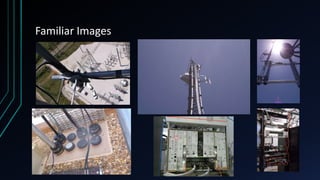
Familiar Images
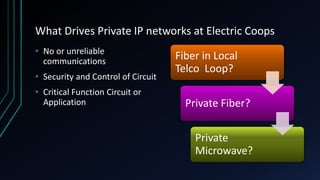
What Drives Private IP networks at Electric Coops
• No or unreliable
communications
• Security and Control of Circuit
• Critical Function Circuit or
Application
Fiber in Local
Telco Loop?
Private Fiber?
Private
Microwave?
TDM T1 and SONET
1990’S TO 2000’S
Migration from
TDM WAS MIGRATION FROM
ANALOG NETWORKS
SONET WAS THE STANDARD FOR
MODERN UTILITY UNTIL
RECENTLY
Coop Microwave Networks in
Texas
1990’S – T1 BASED MICROWAVE, RS232 SCADA
2009 – 2016 CONVERSION T1/RS232 TO IP BASED
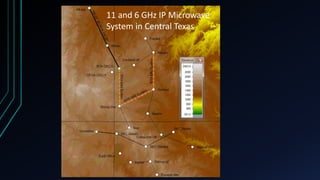
11 and 6 GHz IP Microwave
System in Central Texas
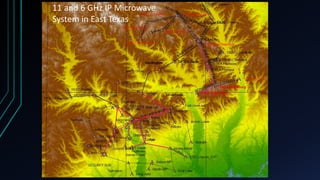
11 and 6 GHz IP Microwave
System in East Texas
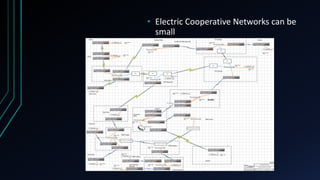
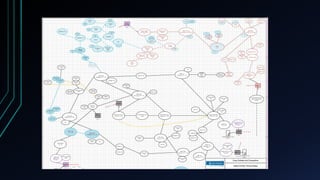
• Electric Cooperative Networks can be
small
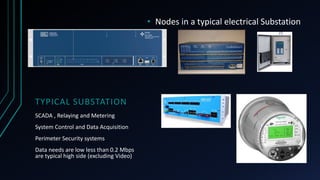
TYPICAL SUBSTATION
SCADA , Relaying and Metering
System Control and Data Acquisition
Perimeter Security systems
Data needs are low less than 0.2 Mbps
are typical high side (excluding Video)
• Nodes in a typical electrical Substation
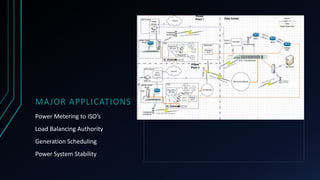
MAJOR APPLICATIONS
Power Metering to ISO’s
Load Balancing Authority
Generation Scheduling
Power System Stability
DESIGN
CONSIDERATIONS –
ELECTRICAL UTILITIES
Small Municipalities and Small
Electric Coops
- May have smaller needs and
budgets
- Or may be required to have high
reliability telecommunications
networks….
- Distribution Coops
- Transmission Coops
- Generation Coops
- Power Agencies
- Investor Owned Utilities
PLANNING ISSUES
Does the organization/coop have
staff to do the SCADA and Telecom
Network work?
Some want a contractor to furnish
everything
Some want project assistance and
then hand off to their internal staff
Many smaller organizations simply
do not know how to do planning,
design, implementation, and
maintenance.
Who is the decision maker or
influences the decision makers?
APPROACHES TO
CONSIDER
Potential clients are not the same from coop to
coop.
- Some will only buy equipment, some will buy
an entire network with maintenance
Needs assessment
- You may need to define scope and develop
planning for the coop, then do the rest…
- - or some may have partially developed
designs and want you to take over
How to approach the network
- Learn about the coop, each one is different in
organization and sometimes in functions
- Discover how to become a valuable and
reliable partner. It is almost never about
lowest cost, but highest value.
THANK YOU
Feel Free to contact me at
johnbuna@gmail.com
Or 936-933-2793

microwave in electric utilities presentation (widescreen)

  • 1.
    Implementing Microwave Networks inElectric Utilities FROM TDM TO IP
  • 2.
    Microwave Networks –Practical Considerations for Electric Utilities • First Wave Implementation – 1940s to 1960’s – Experimental Voice Grade Circuits on low capacity 950 and 2 GHz analog baseband • Second Wave – 1970’s to late 1980’s – low to medium capacity analog baseband systems – still voice grade channels and specialized baseband relaying channel for breaker protection on high voltage systems. Voice applications secondary and not critical • Third Wave – 1990s to 2008 – Digital Microwave, Conversion from analog. Migration from 2 GHz to 6 GHz for cellular space. T1 and Sonet OC1 and OC3 heavily implemented. • Fourth Wave – Mid 2000’s to present day – Conversion from T1 and SONET to IP based systems. From Layer 2 to Layer 3 transport, OSPF and MPLS are primary conversions taking place now.
  • 3.
  • 4.
    What Drives PrivateIP networks at Electric Coops • No or unreliable communications • Security and Control of Circuit • Critical Function Circuit or Application Fiber in Local Telco Loop? Private Fiber? Private Microwave?
  • 5.
    TDM T1 andSONET 1990’S TO 2000’S
  • 6.
    Migration from TDM WASMIGRATION FROM ANALOG NETWORKS SONET WAS THE STANDARD FOR MODERN UTILITY UNTIL RECENTLY
  • 7.
    Coop Microwave Networksin Texas 1990’S – T1 BASED MICROWAVE, RS232 SCADA 2009 – 2016 CONVERSION T1/RS232 TO IP BASED
  • 8.
    11 and 6GHz IP Microwave System in Central Texas
  • 9.
    11 and 6GHz IP Microwave System in East Texas
  • 10.
    • Electric CooperativeNetworks can be small
  • 12.
    TYPICAL SUBSTATION SCADA ,Relaying and Metering System Control and Data Acquisition Perimeter Security systems Data needs are low less than 0.2 Mbps are typical high side (excluding Video) • Nodes in a typical electrical Substation
  • 13.
    MAJOR APPLICATIONS Power Meteringto ISO’s Load Balancing Authority Generation Scheduling Power System Stability
  • 14.
    DESIGN CONSIDERATIONS – ELECTRICAL UTILITIES SmallMunicipalities and Small Electric Coops - May have smaller needs and budgets - Or may be required to have high reliability telecommunications networks…. - Distribution Coops - Transmission Coops - Generation Coops - Power Agencies - Investor Owned Utilities
  • 15.
    PLANNING ISSUES Does theorganization/coop have staff to do the SCADA and Telecom Network work? Some want a contractor to furnish everything Some want project assistance and then hand off to their internal staff Many smaller organizations simply do not know how to do planning, design, implementation, and maintenance. Who is the decision maker or influences the decision makers?
  • 16.
    APPROACHES TO CONSIDER Potential clientsare not the same from coop to coop. - Some will only buy equipment, some will buy an entire network with maintenance Needs assessment - You may need to define scope and develop planning for the coop, then do the rest… - - or some may have partially developed designs and want you to take over How to approach the network - Learn about the coop, each one is different in organization and sometimes in functions - Discover how to become a valuable and reliable partner. It is almost never about lowest cost, but highest value.
  • 17.
    THANK YOU Feel Freeto contact me at johnbuna@gmail.com Or 936-933-2793