ANOMALY DETECTION
One-class SVM
PCA-based anomaly detection Fast training
>100 features,
aggressive boundary
CLUSTERING
K-means
TWO-CLASS CLASSIFICATION
Two-class decision forest
Two-class boosted decision tree
Two-class decision jungle
Two-class locally deep SVM
Two-class SVM
Two-class averaged perceptron
Two-class logistic regression
Two-class Bayes point machine
Two-class neural network
>100 features,
linear model
Accuracy,
fast training
Accuracy,
fast training,
large memory
footprint
Accuracy,
small memory
footprint
>100 features
Accuracy, long
training times
Fast training,
linear model
Fast training,
linear model
Fast training,
linear model
Discovering
structure
Finding unusual
data points
Predicting values
Predicting
categories
Three or
more
START
Two
REGRESSION
Ordinal regression
Poisson regression
Fast forest quantile regression
Linear regression
Bayesian linear regression
Neural network regression
Decision forest regression
Boosted decision tree regression
Data in rank ordered categories
Predicting event counts
Predicting a distribution
Fast training, linear model
Linear model, small data sets
Accuracy, long training time
Accuracy, fast training
Accuracy, fast training,
large memory footprint
MULTI-CLASS CLASSIFICATION
Multiclass logistic regression
Multiclass neural network
Multiclass decision forest
Multiclass decision jungle
One-v-all multiclass
Fast training, linear model
Accuracy, long training times
Accuracy, fast training
Accuracy, small memory footprint
Depends on the two-class
classifier, see notes below
Microsoft Azure Machine Learning: Algorithm Cheat Sheet
© 2015 Microsoft Corporation. All rights reserved. Created by the Azure Machine Learning Team Email: AzurePoster@microsoft.com Download this poster: http://aka.ms/MLCheatSheet
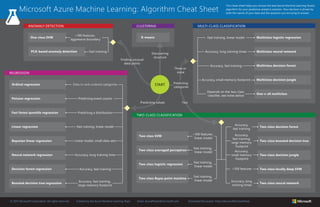
This cheat sheet helps you choose the best Azure Machine Learning Studio
algorithm for your predictive analytics solution. Your decision is driven by
both the nature of your data and the question you’re trying to answer.

Microsoft Azure machine-learning-algorithm-cheat-sheet

  • 1.
    ANOMALY DETECTION One-class SVM PCA-basedanomaly detection Fast training >100 features, aggressive boundary CLUSTERING K-means TWO-CLASS CLASSIFICATION Two-class decision forest Two-class boosted decision tree Two-class decision jungle Two-class locally deep SVM Two-class SVM Two-class averaged perceptron Two-class logistic regression Two-class Bayes point machine Two-class neural network >100 features, linear model Accuracy, fast training Accuracy, fast training, large memory footprint Accuracy, small memory footprint >100 features Accuracy, long training times Fast training, linear model Fast training, linear model Fast training, linear model Discovering structure Finding unusual data points Predicting values Predicting categories Three or more START Two REGRESSION Ordinal regression Poisson regression Fast forest quantile regression Linear regression Bayesian linear regression Neural network regression Decision forest regression Boosted decision tree regression Data in rank ordered categories Predicting event counts Predicting a distribution Fast training, linear model Linear model, small data sets Accuracy, long training time Accuracy, fast training Accuracy, fast training, large memory footprint MULTI-CLASS CLASSIFICATION Multiclass logistic regression Multiclass neural network Multiclass decision forest Multiclass decision jungle One-v-all multiclass Fast training, linear model Accuracy, long training times Accuracy, fast training Accuracy, small memory footprint Depends on the two-class classifier, see notes below Microsoft Azure Machine Learning: Algorithm Cheat Sheet © 2015 Microsoft Corporation. All rights reserved. Created by the Azure Machine Learning Team Email: AzurePoster@microsoft.com Download this poster: http://aka.ms/MLCheatSheet This cheat sheet helps you choose the best Azure Machine Learning Studio algorithm for your predictive analytics solution. Your decision is driven by both the nature of your data and the question you’re trying to answer.