TOPIC: MICROBIAL PROTEIN SYNTHESIS
MICROBIAL PROTEIN SYNTHESIS
 The process in which microorganisms such as bacteria, protozoa, and fungi
break down the plant material into simple sugars and organic acids to
synthesize microbial protein.
 The microbial protein synthesis process is essential for ruminants because they
are unable to digest plant materials themselves due to the lack of certain
enzymes.
DIGESTION OF FEED
 Ruminants consume plant material, which is initially broken down by
mechanical action and saliva in the mouth. The plant material then
enters the rumen, where it is further broken down by microbial
fermentation.
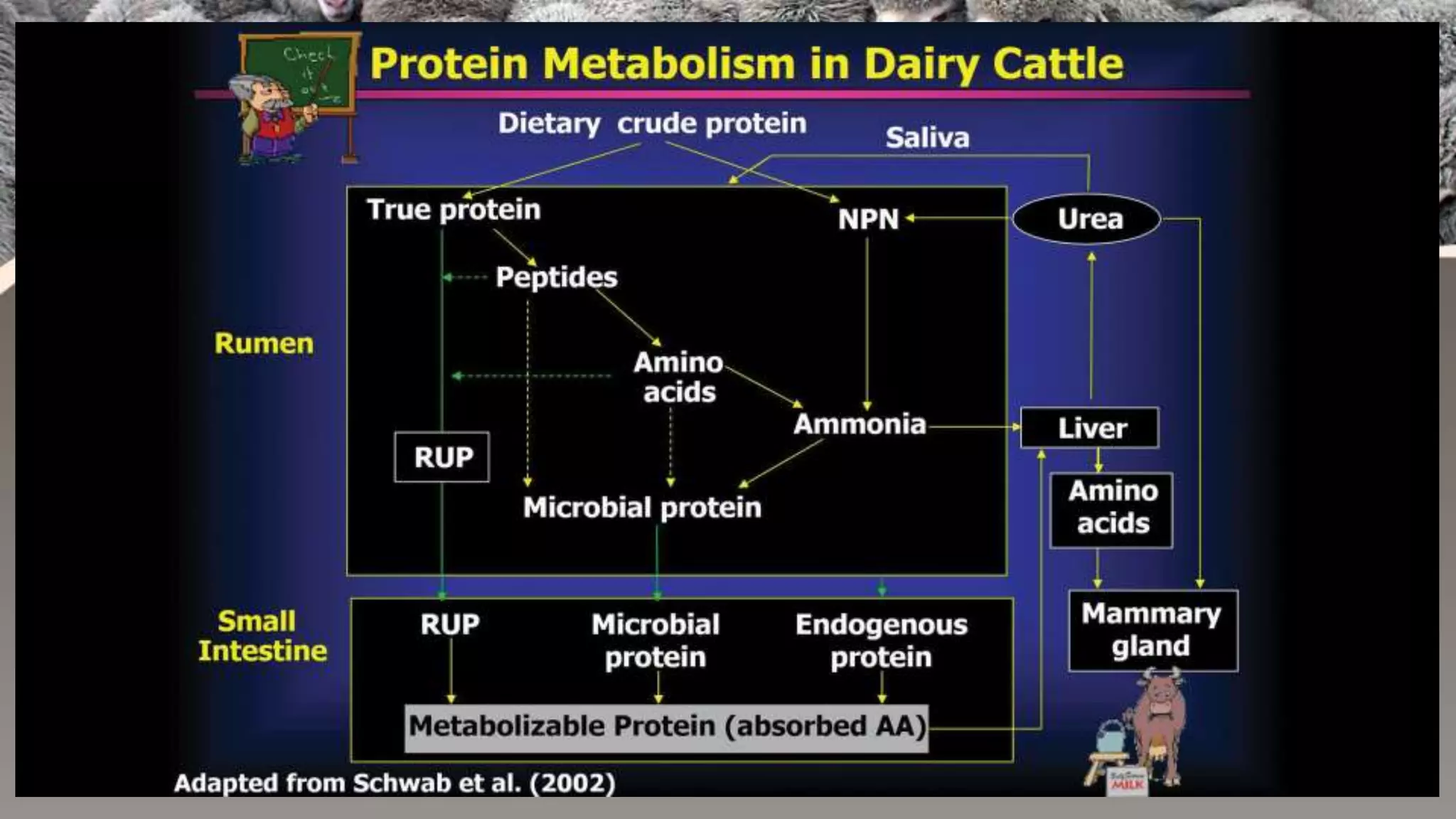
 Dietary protein for ruminants includes nitrogen (N) occurring in true
protein and non-protein. In the rumen, the true protein is degraded
into amino acid (AA) and ammonia and then utilized by ruminal
microorganisms to synthesize microbial protein.
 In the small intestine, more than 80% of rumen microbial protein is
digested, accounting for 50–80% of the total absorbable protein
contained there.
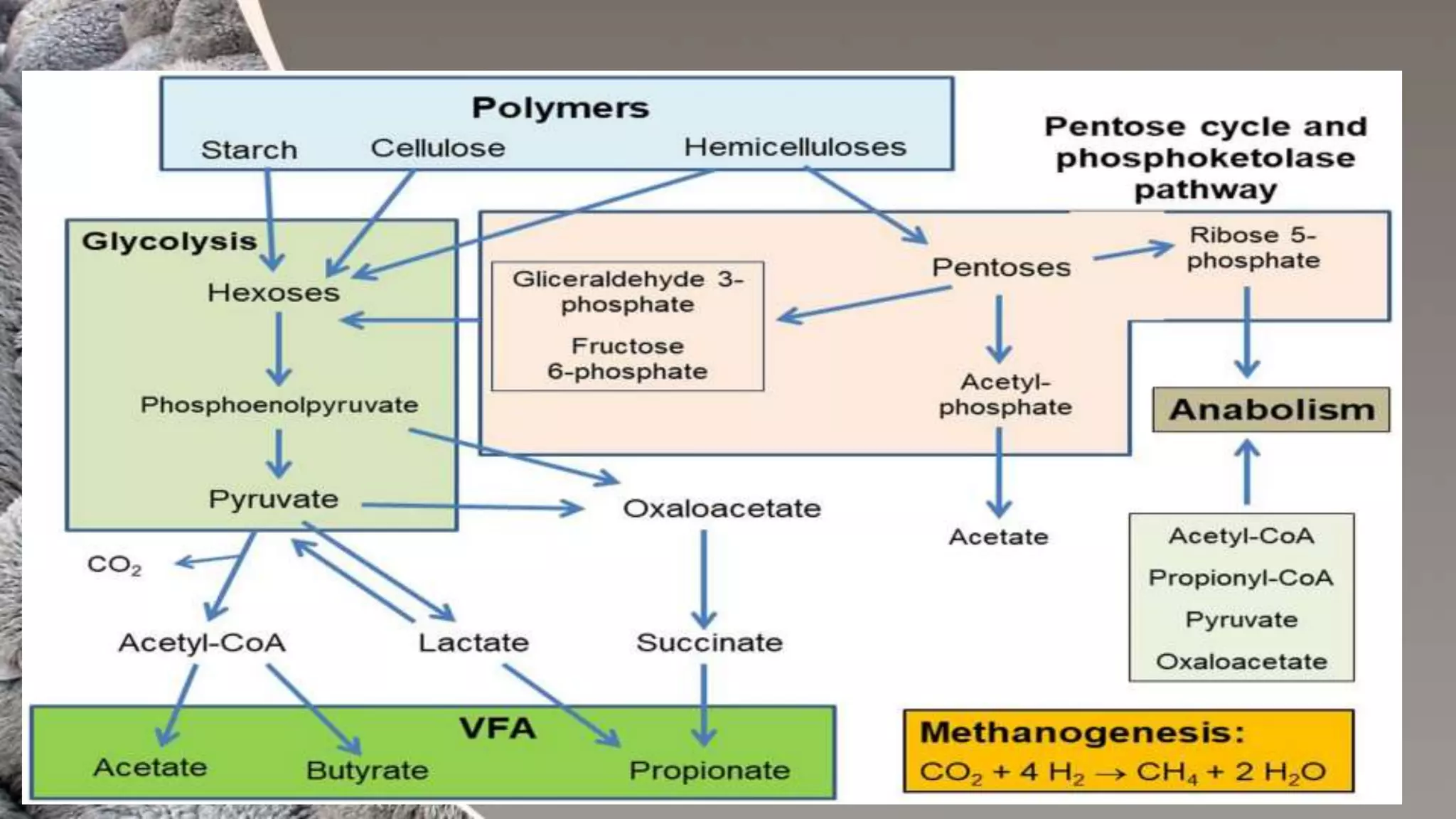
FERMENTATION
 In the rumen, billions of microorganisms, including bacteria, protozoa, and
fungi, break down the plant material through a process called fermentation.
During this process, the microbes produce a variety of enzymes, which break
down the complex carbohydrates into simpler compounds such as glucose
and volatile fatty acids (VFAs).
SYNTHESIS OF MICROBIAL PROTEIN
 The theoretical definition of the "microbial protein synthesis (MPS)
includes the total amount of protein of microbial origin produced in the
rumen, and is expressed in protein grams or N grams per day .
 However, in practical it is measured as the amount of microbial protein
synthesized in the rumen which flows into the small intestine of
ruminants.
 The microbial protein synthesis occurs in the cytoplasm of the microbes
and involves the assembly of amino acids into polypeptide chains using
energy and other nutrients.
EFFICIENCY OF MICROBIAL PROTEIN SYNTHESIS (ESPM)
 Amount of microbial matter (expressed as dry matter, protein or N)
per unit of energetic substrate fermented or energy produced and
dependent on the availability of energy and protein, and the efficiency
with which microorganisms used.
 The optimum concentration for the microbial protein synthesis is
between 5.6 and 10.0 mg of NH3/100 mL of rumen liquor when the
energy available
 The protein synthesized per 100 g of digestible organic matter
fermented in the rumen would be only 15 to 20 g, with high levels of
concentrate in the ration resulting in a low pH can also be expected
that the synthesis of microbial protein is only 14-18 g / 100g.
FACTORS AFFECTING MICROBIAL PROTEIN SYNTHESIS
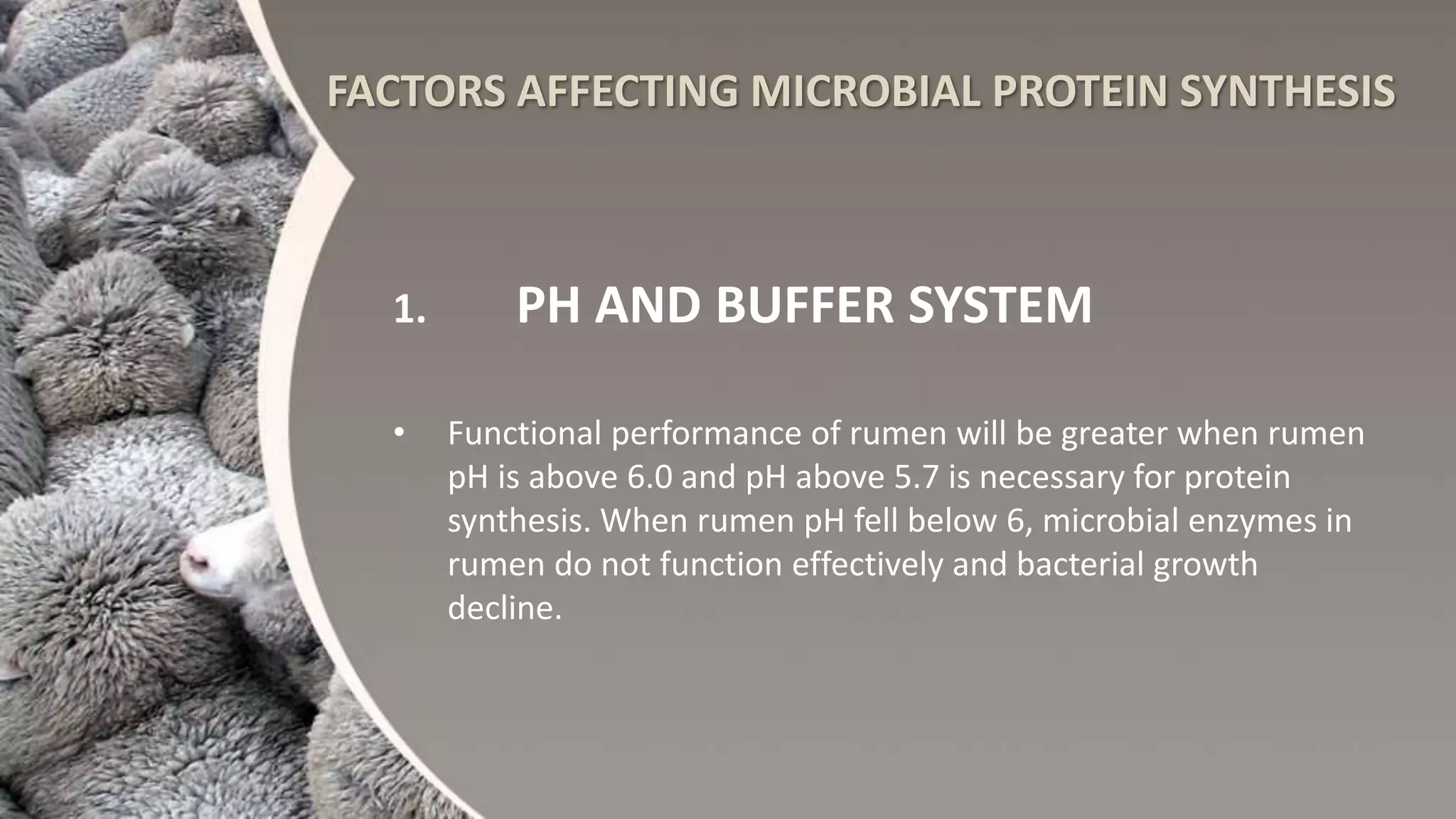
1. PH AND BUFFER SYSTEM
• Functional performance of rumen will be greater when rumen
pH is above 6.0 and pH above 5.7 is necessary for protein
synthesis. When rumen pH fell below 6, microbial enzymes in
rumen do not function effectively and bacterial growth
decline.
2 OXYGEN CONCENTRATION
 Rumen environment is anaerobic, and hence most of the
bacteria are obligate anaerobes. Some of them are so sensitive to
oxygen that these are killed on exposure to oxygen.
 O2 can enter the rumen daily through water intake, rumination,
and salivation, and inhibit the growth of obligate cellulolytic
anaerobes.
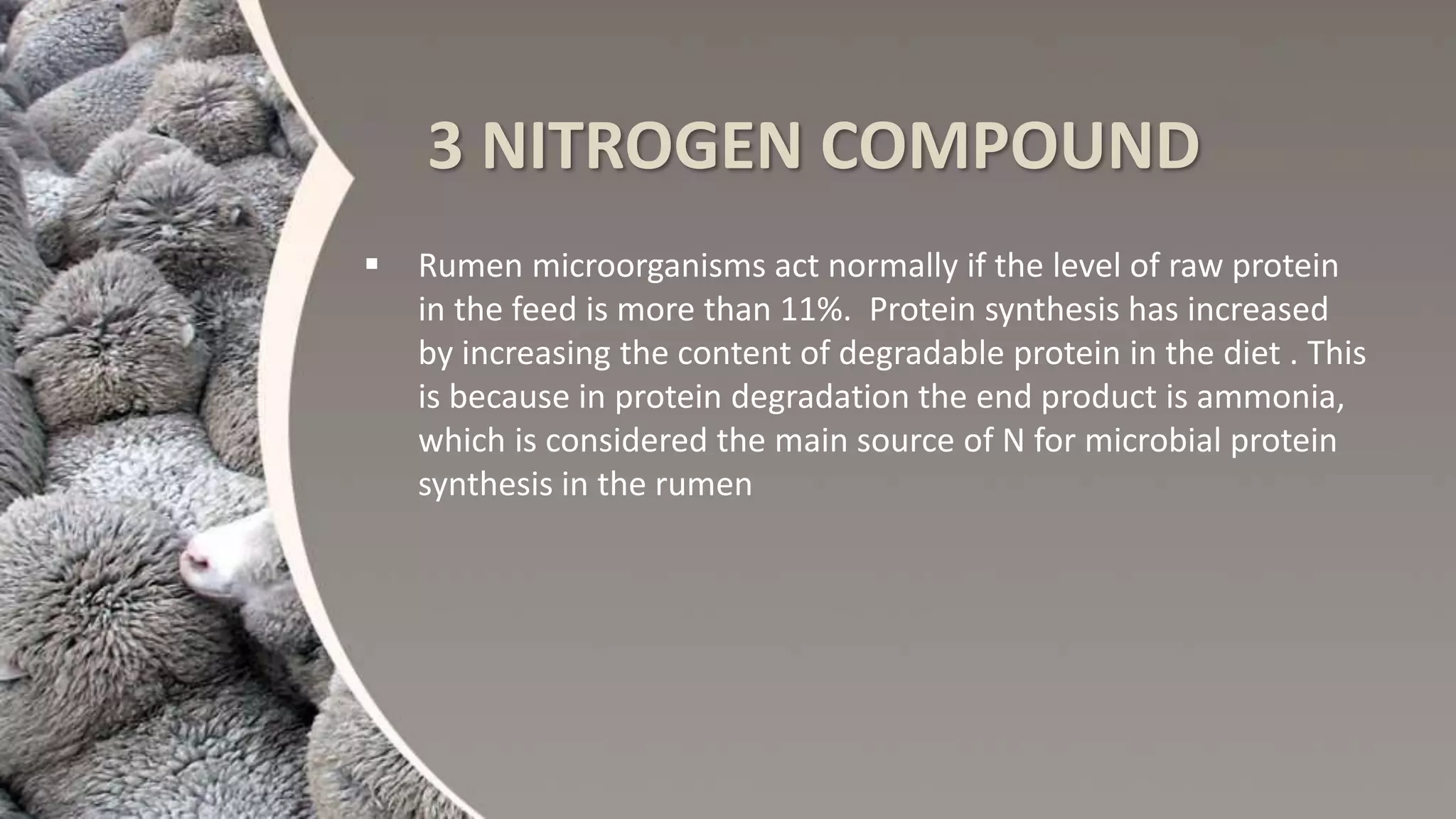
3 NITROGEN COMPOUND
 Rumen microorganisms act normally if the level of raw protein
in the feed is more than 11%. Protein synthesis has increased
by increasing the content of degradable protein in the diet . This
is because in protein degradation the end product is ammonia,
which is considered the main source of N for microbial protein
synthesis in the rumen
4 CARBOHYDRATES
 Carbohydrates are important for carbon Skelton in microbial
protein synthesis. The most important factor limiting the
microbial protein synthesis in the rumen is the energy
released in the rumen during the fermentation of
carbohydrates to organic acids.
 Carbohydrates are the main source of energy for microbial
protein synthesis in the rumen.
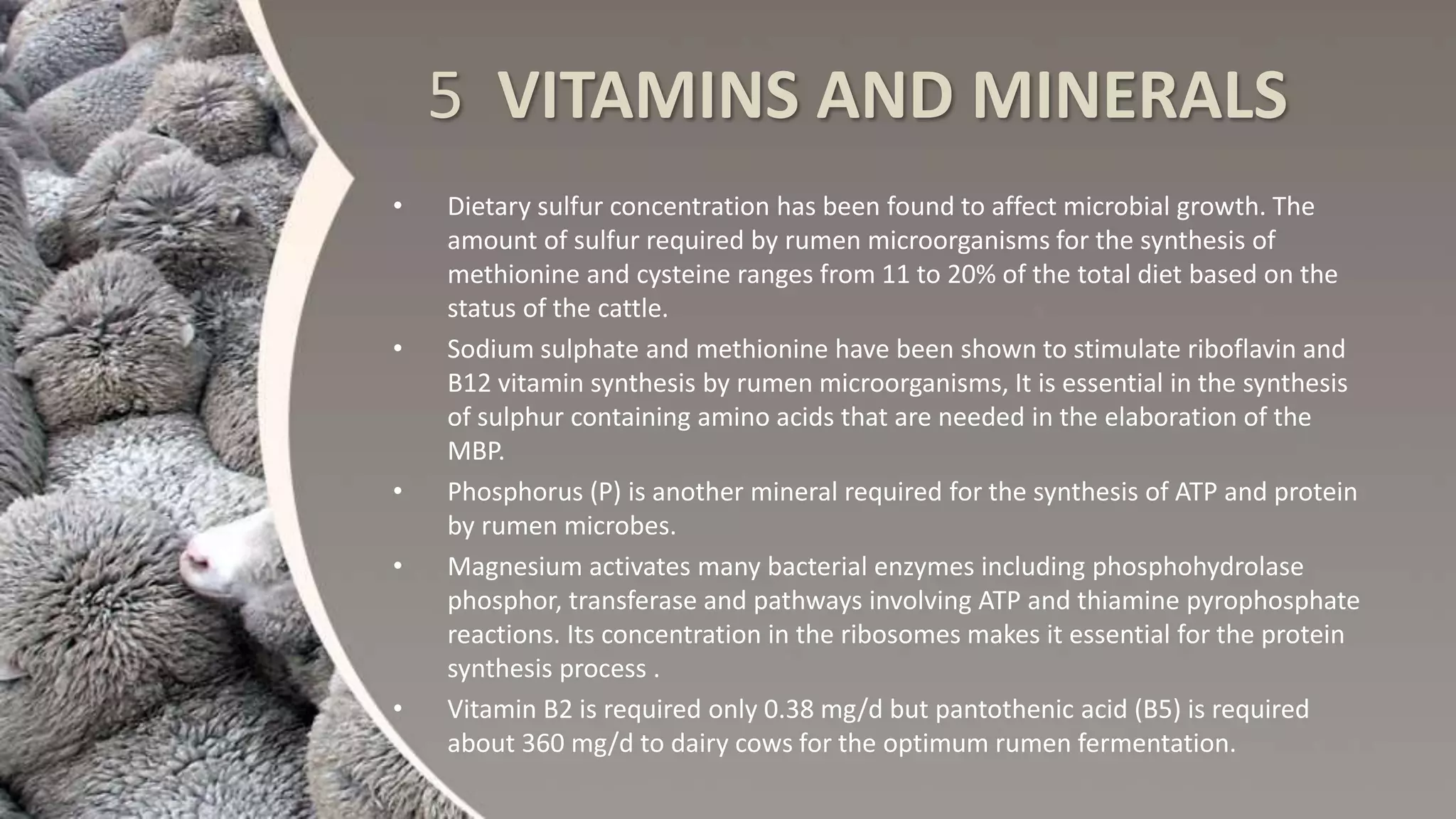
5 VITAMINS AND MINERALS
• Dietary sulfur concentration has been found to affect microbial growth. The
amount of sulfur required by rumen microorganisms for the synthesis of
methionine and cysteine ranges from 11 to 20% of the total diet based on the
status of the cattle.
• Sodium sulphate and methionine have been shown to stimulate riboflavin and
B12 vitamin synthesis by rumen microorganisms, It is essential in the synthesis
of sulphur containing amino acids that are needed in the elaboration of the
MBP.
• Phosphorus (P) is another mineral required for the synthesis of ATP and protein
by rumen microbes.
• Magnesium activates many bacterial enzymes including phosphohydrolase
phosphor, transferase and pathways involving ATP and thiamine pyrophosphate
reactions. Its concentration in the ribosomes makes it essential for the protein
synthesis process .
• Vitamin B2 is required only 0.38 mg/d but pantothenic acid (B5) is required
about 360 mg/d to dairy cows for the optimum rumen fermentation.
6 ANTIMICROBIAL CHEMICALS
 Effect of plant extracts like garlic
and ginger extracts were found to
have decreased the protozoa
population resulting in a
reduction of methane emission in
the rumen and thus inhibiting
methanogenesis and decrease
rumen protein production.
Microbial protein synthesis.pptx

Microbial protein synthesis.pptx

  • 1.
  • 2.
    MICROBIAL PROTEIN SYNTHESIS The process in which microorganisms such as bacteria, protozoa, and fungi break down the plant material into simple sugars and organic acids to synthesize microbial protein.  The microbial protein synthesis process is essential for ruminants because they are unable to digest plant materials themselves due to the lack of certain enzymes.
  • 4.
    DIGESTION OF FEED Ruminants consume plant material, which is initially broken down by mechanical action and saliva in the mouth. The plant material then enters the rumen, where it is further broken down by microbial fermentation.  Dietary protein for ruminants includes nitrogen (N) occurring in true protein and non-protein. In the rumen, the true protein is degraded into amino acid (AA) and ammonia and then utilized by ruminal microorganisms to synthesize microbial protein.  In the small intestine, more than 80% of rumen microbial protein is digested, accounting for 50–80% of the total absorbable protein contained there.
  • 5.
    FERMENTATION  In therumen, billions of microorganisms, including bacteria, protozoa, and fungi, break down the plant material through a process called fermentation. During this process, the microbes produce a variety of enzymes, which break down the complex carbohydrates into simpler compounds such as glucose and volatile fatty acids (VFAs).
  • 7.
    SYNTHESIS OF MICROBIALPROTEIN  The theoretical definition of the "microbial protein synthesis (MPS) includes the total amount of protein of microbial origin produced in the rumen, and is expressed in protein grams or N grams per day .  However, in practical it is measured as the amount of microbial protein synthesized in the rumen which flows into the small intestine of ruminants.  The microbial protein synthesis occurs in the cytoplasm of the microbes and involves the assembly of amino acids into polypeptide chains using energy and other nutrients.
  • 8.
    EFFICIENCY OF MICROBIALPROTEIN SYNTHESIS (ESPM)  Amount of microbial matter (expressed as dry matter, protein or N) per unit of energetic substrate fermented or energy produced and dependent on the availability of energy and protein, and the efficiency with which microorganisms used.  The optimum concentration for the microbial protein synthesis is between 5.6 and 10.0 mg of NH3/100 mL of rumen liquor when the energy available  The protein synthesized per 100 g of digestible organic matter fermented in the rumen would be only 15 to 20 g, with high levels of concentrate in the ration resulting in a low pH can also be expected that the synthesis of microbial protein is only 14-18 g / 100g.
  • 9.
    FACTORS AFFECTING MICROBIALPROTEIN SYNTHESIS 1. PH AND BUFFER SYSTEM • Functional performance of rumen will be greater when rumen pH is above 6.0 and pH above 5.7 is necessary for protein synthesis. When rumen pH fell below 6, microbial enzymes in rumen do not function effectively and bacterial growth decline.
  • 10.
    2 OXYGEN CONCENTRATION Rumen environment is anaerobic, and hence most of the bacteria are obligate anaerobes. Some of them are so sensitive to oxygen that these are killed on exposure to oxygen.  O2 can enter the rumen daily through water intake, rumination, and salivation, and inhibit the growth of obligate cellulolytic anaerobes.
  • 11.
    3 NITROGEN COMPOUND Rumen microorganisms act normally if the level of raw protein in the feed is more than 11%. Protein synthesis has increased by increasing the content of degradable protein in the diet . This is because in protein degradation the end product is ammonia, which is considered the main source of N for microbial protein synthesis in the rumen
  • 12.
    4 CARBOHYDRATES  Carbohydratesare important for carbon Skelton in microbial protein synthesis. The most important factor limiting the microbial protein synthesis in the rumen is the energy released in the rumen during the fermentation of carbohydrates to organic acids.  Carbohydrates are the main source of energy for microbial protein synthesis in the rumen.
  • 13.
    5 VITAMINS ANDMINERALS • Dietary sulfur concentration has been found to affect microbial growth. The amount of sulfur required by rumen microorganisms for the synthesis of methionine and cysteine ranges from 11 to 20% of the total diet based on the status of the cattle. • Sodium sulphate and methionine have been shown to stimulate riboflavin and B12 vitamin synthesis by rumen microorganisms, It is essential in the synthesis of sulphur containing amino acids that are needed in the elaboration of the MBP. • Phosphorus (P) is another mineral required for the synthesis of ATP and protein by rumen microbes. • Magnesium activates many bacterial enzymes including phosphohydrolase phosphor, transferase and pathways involving ATP and thiamine pyrophosphate reactions. Its concentration in the ribosomes makes it essential for the protein synthesis process . • Vitamin B2 is required only 0.38 mg/d but pantothenic acid (B5) is required about 360 mg/d to dairy cows for the optimum rumen fermentation.
  • 14.
    6 ANTIMICROBIAL CHEMICALS Effect of plant extracts like garlic and ginger extracts were found to have decreased the protozoa population resulting in a reduction of methane emission in the rumen and thus inhibiting methanogenesis and decrease rumen protein production.