REGULATORY REQUIREMENTS FOR MINISTRY
OF HEALTH, LABOR AND WELFARE (MHLW)
PRESENTED BY-
VIVEK KUMAR
PGD202346214
M. PHARMACY (PHARMACEUTICS)
PRESENTED TO-
DR. HEMLATA KAURAV
SCHOOL OF PHARMACEUTICAL SCIENCES
SHOOLINI UNIVERSITY
1
CONTENT
Introduction
Ministry of Health Labour, and Welfare (MHLW)
Pharmaceutical Medical Device Agency (PMDA)
Services and Function of PMDA
Relationship and Responsibilities of MHLW & PMDA
Licence for Market authorization
Conclusion
2
INTRODUCTION
• Japan is the second largest pharmaceutical market in the world and a
critical export market of U.S pharmaceuticals.
• Since 2013, the Government of Japan has promoted the health care
industry as an important growth engine under the country’s economic
revitalization and growth strategy.
• One of the biggest hurdle for the government is “drug lag” problem due to
the obligation to perform clinical studies in Japan and since clinical data
obtained in Non-Japanese trial such as EU and US studies can not solely be
used to obtain marketing approval in Japan.
• To minimize the drug lag the Japanese government is encouraging
pharmaceutical companies to conduct simultaneous clinical development
and include Japan in global clinical trials.
3
MINISTRY OF HEALTH, LABOR AND WELFARE (MHLW)
• The ministry of health and labour welfare is a cabinet level ministry of the Japanese
government.
• It is commonly known as koro-sho in Japan.
• MHLW was established by merger of ministry of health and welfare & ministry of labour
on 6th January 2001.
• MHLW is a regulatory authority of pharmaceutical regulatory affairs in Japan. Formal
approval and licenses are required for marketing drugs in Japan which is obtained from
the MHLW.
FUNCTIONS OF MHLW :
 To give marketing approval
To issue license for marketing authorization holder
To issue a manufacturer license
4
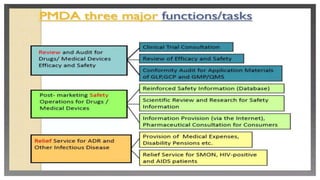
PHARMACEUTICAL MEDICAL DEVICES AGENCY
(PMDA)
• PMDA is a Japanese regulatory agency , working together with
Ministry of Health Labor and Welfare.
• Its obligation is to protect the public health by ensuring safety,
efficacy and quality of pharmaceuticals and medical devices.
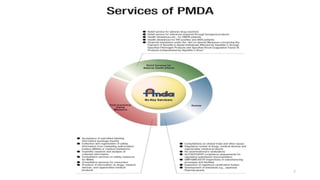
• It conduct scientific reviews of marketing authorization application of
pharmaceutical and medical devices monitoring of their post-
marketing safety and also responsible for providing relief
compensation for sufferers from ADR’s and infections by
pharmaceutical or biological products.
5
Pharmaceutical and medical devices agency is a
consolidation of the services of:
• Pharmaceutical and medical devices evaluation centre of the National
Institute of Health Sciences (PMDEC).
• The organization for Pharmaceutical Safety and Research
(OPSR/KIKO), and
• Part of the Japan Association for the Advancement of the Medical
Equipment(JAAME).
6
7
8
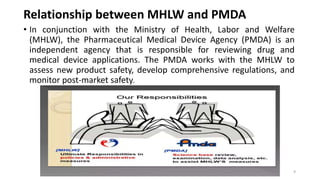
Relationship between MHLW and PMDA
• In conjunction with the Ministry of Health, Labor and Welfare
(MHLW), the Pharmaceutical Medical Device Agency (PMDA) is an
independent agency that is responsible for reviewing drug and
medical device applications. The PMDA works with the MHLW to
assess new product safety, develop comprehensive regulations, and
monitor post-market safety.
9
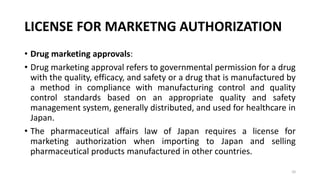
LICENSE FOR MARKETNG AUTHORIZATION
• Drug marketing approvals:
• Drug marketing approval refers to governmental permission for a drug
with the quality, efficacy, and safety or a drug that is manufactured by
a method in compliance with manufacturing control and quality
control standards based on an appropriate quality and safety
management system, generally distributed, and used for healthcare in
Japan.
• The pharmaceutical affairs law of Japan requires a license for
marketing authorization when importing to Japan and selling
pharmaceutical products manufactured in other countries.
10
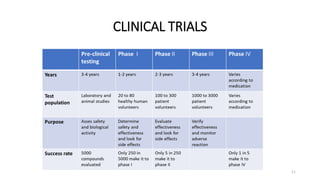
CLINICAL TRIALS
11
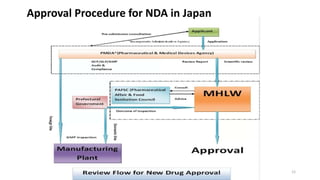
Approval Procedure for NDA in Japan
12
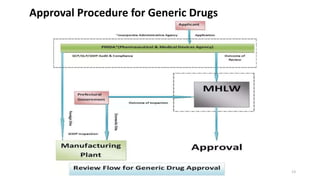
Approval Procedure for Generic Drugs
13
CONCLUSION
• Japan has made significant progress in reforming and modernizing its
drug and medical device approval process in recent years. Although
approval times continue to lag behind those of other developed
countries, the government has set ambitious goals and the PMDA and
MHLW have marked improvements.
• These gains, along with Japan’s position as the world’s second largest
medical market, continue to make Japan a desirable place for foregin
pharmaceutical companies and medical devices makers to do
business.
14
REFERENCES
• Organisation and function of Ministry of Health, Labor and Welfare
www.igpamumbai2010.com
• https://www.pmda.go.jp/english/about-pmda/index.html
• https://www.mhlw.go.jp/english/
• https://www.pacificbridgemedical.com/regulation/japan-medical-
device-pharmaceutical-
regulations/#:~:text=In%20conjunction%20with%20the%20MHLW,an
d%20monitor%20post%2Dmarket%20safety.
15
Thank you
16

MHLW ppt.pptx

  • 1.
    REGULATORY REQUIREMENTS FORMINISTRY OF HEALTH, LABOR AND WELFARE (MHLW) PRESENTED BY- VIVEK KUMAR PGD202346214 M. PHARMACY (PHARMACEUTICS) PRESENTED TO- DR. HEMLATA KAURAV SCHOOL OF PHARMACEUTICAL SCIENCES SHOOLINI UNIVERSITY 1
  • 2.
    CONTENT Introduction Ministry of HealthLabour, and Welfare (MHLW) Pharmaceutical Medical Device Agency (PMDA) Services and Function of PMDA Relationship and Responsibilities of MHLW & PMDA Licence for Market authorization Conclusion 2
  • 3.
    INTRODUCTION • Japan isthe second largest pharmaceutical market in the world and a critical export market of U.S pharmaceuticals. • Since 2013, the Government of Japan has promoted the health care industry as an important growth engine under the country’s economic revitalization and growth strategy. • One of the biggest hurdle for the government is “drug lag” problem due to the obligation to perform clinical studies in Japan and since clinical data obtained in Non-Japanese trial such as EU and US studies can not solely be used to obtain marketing approval in Japan. • To minimize the drug lag the Japanese government is encouraging pharmaceutical companies to conduct simultaneous clinical development and include Japan in global clinical trials. 3
  • 4.
    MINISTRY OF HEALTH,LABOR AND WELFARE (MHLW) • The ministry of health and labour welfare is a cabinet level ministry of the Japanese government. • It is commonly known as koro-sho in Japan. • MHLW was established by merger of ministry of health and welfare & ministry of labour on 6th January 2001. • MHLW is a regulatory authority of pharmaceutical regulatory affairs in Japan. Formal approval and licenses are required for marketing drugs in Japan which is obtained from the MHLW. FUNCTIONS OF MHLW :  To give marketing approval To issue license for marketing authorization holder To issue a manufacturer license 4
  • 5.
    PHARMACEUTICAL MEDICAL DEVICESAGENCY (PMDA) • PMDA is a Japanese regulatory agency , working together with Ministry of Health Labor and Welfare. • Its obligation is to protect the public health by ensuring safety, efficacy and quality of pharmaceuticals and medical devices. • It conduct scientific reviews of marketing authorization application of pharmaceutical and medical devices monitoring of their post- marketing safety and also responsible for providing relief compensation for sufferers from ADR’s and infections by pharmaceutical or biological products. 5
  • 6.
    Pharmaceutical and medicaldevices agency is a consolidation of the services of: • Pharmaceutical and medical devices evaluation centre of the National Institute of Health Sciences (PMDEC). • The organization for Pharmaceutical Safety and Research (OPSR/KIKO), and • Part of the Japan Association for the Advancement of the Medical Equipment(JAAME). 6
  • 7.
  • 8.
  • 9.
    Relationship between MHLWand PMDA • In conjunction with the Ministry of Health, Labor and Welfare (MHLW), the Pharmaceutical Medical Device Agency (PMDA) is an independent agency that is responsible for reviewing drug and medical device applications. The PMDA works with the MHLW to assess new product safety, develop comprehensive regulations, and monitor post-market safety. 9
  • 10.
    LICENSE FOR MARKETNGAUTHORIZATION • Drug marketing approvals: • Drug marketing approval refers to governmental permission for a drug with the quality, efficacy, and safety or a drug that is manufactured by a method in compliance with manufacturing control and quality control standards based on an appropriate quality and safety management system, generally distributed, and used for healthcare in Japan. • The pharmaceutical affairs law of Japan requires a license for marketing authorization when importing to Japan and selling pharmaceutical products manufactured in other countries. 10
  • 11.
  • 12.
    Approval Procedure forNDA in Japan 12
  • 13.
    Approval Procedure forGeneric Drugs 13
  • 14.
    CONCLUSION • Japan hasmade significant progress in reforming and modernizing its drug and medical device approval process in recent years. Although approval times continue to lag behind those of other developed countries, the government has set ambitious goals and the PMDA and MHLW have marked improvements. • These gains, along with Japan’s position as the world’s second largest medical market, continue to make Japan a desirable place for foregin pharmaceutical companies and medical devices makers to do business. 14
  • 15.
    REFERENCES • Organisation andfunction of Ministry of Health, Labor and Welfare www.igpamumbai2010.com • https://www.pmda.go.jp/english/about-pmda/index.html • https://www.mhlw.go.jp/english/ • https://www.pacificbridgemedical.com/regulation/japan-medical- device-pharmaceutical- regulations/#:~:text=In%20conjunction%20with%20the%20MHLW,an d%20monitor%20post%2Dmarket%20safety. 15
  • 16.